
What Is Standard Operating Procedure - A Simple Guide
Let's be honest, the term "Standard Operating Procedure" sounds a bit corporate and stuffy, doesn't it? But stick with me. At its heart, an SOP is simply a set of step-by-step instructions your business creates to make sure routine—but often complex—tasks get done right every single time.
Forget thinking of it as a rigid rulebook. It's more like a detailed recipe for success, ensuring everyone on your team, from the seasoned pro to the new recruit, performs a task the exact same way.
What Is a Standard Operating Procedure Anyway?
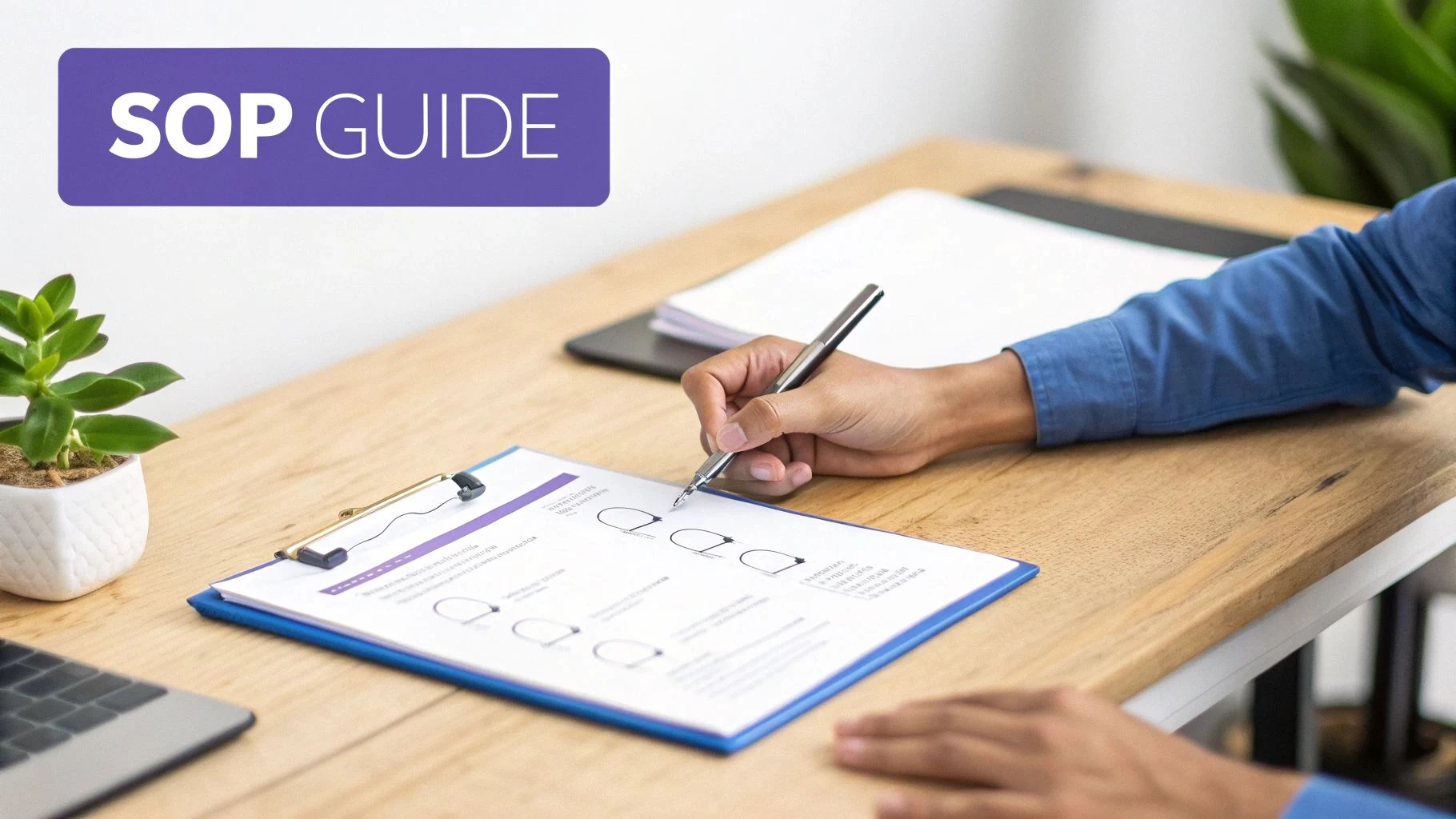
Think about it this way: an SOP is your secret weapon against guesswork and confusion in your drone operations. It takes a complicated process—like a pre-flight safety check or managing flight data—and breaks it down into a clear, repeatable guide that anyone can pick up and follow.
The whole point is to bring efficiency and predictability to your work by standardizing key actions. This straightforward idea has a massive impact on both quality and, crucially, safety. For a solid real-world example, look at something like developing a robust incident response plan; it’s a classic SOP that provides clear, structured guidelines for what to do when things go sideways.
The Impact of SOPs on Business Performance
Putting solid SOPs in place isn't just about ticking boxes; it's directly linked to huge improvements in consistency and a serious reduction in errors. A 2023 industry survey found that over 85% of companies with well-defined SOPs reported fewer product defects and workplace incidents.
What's more, businesses that have embraced digital SOP systems have seen training times for new team members drop by around 30%. That's not just a small gain; it proves just how powerful these documents are as operational tools.
An SOP transforms tribal knowledge—the skills held by your most experienced team members—into a documented, transferable asset. It ensures that excellence isn't just an accident; it's the standard.
To help nail down what makes a good SOP, here’s a quick rundown of their main characteristics.
SOPs at a Glance Key Characteristics
This table breaks down the essential qualities of an effective Standard Operating Procedure.
| Characteristic | Description |
|---|---|
| Clarity | Uses simple, direct language that is easy for anyone to understand. |
| Consistency | Ensures every team member performs the task in the exact same way. |
| Step-by-Step | Breaks down complex tasks into a logical, sequential series of actions. |
| Accessibility | Is readily available to all employees who need it, whenever they need it. |
| Action-Oriented | Focuses on specific actions and behaviors, avoiding vague instructions. |
| Reviewable | Is a living document, designed to be updated as processes evolve. |
Ultimately, a well-crafted SOP is a cornerstone of a professional, safe, and efficient operation.
The True Business Value of Implementing SOPs

Let's move past the basics of consistency for a second. Solid SOPs deliver real, measurable results that show up on your bottom line. It's best to think of them less as a stuffy set of instructions and more as your strategic playbook for running a tight ship. They take complicated jobs and turn them into a clear, repeatable process, which slashes wasted time and cuts out pointless rework.
This structured way of working is the foundation of dependable quality. When you have a clear SOP for everything from pre-flight checks to final data delivery, you’re guaranteeing that every single job meets the same high standard. That's how you build rock-solid client trust and earn a reputation for being a true professional.
Boosting Efficiency and Empowering Your Team
Well-written SOPs are also a secret weapon for training. They get new hires up to speed and contributing to the team in a fraction of the time. Instead of relying on "tribal knowledge" that gets passed down differently by everyone, new pilots get a definitive guide on how to do their job safely and correctly from day one.
The impact shows up in the numbers, too. Across various industries, companies that nail their SOPs report up to a 25-30% drop in operational errors and a 15-20% boost in productivity. These aren't just fuzzy benefits; they're hard metrics that prove procedures are essential for success.
By documenting best practices, SOPs ensure that excellence isn't just an occasional outcome—it becomes the default standard for every task, every time. This systematic approach fosters a culture of reliability and professionalism.
Strengthening Safety and Simplifying Compliance
When it comes down to it, the single most important value of an SOP in drone operations is safety. Plain and simple. By clearly defining safe procedures for every possible situation—from handling batteries to executing an emergency landing—you build a proactive safety culture that protects your crew, your gear, and the public.
This documented approach also makes staying on the right side of the regulations a whole lot less painful. If an auditor comes knocking, having a comprehensive set of SOPs is your proof of due diligence and commitment to professional standards. Of course, managing all this paperwork is much simpler with the right tools. You can learn more about how drone compliance software takes the headache out of the entire process. With your procedures locked in, you’re always ready to show that your operation is safe, compliant, and professional.
Anatomy of an Effective SOP Document
A powerful SOP isn't just some random checklist—it's a carefully engineered document built for total clarity and immediate action. Think of it as the blueprint for a specific task. For that blueprint to work, it needs several key components that mesh together to kill any guesswork for the person on the ground.
Every great SOP starts with the basics: a clear, descriptive title and a unique identification number. It might seem like a small detail, but it's vital for version control and helps your team grab the right document in a hurry. Right after that comes a concise purpose statement, which is just a short paragraph explaining why the procedure exists and what it’s supposed to accomplish. A little context goes a long way in helping your team understand the importance of their actions.
Defining the Core Components
Next up, every SOP has to define its scope. This section draws a clear line in the sand, spelling out which teams, equipment, or situations the procedure covers. It’s the best way to prevent confusion about when and where an SOP is meant to be used.
The real heart of the document, though, is the step-by-step procedure. This is where you lay out the task in a logical sequence of clean, actionable instructions. Keep the language simple, use short sentences, and throw in visuals like diagrams or photos wherever you can to make every step completely foolproof.
An effective SOP doesn't just list what to do; it creates a predictable pathway to a successful outcome. It ensures that the right actions are taken, in the right order, every single time.
Essential Supporting Details
Beyond the core instructions, a complete SOP needs a few other crucial bits of information. Honestly, skipping these details is a big reason why so many well-intentioned procedures end up gathering dust on a shelf.
- Roles and Responsibilities: Clearly state who is responsible for each part of the task. This leaves no room for ambiguity and really drives accountability.
- Required Resources: Make a list of all the necessary tools, equipment, software, and personal protective equipment (PPE). This makes sure your team is ready to go before they even start.
- Safety Warnings: Don't forget to highlight any potential hazards or critical safety precautions that need to be followed from start to finish.
Nailing this document structure is your first real step toward operational excellence. For anyone managing complex drone operations, using professionally designed operations manual templates can give you a massive head start in creating documentation that is both comprehensive and compliant. It’s these elements that turn a simple list into a powerful tool for your business.
Your Step-by-Step Guide to Creating SOPs
Let's be honest, the thought of creating a standard operating procedure from scratch can feel a bit overwhelming. But it doesn't have to be. The whole process breaks down into a few logical, manageable steps. Your goal is simple: create a document that's not just technically correct, but is actually useful for the people doing the job day in and day out. A truly great SOP is born from teamwork and real-world feedback.
First things first, figure out which tasks even need an SOP. You don't need a procedure for making a cup of tea. Focus on the processes that are complex, critical to safety, or—let's face it—the ones that are frequently messed up. Once you've picked a task, the most important part begins: talking to the team members who actually do the work. They have the hands-on knowledge that will make or break your document.
Define the Process and Choose Your Format
Once you've gathered insights from the team, you need to decide how to present the information. A simple checklist won't cut it for every procedure. There are a few common formats to choose from, and picking the right one is key to making the SOP easy to follow.
To help you decide, here’s a quick comparison of the most common SOP formats.
SOP Format Comparison
| Format Type | Best For | Example Use Case |
|---|---|---|
| Simple Checklist | Routine, sequential tasks where steps must be verified. | Pre-flight checks for a DJI Mavic 3. |
| Hierarchical List | Complex procedures with major steps and detailed sub-steps. | A complete workflow for a mapping mission, from planning to data delivery. |
| Flowchart | Processes with multiple decision points and different outcomes. | An emergency procedure for battery failure mid-flight. |
Choosing the right structure ensures your team can quickly find the information they need, especially under pressure. Think about how your team works and what format will be the most intuitive for them.
When you're mapping out your procedures, it can be helpful to look at how other industries handle repeatable tasks. For example, understanding how people go about structuring effective virtual assistant workflows can offer great insights into creating logical, consistent steps for any process, including drone operations.
The infographic below neatly sums up the essential parts of any solid SOP document.

As you can see, a clear title, a well-defined scope, and detailed, logical steps are the absolute foundation of a procedure that people will actually use.
Draft, Test, and Finalize the SOP
Now it's time to write. Get a first draft down using clear, simple language. Ditch the jargon and write it as if the reader has never done the task before. Once you have a draft, you must test it in the real world with the people who will be using it. This step is non-negotiable. It's the only way to find confusing language or spot missing steps that look perfectly fine on paper.
Historically, SOPs have been the backbone of operational consistency. Good SOPs don't just keep things running smoothly; they're vital for regulatory compliance. In fact, organizations with solid procedures can reduce unplanned shutdowns by up to 40%.
The best SOPs are living documents. They are created with the team, tested by the team, and refined based on the team’s feedback. Without user buy-in, even the most detailed procedure is just a piece of paper.
After you've gathered feedback and made your revisions, the SOP is ready for a final sign-off. The last step? Make sure it’s stored somewhere central and easy for everyone to find.
For a more detailed walkthrough tailored to drone ops, check out our complete guide on how to create standard operating procedures.
Where SOPs Go Wrong: Common Pitfalls to Avoid
Writing a standard operating procedure sounds straightforward, right? In theory, yes. But in practice, there are a few common traps that can turn your well-intentioned document into a digital paperweight. Knowing what these are ahead of time is the key to creating procedures your team will actually use, not just file away.
One of the biggest mistakes is making the SOP too long or overly complex. Nobody is going to read a 50-page manual for a 10-minute job. The goal is clarity and brevity, not a doctoral thesis. If a process really is that complicated, your best bet is to break it down into smaller, bite-sized sub-procedures.
Another classic error is using fuzzy, ambiguous language. Terms like "check equipment regularly" are pretty much useless. What does 'regularly' even mean? A solid SOP is precise: "Check battery voltage every Monday at 8 AM using the Volt-2 multimeter." See the difference? One is a suggestion; the other is a clear, actionable instruction.
The Most Important Person in the Room
Perhaps the single greatest blunder is forgetting to involve the people who will actually use the SOP. When managers write procedures in a vacuum, they almost always miss crucial, real-world steps that only the person on the ground would know. This leads to impractical instructions that get ignored from day one.
A standard operating procedure isn't just a document; it's a tool. If the person using the tool finds it clumsy, confusing, or incorrect, they will simply stop using it. User involvement isn't a suggestion—it's essential for adoption.
Finally, even a perfectly written SOP can fail if your team can't get to it when they need it.
- Poor Accessibility: Burying your procedures in a forgotten folder on the company server is a surefire way to guarantee they're never seen again. They need to be easy to find and accessible on the devices your team uses in the field.
- Neglecting Updates: An out-of-date SOP isn't just useless; it's a liability. Technology, regulations, and best practices are always changing. A procedure that isn't regularly reviewed can create serious safety and compliance headaches down the road.
Steering clear of these common mistakes is what separates a bureaucratic chore from a valuable asset that genuinely improves safety, quality, and efficiency.
Got Questions About SOPs?
Even after you get the hang of what a standard operating procedure is, a few practical questions always seem to surface when it's time to actually put them into practice. Let's run through some of the most common ones to clear things up so you can manage your procedures with confidence.
How Often Should I Review My SOPs?
Think of your SOPs as living documents, not dusty manuals on a shelf. They’re never a “set it and forget it” kind of thing. A good rule of thumb is to review them on a regular schedule—at least once a year—or any time a process changes.
If you get a new drone, the regulations get an update, or even if team roles shift, you need to update the relevant SOP right away. An outdated procedure can be worse than having none at all, leading your team to make the wrong moves based on old information.
What’s the Difference Between an SOP and a Process Map?
This is a really common question, but the difference is pretty straightforward. A process map, or a flowchart, is your high-level, bird's-eye view of a workflow. It shows you the main stages and key decision points, basically answering, "What happens next?"
An SOP, on the other hand, dives into the nitty-gritty, step-by-step details of how to perform each task in that workflow. They work together perfectly:
- Process Map: Shows the "what" and "where" of a job.
- SOP: Explains the detailed "how" for every single step.
It's like planning a road trip. The process map is the route on Google Maps showing the main motorways you’ll take. The SOP is the turn-by-turn navigation telling you exactly when to signal and which exit to take.
How Do I Get My Team to Actually Follow the SOPs?
This is the million-dollar question, isn't it? Getting your team on board is everything. The absolute best way to do this is to get them involved in creating the procedures in the first place. When the people doing the work help write the playbook, they feel a sense of ownership.
The procedures also need to be genuinely helpful, not just another layer of red tape. But most importantly, you have to lead by example. When the boss consistently refers to and uses the SOPs, it sends a powerful message that they’re a core part of how you do business.
Ready to build, manage, and deploy SOPs that your team will actually use? Dronedesk provides a central hub for all your drone operational documents, ensuring your procedures are always accessible, up-to-date, and integrated directly into your flight planning workflow. Simplify your compliance and elevate your professionalism by visiting https://dronedesk.io to see how it works.
 How to Review a DJI Flight Log After an Unexpected Event →
 Drone Laws Around the World: A Pre-Flight Research Framework →
 How to Compare Drone Survey Services for Complex Sites →
 How to Start a Drone Mapping Business With a Clear Workflow →
 Class C Airspace Drone Rules for Commercial Flights →
 How to Create a Drone Job Pack for Every Mission →
 FAA Small UAS Rule: Key Requirements for Operators →
 How to Build a Drone Pilot Flight Log That Is Audit Ready →
 FAA Drone Licence Requirements for Commercial Pilots →
 FAA BVLOS Waivers Granted: What Successful Cases Show →