
What Is Crew Resource Management A Guide to Drone Safety
At its heart, Crew Resource Management (CRM) is a mindset, not just a manual. It's a safety-focused approach centered on using all available resources—people, equipment, and information—to run safe and efficient operations. Think of it less as a rigid checklist and more as a philosophy that champions clear communication, sharp teamwork, and solid decision-making, especially when the pressure is on.
The Core Idea Behind Crew Resource Management
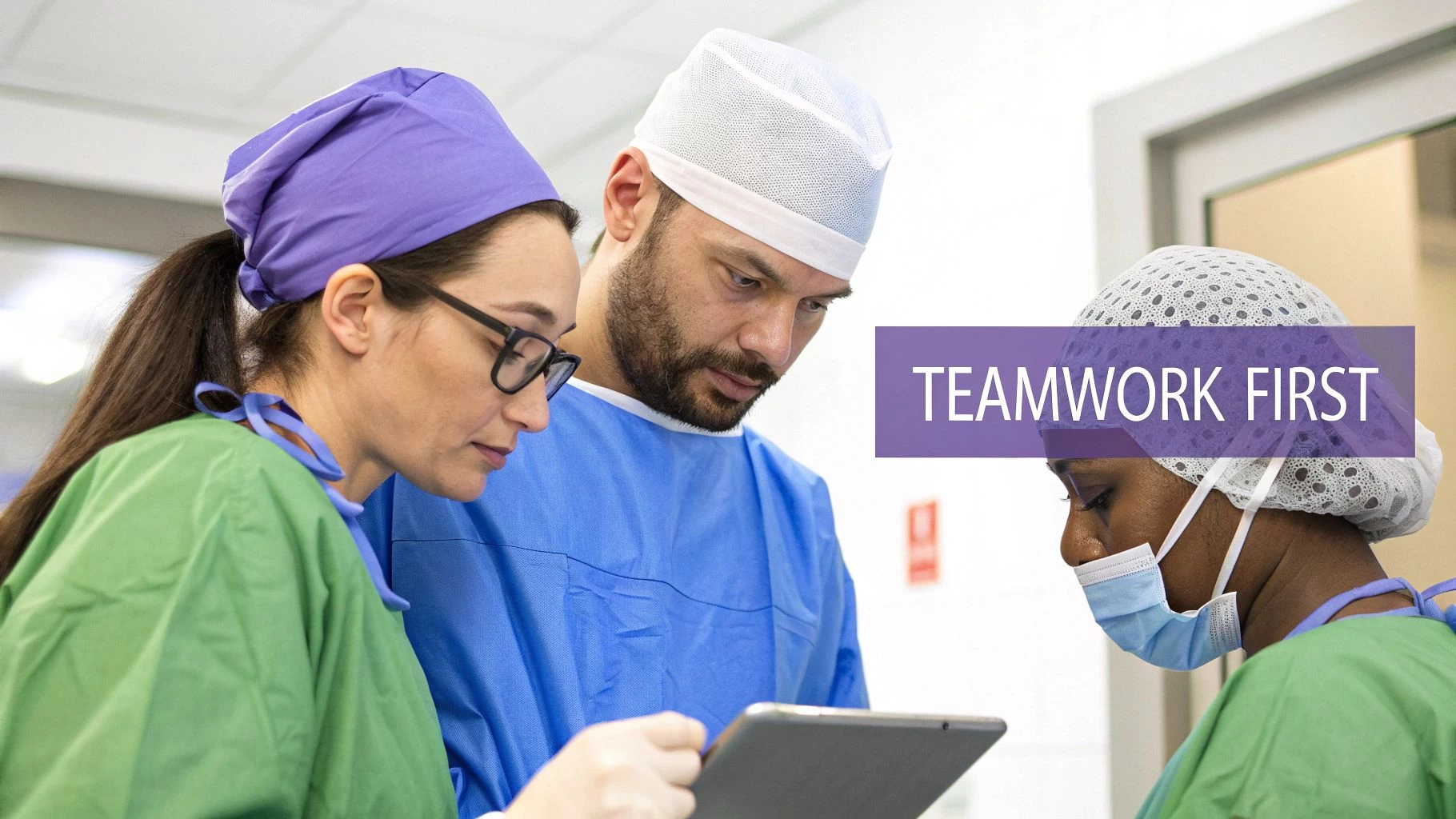
Picture a surgical team during a complex procedure. The surgeon, nurses, and anaesthetist all need to communicate flawlessly. Every single person in that room is empowered to speak up if they spot a potential problem. The success of that surgery hinges not just on the lead surgeon's skill, but on the entire team’s coordinated, collaborative effort. That's CRM in a nutshell.
This whole concept was born in the aviation industry, a direct response to accidents caused by human error. Investigators realised that technical skill alone wasn't enough to keep planes in the sky. It was the "soft skills"—things like poor communication, weak leadership, or a lack of situational awareness—that often led to disaster. CRM was developed to tackle these human factors head-on, and its principles are now vital in any field where mistakes carry heavy consequences, including professional drone operations.
From Aviation to Drone Operations
So, how does this apply to drones? It’s just as critical. A solo operator is effectively their own crew, juggling the roles of pilot, observer, and safety officer all at once. For bigger teams on more complex jobs, CRM provides the perfect framework to ensure everyone works together seamlessly.
The goal is to create an environment where information flows freely and every team member feels responsible for the safety and success of the flight. This mindset is what elevates a drone operation from simply ticking boxes to building a genuine safety culture. If you're looking to strengthen your operational foundations, our detailed guide on crafting a comprehensive preflight checklist for drones is a great place to start.
Crew Resource Management is the application of good leadership. It improves communication, which enhances situational awareness. Ultimately, it’s going to reduce near misses, injuries, and major incidents.
This structured approach gives you a system for managing your workload, handling stress, and making sound judgments, whether you’re flying solo or as part of a large enterprise. The table below gives a quick snapshot of the key components that form the bedrock of CRM.
Core Components of Crew Resource Management
Here’s a quick overview of the fundamental components of CRM and their primary goals.
| Component | Objective |
|---|---|
| Communication | To ensure information is shared clearly, concisely, and in a timely manner among all crew. |
| Situational Awareness | To maintain a continuous and accurate understanding of the operational environment. |
| Decision-Making | To use logical and systematic processes to identify risks and choose the safest course of action. |
| Workload Management | To distribute tasks effectively, avoid overload, and ensure critical functions are covered. |
| Leadership | To provide clear direction, foster teamwork, and maintain a positive safety culture. |
By focusing on these core areas, drone teams can build a resilient operational framework that significantly reduces the risk of human error.
The Tragic Event That Birthed Modern CRM
To really get why Crew Resource Management is so important, you have to go back to its origins. It wasn't dreamt up in a corporate boardroom; it was forged from the wreckage of the deadliest disaster in aviation history. This single event was a brutal wake-up call, forcing the entire industry to look beyond pure technical skill and focus on the human factors that make or break a team under pressure.
The story starts on a foggy runway, March 27, 1977. At Los Rodeos Airport in Tenerife, a horrifying chain of events led to two fully loaded Boeing 747s colliding. It was a perfect storm: dense fog, a hopelessly congested airfield, and garbled radio communications created a pressure cooker environment where a mistake was almost inevitable. The investigation that followed pointed to one thing: a catastrophic failure of teamwork.
A Cascade of Human Error
The heart of the problem was a breakdown in the cockpit's social structure. On one of the planes, the junior crew members knew something was wrong. They sensed the potential for a collision but felt they couldn't question the senior captain's decision to take off. That hesitation, born from a rigid, top-down command structure, was fatal. The crash claimed 583 lives, a number that still marks aviation's darkest day.
This disaster laid bare the massive flaws in relying on a pilot's individual skill alone. Investigators were forced to admit that technical brilliance means nothing without effective team coordination. It became painfully obvious that the industry needed a new way of thinking—one that treated communication, decision-making, and leadership as non-negotiable safety pillars. The Tenerife collision wasn't just an accident; it was the catalyst that changed everything.
The Tenerife disaster was a powerful reminder that the most sophisticated machinery is only as safe as the team operating it. It forced the industry to confront the reality that human interaction in the cockpit was a matter of life and death.
The Birth of a New Safety Philosophy
The aftermath sent shockwaves through the aviation world. The old habit of blaming individuals gave way to a new focus on understanding systemic team failures. Just two years later, in 1979, NASA held a landmark workshop that gave a name to the solution: 'Cockpit Resource Management.' The whole idea was to train flight crews to stop acting like a collection of individuals and start acting like a cohesive unit.
Following NASA's lead, United Airlines rolled out the first formal CRM training program in 1981, officially kicking off a new era in aviation safety. This new approach taught pilots and crew to challenge authority respectfully, share critical information openly, and manage their workload as a team. You can learn more about the evolution of Crew Resource Management and its history, and it's a history every drone pilot should know. The complexities we face in modern drone operations carry similar risks, where clear communication and solid teamwork are the only things standing between a smooth flight and a potential disaster.
Understanding The Five Pillars Of Effective CRM
Crew Resource Management isn't just some abstract theory; it's a practical framework built on five interconnected pillars. Think of them less as separate skills and more like the essential parts of a high-performance engine. When they all work together, your operations run smoothly, safely, and efficiently. Nailing these turns CRM from a textbook concept into a daily habit.
Each pillar zeros in on a specific human factor that can make or break a mission, especially when the pressure is on. By getting a handle on each one, you can build a rock-solid safety culture for your drone operations, whether you're a solo pilot or running a large crew.
Communication: The Foundation Of Safety
Good communication is the absolute lifeblood of CRM. This is about more than just talking—it's about creating a shared, crystal-clear understanding among everyone on the team. This means mastering things like closed-loop communication, where you don't just send a message, you get confirmation that it was received and understood correctly. It kills ambiguity dead.
For a drone team, this could be as simple as a visual observer calling out, "Visual on the pedestrian approaching from the north," and the pilot replying, "Copy that. Pedestrian north. I'm holding position." It also includes assertive communication, which gives every team member, no matter their rank, the confidence to voice concerns respectfully. If a junior crew member spots a battery draining faster than planned, a healthy CRM culture means they speak up immediately, not stay quiet.
Situational Awareness: Seeing The Whole Picture
Situational awareness is your ability to see what’s happening around you, understand what it means, and predict what might happen next. Think of a quarterback scanning the entire field before throwing a pass. He isn't just locked onto one receiver; he's tracking defenders, anticipating plays, and reacting to sudden changes in real-time. That's situational awareness in action.
For a drone pilot, this translates to constantly monitoring airspace, weather, equipment status, and ground hazards all at once. Losing that "big picture" view—often by getting fixated on one small issue—is a classic recipe for an incident. To get a better grip on this, check out our guide on how to enhance your aviation safety reporting processes.
Decision-Making: Choosing The Right Path
When things go sideways, a structured decision-making process is your best friend. This pillar is all about moving away from knee-jerk, gut-based reactions and toward methodical problem-solving. It means taking a breath to identify the problem, gather the facts, weigh the risks, look at your options, and then pick the safest course of action.
A drone pilot who suddenly loses their GPS signal, for instance, would use this process to calmly assess the situation. They'd consider options like switching to manual mode or initiating a return-to-home, then execute the best plan for their specific environment.
The chart below shows how a major disaster became the very reason for creating a structured safety program like CRM in the first place.
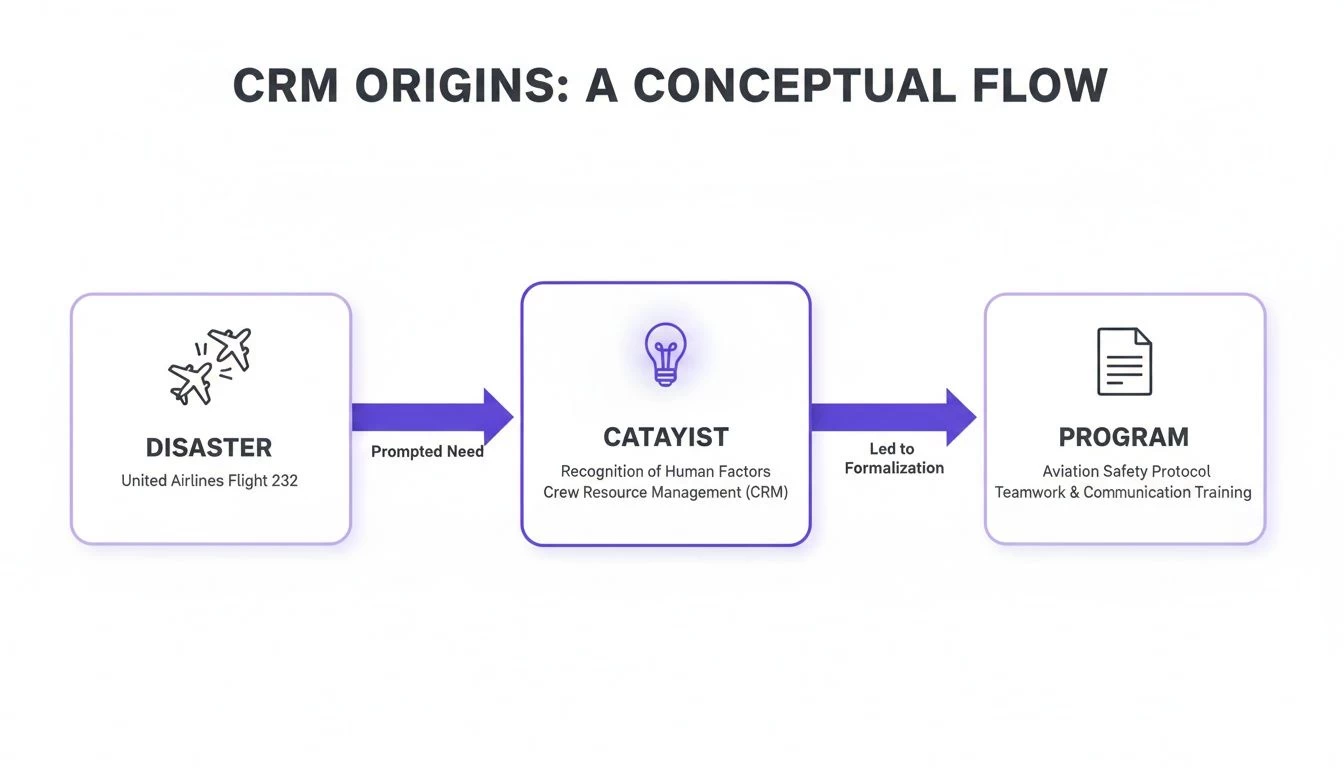
It’s a powerful reminder that the biggest leaps in safety often come from learning the hard lessons of the past.
Leadership And Teamwork: Fostering Collaboration
No operation succeeds without clear leadership and a team that clicks. This pillar focuses on defining roles, setting clear expectations, and building a truly collaborative environment. Great leadership isn't about barking orders; it's about creating a culture where everyone feels valued and takes personal responsibility for the mission's safety.
Even a solo pilot acts as a leader by taking ownership of the entire operation, from the initial planning right through to the final pack-down.
Workload And Stress Management: Mitigating Human Factors
Finally, this pillar acknowledges a simple truth: humans have limits. Workload management is about planning jobs to avoid overloading any single person. At the same time, stress management gives you strategies to stay calm and focused when things get intense.
Recognizing the signs of fatigue or stress—both in yourself and in your teammates—is a critical skill. It’s what stops minor errors from snowballing into serious problems.
Translating CRM Pillars From Aviation To Drone Operations
It can be tough to see how principles from a jumbo jet cockpit apply to flying a drone. This table should help connect the dots, showing how these time-tested aviation pillars translate directly to everyday drone operations.
| CRM Pillar | Aviation Example | Drone Operation Example |
|---|---|---|
| Communication | A co-pilot uses a standard phrase to challenge the pilot's incorrect altitude setting. | A visual observer clearly states "Obstacle, tree, 10 o'clock high" and the pilot confirms, "Copy, tree 10 o'clock, adjusting flight path." |
| Situational Awareness | An air traffic controller alerts a pilot to converging traffic they hadn't yet seen on their instruments. | A pilot notices the wind speed has picked up beyond the forecast and decides to land early, before battery levels become critical. |
| Decision-Making | A captain diverts to an alternate airport due to a sudden, unforecast thunderstorm over their destination. | A pilot faces an unexpected software glitch and follows a pre-briefed emergency checklist to land the drone safely in manual mode. |
| Leadership & Teamwork | The lead flight attendant briefs the cabin crew on their specific roles and responsibilities during an emergency landing. | A lead pilot conducts a thorough pre-flight briefing, assigning clear roles (pilot, observer, sensor operator) and ensuring everyone understands the mission goals and risks. |
| Workload Management | A flight crew divides up tasks during a high-stress approach, with one pilot flying and the other handling communications and checklists. | During a complex mapping mission, the pilot focuses solely on flying the grid lines while another team member monitors the data capture and battery levels. |
As you can see, the scenarios change, but the core principles of managing human factors for safety remain exactly the same. Whether you’re at 30,000 feet or 300, these pillars are what keep things safe and professional.
When CRM Fails: Learning from Aviation Disasters
Understanding the theory behind Crew Resource Management is one thing. Seeing what happens when it breaks down drives the lessons home with chilling clarity.
Aviation history, unfortunately, is filled with tragic examples of how small human errors can snowball into catastrophe when CRM principles are ignored. These stories aren't just for pilots; they're critical learning opportunities for anyone in a high-stakes field, and that absolutely includes professional drone operations.
By looking at these failures, we can draw a straight line from a breakdown in teamwork to a disastrous outcome. It reinforces the life-or-death importance of the five pillars we've been talking about.
The Fixation That Emptied the Tanks
Picture this: a clear evening in 1978. United Airlines Flight 173 is on final approach to Portland, Oregon. Suddenly, the crew notices a problem with the landing gear indicator. They can't get a confirmation that the gear is locked down. The captain, a seasoned pilot with over 27,000 flight hours, makes the call to circle near the airport while they figure it out.
This is where things started to go wrong. The entire flight crew became fixated on the landing gear—a relatively minor, non-critical problem. As they zeroed in on this single issue, they completely lost sight of the bigger picture. The flight engineer tried to raise the alarm, repeatedly warning them that they were burning through their fuel reserves. His concerns were brushed aside.
The crew’s collective situational awareness narrowed to a single point of failure, ignoring the far more critical threat of fuel starvation. This is a classic example of "tunnel vision," where a team gets so absorbed in one task that they miss obvious and escalating dangers.
The result was inevitable. The plane ran out of fuel and crashed into a suburban neighborhood, miles from the runway. The investigation concluded the crash was caused purely by the crew's failure to monitor their fuel state—a direct breakdown in both workload management and situational awareness.
A Communication Breakdown Over the Atlantic
Decades later, another disaster proved that CRM lessons have to be constantly reinforced. In 2009, Air France Flight 447 was crossing the Atlantic when it flew through ice crystals, causing its airspeed sensors to fail. A serious issue, for sure, but one that should have been manageable.
What unfolded next was a complete meltdown of communication and leadership. The captain was on a scheduled rest break, leaving two junior pilots in the cockpit. They failed to diagnose the problem correctly. One pilot pulled the plane's nose up into a steep climb, causing it to stall. When the captain returned to the cockpit, the conflicting information and chaotic communication meant he couldn't grasp what was happening until it was far too late.
The Air France 447 disaster, which claimed all 228 lives on board, was a painful illustration of CRM lapses, even with decades of established procedure. The final report pointed to "incoherent pilot inputs" and a failure to follow basic stall recovery procedures. It was a catastrophic collapse in teamwork and decision-making under pressure. You can dive deeper into how this event shaped modern CRM training on Pilotlife.
These incidents are stark reminders for us in the drone world: technical skill is worthless without a solid foundation in Crew Resource Management.
How to Implement CRM in Your Drone Operations
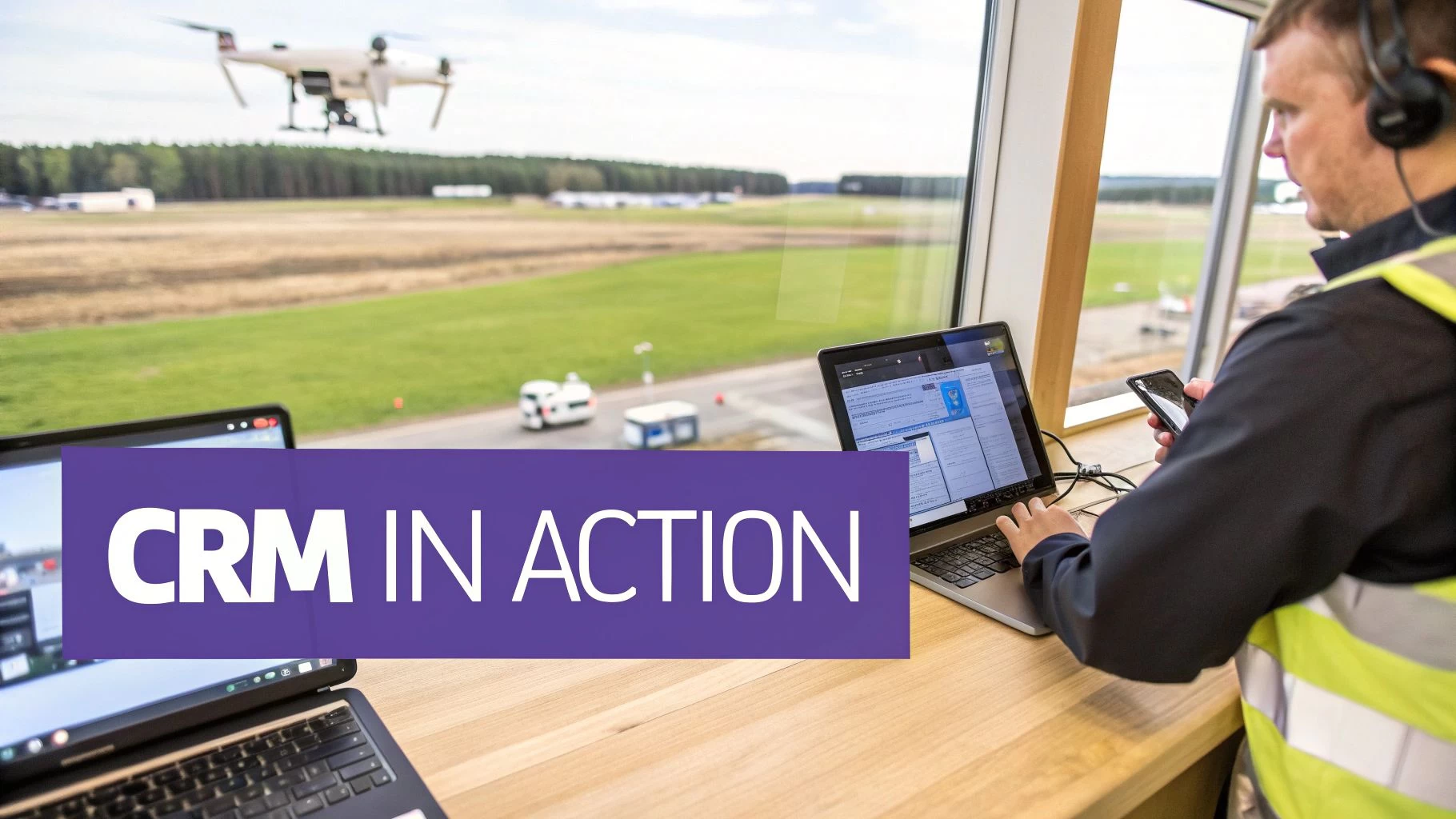
Moving from theory to practice is where a safety culture really takes hold. Bringing Crew Resource Management into your operations isn't about piling on complex new procedures. It's about embedding CRM principles directly into your daily workflow with smart tools and repeatable processes.
This is exactly where a dedicated drone operations management platform becomes invaluable.
Modern platforms are purpose-built to support the core pillars of CRM. Think of them as a digital co-pilot, helping you manage resources, maintain awareness, and make solid decisions, whether you're a one-person crew or leading a large team. The right software turns abstract safety concepts into tangible, everyday actions.
Centralizing Your Team and Fleet Management
Good teamwork starts with everyone being on the same page. Dronedesk’s Team & Fleet Management tools create a single source of truth for your entire operation. By assigning specific roles and permissions, you get rid of any confusion about who is responsible for what.
This clarity is the bedrock of CRM's leadership pillar. Everyone, from the remote pilot in command to the visual observer, knows their duties and has instant access to the correct equipment records and qualifications. This structured approach makes sure the right people with the right training are on every single mission.
Enhancing Situational Awareness with Flight Planning
Situational awareness is all about having a deep understanding of your operational environment. Dronedesk's Flight Planning features are built for this, layering crucial data—airspace restrictions, ground hazards, weather forecasts—into one intuitive map.
By visualizing these factors before you even think about taking off, your crew builds a strong mental model of the mission ahead. At the same time, automated flight logging captures every detail in real-time. This cuts down the pilot's workload, freeing up precious mental bandwidth to focus on flying safely. This detailed log is also gold for post-flight debriefs, a key CRM practice for getting better over time.
Just as CRM training transformed aviation safety, modern tools can do the same for drone operations. By embedding safety checks and collaborative workflows into the technology itself, we can systematically reduce the potential for human error.
The history of CRM is a story of learning from tragic mistakes. The 1978 crash of United Airlines Flight 173 was a textbook case of poor resource management; the crew became so fixated on a landing gear issue that they ignored critical fuel warnings and ran out of fuel.
This single event spurred recommendations for CRM training. Its adoption helped aviation accident rates plummet from 5.53 per million departures in 1970 to just 0.99 by 2000. For drone pilots, the parallels are striking—managing battery life is our "fuel," and clear communication is non-negotiable. You can learn more about the FAA's perspective on CRM's history and its profound impact.
Data-Driven Decision Making and Reporting
Good decisions depend on good data, not guesswork. The platform’s Proximity Intelligence feature automatically flags potential risks near your flight zone, giving you the hard data needed for sharp, proactive decision-making.
Finally, you close the loop with comprehensive Reporting. After a mission, you can review flight logs, assess team performance, and analyze any incidents that occurred. This review process is CRM in action, allowing your team to learn from every single flight. It also provides the vital documentation needed to build out a robust template for your operations manual, turning lessons learned into standard procedure.
Common Questions About Crew Resource Management
Even when you've got your head around the principles, a few practical questions always pop up when it's time to apply Crew Resource Management in the real world. Let's tackle some of the most common ones we hear from drone operators to help you bake these safety concepts into your daily flying.
Think of this as a friendly Q&A to clear up any loose ends and make sure the core ideas really stick.
Is CRM Only for Large Drone Teams?
Not a chance. In fact, you could argue that CRM principles are even more critical for solo operators. When you’re flying alone, you’re not just the pilot—you’re the visual observer, the safety officer, and the mission planner all rolled into one.
As a solo pilot, you have to juggle your own workload, keep an eye on everything happening around you, and make tough calls without anyone to bounce ideas off. CRM gives you a mental checklist to manage all those roles without letting fatigue or getting overwhelmed lead to a massive mistake. It’s all about managing your number one resource: yourself.
What Is the Single Most Important CRM Skill?
They're all linked, of course, but if you had to pick one, it’s effective communication. It’s the bedrock that everything else is built on. Without clear, direct, and honest talk, the other parts—teamwork, situational awareness, and decision-making—can crumble pretty fast.
"CRM is the application of ‘Leadership.’ It has benefits that aren't always considered because it is good leadership and it does improve morale... But from a fire service point of view, that improved communication also improves situational awareness... It's going to reduce near misses, it's going to reduce injuries.”
This nugget of wisdom comes from the fire service, who know a thing or two about high-stakes situations. It just goes to show that clear communication gets the right info to the right person at the right time, stopping small hiccups from turning into full-blown emergencies.
How Can I Start Practicing CRM Immediately?
You don't need to sign up for some complicated training course to get started. The single best thing you can do is to start using disciplined pre-flight briefings and post-flight debriefings. Every. Single. Time.
- Pre-Flight Briefing: Before you even think about taking off, get your team together (even if your team is just you) and walk through the plan. Nail down who's doing what, talk through the potential risks and how you'll handle them, and make sure everyone's on the same page with emergency procedures. It sets the tone for a safe, coordinated flight.
- Post-Flight Debriefing: Once the drone is back on the ground, take five minutes to chat about how it went. What went right? What went wrong? What can we do better next time? This builds a culture where everyone is always learning and getting better.
Just by "bookending" your flights with this kind of structured communication, you’re turning theory into a real, repeatable habit. It’s the first step to making CRM second nature in your workflow, and you'll see the benefits right away.
Ready to build a solid CRM framework into your drone operations? Dronedesk gives you the tools to manage your crew, plan flights with total situational awareness, and keep perfect records. Make your workflow smoother and your safety standards higher by visiting https://dronedesk.io to see how it works.
 How to Evaluate a Free Drone Logbook Before Using It →
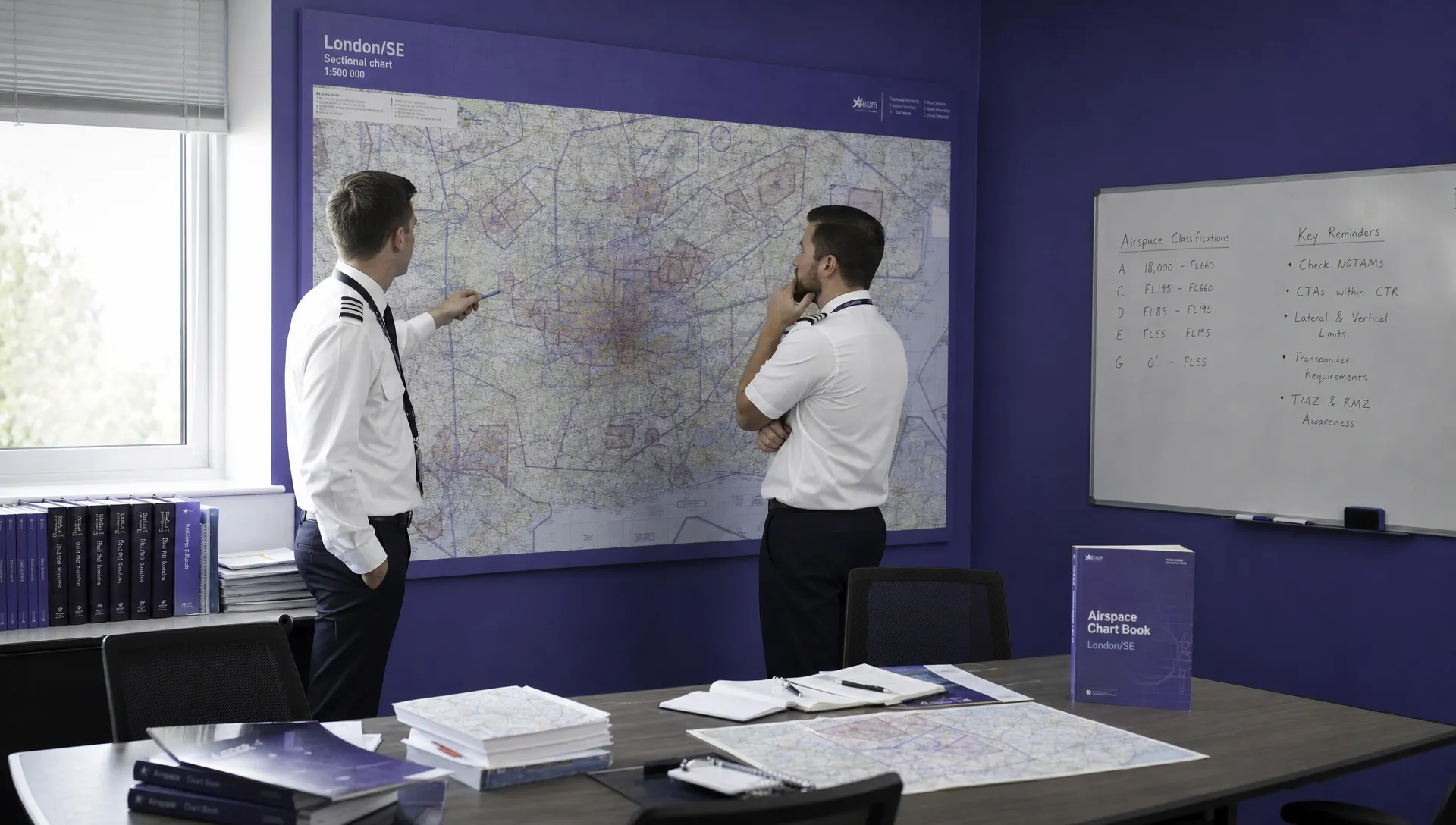 FAA Part 107 Test: How to Master Airspace Questions →
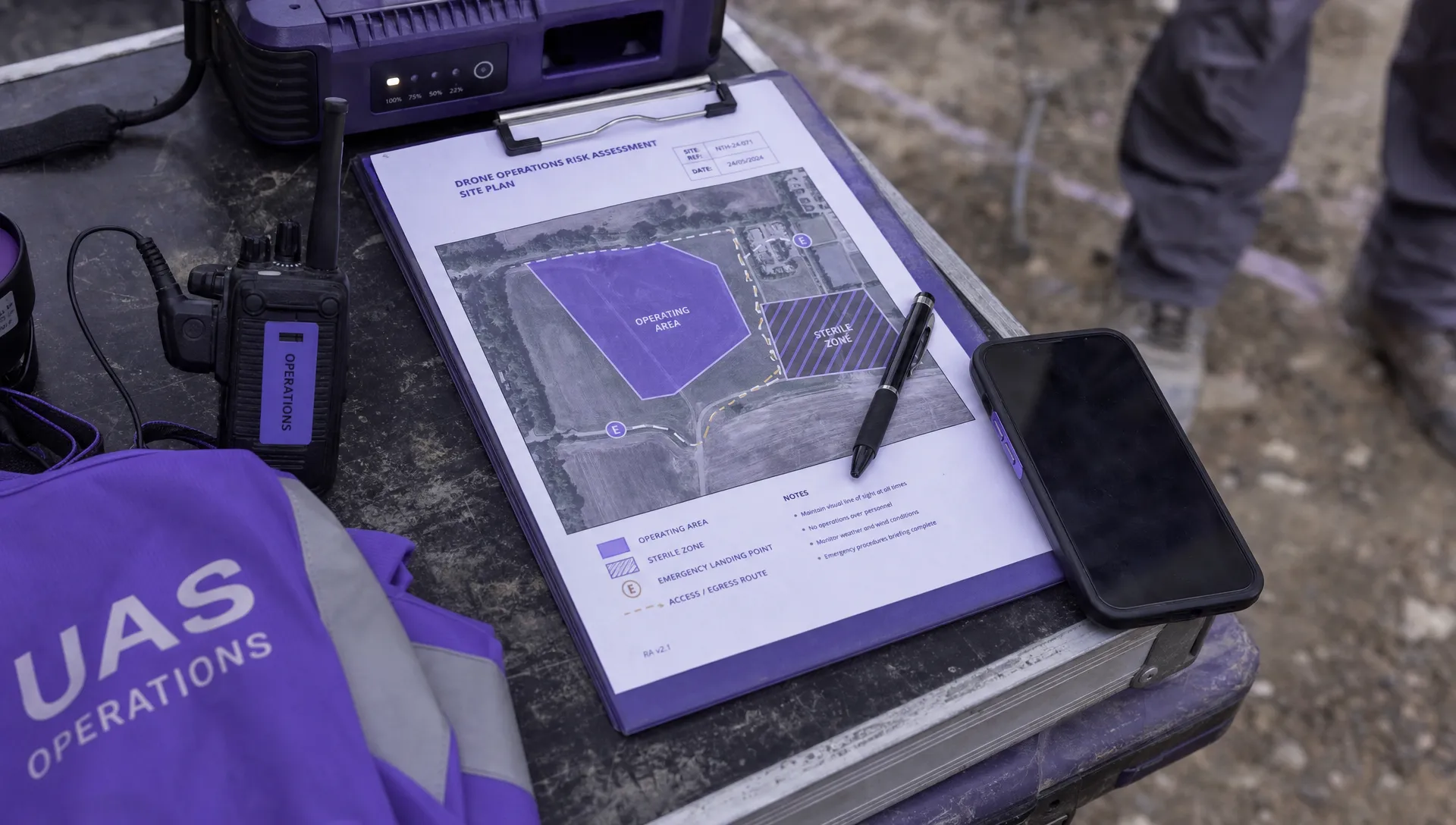 Drone Risk Assessment Controls That Work in the Field →
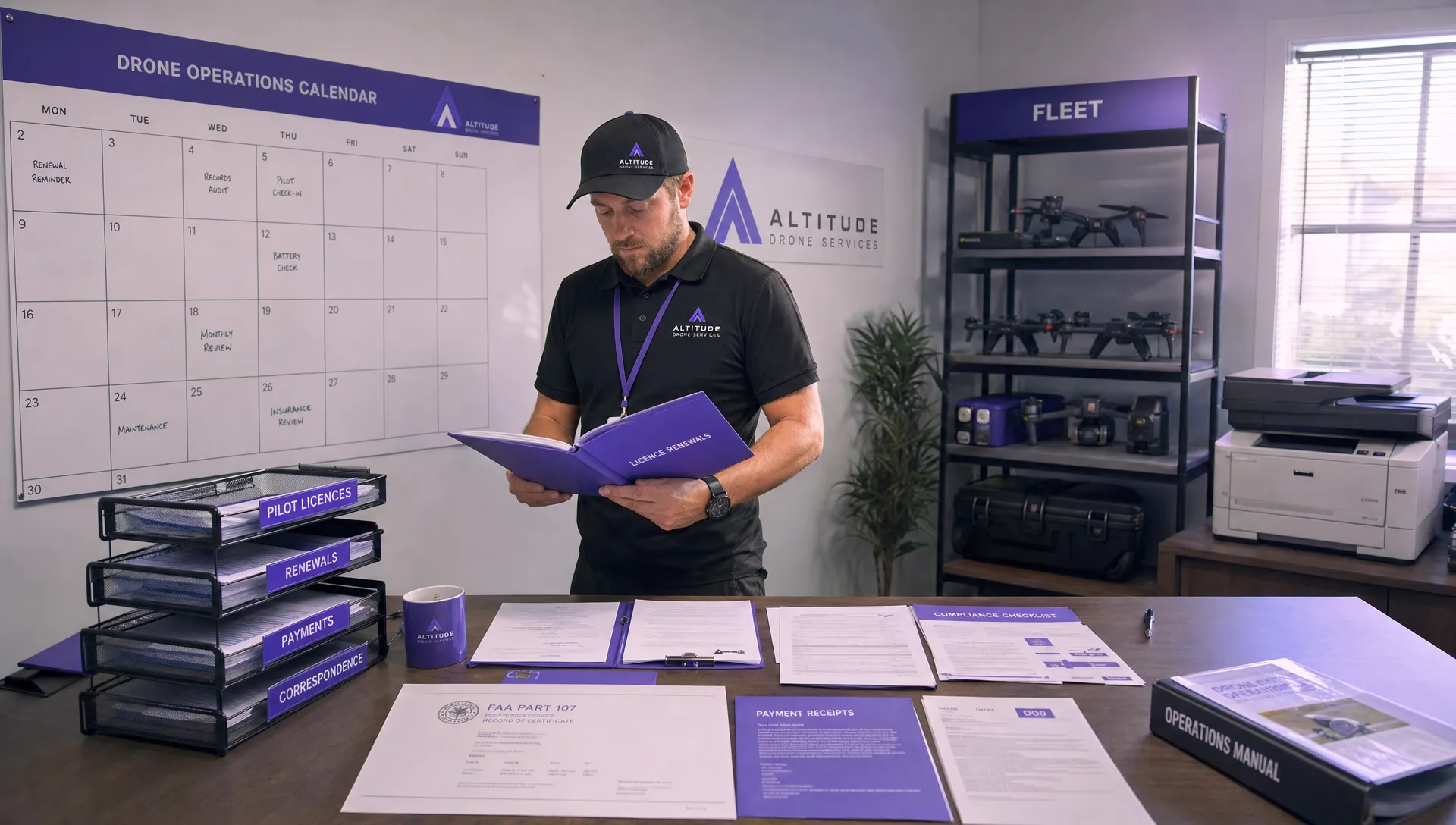 FAA Drone License Costs Beyond the Knowledge Test →
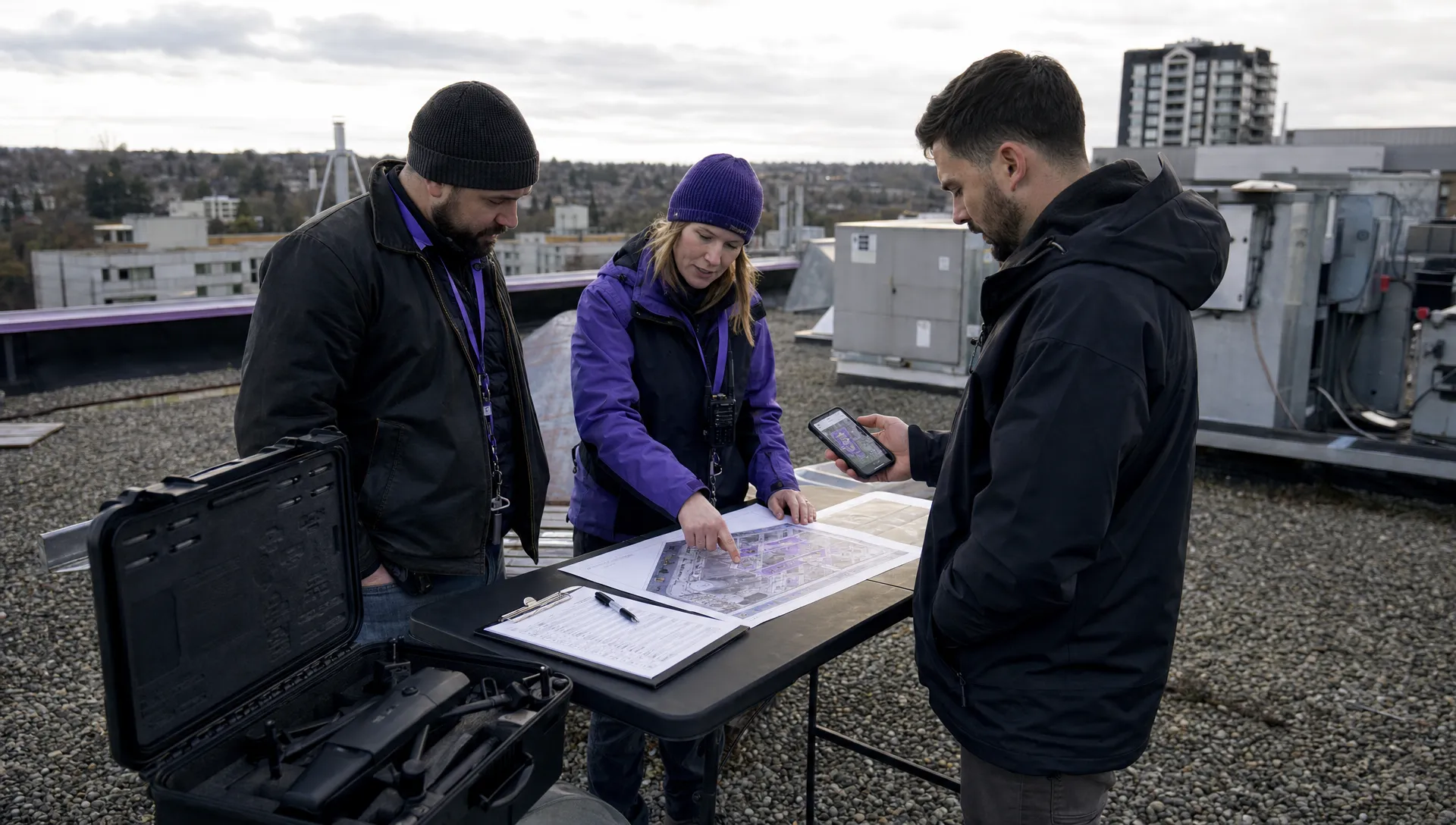 Drone Part 107 Operations: When a Waiver May Be Needed →
 Drone Operating Rules for Managing Contractors and Employees →
 BVLOS Drone Requirements for Building a Safety Case →
 Drone Pilot Test Mistakes That Cost Candidates Marks →
 FAA 107 License vs Part 107 Certificate: What’s the Difference? →
 Drone Airport Rules: A Field Checklist for Site Assessments →