
What Is Controlled Airspace for Drone Pilots
Controlled airspace is, quite simply, any part of the sky where Air Traffic Control (ATC) services are active. Think of it as a network of invisible highways, complete with traffic controllers, all designed to keep everything from huge passenger jets to small drones safely organized and separated.
So, What Exactly Is Controlled Airspace?

If you're new to drones, your first look at an airspace map can be a bit of a shock. It's a jumble of lines, colours, and codes that feels more like abstract art than a practical chart. But trust me, the idea behind it all is much simpler than it looks.
Picture the road system in a big city. You've got motorways for fast-moving traffic, smaller streets with traffic lights, and quiet local roads. Each one has its own set of rules to keep things moving and prevent crashes. Controlled airspace applies that exact same logic to the sky, creating a structured environment so all aircraft can coexist without incident. These "sky roads" are vital for preventing collisions and making sure air traffic flows smoothly.
To give you a clearer picture, let's break down the two main categories of airspace you'll encounter.
Quick Overview of Airspace Types
This table gives you a quick side-by-side comparison of controlled airspace and its counterpart, uncontrolled airspace (often called Class G).
| Characteristic | Controlled Airspace | Uncontrolled Airspace (Class G) |
|---|---|---|
| ATC Services | Provided and mandatory | Not provided |
| Primary Users | Commercial flights, general aviation, military | Drones, gliders, ultralights, VFR traffic |
| Requirements | Strict entry and communication rules | Minimal rules, "see and avoid" principle |
| Purpose | High-density traffic management and safety | Low-density traffic, recreational flying |
Essentially, if you're in controlled airspace, you're in a managed environment. If you're in Class G, you're largely on your own, but so is everyone else.
Why Does This Matter for Drone Pilots?
For anyone flying a drone, understanding these boundaries isn't just a good idea—it's absolutely essential. This isn't just about ticking boxes on a checklist; it's about being a safe, responsible pilot sharing the sky with others. Flying a drone into the path of a helicopter or a light aircraft can lead to disaster. Knowing what controlled airspace is and, more importantly, where it is, is your first and most important line of defense.
The need for this kind of organized system became painfully obvious as aviation boomed after World War II. In 1948, the International Civil Aviation Organization (ICAO) was formed, laying the groundwork for the air traffic management we have today. This global framework now helps manage over 40 million scheduled commercial flights every year, proving just how critical a harmonized approach to safety is.
Key Takeaway: Controlled airspace isn't there to stop you from flying. It's there to protect everyone in the air. By taking the time to learn the system, you're not only staying legal but also doing your part to keep our national airspace safe for all.
Getting a solid grip on this concept is a massive step forward for any pilot. To build on this, it’s worth digging into the specific classes you'll come across on your maps. You can learn more about the various types of airspace in our detailed guide.
How to Navigate the Different Airspace Classes
Trying to get your head around the alphabet soup of airspace classes—A, B, C, D, and E—can feel like learning a new language. Forget the dry, textbook definitions for a moment. It’s much easier to think of them as different security levels in a building; the rules get stricter the higher you go.
As a drone pilot, you’ll mostly be buzzing around the lower levels, so that's where we'll focus.
For example, Class A airspace is basically the top-secret vault of the sky. It kicks in at 18,000 feet and goes way, way up, reserved for high-speed commercial jets flying on instrument flight rules. Drones are never allowed up there, so you can tick that one off your list of worries.
The classes you really need to know are those much closer to the ground, especially the ones wrapping around airports. These invisible boundaries are critical for protecting planes, helicopters, and their passengers during takeoff and landing.
Decoding the Most Common Classes
Class B is the high-security zone protecting the nation’s busiest airports—think JFK in New York, LAX in Los Angeles, or O'Hare in Chicago. It’s often pictured as an upside-down wedding cake, with layers that get wider the higher they go. Flying a drone here requires explicit, direct clearance from Air Traffic Control (ATC). No exceptions.
Class C airspace surrounds airports that are busy but not quite on the same scale as Class B hubs. Picture airports in cities like Raleigh-Durham or San Antonio. It has a similar tiered shape but is generally smaller. You'll still need authorization to fly here.
This infographic gives a great visual breakdown of how these classes stack up.

As you can see, the higher you move up the ladder from Class C to A, the more intense the ATC involvement becomes and the stricter the rules get.
Class D airspace is typically found around smaller regional airports that have an active control tower. It's usually a simple cylinder of airspace reaching from the ground up to 2,500 feet. Just like with Classes B and C, you must get authorization before you even think about launching your drone inside its boundaries.
Finally, there’s Class E, which is the most common type of controlled airspace you'll encounter. In some spots, it can start right at the surface, but it more often begins at either 700 or 1,200 feet above the ground, stretching up to where Class A airspace begins.
While a lot of it is above where you'd normally fly your drone, you absolutely have to know where its "floor" is. If your mission takes you into it, permission is required. For a much deeper dive, check out our guide to Class E airspace rules for drone pilots.
To give you a handy reference, here’s a quick-glance table comparing the airspace classes you’re most likely to encounter.
Controlled Airspace Classes At a Glance for Drone Pilots
| Airspace Class | Typically Found Around | Drone Authorization Required? | Key Characteristic |
|---|---|---|---|
| Class B | The nation's busiest airports (e.g., LAX, ORD) | Yes, explicit ATC clearance | Complex, multi-layered "upside-down cake" shape |
| Class C | Busy regional airports (e.g., RDU, SAT) | Yes, via LAANC or manual request | Smaller version of Class B, usually two tiers |
| Class D | Smaller airports with a control tower | Yes, via LAANC or manual request | Simple cylindrical shape up to 2,500 ft AGL |
| Class E | Everywhere else, often above other classes | Yes, if flying within its boundaries | The most widespread class; floor varies (surface, 700 ft, or 1,200 ft) |
This table should help you quickly identify what you're dealing with when you see these classes on a map, but always remember to dig into the specifics for your exact location before you fly.
This whole framework is part of the United States’ National Airspace System (NAS), the largest and most complex system of its kind in the world. It’s a massive logistical operation managed by the Federal Aviation Administration (FAA) to keep over 13 million flights annually—from jumbo jets to your drone—operating safely in the same sky.
Essential Tools for Identifying Controlled Airspace
Knowing the theory behind controlled airspace is one thing, but actually identifying it in the real world before you launch? That's another beast entirely. Thankfully, you don't need to be a cartographer to get this right. With a mix of old-school charts and modern digital tools, a thorough pre-flight check is easier than ever.
While some old-timers might still pull out a VFR Sectional Chart—those classic, detailed paper maps of the sky—most of us in the drone world now lean on faster, more intuitive digital solutions. These apps take all that complex airspace data and boil it down into simple, visual information right on your phone or tablet.
Using B4UFLY for Instant Airspace Awareness
If you're flying drones in the U.S., one of the most vital tools you can have is the Federal Aviation Administration’s (FAA) own app, B4UFLY. Think of it as your first, most basic check. It gives you clear, location-based airspace data that’s perfect for a quick pre-flight assessment.
The app uses a simple status indicator to tell you if you’re clear to fly. You can drop a pin on your planned location or just use your phone's GPS for an instant reading on the surrounding airspace, flagging any temporary restrictions or airport-specific rules you need to know about.
Here’s what the B4UFLY interface looks like, giving you a straightforward visual of local airspace advisories.

This screenshot clearly lays out advisories and altitude limits, giving you an immediate handle on the local flight environment.
The real strength of B4UFLY is its direct pipeline to official FAA data. This includes the LAANC system, which lets you request automated authorization to fly in many controlled areas directly through the app. Its interactive maps show you exactly where controlled airspace boundaries lie and what altitude caps are in place.
Other Popular Flight Planning Platforms
Beyond B4UFLY, there's a whole ecosystem of third-party apps that offer even more detailed planning features. Many drone manufacturers, like DJI, even have their own geofencing systems built-in, alerting you when you’re near controlled airspace based on FAA data.
Pro Tip: Always cross-reference multiple sources. One app might give you a green light, but another could catch a brand-new Temporary Flight Restriction (TFR) that hasn't populated everywhere yet. A comprehensive check is a safe check.
For commercial operators, integrated platforms are usually the way to go. These tools roll airspace intelligence, mission planning, flight logging, and compliance tracking into one neat package. Choosing the best drone airspace app really comes down to what your operations demand, but there are a few features that are always worth looking for:
- Real-time LAANC authorization for getting quick approvals.
- 3D airspace visualization to get a better grip on complex boundaries.
- Weather overlays and obstacle data for a full safety picture.
- NOTAM and TFR alerts so you're never caught off guard by last-minute changes.
By making these tools a non-negotiable part of your pre-flight workflow, you can confidently figure out what is controlled airspace for any mission. More importantly, you'll ensure every single flight is both safe and compliant.
How to Get Authorization to Fly Your Drone
So, your pre-flight check shows you're inside controlled airspace. What now? Discovering you're near a boundary is the first step; getting permission to cross it is the next. Thankfully, the days of filling out long, complicated manual requests are fading away for most common flight scenarios.

The key to unlocking access for most drone pilots is a system called LAANC, which stands for Low Altitude Authorization and Notification Capability. Think of it as an automated, digital handshake between your flight plan and the FAA. It connects you directly to Air Traffic Control, providing near-instant approvals for flights in many controlled areas.
LAANC is built into dozens of FAA-approved drone apps. The system is clever—it checks your proposed flight area against pre-approved altitude grids managed by the FAA. If your request falls within these safe, pre-cleared limits, you can often get authorization in just a few seconds. This is a massive improvement over the older, much slower manual process.
Using LAANC for Near-Instant Approval
Submitting a LAANC request is a simple process you can knock out right from your tablet or computer. The steps are pretty much the same no matter which supported app you're using.
- Select Your Flight Area: Open a LAANC-capable app and drop a pin on your exact operating location.
- Define Flight Parameters: Pop in the date, time, duration, and the maximum altitude you plan to fly. The app will clearly show you the highest you can go in that specific grid.
- Submit Your Request: Add your pilot and aircraft details, then hit submit. The system crunches the data automatically.
- Receive Authorization: In most cases, you'll get a confirmation text or in-app notification almost immediately, giving you the green light to fly under the specified conditions.
Some requests might need a closer look, especially if you're asking for higher altitudes or operating in more sensitive zones. In those instances, your request gets forwarded for a manual review by an air traffic controller, and you'll get a notification with their decision later on.
Important Note: A LAANC authorization just gives you permission to fly in that specific slice of controlled airspace. It doesn't mean you can ignore other rules, like avoiding flights over people or flying inside a Temporary Flight Restriction (TFR).
What if LAANC Isn't Available?
While LAANC is a huge leap forward and covers hundreds of airports, it doesn't cover everything. In areas where it's not an option, you have to go back to the traditional manual authorization process through the FAA's DroneZone portal.
This process is definitely more involved. You'll need to submit an airspace authorization request well ahead of your planned flight—sometimes up to 90 days in advance. Be prepared to provide detailed information about your operation, including your safety plans and flight path specifics.
Here’s when you’d typically use DroneZone instead of LAANC:
- Non-LAANC Airports: The controlled airspace is around an airport that hasn’t been integrated into the LAANC system yet.
- Higher Altitudes: Your mission requires you to fly above the pre-approved LAANC grid ceilings.
- Special Operations: The flight involves more complex scenarios that aren't covered by the automated approval system.
Getting comfortable with these authorization channels is a fundamental skill for any professional drone pilot. Mastering both the speed of LAANC and the more detailed DroneZone process ensures you can legally and safely get your drone in the air for any mission that comes your way.
Recognizing Other Critical Flight Restrictions
Getting a handle on controlled airspace is a massive step, but it’s not the whole picture. Think of airspace classes as the permanent, marked highways on a road map. What you also need to watch out for are the temporary roadblocks and permanent no-go zones that can pop up anywhere, often with little warning. They carry just as much weight.
These dynamic, often short-term no-fly zones are called Temporary Flight Restrictions (TFRs). They're put in place to protect people and property on the ground during big events or emergencies. You can’t plan for them weeks in advance; they demand real-time awareness.
Common Reasons for TFRs
A TFR essentially creates an invisible protective bubble over an area, and they can be issued for a bunch of reasons. Here are a few common scenarios:
- VIP Movements: When the President or other high-profile officials are on the move, a TFR follows them to guarantee security.
- Major Sporting Events: Flying your drone over a stadium packed with 50,000 fans during a big game is a definite no-go, and a TFR is what makes it official.
- Emergency Response: During events like wildfires or hurricane recovery efforts, a TFR is crucial for clearing the skies for firefighting aircraft and rescue helicopters. A drone getting in the way here could have fatal consequences.
- Public Safety: You'll also see TFRs over accident scenes or during police operations to keep the area secure.
Beyond these temporary pop-ups, some locations are permanently off-limits to drones. These are typically sensitive sites where a drone could pose a serious security or environmental risk.
These permanent no-drone zones usually include places like military bases, nuclear power plants, prisons, and critical infrastructure like dams. Many national parks also ban drone flights to protect wildlife and preserve the natural experience for visitors.
The key takeaway is this: A location that is clear to fly today might be a no-fly zone tomorrow. You absolutely have to check for last-minute restrictions right before you launch.
This means your pre-flight check has to go beyond just identifying the airspace class. You also need to consult Notices to Air Missions (NOTAMs). These are the official, real-time alerts that all pilots rely on to stay informed about TFRs and other potential hazards.
Understanding these kinds of rules isn't just a drone thing, either. For example, the legal considerations for scattering ashes from a plane also involve sticking to strict flight regulations and potential restrictions. It just goes to show how many different activities in the sky have to navigate a complex regulatory landscape.
Answering Your Top Questions About Controlled Airspace
Even when you feel like you've got a handle on the rules, a few common questions always seem to surface. Let's tackle the most frequent points of confusion head-on, giving you clear, direct answers so you can fly with more confidence.
What Happens If I Fly in Controlled Airspace Without Authorization?
Flying a drone into controlled airspace without permission isn't something regulators just brush off. It’s a serious safety breach that can genuinely endanger other aircraft, from passenger jets to emergency helicopters.
The fallout from an unauthorized flight can vary wildly depending on how serious it was. For a first-time, honest mistake, you might just get a warning letter from the FAA.
But for more severe or repeated offenses, the penalties ramp up fast. You could be looking at:
- Suspension or Revocation: The FAA can pull your Part 107 Remote Pilot Certificate, either temporarily or for good. That means your commercial drone flying career is over.
- Significant Fines: We're not talking small change. Civil penalties can soar past $30,000 for a single violation, depending on the details of the incident.
- Criminal Charges: In the most extreme cases, especially if you're deemed to have recklessly endangered other aircraft, federal criminal charges are on the table.
The Bottom Line: Compliance is non-negotiable. The risks of ignoring controlled airspace rules are just too high, hitting your wallet, your career, and the safety of everyone sharing the sky.
Can I Use LAANC to Get Authorization for Night Flights?
Yes, you absolutely can, but there's an important catch: it's a two-step process. You can't just fire up a LAANC request after sunset and expect it to work.
First, you need a valid night operations authorization. For Part 107 pilots, this means you’ve completed the updated initial test or the required recurrent online training, which now covers night flying specifics. Think of this as your general ticket to fly after dark.
Once you have that fundamental requirement sorted, then you can submit a specific flight authorization request through a LAANC-capable app for your nighttime mission. The process itself is identical to a daytime request, you just enter your planned flight times for after civil twilight. As long as your request is within the pre-approved altitude ceilings for that area, the system will grant you automated approval.
What Is the Real Difference Between Class E and Class G Airspace?
This is easily one of the most common head-scratchers for new pilots, and it's a critical distinction to make. The simplest way to frame it is that Class G is uncontrolled, while Class E is controlled.
Think of Class G Airspace as the "wild west" of the sky. It's the only airspace that is genuinely uncontrolled, meaning Air Traffic Control has no authority or responsibility for what goes on there. For us drone pilots, this is our default playground where we can typically fly up to 400 feet above the ground without needing to ask for permission. It's the standard airspace for most low-altitude flying in rural areas.
Class E Airspace, however, is controlled. It might look vast and empty from the ground, but ATC is responsible for the aircraft in it, especially those flying under Instrument Flight Rules (IFR).
For a drone pilot, the key thing to understand about Class E is where its "floor" begins. In many areas, the floor of Class E airspace starts at either 700 feet or 1,200 feet above ground level, which means the Class G airspace beneath it extends all the way up to that altitude. The tricky part is that around many smaller airports, Class E can extend all the way down to the surface. If you plan to fly in Class E airspace at any altitude, you must have authorization.
Trying to navigate these complex rules for every single flight can really eat up your time. Dronedesk brings real-time airspace intelligence directly into your mission planning, cutting through the complexity and making sure every flight is safe, compliant, and efficient. Learn how Dronedesk can streamline your operations today.
 How to Build a Drone Pilot Flight Log That Is Audit Ready →
 FAA Drone Licence Requirements for Commercial Pilots →
 FAA BVLOS Waivers Granted: What Successful Cases Show →
 How to Export DJI Flight Logs for Incident Reviews →
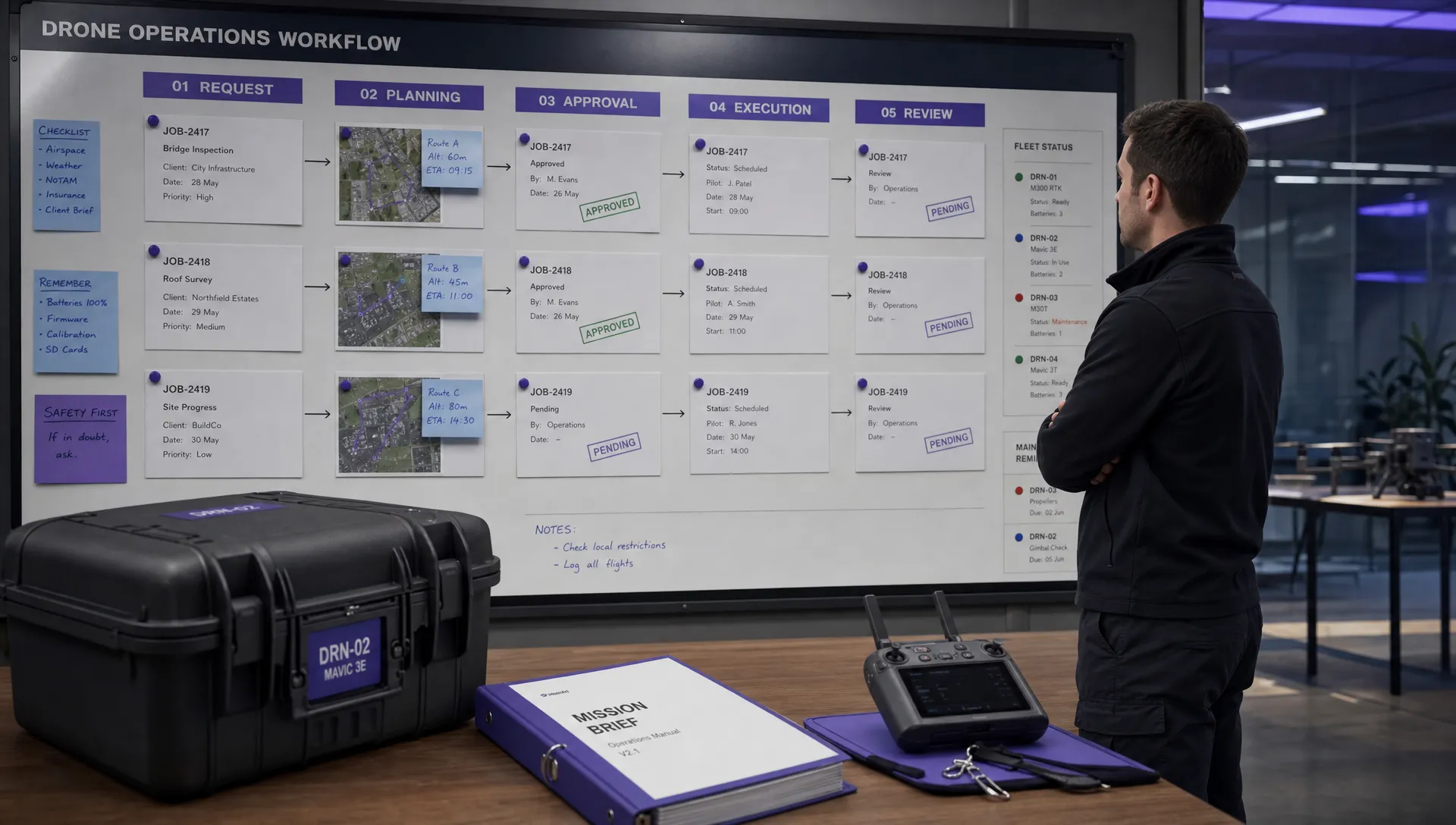 Drone Safety and Legal Duties for Business Operations →
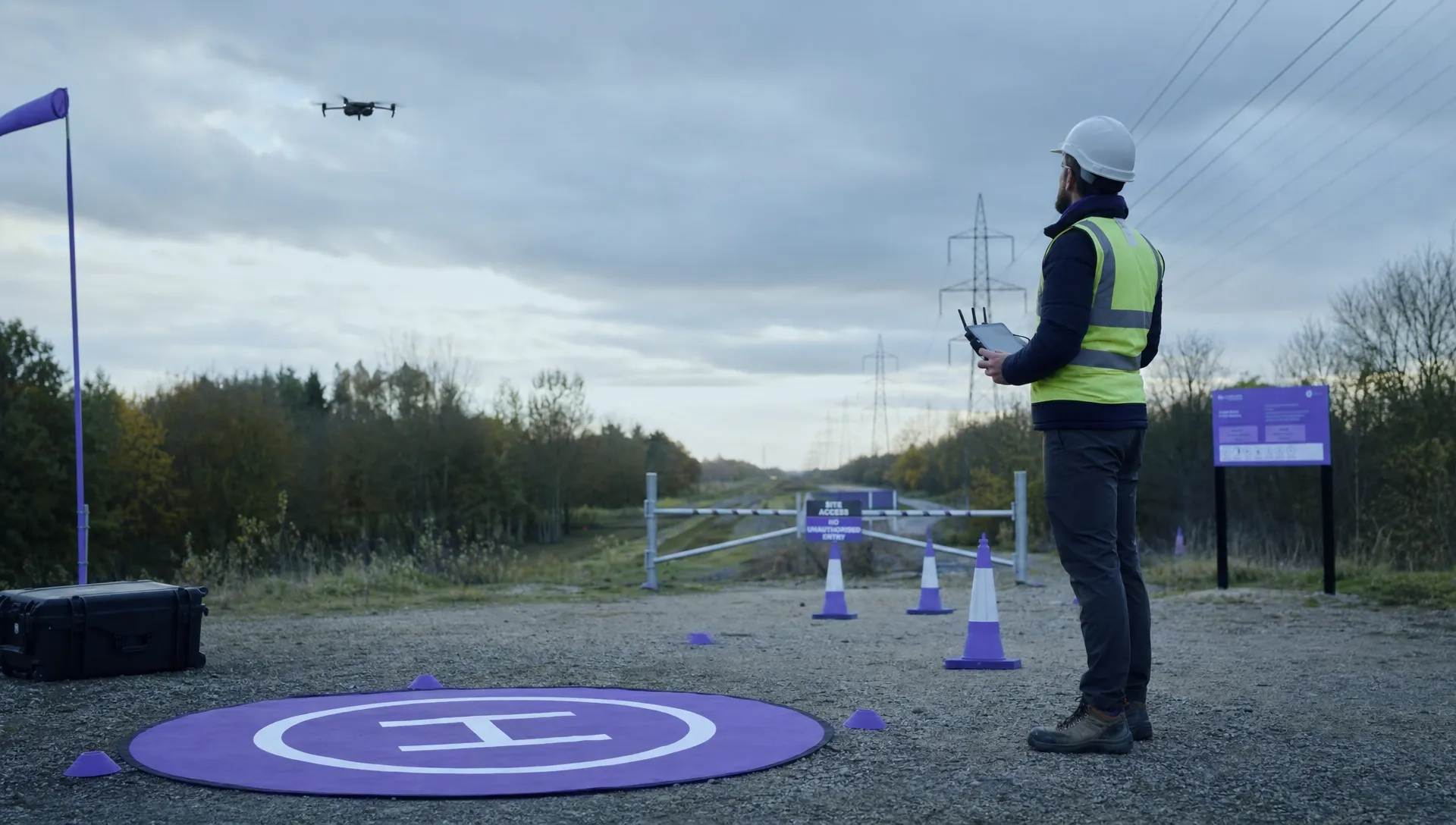 EASA Drone Regulations: Open, Specific and Certified Categories →
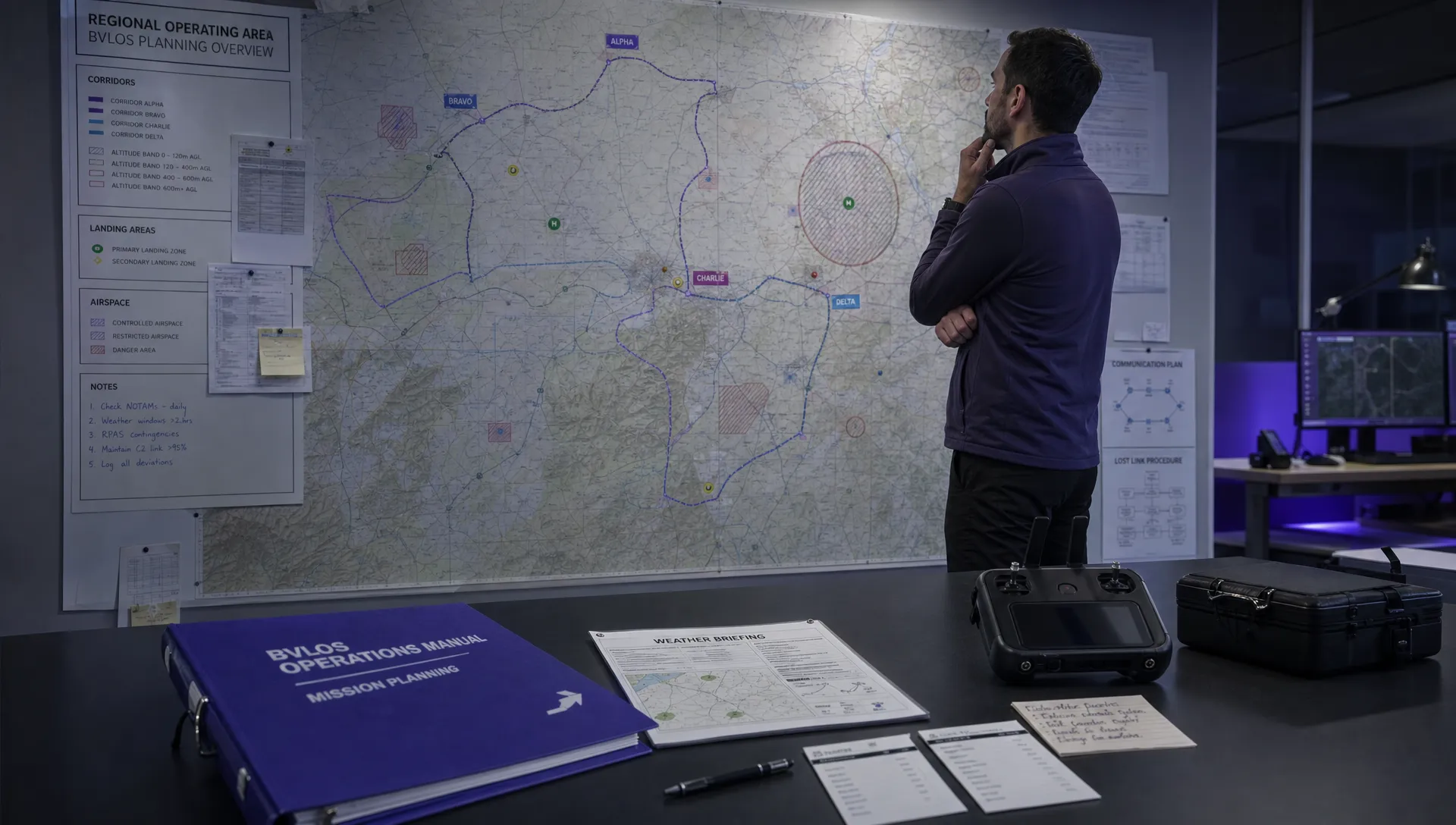 What the BVLOS ARC Report Means for UAS Operators →
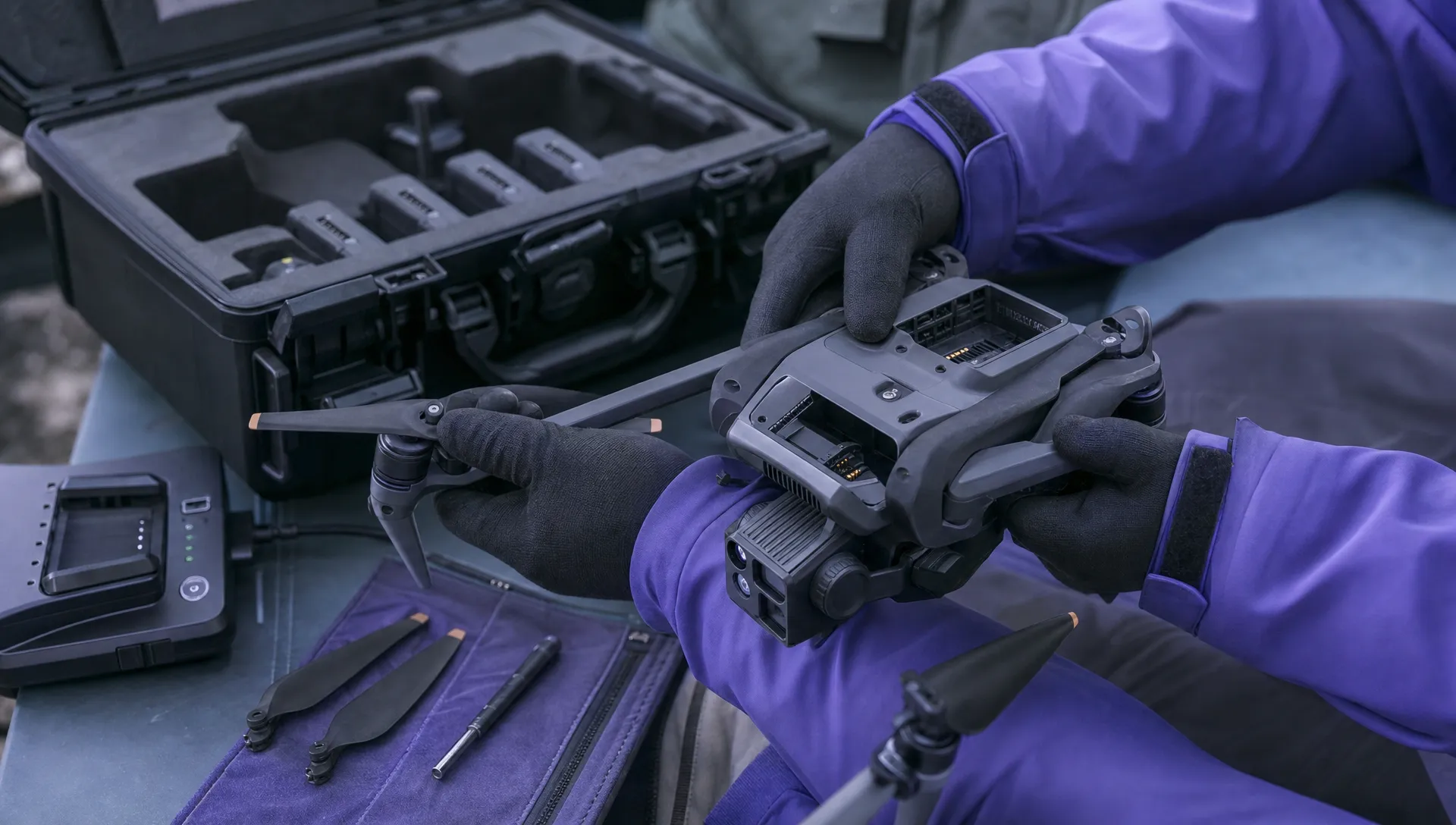 Free Drone Pre-Flight Checklist for Commercial Missions →
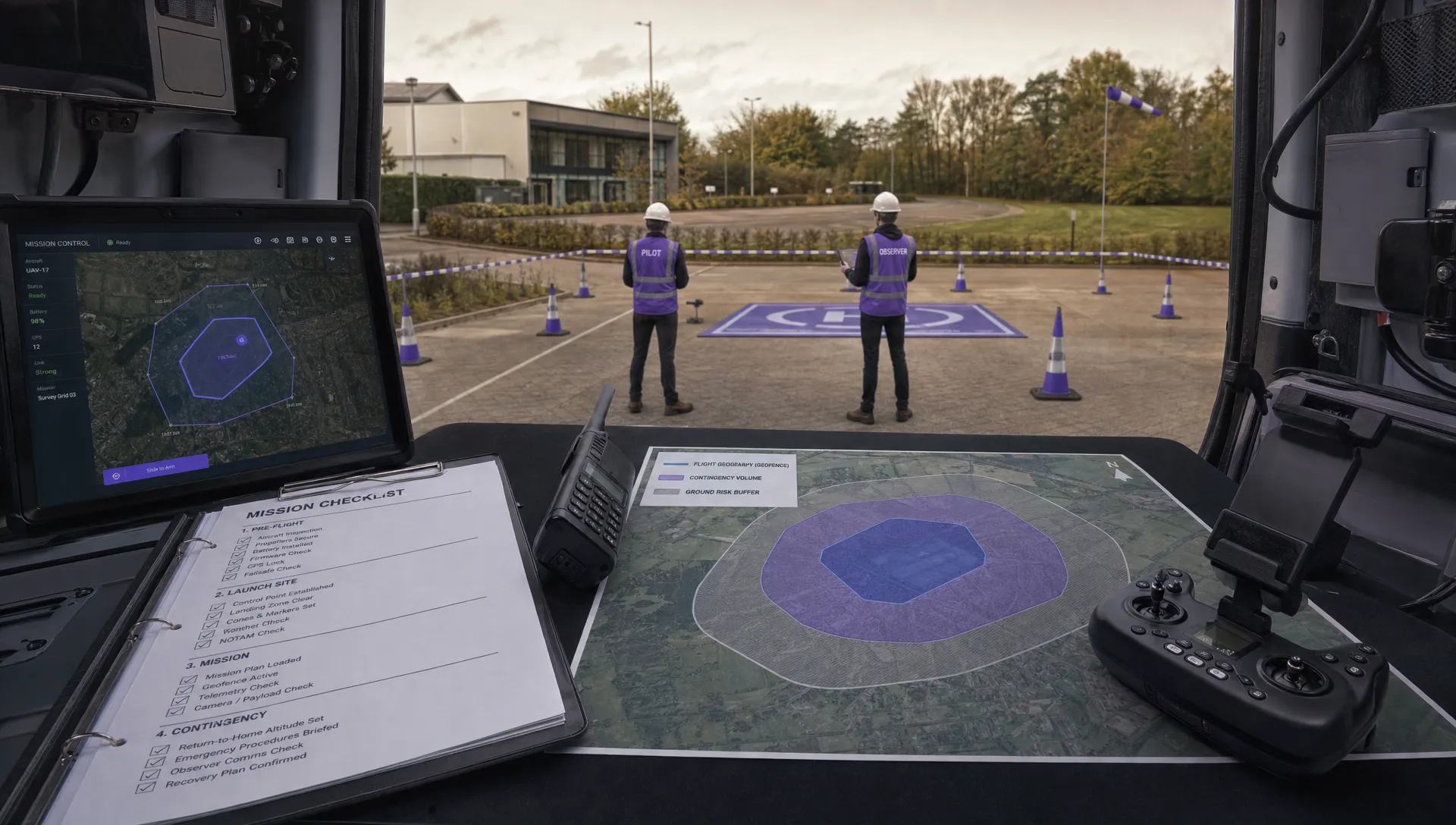 Contingency Volume and Flight Risk Buffer Explained →
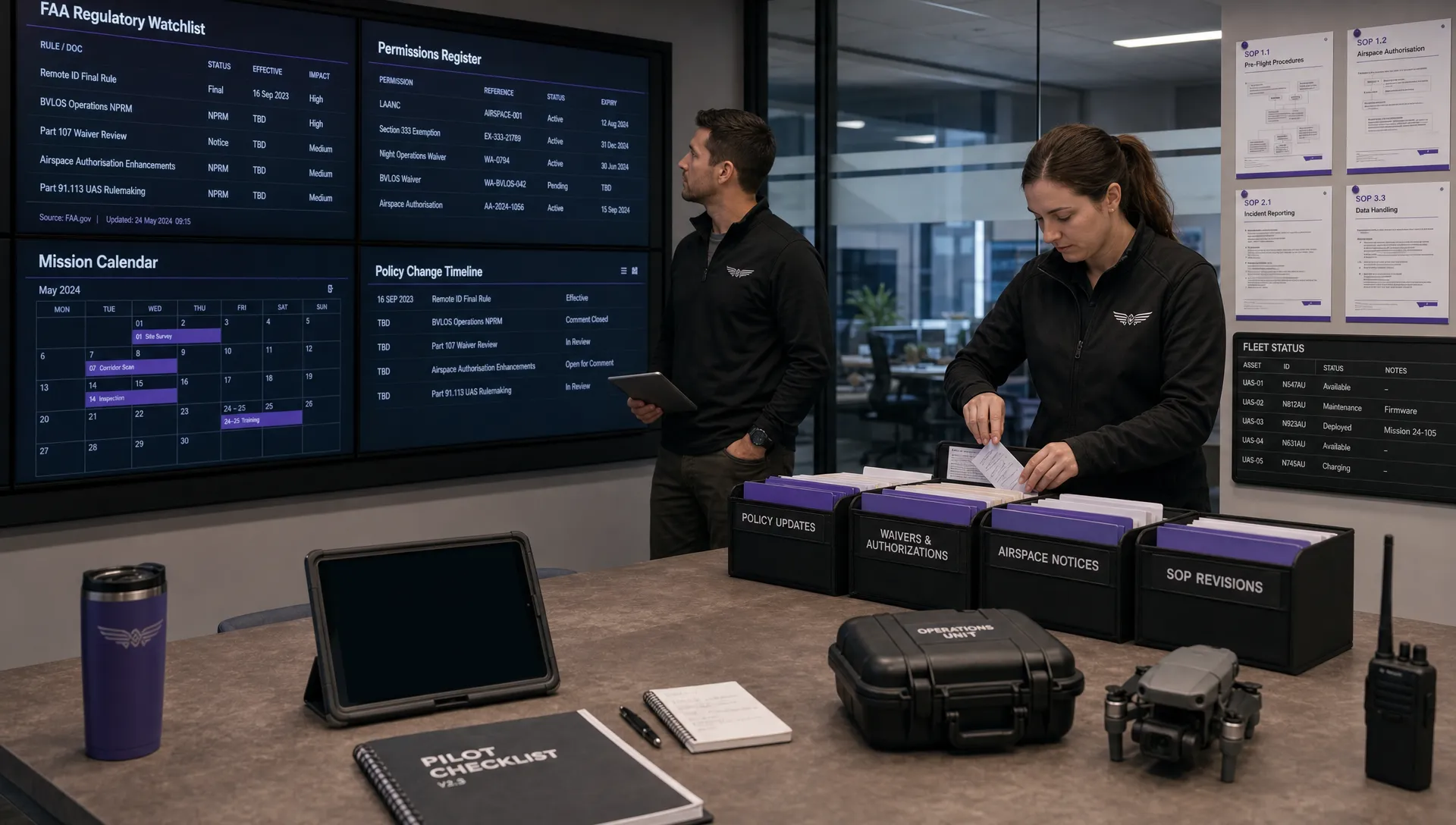 FAA Policy Changes That Commercial Drone Teams Should Track →