
The Rise of AI & Quantum Tech in Drones—Is Your Fleet Ready?
Let's get one thing straight: your drone fleet must be ready for AI and quantum tech. This isn't some sci-fi movie concept anymore. It's a real-world technological shift that is defining the industry leaders right now. If you're not adapting, you're actively choosing to be left behind.
Why Your Drone Fleet Must Evolve Now
It's easy to think of AI and quantum technologies for drones as something far off on the horizon, but the reality is that the future is already here. This blend of tech is creating massive competitive and operational advantages today. For any drone fleet manager, treating this shift as "optional" is like stubbornly holding onto a horse-and-buggy in the age of the automobile—a decision that guarantees you'll be obsolete.
The reason for the urgency is simple: AI and quantum tech fundamentally rewrite what a drone is capable of. They elevate a drone from a simple remote-controlled camera to a smart, autonomous partner that can make complex decisions on the fly. This isn't a small upgrade. It's a complete evolution.
The New Competitive Edge
Being "ready" isn't just about owning the latest drone models anymore. It's about building an entire operation that can process, analyze, and act on information faster and with more precision than your competitors. Fleets that jump on these advanced systems will see massive improvements across the board:
- Serious Efficiency Gains: Automating things like flight paths, data collection, and even the initial analysis cuts down on human error. It also frees up your skilled pilots to focus on the truly high-value tasks that require their expertise.
- Superior Data Intelligence: An AI can scan visual data in real time and spot things a human eye would easily miss—think a hairline crack in a wind turbine blade or a small patch of stressed crops in a vast field.
- Future-Proofing Your Business: Getting on board with these technologies now builds the foundational knowledge and infrastructure you'll need as the pace of change inevitably picks up.
The rise of AI and quantum tech in drone operations is a major turning point. The organizations that move now won't just streamline what they're already doing; they'll secure a lasting advantage in a market that's changing by the day.
To give you a clearer picture, let's look at the primary motivations pushing drone fleets toward these advanced technologies. The table below breaks down the shift from traditional methods to what's possible with AI and quantum enhancement.
Key Drivers for Adopting AI and Quantum Tech in Drone Fleets
A summary of the primary motivations and benefits for integrating advanced technologies into modern drone operations.
| Area of Impact | Traditional Drone Operations | AI & Quantum-Enhanced Operations |
|---|---|---|
| Data Analysis | Manual, post-flight data review. Slow, resource-intensive, and prone to human error. | Real-time, on-board AI analysis. Instant anomaly detection and actionable insights. |
| Mission Planning | Manual flight path creation. Limited by line-of-sight and simple pre-programmed routes. | Dynamic, autonomous flight path optimization. Drones adapt to obstacles and changing conditions. |
| Security | Susceptible to basic signal jamming and hacking attempts. Data is often unencrypted or weakly protected. | Quantum-encrypted communication channels. Virtually unhackable data transmission. |
| Operational Scale | One pilot per drone. Difficult to manage and coordinate large fleets effectively. | Single operator can manage a swarm of autonomous drones performing coordinated tasks. |
| Problem Solving | Limited to pre-defined tasks. Cannot solve complex, unforeseen problems in the field. | Quantum computing can model and solve complex logistical or routing problems instantly. |
As you can see, the leap in capability is enormous. We're moving from a tool that simply follows orders to a partner that thinks, adapts, and secures itself.

The data in this infographic paints a very clear picture: the market is blowing up, the performance gains are undeniable, and most forward-thinking companies are already making their move. Sitting on the sidelines and waiting to see what happens is no longer a viable strategy.
Understanding AI in Modern Drone Operations

It's easy to get lost in the jargon, so let's cut to the chase. What does Artificial Intelligence really mean for your drones? Forget complex algorithms for a second and think of it like this: you're upgrading a skilled pilot to a ‘super-pilot’—one with senses beyond human capability and the power to make decisions in a heartbeat.
AI is what turns a drone from a simple remote-controlled camera into an intelligent, autonomous partner in the field. This change is powered by two core technologies that give drones the ability to see, learn, and act on their own: computer vision and machine learning.
Seeing and Learning with AI
Computer vision is basically the drone's eyesight, but cranked up to a whole new level. It's the drone's ability to not just see, but to understand the visual data its camera is capturing in real-time. So, instead of you having to pore over hours of footage later, the drone can analyse what it sees as it flies.
Take an agricultural drone, for example. One equipped with computer vision can fly over hundreds of acres and tell the difference between a healthy crop and one showing signs of stress. It can spot subtle colour variations that our eyes would miss completely. It doesn't just see a field; it sees millions of individual data points, flagging potential disease or irrigation problems plant by plant.
AI is the engine that drives true drone autonomy and operational intelligence. It's the difference between a tool that follows commands and a partner that anticipates needs.
Machine learning is the 'brain' of the operation. This allows the drone to learn from its own experiences, getting better and smarter over time without needing a human to program every single possibility. It chews through massive amounts of data from past flights—things like terrain, weather patterns, and even component performance—to make predictions about the future.
What does that look like in practice? It means a drone can learn to navigate tricky, hazardous terrain flawlessly after only a few missions. Even better, it might predict a potential motor failure days before it happens by detecting tiny changes in vibration, telling you to ground it for maintenance instead of letting it fall out of the sky. This is a massive shift from being reactive to predictive.
The business world is certainly paying attention. The AI in drones market, valued at a hefty USD 821.3 million in 2025, is expected to explode to nearly USD 2.75 billion by 2030. That kind of growth doesn't happen by accident. It’s a direct result of drones moving beyond basic remote control to become truly intelligent platforms for autonomous navigation, obstacle avoidance, and live data analysis.
You can explore more about how AI is revolutionizing drone management to see how these capabilities translate into safer, more efficient flights.
Exploring Quantum Technology for Drones

If you think of AI as your drone’s brilliant co-pilot, then quantum technology is its crystal ball. This is the next massive shift on the horizon, and getting your head around it now is the best way to prepare your drone operations for the future. It sounds incredibly complex, but the basic idea is about processing information at a speed and scale that makes today's computers look like pocket calculators.
Think of it like this: a normal computer is like a librarian who has to read every single book in a library, one by one, to find a specific piece of information. A quantum computer, on the other hand, can read every book in that library at the exact same time. This incredible parallelism is what gives quantum tech its almost unbelievable power, and it’s poised to impact drone operations in three huge ways.
Quantum Sensing for Unprecedented Accuracy
First up is quantum sensing. This will give drones an almost supernatural ability to see and understand their environment. These sensors are so mind-bogglingly sensitive that they can detect tiny, almost imperceptible changes in gravity or magnetic fields.
What does this mean for a drone? It means it could navigate perfectly without ever needing a GPS signal, which as we know, can be easily jammed or just unavailable. A drone with a quantum sensor could map out underground pipes or hidden geological formations from the air with pin-point accuracy. This opens up a whole new world of possibilities in construction, mining, and even search and rescue operations.
Quantum Computing for Complex Problem Solving
Next, we have quantum computing. While it’s still very much an emerging technology, its potential for managing large drone fleets is off the charts. It's built to solve enormous logistical puzzles that would completely overwhelm even today’s most powerful supercomputers.
Imagine trying to manage a fleet of 1,000 delivery drones across a busy city. A traditional computer would grind to a halt trying to calculate the most efficient route for every single drone in real-time, especially when factoring in weather, air traffic, and new delivery jobs popping up every second.
A quantum computer could solve this optimization puzzle almost instantly. It would find the perfect route for every single drone in the fleet, maximizing efficiency and minimizing delivery times on a scale we can’t currently manage.
Quantum Communications for Unhackable Security
Finally, there’s quantum communications, which promises to create genuinely unhackable data links between your drones and the ground station. The encryption we use today is strong, but in theory, a powerful enough computer could eventually break it.
Quantum communication is different. It’s based on the fundamental laws of quantum physics. If anyone tries to intercept the data stream, the very act of observing it instantly changes it. This immediately alerts both the sender and the receiver that someone is snooping. It creates a secure data channel that is fundamentally tamper-proof, ensuring sensitive surveillance or infrastructure data stays completely private.
While a full-blown quantum computer running your drone fleet is still a little way off, quantum sensing and secure communications are developing at a rapid pace. Understanding how AI and quantum tech are set to work together in drone operations is the first step in getting your fleet ready for what is undeniably the next frontier.
How AI-Enhanced Drones Create Real-World Value
The buzz around AI and quantum tech in the drone world isn't just about some far-off future. It's happening right now, delivering solid, measurable results. Across a whole host of industries, AI-powered drones have shifted from being a futuristic idea to an indispensable tool used every single day. We're not talking about small tweaks here; these are fundamental changes to how the job gets done.
Take agriculture, for instance. An autonomous drone armed with AI and hyperspectral imaging can survey a thousand-acre farm and pinpoint disease on one specific plant. By catching it early, before it can take hold and spread, a farmer can save millions in crop losses and slash the amount of pesticide they need to use. It’s a level of precision that’s simply impossible for a human to achieve on that scale.
From Infrastructure to Emergencies
The energy sector provides another powerful example. Companies are sending autonomous drones up to inspect massive wind turbines—a notoriously dangerous and time-consuming task for human crews. The drone's AI can sift through high-resolution images on the fly, spotting hairline cracks or subtle wear and tear on the blades. This prevents catastrophic failures and avoids hugely expensive downtime.
It’s a similar story in emergency response, where speed and accuracy can literally mean the difference between life and death. After a natural disaster, an AI-equipped drone can map a huge, dangerous area in just a few minutes. A task like that would take ground teams days to complete.
The AI chews through thousands of images to build real-time 3D models of the terrain. This helps first responders find safe routes and locate survivors much, much faster. That capability directly translates into more lives saved.
Each of these examples ties a specific AI function back to a clear business benefit:
- Cost Savings: Slashing crop losses and cutting down on manual inspection hours.
- Improved Safety: Getting human workers out of harm's way.
- Radical Efficiency: Finishing complex jobs in a tiny fraction of the time.
The strategic value is obvious, and the market growth is reflecting it. Industry forecasts predict the global AI in drone market will explode from USD 12.3 billion in 2024 to an incredible USD 51.3 billion by 2033. This growth is being fired up by the increasing use of autonomous drones for vital work like infrastructure inspection, surveillance, and precision agriculture. You can discover more about these AI market growth predictions on grandviewresearch.com.
These real-world uses prove that AI-enhanced drones are already a serious competitive advantage. As the tech gets even better, its impact is only going to grow, completely changing the game for all sorts of industries. You can also read also about how drones and artificial intelligence are revolutionizing industries in our detailed guide. Getting ready isn't just about preparing for tomorrow; it's about staying competitive today.
Your Step-by-Step Fleet Readiness Plan

Getting ready for the next wave of drone tech doesn't mean you have to suddenly overhaul your entire operation and break the bank. It's much smarter to think of it as a strategic evolution, taking a phased approach that builds momentum over time.
This roadmap breaks the journey down into manageable steps. It’s all about getting your fleet ready for the AI and quantum leap without causing unnecessary headaches or disruption. The goal here is to build a solid foundation today so you can confidently bring in more advanced tools tomorrow. And this doesn't start with buying shiny new hardware—it starts with getting what you already have in order.
Phase 1: Foundational Readiness
Before you can run, you have to walk. This first phase is all about getting your house in order, and that means focusing on your two most critical assets: your data and your people. A strong foundation here will make every single step that follows smoother and more effective.
Start by asking yourself a couple of honest questions:
- Data Infrastructure: Is all your flight data, imagery, and maintenance history neatly organised and easy to access? Or is it scattered across random hard drives, cloud accounts, and different platforms?
- Pilot Upskilling: Are your pilots only trained to fly, or do they also get the basics of data management and even a little analysis?
The journey into advanced drone operations is powered by data. A disorganised data ecosystem is like trying to build a skyscraper on a foundation of sand—it simply won't support the weight of future technologies.
The first practical move is to centralise your operational data. This means bringing everything—from flight logs and battery health reports to client details and mission imagery—into a single, structured system. This initial cleanup is absolutely vital for any future AI analysis you hope to perform.
Phase 2: Pilot AI Projects
Once your data is organised, you can start dipping your toes into AI with some low-risk, high-reward experiments. You don't need a fleet of fully autonomous drones to get started; you can begin simply by applying AI analytics to the footage you already have. It’s the perfect way to show the value and build some in-house expertise.
Here are a couple of ideas for initial projects:
- Automated Image Analysis: Use an AI tool to scan thousands of your past inspection photos. It could spot recurring fault patterns that even a sharp human analyst might have missed over time.
- Predictive Maintenance: Feed your maintenance logs and component data into a machine learning model. It could start predicting when parts are likely to fail, which means less unexpected downtime for your fleet.
These projects deliver real, tangible results and help your team get a feel for the practicalities of how AI and automation are changing the game for drone operations.
Phase 3: Quantum Foresight and Strategic Partnerships
While full-blown quantum computing for drones is still a way off, being ready means staying in the loop and building connections now. This phase is less about buying tech and more about looking ahead, positioning your business to act decisively when the technology finally matures.
Your focus should be on two things: education and collaboration. Make it a point to actively follow developments in quantum sensing and communications. Even more importantly, start building relationships with technology partners, universities, and research labs that are on the front lines of this field.
These partnerships will become an invaluable source of insight and opportunity when the time comes to adopt quantum-level capabilities.
Navigating the Challenges of Advanced Drone Tech
Let's be realistic. Bringing AI and quantum technologies into your drone fleet isn't as simple as flipping a switch. The potential payoff is huge, but the path is full of very real hurdles. Facing these challenges head-on is the only way to build a strategy that actually works.
The first big roadblock is the tangled and constantly shifting regulatory landscape. As drones get smarter and start flying missions Beyond Visual Line of Sight (BVLOS), the rules get tighter. Staying on the right side of this web of local, national, and international laws takes dedicated expertise and a sharp eye to keep your operations fully compliant.
Then there’s the money. The high initial investment can be a real showstopper. Top-of-the-line drones, the powerful hardware needed to process all that data, and specialized software don't come cheap. This financial barrier is a major reason many fleets pump the brakes, which makes a phased, budget-aware adoption plan an absolute must for any kind of long-term success.
Securing Data and Developing Skills
Beyond the red tape and upfront costs, two other critical challenges pop up. First is data security and privacy. The more detailed information your drones collect, the juicier a target they become for cyberattacks. Things like end-to-end encryption aren't just nice-to-haves anymore—they are fundamental for keeping your clients' trust and your operation's integrity intact.
Second is the skills gap. Your team needs to be more than just good pilots. They need to get their heads around data management, AI analytics, and the fine print of compliance. This usually means one of two things: investing in solid, continuous training to upskill the people you already have, or bringing in new talent who already have that specialized know-how.
You have to look at these technologies with a balanced perspective. For every amazing new capability, there's a practical problem that needs a smart solution. It's the preparation for the entire journey—not just the flashy destination—that separates the leaders from the laggards in this space.
The incentive to push through these obstacles is undeniable. The global drone market, driven hard by AI integration, is projected to swell to an incredible USD 54.6 billion by 2025. This kind of growth makes it clear: getting your fleet ready isn't just a tech upgrade, it's a vital business move. You can discover more insights about AI drone trends from LoyaltyDrones.com.
Got a few lingering questions? You're not alone. Let's tackle some of the most common ones we hear from drone professionals weighing up these new technologies.
How Soon Do I Need to Adopt AI for My Drone Fleet?
The honest answer? You should be planning for it now.
While you might not need a fully autonomous fleet tomorrow, your competitors are almost certainly already dipping their toes in the water. They're using AI for smarter data analysis, predictive maintenance to prevent costly downtime, and more reliable navigation.
A smart way to start is with a few small pilot projects focused on data. This lets you see the return on investment firsthand and helps your team build valuable new skills without a massive upfront cost.
Is Quantum Technology for Drones a Reality Today?
It depends on what you mean. If you're thinking of full-blown quantum computing for mind-bendingly complex route optimisation, that's still a little way down the road.
However, other quantum-powered applications are much closer than you think. Things like ultra-precise quantum sensing and truly unhackable quantum-secured communications are emerging fast.
Being "quantum-ready" today isn't about immediate deployment. It's about staying informed, choosing hardware that can be adapted later, and understanding how these changes will ripple through your industry. It's all about preparation.
What Is the Biggest Barrier to Adopting These Technologies?
Money is always a factor, but frankly, the bigger hurdles are often the skills gap and the ever-present red tape of regulation.
You can have the best tech in the world, but it's useless without a team that knows what to do with it. A successful transition needs a solid plan to get your people comfortable with data management and analytics.
It also demands a clear strategy to navigate regulations around autonomous operations, like Beyond Visual Line of Sight (BVLOS) flights. Partnering with technology experts and staying engaged with regulatory bodies is essential for a smooth transition.
Ready to streamline your entire drone operation and prepare for the future? Dronedesk provides the end-to-end management platform you need to ensure safety, boost productivity, and maintain compliance. Join thousands of professionals who trust Dronedesk to simplify their workflow. https://dronedesk.io
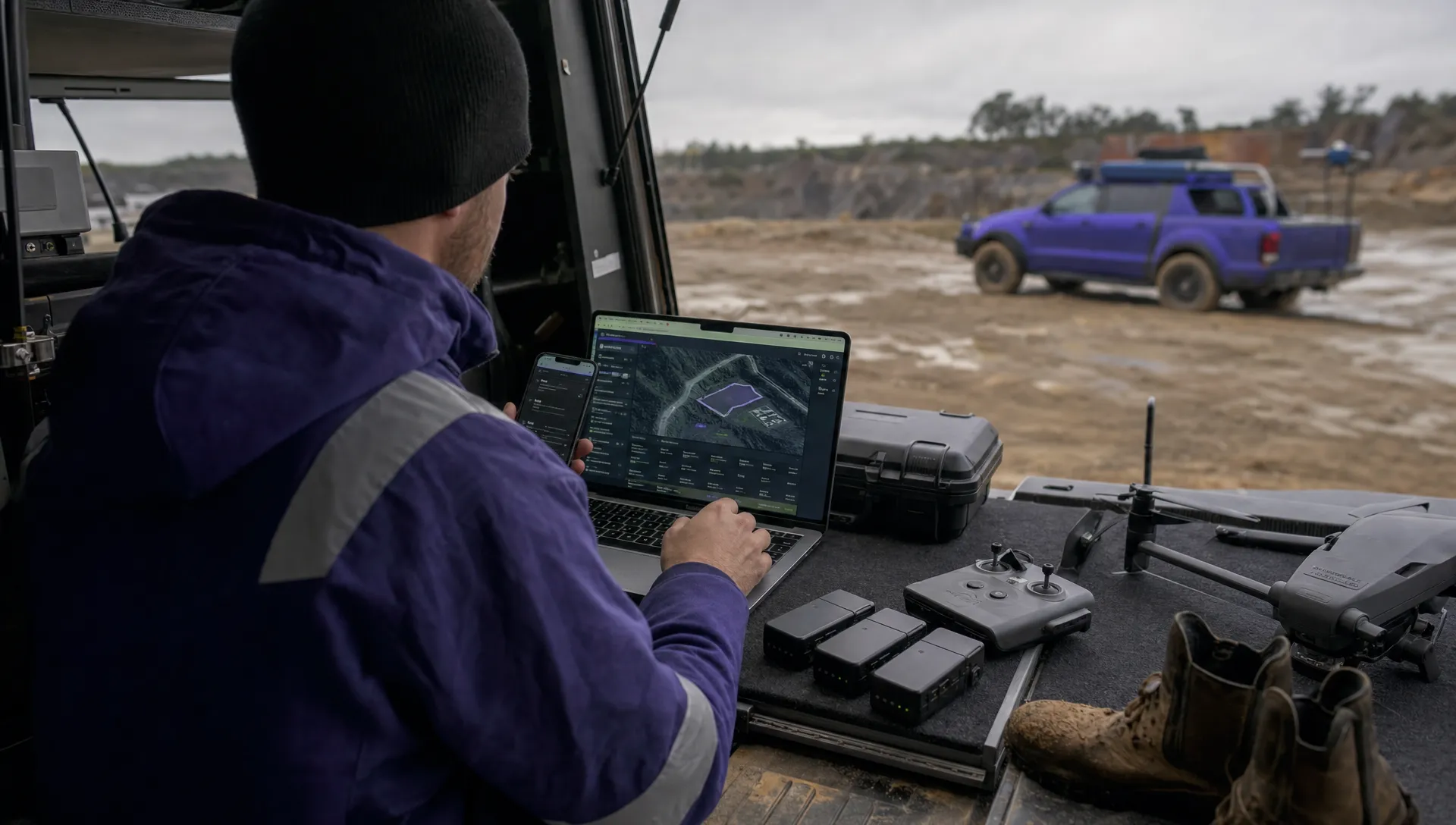 Drone Operating Rules for Managing Contractors and Employees →
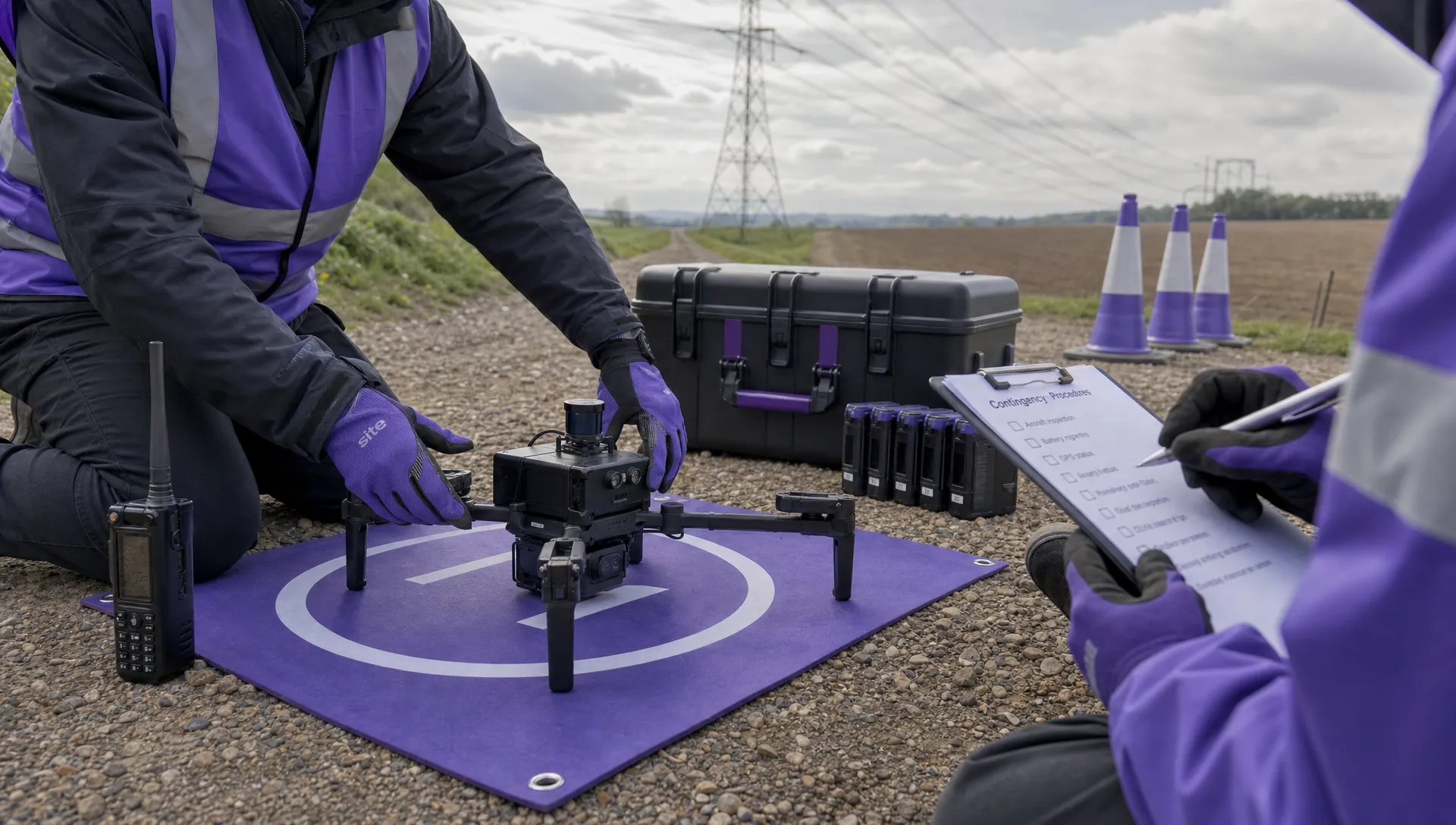 BVLOS Drone Requirements for Building a Safety Case →
 Drone Pilot Test Mistakes That Cost Candidates Marks →
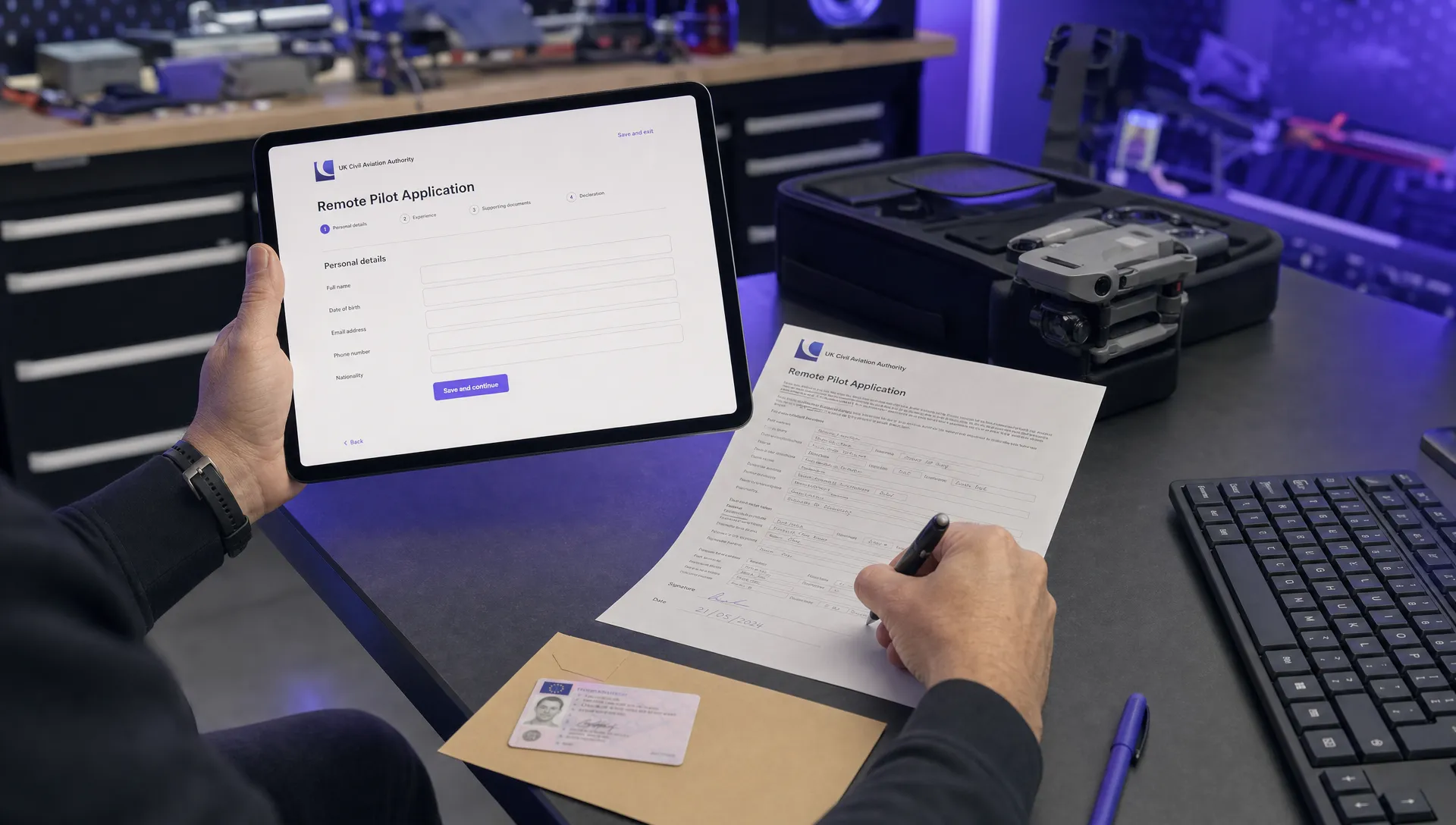 FAA 107 License vs Part 107 Certificate: What’s the Difference? →
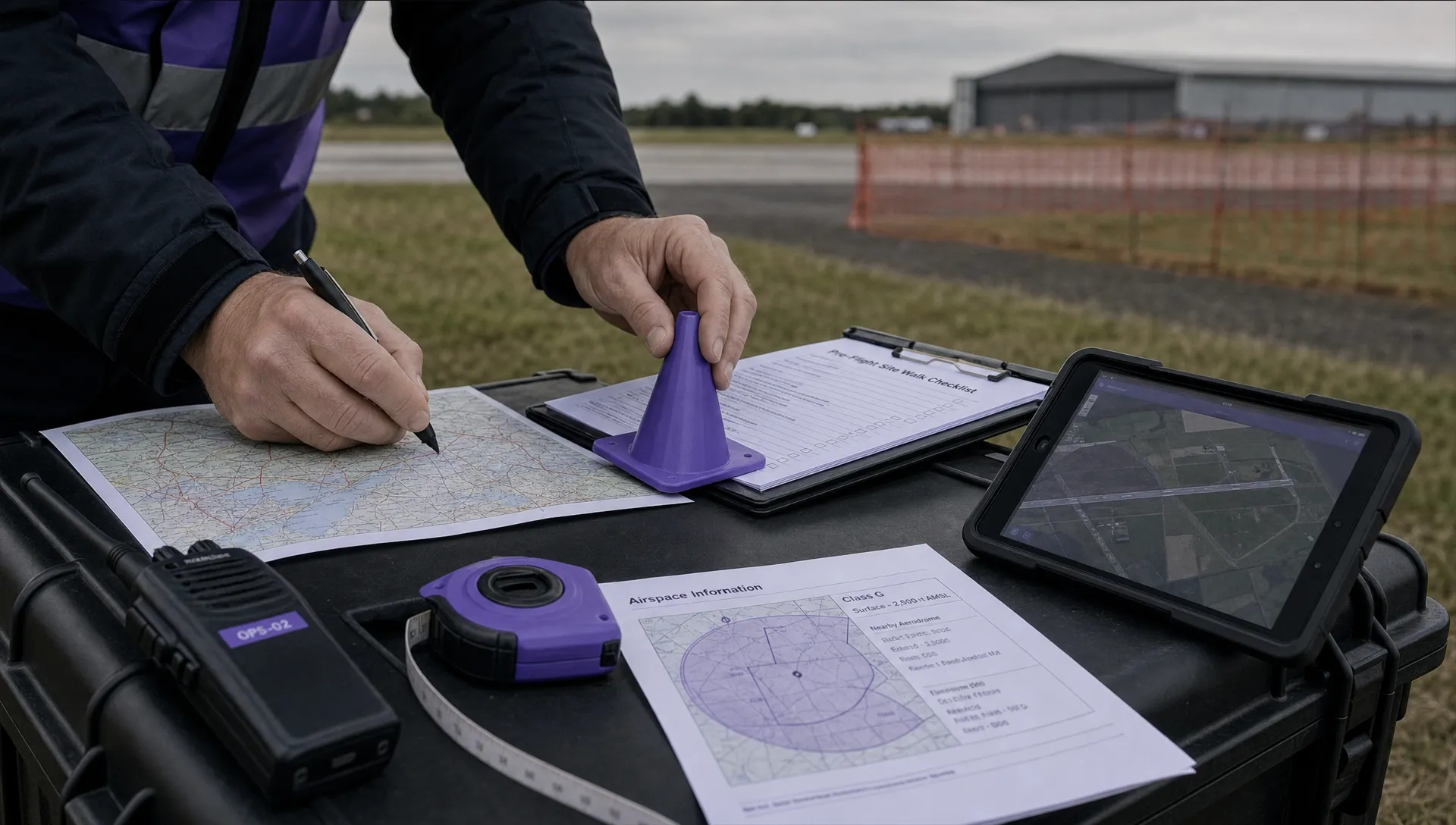 Drone Airport Rules: A Field Checklist for Site Assessments →
 FAA Part 107 Record-Keeping Rules for Commercial Teams →
 How to Review a DJI Flight Log After an Unexpected Event →
 Drone Laws Around the World: A Pre-Flight Research Framework →
 How to Compare Drone Survey Services for Complex Sites →
 How to Start a Drone Mapping Business With a Clear Workflow →