
A Drone Pilot's Guide to Renewing Part 107 License
Your Part 107 certificate is the golden ticket to flying drones commercially in the U.S. But it's not a "one and done" deal. The Federal Aviation Administration (FAA) requires you to keep that knowledge sharp, which is why your certificate needs to be renewed every 24 months.
Think of it less as a bureaucratic chore and more as a professional tune-up. The drone world moves fast—new rules for flying at night, updates on operating over people, and shifting airspace regulations are constantly rolling out. The renewal process is the FAA's way of making sure every certified pilot is up-to-speed on the latest changes. It's all about safety and professionalism.
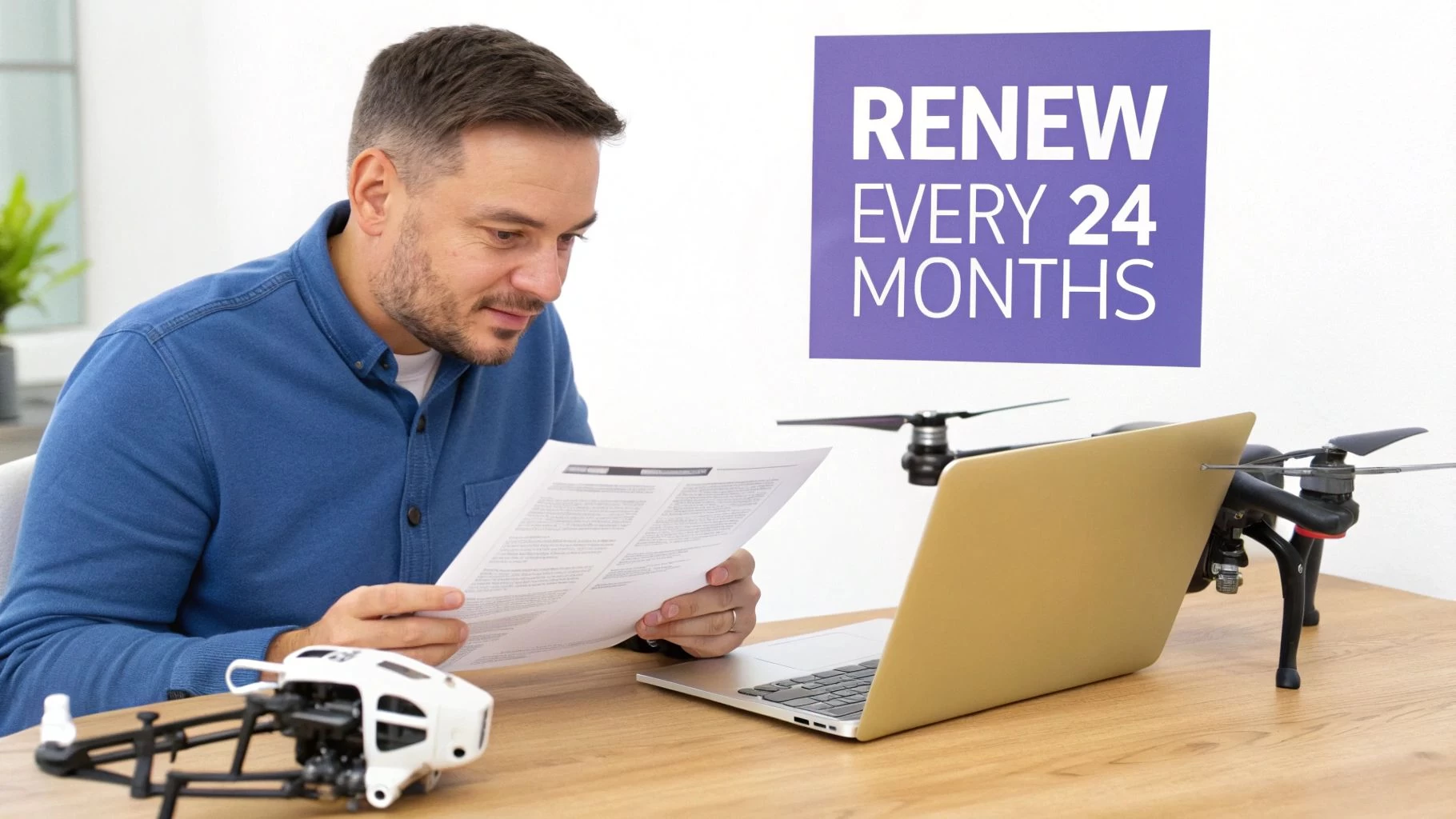
This 24-month cycle keeps everyone on the same page, protecting you, your clients, and the public. If you're managing a team, this schedule becomes even more critical. A company with 25 pilots, for example, has to plan for about a dozen renewals every single year to keep their operations seamless and legal.
For pilots just starting out, it’s a good idea to revisit the foundational drone license requirements to see how this all fits together.
Why You Can't Afford to Let It Lapse
Letting your Part 107 certificate expire isn't an option if you want to keep flying for work. The consequences are immediate and pretty serious. As soon as that expiration date hits, you are legally grounded from all commercial drone operations.
What does that actually mean for your business?
- No more paid gigs. From real estate shoots to complex industrial inspections, your income stream stops dead.
- Potential contract breaches. If you have ongoing projects, an expired license could put you in violation of your client agreements.
- Serious legal trouble. Flying commercially without a valid certificate can result in hefty FAA fines and other legal headaches you definitely want to avoid.
The bottom line is simple: a lapsed certificate grounds your drone business. Keeping on top of your renewal isn't just a good idea—it's an absolute must for staying in business and operating legally in the national airspace.
Choosing Your Renewal Path: Online Training vs. In-Person Test
When it's time to renew your Part 107 certificate, the FAA gives you two ways to get it done. Deciding between the free online training and the in-person knowledge test really comes down to your personal situation, how much time you have, and how you learn best.
For most pilots who are actively flying, the online path is a no-brainer. It's built for convenience and gets you up-to-date without having to clear your schedule.
The FAA's Free Online Recurrent Training
By far the most common choice is the FAA’s free online course, officially named "Part 107 Small UAS Recurrent (ALC-677)". This is the go-to for any pilot whose certificate is still valid.
Think about it from a practical standpoint. If you're a busy real estate photographer with back-to-back shoots, taking a whole day off to drive to a testing center just isn't happening. The online training fits right into that reality because you can knock it out from your office or home, whenever you have a spare hour or two.
The course is designed to cover the important updates you need to know, focusing on what’s changed since you last certified. You'll see topics like:
- Night Operations: The latest rules and requirements for flying after the sun goes down.
- Operations Over People and Moving Vehicles: Absolutely critical knowledge if you’re flying in populated areas.
- Remote ID Requirements: Getting you up to speed on the newest tech mandates for broadcasting your drone's location.
- Airspace and Airport Operations: A good refresher on navigating controlled airspace and proper communication.
If you're going the online route, knowing how to tackle self-paced learning can make the whole thing smoother. There's a helpful guide to learning online with tips that apply to just about any course. Once you pass the final quiz, you can download your completion certificate right away—that's the key document you'll need for the final steps in the IACRA system.
The In-Person Recurrent Knowledge Test
While the online course is perfect for most, the in-person recurrent knowledge test still has its place. This option is usually for pilots who have let their original Part 107 certificate expire. If that 24-month window has already closed, you can't just hop on the online training; you'll have to prove your knowledge all over again in a formal test setting.
This test is a lot like your initial exam and is held at an FAA-approved Knowledge Testing Center. Be prepared to pay a fee, which is usually around $175. This path definitely requires more dedicated study time.
Pro Tip: Don't underestimate the in-person test. Even if you fly every day, FAA regulations are always changing. Take your study sessions seriously to make sure you pass on the first try and avoid paying that testing fee twice.
To get ready, you'll need to hit the books. For a full breakdown of what to expect and how to prepare, check out our detailed guide on the Part 107 recurrent test. Picking the right path from the get-go is the first step toward a hassle-free license renewal.
Getting Friendly with the FAA DroneZone and IACRA Systems
Once you've wrapped up your recurrent training or aced the in-person test, you're on the home stretch. All that's left is a bit of digital paperwork. This final piece of the Part 107 renewal puzzle involves two specific FAA websites: the FAA DroneZone for your drone's registration and IACRA (Integrated Airman Certification and Rating Application) for your actual pilot certificate.
It helps to think of them as two separate government departments. DroneZone is like the DMV for your aircraft, handling its registration. IACRA, on the other hand, is all about you—the pilot. While both systems can feel a bit dated, knowing which one to use for what is half the battle.
IACRA: Your First Port of Call
Every step of your pilot certification journey, from your initial license to every renewal, flows through IACRA. This is the official portal where you'll submit your renewal application and connect it to your newly completed training certificate.

Before you even start, have your FTN (FAA Tracking Number) and password handy. Trust me, it beats getting stuck in a password recovery loop.
One of the most common hiccups pilots run into is mismatched personal information. A tiny discrepancy—like your driver's license showing your full middle name while your IACRA profile only has the initial—can flag your application for a manual review. This can turn a quick process into a long, frustrating wait.
Pro Tip: Before you click "start application," log into IACRA and give your personal details a quick audit. Does your name, address, and date of birth perfectly match your government-issued photo ID? A five-minute check now can honestly save you weeks of delay.
Submitting Your Application the Right Way
After logging in, you'll kick off a new application for a "Remote Pilot" certificate. The system walks you through a series of screens to confirm your details. The key part is when it asks for your 17-digit Knowledge Test Exam ID. You'll find this number on the completion certificate from your online training course.
Don't panic if the system doesn't recognize your ID right away. It can take up to 48 hours for the training results to sync up with IACRA.
Once everything is filled out, the final step is to electronically sign and submit the application. It sounds obvious, but you’d be surprised how many people forget to hit that final "submit" button. It’s like filling out a form and then just leaving it on your desk; the FAA won’t see it.
After you submit, you'll eventually get a confirmation email once the TSA has completed its security background check. This email will give you instructions for printing a temporary certificate, which you can use immediately. Your permanent card will arrive in the mail a few weeks later.
Why Letting Your Part 107 Expire Is a Career Killer
Renewing your Part 107 certificate is so much more than just ticking a box on a government form. It’s a crucial move that directly protects your professional opportunities and, frankly, your ability to make money. Think of your current certificate as the key that unlocks all the good commercial drone work. Let it lapse, and you’re suddenly locked out.
In today's market, serious clients won't give you the time of day without a valid Part 107. Big players in construction, energy, and film production see it as the absolute baseline for professionalism and risk management. For them, it's non-negotiable.
The Real Cost of a Lapsed Certificate
Letting your certificate expire effectively grounds your entire drone business overnight. The consequences are immediate and painful, and they go way beyond just not being able to fly legally.
- You're Instantly Disqualified: Forget about that ongoing construction survey or the real estate gig next week. You are immediately ineligible for any commercial project. That client isn't going to wait around for you to get recertified; they'll just call the next pilot on their list.
- Advanced Waivers Become Useless: A lapsed certificate means you can't apply for or operate under crucial waivers. That means no night flights or operations over people, which are often where the most specialized and lucrative jobs are found.
- Your Reputation Takes a Hit: An expired certificate just looks unprofessional. It suggests you're not on top of your game, and that can make it tough to win back a client's trust even after you're legal again.
This isn't just a theoretical problem. The FAA's 2025 forecast predicts the commercial drone fleet will exceed one million that year. That's a huge number of pilots you're competing with, and tens of thousands are renewing their certificates every month. If you fall behind, you'll be replaced in a heartbeat by someone who was prepared. If you're interested in the numbers, you can dive into the full FAA aerospace forecast here.
Securing Your Spot in a Booming Industry
At the end of the day, renewing your Part 107 is about securing your professional future. It’s the simple administrative task that protects your income and keeps you in the running for the best projects out there.
A current Part 107 certificate isn't just a license to fly—it's your ticket to participate in the drone industry's growth. Timely renewal is the single most important administrative task for maintaining a successful drone career.
By staying current, you're sending a clear message: you’re a professional committed to safety and compliance. That’s what makes you a reliable expert clients want to hire. In an industry growing this fast, staying on top of the basics is what separates the pros from the hobbyists. Don't let a simple deadline get between you and your next big contract.
Common Renewal Mistakes and How to Avoid Them
Even the most experienced drone pilots can get tripped up during the Part 107 renewal process. It's surprisingly easy for a small oversight to turn into a major headache, leading to frustrating delays, grounded operations, and, worst of all, lost income. But if you know the common pitfalls, you can navigate the whole thing without a hitch.
The single biggest mistake? Simply forgetting. It sounds obvious, but it happens all the time. Letting your 24-month certification lapse complicates things in a big way. You'll be forced to take the more intensive initial knowledge test all over again, instead of just completing the streamlined recurrent training. Don't let a date on the calendar ground your entire business.

Small Errors That Cause Big Delays
Missing the deadline is the big one, but a few other frequent slip-ups can easily jam your application in the FAA’s system. These might seem like minor details, but they can tack on weeks of unnecessary waiting time.
- Mismatched Personal Information: Your name on the renewal application has to exactly match what’s on your government-issued ID and your existing FAA records. Something as simple as a missing middle initial or a slightly different address can flag your application for a manual review.
- Forgetting to Upload the Certificate: This is a classic. Pilots finish the online training, celebrate passing the quiz, and then completely forget the final, critical step: downloading the completion certificate and uploading it to their IACRA application.
- Ignoring Expiration Dates: Procrastination is your worst enemy here. If you wait until the last week to start, you leave zero room for error. A system glitch, a personal scheduling conflict, or an unexpected delay can suddenly become a major crisis.
Keeping your Part 107 current is about more than just basic compliance; it directly impacts your ability to land advanced, higher-paying projects. This 24-month renewal cycle is your ticket to the most lucrative parts of the commercial drone market. In the past, waiver application success has been a mixed bag, with some reports indicating that around 54% of Part 107 waiver requests were rejected in certain samples. A current certification absolutely improves your odds of getting the green light for advanced operations that high-value contracts often demand. You can find more insights like this over at hiredronepilot.uk's drone statistics page.
Your Proactive Renewal Checklist
Avoiding these mistakes really just comes down to a bit of prep and paying attention to the details. With some simple, proactive planning, you can make every renewal a smooth and stress-free experience.
Pro Tip: Set a calendar reminder 90 days before your certificate is set to expire. This gives you a massive buffer to complete the online training, double-check all your documents, and get your application submitted without any last-minute panic.
To stay organized, it’s a good idea to audit your flight records and documentation ahead of time. Keeping a detailed and accurate drone flight logbook isn't just about compliance—it also makes reviewing your operational history before renewal a breeze. Before you finally hit that "submit" button, do one last check of all your information in IACRA. Those five minutes of prevention are truly worth weeks of cure.
Your Part 107 Renewal Questions Answered
Trying to get your head around the Part 107 renewal rules can feel a bit like decoding a secret message, especially with that expiration date creeping up on you. Let's tackle some of the most common sticking points so you can handle your renewal like a pro.
The number one question I get is always about what happens if a pilot misses their renewal date. The answer is blunt: if your certificate expires, you are grounded. Full stop. You can't legally fly any commercial drone missions until you're certified again.
And no, you can't just hop online and do the free recurrent training at that point. You’ll have to go all the way back to square one and pass the initial aeronautical knowledge test at an FAA-approved testing center. That means time off, studying, and shelling out cash for the exam fee.
Timing Your Renewal and Other Key Questions
So, how early is too early to renew? The FAA is pretty flexible here. You can knock out the recurrent training and get your application in well before your certificate expires.
My advice? Start the process at least 60 to 90 days before your expiration date. That builds in a nice, comfortable buffer for any unexpected hiccups without putting your commercial operations at risk.
Here are a few other questions that pop up all the time:
- Do I have to retake the big initial test? As long as your certificate is still valid, nope! All you need to do is complete the free online recurrent training, which is course ALC-677. The full, in-person knowledge test is only for brand-new pilots or those who let their certificate lapse.
- Is my drone registration the same as my pilot certificate? Not at all. These are two completely different things that often get confused. Your Part 107 certificate is about you—your knowledge and qualification to fly. The drone registration is for the aircraft itself and needs its own renewal every three years through the FAA DroneZone.
- What if I've moved or changed my name? Make sure you update your personal details in the IACRA system before you submit your renewal application. Any mismatch between your application and your government-issued ID is one of the top reasons for processing delays.
It's a simple distinction but a crucial one: renewing your Part 107 is about recertifying you, the pilot. Your drone's registration is a separate requirement for your aircraft.
The Myth of the Grace Period
Let’s bust a persistent myth right now: there is no grace period for an expired Part 107 certificate.
The second your certificate hits its expiration date, your legal authority to fly commercially evaporates. Any flight you conduct after that moment is an illegal operation. This can land you in hot water with the FAA, including some pretty hefty fines.
That 24-month validity period isn't a suggestion; it's a hard deadline. Staying ahead of the game and renewing early is the only way to guarantee you stay compliant and keep your drone business running without a single day of downtime.
Ready to take the headache out of compliance? Dronedesk is the all-in-one platform that simplifies every part of your drone operations, from automated flight logging and risk assessments to client management and renewal reminders. Stop juggling spreadsheets and start flying smarter. Discover how Dronedesk can save you time and keep you compliant at https://dronedesk.io.
 FAA Drone Licence Requirements for Commercial Pilots →
 FAA BVLOS Waivers Granted: What Successful Cases Show →
 How to Export DJI Flight Logs for Incident Reviews →
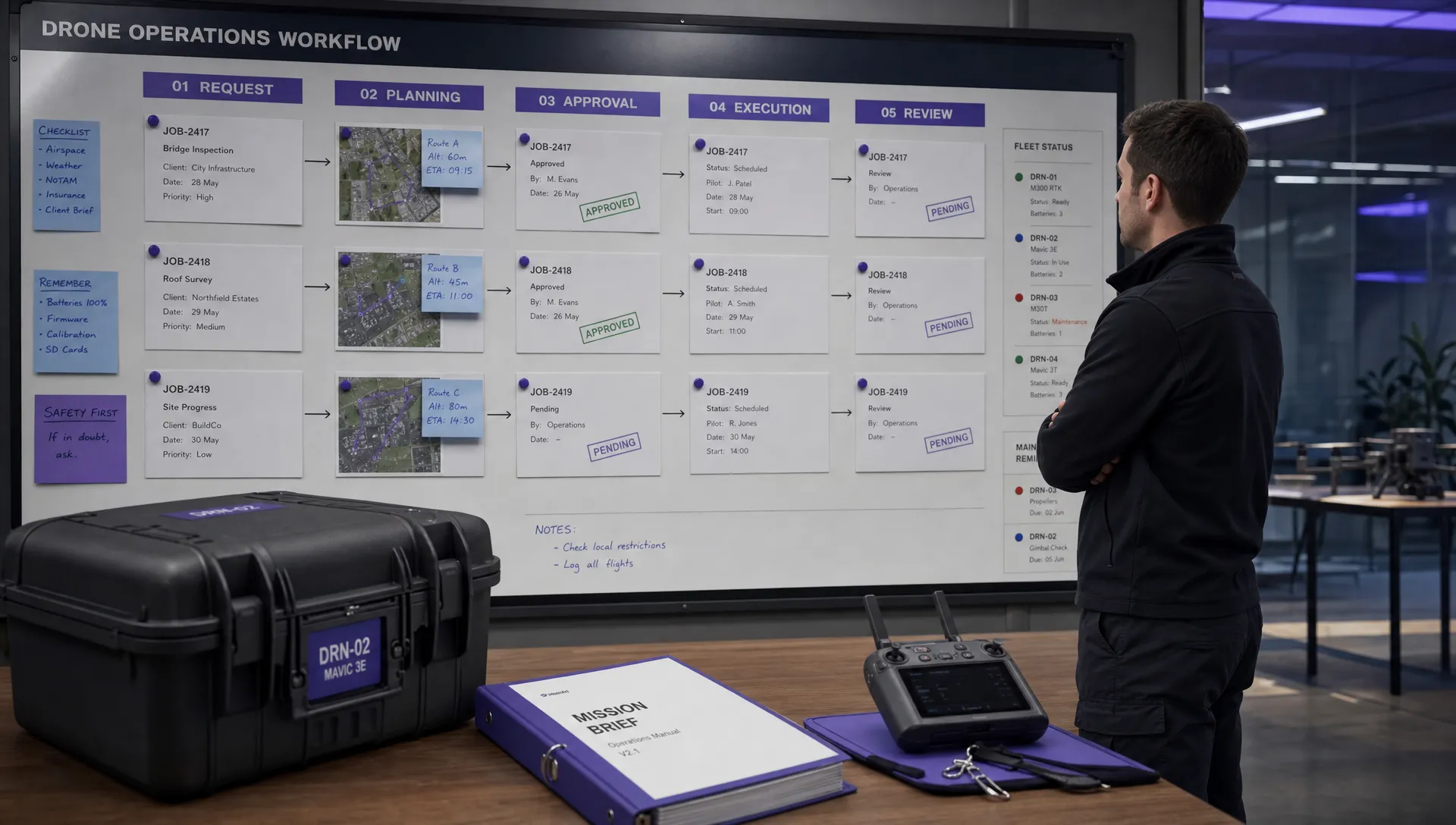 Drone Safety and Legal Duties for Business Operations →
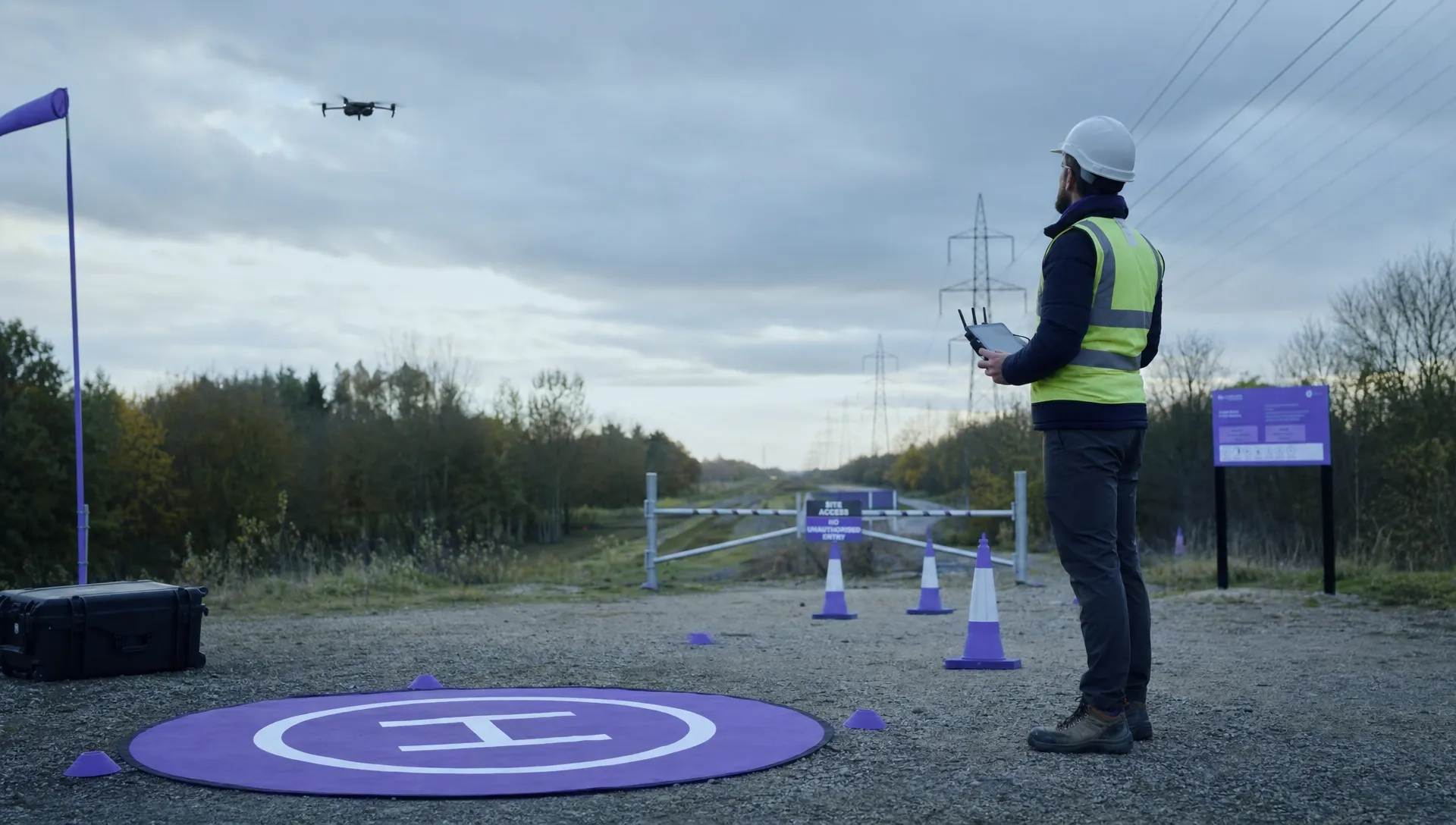 EASA Drone Regulations: Open, Specific and Certified Categories →
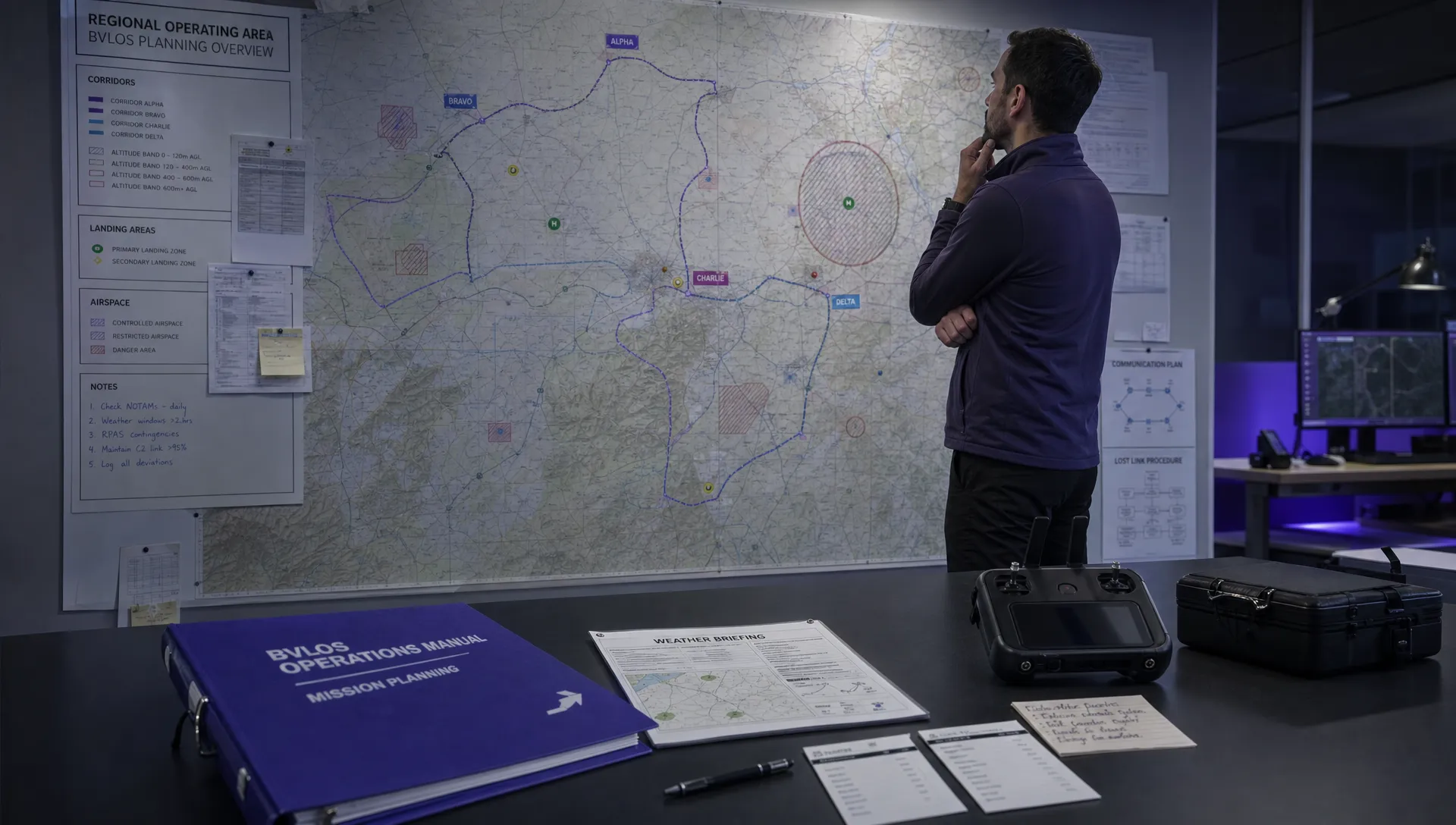 What the BVLOS ARC Report Means for UAS Operators →
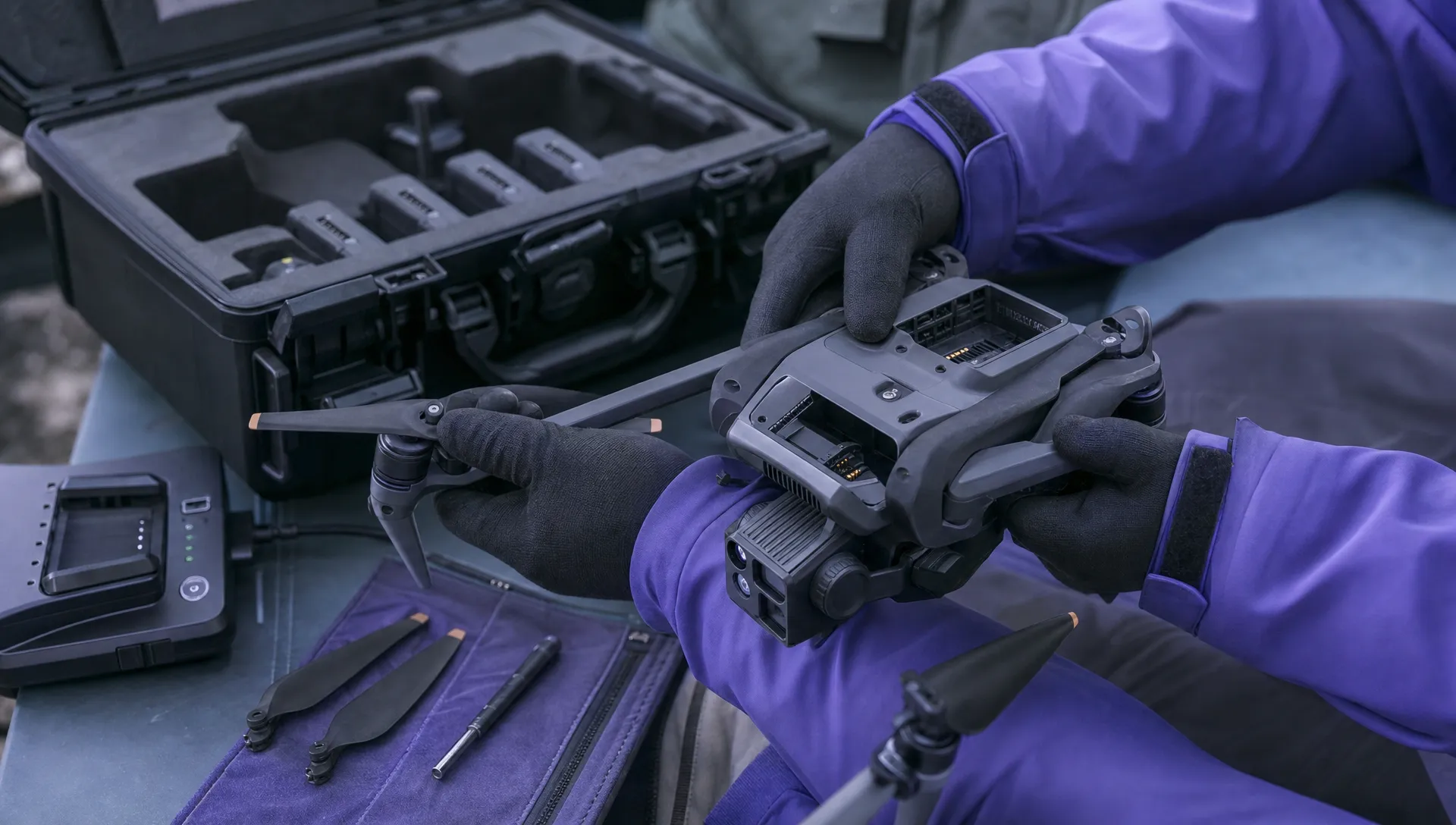 Free Drone Pre-Flight Checklist for Commercial Missions →
 Contingency Volume and Flight Risk Buffer Explained →
 FAA Policy Changes That Commercial Drone Teams Should Track →
 Drone Night Flying Rules and Pre-Flight Checks →