
The Ultimate Drone Flight Logbook Guide
A drone flight logbook is far more than just a notebook; it's the official diary for your aircraft and a detailed chronicle of every single flight you make. Think of it like a ship's log for the skies—an indispensable tool for safety, compliance, and operational excellence. It's what separates the pros from the hobbyists.
Your Drone Operations Command Center

At its heart, a flight logbook is your mission control. It's where you systematically record every operation, creating the foundation for a safe, efficient, and professional drone program. This isn't just about jotting down flight times; it's about building a complete history of your activities and your equipment's real-world performance.
This kind of meticulous record-keeping is critical in an industry that's growing at an incredible rate. As of early 2024, the Federal Aviation Administration (FAA) in the US alone has registered roughly 855,860 drones. What's really telling is that about 37% of these drones are registered for commercial work, underscoring just how integral they've become to modern business.
Why Bother With a Logbook?
Keeping a detailed logbook serves several vital functions that underpin every part of your operation. In short, it becomes the single source of truth for your entire drone program.
Here’s what it really does for you:
- Proof of Experience: It provides hard evidence of your flight hours and operational history. This is gold when you're applying for jobs, seeking advanced certifications, or getting insurance.
- Maintenance Triggers: By tracking flight hours and component usage, you can anticipate when maintenance is needed before something goes wrong. No more surprise failures.
- Compliance and Accountability: A well-kept logbook is your best defence in an audit or investigation. It proves you’ve done your due diligence and followed the rules.
- Flight History Analysis: Looking back at past flights helps you spot patterns, find efficiencies, and fine-tune your procedures for the next mission.
A well-kept drone flight logbook transforms raw flight data into actionable intelligence. It’s the story of your drone's life, your skill as a pilot, and your commitment to professional standards.
Ultimately, this simple habit has a massive impact on your ability to operate safely and grow your business. For a deeper dive into structuring your entries, our guide on mastering the drone log book offers some great tips.
Key Functions of a Drone Flight Logbook at a Glance
To boil it all down, here’s a quick look at why every serious pilot relies on a flight logbook. Each function supports the others, creating a solid system for managing your operations like a pro.
| Function Area | Primary Purpose |
|---|---|
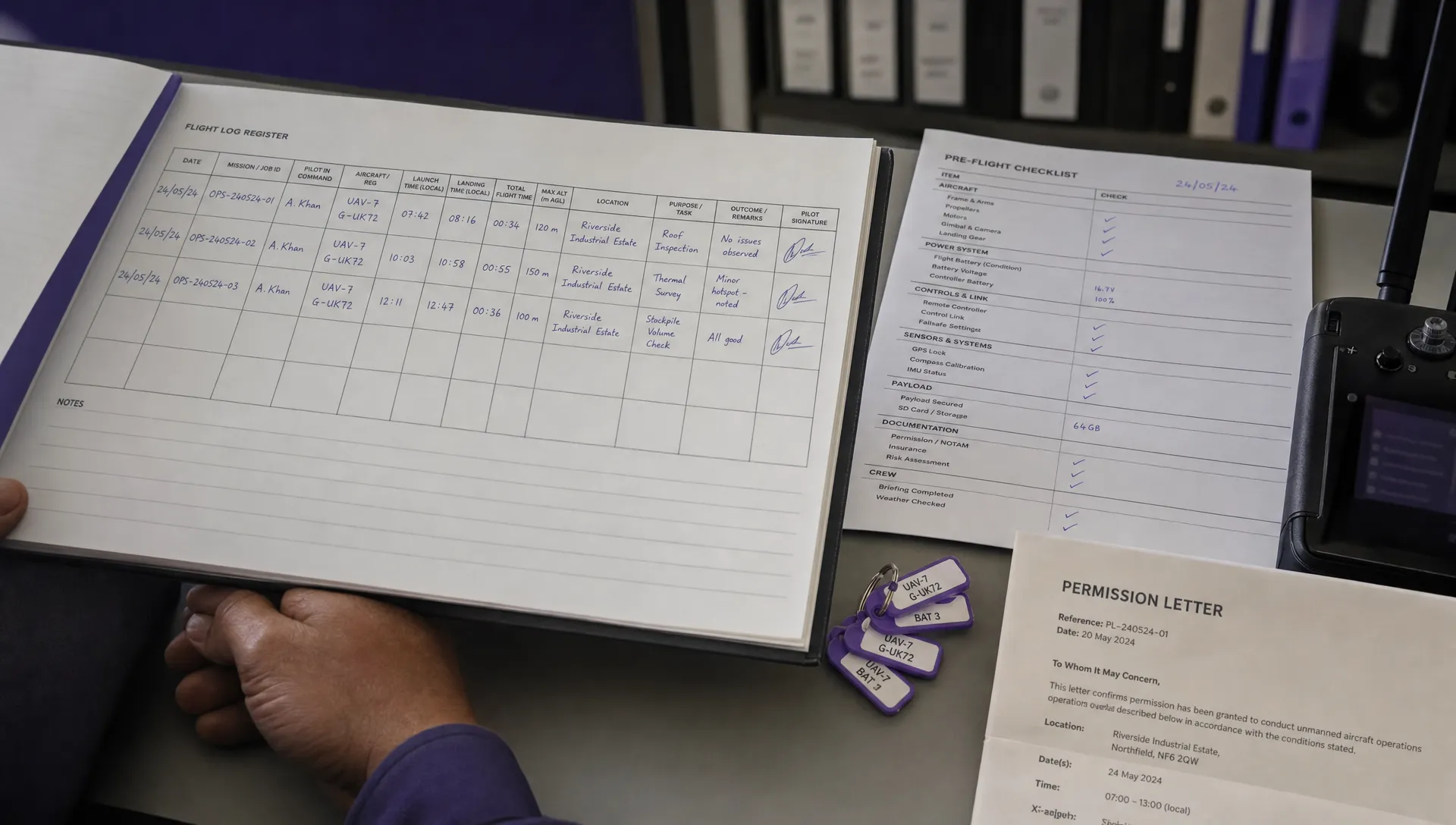
| Operational Record | To chronicle every flight, including date, location, duration, and pilot in command. |
| Safety Management | To track equipment health, monitor battery cycles, and document pre-flight checks. |
| Regulatory Compliance | To maintain records required by aviation authorities and prove due diligence. |
| Business Credibility | To demonstrate experience and professionalism to clients, insurers, and partners. |
As you can see, the logbook isn't just about logging flights—it's about building a foundation for a credible and sustainable business.
Why Your Logbook Is a Non-Negotiable Tool
Keeping a detailed drone flight logbook is what separates the hobbyists from the pros. It's the core practice that shifts you from just flying drones to building a career. This isn't just about paperwork; your logbook is a serious asset, built on three critical pillars: ironclad compliance, proactive safety management, and undeniable business credibility. It’s your definitive record, proving you operate with skill and care.

Meticulous record-keeping has become the standard for any serious operator. It's the backbone of how we manage risk, stay safe, and meet regulations. While the specific laws might change from country to country—the US, for instance, doesn't have a federal mandate for logging flights—the industry best practice is crystal clear. Professionals everywhere stick to strict logging protocols. You can dive deeper into these global standards and find more details on why your drone flight logbook matters.
Fortify Your Legal and Regulatory Standing
Think of your logbook as your legal shield. For many aviation authorities, like the UK's CAA, flight logs aren't a suggestion—they're a requirement. These records are your official proof that you’re flying by the book, tracking everything from pilot flight hours to the airworthiness of your aircraft.
Even where it's not strictly mandated by law, keeping a logbook demonstrates due diligence. If something goes wrong, that logbook is the first piece of evidence showing you did your pre-flight checks, flew within legal limits, and kept your gear in good shape. Without it, you're left with no way to defend your actions.
Your logbook is your best friend in an audit or investigation. It proves you've done your job as a responsible pilot and protects you, your gear, and your business from a world of legal trouble.
A Health Tracker for Your Most Valuable Assets
Beyond just staying legal, your logbook is a vital safety tool. It's like a detailed health record for your drone. This lets you shift from a reactive "fix it when it breaks" mentality to a predictive one, which is absolutely crucial for preventing failures mid-air.
By logging key data from every single flight, you start to see patterns. You can track the performance and lifespan of critical parts, helping you answer important questions before they become urgent problems.
- Battery Performance: How many charge cycles has that battery been through? Is its voltage dropping faster than it used to? Tracking this tells you when to retire a battery before it decides to retire itself at 200 feet.
- Motor and Propeller Hours: Logging flight hours lets you stick to the manufacturer's service schedule. It’s the difference between a reliable aircraft and a potential accident waiting to happen.
- Firmware Updates: When was the last time you updated the firmware on your drone, controller, and batteries? A quick look at your log tells you everything is synced up, which is a lifesaver when troubleshooting weird glitches.
This isn't just about safety. This systematic approach makes your equipment last longer, saving you a small fortune on unexpected repairs and replacements.
Build Unshakable Business Credibility
Last but not least, a well-kept logbook is one of your best sales tools. It screams professionalism and builds trust, which can be the tiebreaker when a potential client is choosing who to hire. When you're bidding for a big contract, showing them a detailed logbook is tangible proof of your experience.
This documentation has a direct impact on your wallet, too. Insurance companies love to see detailed flight and maintenance records because it tells them you’re a lower-risk operator. This can lead to reduced insurance premiums, sometimes significantly, which puts more money back into your business.
For clients in high-stakes industries like construction, engineering, or film, a meticulous logbook gives them peace of mind. It confirms they’re not just hiring a pilot, but a professional risk manager. Your logbook isn't just a history of your flights; it's the key to unlocking bigger and better opportunities.
Building Your Perfect Logbook Entry
A drone flight logbook entry is only as good as the information it holds. Just jotting down the date and how long you were in the air is a start, but a truly professional log tells the complete story of the mission. Crafting the perfect entry means being systematic, making sure every critical detail is captured before, during, and after you fly.
Think of yourself as a storyteller. You need to set the scene (pre-flight), describe the action (in-flight), and then wrap it all up with the key takeaways (post-flight). This approach turns your logbook from a simple record into a powerful tool for safety, compliance, and figuring out how to fly better next time.
Pre-Flight Essentials: The Foundation of Your Record
Before the props even start spinning, your logbook entry should already be underway. This is where you lay the groundwork, setting the context for the entire operation. It's also how you prove you've done your homework and planned properly. Skipping these details is like building a house without a foundation—the whole thing becomes unstable.
Your pre-flight check should always include:
- Pilot and Crew Information: Clearly identify the Pilot in Command (PIC) and anyone else involved. This is all about accountability.
- Aircraft Identification: Log the drone's specific registration or serial number. If you run a fleet, this is non-negotiable for tracking usage and maintenance schedules for each aircraft.
- Flight Location and Purpose: Note the exact address or coordinates for takeoff and landing. Add a quick, clear description of the mission's goal, like "Real estate photography for 123 Maple St." or "Infrastructure inspection of Bridge #4."
- Risk Assessment Confirmation: This is a big one. Document that a thorough risk assessment was completed. It shows you've proactively looked for and managed potential hazards before taking to the sky.
This infographic breaks down the core data points, showing the natural flow of information from start to finish.

As you can see, it's a logical process. You start with the basics like date and time and move through to operational details like flight duration and battery stats.
In-Flight Vitals: Capturing the Action
Once you're airborne, it's time to capture the vital statistics of the flight itself. These details provide a clear, objective summary of what actually happened in the air. This information is your best friend when it comes to proving you followed airspace rules and for analysing your flight performance over time.
Key in-flight metrics to record:
- Takeoff and Landing Times: Use a consistent format, like UTC or local time (but be sure to note the time zone). These precise times are used to calculate the total flight duration.
- Maximum Altitude Reached: Log the highest point you reached during the flight (in AGL - Above Ground Level). This is an absolute must-have for proving you stayed within legal airspace limits.
- Environmental Conditions: Make a quick note of the weather—wind speed and direction, temperature, cloud cover. This context is gold for explaining flight performance, especially how your batteries held up.
This data builds your operational history, creating a rich dataset you can look back on. For more detailed examples of what a solid entry looks like, you can explore different ways to structure your flight log for your drone.
Post-Flight Debrief: Review and Finalize
The job isn't done when the drone lands. The final phase is the post-flight debrief, where you close the loop on the mission. This is your chance to document what you accomplished, how the gear performed, and any lessons learned along the way. It’s how you turn raw data into real operational intelligence.
Your post-flight checklist should always cover these three things:
- Battery Performance: Log the starting and ending battery percentages and the unique ID of every battery you used. This practice is essential for monitoring battery health and knowing when it's time to retire one.
- Issues and Observations: Write down anything unusual. Did you have a momentary GPS signal loss? Did you notice some unexpected radio interference? Noting these "minor" events helps you spot patterns before they turn into major incidents.
- Data and Payload Notes: Confirm what you captured (e.g., 250 photos, 15 minutes of 4K video) and add any notes about how the payload performed.
This meticulous, three-phase approach guarantees every logbook entry is complete, defensible, and genuinely useful. It transforms a boring admin task into a cornerstone of a professional, safe, and constantly improving drone operation.
To make this even more practical, here's a detailed checklist you can use as a template. It breaks down every field you should consider for a rock-solid logbook entry.
Comprehensive Drone Flight Logbook Checklist
This table organises all the essential data points into clear categories, explaining why each one matters. It’s designed to be a definitive guide for creating complete and compliant flight logs every single time.
| Category | Data Field | Why It's Important |
|---|---|---|
| Administrative | Flight Date | Establishes the primary timeline for the operation. |
| Mission ID/Name | Unique identifier for easy reference and project tracking. | |
| Pilot in Command (PIC) | Identifies the legally responsible person for the flight. | |
| Crew Members | Documents all personnel involved in the operation. | |
| Aircraft & Equipment | Drone Registration/Serial No. | Links the flight to a specific aircraft for maintenance tracking. |
| Payload (Camera/Sensor) | Records the equipment used to capture data. | |
| Battery IDs Used | Crucial for tracking battery health, cycles, and performance over time. | |
| Operational Planning | Location (Address/Coordinates) | Defines the operational area for compliance and safety checks. |
| Mission Purpose | Provides context for the flight (e.g., inspection, photography). | |
| Risk Assessment Confirmation | Proves due diligence and proactive safety management was performed. | |
| Pre-Flight Checklist Complete | Confirms all necessary system and safety checks were done. | |
| In-Flight Data | Takeoff Time | Marks the official start of the flight. |
| Landing Time | Marks the official end of the flight. | |
| Total Flight Duration | Calculated from takeoff/landing times; vital for billing and analysis. | |
| Maximum Altitude (AGL) | Verifies compliance with legal airspace limitations. | |
| Environmental | Weather Conditions | Notes wind, temperature, and precipitation, which affect performance. |
| Wind Speed & Direction | Provides context for flight stability and battery drain. | |
| Post-Flight Analysis | Starting Battery % | Establishes a baseline for performance monitoring. |
| Ending Battery % | Helps calculate consumption and assess battery health. | |
| Data Collected (Photos/Video) | Quantifies the mission's output and deliverable. | |
| Incidents or Observations | Documents any anomalies for future investigation and learning. | |
| Post-Flight Checklist Complete | Ensures the aircraft is properly shut down and stored. |
By consistently capturing these details, you're not just logging flights—you're building a comprehensive operational history that protects your business, proves your professionalism, and helps you become a better pilot.
Choosing Your Logging Method: Paper vs Digital
When it comes to keeping your drone flight logbook, you're at a classic crossroads: the old-school reliability of paper or the dynamic efficiency of a digital solution. This isn't just about what you prefer; it fundamentally changes your workflow, your efficiency, and how you can actually use the data you're collecting. Each method has its place, but the right choice really boils down to your operational needs and where you see your business heading.

Let's unpack this decision with a straightforward comparison to help you find the perfect fit for your drone operations.
The Case for Paper Logbooks
There's a certain appeal to a traditional paper logbook, rooted in its pure simplicity. You just need a pen and a flat surface. No dead batteries, no software updates, and zero reliance on an internet connection, which can be a lifesaver in remote locations.
For a hobbyist or an operator who only flies a handful of times a year, a paper log can be a perfectly fine and cheap way to get started. It forces a very deliberate, manual process of recording your flight details, which can actually be a good learning tool for new pilots.
But its biggest strengths are also its most glaring weaknesses. A paper logbook is fragile. A spilled coffee, a sudden downpour, or just leaving it on-site can wipe out your entire flight history in an instant. As soon as your operations start to grow, the limitations become impossible to ignore.
- Searching is a slog: Need to find a specific flight from six months ago? Get ready to flip through every single page.
- Analysis is impossible: You can't easily tally up total flight hours, track maintenance cycles, or spot trends in your drone's performance.
- Sharing is clunky: Showing your records to an auditor or a client means scanning or photocopying pages one by one.
Think of a paper logbook like a handwritten ledger in an age of spreadsheets. It gets the basic job done, but it can’t deliver the deep, actionable insights you need to run a modern, data-driven drone business.
The Power of Digital Logbooks
This is where digital solutions completely change the game. They transform the logbook from a static, dusty record into a dynamic tool that works for you. Platforms like Dronedesk are designed specifically for the complexities of professional drone work, automating the grunt work and unlocking the real value hidden in your flight data.
Instead of scribbling down notes, many digital systems can sync flight data straight from your drone's controller. This means takeoff times, flight paths, altitudes, and battery stats are logged with perfect accuracy and zero extra effort. That feature alone slashes the risk of human error and saves a huge amount of time after every single mission. You can learn more about the operational benefits of an electronic flight log and see how it streamlines your entire process.
Why Digital Is the Professional Standard
For any serious, scalable drone operation, the advantages of a digital drone flight logbook are just too big to overlook. They offer a level of security, efficiency, and analytical power that paper simply can't touch.
Key Digital Advantages:
- Secure Cloud Backup: Your records are safe and sound in the cloud, protected from loss or damage and accessible from any device, anywhere.
- Instant Reporting: Need to prove your total flight hours for an insurance renewal? A digital system can generate a comprehensive report in seconds.
- Automated Maintenance Alerts: The platform can track wear and tear on components and automatically flag when maintenance is due, helping you prevent expensive equipment failures.
While some digital logbooks might have a subscription fee or a short learning curve, the return on that investment is massive. The time you save on admin and the insights you gain from your data directly contribute to a safer, more efficient, and more profitable operation. At the end of the day, digital logbooks are the standard for pilots who treat their drone operation as a professional business, not just a weekend hobby.
Best Practices for Flawless Record Keeping
Knowing what to log is only half the battle. The other half is building the habits that turn record-keeping from a chore into a core part of your professional operation. Think of it like a pilot's pre-flight checklist; these aren't just suggestions, they are disciplined actions that guarantee quality and safety.
Getting these practices baked into your workflow means your logbook becomes a bulletproof asset. It protects you, your gear, and your business. It’s all about creating a system that works for you, not against you.
Cultivate Consistency and Immediacy
First up is consistency. This means logging every single flight, no exceptions. It doesn't matter if it's a two-minute test hover in your garden or an all-day commercial shoot. Every time those props spin, it adds to your drone's total flight time and nudges it closer to its next maintenance check. Gaps in your logs make the data untrustworthy.
Just as crucial is immediacy. The absolute best time to log a flight is right after you land, while every detail is still sharp in your mind. If you wait until the end of the day or, worse, the end of the week, you're just asking for errors and forgotten details. Did you notice a tiny motor vibration? Was the GPS lock a bit sluggish? These are the little things that get lost, but they're gold for spotting problems before they become serious.
The golden rule of logging is simple: record every flight, right away, every time. This discipline transforms your logbook from a historical record into a real-time operational tool that actively keeps you safe.
Standardize Everything for Clarity
To make sure every entry is crystal clear, you need to standardize your process. This gets rid of any guesswork and makes your records easy to understand, whether you're looking at them a year from now or handing them over to an auditor. A great first step is creating a standard template that everyone on your team uses, guaranteeing all the essential info is captured every single time.
Time is another critical thing to standardize, especially if you work across different time zones.
- Coordinated Universal Time (UTC): This is the global standard in aviation for a reason. It removes all doubt about when a flight happened, providing an unambiguous timestamp that's recognized everywhere.
- 24-Hour Format: Always use a 24-hour clock (like 14:30 instead of 2:30 PM). This simple habit prevents any A.M./P.M. mix-ups and adds a layer of professional precision to your records.
By standardizing your templates and time formats, you build a clean, professional record that stands up to scrutiny and makes any future data analysis a whole lot easier.
Perform Regular Self-Audits
Finally, great record-keeping isn’t a "log it and forget it" task. You have to commit to some quality control. Set aside a little time each month to do a quick self-audit of your logbook. This proactive check-up helps you spot small mistakes before they snowball into bigger issues.
Look for common slip-ups like missing signatures, incomplete data fields, or simple maths errors in flight duration totals. This regular review is your final line of defence, ensuring your logbook remains a flawless, professional, and compliant record you can rely on without a second thought.
Got Questions About Drone Logbooks? We've Got Answers.
Even when you have a good handle on what a drone logbook is and why it’s so important, questions always pop up when you start putting it into practice. This is where the rubber meets the road, and getting clear on the details is what separates the pros from the amateurs.
We’ve pulled together some of the most common questions we hear from pilots. Think of this as your go-to guide for sorting out those nagging little details that can make logging feel like a chore.
How Long Do I Need to Keep My Flight Logs?
This is probably the most critical question pilots ask, and the answer usually comes down to where you fly. While rules can differ from country to country, a solid industry standard has taken root that serves as a reliable benchmark for professionals everywhere.
Most aviation authorities that require logbooks, like the UK's Civil Aviation Authority (CAA), specify a retention period. The professional rule of thumb is to hold onto your flight logs for a minimum of three years. This timeframe is generally seen as enough to cover most audit windows and any potential incident investigations.
Pro Tip: Even if your local regulations are vague, keeping your logs for at least three to five years is just smart business. It gives you a long-term history of your experience, your aircraft's usage, and your compliance record—all of which can be a lifesaver for insurance claims or legal issues.
Can I Log Flights From a Simulator?
Logging simulator time is standard practice in manned aviation, and it’s just as relevant in the drone world. While simulator hours aren't "real" flight time in the eyes of regulators, they are incredibly valuable for honing your skills. The trick is to log them properly.
You absolutely should log your simulator time, but you have to keep it separate. Never, ever mix simulator hours with your actual flight hours. Just create a specific section in your digital logbook or a separate column in your paper one clearly marked "Simulator Training."
- For Training: It shows you're committed to skill development and practicing emergency drills in a safe, controlled setting.
- For Proficiency: It proves you’re keeping your skills sharp, especially during those quiet periods when you might not have real-world missions.
Logging this time demonstrates a dedication to safety and continuous improvement—the true mark of a professional pilot.
What If I Make a Mistake in an Entry?
Hey, mistakes happen. What matters isn't avoiding them entirely, but knowing how to fix them correctly. Your drone flight logbook is a formal record, so you can't just scribble something out or hit delete without a trace. The goal is to keep the document transparent and trustworthy.
How you make corrections depends on whether you're using paper or digital logs:
- Paper Logbooks: If you mess up, the proper way to fix it is to draw a single, clean line through the wrong information so it's still readable. Write the correct info nearby, then initial and date the change. This approach is transparent and wards off any suggestion that you’ve tampered with your records.
- Digital Logbooks: Any good digital platform will have a built-in audit trail. When you edit an entry, the system should automatically log the change, who made it, and when. This creates a clear history of revisions, which is perfect for compliance. Steer clear of any software that lets you delete data without leaving a footprint.
The golden rule is transparency. An honest, well-documented correction is always better than an entry that looks like it’s been suspiciously altered.
Do I Need Separate Logbooks for Different Drones?
If you're running a fleet, keeping your records straight is non-negotiable. While you don't need a separate physical book for every single drone, you must be able to easily pull the flight history for each one. This is where digital logbooks really shine.
A pilot should always maintain one primary pilot logbook. This is your record, tracking all your personal flight hours, no matter which drone you flew. At the same time, each drone needs its own dedicated aircraft logbook to track its specific flight hours, maintenance schedule, and component history.
Think of it like this:
- Pilot Logbook: This tracks your personal experience and total flight time.
- Aircraft Logbook: This tracks the drone's entire service life and airworthiness.
Modern platforms like Dronedesk handle this automatically. You log a single flight, and the system instantly allocates the hours to both you and the drone you flew, keeping every record perfectly organized without you having to do a thing. It means you can pull a complete history for any pilot or aircraft in your fleet with just a couple of clicks.
Ready to stop worrying about record keeping and start flying with confidence? Dronedesk automates your flight logging, maintenance tracking, and compliance reporting so you can focus on what you do best. Join thousands of professional pilots who trust Dronedesk to manage their operations.
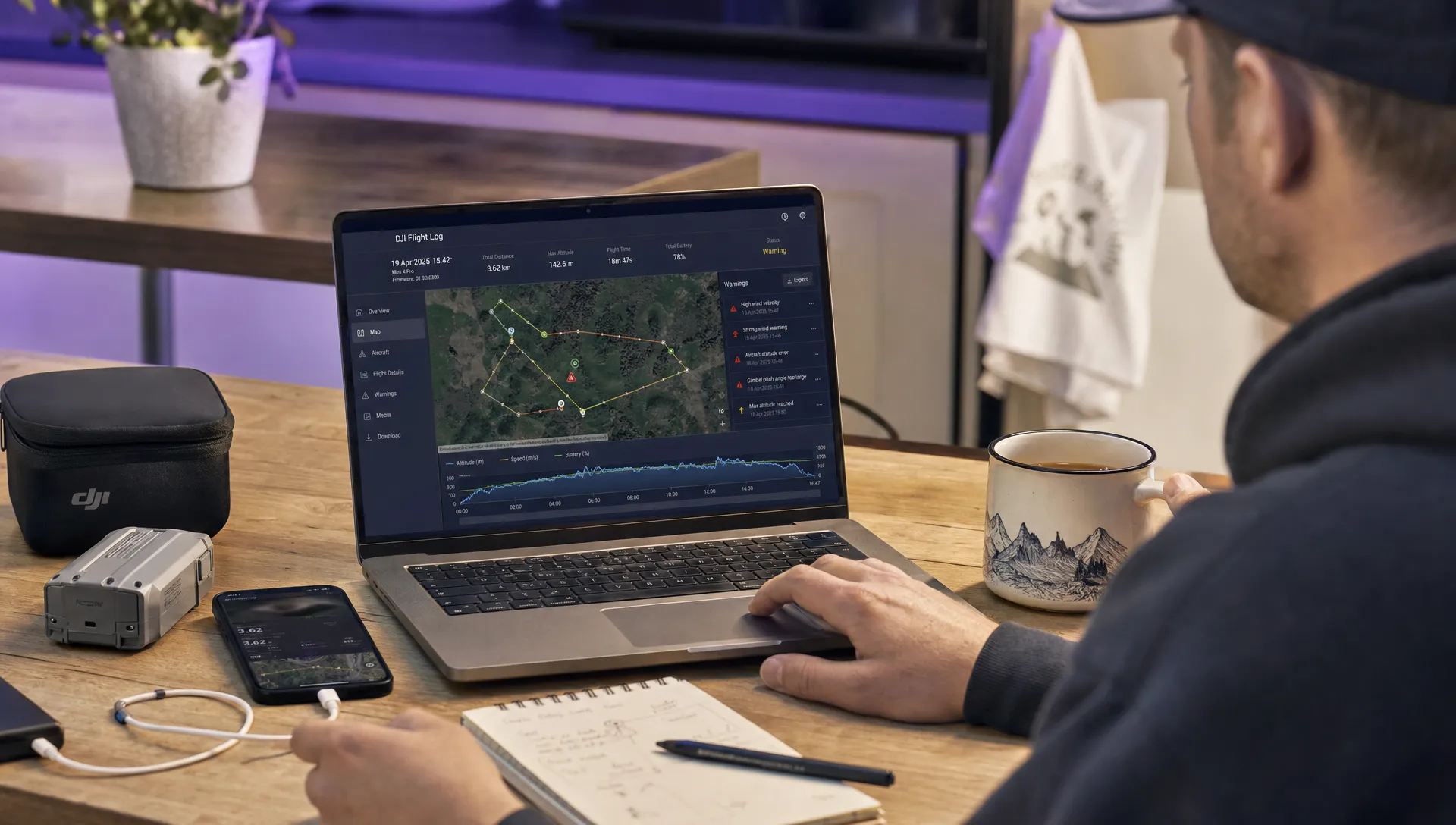 How to Review a DJI Flight Log After an Unexpected Event →
 Drone Laws Around the World: A Pre-Flight Research Framework →
 How to Compare Drone Survey Services for Complex Sites →
 How to Start a Drone Mapping Business With a Clear Workflow →
 Class C Airspace Drone Rules for Commercial Flights →
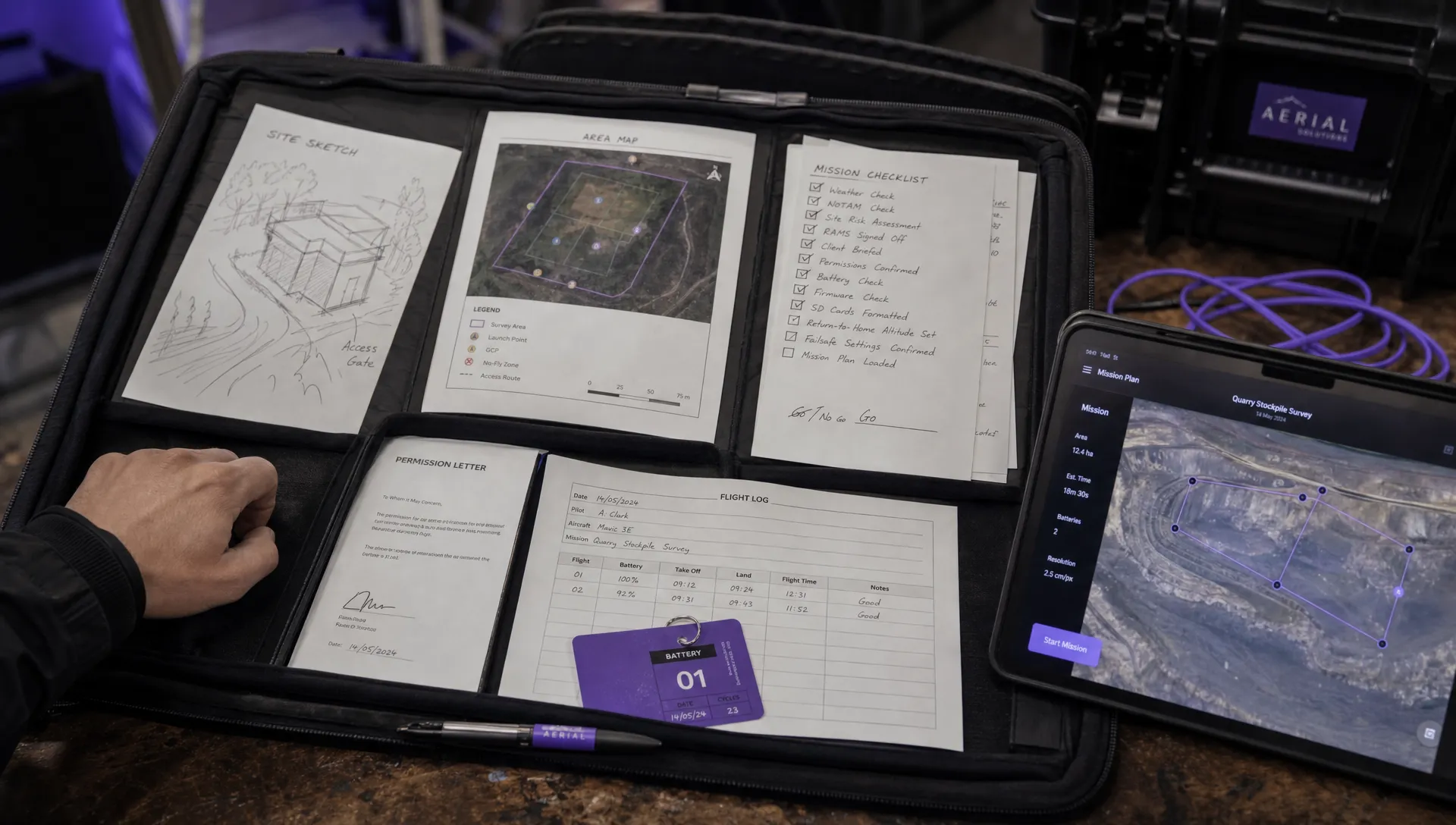 How to Create a Drone Job Pack for Every Mission →
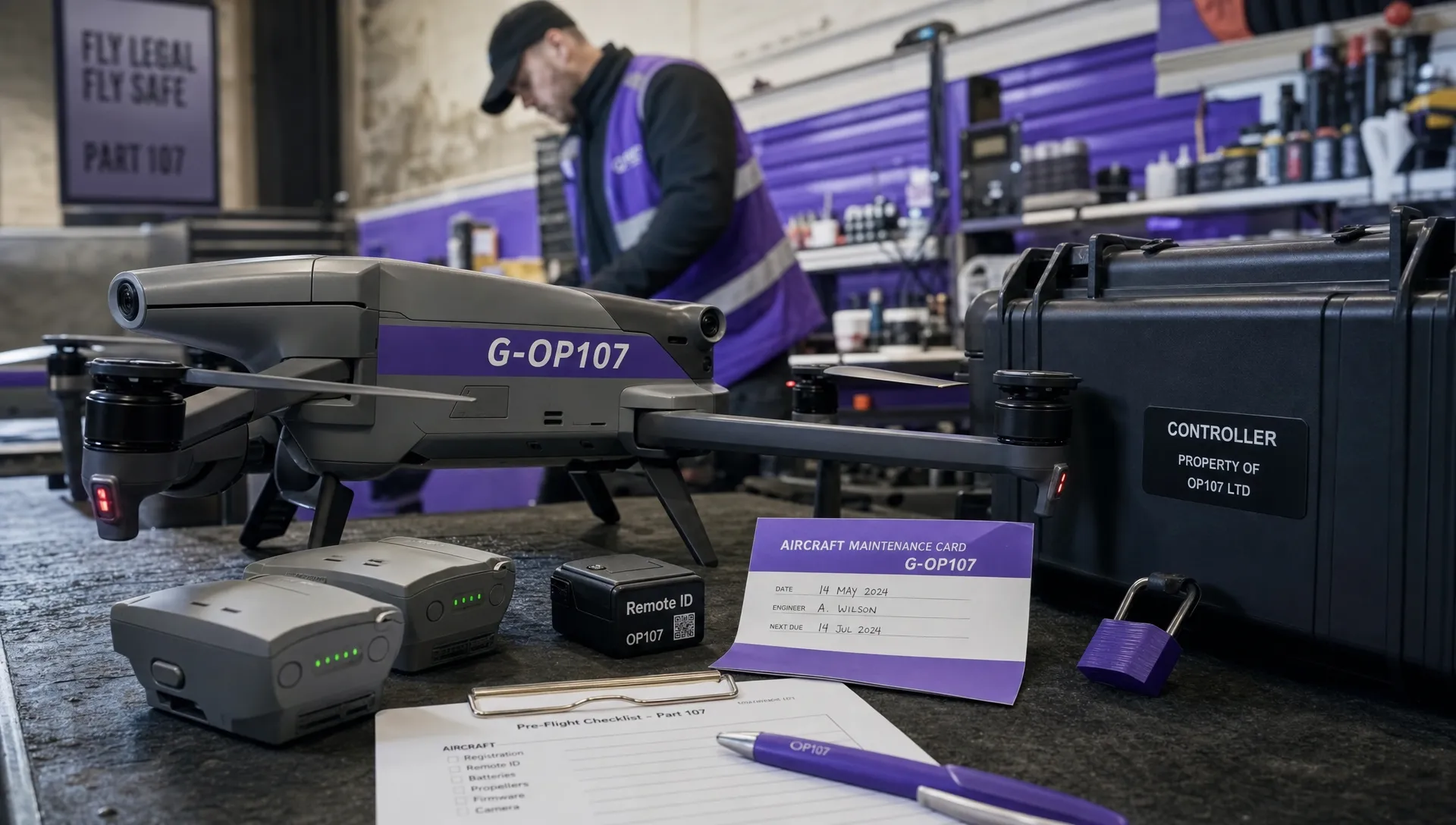 FAA Small UAS Rule: Key Requirements for Operators →
 How to Build a Drone Pilot Flight Log That Is Audit Ready →
 FAA Drone Licence Requirements for Commercial Pilots →
 FAA BVLOS Waivers Granted: What Successful Cases Show →