
How to renew drone license - a smarter way
Keeping your drone license current—like the FAA's Part 107 certificate—isn't just a box-ticking exercise. It usually involves completing an online recurrent knowledge test or training course every 24 months. This is your way of staying sharp and up-to-date with the latest aviation rules, safety protocols, and new standards like Remote ID.
Why Drone License Renewal Matters More Than Ever
Think of renewing your drone license as more than just admin. It’s a core part of being a responsible, professional pilot. Aviation authorities like the FAA don't mandate recurrent training just to create paperwork; they do it to make sure every certified pilot is current on the critical, fast-changing rules that directly impact airspace safety.
It's a professional's commitment to continuous learning in a high-stakes field. Just like pilots of crewed aircraft go through regular checks, drone operators have to prove they're still on top of their game.
Staying Current with Evolving Regulations
The drone industry is anything but static. New regulations and technologies are constantly being rolled out to manage the increasingly busy low-altitude airspace. Your renewal is proof that you're proficient in the latest standards—something that’s absolutely essential for safe flying.
Between renewal cycles, you can expect updates in key areas like:
- Remote ID Mandates: Understanding exactly how your drone broadcasts its identification and location is now a fundamental requirement.
- Operations Over People and Moving Vehicles: The goalposts have moved on these complex operations, and recurrent training gets you up to speed on the specific conditions you need to meet.
- Airspace Rule Changes: Geofencing systems and airspace classifications are frequently updated. Staying informed isn't just a good idea; it's non-negotiable.
This constant evolution is a direct result of the industry's explosive growth. The global drone market was valued at USD 73.06 billion in 2024 and is projected to hit USD 163.60 billion by 2030. This kind of expansion makes it vital for pilots to stay sharp through regular training and license renewal.
When you complete your recurrent training, you're doing more than just satisfying a requirement. You're reaffirming your commitment to safety, shielding your business from liability, and cementing your credibility as a pro in a competitive market.
A Roadmap for Your Renewal Journey
Getting why this matters is the first step. Before jumping into the how-to, it helps to have a clear roadmap. The renewal journey typically involves confirming you're eligible, finishing the required online training, and making sure your certificate is properly updated in the official databases.
While the initial drone license requirements can feel a bit daunting, the renewal process is designed to be much more straightforward for pilots who are already certified. This guide will walk you through each milestone, giving you a clear path to successfully renew your drone license.
Your Guide to the FAA Part 107 Renewal Process
So, it's that time again. Your Part 107 certificate is creeping up on its expiration date, and you need to get it renewed to keep flying commercially. The good news? It's a whole lot easier than the initial exam you probably stressed over. In fact, the entire process is online, completely free, and feels more like a safety briefing than a test.
The FAA's recurrent knowledge test is all about getting you current on the latest rules. Things change fast in the drone world, and this is the FAA's way of making sure every certified pilot is up to speed on the big stuff that impacts day-to-day operations.
Navigating the FAA Safety Portal
Your first stop is the official FAA Safety Team (FAASTeam) website. This is the only place you'll find the official recurrent training, so it’s a good one to bookmark. Once you’re there, you’ll either log in or create a new account to find the course titled "Part 107 Small UAS Recurrent Non-Part 61 Pilots".
Before you jump in, make sure you have a couple of things handy:
- Your existing Part 107 Remote Pilot Certificate number.
- Your full legal name, exactly as it appears on your certificate.
- A decent internet connection. The last thing you want is for it to cut out mid-course.
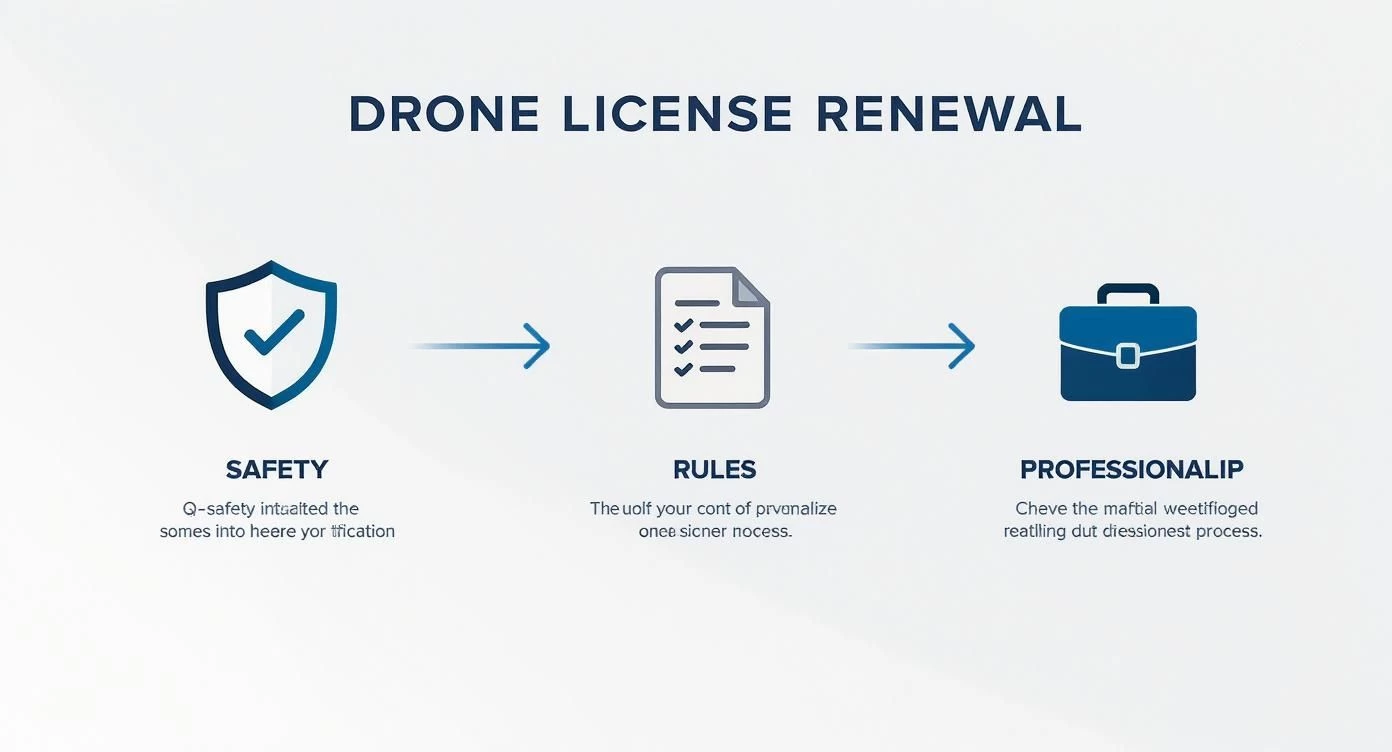
This whole process boils down to three core principles: safety, staying current with the rules, and maintaining your professionalism as a pilot.
The reason we have to do this every two years is pretty straightforward: the industry is booming. Consider that North America accounted for nearly 49% of the global drone market share in 2024. With millions of drones taking to the skies for everything from agriculture to surveying, the FAA uses this renewal process to manage the risk and keep everyone safe.
What to Expect on the Recurrent Test
Let me put your mind at ease: this online test isn't designed to trip you up. It’s practical and focuses heavily on the rules that have changed or been introduced since you last certified. For a freelance aerial photographer, for example, knowing the latest nuances of flying over people could be the difference between landing a huge project and getting hit with a fine.
The material really zeroes in on a few key areas that have seen significant updates recently. You can absolutely expect to see questions on:
- Remote ID: You’ll need to have a solid grasp of the requirements for broadcasting your drone's identification and location data.
- Operations Over People and Moving Vehicles: The test will definitely cover the different drone categories and the specific rules that let you conduct these flights without needing a waiver.
- Night Operations: Be ready to review the anti-collision lighting requirements and the proper procedures for flying after sunset.
Don't sweat it if you don't pass on your first go. You can take the test as many times as you need. Once you do pass, you'll get a completion certificate. For a more detailed look at the topics you'll face, check out our complete guide on the Part 107 recurrent test.
CRITICAL: Download and save your completion certificate the second you get it. This document is your official proof of renewal. You absolutely must be able to show it, along with your original Part 107 certificate, if an FAA official or law enforcement ever asks for it.
Once you’ve passed, the FAA updates your pilot profile, and your new expiration date is set for 24 calendar months from the month you completed the training. There’s no benefit to waiting until the last minute—you can renew your certificate at any point before it expires and stay ahead of the game.
Even the most experienced pilots can hit a snag when it’s time to renew their drone license. It’s easy to get bogged down by clunky government websites, the sudden panic of a looming deadline, or just the general anxiety of keeping up with ever-changing rules. These hurdles are pretty common, but they're also completely avoidable with a bit of planning.
One of the biggest pain points is simply staying on top of new regulations. You might have aced your initial exam two years ago, but the drone world moves at lightning speed. What was standard practice then could be outdated now, and the recurrent training is specifically designed to get you up to speed.
The Panic of a Missed Deadline
Let's tackle the most common fear first: what happens if your certificate expires? The short answer is you can no longer legally fly for commercial purposes. There's no big penalty or fine, but you are effectively grounded for any paying work until you get it sorted.
The good news is that you don't have to go back and retake the entire initial, in-person exam. You just need to complete the free online recurrent training, the same one you would have taken before the expiration date. Once you pass and have your new certificate in hand, you’re cleared for takeoff on commercial flights again.
The best way to dodge this bullet is to set multiple reminders. I always recommend putting a recurring alert in your calendar for three months before your expiration date. This gives you plenty of time to find a couple of hours for the online training without any last-minute stress.
Keeping Up with Evolving Regulations
Another big challenge is just staying current with new rules between your renewal cycles. This isn't just about passing a test every two years; it's about being a safe, compliant, and professional operator day in and day out. A recent industry survey actually found that the number one challenge for drone operators is navigating complex and evolving regulations. These regulatory headaches directly impact your renewal, because you need to be aware of new safety standards before you can get approved. You can dive deeper into these industry-wide challenges in this comprehensive drone industry whitepaper.
For example, a pilot who got their last certificate before Remote ID was fully rolled out might be completely in the dark about the specific broadcasting requirements now in effect. To stay ahead of the curve, make it a regular habit to check in on official sources.
Here are a few practical things I do to stay informed:
- Bookmark Official Sites: Keep the FAA's drone page saved in your browser. It’s the source of truth for any official updates.
- Subscribe to Industry Newsletters: Good drone news outlets do a great job of breaking down regulatory changes into plain English.
- Use a Flight Management App: Most modern flight apps, including Dronedesk, build real-time airspace data and advisories right into your workflow, helping you stay informed on every single flight.
By treating regulatory awareness as an ongoing practice instead of a last-minute cram session, you'll find the whole process to renew your drone license becomes much less of a chore. This proactive approach ensures you're not just compliant, but also a more confident and knowledgeable pilot. The goal here is to turn these potential roadblocks into simple, routine checkpoints on your professional journey.
How to Automate Your Drone Compliance
Keeping track of your own license renewal is one thing. But what happens when you’re overseeing an entire fleet of pilots, each with their own expiration date? That’s when manual tracking with spreadsheets starts to fall apart, fast. It's a recipe for unnecessary risk and a huge administrative headache for your business.
Drone operations management software is the answer. It transforms this tangled web of dates and documents into a simple, automated process. Instead of crossing your fingers that your calendar alerts and follow-up emails are working, these platforms bring all your compliance data into one secure, central hub.
Moving Beyond Manual Spreadsheets
For any drone operation that’s growing, spreadsheets are a liability. It only takes one missed entry or an overlooked cell for a pilot to end up flying with an expired certificate—a serious compliance breach that can have major consequences. Automation takes that human error out of the equation, creating a rock-solid system of record for your entire team.
Think about a construction firm with five pilots surveying different sites. The operations manager can see everyone's certification status in a single glance. They can get automatic notifications 90, 60, and 30 days before a license is about to expire and easily track who has completed their recurrent training. This proactive approach means projects are never brought to a halt over a simple, preventable paperwork issue.
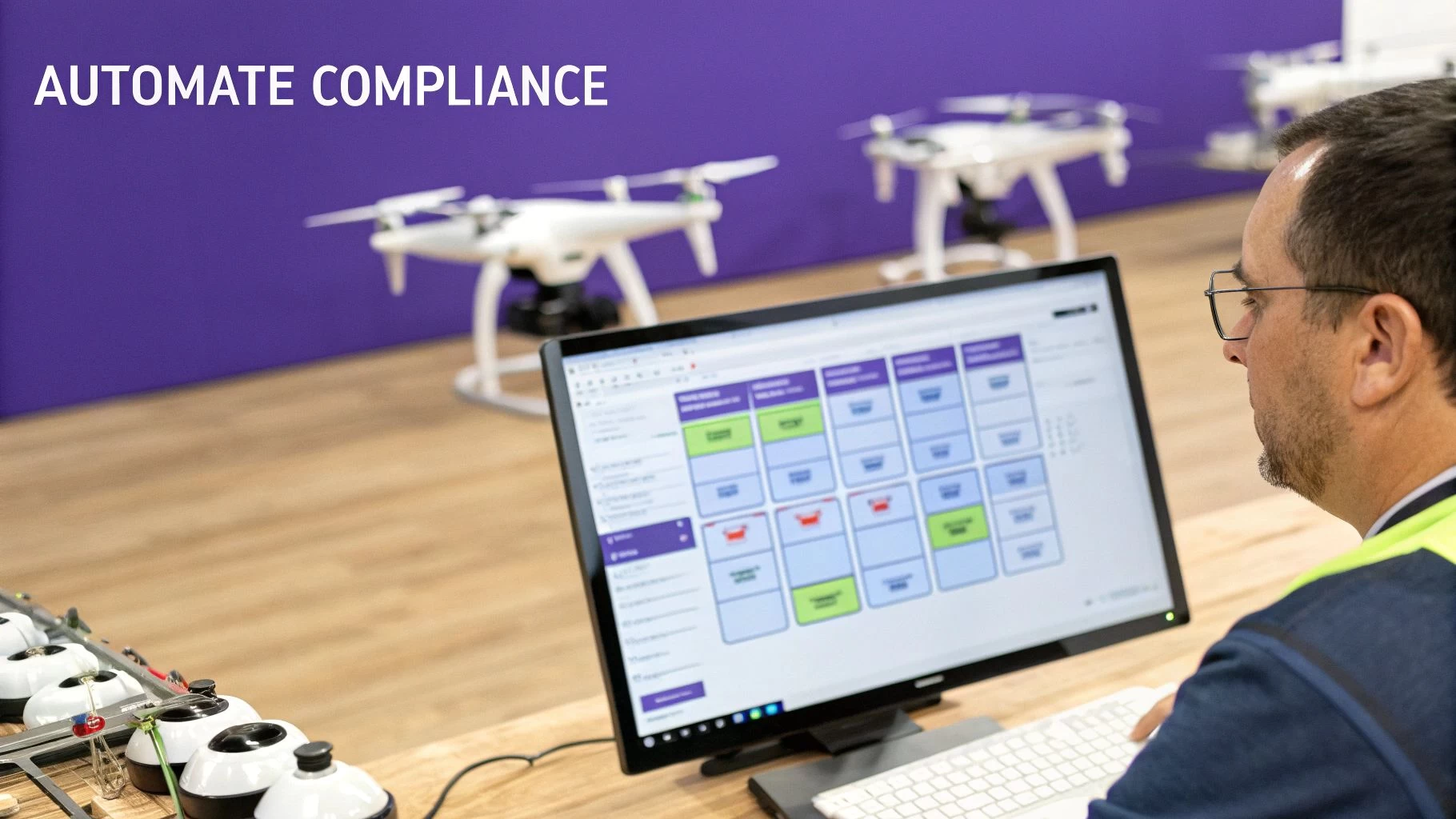
This kind of immediate visibility is absolutely critical for managers who need to be 100% certain every pilot is fully compliant before they even think about taking off.
By automating renewal reminders, you shift from a reactive, "fire-fighting" model to a proactive compliance strategy. It doesn't just prevent lapses; it frees up your valuable time to focus on running the business instead of chasing paperwork.
Let's look at a direct comparison of the old way versus the new way.
Manual vs Automated License Tracking
| Feature | Manual Tracking (Spreadsheets) | Automated Software (Dronedesk) |
|---|---|---|
| Data Entry | Prone to human error; typos and missed updates are common. | Centralised and consistent, reducing mistakes. |
| Reminders | Relies on manual calendar entries that can be missed or ignored. | Automatic email notifications sent at custom intervals. |
| Scalability | Becomes chaotic and unmanageable as the fleet grows. | Easily handles dozens or hundreds of pilots and assets. |
| Audit Trail | Difficult and time-consuming to piece together records for an audit. | Generates comprehensive reports in minutes. |
| Accessibility | Often siloed on one person's computer; version control is a nightmare. | Secure, cloud-based access for the entire team from anywhere. |
It's pretty clear that as soon as you're managing more than just yourself, sticking with spreadsheets is a losing game. The risks of non-compliance and the sheer administrative burden just aren't worth it.
A Central Hub for All Your Operations
Good compliance is about so much more than just the need to renew a drone license. A truly solid system brings every piece of your drone program together. That means tracking not just pilot certifications but also aircraft registration renewals, maintenance schedules, and flight logs.
Imagine you get a call about a potential audit. You need to pull together comprehensive records, and you need them now. An automated system lets you generate reports in minutes that cover:
- Pilot Records: The current certificate status and complete training history for every single person on your team.
- Aircraft Maintenance Logs: A full service history for each drone in your fleet, from props to firmware updates.
- Flight Logs: Detailed records of every mission flown, including location, duration, and the pilot in command.
Trying to maintain this level of organised detail with manual methods is next to impossible. By using a dedicated platform, you ensure all your records are accurate, current, and ready to go at a moment's notice. To see this in action, you can explore the real-world benefits of dedicated drone compliance software for modern operations. Making the switch transforms compliance from a chore you dread into a seamless, reliable part of your daily workflow.
Your Pre-Renewal Action Checklist
A smooth renewal all comes down to good prep. Honestly, you should think of this as your final pre-flight check before you even start the process to renew your drone license. Getting your documents and your head in the right space beforehand makes what could be a stressful chore feel more like a simple, straightforward update.
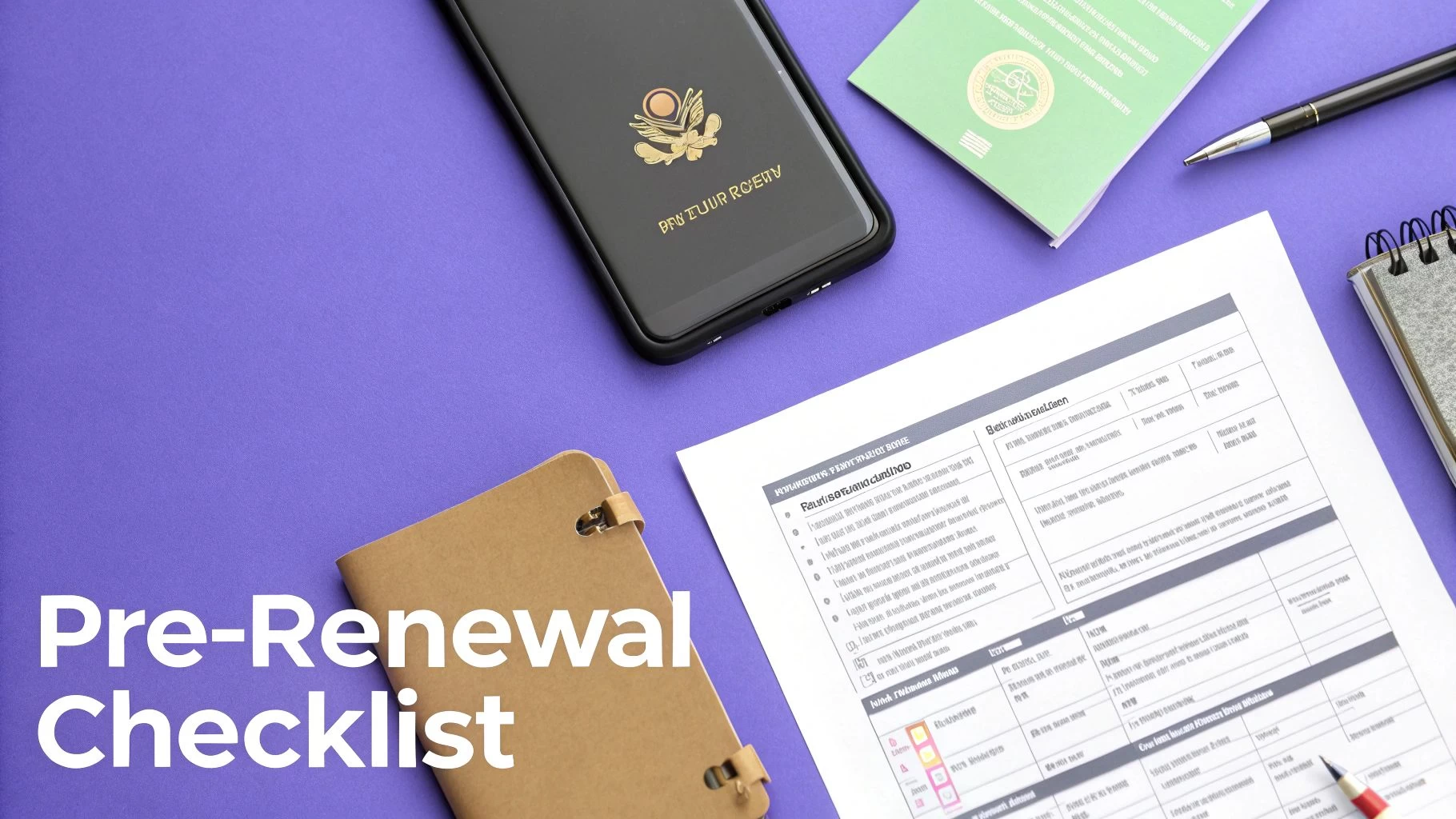
Before you even think about heading over to the official portal, just run through these simple but crucial steps. Each one is designed to get rid of any potential headaches and make sure you get the renewal done quickly and efficiently.
Gather Your Essential Information
First things first, get your documents together. The last thing you want is to be scrambling to find this stuff mid-process.
- Your Current Part 107 Certificate: You’re going to need your existing Remote Pilot Certificate number to kick things off. Keep the physical card or at least a digital copy somewhere handy.
- Government-Issued Photo ID: Double-check that your driver's license or other official ID is valid and hasn't expired. It's critical that the name on your ID exactly matches the name on your pilot certificate.
Having these ready to go means you can sail through the initial verification stages without hitting any snags. It’s a simple step, but it’s the one people overlook most often.
Set the Stage for Success
Alright, with your documents in hand, the next part is all about creating the right environment for the task. This isn't just about clicking a few buttons; it's a chance to get up to speed on important safety updates.
- Block Out Time on Your Calendar: Set aside a solid 1-2 hours of uninterrupted time. Rushing through the recurrent training material is a really bad idea, as it’s packed with critical updates on rules like Remote ID and night operations.
- Bookmark the Official FAA Portal: Don't get sidetracked by third-party sites or confusing search results. Go directly to the FAA Safety Team (FAASTeam) website and save the link. This ensures you're taking the correct, official, and totally free recurrent training course.
- Do a Quick Airspace Review: Before you start, open up an app like B4UFLY and check for any recent changes to the airspace where you usually fly. Have new restrictions popped up near a local airport or critical facility? A little context like this makes the training material much more relevant.
My personal tip is to set a calendar alert three months before your expiration date. This buffer completely eliminates any last-minute panic and gives you plenty of flexibility to get the renewal done on your schedule, not the FAA's.
By running through this pre-renewal checklist, you're not just prepping to pass a test. You're stepping up and taking on the professional responsibility of being a safe, informed pilot. This groundwork ensures that when you do sit down to renew your drone license, the whole process is seamless and genuinely valuable.
Answering Your Drone Renewal Questions
Even with the process laid out, you're bound to have a few questions about the nitty-gritty of drone license renewal. Let's tackle some of the most common things that pilots ask, so you can be 100% confident you're squared away.
What Happens If I Let My Drone License Expire?
So you've let your Part 107 certificate expire. First off, don't panic. You're grounded for any commercial work, that's true. But the good news is there are no penalties, and you don't have to go back and retake that stressful initial in-person exam. Phew.
To get back in the air legally, all you have to do is complete the same free online recurrent training and knowledge test that you would for a regular renewal. Once you pass and get that fresh completion certificate, you're good to go.
Is the Renewal Test the Same as the Initial Exam?
Absolutely not, and that’s a huge relief for pretty much every pilot out there. The renewal is way more convenient than the initial Part 107 slog. Forget driving to an official testing center for a proctored exam; the renewal is a free online course you can knock out from the comfort of your own home.
The content is different, too. It’s not trying to re-test you on everything you learned the first time. Instead, it focuses on what’s new—updated regulations, rules for Remote ID, and flying over people. It’s a much faster, more focused process.
The whole point of the recurrent training isn't to re-certify you from scratch. It’s just to make sure active pilots are current on the rules that have changed over the last two years. It's all about keeping the skies safe.
How Far in Advance Can I Renew My License?
You can complete the recurrent training and renew your drone license any time before it officially expires. The key thing to remember is that your new expiration date will be 24 calendar months from the month you pass the renewal, not from your old expiration date.
For example, if your license expires in December but you get it done in October, your new expiration will be in October two years later. Since it's free and online, there's really no reason to wait until the last minute. Getting it done a few months early is a smart move to avoid any tech issues or life getting in the way.
Do I Also Need to Renew My Drone Registration?
Yes, and this is a big one that trips up a lot of pilots. Your pilot certificate renewal and your drone registration renewal are two totally separate things. They run on different schedules and you have to track them independently.
- Pilot Certificate (Part 107): This is about you as a qualified pilot. It needs to be renewed every two years.
- Drone Registration: This is tied to the aircraft itself. It needs to be renewed every three years.
Keeping both of these dates straight is non-negotiable for staying compliant. Letting either one lapse can ground your operations, which is a headache no one needs.
Juggling multiple pilot licenses, drone registrations, and maintenance schedules is where things can get messy. This is exactly what Dronedesk was built to solve. It centralizes all your compliance data and sends you automated reminders, so you never miss a critical deadline again. Learn how Dronedesk can automate your operations and give you total peace of mind.
 Drone Videography Planning Tips for Professional Crews →
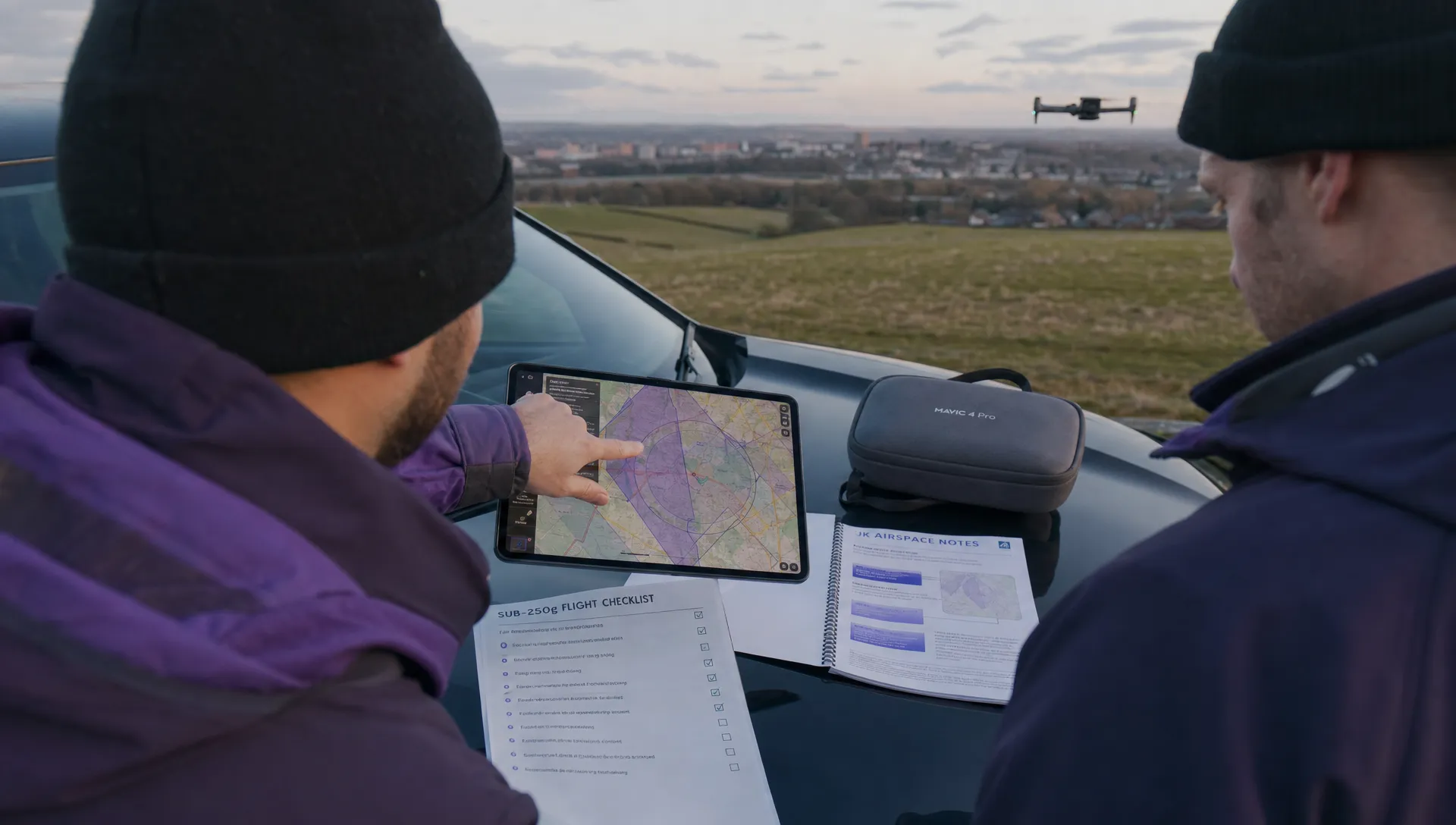 EU Drone Rules for Sub-250g Aircraft Explained →
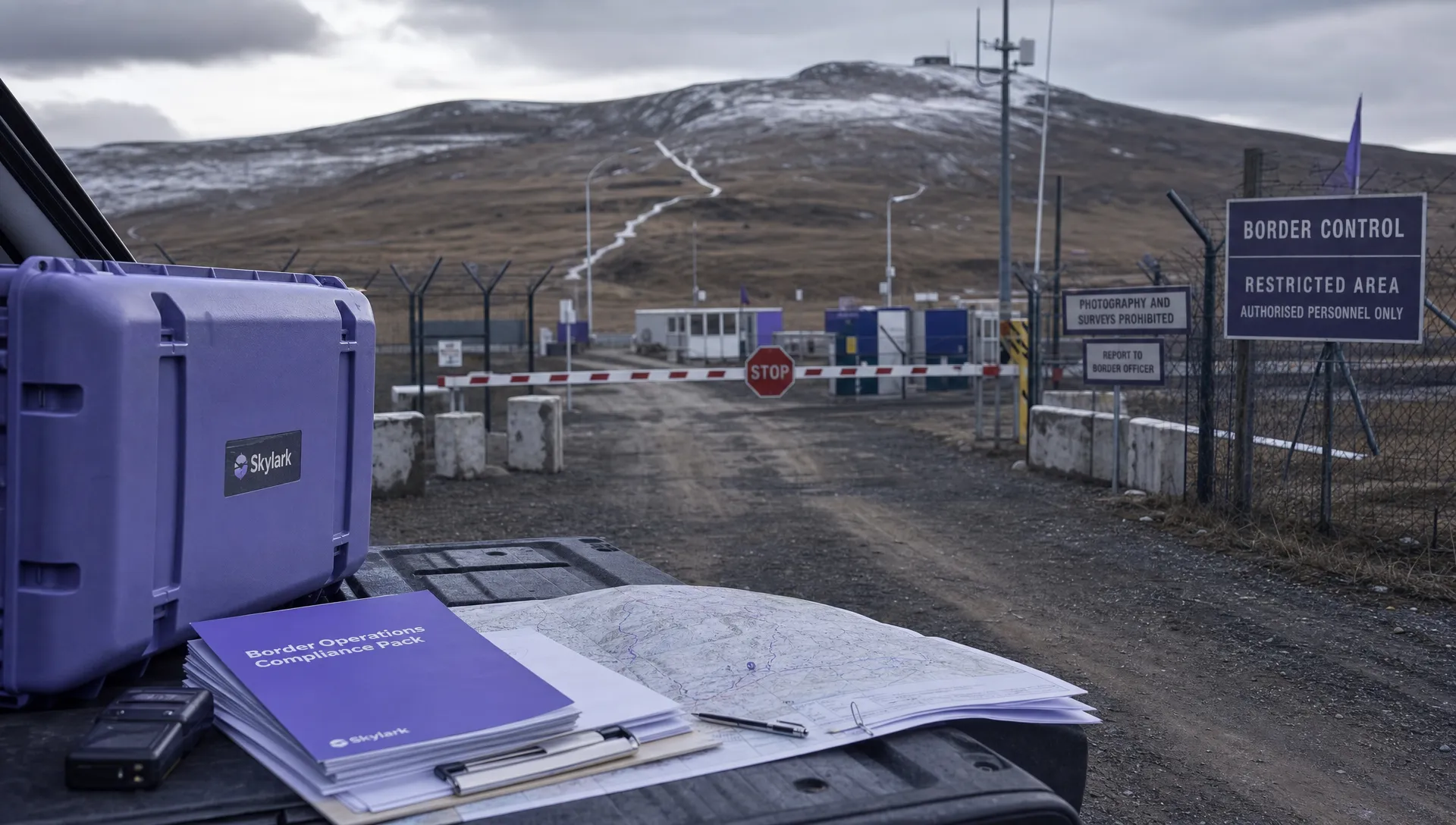 International Drone Laws: A Planning Guide for Global Teams →
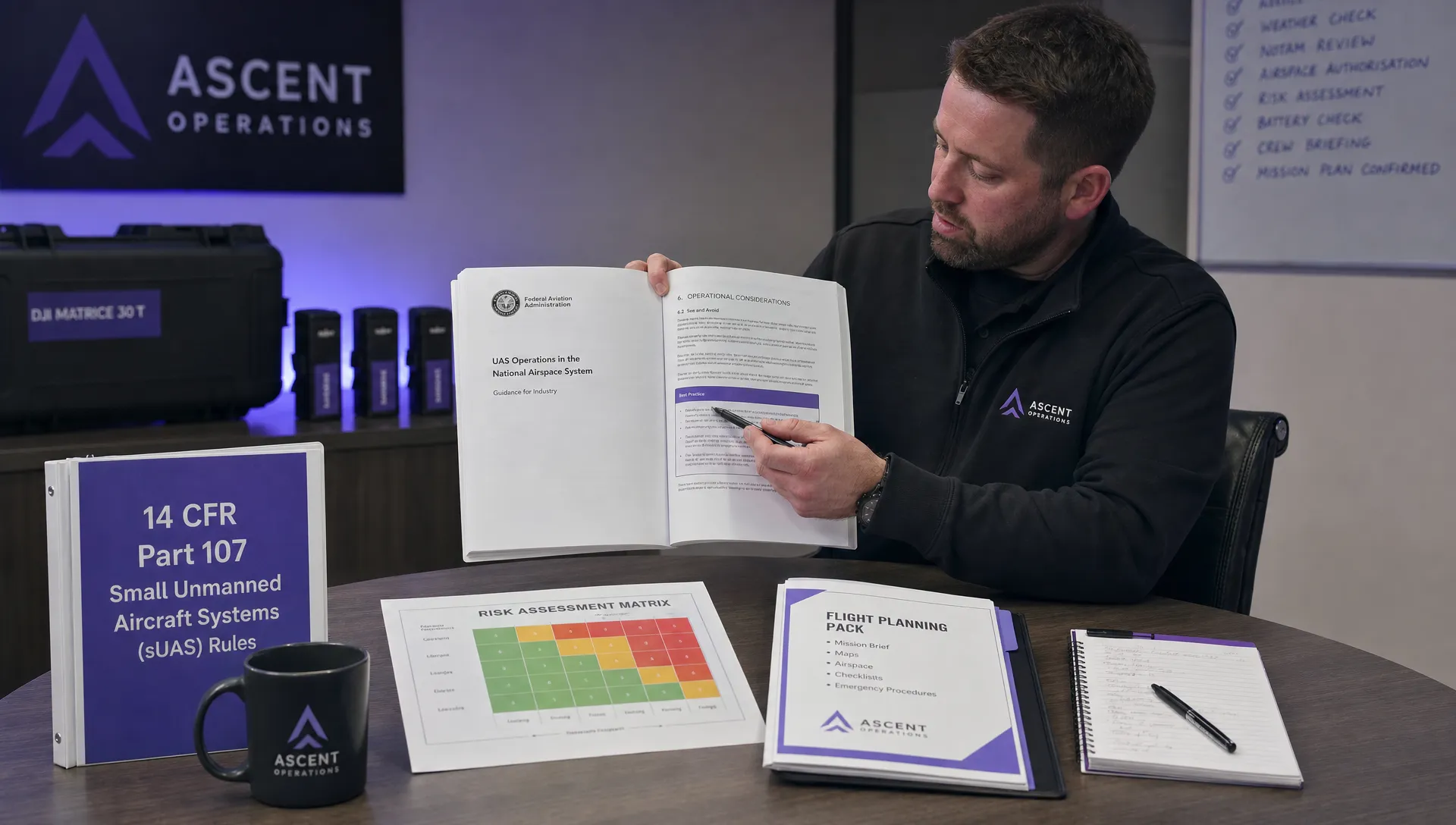 FAA AC 107-2 Explained for Commercial Drone Pilots →
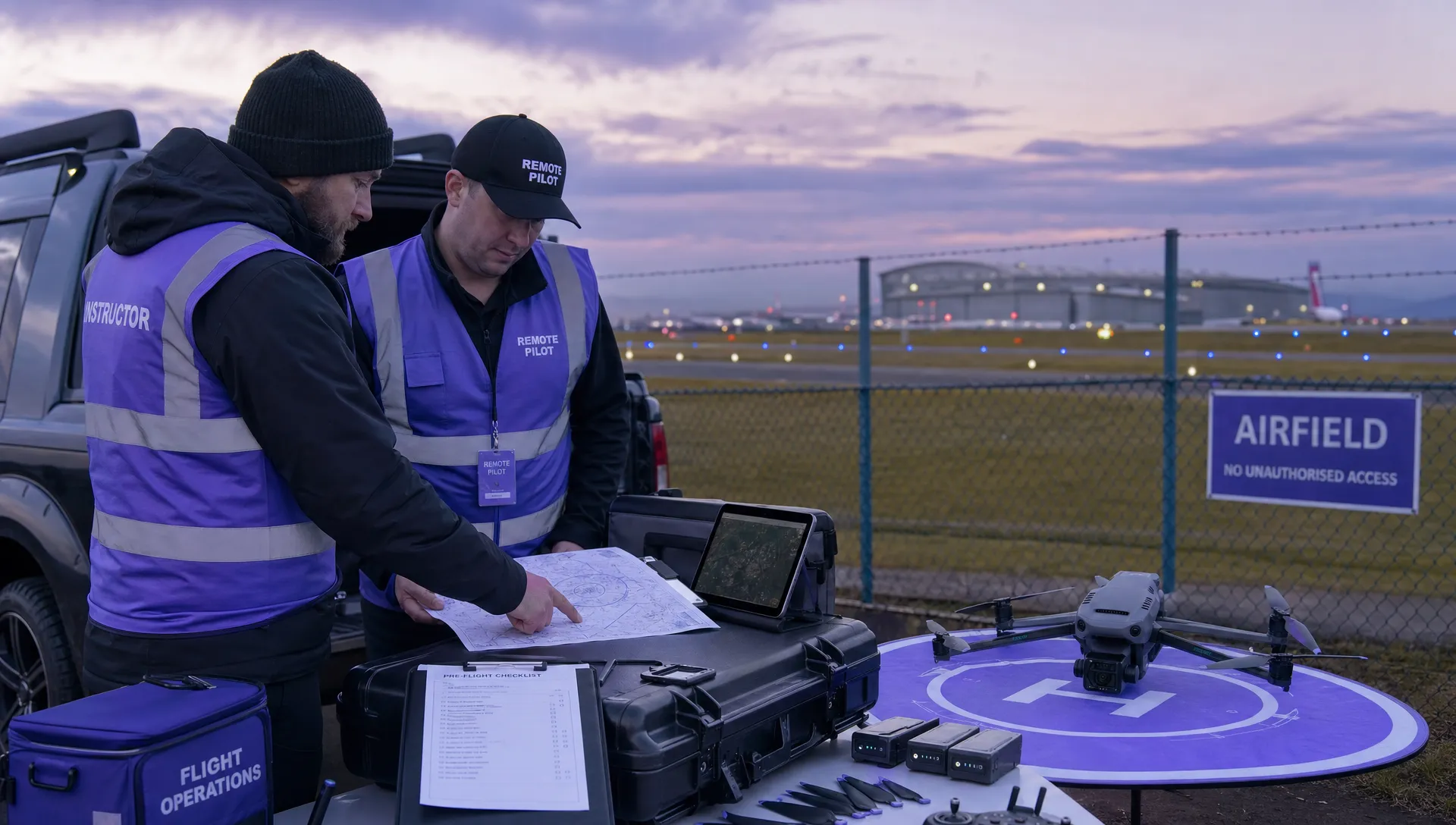 How to Become an FAA Certified Drone Pilot →
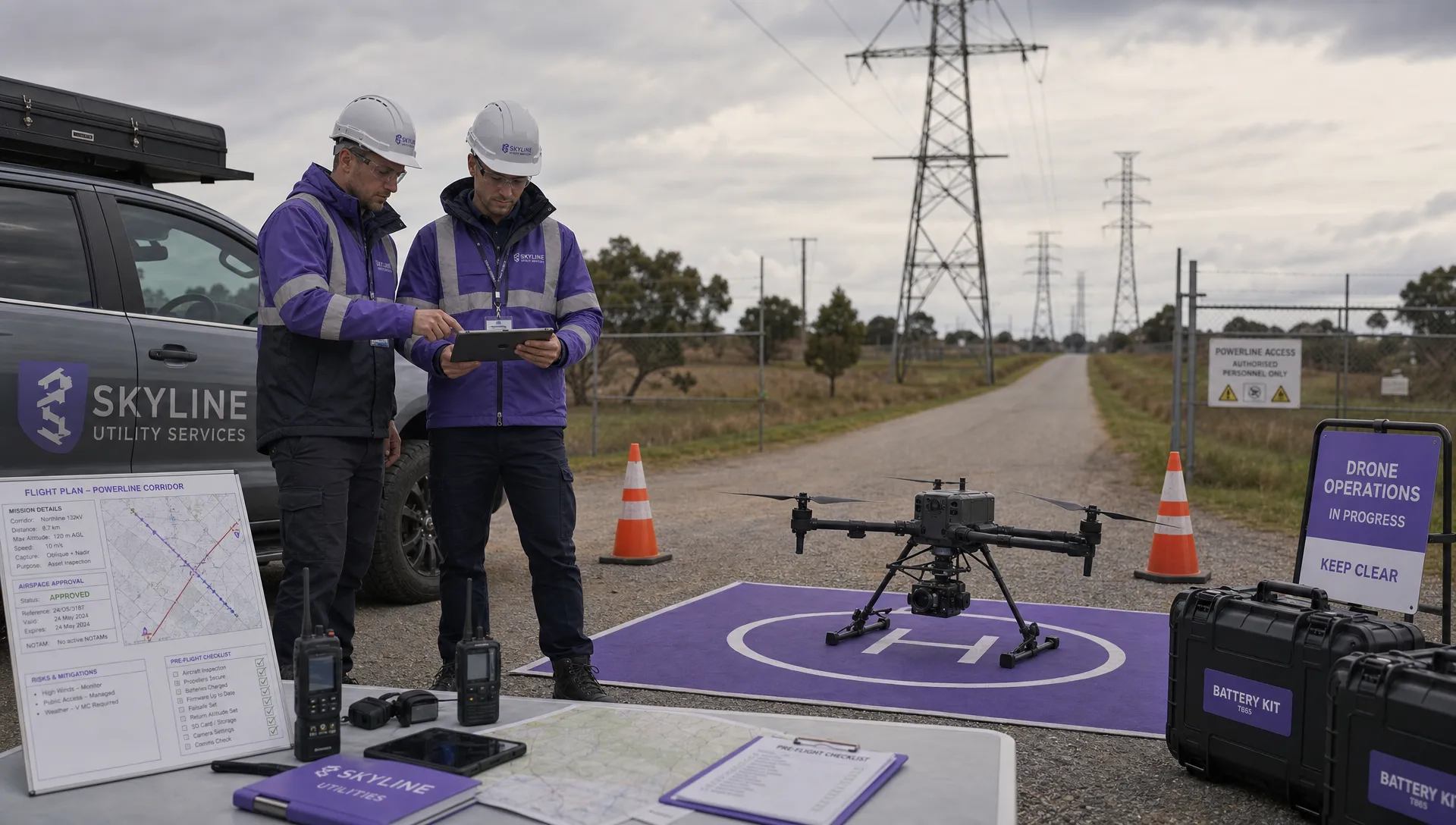 FAA UAS Rules Explained for Commercial Pilots →
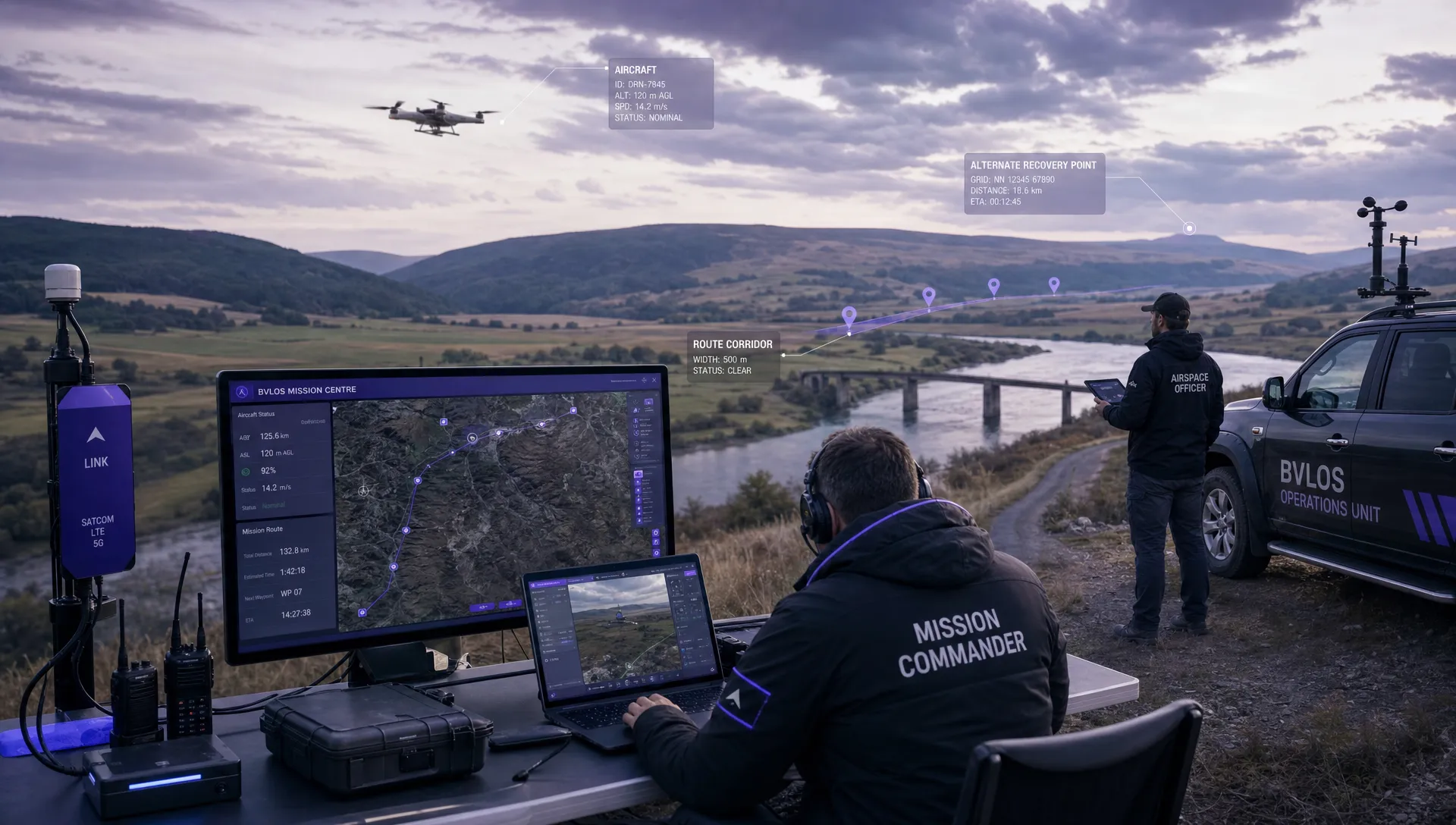 How Beyond Visual Line of Sight Drone Operations Work →
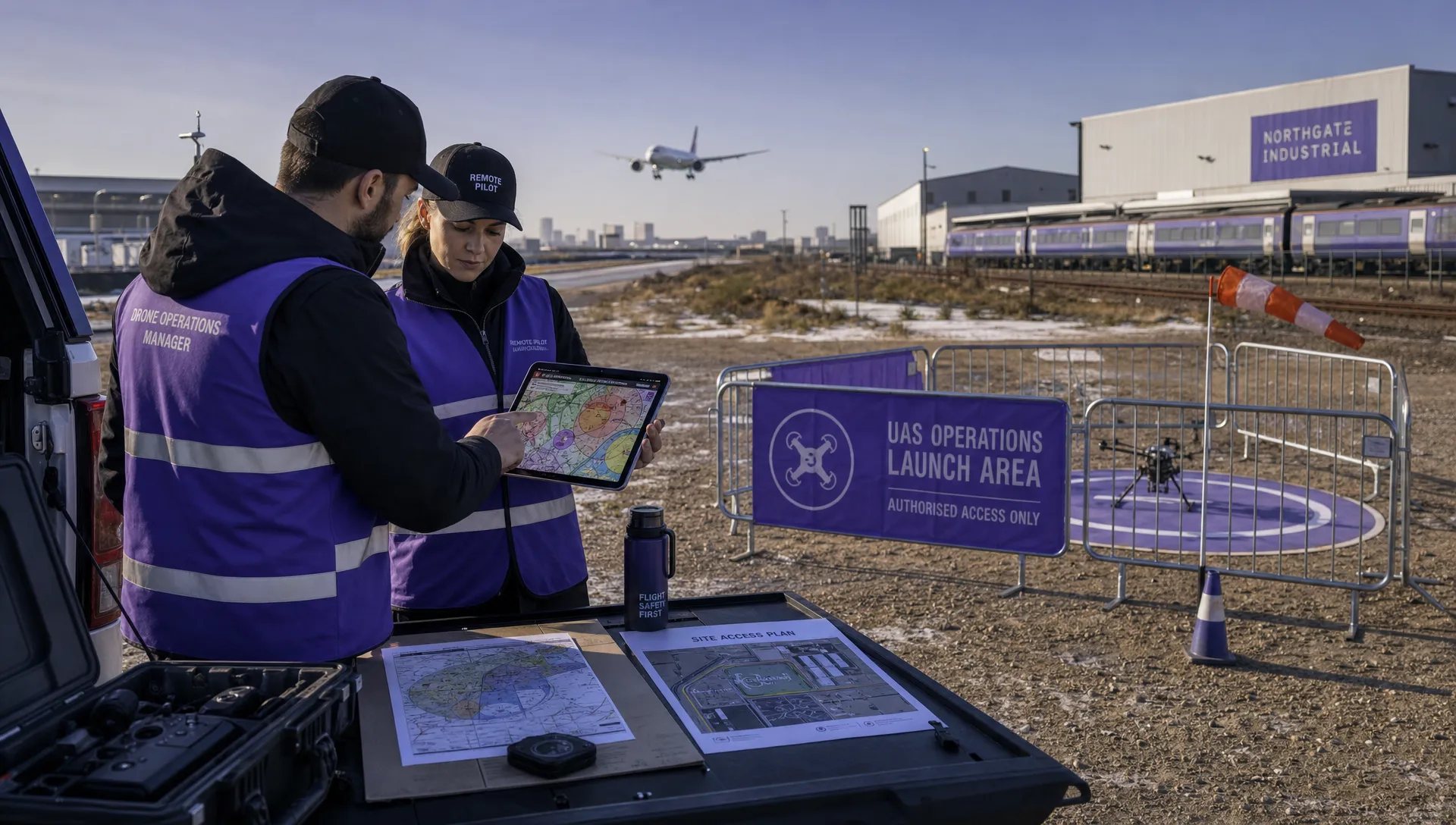 Drone Restrictions You Need to Check Before Flying →
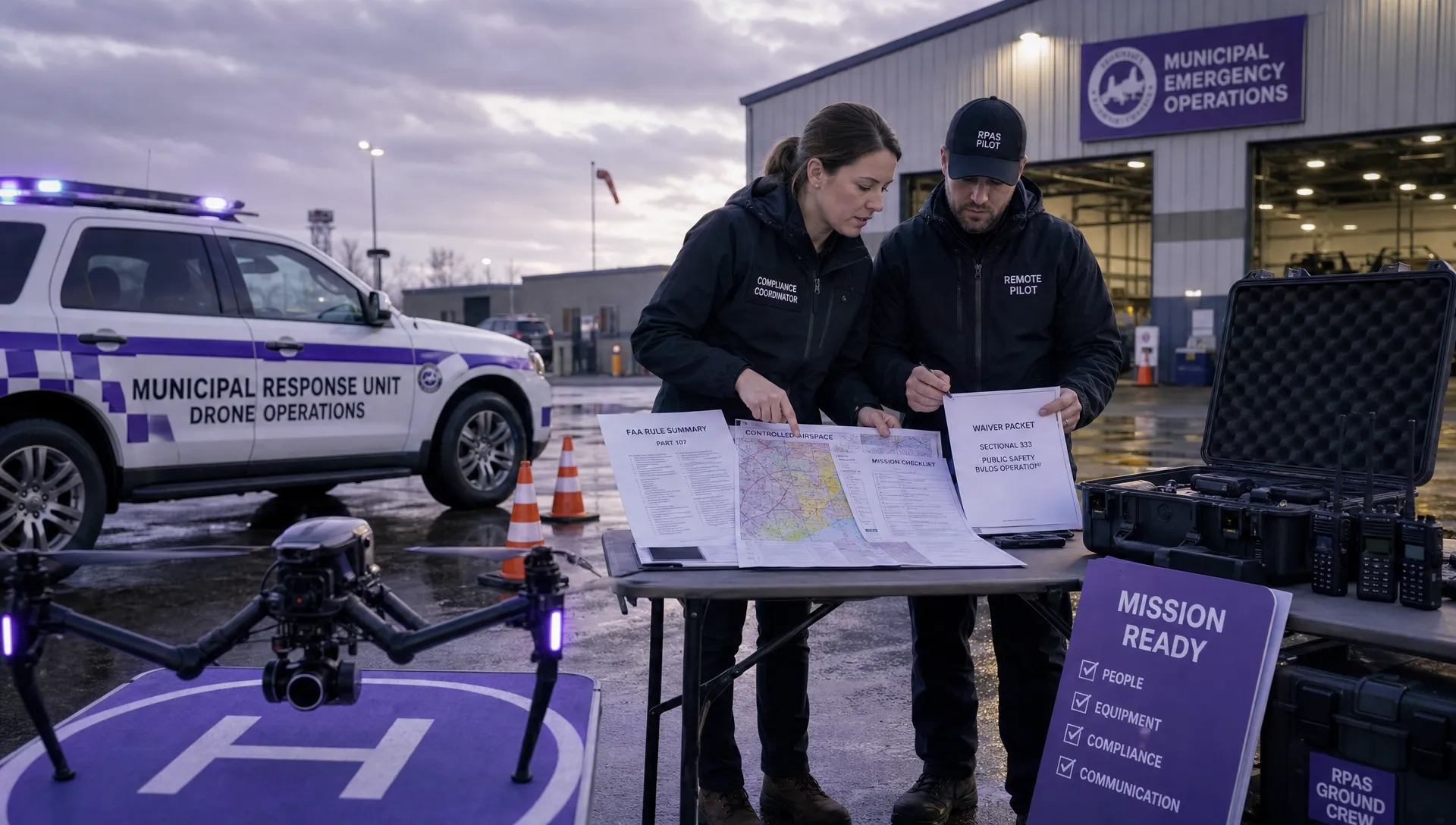 FAA Regulations for Unmanned Aircraft Explained →
 How a BVLOS Waiver Works and Who Needs One →