
Mastering the 8 Essential Parts of Flight
You're probably reading this with a live job in the queue. The client wants clean outputs, the site has access constraints, the weather window is narrow, and your pilot still needs to confirm batteries, airspace, and landing options. That's normal in professional drone work.
What isn't normal is treating flight as a single event. Professionals don't think in terms of “launch, get the shots, come home.” They think in parts of flight. Each part has its own risks, checks, decision points, and records. If you manage those parts properly, jobs stay on schedule, teams stay compliant, and equipment lasts longer. If you don't, small oversights compound fast.
Understanding the Full Lifecycle of a Drone Mission
A professional mission starts long before the motors arm and ends well after the props stop. That's the difference between a hobbyist mindset and an operational mindset. In commercial work, flight is a workflow.
The useful way to break down the parts of flight is into eight stages: pre-flight planning and preparation, takeoff, climb, cruise, hover, descent, approach and landing, and post-flight logging and analysis. That structure mirrors how experienced crews work in the field. It also matches how risk shows up. Problems rarely arrive without warning. They usually begin earlier, in planning, setup, or missed cues during execution.
Aircraft design is a good reminder that every phase has different aerodynamic demands. Piper notes that the fuselage accounts for about 60% of an aircraft's drag in cruise, while flaps and trim systems support control during other phases of flight in ways that directly shape safety and efficiency (Piper on airplane parts). Drones don't use those same components in the same way, but the lesson carries over. Airframe design, propulsion setup, controller tuning, and payload balance all affect what your aircraft does in each phase.
What professionals manage that hobbyists often skip
- Mission context: Client goals, deliverables, site constraints, and fallback plans.
- Operational risk: Airspace, bystanders, obstacles, weather, signal conditions, and crew positioning.
- Evidence: Logs, maintenance records, approvals, briefings, and post-flight notes.
- Efficiency: Battery rotation, repeatable checklists, and predictable handoffs.
A lot of new operators focus on the flight controls first. That matters, but it's only part of the job. The better question is whether your whole workflow supports safe and repeatable outcomes. If your team handles inspections or property work, this AI-powered drone inspection guide for contractors is useful because it shows how flight decisions tie directly to deliverables and client expectations. The same operational thinking applies to mapping and site work, especially when you're running repeatable jobs like those described in this UAV aerial survey guide.
Practical rule: A mission should be easy to reconstruct after the fact. If you can't show what was planned, what changed, and what was flown, you're not operating at a professional standard.
Phase 1 Pre-Flight Planning and Preparation
Most bad missions are lost before takeoff. The drone may still fly, but the job is already unstable because the planning was weak, the site picture was incomplete, or the equipment status was assumed instead of verified.
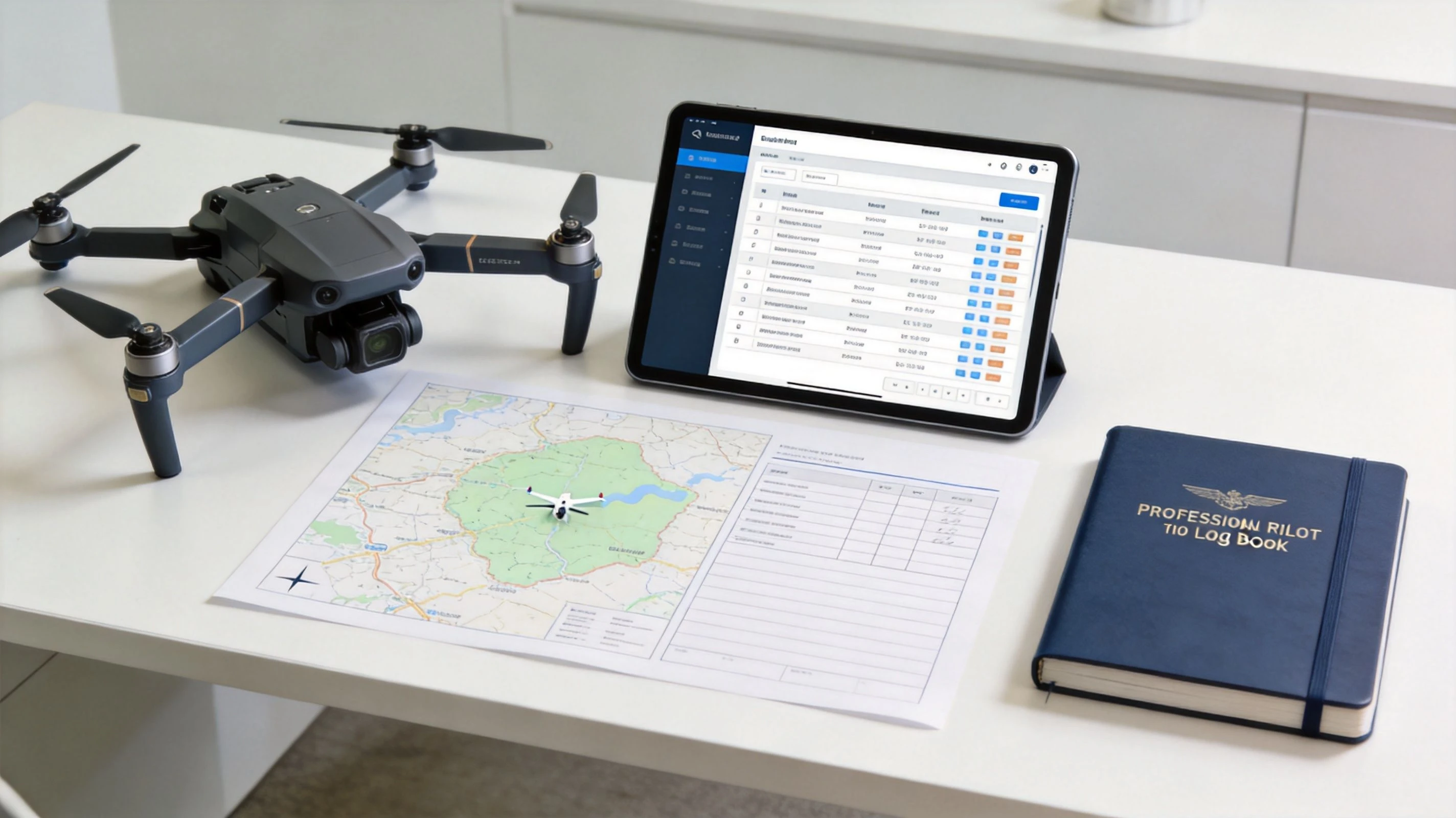
Build the mission before you touch the aircraft
Start with the operational brief. Define the deliverable, confirm the exact takeoff location, identify who has site authority, and settle the timing. That avoids the common mess where the pilot arrives ready to fly but the client still hasn't secured roof access, closed a work zone, or notified the relevant people on site.
Then complete the airspace and weather picture. That means checking the relevant airspace restrictions, temporary changes, local site hazards, and the practical weather conditions that matter to your specific aircraft and payload. Don't treat this as a box-tick. Wind at ground level isn't the same as wind near structures, over ridgelines, or around open industrial assets.
For operators who work on property shoots, rooflines, and tight urban spaces, planning discipline matters just as much as image quality. This professional real estate photography guide is a useful reminder that good results come from preparation, staging, timing, and consistency, not just camera skill.
Inspect what actually fails
Physical pre-flight checks need to be simple enough to do every time and strict enough to catch real issues.
- Airframe condition: Check the body, arms, landing gear, and payload mount for cracks, looseness, or impact signs.
- Propellers: Look for chips, warping, stress marks, poor fitment, and anything that suggests a hard previous landing.
- Batteries: Confirm charge state, seating, temperature, and visible damage. Also verify you've assigned the right packs for the job profile.
- Controller and display device: Make sure firmware state, charge level, cable fit, and screen visibility are all acceptable.
- Payload readiness: Camera settings, lens condition, storage media, and mission-specific configuration should be set before launch.
- Failsafe logic: Review return-to-home height, lost-link behavior, geofencing impact, and landing contingencies.
Keep planning centralized
The fastest way to create errors is to split the mission across messages, screenshots, paper notes, and memory. A professional workflow keeps planning documents, airspace checks, job records, and aircraft status in one place. That's why teams increasingly rely on structured planning systems instead of ad hoc admin.
A good reference point is this guide to drone flight planning workflows. The key benefit isn't convenience alone. It's consistency. When every mission follows the same planning path, fewer details get missed.
Pre-flight is where you remove surprises. You won't remove all of them, but you can remove most of the avoidable ones.
Phases 2 and 3 Takeoff and Climb
The first seconds after liftoff deserve more respect than they usually get. In manned aviation, takeoff and landing account for approximately 80% of all accidents according to StartPac's aviation facts summary. Drone operations aren't identical, but the operational lesson is the same. The aircraft is low, close to obstacles, changing configuration, and still proving that everything works under load.
What actually goes wrong here
Takeoff exposes failures that may stay hidden on the ground. A motor problem, prop issue, calibration drift, GPS instability, or payload imbalance often becomes obvious only when the aircraft lifts into free air. If the launch area is tight, those problems become immediate hazards.
Climb adds a different layer. The aircraft transitions from a local ground environment into changing wind, variable turbulence, and more demanding control inputs. Near buildings, trees, masts, and uneven terrain, the climb can feel stable for a second and then become messy without much warning.
Common failure patterns during these phases include:
- Poor launch site choice: Dust, loose debris, slope, foot traffic, or nearby obstacles.
- Unstable initial hover: Drift, yaw inconsistency, or abnormal control response right after liftoff.
- Telemetry complacency: The pilot looks at the drone but ignores weak signal, odd attitude behavior, or poor satellite performance.
- Rushed climb-out: The aircraft is pushed into mission speed before the crew has confirmed stable control.
How disciplined crews handle it
Good takeoffs are boring. That's what you want. The pilot briefs the launch, the crew secures the area, the aircraft lifts to a controlled hover, and the team confirms that the machine is behaving normally before climbing away.
Use a short launch sequence:
- Clear the zone so no one wanders into rotor wash or the immediate flight path.
- Announce the takeoff so the whole team knows the aircraft is about to move.
- Lift into a low hover and confirm stability, control response, and telemetry.
- Climb positively to a safe working height without rushing into a turn or lateral movement.
- Recheck the aircraft once clear of local obstacles and turbulence pockets.
What works and what doesn't
What works is patience. What doesn't is trying to “save time” by launching from a compromised spot, skipping the hover check, or handing too much control to automation before the aircraft has demonstrated stable behavior.
The aircraft hasn't proven itself until it has lifted, held position cleanly, and responded normally to input.
That's why experienced operators treat takeoff and climb as separate parts of flight, not as one blurred moment. The job hasn't started when the drone leaves the ground. The aircraft is still entering the mission.
Phases 4 and 5 Cruise Hover and Transit
The drone earns its keep during this phase. The aircraft is in the air, the client deliverable is being captured, and the operation shifts from acute startup risk to sustained mission control. Operators often think this is the easy part. It can be, but only when the operator keeps watching the right information.
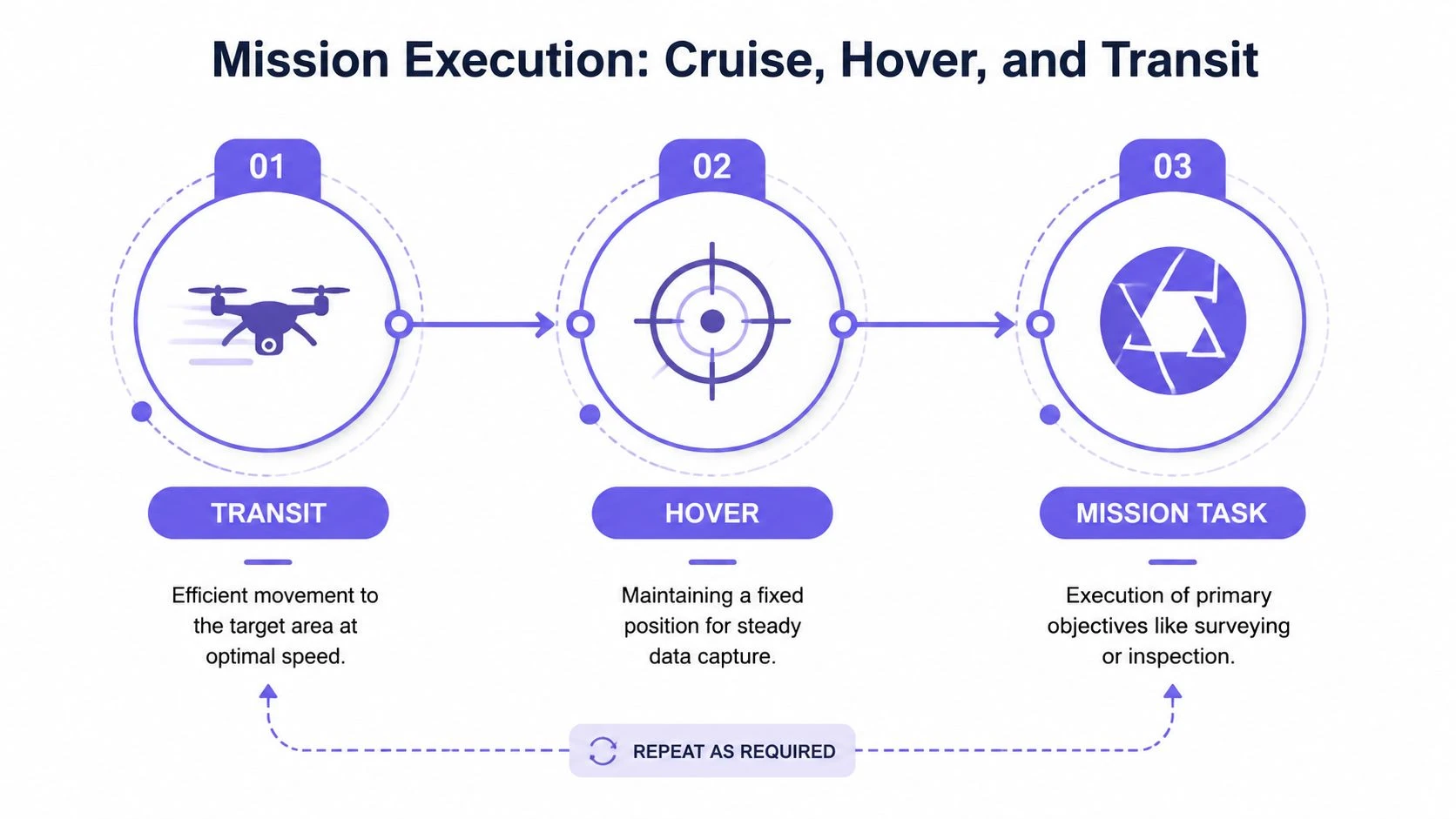
Read the aircraft, not just the image feed
A clean video feed can fool you. The camera may look stable while the aircraft is fighting wind, carrying excess load, or burning battery faster than expected. That's why the ground control display should be treated as a flight instrument panel, not just a screen for framing shots.
Modern flight decks and drone control interfaces follow the same core idea as a Primary Flight Display, which consolidates key data into one pilot view. Epic Flight Academy notes that this kind of architecture updates at a minimum of 4 Hz to support immediate awareness of attitude, airspeed, heading, and related flight cues (Primary Flight Display overview). In drone work, the equivalent is your telemetry stack. If you're not scanning it, you're missing half the aircraft.
Three operating modes that need different discipline
Cruise is the efficient movement portion of the mission. It's common in mapping, corridor work, and long repositioning legs. Here the focus is route discipline, battery trend, signal integrity, and conflict avoidance.
Hover is where many inspection and media tasks happen. Stable hover sounds simple, but it's one of the easiest ways to waste time and energy. The pilot needs to watch drift, wind exposure, proximity to structures, and the cumulative cost of holding position longer than planned.
Transit sits between the two. It's the controlled movement from one work point to another. Crews often get sloppy during this phase because the task itself feels secondary. In reality, transit is where obstacle conflict, line-of-sight issues, and distracted pilot attention tend to appear.
Drone Flight Phases Risks Checklists and Logging
| Flight Phase | Common Risks & Failure Modes | Key Operator Checklist Items | Dronedesk Streamlining Feature |
|---|---|---|---|
| Pre-flight planning and preparation | Missed airspace issue, weak risk assessment, incomplete client brief, unready equipment | Confirm permissions, site hazards, weather, crew roles, aircraft status, payload setup | Centralized job planning, compliance records, fleet oversight |
| Takeoff | Debris, unstable launch area, immediate drift, control anomaly | Clear launch zone, announce takeoff, verify low hover stability | Standardized operational records |
| Climb | Gusts, obstacle conflict, unstable ascent, weak telemetry awareness | Positive climb path, monitor aircraft response, maintain separation | Mission documentation linked to aircraft and pilot |
| Cruise | Battery drain, signal degradation, route deviation | Monitor telemetry, keep route discipline, maintain awareness of airspace and surroundings | Flight record continuity |
| Hover | Excess battery use, drift, turbulence near structures, payload task fixation | Reassess position hold, watch battery trend, confirm capture quality | Task-linked flight documentation |
| Transit | Collision risk between work points, line-of-sight loss, distracted repositioning | Use clear pathing, maintain visual awareness, verify next working area | Unified mission notes and logs |
| Descent | Obstacle misjudgment, sink rate issues, changing wind near the ground | Set descent profile, confirm landing area remains clear | Logged mission phase and operator notes |
| Approach and landing | Crosswind, rushed return, poor touchdown surface, overreliance on automation | Stabilize approach, verify landing zone, be ready to wave off and reset | Post-flight reporting and traceable audit trail |
| Post-flight logging and analysis | Missing records, forgotten defects, maintenance drift, weak lessons learned | Log issues, battery use, maintenance actions, pilot observations | Automatic logging, reporting, asset history |
What efficient operators do during the middle of the mission
- Scan in cycles: Aircraft position, telemetry, environment, payload result, then repeat.
- Protect battery margin: Don't let task focus hide the return requirement.
- Control hover time: A drifting, wind-exposed hover often costs more than a careful reposition.
- Use observers properly: They should call hazards and positional issues, not just watch passively.
Stable mission performance comes from disciplined monitoring. The pilot who only watches the camera is already behind the aircraft.
Phases 6 and 7 Descent Approach and Landing
A lot of operators relax too early on the return leg. That's a mistake. Descent and landing demand as much discipline as launch, sometimes more, because conditions may have changed during the mission and the pilot is often managing fatigue, battery pressure, and the temptation to finish quickly.
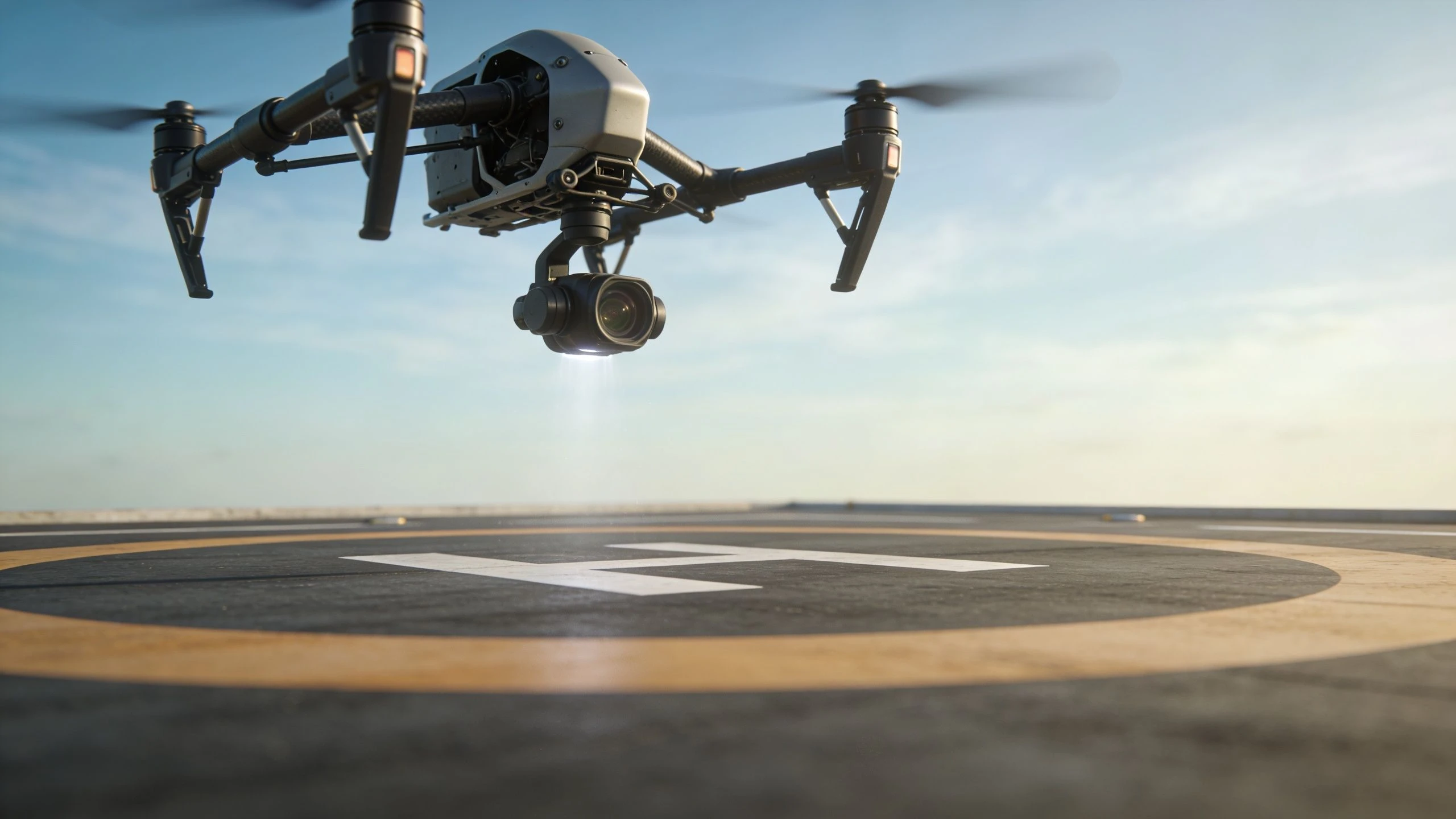
Build the landing before you start descending
The best landings are set up early. Before descent begins, confirm the landing zone is still usable. People move, vehicles appear, wind shifts, and the surface you launched from may no longer be clear or safe. If the original location is compromised, commit to an alternate before the aircraft gets low.
The approach path matters just as much. Avoid dropping into a cluttered area and then trying to sort things out close to the ground. A clean path with a stable final segment is safer than a short, awkward arrival that saves only a little time.
Crosswind and sideslip are real issues
Approach gets harder in crosswind. For both manned and unmanned aircraft, managing the sideslip angle (β) is critical during approach and landing, especially when wind pushes the aircraft off track. An uncorrected sideslip can create dangerous yawing moments and even spiraling dives, while deliberate sideslip can also serve as an advanced technique for precise drone inspection work in the right hands (aircraft flight dynamics reference).
For practical operations, the lesson is simple. Don't let the aircraft skid through the final approach without understanding what it's doing. If the nose, track, and drift don't make sense, stop the approach, reposition, and try again.
What works on real sites
On uneven ground, gravel, rooftop pads, industrial compounds, and temporary work zones, the landing phase is mostly about judgment.
Use these decision criteria:
- Surface quality: If the touchdown area is unstable, dusty, wet, sloped, or obstructed, don't force the landing there.
- Wind behavior near structures: Air that felt manageable at mission height may become turbulent near walls, roofs, or machinery.
- Battery state under stress: Low battery can push pilots into rushed decisions. Don't let urgency replace technique.
- Return-to-home logic: Automation helps, but only if the settings match the site. Default behavior can be unsafe in a complex environment.
When to go around
A wave-off is not a failure. It's good airmanship. If the final segment feels unstable, visibility is compromised, or the landing zone has changed, climb away and reset.
If the approach is untidy, the landing usually gets worse, not better.
That's especially true for newer pilots who start making small corrective inputs close to the ground and end up chasing the aircraft. A better habit is to reject the approach early, regain control margin, and rebuild it properly.
Landing is the last active risk phase. The mission isn't complete until the aircraft is down, disarmed, and secured.
Phase 8 Post-Flight Logging and Analysis
The field work is over, but the operation isn't. This last phase is where professional standards either hold together or fall apart. If the flight only exists in memory, you lose compliance evidence, maintenance visibility, and the chance to improve the next mission.
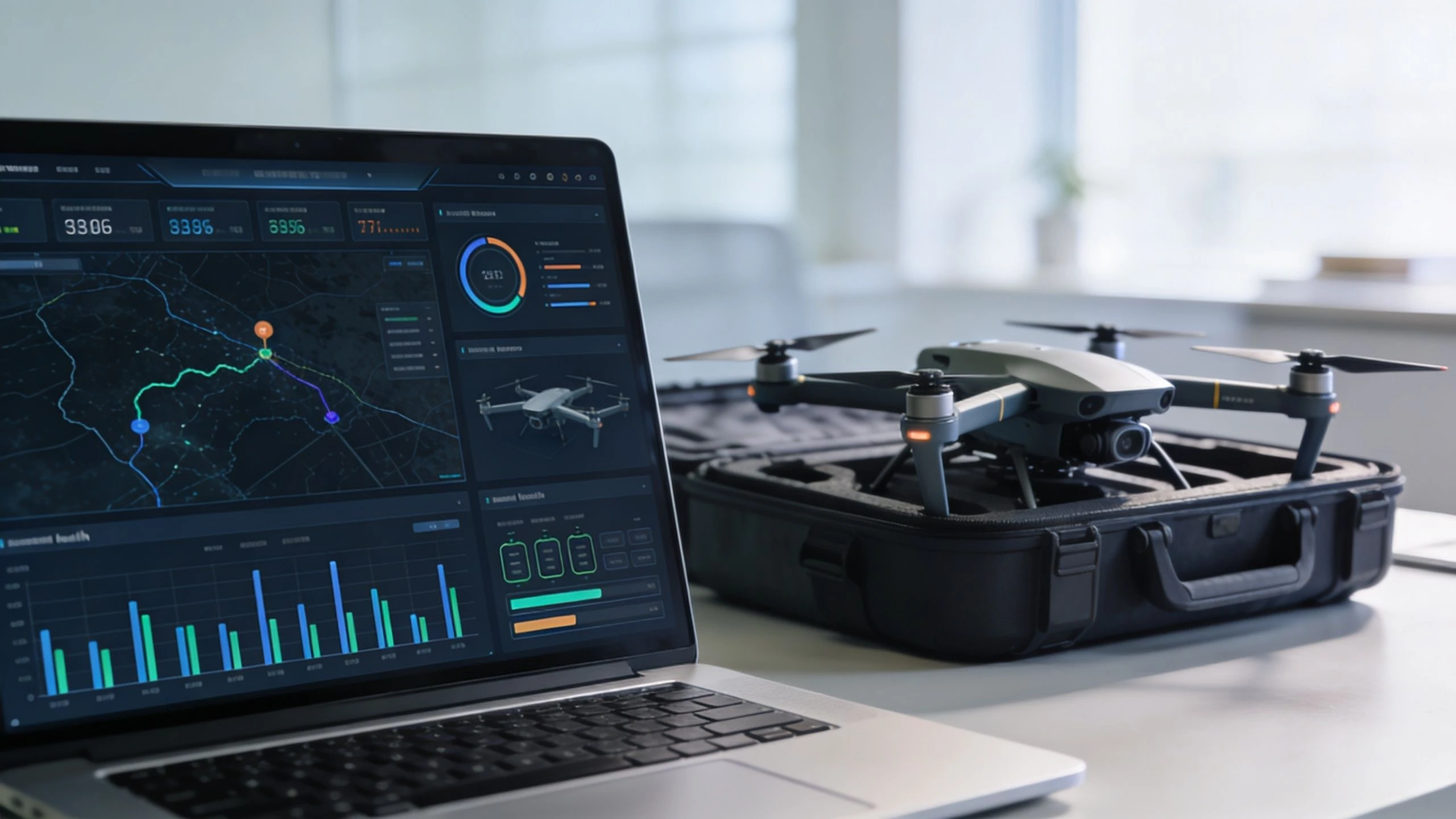
Log the details while they're still fresh
At minimum, record what was flown, which aircraft and batteries were used, who operated, what anomalies occurred, and what maintenance or follow-up actions are now required. If the mission involved a client deliverable, the record should also connect the operational facts to the work completed.
Teams that skip this step usually say they'll update everything later. Later rarely comes with the same accuracy. Small faults get forgotten. Battery issues blur together. Repeated minor handling problems never become visible because no one has created a record pattern.
Why post-flight data matters more than most teams think
Logging is not only about proving compliance. It's also how you protect assets and make operational decisions with evidence. You can identify recurring defects, trace rough landings back to specific sites or procedures, and tighten planning for similar jobs in future.
There's also an advanced safety benefit. A significant knowledge gap remains around multirotor angle of incidence, because unlike fixed-wing aircraft, the relevant aerodynamic relationships in drones are more dynamic. Post-flight analysis of those patterns is increasingly important for understanding instability and turbulence-related issues, which makes strong telemetry logging a serious safety tool, not just admin (angle of incidence background)).
What a strong post-flight process includes
- Operational summary: What happened, what changed from plan, and whether the mission achieved the required outcome.
- Aircraft health notes: Prop damage, motor concerns, sensor oddities, or anything that needs inspection before the next job.
- Battery tracking: Which packs were used, any unusual discharge behavior, and any pack that should be pulled from service pending review.
- Crew observations: Site access issues, communication gaps, bystander risks, and better options for next time.
For teams that want a cleaner administrative workflow, using dedicated drone data logging software makes this phase far more reliable. The value isn't just automation. It's having usable records that support maintenance, auditability, and better decisions across future operations.
Good logging turns one mission into useful knowledge. Poor logging turns every mission into a fresh guess.
Integrating Every Flight Phase for Safer Operations
Professional drone work is an end-to-end system. That's the essential lesson in the parts of flight. The quality of the landing depends on the quality of the approach. The quality of the approach depends on the battery margin and workload during cruise. Cruise quality depends on the decisions made before takeoff. And all of it depends on whether the operator captures enough information afterward to improve the next mission.
That's why experienced teams stop thinking of flight as stick time alone. They manage workflow, evidence, aircraft condition, site risk, and crew discipline as one connected operation. When one part is weak, another part has to absorb the failure. That's where near misses, client friction, and damaged equipment start showing up.
A scalable drone business needs repeatable planning, clean execution, disciplined recovery, and strong records. Not because regulators like paperwork, but because safe operations become easier when your process is consistent. The operators who last in this industry are usually the ones who make their missions easier to brief, easier to fly, and easier to review.
The future of commercial drone operations belongs to teams that can do both. Fly well and manage well.
Dronedesk brings those eight parts of flight into one operational workflow. If you want a better way to plan jobs, manage fleet and team records, log flights, and keep compliance tied to real field work, take a look at Dronedesk. It helps professional operators spend less time chasing admin and more time running safe, efficient missions.
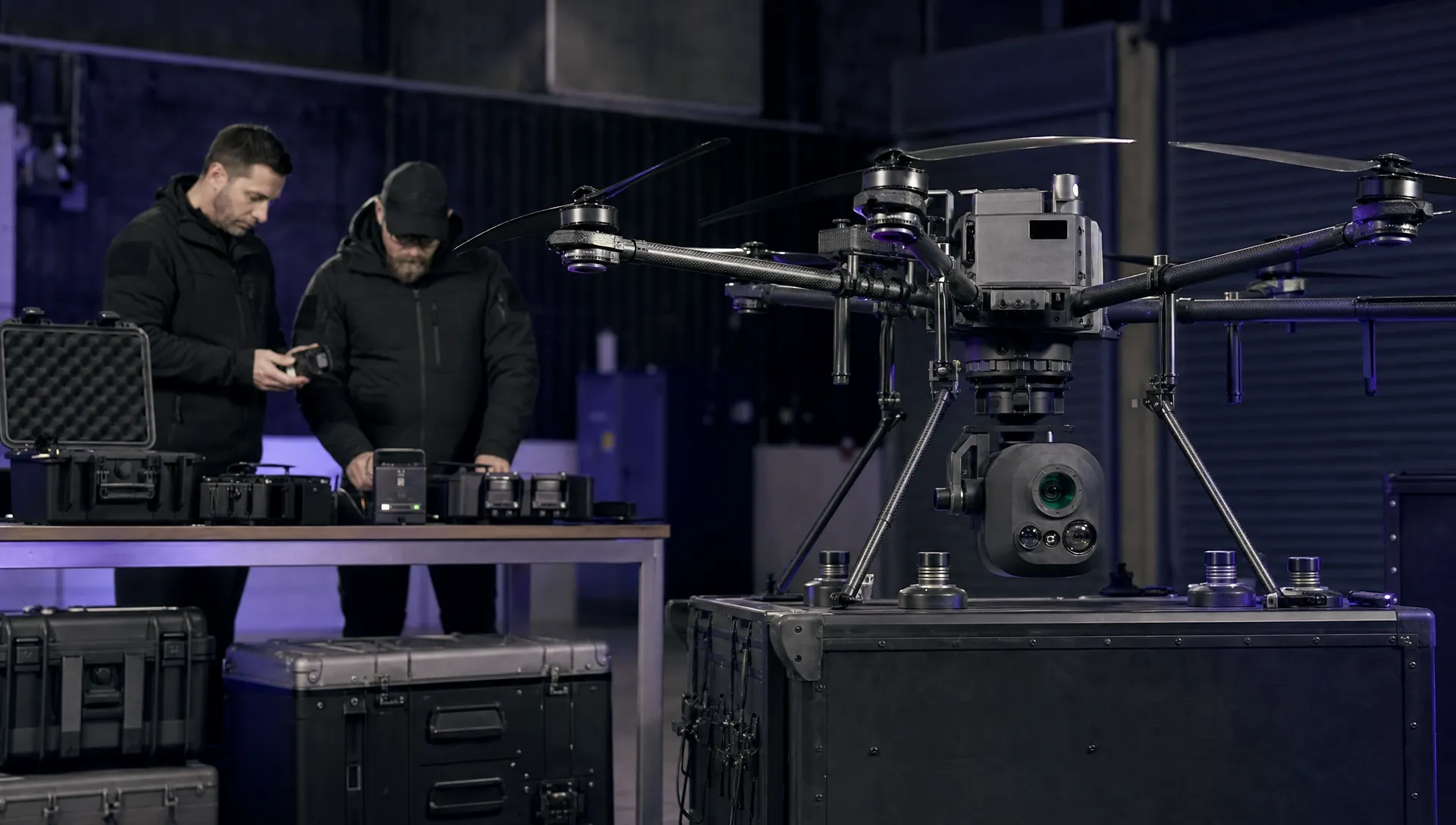 Drone Manufacturers Compared for Enterprise Operations →
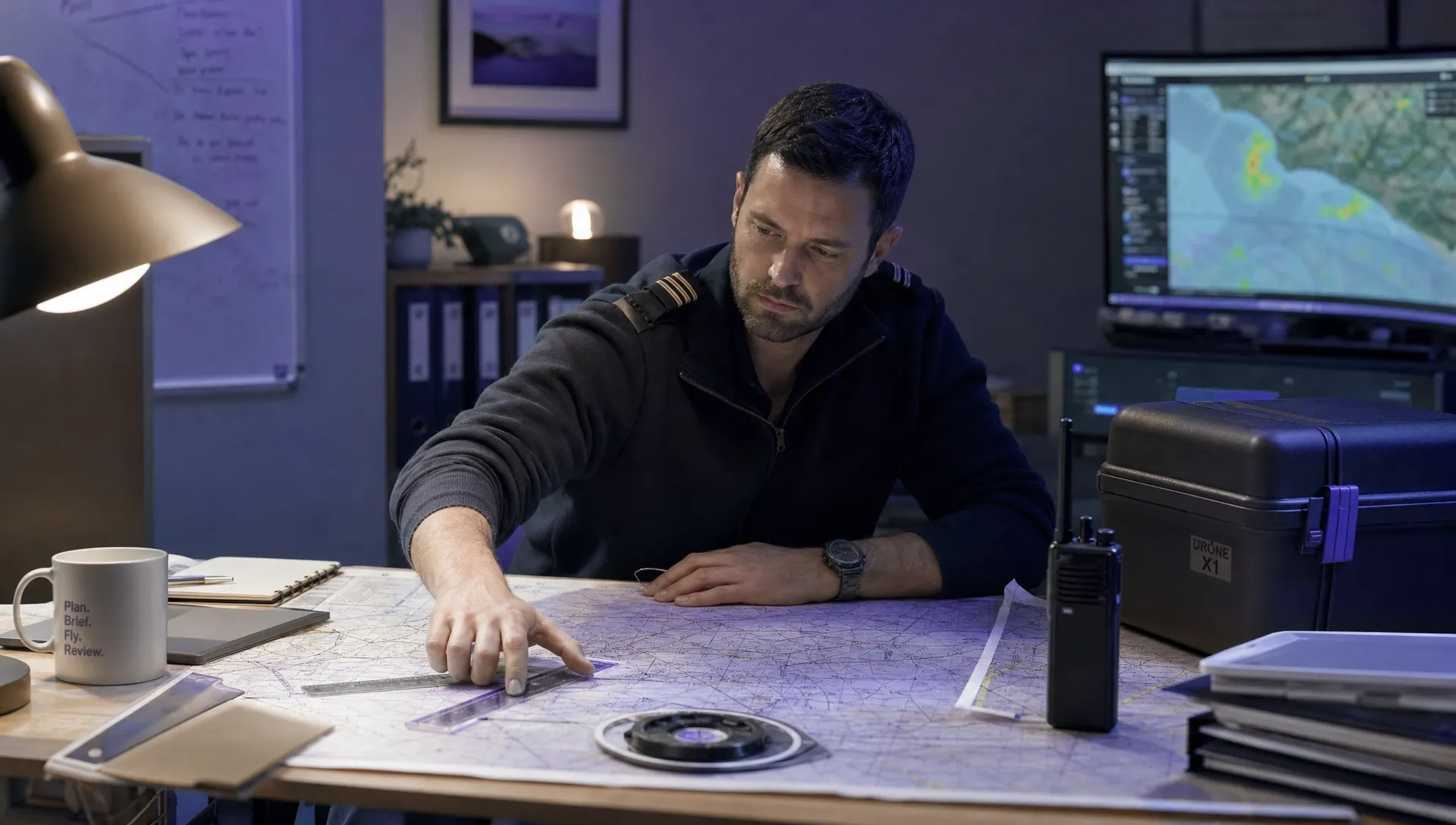 How to Prepare for the Drone Licence Test →
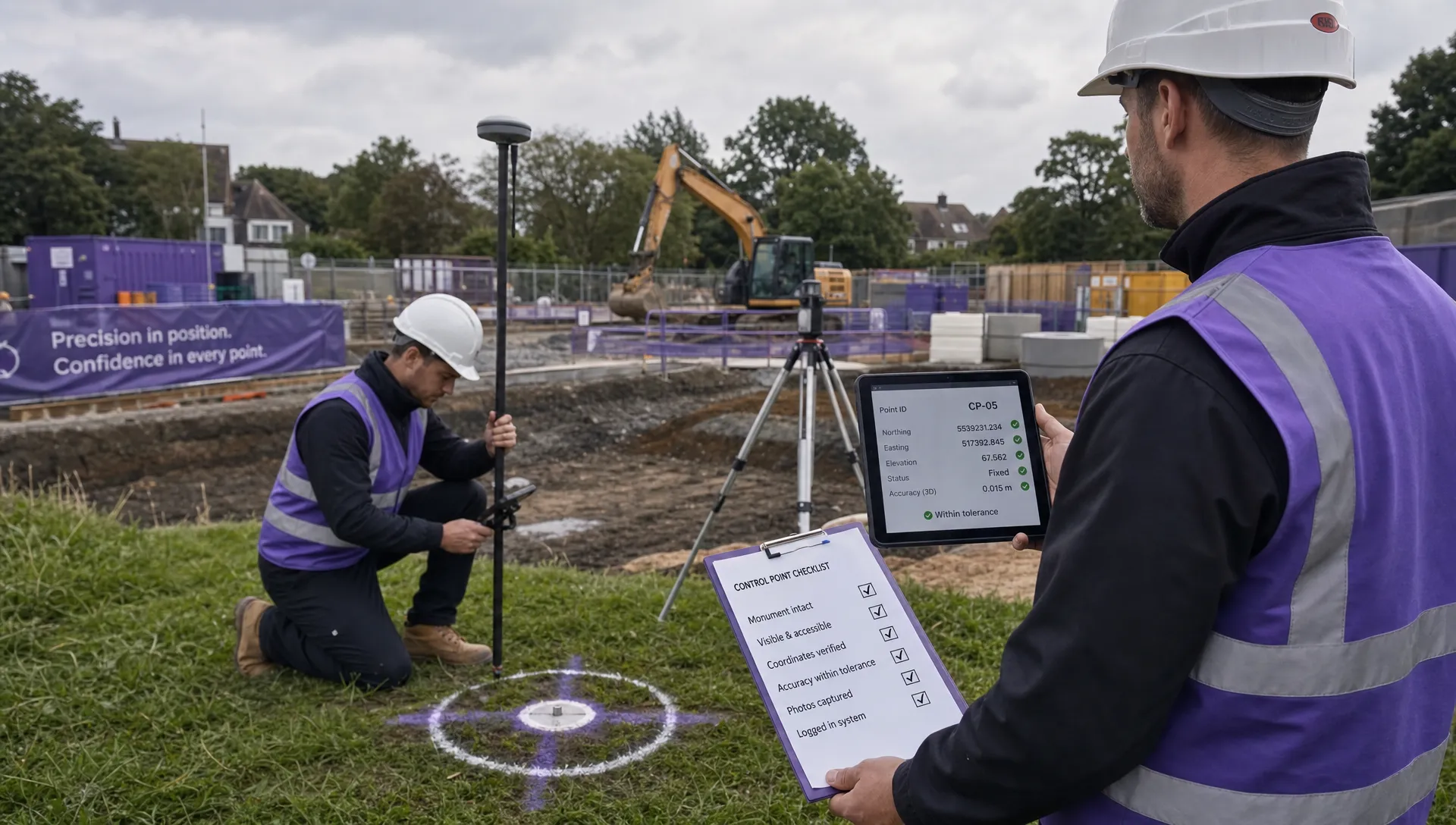 How to Choose a Drone Mapping Service for Your Project →
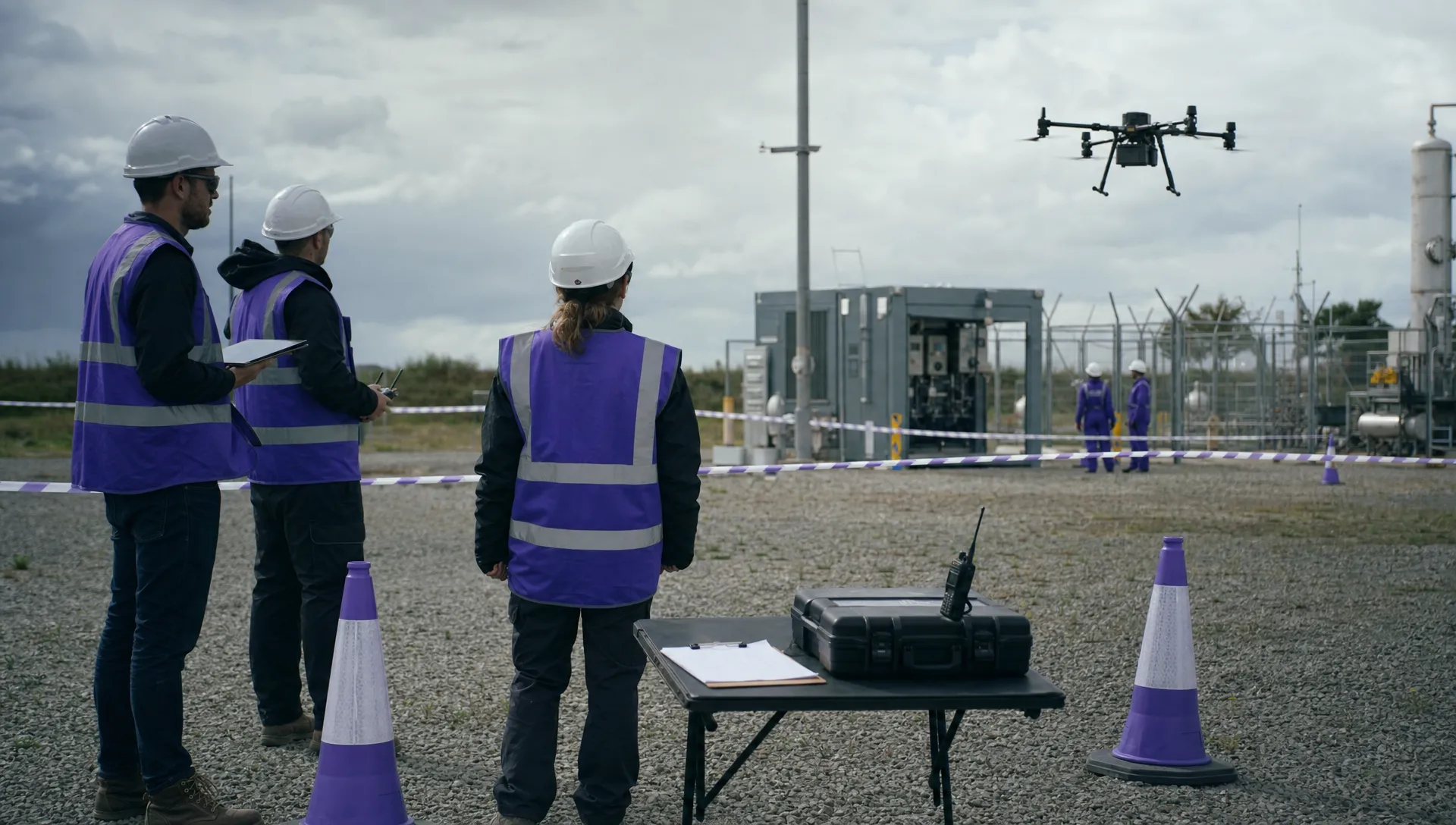 Drone Safety Rules That Every Commercial Team Needs →
 Airport Drone Rules: How to Plan Flights Without Surprises →
 FAA Part 107 Licence: Your Step-by-Step Application Guide →
 How to View DJI Flight Logs Online Safely →
 What Part 107 Covers Beyond the Pilot Certificate →
 How to Download and Read a DJI Flight Log →
 Drone Videography Planning Tips for Professional Crews →