
Drone Compliance Made Simple for Commercial Operators
Drone compliance can feel like a moving target. Regulations, airspace restrictions, client requirements, pilot competency, insurance, maintenance records, privacy obligations and site-specific risks all need attention before a drone leaves the ground.
For commercial operators, the goal is not to create more paperwork. The goal is to build a repeatable system that proves every flight was planned, authorised, risk assessed, flown and logged in a professional way. Done well, drone compliance protects your pilots, your clients, your reputation and your ability to scale.
This guide breaks the process down into practical steps for commercial drone teams in the UK, including survey companies, utilities, emergency services and specialist inspection operators. It is not legal advice, but it will help you understand what a robust compliance workflow should include.
What drone compliance really means for commercial operators
Drone compliance is the discipline of operating within the rules that apply to your aircraft, pilots, airspace, job type and organisation. In the UK, that means understanding the Civil Aviation Authority’s risk-based framework and applying it consistently to real-world operations.
The CAA’s drone guidance sets out the core responsibilities for remote pilots and operators. Commercial use alone does not automatically place every flight into the same regulatory category. What matters is the risk profile of the operation: aircraft weight, operating environment, proximity to people, airspace, line of sight, height, location and the specific task being carried out.
Most operators think about compliance as permission to fly. That is only part of it. A compliant commercial operation also needs to demonstrate that the organisation has competent people, suitable aircraft, appropriate procedures, effective risk controls and reliable records.
In practice, compliance should answer four simple questions:
- Can you legally conduct this operation in this location, with this aircraft and pilot?
- Have you identified and controlled the risks before flight?
- Can the pilot follow a clear, approved plan on site?
- Can you prove what happened afterwards if a client, auditor, insurer or regulator asks?
If your system answers those questions consistently, you are moving from reactive paperwork to operational control.
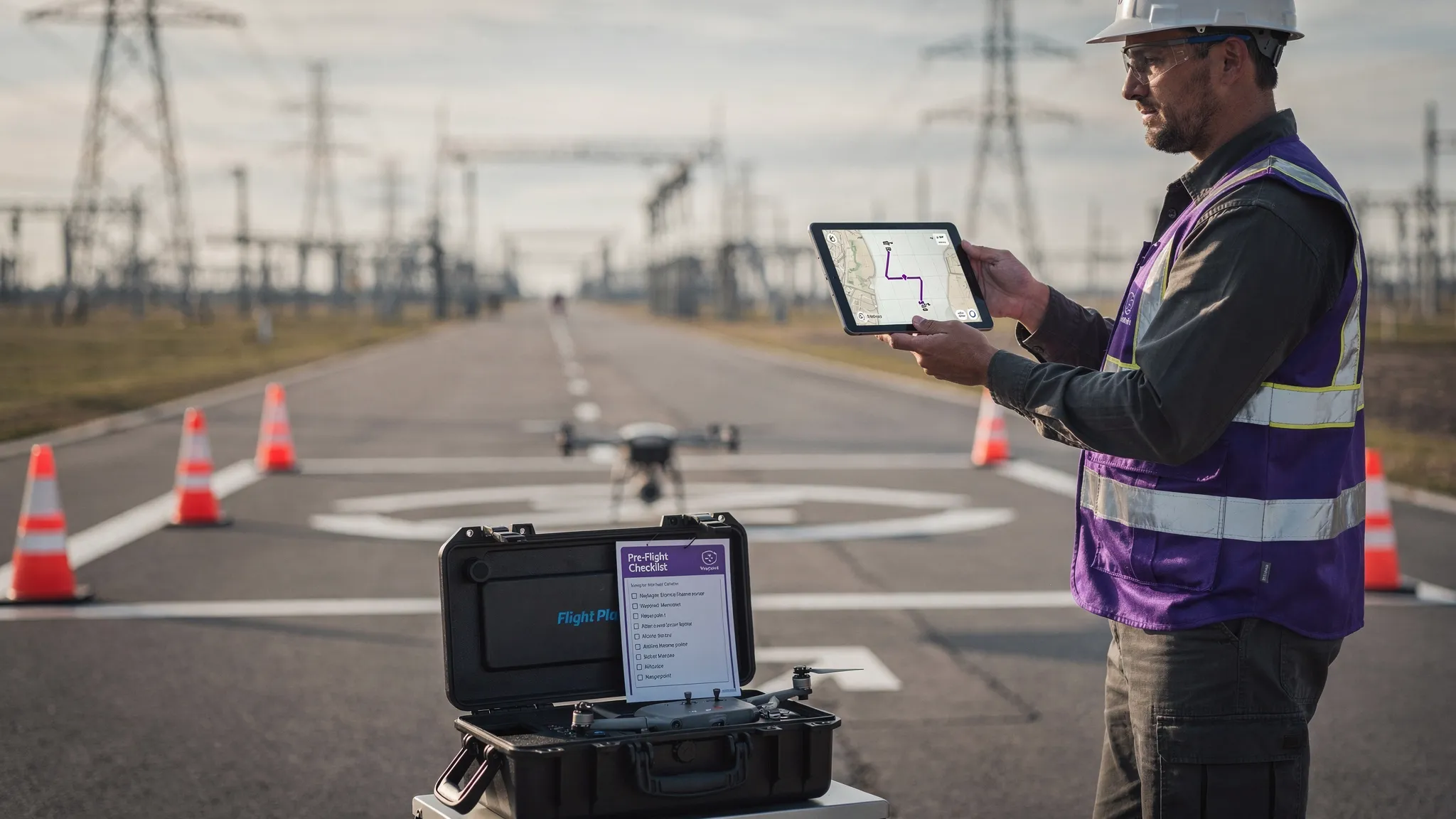
The main compliance areas every commercial drone team must control
Drone compliance becomes much easier when you divide it into areas of responsibility. Not every flight needs the same level of documentation, but professional operators should be able to show a clear audit trail across the main categories below.
| Compliance area | What you need to manage | Typical evidence |
|---|---|---|
| Operator registration and authorisation | Operator ID, operating category, Operational Authorisation where required and operating procedures | Registration records, authorisation documents, operations manual, permissions |
| Pilot competency | Correct training, valid competency, familiarity with procedures and task-specific capability | Pilot records, certificates, internal approvals, briefing records |
| Aircraft and fleet condition | Suitability of the drone, maintenance status, battery condition and payload configuration | Fleet register, maintenance records, defect logs, battery records |
| Airspace and location | Controlled airspace, flight restriction zones, NOTAMs, local restrictions and nearby hazards | Airspace checks, authorisations, site maps, stakeholder notifications |
| Risk assessment | Ground risk, air risk, people, property, environment, emergency procedures and mitigations | Risk assessment, method statement, dynamic risk assessment, RAMS pack |
| Insurance and commercial controls | Appropriate cover for the type of operation and client contractual requirements | Insurance certificate, client job file, scope of work |
| Data and privacy | Images, video, personal data, sensitive sites and client confidentiality | Data handling notes, privacy controls, client instructions |
| Flight records | What was planned, who flew, what aircraft was used and what actually happened | Flight logs, incident records, post-flight notes, reports |
This table is deliberately practical. Compliance is not a single form you complete at the end of a job. It is a connected chain of decisions and records from enquiry through to close-out.
Start by classifying the job correctly
Before you plan the flight, classify the operation. This is where many operators create unnecessary risk. A simple roof inspection in a rural location may fall within lower-risk operating rules, while a similar inspection near a congested area, railway, prison, airport, emergency incident or major event may require far more control.
For UK commercial operators, the key question is whether the job can be conducted within the limits of the Open category or whether it falls into the Specific category. The Specific category generally applies where the operation presents a higher risk or falls outside Open category limits, and it may require an Operational Authorisation or another accepted route.
The Certified category is reserved for the highest-risk operations and is less common for routine commercial work, but the principle is the same: classify the risk before you promise the job.
A good intake process should capture the basic facts early. Where is the site? What is the task? What aircraft and payload are likely to be used? Will the operation be near uninvolved people, infrastructure, transport routes, emergency activity or controlled airspace? Are there time pressures or access restrictions?
This is not just a regulatory exercise. It is commercial protection. If the job is not feasible, needs extra authorisation or requires a different operating method, you want to know before you commit a pilot, quote a fixed price or accept a client deadline.
Build compliance into flight planning, not after it
The most efficient operators do not treat compliance as a separate admin task. They build it into flight planning.
A compliant plan should connect the job objective with the operational reality. For example, a utility inspection may need to cover multiple assets across a corridor. A survey company may need precise launch points and repeatable coverage. An emergency services team may need rapid deployment, but still require clear command oversight and auditable decisions. A construction inspection may involve cranes, contractors, exclusion zones and changing site layouts.
This is why generic checklists are rarely enough on their own. You need a planning workflow that combines airspace checks, proximity risks, site hazards, pilot assignment, aircraft suitability, client requirements and emergency procedures.
The NATS drone information hub is a useful reference for understanding airspace awareness and the need to check restrictions before flying. Operators should also use the latest CAA guidance, local procedures and any site-specific requirements from clients or landowners.
Your flight planning process should usually cover:
- The operating location, boundaries and intended flight area
- Airspace status, restrictions and any required permissions
- Nearby aerodromes, heliports, roads, railways, people, property and sensitive sites
- Take-off and landing area selection
- Aircraft, payload and battery suitability
- Pilot competency and duty considerations
- Ground control measures, including cordons, observers or spotters where appropriate
- Emergency procedures, lost link actions and contingency landing options
- Weather limits and day-of-flight decision points
- Client, landowner and stakeholder notifications
The most important part is consistency. If two pilots in the same company plan similar jobs in completely different ways, you do not have a scalable compliance system. You have individual habits.
Make risk assessments specific enough to be useful
A risk assessment should not be a box-ticking document copied from the last job without thought. It should be a practical control tool that helps the pilot make safer decisions.
Commercial drone risk assessments usually need to address both air risk and ground risk. Air risk includes other airspace users, controlled airspace, local aviation activity, emergency aircraft, flight restriction zones and loss of control scenarios. Ground risk includes uninvolved people, vehicles, structures, livestock, environmental hazards, property damage and site access.
The best risk assessments are specific, concise and operational. They identify the real hazards for that flight and define controls the pilot can actually apply. For example, “avoid people” is vague. “Maintain a cordoned take-off area, use an observer to monitor the public footpath and pause operations if uninvolved people enter the operating area” is far more useful.
For repeat work, templates can save time, but only if they are reviewed properly. A powerline inspection, quarry survey or roof survey may have recurring hazards, yet weather, people, site activity and access routes can change from day to day. Treat templates as a starting point, not a substitute for judgement.
Turn the plan into a clear on-site briefing
Compliance fails when the plan lives in a PDF that nobody uses. The day-of-flight briefing is where planning becomes operational behaviour.
The remote pilot should be able to brief the team quickly on the flight objective, site layout, roles, hazards, boundaries, emergency actions and go or no-go criteria. If visual observers, client representatives, police officers, contractors or landowners are involved, they need a clear understanding of what affects them.
For larger teams, standardised briefings reduce ambiguity. For emergency services, they help maintain control under time pressure. For utilities and survey operators, they reduce variation between sites and pilots. For solo operators, they create a professional record that can be shared with clients and retained for audit.
A strong pre-flight briefing usually includes the final weather check, confirmation of permissions, aircraft status, battery status, geofence or airspace constraints, take-off and landing controls, communications, abort criteria and post-flight actions.
Log every flight and close the compliance loop
Many operators put most of their effort into pre-flight compliance and then neglect the post-flight record. That is a mistake. Flight logs are the evidence that the operation happened as planned, or that deviations were identified and managed.
Post-flight records should be completed while details are still fresh. At a minimum, you should capture the date, location, pilot, aircraft, batteries or relevant equipment, flight times, outcome, anomalies, incidents, defects and any lessons learned. If a client later queries the job, a regulator asks for evidence or an insurer needs details, a complete log is far more valuable than memory.
This is also where compliance becomes business intelligence. Over time, flight records can show aircraft utilisation, maintenance patterns, pilot workload, recurring site risks, job profitability and areas where procedures need improvement.
For growing teams, flight logging is one of the first areas where spreadsheets start to break down. Files get duplicated, pilots use different formats and managers lose visibility. Once that happens, audits become slow and operational decisions become harder.
Common compliance mistakes that create avoidable risk
Most compliance problems are not caused by reckless flying. They are caused by weak systems, rushed planning and missing records.
One common mistake is assuming that previous approval makes the next flight acceptable. Airspace, site conditions, client activity and local restrictions can change. Another is relying on a single experienced pilot to “just know” what to do. Experience is valuable, but commercial organisations need repeatable processes that survive staff changes and busy periods.
Operators also underestimate the importance of evidence. If a risk assessment was completed but cannot be found, it may as well not exist during an audit. If a pilot competency record is stored in someone’s inbox, it is not an effective management system. If maintenance information is scattered across notebooks and spreadsheets, fleet oversight becomes fragile.
Privacy is another area that can be overlooked. Drone imagery may capture people, vehicles, homes, workplaces or sensitive infrastructure. Commercial operators should understand their data responsibilities and align capture, storage and sharing practices with client instructions and applicable data protection requirements.
How drone operations software simplifies compliance
Software does not make an operator compliant by itself. The legal and operational responsibility remains with the operator and remote pilot. What the right platform can do is make compliant behaviour easier, faster and more consistent.
Instead of using separate spreadsheets, mapping tools, document templates, email chains and paper checklists, a drone operations platform can bring the operational record into one place. That matters because compliance depends on connected information. The pilot, aircraft, client, location, risk assessment, checklist, authorisations and flight log all relate to the same job.
Dronedesk’s features are designed around this end-to-end operational workflow. The platform includes client management, fleet management, team management, airspace intelligence, proximity intelligence, flight planning, flight logging, data reporting, configurable checklists and risk assessments.
For commercial operators, that combination supports three important compliance outcomes.
First, it standardises planning. When pilots follow a structured workflow, there is less chance of missing a critical check or using an outdated template.
Second, it centralises records. Job information, risk assessments, checklists and logs are easier to retrieve when they are stored within a dedicated operations system rather than scattered across individual devices.
Third, it improves management visibility. Team leads, accountable managers and operations managers can see the bigger picture across clients, aircraft, people and jobs.
Dronedesk has also published sector-specific case studies showing how different operators use structured workflows to reduce admin and improve audit readiness. For broader user feedback, its customer satisfaction survey reports on areas such as flight planning time saved, satisfaction, usability, reliability and support.
| Operator type | Compliance challenge | Published Dronedesk outcome |
|---|---|---|
| Utility company | Planning work across large infrastructure asset networks | National Grid reduced planning from a full day to about 15 minutes |
| Drone training company | Reducing manual data gathering and missed hazards | Eagle Eye Innovations reduced planning from three hours to 30 minutes |
| Law enforcement | Managing pilots, aircraft, maintenance and rapid deployment | Dyfed-Powys Police managed 30 pilots and 15 drones with auditable compliance |
| Quarrying, mining and demolition | Scaling in a safety-critical environment | EPC-UK managed 1,200+ annual flights across 100+ quarry sites |
The lesson is not that every operator has the same workflow. A survey company, police drone unit, utility inspection team and solo videographer all face different operational pressures. The common theme is that compliance becomes simpler when planning, records and oversight are managed in a single, repeatable system.
A simple drone compliance workflow you can adopt
If you want to simplify compliance immediately, start with a lifecycle approach. Every job should move through the same core stages, even if the complexity changes.
| Stage | Main compliance question | Output |
|---|---|---|
| Enquiry | Is the job feasible and within our capability? | Initial job record and feasibility decision |
| Classification | What category, authorisation or permissions apply? | Operating route and required approvals |
| Planning | What hazards, airspace issues and controls apply? | Flight plan, site assessment and task method |
| Risk assessment | Are risks reduced to an acceptable level? | Risk assessment and mitigation record |
| Briefing | Does everyone understand the plan and controls? | Pre-flight briefing and go or no-go decision |
| Flight | Is the operation conducted within the plan and limits? | Operational notes and any deviations |
| Close-out | Can we prove what happened and learn from it? | Flight log, defect notes, incident record and client report |
This workflow is deliberately simple. You can adapt it for complex Specific category operations, multi-pilot deployments, emergency response, inspection programmes or routine Open category work. The point is to create a clear path that every job follows.
What “audit-ready” really looks like
Audit-ready does not mean producing a huge folder for every flight. It means being able to find the right evidence quickly and show that your process was followed.
If an auditor, client or insurer selected a flight at random, you should be able to show who requested it, who planned it, who flew it, which aircraft was used, what checks were completed, what risks were identified, what permissions were obtained and what happened during the operation.
For smaller operators, this level of organisation builds credibility. It can help reassure clients that you are not just a capable pilot, but a professional supplier. For larger organisations, it protects consistency across teams, regions and departments.
Audit readiness is especially important in sectors where drone work sits inside a wider safety culture. Utilities, emergency services, construction, quarrying, surveying and infrastructure inspection all require confidence that drone operations can integrate with existing risk management systems.
Frequently asked questions
Is commercial drone use automatically in the Specific category in the UK? No. UK drone rules are risk-based. Some commercial work may be possible within the Open category if all relevant limits are met. Operations that fall outside those limits, or present higher risk, may need to be conducted in the Specific category with the appropriate authorisation or accepted route.
What records should a commercial drone operator keep? Typical records include operator registration, pilot competency, aircraft and maintenance details, insurance, client job information, airspace checks, permissions, risk assessments, checklists, flight logs, defect reports and incident records. The exact requirements depend on the operation and authorisation.
Can drone compliance software replace an operations manual? No. Software can support your workflow, records and consistency, but it does not replace your legal responsibilities, CAA guidance or any required operations manual. It should help you apply your procedures more reliably.
How often should drone risk assessments be reviewed? Review them whenever the location, task, aircraft, personnel, airspace, weather, site activity or operating method changes. Templates are useful, but each flight still needs a site-specific and current assessment.
Why is flight logging important for compliance? Flight logs prove what was flown, by whom, with which aircraft and under what conditions. They also support maintenance, incident review, client reporting, renewal evidence and continuous improvement.
What is the easiest way to make drone compliance simpler? Standardise your process. Use consistent job intake, planning, risk assessment, briefing, flight logging and close-out workflows. Centralising those records in a dedicated operations platform can make compliance easier to manage as your workload grows.
Make drone compliance easier to manage
Commercial drone compliance does not need to be complicated, but it does need to be systematic. The operators who scale successfully are usually the ones that stop treating compliance as last-minute paperwork and start treating it as an operational workflow.
If your team is juggling spreadsheets, duplicated templates, disconnected flight logs and manual risk assessments, it may be time to simplify the way you manage operations. Dronedesk brings core drone operations management into one platform, including flight planning, risk assessments, configurable checklists, airspace and proximity intelligence, fleet and team management, flight logging, client management and reporting.
Explore the Dronedesk features to see how a structured, all-in-one workflow can help your organisation reduce admin, improve consistency and stay audit-ready as your commercial drone operations grow.
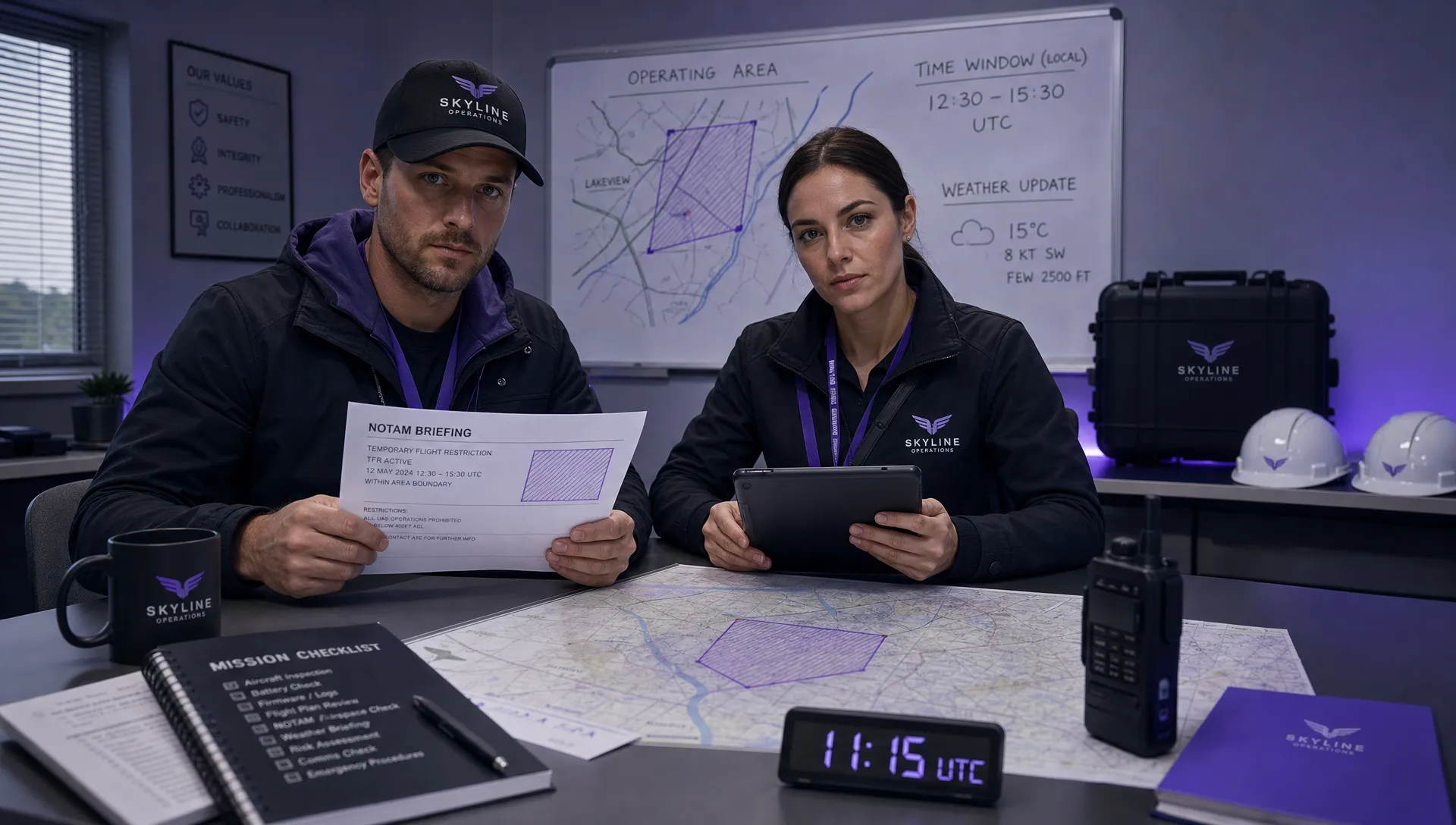 How to Check a Drone NOTAM Before Every Mission →
 BVLOS Drone Meaning and Why It Matters →
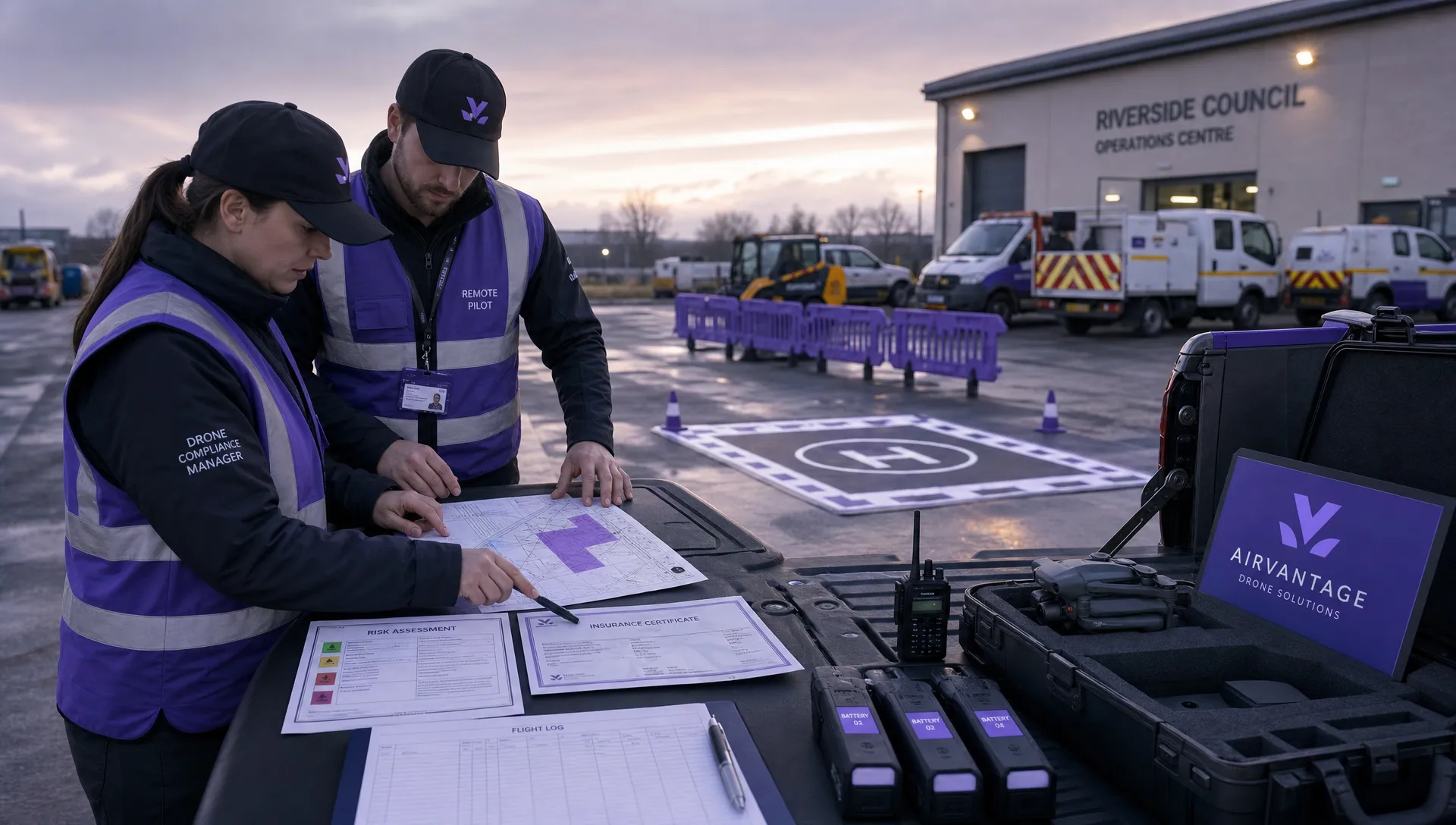 Drone Operation Regulations Explained for Businesses →
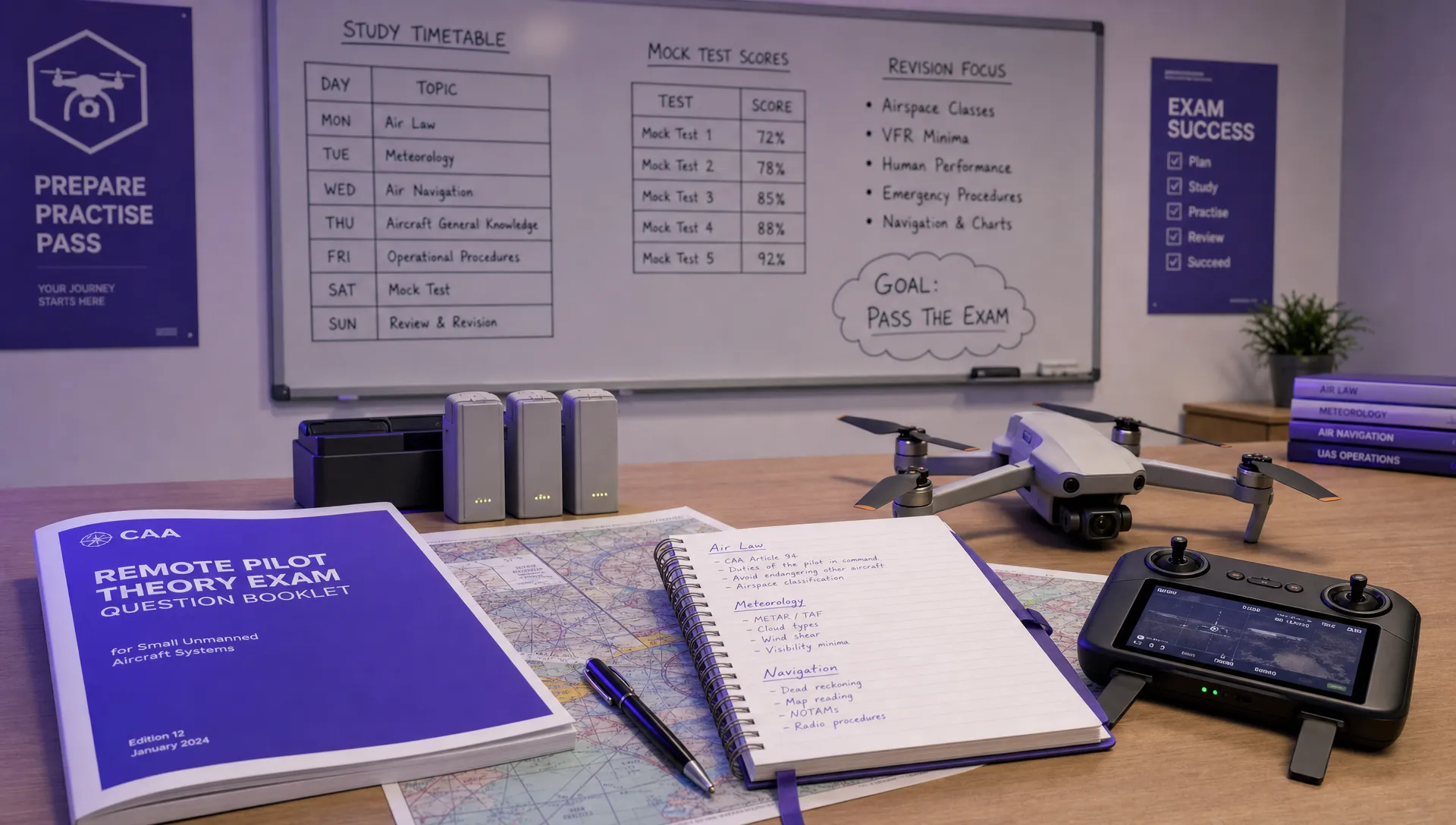 How to Pass Your Drone Pilot License Test →
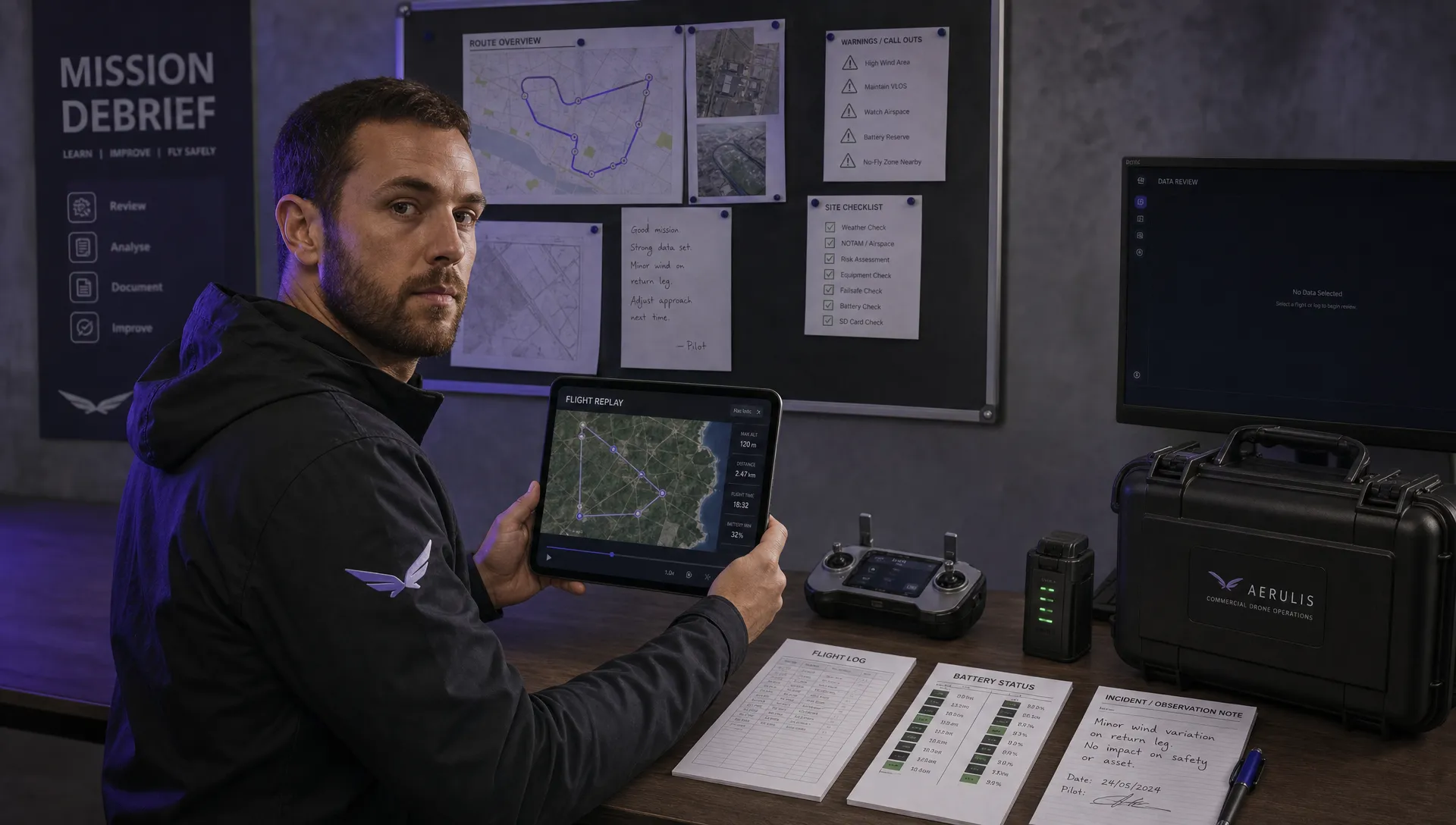 How to Review a DJI Flight Record After a Mission →
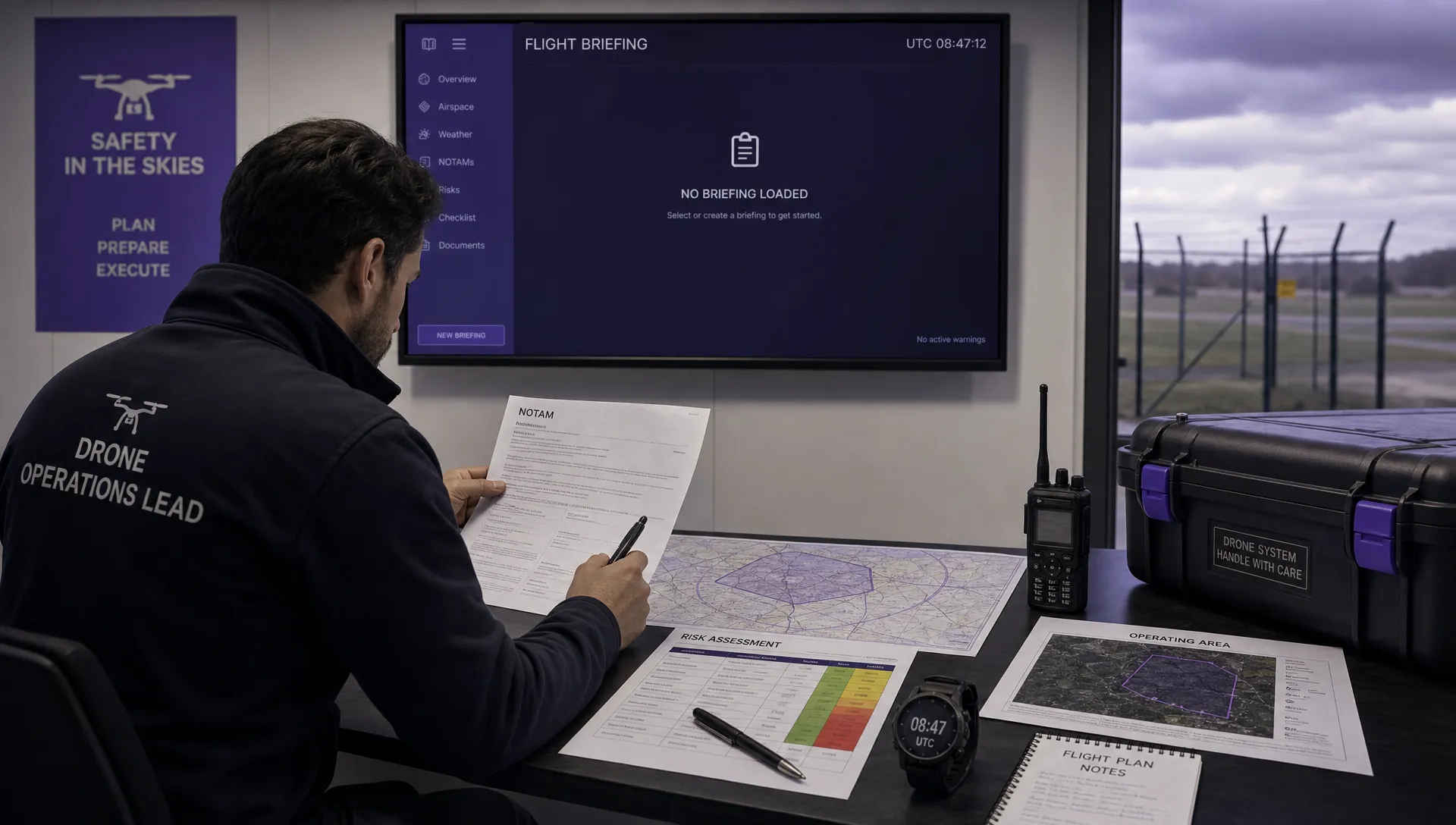 How to Check a Drone NOTAM Before You Fly →
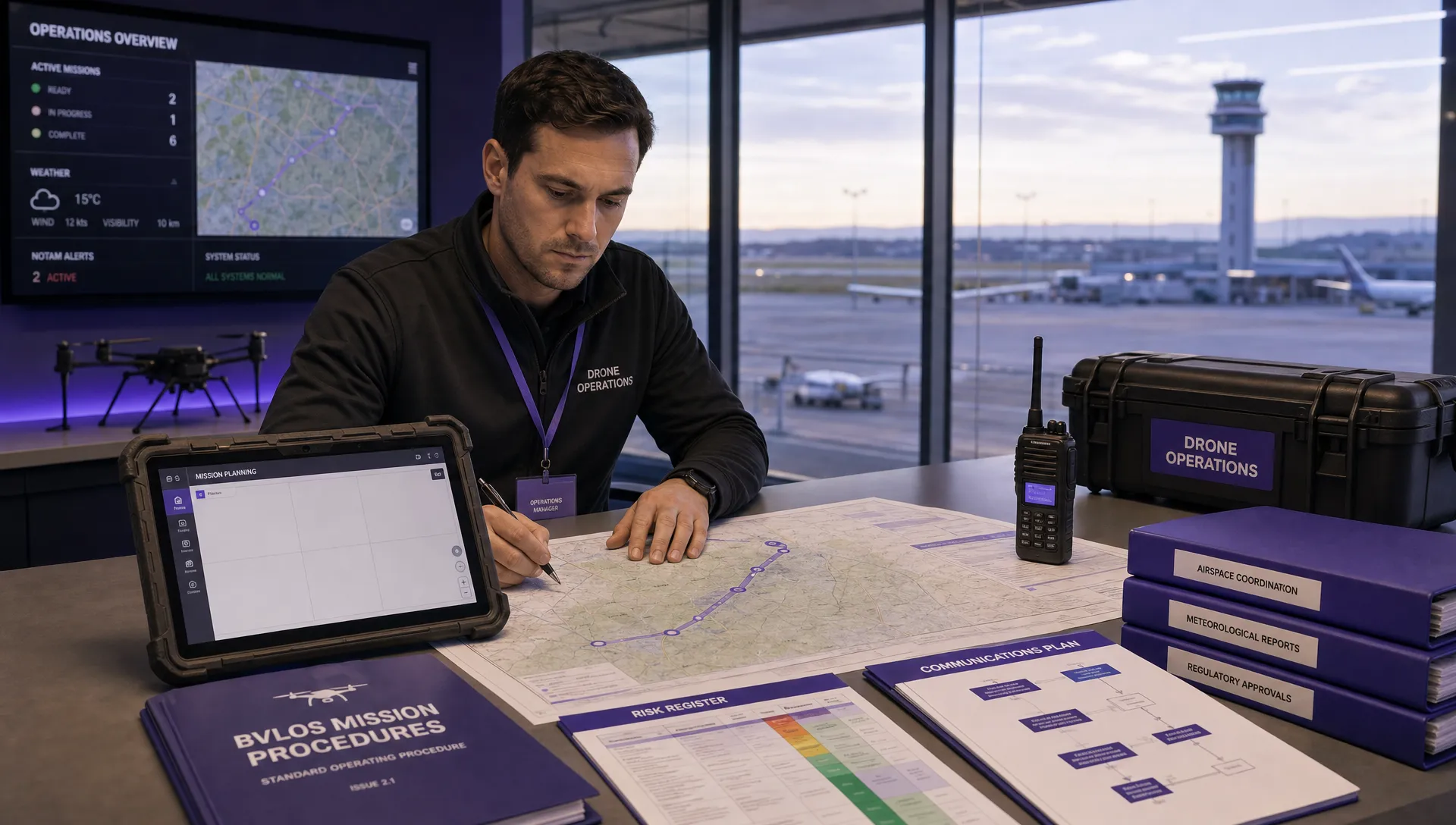 Part 108: What Drone Operators Should Expect →
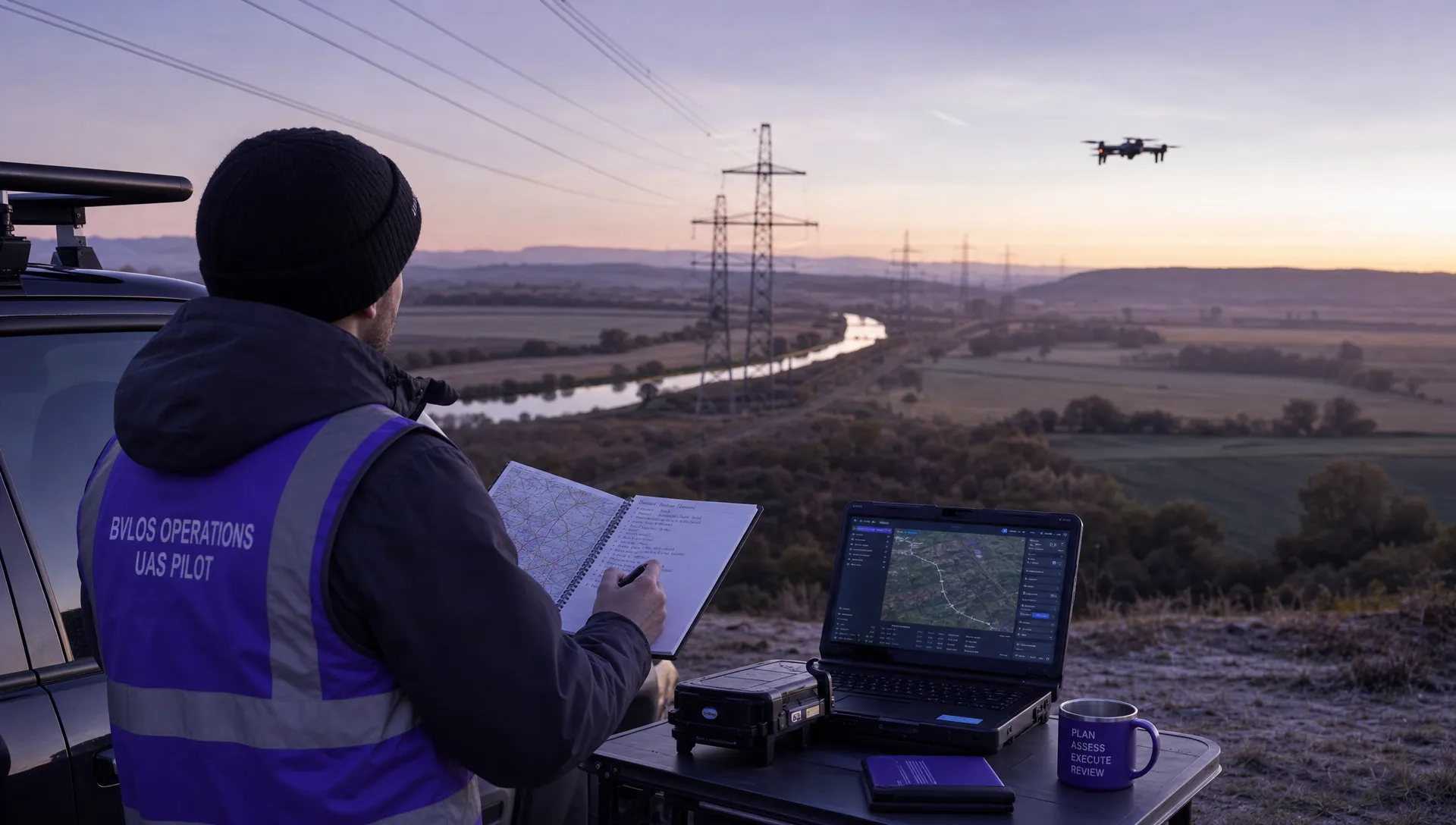 Beyond Visual Line of Sight BVLOS Explained →
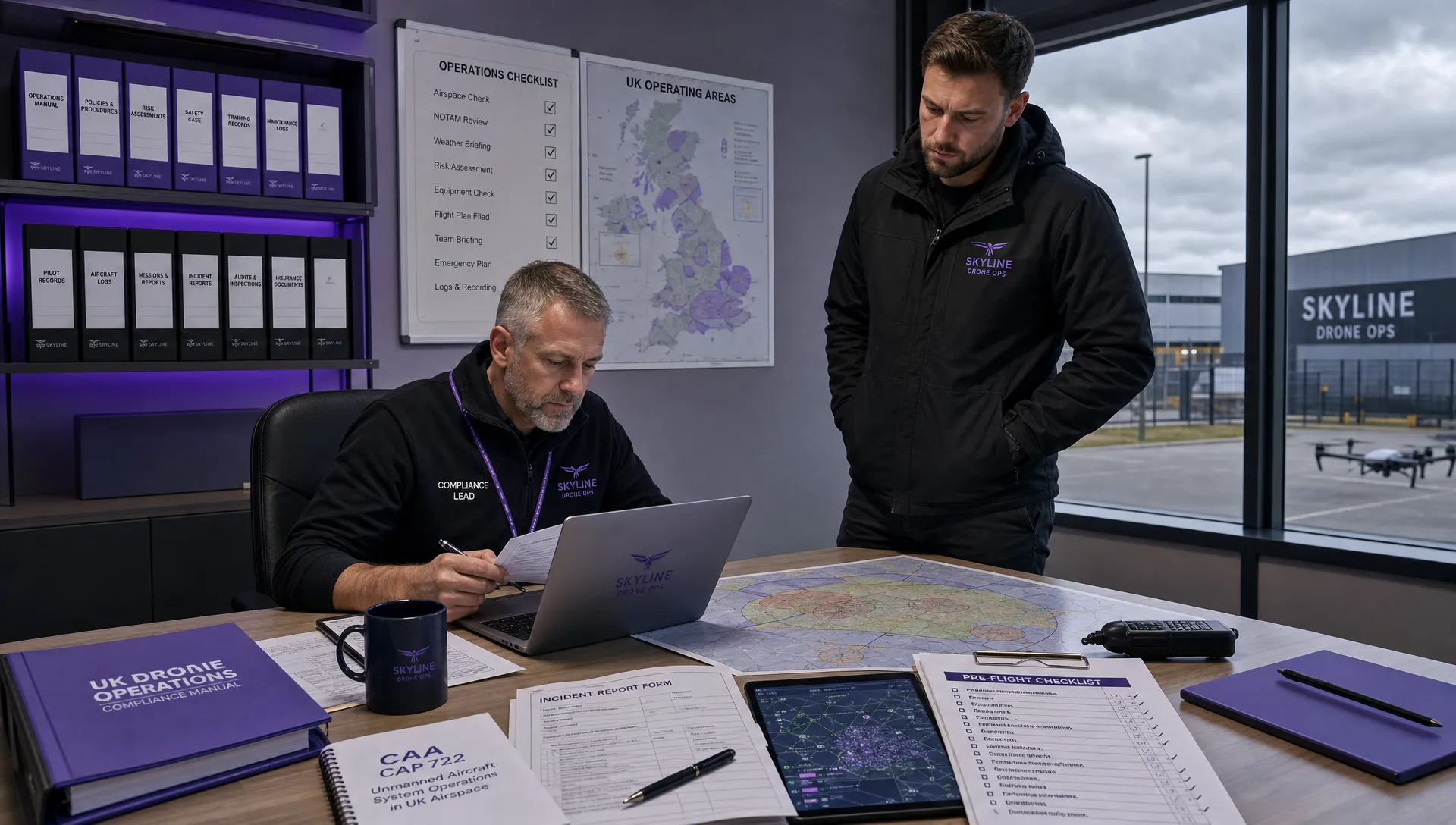 Drone Laws and Regulations Every Team Should Review →
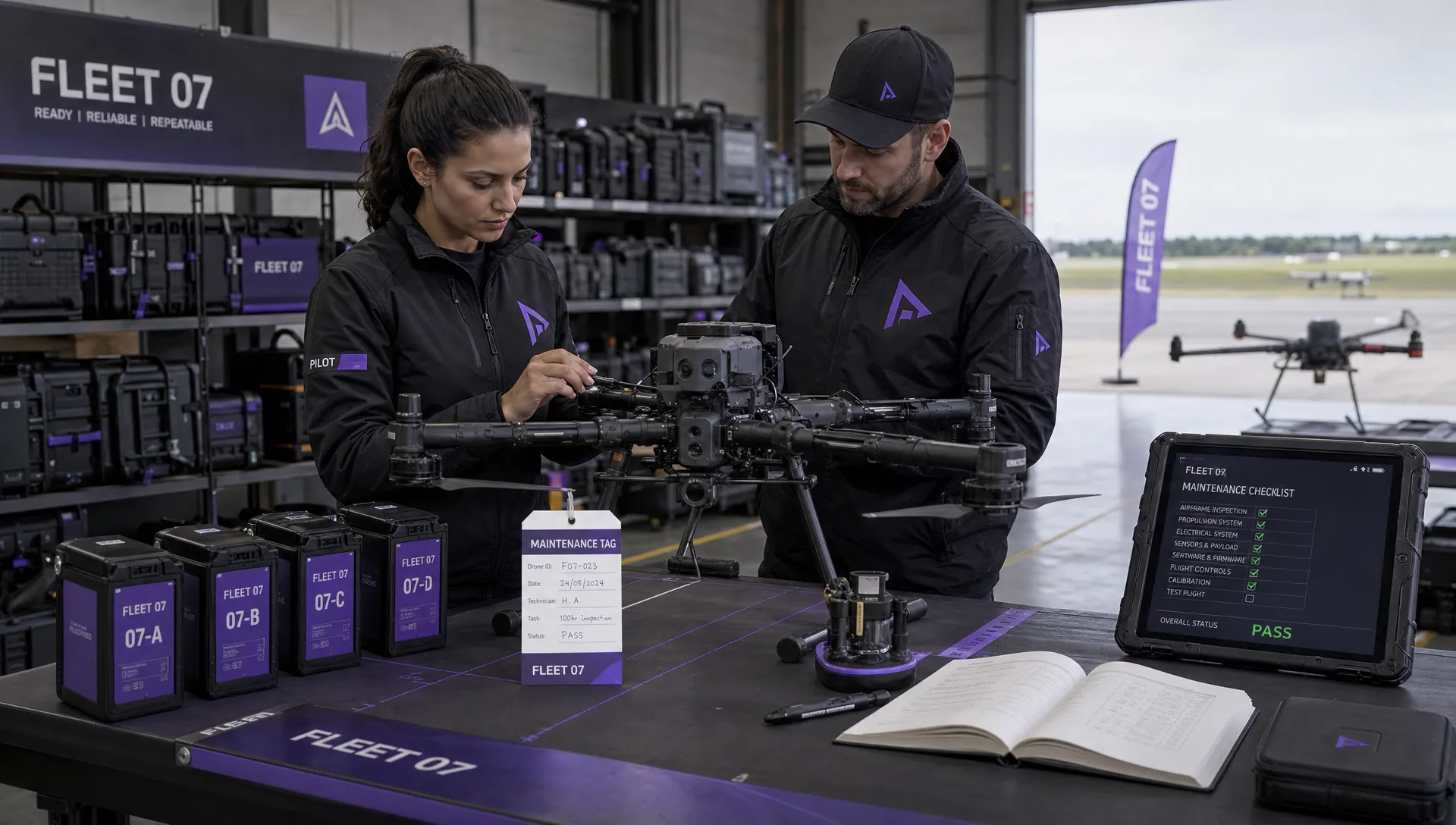 Current Drone Laws: What Changed in 2026? →