
How to Scale a Drone Business in 2024
So, you're ready to take your drone business to the next level? Fantastic. But scaling up is more than just buying another drone or hiring your first employee. It’s about shifting your entire mindset from being a hands-on pilot to a strategic business owner.
This is the part where you trade the daily hustle for long-term vision. It's about building repeatable systems, standardizing your operations, and mapping out a clear financial roadmap. Get this right, and you'll handle more work without letting quality slip. Get it wrong, and you'll just create chaos.
Build Your Foundation for Sustainable Growth
Before you start chasing those bigger, juicier contracts, you’ve got to look inward. The jump from a one-person show to a thriving company is a big one, and it all starts with building an operational backbone that can actually support growth.
If you haven't quite nailed down the initial setup yet, our guide on how to get your drone business off the ground is the perfect place to start. It covers all the nuts and bolts you need in place first.
Think of this stage as pouring the concrete foundation for a skyscraper. Without a solid base, adding more floors will only lead to disaster. You'll face missed deadlines, unhappy clients, and a tarnished reputation—the very things that could kill your growth before it even starts.
Define Your Most Profitable Services
As a solo pilot, it’s tempting to take any and every job that comes your way. But to scale effectively, you need to get laser-focused. Pinpoint the services that bring in the most cash for the least amount of headache. Is it slick real estate videos, complex industrial inspections, or detailed agricultural mapping?
It's time to crunch the numbers on your past projects:
- Profitability Check: Dig into your books. What was the real revenue versus the time, travel, and resources you sank into each job type?
- Demand Signals: Which services are clients calling you for most often? Where's the market heading?
- Your "Unfair" Advantage: Where do your unique skills truly shine? Identify the areas where you can confidently charge a premium because you're just that good.
Zeroing in on your most profitable services makes everything else easier. Your marketing becomes more targeted, your training gets more specific, and your gear purchases become strategic investments, not just shiny new toys. You're building an efficient engine for growth.
The drone market is on an incredible trajectory, expected to hit USD 40.56 billion by 2030. That’s up from USD 26.12 billion in 2025. This explosion of growth means there are massive opportunities, but they're for the businesses that specialize and dominate a specific niche.
Choosing your focus isn't just a suggestion; it's the critical first step. It’s how you build a business that doesn't just get bigger—it gets better and more profitable with every new client.
Your Drone Business Scaling Readiness Checklist
Before you hit the accelerator, it's worth taking a moment to assess if your business is truly ready for a growth spurt. This quick checklist will help you spot any weak points in your foundation.
| Growth Area | Key Indicator of Readiness | Actionable Next Step |
|---|---|---|
| Financials | You have a clear picture of your profit margins per service and a positive cash flow. | Create detailed financial projections for the next 12-24 months. |
| Operations | You have documented Standard Operating Procedures (SOPs) for your key services. | Use a tool like Dronedesk to standardize flight planning and risk assessments. |
| Client Acquisition | You have a steady, predictable stream of inbound leads. | Develop a scalable marketing plan that doesn't rely solely on word-of-mouth. |
| Service Focus | You've identified your top 1-3 most profitable and in-demand services. | Create dedicated service pages and case studies for these core offerings. |
| Personal Mindset | You're spending more time working on the business than in the business. | Start delegating or automating at least one major administrative task this month. |
Use these indicators to be honest with yourself. Shoring up these areas now will make the entire scaling process smoother and far more successful in the long run.
Optimize Operations and Build Your Expert Team

If you're serious about scaling your drone business, you have to make a tough shift. You need to transition from being the pilot who does everything to the owner who orchestrates everything. It’s about swapping the adrenaline of flying missions for the satisfaction of watching a well-oiled machine run smoothly, even when you’re not there.
Getting there rests on two things: rock-solid operational systems and a talented team to run them.
Without standardized processes, every new project is just organized chaos. You’ll be dealing with inconsistent quality, missed safety checks, and, eventually, a damaged reputation. The goal is to build a predictable, repeatable engine that delivers the same high-quality result for every client, every single time.
Standardize Everything for Consistency and Safety
The only way to remove yourself as the bottleneck is to get everything out of your head and onto paper. Think through every single stage of a typical project—from the first client call to final data delivery—and document it. This isn't just creating busywork; it's literally the blueprint for a scalable business.
Your Standard Operating Procedures (SOPs) need to be clear, concise, and non-negotiable.
- Pre-Flight Protocol: This is your must-do checklist. Every pilot, every time. It should cover everything from equipment checks and firmware updates to airspace analysis and on-site risk assessments.
- On-Site Execution: Define exactly how to interact with clients on-site, the specific data capture methods for different services (like grid patterns for mapping), and what to do in an emergency.
- Post-Flight Workflow: Map out the steps for offloading data, processing it, quality assurance, and final delivery. Even something as simple as standardizing file naming conventions can save you hours of headaches down the line.
These documents are what ensure your brand's promise of quality and safety is upheld on every job. They also become the foundation for training new hires, letting you bring people on board quickly and efficiently.
Hire for More Than Just Flying Skills
Making your first hire is a huge step. It’s tempting to just look for the pilot with the slickest stick skills, but that’s only one piece of the puzzle. A great pilot who can't talk to a client or handle basic data management will create more problems than they solve.
You need to find people with a mix of technical know-how and soft skills.
- Technical Aptitude: Sure, they can fly. But do they have experience with photogrammetry software, video editing, or thermal data analysis? Those skills add immediate value.
- Client Communication: Can they represent your brand professionally on a construction site or in a meeting with a real estate agent?
- Problem-Solving: What happens when a flight plan needs to be adjusted on the fly because of unexpected obstacles? You need someone who can think on their feet.
As you grow, attracting the right people gets harder. This is where understanding employer branding can give you a serious edge. A strong brand helps you attract pilots who aren't just looking for a job, but a career.
A classic mistake is hiring a clone of yourself. Don't do it. Instead, hire to fill your weaknesses. If you're a sales and client relationship guru, your first hire should be an operational wizard who geeks out on flight planning and data processing.
Embrace Technology to Manage Growth
Let's be real: you can't run a growing team and an expanding fleet with spreadsheets and sticky notes. Investing in the right software isn't a luxury; it's non-negotiable if you want to scale. The right tools become the central nervous system for your entire operation.
Platforms like Dronedesk are built from the ground up for this. They bring everything—client and project management, flight logging, equipment tracking—into one place. This gives you a single source of truth for your business, ensuring you stay compliant and efficient.
With a central dashboard, you can see every job's status, every pilot's schedule, and every drone's maintenance history at a glance. That kind of oversight is impossible to pull off manually once you have more than a couple of people on the team.
Master a Niche and Expand Your Service Offerings
Real growth in a drone business isn't just about doing more of the same stuff; it's about doing better, more specialized work. While starting out as a generalist helps you get the bills paid, the path to seriously scaling—and charging premium rates—is paved with expertise.
You need to become the go-to expert in a specific, profitable niche.
Instead of being the pilot who does a bit of everything for everyone, your goal should be to become an indispensable partner for a particular industry. This single shift changes your entire value proposition. You're no longer just providing aerial photos; you're delivering critical data that solves expensive problems for clients in sectors like construction, agriculture, or energy.
From Generalist to High-Value Specialist
Making the pivot from a jack-of-all-trades to a master of one requires a strategic choice. Look for industries where drones offer a clear, measurable return on investment. A construction firm, for example, isn't just buying pretty pictures. They're buying data that helps them stay on schedule, manage resources, and prevent costly rework.
This focus allows you to go deep, expanding your service offerings vertically within that niche. It’s a natural progression:
- Initial Service: You might start with basic site photography and videography to get your foot in the door and build relationships.
- Intermediate Service: From there, you can evolve to offer regular progress monitoring and 2D orthomosaic mapping.
- Advanced Service: Soon, you'll graduate to providing complex solutions like 3D modeling, volumetric analysis for stockpiles, or thermal inspections to detect energy loss.
This ladder doesn't just increase your value per project; it solidifies your position as an expert. Clients are willing to pay significantly more for a specialist who understands their industry's unique challenges and speaks their language. You can find out more about the different types of projects in our guide to drone inspection services.
Here’s a real-world example: I know a pilot who started out shooting videos for local real estate agents. After noticing a boom in new construction, he invested in photogrammetry training and software. Now, his primary clients are large developers who pay a monthly retainer for detailed site mapping and progress reports—a far more lucrative and predictable revenue stream.
Choosing and Dominating Your Niche
Picking the right niche is everything. You have to balance market demand with the investment required in training and new tech. The construction sector, for instance, offers a prime opportunity for this kind of strategic growth.
It's one of the fastest-growing drone application sectors, projected to jump from USD 4.6 billion in 2025 to USD 10.3 billion by 2035, growing at a steady 8.4% CAGR. This isn't just random growth; it reflects an escalating need for precision, safety, and efficiency on job sites—a demand you can meet head-on with specialized drone services. You can get more details on the future of drones in construction from industry reports.
Diving into these specialized services often means your gear needs an upgrade. The drone that's perfect for real estate videos likely won't cut it for thermal inspections or LiDAR mapping. You'll need to invest in enterprise-grade equipment with interchangeable payloads and more robust flight capabilities.
This image below really drives home the difference between consumer and enterprise drones.

As the data shows, the upfront cost of enterprise drones is significantly higher, but their extended flight times and specialized sensors deliver a much faster and more substantial return on investment when you're providing high-value services. Mastering a niche isn't just about skills; it's about equipping your business with the right tools for the job.
Comparing Profitable Drone Service Niches
Choosing a niche can feel daunting, but breaking it down can make the decision clearer. The table below compares a few popular specializations to help you weigh the potential against the requirements.
| Service Niche | Growth Potential (CAGR) | Required Tech Investment | Key Client Industries |
|---|---|---|---|
| Construction & Surveying | 8.4% | High (LiDAR, Photogrammetry) | Developers, Engineering Firms, Mining |
| Agriculture | 14.1% | Medium-High (Multispectral) | Large Farms, Agribusiness, Forestry |
| Energy & Utilities | 12.5% | High (Thermal, Zoom) | Power Companies, Oil & Gas, Renewables |
| Public Safety | 15.2% | Medium (Thermal, Spotlights) | Fire Depts, Police, Search & Rescue |
| Real Estate Marketing | 6.2% | Low (High-res RGB camera) | Realtors, Property Management, Hotels |
Each path offers unique opportunities. While real estate has a lower barrier to entry, specialized fields like agriculture and public safety are showing explosive growth and less competition. Your best bet is to align your choice with your interests and long-term business goals.
Develop a Powerful Sales and Marketing Engine

Alright, you've got your operations running smoothly and you've picked your specializations. Now comes the real challenge: creating a predictable stream of high-quality leads. Word-of-mouth is fantastic for getting started, but it's not a growth strategy. Not a scalable one, anyway.
To really grow your drone business, you need a sales and marketing engine humming away in the background, constantly attracting and converting your ideal clients.
This is about shifting from a reactive footing to a proactive one. Instead of waiting for the phone to ring, you’ll be building a system that consistently creates opportunities. This frees you up to focus on what really matters—closing bigger, more profitable contracts and making your business visible to the right people, right when they need you.
Build Your Digital Storefront
Think of your website and portfolio as your most valuable marketing assets. This is more than an online brochure; it's your digital storefront, your 24/7 salesperson, and your primary lead generation machine. It has to do more than just look pretty—it needs to convince potential clients that you are the expert in your niche.
A top-notch portfolio is non-negotiable. Showcase your best work with high-resolution photos, polished videos, and, most importantly, detailed case studies. Don't just show the final product; tell the story behind it.
- What was the client's problem? (e.g., "A construction firm needed a way to accurately track earthwork volumes across a sprawling 50-acre site.")
- How did you solve it? (e.g., "We flew the site weekly, conducting orthomosaic mapping to generate 3D models for precise volumetric analysis.")
- What was the result? (e.g., "Our data helped them catch a miscalculation early, saving them an estimated $50,000 in rework costs.")
This simple storytelling formula turns your portfolio from a boring gallery into a collection of success stories, proving your value before you even speak to a prospect.
Dominate Local Search Results
Let's face it: for most drone service providers, the clients are local. This makes local search engine optimization (SEO) one of the absolute best ways to get qualified leads. When a project manager in your city searches for "drone surveying services near me," you have to be at the top of that list.
Start with your Google Business Profile. Fill out every single section, upload high-quality photos of your work, and make a habit of asking satisfied clients to leave reviews. Those positive reviews are a huge trust signal, both for potential customers and for Google's algorithm.
Beyond that, get your website optimized for local keywords. Create dedicated service pages for each of your core offerings (like "Construction Site Mapping in Denver") and sprinkle location-specific details throughout your site. It’s a targeted approach that captures people who are actively looking to hire someone with your skills.
Your marketing shouldn't just be about finding clients; it should be about helping the right clients find you. A well-executed local SEO strategy ensures you're visible to decision-makers who are already searching for the specialized solutions you provide.
Shift to Proactive, Relationship-Based Sales
While digital marketing keeps the top of your funnel full, a proactive sales strategy is what lands the big, recurring contracts that truly fuel growth. This means identifying and building real relationships with key players in your industry long before they have a project ready to go.
Forget cold-calling. Focus on strategic networking. Pinpoint the top 10-15 general contractors, engineering firms, or agricultural consultancies in your service area.
- Connect on LinkedIn: Start by following their company pages. More importantly, engage thoughtfully with posts from key decision-makers—think project managers or VPs of innovation.
- Provide Value First: Don't just ask for a meeting. Share a relevant case study or an insightful article. A great move is to offer a no-strings-attached "lunch and learn" for their team to show them what drone data can really do.
- Stay Top of Mind: Follow up consistently and professionally. The goal isn't a quick sale; it's to become their go-to advisor for anything drone-related.
This long-game approach positions you as a trusted partner, not just another vendor trying to sell something. When a major project comes up, you won’t be one of a dozen bids—you’ll be the first person they call. This is how you stop chasing small jobs and start building a predictable pipeline of enterprise-level work.
Navigate Advanced Compliance and Technology
When your drone business starts to scale, the game changes. The compliance and technology that got you through year one just won't cut it when you're managing a larger fleet, a growing team, and more complex client jobs. Moving past simple projects means you have to seriously level up how you handle both the red tape and your gear.
This is the point where you stop being just a compliant operator and become a strategically safe, tech-forward company. It's all about building systems that do more than meet the bare minimum—they actively cut down on risk and give you a real edge over the competition. Nailing this part is absolutely critical for landing those bigger, more profitable contracts.
Mastering Complex Regulatory Challenges
Once you're running a bigger team and chasing larger jobs, basic compliance is just the entry ticket. You’ll very quickly find yourself needing advanced operational approvals to even offer the most lucrative services. The trick is to get out in front of these requirements before they turn into a major roadblock.
One of the biggest hurdles is getting waivers for complex operations, especially for Beyond Visual Line of Sight (BVLOS) flights. These are the money-makers for things like long-range pipeline inspections or mapping massive agricultural sites. The application process is no joke; it’s incredibly rigorous and data-heavy, demanding you prove you can operate safely without eyes on the drone.
To pull this off, you absolutely must:
- Develop a rock-solid safety case: This isn't just a document; it's your bible. It needs to meticulously detail your operational procedures, risk mitigation plans, and the specific tech you’re using (like detect-and-avoid systems) to keep things safe.
- Keep impeccable records: Your flight logs, maintenance schedules, and pilot training docs will be put under a microscope. A platform like Dronedesk is a lifesaver here. It pulls all that data into one place, so generating comprehensive reports for your application is easy.
- Systematically manage pilot certifications: With a team of pilots, trying to track everyone's certificate renewals, recurrent training, and specific aircraft qualifications is a nightmare waiting to happen. A central system is essential to make sure nobody's credentials lapse, which could ground a mission or even void your insurance.
Implementing a Safety Management System
As your operations get bigger, so does your risk. This is where a formal Safety Management System (SMS) comes in. It’s the framework that shifts your business from a reactive "hope nothing goes wrong" culture to a proactive one that anticipates problems. An SMS isn’t some dusty manual on a shelf; it's a living, breathing system for finding, assessing, and dealing with hazards.
An effective SMS is your operational playbook for safety. It proves to clients—especially the big enterprise ones—that you treat safety as a core part of your business. This is often a non-negotiable requirement for winning major contracts in industries like energy or construction.
A good SMS is built on four pillars:
- Safety Policy: A crystal-clear statement of your commitment to safety, signed off by the top brass.
- Safety Risk Management: The process you use to spot hazards and mitigate risks before they turn into incidents.
- Safety Assurance: How you keep an eye on your safety performance through things like audits, inspections, and crew feedback.
- Safety Promotion: Building a culture where every single person on the team is trained on safety and actively participates in it.
Making Smart Technology Investments
Scaling means using technology to do more with less. But let's be clear: this isn't about chasing the shiny new drone that comes out every six months. It's about making calculated investments in hardware and software that directly support the specialized services you offer and your growth targets.
Your tech buying decisions have to be strategic. So, when do you upgrade your fleet? When your current drones can no longer deliver the data quality or flight performance needed for the high-value jobs you're trying to win. For example, if you want to get into detailed infrastructure inspections, you'll probably need a drone with a serious zoom camera or a thermal sensor.
Similarly, jumping into advanced sensors like LiDAR is a huge investment, but it opens the door to high-margin surveying and modeling services that you just can't offer with a standard camera. The decision has to be backed by real market demand and a business case that clearly shows how you'll get a return on that investment.
This kind of forward-thinking is what separates the leaders from the laggards. The global drone market is projected to skyrocket from an estimated USD 73.06 billion in 2024 to USD 163.60 billion by 2030, and that growth is being fueled by these exact technological advancements. Investing wisely in the right hardware, software, and AI-powered data platforms is how you make sure your business rides that wave instead of getting left behind. You can dig into the projections for the drone market to see just how much technology is shaping the future of this industry.
Implement Financial Strategies for Long-Term Growth

Real, sustainable growth isn’t just about landing more clients. It’s built on smart, forward-thinking financial management. As your drone business scales, your financial strategy has to grow up, too—moving beyond basic bookkeeping to a system that actually guides your decisions, protects your cash, and boosts your bottom line.
This means you need to get incredibly familiar with your numbers. You have to know your exact profit margin per project, not just your total revenue. Once you understand which services are your most profitable, you can point your sales and marketing efforts in that direction for the biggest impact.
Master Your Pricing and Cash Flow
Scaling up can create a dangerous cash flow gap. You're shelling out cash for new gear and more staff before the revenue from those bigger projects actually hits your bank account. Proactive cash flow management is absolutely critical to get through this phase without grinding to a halt.
To start, you need a pricing model that reflects the high value of your services. It's time to move away from simple hourly rates and embrace project-based or value-based pricing. For large, complex projects, structuring your payments is key to keeping cash flowing.
- Require upfront deposits: Standard practice is to ask for 30-50% upfront. This covers your initial costs to get the project off the ground.
- Use milestone payments: Don't wait until the very end to get paid. Bill clients at key project stages, like after the initial data capture or upon delivery of preliminary models.
- Offer retainers for ongoing work: For clients who need regular flights, a monthly retainer provides predictable income and makes your financial footing much more stable.
Your ability to manage finances is the bedrock of a scalable business. It creates a clear financial picture so you can make confident, data-driven decisions about where to invest next.
Make Smart Decisions on Equipment Investment
One of the biggest financial questions you'll face as you grow is whether to buy or lease new equipment. With high-end enterprise drones and specialized sensors like LiDAR costing tens of thousands of dollars, this isn't a decision to take lightly.
Leasing vs. Buying Equipment
| Factor | Leasing Drones | Buying Drones |
|---|---|---|
| Upfront Cost | Lower initial cash outlay, preserving capital for other growth areas. | High initial investment, tying up significant capital. |
| Technology | Easier to stay current with the latest technology by upgrading at the end of the lease term. | Risk of technology becoming outdated, requiring another large purchase. |
| Maintenance | Maintenance and repairs are often included in the lease agreement, creating predictable costs. | You are fully responsible for all maintenance, repairs, and insurance. |
| Long-Term Cost | Can be more expensive over the lifetime of the equipment. | Lower total cost of ownership if the drone is used heavily for several years. |
The right path really depends on your company's financial health and long-term vision. If you're just dipping your toes into a new specialized service, leasing is a great low-risk way to test the market before making a huge capital investment. But for established operators with a steady stream of work, buying might offer better value in the long run.
Ultimately, making these big strategic choices comes down to having solid financial reporting. For a closer look at getting your numbers right, check out these best practices for financial reporting to make sure your data is accurate and ready to guide your decisions.
Your Top Questions About Scaling, Answered
As your drone business starts to really take off, you'll run into a new set of challenges and questions. It’s totally normal. Here are some quick, field-tested answers to the most common hurdles drone pros face when they start scaling up.
When Is It Time to Hire My First Employee?
You’ll know it's time when you're consistently turning down good, profitable work simply because you don’t have the hands or the hours to do it. That's the biggest sign.
Another massive tell is when you're spending more than 20-30% of your week buried in admin instead of flying missions or closing new deals. Don't make the mistake of hiring a clone of yourself. Instead, find someone who can take over the operational tasks you're weakest at, freeing you up to focus on steering the ship.
How Do I Price Bigger, More Complex Projects?
First thing's first: stop thinking in hourly rates. It's a trap that limits your earning potential. For larger, more involved jobs, you need to shift to value-based pricing. Your price should be a reflection of the massive return on investment you're delivering.
For example, if the survey data you're providing is going to save a construction client tens of thousands of dollars by preventing rework, your fee needs to mirror a piece of that value.
Also, structure your payments to keep your cash flow healthy:
- Deposit: Get 30-50% upfront, always. No exceptions. This covers your initial costs and secures the client's commitment.
- Milestones: Break the project into stages and bill as you complete them. Think: a payment after data is captured, and another upon final delivery of the processed data.
- Retainers: If you've landed ongoing work, get them on a monthly retainer. It creates predictable, stable revenue you can build on.
What's the Smartest Way to Insure a Growing Fleet?
Once you have multiple drones and pilots in the field, a single-drone policy just won't cut it anymore. Your insurance needs to grow with you. The solution is to find a provider that offers fleet insurance. This wraps up all your aircraft and pilots into one manageable policy.
A crucial detail many operators miss is "hull insurance." This specifically covers damage to the drone itself. Your standard liability policy often won't, which is a massive risk when you're flying expensive enterprise-level drones. Protect your gear.
This fleet approach not only makes managing your coverage way simpler, but it's usually cheaper than insuring everything and everyone piecemeal. Make it a point to review your policy at least once a year to make sure it still matches the scale of your operation.
Ready to manage your growing team, fleet, and projects without the chaos? Dronedesk gives you the end-to-end software to scale your operations efficiently while staying compliant. See how Dronedesk can streamline your entire workflow.
 How to Start a Drone Mapping Business With a Clear Workflow →
 Class C Airspace Drone Rules for Commercial Flights →
 How to Create a Drone Job Pack for Every Mission →
 FAA Small UAS Rule: Key Requirements for Operators →
 How to Build a Drone Pilot Flight Log That Is Audit Ready →
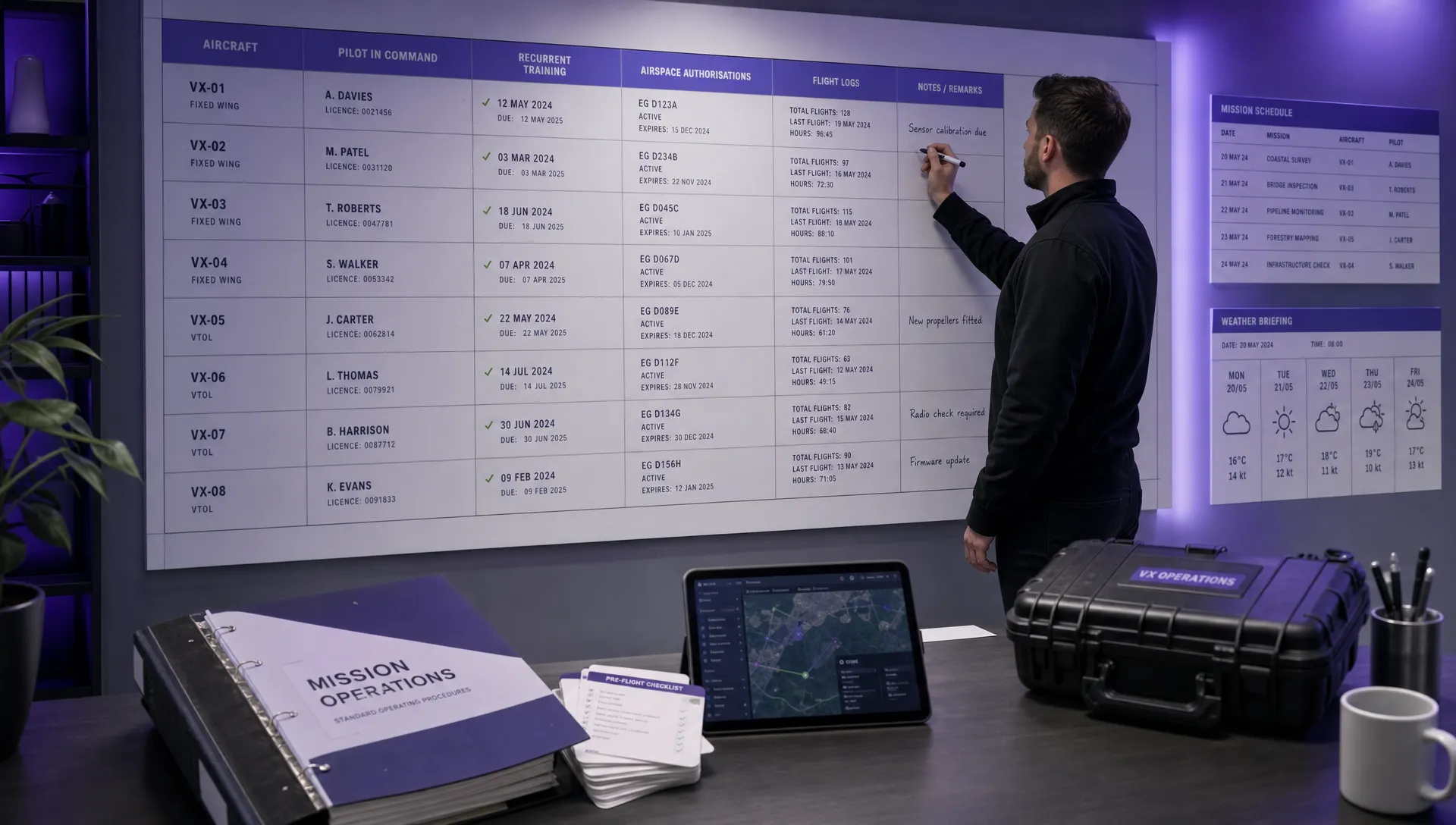 FAA Drone Licence Requirements for Commercial Pilots →
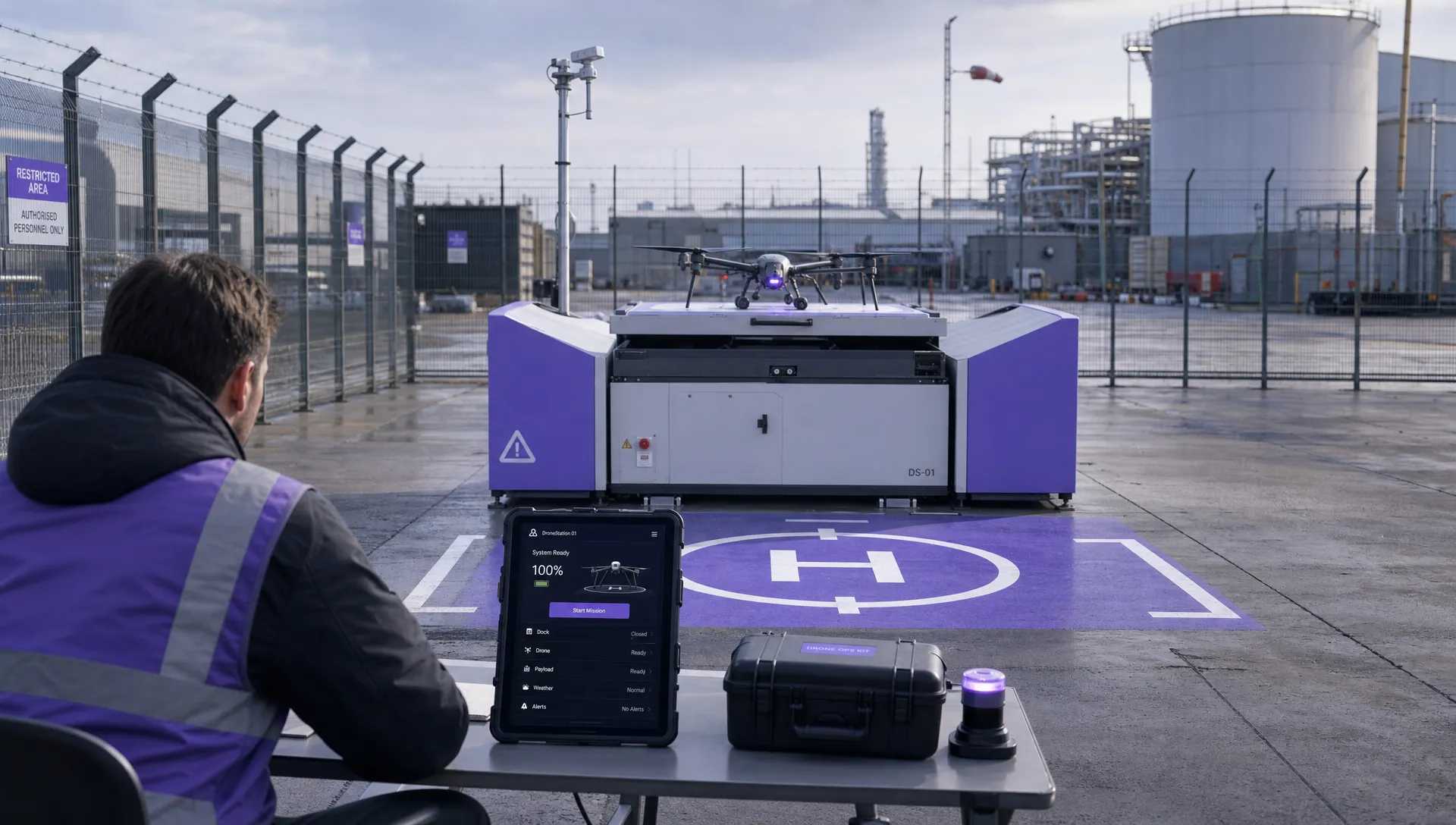 FAA BVLOS Waivers Granted: What Successful Cases Show →
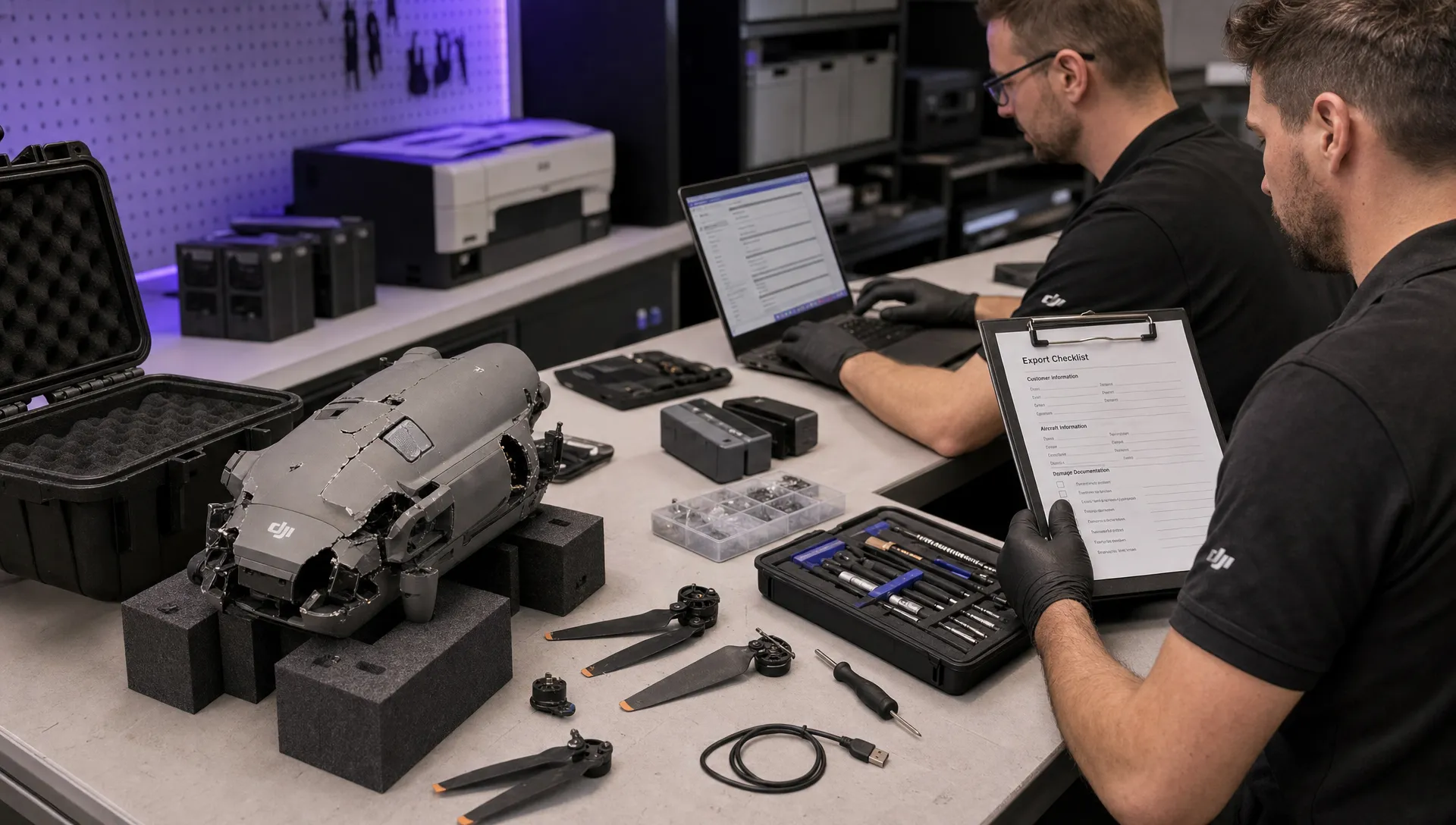 How to Export DJI Flight Logs for Incident Reviews →
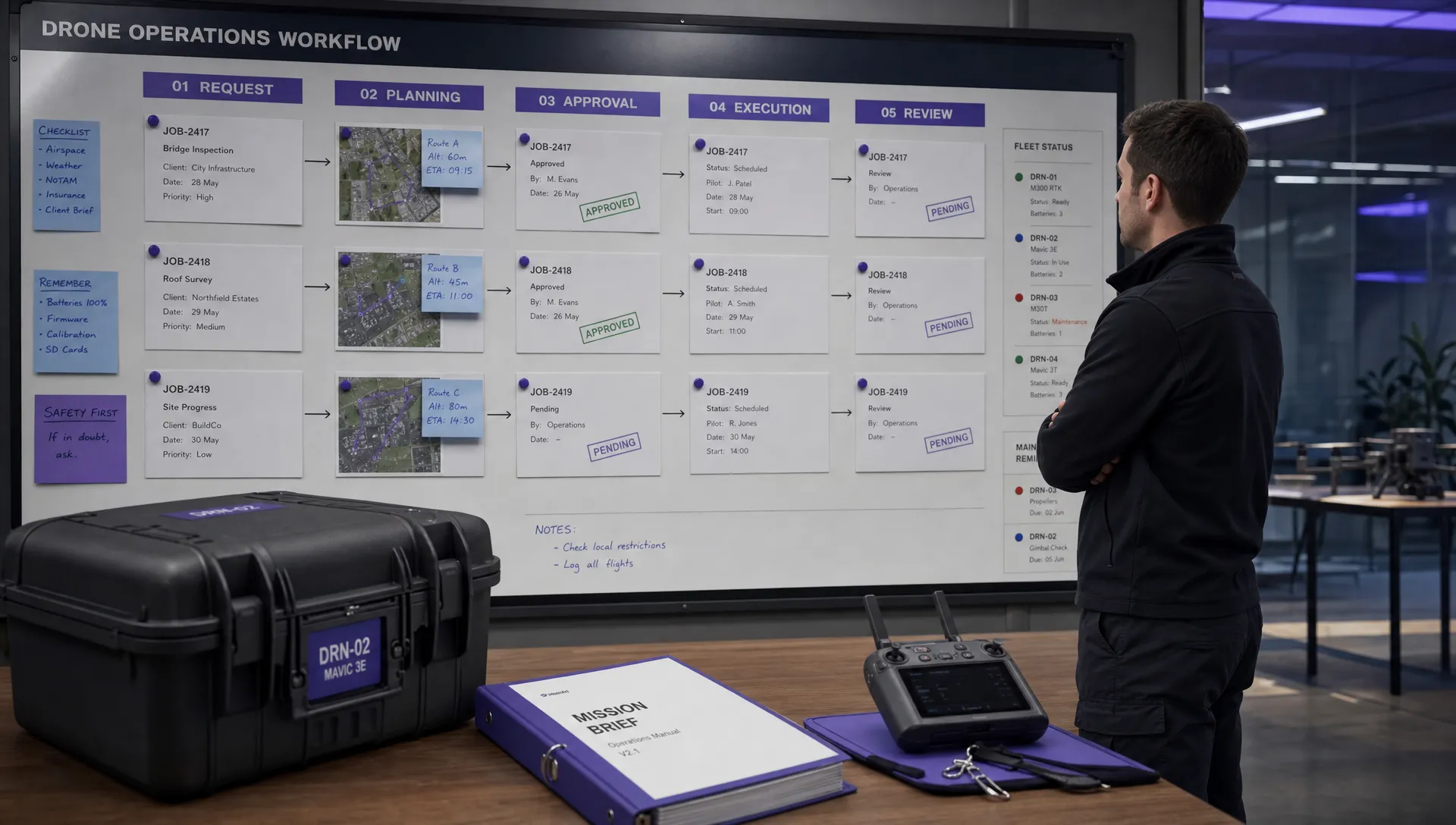 Drone Safety and Legal Duties for Business Operations →
 EASA Drone Regulations: Open, Specific and Certified Categories →