
Build Your Drone Flight Operations Centre From the Ground Up
A flight operations centre (FOC) is the central command hub for a professional drone business. Think of it as the mission control you see in movies, but built specifically for planning, executing, and analysing every single drone flight to ensure safety, compliance, and efficiency.
What Is a Flight Operations Centre Anyway?
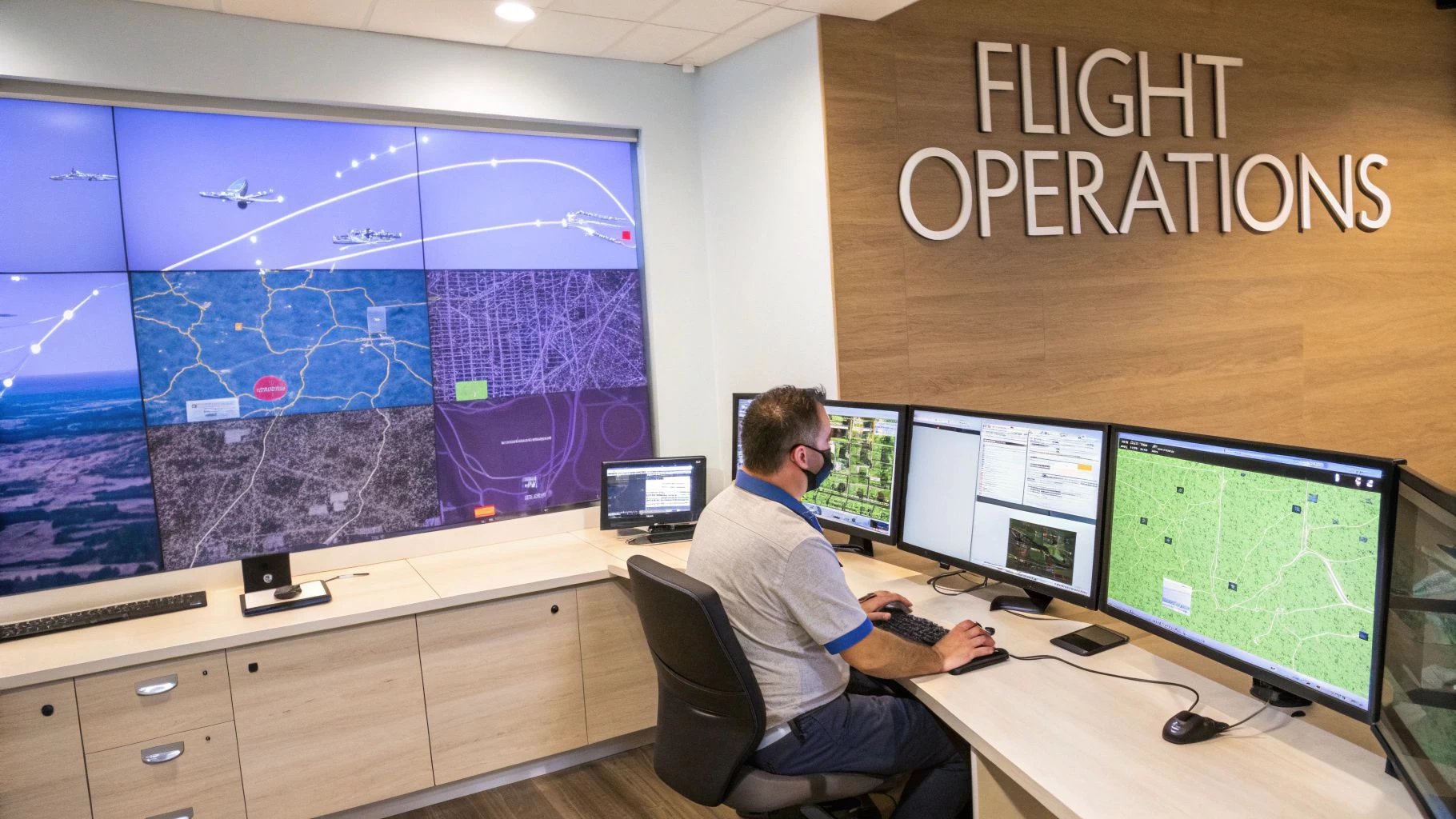
The term "flight operations centre" probably conjures up images of a massive room filled with people glued to blinking screens, just like NASA's Kennedy Space Center. And while that's spot on for major airlines or space missions, the concept scales down perfectly for the drone industry.
For a drone business, an FOC is less about a physical room and more about a unified system.
This system is the central nervous system for your entire operation. It's the framework that takes your work from a bunch of individual, disconnected flights and turns it into a cohesive, professional, and repeatable service. Whether you're a solo pilot or a large enterprise, the core idea is exactly the same.
To get a clearer picture, here's a quick breakdown of what an FOC really handles.
Core Functions of a Drone Flight Operations Centre
| Function | Objective | Example Dronedesk Feature |
|---|---|---|
| Mission Planning | Centralise all pre-flight tasks, from client details to risk assessments. | Job planning dashboard |
| Resource Management | Track pilots, drones, and equipment to ensure availability and compliance. | Asset and team management |
| Situational Awareness | Monitor airspace, weather, and NOTAMs for safe operations. | Integrated airspace and weather data |
| In-Flight Tracking | Maintain oversight of live operations and pilot status. | Live flight tracking integrations |
| Data Management | Log flight hours, manage imagery, and store operational records. | Automated flight logging and data storage |
| Compliance & Reporting | Generate reports for clients, stakeholders, and regulatory bodies. | One-click report generation |
Essentially, the FOC is the strategic core that brings order to the potential chaos of drone operations, making sure nothing gets missed.
The Air Traffic Control Tower for Your Fleet
A good way to think about it is like an air traffic control tower for your own fleet. An ATC coordinates aeroplanes to prevent collisions and keep everything running smoothly; your FOC does the same for your drone missions. This includes:
- Pre-Flight Planning: Managing client details, running airspace checks, and nailing down risk assessments.
- In-Flight Monitoring: Keeping tabs on mission progress, changing weather conditions, and pilot status (even if that pilot is just you).
- Post-Flight Analysis: Logging flight data, managing the mountain of captured imagery, and creating reports for clients and your own records.
This centralised approach means nothing falls through the cracks. It's what turns a complex process into a well-oiled machine.
Scaling From Solo Pilot to Full Enterprise
The real beauty of a modern flight operations centre is its scalability. This isn't some rigid concept that only works for massive companies.
A solo operator can set up a powerful, digital FOC using a single, comprehensive platform. For instance, a tool like Dronedesk becomes your virtual command centre, pulling all the planning, logging, and reporting functions into one dashboard. You don't need a dedicated room; you just need a structured process powered by the right software.
Then, as your business grows and you start adding more pilots and drones, this digital foundation just expands with you. The system lets you manage team certifications, assign jobs, and maintain one single source of truth for all your operational data. This ensures that even as things get more complex, your standards for safety and quality stay rock solid.
A well-structured FOC is what separates a professional drone service provider from a hobbyist. It demonstrates a commitment to safety, compliance, and operational excellence that clients can trust.
Why Your Drone Business Needs a Central Hub
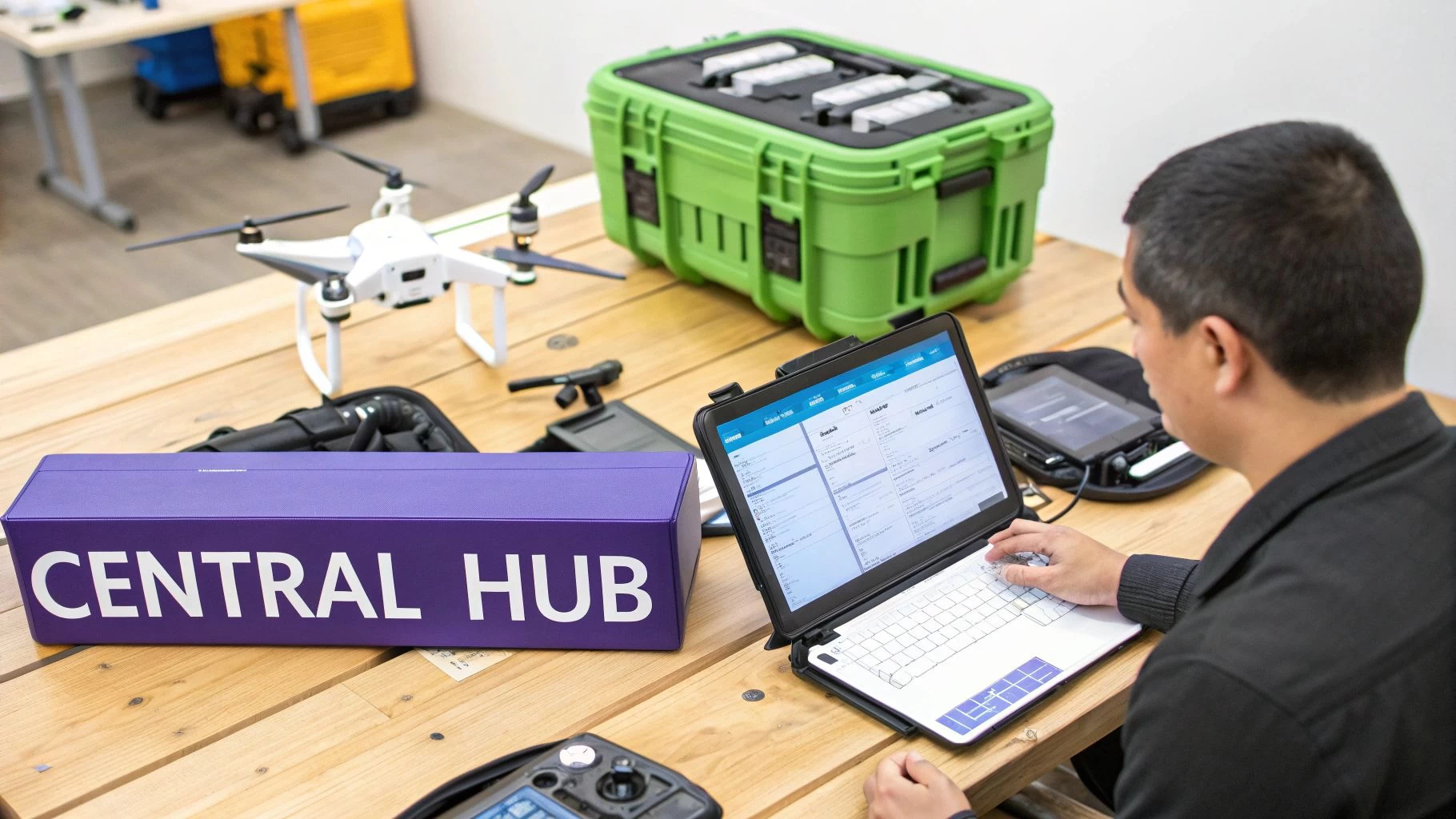
If you think running a professional drone operation is just about logging flights, you’re leaving money and safety on the table. A modern flight operations centre (FOC) is the strategic engine that truly separates the serious operators from the hobbyists. It’s not just about record-keeping; it’s about actively driving your business forward.
Think of it like this: a hobbyist reacts to problems as they happen. A professional, on the other hand, uses a central hub to see issues coming and stop them in their tracks. This shift from a reactive to a proactive mindset is the bedrock of any successful, sustainable drone business. Let’s dig into why this system is so critical.
Enhance Safety Proactively
In aviation, safety is everything. It’s not negotiable. A flight operations centre takes safety off a dusty checklist and embeds it into the very core of how you operate. By bringing risk assessments, maintenance schedules, and pilot qualifications into one place, you build a system that flags potential problems long before they turn into incidents.
Instead of just breathing a sigh of relief after a close call, an FOC helps you spot the patterns. Are certain drones chewing through props faster than others? Are pilots forgetting key pre-flight checks when the weather turns? Answering these questions lets you put preventative measures in place, making every single mission as safe as it can possibly be.
A proactive safety culture, managed through a central hub, is your best insurance policy. It shouts professionalism to clients and regulators, building trust and protecting your hard-earned reputation.
Guarantee Regulatory Compliance
Let’s be honest, navigating the tangled web of aviation regulations is a massive headache for any drone business. An FOC acts as your single source of truth for all things compliance, keeping every critical document organised, accessible, and up-to-date.
This covers all the essentials:
- Pilot Certifications: Never miss an expiry date. Track every qualification for every pilot on your team.
- Maintenance Logs: Produce a complete, auditable service history for every drone at a moment's notice.
- Airspace Documentation: Store every authorisation and waiver for every job, all in one place.
When the regulator comes knocking, you can pull up the records in minutes, not days. This organised approach is especially crucial for scaling up operations like drone photography businesses, where tight coordination and flawless compliance are must-haves.
Drive Operational Efficiency
Wasted time is wasted money. A flight operations centre is designed to get the most out of your key assets: your pilots, your drones, and your batteries. With a crystal-clear, centralised view of all jobs and resources, you can finally ditch the guesswork and make your workflows buttery smooth.
This means no more double-booking a drone or sending a pilot to a site without the right qualifications. Instead, you can intelligently schedule missions, map out the most efficient travel, and know with certainty that every piece of kit is ready to go. Platforms like Dronedesk are built specifically to provide this kind of oversight, turning logistical chaos into a well-oiled machine. You can learn more about how to find the best drone operations platform for your needs in our detailed guide.
This level of organisation dramatically slashes administrative overhead. It frees up your team to focus on what they do best: flying missions and delivering amazing data to your clients. A well-run FOC isn't just about being organised; it's about completing more jobs with less friction, which goes straight to your bottom line.
Defining the Roles on Your Operations Team
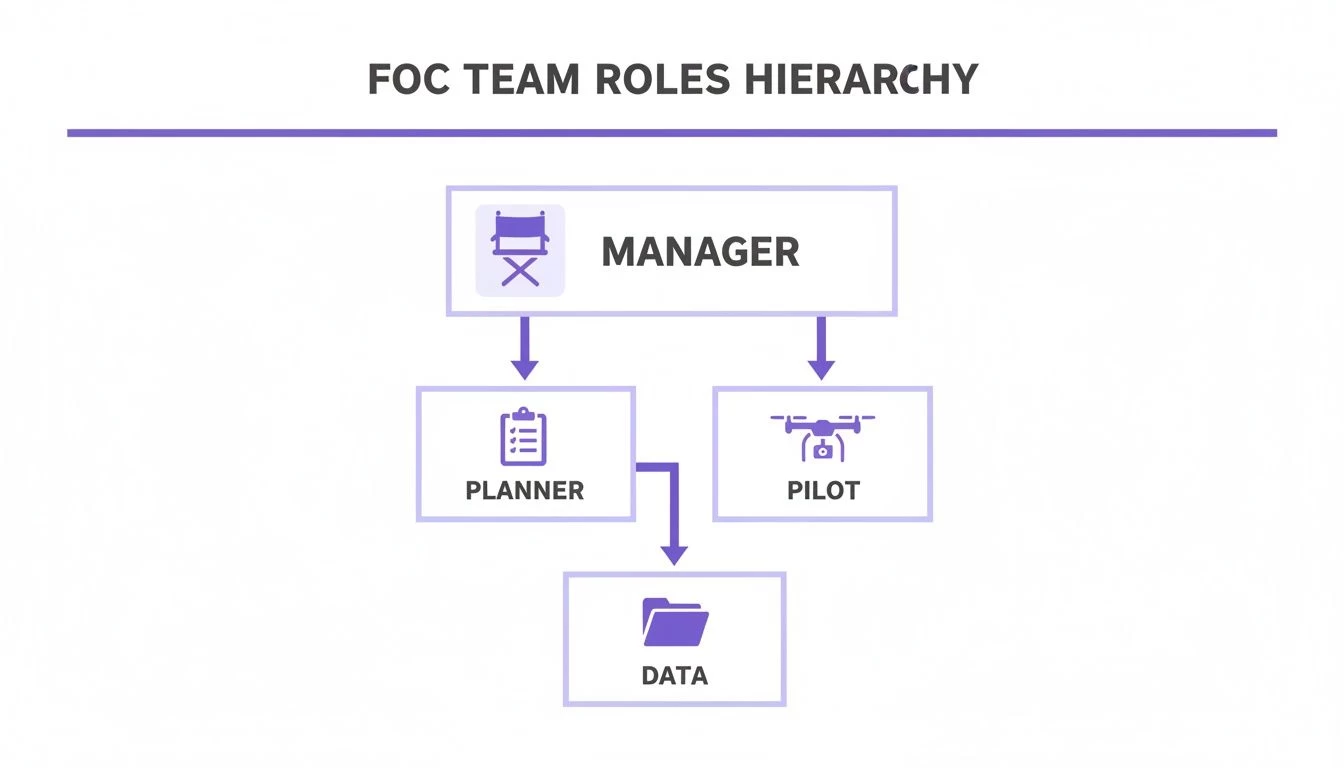
Even if your "team" is just you, thinking in terms of distinct roles is the secret to running a professional flight operations centre. This kind of structured thinking makes sure no critical task gets overlooked. Think of it like a film crew where everyone has a specific job; the same principle applies here to guarantee a smooth, safe, and successful mission from start to finish.
This mental model helps solo pilots wear the right "hat" at the right time and gives growing teams a clear way to assign responsibilities.
The Operations Manager (The Director)
Every project needs a leader who holds the vision. For a drone mission, that's the Operations Manager. They are the director, providing the strategic oversight to make sure every activity aligns with both the client's goals and your company's standards. Ultimately, they're the one accountable for the success and safety of the entire operation.
This role is all about the big picture, from sorting out resources and team schedules to getting the final sign-off from the client. If you're a solo operator, this is your "business owner" hat—making sure the job isn't just done right, but is also profitable and builds your reputation.
The Flight Planner (The Producer)
Behind every great director is a producer who makes it all happen. In a flight operations centre, that's the Flight Planner. This role is all about logistics and meticulous preparation, handling all the critical pre-flight details that set the stage for a flawless mission.
Key responsibilities include:
- Running risk assessments to spot and deal with potential hazards.
- Securing airspace authorisations and checking for any NOTAMs.
- Verifying all equipment is charged up, calibrated, and ready for action.
- Pulling together mission-specific documents like flight plans and emergency procedures.
This is the person deep in the details, making sure every 'i' is dotted before the drone even leaves its case. For teams, a platform like Dronedesk is a game-changer, giving planners a single place to build job packs and share them instantly with the crew in the field.
The Pilot-in-Command (The Camera Operator)
The Pilot-in-Command (PIC) is the hands-on expert, the camera operator who executes the plan with precision. This role is responsible for the safe and compliant execution of the flight itself. While the planner sets the stage, the PIC owns the live operation.
Their focus is entirely on the mission at hand, from doing on-site checks and flying the drone to making real-time calls based on changing weather or site conditions. They have the ultimate authority on whether a flight is safe to proceed.
Even with a perfect plan, the PIC has the final say. This clear line of authority is a cornerstone of aviation safety, ensuring the person with eyes on the sky has the power to make critical calls without hesitation.
The Data Manager (The Editor)
Once the filming wraps, the editor gets to work turning raw footage into a polished final product. The Data Manager plays this vital role in a flight ops centre. Their job starts the moment the drone lands, focusing on processing, analysing, and delivering the data you've captured.
This involves wrangling huge amounts of information, from flight logs to high-resolution imagery. This role has been completely transformed by big data analytics, a market that hit USD 4.4 billion in 2023. North America is leading the charge, grabbing over 37% market share as companies invest in tools to turn raw data into valuable insights. You can discover more insights about the growth of big data in flight operations. The Data Manager makes sure this valuable information is secure, correctly formatted, and delivered to the client, closing the loop on another successful project.
Choosing Your Technology and Data Stack
A powerful flight operations centre isn’t built on a random pile of software; it’s a carefully selected, interconnected system where every piece of technology serves a specific purpose. Think of it like a mechanic's workshop. You wouldn't just throw random wrenches in a box; you’d choose specific tools that work together seamlessly. Your FOC’s technology stack is no different.
The real magic happens not in having the most software, but in how well your chosen tools talk to each other. When data flows effortlessly between systems, you automate tedious jobs, slash manual errors, and free up your team to focus on what actually matters—flying safe and successful missions. This isn't about buying more apps; it's about building an efficient, digital ecosystem.
The Core of Your Operations
At the heart of any modern flight operations centre is a central Operations Management Platform. This is your command centre, the single source of truth that ties everything else together. It’s where you manage clients, plan jobs, track your gear, and log every flight.
A platform like Dronedesk is designed to be this core. It provides the foundational structure for everything else, acting as the central hub connecting all the spokes of your operational wheel.
Essential Layers of Your Tech Stack
With your core platform in place, you can start adding specialized layers that feed critical information into your FOC. Each layer addresses a specific operational need, bolting onto your central hub.
- Real-time Airspace Intelligence: These tools give you the live data on airspace restrictions, TFRs, and other potential hazards. This ensures every flight is compliant and safe from the get-go.
- Robust Fleet Management: This software is all about the health and status of your drones, batteries, and other equipment. It logs flight hours and schedules maintenance to prevent nasty surprises in the field.
- Specialized Weather Forecasting: For mission-critical work, a basic weather app just won't cut it. Hyper-local, detailed forecasting services provide the granular data needed to make smart go/no-go decisions.
- Data Processing and Analytics Software: Once a flight is complete, this is what you use to process the captured data—like photogrammetry or thermal imagery—and turn it into something valuable for your client.
The goal is to create a stack where these systems talk to each other. For instance, your fleet management data should automatically sync with your operations platform, getting rid of boring, error-prone manual entry. You can learn more about making these connections work in our guide to data integration best practices.
Integration Is the Key to Efficiency
This focus on interconnected systems isn't just a drone industry thing; it mirrors huge advancements in the broader aviation world. Take the FAA's NextGen Data Comm program, which streamlined communication between pilots and air traffic control. This change culminated in the first coast-to-coast flight using the system on March 17, 2023.
The results? 15.5 million flights cleared via the system, saving an incredible 4.1 million minutes of communication time. While your drone FOC might be on a different scale, the principle is identical: connecting your technology saves time and cuts down on mistakes.
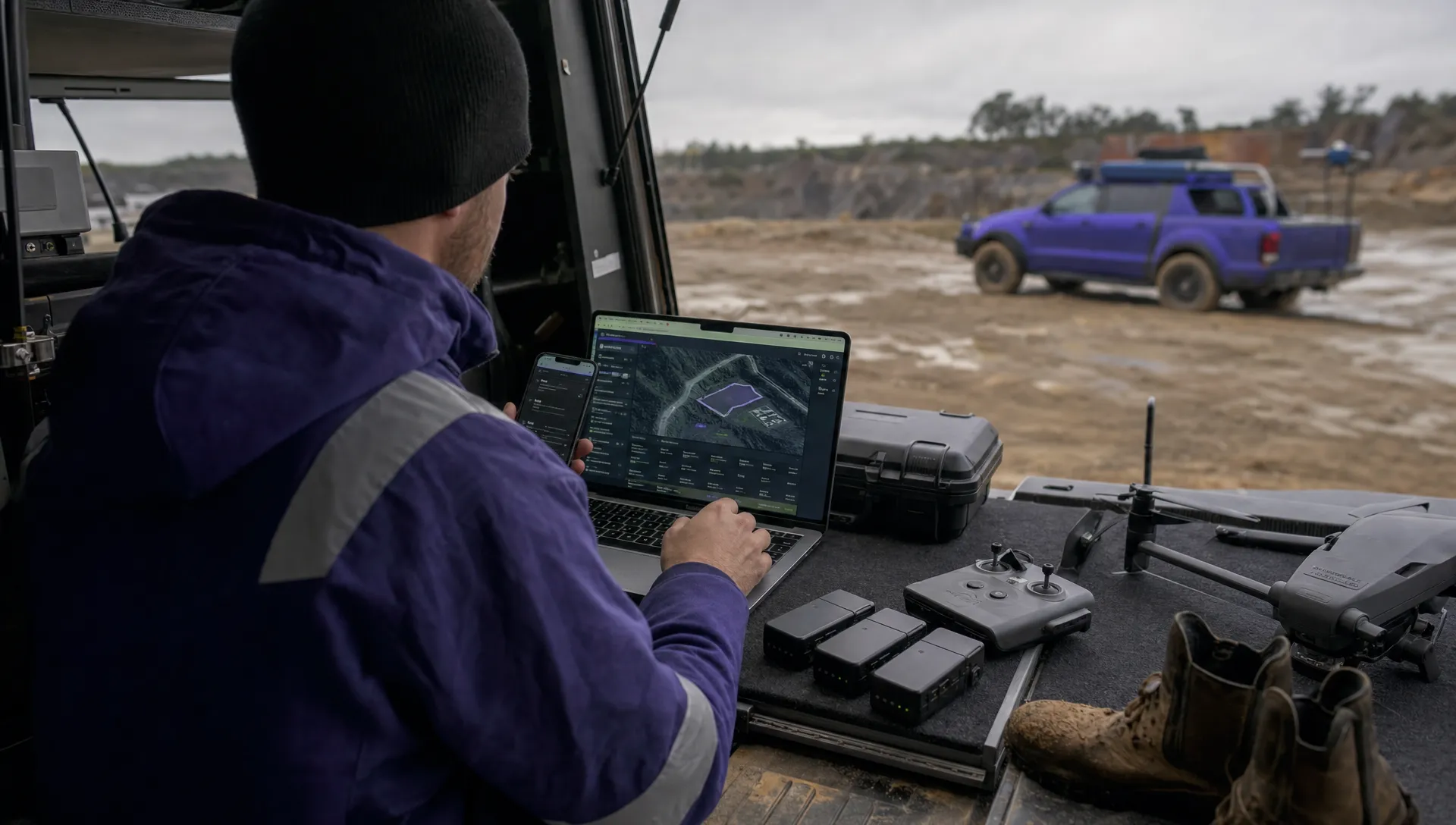
The image above shows how an integrated platform visualizes key operational data, giving you a clear overview of every mission. This unified view is only possible when your technology stack is working in harmony.
Your tech stack should be a force multiplier, not a source of friction. The right integrations mean less time spent on admin and more time delivering value to your clients.
Finally, managing this digital ecosystem requires consistent upkeep. Beyond just picking the right hardware and software, you might want to consider managed IT support outsourcing to keep things running smoothly. This lets you focus on your core business while experts handle the technical side, ensuring your flight operations centre runs without a hitch.
Laying Down the Law: Creating Your Standard Operating Procedures
A top-tier flight operations centre runs on solid processes, not just guesswork. If you want consistency, safety, and a professional sheen on every single mission, the answer lies in your Standard Operating Procedures (SOPs). Forget dusty old binders; think of these as your operational playbooks.
SOPs are just clear, written instructions that spell out exactly how your team handles critical tasks. They take complicated processes and break them down into simple, repeatable steps. This ensures everyone, from a rookie pilot to a seasoned ops manager, performs their job to the exact same high standard. It's the absolute bedrock of a safe, compliant, and scalable drone business.
Your Pre-Flight Checklist SOP
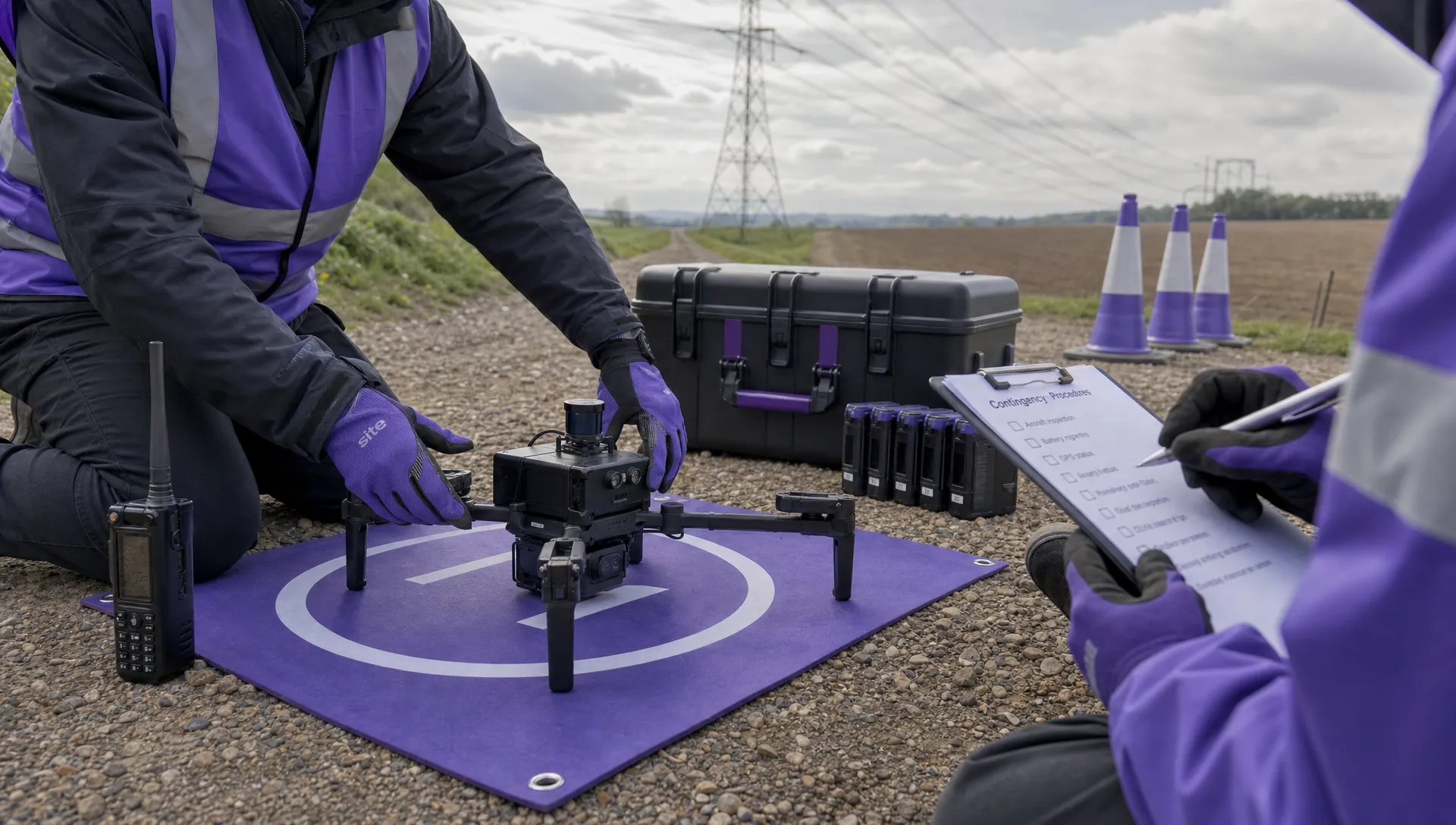
The pre-flight checklist is your first and best line of defence against things going sideways in the air. It’s a disciplined, step-by-step process that confirms both the pilot and the drone are 100% ready for the mission. A solid Pre-Flight SOP guarantees nothing gets overlooked, whether it's checking battery levels or making sure the firmware is up to date.
Your SOP here should detail things like:
- Equipment Checks: A full physical inspection of the drone, props, camera, and batteries.
- Software and Settings: Verifying controller settings, return-to-home altitude, and camera configurations.
- On-Site Checks: A final confirmation of your takeoff and landing zones and any potential hazards you didn't spot on the map.
Platforms like Dronedesk make this foolproof by building the checks right into the job planning workflow. Pilots have to run through mandatory digital checklists, and the system logs their completion automatically. That creates an invaluable record for compliance.
Your Emergency Response SOP
When things go wrong, a cool head and a clear plan are your two best friends. An Emergency Response SOP is your script for dealing with the unexpected, like a sudden loss of signal, equipment failure, or another aircraft entering your airspace. Having this procedure written down and practiced means your team can react quickly and correctly under pressure, instead of freezing up.
This SOP needs to outline the immediate actions for different scenarios, including who to call and how to report the incident. For a much deeper dive into building these crucial documents, check out our guide on how to create standard operating procedures. It gives you a detailed roadmap.
Your Post-Flight Data Handling SOP
The job isn't done when the drone touches down. The Post-Flight Data Handling SOP is all about how you manage, secure, and deliver the valuable data you've just captured for your client. Getting this process right is critical for maintaining data integrity and keeping your clients happy.
A disciplined data handling SOP prevents costly mistakes like lost files or corrupted data. It defines the chain of custody from the SD card in the field to the final deliverable, ensuring professionalism from start to finish.
This procedure should cover how you transfer files, your backup strategy, and the specific formatting your client needs. A well-defined workflow here smooths out the final leg of the project and helps you get paid faster.
Your Maintenance and Inspection SOP
Finally, your Maintenance and Inspection SOP is what keeps your fleet airworthy and dependable. This document lays out the schedule for routine checks and service intervals for every drone, battery, and major piece of gear you own. It’s how you spot wear and tear before it turns into a catastrophic failure.
By tracking things like flight hours and maintenance cycles within your flight operations centre, you shift from reactive repairs to proactive fleet management. This disciplined approach doesn't just make you safer; it also extends the life of your expensive equipment, protecting your investment and making sure you're always ready for the next job.
Your Actionable Flight Operations Centre Checklist
Putting theory into practice is where a good plan becomes a great operation. This checklist is designed to help you build your flight operations centre from the ground up or audit your current setup for meaningful improvements.
Think of it as a blueprint. Each item is a clear, actionable step you can take right now to move from simply understanding what an FOC is to actively building a more professional, safe, and efficient drone business.
Foundational Strategy and Setup
Before you touch any technology, you need a mission. This foundational stage is all about setting clear goals, understanding your business needs, and getting the right people in the right seats. Nail this, and everything else gets a whole lot easier.
- Define Your Core Objectives: What’s the end game? Faster job turnaround, bulletproof safety compliance, or smoother client reporting? Get it down on paper.
- Establish Key Roles: Even if you're a one-person show, clearly define the responsibilities. Who is the Operations Manager, the Flight Planner, the Pilot in Command, the Data Manager?
- Set Key Performance Indicators (KPIs): How will you know you're winning? Define your success metrics, whether that's client satisfaction scores, on-time project completion rates, or incident-free flight hours.
This kind of structured approach is essential for managing complexity. Just look at the broader aviation industry for inspiration; in 2023, there were 35.3 million scheduled commercial flights worldwide. That incredible volume is only possible through meticulous planning at every level. You can read the full analysis of 2023 aviation trends to see how the big players manage it all.
Technology and Tools
Your tech stack is the engine room of your flight operations centre. The goal isn't just to collect software, but to build an interconnected system where data flows smoothly. This cuts down on tedious manual work and stops errors before they happen.
- Select a Central Management Platform: Choose a core system like Dronedesk to act as your single source of truth for jobs, clients, and assets.
- Integrate Airspace and Weather Data: Make sure your platform provides live, integrated airspace intelligence and detailed weather forecasts right where you need them.
- Implement a Fleet Management System: Use software to automatically track drone maintenance schedules, monitor battery health, and keep tabs on all your equipment.
Processes and Compliance
Robust processes are what separate the amateurs from the pros. They ensure every single flight is performed to the same high standard. Think of these as your playbooks for safety, quality, and sticking to the rules.
Your Standard Operating Procedures (SOPs) are not just documents; they are a direct reflection of your company's commitment to safety and excellence. They are the guardrails that keep your operations on track.
- Develop Core SOPs: At a bare minimum, create and implement documented procedures for pre-flight checks, emergency response, and post-flight data handling.
- Build a Digital Audit Trail: Use your operations platform to log every check, risk assessment, and flight detail. This creates an unbreakable compliance record that proves you did everything by the book.
- Establish a Risk Assessment Framework: Standardise how you identify and mitigate risks for every mission. This turns safety from a guessing game into a repeatable, reliable process.
People and Training
At the end of the day, your FOC is only as good as the people running it. This final pillar is all about making sure your team has the right skills, qualifications, and continuous training to operate safely and effectively.
- Track Pilot Certifications: Use a central system to monitor all pilot licenses and qualifications, with automated alerts for expiry dates. Dronedesk's team management dashboard is perfect for this.
- Schedule Regular Training: Plan and document recurrent training sessions. This should include everything from emergency procedure drills to getting hands-on with new equipment.
- Review Performance Regularly: Use the data from your FOC's reporting tools to review mission performance. This is how you spot areas for improvement and give constructive feedback to your team.
Here's a practical checklist to help you get started or find gaps in your current setup. Use it as a guide to systematically build or audit each component of your flight operations centre.
FOC Setup and Audit Checklist
| Category | Checklist Item | Status (To-Do / In Progress / Complete) |
|---|---|---|
| Strategy | Define and document the FOC's primary objectives. | |
| Strategy | Assign and document key roles (Ops Manager, Planner, PIC, etc.). | |
| Strategy | Establish and track at least 3 core KPIs. | |
| Technology | Select and implement a central drone operations platform. | |
| Technology | Ensure live airspace and weather data are integrated. | |
| Technology | Set up an automated fleet maintenance and asset tracking system. | |
| Processes | Develop and document SOPs for pre-flight, in-flight, and post-flight. | |
| Processes | Create and document an emergency response plan (ERP). | |
| Processes | Standardise the risk assessment process for all missions. | |
| Processes | Ensure all operations create a complete digital audit trail. | |
| People | Implement a system for tracking pilot qualifications and expiry dates. | |
| People | Schedule and document recurrent training sessions. | |
| People | Establish a process for regular performance reviews using FOC data. |
By working through this list, you'll be well on your way to building a robust FOC that not only meets compliance requirements but also drives real business value through improved safety, efficiency, and professionalism.
Your Questions Answered: Making the FOC a Reality
Alright, moving from the theory of a Flight Operations Centre to actually building one brings up some real-world questions. Let's tackle the common ones head-on. This is about giving you the confidence to get started, whether you're a one-person operation or running a small team.
We'll cut through the jargon and get straight to the practical challenges every drone pro faces.
Do I Really Need a Physical Room for My FOC?
Absolutely not. This is probably the biggest myth out there. While you might picture a NASA-style control room, a modern drone FOC is a system, not a physical space. For the vast majority of us, from solo pilots to growing teams, the FOC is a digital hub.
Think of it this way: your FOC provides the essential functions—planning, real-time oversight, and compliance—without the cost and hassle of a dedicated office. A platform like Dronedesk becomes your virtual command centre, accessible wherever you have an internet connection.
At What Stage Should I Formalize My FOC?
The simple answer? From day one. Even if you're a solo pilot flying your first commercial job, getting into the FOC mindset builds the professional habits that are essential for safety and growth. Don't wait until you're juggling multiple projects and drowning in paperwork to get organized.
Starting out is easier than you think:
- Pick an operations platform to act as your central hub from the get-go.
- Draft some basic SOPs for your most frequent tasks, especially pre-flight checks.
- Log every single flight and maintenance action right from your first job.
Laying this groundwork early makes scaling up feel natural and smooth. Trust me, it’s a lot easier to expand a solid system than it is to untangle a chaotic one down the line.
How Does a Platform Replace a Bunch of Different Software Tools?
A proper drone operations platform is built from the ground up to be an all-in-one solution, saving you from the headache of juggling a dozen different apps. Instead of jumping between separate tools for weather forecasts, airspace maps, client details, and flight logs, an integrated platform brings everything under one roof.
For example, with Dronedesk, you pull live weather data, airspace intelligence from Altitude Angel, and your client's information directly into your mission plan. After the flight, the system automatically logs your flight hours against the right pilot and drone. It's all connected.
This integration is the whole point. It cuts out repetitive data entry, slashes the risk of human error, and gives you a seamless workflow where every piece of critical information lives in one place, behind one login.
This approach doesn't just save you time and money; more importantly, it gives you a single, reliable source of truth for your entire operation.
What's the Single Most Important SOP for a New Operator?
While you'll build out several SOPs over time, the Pre-Flight Checklist SOP is hands-down the most critical one for any new operator to nail down. This procedure is your last line of defence against something going wrong before the drone even gets in the air. It forces you to be methodical and consistent, every single time.
A solid pre-flight SOP ensures you never miss a crucial step, like checking your gear, confirming airspace status, or double-checking the weather. By making this process non-negotiable for every flight, you build a powerful safety habit that protects your drone, your clients, and your professional reputation right from the start.
Ready to build your digital flight operations centre with a platform that handles it all? Dronedesk pulls together every tool you need to plan, fly, and manage your drone operations like a pro.
Start your free Dronedesk trial today and see the difference for yourself.
 How to Evaluate a Free Drone Logbook Before Using It →
 FAA Part 107 Test: How to Master Airspace Questions →
 Drone Risk Assessment Controls That Work in the Field →
 FAA Drone License Costs Beyond the Knowledge Test →
 Drone Part 107 Operations: When a Waiver May Be Needed →
 Drone Operating Rules for Managing Contractors and Employees →
 BVLOS Drone Requirements for Building a Safety Case →
 Drone Pilot Test Mistakes That Cost Candidates Marks →
 FAA 107 License vs Part 107 Certificate: What’s the Difference? →
 Drone Airport Rules: A Field Checklist for Site Assessments →