
A Complete Guide to Flight Data Recorder Software
Flight data recorder software is basically the "black box" for your drone, but it's a whole lot more useful and easier to get to than the ones on commercial planes. Think of it as an intelligent system that logs every critical detail of a flight, from precise flight paths to how the battery is holding up, giving you a crystal-clear picture of what happened.
Your Drone's Digital Black Box
The easiest way to think about it is to compare your drone to a modern car. Just as your car's computer constantly tracks engine health, fuel efficiency, and driving habits, this software does the same for your drone. It’s capturing a constant stream of information and turning raw flight data into insights you can actually use.
This kind of tech isn't just for airliners anymore. It has become a must-have tool for any serious drone operator looking to protect expensive gear, get better at flying, and generally run a more professional operation. It gives you a definitive, second-by-second account of every single mission.
From Airliners to Drones
The core idea has been around for decades. In traditional aviation, flight data recorders are absolutely essential for figuring out what went wrong after an incident. This long history proves just how vital data is for safety. The global market for this tech is growing fast, valued at USD 119.3 million in 2025 and projected to hit USD 211.7 million by 2035—a steady 5.9% annual growth rate.
For drone pilots, the same principle applies, but with a more proactive spin. Instead of just being a tool for after-the-fact investigations, modern drone flight recorder software helps stop incidents from happening in the first place by flagging subtle patterns and potential risks before they become big problems.
A flight log is more than just a record; it's a story of the mission. It tells you not just where the drone went, but how it performed, revealing insights that you'd never catch with your own eyes.
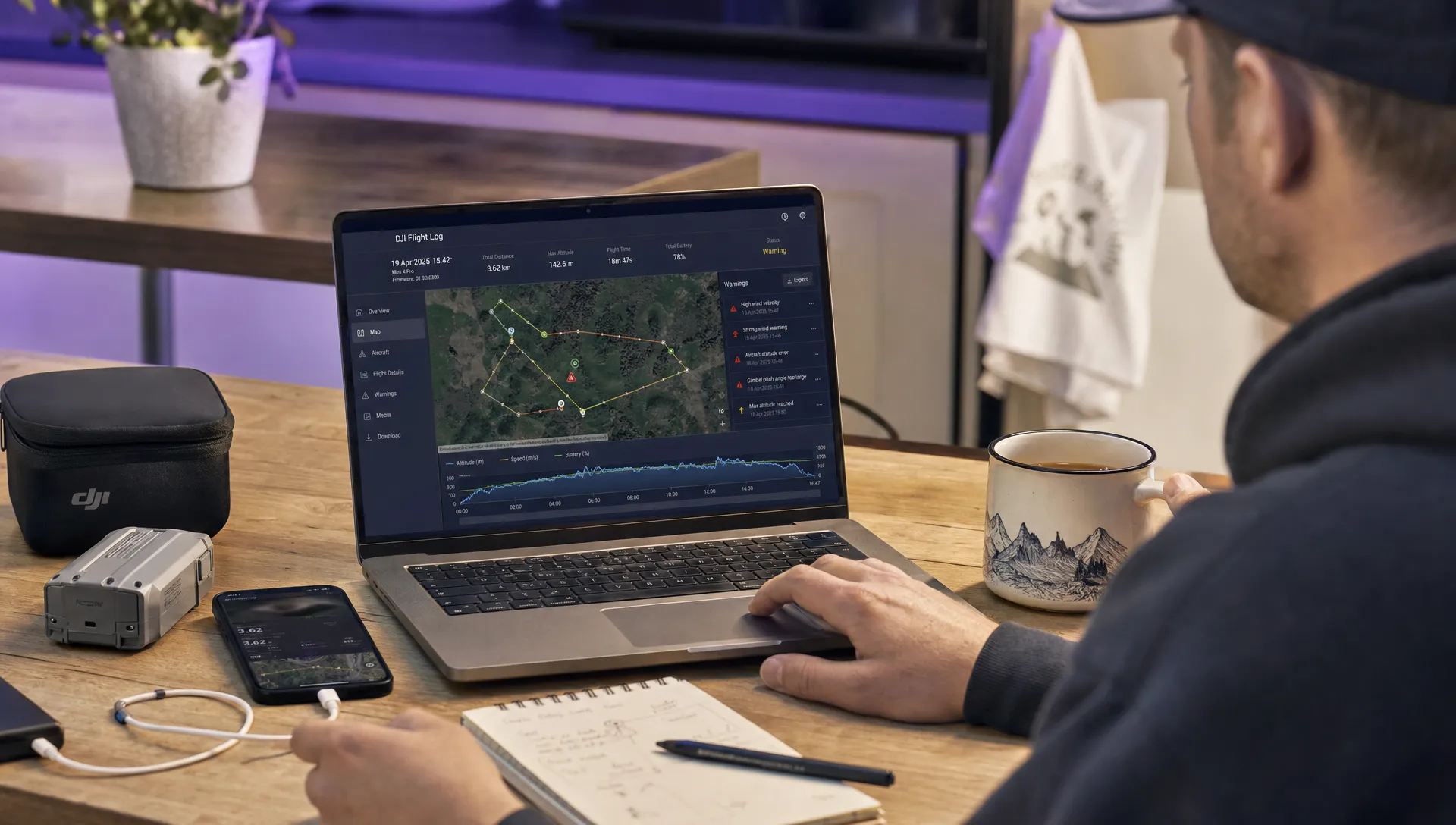
Want to look inside your own flight records? The DJI flight log viewer reads
DJIFlightRecordfiles straight in your browser, including the encrypted logs from recent aircraft that older free viewers cannot open. You get the flight path on a map, full telemetry, every warning the aircraft raised, and a PDF report you can keep. No account needed, and your log is not stored on our servers.
Why Every Flight Needs a Digital Witness
Think of the software as an impartial digital witness for every flight. It doesn't guess, get confused, or forget details; it just records the hard data. This creates an unshakeable log of events that proves invaluable in a few key situations:
- Safety Investigations: If something goes wrong, the flight log gives you a clear, chronological record to understand the root cause. Was it a technical glitch, a sudden gust of wind, or pilot error? The data will tell you.
- Compliance Audits: When regulators or clients need proof of safe operation, detailed logs are your best friend. They show you stuck to the flight plan, stayed within altitude limits, and followed all procedures. To learn more, check out our guide on how a flight recorder for drones works.
- Performance Analysis: By reviewing past flights, pilots can spot where they can be more efficient, tighten up their maneuvers, and get more out of their batteries. This leads to better performance and helps your equipment last longer. The general concept is similar to what's used in record and replay testing for software, where data is captured to analyze and improve system performance.
To help you get a quick handle on this, the table below breaks down what this software really does and why it matters for any professional operator.
Flight Data Recorder Software at a Glance
| Core Function | What It Does | Primary Benefit |
|---|---|---|
| Telemetry Logging | Records every detail of the flight path, including altitude, speed, and GPS coordinates. | Provides an undisputed record of the mission for compliance and incident analysis. |
| Sensor Data Capture | Logs data from various onboard sensors, like battery voltage, motor RPM, and IMU readings. | Helps identify potential hardware issues before they lead to failures. |
| Video & Data Sync | Synchronizes recorded video footage with the corresponding flight data timeline. | Allows you to see exactly what the drone saw at any given moment during the flight. |
| Automated Ingestion | Automatically pulls and organizes flight logs from the drone after a mission is complete. | Saves a massive amount of time on manual data entry and reduces human error. |
Ultimately, having this detailed, second-by-second account of every flight isn't just about ticking a box for compliance—it's about running a safer, smarter, and more professional operation.
Essential Features of Modern Flight Data Software
To really get what flight data recorder software brings to the table, you have to look under the hood at the features that make it so indispensable. Think of it like a car's dashboard and its engine diagnostic system rolled into one. It doesn’t just show you where you’ve been; it reveals exactly how the vehicle performed every second of the trip. Good software offers that same deep insight for every single drone mission.
The best platforms are built on four key pillars that, together, paint a complete picture of your flight operations. These features turn messy, raw data into clear, usable intelligence that boosts safety, keeps you compliant, and ultimately, helps you become a better pilot. Let's dig into each one.
Detailed Telemetry Logging
At its very core, the software is meticulously logging telemetry data. This is the second-by-second story of your drone’s flight through three-dimensional space. It's way more than just a line on a map; it's a complete digital diary of the entire flight.
This log captures a whole host of critical data points, including:
- GPS Coordinates: Pinpointing the drone's exact location at any given moment.
- Altitude: Tracking the height above ground level to ensure you’re flying within legal and project-specific limits.
- Speed: Monitoring both ground speed and vertical speed to analyze flight efficiency and how manoeuvres were executed.
- Flight Duration: Recording the total time in the air, which is essential for maintenance schedules and compliance checks.
This detailed log becomes your undisputed flight record. If a client ever questions whether you covered a specific area, or if a regulator needs proof you stayed clear of a restricted zone, the telemetry data provides definitive, time-stamped evidence. No arguments.
Comprehensive Sensor Data Collection
While telemetry tells you where the drone went, sensor data tells you how it was feeling. Drones today are packed with sensors that constantly monitor the health and status of critical systems. Flight data recorder software grabs all this information, giving you an inside look at the aircraft's condition while it’s in the air.
It’s a bit like a doctor monitoring a patient's vital signs. Key metrics collected include:
- Battery Voltage and Current: Tracking power consumption helps you spot a degrading battery long before it decides to fail mid-flight. One study pointed to battery failure as a leading cause of drone incidents, making this a feature you can't afford to ignore.
- Motor Performance (RPM): Any strange fluctuations in motor speed can be an early warning sign of mechanical trouble, like a failing propeller or a worn-out bearing.
- IMU Data: The Inertial Measurement Unit provides data on the drone's orientation and the G-forces it experiences, which is absolutely crucial for reconstructing what happened after an unexpected event.
This infographic shows how flight data software is a cornerstone for improving safety, compliance, and pilot skills.
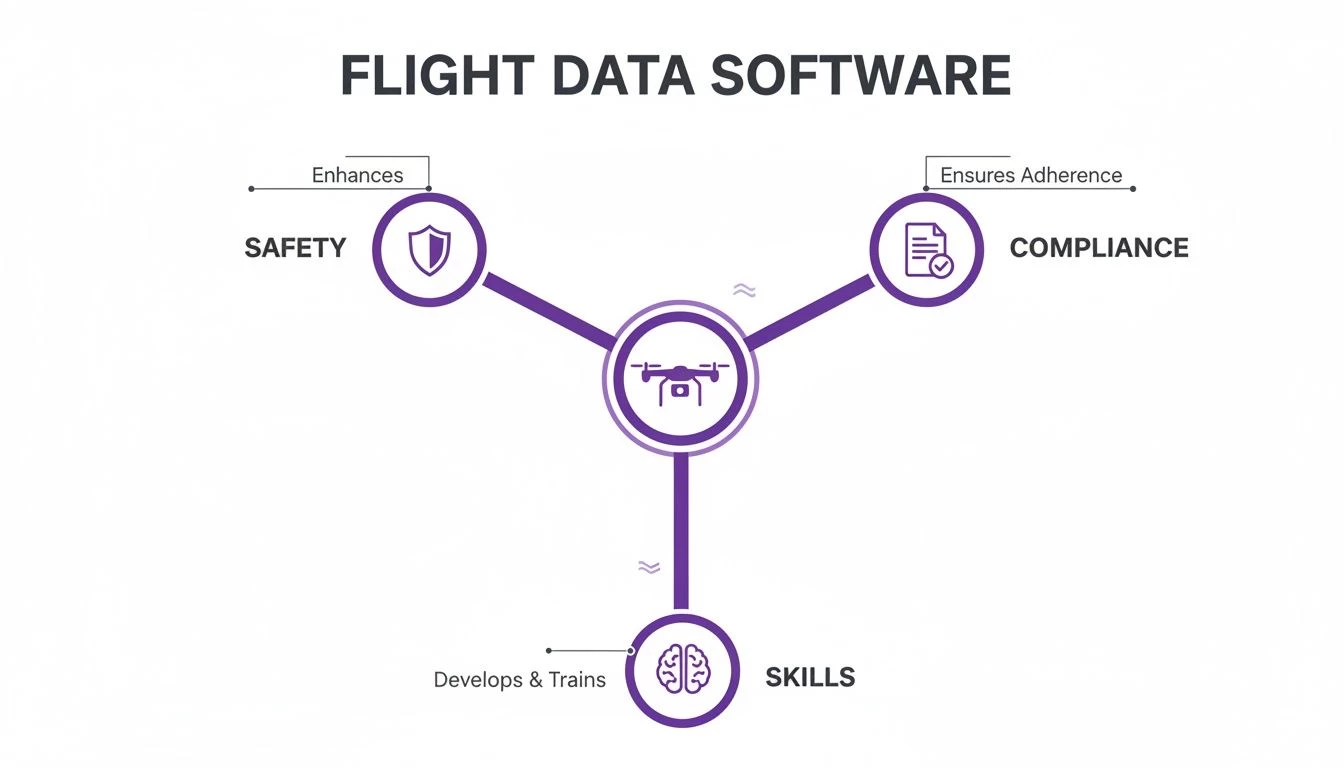 As you can see, these aren't just separate perks; they're all connected outcomes that come from diligent data recording and analysis.
Video and Data Synchronization
One of the most powerful features is the ability to synchronize video footage with flight data. The software overlays the telemetry path directly onto the recorded video, so you can see exactly what the drone's camera was seeing at any point in its flight.
This feature bridges the gap between raw data and real-world context. It allows you to replay a flight not just as a series of numbers, but as a visual experience, connecting every data point to a specific visual moment.
Imagine a surveyor inspecting a wind turbine. They can use this to prove that a specific blade was inspected from the correct altitude and distance. They can pause the replay at a precise timestamp and see both the video of the blade and the corresponding GPS, altitude, and sensor data, creating an absolutely airtight inspection record.
Automated Data Ingestion
Finally, the whole system is tied together by automated data ingestion. Manually downloading, sorting, and labelling flight logs from multiple drones is a massive time sink and a recipe for human error. Modern software completely eliminates this bottleneck.
Platforms like Dronedesk offer seamless integration, automatically pulling flight logs from your drone (like DJI models) directly into your dashboard right after a mission. This ensures every single flight is logged consistently and accurately without you having to lift a finger. This automation doesn't just save countless admin hours; it guarantees your flight records are always complete and up-to-date, ready for analysis or an audit at a moment's notice.
How Professionals Use Flight Data to Win
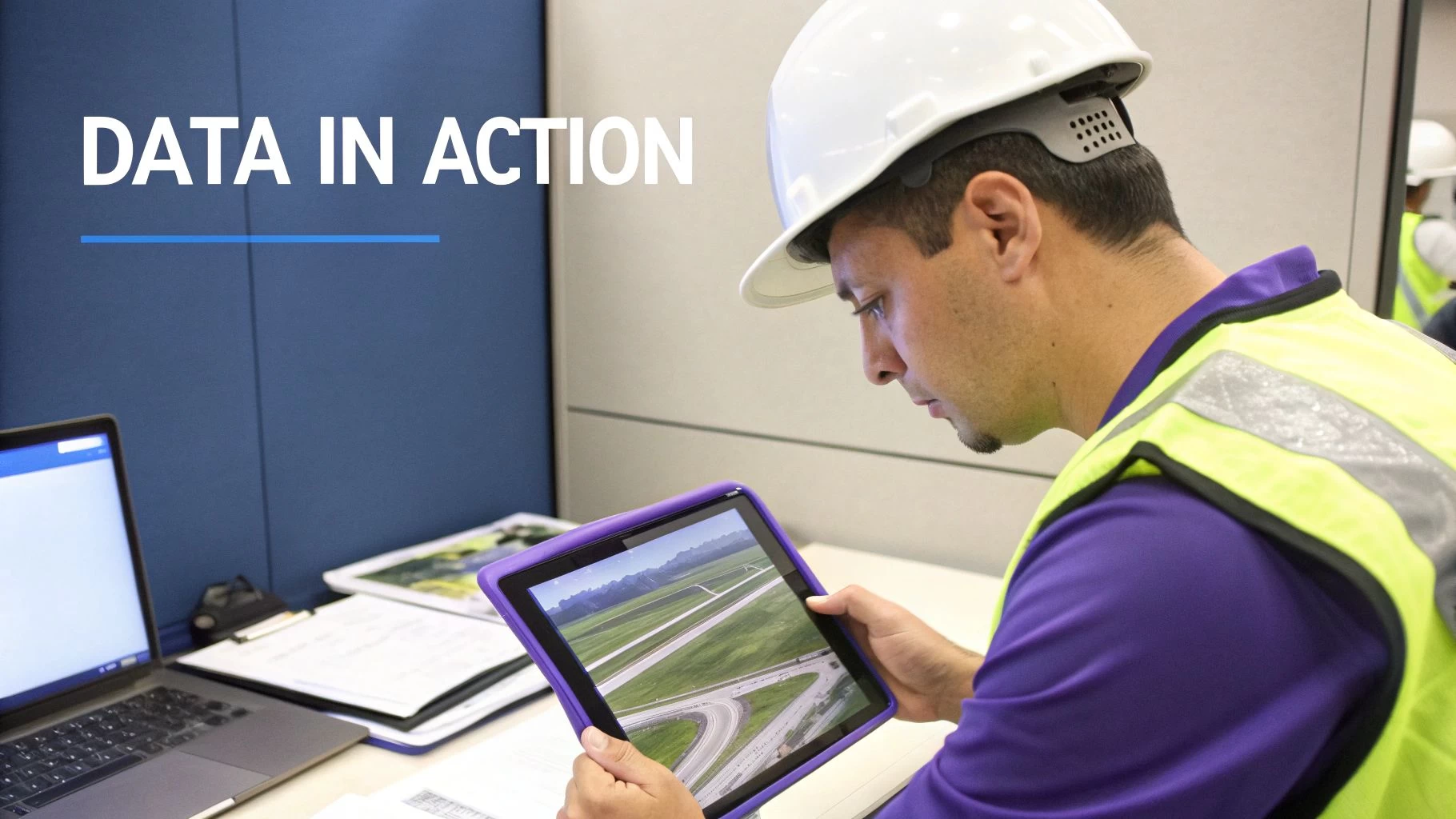
It’s one thing to talk about the features of flight data recorder software, but seeing it in the real world is where you grasp its true power. This isn't just about collecting numbers for the sake of it. It's about giving pros the insights they need to make smarter decisions, run safer operations, and get a genuine leg up on the competition. It turns a stream of abstract data into tangible, operational wins.
Think about a safety officer at a big construction firm. A drone comes in for a slightly harder landing than usual—a tiny blip that most would just shrug off. But she digs into the flight log to see what happened. By replaying the last few seconds of the flight, she spots a consistent, subtle dip in motor performance on approach. It’s a pattern pointing to a potential firmware bug.
That one piece of insight is huge. She grounds that specific drone model across the fleet for an update, preventing what could have been a catastrophic failure over a busy worksite. The software just turned a minor anomaly into a major safety win.
Achieving Effortless Regulatory Compliance
Now, picture a fleet manager for a large enterprise, juggling hundreds of drones operating across different regions. Proving compliance to regulators like the FAA or EASA is a constant, nagging headache. Trying to manually pull together flight logs from every single pilot isn't just a pain; it's a recipe for mistakes and missing records.
This is where flight data recorder software becomes an absolute operational powerhouse.
- Aggregated Reporting: Instead of chasing down individual logs, the manager can generate a single, comprehensive report for the whole fleet. It details flight times, locations, and proves adherence to geofencing and altitude limits.
- Audit-Ready Records: With every flight automatically ingested and stored, the company has an indisputable, time-stamped record ready for any audit. What used to be a week-long administrative nightmare becomes a five-minute job.
- Demonstrable Safety Culture: Consistent, detailed logging shows a serious commitment to operational safety. That's invaluable for securing better insurance rates and landing big contracts with risk-averse clients.
It's no surprise the market for this tech is blowing up. The flight data recorder sector was valued at USD 1.74 billion in 2023 and is on a steep upward curve. That growth is all about software making data more accessible and actionable, completely changing how incidents are investigated and maintenance is handled. You can explore the full market analysis from TechSci Research for a deeper dive.
From Logistics Optimization to Creative Excellence
But the uses go way beyond just safety and compliance. Different industries are finding clever ways to turn flight data into a strategic advantage, showing just how versatile good flight data analysis can be. https://blog.dronedesk.io/flight-data-analysis/
Take a logistics company using drones for last-mile deliveries. By analyzing flight efficiency data—things like battery drain versus payload and wind conditions—they can seriously fine-tune their delivery routes. They might find that a slightly longer route with less headwind is actually faster and uses 15% less battery, squeezing more deliveries out of every charge.
Flight data tells the hidden story of operational efficiency. It reveals the small adjustments that, when scaled across a fleet, lead to significant savings in time, energy, and maintenance costs.
Even creative professionals are getting in on the act. A cinematic drone pilot can review the telemetry from a previous shoot to nail a particularly complex shot. By looking at the precise stick inputs, speed, and altitude changes, they can replicate and refine a tough manoeuvre, guaranteeing they get that perfect take the next time around.
Every one of these examples points to the same truth: flight data recorder software isn't some passive logging tool. It's an active command centre that gives professionals the critical intelligence they need to work safer, prove compliance, boost performance, and ultimately, win in their field.
Choosing the Right Flight Data Recorder Software
Picking the right flight data recorder software isn't about finding some mythical "best" platform. It’s about finding the right one for your operation. Think of it like this: a Ferrari is an amazing car, but it’s completely useless if you need to haul timber to a job site.
The same logic applies here. The slick, simple software that's perfect for a solo photographer will completely buckle under the demands of an enterprise managing a fleet of 50 inspection drones. This decision is a big one, directly impacting your efficiency, your ability to stay compliant, and whether you can scale up when the time comes. Get it wrong, and you're stuck with data headaches and clunky workarounds. Get it right, and it becomes the central hub of a smooth, professional operation.
So, let's cut through the noise. Here are the four critical things you need to look at to make a smart choice—one that works for you today and won't hold you back tomorrow.
Fleet Compatibility and Support
First things first, and it’s a simple one: does the software actually work with the drones you fly? It's all too easy to be wowed by a demo full of flashy charts, but if the platform can't read the data from your specific hardware, it's a non-starter. This is especially true if you're running a mixed fleet with aircraft from different manufacturers.
You need to ask some direct questions:
- Does it support my exact drone models? Look for explicit support for your aircraft, especially common ones from manufacturers like DJI whose data formats are widespread.
- How does it handle data from different brands? A solid platform will take logs from various drones and standardize them, so you can analyze everything in one consistent format.
- What’s the plan for supporting new drones? The industry moves fast. You need a software partner who’s committed to keeping up with new hardware as it hits the market.
Incompatibility just creates blind spots and forces you to juggle multiple systems, which defeats the whole purpose of having a centralized platform in the first place.
Scalability for Future Growth
The software that feels just right when you’re a one-person show might feel incredibly cramped once you hire your first pilot or expand into a new region. Scalability is all about making sure the platform can grow with your business, so you aren't forced into a painful migration process two years down the line.
Think about where you want to be in five years. Will this software handle a bigger team, more complex projects, and a massive increase in flight volume? A scalable solution isn't just a tool for today; it's an investment in your future.
Here’s what to look for when you're thinking about growth:
- User Management: Can you add new pilots, assign specific roles, and manage permissions without a headache?
- Data Handling: As you pile up thousands of flight logs, will the system grind to a halt or keep performing smoothly?
- Pricing Structure: Does the cost still make sense as you add more drones and pilots? Or does it become punishingly expensive?
A platform that scales properly won't just support your growth—it will actively help you get there.
Integration with Your Existing Tools
Your flight data software doesn't exist in a bubble. It has to connect and communicate with the other tools you already use to run your business. Good integration eliminates tedious manual data entry, cuts down on errors, and creates a single source of truth for your entire operation.
Imagine your flight logs automatically appearing in your project management tool, or maintenance alerts popping up directly in your team’s Slack channel. That’s the kind of seamless workflow that saves real time and money. Before you sign on the dotted line, check if the software plays nicely with:
- Project Management Systems (like Asana, Trello, or Jira)
- Cloud Storage (like Google Drive or Dropbox)
- Client Reporting Tools or other business intelligence platforms
Strong integrations turn your software from a simple logging tool into the command center for your entire drone ecosystem.
Depth of Reporting and Analytics
At the end of the day, your ability to produce clear, professional reports is what matters. Your flight logs are just raw data; the reports are what you hand over to clients, regulators, and insurance companies to prove your work and professionalism. The software absolutely must be able to turn that complex data into something anyone can understand.
Look for a powerful reporting engine that lets you customize what you export. A client might just need a high-level summary of flight times and coverage, but an internal safety audit will require a deep dive into every sensor reading and pilot input.
A high-quality UAV log viewer makes this process simple. For a closer look at what separates the good from the bad, check out our guide on the key features of a capable UAV log viewer. Your software should empower you to prove compliance and demonstrate value with audit-ready documentation at a moment's notice.
Before you make a final decision, it helps to have a structured way to compare your options. The checklist below is designed to guide you through that process, ensuring you cover all the critical bases.
Software Selection Criteria Checklist
Use this table to methodically evaluate each platform you're considering. It forces you to look beyond the marketing material and dig into what really matters for your day-to-day operations.
| Evaluation Criteria | Questions to Ask | Why It Matters |
|---|---|---|
| Fleet Compatibility | Does it support all my current and planned drone models? How are new models added? | Incompatibility creates data silos and forces you to use multiple, disconnected systems. |
| Scalability | Can it handle more users, drones, and data as my business grows? Is the pricing fair at scale? | Prevents you from outgrowing your software and needing to switch systems later on. |
| Integrations | Can it connect with my project management, cloud storage, and other business tools via API? | Automates workflows, reduces manual entry, and creates a single source of truth for operations. |
| Reporting & Analytics | Can I create custom reports for clients, regulators, and internal audits? How deep can the data analysis go? | Turns raw flight data into actionable insights and professional, compliant documentation. |
| User Experience (UX) | Is the interface intuitive for both admins and pilots? Is it easy to find what I need quickly? | A clunky interface kills productivity and leads to user frustration and poor adoption. |
| Support & Training | What kind of customer support is offered (email, phone, chat)? Is there good documentation or training? | When something goes wrong or you need help, responsive support is absolutely critical. |
Going through this checklist for each contender will give you a much clearer picture of which platform is truly the right fit for your business. It's not about ticking every single box, but about finding the solution that best aligns with your most important priorities.
Why Dronedesk Is Your All-in-One Command Center
After walking through all the features, applications, and what to look for in flight data recorder software, it's pretty clear the right platform does a lot more than just log your flights. It becomes the central nervous system for your entire drone operation, turning raw data into actionable insights for safety, efficiency, and compliance. This is exactly where Dronedesk shifts from being just another tool into a complete command center.
We built Dronedesk to be the single source of truth for professional drone operators. We've thought through every detail to make sure our platform directly solves the real-world problems we've talked about. It isn’t just a piece of software; it’s an integrated ecosystem designed to cut through the complexity and give you back your most valuable asset: time.
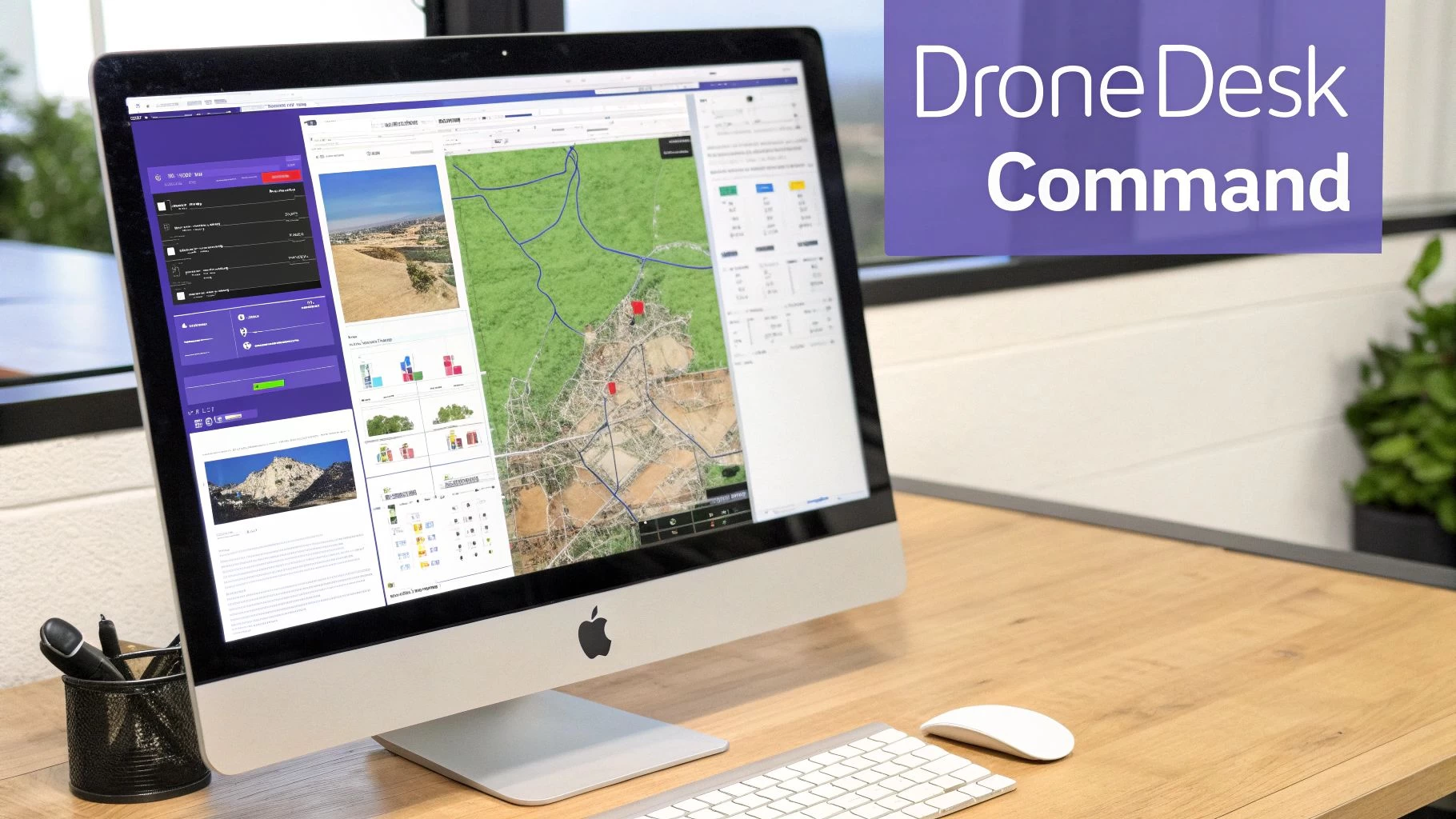
Seamless Integration and Automated Ingestion
Let's be honest, one of the biggest administrative headaches is manually managing flight logs. Dronedesk gets rid of this chore with effortless DJI data syncing. This feature directly handles the critical need for automated data ingestion, making sure every single flight is captured accurately without you having to lift a finger.
This automated process means your records are always complete and audit-ready. For fleet managers, our Flight Data Monitoring (FDM) capabilities offer advanced reporting to track assets and analyse operational data, which dramatically cuts down on potential downtime. It’s a similar evolution to what we saw in commercial aviation, where mandatory streaming software post-MH370 pushed oceanic crash recovery rates from 10% to over 80% by 2023. For drone teams, Dronedesk's intuitive logging prevents costly violations and makes everyone from surveyors to videographers more productive. You can find more on the growth of flight data monitoring and its industry-wide impact.
Built for Compliance and Scalability
Compliance isn't a "nice-to-have"—it's a must. Dronedesk is engineered to make it straightforward. Our powerful reporting engine lets you generate detailed, professional logs for clients and regulatory bodies like the FAA or EASA with just a few clicks. You can prove you stuck to the flight plan, altitude limits, and safety protocols with undisputed, time-stamped evidence.
Better yet, Dronedesk is built to grow right alongside your business.
- For the solo operator: It gives you a professional framework to manage clients, projects, and compliance from day one.
- For the growing team: It offers robust user management, letting you assign roles and track your team's performance with ease.
- For the large enterprise: It delivers the scalability you need to manage hundreds of assets and pilots across multiple sites, with aggregated analytics for that essential high-level oversight.
"Dronedesk has cut my job planning time from over an hour to less than ten minutes. The flight logging and reporting are flawless, giving my clients complete confidence and keeping my operations fully compliant. It's an absolute game-changer."
This kind of feedback gets to the heart of our design philosophy: remove the administrative friction so you can focus on what you do best—flying.
A True Operational Hub
What really sets Dronedesk apart is that our powerful flight data recording is just one piece of a much bigger, more connected platform. It’s the solid foundation upon which we've built a full suite of operational management tools.
From a single dashboard, you can handle:
- Client & Project Management: Track your jobs from the initial quote all the way to the final invoice.
- Fleet & Maintenance Tracking: Automate service reminders and keep a detailed history for all your equipment.
- Team Scheduling & Collaboration: Assign pilots to missions and manage everyone's availability in one place.
- Airspace & Risk Assessment: Plan flights with integrated airspace intelligence and comprehensive risk checklists.
By linking your flight data directly to project details, client reports, and maintenance schedules, Dronedesk gives you a complete, 360-degree view of your business that standalone loggers just can't touch. It’s not just flight data recorder software; it’s the intelligent engine powering every aspect of your drone operations, helping you fly safer, work smarter, and stay compliant.
Got Questions About Flight Data Recorder Software?
Jumping into any new technology brings up questions. And when that tech is as important as flight data management, you need clear, straight-up answers before you make a move. We've pulled together the most common questions we hear from professional drone operators about this kind of software.
Our goal here is to slice through the jargon and give you practical, honest answers. We'll get into the real-world concerns about setup, compliance, and daily use, helping you see how a solid platform is built to make your job easier, not add another headache.
How Hard Is This Stuff to Set Up and Learn?
This is usually the biggest worry for busy pros. The good news? Modern platforms are designed with the user in mind, not a team of IT wizards. Getting started is typically a straightforward affair.
Take a platform like Dronedesk, for example. It handles DJI integration smoothly. You just connect your account, and the software automatically starts pulling in your flight logs after every mission. No messing around with manual file transfers or complex configurations.
The learning curve for the core features is intentionally gentle. Most operators are logging flights, watching replays, and pulling basic reports within the first hour.
The best flight data recorder software should feel intuitive right out of the box. If you need days of training just to do the basics, it’s not solving a problem—it’s creating one. The whole point is to cut down your admin time, not pile more on.
Sure, mastering the deep-dive analytics or custom reporting might take a little more time, but the day-to-day essentials are designed to be picked up fast.
How Exactly Does It Help with Compliance?
Compliance isn't optional, and this is where the software really earns its keep. It creates an undeniable, time-stamped digital paper trail for every single flight you conduct. That's gold for both legal and insurance purposes.
Here's how it plays out in the real world:
- Regulatory Audits: If an authority like the CAA or FAA comes knocking for your flight records, you can generate a detailed report in minutes. This proves you stayed within your altitude limits, respected geofenced areas, and stuck to the flight plan.
- Insurance Claims: In the unfortunate event of an incident, the flight log provides objective data to back up your claim. It can demonstrate that the issue was due to something unpredictable, like sudden equipment failure or extreme wind shear, rather than pilot error.
- Client Confidence: Handing a client a professional flight summary shows a serious commitment to safety and transparency. It builds trust and helps justify your rates.
This automated record-keeping turns compliance from a manual, stress-inducing chore into a simple background process that just happens.
Can I Use This to Automate My Maintenance Tracking?
Absolutely. This is a crucial function that separates a basic flight logger from a complete operational platform. Trying to manually track maintenance schedules across a fleet is a surefire way to miss services and risk failures.
Good flight data software automates this whole process. As flight logs are pulled in, the system tallies up the flight hours for each drone, battery, and major component. From there, you can set up custom alerts based on the manufacturer’s recommendations.
For instance, you can set it up to ping you when:
- A specific drone hits 50 flight hours and is due for a motor inspection.
- A set of props has been in use for 25 hours and needs to be swapped out.
- A battery has been through 100 charge cycles and should be checked for performance decline.
This proactive approach keeps your gear in top shape, dramatically cutting the risk of in-flight failures and extending the lifespan of your assets. It transforms your flight data into a powerful tool for predictive maintenance.
What's the Difference Between FOQA and ASAP?
In the wider world of aviation safety, you’ll often hear the terms FOQA and ASAP. They both aim to make flying safer, but they come at it from different angles.
FOQA (Flight Operational Quality Assurance) is all about the data. It analyzes aggregated, anonymous flight data from countless flights to spot systemic risks and trends—things like frequent hard landings at a particular site. It focuses on what is happening.
ASAP (Aviation Safety Action Program), on the other hand, is about people. It’s a voluntary, no-blame reporting system where pilots can report safety concerns without fear of punishment. It focuses on why things are happening by capturing the human element.
A comprehensive drone management platform essentially rolls these ideas into one. The flight data recorder software is your FOQA system, spotting trends in the raw data. The platform’s other features, like project management and communication tools, act like your ASAP, letting pilots log notes and report issues tied to specific flights, adding that crucial context to the numbers.
How Does This Software Handle Data from Different Drones?
Running a mixed fleet with drones from different manufacturers is a common operational headache. A truly robust software solution is built for this diversity, acting as a universal translator for flight data.
It takes in logs in various native formats—whether from DJI, Skydio, or another brand—and standardizes all that information into a single, consistent format you can see on your dashboard. This means you can view and compare flight performance across your whole fleet without juggling multiple apps or manually converting files. This compatibility is a must-have for any operation that isn’t tied to one hardware brand, ensuring your data system can grow and change right along with your fleet.
Ready to see how an all-in-one command center can transform your operations? Dronedesk integrates powerful flight data recording with comprehensive business management tools, saving you time and ensuring you stay compliant. Start your free trial today and experience a smarter way to fly.
 FAA Drone License Costs Beyond the Knowledge Test →
 Drone Part 107 Operations: When a Waiver May Be Needed →
 Drone Operating Rules for Managing Contractors and Employees →
 BVLOS Drone Requirements for Building a Safety Case →
 Drone Pilot Test Mistakes That Cost Candidates Marks →
 FAA 107 License vs Part 107 Certificate: What’s the Difference? →
 Drone Airport Rules: A Field Checklist for Site Assessments →
 FAA Part 107 Record-Keeping Rules for Commercial Teams →
 How to Review a DJI Flight Log After an Unexpected Event →
 Drone Laws Around the World: A Pre-Flight Research Framework →