
flight data monitoring software - Boost Safety & Efficiency
Think of flight data, and your mind probably jumps to the "black box" pulled from wreckage after a major incident. That's a Flight Data Recorder, a crucial tool for understanding what went wrong after the fact. It's purely reactive.
But what if you could spot the warning signs and fix a problem long before it ever becomes an incident? That's the whole idea behind modern flight data monitoring (FDM) software.
Understanding Flight Data Monitoring Systems
FDM, sometimes known as Flight Operations Quality Assurance (FOQA), is proactive, not reactive. It's less like a crash investigator and more like a health and fitness tracker for your aircraft or your entire fleet.
Imagine a pro athlete who wears a heart rate monitor for every single training session. They don't just check the data after they get injured; they use it daily to optimize performance, avoid overtraining, and stay in peak condition. FDM software does exactly that for an aircraft, constantly tracking thousands of data points on every flight to paint a detailed picture of its operational health.
Moving From Reaction to Prevention
The fundamental shift with FDM is moving from investigating failures to actively preventing them. It’s about building a robust safety culture from the ground up.
By collecting and analyzing data from hundreds, even thousands, of flights, operators can uncover subtle but persistent trends that might point to a bigger, systemic risk. This creates a continuous feedback loop that is vital for improvement.
An FDM program is all about:
- Spotting Operational Risks: Catching those minor deviations from standard procedures—like a slightly unstable approach or a higher-than-normal descent rate—that could be early warnings.
- Improving Procedural Compliance: Making sure pilots and crews are consistently sticking to the established safety protocols on every flight.
- Sharpening Training Programs: Using real-world flight data to design more effective, scenario-based training that tackles the actual challenges crews face.
- Optimizing Fleet Efficiency: Digging into the data to find smart ways to save fuel, reduce engine wear, and fly more efficient routes.
This systematic approach transforms a mountain of raw flight information into clear, actionable intelligence. Instead of waiting for something to go wrong, safety managers can get ahead of potential hazards, turning everyday data into a powerful tool for continuous improvement.
Core Functions and Real-World Benefits
So how does this work in the real world? It's not just about crunching numbers. It’s about turning complex data into insights you can actually use. For a closer look at how the analysis itself works, check out our in-depth guide to flight data analysis.
To really get a feel for it, let's break down the key functions of FDM software and see what benefits they bring to the table.
Core Functions and Benefits of FDM Software
The table below summarizes how the main features of FDM software deliver tangible benefits in day-to-day operations.
| Core Function | Primary Benefit | Example Application |
|---|---|---|
| Automated Data Collection | Ensures consistent and unbiased data from every flight without manual intervention. | A drone automatically uploads its flight log to the cloud after landing, capturing data on battery performance and flight path. |
| Event Detection & Analysis | Proactively flags deviations from predefined operational limits or procedures. | The system alerts managers to a pattern of hard landings across the fleet, prompting a review of landing techniques. |
| Trend Monitoring | Provides a high-level view of operational performance to identify systemic risks or inefficiencies. | Dashboards show a gradual increase in fuel consumption during climbs, leading to an investigation into ascent profiles. |
| Data Visualization & Replay | Translates complex data into intuitive formats like 3D flight animations for clear understanding. | A training department replays a flight with an unstable approach to demonstrate corrective actions to pilots. |
Ultimately, FDM software gives operators the tools they need to see what's happening across their entire fleet, making it easier to maintain high safety standards, improve efficiency, and make smarter operational decisions.
How FDM Evolved from Black Boxes to Big Data
Flight data monitoring didn't just appear out of thin air. Its roots are firmly planted in the world of accident investigation, a field that was, for decades, almost entirely reactive. The main source of information was the humble "black box," a tough little device designed to be pulled from wreckage after a disaster. This approach was purely forensic; we could only learn lessons after the worst had already happened.
Then came the digital revolution, and everything changed. As data storage got cheaper and processing power skyrocketed, it dawned on operators that they didn't have to wait for an incident to learn something valuable. They could start analyzing data from perfectly normal, everyday flights to spot tiny deviations and subtle patterns—the kind of things that could snowball into serious risks down the line.
The Shift to Proactive Analysis
This was a massive philosophical shift. Instead of asking "What went wrong?" after a crash, safety managers could finally start asking, "What could go wrong?" during routine operations. This move towards looking ahead has been supercharged by leaps in data processing, especially with tools and insights emerging from the ongoing AI revolution in business.
The focus snapped from isolated events to fleet-wide trends. Suddenly, the industry had the tools to move beyond simple compliance and turn FDM into a genuine strategic asset for running a tighter, safer operation.
This simple infographic neatly sums up the modern process of turning raw flight data into insights you can actually use.
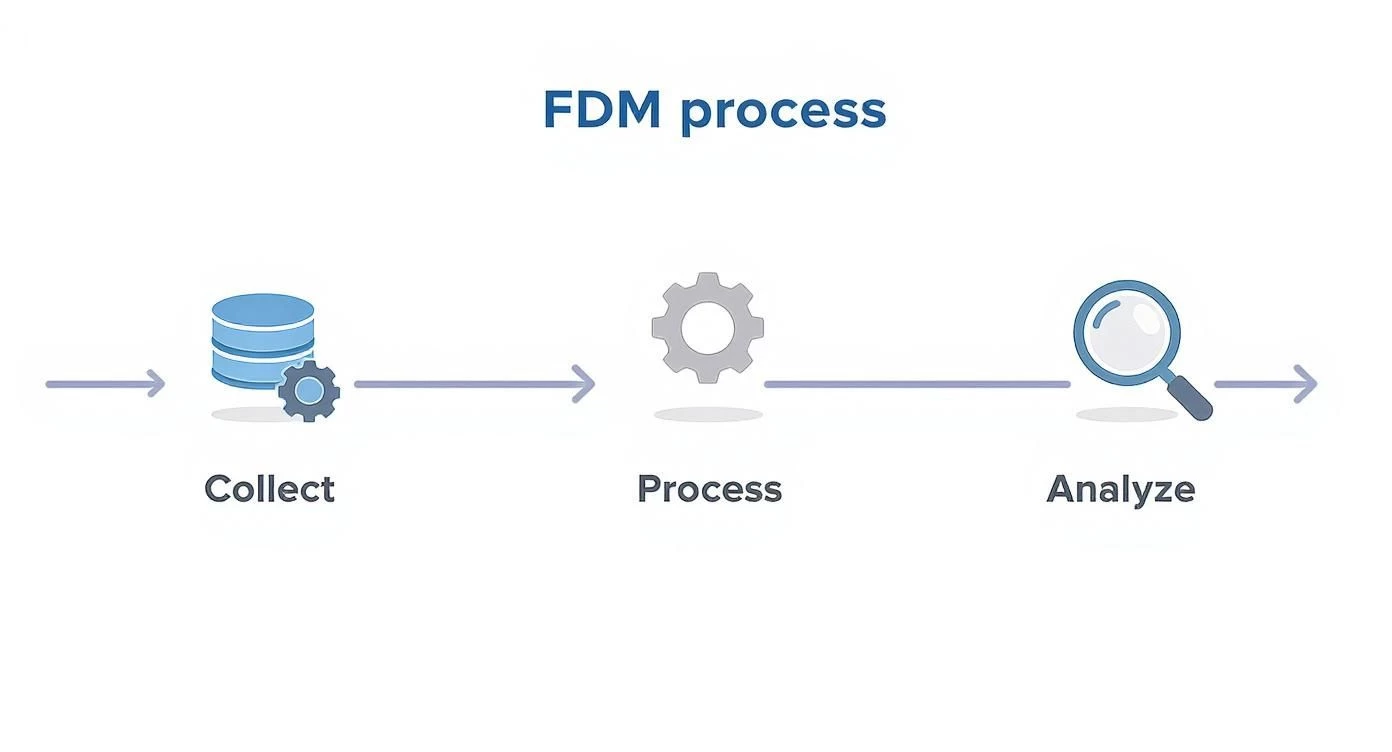
As you can see, today’s flight data monitoring software creates a continuous feedback loop of collecting, processing, and analyzing data, driving constant improvement.
This evolution transformed flight data from a historical record of failure into a predictive tool for success. The goal is no longer just to meet regulatory requirements but to build a resilient, data-informed safety culture that actively prevents incidents.
Modern platforms are the culmination of this entire journey. They bring together cloud computing, real-time connectivity, and powerful analytics to deliver a constant stream of insights. Today, an operator can monitor thousands of flights, flag potential hazards, and roll out corrective actions in a fraction of the time it used to take, turning data into their best defence against risk.
What To Look For In a Modern FDM Platform
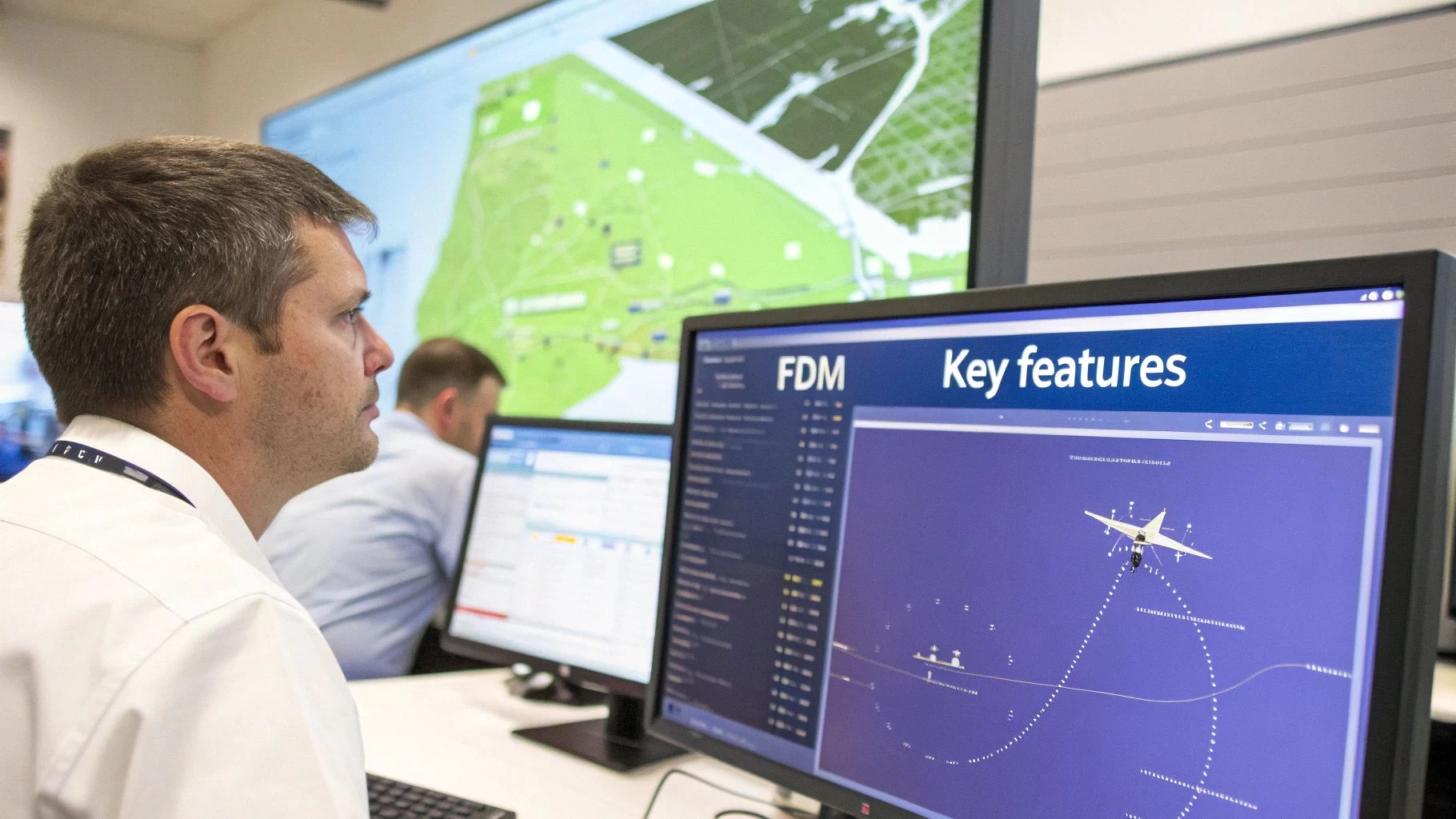
Let's be clear: not all flight data monitoring software is built the same. While basic logging is a good first step, a truly powerful platform is a suite of integrated tools that turns raw flight numbers into real operational intelligence. These features work in concert to give you the full picture of your fleet’s performance, safety, and efficiency.
At the heart of any modern FDM system is automated event detection. Think of it as a smart watchdog for your entire operation. Instead of someone having to manually comb through hours of flight logs, the software automatically flags any time a flight deviates from predefined safety limits—things like an unusually steep descent, a hard landing, or breaching a geofence.
This kind of proactive alert lets safety managers zero in on what matters most, catching potential issues before they snowball into systemic problems.
Visualizing Flight Data for Clearer Insights
Raw data in a spreadsheet is hard to make sense of. That’s where 3D flight animation and replay becomes a game-changer. It takes all that complex flight data and turns it into a clear, visual reconstruction of the entire flight. You can literally watch it unfold.
Imagine a training department using a 3D replay to show a pilot the exact moment an approach became unstable. That visual feedback is far more powerful than just reading a report. It’s an invaluable tool for corrective training, helping to reinforce procedures by answering not just what happened, but showing exactly how it happened.
Another key piece of the puzzle is the advanced analytics dashboard. This is your command center, offering a bird's-eye view of trends across your whole fleet. A good dashboard will highlight patterns you’d never spot by looking at individual flights one by one.
A powerful analytics dashboard helps you connect the dots between minor, isolated events to uncover larger, systemic risks or opportunities for improvement across your entire operation.
Reporting and Seamless System Integration
Any effective FDM software has to make compliance and reporting easier, not harder. That’s why customizable reporting tools are a must-have. They let you automatically generate the documentation needed for internal audits or regulatory bodies, covering everything from safety performance indicators (SPIs) to operational efficiency and pilot training.
For many teams, this saves a staggering amount of admin time. In fact, you can learn more about how automated flight logging and reporting can save drone teams hours every week in our detailed guide.
Finally, no system exists in a bubble. Integration with other management systems, especially a Safety Management System (SMS), is critical. This connection ensures that the insights from your FDM program feed directly into your organization’s broader safety framework, turning the software from a standalone tool into an integral part of your safety culture.
The rapid adoption of these features is fueling massive growth. The global flight data monitoring market is projected to hit USD 8.02 billion by 2033, a surge driven by the industry's relentless focus on proactive safety and operational savings.
The Real-World Benefits of Implementing FDM Systems
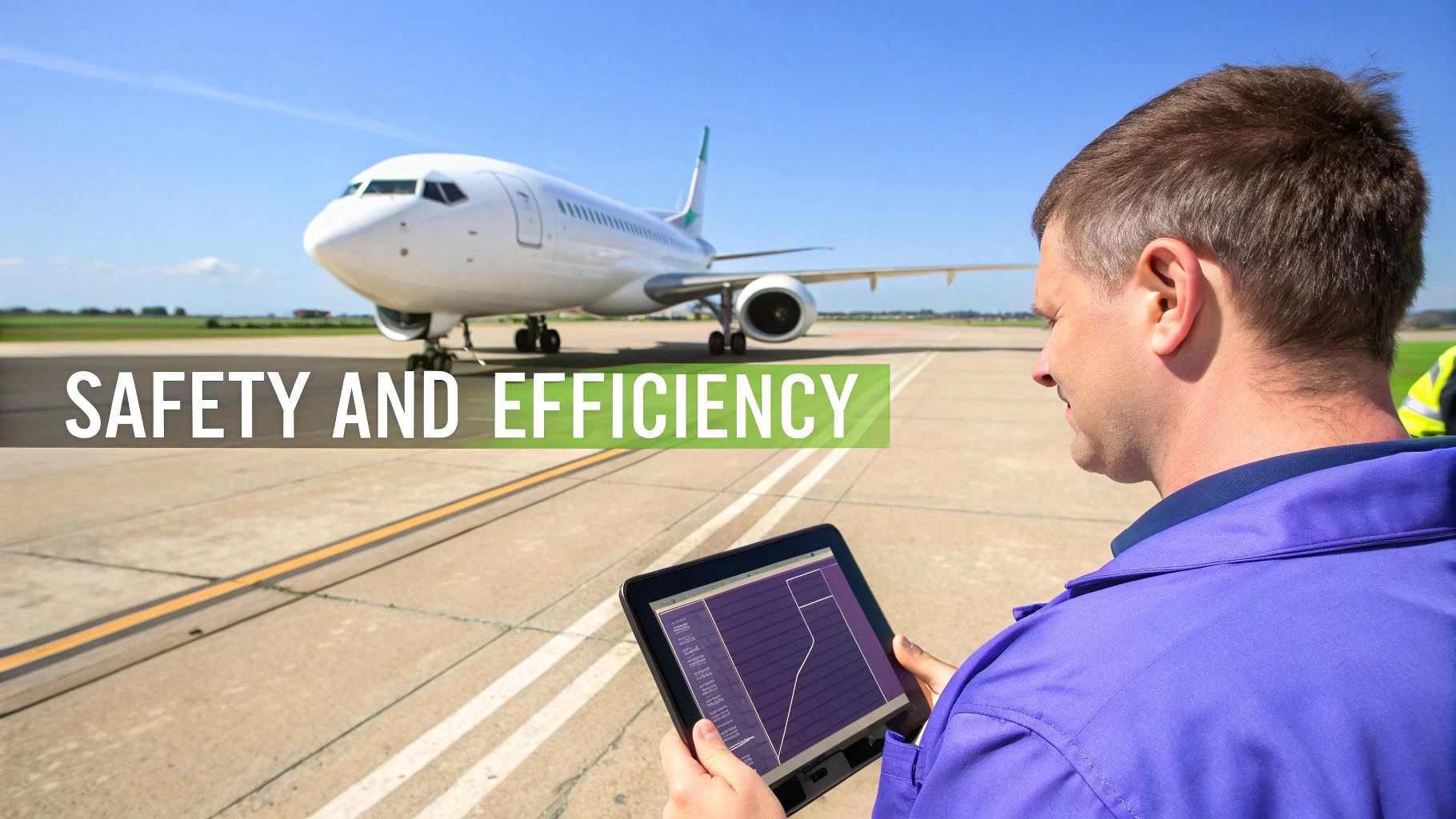
Bringing a flight data monitoring software platform on board is about more than just adding another tool to the pile. It’s about getting real, measurable results that make your entire operation stronger. Once you look past the technical specs, the true value is in how this tech transforms your safety, efficiency, and compliance.
The biggest win is a huge step up in operational safety. FDM systems let you move from a reactive, "fix it after it breaks" mindset to a genuinely proactive one. By keeping an eye on every single flight, you can catch subtle negative trends—like slightly unstable approaches or minor procedural slips—long before they snowball into a serious incident.
This proactive approach helps build a just safety culture. When the data is used to improve systems and training instead of pointing fingers, pilots and crew get actively involved in the safety process. This creates a powerful feedback loop where insights lead to real, lasting improvements.
Boosting Operational Efficiency
Beyond safety, the return on investment from FDM becomes crystal clear when you look at the efficiency gains. It turns out the same data that spots safety risks is also brilliant at highlighting opportunities to fine-tune performance and cut operational costs. It’s a classic two-for-one deal and a key reason the market is growing so fast.
Market forecasts for flight data monitoring show just how valuable this is, with some projections showing the sector could hit USD 4.88 billion by 2035. This growth is being driven by tangible results, like cutting unscheduled maintenance by up to 30% and saving 1–3% on fuel with better flight profiles. You can dig deeper into these numbers in a detailed flight data monitoring market analysis.
Here are a few key efficiency benefits:
- Fuel Savings: By looking at flight profiles, operators can figure out and roll out more efficient climb, cruise, and descent procedures across the whole fleet.
- Predictive Maintenance: The system can spot early warning signs of component wear. This means you can schedule maintenance proactively, cutting down on unexpected downtime and expensive AOG (Aircraft on Ground) situations.
- Smarter Resource Allocation: Data-driven insights help managers put training resources where they’re needed most, focusing on the specific areas where crews need a bit more support.
Simplifying Compliance and Reporting
Finally, modern flight data monitoring software takes a massive headache out of regulatory compliance. Proving you’re following international and national aviation standards usually means tons of meticulous record-keeping and endless reporting.
FDM platforms automate a huge chunk of this work, spitting out detailed, accurate reports for audits with just a few clicks. This doesn't just save countless hours of admin; it also provides a clear, auditable trail of your commitment to doing things right.
Instead of manually digging through logs and records, your system becomes the single, reliable source of truth. This makes dealing with regulatory bodies a whole lot smoother and more transparent, showing them you have a solid, data-driven handle on your operations. The end result is less time spent on paperwork and more time focused on what actually matters: running a safe and efficient organisation.
How To Choose The Right FDM Software
Picking the right flight data monitoring software isn't about finding the single "best" platform on the market. It’s about finding the best fit for your operation. What works for a massive airline fleet is going to be wildly different from what a professional drone services company needs.
To make a smart choice, you need to start by evaluating potential solutions against a few clear, practical criteria.
First up, think about aircraft and system compatibility. The software has to play nicely with your fleet, whether you're flying a single type of aircraft or a mixed bag of planes and drones. You need to be sure the platform can pull and process data from your specific avionics or flight controllers without a bunch of complicated workarounds.
Just as crucial is scalability. Your FDM software should be a growth partner, not a roadblock. Ask yourself how easily the platform can handle more aircraft, more users, and a higher volume of data as your business expands. A little foresight here will save you from outgrowing your solution in a year or two.
Evaluating Core Usability
Let's be honest, a powerful system is completely useless if your team finds it too complicated to use. User-friendliness is a massive factor, both for your pilots and your safety analysts. The interface should be intuitive enough for a safety manager to spot trends at a glance and for a pilot to understand their flight performance without needing a degree in data science.
For those with highly specialized needs, you might even consider options like building your own custom fleet management software to get a perfect fit.
The goal here is simple: choose a system that becomes a natural part of your daily workflow, not some clunky tool that just gathers digital dust. Focus on platforms with clean dashboards, easy-to-read reports, and clear data visualization.
Before you make a final decision, it's a good idea to see what different software solutions are out there and what they're built for.
Comparison of FDM Software Solutions
| Solution Type | Deployment | Best For | Key Consideration |
|---|---|---|---|
| Integrated Suite | Cloud-Based (SaaS) | Small to mid-sized operators, especially in the drone industry | Look for all-in-one features that cover more than just FDM to maximize value. |
| Standalone FDM | On-Premise or Cloud | Large airlines and MROs with dedicated safety departments | Requires significant IT resources and in-house expertise for management. |
| Custom Built | On-Premise or Private Cloud | Niche operations with unique aircraft or data requirements | High initial cost and long development time, but offers a perfect fit. |
| OEM Solution | Embedded/Cloud | Fleets using a single aircraft manufacturer (e.g., Airbus, Boeing) | Can be limiting if you operate a mixed fleet from different manufacturers. |
As you can see, the "right" choice really depends on the scale and complexity of your operations.
Total Cost Of Ownership
Finally, you have to look beyond the initial price tag. The total cost of ownership is the real number you need to consider, and it includes everything from implementation and data migration to team training and ongoing support.
A cheap upfront cost can be a mirage if it’s hiding extra fees or needs a huge investment in training and IT just to get it up and running. The global FDM market is also heating up, with regions like Asia-Pacific seeing growth topping 7% CAGR, largely because of expanding fleets and drone operations. This trend just underscores the need for solutions that are both adaptable and genuinely cost-effective over the long haul.
For drone professionals, an all-in-one solution that bundles FDM with your broader operational management often delivers the most bang for your buck. You can check out our list of the best drone operations platforms to get a feel for how these integrated systems bring everything together.
Got Questions About F-D-M Software? We've Got Answers
Even after seeing all the benefits laid out, you probably still have a few practical questions kicking around. That's completely normal. Let's tackle some of the most common ones that come up when operators are thinking about bringing flight data monitoring software into their workflow.
How Is FDM Different from a Traditional Black Box?
This is a great question because it gets right to the heart of what this software is all about. While both systems record flight data, they serve completely different purposes.
Think of a "black box" (or Flight Data Recorder) as a forensic tool. It’s built like a tank, designed to survive a crash so investigators can piece together what happened after a major incident. Its data is rarely, if ever, looked at otherwise.
Flight data monitoring software, on the other hand, is all about proactive health and safety checks. It’s like a daily check-up for your entire fleet. The system analyzes data from every single flight to spot trends, check that pilots are sticking to standard procedures, and flag potential risks long before they turn into something serious. Simply put, the black box tells you what went wrong; FDM helps you make sure things go right in the first place.
Is FDM Software Only for Big Airlines?
That used to be the case, but not anymore. It’s a common misconception that this technology is out of reach for smaller operations.
While the major airlines were the first to adopt FDM, things have changed a lot. Today's FDM solutions are built to scale, making them a perfect fit for everyone from regional carriers and charter companies to, you guessed it, commercial drone fleets.
The big shift came with cloud-based Software as a Service (SaaS) platforms. This model completely removed the need for clunky, expensive servers and a dedicated IT team to manage them. Now, the core benefits—better safety, improved efficiency, and easier compliance—are just as valuable and accessible for a small drone team as they are for a global airline.
How Do You Protect Pilot Privacy in an FDM Program?
Protecting pilot privacy isn't just a nice-to-have; it's the absolute cornerstone of a successful FDM program. If your flight crews don't trust the system, it's dead in the water. That's why modern FDM is built on a non-punitive, or "just culture," foundation.
A just culture is all about creating an environment where people feel safe to report events and learn from them without the fear of being blamed. The focus is on fixing systems, not pointing fingers at individuals.
This approach is put into practice through a few key methods:
- Data De-identification: The data is usually aggregated and anonymized. This shifts the focus from "who did what" to "what are the trends across our entire fleet."
- Strict Access Control: Only a very small, designated group of people can access identifiable data, and only under very specific circumstances, like a significant safety event. These rules are often set in stone with pilot unions and regulators.
- A Focus on the Big Picture: The goal is to use data to improve training, tweak procedures, and make the whole operation safer for everyone. It's not about catching someone for a minor, unintentional mistake.
What Does the Implementation Process Look Like?
Getting started with FDM software is a lot more straightforward than you might think. The process will vary a bit depending on the provider, but it generally follows a clear, logical path. A good provider won't just sell you software; they'll partner with you to make sure it's a success.
It all starts with sitting down and defining what you want to achieve with the program. From there, the steps usually look something like this:
- Data Integration: First, you'll set up a secure, automatic way to get the flight data from your drones over to the software platform.
- System Configuration: Next, the software gets tailored to your specific operation. This means setting up the right alerts and thresholds based on your drone types and the kind of flying you do.
- Team Training: To get everyone on board, your key people—like safety managers, analysts, and pilots—will be trained on how to use the system and make sense of the data.
- Phased Rollout: Finally, the system is rolled out across the fleet. It often starts with a smaller trial group to smooth out any wrinkles before going live for everyone.
This step-by-step approach ensures the flight data monitoring software becomes a natural part of your daily operations, delivering real value from day one.
Ready to see how a modern, integrated platform can transform your drone operations? Dronedesk combines flight data monitoring with comprehensive fleet, team, and job management tools to enhance safety and boost productivity. Discover a smarter way to manage your flights at https://dronedesk.io.
 Drone Risk Assessment Controls That Work in the Field →
 FAA Drone License Costs Beyond the Knowledge Test →
 Drone Part 107 Operations: When a Waiver May Be Needed →
 Drone Operating Rules for Managing Contractors and Employees →
 BVLOS Drone Requirements for Building a Safety Case →
 Drone Pilot Test Mistakes That Cost Candidates Marks →
 FAA 107 License vs Part 107 Certificate: What’s the Difference? →
 Drone Airport Rules: A Field Checklist for Site Assessments →
 FAA Part 107 Record-Keeping Rules for Commercial Teams →
 How to Review a DJI Flight Log After an Unexpected Event →