
Fire Dept Drone - Boost fire dept drone Awareness & Safety
Think of a fire dept drone as a specialized unmanned aircraft, kitted out with tools like high-definition thermal cameras. It's the ultimate "eye in the sky," giving firefighters an instant aerial view of an emergency. This intel is gold for incident commanders, helping them see through thick smoke, find victims, and spot hazards without putting boots on the ground unnecessarily.
Why Drones Are the Modern Firefighter's Partner
Picture this: you arrive at a raging fire in a four-story building. Before the first hose line is even charged, a drone is already in the air, streaming live thermal video straight to the incident commander's tablet.
This isn't some futuristic movie scene; it's the new reality for fire services across the globe. That video feed instantly shows where the fire is hottest, how it's spreading through the structure, and might even pick up the heat signature of a trapped person on an upper floor. This kind of real-time intelligence changes the game completely.
Instead of sending firefighters into a building blind, commanders can now base their decisions on a full, 360-degree picture of the scene. It's a massive leap from educated guesswork to data-driven strategy.
Transforming Emergency Response from the Air
A fire dept drone program isn't just about getting a shiny new piece of tech. It’s about fundamentally changing how departments tackle emergencies. The biggest win is a massive boost in situational awareness, which creates a ripple effect across the entire operation.
- Improved Safety: Drones can spot structural weaknesses, potential collapse zones, or hidden dangers like hazardous materials. This keeps firefighters out of harm's way until the scene is better understood.
- Faster Decision-Making: With a live bird's-eye view, incident commanders can deploy crews and equipment more effectively, predict the fire's next move, and coordinate teams with surgical precision.
- Increased Efficiency: Jobs that used to take hours—like searching a large wooded area or inspecting a sprawling commercial roof—can now be done in minutes.
A drone is your high-tech lookout, hovering in places no human could safely go. It provides a persistent watch during the day and, crucially, at night when manned aircraft are often grounded. This constant oversight means no critical change on scene goes unnoticed.
This guide is your practical roadmap to getting a fire dept drone program off the ground. We’ll walk through the essential missions where drones are already saving lives, get real about their benefits and limitations, and help you navigate the tricky world of regulations.
We'll show you how to build a program from scratch and completely transform how your department operates and keeps your team safe. As you're about to see, the ways drone operations are transforming emergency services are both profound and incredibly practical, giving you a clear advantage when every second counts.
Defining Core Missions for Your Drone Program
A fire dept drone is a whole lot more than just a camera with wings; it's a dynamic, multi-purpose tool that completely changes the game at an emergency scene. The first step in building a successful program is nailing down the core missions your drones will fly. Each task is a critical piece of the operational puzzle, fitting together to create a safer, more effective response.
The rapid adoption of this technology isn't surprising when you see what it can do. In the United States alone, the firefighting drones market hit USD 302.7 million in 2024 and is on track to reach USD 638 million by 2033. This boom is driven by huge leaps in drone capabilities and the growing recognition that real-time data is essential for good decision-making. You can discover more insights about the growing firefighting drone market and its impact on the industry.
This image gives you a great overview of how a well-structured drone program ties its core missions, safety protocols, and key benefits together.

As you can see, it's all connected. Specific missions directly feed into better safety and smarter operations for the entire department.
A solid drone program is built on a foundation of well-defined missions. While every department's needs are different, most programs start with a core set of tasks that offer the biggest immediate payoff.
| Mission Type | Strategic Value | Required Payload or Technology |
|---|---|---|
| Scene Assessment & Size-Up | Provides immediate, 360-degree situational awareness for the Incident Commander. | High-resolution RGB camera, zoom camera. |
| Search and Rescue (SAR) | Rapidly scans large areas to locate missing persons or trapped victims, day or night. | Thermal imaging camera, loudspeaker. |
| Structure Fire Inspection | Safely identifies hot spots, roof integrity, and fire spread from a standoff distance. | Thermal imaging camera, high-resolution zoom camera. |
| HazMat Incident Monitoring | Assesses leaks, identifies container placards, and tracks vapor clouds without risking personnel. | High-resolution zoom camera, specialized gas sensors (optional). |
These missions form the backbone of a fire service drone program, each one leveraging technology to put safer, more effective tools in the hands of first responders.
Unlocking 360-Degree Situational Awareness
The absolute number one job for any fire dept drone is delivering instant, all-encompassing situational awareness. Think of it as the incident commander's eyes in the sky, offering a live, bird's-eye view that crews on the ground could never get. This perspective is priceless from the second you arrive on scene.
A drone can be in the air in seconds to get a look at a large commercial building, find access points, spot civilians, and track how the fire is moving—all before the first firefighter even steps off the truck. This aerial intelligence lets command make quicker, smarter calls about where to send people and what to tackle first.
A drone transforms the unknown into the known. It provides a real-time, interactive map of the incident, allowing commanders to see the entire battlefield, not just the small piece directly in front of them.
This immediate overview helps spot hidden dangers like downed power lines, unstable walls, or unseen chemical spills, stopping injuries before they even have a chance to happen.
Enhancing Search and Rescue Operations
When you’re in a search and rescue (SAR) scenario, the clock is your biggest enemy. Drones kitted out with thermal imaging cameras are genuine game-changers here, slashing search times and bumping up the odds of a good outcome. These powerful sensors can see right through smoke, darkness, and even thick woods to pick up a person's heat signature.
Picture a nighttime search for a lost hiker. A ground team could spend hours sweeping a small patch of forest, but a thermal drone can scan acres in just minutes. It’s not just theory; a fire department in Tennessee found two lost hunters, one a nine-year-old kid, in a dense forest less than five minutes after getting their drone airborne.
This isn't just for the wilderness, either. In cities, drones can quickly scan multi-story buildings or rubble piles after a collapse, pointing rescuers directly to where survivors might be.
Monitoring Hazardous Materials Incidents
Hazmat scenes are uniquely dangerous for first responders. The drone’s ability to work from a safe distance makes it an essential tool for these high-stakes calls. Instead of sending a crew into a potentially toxic "hot zone" just to see what’s going on, you send the drone in first.
Fitted with a good zoom camera and maybe some specialized sensors, the drone can:
- Read placards and container labels to figure out what chemicals you're dealing with.
- Gauge the size of a leak or spill from a safe standoff distance.
- Track the direction and size of a vapor cloud to help set up proper evacuation zones.
This remote recon keeps firefighters out of harm's way while feeding command the critical intel needed to build a safe, effective plan. It flips the script from reacting to a threat to proactively managing it.
Understanding the Real Benefits and Limitations
To build a drone program that lasts, you need an honest look at what a fire dept drone can and can't do. It's easy to get caught up in the cool tech, but understanding the practical limits is what turns a neat idea into a reliable tool on the fireground. The real win isn't just owning a drone; it's knowing exactly when and how to use it to make a real difference.
The upsides are huge, no doubt. Getting a live eye in the sky is a massive boost for firefighter safety. A drone can spot potential collapse zones or check the stability of a roof before crews ever step foot inside. In that sense, it acts like a forward observer, keeping your people out of harm's way.
This aerial view also speeds everything up. Incident commanders get the full picture instantly, helping them push resources where they're needed most, track how a fire is moving, and coordinate teams on the ground way more effectively.
The Game-Changing Upside of Aerial Intelligence
At its core, a fire dept drone is about gathering critical information from a safe distance. This intel empowers everyone, from the chief to the firefighter on the nozzle, leading to safer, smarter operations. These aren't just theories—they're being proven on scenes every single day.
Here are the key operational benefits:
- Enhanced Firefighter Safety: Drones can scout ahead in nasty environments, inspect buildings that are falling apart, and monitor wildfires from afar, slashing the time our people spend exposed to danger.
- Faster Search and Rescue: A thermal drone can clear a huge area for a missing person in minutes, a job that could take a ground team hours. That speed can literally be the difference between a rescue and a recovery.
- Smarter Resource Allocation: When you can see the whole incident unfold, you can send engines and crews to the most critical spots, making every move count instead of wasting time and effort.
- Detailed Post-Incident Analysis: The high-resolution photos and videos from a drone are gold for fire investigations, after-action reviews, and planning for the next one.
A drone fundamentally changes how you see an incident. You stop guessing and start seeing. Commanders can make critical calls based on hard visual evidence, not just gut feelings.
This shift from reacting to what you think is happening to acting on what you know is happening is one of the strongest arguments for bringing drones into the modern fire service. It gives you a layer of intelligence you just couldn't get before.
Facing the Practical Challenges and Limitations
But let's be real—a fire dept drone isn't a magic wand. Knowing its limits is vital if you want to create realistic operational plans and avoid relying on a tool that might not be available or right for the job. Think of these challenges not as roadblocks, but as things you need to plan for.
Here are the most common hurdles you'll face:
- Battery Life and Flight Time: Most off-the-shelf drones give you about 30-50 minutes in the air. This means you have to be on top of your battery game, with plenty of charged spares ready to go and a solid plan for swapping them out to keep eyes in the sky.
- Weather Restrictions: A drone is still an aircraft, and weather is the boss. High winds make flying sketchy, and heavy rain or snow can fry the electronics or blind the camera. Every department needs clear go/no-go rules based on the weather.
- Signal Loss and Interference: Flying in a downtown core with tall buildings (an "urban canyon") or near sites with a lot of radio frequency noise can cause you to lose the link to your drone. Your pilots have to be trained on exactly what to do when that happens.
- Airspace Conflicts: Sharing the sky with news choppers or air tankers during a wildfire is a serious safety issue. You absolutely must have rock-solid coordination and communication with every other aircraft in the area.
Success comes from acknowledging these limitations head-on. It means training pilots to be battery-management wizards, writing SOPs that spell out weather minimums, and having bulletproof communication protocols to keep your drone from conflicting with other aircraft. By planning around these challenges, you ensure your drone is a trusted asset when things go sideways.
Navigating FAA Rules and Building Ironclad SOPs
Putting a fire dept drone in the air is a lot more complicated than just taking off from the station's parking lot. A truly successful—and legal—drone program is built on two things: a deep understanding of aviation regulations and a set of rock-solid internal policies. Without that foundation, even the most kitted-out drone is just an expensive paperweight.
Every single flight has to follow the rules set by the Federal Aviation Administration (FAA). For fire departments and other public safety agencies, there are two main paths to get your drones flying legally. Figuring out which one is right for you is the first critical step.
Choosing Your Legal Flight Path
The two primary options are flying under Part 107 rules or getting a Certificate of Authorization (COA). Each has its own lane, and they’re suited for different operational speeds and needs.
-
Part 107 Operations: This is the standard rulebook for commercial drone pilots. It means each of your pilots needs to pass a certification test and stick to a clear set of rules, like keeping the drone in sight and not flying over people. For many departments, it's the fastest way to get a program off the ground.
-
Certificate of Authorization (COA): A COA is a formal agreement between your department and the FAA. It gives you much broader authority than Part 107, potentially allowing for things like night flights or flying beyond visual line of sight without needing a special waiver. It's a more involved application process, but the operational freedom it provides can be a game-changer. You can get a full breakdown of the FAA Certificate of Authorization and what it means for your agency.
Here's a simple way to think about it: Part 107 is your standard driver's license—it comes with clear, universal rules of the road. A COA is more like the special permit for an ambulance or fire engine, giving you permission to bend certain traffic laws during an emergency, as long as you do it safely and with good reason.
Building Your Program's Rulebook with SOPs
Once you've got your FAA path sorted, the real work begins internally. Your Standard Operating Procedures (SOPs) are the lifeblood of a safe, effective fire dept drone program. These are the detailed, written instructions that dictate every part of your drone operations, ensuring there's zero guesswork when the pressure is on.
Think of your SOPs as the ultimate pre-flight checklist for your entire program, guaranteeing consistency and safety on every call. These documents are absolutely non-negotiable for building trust within your department and with the community you serve. The investment in this tech is exploding for a reason; the global market is projected to jump from USD 818.1 million in 2025 to nearly USD 3,966.1 million by 2035.
Your SOPs should always be a living document, but they need to cover a few core areas right from the start.
Essential SOP Components:
- Pilot Responsibilities: Who is authorized to fly? What training do they need? What are their exact duties before, during, and after a flight?
- Mission Protocols: Lay out the step-by-step procedures for different calls. Sizing up a structure fire looks very different from a search and rescue mission.
- Communication Chains: How does the drone pilot talk to the Incident Commander, ground crews, and any other aircraft in the sky? Detail it all.
- Emergency Procedures: What happens when things go wrong? Create clear, actionable plans for a lost comms link, a critical battery failure, or another aircraft entering your airspace.
- Data Management: How will you record, store, and secure flight logs, video, and photos? This is crucial for maintaining evidence integrity and protecting privacy.
By building these documents from the ground up, you ensure every pilot operates under the same high standards. That's how you turn a fire dept drone program into a reliable, professional, and indispensable asset on the fireground.
Choosing the Right Drones and Training Your Pilots

The success of any fire dept drone program really comes down to two things: having the right tools for the job and having sharp pilots who can fly them under pressure. The tech is only half the battle. Your people have to be just as capable and reliable as your hardware, and that means being smart about both what you buy and how you train.
Picking a drone isn't like ordering a new tool off the shelf. The mission always dictates the machine. A well-rounded fleet often includes a few different types of drones, each one ready to play a specific role when the call comes in.
This tech is becoming a core part of the job, and the market reflects that. The firefighting drone market hit an estimated USD 2.2 billion in 2025 and is projected to climb to USD 6.3 billion by 2035. That growth is being driven by departments everywhere using drones for fire detection, live monitoring, and operational support.
Selecting the Right Drone for the Mission
First things first: you have to match the drone's capabilities to the kinds of calls your department runs most often. Not all drones are built the same, and honestly, the payload—the cameras and sensors it carries—is often more critical than the drone itself.
Think about these key factors when building out your fleet:
- Thermal Imaging Quality: For structure fires or a search and rescue mission, a high-resolution thermal camera is non-negotiable. It’s what lets your pilots see heat signatures right through smoke and darkness, spotting hotspots or finding a victim.
- Flight Time and Durability: Look for aircraft that can stay airborne for at least 30-45 minutes. They also need to be tough enough to handle a bit of wind and rain.
- Portability and Deployment Speed: How fast can you get eyes in the sky? A smaller, quick-deploy drone is perfect for that initial scene size-up, while a bigger, more powerful model can take over for longer operations.
- Payload Versatility: Can you swap out payloads? You might need a powerful zoom camera for a HazMat incident today and a loudspeaker to talk to a trapped person tomorrow.
Beyond Basic Flight Training
Just because someone has a pilot certificate doesn't mean they're ready for an emergency scene. The FAA's Part 107 license is the absolute minimum—the real work starts after that. True readiness comes from a tough, ongoing training program that goes way beyond basic flying and into high-stress, scenario-based drills.
This is where a lot of programs stumble. A pilot who can fly beautifully in an empty field might freeze up when they’re suddenly dealing with a chaotic fireground, constant radio chatter, and urgent requests from the Incident Commander.
Training has to feel real. Pilots need to practice reading thermal data from a burning building, giving clear and concise updates to command, and making critical decisions with the information they have, just like they would on an actual call.
For departments looking to level up, exploring programs offered by specialized drone pilot training academies is a great way to build these advanced, real-world skills. This isn't just a "nice-to-have"; it's essential for keeping your operations safe and legal.
Developing Proficient Public Safety Pilots
A solid training program for a fire dept drone pilot needs to be structured and continuous. It’s about building the muscle memory and confidence to handle complex situations without hesitation.
Your training curriculum should cover these bases:
- Foundational Skills: Start with FAA Part 107 prep, basic flight mechanics, and getting to know your specific drone inside and out.
- Emergency Scenarios: Run realistic drills based on your most common incidents—structure fires, wildland calls, vehicle accidents, and search missions.
- Sensor Operation: Pilots need to become experts with thermal and zoom cameras. They must understand their limits and know how to interpret the intel they provide.
- Crew Resource Management: Train pilots to plug directly into the incident command structure. They need to communicate effectively with crews on the ground and command staff.
At the end of the day, you’re not just training people to fly drones. You’re creating intelligence assets who can deliver information that leads to safer, better outcomes on every single scene.
How a Drone Platform Streamlines Your Operations

Running a successful fire dept drone program is about so much more than just flying. Behind every mission, there's a mountain of administrative work: keeping pilot licenses current, logging flight hours, tracking equipment maintenance, and poring over data to see what can be done better next time. Trying to juggle all that with spreadsheets, paper logs, and random files is a recipe for a logistical headache.
This is where a dedicated drone operations platform comes in. Think of it as the digital command center for your entire program, pulling all those scattered pieces into one organized, easy-to-use system. It cuts through the admin chaos and brings real operational clarity.
A solid platform takes the tedious but vital tasks off your plate. It swaps manual data entry for an automated system that makes compliance and reporting a breeze, freeing up your pilots to do what they do best: train and fly missions.
Centralizing Program Management
The biggest win from a drone management platform is creating a single source of truth for your whole fire dept drone operation. It connects your people, your aircraft, and your missions in one place. This unified view is absolutely critical for maintaining accountability and ensuring every flight is safe and by the book.
Here's what that typically looks like:
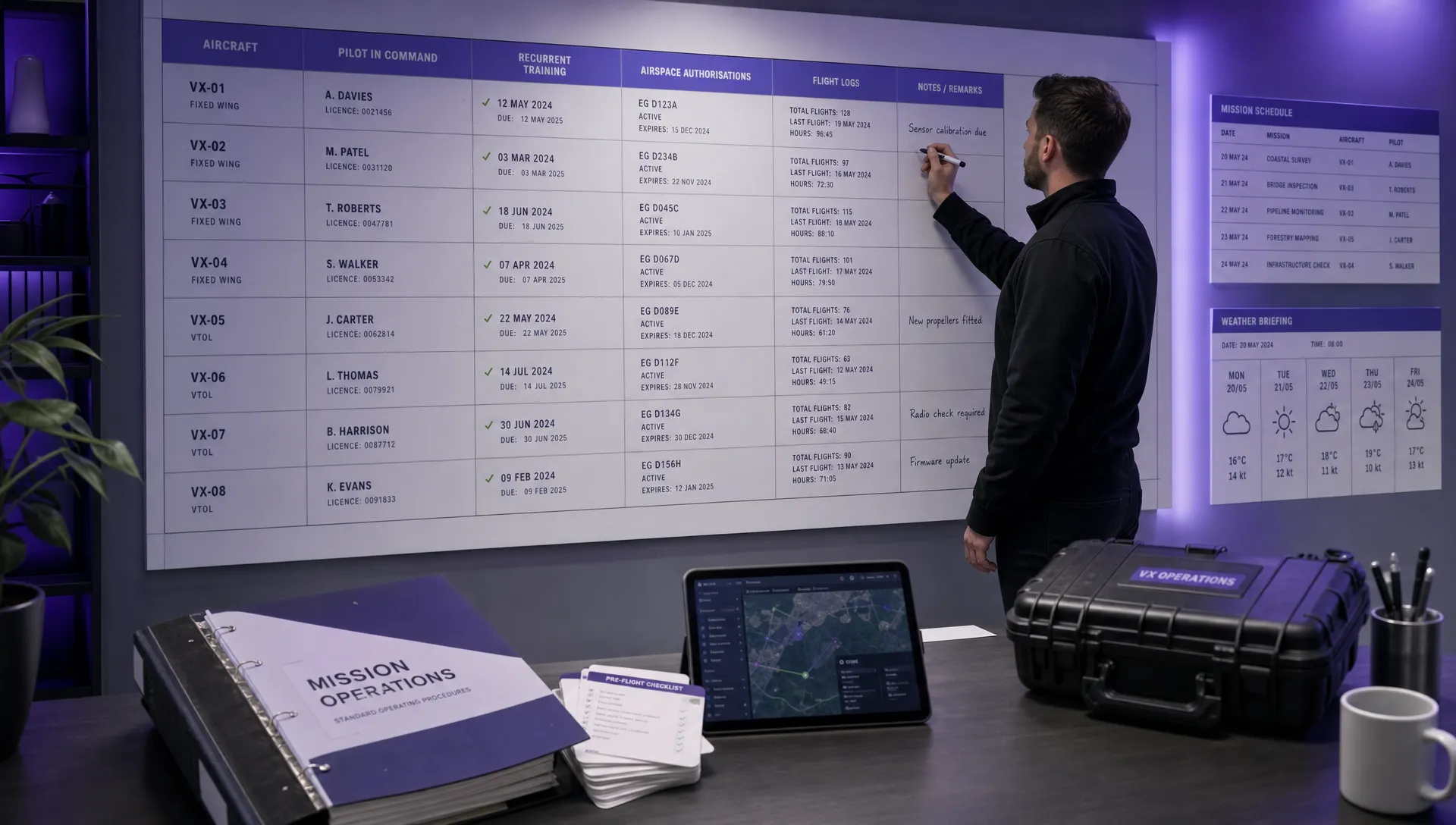
- Pilot and Team Management: You get centralized profiles for every pilot, tracking their certifications, training history, and flight currency. The system can even send automated alerts when a Part 107 license is about to expire, heading off compliance problems before they start.
- Fleet and Equipment Tracking: Every drone, battery, and sensor gets its own detailed log. You can track flight hours on an airframe to know when it needs service, monitor battery health to prevent in-flight failures, and schedule maintenance to keep your gear ready to go at a moment's notice.
- Automated Flight Logging: Flights are logged automatically, capturing all the key data like location, duration, and pilot in command. This gets rid of paper logs for good and builds a rock-solid record for FAA reporting or internal reviews.
A dedicated platform acts as the program’s digital backbone. It ensures that critical compliance data, from pilot certifications to aircraft maintenance, is always accurate, accessible, and ready for review.
This isn’t just about making life easier; it's about managing risk. When every detail is tracked and accounted for, you build a more professional, accountable, and defensible program from the ground up.
Automating Compliance and Reporting
Staying on the right side of FAA regulations is non-negotiable for any public safety drone program. A management platform simplifies this by building compliance checks right into your daily workflow. For instance, pre-flight checklists can be digitized and made mandatory, forcing pilots to complete a risk assessment before every launch.
This automation also makes reporting a whole lot easier. Need to generate a report for a grant application, justify your budget, or build an after-action review? It's just a few clicks away. With all your mission data—from flight hours to equipment usage—stored in one place, you can easily prove the program's value with hard numbers.
This data-driven approach is key to securing funding and showing a clear return on investment. If you're looking for the right fit, exploring the features of the best drone operations platform can provide a clear path forward for your department's needs.
Answering Your Key Questions About Fire Drones
When any fire department starts looking into a drone program, a few key questions always come up. Moving from "this seems like a good idea" to launching a fully operational asset for your community means getting straight answers on everything from the budget to public trust. The best way to build a program that lasts is to tackle these concerns head-on from the very beginning.
Most of the questions we hear fall into four buckets: the real cost of getting started, the actual time commitment for training, how to handle sensitive data, and managing how the public feels about drones flying overhead. Let's break each one down.
How Much Does a Drone Program Cost?
There's no single price tag because the cost is tied directly to what you need the drone to do. A basic setup with a portable, quick-to-deploy drone for scene assessment might start in the $5,000 to $10,000 range. But if you're building a more robust program with advanced thermal imaging drones, plenty of batteries, and specialized payloads, you could easily be looking at $30,000 to $50,000 or more.
And don't forget the costs that aren't on the box:
- Training and Certification: You have to budget for initial pilot certification (Part 107) and, more importantly, continuous, scenario-based training.
- Software and Data Management: A drone operations platform is a must-have for logging flights, keeping on top of maintenance, and proving compliance.
- Maintenance and Insurance: Just like any other piece of fire apparatus, drones need regular upkeep and solid liability coverage.
What Are the Real Training Requirements?
Getting an FAA Part 107 license is just the ticket to the dance; it’s not the dance itself. A truly proficient public safety pilot needs hundreds of hours of hands-on flight time that simulates the chaos of a real-world emergency. This isn't a skill you can just "check the box" on and forget about—it demands constant practice to stay sharp.
A common mistake is underestimating the training commitment. A pilot who only flies once a month will not have the muscle memory or the calm to operate effectively during a high-stress, middle-of-the-night incident. Regular, documented training isn't just a good idea; it's non-negotiable for a safe and effective program.
Is the Data We Collect Secure?
Absolutely. Drone footage from an emergency scene is sensitive. It can capture images of private property, patient information, or critical infrastructure. Your department needs a rock-solid data management policy that clearly defines how video is stored, who can access it, and how it’s used for after-action reviews or investigations. Using secure, encrypted drones and software platforms is crucial for protecting this data and maintaining the public's trust.
How Do We Handle Public Perception?
Transparency is everything. The public can be wary of government drones, so you have to be open about your program from day one. Explain why you are using a fire dept drone—to find missing people faster, to keep firefighters out of harm's way, and to manage incidents more effectively. Many departments build confidence by creating a public webpage with their drone policies and usage statistics, showing the real value the program brings to the community.
Ready to bring clarity and control to your drone operations? Dronedesk provides the end-to-end management platform you need to track pilots, manage your fleet, and ensure every flight is safe and compliant. Simplify your drone program management with Dronedesk.
 FAA Drone Licence Requirements for Commercial Pilots →
 FAA BVLOS Waivers Granted: What Successful Cases Show →
 How to Export DJI Flight Logs for Incident Reviews →
 Drone Safety and Legal Duties for Business Operations →
 EASA Drone Regulations: Open, Specific and Certified Categories →
 What the BVLOS ARC Report Means for UAS Operators →
 Free Drone Pre-Flight Checklist for Commercial Missions →
 Contingency Volume and Flight Risk Buffer Explained →
 FAA Policy Changes That Commercial Drone Teams Should Track →
 Drone Night Flying Rules and Pre-Flight Checks →