
Mastering field service management best practices to boost efficiency
Managing a fleet of drones isn't like managing a fleet of trucks. Standard field service management playbooks, built for ground-based teams, often fall short when applied to the unique world of unmanned aerial vehicles (UAVs). The operational reality for drone pilots and managers involves a distinct set of challenges, from navigating complex airspace regulations and meticulous pre-flight checks to mission-critical flight planning and specialized equipment maintenance. A misplaced screwdriver on a truck route is an inconvenience; a miscalibrated sensor on a drone is a mission failure.
This is why a specialized approach to field service management best practices is not just beneficial, it's essential for safety, compliance, and profitability. The generic advice simply doesn’t account for the high-stakes environment of aerial operations. Ignoring these differences leads to inefficient workflows, increased operational risk, and missed business opportunities.
In this detailed roundup, we will break down ten actionable best practices specifically adapted for the drone industry. You will learn how to implement systems for:
- Centralized fleet and asset tracking
- Intelligent flight planning and mission optimization
- Real-time crew scheduling and resource allocation
- Data-driven performance analytics and reporting
These strategies are designed to provide a clear framework for building a more resilient, scalable, and successful drone operation. Whether you are a solo operator looking to professionalize your services or a manager overseeing an enterprise fleet, these insights will help you establish a foundation for efficient and compliant drone services now and in the future. We will move beyond theory, offering practical steps and real-world examples to guide your implementation.
1. Centralized Fleet Management and Asset Tracking
Effective field service management for drone operations starts with knowing exactly what assets you have, where they are, and their operational readiness. Centralized fleet management moves beyond disjointed spreadsheets and manual logs, creating a single source of truth for your entire drone inventory. This unified approach provides real-time visibility into the status of every drone, battery, and piece of specialized equipment, from LiDAR scanners to thermal cameras.
By tracking usage, maintenance schedules, and component health in one place, operators can proactively address issues before they cause project delays or safety incidents. This system is crucial for ensuring that every team heading into the field has reliable, properly maintained equipment, which directly impacts mission success and client satisfaction.

Why This Practice Matters
Scattered asset information leads to operational chaos. A pilot might grab a battery with degraded health, a drone might be overdue for critical firmware updates, or a high-value sensor could be left behind. Centralizing this data prevents such costly mistakes. For example, large utility companies using platforms like Dronedesk can manage hundreds of drones across different regions, receiving automated alerts that prevent unplanned downtime. This is one of the most fundamental field service management best practices for scaling a drone program.
Key Takeaway: Centralized tracking isn't just about inventory; it's about operational intelligence. It transforms asset data into actionable insights for maintenance, scheduling, and risk management.
Actionable Implementation Tips
To put this into practice, start with a consistent organizational system.
- Standardize Naming: Create and enforce a clear asset tagging and naming convention for every item. For example:
[DRONE-MODEL]-[ID]-[PURCHASE-YEAR]. - Set Smart Maintenance Triggers: Base maintenance alerts on flight hours or battery cycles, not just calendar dates, for a more accurate reflection of wear and tear.
- Conduct Regular Audits: Schedule quarterly physical inventory checks to reconcile your digital records with your actual assets, catching discrepancies early.
- Document Everything: Log all damage, repairs, and part replacements. This historical data is invaluable for identifying trends and building predictive maintenance models.
For a deeper dive into organizing your equipment, explore these asset tracking best practices to build a solid foundation.
2. Intelligent Flight Planning and Mission Optimization
Modern drone operations hinge on efficiency and safety, which are established long before a drone takes flight. Intelligent flight planning involves using advanced software to design missions from the ground up, calculating optimal paths, estimating flight times, and assessing airspace constraints before deployment. This technical approach moves beyond manual checks, integrating geospatial data with regulatory requirements to ensure missions are executed flawlessly.
This process significantly reduces on-site planning time and minimizes the risk of costly mistakes, such as flying into restricted zones or failing to capture the required data in a single flight. By front-loading the technical work, teams can focus on execution in the field, knowing their mission is built on a solid, compliant foundation.

Why This Practice Matters
Improper planning leads to wasted time, repeat flights, and safety violations. A surveyor might miss a section of land due to a poorly calculated grid pattern, or a utility inspection team might discover an unexpected no-fly zone only after arriving on-site. Intelligent planning software prevents these issues by providing a clear operational picture. For instance, enterprise operators have seen up to a 70% reduction in flight re-planning incidents by using mission templates. This shift from reactive to proactive planning is a core component of effective field service management best practices.
Key Takeaway: Intelligent flight planning is not just about drawing a line on a map; it's about building a predictable, repeatable, and safe operational model that maximizes efficiency and minimizes risk.
Actionable Implementation Tips
To effectively integrate this practice into your workflow, focus on standardization and continuous improvement.
- Create Mission Templates: For recurring jobs like inspections or surveys, build and save mission templates with pre-set parameters for altitude, speed, and camera settings.
- Use Simulation Mode: Before deploying a real asset, run complex missions in a simulator to identify potential issues with flight paths or camera angles in a zero-risk environment.
- Build in Contingencies: Add alternate landing points or contingency waypoints to your flight plans, especially for missions in areas with unpredictable wind or weather conditions.
- Document Variances: After each flight, compare the planned performance (flight time, battery usage) against the actual results. Use this data to refine your future estimation models for greater accuracy.
For a complete guide to building better missions, review these fundamental principles of drone flight planning and start implementing them today.
3. Comprehensive Compliance and Regulatory Documentation
Operating a commercial drone program means navigating a complex web of regulations. A core best practice is maintaining systematic, audit-ready documentation for all flight operations, pilot certifications, and airspace authorizations. This creates a bulletproof record that proves adherence to FAA Part 107, local laws, and any industry-specific mandates, protecting your organization from liability.
This managerial discipline moves compliance from a reactive scramble to a proactive, organized process. It ensures that every mission is planned and executed within legal boundaries, which is essential for risk management and building a reputation for professionalism and safety.

Why This Practice Matters
Inadequate or disorganized records can result in hefty fines, suspended operations, and significant legal exposure in the event of an incident. Government contractors, for example, must meet stringent airworthiness and safety documentation requirements to maintain their contracts. Similarly, major utility companies operating across multiple states rely on integrated logging to uphold FAA Part 107 compliance. This commitment to documentation is one of the most critical field service management best practices because it directly impacts your license to operate and can even lead to lower insurance premiums from providers who recognize compliant operators.
Key Takeaway: Meticulous documentation is not just about avoiding penalties; it's about building a foundation of operational integrity that stakeholders, clients, and regulators can trust.
Actionable Implementation Tips
To build a robust compliance framework, focus on automation and consistency.
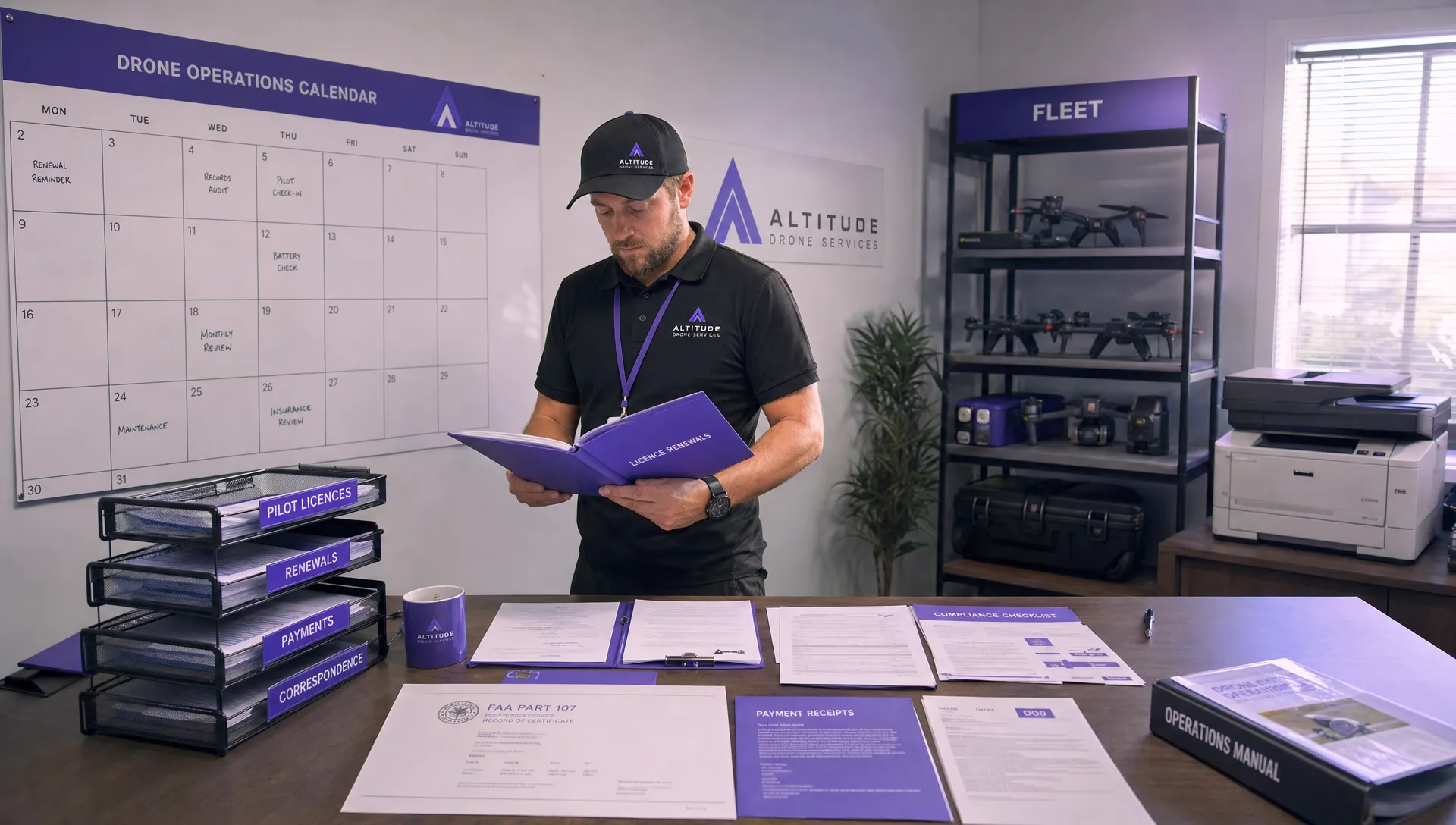
- Create a Compliance Calendar: Establish a centralized calendar to track renewal dates for pilot certifications, aircraft registrations, and airspace authorizations.
- Automate Regulatory Monitoring: Use tools to receive alerts about new or updated regulations in your specific operating regions, ensuring you're never caught off guard.
- Digitize Compliance Checklists: Implement mandatory pre-flight and post-flight digital checklists that pilots must complete, creating an automatic audit trail for every mission.
- Store Documents Securely: Maintain all compliance records in a centralized, cloud-based system with redundant backups to guarantee availability during an audit.
For a closer look at how modern software simplifies this process, see how a dedicated regulatory management tool for drones can centralize your documentation.
4. Real-Time Crew Scheduling and Resource Allocation
Manual scheduling using spreadsheets or calendars quickly breaks down as drone operations scale. Dynamic, real-time crew scheduling automates the complex process of assigning the right pilots and support crew to the right jobs. This approach considers multiple variables simultaneously, including individual certifications, skill sets, real-time availability, and proximity to job sites, to optimize assignments and maximize efficiency.
Instead of spending hours cross-referencing schedules and qualifications, a dynamic system ensures that the most qualified and conveniently located team is dispatched for every mission. This drastically reduces travel time, prevents sending an under-qualified pilot to a complex job, and ensures your most valuable human resources are used effectively.

Why This Practice Matters
Inefficient dispatching creates a ripple effect of problems: wasted fuel, higher travel costs, frustrated clients waiting for delayed crews, and pilot burnout. By automating resource allocation, organizations can turn a chaotic manual process into a strategic advantage. For example, large drone service providers use platforms like Dronedesk to manage dozens of pilots, reducing weekly scheduling meetings from hours to mere minutes. This is one of the most impactful field service management best practices for boosting operational profitability and responsiveness.
Key Takeaway: Real-time scheduling moves beyond simple availability. It's about intelligent resource allocation that matches the precise needs of a job with the best-suited crew, instantly.
Actionable Implementation Tips
To effectively implement dynamic scheduling, build a system based on clear data and team collaboration.
- Create Tiered Certifications: Categorize pilot skills and certifications (e.g., Level 1: Visual Survey, Level 2: Thermal Inspection, Level 3: LiDAR). This allows the system to match crew complexity to job requirements.
- Build in Buffer Time: When auto-scheduling, always account for travel, pre-flight checks, and potential on-site delays. Don’t schedule back-to-back jobs without a realistic buffer.
- Set Overtime Alerts: Implement automated notifications that alert managers when a crew member is approaching overtime limits, helping to control labor costs and prevent burnout.
- Involve Your Crew: Get input from your pilots when designing the system. They understand the practical challenges of fieldwork and can help ensure the system is realistic and fair.
5. Client Management and Project Lifecycle Tracking
Beyond flying missions, successful drone operations are built on strong client relationships and meticulously managed projects. Centralizing client information, project requirements, communication history, and deliverables into a single system moves your business from reactive service to proactive partnership. This approach creates a complete view of every client engagement, from the initial quote to the final invoice.
Having all job-related data in one place ensures every team member is aligned on client expectations, deadlines, and project scope. This unified system prevents critical details from getting lost in emails or text messages, enabling consistent service delivery whether you're a solo operator or part of a large enterprise. For drone service providers, organized project history is a key driver for securing repeat business.
Why This Practice Matters
Disorganized client and project data leads to missed deadlines, scope creep, and a poor customer experience. A survey company might struggle to track milestones for a complex, multi-phase construction project, while a wedding photographer could mix up deliverable requirements for different clients. By implementing a central system like Dronedesk, operators can manage hundreds of jobs with consistent workflows and clear accountability.
This level of organization is one of the most impactful field service management best practices for building a professional, scalable drone business. It directly correlates to client satisfaction and retention; some providers have improved repeat client revenue by as much as 35% simply by having an organized project history that informs future proposals.
Key Takeaway: Effective client and project tracking isn't just administrative work; it's a strategic tool for managing expectations, ensuring profitability, and building long-term client loyalty.
Actionable Implementation Tips
To apply this practice, focus on creating standardized and transparent workflows.
- Create Project Templates: Build templates for your recurring service types, such as real estate photography or infrastructure inspections, with pre-defined checklists and fields to ensure consistency.
- Establish Approval Workflows: Set up clear, documented processes for quotes, proposals, and change orders to prevent miscommunication and protect your bottom line.
- Use Project Milestones: Break down large engagements into smaller, trackable phases with specific deadlines and deliverables. This makes progress clear for both your team and the client.
- Automate Client Updates: Implement automated status notifications to keep clients informed about key project stages, reducing the need for manual check-ins.
6. Data-Driven Performance Analytics and Reporting
Without measurement, improvement is just a guess. Data-driven analytics moves drone operations from reactive problem-solving to proactive optimization by establishing clear metrics and dashboards that track key performance indicators (KPIs). This practice involves monitoring flight hours, mission completion rates, safety incidents, crew utilization, and financial performance to gain a clear, objective view of the entire operation.
This managerial best practice enables leaders to pinpoint bottlenecks, refine workflows, and demonstrate tangible value to stakeholders. Instead of relying on anecdotal evidence, you can use hard data to justify new equipment purchases, prove ROI, or allocate resources more effectively. It is the foundation for making informed strategic decisions.
Why This Practice Matters
Guesswork is expensive and risky. Without analytics, a drone team might not realize a specific drone model has a higher-than-average failure rate or that certain mission types are consistently unprofitable. By tracking operational data, you can uncover hidden trends and opportunities. For example, a large enterprise operator might use analytics to demonstrate a 40% improvement in fleet utilization after implementing a new scheduling system. Similarly, a survey firm can use financial dashboards in a platform like Dronedesk to identify its most profitable service lines and focus its marketing efforts accordingly. This approach is essential for any serious drone program looking to scale efficiently.
Key Takeaway: Analytics turns operational data into a strategic asset. It provides the evidence needed to optimize performance, justify decisions, and prove the value of your drone program.
Actionable Implementation Tips
To effectively implement this practice, focus on clarity and consistency.
- Start with Core Metrics: Begin by tracking 5-7 essential KPIs, such as total flight hours, cost per mission, and asset utilization rate. Avoid the temptation to measure everything at once; expand gradually as your program matures.
- Create Role-Based Dashboards: Develop separate dashboards for different audiences. Operational teams need real-time data on mission status and equipment health, while executive leadership requires high-level summaries of financial performance and ROI.
- Establish a Baseline: Before implementing a new process or tool, record your current metrics. This baseline is crucial for accurately measuring the impact of any changes you make.
- Review and Adjust Regularly: Schedule monthly or quarterly reviews of your analytics. Look for long-term trends rather than reacting to single data points, and use these insights to adjust your operational strategy.
7. Integrated Safety Management and Incident Tracking
A robust safety culture is non-negotiable in professional drone operations. Integrated safety management moves beyond a simple checklist, creating a systematic process to identify, document, investigate, and learn from every safety incident and near-miss. This approach builds a proactive safety-first environment where potential hazards are addressed before they lead to accidents, equipment loss, or regulatory penalties.
By tracking incidents centrally, from minor equipment malfunctions to significant operational errors, organizations build institutional knowledge that prevents recurring problems. This operational and managerial best practice ensures that every event becomes a learning opportunity, refining procedures and strengthening training for the entire team.
Why This Practice Matters
Without a formal system, incidents are often forgotten, and their root causes are never addressed, leading to repeated mistakes. A structured approach turns anecdotal reports into actionable data. For example, enterprise operators who systematically track near-misses have seen incident rates drop by over 60%. Utility companies implementing formal safety management systems can achieve and maintain zero-incident records by analyzing trends and proactively updating protocols. This dedication to safety is a core component of effective field service management best practices.
Key Takeaway: Incident tracking isn't about placing blame; it's about building a smarter, safer operation. Every documented event, no matter how small, contributes to a collective intelligence that protects your team, clients, and assets.
Actionable Implementation Tips
To embed this practice into your daily operations, focus on process and culture.
- Foster a No-Blame Culture: Encourage open reporting by treating every submission as a valuable learning opportunity, not a reason for punishment.
- Use Standardized Investigations: Implement simple, effective methods like the '5 Whys' to dig past surface-level symptoms and uncover the true root cause of an incident.
- Share Learnings Widely: Create a formal process for communicating incident reports and resulting procedural changes to all team members to prevent similar events.
- Track Near-Misses: Treat near-misses with the same seriousness as actual incidents. Documenting close calls helps you identify and fix problems before they cause real harm.
8. Airspace Intelligence and Proximity Monitoring
Safe drone operations depend entirely on what’s happening in the sky. Airspace intelligence and proximity monitoring involve using real-time data to maintain constant situational awareness. This moves beyond a simple pre-flight check, integrating live weather updates, Temporary Flight Restrictions (TFRs), and manned aircraft traffic into a single operational view to prevent dangerous airspace violations.
This best practice combines multiple data streams, including geofencing and automated alerts, to give pilots a clear picture of their operating environment before and during flight. It’s a technical safeguard that turns a complex, dynamic airspace into a manageable and predictable workspace, preventing conflicts and ensuring compliance.
Why This Practice Matters
Ignoring real-time airspace data is a direct path to regulatory penalties, safety incidents, and mission failure. A pop-up TFR or an unannounced low-flying aircraft can turn a routine job into a disaster. Centralizing this intelligence prevents these risks. For instance, utility companies using a platform like Dronedesk can receive automated TFR alerts that prevent crews from launching into restricted zones, avoiding multi-million-dollar operational disruptions and FAA fines. This approach is one of the most critical field service management best practices for any professional drone service provider.
Key Takeaway: Airspace intelligence is not a one-time, pre-flight task; it's a continuous monitoring process. Integrating live data streams directly into your workflow provides a persistent safety net for every operation.
Actionable Implementation Tips
To effectively implement airspace monitoring, focus on automating data collection and standardizing pilot response.
- Enable Automatic TFR Alerts: Configure your flight management software to send instant notifications for new or updated TFRs near your planned or active job sites.
- Create Operational Geofences: For frequently used locations, build and save geofences that include custom altitude limits and horizontal boundaries to simplify pre-flight planning.
- Integrate Live Weather Data: Ensure your platform continuously pulls real-time weather information, including wind speed, gusts, and precipitation, to assess mission feasibility minute by minute.
- Train Pilots on Response Procedures: All team members should know exactly how to react to an airspace alert, whether it's a manned aircraft proximity warning or a sudden weather shift.
9. Standardized Operational Procedures and Training Programs
Organizational capability should not depend on individual knowledge. Standardized operating procedures (SOPs) and structured training programs create a consistent, repeatable framework for every mission, from pre-flight checks to data delivery. This managerial best practice moves beyond tribal knowledge, documenting proven workflows that ensure every team member performs tasks to the same high standard of safety and quality.
Developing this documented system establishes a baseline for operational excellence. It guarantees that whether a pilot is a seasoned veteran or a recent hire, they follow the exact same critical steps for inspecting a utility asset or surveying a construction site. This consistency is fundamental for mitigating risk, ensuring regulatory compliance, and delivering reliable results that clients can trust.
Why This Practice Matters
Without SOPs, every flight is an improvisation, which introduces unacceptable levels of risk and variability. A pilot might forget a critical step, leading to an incident, or collect data using a slightly different method, rendering it incompatible with previous datasets. Major utility companies use detailed SOPs for inspecting different asset types to ensure data uniformity for analysis. Dronedesk users have seen flight errors drop significantly by implementing standardized pre-flight checklists directly within their workflow. This is one of the most crucial field service management best practices for scaling operations without sacrificing quality.
Key Takeaway: SOPs and training transform individual skills into a reliable organizational asset. They are the foundation for consistent service quality, scalable team growth, and a strong safety culture.
Actionable Implementation Tips
To build a robust operational framework, focus on creating practical, accessible documentation and training.
- Involve Your Team: Collaborate with experienced pilots when creating SOPs. Their field experience ensures procedures are practical and builds buy-in from the entire team.
- Tier Your Procedures: Create different procedures for varying complexity levels (e.g., basic visual inspection vs. advanced LiDAR survey) to provide relevant guidance.
- Use Visual Aids: Supplement written documents with videos and diagrams illustrating key steps, such as specific flight patterns or emergency maneuvers, for better comprehension.
- Schedule Regular Reviews: Update training materials and SOPs quarterly or after significant operational feedback to reflect new regulations, equipment, or lessons learned.
- Track Competency: Use a management system to log training completion and assessments for every team member, ensuring everyone is current and mission-ready.
10. Integrated Financial Management and Cost Optimization
Understanding the true cost of every drone operation is essential for building a profitable and sustainable business. Integrated financial management involves tracking all operational expenses, from crew salaries and equipment depreciation to travel and software subscriptions, and tying them directly to specific projects. This gives you a clear picture of job profitability, enabling informed pricing and strategic financial planning.
By analyzing cost data, you can stop guessing what your services are worth and start pricing them based on real margins. This approach moves beyond simple revenue tracking to provide a granular view of your financial health, ensuring that every flight contributes positively to your bottom line. It's a critical managerial practice for scaling operations intelligently.
Why This Practice Matters
Without precise cost tracking, it's easy to underprice complex jobs or continue offering services that are secretly unprofitable. For instance, a drone service provider using Dronedesk might discover that thermal imaging inspections are three times more profitable than standard aerial photography due to higher value and similar operational costs. This insight allows them to focus sales efforts on their most lucrative services. Integrating financials is one of the most impactful field service management best practices for long-term growth.
Key Takeaway: Profitability is not an accident; it's a result of meticulous tracking. By connecting costs to projects, you can identify your most valuable services and optimize your entire business model around them.
Actionable Implementation Tips
To effectively integrate your financial management, you need a systematic approach to cost attribution.
- Establish Standard Rates: Calculate billable rates for each service type by adding your desired profit margin to the actual operational costs, including labor, equipment, and overhead.
- Track Project-Level Hours: Log all crew hours against specific jobs to pinpoint which services are the most labor-intensive and adjust pricing or workflows accordingly.
- Monitor Asset Costs: Keep a running tally of equipment maintenance, repair, and depreciation costs to inform future fleet investment decisions and budget for replacements.
- Conduct Monthly Profitability Reviews: Analyze profitability by service and by client each month. This helps you identify opportunities to renegotiate contracts or focus on higher-margin customers.
Field Service Management: 10-Point Best Practices Comparison
| Solution | Implementation Complexity (🔄) | Resource Requirements (⚡) | Expected Outcomes (📊) | Ideal Use Cases (💡) | Key Advantages (⭐) |
|---|---|---|---|---|---|
| Centralized Fleet Management and Asset Tracking | 🔄 Medium — initial setup & data migration | ⚡ Telematics/GPS hardware, integration effort, admin time | 📊 Better asset visibility; lower downtime (e.g., large uptime gains) | 💡 Enterprise fleets, service providers, utilities | ⭐ Predictive maintenance, streamlined capital planning |
| Intelligent Flight Planning and Mission Optimization | 🔄 Medium–High — data integrations & learning curve | ⚡ Flight‑planning software, weather/airspace feeds, trained planners | 📊 Faster planning (≈50–60%), fewer violations, optimized battery use | 💡 Inspectors, surveyors, complex photography missions | ⭐ Safer, more efficient missions with accurate ETAs |
| Comprehensive Compliance and Regulatory Documentation | 🔄 Medium — process design and automation | ⚡ Document management, legal input, disciplined data entry | 📊 Audit-ready records; reduced fines and insurance risks | 💡 Multi-state ops, gov contractors, regulated industries | ⭐ Demonstrable compliance and liability protection |
| Real-Time Crew Scheduling and Resource Allocation | 🔄 Medium — real-time data and rules engine | ⚡ Scheduling platform, mobile notifications, location data | 📊 Reduced response times; balanced workload; lower travel cost | 💡 Large teams, emergency response, dispersed inspections | ⭐ Optimized staffing and faster dispatching |
| Client Management and Project Lifecycle Tracking | 🔄 Low–Medium — CRM/PM setup and templates | ⚡ CRM/PM tools, integrations (billing), team training | 📊 Consistent client experience; better forecasting & repeat business | 💡 Photographers, survey firms, project-based providers | ⭐ Centralized client data; streamlined billing/workflows |
| Data-Driven Performance Analytics and Reporting | 🔄 High — data pipelines and BI modeling | ⚡ BI tools, analysts, consistent data collection | 📊 Identifies bottlenecks; demonstrates ROI; utilization gains | 💡 Exec teams, ops optimization, scaling enterprises | ⭐ Actionable insights and trend forecasting |
| Integrated Safety Management and Incident Tracking | 🔄 Medium — cultural change + system rollout | ⚡ Reporting tools, investigators, training programs | 📊 Fewer incidents; institutional learning (near‑miss tracking) | 💡 High-risk ops, utilities, large fleets | ⭐ Reduced liability and stronger safety culture |
| Airspace Intelligence and Proximity Monitoring | 🔄 High — continuous feeds & integrations | ⚡ Real-time airspace/TFR feeds, ADS‑B/avoidance sensors | 📊 Fewer airspace violations; improved collision awareness | 💡 Operations near airports, multi-site/complex airspace | ⭐ Real-time situational awareness and LAANC facilitation |
| Standardized Operational Procedures and Training Programs | 🔄 Medium — SOP creation and ongoing updates | ⚡ Time to produce materials, training platform, assessors | 📊 Consistent quality; fewer errors; faster onboarding | 💡 Scaling teams, high-consistency service lines | ⭐ Repeatable processes and retained institutional knowledge |
| Integrated Financial Management and Cost Optimization | 🔄 Medium–High — accounting integration & allocation rules | ⚡ Accounting/ERP tools, time/expense tracking, finance expertise | 📊 Accurate pricing; improved margins; better forecasting | 💡 Service providers, managers tracking profitability | ⭐ Informed pricing decisions and transparent cost control |
Turning Best Practices into Standard Operating Procedure
The journey through the core tenets of drone operations management reveals a clear pattern: success isn't accidental. It is the direct result of intentional structure, disciplined processes, and the right technology. We've explored ten critical areas, from the granular details of Centralized Fleet Management and Intelligent Flight Planning to the strategic oversight of Comprehensive Compliance and Data-Driven Performance Analytics. Each practice represents a vital cog in a larger machine, working together to build a drone operation that is not just functional, but exceptional.
Viewing these principles in isolation misses their collective power. A perfectly planned mission is ineffective without real-time crew scheduling to execute it. A deep understanding of airspace intelligence is incomplete without a robust Safety Management System to act on that information. The true value emerges when these field service management best practices are woven into the fabric of your daily workflow, creating a unified operational ecosystem. This integration removes friction, minimizes human error, and frees your team to concentrate on what they do best: executing flawless flights and delivering superior client outcomes.
The Path from Aspiration to Automation
Adopting this framework can seem like a monumental task, but it doesn't require a complete overhaul overnight. The key is to take an incremental approach. Start by identifying your most significant operational bottleneck. Is it tracking maintenance schedules? Managing client communication and project files? Or perhaps ensuring every pilot has the latest regulatory documents?
Focus on implementing one or two of these best practices first. For example:
- Action Step 1: Begin by standardizing your operational procedures and centralizing all flight logs and compliance documents. This immediately creates a single source of truth and reduces administrative chaos.
- Action Step 2: Next, integrate your client and project lifecycle tracking. Connecting job details directly to flight plans and asset allocation ensures nothing falls through the cracks.
By tackling these challenges systematically, you build momentum. Each improvement demonstrates a clear return on investment, whether through time saved, risks mitigated, or client satisfaction gained. This measured approach transforms the daunting goal of "operational excellence" into a series of achievable, impactful steps.
Beyond Efficiency: Building a Professional Standard
Ultimately, mastering these field service management best practices does more than just make your operations more efficient; it elevates your entire business. It signals to clients that you are a professional, reliable, and safety-conscious partner. It demonstrates to regulators that you are committed to compliance. And it empowers your team with the clarity and tools needed to perform their roles confidently and effectively.
The future of the drone services industry will be defined by those who move beyond simply flying drones and embrace the principles of professional field service management. By turning these best practices into your standard operating procedure, you are not just keeping pace with the industry; you are setting a new standard for what it means to be a top-tier drone service provider. This commitment is the foundation upon which a scalable, profitable, and respected drone business is built.
Ready to turn these best practices into your daily reality? Dronedesk is the all-in-one platform designed to manage every aspect of your drone operations, from client intake to final reporting. See how you can unify your workflows and elevate your business by exploring Dronedesk today.
 How to Evaluate a Free Drone Logbook Before Using It →
 FAA Part 107 Test: How to Master Airspace Questions →
 Drone Risk Assessment Controls That Work in the Field →
 FAA Drone License Costs Beyond the Knowledge Test →
 Drone Part 107 Operations: When a Waiver May Be Needed →
 Drone Operating Rules for Managing Contractors and Employees →
 BVLOS Drone Requirements for Building a Safety Case →
 Drone Pilot Test Mistakes That Cost Candidates Marks →
 FAA 107 License vs Part 107 Certificate: What’s the Difference? →
 Drone Airport Rules: A Field Checklist for Site Assessments →