
Mastering Drone Operations as an Enterprise Fleet Manager
When you're scaling a drone program, you eventually hit a wall. Managing a few drones is one thing, but overseeing a whole fleet? That's a different beast entirely. This is where an enterprise fleet manager comes in—they become the central command for all your aerial operations. Think of them as part air traffic controller, part logistics strategist.
Their job isn't just to keep an eye on the hardware. It's to direct complex missions, lock down safety and compliance, and make sure every single flight is pulling its weight and delivering value.
The New Command Center for Drone Operations
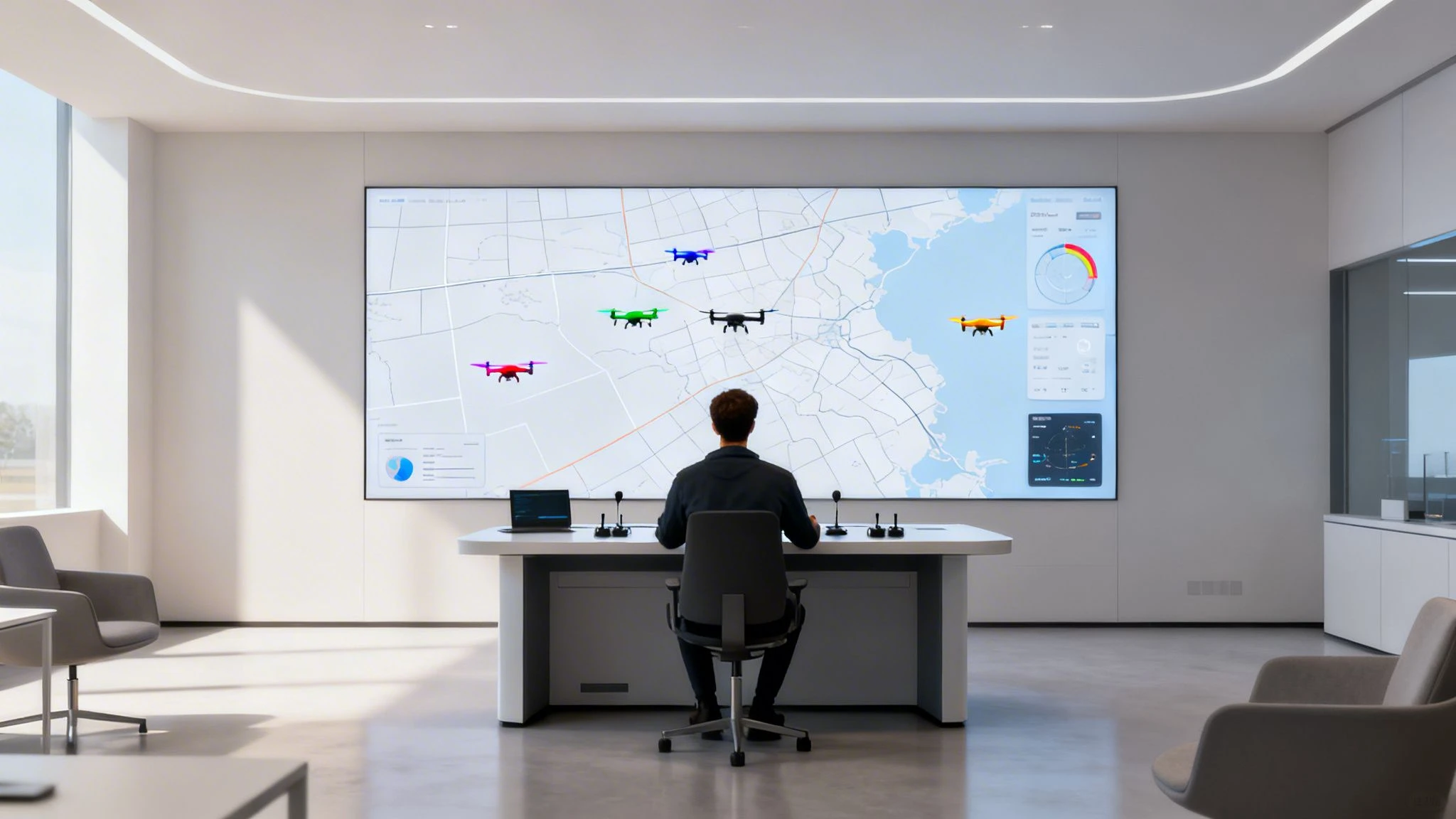
You're probably familiar with the traditional fleet manager who looks after a company's cars and trucks. The goal is the same: keep the assets safe, efficient, and profitable. Now, picture that role, but for drones. You have to layer on the complexities of airspace rules, sophisticated sensor tech, and the security of mission-critical data.
As your drone program balloons from a handful of UAVs to dozens or even hundreds, this specialist role isn't just a "nice-to-have"—it's critical. Without that central command, things can get chaotic, fast. You'll see inconsistent safety procedures, missed maintenance, and expensive drones sitting on a shelf. All of this eats away at your return on investment.
Shifting from Pilot to Strategist
The biggest change is moving from a pilot's mindset to a fleet strategist's view. A pilot is focused on one thing: a successful flight. But an enterprise fleet manager is responsible for the performance of the entire system. This means they're juggling everything from drone purchasing and pilot training to data analysis and reporting back to stakeholders.
This strategic oversight is absolutely essential for any business looking to grow its drone operations, especially in sectors like:
- Construction: Juggling multiple drones for site surveys and progress tracking across different projects.
- Energy: Managing inspections of wind turbines or power lines spread across huge areas.
- Logistics: Orchestrating delivery routes and schedules for an entire fleet of autonomous drones.
To pull this off, the manager needs a central hub—a flight operations centre—that provides a single, clear view of the whole operation. This stops different teams from working in silos and makes sure every mission supports the company's bigger goals.
The table below really highlights the shift in thinking from a lone operator to a dedicated fleet manager.
Solo Operator vs Enterprise Fleet Management Mindset
| Aspect | Solo Drone Operator | Enterprise Fleet Manager |
|---|---|---|
| Focus | Executing one successful flight | Maximizing the ROI of the entire fleet |
| Time Horizon | Per-mission | Long-term operational strategy |
| Responsibility | Flight safety and data capture | Fleet health, compliance, and profitability |
| Tools | Basic flight apps and logs | Centralized management platforms |
| Success Metric | Mission completion | Fleet utilization and cost per flight hour |
As you can see, the perspective widens dramatically. A solo pilot is all about the now—the flight happening today. The fleet manager, on the other hand, is thinking about the next quarter, the next year, and the overall health and productivity of the entire drone program. It's a move from tactical execution to strategic leadership.
Your Core Responsibilities and Performance Metrics
So, what does an enterprise fleet manager actually do all day? The big-picture strategy is vital, but the role is really grounded in the hands-on work that keeps the whole drone operation humming along—safely, smoothly, and profitably. You’re the central hub connecting the drones, the software, the pilots, and the rulebook.
Think of it like this: if the drone fleet is an orchestra, the manager is the conductor. You aren't playing every instrument, but you’re making sure every section plays in perfect harmony to deliver a masterpiece. Or, in our world, a successful and profitable drone program.
Strategic Fleet and Pilot Management
First off, you're in charge of the entire lifecycle of your drone fleet. This isn't just about flying drones; it's about making smart business calls about them. It all starts with strategic procurement—picking the right UAVs and payloads for the job at hand, not just grabbing the newest shiny toy on the market.
Then there's the maintenance. A drone that's out of service is just an expensive paperweight. A savvy manager doesn't wait for things to break; they set up predictive maintenance plans to get the most flight time and avoid costly failures in the field. Tracking battery health or motor wear, for instance, can tell you a replacement is needed before it jeopardizes a critical mission.
Just as important is managing your people. The enterprise fleet manager is on the hook for:
- Pilot Training: Making sure every pilot isn't just a good stick-and-rudder flyer, but is also an expert with the specific sensors and mission software you use.
- Certifications: Keeping a close eye on all required pilot licenses and qualifications. The goal is a team that's always compliant and ready to deploy.
- Performance Monitoring: Looking at pilot efficiency and mission success rates to spot where a bit of coaching could help build a truly top-tier team.
Ensuring Ironclad Compliance and Safety
This is probably the most critical part of the job: guaranteeing rock-solid regulatory compliance. When you're running a commercial drone fleet, you're navigating a tangled web of rules from authorities like the FAA or EASA. The manager is the final line of defense for every single flight, making sure all the legal boxes are ticked.
This means overseeing and automating airspace checks, risk assessments, and flight authorizations. A single slip-up on compliance can bring hefty fines, legal headaches, and even a complete shutdown of your operation.
A huge part of this role is shifting the organization from a reactive to a proactive safety culture. It's about building systems and workflows that make compliance the automatic, default setting for every mission, not just an afterthought.
Imagine you're coordinating drone inspections for a utility company across three different states at the same time. You’ve got to be certain each team has the right local waivers, has checked for TFRs, and has a documented risk plan in place before a single prop starts spinning. This is where a centralized management approach becomes absolutely essential.
Measuring Success with Key Performance Indicators
To prove the drone program is worth the investment, you have to track the right numbers. Key Performance Indicators (KPIs) are what connect your day-to-day work to the company's strategic goals. They give you the hard data you need to justify new gear, optimize your workflows, and show a real return on investment.
Forget vague goals. A great enterprise fleet manager is all about tangible, measurable results. You can take a much deeper look at these numbers and see how to use them in our guide to operational efficiency metrics. The KPIs that really move the needle include:
| KPI Category | Metric | Strategic Importance |
|---|---|---|
| Financial | Cost Per Flight Hour | Directly tells you how to budget, what drones to buy, and if the program is actually profitable. |
| Operational | Fleet Utilization Rate | Shows if your expensive drones are actually earning their keep or just gathering dust on a shelf. |
| Performance | Mission Success Rate | Measures the reliability of your entire operation—from the hardware and software to your pilots' skills. |
| Maintenance | Maintenance Turnaround Time | Tracks how fast you get drones back in the air, which has a direct impact on your fleet's availability. |
| Compliance | Compliance Incident Rate | A crucial measure of how well your risk management and safety culture are working. The goal here is zero. |
By keeping a close eye on these KPIs, you can tell a powerful story with data. For example, showing a low cost per flight hour combined with a high fleet utilization rate is clear, undeniable proof to the higher-ups that the drone program is a smart and profitable investment.
Essential Skills for the Modern Drone Fleet Manager
Being a great enterprise fleet manager for a drone program isn't just about knowing how to fly. That's a common misconception. This role requires a unique mix of hard technical knowledge and genuinely good people skills.
Think of the fleet manager as the central hub of the entire drone operation. You're the one connecting the dots between pilots, the drones themselves, the software, complex regulations, and the company's bottom line. You have to speak the language of engineers, pilots, data analysts, and the C-suite, translating what each group needs to keep the whole system running smoothly.
Technical and Regulatory Mastery
A deep, practical understanding of the tech is the absolute foundation of this job. We're not talking about a surface-level familiarity with UAVs; you need to be an expert on the specific hardware your team uses. This means knowing everything from the flight quirks of each drone model to the nitty-gritty of using sophisticated payloads like LiDAR, thermal, and multispectral sensors.
Just as important is being a power user of your fleet management software. This platform is your cockpit. It's where you get the data and controls to see the entire operation. Pulling the right reports, spotting problems on a dashboard, and using the software to its full potential is completely non-negotiable.
But honestly, the most critical technical skill is an almost obsessive focus on regulatory knowledge. Airspace laws are not set in stone; they're constantly evolving. A top-tier enterprise fleet manager is a lifelong learner, staying on top of every single update from national authorities and local rules that could affect a mission.
And let's not forget data. Your fleet is going to generate a mountain of it. It's on you to make sure that data is captured properly, stored securely, and turned into something genuinely useful for the business.
Leadership and Strategic Soft Skills
While the tech skills get you in the door, it's the soft skills that truly make a fleet manager great. You’re leading a team of highly skilled pilots, and your ability to guide, motivate, and develop them is what will make or break the program's success.
This really boils down to a few key things:
- Decisive Leadership: When a mission hits a snag—maybe a sudden equipment failure or a fast-moving weather front—your team is going to look to you. You need the confidence to make tough calls under pressure, without hesitation.
- Clear Communication: You’ll have to report on performance to stakeholders who probably don't understand the technical side. That means you need to be able to translate raw data into a compelling story about ROI, risk, and operational wins.
- Advanced Problem-Solving: Things will go wrong. It's a fact of life. Your job is not just to fix the immediate issue but to dig in, find the root cause, and put systems in place so it doesn't happen again.
Ultimately, these skills come together to create a leader who doesn't just manage drones and batteries. You're there to build a culture of safety, efficiency, and constant improvement.
For anyone looking to step into this kind of role, understanding the path to get there is crucial. You can learn more about what it takes with our insights on fleet manager certification. This blend of technical and personal skill is what turns a drone program from a simple cost center into a real strategic advantage.
A Roadmap for Building Your Drone Program
So, you’ve got a couple of drones and a few pilots doing ad-hoc work. How do you turn that into a full-blown enterprise operation that actually moves the needle for your business? It can feel like a huge mountain to climb, but the secret is to treat it like a series of smaller, deliberate steps.
This roadmap breaks that journey down, guiding you from a rough idea to a mature, scalable, and genuinely effective drone program.
Before we dive in, it’s important to understand the kind of manager needed to lead this charge. You’re looking for someone with a mix of technical, regulatory, and data-wrangling skills. This is how that skillset tends to progress.
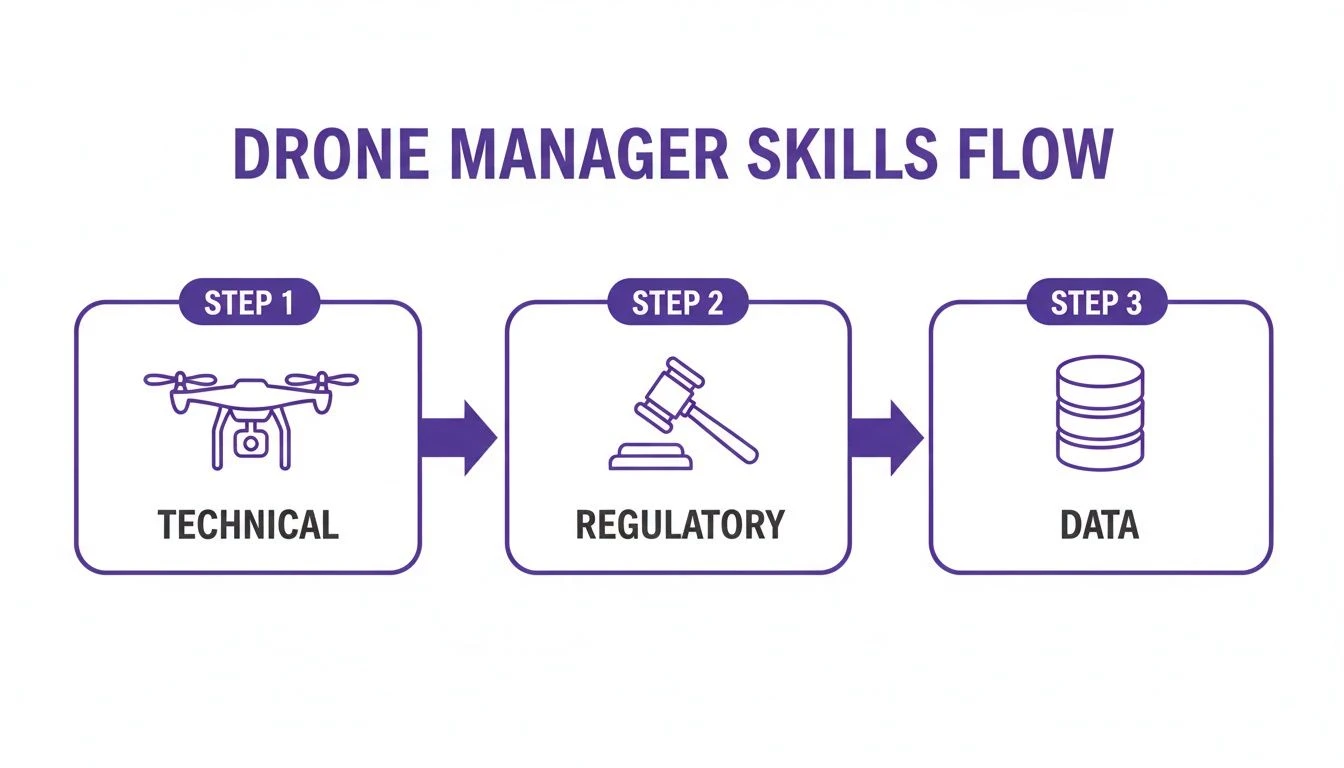
The journey from hands-on tech know-how to mastering regulations and then unlocking data insights is exactly how an enterprise fleet manager evolves. This is crucial for building a program that doesn't just fly, but delivers real business value.
Phase 1: Foundational Scoping and Goal Setting
Before a single drone gets off the ground, you absolutely must define what success looks like. This first phase is pure strategy.
Start by pinpointing the specific business problems you're trying to solve. Are you trying to slash inspection costs, make worksites safer, or just grab data way faster than your ground crews can?
Your goals have to be specific and measurable. "Improving efficiency" is useless because it’s too vague. A much better goal is "reduce survey times for a 50-acre site by 40% within six months." That kind of clarity will steer every decision you make down the line.
Phase 2: Launching a Pilot Program
With your goals locked in, it’s time for a proof of concept. Think of a pilot program as a small, controlled test run to see if your assumptions hold up in the real world. This is your chance to iron out the kinks in a low-risk setting before you go all-in on a major investment.
Pick a single, well-defined project for your pilot. The main objectives here are to:
- Establish a solid baseline for performance and cost.
- Uncover any unexpected challenges you’ll face in the field.
- Gather early feedback from your team and other stakeholders.
A successful pilot gives you the hard evidence and internal momentum you need to get buy-in for a bigger rollout. It proves the value you promised back in phase one.
Phase 3: Developing Standard Operating Procedures
As you get ready to move past the pilot stage, consistency becomes everything. Standard Operating Procedures (SOPs) are the backbone of any safe, compliant, and efficient drone operation. They’re the official playbook for how your team does its job.
SOPs aren't just about telling people what to do; they're about creating a repeatable system that ensures quality and safety every single time. This documented process is non-negotiable for scaling operations and minimizing risk.
Your SOPs need to cover it all—from pre-flight checklists and emergency plans to data handling rules and maintenance schedules. These documents make sure every pilot, whether they’re a seasoned pro or a new hire, operates to the exact same high standard.
Phase 4: Selecting and Integrating Your Technology Stack
Once you have a proven concept and solid procedures, you can finally choose your long-term tech. An enterprise fleet manager needs a central platform to serve as the single source of truth for the entire operation. Trust me, trying to track everything in spreadsheets is a recipe for disaster as you scale.
Your tech stack should give you a unified view for managing the whole fleet. Look for a platform that brings everything together, giving you a single pane of glass to see fleet health, pilot status, and mission progress. This is the only way to simplify management and let your teams operate with confidence.
Phase 5: Scaling Operations and Driving Improvement
The final phase isn’t really a final phase at all—it's a continuous cycle of growing and getting better. With your tech and procedures in place, you can start adding more drones, pilots, and missions.
But scaling isn't just about getting bigger; it's about getting smarter.
Use the data from your management platform to constantly analyze performance. Keep a close eye on your KPIs, spot bottlenecks, and refine your SOPs. This commitment to continuous improvement is what separates a good drone program from a great one and ensures it remains a strategic asset for years to come.
Choosing the Right Enterprise Management Tools
An enterprise fleet manager is only as good as their tools. Let's be honest, once you're past a handful of drones, trying to manage everything with spreadsheets, WhatsApp groups, and a pile of different apps is a recipe for disaster. It’s not just messy—it’s a direct line to compliance headaches, operational blind spots, and burning through money.
Good software is your command centre. It’s the single place where everything about your drone program lives and breathes—from the drones themselves and pilot records to mission plans and all that crucial regulatory paperwork. It has to be more than a fancy digital logbook.
Core Capabilities of an Enterprise Platform
When you start looking at software, there are a few non-negotiables for any serious enterprise fleet manager. These are the features that will actually support a growing, safe, and profitable drone operation. Your platform needs to be built for real-world complexity, not just logging a few flights.
The three main pillars you need to look at are integration, compliance, and reporting.
- Seamless Integration: Your platform has to talk to everything. It needs to connect with your drone hardware (like DJI) and also plug into the business software you already use. This stops you from having to copy-paste data all day and makes sure information flows from the field right back to your main dashboard.
- Robust Compliance and Risk Management: The software should do the heavy lifting on safety checks. Think integrated airspace analysis, automated risk assessments, and keeping a close eye on pilot certificates and maintenance schedules. The goal is to be audit-ready, always.
- Advanced Analytics and Reporting: A great platform tells you a story with your data. It should churn out reports that show you the ROI on your drones, how productive your team is, and where the bottlenecks are. This is the hard data you need to prove the program's value to the higher-ups.
This isn't just a hunch. We see the same thing in traditional vehicle fleet management. Companies that use integrated platforms to track safety and costs can slash their admin workload by up to 30%. You can discover more about the power of integrated fleet management on ndtahq.com.
Dronedesk as Your Operational Command Center
This is exactly why a platform like Dronedesk exists. It’s not a generic fleet tool; it was built from the ground up to tackle these enterprise-level drone challenges. It pulls all your operational data into one clean interface, giving an enterprise fleet manager the bird's-eye view they need to make smart calls.
Instead of juggling five different tools, you get a single, unified view of your entire drone operation. This is how you get ahead of problems instead of constantly putting out fires.
For instance, a manager can see the real-time status of every pilot and drone in the fleet. The system will automatically flag a pilot whose certificate is about to expire or a drone that’s due for a critical service. This kind of heads-up prevents compliance breaches and expensive downtime before they even happen.
The Dronedesk fleet management dashboard gives you a clear, at-a-glance picture of all your assets.
This dashboard instantly shows details like model, serial number, and next service date, so a manager can quickly check fleet readiness and schedule maintenance.
From Administrative Work to Strategic Impact
One of the biggest time-sinks for any manager is admin. Manually prepping flight plans, filling out risk assessments, and pulling together compliance reports can eat up hours every single week. A huge chunk of that can, and should, be automated.
By automating routine documentation, Dronedesk empowers the enterprise fleet manager to shift their focus from paperwork to performance. This transformation is key to unlocking the strategic value of the drone program.
With automated workflows, a manager can create a full job pack—complete with risk assessments, flight plans, and airspace checks—in minutes, not hours. That speed makes the whole team more agile. The result is a more efficient, compliant, and ultimately more profitable drone operation. It frees up the manager to focus on what actually matters: making the fleet deliver maximum impact for the business.
Driving Profitability Through Efficient Operations
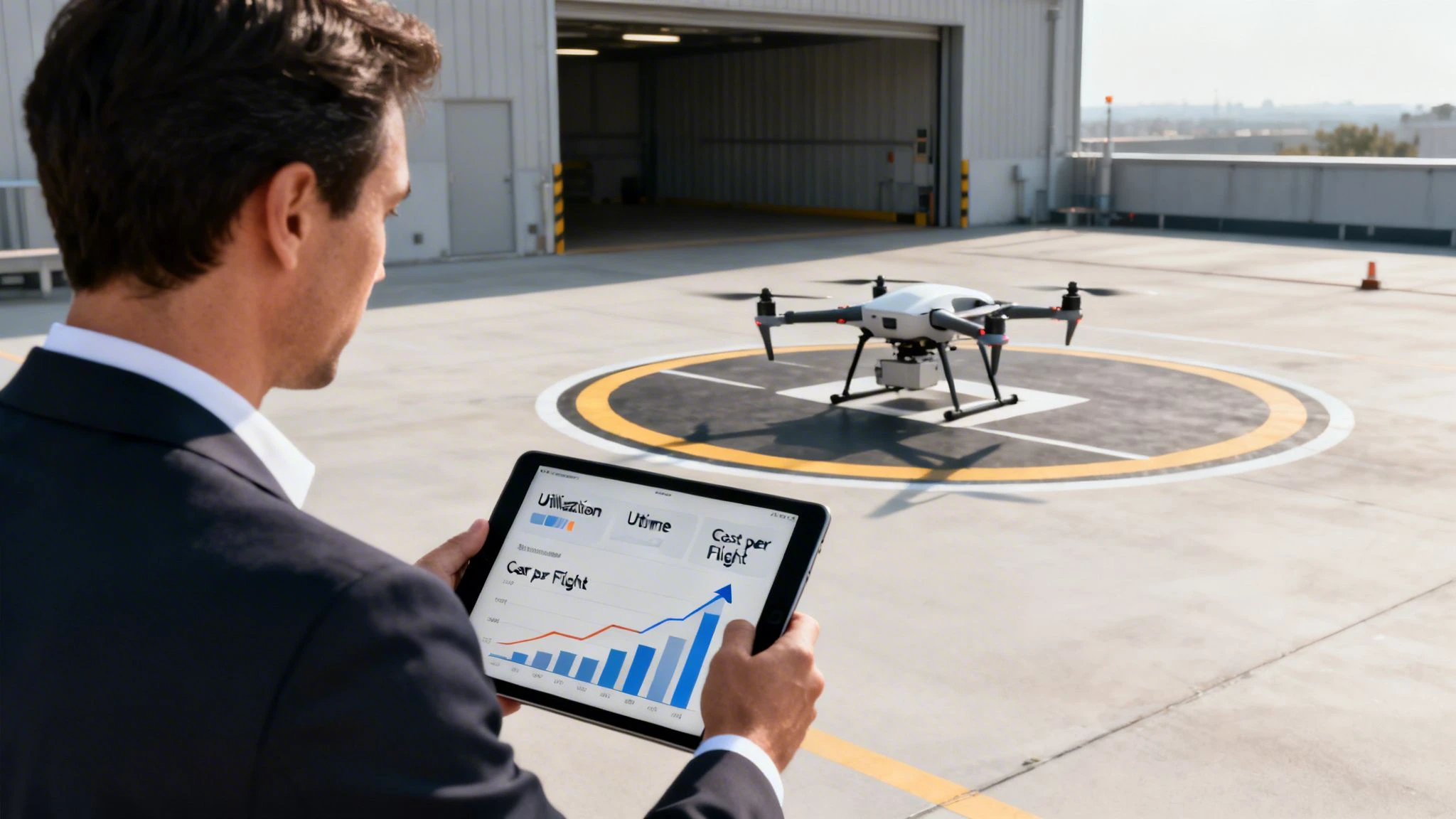
Let's be clear: a drone fleet should never be just a line item on an expense report. When you run it with a sharp eye on the numbers, it stops being a cost center and starts generating real profit. The trick is to directly connect smart operational decisions to the bottom line, turning your fleet into an asset that pays for itself.
This shift doesn't just happen. It's driven by an enterprise fleet manager who uses a central platform to make decisions based on hard data, not guesswork. By focusing relentlessly on efficiency, they can boost profitability, one mission at a time.
Maximizing Asset Utilization and Uptime
The first rule of a profitable fleet? Get your expensive drones in the air and working. An idle drone is just a very expensive paperweight. That's why a high fleet utilization rate is one of the most critical metrics for any enterprise fleet manager.
Using a unified dashboard in a platform like Dronedesk, you get a complete picture of your entire operation. You can instantly see which drones are flying, which are available for the next job, and which are grounded for maintenance.
This bird's-eye view lets you:
- Balance workloads across all your drones, preventing any single aircraft from being run into the ground.
- Schedule missions back-to-back to squeeze the most flight time out of every day.
- Spot underused drones that can be assigned to new projects or even sold off.
This isn't a new concept. In the world of vehicle fleet management, S&P Global found that simply optimizing vehicle uptime can cut costs by a significant 15-20%. The same logic holds true for drones—every hour in the air is an hour that contributes to your ROI. You can discover more about how operational efficiency impacts profitability from S&P Global.
Slashing Costs and Ensuring Compliance
Beyond keeping drones busy, a savvy enterprise fleet manager is always looking for ways to chip away at the cost of every flight. This is where predictive maintenance and smart flight planning really shine.
By tracking component wear and flight hours in a management system, you can service your drones before they fail. This simple step avoids catastrophic in-field breakdowns that mean costly emergency repairs, lost revenue, and angry clients.
But it’s not just about maintenance. Every single flight plan comes with a potential compliance cost. One accidental airspace violation can lead to crippling fines that will erase the profit from dozens of successful jobs.
A central platform like Dronedesk is your financial safeguard. By automating compliance checks and risk assessments, it drastically cuts the chances of expensive human error, protecting your bottom line from day one.
This lets the manager stop putting out fires and start proactively saving money. It's a fundamental shift from a reactive mindset to a strategic one.
Tracking Financial KPIs for Clear ROI
To really prove the drone program's value to the higher-ups, you have to speak their language: finance. That means tracking metrics that tie what you do in the field directly to dollars and cents. An enterprise fleet manager can use Dronedesk to keep a close watch on these essential financial KPIs.
| Key Financial Metric | What It Tells You |
|---|---|
| Cost-Per-Project | The total expense of a mission. This helps you price your services right and find where you can trim fat. |
| Pilot-Hours-Per-Job | Tracks how efficiently your team is working. It helps you resource projects without over-staffing them. |
| Revenue Per Drone | Shines a light on your most profitable aircraft and guides future buying decisions. |
By analyzing this data, the manager can make strategic choices backed by real numbers. They can walk into any leadership meeting and prove that the drone program isn't just a cool piece of tech—it's a genuine, revenue-generating part of the business with a compelling ROI.
Frequently Asked Questions
As the drone industry finds its feet, the enterprise fleet manager role is getting clearer, but it’s also raising a lot of questions for businesses looking to expand their operations. Here are a few of the most common ones we hear.
What Is the Main Difference Between a Drone Pilot and a Fleet Manager?
Think of a drone pilot as being laser-focused on the mission right in front of them—flying a single job safely and getting the data needed. Their world is the here and now of that specific flight.
A fleet manager, on the other hand, plays a completely different game. They’re looking at the big picture, the entire system. They’re managing all the drones, all the pilots, the maintenance schedules, compliance paperwork, and the data coming in. Their job is to make sure the whole operation runs smoothly and delivers a return on investment for the business.
It’s the difference between a pilot flying one plane and an air traffic controller managing the entire airport.
How Many Drones Are Considered a Fleet?
There's no hard-and-fast rule, but from what we've seen, the need for a dedicated fleet manager really starts to bite when a company is running five or more drones.
Once you hit that number, trying to keep track of maintenance logs, pilot qualifications, and project data on spreadsheets becomes a real headache. It's not just inefficient; it's a huge compliance risk waiting to happen. The complexity shoots up, and you desperately need a central way to manage everything before it all descends into chaos.
The most crucial skill for a new fleet manager isn't just technical knowledge, but 'systems thinking'. This is the ability to see how all the components—drones, pilots, regulations, software, and business goals—interconnect and influence each other, which is essential for making strategic decisions.
Ready to manage your drone operations with the clarity and control of a true enterprise fleet manager? Dronedesk provides the unified platform you need to ensure safety, drive efficiency, and prove your program's value. Start your free trial today.
 Drone Pilot Test Mistakes That Cost Candidates Marks →
 FAA 107 License vs Part 107 Certificate: What’s the Difference? →
 Drone Airport Rules: A Field Checklist for Site Assessments →
 FAA Part 107 Record-Keeping Rules for Commercial Teams →
 How to Review a DJI Flight Log After an Unexpected Event →
 Drone Laws Around the World: A Pre-Flight Research Framework →
 How to Compare Drone Survey Services for Complex Sites →
 How to Start a Drone Mapping Business With a Clear Workflow →
 Class C Airspace Drone Rules for Commercial Flights →
 How to Create a Drone Job Pack for Every Mission →