
Your Guide to Starting a Drone Power Washer Business in 2026
So, what exactly is a drone power washer? Think of it as a specialized drone, but instead of a camera, it’s armed with a high-pressure nozzle. It’s tethered to a water and power supply on the ground, allowing an operator to clean towering buildings and tricky structures safely from a distance. This completely sidesteps the need for scaffolding, lifts, or precarious rope access, marking a huge leap forward in both safety and efficiency for the entire exterior cleaning industry.
The New Wave of Exterior Cleaning
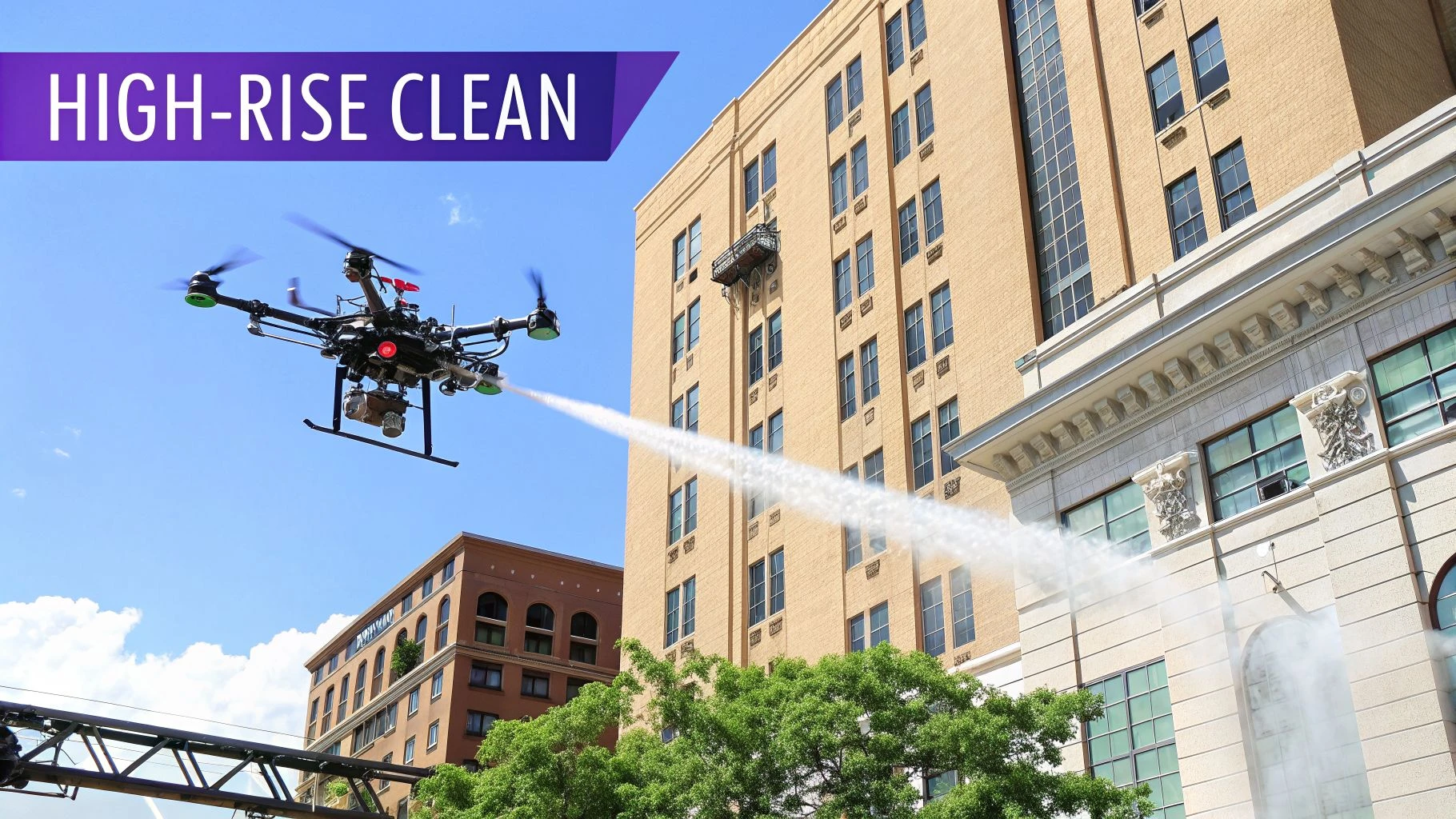
Picture this: you need to clean a ten-story office building. The old way involved days of setting up scaffolding or a boom lift, blocking off public access, and putting workers at significant heights. Now, imagine getting that same job done in a single day. That’s not science fiction; it’s what drone power washing services are delivering right now.
For years, the property maintenance world has been held back by the dangers, costs, and sheer logistical headaches of cleaning tall structures. Drones are changing that entire game. A skilled drone crew can show up, set up their gear, and finish a job with almost no disruption to the building’s tenants or daily business.
A Booming Market Opportunity
This isn't just a niche trend. The move to drone-based cleaning is a full-blown market expansion, and the numbers speak for themselves. Let's take a quick look at the market forecast.
| Drone Power Washer Market at a Glance | | :--- | :--- | | Metric | Value/Projection | | 2024 Market Value | USD 0.5 billion | | 2034 Market Projection | USD 1.5 billion | | Compound Annual Growth Rate (CAGR) | 11.5% | | Dominant Drone Type | Multi-Rotor (~60% market share) |
The data shows explosive growth, driven by clear business advantages. Multi-rotor drones are the go-to choice here, making up about 60% of the market, simply because their agility is perfect for navigating the complex facades of modern buildings.
So, what's behind this rapid growth? It boils down to a few key things:
- Lower Insurance Costs: Keeping your crew on the ground drastically cuts the risk of falls. This is a huge deal for insurance companies and can lead to much lower premiums compared to traditional methods.
- Unmatched Access: Drones can reach places that were once impossible or incredibly expensive to clean—think intricate architectural details, domes, or buildings on uneven ground.
- Serious Efficiency Gains: Forget the hours spent setting up and tearing down heavy equipment. A drone team can be operational in a fraction of the time, letting you fit more jobs into a week and directly boosting your bottom line.
The real advantage is simple: a drone doesn't need a break, won't get tired, and has no fear of heights. With a tethered system, it can run for hours, letting the crew focus entirely on logistics and quality control.
If you've been looking for an entry point into a market where demand is climbing faster than the supply of qualified pilots, this is it. But you have to start the right way. For anyone serious about this path, our guide on how to start a drone business is a must-read.
From day one, you need a professional system to manage your operations. Using a platform like Dronedesk for job management, flight logging, and maintenance tracking isn't just a nice-to-have; it's essential for operating safely, efficiently, and profitably as you grow your business.
Building Your Professional Drone Washing Rig
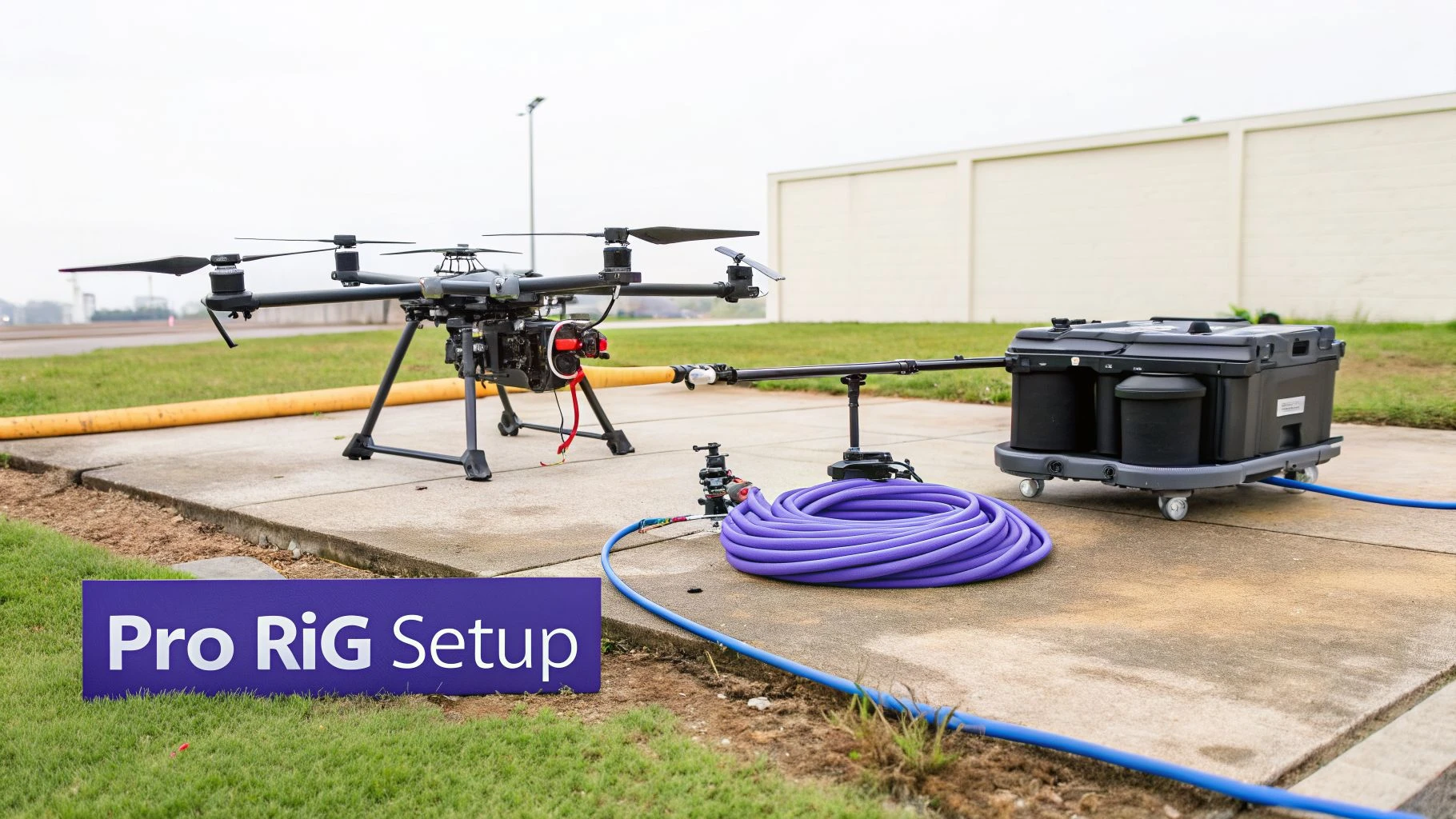
Putting together your gear is the first big check you'll write, and it really sets the stage for your entire business. A proper drone power washer setup is a lot more than just a drone with a hose attached; it’s a whole system where every piece has to work in perfect sync to clean safely and effectively. Getting this right from day one saves you from expensive mistakes and gives clients the confidence to hire you.
The drone you choose is the absolute heart of your operation. This is no place for off-the-shelf consumer models. You need a heavy-lift, industrial-grade workhorse built for tough commercial jobs. It’s the difference between a pickup truck and a semi—both can carry stuff, but only one is made for the heavy-duty grind.
The Drone Heavy Lifters
There's a reason the DJI Matrice series, like the M350 RTK, has become a go-to for so many pros. These drones are engineered to haul serious weight and handle the less-than-perfect conditions of a real job site. When you're shopping for a drone, you have to cut through the marketing noise and focus on what actually matters for this kind of work.
- Payload Capacity: This is the big one. Your drone has to easily handle the weight of the hose, the nozzle assembly, and the downward force of the water spray. A minimum payload of 10-15 kg (22-33 lbs) is a solid starting point.
- Weather Resistance: You can't just pack up and go home every time the wind picks up. Look for an IP rating (like IP55), which tells you how well the drone holds up against dust and water. A good rating means a bigger window for you to get the job done.
- Flight Time: While tethered systems give you non-stop power, you’ll still find times when you need to fly on batteries alone. A real-world flight time of 20-25 minutes under load is a decent baseline. More is always better.
Don't get distracted by fancy camera specs or features that have nothing to do with power washing. Your top priorities are lift, stability, and pure toughness. A solid drone is the foundation of a reliable service.
The Anatomy of the Washing System
The drone just gets the nozzle where it needs to go; it's the washing system that does the heavy lifting. This setup breaks down into the ground unit, the tether, and the nozzle. Every part needs to be chosen carefully to create a balanced and powerful rig.
Your ground unit is the command center, usually a high-pressure pump, a hose reel, and a water tank mounted on a truck or trailer. The pump’s muscle is measured in PSI (Pounds per Square Inch) and GPM (Gallons Per Minute). A system that can push 3,500 PSI at 8 GPM has enough grunt for most tough cleaning jobs.
It's a classic rookie mistake to chase the highest PSI possible. For many surfaces like old brick or EIFS (Exterior Insulation and Finish Systems), a "soft wash" with higher GPM and lower PSI is actually safer and works better.
The tether is your drone's lifeline, feeding it water and sometimes power from the ground. It has to be tough enough to handle the pressure but light enough that it doesn't drag the drone all over the sky. Learning to manage that hose drag is one of the key skills you'll need to master as a pilot.
Finally, the nozzles are your tools. Having a few different types means you can dial in your approach for every unique job.
| Nozzle Type | Primary Use Case |
|---|---|
| Wide-Angle Fan Nozzle (25-40°) | Perfect for general cleaning and soft washing delicate surfaces like siding or stucco. |
| Pinpoint Jet Nozzle (0°) | Used to blast stubborn, isolated spots like graffiti or rust, but you need to be extremely careful not to cause damage. |
| Rotating Turbo Nozzle | Gives you the power of a jet with the coverage of a fan. It's great for breaking up serious grime on tough surfaces like concrete. |
Essential Field Gear
The real difference between an amateur and a pro is often the extra gear they bring to a job. These aren't just nice-to-haves; they’re about safety, efficiency, and being ready for whatever the day throws at you.
- Multiple Battery Sets: Even if you run a tethered system, you absolutely need fully charged backup batteries for pre-flight checks or any quick, untethered manoeuvres.
- A Proper Ground Station: This means a dedicated spot with a good monitor, some shade from the sun, and a stable surface for your controller. It's essential for staying focused and in full control.
- Redundant Safety Gear: Pack extra safety cones, high-visibility vests for everyone on the crew, and a well-stocked first-aid kit.
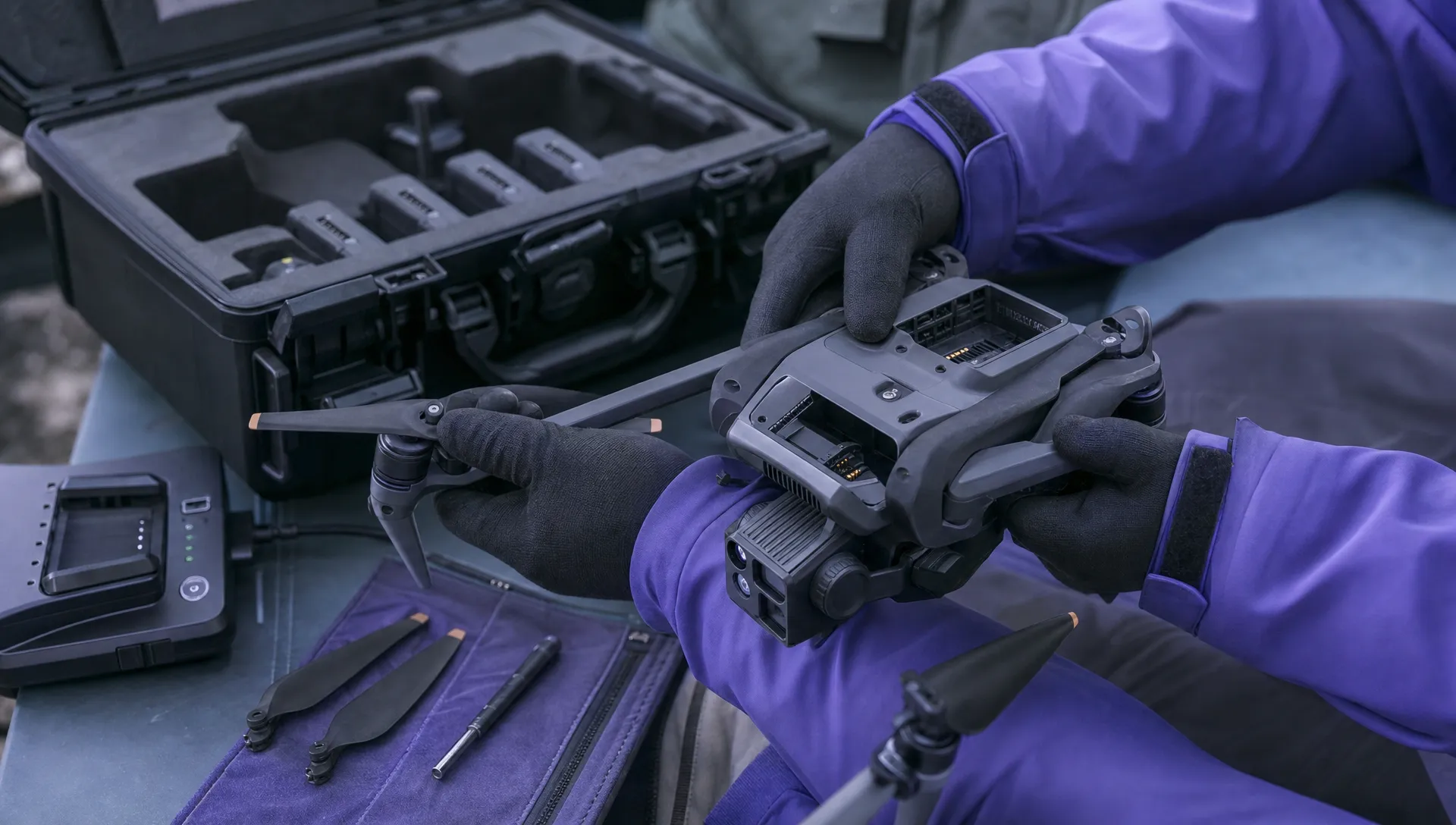
- A Field Maintenance Kit: A simple toolkit with spare props, fasteners, zip ties, and basic tools can turn a job-ending problem into a five-minute fix.
Building out your professional drone washing rig is a serious project, but a system that's been thoughtfully put together will pay for itself over and over in reliability and top-notch performance.
Operating Safely and Legally
Let’s be blunt: when you're launching a drone power washer service, safety and legal compliance aren't just important—they're everything. This isn't just about ticking boxes. It’s the very foundation of your business, your reputation, and your right to even be in business. One bad day can lead to catastrophic damage, serious injury, or legal trouble you don’t want to imagine. This is the one area you absolutely cannot afford to get wrong.
Think about it. You’re flying a heavy, water-tethered drone right next to multi-million-dollar buildings. You're blasting high-pressure spray near windows, electrical fixtures, and delicate architectural details, all while being responsible for the people and property on the ground below. The risks are unique and significant.
Mastering Certifications and Local Rules
Your first step into legal operations is getting your federal certification. In the U.S., that means every commercial drone pilot needs an FAA Part 107 certificate. Period. This is your baseline, proving you know the rules of the sky, from airspace classes to operational limits.
But here's where many new operators trip up: the FAA's rules are just the starting point. States, counties, and cities often have their own, much stricter, rules for drones. Some towns might ban drone flights in their commercial districts outright or demand special permits if you so much as cross over a public sidewalk.
It's a common and costly mistake to think a Part 107 license is a golden ticket to fly anywhere. You have to do your homework. Always research and contact local authorities before you quote a job to check for specific municipal codes or permit requirements.
Skipping this step can get your operation shut down on the spot and hit you with some hefty fines. For a deeper look at this, our commercial drone compliance guide is packed with insights every professional operator needs.
This simple three-step flow is the core safety process we follow for every single job. It’s a good model to adopt.
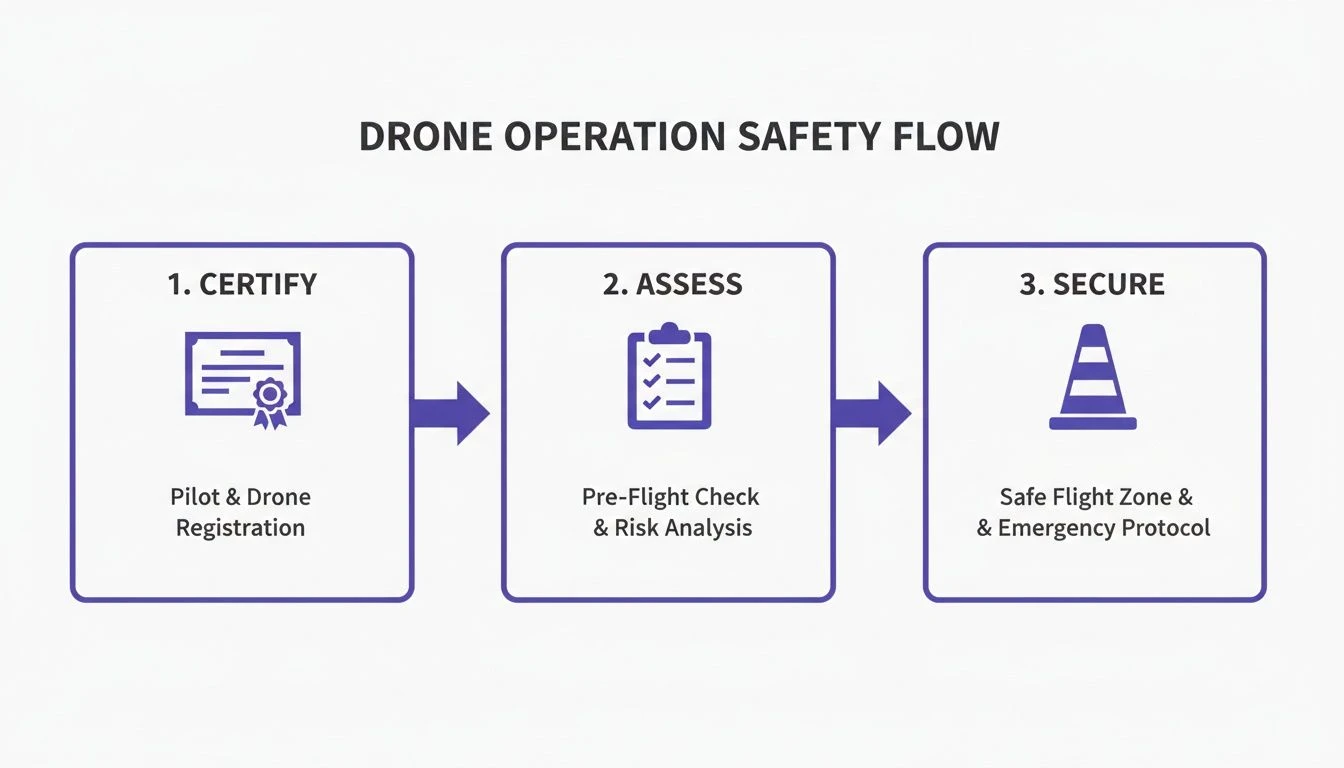
As you can see, certification is just the entry ticket. The real work is in the diligent assessment and securing of the site before a drone ever leaves the ground.
Building Your Safety Protocol
A rock-solid safety protocol is your playbook for every job. It should be a written document that you and your team know inside and out. This isn't about creating red tape; it's about building repeatable, safe habits that become second nature.
Your protocol absolutely must include:
- Site Risk Assessment: A mandatory checklist you fill out before any work begins. This is where you identify every potential hazard, from obvious things like power lines and trees to pedestrian traffic and fragile building surfaces.
- Emergency Action Plan (EAP): What’s the plan if a motor cuts out, the tether gets snagged, or a surprise storm rolls in? Your EAP needs clear, step-by-step procedures for different failure scenarios, complete with contact info for local emergency services.
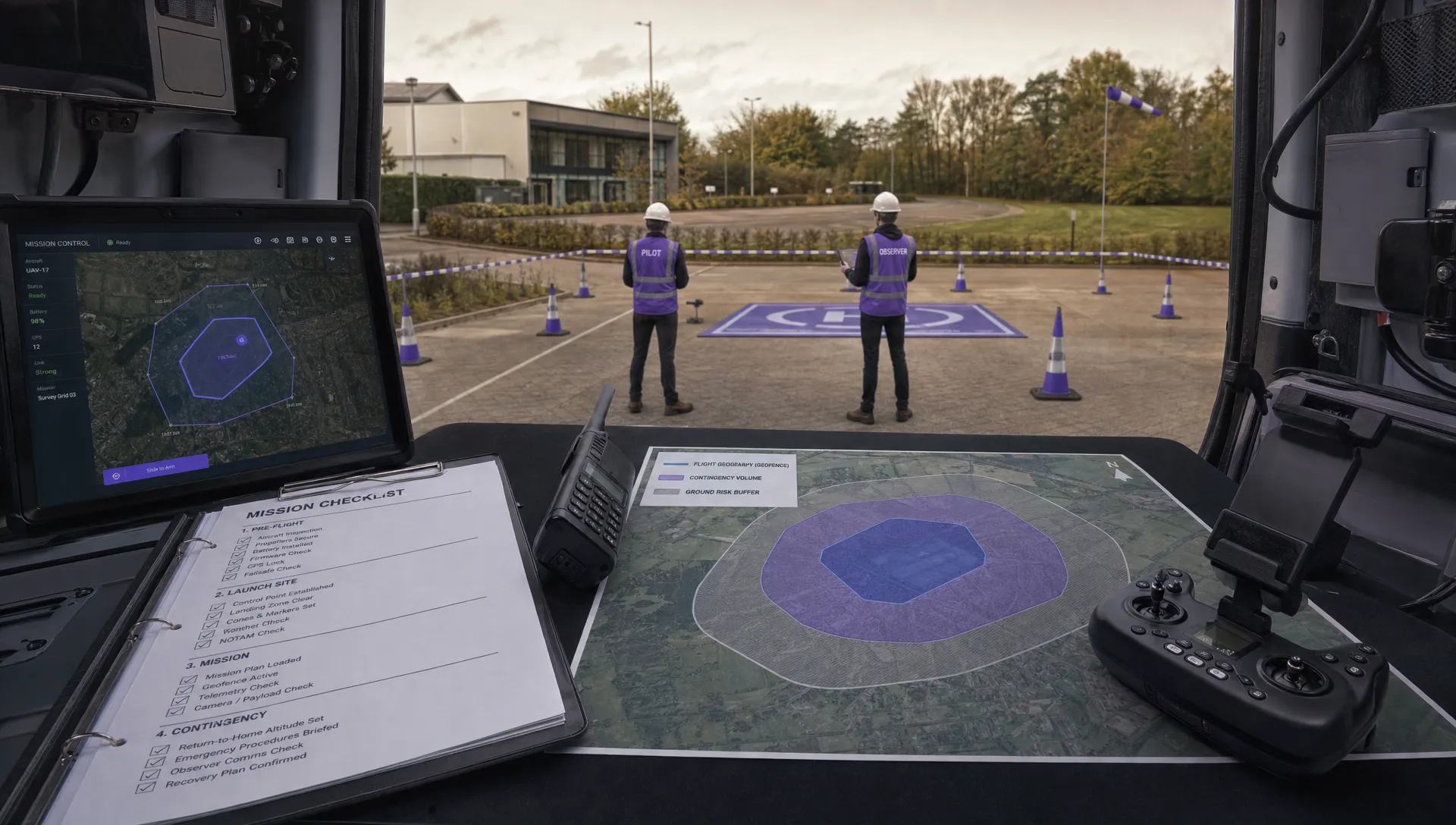
- Public Safety Measures: This means setting up clear buffer zones. Use cones, caution tape, and signs to keep people and vehicles a safe distance away. Critically, you should always have a dedicated visual observer on the ground whose only job is to watch the drone and the surrounding area.
This is where a tool like Dronedesk becomes invaluable. It lets you digitally log your risk assessments, store all your safety documents, and record your pre-flight checks for every single job.
This creates a detailed, time-stamped paper trail that proves your professionalism and due diligence—something that is absolutely essential for liability and insurance. Your records show you operate not just legally, but with the highest commitment to safety.
Executing the Perfect Job from Quote to Invoice
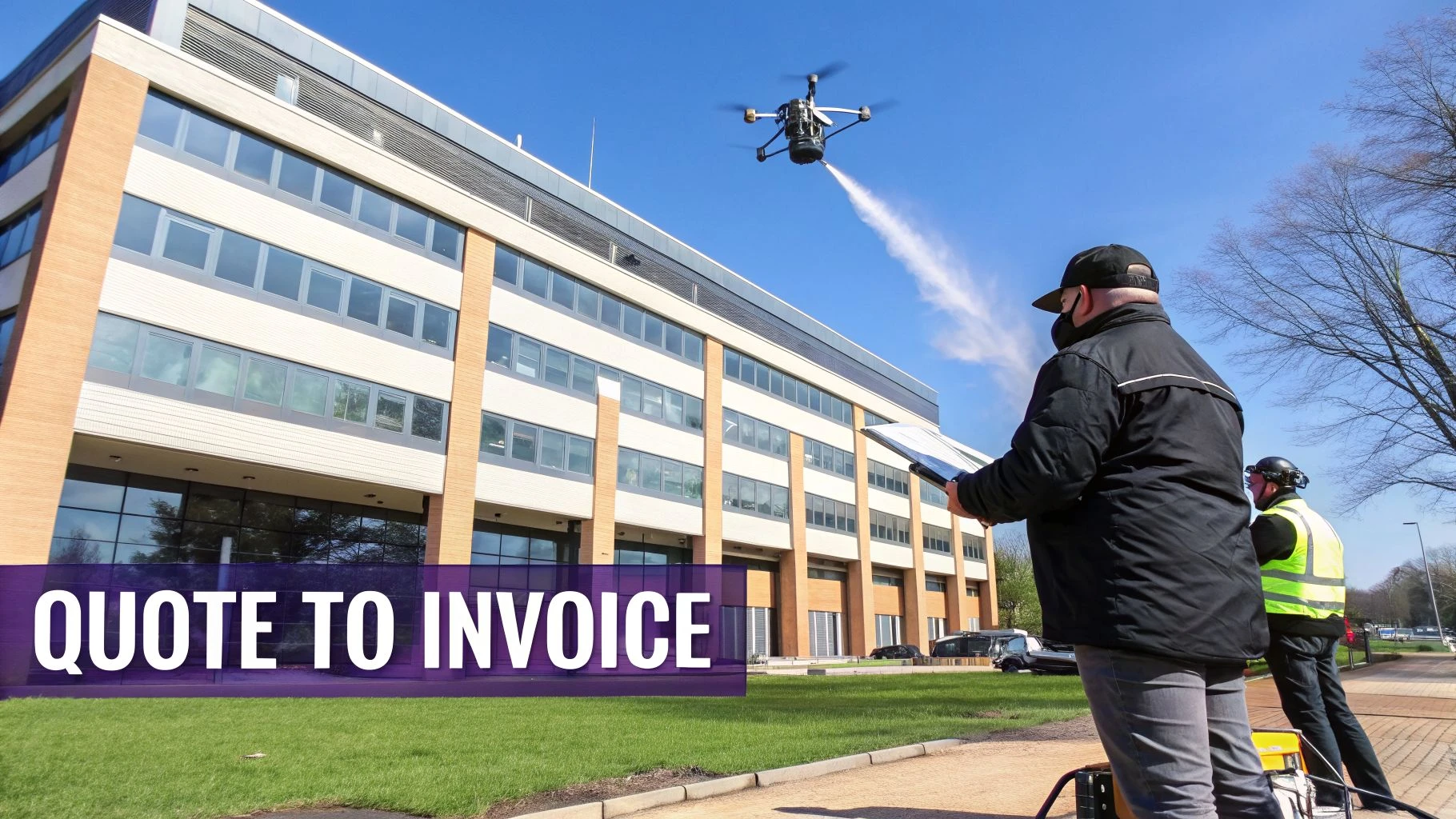
This is where the rubber meets the road—or more accurately, where the water meets the wall. Moving from theory to real-world execution is what separates the pros from the amateurs in the drone washing game.
Let's walk through a complete job cycle for a typical five-story office building. We'll cover everything from the first call with a client right through to sending that final, satisfying invoice.
Success starts long before your drone's props ever spin up. In my experience, the quoting and assessment phase is where you make or break your profit. Get this wrong, and you can sink a job before you've even unboxed your gear.
Crafting a Winning and Accurate Quote
When a potential client calls about cleaning their five-story building, your first job isn't to guess a price—it's to schedule a proper site assessment. This is non-negotiable. Satellite imagery gives you a nice preview, but you have to get your boots on the ground to see the full picture.
During your walk-around, you’re playing detective. You’re looking for a few key things:
- Grime Level and Surface Type: Is this a simple rinse of dust and pollen, or are you up against years of baked-on grime and algae? Are you cleaning tough precast concrete or a more delicate EIFS (Exterior Insulation and Finish System) that screams for a soft wash?
- Water Logistics: This is a huge one. Is there an external water spigot you can easily tap into? If not, you’re hauling in your own water supply. That means a big tank, which adds serious cost and complexity to your day.
- Obstacles and Hazards: Walk the perimeter meticulously. Note every power line, tree, flagpole, fussy landscaping, and architectural feature that will demand skilled piloting.
- Public Access: Scope out sidewalks, parking lot entrances, and pedestrian paths. You absolutely need a solid plan for securing these areas to keep the public safe while you work.
Once you have all that data, you can build a quote that actually makes sense. A professional quote doesn't just have a price; it breaks down the costs and clearly outlines what’s included. It shows the client you've done your homework.
A great quote doesn’t just list a price; it tells a story. It should briefly explain why your drone is the safest, most efficient option, maybe even referencing specific challenges you noted, like how you'll avoid their prize-winning rose bushes.
On-Site Execution and Workflow
The client signed off. It’s go-time. When you arrive on-site, you need to look like a well-oiled machine. Your team knows their roles, your gear is organized, and you project an air of calm professionalism.
First things first: safety. Get that operational area cordoned off with cones and caution tape. Your visual observer needs to be in position, and every crew member should be in high-vis vests. Run through your pre-flight checklist—and if you’re smart, you’ve digitized this in a tool like Dronedesk. This creates a permanent, time-stamped record proving you did your due diligence.
Next up, the critical call on pressure and nozzle selection. For our five-story office building with moderate grime on concrete, I’d start with a wide-angle fan nozzle (25 degrees) at around 2,500 PSI. It’s a solid starting point that balances cleaning power with a gentle touch.
When you start flying, methodical patterns are everything. A patchy, streaky finish is the mark of an amateur.
- Work Top-Down: Always. Start at the highest point and work your way down. This is basic physics; it stops dirty water from running over sections you’ve already cleaned.
- Overlap Your Passes: Just like mowing a lawn, you need to overlap each pass by about 30%. This is your best defense against leaving "tiger stripes" on the building.
- Maintain Consistent Distance: Use your drone’s sensors and your own flying skills to hold a steady distance from the wall. This is vital for an even clean and, more importantly, for not smacking the drone into the building.
Communication between the pilot and ground crew has to be constant and clear. The ground crew is managing the water hose to prevent snags while the visual observer is scanning for any new hazards that pop up.
Post-Job Wrap-Up and Invoicing
Once the final pass is done and the building is sparkling, the job isn’t quite finished. How you wrap things up is what earns you repeat business and referrals. This is also where technology can really streamline things for you. The global drone-based cleaning market is growing at 17% a year, largely because of how advanced systems are getting. If you want to dive deeper, you can explore the advancements in AI drone power wash platforms.
Your post-job workflow should be automatic:
- A Thorough Site Cleanup: Leave the property cleaner than you found it. Pack it all in, pack it all out.
- Equipment Maintenance: Clean your nozzles, give the tether a once-over for wear and tear, and wipe down your drone.
- Data Logging: This is where a management platform really pays for itself. Log your flight time, water usage, and any job notes directly into your Dronedesk account.
This is exactly the kind of central dashboard that keeps your business organized, from client details to flight logs.
Having all this job data in one place makes it dead simple to generate professional reports and invoices, which just reinforces the value you brought to the client. This kind of organized approach cuts down your admin time, freeing you up to go land the next job.
Essential Pilot Skills and Maintenance Routines
Flying a 50-pound, water-tethered drone next to a glass-walled skyscraper is a whole different ball game than flying a hobby drone in an open park. The skills needed to pilot a professional drone power washer are seriously demanding. Getting them right is non-negotiable for safety, efficiency, and delivering the kind of results that get you paid and rehired.
Success here isn’t about fancy aerial tricks; it’s about rock-solid stability, precision, and sheer endurance. The flight dynamics change completely once you have a heavy, water-filled hose pulling on your aircraft. This tether creates constant drag—a force you have to learn to anticipate and fight, especially when a gust of wind decides to show up.
Honing Your Drone Piloting Craft
Your training needs to be methodical. Before you even think about spraying a drop of water, you have to get completely comfortable with how your heavy-lift drone handles on its own. Start in an open field, practising slow, deliberate movements. Get a real feel for the drone's inertia—how it takes off, how it brakes, and how it responds when carrying a serious payload.
Once that feels like second nature, add the tether. You'll immediately feel the difference.
- Tether Drag Drills: Practice flying simple grid patterns while a ground crew member helps manage the hose. You’ll quickly learn that clear communication is key to preventing snags and keeping the flight path smooth.
- Proximity Flying: Find a safe, empty structure (a barn or a purpose-built training wall is perfect) and practice holding a precise distance from the surface. Use your drone's sensors, but don’t become totally reliant on them. Your own eyes are your most important tool.
- Active Spray Control: Now, it's time to introduce water. The downward force from the spray will constantly push the drone down, forcing you to adjust your throttle. Practice feathering the controls to hold a steady altitude while you move sideways across a surface.
The real skill isn't just flying the drone. It's about managing the entire system in a dynamic environment. It's feeling how the wind, the tether, and the water pressure are all affecting the aircraft and making those constant, tiny corrections to stay in complete control.
Proactive Maintenance for Maximum Uptime
In this business, a rig that's out of action doesn't just mean a delayed job; it means lost revenue and a serious dent in your reputation. Proactive maintenance isn’t just a good idea—it’s the foundation of a safe, reliable, and profitable operation. You need to trust your gear when thousands of dollars are on the line.
The only way to do that is with a systematic approach, using checklists for daily, weekly, and monthly inspections. This makes sure nothing gets missed. Building a solid maintenance schedule is one of the smartest things you can do for your business. For a great starting point, you can learn more about creating a preventive maintenance schedule with our helpful template.
A good maintenance schedule ensures your equipment is always ready for the job. Here’s a basic breakdown of what that could look like.
| Drone Power Washer Maintenance Schedule | | :--- | :--- | :--- | | Frequency | Checklist Item | Purpose | | Daily (Pre-Flight) | Inspect propellers for chips/cracks. Check all frame screws and fasteners. | Prevents in-flight failure from a damaged prop or loose component. | | Weekly | Clean and inspect the water tether for abrasions or kinks. Test all pump seals and connections. | Catches wear and tear on the hose before it becomes a high-pressure leak. | | Monthly | Perform a full drone sensor calibration. Deep clean the ground pump and filtration system. | Ensures flight accuracy and prevents debris from clogging your nozzles and damaging the pump. |
This kind of regular attention to detail does more than just prevent catastrophic failures. It keeps your equipment running at peak performance, ensuring your water pressure is consistent and your flights are stable. This translates directly to a better clean, a safer job site, and a healthier bottom line.
Your Top Questions About Drone Power Washing, Answered
When you're starting out in drone power washing, you're going to have a ton of practical questions. Getting solid answers from someone who's been there is key to avoiding the usual pitfalls that trip up new businesses.
Let's cut through the hypotheticals. Here are the straight-up answers to the questions I hear most often, based on real-world job site experience.
How Much Can I Realistically Charge?
Pricing feels like a dark art when you're new, but there's a method to the madness. What you can charge for drone power washing jobs depends heavily on your location, the building's size and complexity, and just how dirty it is. You can't just pluck a number out of thin air.
Most operators I know use one of two pricing models:
- Per Square Foot: This works great for big, simple jobs. You'll see rates anywhere from $0.20 to $1.00 per square foot, with the higher end reserved for tougher cleans.
- Day Rate: For complex projects where you might hit unknown snags, a day rate makes more sense. This can range from $2,000 to $5,000+.
Never, ever skip the site survey. It's the only way to spot deal-breakers like poor water access, delicate surfaces needing a soft wash, or tricky flying conditions. A standard four-story office block with a good water hookup might land in the $3,500 to $7,000 range. But if you have to haul in every drop of water yourself, that price is going to change, fast.
What Are the Biggest Mistakes New Operators Make?
The most common stumbles happen when theory crashes into the messy reality of a live job. The number one mistake, without a doubt, is underestimating water logistics. Showing up and realizing you don't have enough pressure or your tank is too small can kill an entire day's work.
Another classic is misjudging the wind. A 15-mph gust feels a whole lot different when it's yanking on a 50-pound tethered drone and its water hose. And of course, using the wrong pressure is a rookie move that can permanently scar brick, siding, or window seals.
The best advice I can give is to start small. Don't make your first paid job a ten-story historic building. Get your hands dirty on smaller, two-story commercial buildings where the stakes are lower. Practice your emergency drills until they're muscle memory.
Can I Use a Standard Consumer Drone?
I get this question all the time, and the answer is a hard no. A consumer drone like a DJI Mavic or Air is an amazing photography tool, but it's completely wrong—and dangerous—for power washing. They just don't have the muscle for this kind of industrial work.
Drone power washing requires a proper heavy-lift industrial rig. We're talking about drones in the class of a DJI Matrice 350 RTK or similar custom builds. Here’s why:
- Payload Capacity: These machines are built to carry serious weight, often 10-20kg (22-44 lbs) or more. They need that strength to lift the hose and nozzle, plus counteract the downward force of the water spray.
- Power and Stability: They have beefy motors and sophisticated flight controllers that keep them stable while tethered, even when the wind picks up.
- Durability: They're designed for rough commercial job sites, with weather resistance and redundant safety systems you won't find on a consumer drone.
How Do I Manage Water Supply on a Large Job?
Water logistics can absolutely make or break your profitability. The dream scenario is tapping directly into the building's external spigot for a continuous supply to your ground pump. But you can't count on that being an option.
When there's no on-site water, you're bringing your own. This typically means a big water tank on a truck or trailer—a 250-gallon tank is a common starting point. But be warned: a pressure washer blasting at 8 GPM will empty that tank in about 30 minutes. You absolutely have to plan your refills on bigger jobs. Always confirm water access during your site survey and build any transport time and cost into your quote.
Nailing the details—from the initial quote to job-site logistics—is what separates the pros from the amateurs. A dedicated platform like Dronedesk is a massive help for tracking job details, logging flight data, and managing clients. It’s what you need to run a smooth, profitable, and compliant operation from day one.
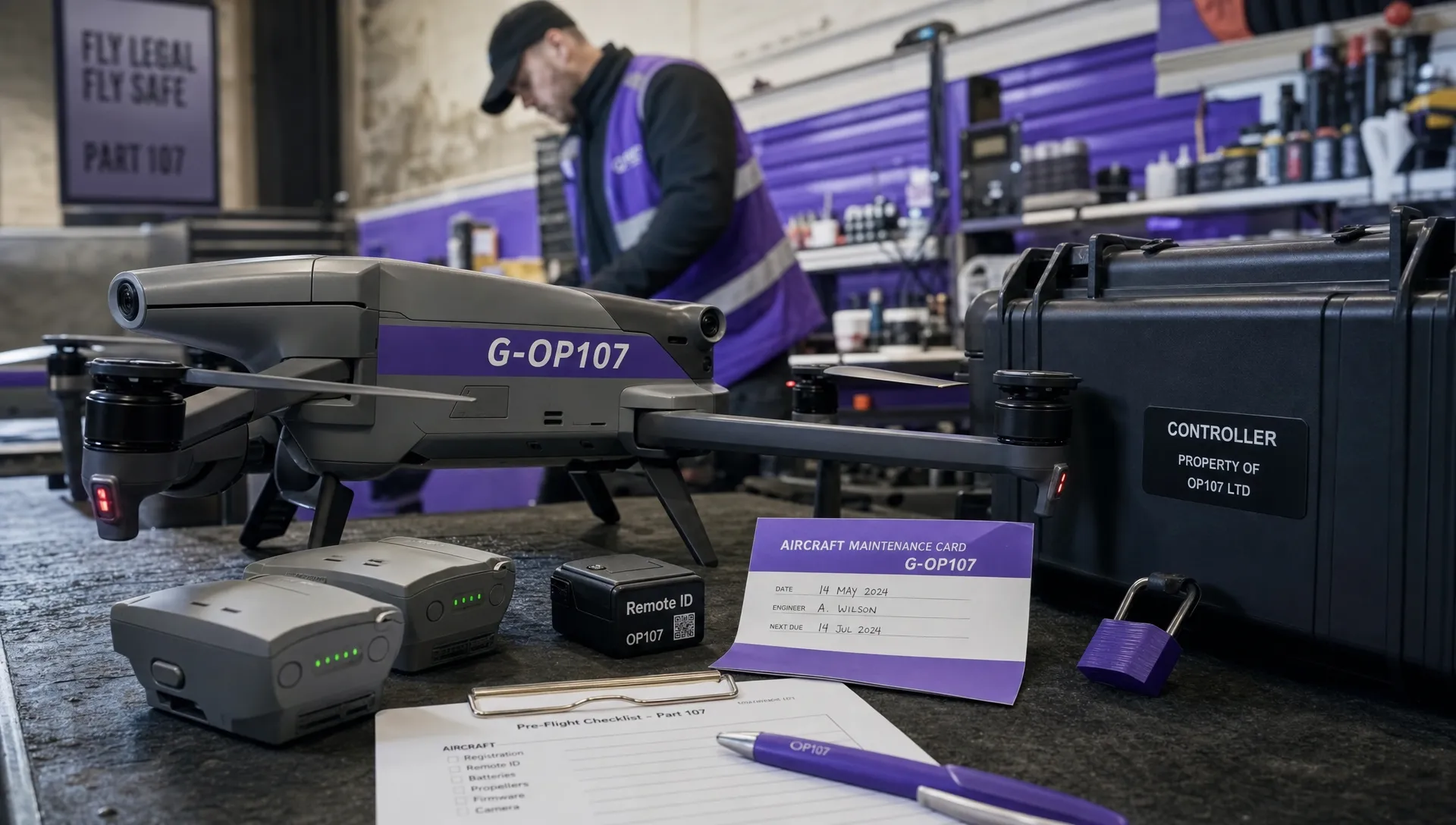 FAA Small UAS Rule: Key Requirements for Operators →
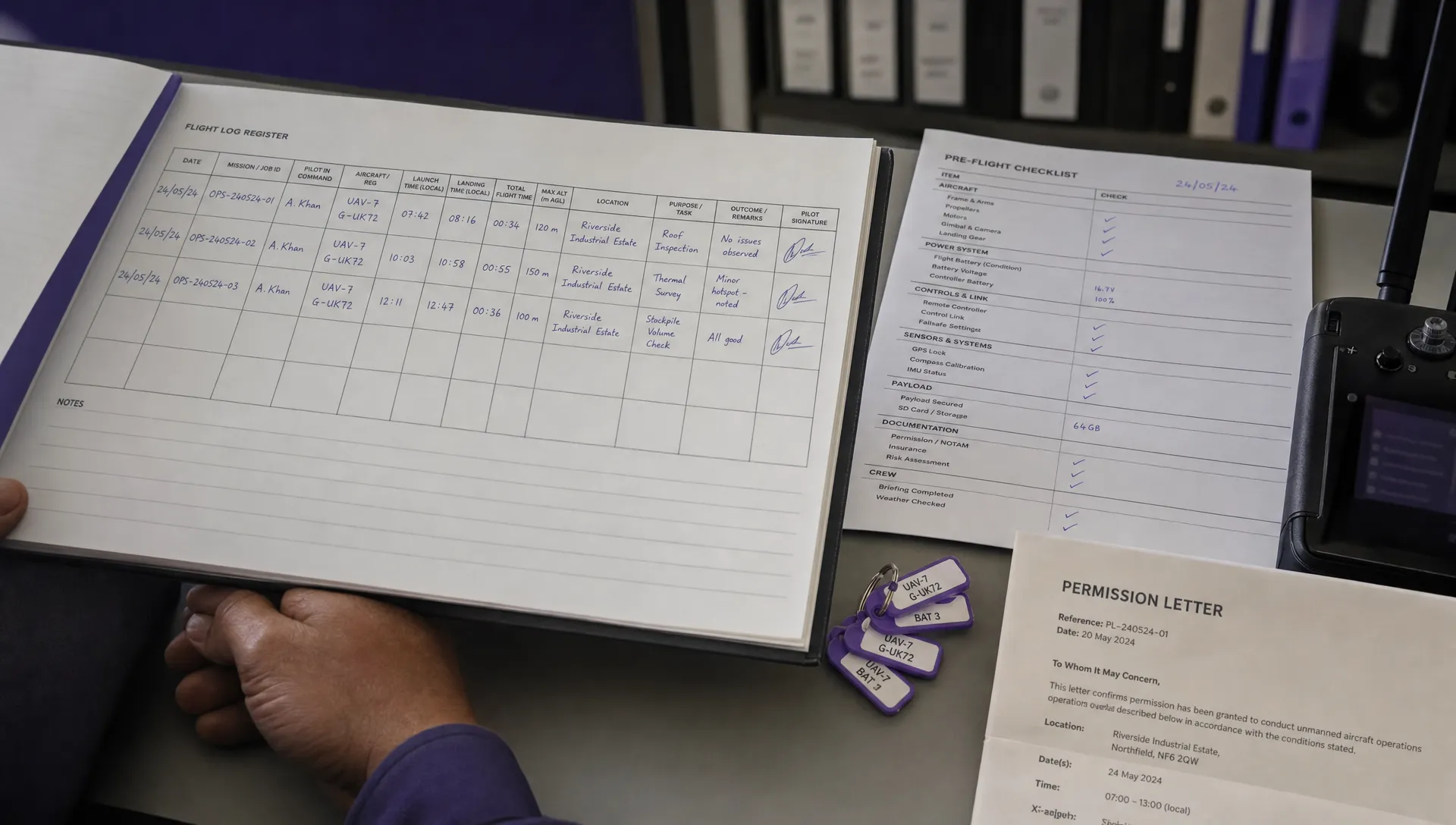 How to Build a Drone Pilot Flight Log That Is Audit Ready →
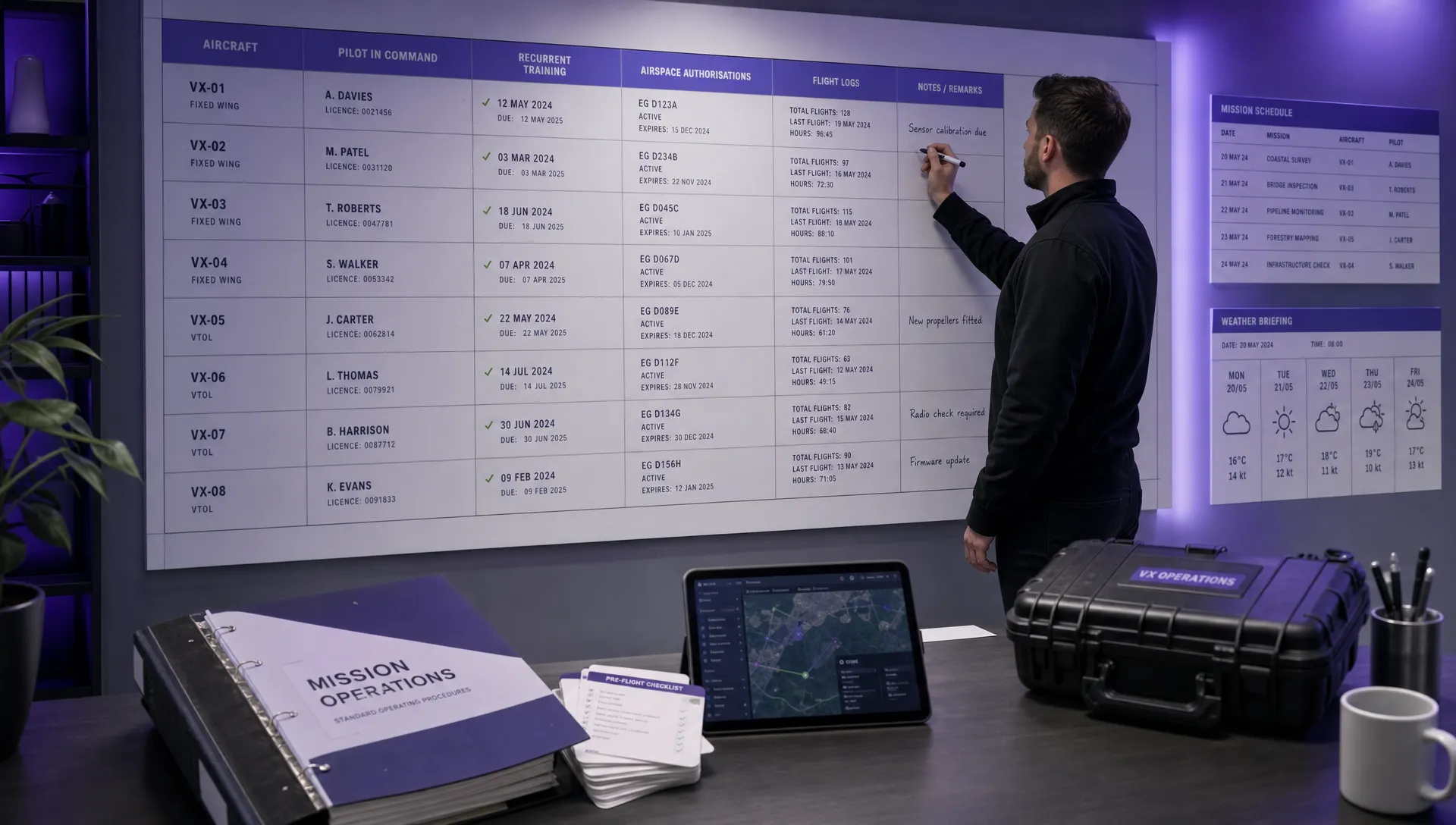 FAA Drone Licence Requirements for Commercial Pilots →
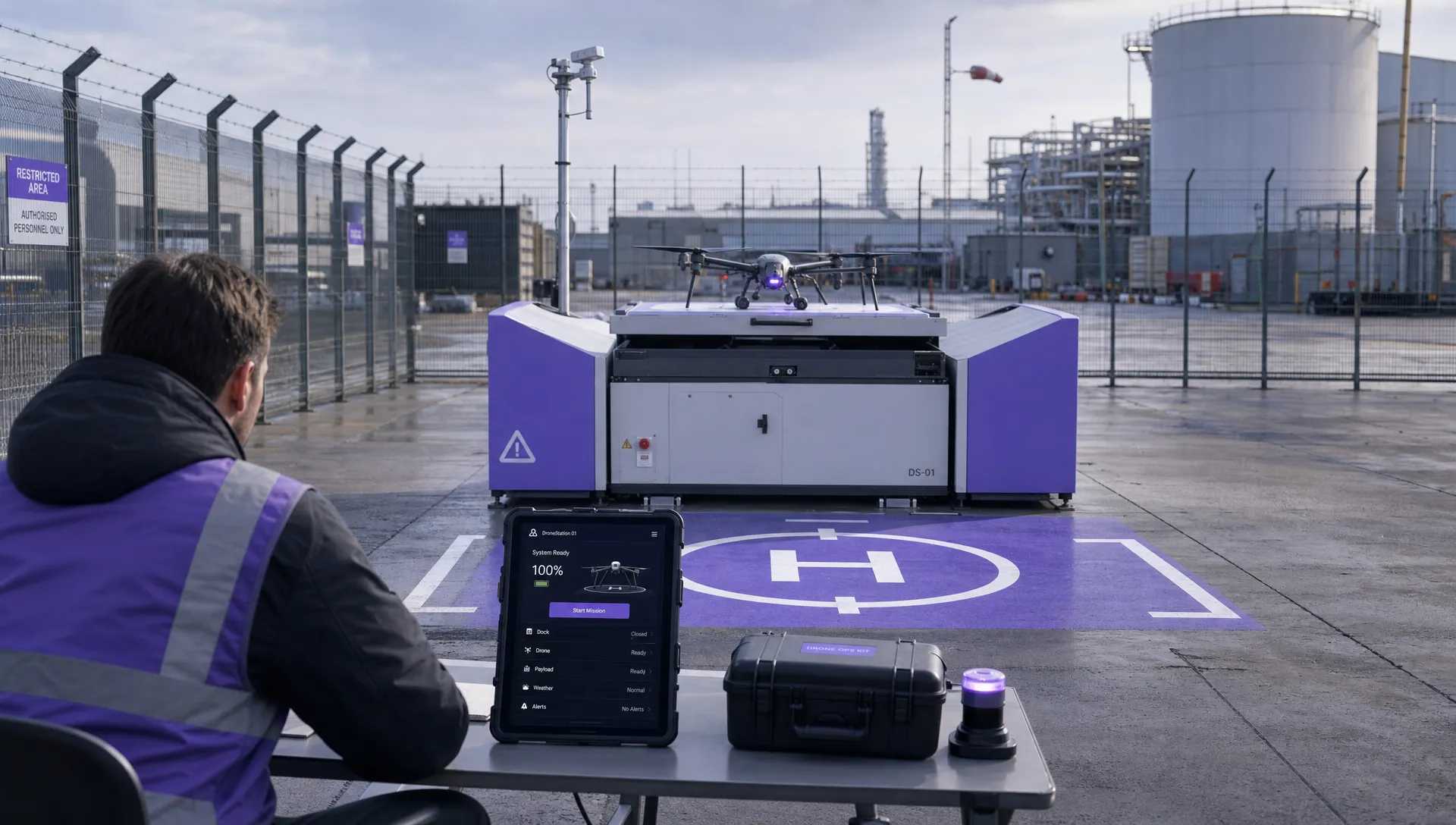 FAA BVLOS Waivers Granted: What Successful Cases Show →
 How to Export DJI Flight Logs for Incident Reviews →
 Drone Safety and Legal Duties for Business Operations →
 EASA Drone Regulations: Open, Specific and Certified Categories →
 What the BVLOS ARC Report Means for UAS Operators →
 Free Drone Pre-Flight Checklist for Commercial Missions →
 Contingency Volume and Flight Risk Buffer Explained →