
New Drone Laws in 2026: What Operators Need to Know
If you have searched for “new drone laws” this year, you have probably found a confusing mix of UK, EU and US updates. For UK operators, the key point is this: 2026 is not defined by one single new rule that replaces everything you already know. It is defined by a more mature regulatory environment where evidence, risk management, airspace awareness and cross-border differences matter more than ever.
For commercial drone operators, survey companies, utilities and emergency services, the practical question is not just “Can we fly?” It is “Can we prove we planned, authorised, risk assessed, briefed, operated and logged the flight correctly?”
This guide focuses on what UK-based operators need to know in 2026, with notes for teams that also fly in the EU or other jurisdictions. It is not legal advice, and you should always check the latest guidance from the UK Civil Aviation Authority before making operational decisions.
The quick answer: what operators should review in 2026
The foundations of UK drone regulation remain familiar: operations are still generally managed through the Open, Specific and Certified categories. What has changed is the operating context. Regulators, clients and insurers increasingly expect documented competence, up-to-date procedures and auditable records.
| Area to review | What it means in 2026 | Operator action |
|---|---|---|
| Operating category | Open, Specific and Certified categories still drive what is permitted | Confirm the correct category before every job, not after the quote is accepted |
| Registration and competence | Operator IDs, Flyer IDs and recognised competency routes remain central | Audit IDs, training records and renewal dates across your team |
| Operational Authorisations | Higher-risk work needs documented permission and conditions | Check your authorisation scope, expiry date and operating limitations |
| Risk assessments | Generic paperwork is not enough for complex or repeat commercial work | Use site-specific risk assessments and keep evidence of mitigations |
| Airspace checks | FRZs, NOTAMs, temporary restrictions and local constraints can change quickly | Check airspace during planning and again close to launch |
| Equipment rules | UK and EU product/class marking rules are not identical | Do not assume a drone bought for one market is compliant everywhere |
| BVLOS operations | BVLOS is expanding through authorised pathways, not blanket permission | Treat BVLOS as a Specific or higher-risk operation unless officially authorised |
| Privacy and data | Camera drones can trigger UK GDPR and data protection obligations | Plan how imagery is captured, stored, shared and deleted |
UK drone law in 2026: the categories still matter
The UK regulatory framework is based on risk. That means the same aircraft can be legal in one scenario and non-compliant in another, depending on location, distance from people, airspace, payload, pilot competence and operational complexity.
Open category
The Open category is for lower-risk flights. It is commonly used for straightforward visual line of sight work where the drone, location and proximity to uninvolved people fit within the published limits. It does not require an Operational Authorisation from the CAA, but it is not a free-for-all.
Operators still need to follow the Drone and Model Aircraft Code, check registration requirements, maintain safe separation and operate within the relevant Open subcategory. For commercial teams, the Open category can be useful for simple surveys or media work, but only if the job genuinely fits the limits.
Specific category
The Specific category applies when the operation presents a higher level of risk than the Open category allows. This is where many professional use cases sit, including complex infrastructure inspection, work near congested areas, operations involving controlled sites, flights requiring additional mitigations or missions that do not fit standard Open category limits.
A Specific category operation generally requires an Operational Authorisation from the CAA. Operators must be able to show that risks have been assessed and reduced to an acceptable level through procedures, pilot competence, aircraft suitability, emergency planning and operational controls.
Certified category
The Certified category is for the highest-risk operations, such as those closer to traditional aviation risk profiles. Most day-to-day survey, utility and emergency service drone operations will not be in this category, but it becomes relevant as the sector moves towards heavier aircraft, more automation, carriage of people or cargo, and more integrated airspace operations.
Registration, Flyer IDs and operator responsibilities
In the UK, you must understand the difference between the person or organisation responsible for the drone and the person flying it.
The operator is the person or organisation responsible for managing the drone and ensuring it is used safely. The flyer is the person actually controlling the drone. Depending on the aircraft and use case, an Operator ID, Flyer ID or both may be required.
For organisations, this distinction is especially important. A utility company, police unit or survey business may have multiple pilots, aircraft and operating locations. If your records are out of date, you can quickly lose visibility over who is authorised to fly which aircraft, under which permissions and with which competency.
A practical 2026 audit should check:
- Operator ID status and renewal date
- Flyer IDs for relevant pilots
- A2 CofC, GVC or other competency evidence where applicable
- Operational Authorisation expiry dates and conditions
- Insurance documentation for commercial operations
- Aircraft ownership, maintenance and firmware records
- Pilot currency, internal approvals and recent flight experience
The term “drone licence” is still widely used, but it can be misleading. UK operators usually need a combination of registration, competency, procedures and, for Specific category work, an Operational Authorisation. The exact requirement depends on the operation.
UK and EU drone rules are not the same thing
One of the biggest compliance traps in 2026 is assuming that UK and EU drone rules are interchangeable. They are closely related historically, but they are not identical.
If you operate only in the UK, follow current CAA guidance. If you operate in the EU, you must also check the requirements of the relevant EASA member state and the European Union Aviation Safety Agency drone rules. This matters for aircraft class markings, remote identification, geo-awareness, pilot competence and local operating permissions.
For example, a drone marketed with an EU class marking may be useful for EU Open category operations, but that does not automatically answer every UK compliance question. Equally, a UK Operational Authorisation does not give you permission to fly in France, Ireland, Germany or Spain.
Cross-border operators should maintain a country-by-country compliance file covering registration, pilot qualifications, insurance, aircraft requirements, privacy rules, local airspace procedures and client-specific obligations.
Equipment, Remote ID and digital airspace readiness
Remote ID and digital airspace integration are becoming more important globally. In the United States, for example, the FAA’s Remote ID requirements are already a major compliance consideration. In Europe, remote identification and geo-awareness are part of the wider regulatory framework for many operations.
For UK operators, the safest approach is to treat Remote ID and electronic conspicuity as procurement and readiness issues, even where a specific requirement does not yet apply to your current operation. When buying or renewing aircraft, consider whether the platform can support future identification, firmware, logging and airspace integration requirements.
Good procurement questions include:
- Can the aircraft support Remote ID or equivalent identification requirements if needed?
- Are firmware versions documented and controlled?
- Can maintenance, batteries and payloads be tracked reliably?
- Does the drone provide accurate logs that can be retained with the job file?
- Can the aircraft be operated safely without relying only on manufacturer geofencing?
This is particularly important for utilities and emergency services, where drones may remain in service for several years and need to support evolving operational requirements.
Specific category operations: documentation is now a competitive advantage
For professional operators, the most important part of the 2026 drone law landscape is not a single new permission. It is the growing expectation that your operation is controlled, repeatable and auditable.
Clients are asking better questions. Procurement teams want to know that pilots are competent, aircraft are maintained and flights are properly risk assessed. Insurers want evidence. Regulators expect records. Internal safety teams want consistency across crews and regions.
For Specific category work, your documentation should usually show:
| Document or record | Why it matters |
|---|---|
| Operations manual | Shows how the organisation controls drone activity |
| Operational Authorisation | Confirms the scope and conditions of approved higher-risk operations |
| Site-specific risk assessment | Demonstrates that local hazards were identified and mitigated |
| Pilot competency records | Shows that the assigned pilot was appropriately qualified and current |
| Aircraft and battery records | Supports airworthiness, maintenance and incident investigation |
| Airspace check evidence | Shows that restrictions, NOTAMs and nearby risks were reviewed |
| Flight logs | Creates an auditable record of what happened |
| Incident and emergency procedures | Helps crews respond consistently when conditions change |
This is where many growing operators outgrow spreadsheets. A single pilot can often keep enough information in folders and templates. A team with multiple aircraft, pilots, clients and repeat sites needs a more structured system.
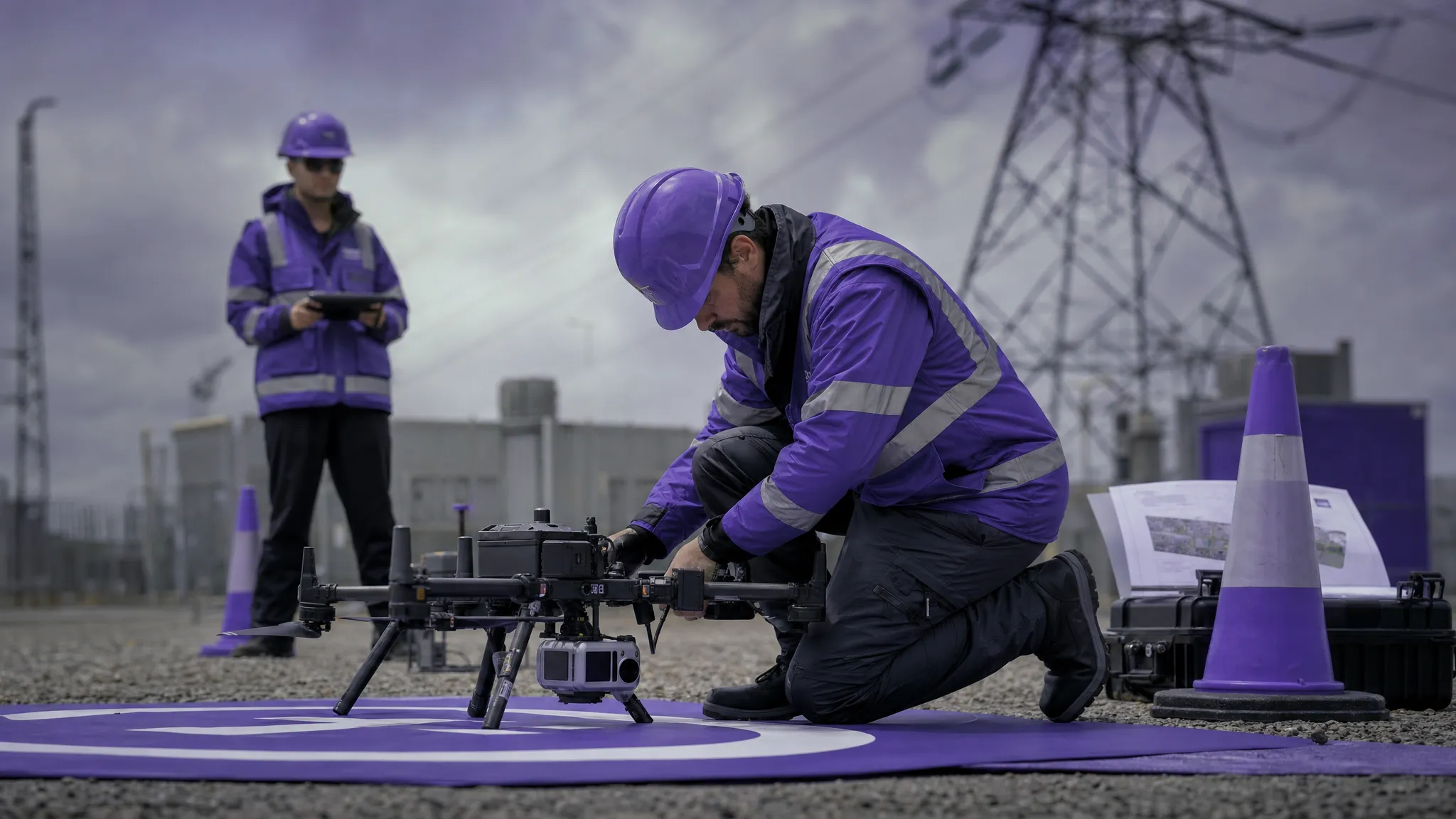
BVLOS in 2026: more opportunity, but not automatic permission
Beyond visual line of sight, or BVLOS, is one of the most important growth areas for drone operations. It is especially relevant for linear infrastructure inspection, emergency response, environmental monitoring, security, rail, roads, pipelines and energy networks.
However, operators should be cautious about headlines suggesting BVLOS has simply been “legalised”. In the UK, visual line of sight remains the normal baseline for many operations. BVLOS generally requires a properly authorised route, robust risk assessment, detect-and-avoid or equivalent mitigations, command and control resilience, emergency procedures and airspace integration planning.
For operators, the practical message is simple: build the foundations now. If you want to move into BVLOS, start by improving your safety case, operational records, aircraft maintenance evidence, pilot training, communications procedures and incident reporting. BVLOS approvals are much easier to pursue when your existing VLOS and EVLOS operations are already well controlled.
Privacy, data protection and public confidence
Drone compliance is not only aviation compliance. If your drone captures identifiable people, vehicle registration plates, private gardens, homes, workplaces or other personal data, UK data protection law may apply.
The Information Commissioner’s Office provides guidance on drones and privacy. For commercial and public sector operators, privacy planning should be part of the job file rather than an afterthought.
Key questions include: what are you filming, why is it necessary, who will access the data, how long will it be kept and how will you respond if a member of the public asks about the flight?
This matters across all professional sectors, but especially for emergency services, local authorities, infrastructure operators and survey companies working near residential areas. A technically legal flight can still damage trust if the public feels it was intrusive or poorly explained.
A practical 2026 compliance checklist for drone operators
Use this checklist before accepting or launching work under the 2026 drone law environment.
- Confirm whether the job fits the Open category or requires Specific category authorisation.
- Check your Operator ID, Flyer IDs, pilot competencies and renewal dates.
- Review your Operational Authorisation conditions before planning the mission.
- Verify that the aircraft, payload and batteries are suitable for the job.
- Complete a site-specific risk assessment, not just a generic template.
- Check controlled airspace, Flight Restriction Zones, NOTAMs and temporary restrictions.
- Consider privacy and data protection risks before capturing imagery.
- Brief the pilot, observers and client contacts on roles, abort criteria and emergency actions.
- Record the flight accurately, including deviations, incidents or cancelled launches.
- Store the job file so it can be retrieved for audits, clients, insurers or investigations.
For emergency services, the checklist should also account for rapid deployment. Speed matters, but so does evidence. A streamlined process helps crews act quickly without losing the audit trail needed after the incident.
How Dronedesk supports 2026 drone compliance
Dronedesk is built for drone operators that need to manage the operational side of compliance without drowning in admin. It brings core operational workflows into one web platform, including client management, fleet management, team management, airspace intelligence, proximity intelligence, flight planning, flight logging, data reporting, configurable checklists and risk assessments.
That matters because many of the “new drone laws” conversations in 2026 come back to the same operational challenge: can you show that the right person flew the right aircraft, in the right place, under the right permission, with the right checks completed?
Dronedesk does not replace legal judgement, CAA guidance or an Operational Authorisation. What it can do is help operators organise the information that professional drone compliance depends on. You can explore the platform’s current capabilities on the Dronedesk features page.
If your organisation is still managing pilots, aircraft, checklists, risk assessments and logs across spreadsheets and shared folders, 2026 is a good time to review whether that process is still fit for purpose.
Frequently Asked Questions
What are the new drone laws in 2026 in the UK? There is no single new UK drone law that replaces the existing framework. Operators should focus on the current CAA rules, operating categories, registration, competency, Operational Authorisations, airspace checks, privacy obligations and emerging requirements around digital airspace and identification.
Do commercial drone operators need a drone licence in 2026? The UK does not use one simple “commercial drone licence” for every job. You may need an Operator ID, Flyer ID, relevant competency such as A2 CofC or GVC, suitable insurance and an Operational Authorisation if the flight falls outside the Open category.
Can I fly BVLOS in 2026? BVLOS is possible only through the appropriate authorised route. It is not a blanket permission for ordinary drone flights. Operators should expect to provide a strong safety case, procedures, mitigations and evidence of operational control.
Are EU drone laws valid in the UK? No. UK and EU rules are related but separate. A UK-based operator flying in the EU must check EASA rules and the local requirements of the country of operation. An EU class-marked aircraft or EU registration does not automatically solve UK compliance, and a UK authorisation does not automatically permit EU flights.
Do I need Remote ID for UK drone operations in 2026? Requirements depend on where and how you operate. Remote ID is already important in some jurisdictions and is part of the wider direction of travel for digital airspace. UK operators should monitor CAA guidance and consider future identification requirements when buying aircraft.
How often should drone risk assessments be updated? A risk assessment should be reviewed whenever the site, aircraft, pilot, payload, airspace, weather, client requirement or operating method changes. Repeat sites still need checks because temporary restrictions, ground activity and local hazards can change.
Stay ready for the next phase of drone regulation
The safest way to approach new drone laws in 2026 is to build a disciplined operating system: clear permissions, current pilot records, reliable aircraft data, strong risk assessments, accurate flight logs and evidence you can retrieve when needed.
If you want to make that easier across your team, fleet and jobs, take a look at Dronedesk and see how a dedicated drone operations platform can support safer, more organised flying.
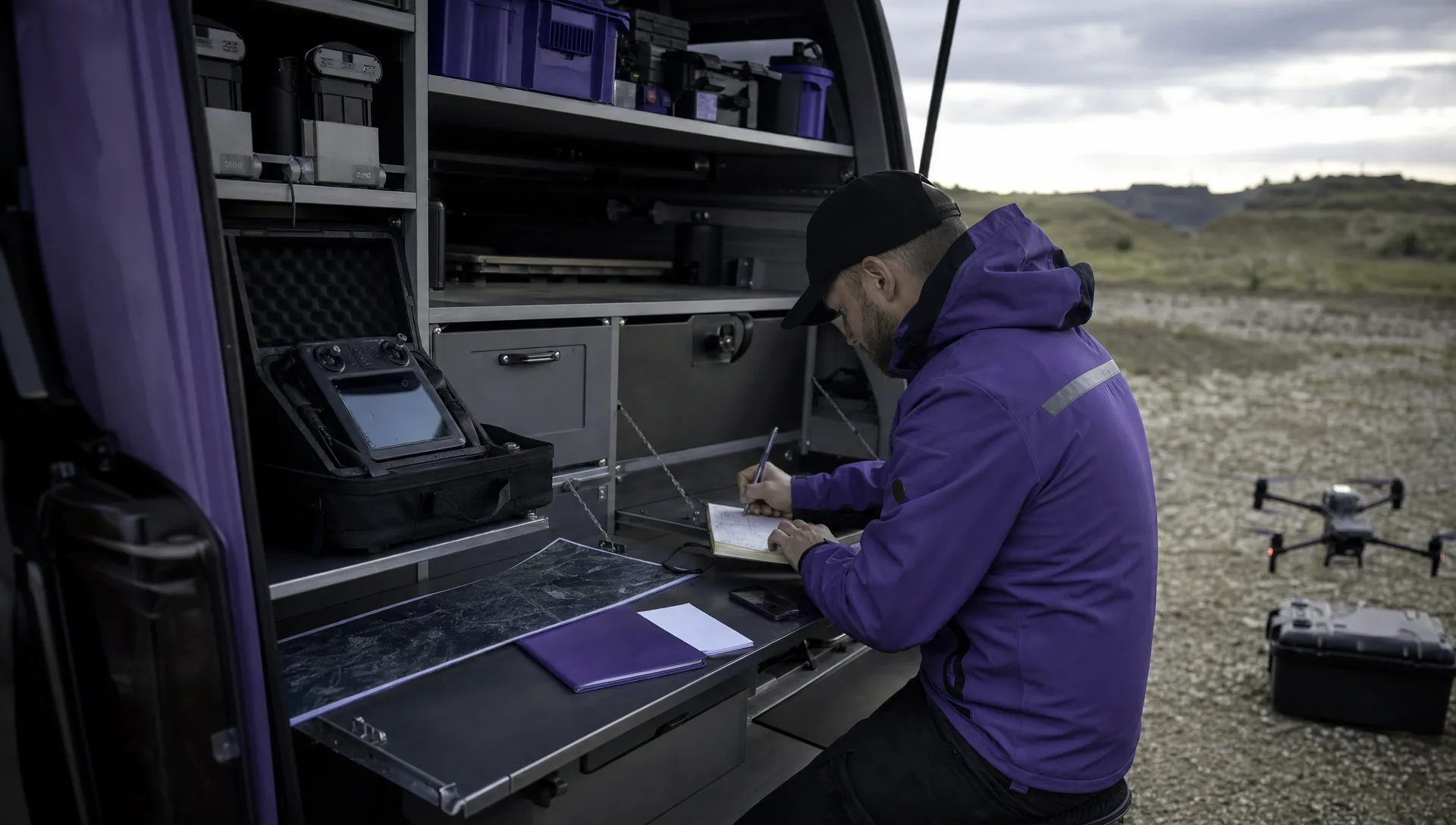 How to Evaluate a Free Drone Logbook Before Using It →
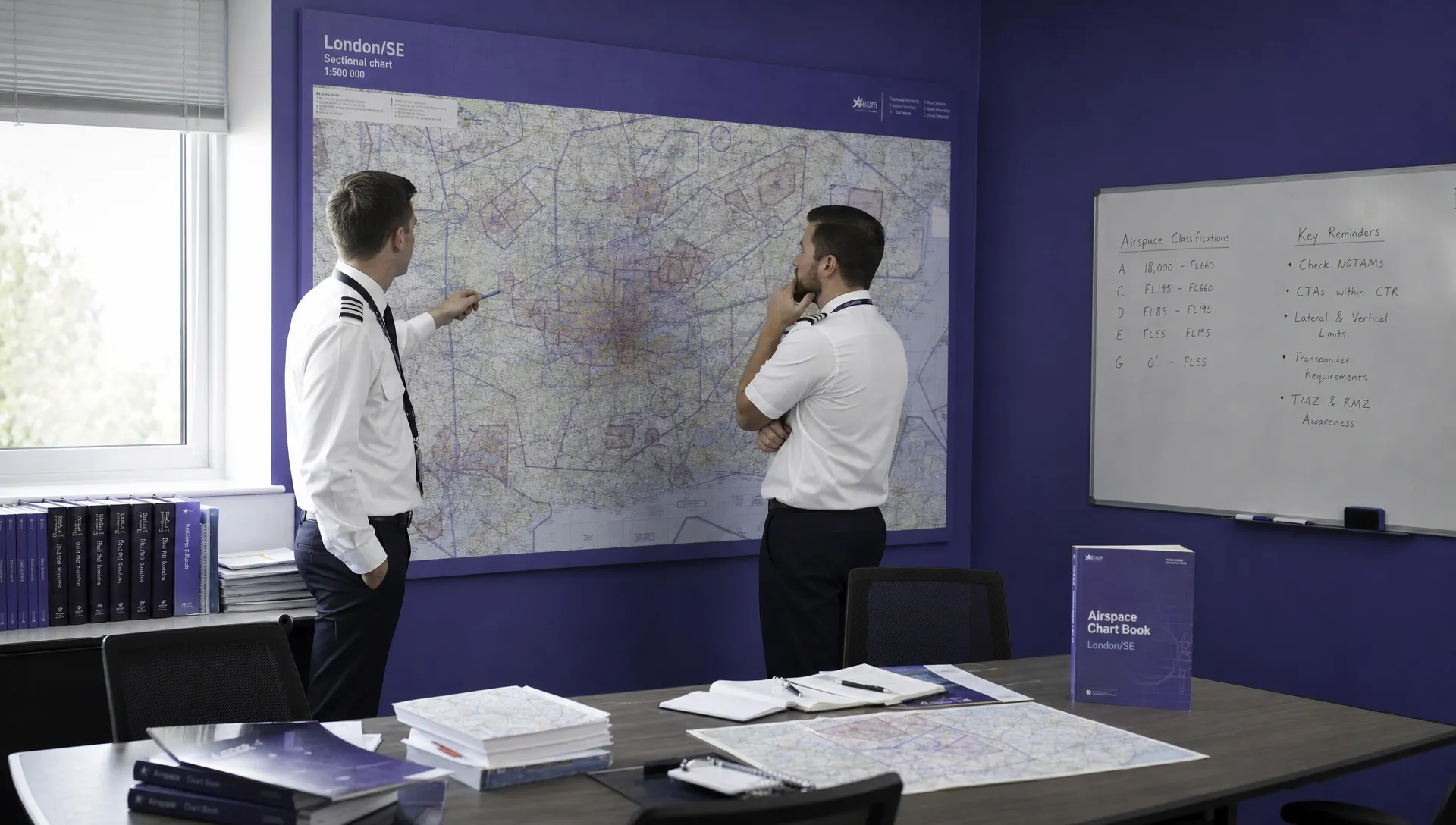 FAA Part 107 Test: How to Master Airspace Questions →
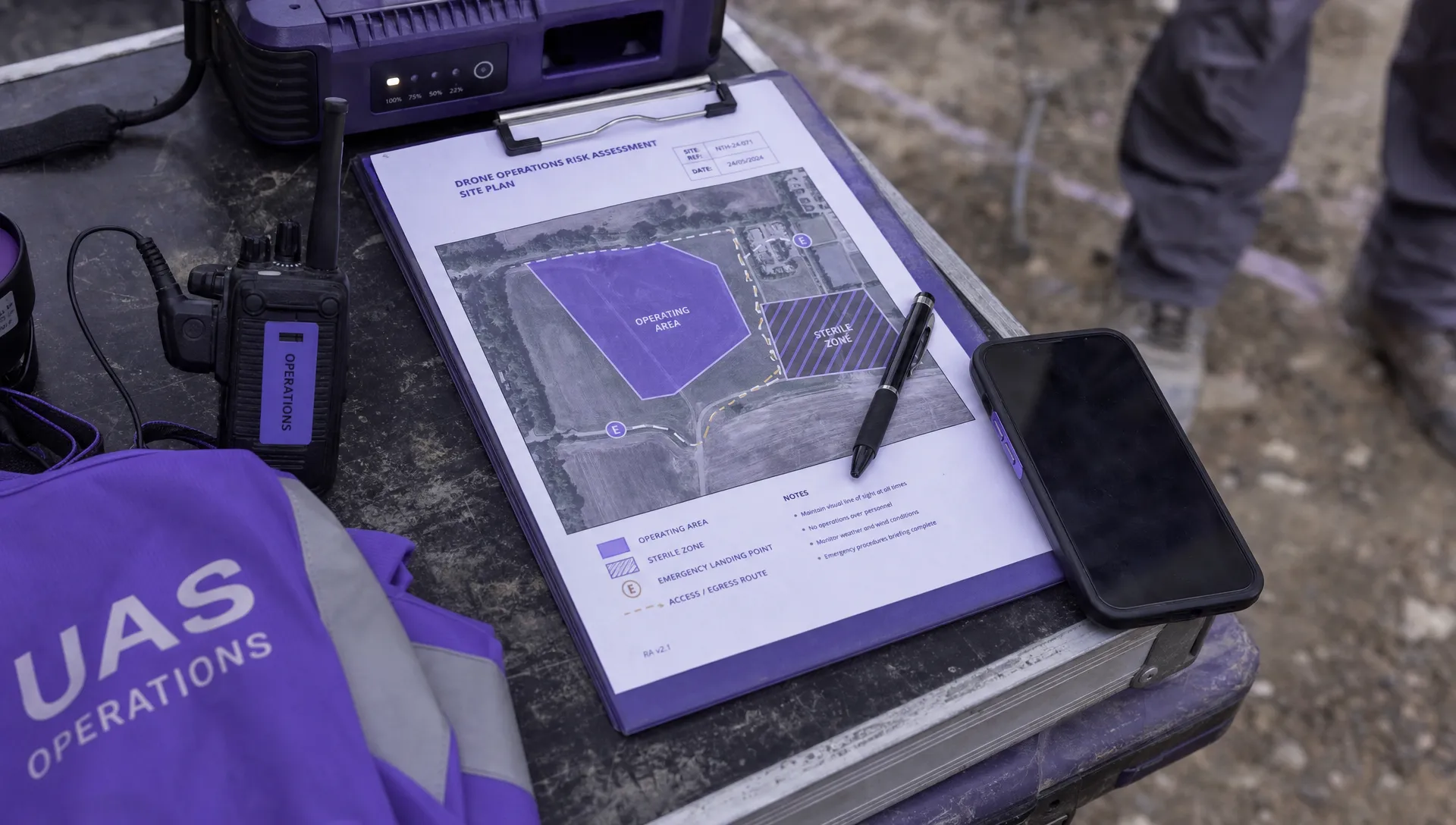 Drone Risk Assessment Controls That Work in the Field →
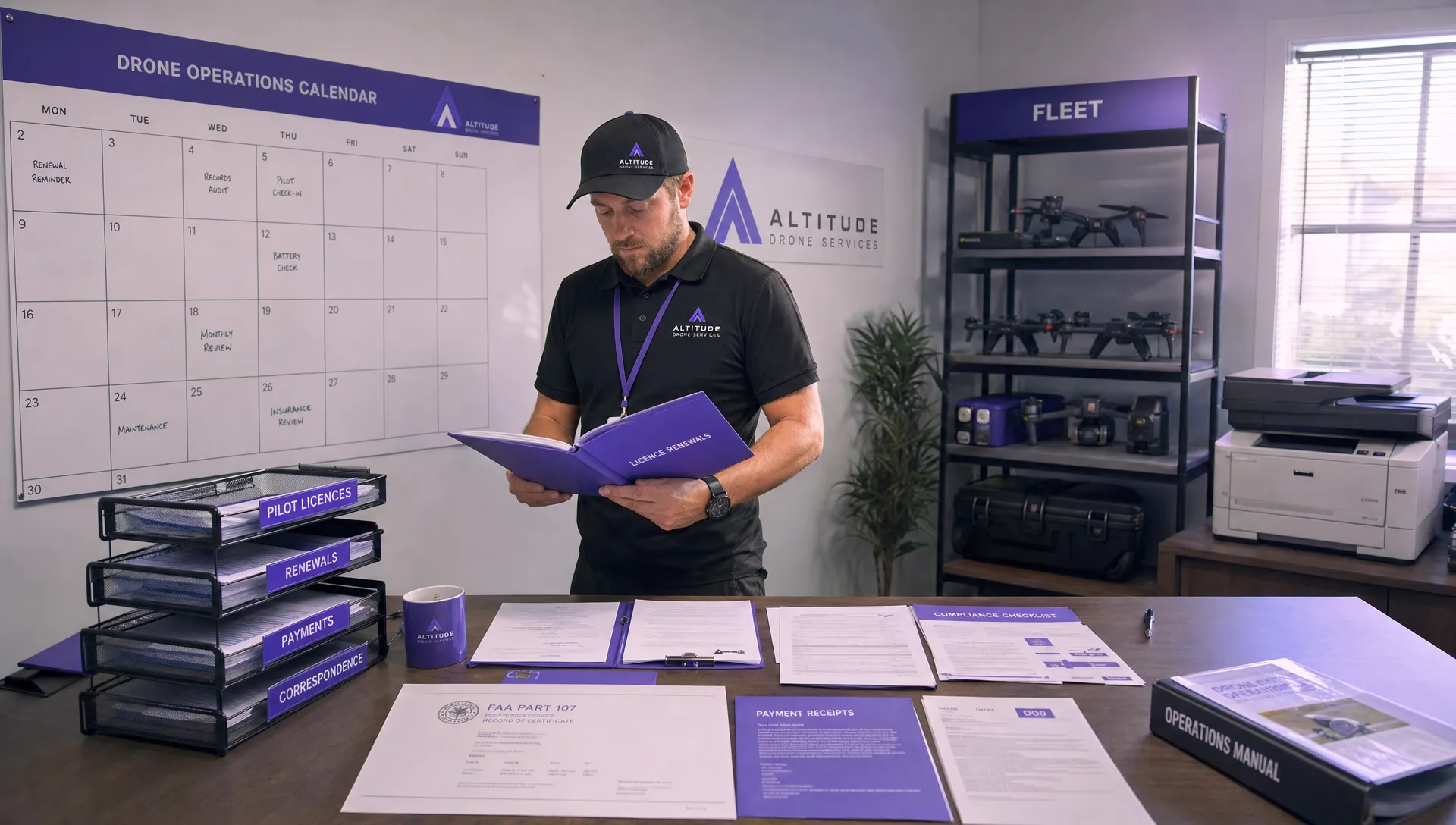 FAA Drone License Costs Beyond the Knowledge Test →
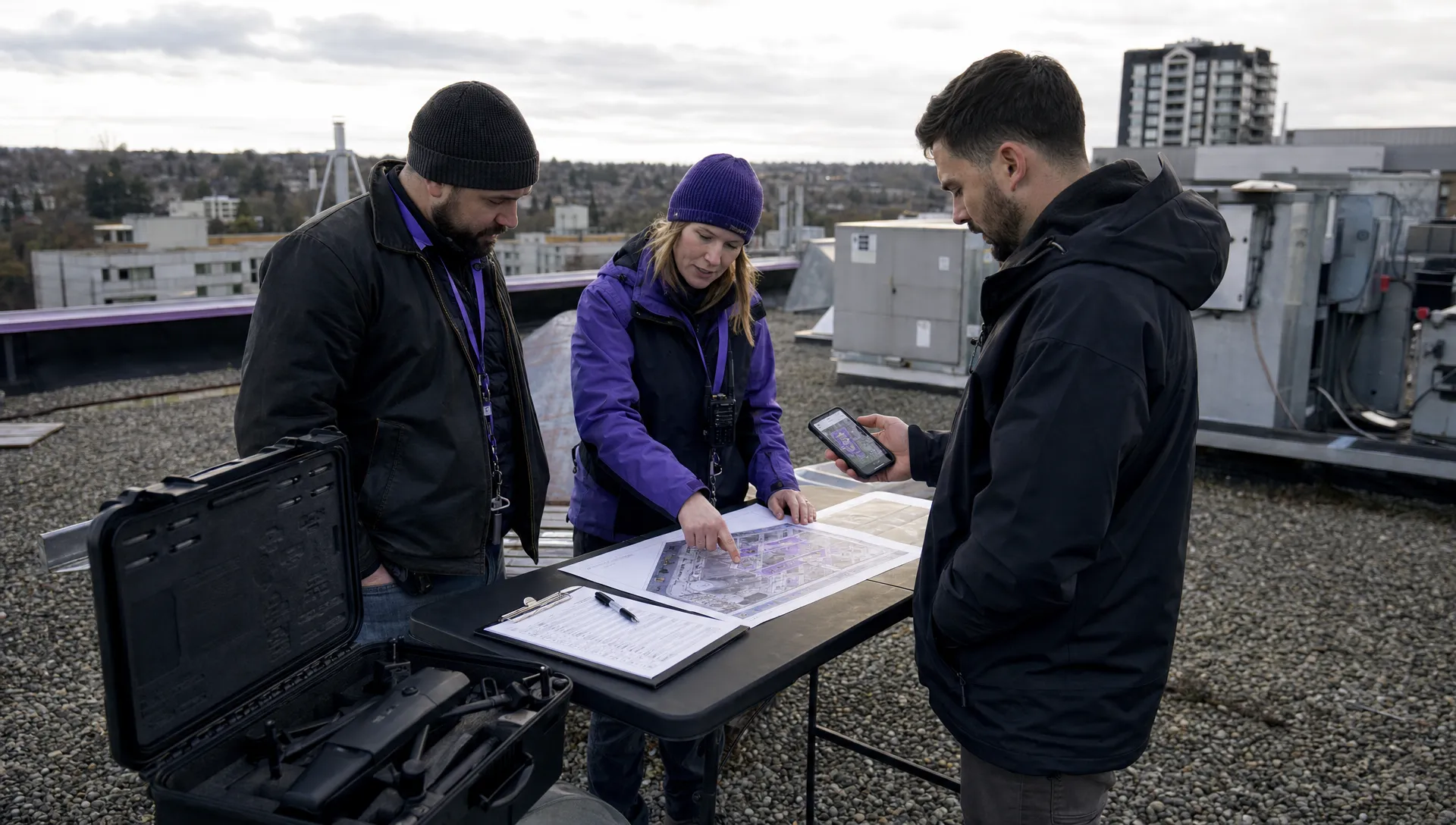 Drone Part 107 Operations: When a Waiver May Be Needed →
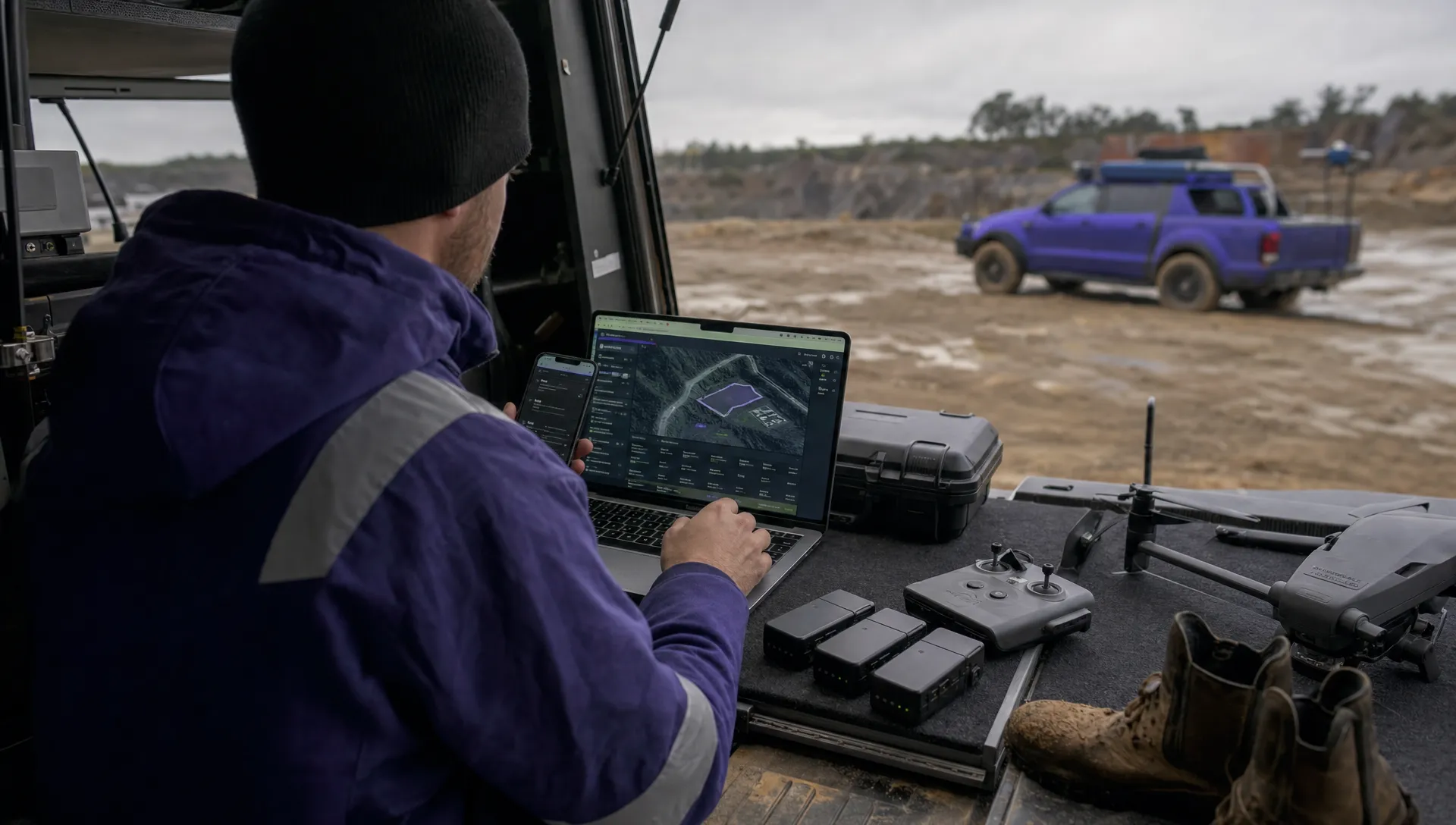 Drone Operating Rules for Managing Contractors and Employees →
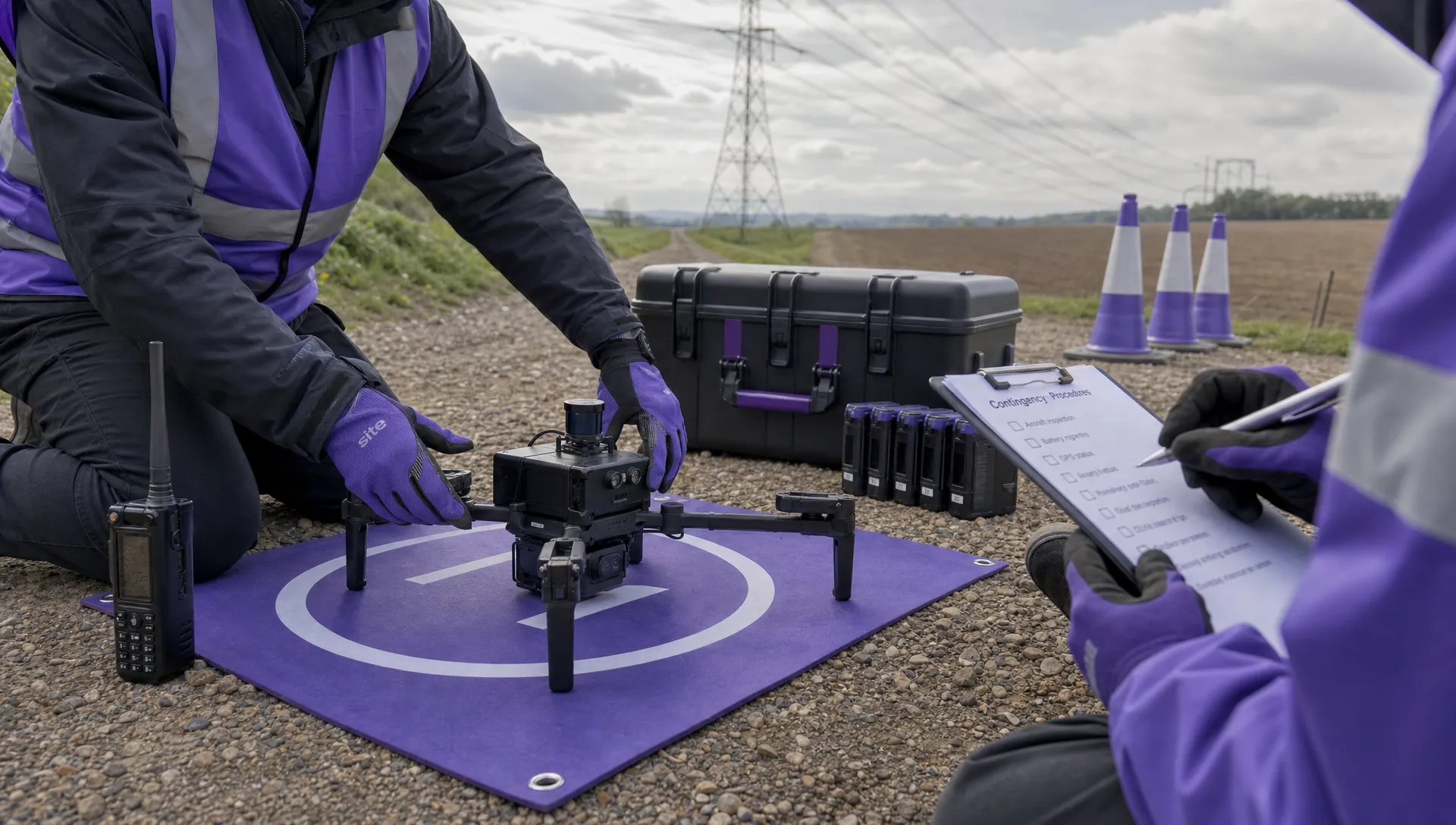 BVLOS Drone Requirements for Building a Safety Case →
 Drone Pilot Test Mistakes That Cost Candidates Marks →
 FAA 107 License vs Part 107 Certificate: What’s the Difference? →
 Drone Airport Rules: A Field Checklist for Site Assessments →