
How Drone Services Companies Can Scale Operations
Scaling a drone services company is rarely a simple case of buying more aircraft or hiring another pilot. Growth exposes the weak points in your operation: inconsistent flight planning, scattered documents, manual risk assessments, unclear team availability, poor fleet visibility and client work that is difficult to track from enquiry to invoice.
For drone operators, survey companies, utility inspection teams and emergency services, the challenge is to increase capacity without increasing operational risk. That means building repeatable systems that help every mission run to the same standard, whether it is flown by your founding pilot or by a distributed team across multiple regions.
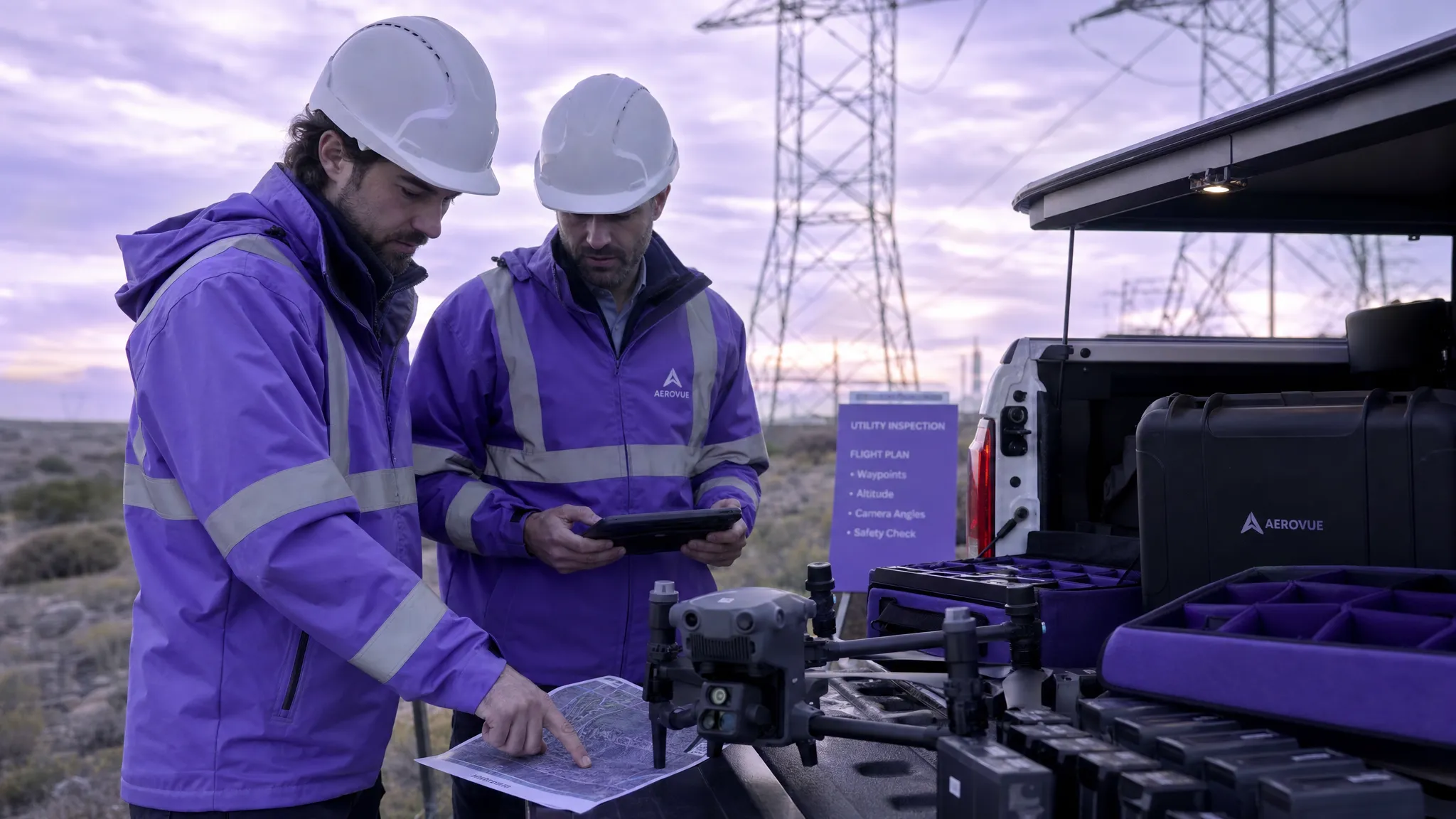
The companies that scale best tend to do three things well. They standardise how work is requested, planned and flown. They centralise operational data so managers can see what is happening. And they use technology to remove unnecessary admin from pilots, while keeping compliance and safety visible.
Start by defining what “scale” means for your drone services business
Before changing tools, hiring pilots or expanding into new sectors, decide what kind of growth you are trying to achieve. “More work” is not a strategy. A drone services company that wants to handle ten repeat utility inspections per week needs a different operating model from a mapping provider delivering one high-value survey per month.
Common scaling goals include:
- Increasing the number of missions completed per week
- Expanding into new regions without losing oversight
- Serving enterprise clients with stricter reporting requirements
- Reducing the time spent on pre-flight and post-flight administration
- Creating a consistent client experience across multiple pilots
- Maintaining audit-ready records as activity increases
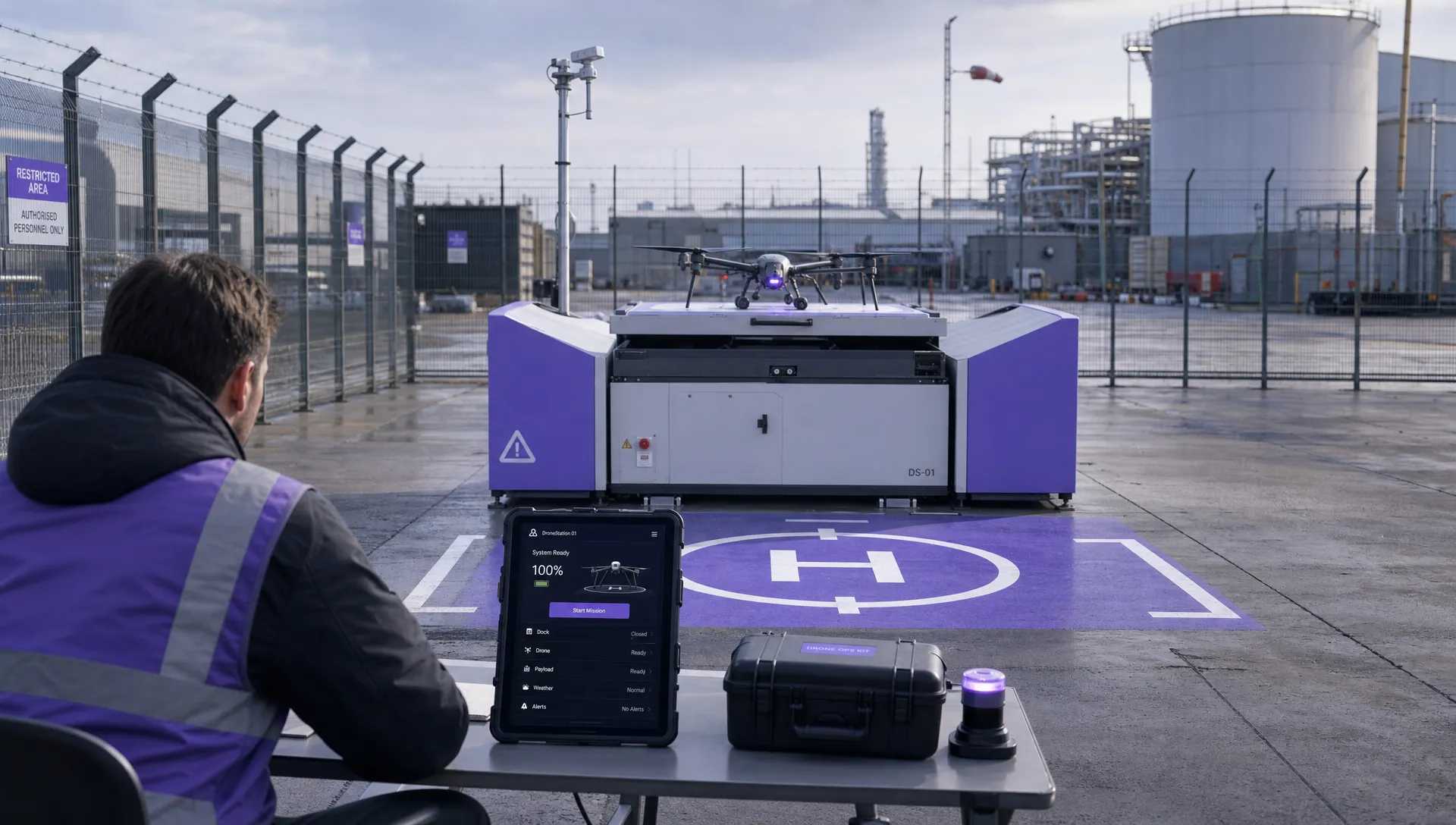
Once the goal is clear, you can design the operating model around it. For example, a survey company may need stronger job scoping, site data capture and deliverable tracking. A utility company may need repeatable inspection routes, fleet availability and asset history. Emergency services may need rapid deployment workflows, team readiness and clear documentation under pressure.
Scaling becomes much easier when each type of mission has a defined process rather than being reinvented every time.
Standardise client intake and mission scoping
Many drone services companies lose time before the flight is even planned. Enquiries arrive by email, phone, web form or referral. Site details are incomplete. The client has not confirmed the deliverable. The team discovers too late that the location has airspace restrictions, nearby hazards or access issues.
A scalable intake process captures the information needed to assess feasibility and quote accurately. At a minimum, your team should collect the client’s objective, site location, preferred date, deliverables, operating environment, access constraints, known hazards and any third-party requirements.
This is especially important for B2B drone services. Enterprise clients often expect predictable communication, formal documentation and clear evidence of competence. If each pilot scopes work differently, the business becomes dependent on individual judgement rather than a repeatable process.
A strong intake workflow should answer four questions early:
| Question | Why it matters when scaling |
|---|---|
| What outcome does the client need? | Prevents misquoted jobs and unclear deliverables |
| Where will the operation take place? | Allows early checks for airspace, hazards and access issues |
| Who needs to approve the work? | Reduces delays with landowners, site managers or internal stakeholders |
| What records must be produced? | Ensures compliance and client reporting requirements are planned from the start |
As volume increases, even small gaps at the intake stage can create significant rework. Standardisation prevents your operations team from spending hours chasing information that should have been gathered before the job was accepted.
Build repeatable flight planning workflows
Flight planning is one of the clearest differences between a small drone business and a scalable drone services company. When you are flying a handful of jobs, planning may live in the head of an experienced operator. When you are managing multiple pilots, aircraft and clients, that approach breaks down quickly.
A repeatable planning workflow should cover airspace review, site hazards, proximity risks, weather, crew allocation, aircraft suitability, battery planning, permissions, emergency procedures, communications and client-specific requirements. In the UK, operators should also stay aligned with relevant Civil Aviation Authority drone guidance and their own operational authorisations where applicable.
Risk assessment deserves particular attention. As mission volume grows, risk assessments must remain practical, consistent and specific to the job. A generic document copied from one site to another may look efficient, but it can create false confidence. If your team is tightening this process, Dronedesk’s guide to building a drone flight risk assessment that works is a useful companion to a broader scaling plan.
The aim is not to add bureaucracy. The aim is to create a planning process that is fast because it is structured, and safe because it is consistent.
Move knowledge out of people’s heads and into systems
Early-stage drone companies often rely on a small number of highly experienced people. That can work brilliantly at first, but it becomes a bottleneck as soon as the business grows. If one person knows which client needs which report, which aircraft has a maintenance issue, or how a specific site should be assessed, the company cannot scale reliably.
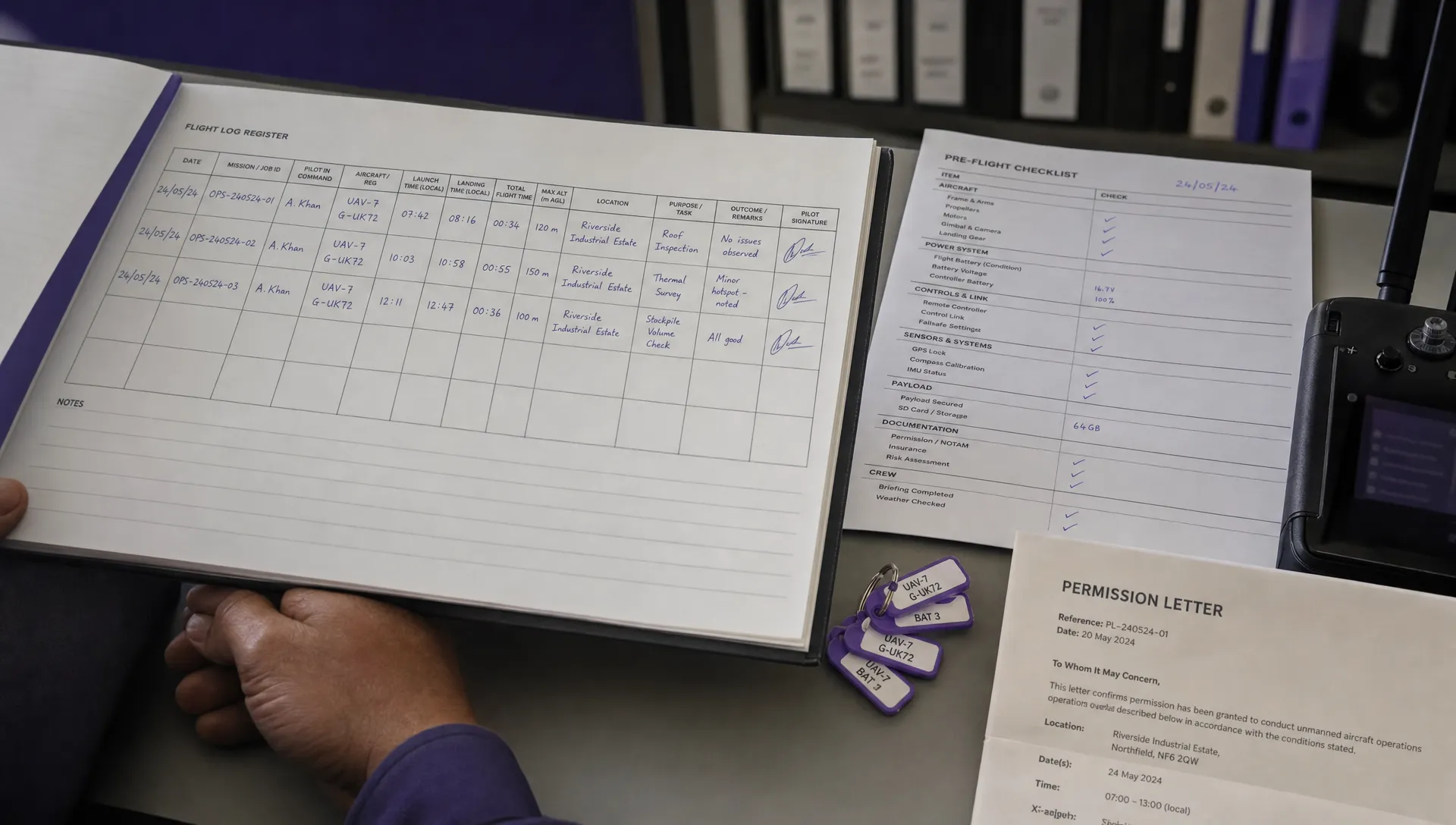
Operational knowledge needs to become part of the system. This includes standard operating procedures, checklists, site notes, client preferences, aircraft records, pilot qualifications and post-flight reporting expectations.
Checklists are particularly valuable because they reduce variation. They help newer team members follow the same operational steps as experienced pilots, while giving managers confidence that the essentials are being covered. For drone services companies working in sensitive environments, such as utilities, infrastructure, construction or public safety, this consistency is central to both safety and professionalism.
However, checklists must be maintained. If they become too long, outdated or irrelevant, teams will work around them. Review them regularly, especially after incidents, near misses, client complaints or changes in regulation.
Centralise fleet, team and operational records
At a certain point, spreadsheets and shared folders stop being a lightweight solution and start becoming a risk. The problem is not that spreadsheets are bad. The problem is that they are not designed to manage dynamic operational activity across pilots, aircraft, documents, risks and flight logs.
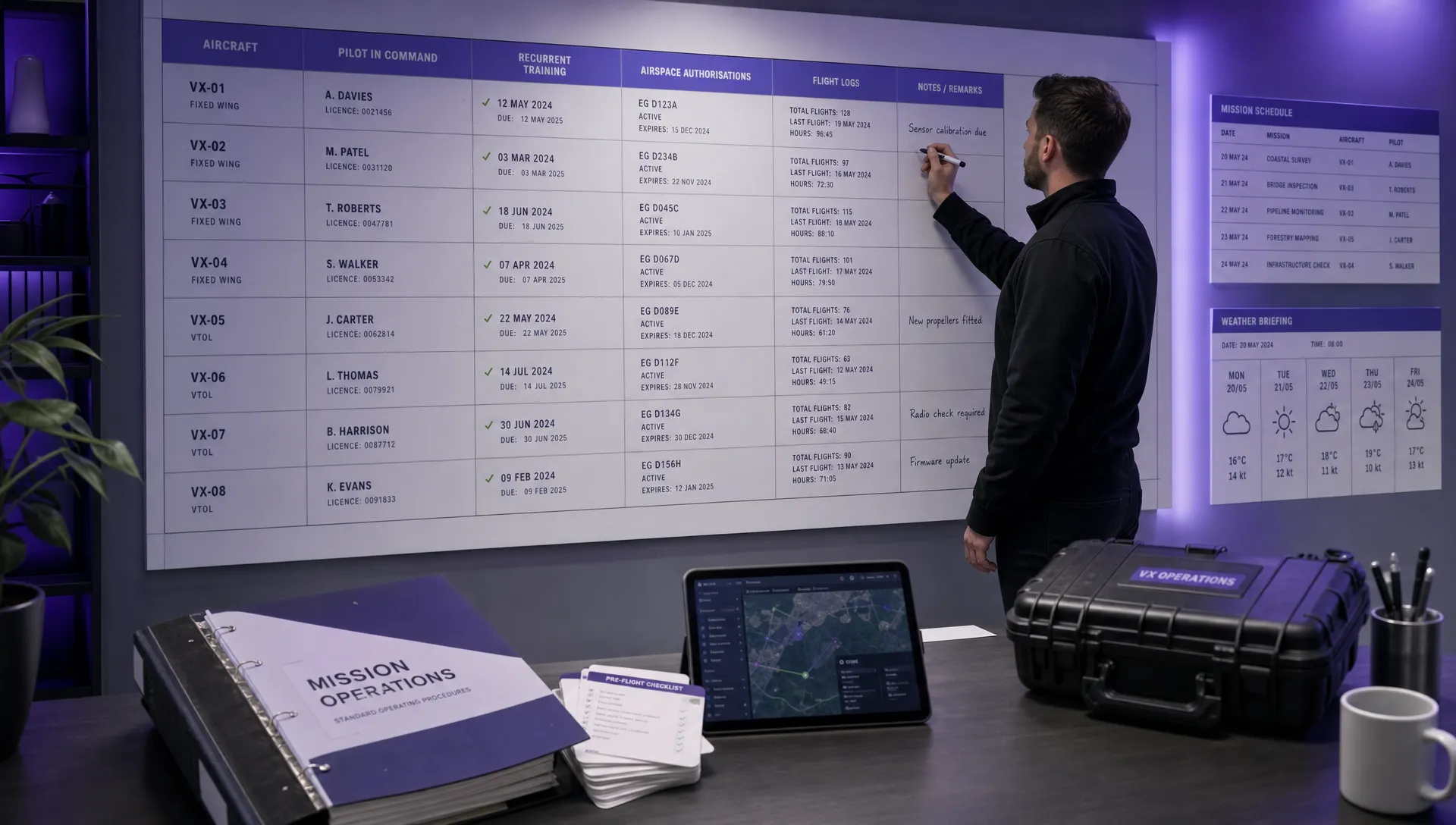
Fleet management becomes more complex as you add aircraft, batteries, payloads and maintenance obligations. Team management becomes more complex as you add pilots with different qualifications, availability and experience. Client management becomes more complex as you add recurring contracts, multiple sites and different reporting expectations.
This is where dedicated operations software becomes important. Platforms such as Dronedesk bring key operational functions into one place, including client management, fleet management, team management, airspace intelligence, proximity intelligence, flight planning, flight logging, data reporting, configurable checklists and risk assessments. You can review the platform’s current capabilities on the Dronedesk features page.
For a deeper look at managing aircraft, maintenance and operational readiness as your fleet grows, see this complete guide to drone fleet management.
Centralisation also improves continuity. If a pilot is unavailable, another authorised team member should be able to understand the mission context without searching through inboxes, message threads and disconnected files.
Design your operation around roles, not individuals
A scalable drone services company needs clear role ownership. In a small team, one person might handle sales, planning, piloting, client updates and reporting. As the business grows, that creates overload and makes quality harder to maintain.
Instead, define who is responsible for each stage of the operation. Typical roles include client contact, operations manager, remote pilot, observer, data processor, maintenance owner and compliance owner. In some teams, one person may still hold multiple roles, but the responsibility should be explicit.
This helps in three ways. First, it reduces missed tasks because everyone knows who owns each stage. Second, it makes onboarding easier because new team members can learn a defined role. Third, it gives managers a clearer view of capacity, which is essential when taking on larger contracts.
Role clarity is especially important for emergency services and utility operators, where drone flights may involve multiple stakeholders, time pressure and formal escalation processes. The more complex the environment, the more important it is to remove ambiguity.
Use metrics to find your real bottlenecks
Many drone services companies assume their main bottleneck is pilot availability. Sometimes it is. But often the constraint is elsewhere: quoting, permissions, risk assessments, travel time, data processing, client approvals or report delivery.
To scale profitably, track operational metrics across the full job lifecycle. You do not need to overcomplicate this at the start. Focus on the numbers that reveal capacity, quality and margin.
Useful metrics include:
- Enquiry-to-quote time
- Quote acceptance rate
- Planning time per mission
- Percentage of jobs delayed by missing information
- Aircraft utilisation
- Pilot utilisation
- Flight hours by client or sector
- Rework caused by incomplete data capture
- Time from flight completion to deliverable handover
- Incidents, near misses and recurring risk themes
These metrics help you decide where to invest. If pilots are underutilised but data processing is backed up, hiring another pilot will not solve the problem. If planning takes too long because site information is incomplete, the intake process needs attention. If aircraft utilisation is low because maintenance records are unclear, fleet management is the issue.
Scaling is much easier when decisions are based on operational evidence rather than instinct.
Build compliance into the workflow, not around it
Compliance should not be a separate admin exercise completed after the “real work” is done. That approach may survive at low volume, but it becomes fragile as operations increase. Records get missed, documents are duplicated, and managers struggle to prove what happened on a given job.
A scalable compliance model captures the right information as work progresses. Client details, site assessments, risk controls, crew assignments, aircraft records, flight logs and post-flight notes should connect naturally to the mission.
This matters for internal governance, but also for client confidence. Enterprise buyers, public sector organisations and safety-critical industries often want evidence that drone operations are controlled and documented. Being able to produce clear records can help differentiate your drone services company from less mature competitors.
Audit readiness is also valuable during growth because it reduces disruption. If your documentation is already organised, reviews, renewals and client checks become less stressful.
Package services for repeatability
Custom projects can be profitable, but too much customisation makes scaling harder. Every exception creates extra admin, extra communication and extra risk of misunderstanding.
One way to scale is to package common services into defined offers. For example, a survey provider might create standard packages for progress monitoring, roof inspections, volumetric surveys or asset condition reporting. A utility-focused operator might define recurring inspection packages by asset type, frequency and reporting format.
Packaging does not mean removing flexibility. It means creating a clear baseline. Clients understand what is included, your team knows how to deliver it, and managers can forecast resources more accurately.
A good service package should define the operating scope, expected outputs, assumptions, exclusions, required client inputs and turnaround expectations. This reduces ambiguity and makes delivery easier to delegate.
Make quality assurance part of delivery
As you add pilots, subcontractors or regional teams, quality assurance becomes essential. Clients should not receive different standards depending on who completed the work.
Quality assurance can include pre-flight planning review, image or data capture checks, deliverable review, flight log completion checks and post-job debriefs. For high-value or safety-critical work, a second-person review may be appropriate before reports are sent to the client.
The key is to catch quality issues early. Discovering after the flight that the wrong asset was captured, the overlap was insufficient, or the client’s required view was missed can destroy margin and damage trust. A simple review step before and after the mission can prevent expensive rework.
This is particularly important for mapping, inspection and emergency response use cases, where the value of the drone flight depends on the usefulness of the data collected.
Know when to hire, outsource or automate
Scaling does not always mean hiring full-time staff. Sometimes the best next step is subcontracting specialist pilots, outsourcing data processing, automating admin-heavy workflows or investing in better operational software.
The right choice depends on where demand is predictable and where control is critical. If you have steady recurring work in a region, hiring may make sense. If you need occasional specialist capability, subcontracting may be more flexible. If your team is spending too much time duplicating data across systems, software may deliver more value than another person.
Before hiring, ask whether the role will remove a proven bottleneck. If the bottleneck is unclear, measure it first. Growth feels exciting, but adding cost before fixing process problems can make the business harder to manage.
Scaling drone services is an operations challenge
The drone industry often focuses on aircraft, sensors and data outputs. Those things matter, but sustainable growth depends just as much on operational discipline. Drone services companies scale when they can deliver safe, compliant, repeatable work without relying on heroic effort from a few key people.
That means standardising intake, planning, risk assessment, fleet management, team coordination, compliance records and reporting. It also means choosing systems that make the right way to work the easiest way to work.
If your team is moving beyond spreadsheets and disconnected documents, Dronedesk provides an all-in-one web platform for managing drone operations, from clients and teams to flight planning, risk assessments, checklists, flight logging and reporting. You can explore how different organisations use the platform through the Dronedesk case studies, or visit Dronedesk to see whether it fits your next stage of growth.
Frequently Asked Questions
How can drone services companies scale operations safely? They can scale safely by standardising mission intake, flight planning, risk assessments, checklists, fleet records, pilot responsibilities and post-flight reporting. Growth should be built around repeatable processes rather than informal knowledge held by individual pilots.
When should a drone business stop using spreadsheets? Spreadsheets may work for very small teams, but they become difficult to manage when you have multiple pilots, aircraft, clients, maintenance records, flight logs and compliance documents. If your team is duplicating data or struggling to find current information, it is time to consider dedicated operations software.
What is the biggest bottleneck when scaling drone services? The biggest bottleneck is often not flying capacity. It is usually administration, planning, permissions, data processing, reporting or poor visibility across jobs. Tracking operational metrics helps identify the real constraint.
How do drone companies maintain consistency across multiple pilots? Consistency comes from shared procedures, configurable checklists, clear role ownership, standardised risk assessments, documented client requirements and quality assurance reviews before deliverables are issued.
Can emergency services scale drone operations using the same principles? Yes, although their operating environment is often more time-critical. Emergency services still benefit from centralised records, clear team roles, fleet readiness, repeatable deployment processes and mission documentation that supports accountability.
 How to Build a Drone Pilot Flight Log That Is Audit Ready →
 FAA Drone Licence Requirements for Commercial Pilots →
 FAA BVLOS Waivers Granted: What Successful Cases Show →
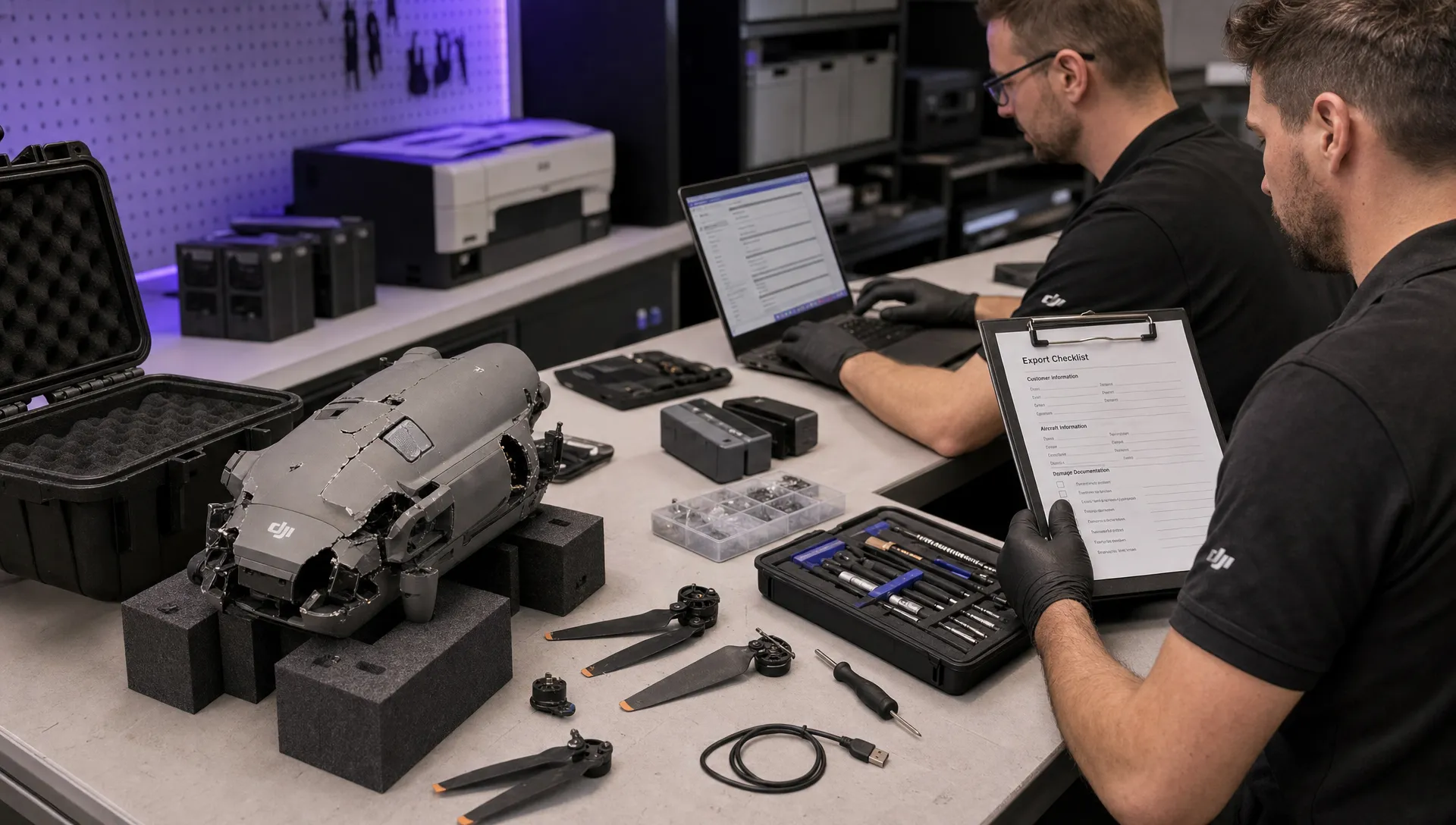 How to Export DJI Flight Logs for Incident Reviews →
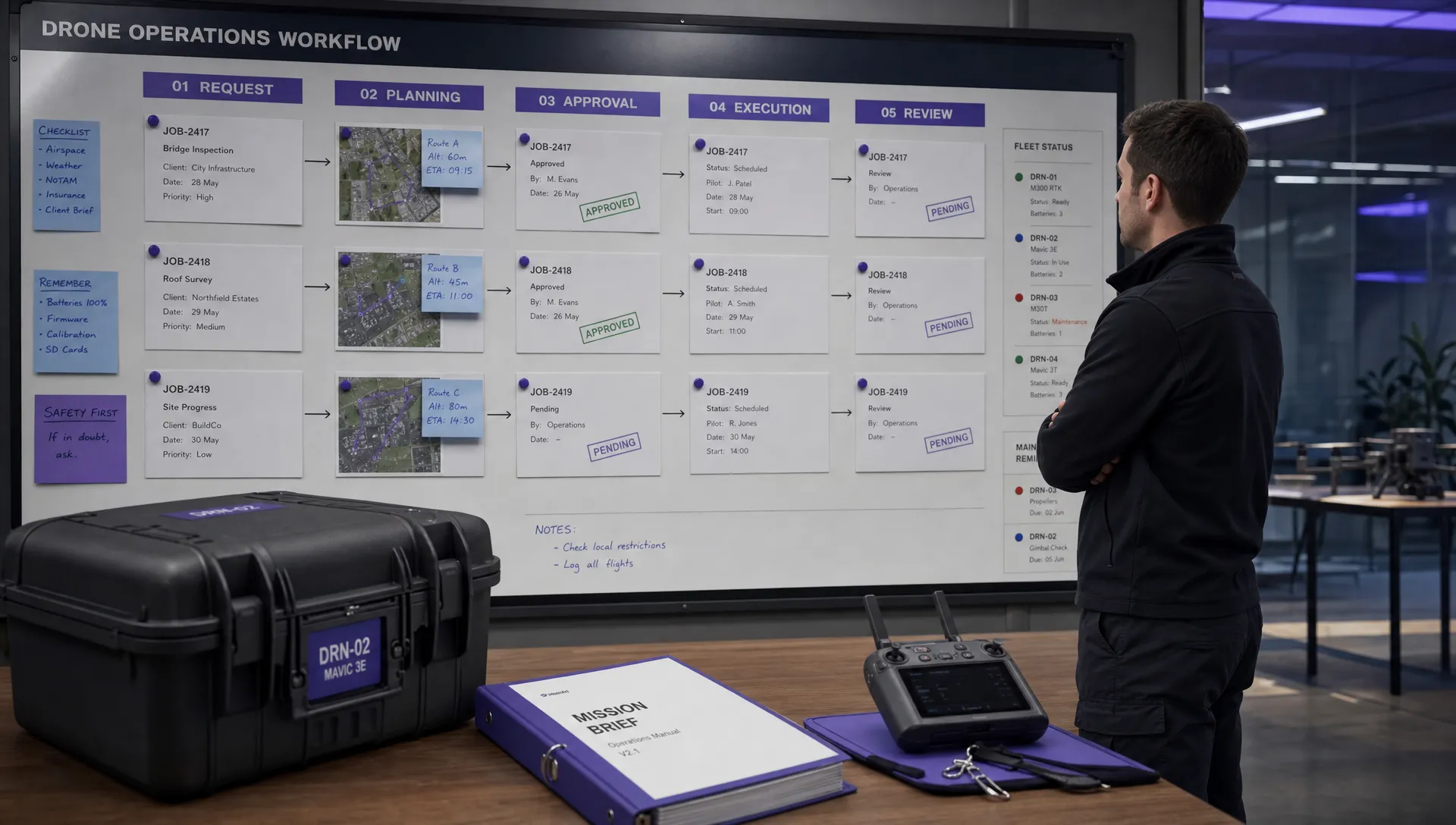 Drone Safety and Legal Duties for Business Operations →
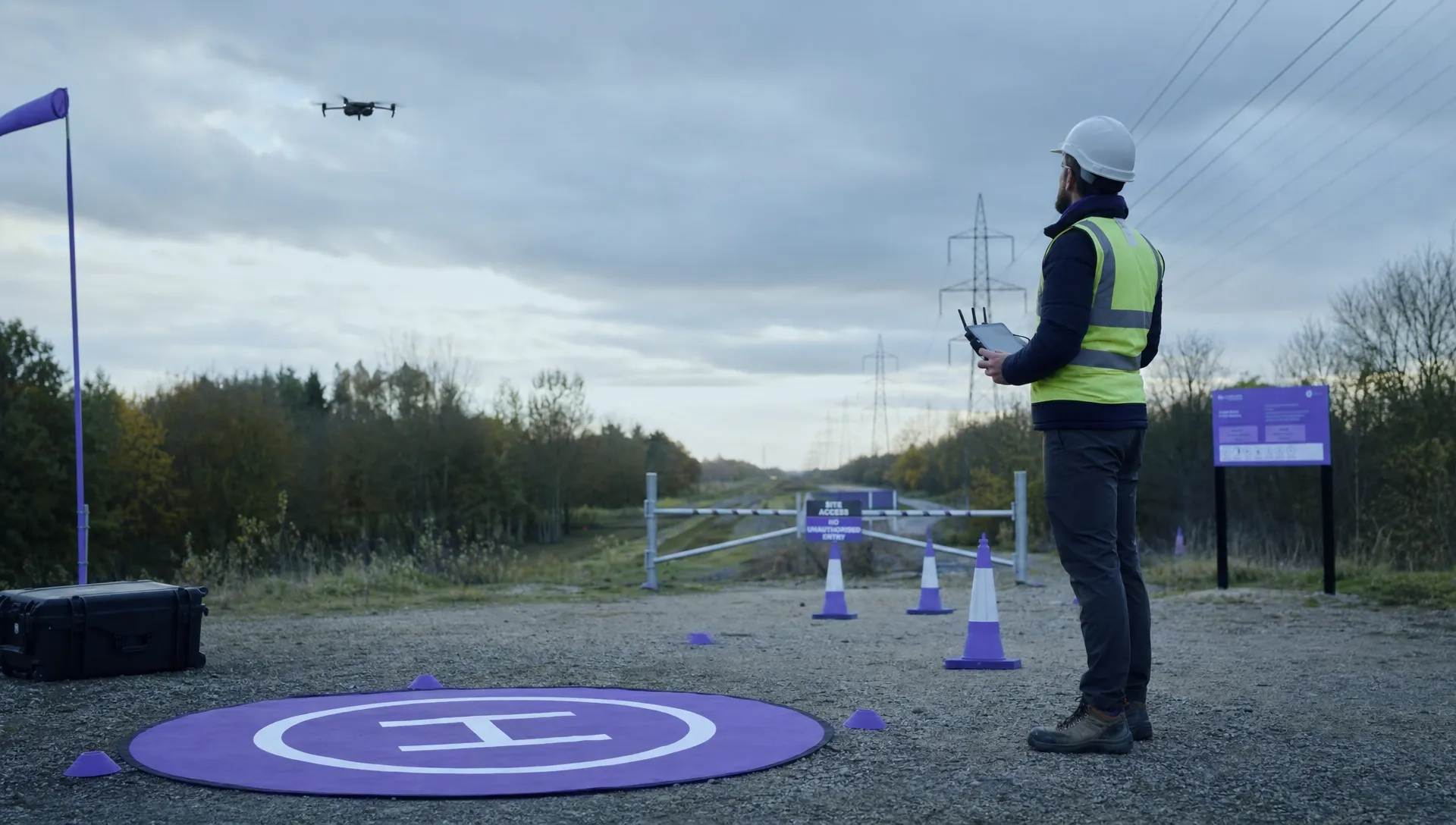 EASA Drone Regulations: Open, Specific and Certified Categories →
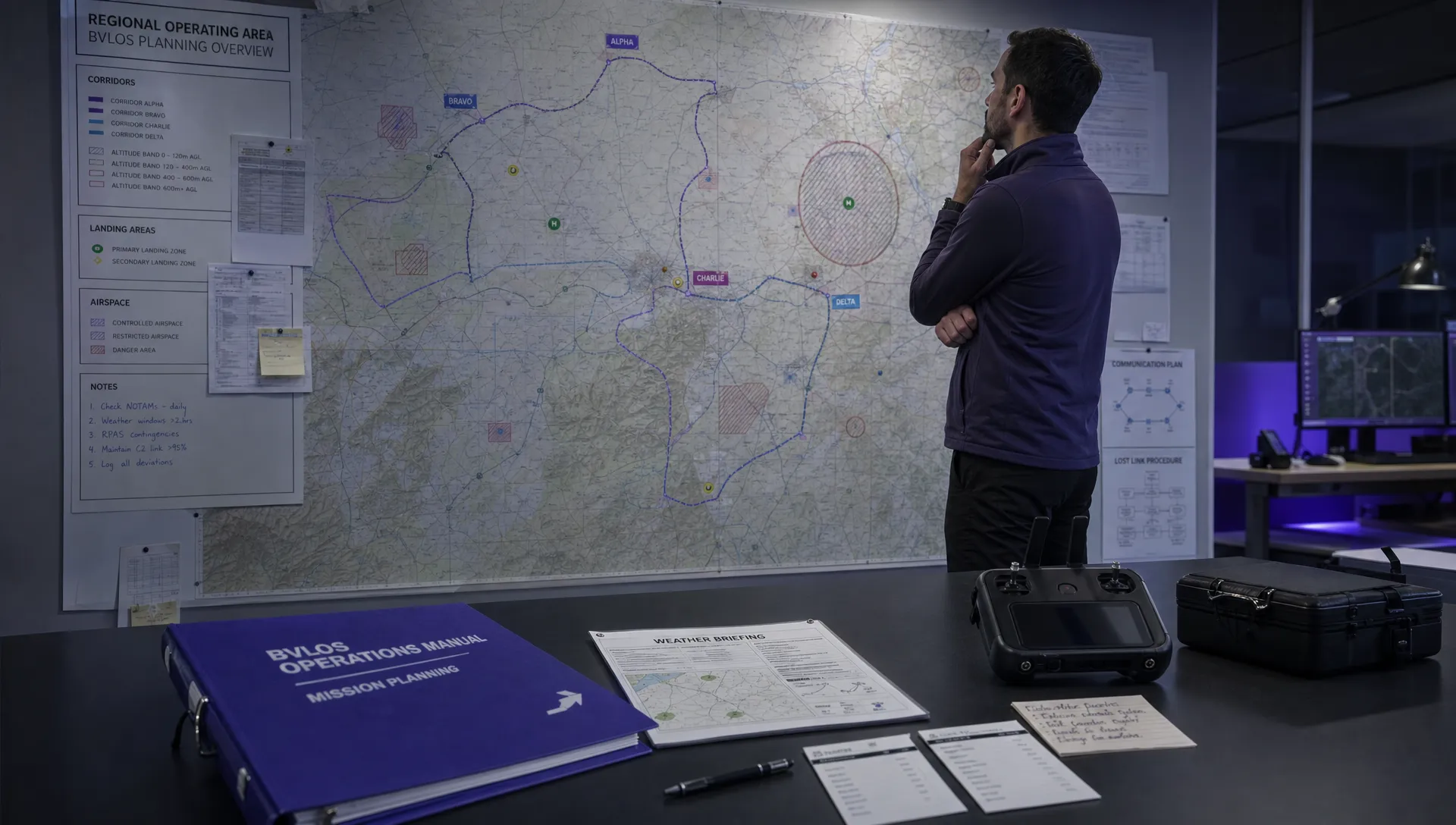 What the BVLOS ARC Report Means for UAS Operators →
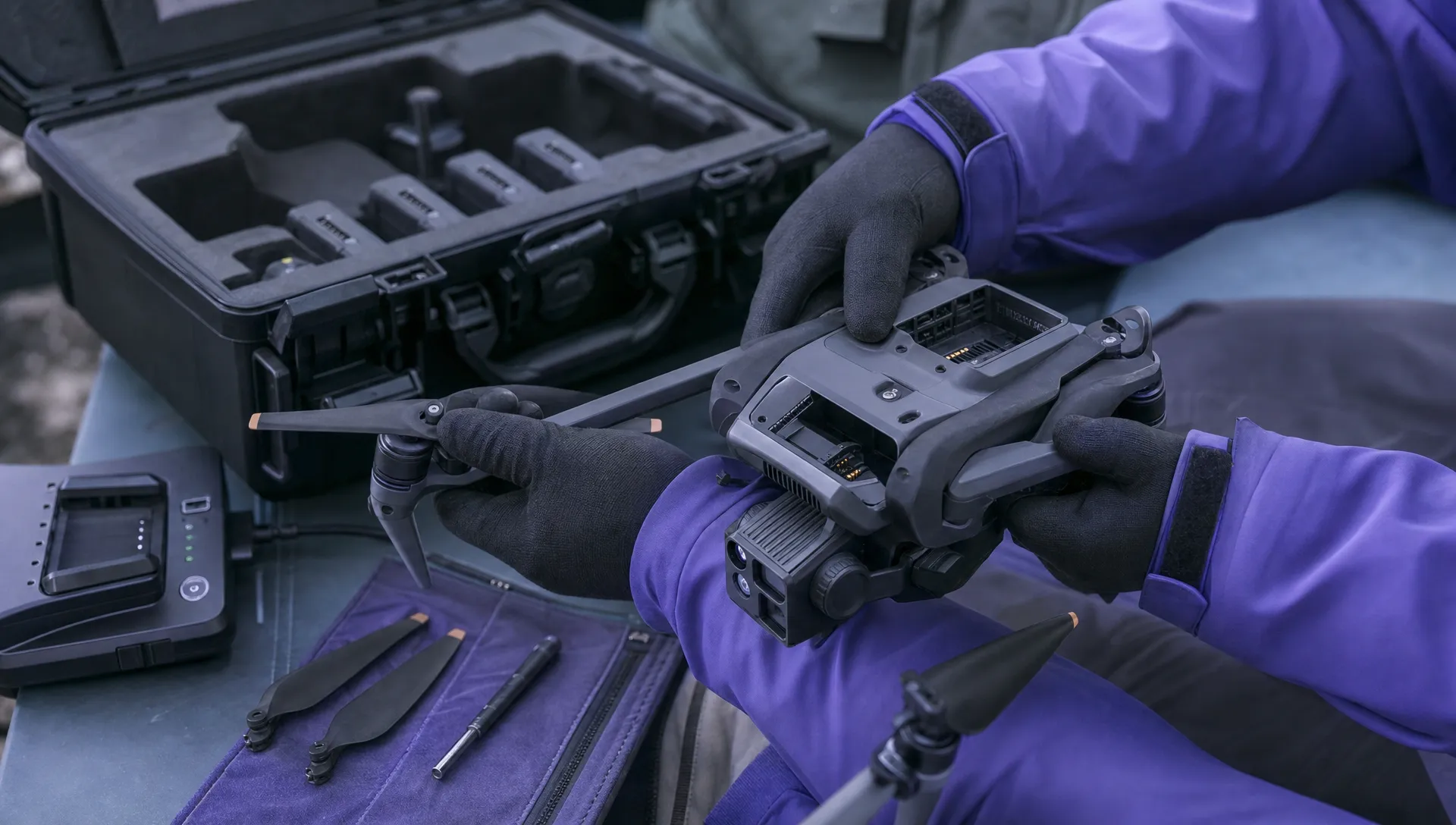 Free Drone Pre-Flight Checklist for Commercial Missions →
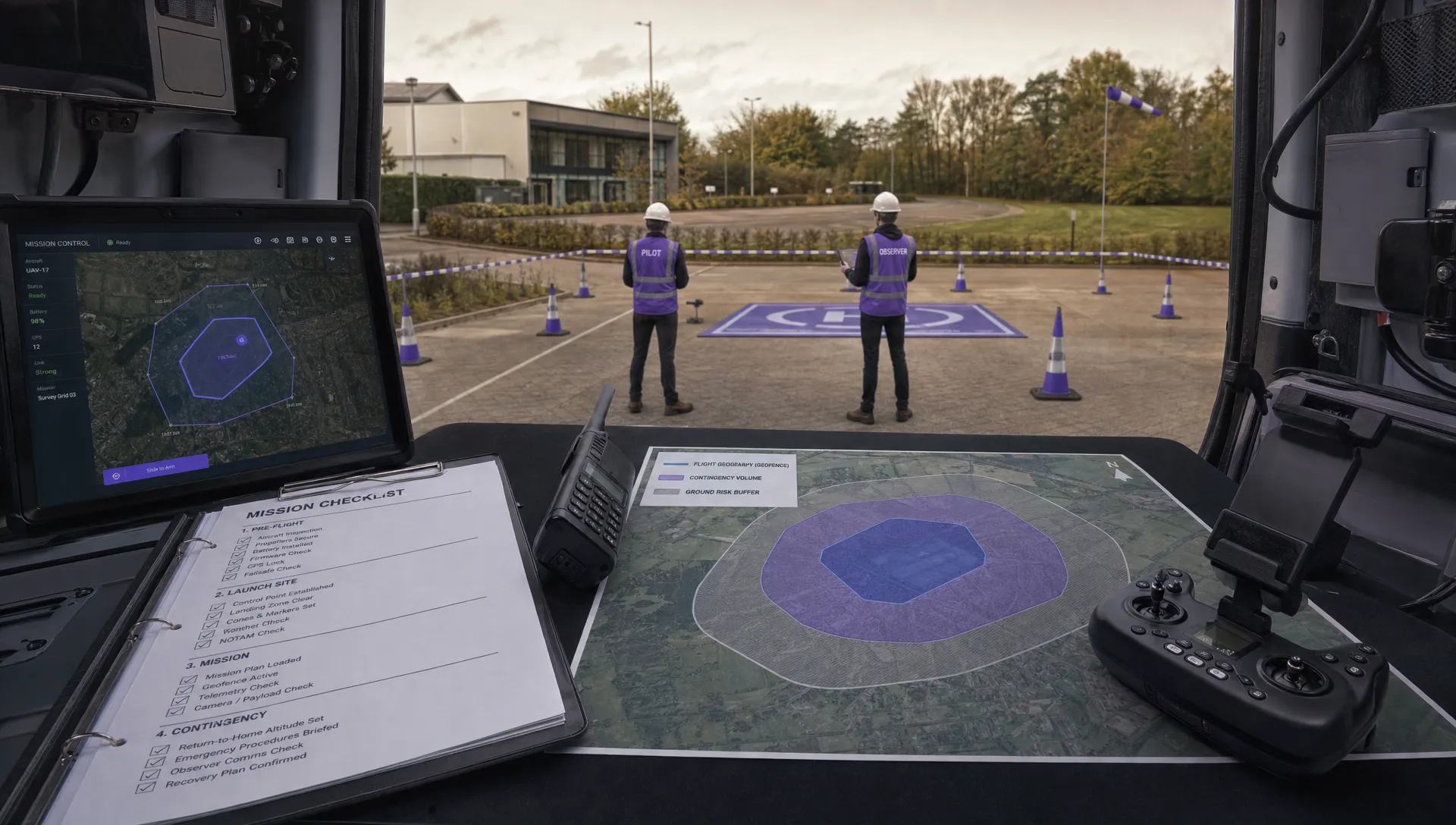 Contingency Volume and Flight Risk Buffer Explained →
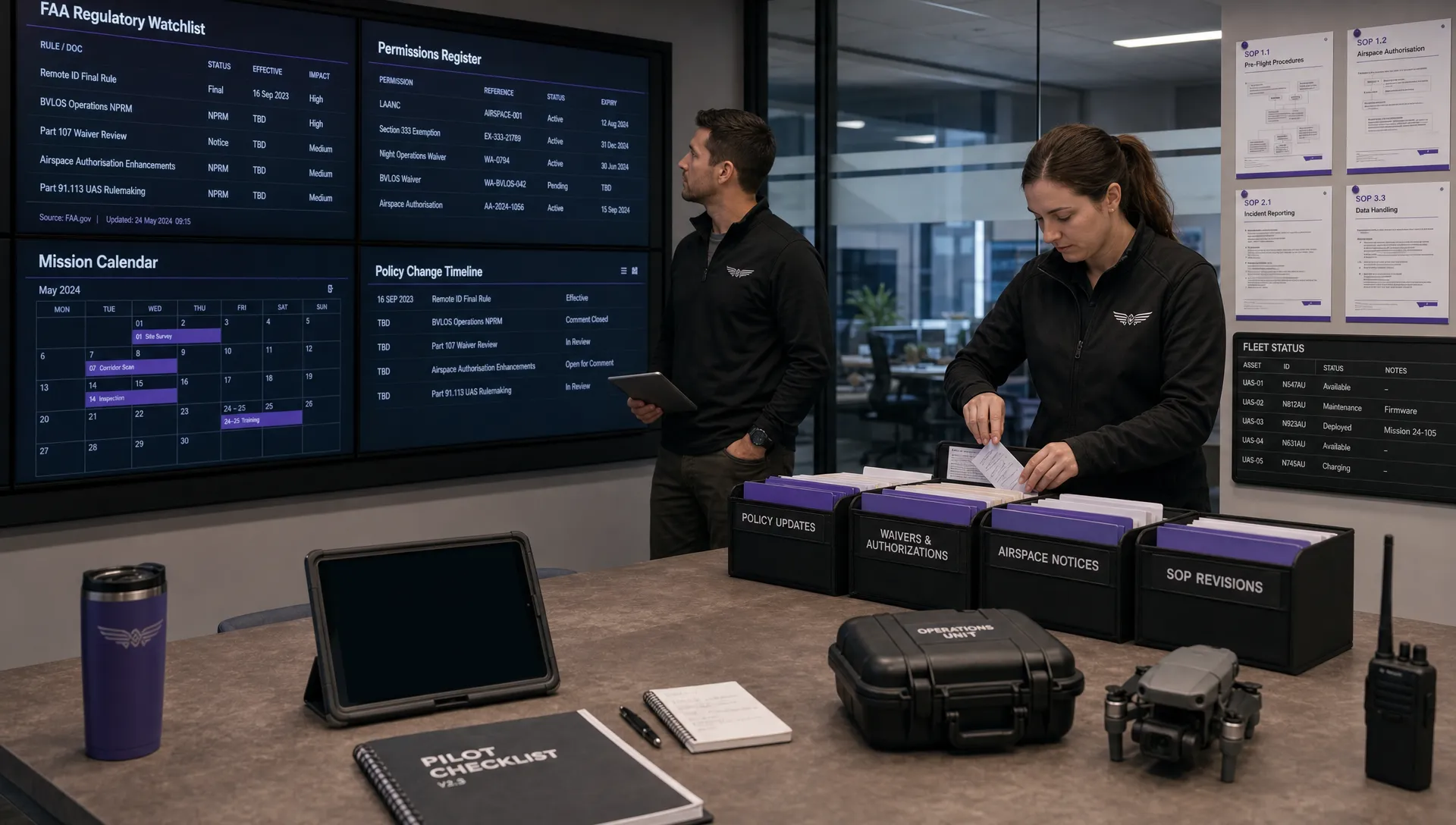 FAA Policy Changes That Commercial Drone Teams Should Track →