
Drone Companies Publicly Traded: Top Picks (drone companies publicly traded)
The unmanned aerial vehicle (UAV) sector has moved far beyond hobbyist flyers, becoming a serious tool for industries ranging from defense and public safety to agriculture and infrastructure inspection. As this market matures, identifying stable, long-term partners for hardware, software, and services is critical for any professional drone operation. Looking at drone companies publicly traded on the stock market offers a unique lens into the industry's health, revealing which players have achieved significant scale, financial transparency, and a strategic vision for the future of autonomous flight.
This guide provides a direct, practical roundup of key publicly traded drone companies. We cut through the market noise to deliver actionable intelligence for drone teams, service providers, and enterprise managers. For each company, you will find its stock ticker, an indicator of its market size, and a clear breakdown of its core drone offerings. We'll specify whether a company is a pure-play drone firm or a diversified giant with a significant UAV division, helping you align your procurement or partnership strategy. As the industry matures, the role of advanced manufacturing techniques, such as innovations in engineering and manufacturing like efficient and rapid prototyping via UAV 3D printing, becomes crucial for driving innovation and efficiency.
The following list is designed to be a functional resource. We examine the specific use cases relevant to commercial operators and explore potential for integration, covering everything from hardware compatibility to data service partnerships. This isn't just a list of stocks; it's a strategic brief to help you evaluate potential technology partners and make informed decisions for your operations.
1. AeroVironment (AVAV): The Tactical UAS Powerhouse
AeroVironment stands as a cornerstone among publicly traded drone companies, primarily serving the defense, government, and public safety sectors. While commercial drone teams won't find off-the-shelf mapping drones here, understanding AVAV's offerings is vital for organizations that collaborate with government agencies or operate in high-security environments. The company's platforms are built for mission-critical intelligence, surveillance, and reconnaissance (ISR).
Core Drone Offerings and Focus
AeroVironment is a pure-play drone and robotics company with a deep specialization in small and medium Unmanned Aircraft Systems (UAS). Their product line is synonymous with military-grade reliability and performance.
- Small UAS (SUAS): This category includes the battle-proven Raven, Wasp, and Puma systems. These are hand-launched or rail-launched aircraft designed for front-line ISR, providing real-time situational awareness.
- Medium UAS: The flagship here is the JUMP 20, a vertical takeoff and landing (VTOL) fixed-wing platform. It offers over 14 hours of endurance and a 185 km range, making it suitable for persistent, beyond-visual-line-of-sight (BVLOS) operations without runway dependence.
- Loitering Munitions: AeroVironment pioneered this category with its Switchblade series (300 and 600). These are often called "kamikaze drones," combining the ISR capabilities of a small drone with the precision strike of a missile.
Key Insight for Commercial Teams: While you cannot directly purchase Switchblade systems, AeroVironment's deep experience in autonomy and sensor integration signals where the high-end of the industry is headed. Their developments in AI-driven targeting and sensor fusion may eventually trickle down into commercial inspection and security applications.
Integration and Partnership Potential
Direct procurement from AeroVironment is typically restricted to government bodies and allied foreign militaries. However, for enterprise drone teams, the value lies in understanding their ecosystem for potential collaboration or compatibility.
| Company Snapshot: AeroVironment (AVAV) | |
|---|---|
| Stock Ticker: | NASDAQ: AVAV |
| Market Cap Indicator: | Mid-Cap to Large-Cap |
| Drone Focus: | Pure-Play (Defense/Gov't) |
| Primary Use-Cases: | ISR, Public Safety, Loitering Munitions, Counter-UAS |
Partnerships often happen at a higher level, involving software and payload integration. For instance, a company specializing in advanced analytics software for infrastructure inspection might partner with a firm like AeroVironment to adapt its algorithms for defense-related reconnaissance data. Similarly, a specialized sensor manufacturer could work to integrate their payload onto a platform like the Puma or JUMP 20.
For drone teams supporting public safety agencies, familiarity with AeroVironment's systems is a practical advantage. Police or fire departments may operate Puma systems, and a contractor's ability to process or augment data from these platforms could be a significant differentiator.
Website: https://www.avinc.com/
2. Kratos Defense & Security Solutions (KTOS): The Attritable Drone Pioneer
Kratos Defense & Security Solutions represents the high-performance, future-facing segment of military unmanned systems. It's one of the key drone companies publicly traded that is shaping the next generation of air combat. For commercial drone teams, Kratos provides a look into the world of autonomous collaborative platforms and high-speed, jet-powered drones, concepts that could influence future logistics and long-range inspection technologies.

Core Drone Offerings and Focus
Kratos is a defense prime contractor whose unmanned systems division is known for producing affordable, high-performance jet drones. Their strategy centers on creating "attritable" aircraft: systems that are reusable but inexpensive enough to be risked or lost in combat without catastrophic operational or financial impact.
- Collaborative Combat Aircraft (CCA): The star of their portfolio is the XQ-58A Valkyrie. This runway-independent, jet-powered drone is designed to act as a "loyal wingman" to crewed fighter jets, carrying sensors or weapons and operating in high-threat environments.
- Target Drones: Kratos is a leading producer of target drones that simulate enemy aircraft and missiles for military training and weapons testing. This includes a range of subsonic and supersonic systems.
- Tactical UAS: The company also offers smaller tactical drones designed for specific missions, building on its deep experience in unmanned aerial vehicle design and manufacturing.
Key Insight for Commercial Teams: The concept of attritable, mass-produced drones championed by Kratos is significant. While the Valkyrie is a military asset, its underlying principles of scalable manufacturing and runway-optional launch could one day apply to commercial logistics, where fleets of affordable, semi-disposable drones could handle high-volume deliveries.
Integration and Partnership Potential
Direct procurement of a system like the Valkyrie is exclusive to the U.S. Department of Defense and allied governments. Kratos's business model is not structured for commercial sales, so enterprise drone teams will not find off-the-shelf solutions here. The value for the commercial sector lies in tracking their progress and understanding their approach to a new class of aerial vehicles. This kind of forward-thinking is a core component of effective drone company expansion strategies.
| Company Snapshot: Kratos (KTOS) | |
|---|---|
| Stock Ticker: | NASDAQ: KTOS |
| Market Cap Indicator: | Mid-Cap |
| Drone Focus: | Diversified (Defense Prime) |
| Primary Use-Cases: | Collaborative Combat Aircraft, Target Drones, Tactical UAS |
Partnerships are centered on the defense industrial base. A commercial software company specializing in AI-based flight control or autonomous sensor processing could potentially partner with Kratos to adapt its technology for the demanding requirements of collaborative combat. Likewise, manufacturers of specialized electronic warfare payloads or advanced communications hardware might find integration opportunities within Kratos's platforms. For most commercial operators, Kratos serves as a bellwether for the future of high-speed, autonomous flight.
Website: https://www.kratosdefense.com/
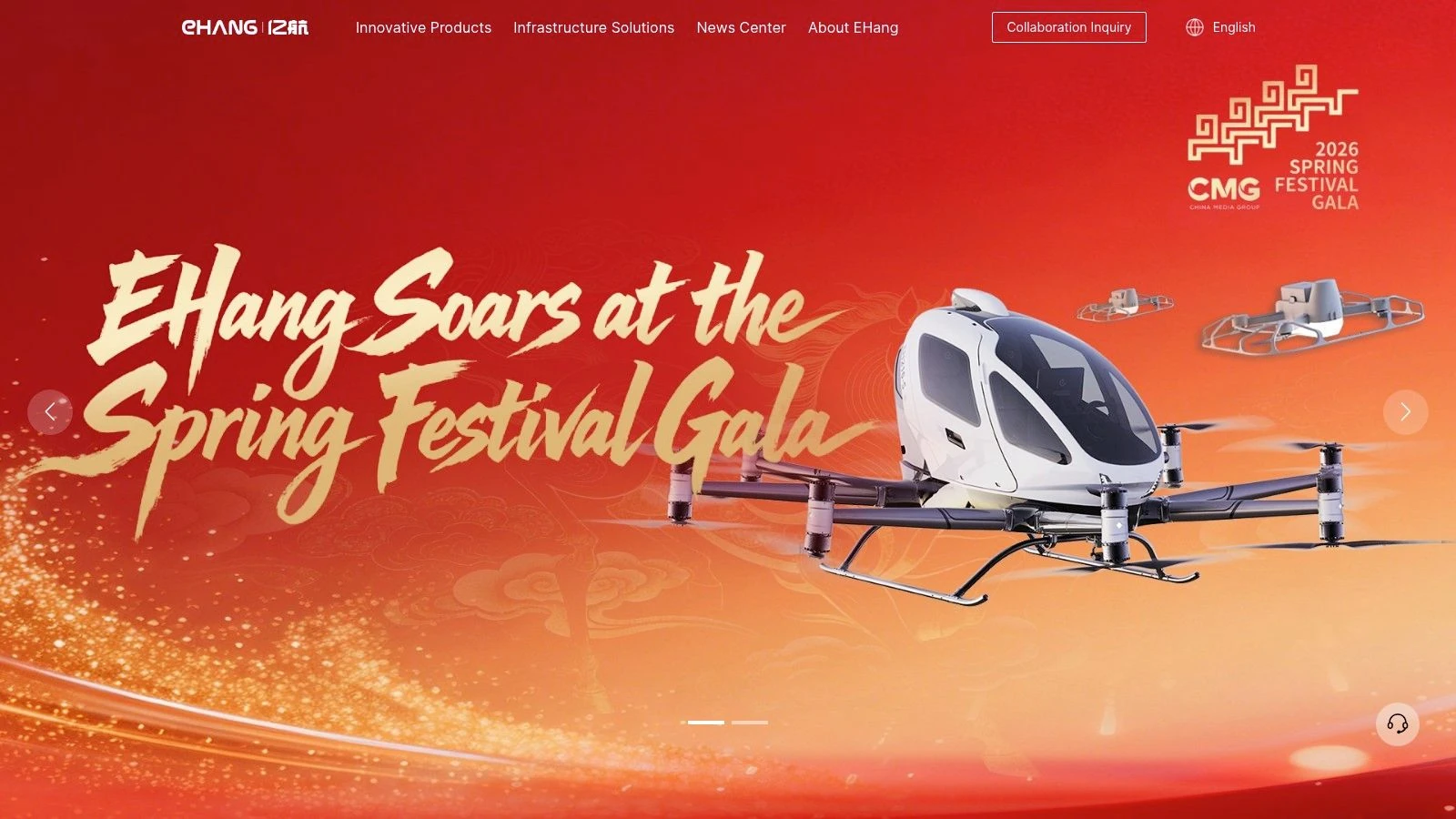
3. EHang (EH): The Urban Air Mobility Pioneer
EHang represents a look into the future of autonomous aviation, shifting focus from traditional surveillance or delivery drones to pilotless passenger and cargo transport. For drone teams and enterprises, EHang is less about current procurement and more about understanding the trajectory of Urban Air Mobility (UAM) and Autonomous Aerial Vehicles (AAVs). The company’s work in this area makes it one of the most-watched drone companies publicly traded on the market.
Core Drone Offerings and Focus
EHang is building a complete ecosystem for UAM, encompassing the aircraft, the command-and-control infrastructure, and city-level integration. Their vision is a departure from manually operated drones, centered entirely on full autonomy for passenger and logistics applications.
- Passenger-Grade AAVs: The flagship is the EH216-S, a two-seater, fully autonomous eVTOL aircraft designed for short-haul urban transport, tourism, and emergency response. It features 16 propellers and a fail-safe design.
- Logistics AAVs: EHang also produces unmanned logistics drones, like the EH216-L, which is built on the same platform as the passenger model but is configured for carrying heavy cargo loads for short-to-mid-range deliveries.
- Command and Control Center: A key part of their offering is the software and ground infrastructure required to manage fleets of AAVs over a city, handling flight planning, real-time monitoring, and air traffic coordination.
Key Insight for Commercial Teams: EHang's progress, particularly its regulatory achievements in China, serves as a real-world barometer for the entire AAM industry. While you won't be buying an EH216 for inspections, their work in certifying autonomous systems will pave the way for broader acceptance of automated drone operations in other sectors.
Integration and Partnership Potential
Direct procurement of EHang's passenger AAVs is not yet a reality for most organizations and is highly dependent on regional regulations. The company's business model is built on partnerships with municipalities, tourism operators, and logistics firms to establish pilot UAM programs.
| Company Snapshot: EHang (EH) | |
|---|---|
| Stock Ticker: | NASDAQ: EH |
| Market Cap Indicator: | Small-Cap to Mid-Cap |
| Drone Focus: | Pure-Play (UAM/AAM) |
| Primary Use-Cases: | Passenger Air Mobility, Aerial Tourism, Emergency Medical Response, Heavy-Lift Logistics |
For enterprise drone teams, the opportunity lies in becoming an early partner or service provider within EHang’s developing ecosystem. For instance, a company with expertise in vertiport design, charging infrastructure, or last-mile delivery services could find a valuable role. Understanding the various applications for drones in a smart city context is essential for identifying these future opportunities. As EHang expands its operational trials, it will need partners to build out the ground-level support services necessary to make UAM a functional reality.
Website: https://www.ehang.com
4. Ondas Holdings (American Robotics / Airobotics): The Autonomous Drone-in-a-Box Pioneer
Ondas Holdings represents a forward-looking segment of the drone industry focused on full automation. Through its subsidiaries, American Robotics and Airobotics, the company is a key player among drone companies publicly traded for its leadership in autonomous "drone-in-a-box" systems. These platforms are designed for enterprises that need repeatable, high-frequency data collection without a human pilot on-site, a significant step toward scalable drone operations.
Core Drone Offerings and Focus
Ondas’s drone strategy is centered on removing the human operator from the field, enabling fully remote and automated workflows for critical infrastructure monitoring. Their systems are complete solutions, combining hardware, software, and the necessary regulatory approvals to operate.
- Drone-in-a-Box Systems: The core products are the Scout System (American Robotics) and the Optimus System (Airobotics). These units are weatherproof base stations that house, charge, and deploy drones automatically based on pre-programmed schedules or on-demand commands.
- Regulatory Leadership: A key differentiator is their progress with regulators. American Robotics was the first company to receive FAA approval for automated beyond-visual-line-of-sight (BVLOS) operations. More recently, Airobotics' Optimus 1-EX became the first non-air-carrier drone to achieve FAA Type Certification, a critical step for scaling commercial operations.
- Industrial Wireless: Ondas also develops private wireless networks, providing the reliable, high-bandwidth connectivity essential for managing fleets of autonomous drones across large industrial sites like rail yards, mines, or oil and gas facilities.
Key Insight for Commercial Teams: The value proposition here is a shift from managing pilots to managing data. Ondas’s systems are not for ad-hoc jobs but for building a programmatic, automated data pipeline. This model is ideal for large-scale monitoring, security patrols, and stockpile management where consistency and frequency are paramount.
Integration and Partnership Potential
Deploying an Ondas system is a significant enterprise decision that involves site preparation and deeper workflow integration compared to manual drones. The company’s model is built on providing an end-to-end service, but there are clear points for partnership.
| Company Snapshot: Ondas Holdings (ONDS) | |
|---|---|
| Stock Ticker: | NASDAQ: ONDS |
| Market Cap Indicator: | Small-Cap |
| Drone Focus: | Pure-Play (Autonomous Systems) |
| Primary Use-Cases: | Industrial Asset Monitoring, Stockpile Management, Security, Utilities, Rail Inspection |
Software companies specializing in AI-driven analytics for specific industries (e.g., volumetric analysis for mining or anomaly detection for railways) can integrate their platforms with the data output from Scout or Optimus systems. This creates a powerful, fully automated "sense-and-analyze" solution.
For drone service providers, partnering with Ondas could allow them to offer advanced, automated monitoring services to large industrial clients, moving beyond manual piloting to a more scalable and profitable recurring revenue model. The capital intensity and regulatory expertise required make direct ownership challenging for smaller teams, positioning partnership as a practical path to offering these advanced capabilities.
Website: https://www.ondas.com
5. Red Cat Holdings (RCAT): The American-Made sUAS Specialist
Red Cat Holdings, through its subsidiary Teal Drones, is carving out a critical niche among drone companies publicly traded by focusing exclusively on U.S.-made, secure small Unmanned Aircraft Systems (sUAS). This positions them as a key supplier for government, defense, and public safety agencies that require National Defense Authorization Act (NDAA) compliance and Blue UAS certification, which streamlines the federal procurement process.
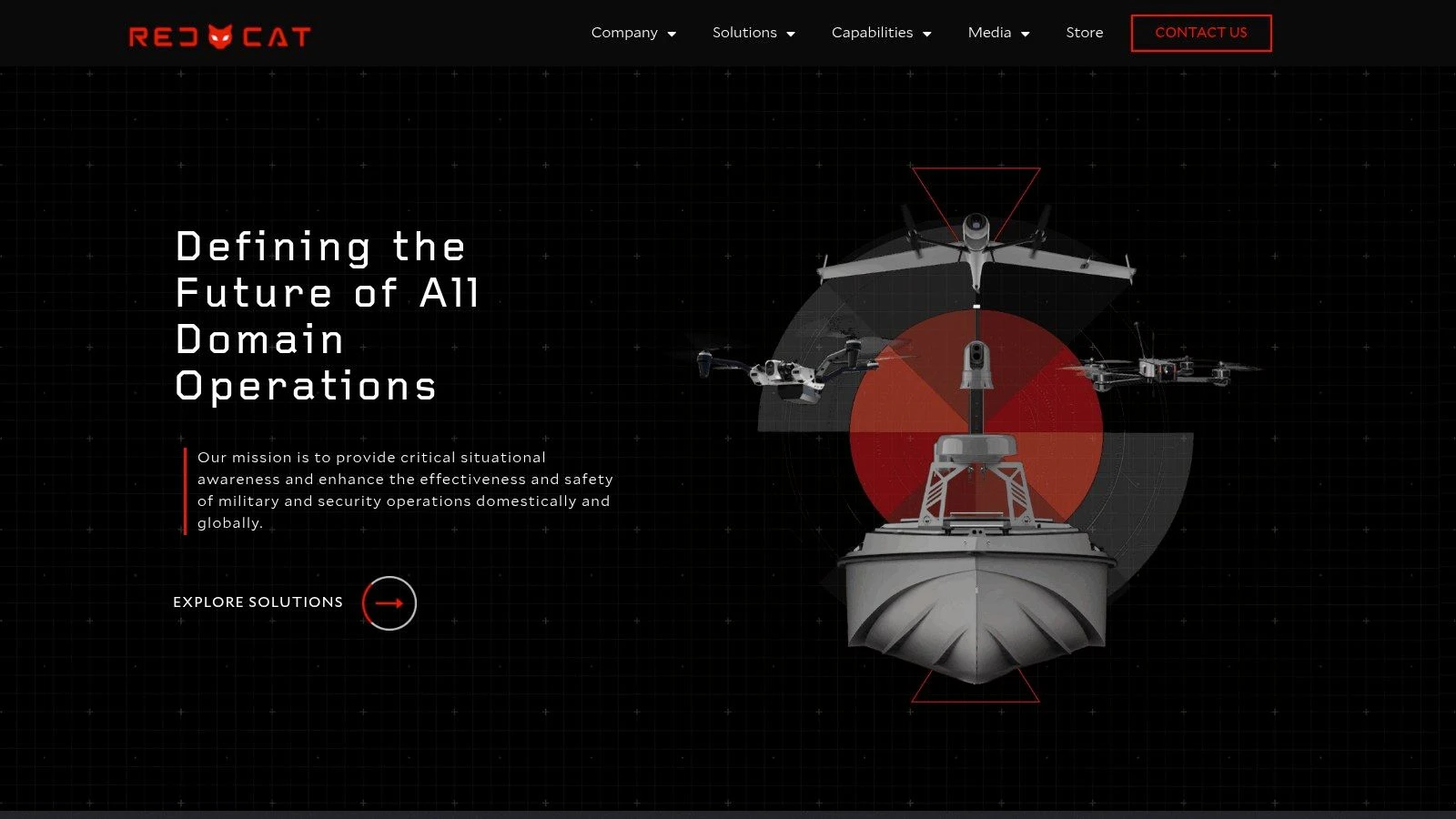
While many drone manufacturers offer a wide array of products, Teal’s strength lies in its purpose-built approach. Commercial drone teams that need to operate in sensitive environments or partner with federal and local government agencies should pay close attention to Red Cat’s offerings.
Core Drone Offerings and Focus
Teal Drones centers its strategy on a single, highly capable platform designed to meet stringent security and operational demands. This focus allows for deep specialization, particularly in challenging low-light conditions.
- Teal 2 System: The company's flagship product, the Teal 2, is a compact quadcopter designed for reconnaissance, surveillance, and target acquisition (RSTA) missions. Its primary differentiator is its exceptional nighttime and thermal imaging performance, powered by a FLIR Hadron 640R thermal sensor.
- Blue UAS Certified: The Teal 2 is on the Blue UAS Cleared List, a distinction given by the Department of Defense (DoD) to platforms that meet high security and performance standards. This certification makes it a pre-approved option for DoD and other federal agencies.
- American Manufacturing: All Teal drones are engineered and manufactured in the United States, a critical requirement for many government contracts and a strong selling point for organizations concerned with supply chain security.
Key Insight for Commercial Teams: The Teal 2's Blue UAS status is not just a military benefit. For commercial operators in critical infrastructure sectors like energy, utilities, or port security, using a Blue UAS-certified drone can simplify security audits and demonstrate a commitment to secure operations, potentially unlocking contracts that are off-limits to operators using foreign-made drones.
Integration and Partnership Potential
Red Cat’s focused product line makes it an ideal partner for software and payload developers targeting the defense and public safety markets. The Teal 2 is built with an open architecture, allowing for integration with third-party applications for mission planning, data analysis, and situational awareness.
| Company Snapshot: Red Cat Holdings (RCAT) | |
|---|---|
| Stock Ticker: | NASDAQ: RCAT |
| Market Cap Indicator: | Small-Cap |
| Drone Focus: | Pure-Play (Gov't/Public Safety) |
| Primary Use-Cases: | ISR, Night Operations, Public Safety, Border Security |
For drone service providers, owning and operating a Teal 2 can be a significant competitive advantage. When bidding on contracts for local police, fire departments, or federal agencies, having a pre-vetted, American-made system that excels in night operations can set a provider apart. Furthermore, as the company is a smaller, more agile player compared to large defense primes, there may be more direct opportunities for collaboration on software development or specialized service offerings.
Website: https://redcat.red
6. AgEagle Aerial Systems (UAVS): The Fixed-Wing Mapping Specialist
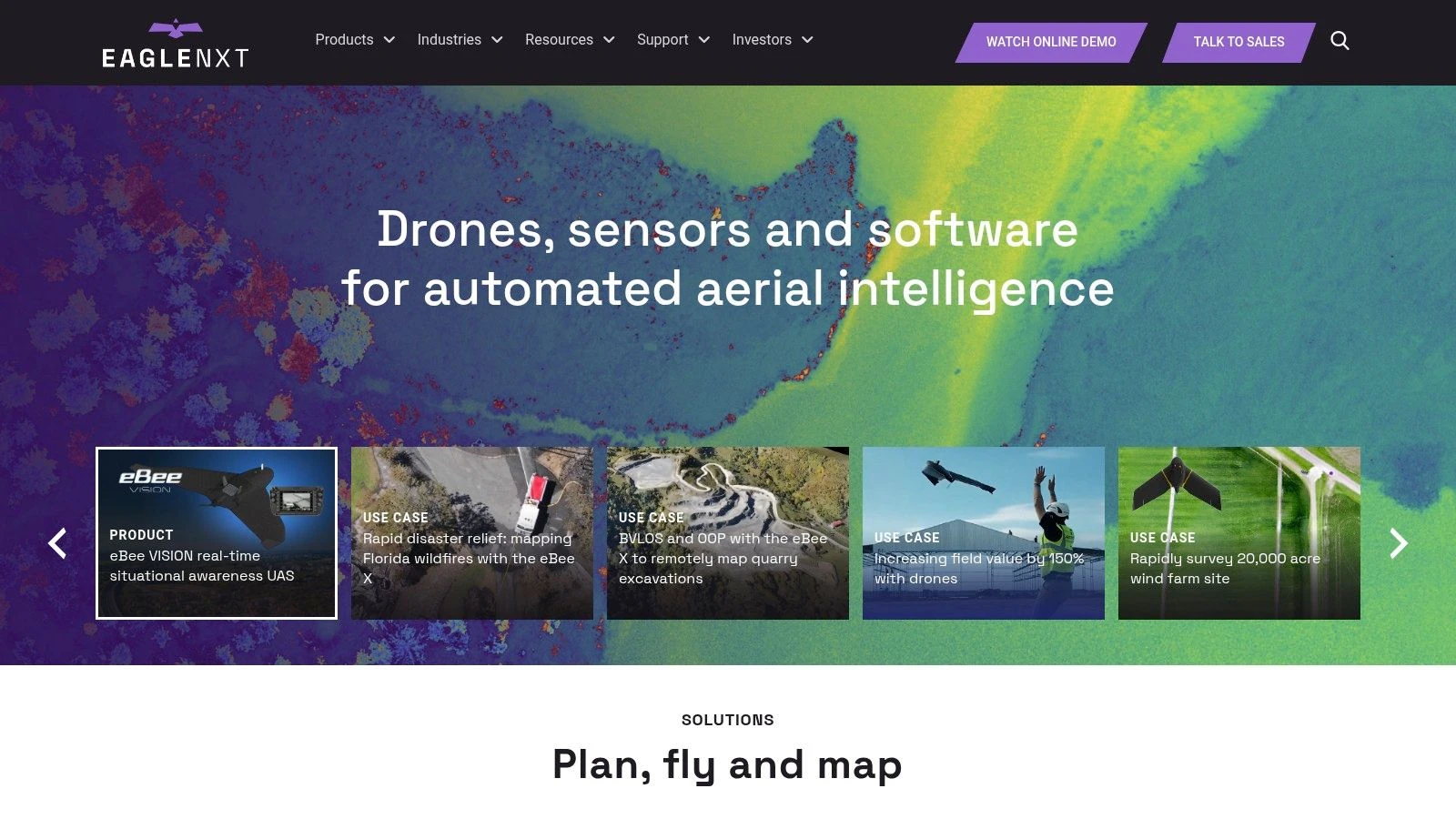
AgEagle Aerial Systems represents a key player among drone companies publicly traded, especially for commercial teams focused on large-scale data acquisition. Through its strategic acquisition of senseFly, AgEagle became the steward of the renowned eBee line of fixed-wing drones, a staple in the surveying, agriculture, and mapping industries. The company combines efficient aerial platforms with an increasing focus on regulatory approvals and defense-oriented applications.
Core Drone Offerings and Focus
AgEagle’s drone portfolio is centered on the eBee series, which is designed for efficient, large-area photogrammetry. These platforms are not for close-quarters inspection but excel at covering vast terrain quickly, making them ideal for agriculture and land surveying.
- eBee X / eBee GEO: These are the workhorses for commercial mapping. The eBee X is a versatile platform with a range of swappable, high-resolution camera payloads, including RGB, thermal, and multispectral sensors. The eBee GEO is a more cost-effective option for standard surveying tasks.
- eBee TAC: This is a tactical, NDAA-compliant version of the eBee designed for government and military users. It offers rapid, on-demand aerial imagery for situational awareness and mission planning in a portable, easy-to-deploy package.
- FAA Approvals: A significant differentiator for AgEagle is its success in securing FAA waivers, including approvals for Operations Over People (OOP) with the eBee. This grants operators greater mission flexibility in populated or complex environments.
Key Insight for Commercial Teams: For any project involving hundreds or thousands of acres, such as a solar farm development, agricultural analysis, or a major highway corridor map, the eBee’s flight efficiency can drastically reduce time on site and data collection costs compared to a multirotor. Its fixed-wing design allows it to cover more ground on a single battery.
Integration and Partnership Potential
AgEagle drones are sold through a global network of resellers, which are often the first point of contact for procurement, training, and support. This model makes the platforms accessible to a wide range of commercial drone teams. Integration is primarily focused on payloads and software compatibility.
| Company Snapshot: AgEagle Aerial Systems (UAVS) | |
|---|---|
| Stock Ticker: | NYSE: UAVS |
| Market Cap Indicator: | Micro-Cap to Small-Cap |
| Drone Focus: | Pure-Play (Commercial/Gov't) |
| Primary Use-Cases: | Surveying, Mapping, Agriculture, Public Safety, Tactical ISR |
The eBee ecosystem is compatible with major photogrammetry processing software like Pix4D and Agisoft Metashape, ensuring a smooth workflow from data capture to final deliverable. The platform's support for various sensor types also creates opportunities for specialized payload manufacturers to integrate their products. For drone service providers, demonstrating proficiency with the eBee can open doors to large-scale contracts where multirotor solutions would be impractical. While the fixed-wing operation requires different launch, recovery, and airspace planning skills, the return on investment for large-site projects is a compelling advantage.
Website: https://ageagle.com/
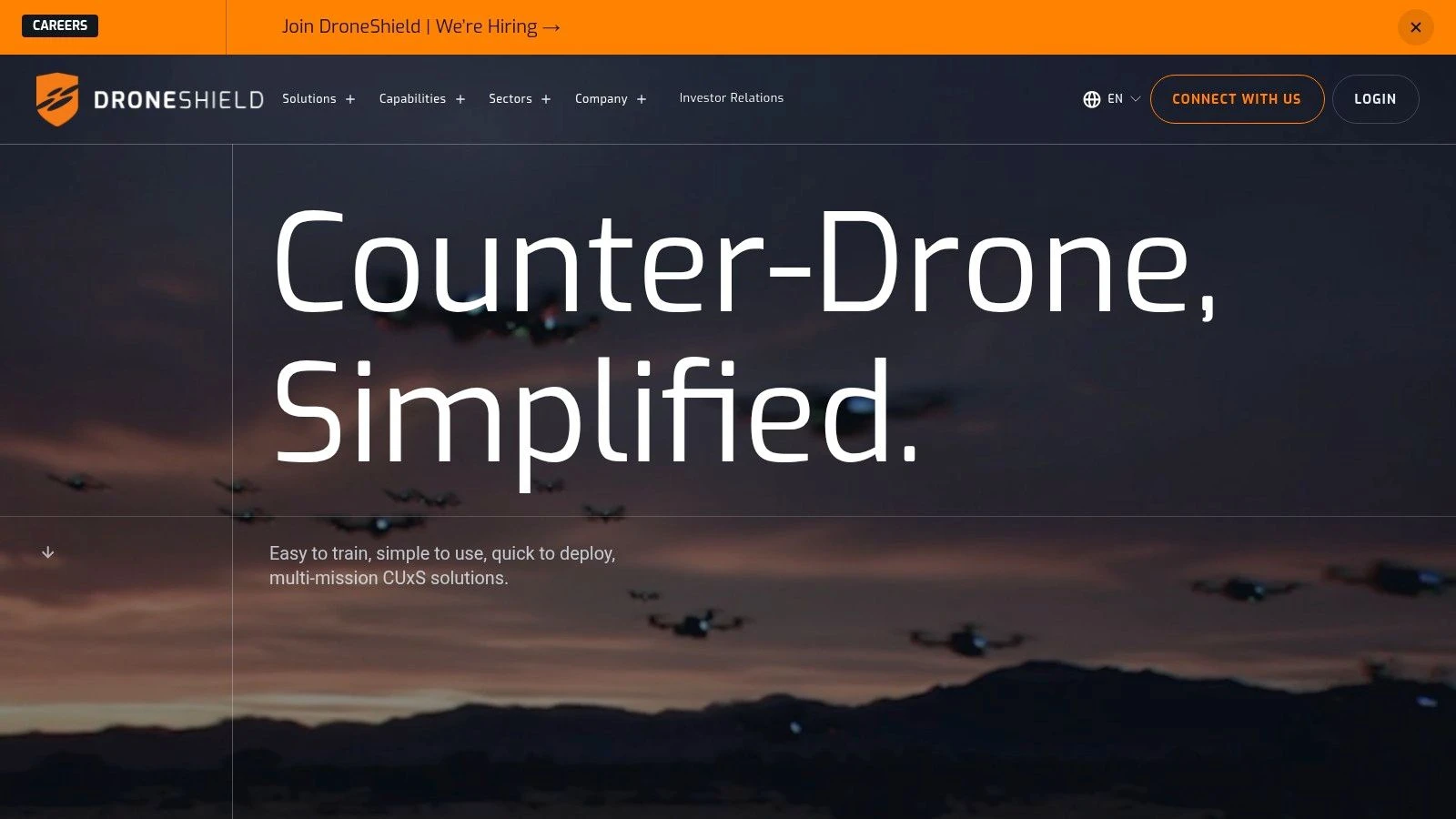
7. DroneShield (DRN / DRSHF): The Counter-Drone Specialist
While many companies on this list focus on building drones, DroneShield takes the opposite approach by specializing in detecting and defeating them. This makes it a unique and crucial player among drone companies publicly traded, addressing the growing security threat posed by unauthorized or malicious drones. For organizations managing critical infrastructure, public venues, or high-security facilities, understanding the counter-UAS (C-UAS) market is as important as understanding the drones themselves.
Core Drone Offerings and Focus
DroneShield is a pure-play C-UAS company, offering a complete, end-to-end solution for aerial threat management. Their products are designed to detect, track, identify, and, where legally permissible, defeat unmanned aerial systems. The company's technology is built on a foundation of radio frequency (RF) sensing and AI-powered signal processing.
- Detection Systems: Products like the RfPatrol, RfOne, and the DroneSentry-X use RF analysis to detect drone communication links. These systems can identify a drone and its controller often before the drone is even airborne, providing early warning.
- Mitigation Effectors: The company is well-known for its DroneGun series (Tactical and Mk4). These are non-kinetic jammers that disrupt the command-and-control and GPS signals of a drone, forcing it to land or return to its operator without causing physical damage.
- Integrated Solutions: The DroneSentry system combines multiple sensors (RF, radar, cameras) with effectors into a single, automated C-UAS platform. It uses DroneOptID AI software for optical tracking and identification, creating a layered defense.
Key Insight for Commercial Teams: The rise of C-UAS technology is a direct response to drone misuse. Commercial operators must be aware of these systems, as their signals could potentially interfere with legitimate flights near protected zones. Understanding C-UAS regulations and capabilities is vital for risk management and deconfliction.
Integration and Partnership Potential
DroneShield's systems are built for integration into existing security infrastructure. Procurement is primarily for government, law enforcement, and critical infrastructure operators. For a commercial drone team, direct partnership might be less common, but the implications of their technology are significant.
| Company Snapshot: DroneShield (DRN / DRSHF) | |
|---|---|
| Stock Ticker: | ASX: DRN, OTC: DRSHF |
| Market Cap Indicator: | Small-Cap to Mid-Cap |
| Drone Focus: | Pure-Play (Counter-UAS) |
| Primary Use-Cases: | Critical Infrastructure Protection, Law Enforcement, Military Base Security, Airport Security |
A drone service provider specializing in stadium or event security, for instance, could collaborate with a client that has deployed DroneShield technology. The provider's role would be to operate authorized "white-listed" drones that do not trigger the C-UAS response, requiring technical coordination. U.S.-based investors should note the company's primary listing is on the Australian Securities Exchange (ASX), though it trades on the OTC market in the U.S. (DRSHF), which may require a brokerage that supports international or OTC stocks.
Website: https://www.droneshield.com
Publicly Traded Drone Companies — 7-Company Comparison
| Solution | Implementation complexity 🔄 | Resource requirements ⚡ | Expected outcomes ⭐ | Ideal use cases 📊 | Key advantages 💡 |
|---|---|---|---|---|---|
| AeroVironment | Moderate — multi‑platform integration and sustainment workflows | High — contract procurement, logistics, trained crews | ⭐⭐⭐ — proven mission reliability and interoperability | Tactical sUAS, loitering munitions, defense sustainment | Proven deployments, interoperable ground systems, R&D pipeline |
| Kratos Defense & Security Solutions | High — advanced CCA programs and production scaling | High — runway/airframe production, R&D and program funding | ⭐⭐⭐ — high‑performance, attritable UAS for combat roles | Loyal wingman/CCA, target drones, rapid attritable missions | CCA front‑runner; cost‑focused scalable manufacturing |
| EHang | High — urban integrations, airspace & city system coordination | Very high — infrastructure, municipal partnerships, certification | ⭐⭐ — strong UAM potential but regulatorily and regionally limited | UAM passenger/cargo pilots, smart‑city logistics trials | First‑mover in pilotless eVTOL and end‑to‑end UAM platform |
| Ondas Holdings (American Robotics / Airobotics) | High — site‑specific “drone‑in‑a‑box” integration and ops centers | High — CAPEX for boxes, private wireless, BVLOS compliance | ⭐⭐⭐ — scalable unattended BVLOS data collection | Utilities, rail, critical infrastructure monitoring, enterprise BVLOS | Regulatory lead (type cert, BVLOS), automated/recurring data workflows |
| Red Cat Holdings (Teal Drones) | Low–Moderate — small UAS operations with defense compliance | Moderate — domestic manufacturing, certification efforts | ⭐⭐ — reliable specialized ISR (night/thermal) | First responders, border security, tactical ISR | NDAA/Blue UAS compliance; purpose‑built low‑light/thermal ISR |
| AgEagle Aerial Systems | Moderate — fixed‑wing flight planning and launch/recovery needs | Moderate — sensors, software, and fixed‑wing logistics | ⭐⭐⭐ — survey‑grade photogrammetry and efficient area coverage | Surveying, agriculture, corridor and large‑site mapping | Efficient coverage for large sites; strong mapping ecosystem |
| DroneShield | Moderate — sensor fusion and EW effectors integration | Moderate–High — sensor deployments, integration with security stacks | ⭐⭐⭐ — effective C‑UAS detection and mitigation in applied settings | Critical infrastructure, events, government C‑UAS defense | Specialized C‑UAS focus; rapid iteration to evolving drone threats |
From Tickers to Takeaways: Integrating Insights into Your Drone Operations
Navigating the landscape of publicly traded drone companies reveals much more than just stock tickers and market caps. It offers a direct view into the technologies, strategies, and market forces shaping the future of unmanned aviation. From the defense-grade reliability of AeroVironment and Kratos to the urban air mobility vision of EHang, each company provides a distinct piece of the industry puzzle. For drone operators and enterprise teams, this knowledge is a powerful asset.
Understanding the offerings from these public firms allows you to make more informed procurement and partnership decisions. You're not just buying a drone; you're investing in a technology ecosystem with a specific roadmap, level of support, and long-term vision. The distinction between a pure-play drone firm like Red Cat Holdings and a diversified giant with a drone division has real-world implications for your operations.
Strategic Selection: Aligning Company Focus with Your Mission
Choosing the right partner or platform requires looking beyond technical specifications. Your decision-making process should be mission-centric, weighing each company's strengths against your specific operational needs.
- For Security and Defense-Adjacent Operations: If your work involves critical infrastructure inspection, public safety, or security overwatch, companies like DroneShield and Red Cat Holdings (Teal Drones) should be on your radar. DroneShield’s C-UAS technology provides a necessary protective layer, while Teal’s military-grade, NDAA-compliant drones offer secure and reliable data capture in sensitive environments.
- For Agriculture and Large-Scale Autonomy: Teams focused on precision agriculture or seeking to deploy fully autonomous drone-in-a-box systems should closely examine AgEagle Aerial Systems and Ondas Holdings (American Robotics/Airobotics). AgEagle provides specialized hardware and software for crop analysis, while Ondas is a leader in developing automated systems that reduce the need for on-site pilots, perfect for remote monitoring.
- For Future-Focused Urban and Advanced Operations: If your organization is planning for next-generation applications like package delivery or Urban Air Mobility (UAM), monitoring the progress of EHang is essential. While direct procurement may be future-facing, understanding their certification process and operational model provides critical insight into the future of automated urban flight.
Key Considerations Before You Commit
Before integrating technology from any of these drone companies publicly traded, it's vital to conduct a thorough internal assessment. Moving from evaluation to implementation requires careful planning to ensure a return on your investment.
Key Insight: A public listing often signals a company's stability and commitment to regulatory compliance. This can be a significant advantage for enterprise teams who need partners that can withstand scrutiny and provide long-term support, security updates, and a transparent product roadmap.
Consider these practical factors:
- Degree of Drone Focus: A pure-play drone company might offer more specialized support and faster innovation on its core products. A diversified company, however, might provide a more stable, albeit slower-moving, platform with broader integration possibilities within larger corporate structures.
- Ecosystem and Integration: Does the company's hardware work well with the software you already use? Ondas Holdings, for example, acquired Airobotics to integrate its data platform, showcasing a commitment to a complete end-to-end solution. Evaluate the API availability and partnership network for each potential provider.
- Regulatory and Compliance Standing: For operations in the US, the NDAA compliance of a manufacturer like Teal Drones (a Red Cat company) is not just a feature; it's a prerequisite for government contracts and many enterprise clients. Always verify that a company's products meet the specific legal requirements for your intended use case.
Ultimately, the public market for drone technology is a barometer for the industry's health and direction. By understanding the players, their specializations, and their strategic positioning, you can do more than just fly missions. You can build a resilient, forward-looking drone program that is aligned with the very forces driving the industry's growth.
Managing the logistics, compliance, and flight records for hardware from any of these leading manufacturers requires a robust operational backbone. Dronedesk is the all-in-one management platform designed to organize your entire drone operation, from pre-flight checks to post-flight analytics. Keep your growing fleet compliant and your projects on track by visiting Dronedesk to see how you can simplify your workflow.
 How to Evaluate a Free Drone Logbook Before Using It →
 FAA Part 107 Test: How to Master Airspace Questions →
 Drone Risk Assessment Controls That Work in the Field →
 FAA Drone License Costs Beyond the Knowledge Test →
 Drone Part 107 Operations: When a Waiver May Be Needed →
 Drone Operating Rules for Managing Contractors and Employees →
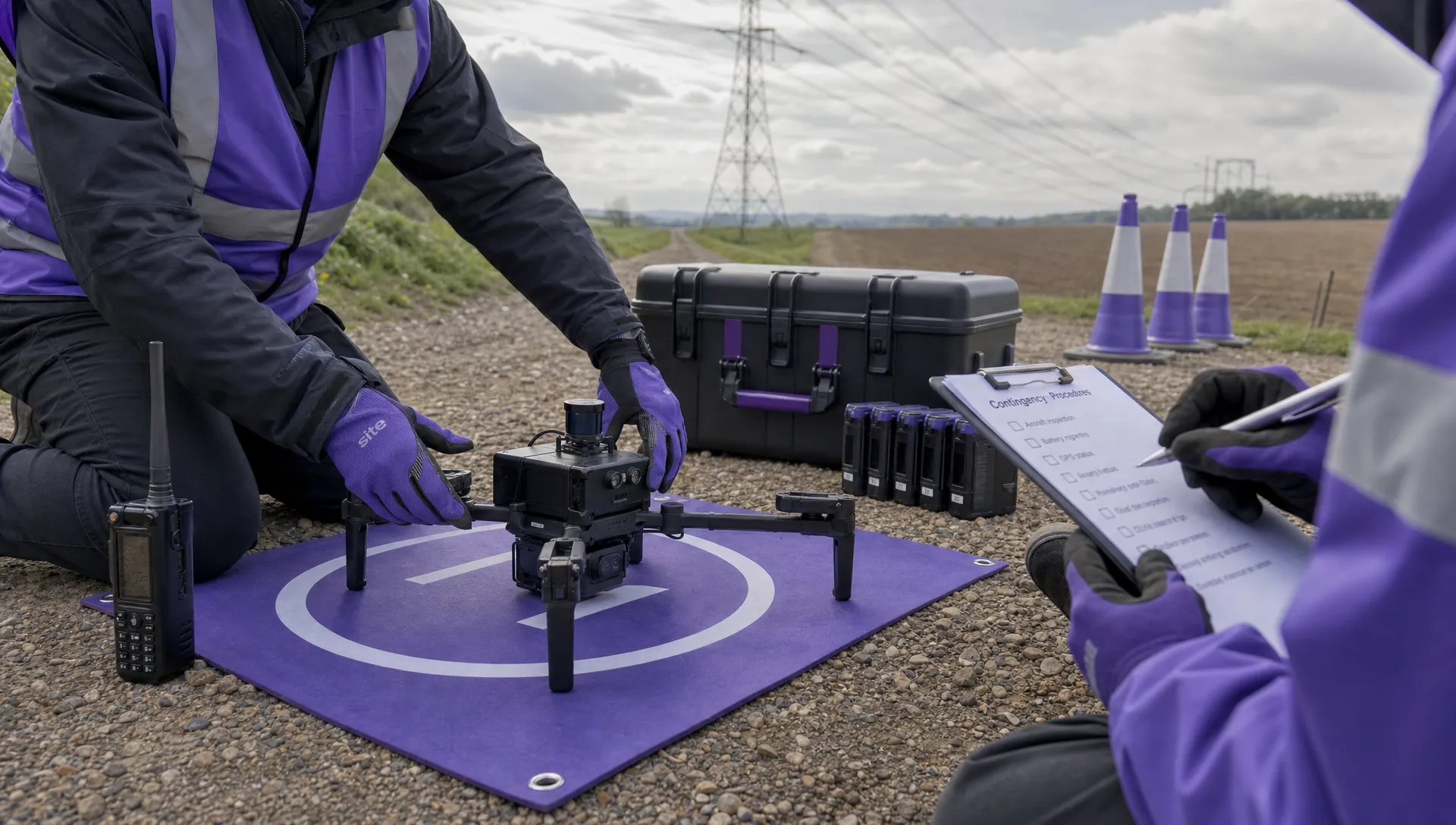 BVLOS Drone Requirements for Building a Safety Case →
 Drone Pilot Test Mistakes That Cost Candidates Marks →
 FAA 107 License vs Part 107 Certificate: What’s the Difference? →
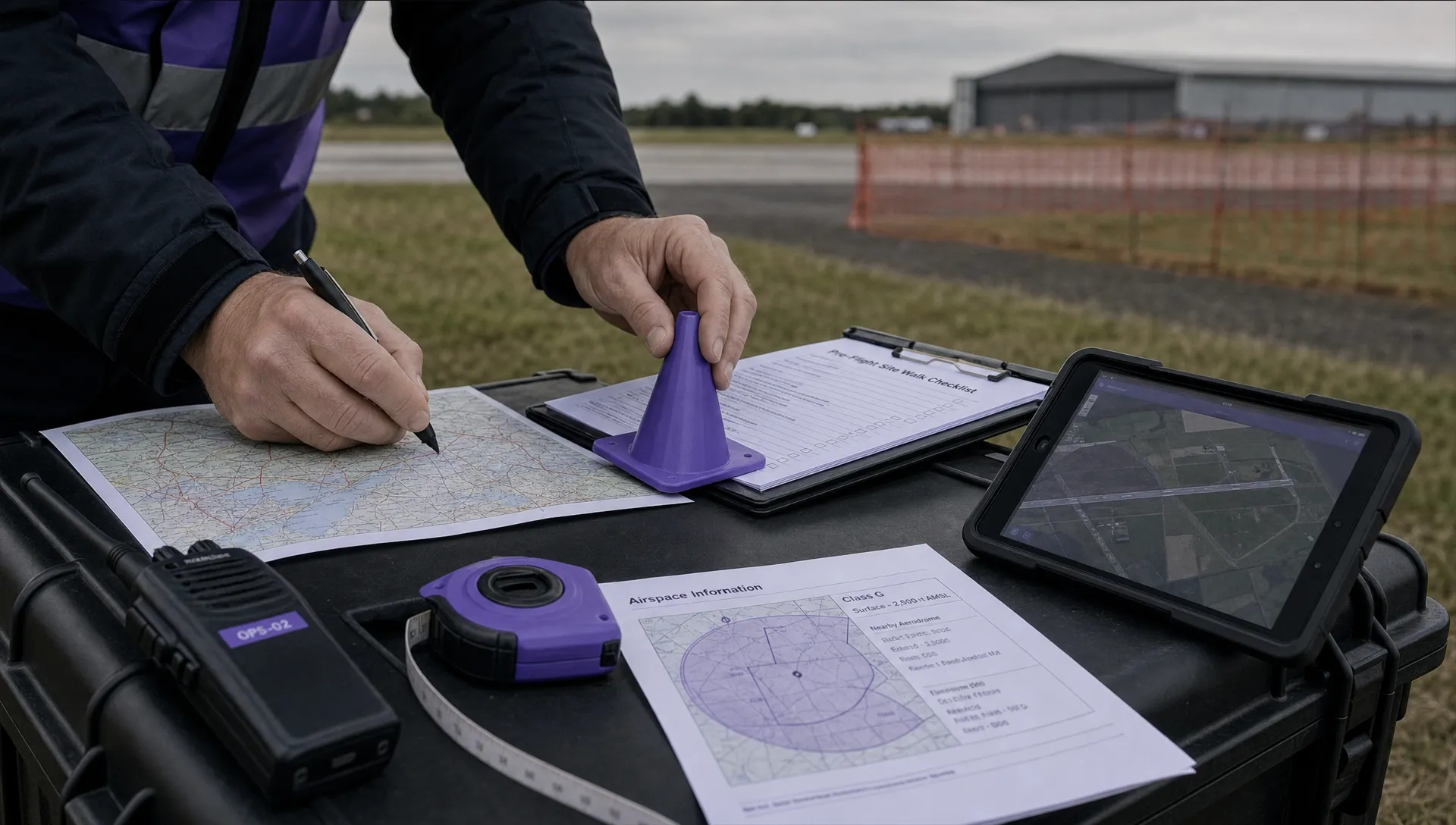 Drone Airport Rules: A Field Checklist for Site Assessments →