
Compare Dronedesk with Votix Drone Software
When you start comparing Dronedesk and Votix, you quickly realize they're built for two entirely different worlds. It really boils down to purpose and scale.
For small to medium-sized businesses and individual operators who need a single platform to run their jobs from quote to invoice, Dronedesk is the clear choice. On the other hand, large-scale enterprises that require advanced AI, autonomous operations, and deep security integrations for asset inspection will find Votix to be the superior solution.
Dronedesk vs Votix: A Clear Comparison
Let's dig into the fundamental differences between these two platforms. It's the first step to figuring out which one actually solves your problems. While both touch on drone operations, their target users and core functions are miles apart.
Think of it this way: Dronedesk is built around the day-to-day workflow of a drone service provider. Votix is engineered from the ground up for enterprise-level data acquisition and security.
Dronedesk vs Votix At a Glance
To make this even clearer, here's a quick table breaking down the essential differences. This should help you see right away where each platform shines.
| Feature | Dronedesk | Votix |
|---|---|---|
| Target Audience | Solo Operators & Small to Medium Businesses | Large Enterprises & Government Agencies |
| Primary Function | Business & Job Management | Autonomous Operations & Data Security |
| Ideal Use Case | Real Estate Photography, Small Surveys | Infrastructure Inspection, Security Patrols |
| Core Strength | End-to-End Workflow (CRM, Invoicing) | AI Analytics & Autonomous Flight Control |
This table immediately shows the fork in the road. Are you running a business that uses drones? Or are you running complex drone missions for a large organization?

Founded in the UK back in 2018, Dronedesk has become a go-to tool for the drone community. As of 2025, it's used by over 2,400 drone pilots and 650 companies across the globe. Its main promise is to slash job planning time by at least 50%, which is a huge deal for anyone from individual photographers to small enterprise teams.
The crucial takeaway is this: Choose Dronedesk for managing your business operations efficiently. Choose Votix for managing complex, autonomous drone missions at scale.
Your choice ultimately comes down to a simple question: is your biggest headache business administration or advanced operational capabilities? Answering that will point you directly to the right software for your needs.
Understanding Each Platform's Core Philosophy

One look at the Votix website, and you immediately get a sense of its world. The image above screams enterprise-grade operations, showcasing autonomous missions and slick, data-heavy command centres. It's the perfect window into what they're all about—and it couldn't be more different from Dronedesk's focus on business management.
To really compare Dronedesk with Votix, you have to dig deeper than a simple feature checklist. We need to look at why each platform was built. They were created to solve two completely different problems, and that core mission shapes everything from the dashboard you see to the price you pay. This isn't just marketing speak; it's the blueprint that defines who the software is for and what it truly excels at.
Dronedesk: The Business Operations Hub
Dronedesk was built on a single, clear idea: to be the one-stop-shop for running a drone services company. The entire platform is designed to ease the administrative headaches that come with the territory. It's software made by drone pros who've walked the walk and know what it's like to juggle being a pilot, project manager, bookkeeper, and sales team all at once.
The whole system follows the natural lifecycle of a job. It starts with managing clients and leads, flows into quoting and planning the mission, and wraps up with invoicing and logging your flights. Every feature is there to help you spend less time on paperwork and more time turning a profit.
Dronedesk's goal is to offer a single, elegant solution for managing everything from client contacts to flight logs. It’s less about flying the drone and more about running the business that flies the drone.
This business-first mindset is why its core features are things like a robust CRM, financial reporting, and detailed project management tools. It’s laser-focused on answering the question, "How can I run my drone business more effectively?" For more on how Dronedesk measures up against other management-focused platforms, take a look at our comparison guide: https://blog.dronedesk.io/compare-dronedesk-with-drone-hub/.
Votix: The Enterprise Data and Security Engine
Votix, on the other hand, is playing an entirely different game. It’s built for a different breed of user with a completely different set of concerns: large-scale enterprises and security-obsessed organisations. Its purpose isn't to help you manage a small business; it's to deploy, manage, and secure entire fleets of autonomous drones as powerful data-gathering tools.
The Votix platform stands on three pillars: autonomy, security, and integration. It's designed to orchestrate complex missions, often beyond-visual-line-of-sight (BVLOS), with minimal human oversight. The focus is squarely on the integrity and security of the data being collected, which is why you see features like end-to-end encryption and detailed user permissions—essentials for corporate and government clients. This approach puts it in competition with other AI-driven systems.
For example, vHive, founded back in 2016, also revolves around AI and autonomous drone operations, especially for automated asset inspections in industries like energy and telecoms. Its strength lies in managing and analysing inspection data, a focus that mirrors Votix's enterprise data strategy. You can find more discussions about this on Slashdot.
You won't find tools for quoting jobs or sending invoices in Votix. Instead, it’s built to answer the question, "How can our enterprise securely deploy autonomous drones to collect and analyse critical data at scale?" That mission is precisely why its feature list is packed with AI-powered analytics, sophisticated mission planning, and deep integrations with other IT systems.
A Head-to-Head Feature Analysis

When you put Dronedesk and Votix side-by-side, their core philosophies really come into focus. This isn't just about ticking off feature boxes; it’s about how and why each platform handles a task. We're going to break down their capabilities across four critical operational areas to see where each one genuinely shines.
Instead of a generic list, let's get into the practical side of their design choices. This way, you can figure out which toolset makes more sense for your daily grind and long-term ambitions.
H3: Flight Planning And Airspace Intelligence
Flight planning is the bedrock of any drone operation, but Dronedesk and Votix tackle it from completely different directions. One is all about empowering the pilot with compliance and safety tools, while the other is built for automating large-scale missions.
With Dronedesk, flight planning is woven directly into the job management workflow. For a pilot, this feels natural—planning a flight is just another step in planning a job. The platform lays out detailed airspace intelligence, showing controlled airspace, ground hazards, and NOTAMs right on the map. Its real strength, though, is in its built-in risk assessment tools, which walk you through a systematic safety check to produce documents like a Risk Assessment Method Statement (RAMS)—a must-have for many commercial gigs.
Votix, on the other hand, sees flight planning as one piece of a larger mission orchestration puzzle. Its tools are designed for creating complex, repeatable, and often autonomous flight paths for jobs like security patrols or infrastructure inspections. The focus is less on manual pre-flight paperwork and more on programming the mission itself—defining automated routes, geofences, and actions for the drone to execute on its own.
Key Differentiator: Dronedesk gives the pilot the tools for comprehensive, compliant manual flight planning. Votix gives the operations manager the tools to program automated, multi-drone missions at an enterprise scale.
H3: Detailed Feature Comparison Dronedesk vs Votix
To really understand the nuances, it helps to see the features compared directly. The table below breaks down how each platform approaches key operational tasks, from mission prep to data delivery. This isn't just a checklist; it's a guide to help you match the right tool to your specific operational needs, whether you're a solo operator or managing a large corporate fleet.
| Operational Area | Dronedesk Approach | Votix Approach | Best For |
|---|---|---|---|
| Flight Planning | Integrated with job management, focuses on pilot-led compliance, risk assessments (RAMS), and airspace checks. | A component of mission automation, focused on creating repeatable, autonomous routes and geofences. | Dronedesk is for operators needing job-by-job compliance. Votix is for enterprises automating complex missions. |
| Fleet Management | Simple, accessible tracking of drones, batteries, and gear. Maintenance logs are tied directly to job records for a clear audit trail. | Enterprise-grade control with granular user permissions, real-time asset tracking, and strict maintenance protocols. | Dronedesk suits small teams needing easy logs. Votix is for large organizations needing tight security and control. |
| Data Handling | Job-centric. Organizes photos/videos per project for easy client delivery. Focus is on business metrics. | A powerful data engine. Ingests and analyzes massive datasets with AI for object detection, mapping, and 3D modeling. | Dronedesk is for delivering project files. Votix is for extracting operational intelligence from raw drone data. |
| Team Management | Built around a service business model. Includes CRM for leads, quotes, and invoicing. Manages pilot assignments. | Architected for corporate roles. Uses role-based access control (Operator, Analyst) to manage permissions and security. | Dronedesk is for running a drone service business. Votix is for managing a corporate drone program. |
As you can see, the choice isn't about which is "better" overall, but which is purpose-built for the job you need to do.
H3: Data Processing And Analytics
The data your drone captures is often the real prize. Dronedesk and Votix treat this data in fundamentally different ways, which gets right back to their core purpose.
With Dronedesk, data revolves around the job. The platform helps you organize photos and videos, link them to the right project, and get them to your client. Its analytics are geared toward business metrics: revenue per job, flight hours logged, and client activity. The whole point is to give you insights into how your business is performing.
Votix is engineered as a heavy-duty data processing machine. It's built to ingest huge amounts of imagery and sensor data from automated missions and then apply AI-driven analysis. Think automated object detection for security alerts or creating detailed 2D maps and 3D models via photogrammetry for asset inspections. The analytics here are all about pulling operational intelligence from the visual data, not tracking business numbers.
H3: Business And Team Management
Finally, let's look at how each platform helps you manage your people and projects. This is where the contrast between Dronedesk and Votix is perhaps the most stark.
At its core, Dronedesk is a business management tool that happens to have an integrated Customer Relationship Management (CRM) system. You can manage leads, fire off quotes, send invoices, and track payments all in one place. Its team management features let you assign pilots to jobs and track their qualifications, but the entire system is built around the "quote-to-cash" lifecycle of a service business.
You won't find any CRM or invoicing features in Votix. Its team management is designed around roles and permissions within a large corporation. You can create specific roles—like Operator, Analyst, or Administrator—and assign incredibly specific permissions for what each user can see and do. This is vital for maintaining security and operational integrity in an enterprise setting where hundreds of employees might need access. Your decision here boils down to whether you're running a service business or managing a corporate drone program.
Comparing Usability and User Experience
Powerful features mean nothing if you can't figure out how to use them. The user experience (UX) and day-to-day usability of a platform are what really determine how fast your team gets up to speed and how much time you save on daily tasks. When you put Dronedesk and Votix side-by-side, their approaches to UX couldn't be more different, and it all comes back to who they were built for.
Dronedesk is built around the logical flow of a service business, designed with clarity and simplicity in mind for business owners and their operators. Votix, on the other hand, throws you into a data-heavy, highly technical dashboard built for operations managers and data analysts who need absolute control over automated drone systems.
The Dronedesk User Journey
The moment you log into Dronedesk, the interface walks you through a clean, business-focused workflow. The dashboard is your command hub, giving you a bird's-eye view of active jobs, recent client messages, and upcoming tasks. It’s set up to immediately answer the question, "What do I need to get done today to keep the business running smoothly?"
The whole process just feels natural because it follows the lifecycle of a real-world commercial drone job.
- Client Intake and Quoting: You kick things off by adding a new client or lead into the built-in CRM. From there, you can spin up a quote in seconds, pulling in your predefined services and rates.
- Job Planning: Once the client accepts the quote, it flips into an active job. This is where you do all your pre-flight prep—flight planning, risk assessments, and airspace checks—all neatly contained within a single job folder.
- Execution and Logging: After the flight, you log your hours and drop in all the project files. Everything is automatically linked to the right client and job, creating a perfect audit trail without any extra effort.
- Invoicing and Reporting: When the job's done, you can generate an invoice from the job details with one click and track its payment status. The platform’s business reports then show you exactly where your revenue and profits are coming from.
Dronedesk's biggest strength is its linear, all-in-one workflow. By keeping everything from the first client call to the final invoice under one roof, it cuts out the need to constantly switch between different apps. For small teams, this is a huge time-saver and massively reduces admin headaches.
The Votix User Journey
Logging into Votix is a completely different world. The dashboard isn't focused on jobs and clients; it's all about missions, assets, and data streams. It’s been engineered for an operations manager who is overseeing a fleet of autonomous drones, often in real time.
The workflow is geared entirely towards technical deployment and data crunching, not business admin. For instance, setting up an autonomous inspection mission would look something like this:
- Mission Programming: The user first defines a mission in the operations center, which involves creating complex flight paths, setting up geofences, and configuring specific sensor payloads for the drone.
- Asset Deployment: Next, they assign specific drones and ground control stations to that mission, making sure all the hardware is good to go and compliant.
- Live Operations Monitoring: During the flight, the user is glued to a screen watching real-time video feeds and telemetry data, ready to respond to any alerts or anomalies.
- Data Ingestion and Analysis: Once the drone lands, the platform automatically ingests potentially terabytes of data, feeding it through AI models to detect specific objects or generate 3D models for later analysis.
This environment is intentionally complex because it needs to provide incredibly granular control. For teams running large-scale security or infrastructure inspection programs, this level of detail is a feature, not a bug. If you're interested in how different platforms handle this, it's worth exploring guides on effective drone fleet management.
Learning Curve and Daily Interactions
The learning curve for Dronedesk is pretty gentle, especially if you've used any kind of standard business software before. The menus are logical, the processes are straightforward, and a new user can get the hang of managing jobs within a couple of hours. Daily use revolves around practical tasks like updating a job's status, sending a message to a client, or checking a flight plan.
Votix, as you might guess, demands a much steeper learning curve. To really get your money's worth, users need a solid grasp of drone operations, data management, and maybe even some basic programming concepts for the automation features. Daily interactions are all about configuring missions, analyzing data outputs, and managing system integrations. The whole experience is built for a technically sharp operations team, not the typical business owner.
Where The Rubber Meets The Road: Real-World Scenarios
Feature lists are great, but the true test of any software is how it holds up in the field. To get a real feel for Dronedesk and Votix, we need to see how they perform in situations that reflect the daily grind of a drone business.
Let's walk through three common scenarios. These examples will show you that the "best" platform really depends on the scale of your operation, the services you provide, and where you see your business heading. Seeing the software in action makes the whole decision a lot easier.
Scenario 1: The Freelance Real Estate Photographer
Let’s imagine Sarah, a solo pilot who shoots high-end real estate. Her biggest headaches aren't about flying; they're about admin. She’s constantly juggling client calls, sending out quotes, scheduling shoots, sorting out flight safety documents, and then chasing down payments. What she needs, more than anything, is efficiency.
For a one-person show like Sarah's, Dronedesk is a perfect match. It effectively becomes her virtual business manager, pulling every single one of those tasks into a single, straightforward workflow.
- From Lead to Job: A new estate agent calls. Sarah can pop their details into Dronedesk's CRM, whip up a professional quote from a template in a few minutes, and fire it off directly.
- All-in-One Planning: Once the client accepts the quote, it flips into a "job." Right there in the same job folder, she can run her airspace checks and fill out her risk assessment. All the compliance paperwork is kept neatly together and is easy to find.
- Painless Invoicing: After she’s delivered the jaw-dropping aerial photos, she can generate an invoice from that job with one click and keep an eye on when it gets paid.
Because Dronedesk bundles everything together, Sarah isn't paying for—and constantly switching between—a separate CRM, an accounting app, and a flight planning tool. It hits her main pain point head-on: crushing the admin overhead so she can spend more time flying and winning new clients.
Scenario 2: The Large-Scale Infrastructure Inspection Firm
Now, picture a big engineering firm with a contract to inspect 500 miles of power lines across three states. Their needs are worlds away from Sarah's. They're all about precision, consistency, tight security, and being able to sift through huge amounts of data to find tiny faults.
In this kind of high-stakes, enterprise environment, Votix is the clear winner. Its entire feature set is built for this exact type of operation.
The real value Votix brings to the table here isn't about managing the business, but about operational control and data intelligence. It's designed to turn a fleet of drones into a coordinated network of autonomous data-gathering sensors.
The firm would lean on Votix to program autonomous flight paths, making sure every drone flies the exact same route for consistent data. Live video feeds get streamed back to a central command hub, and every bit of data is protected with end-to-end encryption to satisfy strict corporate security policies. Critically, Votix’s AI then gets to work, automatically scanning terabytes of images to flag signs of wear and tear, vegetation getting too close, or damaged parts—a job that would take a human team months.
Scenario 3: The Growing Surveying and Mapping Business
Finally, let’s consider a survey team with five pilots. They started out doing basic mapping jobs but are now bidding on bigger, more complex photogrammetry projects. Their needs are changing, which makes their choice a bit more nuanced.
This team is on a journey that’s very common in the drone industry. At the beginning, Dronedesk is the ideal starting point. It’s brilliant for helping them manage their growing list of clients, jobs, and pilots. The platform keeps their operations organised, makes sure every flight is compliant, and smoothes out their billing—all vital for keeping cash flow healthy while they're expanding.
But as they start landing projects that demand sophisticated 3D models and AI-powered data analysis, they'll begin to hit the limits of what Dronedesk is built for on the data side. This is the point where planning a move over to Votix becomes a smart, strategic decision. Votix gives them the heavy-duty photogrammetry engine and analytics they need for that more advanced work.
This kind of hybrid approach allows the business to use the right tool for the right stage. They can rely on Dronedesk for its fantastic business management while scaling up to Votix for its specialised, high-end data processing muscle.
How To Choose The Right Drone Software

When you're picking a platform, it’s not about finding the one magical piece of “best” software. It’s about finding the one that actually fits how you work day-to-day. As we've seen, comparing Dronedesk with Votix is like comparing a workshop with a high-tech lab—they're both excellent, but for entirely different jobs.
Your choice should come down to a really clear understanding of your core needs, your team's skills, and where you want your business to go. To get there, you need to step away from the feature lists and ask some hard questions. The answers will point you in the right direction and make sure you invest in a system that solves real problems, not one that just adds more complexity.
Key Questions To Guide Your Decision
Before you pull the trigger, get your team in a room and be brutally honest about these questions. It'll save you a world of headaches and money later on.
-
What's our biggest operational headache right now? Is it the mountain of admin—managing clients, sending quotes, and juggling job paperwork? Or is it the technical side, like deploying complex automated missions and making sense of huge data sets? Your biggest pain point is your North Star.
-
Who will be using this software every day? Will it be a business owner who lives and breathes project management and finances? Or will it be a technical crew focused on mission control and data security? The user experience has to fit the person in the driver's seat.
-
What's our business model? Are you a service-based company, where profit comes from completing one-off client jobs? Or are you part of a larger enterprise where drones are an internal tool for inspecting assets and gathering data?
The fundamental difference is this: Dronedesk is built for the business of running a drone operation, focusing on the entire workflow from quote to invoice. Votix is built for the deployment and command of drones, zeroing in on automated missions and data intelligence.
Making Your Final Choice
If your answers lean towards needing a slick system for managing jobs, talking to clients, and keeping your finances in order, then Dronedesk is your logical choice. It’s designed from the ground up to slash the administrative load for solo operators and small-to-medium teams. For a much deeper look, check out our complete guide to drone management software to see how these features come together.
On the flip side, if your daily reality involves autonomous flights, sophisticated AI analytics, and enterprise-level security for large-scale inspections or surveillance, then Votix is the purpose-built tool for the job. Answering those questions honestly is what empowers you to pick the platform that doesn't just work for you today, but also helps you grow tomorrow.
Your Questions Answered
Even after breaking it all down, you might still have a few things you're mulling over. Let's tackle some of the most common questions people ask when weighing up Dronedesk and Votix. This should help you make that final call with confidence.
Does Dronedesk Offer Autonomous Flight Capabilities Like Votix?
No, and this really gets to the heart of what Dronedesk is all about. It isn't built for autonomous flight control. Instead, its entire focus is on giving the pilot-in-command the absolute best tools for manual flight planning, complete with integrated risk assessments and crucial airspace intelligence.
Votix, on the other hand, is built from the ground up for autonomy. Its core mission is to enable complex, repeatable, and automated flights for large-scale operations—think security patrols or infrastructure inspections. This isn't just a feature difference; it's a fundamental split in their design philosophy.
How Does Votix Handle Business Management Compared to Dronedesk?
It doesn't. Votix is an enterprise operations platform, which means it has no built-in business management features like a CRM, quoting, or invoicing. It's laser-focused on mission control, data security, and AI-powered analysis, not the commercial side of running a drone service business.
Dronedesk is the polar opposite. It’s an all-in-one business management hub. Every single feature, from managing your clients to sending invoices and tracking financials, is designed to support the "quote-to-cash" workflow that drone service providers live and breathe every day.
The Key Takeaway: You choose Dronedesk to run your business—the client work, the paperwork, the whole nine yards. You bring in Votix when your primary need is to manage complex, data-heavy autonomous drone missions for a large organization.
Can I Integrate My DJI Drones With Both Platforms?
Yes, both platforms play nicely with DJI, the undisputed market leader in commercial drones. But how they integrate is worlds apart, and it perfectly highlights what each one is for.
- Dronedesk: Syncs your DJI flight logs automatically. This is a lifesaver for keeping an accurate, compliant record of flight times and activities for job tracking and proving compliance.
- Votix: Integrates with DJI drones for real-time mission control. This allows it to execute its pre-programmed autonomous flight plans and stream live data back to the command centre.
One is for streamlined record-keeping and business admin; the other is for active, in-the-field operational control.
Ready to get a real grip on your drone business operations? Dronedesk gives you the all-in-one platform you need to manage jobs, clients, and compliance without the headache. See how much time you can save by starting your trial today.
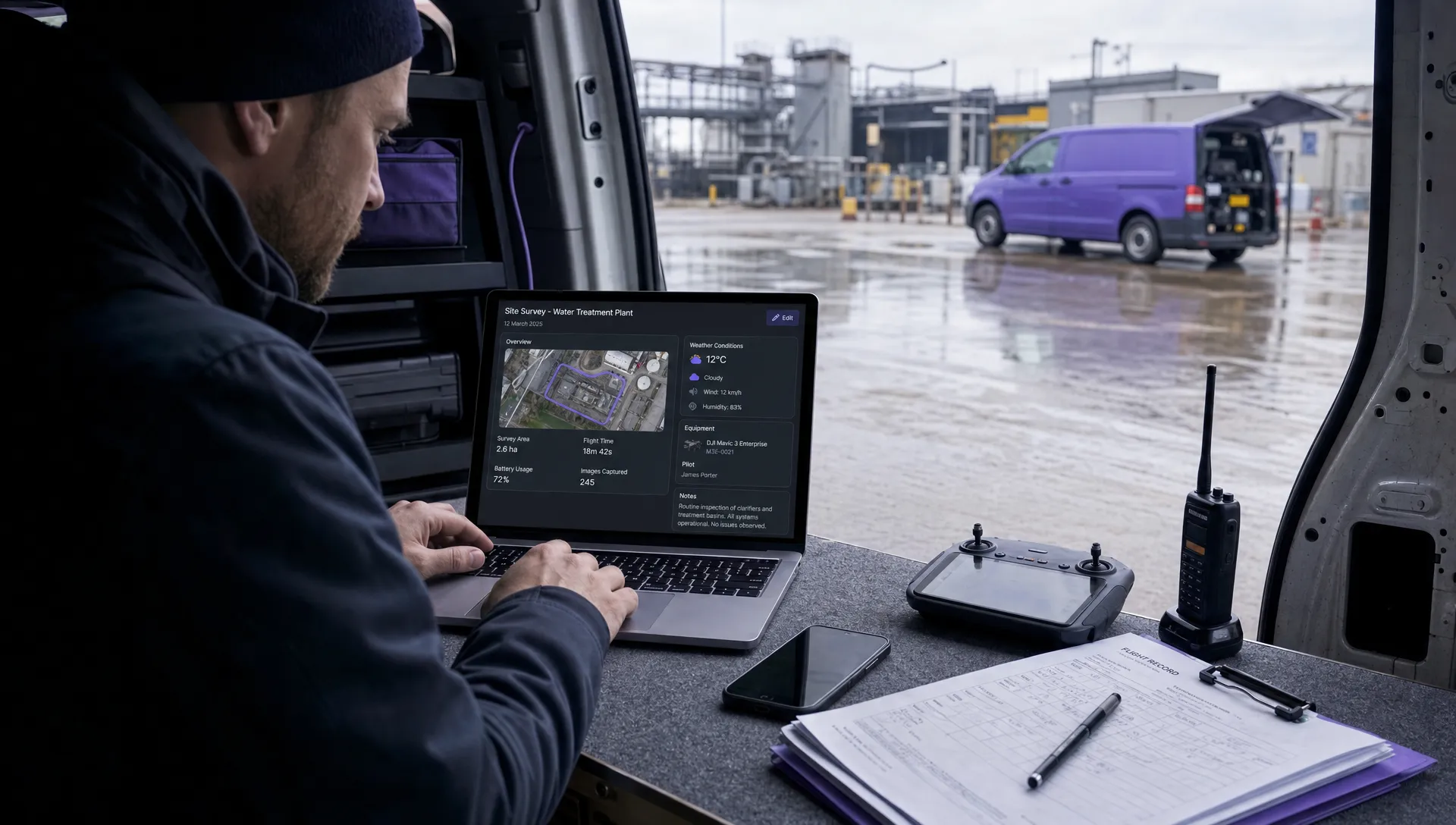 Drone Airspace Rules: How to Document Your Site Checks →
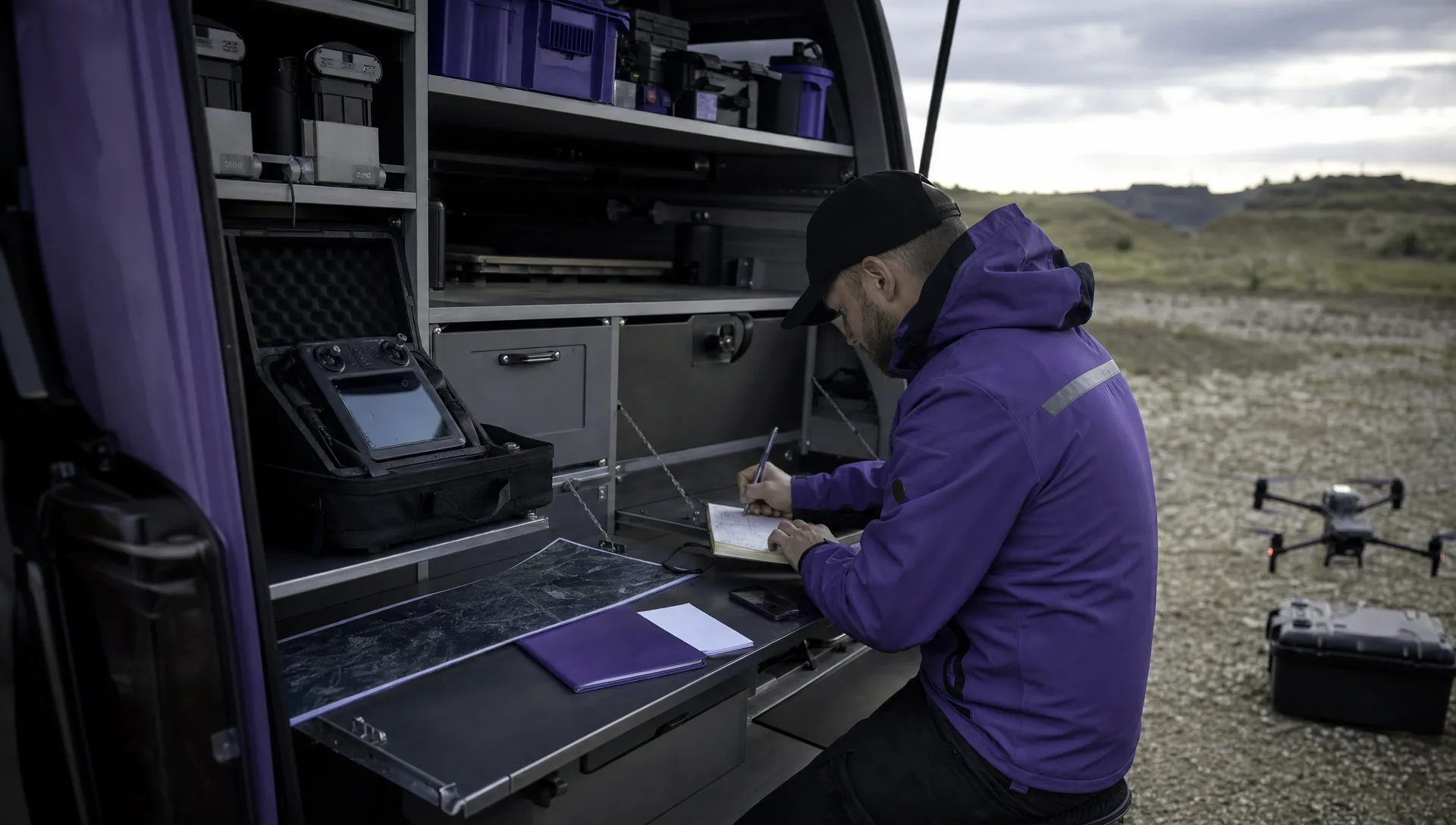 How to Evaluate a Free Drone Logbook Before Using It →
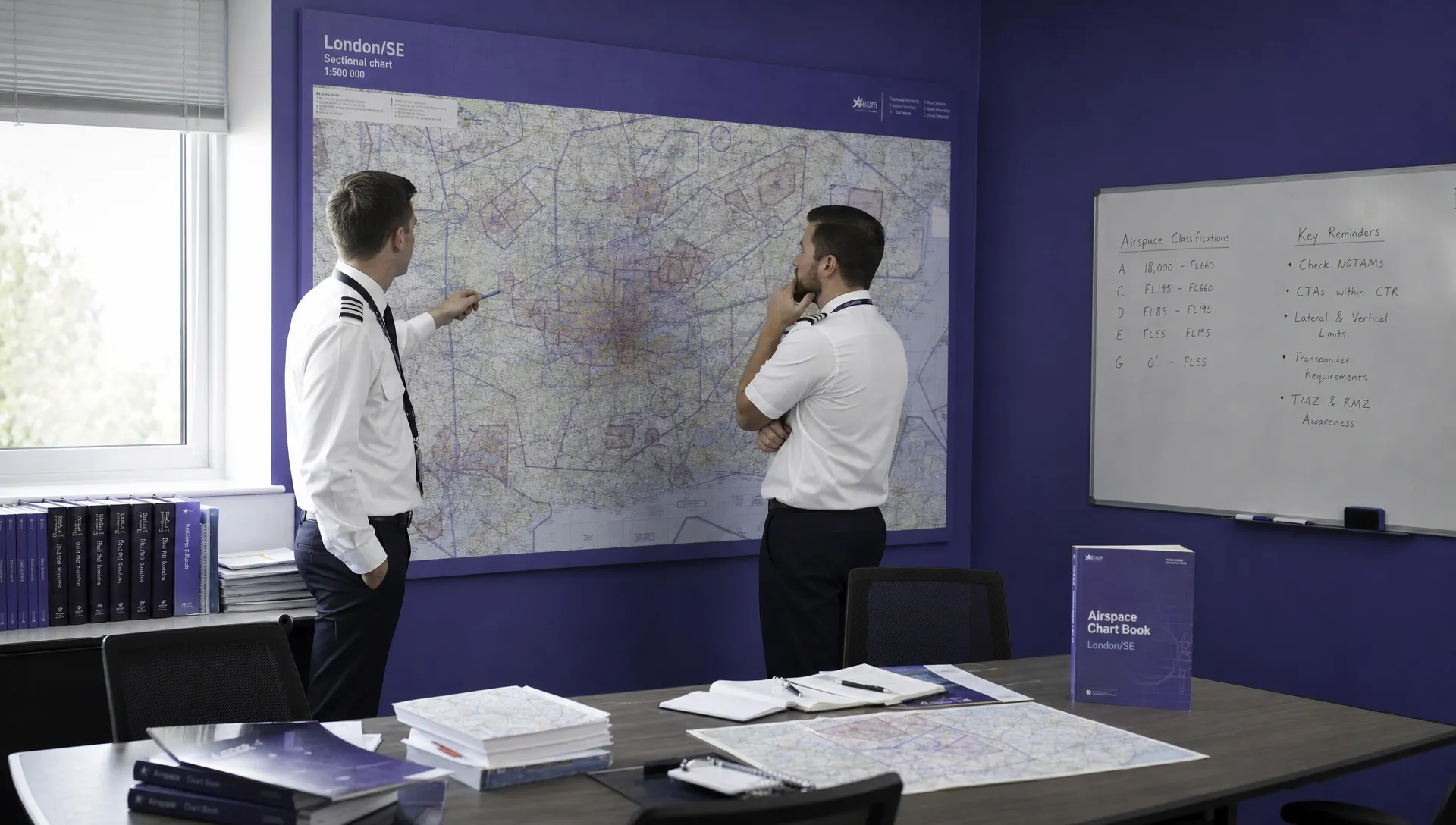 FAA Part 107 Test: How to Master Airspace Questions →
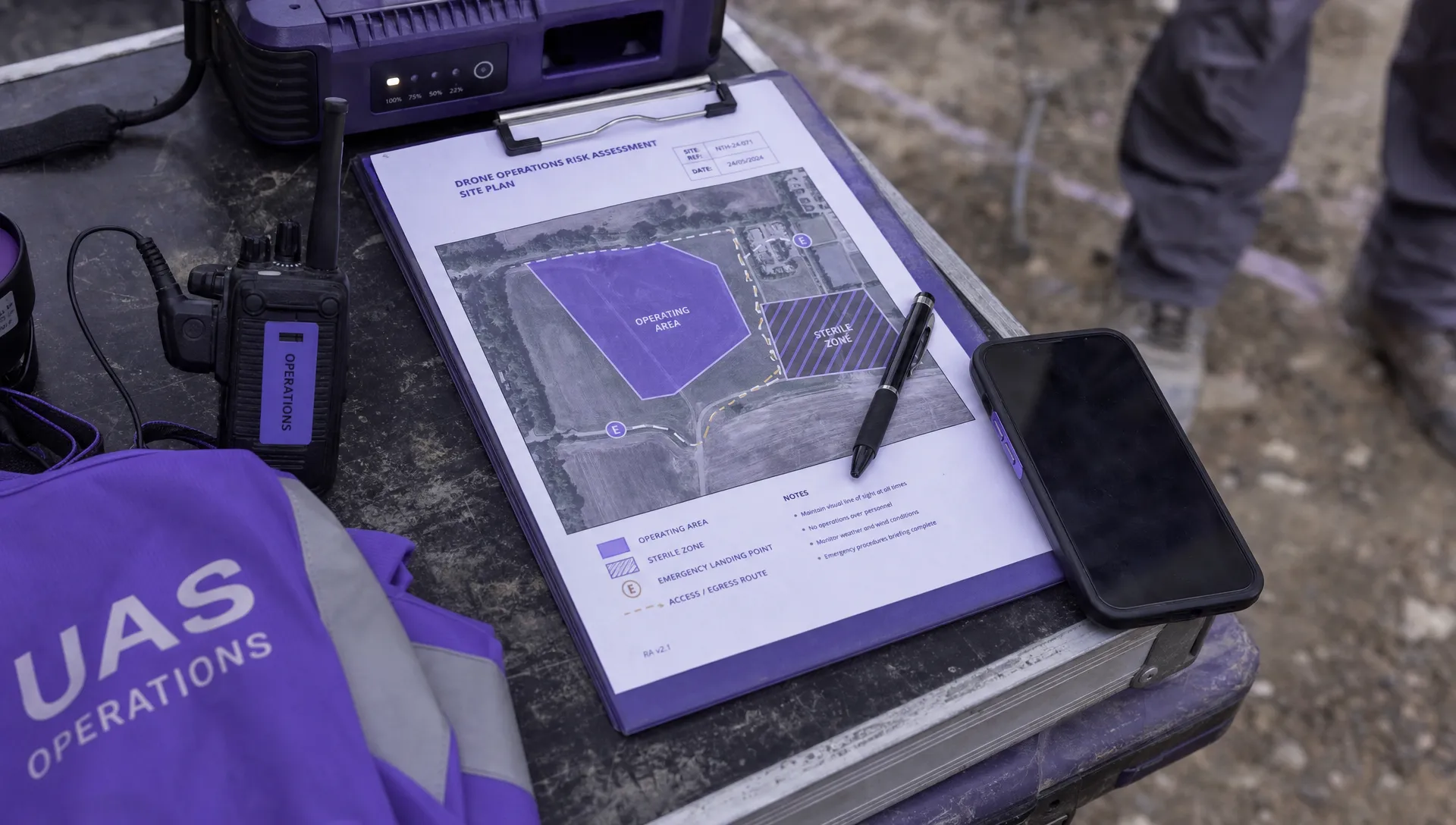 Drone Risk Assessment Controls That Work in the Field →
 FAA Drone License Costs Beyond the Knowledge Test →
 Drone Part 107 Operations: When a Waiver May Be Needed →
 Drone Operating Rules for Managing Contractors and Employees →
 BVLOS Drone Requirements for Building a Safety Case →
 Drone Pilot Test Mistakes That Cost Candidates Marks →
 FAA 107 License vs Part 107 Certificate: What’s the Difference? →