
A Guide to Commercial Drone Management
So, what exactly is commercial drone management? Think of it as the central command center for your entire drone program. It’s the system that businesses use to organize, track, and deploy every drone, pilot, and mission. It's about much more than just flying; it's about managing the fleet and the incredibly valuable data you're collecting to make sure every single operation is safe, compliant, and running like a well-oiled machine.
Why a Structured Approach to Drone Management Is No Longer Optional

As drones become a core part of how modern businesses operate, the old ad-hoc "just go fly" method simply won't cut it anymore. It’s a huge risk and a major roadblock to growth.
Here's an analogy: a single food truck can get by with some casual planning on the back of a napkin. But a nationwide chain of restaurants? They need a rock-solid system for logistics, inventory, staff scheduling, and quality control to survive. It's the same with drones. A structured commercial drone management system is what turns a few cool gadgets into a scalable, mission-critical business unit.
This shift to a more organized approach is built on three pillars that absolutely have to work together for any program to succeed.
The Three Pillars of Effective Management
A solid drone program is built on a foundation of safety, compliance, and efficiency. Let one of these pillars crumble, and you’re exposing your business to some serious operational headaches and legal trouble.
- Safety: This is about tracking everything from drone maintenance schedules and pre-flight checklists to pilot certifications and incident reports. A good management system ensures every piece of gear is airworthy and every pilot is ready for the mission.
- Compliance: Let's be honest, navigating the tangled web of local and national airspace regulations is a nightmare. The right software helps automate compliance checks, verifies pilot credentials, and keeps the detailed flight logs you'll need if the auditors come knocking.
- Efficiency: From planning the mission to delivering the final data, every step needs to be streamlined. This means optimizing flight paths, managing team schedules, and getting the data processed and into the hands of stakeholders without unnecessary delays.
A well-managed drone program doesn't just prevent problems—it actively creates value. By centralizing control, businesses can ensure that every flight contributes directly to strategic goals, whether that's cutting inspection costs or getting a better handle on asset monitoring.
This move toward structured operations shows just how much the industry is growing up. The global commercial drone market hit an estimated $30.33 billion in 2024, and it’s projected to climb to $38.20 billion by 2027. This incredible growth is being driven by companies that have figured out how to weave drones into their core operations through smart management. You can dig into more of these commercial drone statistics and see the full market projections for yourself.
Ultimately, putting a commercial drone management strategy in place is about creating a single source of truth for your entire operation. It’s the framework you need to scale up safely, stay on the right side of the law, and get the best possible return on your investment in drone technology. This foundation is essential before we even start looking at the specific platform features that make it all happen.
The Four Pillars of a Drone Management Platform
A solid commercial drone management platform isn't just one big piece of software. It’s more like a command center built on four distinct but connected pillars. Each one handles a crucial part of your drone program, and when they work together, they give you the structure you need to grow your operations safely and profitably. Getting your head around these core modules is the first step to picking the right software for your business.
Think of it like building a house. You can't just throw up some walls. You need a solid foundation, strong framing, a protective roof, and working utilities. A drone platform is the same—each pillar serves an essential function that keeps the whole operation standing strong.
Let's break them down.
Key Modules of a Commercial Drone Management System
To give you a quick overview, here’s a look at the four essential components that make up a comprehensive drone management platform. Each module has a specific job to do, from managing your gear and pilots to analyzing the data you collect.
| Management Module | Key Functions | Primary Business Value |
|---|---|---|
| Fleet and Pilot Management | Tracks drones, batteries, and equipment. Manages pilot certifications, training records, and flight hours. | Ensures operational readiness, reduces equipment downtime, and mitigates compliance risks by assigning qualified pilots. |
| Flight Planning and Operations | Creates detailed mission plans, maps flight paths, manages risk assessments, and standardizes approval workflows. | Boosts operational consistency and quality, making every flight repeatable, predictable, and aligned with project goals. |
| Airspace Intelligence and Compliance | Provides real-time airspace analysis, identifies restrictions (TFRs), and automates LAANC authorization requests. | Drastically reduces legal and safety risks by ensuring every flight complies with aviation regulations from the start. |
| Data Management and Reporting | Securely stores flight logs, imagery, and 3D models. Generates reports on fleet use, project costs, and pilot performance. | Transforms raw flight data into actionable business insights, helping to prove ROI and make strategic decisions. |
These four pillars work in concert to provide a complete operational picture, turning a complex process into a manageable and scalable system.
Fleet and Pilot Management
First up is Fleet and Pilot Management, which is basically your digital hangar and HR department all rolled into one. This is where you keep a central record of all your physical assets—the drones, batteries, and sensors—and the people qualified to fly them. It’s a huge leap from juggling spreadsheets, giving you a live, dynamic overview of your program's readiness.
On the fleet side, it’s all about meticulous tracking. You can monitor details like:
- Maintenance Schedules: Get automated alerts for routine service, which helps prevent unexpected gear failures on a job.
- Flight Hours: Logging the total airtime for each drone helps you predict wear and tear and plan for replacements.
- Equipment Status: Instantly see which assets are ready to go, in for repair, or already assigned to a pilot.
For your pilots, this module is where you manage all their certifications, training logs, and flight currency. It makes sure that only qualified, up-to-date pilots get assigned to missions, which is a massive win for reducing compliance risk. For a closer look, our guide on UAV fleet management goes into much more detail on these critical functions.
Flight Planning and Operations
Next, we have Flight Planning and Operations. Think of this as your mission control center. This is where you turn a client's request into a concrete, flyable mission plan. It's the operational heart of any drone management system, giving you the tools to design, review, approve, and assign jobs with total precision.
This pillar is where you build out detailed project folders, complete with risk assessments, client info, and specific mission goals. Planners can map automated flight paths, tweak camera settings, and set geofences to ensure the drone captures the exact data needed while staying safely within its operational area. A good workflow ensures every single mission goes through a standard approval process, creating a consistent and auditable paper trail.
Airspace Intelligence and Compliance
The third pillar, Airspace Intelligence and Compliance, is your automated legal and safety officer. For any serious commercial operation, this part is non-negotiable. It directly tackles the biggest source of risk in this industry: navigating the maze of aviation regulations. Instead of your pilots having to manually check a half-dozen apps and websites, this module pulls all the necessary data into one clear, simple interface.
It gives you a real-time analysis of the airspace, flagging things like temporary flight restrictions (TFRs), proximity to airports, and other potential hazards before a drone’s props even start spinning. Many platforms now automate the LAANC (Low Altitude Authorization and Notification Capability) process, turning what used to be a clunky manual task into a simple, integrated step right inside the flight planning workflow.
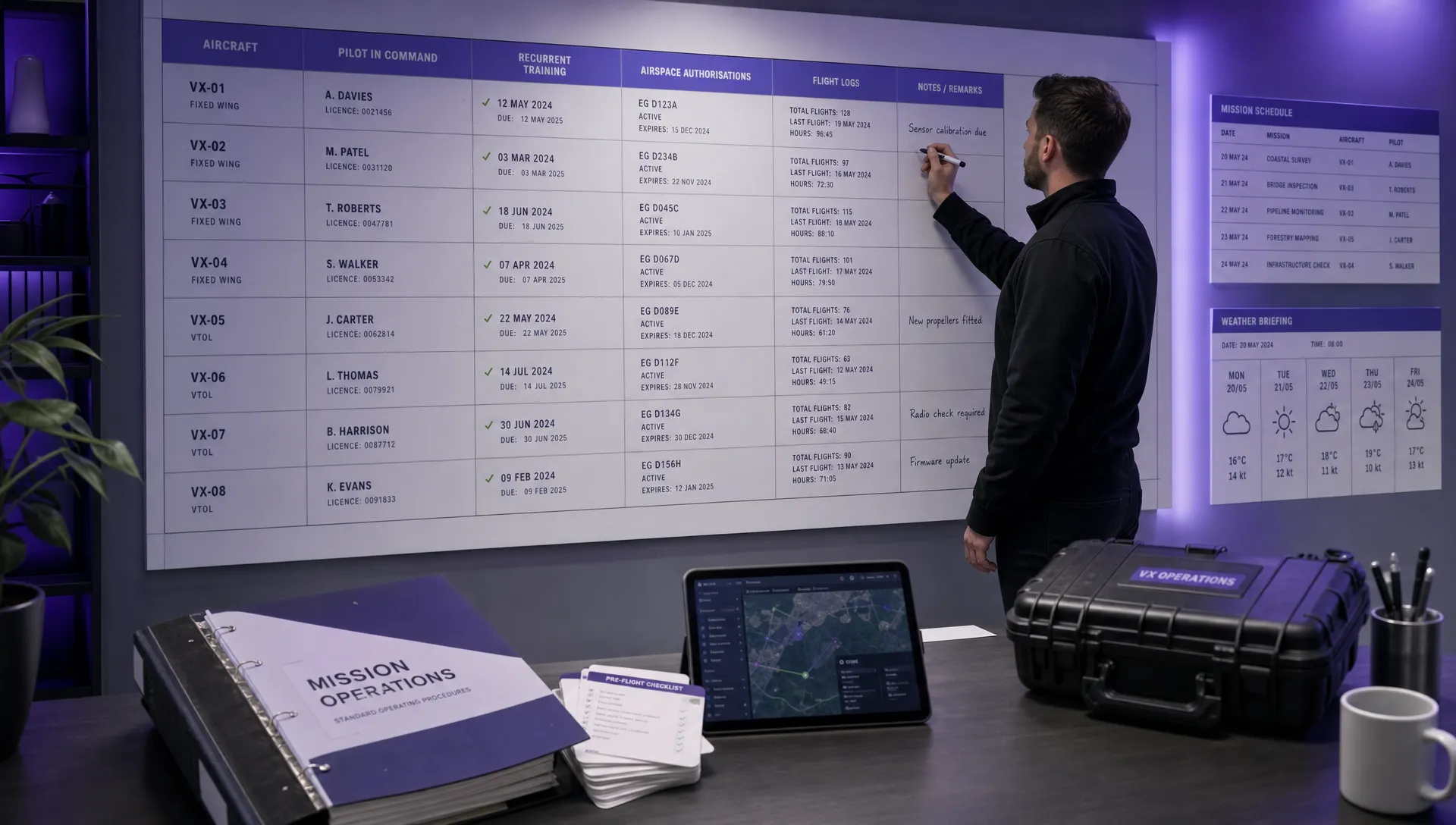
This image shows how a compliance officer can use a single dashboard to keep an eye on everything.
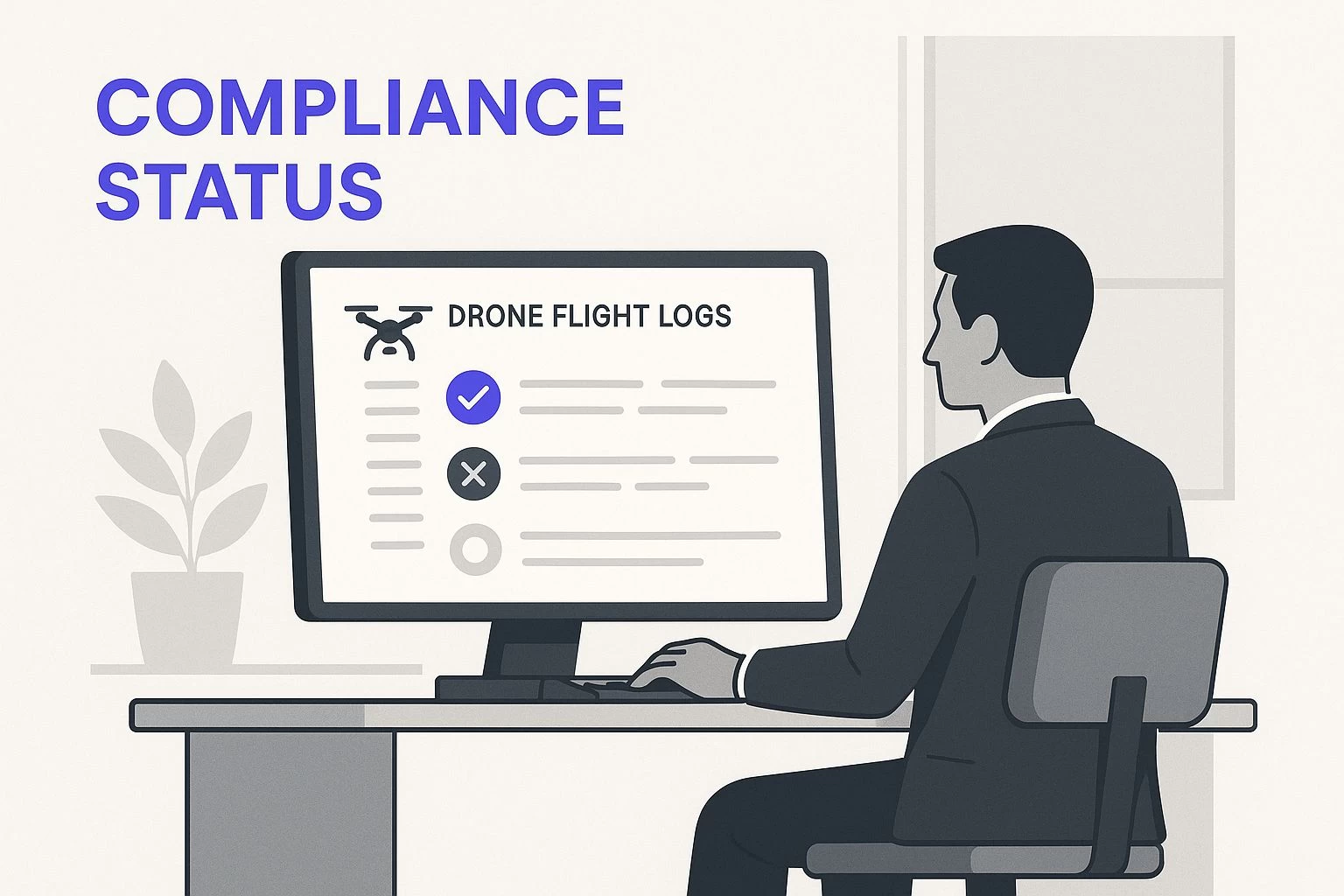
Having all that compliance data in one spot is powerful, allowing for quick, informed decisions that keep everyone safe and on the right side of the law.
Data Management and Reporting
Finally, the fourth pillar is Data Management and Reporting. This is your business intelligence hub. Its job is to turn raw flight data and piles of images into insights you can actually use. After all, a drone’s work isn’t done when it lands—the real value is in the data it just collected.
This module securely stores and organizes everything your missions produce, from flight logs and videos to detailed 3D models and orthomosaic maps. More importantly, it gives you powerful reporting tools to analyze operational efficiency, track how much your fleet is being used, and prove your ROI to clients or higher-ups. You can generate reports on pilot performance, equipment costs, and project profitability, turning operational data into a true strategic asset.
How to Navigate Regulations and Ensure Compliance
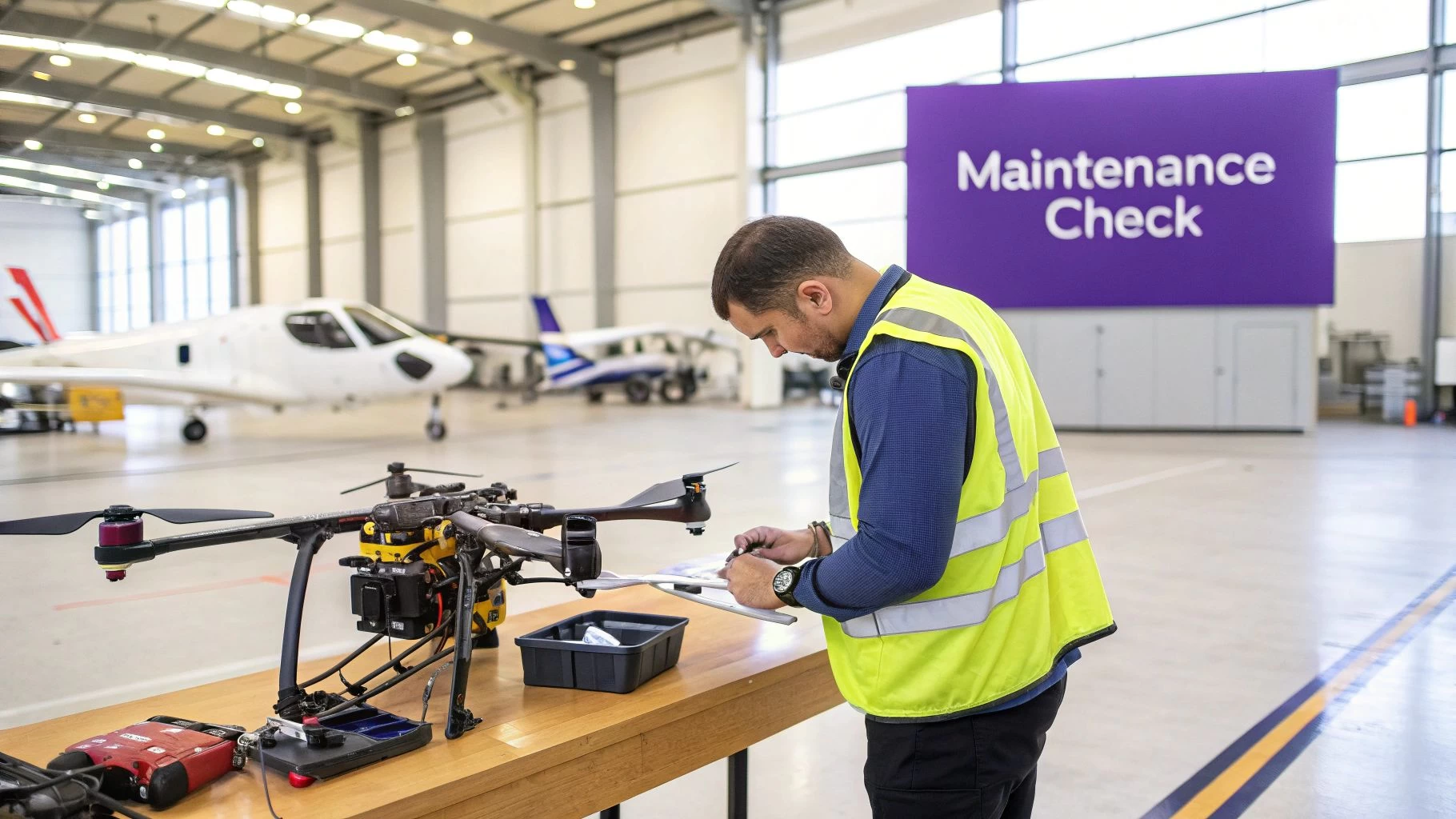
Let's be honest: regulatory compliance is probably the biggest headache for any commercial drone operation. Trying to keep up with the tangled web of local, state, and federal rules can feel like a full-time job in itself.
The good news is that modern drone management software takes this major hurdle and turns it into just another automated step in your daily workflow. Think of it as your digital compliance officer, always on duty. Instead of you having to manually piece together maps, weather forecasts, and regulatory databases, the system does all the heavy lifting. It’s a smart safety net that catches potential problems long before a drone ever gets off the ground.
For any business that wants to grow its drone program safely and responsibly, this kind of proactive management isn't just a nice-to-have; it's essential.
Automating Pre-Flight Checks and Airspace Intelligence
The most important compliance work happens before you fly. A solid management platform automates all these critical pre-flight checks, pulling everything you need into one straightforward dashboard. This gets rid of the guesswork and human error that often lead to expensive mistakes and violations.
Here are some of the key checks that get automated:
- Real-Time Airspace Analysis: The software instantly scans for Temporary Flight Restrictions (TFRs), controlled airspace around airports (like Class B, C, or D), and any other no-fly zones.
- Pilot and Drone Verification: Before a job is even assigned, the system confirms the pilot's certifications are up-to-date and that the chosen drone is properly registered and airworthy.
- Weather and Hazard Assessment: It pulls in live weather data, flagging dangerous conditions like high winds or poor visibility that could put safety at risk and breach operational limits.
This tight integration turns what was a complicated, manual process into a simple, repeatable workflow. Pilots get a clear "go" or "no-go" based on a full picture, making sure every single flight starts on the right side of the law.
Maintaining Perfect Audit-Ready Records
Compliance doesn't stop when the drone lands. Aviation authorities demand meticulous records for every flight. Trying to keep track of this with paper logs or scattered spreadsheets is a recipe for disaster—it’s tedious, full of errors, and becomes impossible to manage as your business grows.
This is where automated logging is a game-changer. A centralized system automatically captures and archives every crucial flight detail, creating a perfect, unchangeable digital paper trail that’s ready for an audit at a moment's notice.
By automating flight logging, a commercial drone management platform ensures that a complete, accurate, and standardized record of every mission is maintained without extra effort. This transforms compliance from a stressful afterthought into a seamless, integrated process.
This level of detailed record-keeping protects your business from liability and shows a true professional commitment to safety and following the rules. As drones get more advanced, with high-def thermal imaging and other powerful sensors, having a robust system to manage flights and compliance is more critical than ever, especially for growing fleets.
Simplifying Complex Regulatory Requirements
Beyond the basic airspace checks, regulations are getting more complicated all the time. Take the FAA's Remote ID rule, which requires most drones to broadcast their identification and location. It's just one more layer of complexity for operators to manage.
This is another spot where a good management platform really proves its worth. Instead of leaving it to individual pilots to figure out, the system can track which drones in your fleet are Remote ID compliant. It can flag non-compliant aircraft during flight planning, stopping a pilot from accidentally using the wrong drone for a mission. If you need to brush up on this particular rule, check out our guide on understanding FAA Remote ID requirements.
Ultimately, this software acts as the central brain for all things compliance, making sophisticated rules simple and ensuring your entire operation works to a single, unified standard.
Implementing Your Drone Management System
Going from a few one-off drone flights to a full-blown, scalable program can feel like a huge leap. It's not. With a bit of planning, you can break the whole process down into surprisingly simple steps. Get a clear plan in place from the very beginning, and you'll build an efficient, compliant operation that just works.
The journey doesn't start with picking software, it starts with your strategy. Before you even think about booking a demo, you need to be crystal clear on what a "win" looks like for your business. Nailing down your goals is the single most important step; it will shape every decision you make down the line and ensure you end up with a system that actually fits your needs.
Define Your Program Goals
What specific problems are you trying to solve with drones? Are you looking to slash inspection costs? Speed up data collection for your clients? Or maybe just improve safety for your teams in the field? Your answers will point you directly to the kind of platform and features that make sense for you.
Start by asking yourself some direct questions:
- What's our main use case? (e.g., site surveying, infrastructure inspection, agricultural analysis)
- How many drones and pilots are we talking about? Think about your current team and where you want to be in a year or two.
- What are our biggest compliance headaches? This could be anything from flying in controlled airspace to meeting specific industry standards.
- What data do we actually need to deliver? Think about the final reports and analytics your clients or internal stakeholders are expecting.
Answering these creates a blueprint for your drone program. This kind of clarity stops you from splashing cash on features you'll never use or, even worse, picking a system that you outgrow in six months.
Evaluate Software Solutions
Once you know exactly what you're trying to achieve, you can start looking at different drone management platforms. Think of this less like buying software and more like choosing a long-term partner for your operations. The right platform won't just solve today's problems; it will grow with you.
Zero in on these key factors during your evaluation:
- Scalability: Can the platform easily go from managing five drones to fifty? Look for flexible pricing and features that support bigger teams, like custom roles and user permissions.
- Integration: How nicely does the software play with the other tools you already rely on? Smooth integration with systems like DJI for flight logs or your existing project management software is a must for a slick workflow.
- Support and Training: Because when things go wrong—and they will—you need to know you can get a real person on the line who knows what they're talking about. Check reviews and ask about their onboarding process. It tells you a lot about the quality of their customer service.
It's easy to get distracted by flashy features. But the best platform is usually the one that nails the fundamentals: reliability, ease of use, and solid support. That’s the foundation of successful drone operations management.
Create a Phased Rollout Plan
After you've picked your platform, fight the urge to roll it out to everyone at once. A phased approach is far smarter—it minimizes disruption and lets you iron out the kinks in a controlled way. A successful implementation is always more about people and process than it is about the tech.
Follow a structured plan for a smooth transition:
- Establish Standard Operating Procedures (SOPs): Write everything down. Create clear, simple guidelines for pre-flight checklists, risk assessments, how to handle data, and what to do in an emergency. Standardizing your workflow is non-negotiable for consistency and safety.
- Onboard Your Pilots: Start small with a handful of your keenest pilots. Give them solid training on the new platform and, most importantly, ask for their honest feedback. These early adopters will become your champions and help train the rest of the crew.
- Run a Pilot Program: Test the entire workflow from start to finish on a few real-world projects. This is where you'll spot any gaps in your SOPs or training before you go live across the whole company.
- Gather Feedback and Iterate: Once the pilot program is done, get everyone's input. What worked? What was a pain? Use this real-world feedback to make final tweaks to your procedures.
This methodical approach makes sure your team feels confident, your workflows are solid, and your commercial drone management system is set up for success right from day one.
Drone Management in Action Across Industries
It's one thing to talk about benefits in theory, but the real power of commercial drone management clicks when you see it solving real-world problems. A structured approach is what turns a drone from a neat gadget into an essential tool that delivers a tangible return on investment, no matter the industry.
By looking at how construction, agriculture, and energy companies put these systems to work, we can see a direct line between coordinated management and operational success. These aren't just hypotheticals; they show how a central platform fixes unique headaches, leading to better efficiency and smarter decisions on the ground.
Construction Progress Tracking and Safety
In construction, time is money. A single week's delay can blow a budget to pieces. The old way of monitoring a sprawling job site meant surveyors and project managers spending hours on foot—a slow, subjective, and sometimes dangerous process.
A solid commercial drone management system completely flips that script. A construction firm can now schedule automated weekly survey flights across multiple job sites right from one central dashboard.
- Automated Missions: A pre-planned flight path means the drone captures the exact same data week after week. This consistency is key, creating a reliable visual timeline of progress.
- Centralized Data: All the images are automatically uploaded, processed into 3D models, and filed away in a project-specific folder. Stakeholders can access it from anywhere, anytime.
- Enhanced Safety: Drones can get up close to scaffolding, roofs, and other high-risk spots without putting a single worker in danger. Take drone roof inspections, for example, where the safety advantage over climbing a ladder is crystal clear.
This systematic approach allows a project manager to instantly pull up this week's 3D model and compare it to last week's. They can verify earthwork volumes, check if structural elements are correctly placed, and catch costly mistakes before they snowball. It's data-driven oversight that keeps projects on track and gives clients a transparent, undeniable record of progress.
Agriculture and Precision Farming
For big farming operations, the game is all about maximizing yield while cutting back on waste. When you're managing thousands of acres, sending people out to scout crops by hand is just not feasible. This is where a managed drone fleet becomes an absolute game-changer for precision agriculture.
Using a centralized management platform, an agronomist can oversee a fleet of drones kitted out with multispectral sensors. These sensors see what the human eye can't, picking up on subtle signs of crop stress across massive fields.
By managing a fleet through a single system, agricultural co-ops can deploy drones to pinpoint areas struggling with irrigation problems, pest infestations, or nutrient deficiencies with surgical precision. This allows for targeted application of water, fertilizer, or pesticides, drastically reducing costs and environmental impact.
Instead of blanket-spraying an entire field, farmers can act on precise data. This doesn't just save a fortune on resources; it leads to healthier crops and bigger yields. The management platform ensures every flight is logged, missions comply with all regulations, and the health insights get to the right people, fast.
Energy and Infrastructure Inspection
Keeping our energy infrastructure in check—from wind turbines to pipelines and power lines—is a massive undertaking. These assets are often in the middle of nowhere, making inspections difficult. Traditionally, this meant expensive helicopter flights or sending crews to work at dangerous heights.
This is where commercial drone management delivers a huge win for both safety and efficiency. An energy company can use a management platform to coordinate complex inspections across its entire portfolio of assets.
Here’s what that looks like in practice:
- Planning Inspections: An operations manager schedules flights for specific turbines or sections of a power line, assigning the right pilots and drone payloads (like thermal or high-zoom cameras).
- Executing Safely: The system checks airspace and local weather, while the pilot runs a pre-planned, automated flight to capture high-res images of blades, towers, and insulators.
- Analyzing Data: The images and data are processed to spot potential faults—cracks, corrosion, or heat spots—which are then flagged for the maintenance crews.
This proactive method helps companies catch small issues before they become catastrophic failures, preventing expensive downtime and making the entire grid more reliable. The explosion in these kinds of applications is why the commercial drone market was pegged at USD 30.02 billion in 2024 and is expected to hit USD 54.64 billion by 2030. These numbers show just how critical drones are becoming for monitoring our most important infrastructure. You can dive deeper into the commercial drone market insights to see the full forecast.
Common Questions About Drone Management
Even when you see the benefits staring you in the face, bringing a new system into your operations always stirs up some questions. When it comes to managing a commercial drone program, we see the same practical hurdles and ideas pop up time and again, whether it's a company launching its first drone or one trying to get a handle on a growing fleet.
Let's tackle these common questions head-on. Here are some straight-up, expert answers to the most frequent queries we get from businesses looking to build a more buttoned-up and successful drone program.
Can I Manage a Small Fleet Without Dedicated Software?
This is probably the number one question we hear from operators with just one or two drones. And technically, yes, you can try to track flights and maintenance with spreadsheets when you're just starting out. But honestly, that approach opens you up to some serious risks and you'll hit a wall with it much faster than you think.
Manual tracking is just asking for human error. A forgotten maintenance check or an overlooked pilot certificate isn't just a slip-up; it can have massive safety and legal blowback. Spreadsheets simply can’t give you the live overview or the automated safety nets that proper software provides.
Think of a professional drone management platform as the single source of truth for your entire operation. It’s your business's safety net, protecting you from liability by making sure critical tasks aren't just done, but are documented, standardized, and auditable from day one.
The moment you bring on a second pilot or a third drone, the complexity of managing schedules, gear, and compliance paperwork doesn't just double—it grows exponentially. Starting with a proper management system, even for a tiny fleet, instills the right habits from the get-go and gives you a solid foundation to grow on.
What Is the Biggest Challenge in Scaling a Drone Program?
Hands down, the single greatest challenge is getting from a place of inconsistent, one-off flights to a standardized, repeatable operation. It's about turning the "art" of a few key pilots into a "science" that anyone on the team can execute safely and reliably, every single time.
Without a central system, every pilot probably has their own method for planning flights, checking risks, and logging data. That kind of inconsistency makes it impossible to guarantee quality or stay compliant across the board as you grow.
To get over this hump, you have to lock in uniform procedures for every phase of a mission. This means things like:
- Standardized Checklists: Making sure every pilot runs through the exact same pre-flight and post-flight safety checks.
- Consistent Data Collection: Using approved flight plans to capture the same data, the same way, on every job.
- Centralized Record-Keeping: Keeping a complete, auditable history of every flight in one secure spot.
A drone management platform is built specifically to solve this exact problem. It provides the structure and automation you need to turn your drone operations into a truly professional and consistent service.
How Does Drone Management Software Handle Data Security?
In a world where your data is one of your most valuable assets, security has to be front and center. Any reputable commercial drone management platform is built from the ground up with robust security measures to shield your sensitive operational data from prying eyes.
The best platforms use a multi-layered security approach. This usually includes features like end-to-end encryption for data when it's being sent and when it's stored, secure cloud hosting with trusted providers, and tight access controls.
One of the most critical features is role-based access control. This lets you assign specific permissions to each user on your team. So, pilots can only see the missions they’re assigned to, while you, as the admin, get a complete overview of the entire operation. This fine-grained control is vital for protecting confidential client info, flight plans, and proprietary data. When you're looking at different platforms, always ask about their security protocols and check for certifications like SOC 2 or ISO 27001—it's proof they take protecting your data seriously.
Does This Software Actually Fly the Drone for Me?
This is a common mix-up, but the answer is a clear no. A certified and qualified pilot is always legally required to be in command of the drone during a flight. The software doesn't take the place of the pilot in the field.
Think of the platform as the mission control center for the entire workflow. It’s where you plan, approve, and organize every mission before the pilot even gets to the site. For instance, you can build incredibly detailed and automated flight plans—like mapping grids or inspection routes—right inside the software.
The pilot then takes that standardized, pre-approved plan into the field and executes it with their flight control app. The platform’s job is to ensure the whole process—from the initial planning and risk assessment all the way to the final data delivery—is safe, compliant, and perfectly lined up with the project’s goals. It gives the pilot the intel they need to fly efficiently and, most importantly, safely.
Ready to streamline your operations and build a scalable drone program? With Dronedesk, you can manage your fleet, team, and clients from a single, intuitive platform designed to save you time and ensure compliance. Start your free trial today and see how thousands of pilots have simplified their workflow.
 How to Review a DJI Flight Log After an Unexpected Event →
 Drone Laws Around the World: A Pre-Flight Research Framework →
 How to Compare Drone Survey Services for Complex Sites →
 How to Start a Drone Mapping Business With a Clear Workflow →
 Class C Airspace Drone Rules for Commercial Flights →
 How to Create a Drone Job Pack for Every Mission →
 FAA Small UAS Rule: Key Requirements for Operators →
 How to Build a Drone Pilot Flight Log That Is Audit Ready →
 FAA Drone Licence Requirements for Commercial Pilots →
 FAA BVLOS Waivers Granted: What Successful Cases Show →