
A Guide to Best Flight Planning for Drones
The best flight planning is a proactive process that starts long before a drone ever leaves the ground. It’s about more than just a simple checklist; it's about building a solid, risk-averse foundation for every single mission. This means combining meticulous equipment checks with a thorough understanding of the operational environment.
Building Your Pre-Flight Foundation

The most successful drone operations are built on a bedrock of consistency and attention to detail. This initial phase isn't just about ticking boxes; it's about creating a repeatable, professional workflow that minimizes risk. Think of it as setting the stage for a flawless performance.
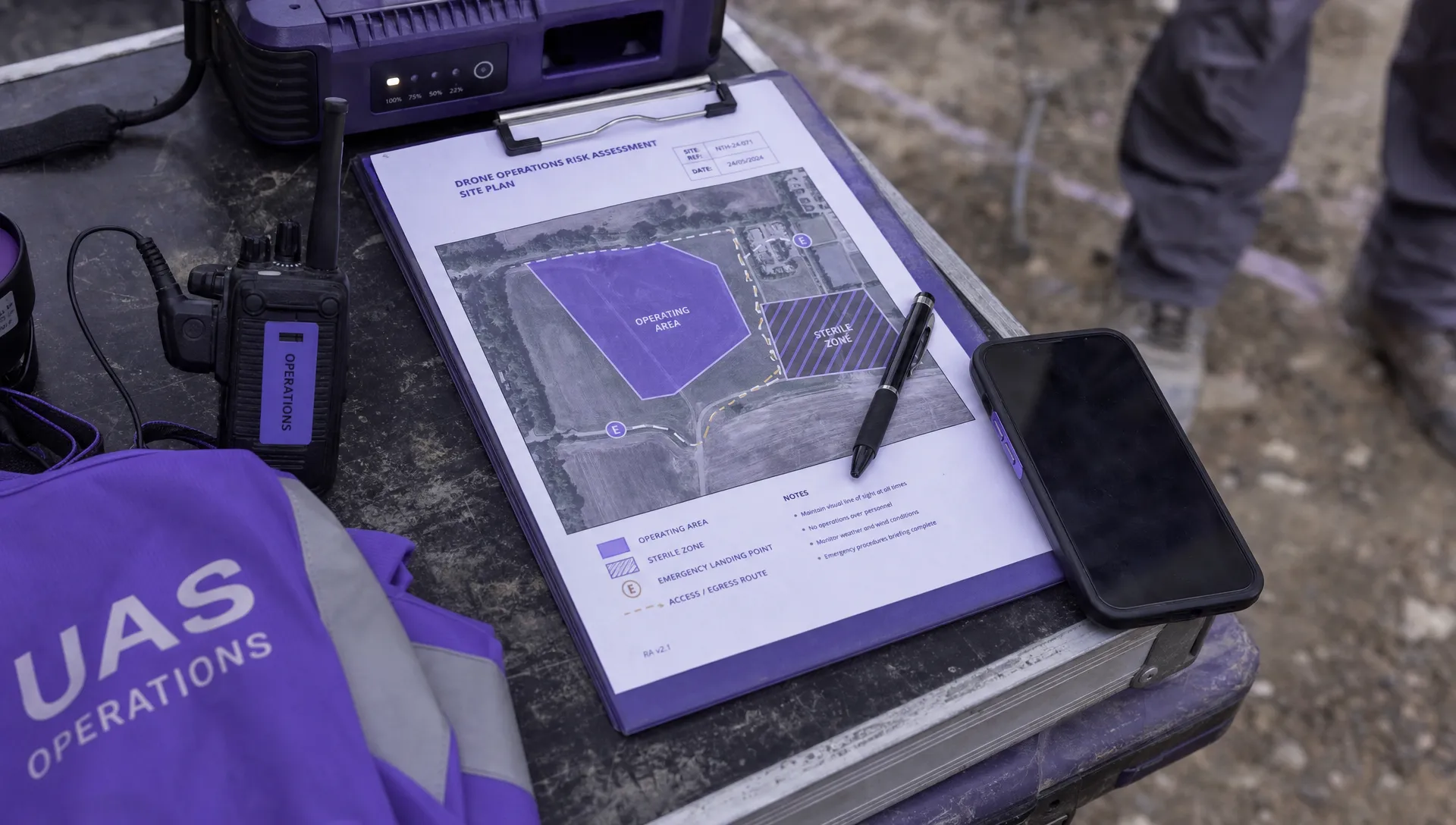
A huge part of this foundation is the risk assessment. This is never a one-size-fits-all document. A flight plan for a remote agricultural survey will have vastly different risks than one for an urban park bustling with people. For the farm, your primary concerns might be livestock and signal interference. The park, on the other hand, introduces complex risks like pedestrian traffic, nearby buildings, and potential privacy issues. Documenting these specific hazards is non-negotiable.
Equipment And Firmware Integrity
Before any mission, verifying your equipment's health is paramount. This goes way beyond just checking battery levels. It means inspecting propellers for nicks or stress marks, ensuring gimbals are calibrated, and confirming all firmware is up to date. An outdated firmware version can easily lead to unpredictable flight behavior or, worst-case scenario, a complete loss of control.
Using a platform like Dronedesk creates a centralized log for these essential checks. You can create and manage a comprehensive drone preflight checklist, ensuring no step is ever missed. This digital trail is invaluable for maintaining professional standards and demonstrating compliance if you're ever asked to.
Before we dive into the specifics, it's helpful to see how these checks are structured. A professional pre-flight routine is systematic, covering everything from the physical hardware to the digital systems that keep your drone in the air.
Core Components of a Professional Pre-Flight Check
| Check Category | Key Actions | Why It Matters |
|---|---|---|
| Physical Inspection | Inspect propellers for damage, check airframe for cracks, and ensure all components are securely attached. | Identifies potential mechanical failures before they become catastrophic in the air. A small crack can lead to a mid-flight breakup. |
| Battery Management | Check charge levels, inspect for swelling or damage, and ensure batteries are properly seated in the drone. | Prevents sudden power loss, which is one of the most common causes of drone accidents. Healthy batteries are predictable batteries. |
| Firmware & Software | Verify drone, controller, and app firmware are all on the latest version. Confirm app settings are correct for the mission. | Ensures flight stability, access to the latest safety features, and compatibility between all components of your system. |
| Controller & Comms | Check controller battery, ensure control sticks are calibrated, and verify a strong signal link between the controller and drone. | Guarantees you have reliable and responsive control over the aircraft throughout the entire flight. |
| Camera & Payload | Inspect the gimbal, check camera settings (ISO, shutter speed, etc.), and ensure the memory card has sufficient space. | Avoids discovering unusable footage after the flight. Proper settings and a clear lens are critical for delivering quality data. |
| GPS & Failsafes | Confirm a strong GPS lock before takeoff. Verify that Return-to-Home (RTH) altitude and failsafe behaviors are set correctly. | Your GPS is your lifeline. A strong lock and correctly configured failsafes are your best defense if things go wrong. |
This table isn't exhaustive, but it covers the core pillars of a solid pre-flight routine. By making these checks second nature, you're not just following a procedure; you're actively managing risk and setting yourself up for a successful flight.
Understanding The Bigger Picture In Aviation
While drone operations feel localized, they are part of a much larger, increasingly crowded airspace. The principles of efficiency and safety that govern commercial aviation apply to us, too. For instance, the sharp recovery of global air traffic post-pandemic has pushed the entire industry to refine flight planning.
Global flight activity surged from a low of 61,441 commercial flights in August 2020 to over 120,000 by 2024, a figure that now exceeds pre-pandemic levels.
This growth means smarter, more dynamic airspace management is needed for everyone, from jumbo jets to small quadcopters. Efficient flight planning—which includes adaptive routing and congestion management—helps lower the entire aviation industry's carbon footprint and operational costs. You can dig into more of these global aviation stats and their impact over at airnavradar.com.
This broader context reinforces why meticulous planning at the drone level is so critical. Every flight we plan contributes to a safer, more sustainable shared sky. A robust pre-flight routine is your first and most important step in that process.
Mastering Airspace Intelligence for Safe Flights
Navigating modern airspace is a non-negotiable skill for every professional drone pilot. The best flight planning takes what looks like a confusing jumble of lines and colours on a map and turns it into actionable intelligence that keeps your missions safe and, just as importantly, legal. This is about more than just a quick glance at a map; it's about deeply understanding the "why" behind every single restriction.
There's a world of difference between flying near a small, private airstrip and planning a mission next to a major stadium on game day. The private strip just needs some common sense and caution. But that stadium? It likely has a Temporary Flight Restriction (TFR) slapped on it, making it a complete no-fly zone with some serious penalties if you ignore it. Knowing these details is what separates the amateurs from the pros.
Decoding Airspace Layers and Alerts
First things first, you need to be able to interpret the different classes of controlled airspace—Class B, C, D, and E—as each has its own set of rules and hoops to jump through for authorization. But it doesn't stop with the permanent structures. You also have to stay on top of the dynamic, temporary restrictions that can pop up with very little warning.
These often include things like:
- NOTAMs (Notices to Air Missions): These are time-sensitive alerts that are essential for flight operations, covering anything from runway closures to parachute jump activities in your area.
- TFRs (Temporary Flight Restrictions): These are put in place for specific events like sporting events, VIP visits, or emergencies like wildfires, effectively creating temporary no-fly zones.
- Advisories: These might not be outright restrictions but demand extreme caution. Think high-intensity military operations or other potential hazards.
For any serious commercial operation, checking these data sources isn't a "nice-to-have"—it's a core part of your legal and ethical responsibility as a remote pilot. Skip this step, and you could be looking at fines, losing your license, or worse.
This is where having an integrated software platform becomes a massive leg up. Instead of juggling multiple websites and apps, a good platform pulls all this critical data into one place, making it infinitely easier to see what's going on.
The Dronedesk dashboard, for example, gives you a clear visual overlay of all this critical airspace data. This single view pulls together potential hazards, NOTAMs, and controlled airspace zones, turning what used to be a long research task into a quick, intuitive visual check.
Turning Data Into a Confident Flight Plan
Once you have a crystal-clear picture of the airspace, you can start making properly informed decisions. An integrated airspace intelligence platform does more than just show you where you can't fly; it helps you build a smarter, safer plan from the ground up.
For instance, if a NOTAM flags helicopter activity near your flight zone, you can proactively adjust your flight path to create a wider buffer. You could also add specific notes for your visual observer and, crucially, document your awareness of the hazard right in the mission plan.
This proactive approach is really the essence of top-tier flight planning. It’s not just about staying out of trouble; it’s about demonstrating your professionalism and building a solid, documented history of safe, compliant operations. By truly mastering airspace intelligence, you build a foundation of safety that protects your clients, your gear, and your entire business.
Designing Efficient and Intelligent Flight Routes
This is where the real magic happens. Moving beyond basic safety checks, intelligent route design is what separates a hobbyist from a pro. It’s all about creating a flight path that not only keeps you out of trouble but also captures the best possible data, whether you're shooting a slick real estate video or building a pinpoint-accurate 3D model.
A truly great flight plan is much more than just a string of waypoints. It has to wrestle with real-world variables that can make or break a mission. Planning a survey over hilly terrain, for instance, means constantly adjusting the drone's altitude to maintain a consistent height above the ground. Get this wrong, and your data quality goes out the window. Likewise, flying around a tall building forces you to think about signal obstructions and plan your route to keep a solid line of sight.
Mission-Specific Route Creation
Let's be honest, you wouldn't use the same flight pattern for a dramatic cinematic reveal as you would for an agricultural survey. Different jobs demand different approaches.
- Photogrammetry and Mapping: When you're creating 3D models or orthomosaic maps, it’s all about precision. A strict grid pattern is non-negotiable. With Dronedesk, you can outline the survey area, dial in the image overlap (usually 70-80% is the sweet spot), and set your camera's gimbal angle. The software then does the heavy lifting, generating the most efficient flight path to cover every inch of the target area.
- Cinematic Waypoint Missions: For videography, the name of the game is smooth, fluid motion. This is where you'll manually place waypoints, fine-tuning the drone's speed, altitude, and camera movement between each point. This level of control lets you craft those graceful, sweeping shots that are next to impossible to fly by hand.
Here's a pro tip: the ability to save these routes as templates is a massive time-saver. Once you’ve perfected a flight plan for a common job, like a residential roof inspection, you can save it and roll it out for future projects with just a few small tweaks.
Before you lock in any route, you have to be absolutely certain your operational area is clear. This infographic shows the layered process you should follow every single time.

This visual really drives home the importance of a multi-layered check. You can't afford to miss a single restriction. Platforms that bake these checks right into the workflow are essential, something we cover in our guide to drone flight planning tools with NOTAMs.
Factoring in Real-World Limitations
Finally, every route has to respect the drone's physical limits. Dronedesk is great for helping you visualize your planned route against your battery life, making sure you have enough juice to complete the mission and get back home safely. I can't stress this enough: always build in a buffer. Unexpected factors like a strong headwind can drain a battery much faster than you'd think.
Proactive Weather and Environmental Analysis

Let's be blunt: weather is the ultimate wild card in any drone operation. Treating it as an afterthought is a rookie move and, frankly, a recipe for disaster. Professional flight planning demands a proactive, layered analysis that goes way beyond a quick check for rain. Showing up on-site and hoping the wind is calm enough just doesn't cut it.
The most common trap pilots fall into is only checking the ground-level wind. Here’s the reality check: the wind speed and direction at your planned altitude of 400 feet can be a completely different beast. This creates dangerous wind shear that can easily overwhelm your drone, and you won't see it coming until it's too late. You have to look at forecasts for multiple altitudes to get the full picture.
Beyond Wind and Rain
A truly comprehensive weather check digs into the environmental factors that can ground a flight just as quickly as a thunderstorm. Temperature, for instance, has a massive impact on LiPo battery performance. Flying in the cold can slash your flight time by 20-50% if your batteries aren't properly warmed up. That can lead to a sudden, and very unwelcome, return-to-home sequence mid-mission.
Another critical factor that many operators miss is geomagnetic activity, measured by the KP-index. A high KP-index, often caused by solar flares, can seriously disrupt your drone's GPS signals. Without a stable position lock, your drone can start to drift or behave erratically. An elevated KP-index is a major red flag that should be part of every single pre-flight check.
I once planned a crucial survey flight where the morning forecast looked perfect. But a deeper dive showed a high KP-index warning for the afternoon. We pushed the flight forward, got the mission done with a rock-solid GPS lock, and later heard reports of other operators in the area having a nightmare with erratic flight behaviour that same afternoon.
Establishing Firm Go/No-Go Parameters
This deep analysis isn't just for kicks; it’s so you can set firm, objective go/no-go parameters for every single job. These aren't just feelings or gut instincts—they are hard limits based on cold, hard data. By defining your acceptable limits before you even leave the office, you take the guesswork and emotion out of the equation when you're on-site and under pressure to fly.
Your go/no-go checklist should be built around specific, measurable thresholds.
- Maximum wind speed at altitude: Set a clear limit you will not cross, for example, 20 mph.
- Minimum operating temperature: Define the absolute coldest you’ll fly in without battery heaters.
- Maximum KP-index: Establish a ceiling (like KP 5) where all flights are grounded, no exceptions.
- Precipitation probability: Decide on a percentage that automatically triggers a postponement.
Having these parameters defined and logged in your Dronedesk flight plan is the hallmark of a true professional. It gives you a clear, defensible reason for your decisions, which protects you, your client, and your expensive gear. Being proactive about weather isn't just about avoiding bad days; it's about making sure you only fly on the right ones.
Closing the Loop with Post-Flight Analysis
The job isn’t over when the props stop spinning. Any seasoned pro will tell you that what happens after the drone lands is just as critical as all the prep work you did beforehand. This is where you turn raw flight data into solid proof of your professionalism, building client trust and sharpening your skills for the next mission.
A proper post-flight workflow is more than just scribbling down your landing time. It means meticulously logging flight duration, keeping a close eye on battery cycles to monitor their health, and noting any oddities you saw in the air. Did you hit a patch of unexpected signal interference near that tall building? Was the battery draining faster than usual thanks to a sudden gust of wind? These are the golden nuggets of information you need to capture.
From Simple Logs to Powerful Insights
All this logged data becomes an incredibly valuable asset. For your clients, it’s concrete evidence that you’re a professional who takes safety seriously. And if you ever face an audit, a detailed flight log is your best friend, showcasing a consistent history of responsible operations.
But the real magic happens when you start analyzing this data internally. This is how you find your competitive edge. By reviewing mission data, you can spot trends and make your future flight plans that much smarter.
- Battery Performance: Track how different temperatures and wind conditions hammer your battery life. This lets you build much more realistic mission timelines.
- Equipment Health: Did you notice an unusual motor whine or a slight gimbal stutter? Log it. This helps you schedule maintenance before a small issue becomes a mission-ending failure.
- Anomaly Reporting: Documenting problems helps you build a personal knowledge base, making it way easier to troubleshoot issues down the road.
This final step is what really separates the amateurs from the pros. Consistent, detailed logging creates a feedback loop that makes every single flight safer and smarter than the last. It’s the engine that drives operational excellence.
This disciplined habit isn't unique to drones; it’s standard practice in the wider aviation world. The massive scale and profitability of commercial airlines are built on razor-sharp planning and analysis. The global airline industry was valued at around $762.8 billion in 2023 and is expected to hit $900 billion by 2025. That growth is fueled by sophisticated systems that analyze flight data to optimize routes, cut fuel consumption, and nail on-time performance—all things that directly boost revenue. You can learn more about the logistics driving the airline industry's growth at trilinkftz.com.
Integrating Post-Flight Data Seamlessly
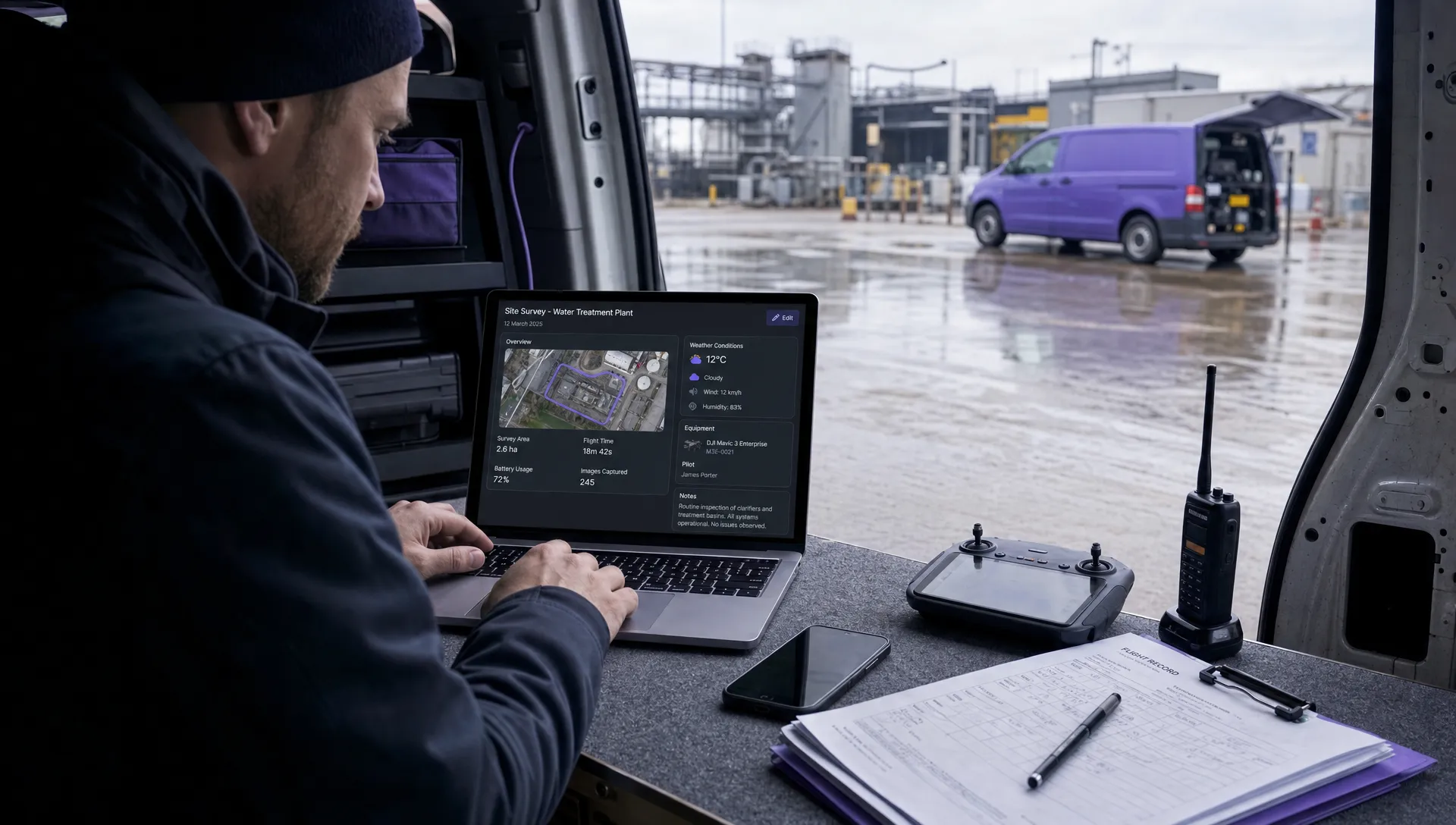
This is where a platform like Dronedesk really shines, simplifying this whole process. Forget juggling spreadsheets and paper logbooks. You can punch in all your post-flight info directly into the mission record, keeping your pre-flight plan, in-flight data, and post-flight analysis all in one tidy, accessible place.
This creates a complete, closed-loop system for every job you do. You plan the mission, you fly the mission, and then you feed the results right back into your knowledge base. This commitment to detailed post-flight analysis is a cornerstone of professional flight planning, guaranteeing you’re always learning, improving, and operating at the top of your game.
Frequently Asked Questions About Drone Flight Planning
Even with the best flight planning software, questions are bound to pop up. It doesn't matter if you're a new pilot or a seasoned pro tweaking your workflow—getting clear answers to common problems helps you fly with more confidence. Here are a few of the most frequent queries we hear from the Dronedesk community.
Understanding the right timeline is often the first hurdle. For any complex commercial mission, especially in a new or busy area, I always recommend starting your planning at least 24-48 hours ahead. This gives you a comfortable window to watch the weather patterns evolve, check for any last-minute TFRs or NOTAMs, and get any airspace authorizations you need without scrambling.
Of course, for simple flights in a spot you know like the back of your hand, a few hours might be enough. The trick is to never, ever skip the core safety checks, no matter how routine the flight feels.
Addressing Common Planning Mistakes
One of the most dangerous—and common—mistakes I see is pilots relying solely on the ground-level weather forecast. Wind speed and direction can be a totally different beast at 200 or 400 feet. Proper flight planning always involves checking wind data at your actual flight altitude. Trust me, it can save you from some nasty surprises.
Another huge pitfall is complacency. After you've flown the same site a dozen times without a hitch, it's easy to get lazy and just assume the airspace is clear. But temporary restrictions can pop up with very little warning. A quick, diligent check before every single flight isn't just a good idea; it's a non-negotiable professional habit.
The best pilots I know are the ones who treat every mission with the same level of respect and diligence, whether it's a simple shot or a complex survey. Consistency is the ultimate safety feature.
What About Planning For Recreational Flights?
So, do you really need a formal, documented plan every time you fly for fun? While it's not legally required in the same way as a commercial operation, getting into a simplified planning mindset is a fantastic habit to build. It’s less about paperwork and more about developing muscle memory for safety.
Before you fly recreationally, always take a minute to:
- Check the Airspace: Fire up a reliable app like B4UFLY or the one built into your flight software to make sure you're clear of restrictions.
- Assess the Environment: Do a quick visual sweep for obvious hazards like power lines, trees, people, or pets wandering into your flight path.
- Review Your Gear: A quick pre-flight check of your drone’s props and battery levels takes seconds but can be the difference between a great flight and a crash.
Think of it as a "mini-plan." This simple routine ensures that even your casual flights are done with an awareness of your surroundings, which makes the skies safer for everyone. Building these habits early on creates a solid foundation if you ever decide to go pro.
Ready to make your flight planning safer, faster, and more professional? Dronedesk brings all the tools you need together in one powerful platform. Start your free trial today at dronedesk.io.
 Drone Airspace Rules: How to Document Your Site Checks →
 How to Evaluate a Free Drone Logbook Before Using It →
 FAA Part 107 Test: How to Master Airspace Questions →
 Drone Risk Assessment Controls That Work in the Field →
 FAA Drone License Costs Beyond the Knowledge Test →
 Drone Part 107 Operations: When a Waiver May Be Needed →
 Drone Operating Rules for Managing Contractors and Employees →
 BVLOS Drone Requirements for Building a Safety Case →
 Drone Pilot Test Mistakes That Cost Candidates Marks →
 FAA 107 License vs Part 107 Certificate: What’s the Difference? →