
What Is an Airspace Intelligence Platform?
Think of an airspace intelligence platform as a digital command centre for the sky. It's like a smart city's operating system, but instead of managing traffic on the ground, it oversees all the activity in the air. The goal is to create one unified, real-time picture of everything from commercial jets to tiny delivery drones, making the skies safer and more efficient for everyone.
Understanding the Modern Digital Sky
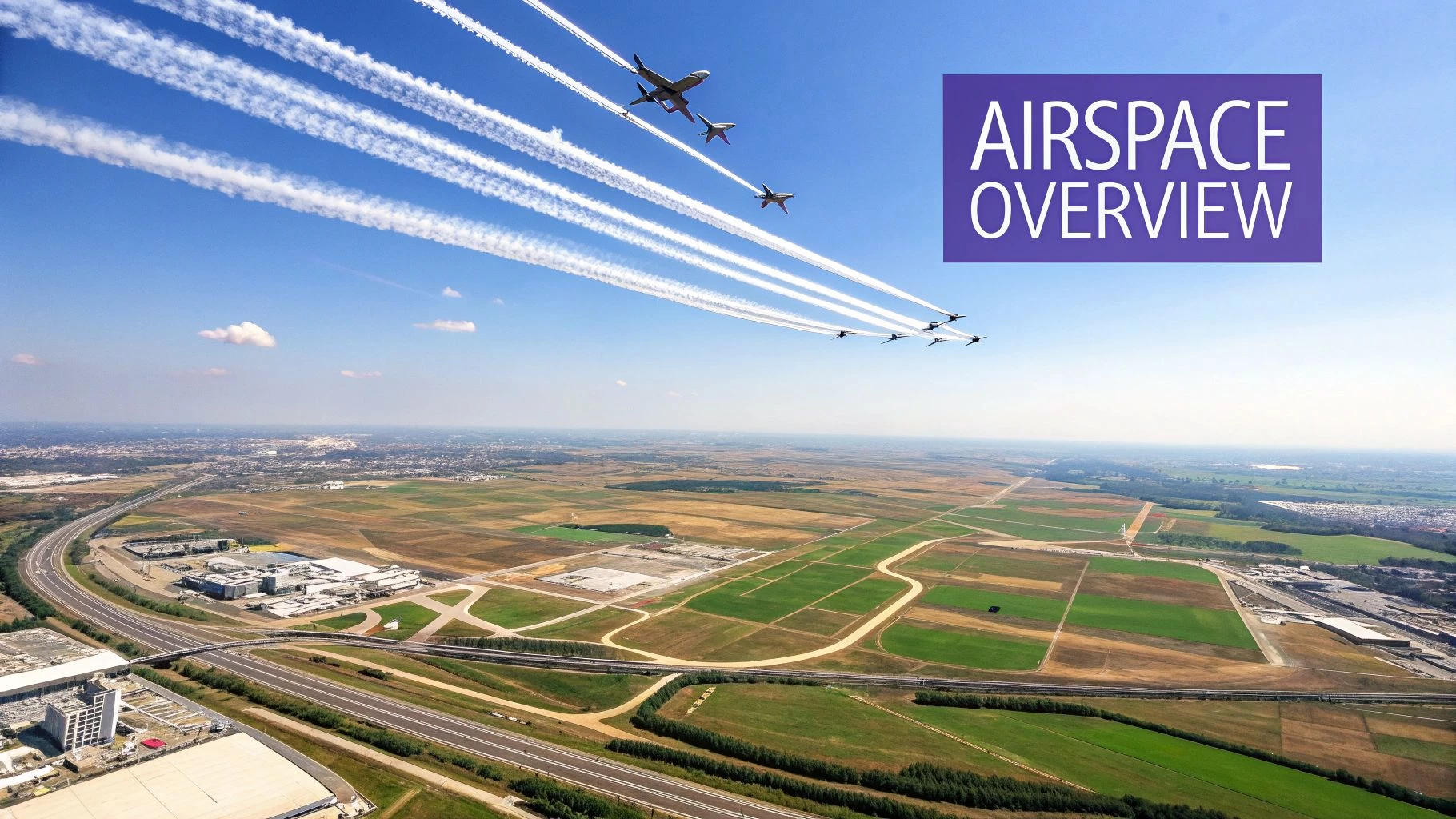
Imagine trying to manage all of a city's transport—trains, cars, bikes, and pedestrians—using a single, crumpled paper map. It would be chaos. That's pretty much the challenge we face today with our increasingly crowded skies. The sheer volume and variety of things flying around have made the old ways of doing things obsolete.
This is where an airspace intelligence platform comes in. It acts as a central nervous system, pulling in massive amounts of information from dozens of sources to create a single, coherent view of what’s happening up there. It’s not just a static map; it’s a living, breathing digital twin of the sky.
Key Capabilities of an Airspace Intelligence Platform
To really get a feel for what these platforms do, it helps to break down their core functions. The table below shows how they move beyond simple tracking to offer something much more powerful and proactive.
| Core Capability | Description | Real-World Impact |
|---|---|---|
| Data Fusion & Integration | Combines data from radar, satellites, ADS-B transponders, and drone traffic systems (UTM) into a single, unified operational picture. | An airport operator can see not just incoming planes but also a news drone and a medical delivery drone, all on one screen, preventing potential conflicts. |
| Real-Time Situational Awareness | Provides a live, dynamic view of all aerial activity, updating constantly to reflect current conditions, weather, and vehicle movements. | A drone pilot planning a survey mission can see a pop-up helicopter flight path in real-time and adjust their own flight plan on the fly to avoid it. |
| Predictive Analytics & Deconfliction | Uses AI to analyze flight paths, predict potential collisions or airspace incursions, and automatically suggest safer alternatives. | The system can flag two drones on converging paths miles before they become a risk, alerting both operators and suggesting minor altitude changes to maintain safe separation. |
| Automated Compliance & Authorization | Automates the process of checking flight plans against regulations, restricted zones, and temporary flight restrictions (TFRs). | Before a drone even takes off, the platform can automatically check if the planned mission is compliant with local rules, securing instant authorization for low-risk flights. |
These capabilities work together to create a system that's not just watching the sky, but actively helping to manage it safely and efficiently.
From Data to Actionable Insights
The real magic of an airspace intelligence platform isn’t just seeing where everything is; it’s turning all that raw data into something you can actually use. The platform analyzes an aircraft's trajectory, predicts where it's going, and alerts operators to potential risks long before they become a real problem. This proactive approach is a huge leap from the old, reactive model of air traffic control.
This whole field is exploding thanks to big steps forward in AI and machine learning. You can see parallels in how foundational tech is changing other industries, too, like in the Solar Technology of AI and IoT, where data is also being used to make systems smarter and more efficient.
This shift to a data-first approach is driving some serious market growth. The global aviation analytics market, which is a key part of these platforms, was valued at USD 2.63 billion and is expected to hit USD 6.35 billion by 2033. This growth shows just how committed the industry is to using data to make flying safer and more streamlined for everyone.
The Four Pillars Of Airspace Intelligence
Imagine you’re under the hood of a finely tuned sports car. Every component—from the engine to the suspension—has to sync perfectly. An airspace intelligence platform operates the same way: four interconnected systems that transform raw signals into clear, actionable insights.
It all begins with gathering vast streams of data from every corner of the sky. That foundation sets the stage for everything that follows.
Pillar 1: Data Aggregation
At its core is Data Aggregation. Think of this as the platform’s radar dish, pulling in information from multiple feeds to paint a complete picture of the airspace.
Key inputs include:
- Radar and Satellite Feeds for tracking commercial and military aircraft
- ADS-B Transponders broadcasting the positions of manned flights
- Unmanned Traffic Management (UTM) systems monitoring drone activity
- Weather Data offering both current conditions and short-term forecasts
- Geospatial Information detailing terrain, obstacles, and no-fly zones
By unifying these streams into a single hub, the platform becomes the definitive “source of truth” for operators.
Pillar 2: Real-Time Analytics
Once the data pours in, Real-Time Analytics kicks into gear. This is where the system’s “brain” processes millions of data points every second. It doesn’t just pin down an aircraft’s location—it calculates speed, predicts trajectories, and spots anomalies before they become incidents.
That split-second analysis is essential for keeping dynamic airspace both safe and efficient.
Pillar 3: Predictive Modeling
Next up is Predictive Modeling, where the platform looks ahead. Using AI, it sifts through historic and live data to forecast airspace conditions minutes, hours—or even days—from now.
The AI in aviation market, valued at USD 5.19 million, is projected to reach USD 20.63 million by 2034. This surge underlines the industry’s growing trust in AI-driven forecasts and smarter decision-making. Find out more in the Precedence Research AI in Aviation Market Study.
“What is the probability of airspace congestion over this area in one hour?”
“How will the approaching storm cell alter drone flight corridors?”
Pillar 4: Visualization
Finally, Visualization transforms all that heavy data lifting into a glanceable dashboard or interactive map.

Without this intuitive interface, even the best analytics and forecasts remain locked away. Visualization brings the entire airspace story into focus, empowering operators to act with confidence.
Together, these four pillars—Aggregation, Analytics, Modeling, and Visualization—form the backbone of modern airspace intelligence platforms. They turn chaotic skies into a managed, predictable environment.
How Airspace Intelligence Transforms Industries
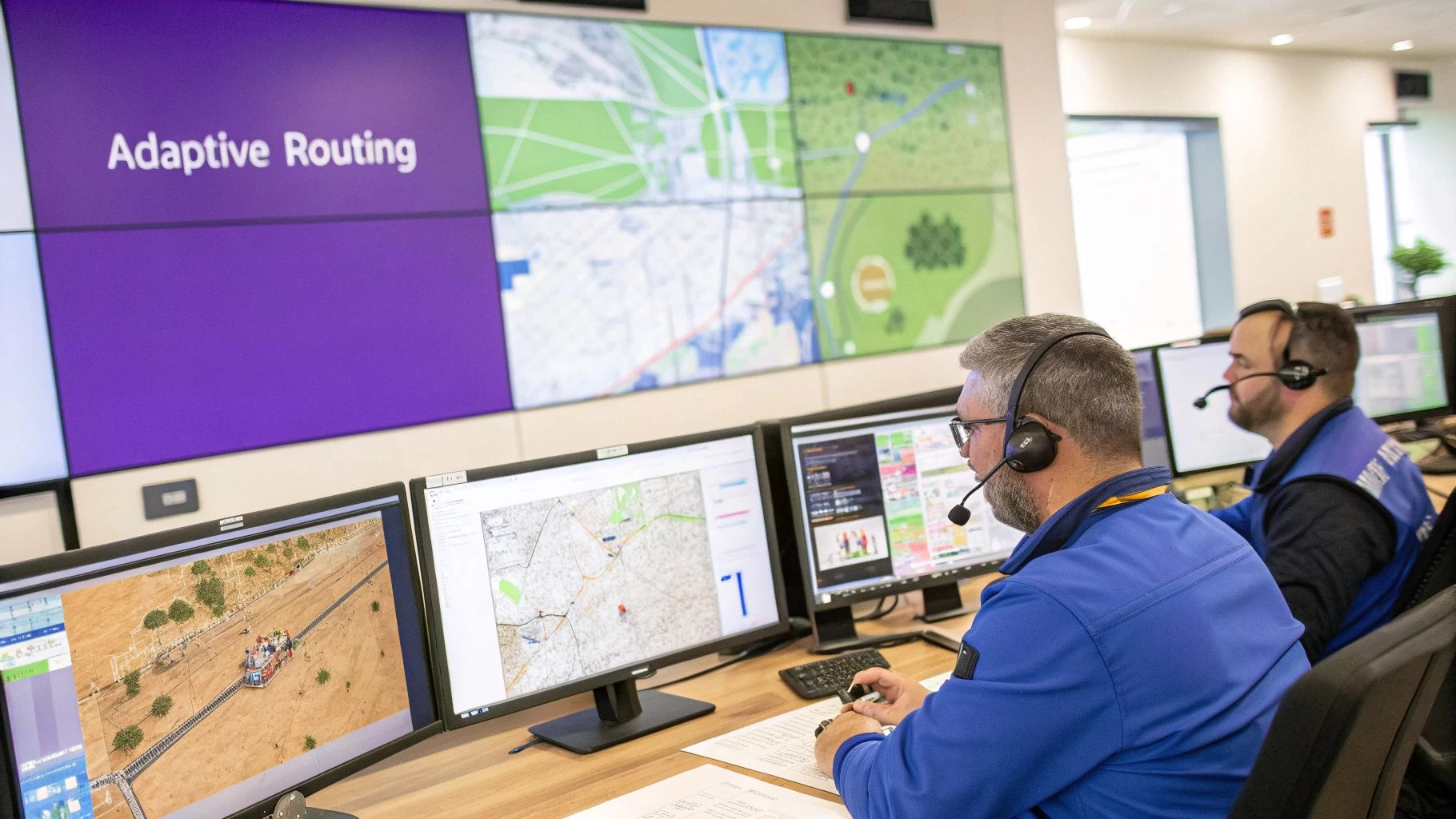
The real value of an airspace intelligence platform isn't just confined to the airport fence. This technology is a massive enabler for both safety and the economy, fundamentally changing how entire industries get things done. From global logistics to national security, its impact is spreading far and wide.
It’s like switching from an old paper road atlas to a live, interactive traffic app like Waze—but for the sky. The knock-on benefits are huge for any sector that touches aviation, creating efficiencies that were simply out of reach before.
Commercial Aviation and Logistics
For commercial airlines, the gains are immediate and easy to see on the bottom line. By giving pilots and dispatchers a crystal-clear, real-time view of weather systems and air traffic, these platforms help nail down the most efficient flight paths.
This translates directly into less fuel burned, fewer delays, and lower operating costs. In the logistics world, companies are leveraging this same intelligence to build the drone delivery networks we've all been hearing about. A good platform can manage a whole fleet of autonomous drones, making sure they safely zip through cities, dodge obstacles, and stick to every local rule.
Drone Operations and Urban Air Mobility
The drone industry is, without a doubt, the biggest winner here. For professional pilots and service providers, an airspace intelligence platform is the missing piece of the puzzle for safe, compliant, and scalable operations. It completely automates the headache of pre-flight planning and risk assessments.
This integration gives you a much clearer picture of your operating environment. For instance, knowing the best practices for UAV data collection is one thing, but having a platform that makes planning those precise missions almost effortless is a game-changer.
Key benefits for drone pros include:
- Automated Compliance Checks: Instantly flags potential conflicts with Temporary Flight Restrictions (TFRs), controlled airspace, and local bylaws.
- Deconfliction with Manned Aircraft: Gives you real-time alerts about nearby planes or helicopters, ensuring everyone stays a safe distance apart.
- Streamlined Authorization: Speeds up approvals for flying in controlled airspace through systems like LAANC (Low Altitude Authorization and Notification Capability).
This solid foundation of safety and efficiency is exactly what the future of Urban Air Mobility (UAM) needs. Soon, air taxis and other next-gen aircraft will have to coexist in crowded city skies, and this is the technology that will make it possible.
Defense and Security
In the world of defense and security, situational awareness is everything. An airspace intelligence platform pulls together a unified operating picture, combining data from radar, satellites, and unmanned aerial vehicles (UAVs). This gives commanders an incredible, all-encompassing view of the battlespace.
This complete aerial view enables operators to detect and track potential threats—like unauthorized drones near sensitive sites—with remarkable speed and accuracy. The system can distinguish between a hobbyist drone, a commercial flight, and a potential security risk, allowing for a rapid and appropriate response. This capability strengthens national security and protects critical infrastructure from emerging aerial threats.
Real-World Applications and Use Cases
The true test of any airspace intelligence platform isn’t in its code or on a spec sheet—it’s how it holds up in the real world. When you move past the theory, you start to see this technology solving some seriously complex, high-stakes problems across a bunch of different industries.
Think of these platforms as the critical link that turns a flood of raw data into safer skies, slicker operations, and, in some cases, life-saving results. Let's look at a few examples where this unified aerial awareness makes a tangible difference.
Securing Major International Airports
Picture a major international airport at the height of the holiday season. A single unauthorized drone buzzing near a runway can bring everything to a screeching halt. We're talking a full shutdown, creating a domino effect of delays that costs airlines millions and strands thousands of passengers. This isn't just a "what if" scenario; it's a constant threat.
An airspace intelligence platform is the answer. It acts as a digital shield, constantly scanning the skies for any UAV that isn't supposed to be there. The moment it spots one, the system kicks into gear:
- Identifies and Tracks the drone's position, altitude, and flight path in real-time.
- Alerts Security Personnel with precise intel, letting them mount a quick, targeted response.
- Deconflicts Air Traffic by feeding air traffic controllers the data they need to safely guide manned aircraft away from the danger zone.
This kind of proactive defense stops costly shutdowns before they happen and, more importantly, keeps every single passenger and crew member safe.
By turning a potential crisis into a managed event, the platform gives airports the control they need to neutralize threats without grinding operations to a halt. It’s the difference between a minor security blip and a full-blown logistical nightmare.
Optimizing Large-Scale Agriculture
Now, let's shift gears to a massive farm stretching across thousands of acres. A company might have a whole fleet of autonomous drones handling everything from crop spraying and soil analysis to monitoring plant health. Trying to manage that fleet without a central nervous system would be absolute chaos.
This is exactly where an airspace intelligence platform steps in. It becomes the command center for the entire drone operation, fine-tuning every part of the process. For the agricultural company, this means they can:
- Plan and Automate Missions: They can map out complex flight paths for dozens of drones at once, ensuring every inch of the farm is covered without wasteful overlap. That saves both fuel and resources.
- Monitor Fleet Health: The platform keeps tabs on battery life, maintenance schedules, and the operational status of every drone in the air.
- Ensure Regulatory Compliance: It automatically cross-references flight plans with local airspace rules, preventing any accidental flights into restricted areas.
By bringing all their aerial operations under one roof, the company gets the most out of its investment, boosts crop yields with precision, and keeps a flawless safety record.
Enhancing Emergency Response
When a natural disaster hits, having a clear and coordinated airspace can literally be a matter of life and death. Emergency services need to deploy helicopters for medical evacuations, drones for search and rescue, and other aircraft for damage assessment—all at the same time, often in terrible weather.
An airspace intelligence platform is non-negotiable in these situations. It creates a single, unified view of the sky for all first responders, allowing them to work together safely and effectively. The system ensures an air ambulance isn’t on a collision course with a low-flying search drone, freeing up each team to do its job without risk. The result? A faster, more organized response that saves more lives when every second is critical.
Integrating Air and Ground Command Systems
In any modern operation, from national security to complex commercial logistics, success hinges on a seamless link between assets in the air and teams on the ground. Think of an airspace intelligence platform as the central nervous system for the entire operation. It's the digital equivalent of a quarterback who can see the whole field, connecting every player into a single, unified force.
This kind of capability is often wrapped up in the acronym C4ISR, which stands for Command, Control, Communications, Computers, Intelligence, Surveillance, and Reconnaissance. It’s a military term, but the concept is universal: it's the framework for gathering, processing, and sharing information to get a decisive edge. A good platform becomes the digital command post for all C4ISR activities.
By pulling in data from UAVs, manned aircraft, and ground sensors all at once, the system hands commanders a single, coherent picture of what’s happening. This completely breaks down the information silos that can plague complex jobs, ensuring everyone—from the pilot in the sky to the boots on the ground—is working from the exact same real-time intelligence.
Creating a Unified Operating Picture
Let's make this real. Imagine a large-scale inspection of a critical piece of infrastructure, like a bridge or a pipeline. A ground crew is on-site using handheld sensors to check for structural weak spots. At the same time, a drone is flying overhead capturing thermal imagery, and a manned helicopter is circling to provide a wide-area visual overview. Without an integrated system, you have three separate teams producing three separate piles of data. It’s a coordination nightmare.
This is where an airspace intelligence platform completely changes the game. It fuses all that disparate information onto a single, interactive map.
- Ground Sensor Data: Shows up as interactive points on the map, pinpointing the exact locations of any issues the crew finds.
- UAV Thermal Feeds: Are layered over the visual map, instantly highlighting heat anomalies that could signal hidden structural problems.
- Manned Aircraft Video: Gives you the big-picture context, letting commanders see how all the smaller pieces fit together in the wider environment.
Fusing air and ground intelligence like this allows for incredibly rapid, coordinated action. The moment the drone spots a heat anomaly, the ground crew can be directed straight to it. This creates a level of on-the-fly efficiency that was simply out of reach before. This unified view is the bedrock of a modern flight operations center, turning data into decisions with complete situational awareness.
The Nerve Center for Multi-Domain Operations
This kind of integration is absolutely vital for national security missions, complex public safety responses, and massive industrial projects. A powerful airspace intelligence platform ensures every asset becomes a sensor and every operator is empowered to make better decisions, all connected through a shared, live view of the environment.
A unified operating picture means that a threat detected by an aerial asset can be immediately communicated to ground forces, or a logistical bottleneck identified from the ground can be used to reroute aerial delivery drones in real time.
This powerful synergy between air and ground assets is driving some serious investment. The air-based C4ISR market, which is a key part of this multi-domain awareness, was valued at around USD 3.5 billion and is expected to climb to USD 4.4 billion by 2035. You can dig into more insights on this growing market over at Future Market Insights. This growth isn't just a number; it reflects the exploding demand for platforms that can deliver total situational awareness and enable faster, smarter, and more coordinated responses.
How to Choose the Right Platform
Picking the right airspace intelligence platform is a big deal. Think of it less like buying a new app and more like choosing the central nervous system for your entire drone operation. Get it right, and you’re set up for smooth, efficient flying. Get it wrong, and you’re in for a world of operational headaches and gnarly compliance risks.
It’s easy to get wowed by a slick demo, but you’ve got to look past the shiny features. The real test is how a platform performs day in, day out, under the pressure of real-world jobs. You need a framework for your evaluation, one that cuts through the jargon and gets to the heart of what matters for your business.
Core Evaluation Criteria
When you start comparing options, it's vital to measure them all against the same stick. This way, you’re making a true apples-to-apples comparison and not getting swayed by one particularly cool feature that might not even be that useful to you.
Here are the four essential pillars to build your evaluation on:
- Scalability: Can this thing grow with you? A system that’s perfect for a handful of drones might completely fall over when you’re trying to manage fifty. You need to ask vendors how their platform handles expanding fleets, bigger teams, and more complex missions.
- Integration Capabilities: A good platform doesn't live on an island. It needs to play nice with the other tools you already use. How easily does it talk to your client management software, your accounting tools, or even just your DJI flight logs? Seamless integration is the only way to avoid mind-numbing manual data entry.
- Regulatory Compliance: This one is absolutely non-negotiable. The platform must feed you accurate, current information that meets the standards of aviation authorities like the FAA and EASA. A solid system keeps you compliant by default, automatically flagging restrictions and making the authorization process less painful.
- User Experience (UX): Let’s be honest—if the platform is clunky and confusing, your team just won’t use it properly. A clean, intuitive interface is critical. Can a new pilot figure out how to plan a mission without a two-hour tutorial? Can an admin pull a compliance report in a couple of clicks?
Key Questions to Ask During a Demo
A live demo is your chance to really kick the tires. Don’t just sit back and watch their polished presentation. Go in armed with specific questions that push the system and show you what it’s really made of.
A great airspace intelligence platform should feel like a co-pilot, not a checklist. It should proactively provide the insights you need to make smart decisions, simplifying complex airspace rules into clear, actionable guidance.
Use this checklist to steer the conversation and get the answers you need:
- "Show me your process for LAANC authorization." This is a great test of their integration with official systems and reveals just how many clicks it actually takes to get approval.
- "How does the platform handle Temporary Flight Restrictions (TFRs) that pop up unexpectedly?" This gets right to the heart of their real-time data capabilities and alert systems. You need to know it's on the ball.
- "Can you demonstrate how to generate a compliance report for a specific client over the last quarter?" This will tell you a lot about the depth of its reporting and logging features.
- "Walk me through integrating a flight log from a non-DJI drone." This is a key test of the platform’s flexibility. If you run a mixed fleet, you need to know it can handle everything you throw at it.
Ultimately, choosing the right airspace intelligence platform, like Dronedesk, is about finding a partner that understands your goals and is built to grow with your business. By focusing on these core criteria, you’ll make a choice that bolsters your safety, compliance, and efficiency for years to come.
Frequently Asked Questions
What's the Difference Between Airspace Intelligence and Traditional ATC?
Think of traditional Air Traffic Control (ATC) as the traffic cop you see at a busy intersection, directing cars—or in this case, planes. It's a very hands-on, human-led system focused on keeping manned aircraft safely separated. It works, but it was designed for a different era.
An airspace intelligence platform is more like the central command center for a smart city's entire transportation network. It pulls in data from all over the place—radar, weather systems, and, crucially, from drones themselves. This gives you a complete, real-time picture of everything happening in the sky, not just the big stuff.
This modern approach uses AI to automatically spot potential conflicts, manage unmanned traffic, and even predict issues before they happen. It’s a huge leap beyond what conventional ATC can do, paving the way for a much safer and more integrated airspace for everyone.
Are These Platforms Only for Airports and the Military?
Not a chance. While airports and military bases are definitely key users, these platforms are becoming essential for a whole range of industries. Logistics companies are using them to coordinate drone delivery fleets, energy firms rely on them to inspect miles of power lines, and massive farms use them to manage agricultural drones.
Any organization that operates drones—or is affected by them—stands to benefit. This includes public safety agencies coordinating emergency responses, construction companies surveying sites, and even media outlets using UAVs for newsgathering. The list of uses is growing every day as more businesses realize what’s possible with drone technology.
How Do These Platforms Handle Data Security?
Security isn't an afterthought; it’s built into the very core of these systems. Any reputable platform will use powerful encryption for all its data, whether it's being sent across the network or just sitting on a server. They also use strict, role-based access controls, which is a fancy way of saying only the right people can see or touch sensitive flight information.
To handle privacy concerns, platforms will often anonymize data wherever possible and are designed to comply with global data protection regulations. The goal is simple: keep operations running smoothly and securely without ever compromising sensitive personal or company information.
Ready to manage your drone operations with confidence? Try Dronedesk today and see how our all-in-one platform provides the airspace intelligence you need to fly safely, compliantly, and efficiently. Get started with Dronedesk
 How to Start a Drone Mapping Business With a Clear Workflow →
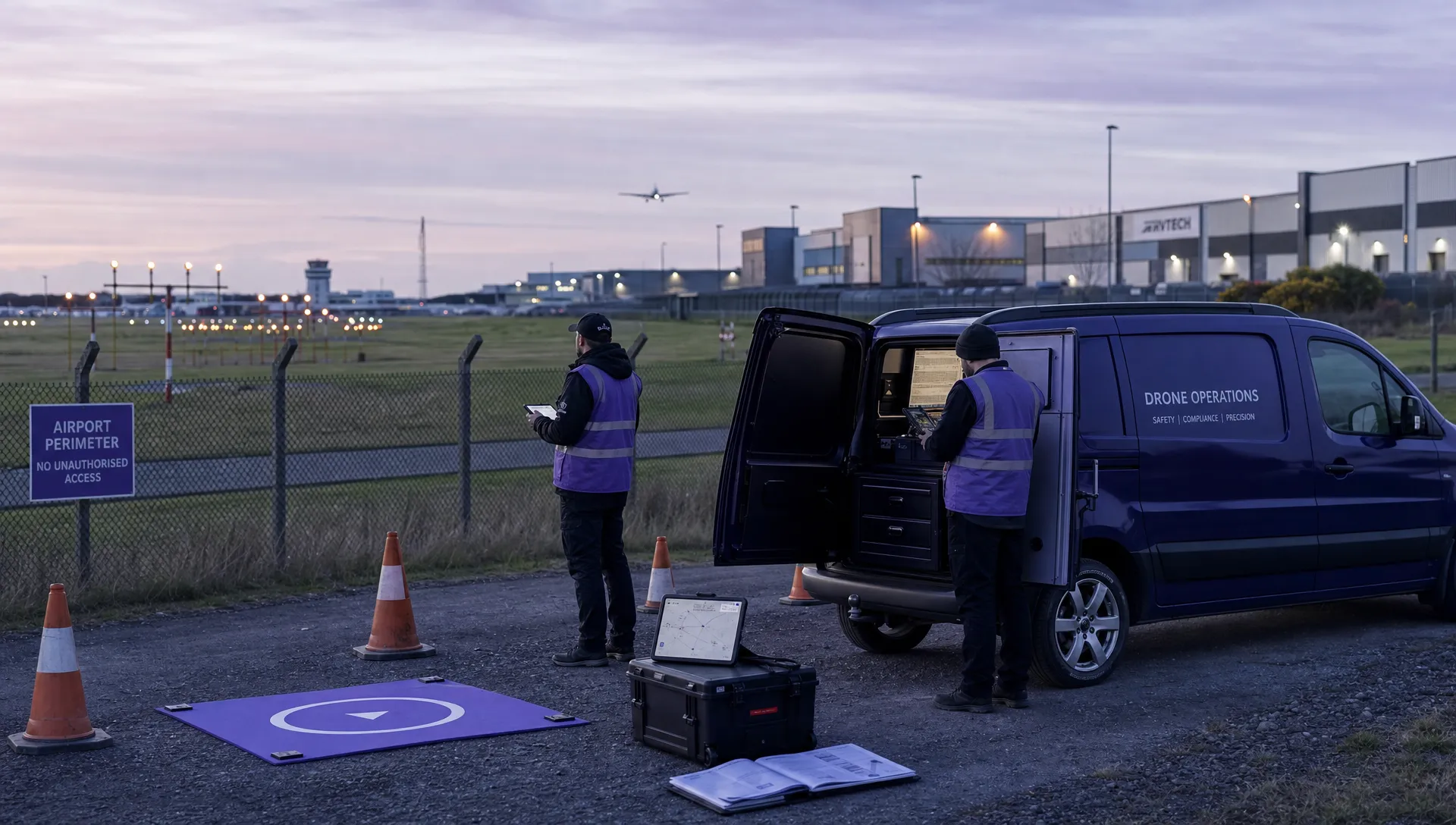 Class C Airspace Drone Rules for Commercial Flights →
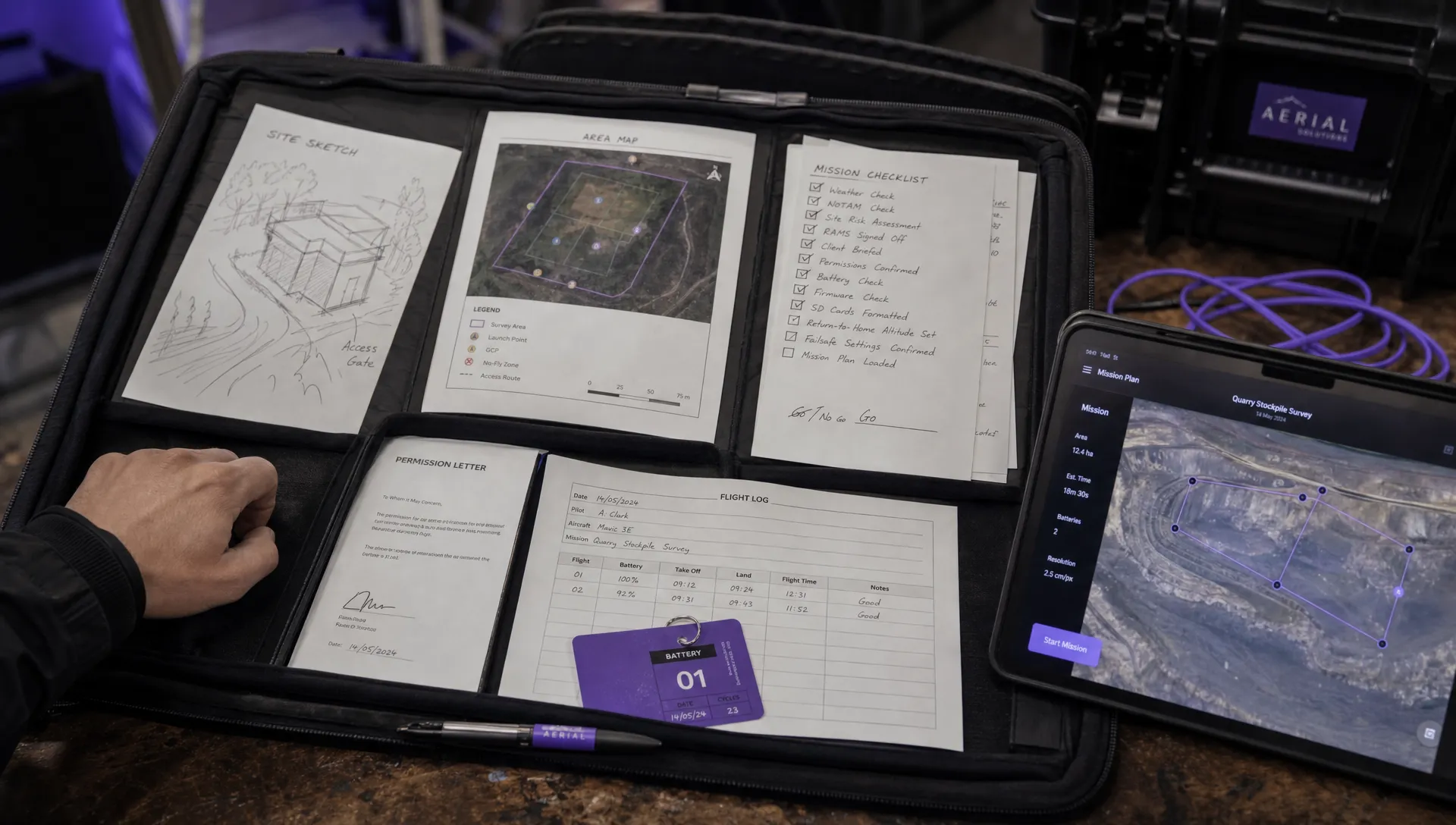 How to Create a Drone Job Pack for Every Mission →
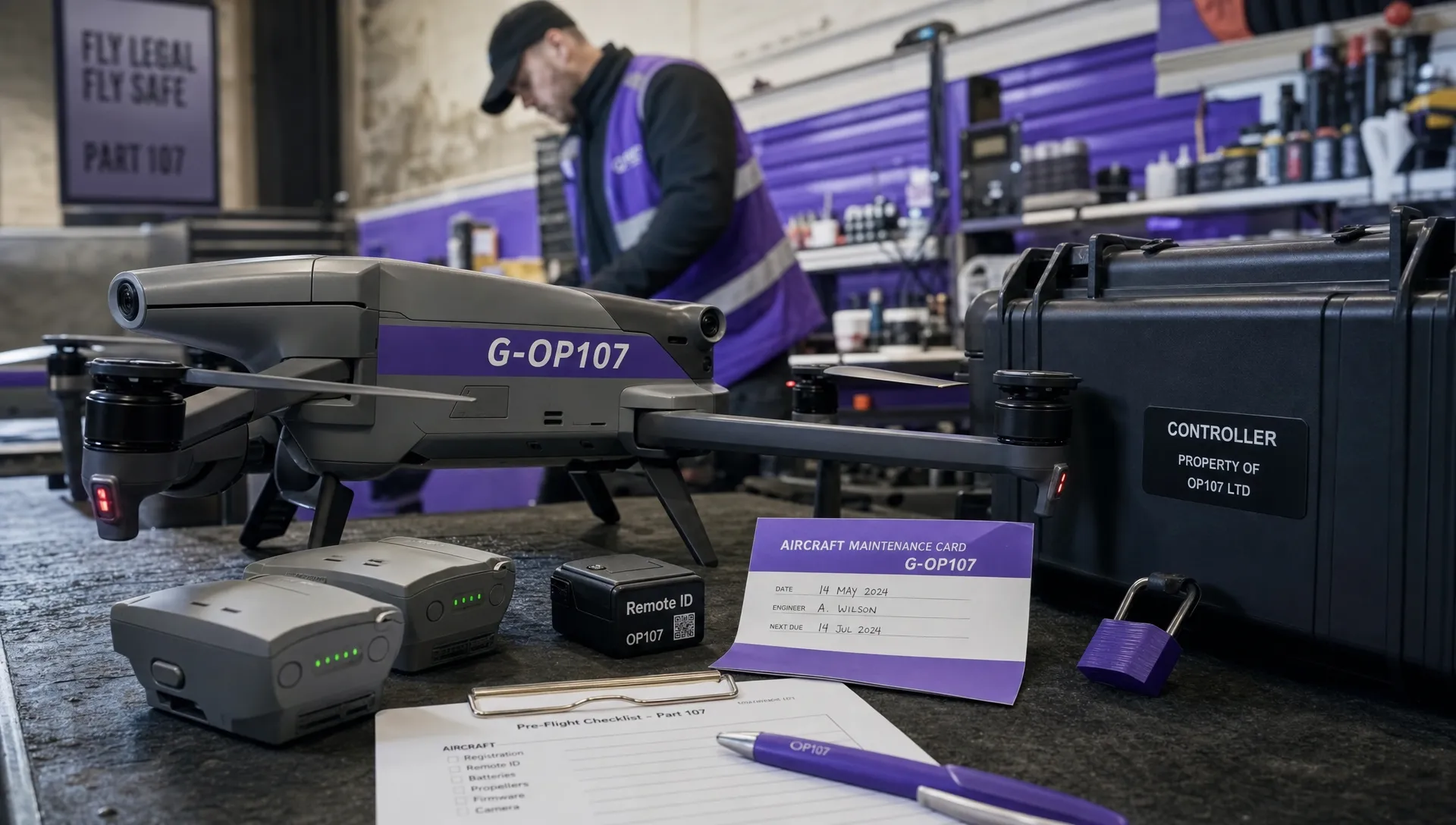 FAA Small UAS Rule: Key Requirements for Operators →
 How to Build a Drone Pilot Flight Log That Is Audit Ready →
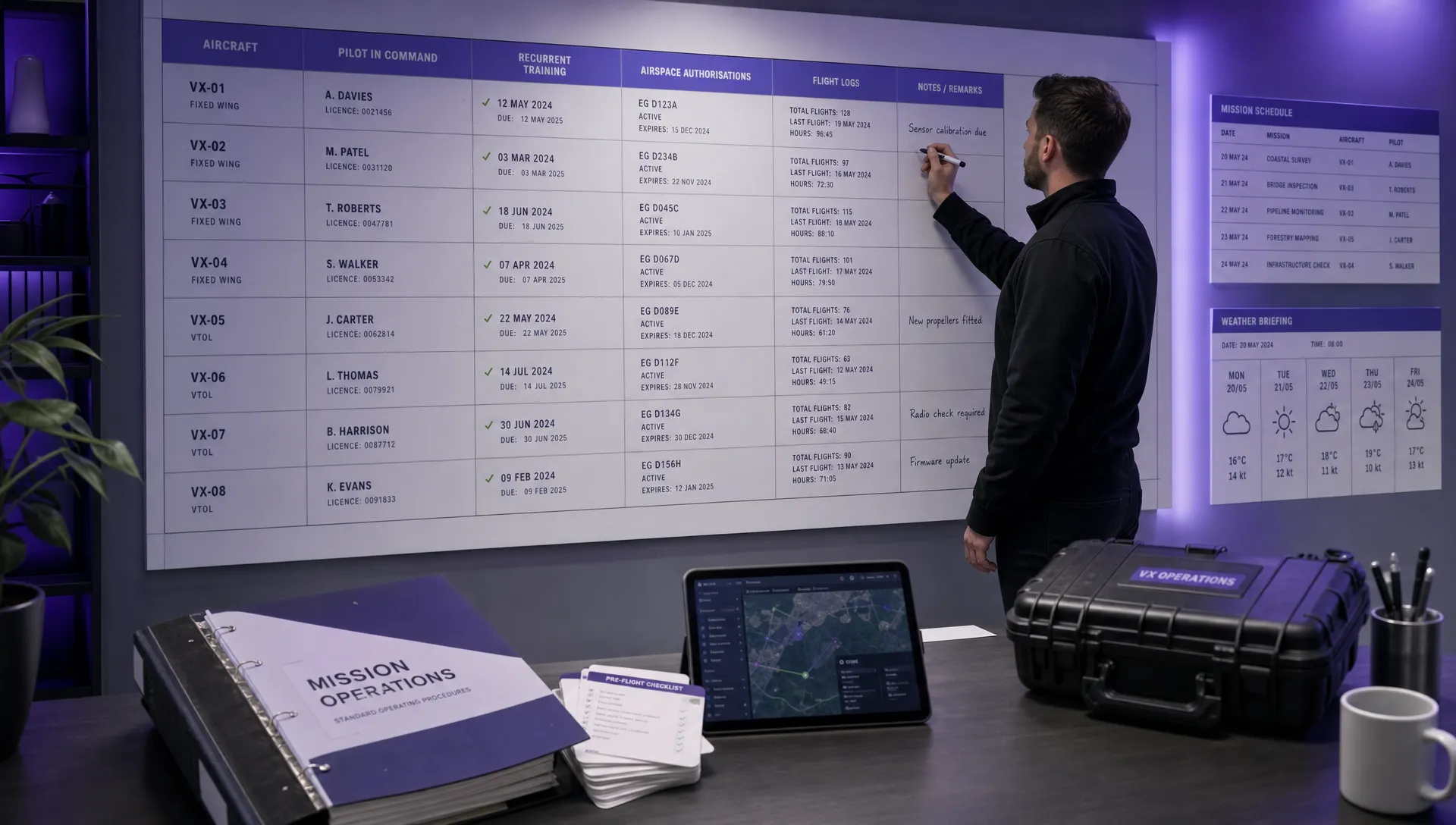 FAA Drone Licence Requirements for Commercial Pilots →
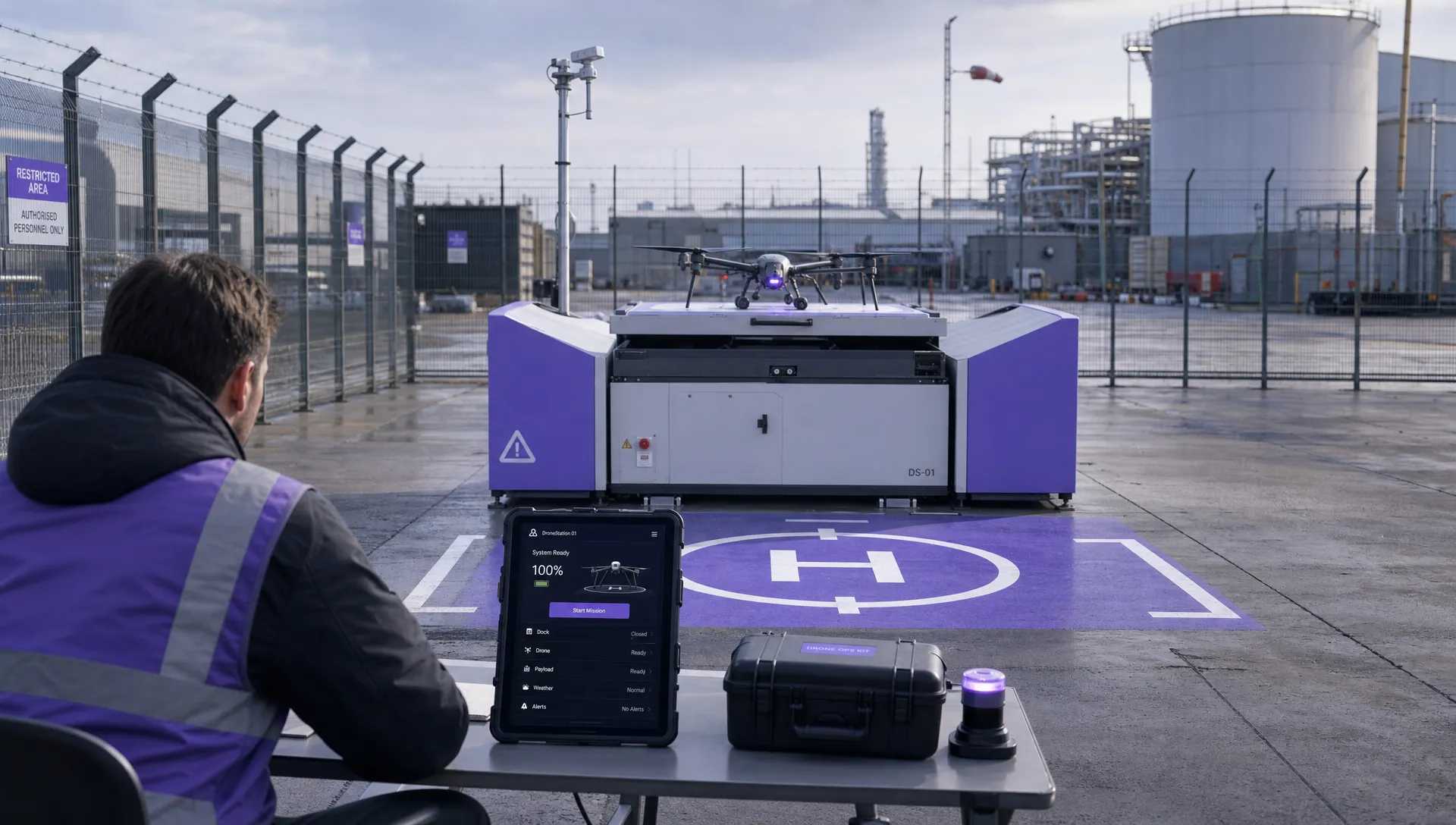 FAA BVLOS Waivers Granted: What Successful Cases Show →
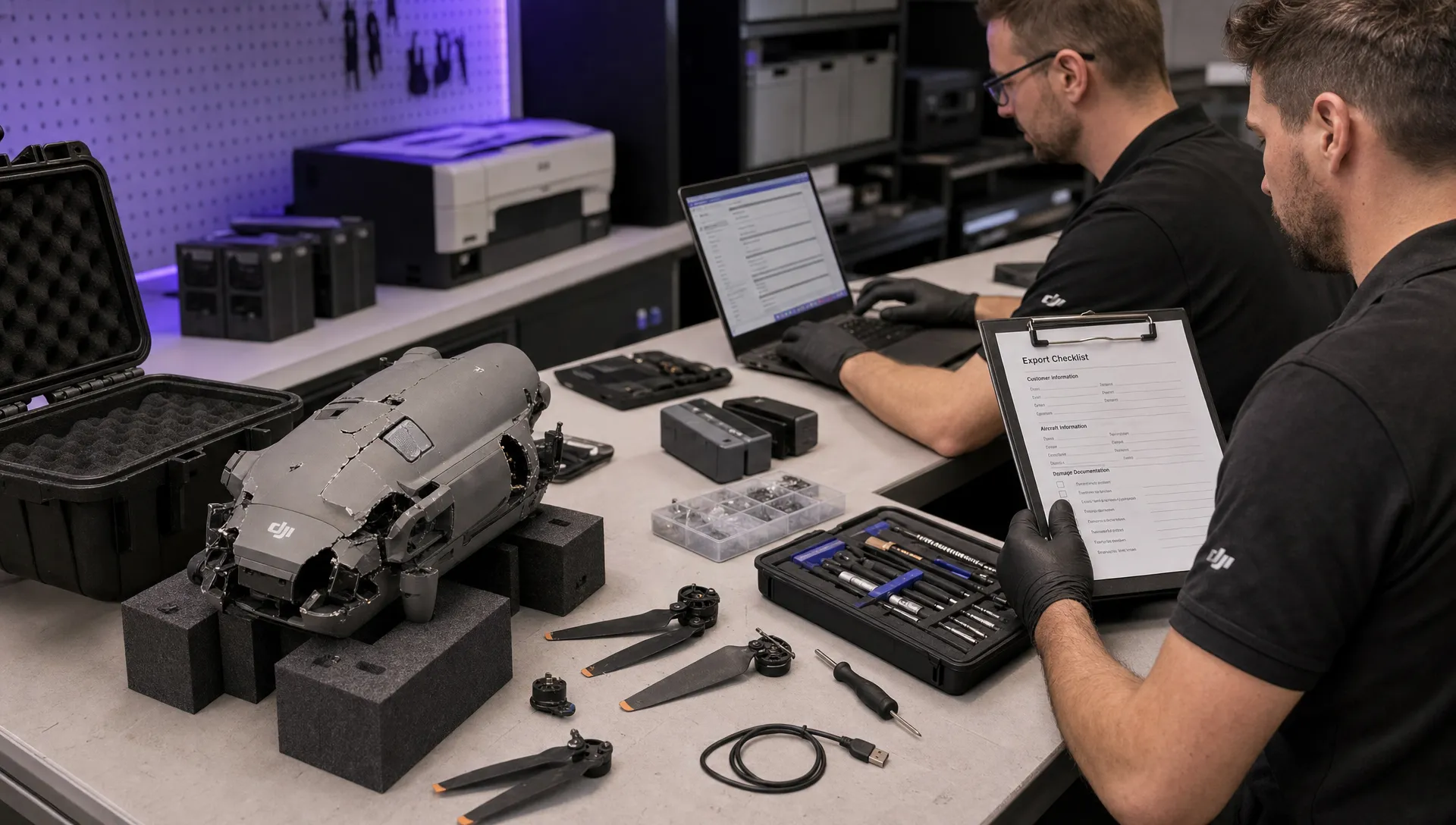 How to Export DJI Flight Logs for Incident Reviews →
 Drone Safety and Legal Duties for Business Operations →
 EASA Drone Regulations: Open, Specific and Certified Categories →