
Master Your DJI My Flight Log An Operator's Guide
Navigating to your flight logs in Dronedesk is dead simple. Just head to the 'Flights' section on your main dashboard. That's where you can view, filter, and manage every mission you've flown. For DJI users, it's even easier, with automatic imports ready to go.
Unlocking Your Digital Drone Logbook
Let's be honest, actively managing "my flight log" is what separates the pros from the amateurs. It’s the difference between having a jumble of raw flight data and possessing real, actionable intelligence about your operations.
Think of your digital logbook as more than just a list of flights. It's your command center for compliance, a powerful tool for reviewing performance, and an undeniable record of your professional work. If you're not on top of it, you're flying blind from an administrative perspective.
This shift from paper logbooks to digital systems is happening across the entire aviation industry. Your own flight log probably tells a story of growing activity, and that mirrors what's happening on a global scale.
For instance, in October 2025, total revenue passenger kilometers (RPK)—a key industry metric for demand—jumped 6.6% compared to the previous year. Globally, a staggering 5.2 billion passengers are expected to fly in 2025, pushing industry revenues past the $1 trillion mark. It's useful to see how your operations fit into these global aviation trends.
Why Your Flight Log Matters
For any serious drone operator, a meticulously kept flight log is non-negotiable. It’s the bedrock of a compliant, efficient, and professional operation, turning your past performance into a roadmap for future improvements. If you're new to the game, getting into good habits now will save you from massive administrative headaches later.
Here's a quick look at the core benefits of Dronedesk's flight log features.
Essential Dronedesk Flight Log Features
| Feature | Primary Benefit | Ideal For |
|---|---|---|
| Automated DJI Sync | Saves time and eliminates manual data entry errors. | Pilots flying DJI aircraft who want seamless record-keeping. |
| Detailed Flight Analysis | Provides deep insights into flight times, locations, and battery usage. | Operators looking to optimize mission planning and efficiency. |
| Aircraft Hour Tracking | Automatically logs flight time against specific airframes. | Fleet managers needing to stay on top of maintenance schedules. |
| Professional Reporting | Generates clean, detailed reports for clients or regulators. | Businesses that need to showcase professionalism and compliance. |
This table just scratches the surface, but it shows how each feature is designed to solve a specific, real-world problem for professional pilots.
A well-maintained log does a few critical things for your business:
- Compliance Assurance: It’s your irrefutable proof of flight activity. When regulators like the CAA or FAA come knocking, a detailed log is your best friend.
- Operational Insight: By analyzing flight times, battery performance, and locations, you start to see patterns. This is how you find ways to be more efficient and sharpen your mission planning.
- Maintenance Scheduling: Tracking the hours flown for each drone allows you to build a proactive maintenance schedule. This isn't just good practice; it's essential for keeping your fleet safe and airworthy.
- Professional Reporting: Being able to generate polished, detailed reports for clients demonstrates your commitment to safety, precision, and transparency.
A well-maintained flight log isn’t just a regulatory checkbox; it’s your operational diary. It tells the story of every mission, giving you the data you need to justify decisions, prove compliance, and refine your entire workflow.
Making the switch to a digital system like Dronedesk automates a huge chunk of this work. The benefits of an online flight logbook are crystal clear: you spend less time drowning in paperwork and more time focused on flying. Instead of manually punching in data after a long day, a synced system ensures every detail is logged accurately, moments after you land.
How to Sync Your DJI Account for Automated Logging
Manually typing in flight data after every mission is a huge time suck. It's also a perfect recipe for errors to sneak into your permanent records. The good news is you can connect your DJI account directly to Dronedesk, creating a hands-off system that updates your flight log just moments after you land. This is the 'set it and forget it' solution for professional drone record-keeping.
The whole process is designed to get rid of the admin headache that comes with logging flights. Once you give it the green light, Dronedesk securely pulls flight data straight from your DJI account. This makes sure every single second of airtime is accurately recorded against the right pilot and airframe, all without you lifting a finger.
Authorizing the Connection
Getting started is a simple, one-time authorization. Head into your Dronedesk account settings, and you'll spot an option to connect your DJI account. Clicking this sends you to a secure DJI login page to enter your credentials. It's important to know that Dronedesk never actually sees or stores your DJI password, so your account stays secure.
DJI will ask you to grant Dronedesk specific permissions to read your flight data. This is a totally standard procedure and it's what makes the automatic sync possible. This graphic breaks down the simple three-step flow for managing your flight data once you're all connected.

As you can see, it's a clear path: locate your logs, sync them through the cloud, and then review them for compliance and analysis. Simple. If you're interested in the tech that makes this secure connection happen, this comprehensive API Key Authentication Guide is a great resource that explains the principles behind it all.
Verifying a Successful Sync
Once you’ve granted permission, you’ll be brought right back to Dronedesk. A confirmation message will pop up letting you know the sync is active. At that point, the platform will start pulling in your past and future flight logs.
The initial import might take a few minutes, especially if you have an extensive flight history, but don't worry. After that first sync, all your new logs will show up almost instantly. You'll see all your flights neatly organized by date, pilot, and aircraft, with all the key metrics right there for you to review.
For operators managing a fleet, you can connect multiple DJI accounts. Dronedesk intelligently sorts the incoming flight data, assigning it to the correct pilot profiles and aircraft within your account. This is a game-changer for teams.
This automation isn't just about convenience; it's a massive time-saver. By ditching manual entry, you slash your admin time and ensure 100% of your flight activity is captured for compliance reports and analysis. You can learn more about just how automated flight logging and reporting can save drone teams hours every week in our detailed guide. With this connection active, you can fly with confidence, knowing every detail of your log is being handled efficiently in the background.
Finding and Making Sense of Your Flight Logs
Once your DJI account is synced up, this is where the magic really happens. Your flight logs will start populating in Dronedesk automatically, turning what was once just raw data into a clear story of your operations. Forget about digging through scattered files—everything is now in one central, organized hub.
Getting to your records is a piece of cake. From the main Dronedesk dashboard, just navigate over to the 'Flights' section. You'll see every mission you've flown neatly listed, but the real power is in the filtering. You can instantly sort your entire flight history by a specific date range, pilot, or even a particular drone, letting you pull up exactly what you need in seconds.

This kind of organization is a game-changer. Imagine a client asks for a report of all flights from the last quarter, or you need to check the total airframe hours on your primary mapping drone for maintenance. What used to be a tedious, manual slog is now just a couple of clicks away.
Drilling Down into Individual Log Details
When you click into a specific flight, you unlock a treasure trove of detailed telemetry. This isn't just a simple line item; it's a full-blown breakdown of the entire mission. You can see the drone's precise flight path overlaid on a map, giving you an immediate visual record of where it went.
But it goes deeper than just a map. You get all the key metrics essential for any post-flight analysis or operational review. This includes:
- Total Flight Duration: The exact time your aircraft was in the air.
- Maximum Altitude Reached: Crucial for proving you stayed within airspace limits.
- Total Distance Flown: Helps you understand the true scope of the mission.
- Battery Health Data: Gives you valuable insights into battery performance and how it's degrading over time.
This level of granular detail transforms your flight log from a simple record into a seriously powerful analytical tool.
The ability to quickly find and interpret flight data is what elevates your service. It's the difference between saying "the job is done" and proving how it was done safely and precisely, backed by undeniable data.
Turning Numbers into a Clear Story
Let's put this into a real-world context. Say you've just wrapped up a series of roof inspections on a large commercial property. The client's main concerns were safety and ensuring you covered the entire roof surface without straying over property lines.
By pulling up the flight log for that mission in Dronedesk, you can instantly verify everything. You can show the client the exact flight path, confirming every square meter of the roof was covered. More importantly, you can point to the maximum altitude data to prove you stayed well below local restrictions and show that the flight path never crossed into neighboring properties.
Interestingly, your own flight log patterns can mirror much larger industry trends. Take American Airlines, for example, which had 190,285 scheduled flights in December 2025 alone, as global seat capacity hit 507.6 million. If your logs show a concentration of flights along key commercial corridors, you're essentially seeing a micro version of the same supply-and-demand forces that drive global aviation. You can explore more airline frequency and capacity statistics to see that bigger picture. This data-driven approach builds incredible trust and demonstrates a level of professionalism that truly sets you apart.
Exporting Logs for Audits and Client Reports
Your digital logs are your single source of truth, but let's be honest, sometimes you need a hard copy. Whether it's a formal regulatory audit, a polished report for a client, or just an internal review, knowing how to turn that data into a professional document is a must for any serious drone operator. Thankfully, Dronedesk makes this whole process painless, letting you pull the exact records you need in just a few clicks.
Think about it. An aviation authority requests all flight records for a specific project from the last six months. Instead of a mad dash through spreadsheets and old folders, you can just filter your Dronedesk logs by project and date, select the flights, and generate a compliant report. This isn't just about saving time; it’s about proving you have rock-solid operational control.

This same level of detail is gold for your client-facing work, too. Handing over a clean, branded PDF summary of all the flights you conducted for their project builds a huge amount of trust and shows you're a true professional.
Choosing the Right Export Format
Dronedesk gives you a couple of export options, and each one is built for a different job. Figuring out which one to use when will make your admin life a whole lot easier.
- PDF Exports: This is your go-to for creating professional, easy-to-read documents. PDFs are perfect for client deliverables, official submissions to aviation authorities, or internal monthly summaries. They keep all the formatting neat and tidy and can be opened by anyone, anywhere.
- CSV Exports: For anyone who lives in spreadsheets, the CSV (Comma-Separated Values) format is your best friend. It dumps all your raw flight data into a file that opens right up in Excel or Google Sheets. This is where you can do some deep data analysis, build custom charts, or even feed the data into other business software.
When you're getting records ready for an official review, it helps to think like an auditor. While it's a different field, principles from something like a cybersecurity audit checklist can be surprisingly useful. The core idea is the same: present your data in a way that is clear, secure, and ready for any scrutiny.
Creating a Complete Compliance Package
For the highest level of professionalism, especially when an official audit is on the line, don't stop at just the flight log. A truly comprehensive submission packages multiple documents together to paint the full picture of a safe, compliant operation.
A single flight log tells part of the story. A flight log bundled with the corresponding risk assessment and maintenance records tells the whole story, leaving no room for questions about your commitment to safety and compliance.
This complete package proves you’re not just flying; you’re managing the entire operational lifecycle from start to finish. For a closer look at the interface where all this data comes together, check out our guide on using a powerful https://blog.dronedesk.io/uav-log-viewer/ to your advantage.
Flipping through your personal flight log from recent years offers a small-scale snapshot of the global aviation world's impressive rebound. Back in 2019, skies were buzzing with 114,665 commercial flights weekly. After a 46.42% drop in 2020, resilience kicked in, with flights climbing steadily until 2024, when they surpassed pre-pandemic levels with a 5.46% increase to 120,128 flights. Every entry in your flight log is part of this larger story of recovery and growth.
Troubleshooting Common Flight Log Sync Problems
Even the most buttoned-up systems can have a hiccup now and then. You might notice a flight log is delayed, the data looks a bit off, or it simply refuses to show up at all. Don’t panic—nine times out of ten, these are quick fixes. Before you even think about reaching out for support, running through a few simple checks will solve nearly any sync issue you'll ever run into.
The most common culprit is usually a simple authorization issue. The secure connection between your DJI account and Dronedesk can expire over time, or maybe after a password change. This should always be the first place you look when recent flights go missing.
Check Your DJI Sync Authorization
First things first, head over to your account settings inside Dronedesk. Find the DJI integration section and just confirm that the connection is still active and authorized. If it’s showing as disconnected or is asking you to re-authenticate, you've found your problem.
All you have to do is follow the prompts to log back into your DJI account and grant permission again. Honestly, this one step resolves a huge percentage of "missing flight log" cases. Once you're re-authorized, Dronedesk will start pulling in any logs that were missed while you were disconnected.
Remember, this authorization is what allows Dronedesk to securely access your flight data. It’s designed to expire periodically for security, so having to re-authenticate once in a while is completely normal and expected.
Dealing with Delays and Wonky Data
What if a log shows up, but seems incomplete? Or maybe it’s taking much longer than usual to appear. This can happen for a few different reasons.
Often, it's a poor internet connection on your mobile device right after the flight. This can stop the DJI Fly app from uploading the log to DJI's servers in the first place. If the data never makes it to DJI, then Dronedesk can't pull it.
Here’s what to do:
- Pop Open the DJI Fly App: Get on a stable Wi-Fi network, open the app, and navigate to your flight logs. Make sure the flight you're looking for is visible and has that little cloud icon next to it—that tells you it's synced to DJI's cloud.
- Force a Manual Sync: Inside Dronedesk, you'll find an option to manually refresh or re-sync your DJI data. Give that a click to nudge the system into checking for new logs again.
- Consider Corrupted Files: In very rare cases, a log file itself can get corrupted when it's first saved. If one specific log consistently fails to sync while all your others are working perfectly, this might be the issue. In that situation, your best bet is to create a manual log entry in Dronedesk to keep your records straight.
To make things even easier, I've put together a quick reference guide for diagnosing and resolving the most frequent sync issues I see.
Common Sync Problems and Quick Fixes
This little table should be your first port of call when a log goes astray. It covers the most common symptoms and gives you a clear, immediate action to take.
| Symptom | Likely Cause | Your First Step |
|---|---|---|
| No new logs appearing at all | Expired DJI authorization token. | Go to your Dronedesk settings and re-authorize your DJI account. |
| A single, specific flight is missing | The log failed to upload from the DJI Fly app to DJI's cloud. | Open the DJI app on good Wi-Fi and ensure the log shows as synced. |
| Data in a log seems incorrect or incomplete | A partial sync or a temporary server-side delay. | Wait 30 minutes, then trigger a manual sync in Dronedesk. |
By running through these simple steps, you can troubleshoot and fix the vast majority of sync problems yourself. It puts you in control, helping you keep your flight logs accurate and up-to-date without waiting around.
Got Questions About Managing Your Flight Logs? We’ve Got Answers.
As you start to really lean into managing your flight records digitally, a few common questions always seem to come up. It's only natural. We've pulled together the ones we hear most often from professional drone operators to give you clear, no-nonsense answers.
Think of this as your go-to guide for nailing the finer points of digital record-keeping. These questions come straight from operators in the field, tackling the real-world headaches and hurdles you might run into.
How Long Should I Keep My Drone Flight Logs?
This is a big one, and the answer isn't always cut-and-dried. Your local aviation authority—like the FAA in the US or the CAA in the UK—sets the rules, and they can change based on the type of work you do.
Typically, regulators require you to hold onto logs for 1 to 3 years. But honestly, that’s just the bare minimum. We strongly recommend hanging onto them for much longer. Digital storage costs next to nothing, and having a complete flight history is an absolute lifesaver for liability protection, spotting operational trends, and keeping an eye on your fleet's long-term health.
Our Take: Don't just tick the compliance box. A detailed, long-term digital logbook is a massive business asset. It proves your professionalism and track record to clients and, just as importantly, to your insurer.
What if a Flight Log Fails to Sync? Can I Add It Manually?
Yes, absolutely. Automated syncing is a huge time-saver, but let's be realistic—no tech is perfect. Any solid platform like Dronedesk will always give you a way to manually add a flight log.
This backup option is crucial for a few scenarios:
- Sync Glitches: If a DJI flight doesn't sync—maybe due to a bad connection or a wonky file—you can just plug in the data yourself. No gaps in your records.
- Mixed Fleets: Flying drones from other brands? Manual entry is how you’ll log those flights and keep everything in one place.
- Getting Started: When you first switch to a digital system, you might want to manually enter past flight summaries to build up your historical data.
This flexibility means your logbook remains the single source of truth for every flight, no matter what happens out on a job.
Does Syncing My DJI Account Mean I’m Sharing All My Personal Data?
This is a really smart question to ask, and it’s good to be cautious about your data. When you connect your DJI account to a third-party platform, you’re only granting it permission to access specific flight data, not your entire personal account.
Reputable platforms are always upfront about this. They'll have a clear privacy policy spelling out exactly what data they access and why. Usually, it's just the flight telemetry—things like GPS location, altitude, flight time, and battery stats. Your personal DJI password is never shared or stored by the other service.
Just be sure to take a moment to read the permissions screen during setup. It will show you exactly what you're agreeing to share.
Ready to get a real handle on your flight logs and simplify your entire drone operation? Dronedesk pulls everything together in one place, saving you time, keeping you compliant, and delivering powerful insights. Join the thousands of pro pilots who trust Dronedesk to run their business.
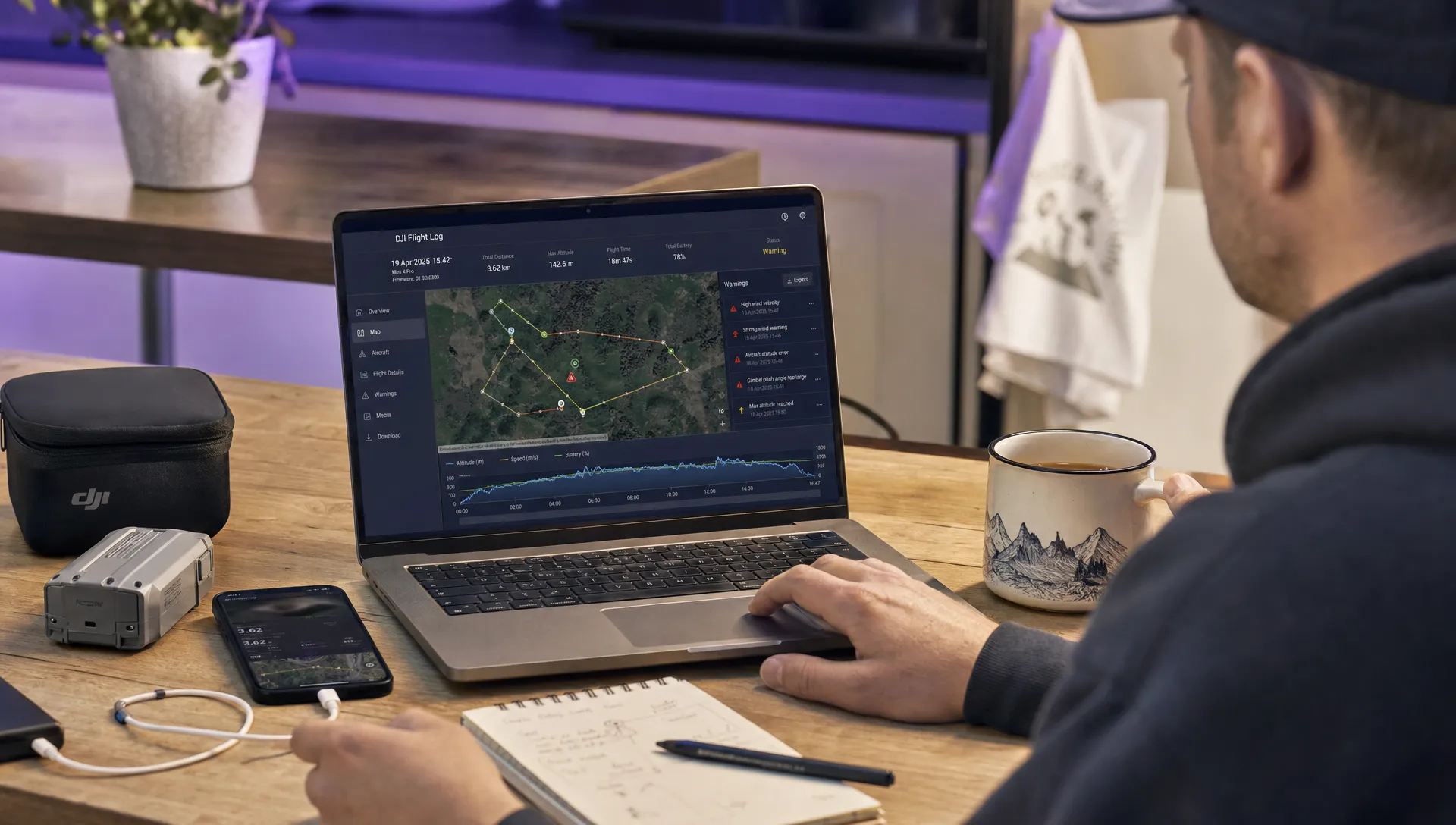 How to Review a DJI Flight Log After an Unexpected Event →
 Drone Laws Around the World: A Pre-Flight Research Framework →
 How to Compare Drone Survey Services for Complex Sites →
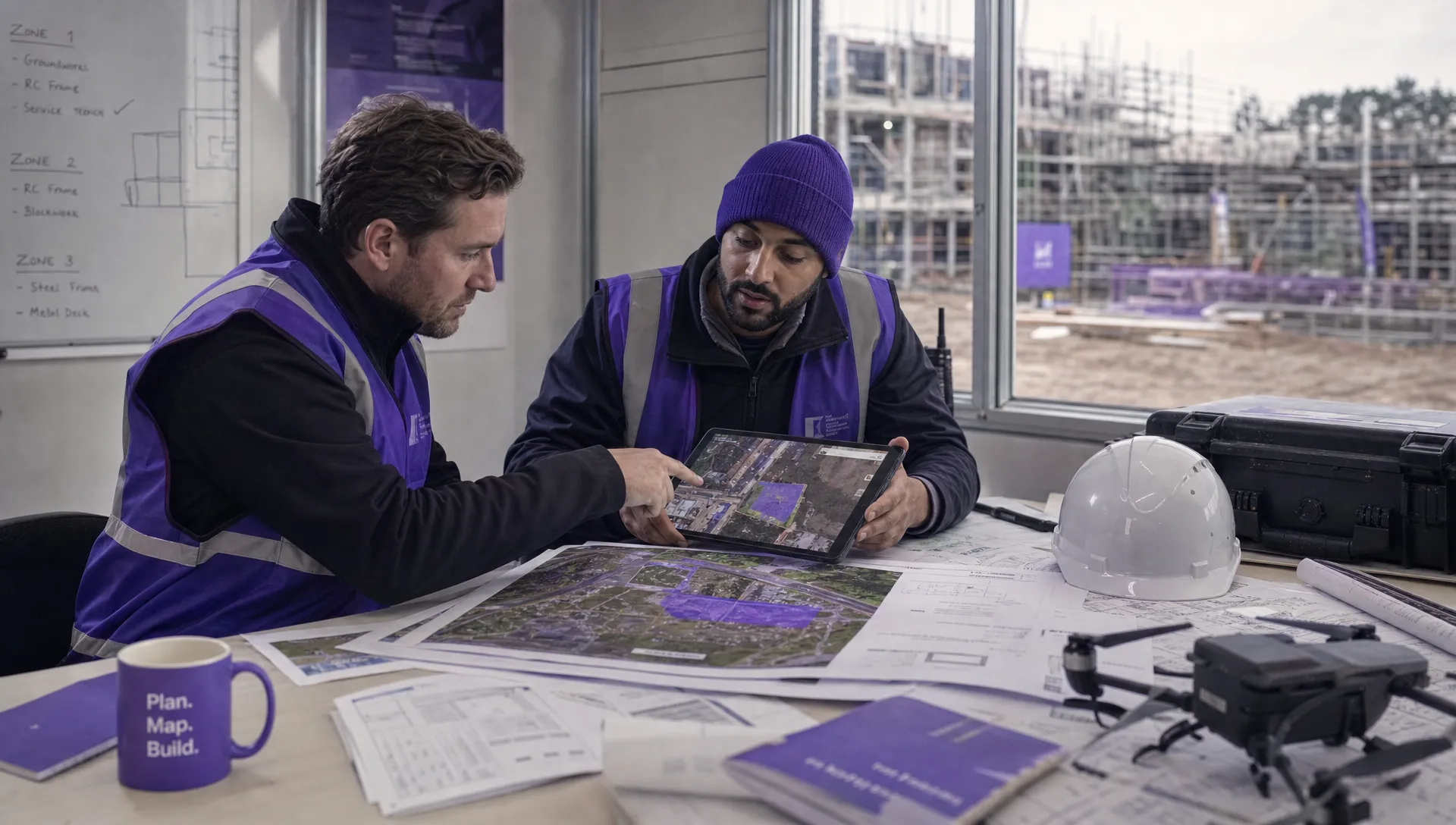 How to Start a Drone Mapping Business With a Clear Workflow →
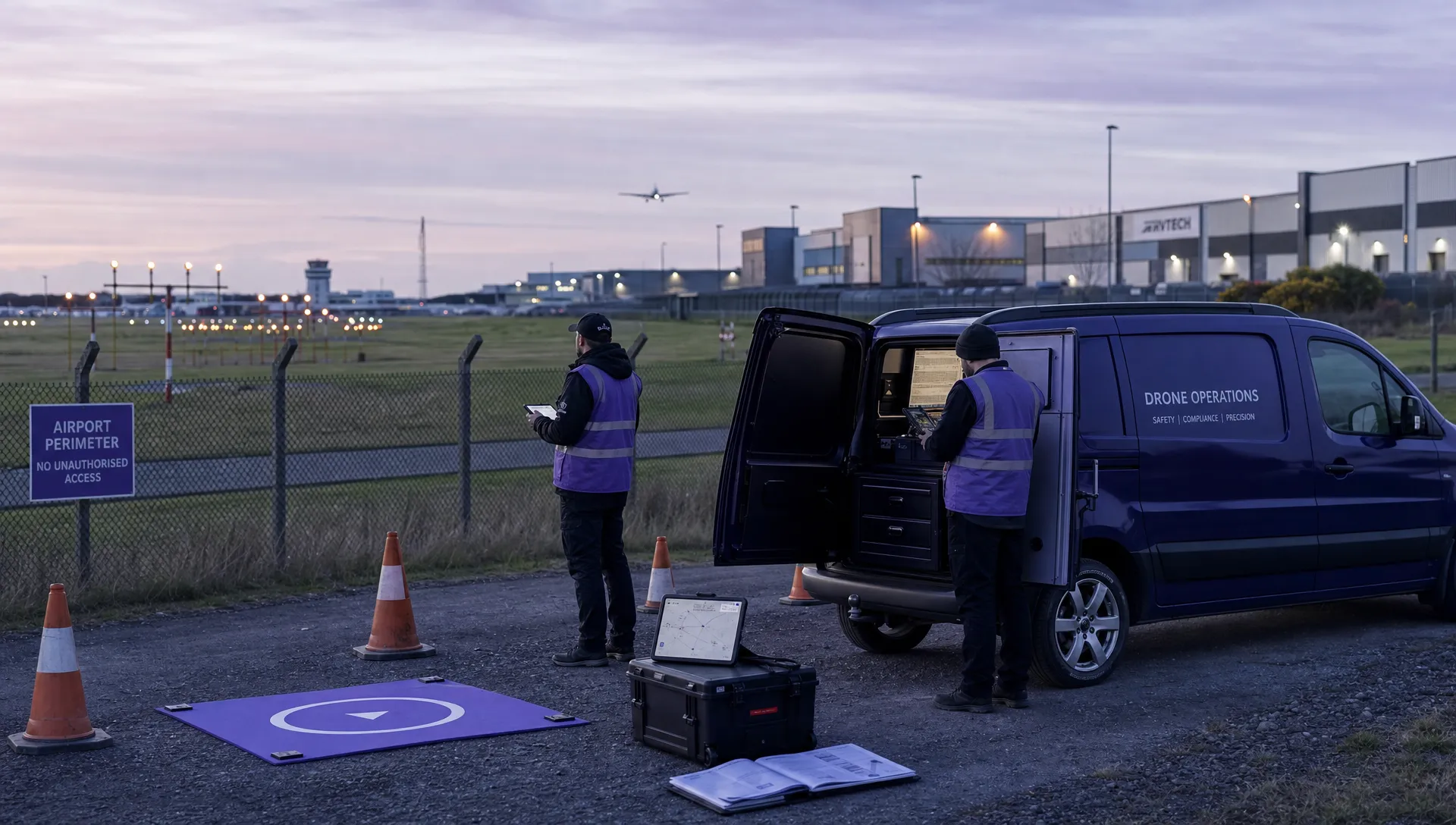 Class C Airspace Drone Rules for Commercial Flights →
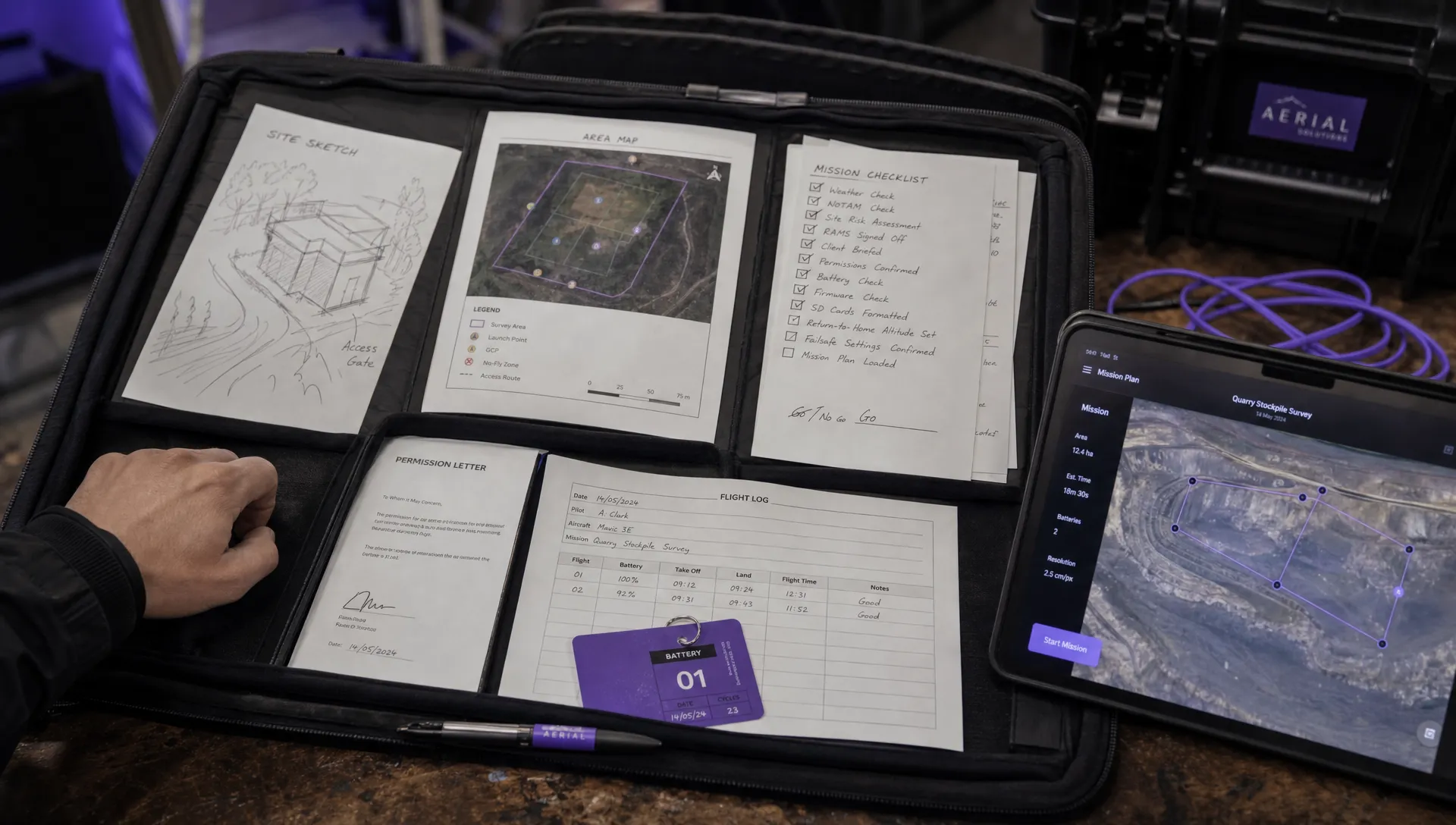 How to Create a Drone Job Pack for Every Mission →
 FAA Small UAS Rule: Key Requirements for Operators →
 How to Build a Drone Pilot Flight Log That Is Audit Ready →
 FAA Drone Licence Requirements for Commercial Pilots →
 FAA BVLOS Waivers Granted: What Successful Cases Show →