
What a BVLOS Flight Means for Risk and Compliance
A BVLOS flight is not simply a longer drone flight. It changes the way risk is identified, controlled, evidenced and audited.
For drone operators, survey companies, utilities and emergency services, beyond visual line of sight can unlock major operational value. It can make linear infrastructure inspections, wide-area mapping, search operations and remote asset monitoring far more practical. But the compliance burden rises because the remote pilot is no longer relying on direct visual observation to maintain separation, understand aircraft attitude or respond to unexpected hazards.
That shift has consequences. Regulators expect stronger evidence that the operation is safe, repeatable and controlled. Clients expect clearer assurance that the work will not expose people, property or other airspace users to unmanaged risk. Internally, teams need better procedures, records and change control.
In short, a BVLOS flight moves drone operations from pilot-led visual judgement towards system-led operational assurance.
What does BVLOS actually mean?
BVLOS stands for beyond visual line of sight. In practical terms, it means the drone is operated beyond the remote pilot’s unaided ability to see it well enough to control its flight path, monitor its orientation and avoid collisions.
That matters because visual line of sight is one of the simplest risk controls in conventional drone operations. When a pilot can see the aircraft and surrounding airspace, they can often detect hazards directly and take immediate action. In BVLOS, that direct visual control is reduced or removed, so other mitigations must replace it.
Those mitigations might include airspace controls, detect and avoid capability, observers, segregated or atypical operating environments, robust command and control links, defined contingency procedures and more detailed operational oversight. The right combination depends on the operation, the aircraft, the area, the airspace and the regulatory route.
For UK operators, the Civil Aviation Authority’s CAP 722 guidance remains a key reference point for unmanned aircraft operations. Many operators also encounter structured risk methodologies such as JARUS SORA, particularly when building a safety case for higher-risk operations.
Why BVLOS changes the risk profile
A VLOS operation normally depends on a tight relationship between the remote pilot, the drone and the immediate operating area. BVLOS breaks that relationship. The aircraft may be over terrain the pilot cannot see, near hazards that are not obvious from the take-off point or operating in airspace where other users must be detected through non-visual means.
That does not make BVLOS inherently unsafe. It does mean the safety argument has to be more complete.
| Risk area | VLOS operation | BVLOS operation |
|---|---|---|
| Airspace awareness | Remote pilot can visually scan the surrounding sky | Requires alternative means to understand airspace activity and maintain separation |
| Aircraft monitoring | Pilot can usually see attitude, location and behaviour | Relies more heavily on telemetry, procedures and system reliability |
| Ground risk | Usually limited to a visible operating area | May extend across a route, corridor or wider survey zone |
| Contingency response | Pilot can often judge the safest immediate action visually | Requires pre-defined lost link, diversion, termination and recovery procedures |
| Compliance evidence | Standard planning, risk assessment and logs may be sufficient for lower-risk work | Requires stronger documentation, traceability and operational assurance |
The central question is not “can the drone fly that far?” It is “can the operator prove that the flight can be conducted safely when direct visual control is no longer the primary mitigation?”
BVLOS compliance is about evidence, not paperwork
Compliance for BVLOS is often misunderstood as a documentation exercise. In reality, documentation is only the visible output of a deeper safety process.
A regulator or approving body is looking for evidence that the operator understands the operation, the hazards, the mitigations and the limits of the system. That evidence must be specific to the proposed activity. A generic risk assessment rarely works for BVLOS because the risk varies significantly between an offshore wind inspection, a powerline patrol, a rural mapping corridor and an emergency response deployment.
A credible BVLOS compliance case usually needs to explain the concept of operations, including where the aircraft will fly, who is involved, what equipment is used, how air and ground risks are controlled and what happens if something goes wrong.
It also needs to show organisational competence. Regulators will want to know that pilots, observers, supervisors and maintenance personnel understand their roles. Clients will want confidence that operational procedures are repeatable, not dependent on one experienced individual improvising on the day.
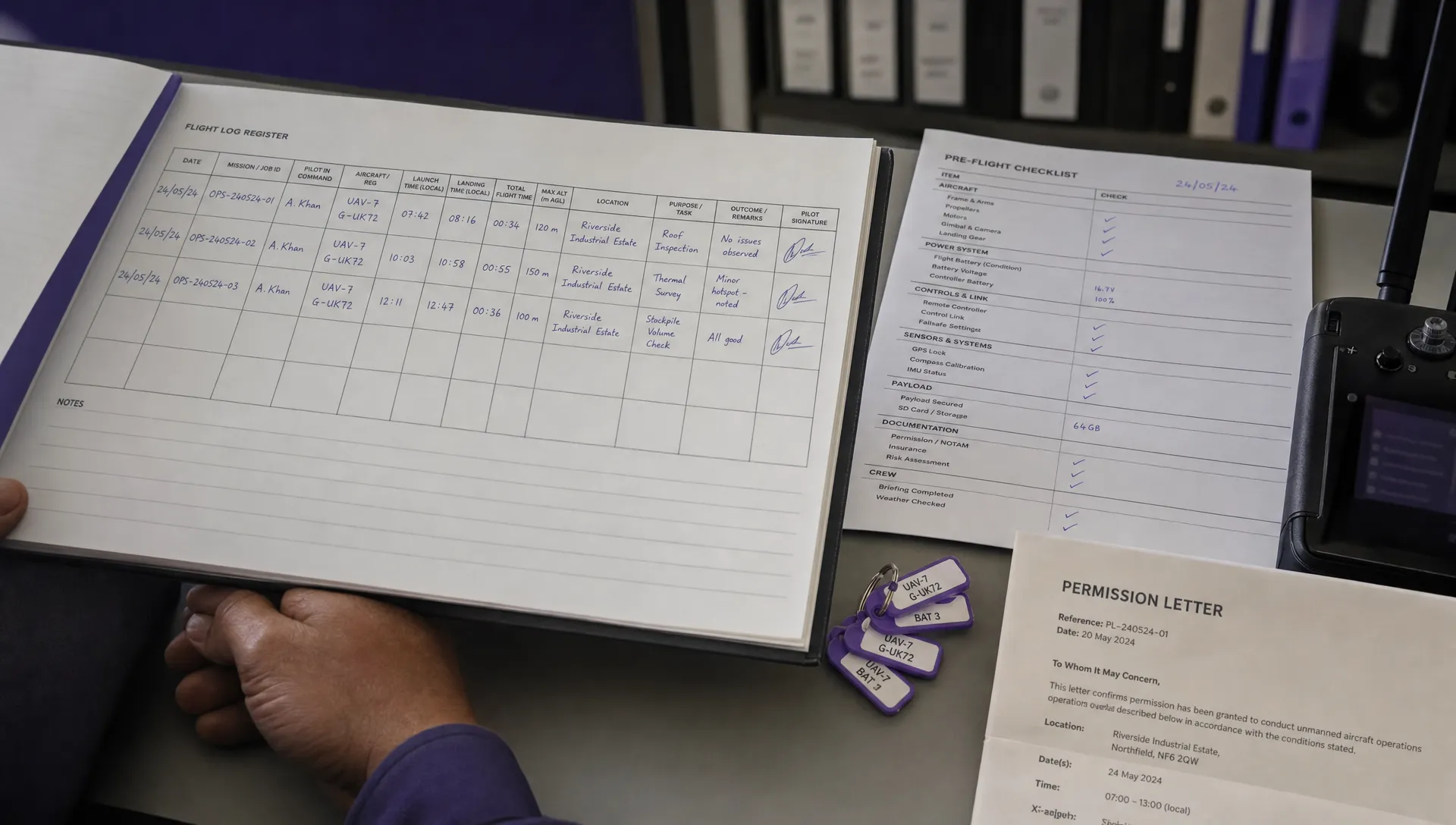
This is where record keeping becomes a compliance control in its own right. If you cannot show which aircraft flew, who was responsible, what checklist was completed, what airspace review was carried out and what post-flight issues were recorded, it becomes harder to prove that the operation was managed properly.
The main risk controls in a BVLOS flight
BVLOS risk management normally starts by separating the problem into air risk, ground risk and operational reliability. Each area needs its own controls, and the controls need to work together.
Air risk: avoiding other airspace users
Air risk is usually the most visible BVLOS concern. Without direct visual observation, the operator needs another way to reduce the likelihood of conflict with crewed aircraft or other airspace users.
Depending on the operation, this may involve operating in controlled, restricted, segregated or otherwise managed airspace. It may involve strategic deconfliction, notification processes, electronic conspicuity, detect and avoid systems, visual observers or a defined operating environment where other aircraft are unlikely to be present.
The important point is that air risk controls must match the reality of the route and airspace. A rural corridor is not automatically low risk, and an urban route is not automatically impossible. The evidence has to reflect actual airspace use, nearby aerodromes, helicopter activity, emergency service aviation, military routes and local constraints.
Ground risk: protecting people and property
Ground risk increases when a BVLOS route crosses roads, footpaths, industrial sites, farms, railways or populated areas. The operator must consider where the aircraft could fail, where it might land, and who could be affected.
This is especially important for utility and survey work, where routes often follow infrastructure that passes through mixed environments. A powerline inspection may include remote fields, public rights of way, substations and roads in a single mission. Each segment may require different mitigations.
Ground risk controls can include route design, altitude selection, emergency landing areas, operating buffers, aircraft reliability evidence, parachute or containment systems where appropriate, and procedures for pausing or terminating the flight if ground conditions change.
Command and control: maintaining authority over the aircraft
A BVLOS flight depends heavily on the command and control link between the remote pilot or control station and the aircraft. The operator needs to understand link coverage, latency, interference, redundancy and the behaviour of the aircraft if the link degrades or fails.
Lost link procedures should be precise. “Return to home” is not always the safest answer if the aircraft is far from the launch point, crossing different terrain or operating near controlled airspace. A better procedure defines triggers, decision points, route logic, altitude behaviour, holding areas, recovery locations and termination criteria.
Human factors: avoiding overconfidence in automation
BVLOS often introduces more automation, more software and more monitoring. That can reduce manual workload, but it can also create new human factors risks.
Operators need to consider how pilots detect abnormal behaviour, how supervisors maintain situational awareness, how handovers are managed and how the team avoids task saturation during complex missions. Emergency services face a particular challenge because BVLOS operations may be conducted under time pressure, at night or in dynamic environments.
Maintenance and aircraft reliability
In VLOS operations, a minor aircraft issue may be detected visually and corrected quickly. In BVLOS, the aircraft may be too far away for direct observation. Preventive maintenance, defect tracking, battery management and configuration control therefore become more important.
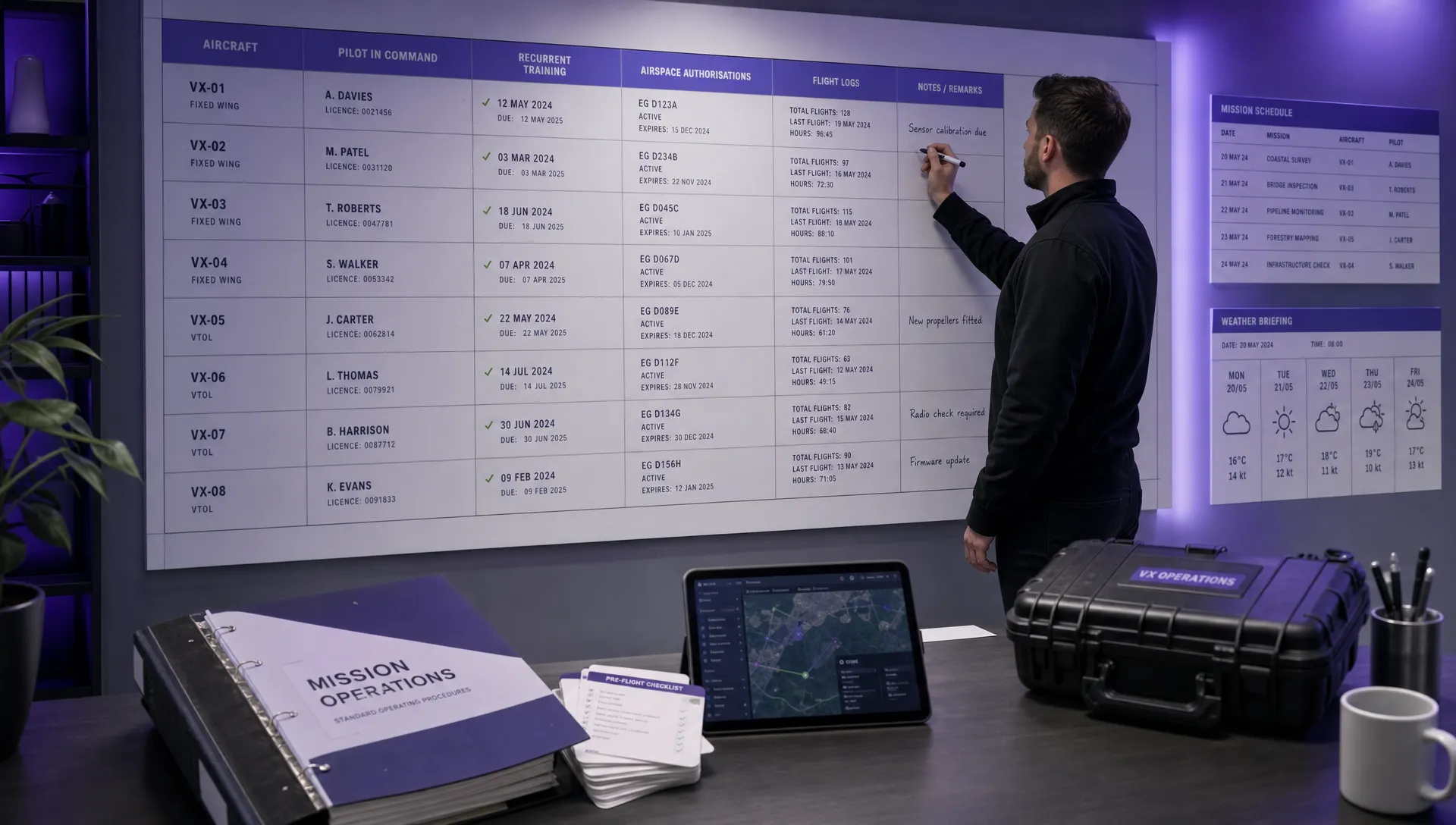
Growing teams should treat fleet records as part of their safety case. Aircraft history, maintenance status, payload configuration and recurring defects can all affect whether a particular drone is suitable for a specific BVLOS mission. Dronedesk’s drone fleet management guide explores this wider operational challenge for teams moving beyond basic spreadsheets.
What BVLOS means for different operators
The compliance implications of BVLOS vary by sector. The same regulatory principles apply, but the operational evidence will look different.
| Sector | Typical BVLOS use case | Key compliance focus |
|---|---|---|
| Survey companies | Large-area mapping, environmental surveys, remote site monitoring | Route planning, ground risk, data quality, repeatable procedures and flight records |
| Utility companies | Powerline, pipeline, rail or wind farm inspections | Linear infrastructure risk, stakeholder coordination, emergency landing planning and asset proximity |
| Emergency services | Search, situational awareness, incident monitoring | Dynamic risk assessment, command structure, airspace coordination and rapid evidence capture |
| Specialist operators | Medical logistics, offshore support, industrial monitoring | Safety case maturity, aircraft reliability, contingency planning and client assurance |
For survey firms, BVLOS can reduce the need to reposition teams repeatedly across large sites. But it also requires stronger planning discipline because the route may cross multiple types of terrain and land ownership.
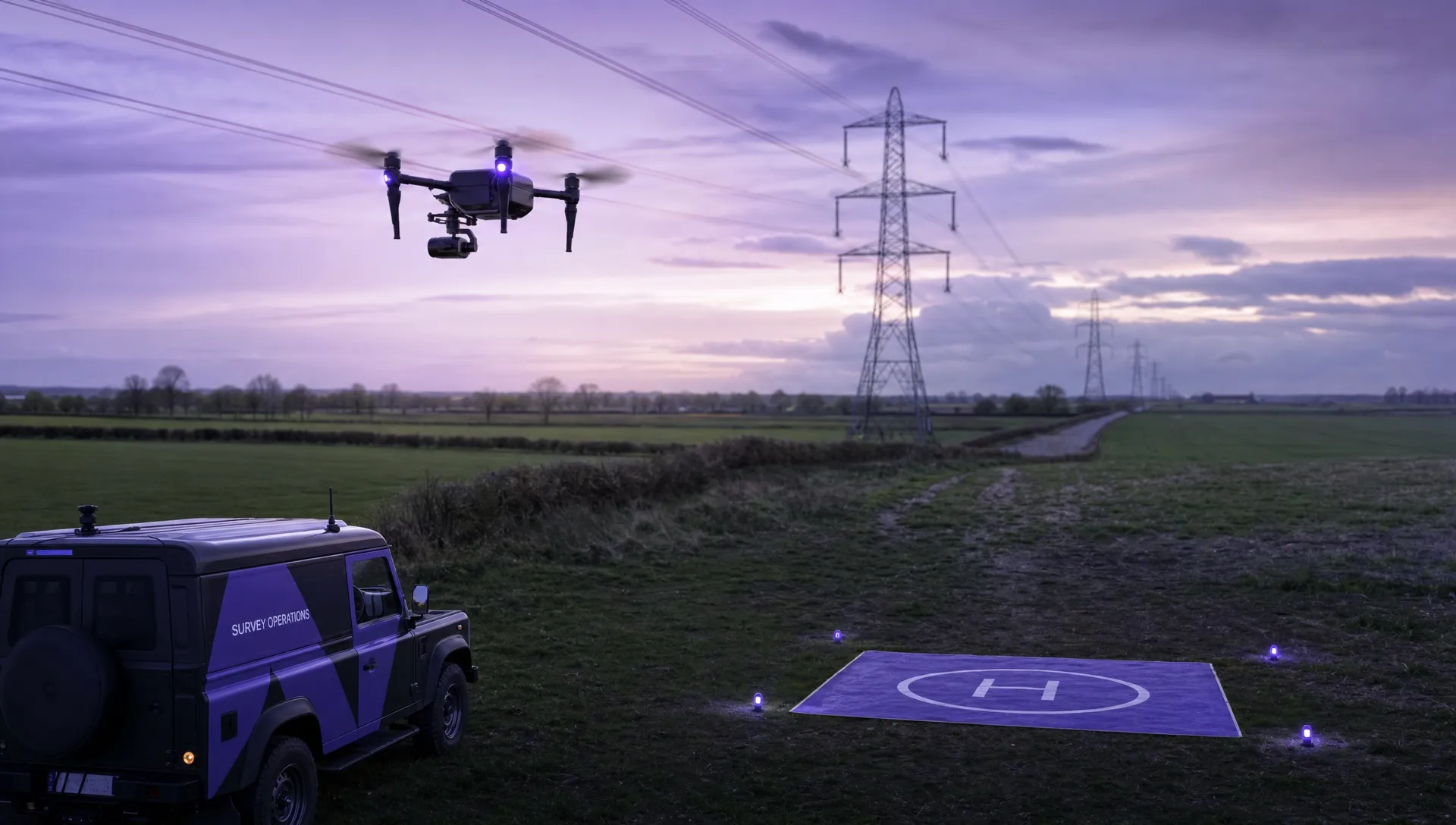
For utilities, the challenge is often proximity. Flying near towers, cables, turbines, pipelines or rail corridors introduces operational hazards that must be reflected in the risk assessment. The compliance case should show that the aircraft, route and procedures are appropriate for the asset environment.
For emergency services, the difficulty is change. Incident scenes evolve quickly, and BVLOS planning must account for uncertainty. Procedures need to define who approves the flight, who coordinates with other responders, how airspace conflicts are managed and when the mission must be stopped.
Building a BVLOS compliance pack
A strong BVLOS compliance pack should be practical enough for crews to use and detailed enough for audit. It should not be a library of disconnected documents. The goal is to create a clear chain from operational intent to risk controls, from risk controls to procedures, and from procedures to records.
Core components often include:
- Concept of operations describing the mission, aircraft, personnel, route, environment and operating limits.
- Risk assessment or safety case showing air risk, ground risk, technical risk and mitigations.
- Operations manual procedures covering planning, approvals, normal operations, contingencies and emergency response.
- Training and competency records for pilots, observers, supervisors and maintainers.
- Aircraft and equipment records showing maintenance status, configuration and defects.
- Flight planning evidence including airspace review, site assessment, weather, NOTAM checks where relevant and stakeholder coordination.
- Completed checklists, flight logs, incident reports and post-flight reviews.
If you are refining your wider risk process before applying it to BVLOS, Dronedesk has a practical guide on how to build a drone flight risk assessment that works. For BVLOS, the same principle applies, but the level of evidence and specificity increases.
Why checklists matter more in BVLOS
Checklists are sometimes treated as a routine admin task. In BVLOS operations, they are a frontline safety control.
A checklist ensures that critical steps are completed consistently, especially when operations involve multiple people, complex aircraft, changing weather or time pressure. It also provides evidence that the operator followed its own procedures.
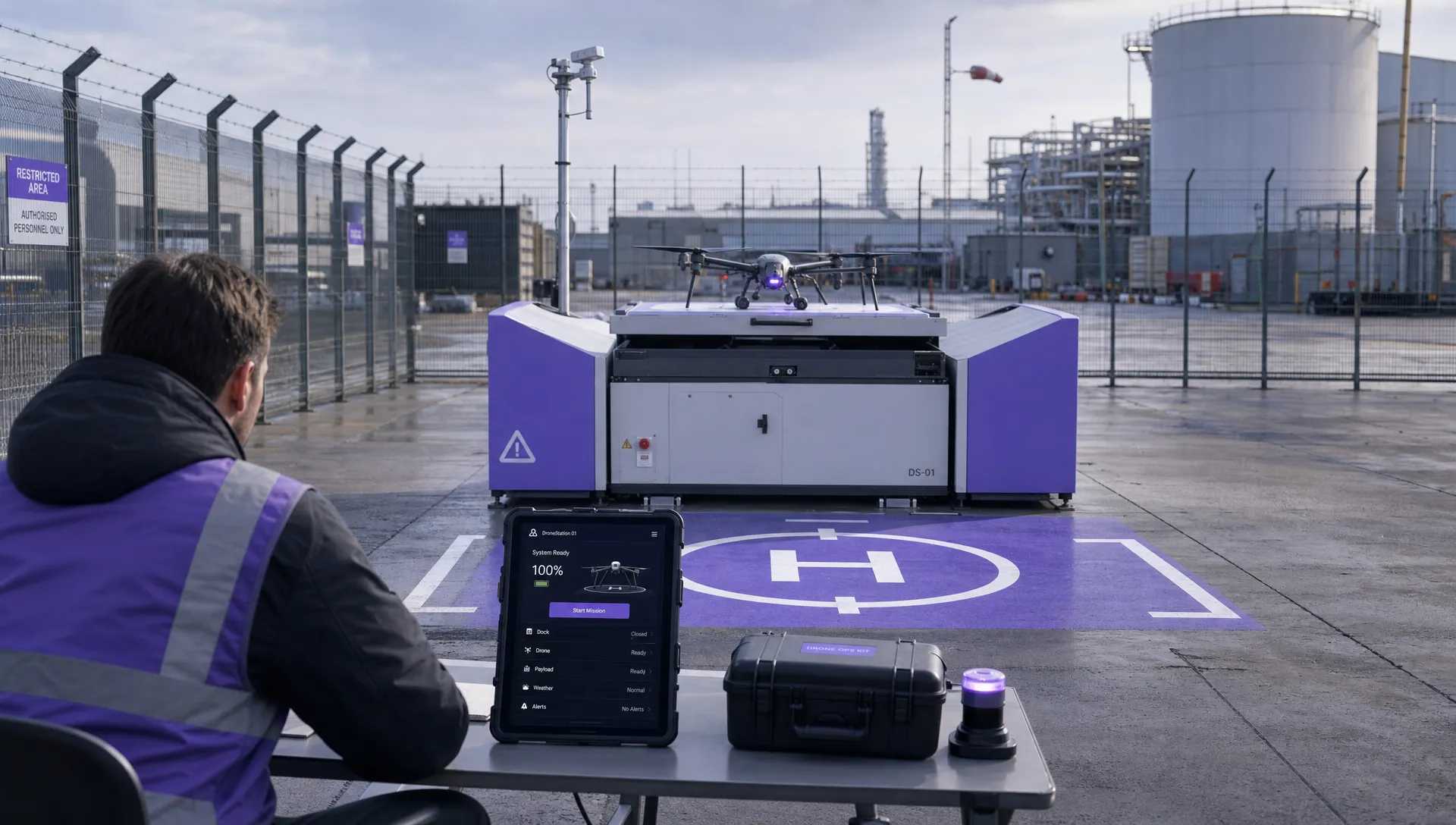
For example, a BVLOS pre-flight checklist may need to confirm aircraft configuration, payload status, battery health, control link checks, planned route, geofencing or containment settings, airspace review, emergency landing sites, communications between team members and abort criteria.
The post-flight checklist matters too. It should capture defects, unusual telemetry, lost link events, deviations, weather changes, maintenance actions and lessons learned. Those records help operators improve the safety case over time rather than treating each flight as a standalone event.
Dronedesk’s features include flight planning, flight logging, airspace intelligence, proximity intelligence, configurable checklists, risk assessments, fleet management, team management, client management and data reporting. For operators preparing more complex missions, keeping these elements connected can support a more consistent compliance workflow.
Common BVLOS compliance mistakes
Many BVLOS problems begin long before the aircraft launches. They start when teams underestimate how different the operation is from VLOS.
One common mistake is treating BVLOS as a simple range extension. The aircraft may be capable of flying the route, but the compliance question is whether the operator can manage the risks across the entire operating volume.
Another mistake is relying on generic procedures. A standard emergency plan may not be enough if it does not address lost link logic, alternate recovery areas, aircraft termination, airspace coordination or public safety notifications.
Operators also sometimes overlook change management. A different payload, route, aircraft model, software version, control link or crew structure can affect the safety case. If those changes are not recorded and assessed, the operation can drift away from the conditions originally approved.
Finally, some teams leave evidence collection until after the mission. That creates gaps. BVLOS compliance works best when evidence is built into the operating process, from initial client request and site review through to post-flight reporting.
Practical steps before planning BVLOS
If BVLOS is on your roadmap, the best starting point is not the aircraft. It is your operating system, meaning the way your organisation plans, approves, executes and records drone work.
Start by reviewing your current VLOS operations. Are risk assessments site-specific? Are flight logs complete? Are maintenance records current? Are pilots using consistent checklists? Are incidents and defects reviewed? If the answer is no, BVLOS will expose those weaknesses quickly.
Next, define the use case carefully. A narrow, repeatable operation is usually easier to evidence than a broad ambition to fly anywhere beyond visual line of sight. For example, a defined infrastructure corridor with known hazards, known stakeholders and repeatable procedures may be more realistic than an open-ended BVLOS service model.
Then engage early with the relevant regulator, airspace stakeholders and clients. BVLOS approvals take time because the safety case needs to be understood, challenged and refined. Early engagement helps avoid designing an operation that is technically impressive but difficult to approve.
Most importantly, build your compliance habits before you need them. The organisations best positioned for BVLOS are usually those that already treat planning, risk assessment, checklists, maintenance and logs as operational controls rather than administrative chores.
Frequently Asked Questions
Is a BVLOS flight legal in the UK? BVLOS operations can be legal in the UK when conducted under the appropriate regulatory authorisation and conditions. Operators should refer to current CAA guidance and obtain the necessary approvals before flying beyond visual line of sight.
Does BVLOS always require a special safety case? In most practical commercial contexts, BVLOS requires a more detailed risk assessment or safety case than routine VLOS work. The exact requirement depends on the operation, airspace, aircraft, location and regulatory pathway.
Is EVLOS the same as BVLOS? No. Extended visual line of sight normally uses trained observers to help maintain visual awareness of the aircraft and surrounding airspace. BVLOS means the operation goes beyond direct visual observation as the primary control.
What is the biggest compliance challenge for BVLOS? The biggest challenge is proving that risks are controlled without relying on the pilot’s direct visual observation. That includes airspace awareness, ground risk, command and control reliability, contingency procedures and complete operational records.
Can software make a BVLOS operation compliant? Software cannot replace regulatory approval or a sound safety case. It can, however, help operators organise planning, checklists, risk assessments, fleet records, flight logs and reporting so that compliance evidence is easier to manage consistently.
Make BVLOS readiness part of everyday operations
BVLOS is where drone operations become more scalable, but also more accountable. The operators who succeed are the ones that can show a clear connection between the mission, the risk controls, the people, the aircraft and the records.
If your organisation is preparing for more complex drone work, Dronedesk provides an all-in-one operations management platform for planning, risk assessments, checklists, flight logging, fleet records, team management and reporting. It will not remove the need for authorisation, but it can help you keep the operational evidence that higher-assurance drone work depends on.
 How to Build a Drone Pilot Flight Log That Is Audit Ready →
 FAA Drone Licence Requirements for Commercial Pilots →
 FAA BVLOS Waivers Granted: What Successful Cases Show →
 How to Export DJI Flight Logs for Incident Reviews →
 Drone Safety and Legal Duties for Business Operations →
 EASA Drone Regulations: Open, Specific and Certified Categories →
 What the BVLOS ARC Report Means for UAS Operators →
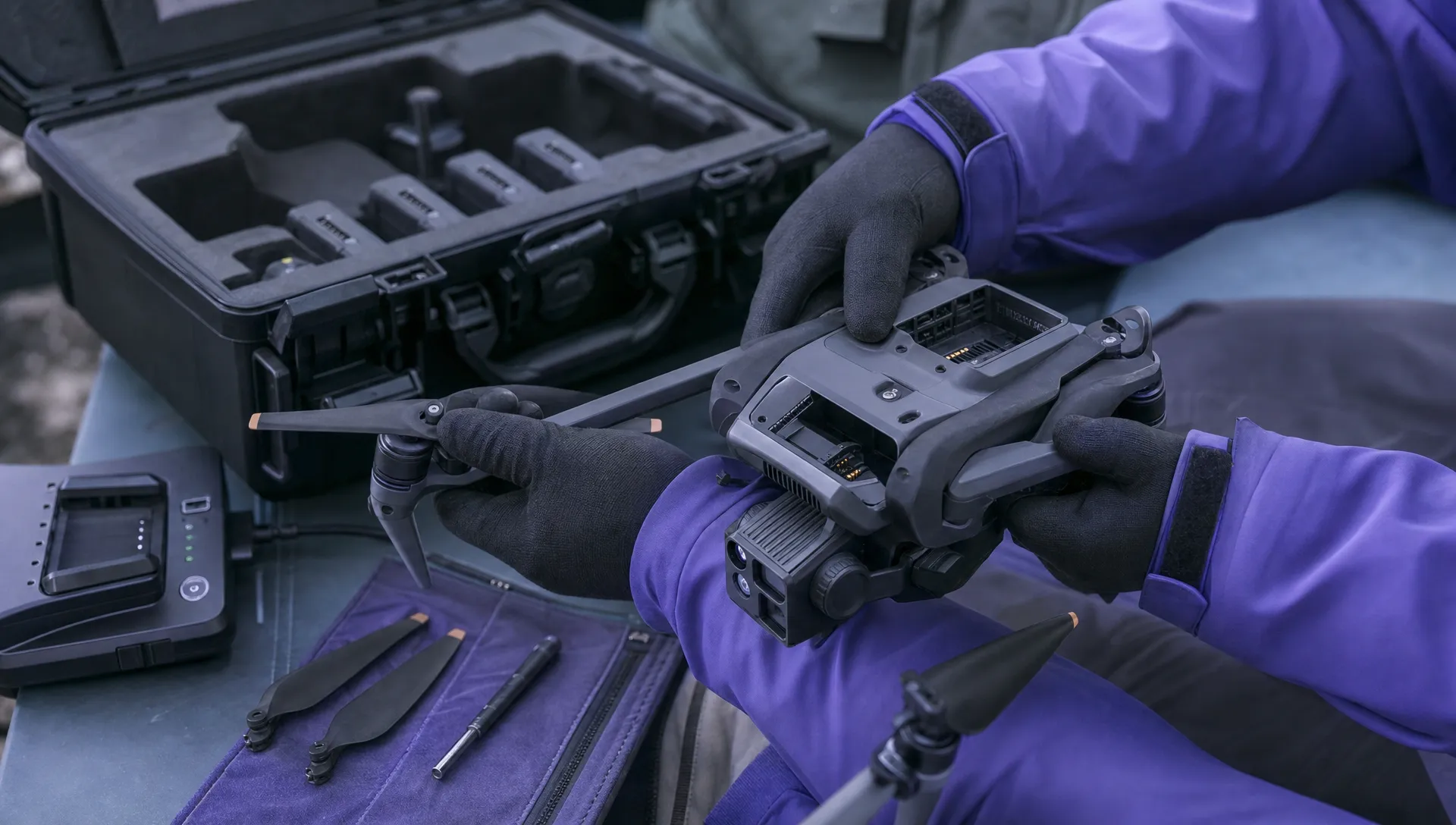 Free Drone Pre-Flight Checklist for Commercial Missions →
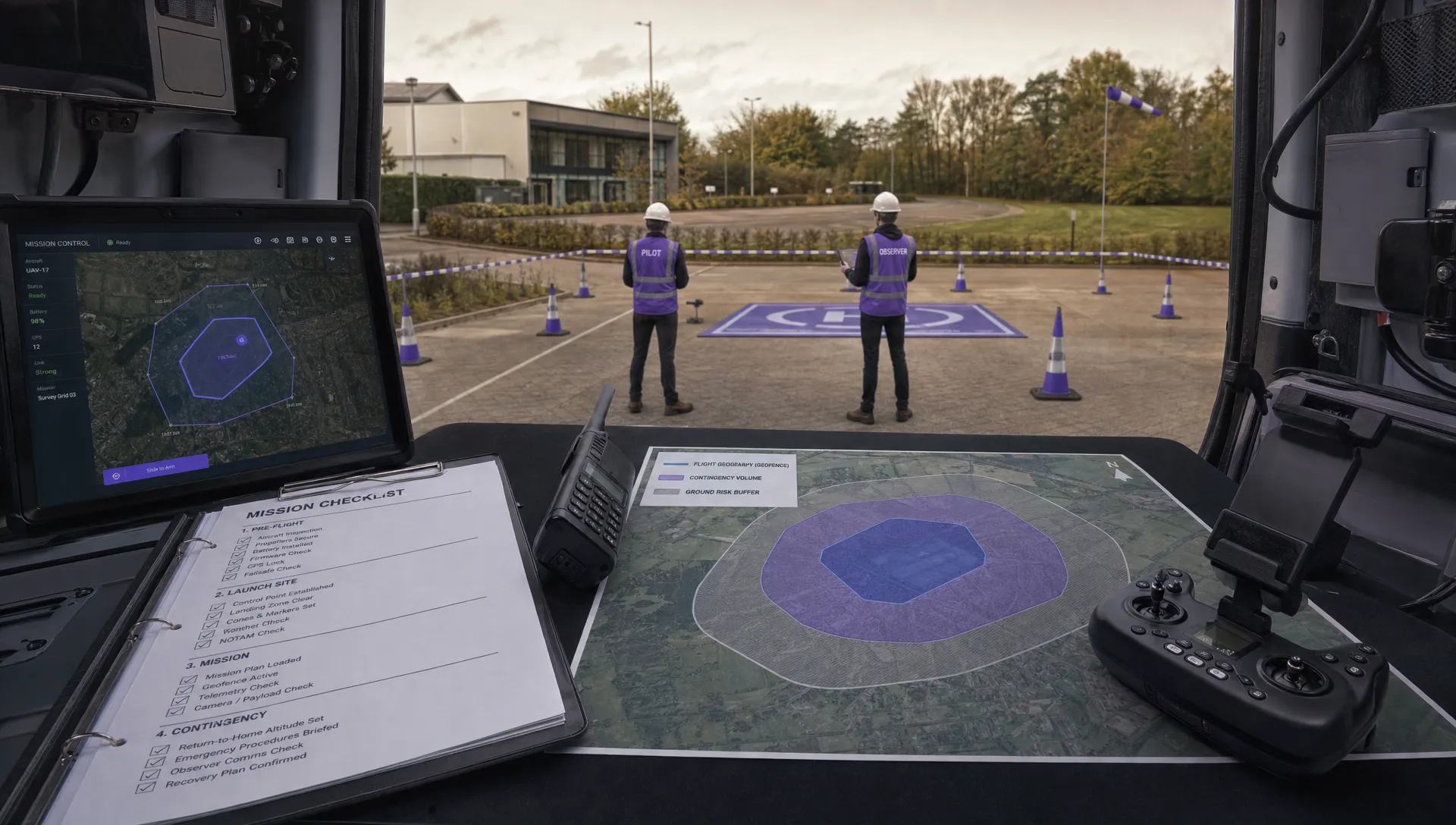 Contingency Volume and Flight Risk Buffer Explained →
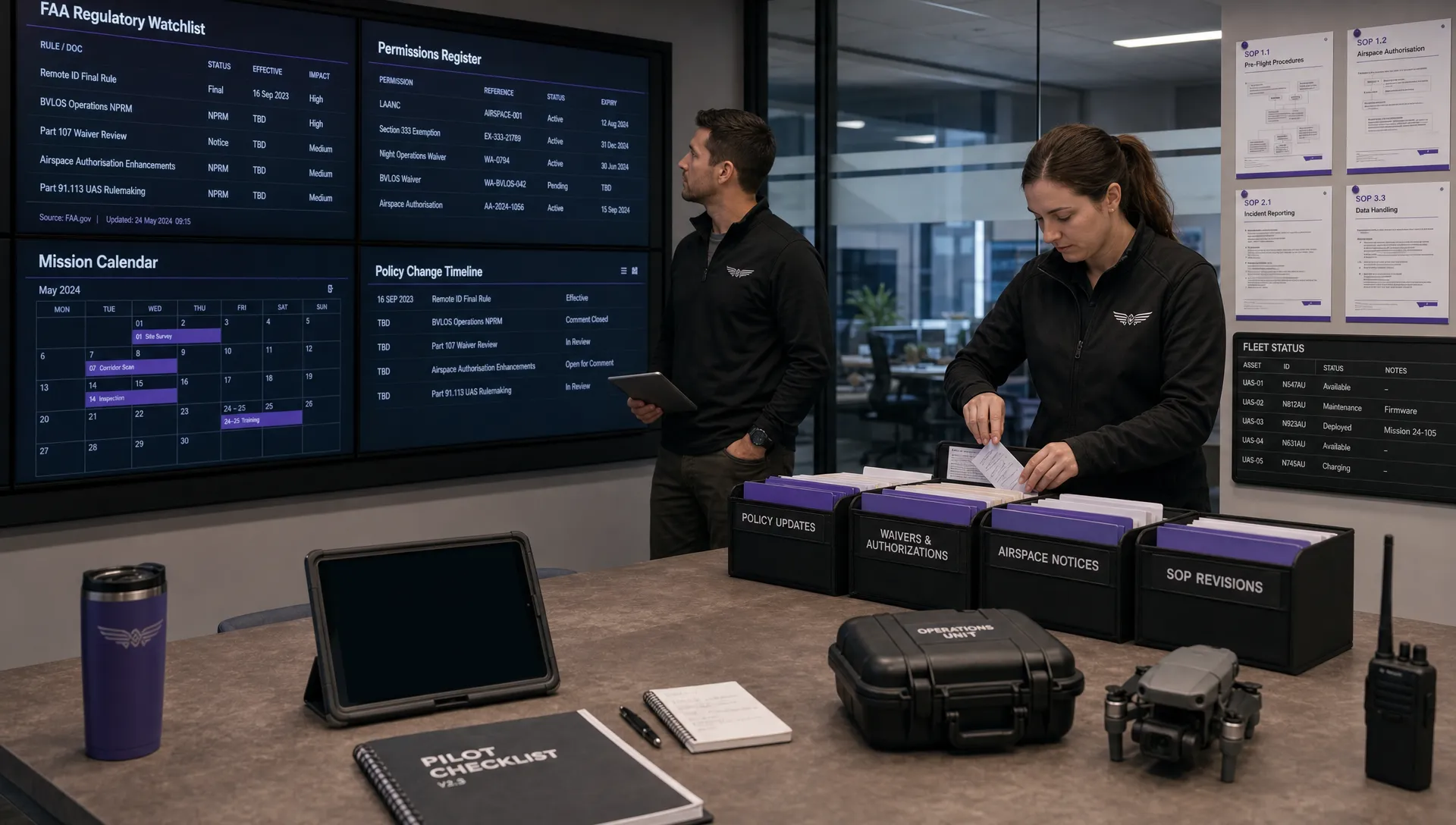 FAA Policy Changes That Commercial Drone Teams Should Track →