
How to renew part 107 license - Quick Guide
Every 24 months, your Part 107 certificate comes up for renewal. Thankfully, the process is straightforward: complete a free recurrent online training course and then submit the paperwork through the FAA’s IACRA system. It’s a simple but vital task that keeps you up-to-date on airspace rules and safety protocols, ensuring your commercial drone operations stay legal and compliant.
Why Renewing Your Part 107 Is a Business Imperative
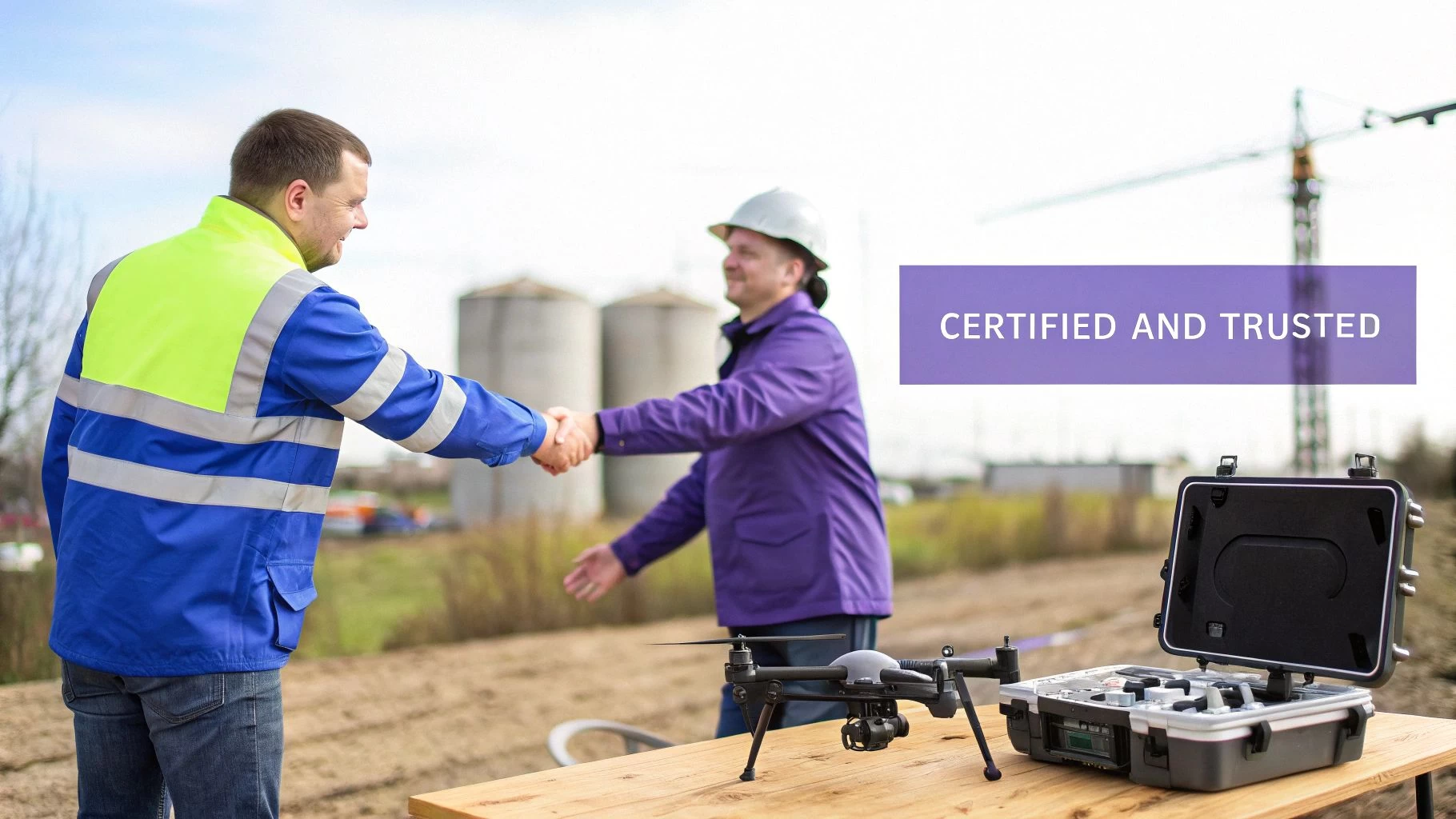
Letting your Part 107 certificate expire isn’t just an administrative slip-up; it's a major business risk that can seriously undermine your professional credibility. In a competitive market, clients—whether in real estate or large-scale construction—are increasingly savvy. They verify credentials. A current license is your first line of defense, showing a real commitment to safety and regulation that immediately sets you apart from the cowboys.
The renewal process isn't just about ticking a box, either. It’s designed to bring you up to speed on crucial updates that directly impact how you fly. Think about the big changes recently, like Remote ID requirements, the new rules for flying at night, or operations over people. The FAA’s recurrent training covers these exact topics, ensuring your knowledge base evolves right along with the industry. Staying current means you can plan and fly your missions with confidence, knowing you're fully compliant with the latest standards.
Protecting Your Livelihood from Legal Risks
Flying commercially with an expired license is playing with fire. The FAA can—and does—levy hefty fines for non-compliant operations, which could cost you thousands and put your entire business in jeopardy.
Even worse, flying without a valid certificate could completely void your liability insurance. Imagine a minor mistake during a flight leads to property damage. You go to file a claim, only to find out your insurer won't cover it because your certification lapsed. Suddenly, you're on the hook for everything.
Timely renewal isn't just bureaucracy; it's an essential risk management strategy. It protects your finances, your reputation, and your ability to land high-value projects that demand proven, certified professionals.
This is precisely why you need to get the renewal cycle locked into your calendar. The Part 107 Remote Pilot Certificate is valid for two years. To keep flying legally for commercial purposes, you have to complete the renewal process every 24 months. This involves the updated training to prove you're proficient with the latest rules. You can find more detail on this mandatory cycle over on the Dronedesk blog.
Building Client Trust and Operational Excellence
At the end of the day, a proactive approach to your Part 107 renewal builds a solid foundation of trust with clients. It signals that you are a serious professional who is truly dedicated to operational excellence. This commitment opens doors to more complex and lucrative projects, because clients will always prefer to hire pilots who make safety and compliance a priority.
Treating your renewal as a core business practice isn't just about following the rules—it's about investing in the long-term success and integrity of your drone business.
Here's a quick look at the core benefits of staying current versus the risks of letting your remote pilot certificate expire.
Why Timely Part 107 Renewal Matters
| Area of Impact | Benefit of Timely Renewal | Risk of Expired License |
|---|---|---|
| Legal Standing | Full compliance with FAA regulations, avoiding fines and penalties. | Illegal commercial operations leading to hefty FAA fines. |
| Insurance Coverage | Maintains the validity of your liability insurance policy. | Potential to void your insurance, leaving you personally liable. |
| Client Confidence | Demonstrates professionalism and commitment to safety, attracting better clients. | Loss of credibility; many clients will refuse to hire uncertified pilots. |
| Operational Knowledge | Keeps you current on new rules (e.g., Remote ID, night operations). | Outdated knowledge increases the risk of non-compliant flights. |
| Business Growth | Opens doors to higher-value contracts that require certified pilots. | Inability to bid on projects or work with professional organizations. |
Staying on top of your certification isn't just a requirement; it's a smart business move that pays dividends in safety, reputation, and profitability.
Completing the Free FAA Recurrent Online Training
For most pilots, the go-to method for renewing a Part 107 certificate is the free online recurrent training from the FAA. The course is officially called "Part 107 Small UAS Recurrent (ALC-677)," and it’s specifically built to catch you up on the biggest regulatory shifts since your last exam.
First things first, you'll need an account over at FAASafety.gov. This is the FAA Safety Team (FAASTeam) portal. Don’t get this mixed up with IACRA, where you probably got your initial license—they’re separate systems. If you don't have an account, now’s the time to make one. Once you're logged in, just search for the course by its code, ALC-677, and get yourself enrolled.
What to Expect from the Course Modules
Don't mistake this for a simple refresher. The training gets right into the nitty-gritty of updates that have a real impact on how we fly commercially. It’s a self-paced course that most people get through in about two hours, and it puts a heavy focus on topics that likely weren't even on the radar when you took your initial test.
The main modules you’ll work through cover:
- Remote ID (RID): All the rules for broadcasting your drone's identification and location information.
- Operations Over People and Moving Vehicles: The different categories and specific regulations that now allow these more advanced types of flights.
- Night Operations: What you need to know about anti-collision lighting and the best practices for flying safely after sunset.
Here's a pro tip I swear by: as you go through the course, take screenshots of the key slides. I'm talking about the ones with specific rules, charts, or diagrams. Save them to a folder on your phone or tablet. It creates an instant field guide you can pull up on a job site without digging through endless FAA documents.
At the end of the course, there's a final exam. You need to get a 100% score to pass, but it’s not as scary as it sounds. You get unlimited retakes, and every question is pulled straight from the material you just covered. If you get one wrong, the system shows you which one, so you can just pop back to that section, review the material, and fix your answer.
Securing Your Completion Certificate
Once you nail that 100% score, the system generates your certificate of completion. This PDF is your golden ticket—it's the official proof that you've met the recurrent training requirement.
Do not just close the browser window when you're done! Download that certificate immediately. I recommend saving it in at least three places: your computer's hard drive, a cloud service like Google Drive or Dropbox, and even email a copy to yourself for good measure. To see how this fits into the bigger picture, check out our full guide on the FAA Part 107 renewal process.
This certificate is crucial, but you're not done yet. You've passed the training, but your renewal isn’t official until you’ve formally notified the FAA. The next step is to head over to the IACRA system, where you'll submit Form 8710-1 to link the training to your pilot record and make your renewed Part 107 certificate official.
Your Part 107 Renewal Process Checklist
Let's be honest, dealing with any kind of government paperwork can feel like a chore. But renewing your Part 107 certificate doesn't have to be a headache. If you break it down into a few manageable steps, you'll be back to flying legally in no time, without any last-minute panic.
Staying current is more important than ever. The FAA reported that as of late 2025, there are around 316,075 commercial drones registered for Part 107 operations in the U.S. alone. That's a huge community of professional pilots, making up 37% of all drone registrations. This isn't just a niche hobby anymore; it's a massive, growing industry.
First Things First: Find Your Expiration Date
Before you even think about logging into an FAA portal, grab your remote pilot certificate card. The expiration date is printed right on it. Your Part 107 is valid for 24 calendar months.
So, if your certificate was issued on June 15, 2024, it will expire at the end of the month, on June 30, 2026. I always recommend setting a calendar reminder for at least 90 days out. This gives you plenty of breathing room to handle the renewal without feeling rushed.
Get Your FAA Accounts Talking to Each Other
This is a step where a lot of pilots get tripped up. The FAA uses two different websites for the renewal process, and they need to be able to communicate. It's crucial that your information is identical on both.
- FAASafety.gov (FAASTeam): This is your destination for the free recurrent training course you'll need to take, specifically the ALC-677.
- IACRA (Integrated Airman Certification and Rating Application): This is the official portal where you'll submit your renewal application (Form 8710-1) once the training is done.
Take a few minutes to log into both accounts and make sure your full legal name, address, and certificate number match perfectly. Any little discrepancy can cause a delay in processing, and nobody wants that.
Pro-Tip: Don't wait until the day you plan to do the training to log in. Passwords get forgotten, and emails need updating. Sort out any account access issues now, well before your deadline. It’ll save you a ton of stress.
This whole process is really just three main phases: getting your accounts ready, completing the training, and then getting your new certificate.
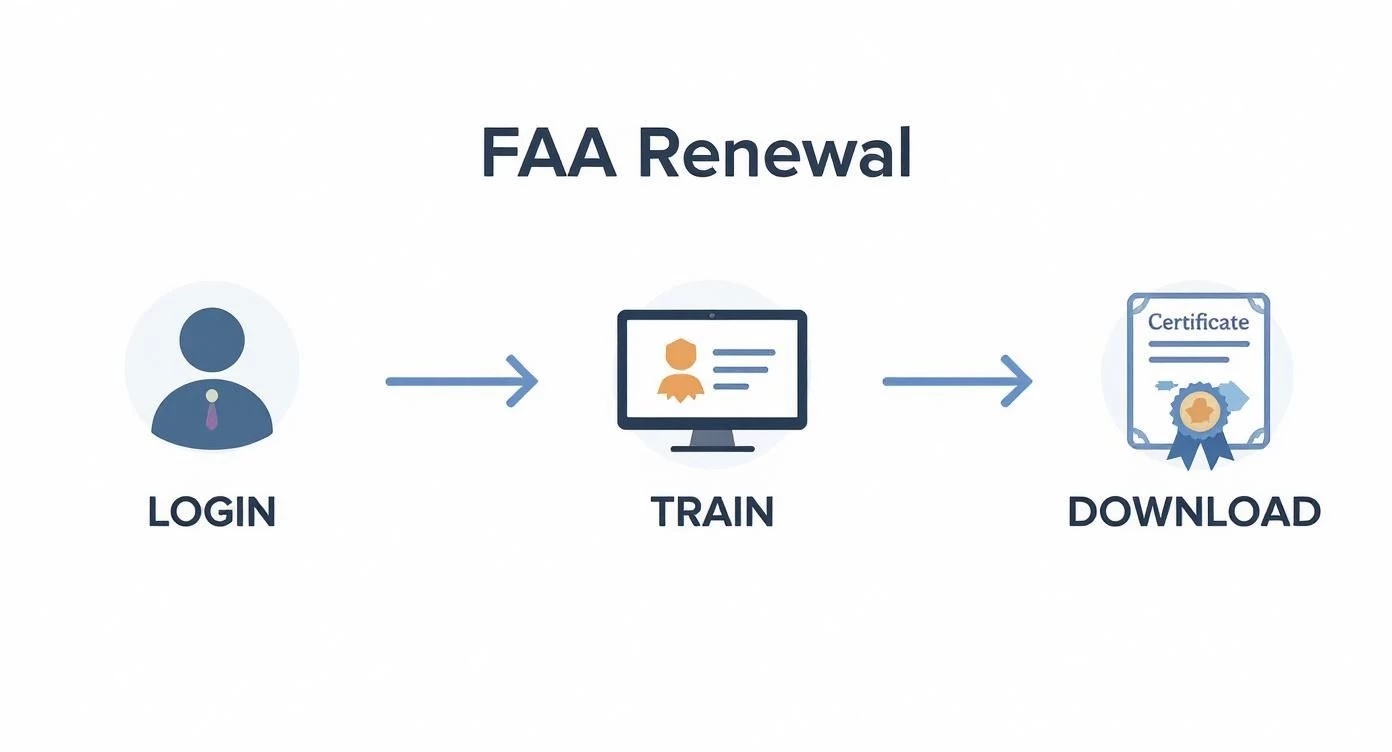
As the diagram shows, it's a straightforward path from logging in to downloading your updated credentials.
Knock Out the ALC-677 Recurrent Training
With your accounts squared away, it’s time for the training. Head over to FAASafety.gov and find the "Part 107 Small UAS Recurrent (ALC-677)" course. It's completely free and usually takes a couple of hours to get through.
The course covers all the important regulatory updates, like Remote ID requirements and rules for flying at night. You'll have to get a 100% score on the final exam, but don't sweat it—you can take it as many times as you need to.
Once you pass, the most important thing to do is download and save the PDF of your completion certificate. You're going to need this for the final step.
File Your Application in IACRA
You're in the home stretch. With your training certificate saved, log back into IACRA. You'll start a new application for a Remote Pilot certificate, which will bring up Form 8710-1. The system will ask for the completion date and certificate number from that ALC-677 course you just finished. If you want a preview of the topics, check out our detailed guide on the Part 107 recurrent test.
After you've filled everything out and signed it electronically, hit submit. You'll get an immediate confirmation email from the FAA. A few days later, after the standard TSA background check clears, you'll receive a second email with a link to print your temporary certificate straight from IACRA. Your new plastic card will show up in the mail a few weeks after that.
Common Renewal Mistakes and How to Avoid Them
Even the sharpest pilots can trip up during the Part 107 renewal process. The good news? Pretty much every common snag is preventable if you know what to look for. Learning from the slip-ups others have made is the quickest way to guarantee a smooth, stress-free renewal for yourself.
One of the biggest blunders we see is simply leaving it too late. It's easy to treat the expiration date on your certificate like a final exam, cramming the renewal into the last week or two. That approach leaves zero wiggle room if you hit a snag with an account or there's a slight delay on the FAA's end.
Letting the Clock Run Out
Your Part 107 certificate is good for 24 calendar months. That means if it was issued on May 10, 2024, it expires at the end of that month, on May 31, 2026. Procrastination is not your friend here.
A simple fix is to pop a reminder in your calendar for 90 days before your expiration month. That gives you plenty of breathing room to knock out the free online training, iron out any account issues, and get your paperwork submitted without the pressure of a looming deadline.
A proactive renewal isn't just about staying legal; it's about maintaining operational readiness. You never want to turn down a last-minute job because your certification is about to lapse.
The IACRA Disconnect
Here’s a classic pitfall I've seen trip up more than a few pilots. Someone diligently completes the ALC-677 recurrent training on FAASafety.gov, downloads their shiny new completion certificate, and then... does nothing else. They assume finishing the course is all it takes.
That's a critical misunderstanding. The training is just step one. You must then log into the separate IACRA system to submit Form 8710-1. This is the crucial step that officially connects your training to your airman record and actually triggers the renewal. If you forget this, your certificate will expire, even with that training certificate sitting on your hard drive.
Mismatched Personal Information
This one sounds minor, but it causes major headaches. Your personal details must be an exact match across both your FAASafety.gov and IACRA accounts.
- Common Mistake: Using a nickname like "Mike" on one account and your legal name "Michael" on the other.
- Why It Happens: People often set these accounts up years apart and just forget the exact name or address they used.
- How to Avoid It: Before you even start the training, do a quick audit. Log into both portals and put them side-by-side. Check that your full legal name, mailing address, and certificate number are identical down to the last letter. Fixing a typo beforehand takes seconds; letting the automated system flag it for a manual review can take weeks.
Avoiding Common Part 107 Renewal Pitfalls
To help you sidestep these common issues, here's a quick reference table. Think of it as a pre-flight check for your renewal process.
| Common Mistake | Why It Happens | How to Avoid It |
|---|---|---|
| Last-Minute Rush | Underestimating the time needed or simply forgetting until the expiration date is near. | Set a calendar reminder 90 days out. This provides a generous buffer for any unexpected issues. |
| Forgetting IACRA | Assuming the training course on FAASafety.gov automatically completes the renewal. | After the training, immediately log into IACRA and submit Form 8710-1. This is non-negotiable. |
| Name/Address Mismatch | Using different variations of your name or an old address across FAA accounts. | Before starting, log into both FAASafety.gov and IACRA to verify your details are 100% identical. |
| Losing Login Credentials | Forgetting passwords for accounts that are only used every two years. | Use a password manager or store your FAA login details in a secure, designated place. |
Getting these small details right from the start is the key to a smooth and quick process to renew your Part 107 license. A few minutes of double-checking will save you from the frustrating back-and-forth that can ground your operations.
How to Manage Your Drone Pilot Credentials Effectively

Treating your Part 107 renewal as just another date on the calendar is a missed opportunity. Smart operators build credential management right into their daily workflow, turning a simple reminder into a cornerstone of their compliance strategy. This is where a dedicated drone operations platform really proves its worth.
Forget about juggling scattered calendar alerts and sticky notes. A system like Dronedesk pulls everything into one place. You can set up automatic expiration reminders not just for your Part 107, but for every critical document you have—aircraft registrations, insurance policies, you name it. It's a proactive approach that stops compliance lapses before they can ground your operations.
Keep Your Whole Team Compliant
For any drone business with a team of pilots, this kind of centralized oversight is a game-changer. Picture a single dashboard that shows you the status of every pilot's Part 107 certificate at a glance. That visibility means you can confidently assign compliant pilots to every job, which is non-negotiable for keeping clients happy and projects on track.
By integrating your renewal cycle into a management platform, you shift from reactive problem-solving to proactive compliance. It’s the difference between remembering to check a date and having an automated system that guarantees you never forget.
This level of organization is essential in an industry that's growing as fast as this one. Since the FAA established Part 107 rules back in 2016, the number of certified remote pilots has skyrocketed, hitting over 20,000 by mid-2018 alone. The FAA’s focus on certification and registration isn't slowing down, which tells you that solid record-keeping is more important than ever. You can get a sense of the industry's direction by exploring the FAA's regulatory efforts.
Ultimately, a good management system lets you store digital copies of certificates so they're instantly available for a client request or an FAA spot-check. Tying your pilot credentials directly to your flight records strengthens your entire safety management system. To really level up your record-keeping, you should also look into the benefits of a digital pilot logbook for tracking flight hours and experience.
Answering Your Part 107 Renewal Questions
Even with a straightforward process, there are always a few lingering questions when it’s time to renew your Part 107 certificate. Let's run through the common "what ifs" and "how soons" that pop up for pilots. Getting these sorted will make the whole thing feel a lot less stressful.
One of the big ones is, "What happens if I miss my renewal deadline?" The short answer is your commercial flying privileges stop. Cold. Your certificate doesn't disappear into thin air, but it's no longer valid for any commercial work. You can't legally fly for clients or any other business purpose until you've passed the recurrent training and got your application processed through IACRA. The good news is there's no penalty or fine for being late, but you are officially grounded from paid gigs.
Timing and Testing Logistics
Another point of confusion is often the timing. "How early can I start the renewal process?" While you can technically take the free ALC-677 online training anytime, it’s best to tackle it within 90 days of your expiration date. If you complete it too early, your new two-year clock starts from that completion date, not your old expiry date, meaning you'll just have to renew sooner next time.
Pilots also frequently ask if they need to go to a testing center. For a standard renewal, the answer is a firm no. As long as your certificate is current, all you need is the free online recurrent training. The in-person knowledge test is for first-timers or, in some cases, for pilots whose certificates have been expired for a long time.
Key Takeaway: The renewal is designed to be completely remote. The FAA moved to the online training model to make it easier for pilots to stay up-to-date on new rules like Remote ID without the hassle and cost of visiting a testing center every two years.
So, what if you've passed the training but your certificate expires before you submit the IACRA paperwork? Unfortunately, you're still not legal to fly commercially. The renewal isn't official until you've submitted Form 8710-1 in IACRA and it's been processed. The training certificate is just one piece of the puzzle; IACRA is what makes it official with the FAA. A little proactive planning goes a long way in avoiding any gaps in your certification.
Stop juggling dates and deadlines. Dronedesk integrates all your pilot and equipment credentials into one simple dashboard, sending you automated reminders so you never miss a renewal. Keep your operations compliant and your business flying by visiting https://dronedesk.io to see how it works.
 Drone Risk Assessment Controls That Work in the Field →
 FAA Drone License Costs Beyond the Knowledge Test →
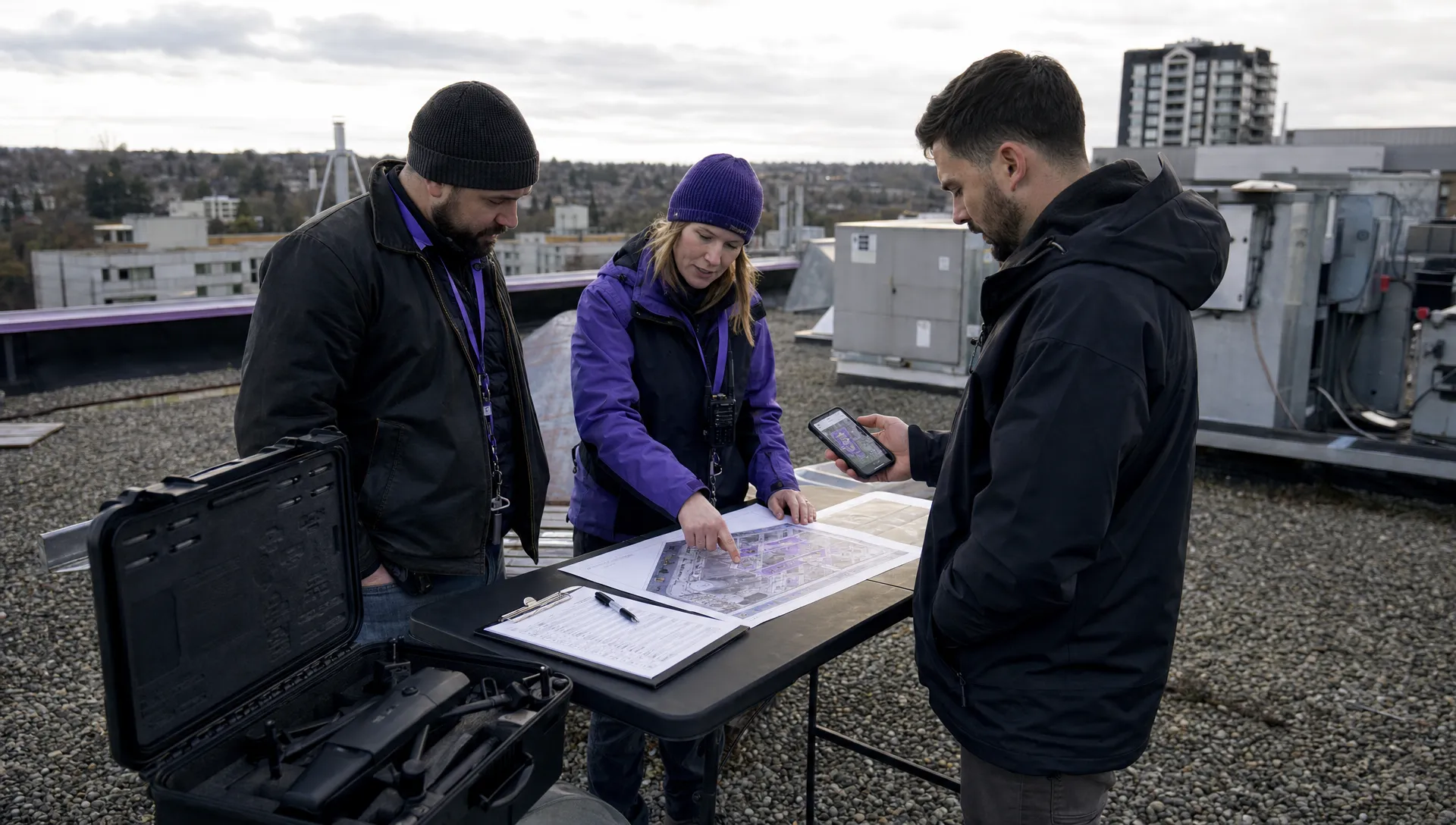 Drone Part 107 Operations: When a Waiver May Be Needed →
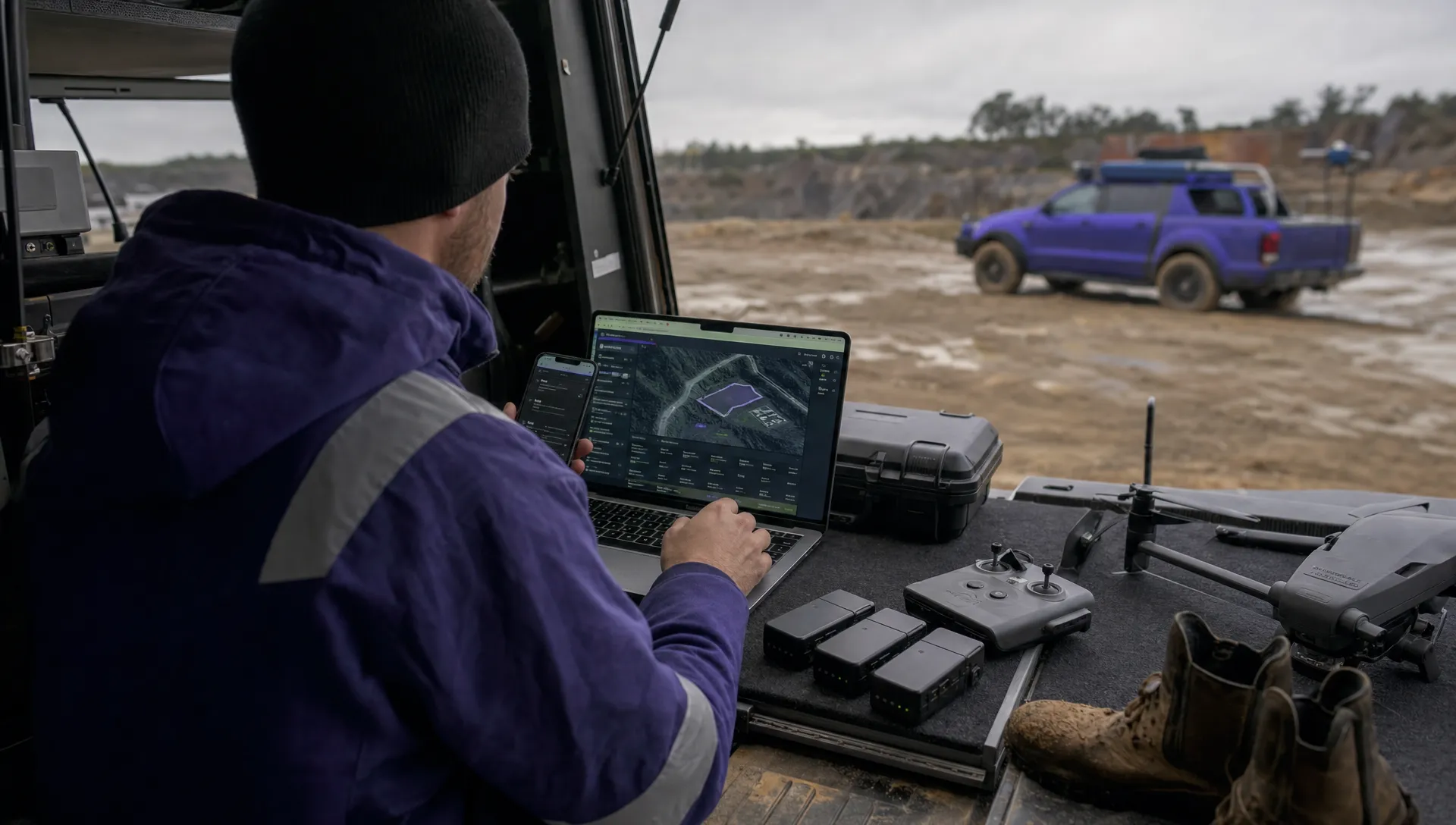 Drone Operating Rules for Managing Contractors and Employees →
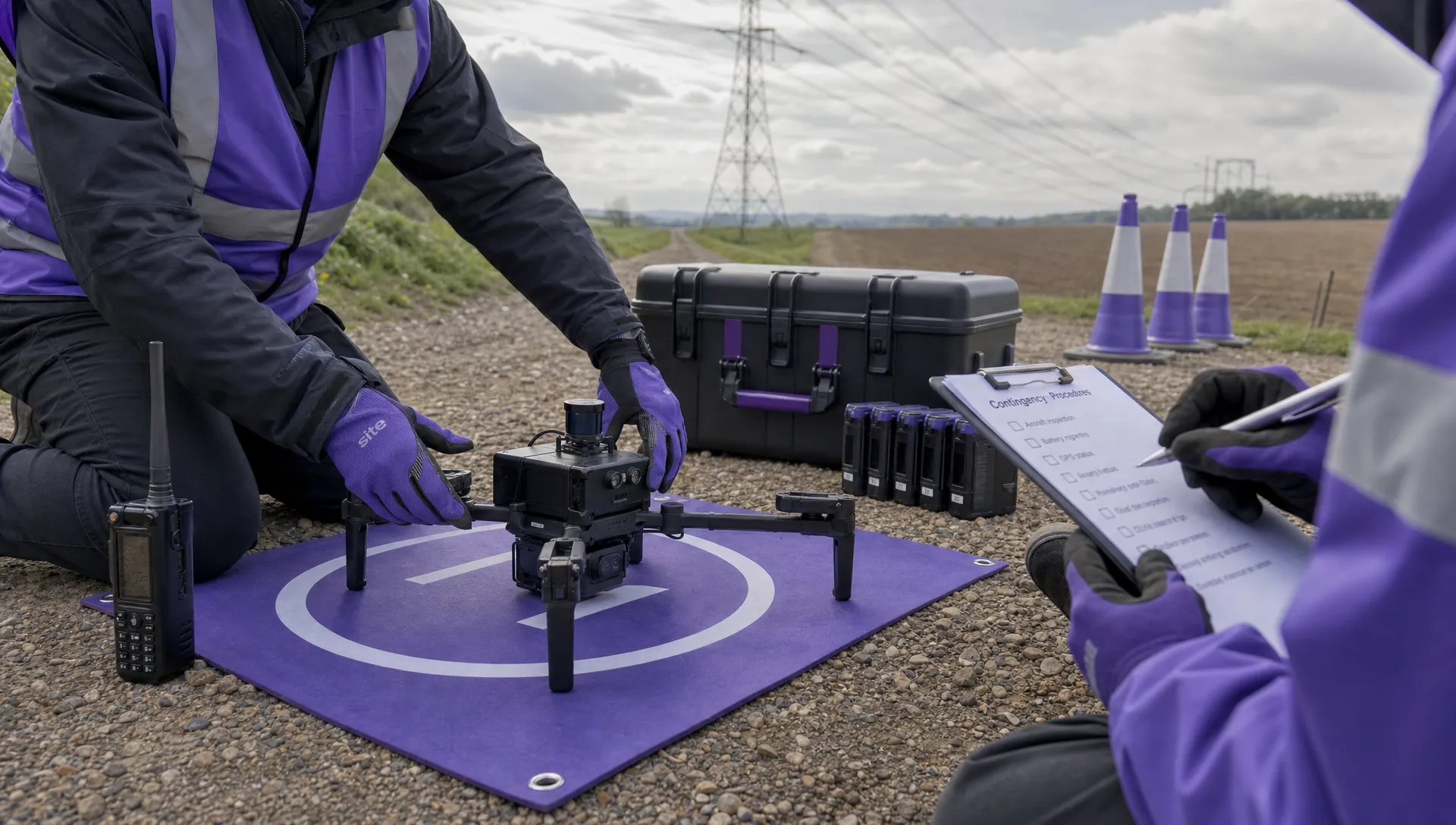 BVLOS Drone Requirements for Building a Safety Case →
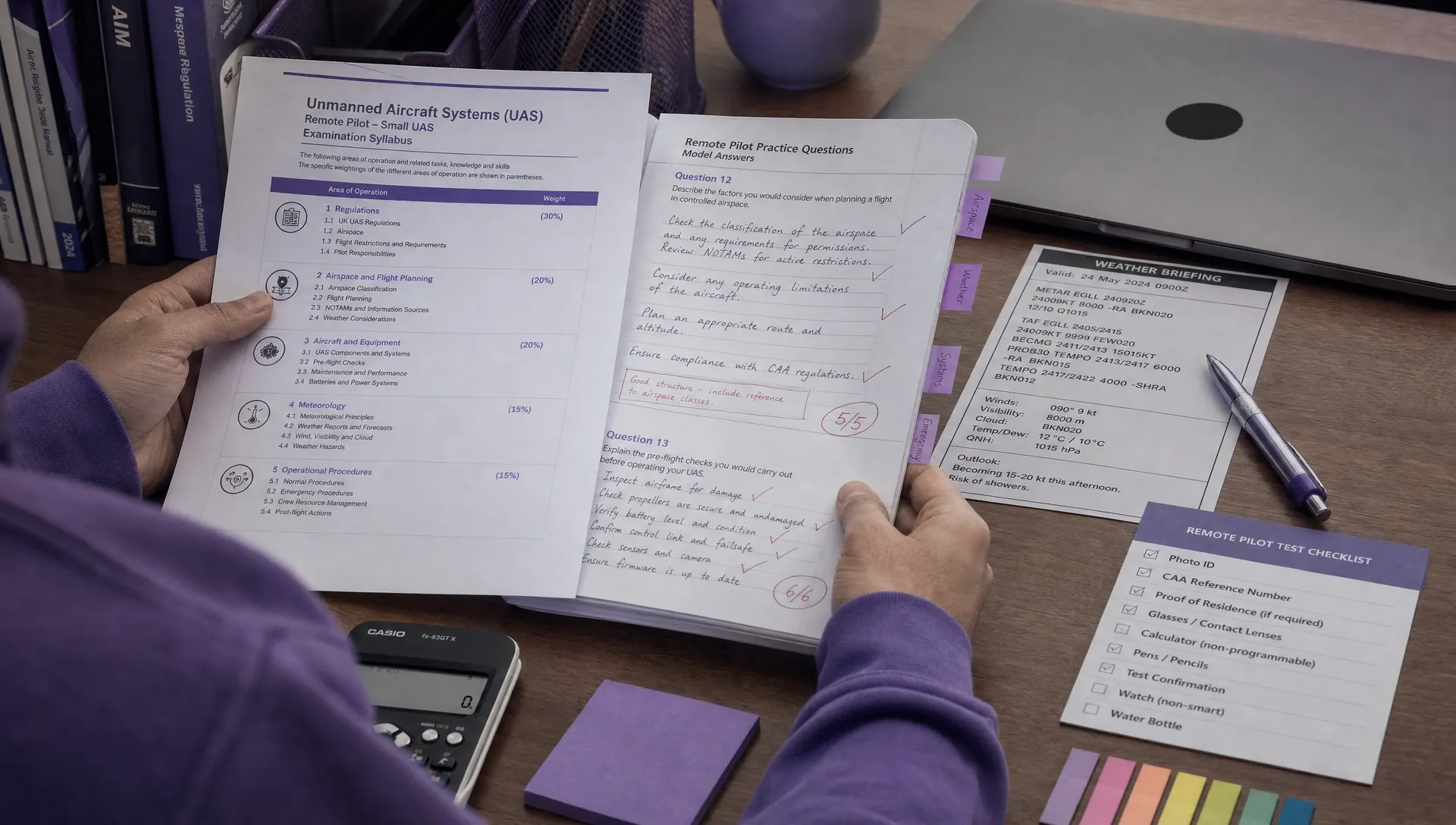 Drone Pilot Test Mistakes That Cost Candidates Marks →
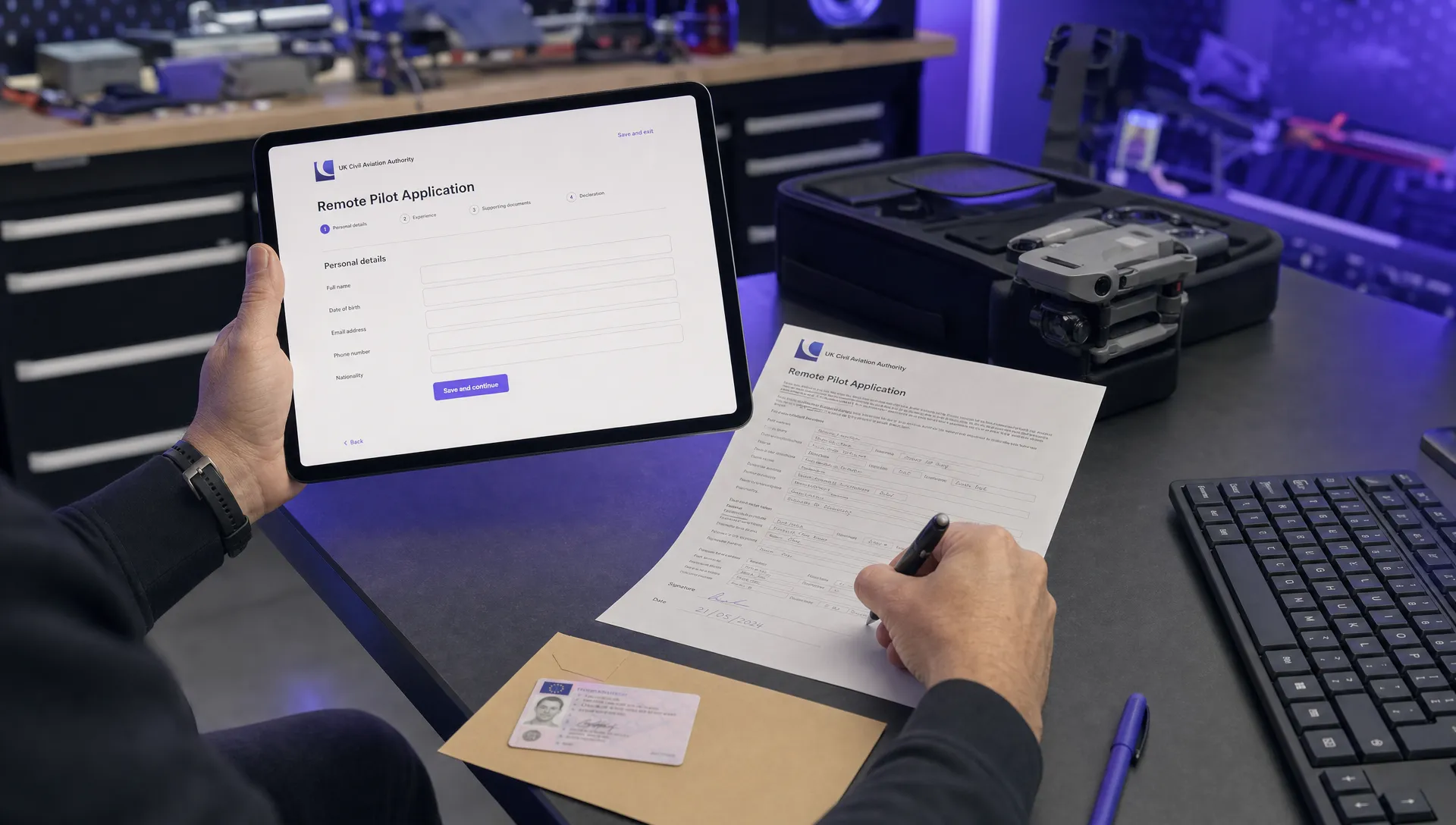 FAA 107 License vs Part 107 Certificate: What’s the Difference? →
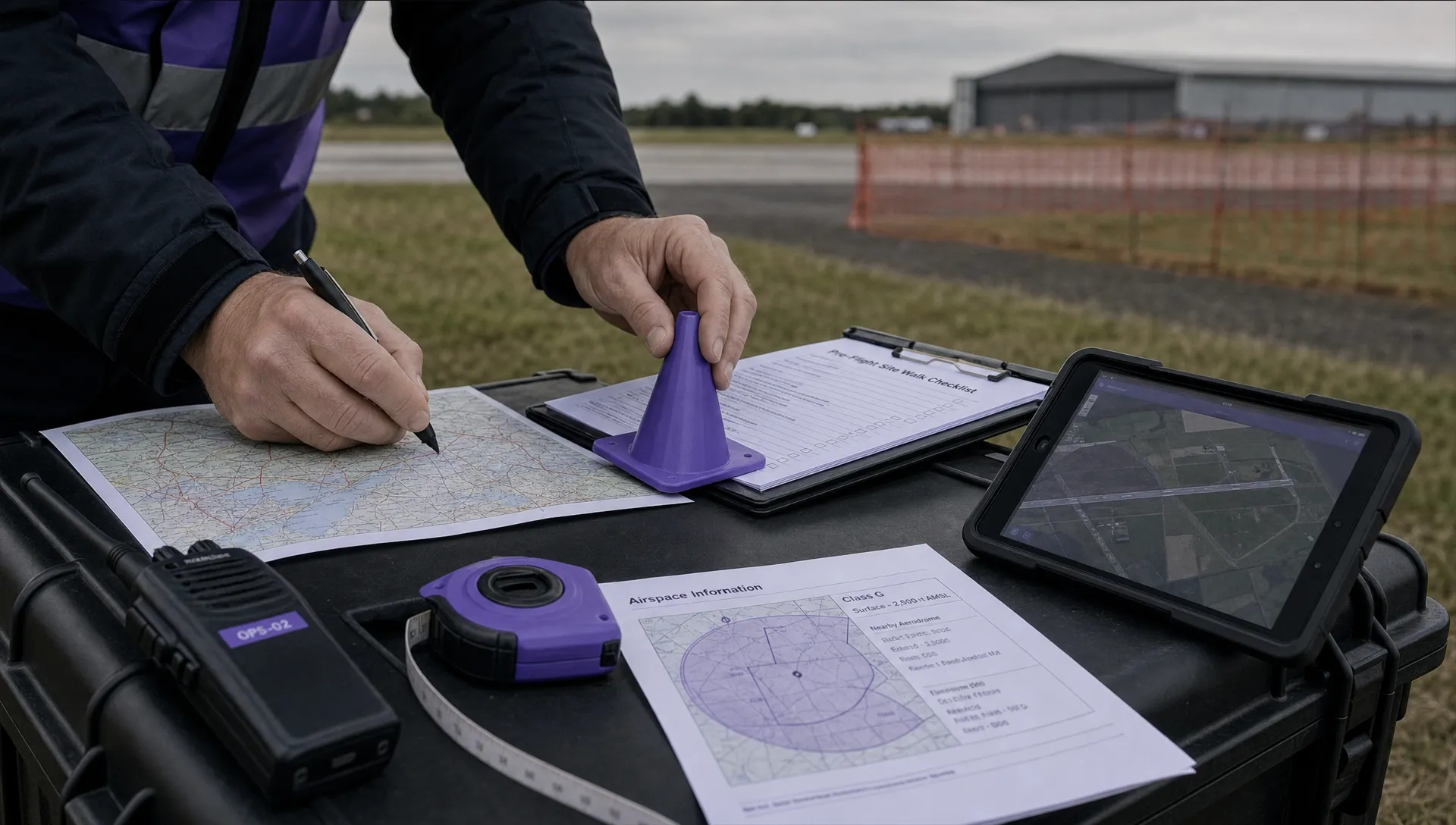 Drone Airport Rules: A Field Checklist for Site Assessments →
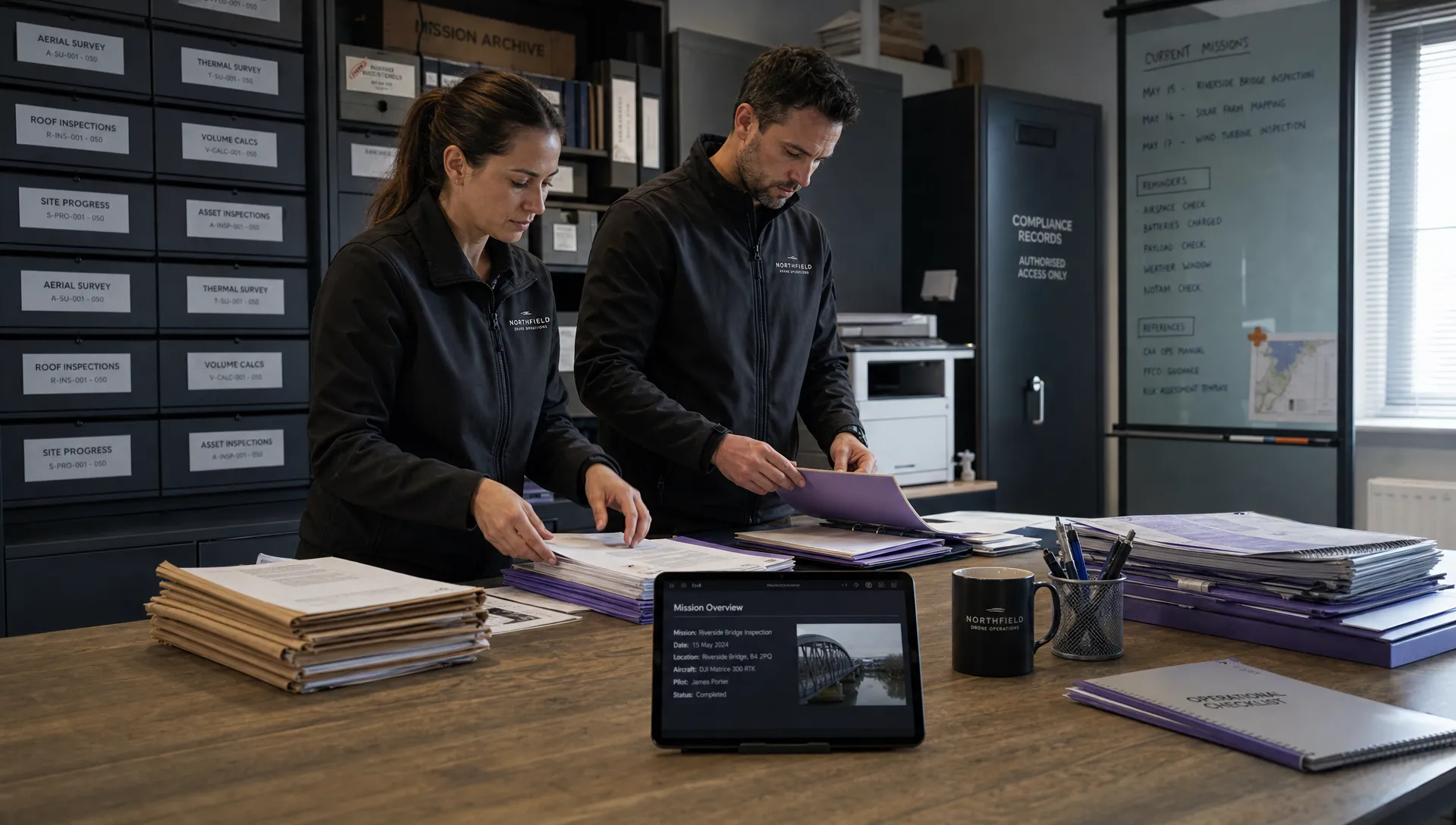 FAA Part 107 Record-Keeping Rules for Commercial Teams →
 How to Review a DJI Flight Log After an Unexpected Event →