
Part 108: What Drone Operators Should Expect
For many drone businesses, Part 108 is the regulation to watch because it is expected to define how routine beyond visual line of sight (BVLOS) operations can scale in the United States. If Part 107 made commercial drone work mainstream, Part 108 could be the framework that makes longer-range inspection, mapping, monitoring and emergency response more practical without relying on one-off waivers for every repeatable use case.
The important word is “framework”. Part 108 should not be treated as a simple permission slip to fly further. Operators should expect a more structured approach to aircraft capability, operational control, risk assessment, training, records, communications and airspace coordination. That is especially relevant for survey companies, utility operators, public safety teams and any organisation planning to move from occasional flights to managed drone programmes.
This article is not legal advice, and the final details depend on the FAA’s published rule text, guidance and implementation timetable. For the latest official position, operators should monitor the FAA’s UAS information and the relevant Federal Register notices. But the direction of travel is clear: BVLOS is moving from “exceptional approval” towards more repeatable, auditable operations.
What is Part 108?
Part 108 is widely used as shorthand for the FAA’s expected regulatory framework for BVLOS drone operations. Today, most US commercial drone flights sit under 14 CFR Part 107, which generally requires the remote pilot to keep the aircraft within visual line of sight unless the operator has a waiver.
That waiver-based model has enabled important innovation, but it does not scale easily. A utility company inspecting miles of powerline, a survey firm mapping large corridors, or an emergency services team searching a wide area needs a repeatable operating model. The FAA’s BVLOS Aviation Rulemaking Committee final report set out recommendations for a more systematic BVLOS rule, including risk-based approvals, operator responsibilities, aircraft performance expectations and supporting services.
In practical terms, Part 108 is expected to answer questions such as:
- Who is allowed to conduct routine BVLOS operations?
- What aircraft capabilities are required for different types of missions?
- How should operators manage detect-and-avoid, command and control, and contingency procedures?
- What records, training and oversight will be needed?
- How will BVLOS operations integrate with other airspace users?
The final rule may differ from earlier industry recommendations, so operators should avoid building their entire strategy around rumour. However, they can prepare by improving the operational foundations that any serious BVLOS framework is likely to require.
Why Part 108 matters to commercial drone teams
Part 108 matters because BVLOS is where many high-value drone use cases become economically viable. Visual line of sight operations are excellent for localised inspection, photography, site progress monitoring and close-range mapping. But the business case changes when the aircraft can cover longer distances with a controlled safety case.
For utility companies, BVLOS can support linear infrastructure inspection across powerlines, pipelines, railways, water networks and telecoms assets. For survey and mapping companies, it can reduce the operational friction of covering large land parcels, corridors and remote sites. For emergency services, it can improve situational awareness during search and rescue, flooding, wildfire, traffic incidents or major public safety events.
The biggest change is not just range. It is governance. Clients, insurers and regulators will want evidence that drone operations are controlled, repeatable and documented. That means Part 108 preparation should be treated as an operational maturity project, not just a regulatory watch item.
The likely shift from waiver-led BVLOS to standardised operations
Under the current model, many advanced operations require specific waivers or exemptions. Those applications often depend on a detailed concept of operations, risk controls, aircraft information, pilot qualifications, procedures and evidence that the operator can manage the proposed mission safely.
Part 108 is expected to make some of that process more standardised. That does not mean it will be easier in every case. It may be clearer, but it is also likely to be more formal. Operators that already manage flights with strong documentation, defined responsibilities, logged maintenance and consistent risk assessments will be in a stronger position than those relying on ad hoc processes.
| Area | Current Part 107 waiver environment | Part 108 direction operators should expect |
|---|---|---|
| BVLOS approval | Often handled through waivers or specific approvals | More standardised routes for eligible operations |
| Operational control | Described in the waiver safety case | Likely to become a core compliance expectation |
| Aircraft suitability | Assessed as part of the proposed operation | More focus on performance, reliability and equipage |
| Detect-and-avoid | Must be justified for the operation | Likely to be central to routine BVLOS permissions |
| Records | Important for compliance and incident response | Likely to become even more important as evidence |
| Scaling operations | Can be slow where each use case needs bespoke approval | More repeatable processes for qualifying operators |
The practical takeaway is simple: if you cannot clearly show who planned a flight, who approved it, what risks were assessed, which aircraft was used, what airspace data was checked, what happened during the flight and how the operation was logged, you are probably not ready for the expectations that will come with routine BVLOS.
What drone operators should expect
More emphasis on the operator, not just the pilot
Part 107 places clear responsibility on the remote pilot in command. Part 108 is expected to place more attention on the operating organisation as a system. That matters for companies with multiple pilots, multiple aircraft, subcontractors, remote operations centres or client-led programmes.
Operators should expect questions about governance. Who has authority to approve a mission? Who verifies aircraft readiness? Who checks weather and airspace? Who monitors pilot currency? Who manages maintenance defects? Who reviews incidents and near misses? A mature drone programme needs answers that are documented and consistently followed.
This does not remove the importance of pilot skill. It broadens the compliance picture. In BVLOS operations, the safety case depends on people, aircraft, procedures, technology and oversight working together.
Stronger evidence for risk assessment and mitigations
BVLOS is fundamentally a risk management challenge. The aircraft may be further from the pilot, operating over a larger area, using more automated systems, or interacting with more complex airspace. Regulators will therefore look closely at how hazards are identified, assessed and mitigated.
Operators should be ready to document ground risk, air risk, lost-link procedures, emergency landing options, population exposure, nearby infrastructure, weather constraints and coordination with relevant stakeholders. A generic template is unlikely to be enough for higher-risk missions.
If you are reviewing your internal process, Dronedesk has a useful guide on building an effective drone flight risk assessment that can help structure the thinking before you adapt it to your own regulatory environment and operating manual.
Aircraft capability will matter more
For simple VLOS work, many commercial operators can choose aircraft mainly on payload, camera quality, endurance and cost. BVLOS changes the equation. Reliability, command and control performance, navigation resilience, fail-safe behaviour, detect-and-avoid capability, maintenance history and system redundancy become more prominent.
That does not mean every BVLOS aircraft will need the same equipment. A small drone operating in a low-risk rural environment should not necessarily face the same requirements as a larger aircraft flying near busier airspace or over complex ground environments. But operators should expect aircraft suitability to be tied closely to the specific mission profile.
Fleet records will also become more important. If an aircraft has unresolved defects, unclear maintenance history or inconsistent battery records, it will be harder to show that it is suitable for advanced operations. Growing teams may want to review their approach to aircraft, batteries, payloads, maintenance and pilot assignment using a structured drone fleet management process.
Detect-and-avoid and command links will be central
BVLOS removes the simple visual scan that underpins traditional “see and avoid” operations. In its place, operators need credible methods to remain well clear of other airspace users. Depending on the operation, that may involve onboard systems, ground-based surveillance, procedural separation, strategic deconfliction, operational constraints, or a combination of controls.
Command and control is equally important. Operators should expect scrutiny of link reliability, coverage, lost-link behaviour, handover procedures, contingency plans and how the remote pilot or operations team maintains awareness of aircraft status.
The key question is not “do we have a BVLOS aircraft?” It is “can we prove that this aircraft, in this location, with this crew, under these procedures, can be operated safely when the pilot cannot see it?”
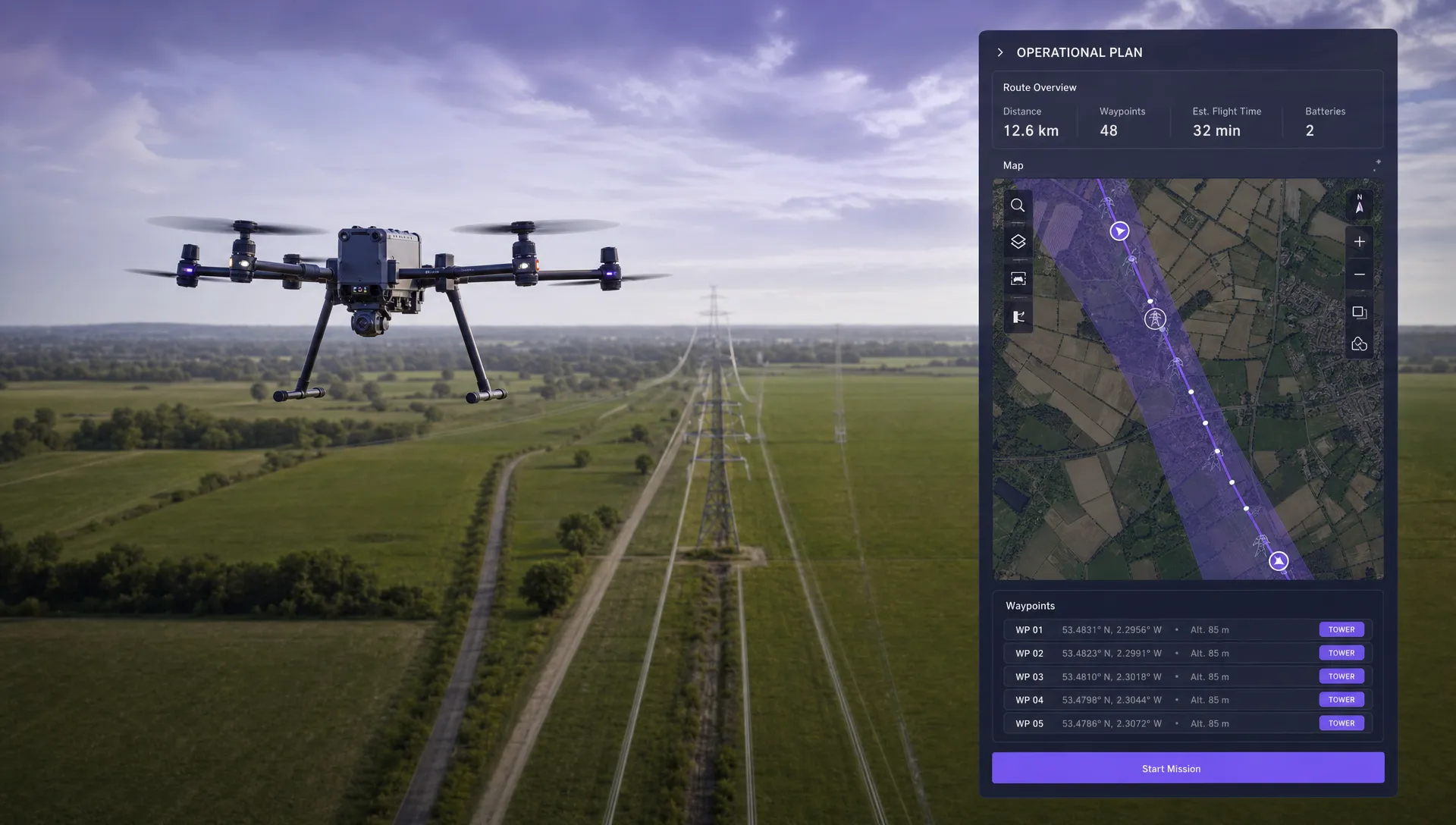
Airspace data and coordination will become routine workflow items
BVLOS operations are likely to require stronger integration with airspace information and, over time, unmanned traffic management services. Operators should already be treating airspace review as a documented workflow rather than a quick pre-flight glance.
That includes controlled airspace, temporary flight restrictions, NOTAMs, aerodromes, heliports, emergency service activity, military areas, sensitive sites and local ground constraints. It also includes proximity intelligence, such as nearby roads, railways, schools, prisons, hospitals, utilities and public gathering areas.
Remote ID is another part of the broader ecosystem. Most registered drones in the US must comply with 14 CFR Part 89, unless an exception applies. Part 108 will not exist in isolation from these wider identification, airspace and accountability requirements.
Training may become more role-specific
Drone teams should expect training expectations to move beyond basic remote pilot certification. BVLOS operations may involve remote pilots, mission commanders, observers in some circumstances, maintenance personnel, operations managers, safety managers and client-side stakeholders.
Each role needs clarity. A pilot flying a routine roof inspection does not need the same training profile as a team conducting linear infrastructure BVLOS work. An emergency services operator may need procedures for rapid deployment, multi-agency coordination and dynamic airspace changes. A survey firm may need repeatable processes for mapping accuracy, payload configuration and data handover.
Good training records should show more than a certificate number. They should show role competence, currency, scenario-based practice, emergency procedure familiarity and evidence that personnel understand the organisation’s operating procedures.
Record keeping will become a competitive advantage
Compliance records are often seen as admin, but under a Part 108-style operating model they become a business asset. They help prove that a team is competent, consistent and ready for more advanced work.
Useful records include flight plans, risk assessments, airspace checks, aircraft assignments, battery information, maintenance actions, pilot currency, checklists, incident reports, client approvals and post-flight logs. These records support internal safety management, regulatory oversight, insurance discussions and client assurance.
For larger organisations, the challenge is not simply collecting records. It is keeping them searchable, consistent and linked to the correct client, aircraft, site, pilot and mission.
How to prepare for Part 108 now
You do not need to wait for every detail of Part 108 to improve your readiness. The best preparation is to make your current operation more structured, auditable and repeatable.
Start by mapping your existing workflows from client enquiry to post-flight reporting. Identify where decisions are made, where checks are recorded and where information is currently stored. If critical safety information lives in email threads, spreadsheets, chat messages and individual pilot notebooks, scaling to BVLOS will be harder.
Next, standardise your concepts of operation for the types of work you perform most often. A utility inspection team might have separate operating profiles for substations, short distribution line patrols and long transmission corridors. A survey company might separate construction progress flights, rural mapping, quarry work and corridor mapping. Emergency services may need distinct profiles for planned events, live incidents and search operations.
Then review your risk controls. Look for hazards that change when the aircraft moves further away, such as loss of visual orientation, reduced ability to assess weather locally, communications dropouts, public access to emergency landing areas and interaction with low-level crewed aviation. The aim is not to create paperwork for its own sake. The aim is to make sure the mitigations are practical, trained and recorded.
Finally, improve your evidence trail. Every mature drone operation should be able to answer these questions quickly:
- Which aircraft and batteries were used for a flight?
- Was the pilot qualified, current and assigned to that aircraft type?
- What airspace and ground risks were checked?
- Which checklist was completed?
- Were defects, incidents or abnormal events recorded?
- Can the organisation retrieve the full operational history for a client, site, aircraft or pilot?
If those answers take hours to assemble, your compliance system is probably too fragile for the next generation of drone operations.
Sector-specific expectations
Survey and mapping companies
Survey operators should expect clients to ask how BVLOS affects data quality, safety, insurance and site coordination. Longer flights can increase efficiency, but they also require disciplined planning around ground control, payload configuration, overlap, weather windows, battery strategy and data integrity.
The strongest survey teams will be those that can connect their technical outputs to a documented safety process. A client commissioning a corridor survey will want confidence that the operator is not just producing good data, but also managing the operation professionally.
Utility and infrastructure operators
Utilities are among the clearest beneficiaries of routine BVLOS, especially for linear assets. But they also face complex operating environments. Powerlines, pipelines, rail corridors and telecoms infrastructure can cross public roads, private land, sensitive sites and varied airspace.
Part 108 preparation for utilities should focus on repeatable corridor risk models, stakeholder notification, emergency landing planning, communications coverage and maintenance control. Internal teams should also define how drone data feeds back into asset management, inspection workflows and defect response.
Emergency services and public safety teams
Emergency services need speed, but speed cannot come at the cost of governance. BVLOS could be valuable for search and rescue, major incidents, flooding, wildfire monitoring and tactical situational awareness. However, dynamic environments create additional challenges around airspace coordination, crewed aircraft, public movement and rapidly changing objectives.
Public safety organisations should focus on clear deployment criteria, command structures, inter-agency communication and post-incident review. Dronedesk’s law enforcement case study is a useful example of how an in-house drone programme can approach compliance, pilots, assets and operational management in a structured way.
Operators outside the United States
If you operate in the UK, Europe or elsewhere, FAA Part 108 may not apply directly. But it is still worth paying attention. Large clients, insurers and multinational organisations often look across jurisdictions when setting procurement standards. If Part 108 raises expectations around BVLOS documentation, aircraft suitability and operational control, those expectations may influence tender questions and internal governance even outside the US.
UK and European operators should continue to follow their own aviation authority requirements, including CAA or EASA frameworks where applicable. The useful lesson from Part 108 is broader than one jurisdiction: advanced drone operations need evidence-led management.
Where operations software fits
Part 108 readiness is not only about software, but software can make the operational discipline easier to maintain. The more aircraft, pilots, clients and sites you manage, the harder it becomes to rely on manual admin.
Dronedesk is an all-in-one web platform for drone operators that brings together client management, fleet management, team management, airspace intelligence, proximity intelligence, flight planning, flight logging, data reporting, configurable checklists and risk assessments. You can review the current capabilities on the Dronedesk features page.
The important point is not that any tool can magically make an operator “Part 108 compliant”. Final compliance depends on the rule, your jurisdiction, your aircraft, your procedures and your actual operations. The value of a structured platform is that it helps keep operational information in one place, supports consistent workflows and gives teams a clearer evidence trail as regulations become more demanding.
Common mistakes to avoid
The first mistake is assuming Part 108 will remove complexity. It may reduce the friction of repeated BVLOS approvals, but it is likely to increase expectations around systems, records and accountability.
The second mistake is buying aircraft before defining the operation. A drone that is suitable for rural infrastructure inspection may not be suitable for urban response, and a system designed for automated dock-based flights may not match a mobile survey team’s workflow. Start with the mission, then evaluate aircraft and procedures.
The third mistake is treating compliance as a document pack. A polished operations manual is useful only if the team follows it. Regulators and clients care about implementation: training, checklists, logs, maintenance, incident learning and management oversight.
The fourth mistake is waiting. Even if the final Part 108 details change, better planning, better records, better fleet management and better risk assessment will strengthen your operation now.
Frequently Asked Questions
What is Part 108 for drones? Part 108 is the widely used name for the FAA’s expected framework for routine BVLOS drone operations. It is intended to move suitable operations beyond the current reliance on individual waivers, although the exact requirements depend on the final FAA rule and guidance.
Will Part 108 replace Part 107? Operators should not assume that Part 107 will disappear. Part 107 is likely to remain important for many commercial drone flights, especially visual line of sight operations. Part 108 is expected to address more advanced BVLOS operations that need a different regulatory structure.
Does Part 108 mean drone operators can fly BVLOS anywhere? No. Routine BVLOS does not mean unrestricted BVLOS. Operators should still expect limits based on aircraft capability, airspace, location, risk, training, procedures and operational approval.
What should operators do before Part 108 is final? Improve the basics: standardise risk assessments, document flight planning, maintain fleet and battery records, define team responsibilities, train for abnormal situations and keep searchable flight logs. These actions are valuable regardless of the final wording.
Will Part 108 affect UK drone operators? FAA rules apply in the United States, not the UK. However, UK operators should still watch Part 108 because it may influence client expectations, insurance questions and international best practice for BVLOS operations.
Is software required for Part 108 compliance? The final rule will determine formal requirements, and software alone cannot guarantee compliance. However, a structured operations management platform can help teams manage planning, checklists, risk assessments, fleet records, flight logs and reporting more consistently.
Prepare your drone operation for the BVLOS era
Part 108 is best understood as a signal: drone operations are becoming more capable, but also more accountable. The teams that benefit most will be those that can prove their aircraft are suitable, their people are trained, their risks are controlled and their records are complete.
If your organisation is still managing drone operations across disconnected spreadsheets, inboxes and paper forms, now is the time to tighten the system. Explore how Dronedesk can help centralise the operational building blocks you need for safer, more productive and better documented drone work.
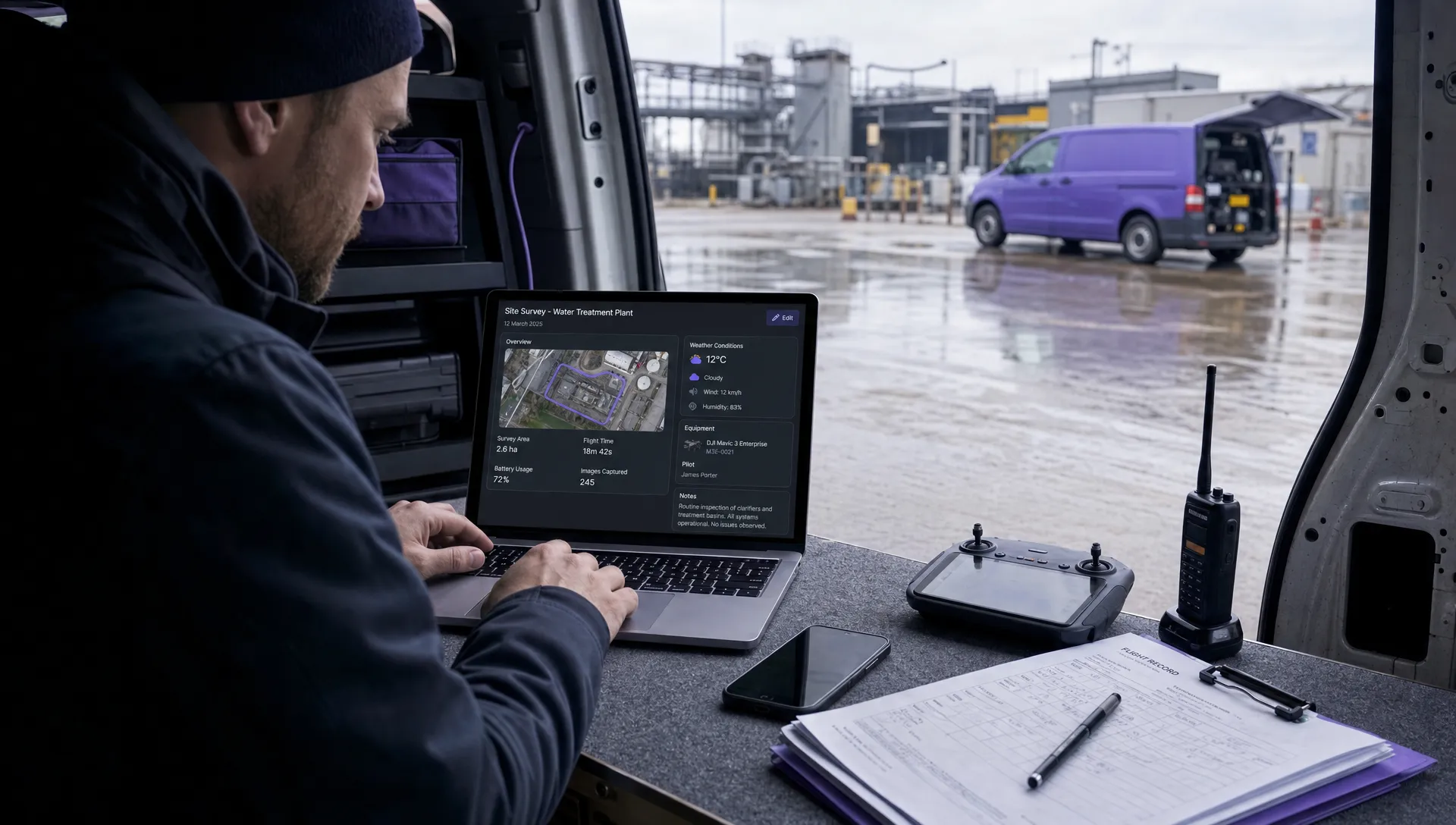 Drone Airspace Rules: How to Document Your Site Checks →
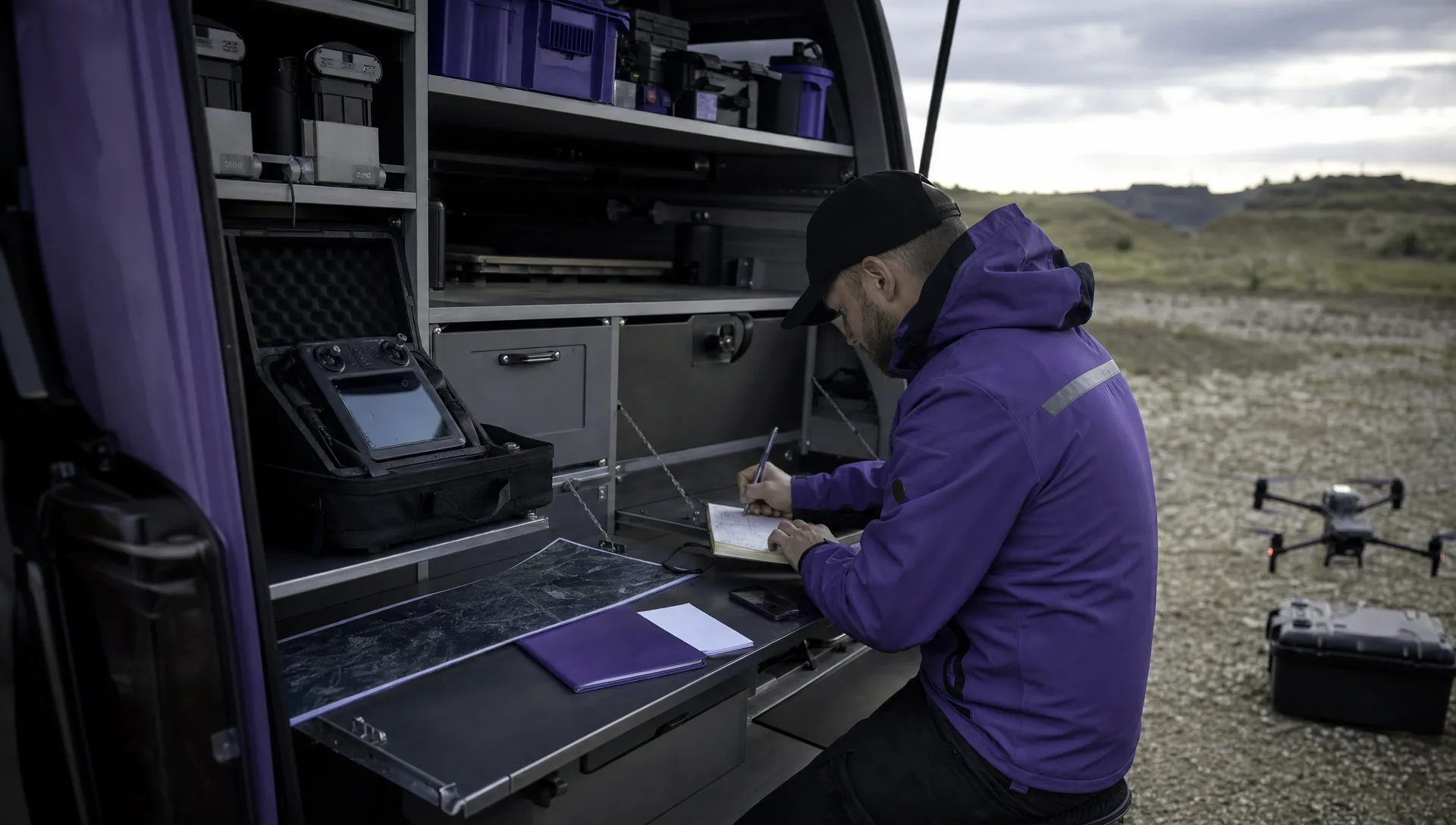 How to Evaluate a Free Drone Logbook Before Using It →
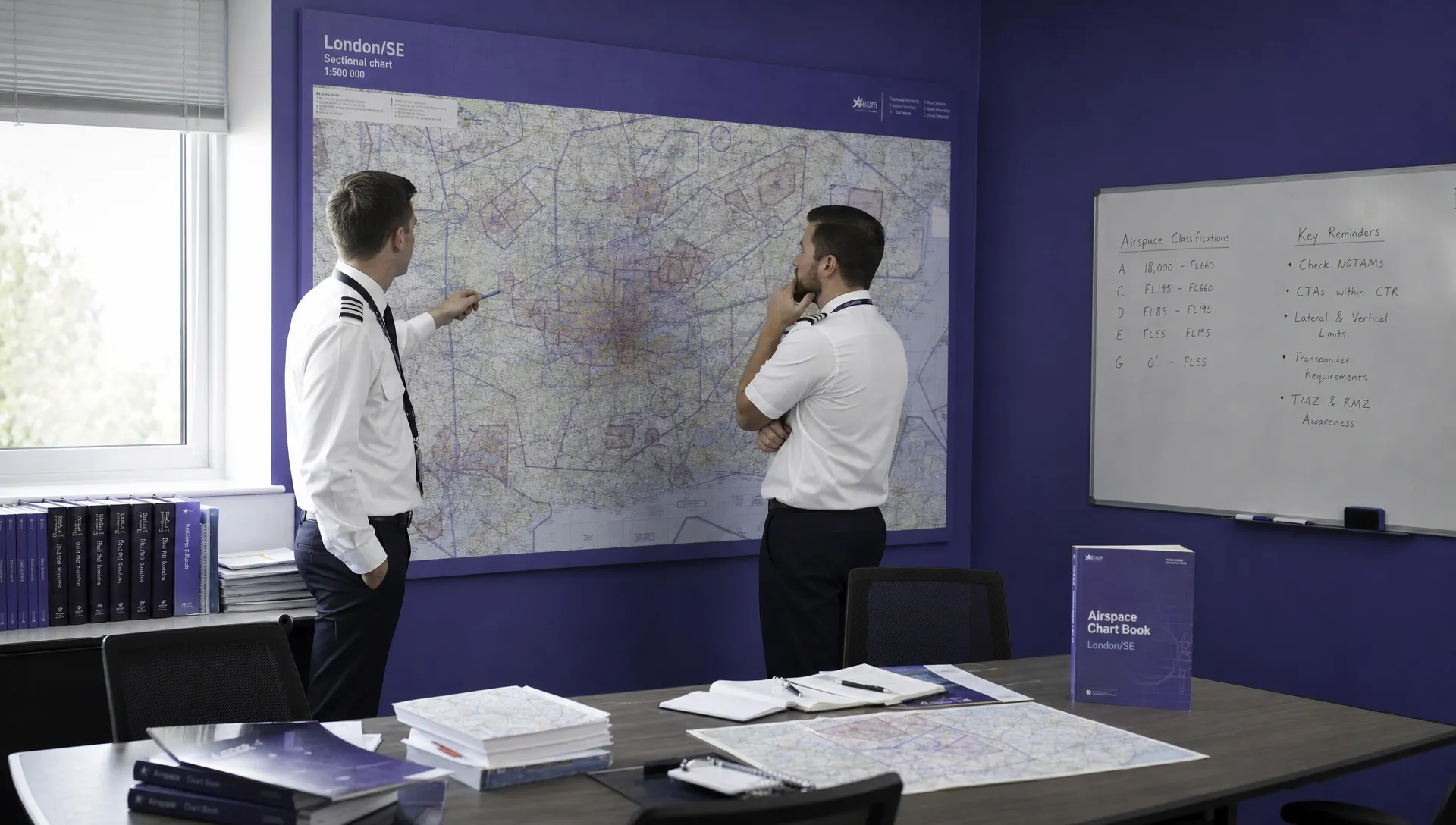 FAA Part 107 Test: How to Master Airspace Questions →
 Drone Risk Assessment Controls That Work in the Field →
 FAA Drone License Costs Beyond the Knowledge Test →
 Drone Part 107 Operations: When a Waiver May Be Needed →
 Drone Operating Rules for Managing Contractors and Employees →
 BVLOS Drone Requirements for Building a Safety Case →
 Drone Pilot Test Mistakes That Cost Candidates Marks →
 FAA 107 License vs Part 107 Certificate: What’s the Difference? →