
How to Become an FAA Certified Drone Pilot
If you want to use a drone for paid work in the United States, the credential you are looking for is the FAA Remote Pilot Certificate with a small UAS rating. People often call this becoming an FAA certified drone pilot, or getting a drone pilot licence, but the FAA term matters because it determines which rules, tests and operating limits apply.
This guide explains the current Part 107 route as of 2026, from eligibility and studying through to the knowledge test, TSA vetting and the operational habits you need once you are certified. It focuses on FAA requirements for the United States. If you operate in the UK, EU or another jurisdiction, you must also follow the rules of your local aviation authority.
What an FAA certified drone pilot actually is
For most commercial drone operations in the United States, an FAA certified drone pilot is a person who holds a Remote Pilot Certificate under 14 CFR Part 107. This authorises you to act as the remote pilot in command for small unmanned aircraft systems, usually drones under 55 lb including payload, when operating within Part 107 rules.
The certificate is not just for people who fly for direct payment. The FAA generally treats a flight as non-recreational if it furthers a business, organisation or professional purpose. That can include real estate photography, roof inspections, mapping, utility surveys, emergency response training, construction progress photos, media work and internal company flights.
A Part 107 certificate does not remove every restriction. You still need to comply with airspace rules, Remote ID requirements, aircraft registration, operating limitations, waiver conditions and any local restrictions that apply to the mission area. The certificate gives you the legal foundation to fly commercially, but professional operations still depend on planning, documentation and sound judgement.
Who needs a Part 107 certificate?
You usually need a Remote Pilot Certificate if you fly a drone for anything other than purely recreational enjoyment. The recreational TRUST certificate is not a substitute for Part 107 when the flight has a business, public agency or organisational purpose.
Typical examples include survey companies capturing orthomosaic imagery, utilities inspecting power lines or substations, emergency services using drones for situational awareness, insurers documenting claims, facilities teams inspecting roofs, and drone service providers delivering imagery or data to clients.
Government and emergency services teams may sometimes operate under a public aircraft framework or certificate of authorisation, but many public sector teams still use Part 107 because it is widely understood and operationally flexible. If you are unsure which route applies, check the FAA’s guidance on becoming a drone pilot and seek qualified aviation advice for your organisation.
The process at a glance
Becoming certified is straightforward, but each step needs to be completed in the right order. The table below summarises the route for a first-time applicant who is not already a certificated pilot under Part 61.
| Stage | What you do | Result |
|---|---|---|
| 1 | Confirm eligibility | You know you meet the FAA’s basic requirements |
| 2 | Create an IACRA account | You receive an FAA Tracking Number |
| 3 | Study Part 107 topics | You are ready for the aeronautical knowledge test |
| 4 | Book and pass the UAG test | You receive an Airman Knowledge Test Report |
| 5 | Apply through IACRA | Your application is submitted for FAA processing |
| 6 | Complete TSA vetting | You receive a temporary certificate when approved |
| 7 | Maintain currency | You complete recurrent training every 24 calendar months |
Step 1: Check that you are eligible
To qualify for a Remote Pilot Certificate, you must be at least 16 years old, be able to read, speak, write and understand English, and be in a physical and mental condition that allows you to safely operate a small UAS. You must also pass TSA security vetting as part of the application process.
Non-US citizens can apply for FAA airman certificates, but international operators may face additional requirements if they intend to conduct commercial drone work in the United States, especially where foreign aircraft operation or economic authority rules are involved. If that applies to you, do not rely on the Part 107 test alone. Review the FAA’s foreign operator guidance and get specialist advice before mobilising a project.
Step 2: Create an IACRA account and get an FAA Tracking Number
Before you can schedule the initial knowledge test, you need an FAA Tracking Number, usually shortened to FTN. You get this by creating a profile in IACRA, the FAA’s Integrated Airman Certification and Rating Application system.
Use your legal name exactly as it appears on your identification documents. Name mismatches can delay test admission or application processing. Once your FTN is created, keep it safe because you will use it when booking your knowledge test and applying for your certificate.
Step 3: Study for the Part 107 knowledge test
The initial aeronautical knowledge test for new remote pilots is commonly listed as Unmanned Aircraft General, Small, with the test code UAG. It is not a flying skills test. It checks whether you understand the rules, risks and decision-making responsibilities of operating in the national airspace system.
You can prepare using FAA materials, a structured online course, instructor-led training or self-study. However you study, make sure your materials match the current FAA Airman Certification Standards and include recent rule changes such as night operations, operations over people and Remote ID.
| Study area | Why it matters in real operations |
|---|---|
| Part 107 regulations | Defines what you can do without a waiver and when extra authorisation is required |
| Airspace and sectional charts | Helps you identify controlled airspace, airports, special use airspace and hazards |
| Weather | Supports safe go or no-go decisions, especially for wind, visibility and convective activity |
| Loading and performance | Helps you understand how payload, battery state, temperature and altitude affect aircraft behaviour |
| Crew resource management | Matters when working with visual observers, payload operators, clients or incident commanders |
| Emergency procedures | Prepares you for lost link, flyaway risk, battery issues, intruding aircraft and site hazards |
| Night operations | Required knowledge if you intend to fly after civil twilight under Part 107 conditions |
Do not study only to memorise answers. For survey, inspection, utility and emergency services work, the exam topics are the same concepts you will use on site when deciding whether a job can be flown safely and legally.
Step 4: Book and pass the FAA knowledge test
Once you have an FTN and feel prepared, schedule your test through the PSI FAA testing portal. You will take the exam at an FAA-approved knowledge testing centre. Test fees can change, so check the current price when booking.
The UAG test has 60 multiple-choice questions, and you have 120 minutes to complete it. The passing score is 70%. If you do not pass, you can retake the test after the FAA’s required waiting period, which is typically 14 days, and you should expect to pay another test fee.
On test day, bring acceptable government-issued photo identification and make sure the name matches your IACRA profile. After passing, you will receive an Airman Knowledge Test Report. Keep this report because you need the test information for your IACRA application. The test result is valid for a limited period, commonly 24 calendar months, so complete the application process promptly.
Step 5: Apply for your Remote Pilot Certificate
After passing the knowledge test, return to IACRA and start an application for a Remote Pilot Certificate with a small UAS rating. You will enter the test exam ID from your Airman Knowledge Test Report, review your information and submit the application electronically.
The application then goes through FAA processing and TSA security vetting. Once approved, you can access a temporary certificate. The permanent plastic certificate is mailed later. Do not conduct Part 107 operations as remote pilot in command until you have the certificate authority required to do so.
You should also register any drone that requires registration through the FAA DroneZone and ensure it complies with FAA Remote ID requirements unless a valid exception applies.
If you are already a Part 61 pilot
If you already hold a pilot certificate issued under Part 61, other than a student pilot certificate, and you have completed a flight review within the required period, you may not need to take the UAG knowledge test at a testing centre. Instead, the FAA provides an online small UAS course through FAASafety.gov.
After completing the relevant course, you still need to apply through IACRA and have your identity validated by an authorised person or office, such as a certificated flight instructor, designated pilot examiner, airman certification representative or FAA Flight Standards District Office. The exact route can depend on your circumstances, so follow the FAA instructions carefully.
What your certificate allows, and what it does not
Passing Part 107 is a major milestone, but it is not a free pass to fly anywhere. The remote pilot in command remains responsible for deciding whether each operation is legal and safe.
| Operational area | General Part 107 position |
|---|---|
| Aircraft size | Small UAS must generally be under 55 lb including payload |
| Visual line of sight | The drone must normally remain visible to the remote pilot in command or visual observer |
| Altitude | Operations are generally limited to 400 ft above ground level, with specific allowances near structures |
| Speed | Maximum groundspeed is generally 100 mph, or 87 knots |
| Controlled airspace | You need FAA authorisation, often through LAANC where available |
| Night operations | Allowed if training requirements are met and the aircraft has compliant anti-collision lighting |
| Operations over people | Allowed only when the aircraft and operation meet the relevant category and rule requirements |
| BVLOS | Beyond visual line of sight usually requires a waiver or specific FAA authority |
The details matter. For example, a simple mapping job near an airport may be legal only with controlled airspace authorisation, while an infrastructure inspection near people, roads or sensitive facilities may require additional controls or may not be suitable under standard Part 107 rules.
Build professional operating habits after certification
The exam gives you the baseline qualification. Clients, regulators and insurers will expect more than a certificate number. A professional drone operation should be able to show how it plans flights, identifies hazards, briefs crew, checks aircraft, records flights and learns from incidents or near misses.
That is especially important for survey companies, utilities and emergency services, where drone flights often happen near assets, roads, people, restricted sites or time-critical incidents. A repeatable workflow reduces the chance that important steps depend on memory alone.
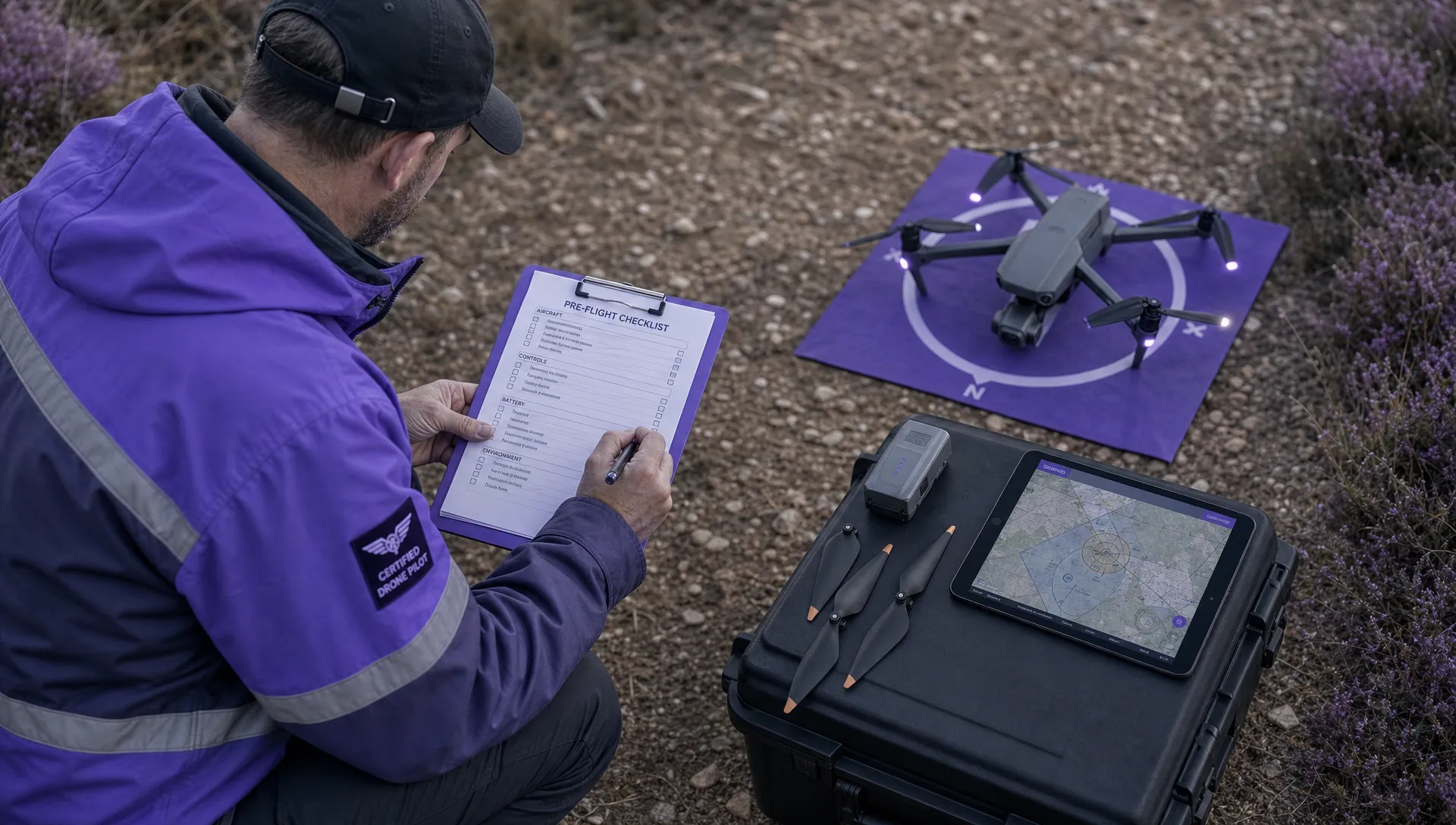
Core habits to build early include mission scoping, airspace review, site assessment, documented risk assessment, pre-flight checklists, battery and aircraft status checks, flight logging, maintenance records, crew role allocation and post-flight review. For a deeper operational template, Dronedesk has a practical guide on how to build a drone flight risk assessment that works.
A purpose-built platform can make this easier to manage. Dronedesk’s drone operations management features include client management, fleet management, team management, airspace intelligence, proximity intelligence, flight planning, flight logging, data reporting, configurable checklists and risk assessments. Those are the kinds of records and workflows that help turn a certificate into a consistent operating system.
Common mistakes to avoid
Many new pilots pass the test and then run into problems on their first commercial jobs because they treat certification as the whole compliance process. Avoid these common errors.
| Mistake | Better approach |
|---|---|
| Assuming TRUST is enough for business flights | Use Part 107 for non-recreational operations unless another valid authority applies |
| Ignoring controlled airspace | Check airspace before quoting or accepting the job, not when you arrive on site |
| Studying only practice questions | Learn how to interpret charts, weather and operating scenarios |
| Forgetting Remote ID | Confirm the aircraft meets Remote ID requirements before operational use |
| Flying without written procedures | Use checklists, risk assessments and logs so your process is repeatable |
| Letting recurrent training lapse | Track your 24-calendar-month currency requirement and complete training before it expires |
If your operation is growing beyond one pilot or one aircraft, you will also need a stronger approach to equipment status, pilot allocation, maintenance history and documentation. The Dronedesk drone fleet management guide explains how growing teams can think about fleet processes and software selection.
How long does it take, and what does it cost?
The timeline depends on your aviation knowledge, study method, test centre availability and application processing. Some candidates with aviation experience can prepare quickly, while new pilots may prefer to spread study over several weeks so the airspace, weather and regulatory topics properly sink in.
Your costs usually fall into a few categories: the FAA knowledge test fee paid through the testing provider, optional study or training materials, aircraft registration, insurance, equipment and any operational software you choose to use. Fees and provider prices can change, so always confirm current amounts through official FAA or provider channels before budgeting.
For commercial operators, the certificate fee is only a small part of the real investment. Reliable operations also require spare batteries, maintenance planning, data handling, client communication, site safety controls and clear documentation. If you are building a drone programme for a utility, public safety department or survey team, budget for the whole workflow rather than just the exam.
Maintaining your FAA drone pilot certification
Your Remote Pilot Certificate itself does not expire in the same way as a short-term licence, but you cannot continue exercising Part 107 privileges unless you maintain aeronautical knowledge currency. Remote pilots must complete FAA recurrent training every 24 calendar months.
Recurrent training is also a good prompt to review your standard operating procedures. Drone rules, aircraft firmware, Remote ID compliance, battery condition, client requirements and local restrictions can all change. Treat currency as part of your safety management routine, not just an administrative reminder.
Keep copies of certificates, recurrent training records, aircraft registrations, waivers, authorisations, maintenance records and flight logs. If something goes wrong, good records help you show what was planned, who was responsible and how decisions were made.
Frequently Asked Questions
Is an FAA certified drone pilot the same as a Part 107 pilot? In most commercial drone contexts, yes. The formal FAA term is Remote Pilot Certificate with a small UAS rating, issued under Part 107. Many people casually describe that as being an FAA certified drone pilot.
Do I need Part 107 if I am not getting paid? Possibly. Payment is not the only test. If the flight supports a business, employer, public agency, charity, research project or other non-recreational purpose, Part 107 or another valid FAA authority may be required.
How hard is the FAA drone pilot test? The test is manageable with proper study, but it covers real aeronautical knowledge. Airspace, sectional charts, weather and regulations are the areas that often require the most attention for people with no aviation background.
Can I fly at night with Part 107? Yes, Part 107 allows night operations if you meet the FAA’s training requirements and use compliant anti-collision lighting. You must still comply with airspace, visibility, Remote ID and other operating rules.
Does my Part 107 certificate expire? The certificate does not simply expire after two years, but your ability to exercise Part 107 privileges depends on completing recurrent training every 24 calendar months.
Can a UK or international drone pilot get FAA certified? International pilots may be able to obtain FAA certification, but operating commercially in the United States can involve additional requirements. This guide is FAA-specific and does not replace CAA, EASA or other local aviation authority rules.
Turn your FAA certificate into a repeatable drone operation
Becoming certified is the start of professional drone work, not the end. The pilots and teams that succeed are the ones who can plan consistently, brief clearly, document decisions and keep accurate records across every mission.
Dronedesk helps drone operators manage the operational admin around client work, fleets, teams, flight planning, checklists, risk assessments, flight logging and reporting. If you are ready to move from passing Part 107 to running organised commercial missions, explore Dronedesk and build a workflow that supports safer, better documented operations.
 BVLOS Drone Requirements for Building a Safety Case →
 Drone Pilot Test Mistakes That Cost Candidates Marks →
 FAA 107 License vs Part 107 Certificate: What’s the Difference? →
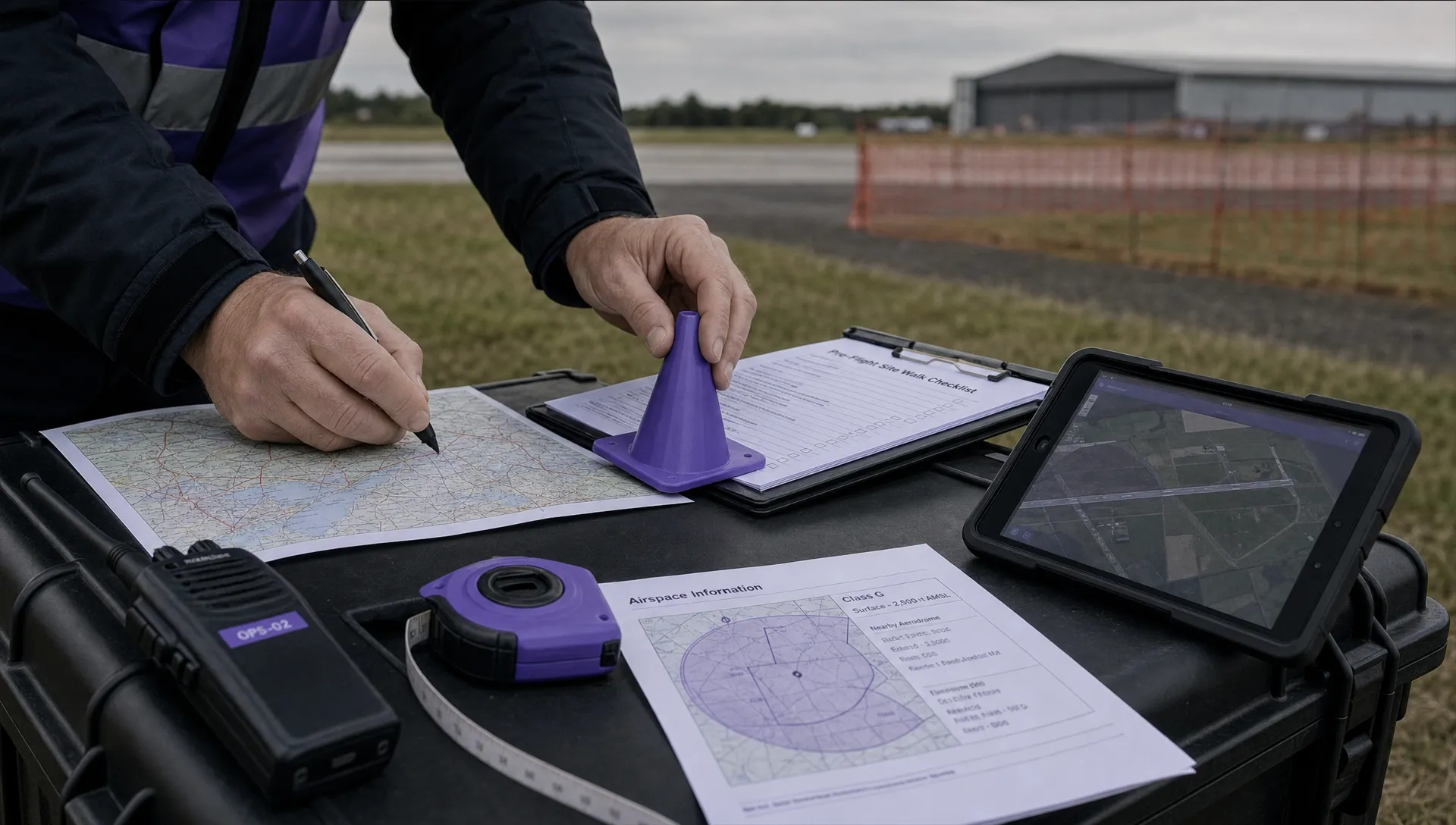 Drone Airport Rules: A Field Checklist for Site Assessments →
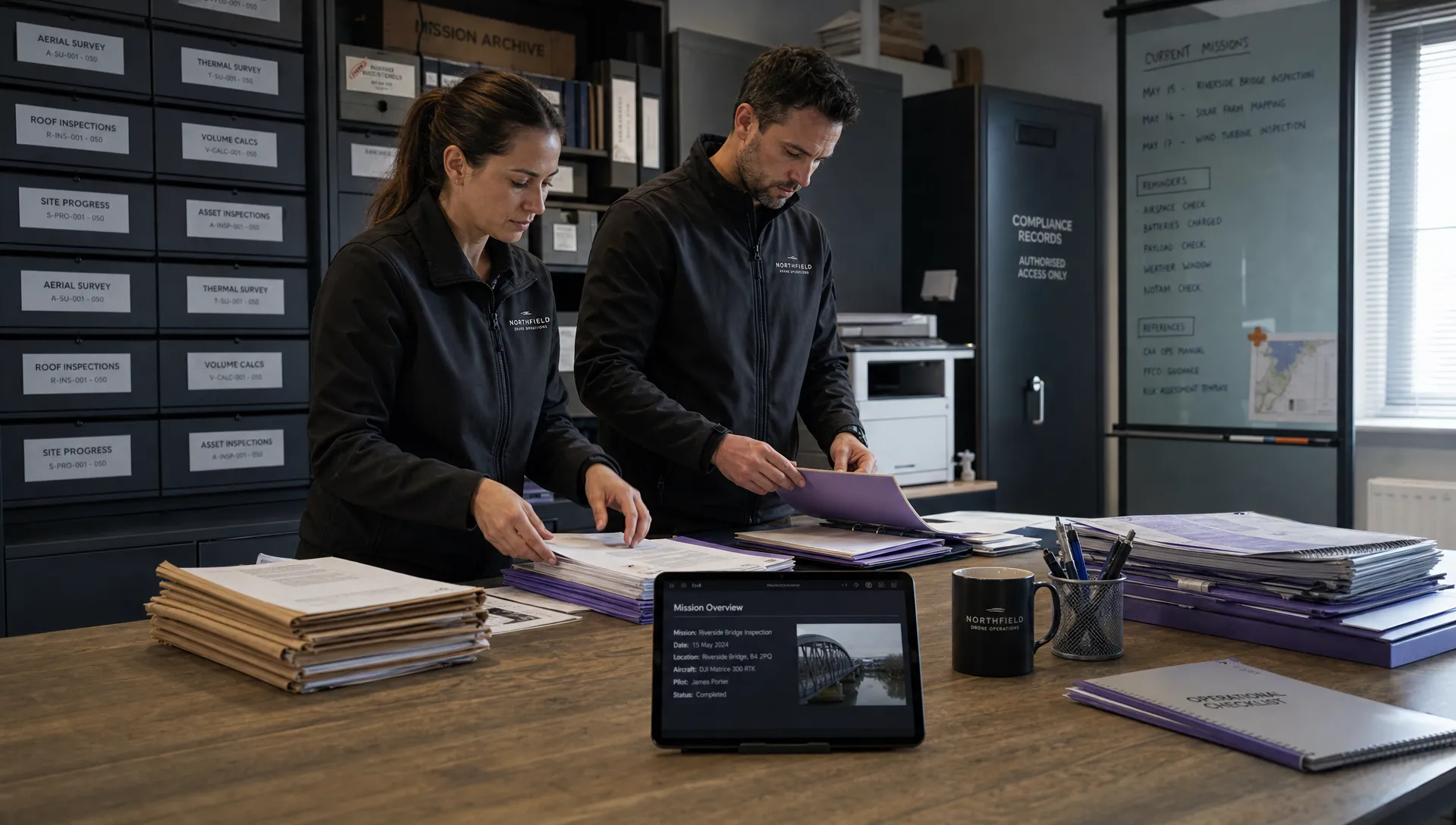 FAA Part 107 Record-Keeping Rules for Commercial Teams →
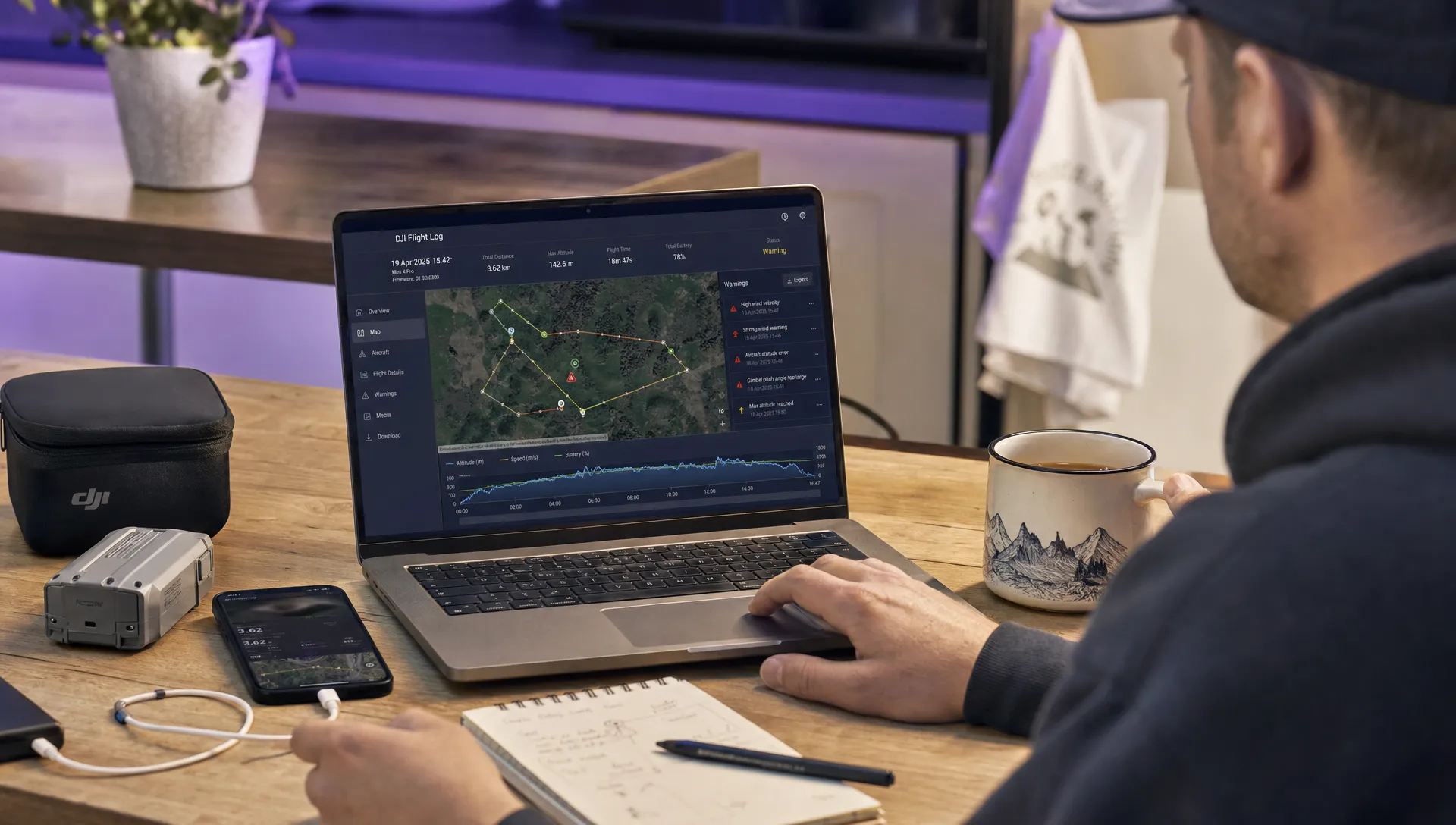 How to Review a DJI Flight Log After an Unexpected Event →
 Drone Laws Around the World: A Pre-Flight Research Framework →
 How to Compare Drone Survey Services for Complex Sites →
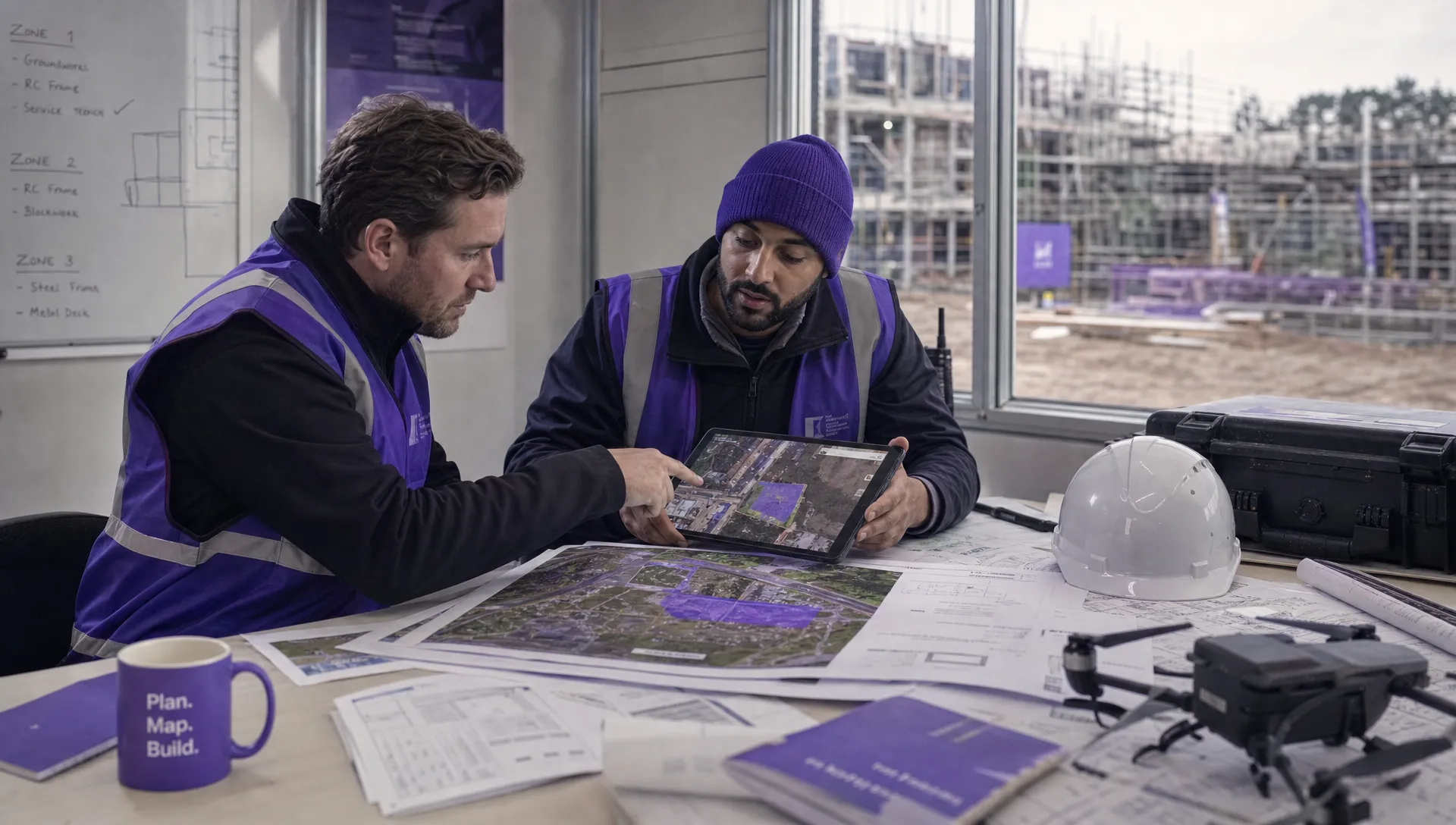 How to Start a Drone Mapping Business With a Clear Workflow →
 Class C Airspace Drone Rules for Commercial Flights →