
How a BVLOS Waiver Works and Who Needs One
BVLOS is one of the biggest unlocks in commercial drone operations. It allows a drone to fly beyond the distance at which the remote pilot can keep direct, unaided visual contact with the aircraft. That matters for long corridors, large sites, emergency scenes, deliveries and remote infrastructure. It also changes the safety case completely.
A BVLOS waiver is the permission, usually from an aviation regulator, that allows an operator to conduct a defined beyond visual line of sight operation despite the normal requirement to keep the drone in sight. The term is most common in the United States, especially under FAA Part 107, but the same basic idea appears in other countries under names such as operational authorisation, exemption, specific category approval or special permission.
This guide explains how a BVLOS waiver works, what regulators typically look for, who needs one and how operators can prepare a credible application. It is not legal advice, and the rules change by country, so always check the latest guidance from your aviation authority before planning a BVLOS flight.
What a BVLOS waiver actually does
In simple terms, a BVLOS waiver lets an operator replace the standard visual line of sight safety control with an alternative set of controls that the regulator accepts as safe enough for the specific operation.
For normal drone flights, visual line of sight is a key safeguard. The pilot can see where the drone is, notice other aircraft, monitor the surrounding environment and respond quickly if something changes. BVLOS removes or reduces that direct visual safeguard, so the operator must prove that other systems, procedures and people will manage the risk.
In the US, the FAA’s rule at 14 CFR § 107.31 requires the remote pilot, visual observer or person manipulating the controls to be able to see the small unmanned aircraft throughout the flight, using unaided vision other than corrective lenses. The FAA explains that operators can request waivers for certain Part 107 rules through its Part 107 waiver process, including visual line of sight.
In the UK, you are more likely to hear about an Operational Authorisation in the Specific category rather than a BVLOS waiver. The UK Civil Aviation Authority sets out the wider unmanned aircraft framework in CAP 722. In Europe, EASA’s Specific category uses risk-based approvals, including the SORA methodology, for operations that sit outside the Open category.
The wording differs, but the principle is consistent: you need permission when your operation exceeds the standard low-risk rules.
The legal baseline: VLOS is the default
Most drone regulations start from a simple assumption. If the pilot can see the drone, the pilot can avoid hazards more easily. That assumption underpins many everyday permissions for drone work, including site photography, local surveys, roof inspections, short-range mapping and many emergency support tasks.
BVLOS breaks that assumption. A drone might be kilometres away, behind terrain, following a pipeline, crossing farmland, inspecting transmission towers or searching a wide flood zone. The pilot may be relying on telemetry, command and control links, onboard sensors, remote observers, detect and avoid systems, airspace data, geo-awareness or pre-planned emergency procedures.
That is why a BVLOS waiver is not just an administrative form. It is a safety case. Regulators want to know what could go wrong, how likely it is, how severe the outcome could be and what you will do to prevent or control it.
For the aircraft and use-case background, Dronedesk has a separate guide to what a BVLOS drone is and why it matters. This article focuses on the authorisation side, namely how permission is assessed and who should be thinking about it.
BVLOS waiver, authorisation, exemption and EVLOS: what is the difference?
Different regulators use different terms. Operators working across borders should be careful not to assume that approval in one jurisdiction automatically applies in another.
| Term | Where you may see it | What it usually means |
|---|---|---|
| BVLOS waiver | Common in the US under FAA Part 107 | Permission to deviate from the normal visual line of sight rule for a defined operation |
| Operational Authorisation | UK and many EASA-style frameworks | Approval for a Specific category operation based on a risk assessment and operating procedures |
| Exemption or special permission | Varies by country | Permission to operate outside a standard rule or before a general rule is available |
| EVLOS | Extended visual line of sight, subject to local rules | Use of trained observers or other arrangements to extend the practical range, but not necessarily full BVLOS |
EVLOS is often confused with BVLOS. In an EVLOS operation, visual observers may help maintain awareness of the aircraft and surrounding airspace. In a true BVLOS operation, the drone is not kept continuously within direct unaided visual contact by the remote pilot in the conventional way. Whether EVLOS avoids the need for a BVLOS waiver depends on the rules in your jurisdiction and the exact operating model.
A useful test is this: if the safe conduct of the flight depends on systems, people or procedures other than the pilot directly seeing the drone, you should assume you need a formal regulatory discussion before operating.
How a BVLOS waiver works from concept to approval
A BVLOS waiver application usually starts with the mission, not the aircraft. Regulators are less interested in the idea of BVLOS in the abstract and more interested in the exact operation you want to conduct.
A strong application explains where you will fly, why BVLOS is necessary, what aircraft you will use, what airspace you will be in, what is on the ground below, how you will detect and avoid hazards, how you will maintain command and control, what the crew will do in normal and abnormal situations and how you will keep records.
The process typically looks like this:
| Stage | What the operator defines | What the regulator is assessing |
|---|---|---|
| Concept of operations | Mission purpose, route, altitude, aircraft, crew roles and operating area | Whether the operation is specific enough to evaluate |
| Air and ground risk assessment | Airspace users, population density, roads, property, critical infrastructure and terrain | Whether risks to people and other aircraft are understood |
| Technical mitigations | Detect and avoid, geo-awareness, containment, C2 link, redundancy and flight termination options | Whether technology can reliably replace or support visual separation |
| Operational procedures | Normal procedures, contingencies, lost link, weather limits, handovers and emergency response | Whether the crew can manage predictable and abnormal events |
| Competency and training | Remote pilot qualifications, observer training, maintenance roles and decision authority | Whether the organisation can perform the operation repeatedly |
| Evidence and assurance | Test results, manuals, maintenance records, logs, previous flights and safety reporting | Whether the safety case is backed by evidence rather than assumptions |
A BVLOS waiver is usually conditional. It may apply only to a named operator, aircraft type, route, height, airspace class, operating area, detect and avoid method or emergency procedure. If you change the mission substantially, you may need an amendment or a new approval.
Who needs a BVLOS waiver?
You need a BVLOS waiver or equivalent authorisation if your intended drone operation goes beyond the standard line of sight rules in the country where you are flying. That sounds obvious, but in practice it affects more organisations than many teams expect.
Drone operators offering advanced commercial services
Commercial drone operators often start with VLOS services such as photography, mapping, roof inspections and short-range site progress surveys. A BVLOS waiver becomes relevant when the operator wants to offer services over longer distances, remote areas or large assets that cannot be efficiently covered from a single visual position.
Examples include railway inspections, pipeline patrols, offshore support, long-range environmental monitoring, drone-in-a-box deployments and recurring security patrols. If the operator is marketing BVLOS capability to clients, it should be able to show that the authorisation, procedures and evidence match the advertised service.
Survey companies covering large or linear sites
Survey companies may need BVLOS permission when mapping large land parcels, quarries, mines, agricultural estates, coastal areas or transport corridors. The business case is often strong because BVLOS can reduce the number of launch points and help collect more consistent data across long routes.
However, survey work can involve mixed ground risk. A route may pass over empty fields, then near roads, footpaths, buildings or temporary work sites. A credible BVLOS application should show how the operator identifies these changes and adapts the route, altitude, crew positioning or contingency plans.
Utility companies and infrastructure owners
Utilities are among the most obvious BVLOS users. Power lines, pipelines, water networks, wind farms, solar farms, telecoms routes and rail corridors are exactly the kind of assets where long-range drone operations can create value.
The challenge is that utility environments are rarely simple. They may include difficult terrain, electromagnetic interference, critical infrastructure, public rights of way, roads, aviation activity, substations, restricted areas and emergency access constraints. A BVLOS waiver for utilities needs to be operationally realistic, not just technically impressive.
Emergency services and public safety teams
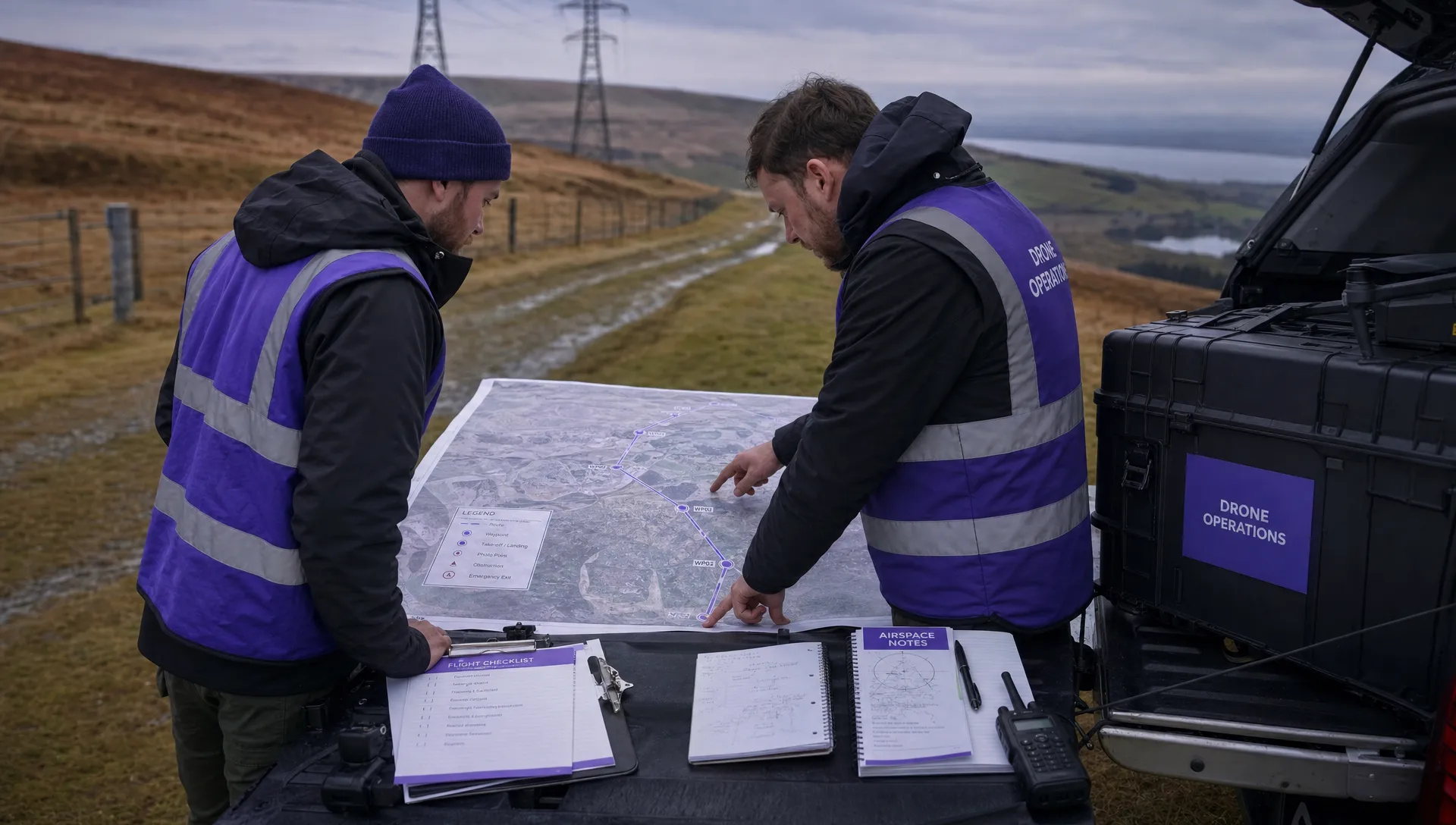
Emergency services may need BVLOS approvals for search and rescue, wildfire monitoring, flood response, major incident mapping, missing person searches, hazardous materials incidents and extended overwatch. These missions are often time-critical, which makes pre-approved procedures especially important.
Public safety teams should not wait until an incident to discover that their planned drone use falls outside standard permissions. A pre-planned BVLOS or EVLOS framework can help clarify who authorises the mission, what airspace coordination is needed, how data is shared and when the drone must land.
Organisations that probably do not need one
Not every professional drone operation needs a BVLOS waiver. Many valuable drone missions remain well within visual line of sight.
You may not need BVLOS permission if you are flying short-range site surveys, roof inspections, marketing imagery, local construction progress flights or other missions where the remote pilot can maintain the required visual contact throughout the operation. Indoor flights may sit outside aviation rules in some jurisdictions, but this depends on the environment and local law.
You should also distinguish between what is technically possible and what is legally permitted. A drone with a long radio range, autonomous waypoint capability or live video feed is not automatically approved for BVLOS. The regulatory question is not simply, “Can the drone do it?” It is, “Can the operator prove this operation is acceptably safe under the applicable rules?”
What regulators usually expect to see
A BVLOS waiver application succeeds or fails on the quality of the safety argument. You need to show that you understand the operation and that your mitigations are suitable for the actual risk.
Most regulators will focus on a handful of core questions.
How will you avoid other aircraft? This is the central BVLOS problem. You may need procedures for airspace scanning, NOTAMs or local aviation coordination, detect and avoid systems, altitude restrictions, strategic deconfliction, visual observers, electronic conspicuity or immediate landing options. The right answer depends on the airspace and operation.
How will you protect people and property on the ground? Ground risk depends on population density, roads, buildings, gatherings, critical infrastructure and the aircraft’s failure behaviour. Mitigations can include route design, operating over controlled land, minimum heights, parachutes, flight termination, geo-containment, weather limits and emergency landing areas.
How robust is command and control? BVLOS operations rely heavily on reliable links between the pilot and aircraft. The safety case should explain link coverage, latency, interference risks, handover procedures, lost link behaviour and the conditions that trigger a return, hold, land or terminate action.
What happens when something goes wrong? Regulators expect practical contingency procedures, not vague assurances. Lost link, flyaway, battery failure, GNSS degradation, weather deterioration, detect and avoid failure, crew illness, unexpected air traffic and public intrusion should be addressed in a way crews can actually follow.
Can the organisation repeat the operation safely? A one-off demonstration is not the same as an operational programme. Training, maintenance, role clarity, recordkeeping, audits, occurrence reporting and continuous improvement all help show that safety is built into the organisation.
This is where operational discipline matters. Tools alone do not secure a BVLOS waiver, but good systems make it easier to plan consistently and keep evidence organised. Dronedesk’s drone operations management features include flight planning, airspace intelligence, proximity intelligence, configurable checklists, risk assessments, flight logging, fleet management, team management, client management and data reporting, all of which are relevant to maintaining a structured operations record.
Common mistakes that slow down BVLOS applications
BVLOS applications often struggle because they are too generic. A regulator cannot approve “we want to fly BVLOS for inspections” as easily as it can assess a defined route, aircraft, operating area, altitude range, crew structure and set of procedures.
Another common issue is over-reliance on the aircraft manufacturer’s claims. A capable aircraft helps, but the operator still owns the safety case. The application should explain how the technology is used, what its limitations are and what the crew does if it fails.
Weak emergency procedures are also a problem. A manual that says “the pilot will take appropriate action” is not enough. The regulator wants to see decision points, responsibilities, communication steps and pre-planned outcomes.
Poor airspace understanding can undermine an otherwise strong proposal. BVLOS is not only about the ground route. It is also about nearby aerodromes, low-level traffic, military activity, temporary restrictions, emergency helicopters, glider sites, model aircraft sites and other drone operations.
Finally, applications can be delayed by missing evidence. If you claim a procedure works, be ready to support it with test flights, simulations, training records, maintenance logs, manufacturer documentation, previous operating history or other relevant material.
How to get BVLOS-ready before you apply
The best time to prepare for a BVLOS waiver is before you need one. Organisations that already run disciplined VLOS operations are usually in a stronger position because they can show a track record of safe planning, logging, training and review.
Start by defining one realistic use case. A tightly scoped utility corridor inspection or repeat survey route is usually easier to assess than a broad request to fly BVLOS anywhere. Build the safety case around that use case and expand later as your evidence matures.
Then strengthen your risk assessment process. If your current risk assessments are mostly copied from job to job, they will not be persuasive for BVLOS. They need to reflect the actual airspace, ground environment, weather, aircraft, crew and client constraints. Dronedesk’s guide to building a drone flight risk assessment that works is a useful starting point for making that process more practical.
You should also formalise your operating procedures. BVLOS crews need clear roles, especially where remote pilots, visual observers, payload operators, incident commanders, maintenance staff or client representatives are involved. Everyone should know who can start, pause, continue or terminate the flight.
Before applying, gather evidence from lower-risk operations. VLOS flights along part of the route, controlled demonstrations, emergency drills, maintenance records and crew training logs can all help support your case. The goal is to show that your proposed BVLOS operation is an evolution of proven practice, not a leap into the unknown.
A practical readiness check should cover these areas:
- A defined concept of operations with route, altitude, aircraft, crew and mission purpose
- A current air and ground risk assessment based on the actual operating environment
- Documented normal, abnormal and emergency procedures
- Evidence for detect and avoid, command and control, containment and lost link behaviour
- Training records for all operational roles
- Maintenance, battery, firmware and configuration records
- Flight logs and review notes from relevant previous operations
- A process for reporting, investigating and learning from incidents or near misses
The more clearly you can connect each risk to a mitigation and each mitigation to evidence, the stronger your application becomes.
BVLOS is not just a permission, it is an operating model
It is tempting to treat a BVLOS waiver as the finish line. In reality, approval is closer to the starting line. Once granted, the operator must fly within the conditions of the waiver or authorisation, keep records, train staff, maintain equipment and review safety performance.
That matters for survey companies, utilities and emergency services because BVLOS work is often repeatable. The value is not a single impressive flight. It is the ability to perform missions reliably, document decisions and improve over time.
For larger organisations, governance becomes just as important as flight skill. Who owns the operations manual? Who updates route risk assessments? Who confirms aircraft configuration? Who checks crew currency? Who reviews incidents? Who ensures the client’s request still fits the permission granted by the regulator?
A mature BVLOS programme answers those questions before launch day.
Frequently Asked Questions
What is a BVLOS waiver? A BVLOS waiver is regulatory permission to fly a drone beyond the pilot’s normal visual line of sight under defined conditions. In the US, it commonly refers to a waiver from FAA Part 107 visual line of sight requirements. In other countries, the equivalent may be called an operational authorisation, exemption or special permission.
Who needs a BVLOS waiver? Any operator whose mission goes beyond the standard visual line of sight rules may need one. This often includes long-range survey work, utility inspections, pipeline patrols, drone delivery, emergency response over wide areas and remote monitoring operations.
Does a live video feed make a flight BVLOS legal? No. A camera feed can help with navigation or payload work, but it does not automatically satisfy visual line of sight requirements. BVLOS legality depends on the applicable regulation and whether the operator has the required waiver or authorisation.
Can visual observers remove the need for a BVLOS waiver? Sometimes observers can support EVLOS or other approved operating models, but this depends on local rules and the exact mission design. If the pilot cannot meet the normal visual line of sight requirement, you should check with the regulator before operating.
How long does it take to get a BVLOS waiver? Timelines vary widely by country, regulator workload, operation complexity and application quality. A narrow, well-evidenced use case is usually easier to assess than a broad or vague request.
What is the hardest part of a BVLOS application? The hardest part is usually proving how you will avoid other aircraft and manage failures without relying on the pilot directly seeing the drone. Detect and avoid, command and control reliability, emergency procedures and operational evidence are often central to the safety case.
Make BVLOS compliance easier to manage
A BVLOS waiver is not just paperwork. It is proof that your organisation can plan, fly, record and review higher-risk drone operations in a controlled way.
Dronedesk helps drone teams manage the operational building blocks that support safer, more organised flying, including planning, airspace checks, risk assessments, configurable checklists, fleet and team records, flight logging and reporting. If BVLOS is on your roadmap, start by making every flight easier to evidence and every decision easier to trace.
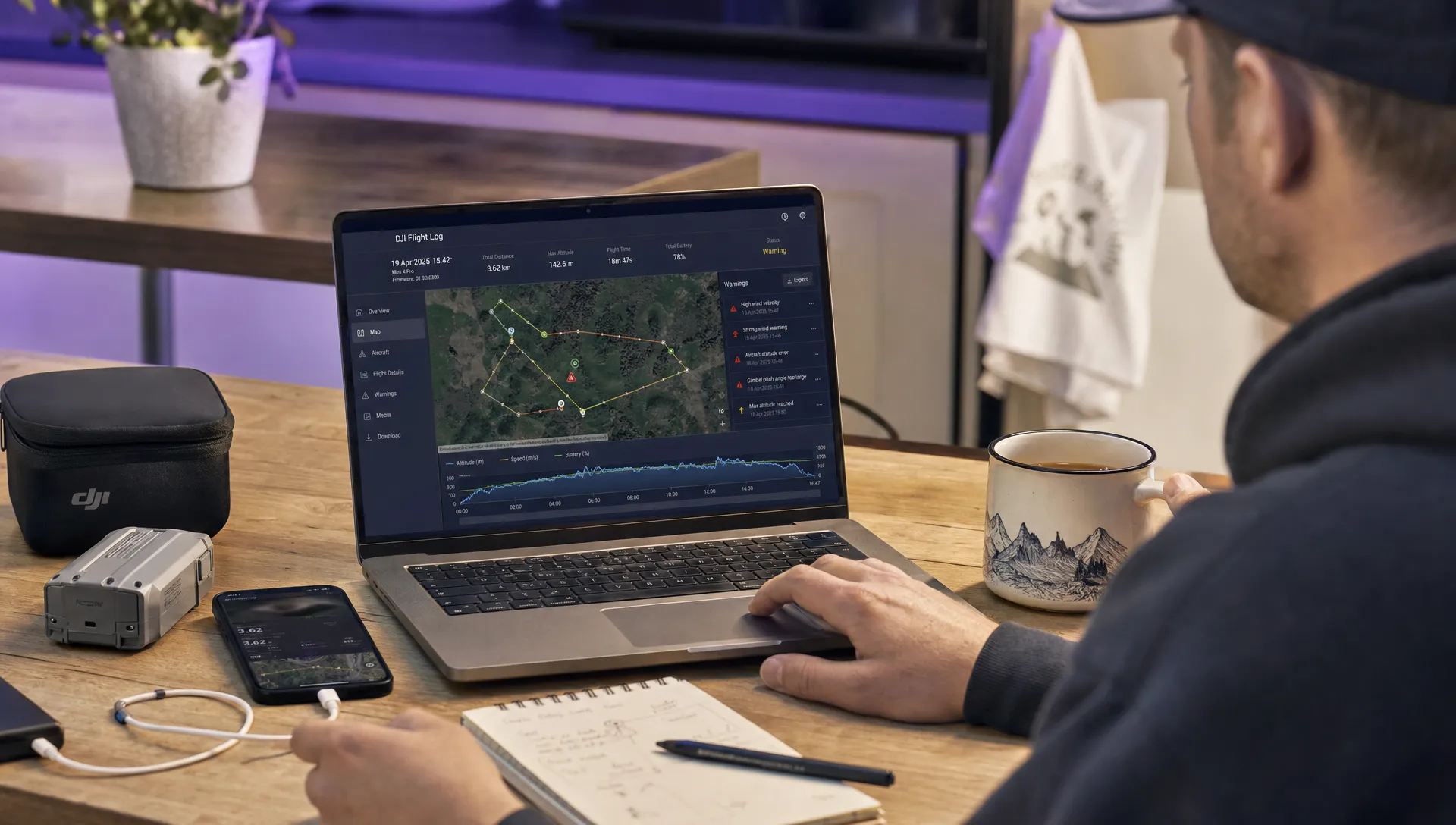 How to Review a DJI Flight Log After an Unexpected Event →
 Drone Laws Around the World: A Pre-Flight Research Framework →
 How to Compare Drone Survey Services for Complex Sites →
 How to Start a Drone Mapping Business With a Clear Workflow →
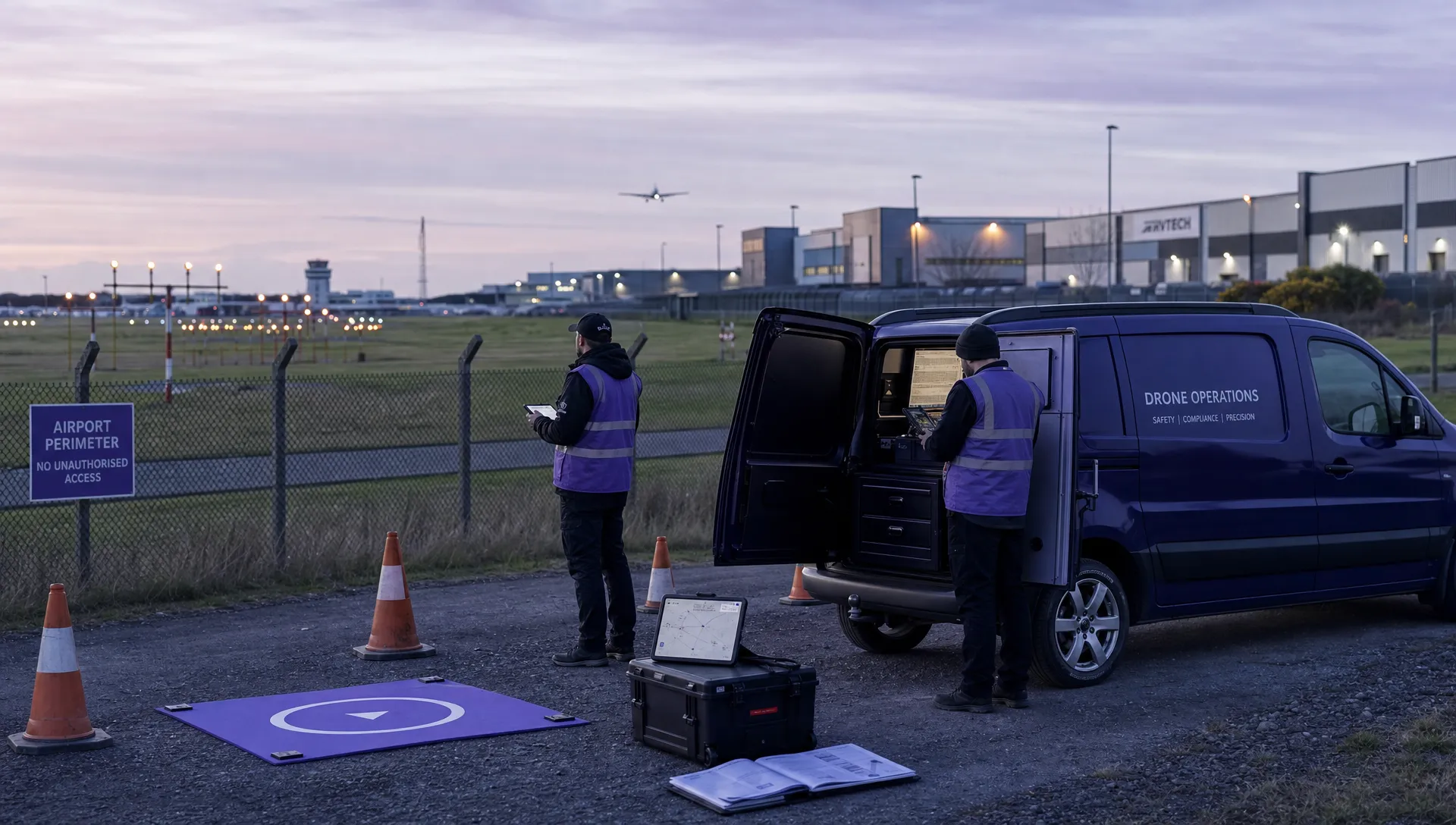 Class C Airspace Drone Rules for Commercial Flights →
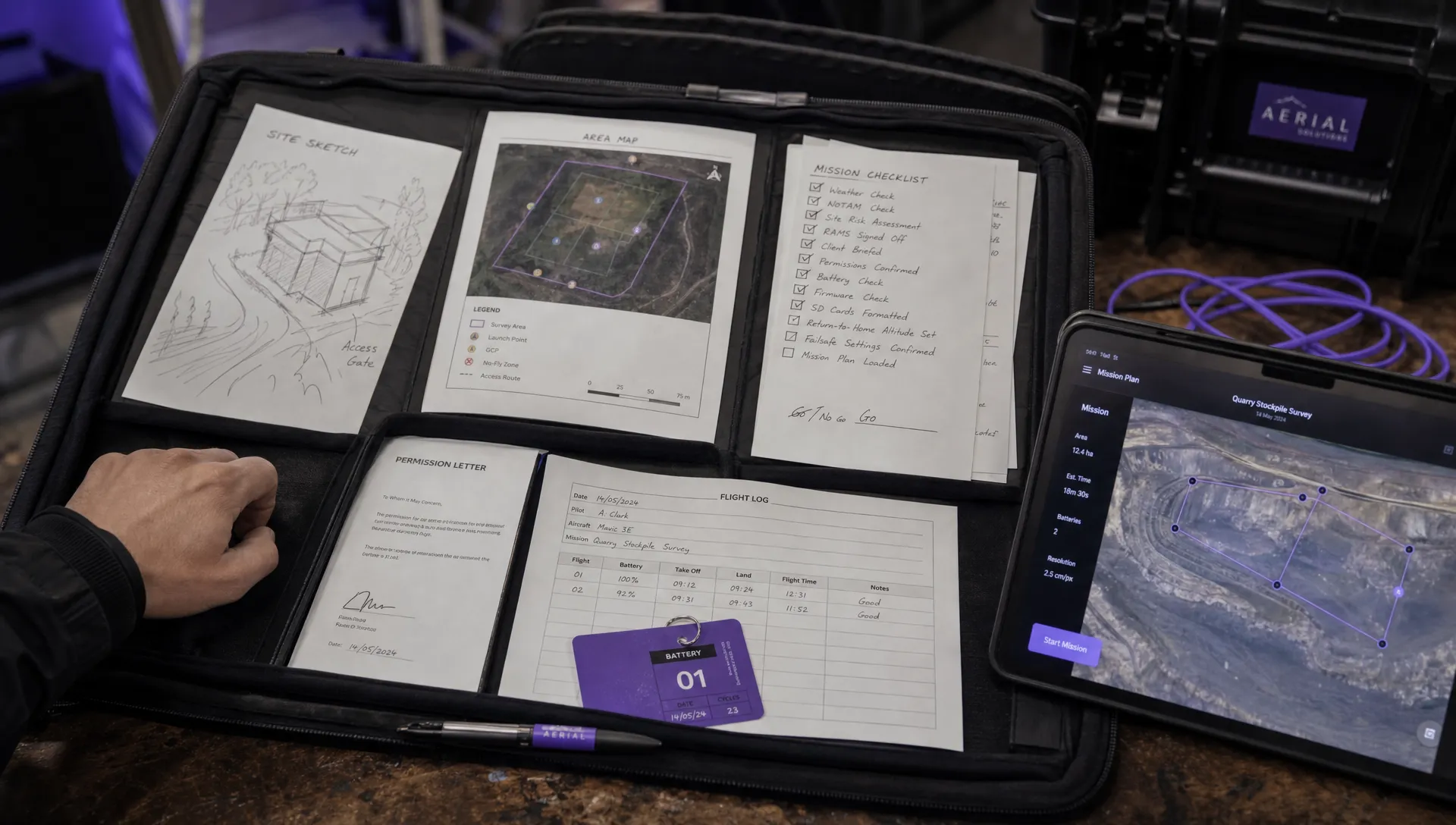 How to Create a Drone Job Pack for Every Mission →
 FAA Small UAS Rule: Key Requirements for Operators →
 How to Build a Drone Pilot Flight Log That Is Audit Ready →
 FAA Drone Licence Requirements for Commercial Pilots →
 FAA BVLOS Waivers Granted: What Successful Cases Show →