
How Beyond Visual Line of Sight Drone Operations Work
Beyond visual line of sight drone operations are not simply “flying further”. They are a different operating model. When the remote pilot can no longer maintain unaided visual contact with the aircraft, the operation has to replace direct eyesight with approved technology, procedures, trained people and documented safety evidence.
For drone operators, survey companies, utility teams and emergency services, BVLOS can unlock long linear inspections, wide-area mapping, incident response and routine monitoring at a scale that visual line of sight flights cannot match. But the value only appears when the operation is designed as an aviation system, not as an extended version of a normal drone job.
This guide explains how beyond visual line of sight drone operations work in practice, from planning and communications to detect-and-avoid, approvals, crew roles, flight logging and post-flight review.
BVLOS in plain English
BVLOS means the drone is flown beyond the distance at which the remote pilot can see it well enough to maintain control, monitor its position and avoid other aircraft, people, structures or obstacles by direct sight alone.
It does not automatically mean the drone is fully autonomous. A BVLOS flight may be remotely piloted, highly automated, supervised from a control station, or operated under a blend of automation and human oversight. The defining point is that visual observation by the pilot is no longer the primary safety barrier.
If you want a more basic definition before diving into the operating model, Dronedesk has a separate primer on what a BVLOS drone is and why it matters.
| Operating mode | What the pilot can see | Typical use case | Main safety dependency |
|---|---|---|---|
| VLOS | The aircraft remains directly visible to the remote pilot | Site surveys, roof inspections, local filming | Pilot eyesight and manual judgement |
| EVLOS | Observers extend visual coverage beyond the pilot’s own view | Linear surveys, trials, corridor work | Trained observers and communications |
| BVLOS | The aircraft operates beyond direct visual observation | Utility inspection, large-area mapping, emergency response | Approved systems, procedures and risk controls |
The core idea: replacing eyesight with layered assurance
In a normal VLOS flight, the pilot’s eyes provide much of the safety assurance. They see the drone, judge its orientation, notice nearby aircraft, assess changing weather and decide whether to continue, hold or land.
In a BVLOS operation, those functions are distributed across several layers. Each layer reduces a different part of the risk, and no single layer is expected to do everything.
The main layers usually include:
- Strategic planning that chooses routes, heights, timing and airspace conditions before the flight begins.
- Airspace awareness using aeronautical data, restrictions, NOTAMs, traffic information where available and local aviation knowledge.
- Command and control links that keep the aircraft connected to the remote pilot or control system.
- Detect-and-avoid capability to reduce collision risk with cooperative and non-cooperative traffic.
- Contingency procedures for lost link, weather changes, aircraft faults, route deviations and emergency landings.
- Operational records that prove the flight was planned, authorised, briefed, conducted and reviewed correctly.
That is why BVLOS is often described as a systems engineering and safety management challenge. The aircraft matters, but the aircraft alone is not the operation.
The systems that make BVLOS possible
A BVLOS drone operation usually combines onboard equipment, ground systems, software, airspace data and human decision-making. The exact setup depends on the risk profile of the mission, the aircraft type, the airspace, the population density below and the regulatory approval being sought.
Aircraft, autopilot and navigation
The drone must be capable of stable, predictable flight without the pilot constantly correcting it by sight. Most BVLOS-capable aircraft use autopilot functions, GNSS positioning, onboard sensors, geofencing and predefined route logic. Higher-risk operations may require redundancy in areas such as power, propulsion, navigation and flight control.
The aim is not just to make the drone fly a route. It is to ensure it behaves predictably when something changes. For example, if the link drops, the battery degrades faster than expected or the aircraft drifts away from its planned track, the system needs a safe and documented response.
Command and control links
The command and control link, often shortened to C2, connects the drone to the remote pilot, control station or supervision system. It may use radio, mobile networks, satellite communications or a combination of methods.
For BVLOS, regulators and operators care about more than signal strength. They also assess coverage, latency, reliability, interference, backup links, lost-link behaviour and whether the aircraft can complete a safe contingency action if communications are degraded.
A strong BVLOS concept will define what happens if the link is poor, what level of link quality is required to launch, when the flight must be terminated and how the aircraft will recover or land safely.
Detect-and-avoid
Detect-and-avoid, often called DAA, is the BVLOS equivalent of “see and avoid”. Its job is to help prevent conflicts with other aircraft.
DAA can involve cooperative sources, such as transponders or electronic conspicuity signals, and non-cooperative sources, such as radar, optical sensors or other surveillance methods. It is important to understand that one source rarely solves everything. For example, not every aircraft will broadcast an electronic signal, and some sensors perform differently in rain, low light, cluttered environments or complex terrain.
For this reason, BVLOS safety cases often combine strategic separation, airspace procedures, onboard or ground-based detection, altitude limits and contingency actions. In some operations, segregated or managed airspace may be used while the technology and procedures are proven.
Ground control and crew roles
BVLOS does not remove people from the loop. It usually changes what people do.
The remote pilot or mission commander may supervise the aircraft through telemetry, maps, alerts and system status rather than by direct sight. Other roles may include payload operator, airspace monitor, maintenance lead, safety manager, visual observer for launch and recovery, or operations coordinator.
For emergency services and utility operators, this human layer is especially important because the drone mission may be happening alongside other operational pressures. Clear roles, authority and communication protocols prevent confusion when the situation changes.
How a BVLOS mission is planned
The planning process starts with the operational need, not the aircraft. A utility company may need to inspect 60 km of power line. A survey firm may need to map a remote estate. An emergency service may need rapid situational awareness across a flood zone. Each mission creates different risks and evidence requirements.
In the UK, operators should check the latest UK Civil Aviation Authority drone guidance before planning BVLOS work. BVLOS will generally require an appropriate authorisation, permission or trial framework, rather than being treated as routine Open category flying. Many regulators also use or draw from structured risk assessment methods such as the JARUS SORA framework when evaluating complex unmanned aircraft operations.
A simplified BVLOS planning workflow looks like this:
| Stage | What happens | Evidence usually needed |
|---|---|---|
| Mission definition | Define the purpose, route, payload, aircraft and operating area | Scope, maps, route files, client or task requirements |
| Ground risk assessment | Assess people, roads, buildings, infrastructure and emergency landing options | Ground risk controls, buffer zones, population assumptions |
| Air risk assessment | Assess nearby airspace, aircraft activity, aerodromes and operating heights | Airspace review, NOTAM checks, traffic assumptions |
| Technical readiness | Confirm aircraft, C2 links, DAA, batteries, firmware and maintenance status | Inspection records, maintenance logs, equipment checks |
| Operational procedures | Prepare checklists, crew roles, communications and contingency actions | Operations manual extracts, briefings, emergency procedures |
| Flight execution | Launch, monitor, supervise, respond to alerts and recover safely | Flight logs, telemetry, incident records where relevant |
| Post-flight review | Analyse performance, defects, deviations and lessons learned | Completed logs, maintenance actions, safety review notes |
The detail behind each stage will vary, but the principle remains the same: a BVLOS flight should be explainable before it happens and auditable after it happens.
What happens during the flight
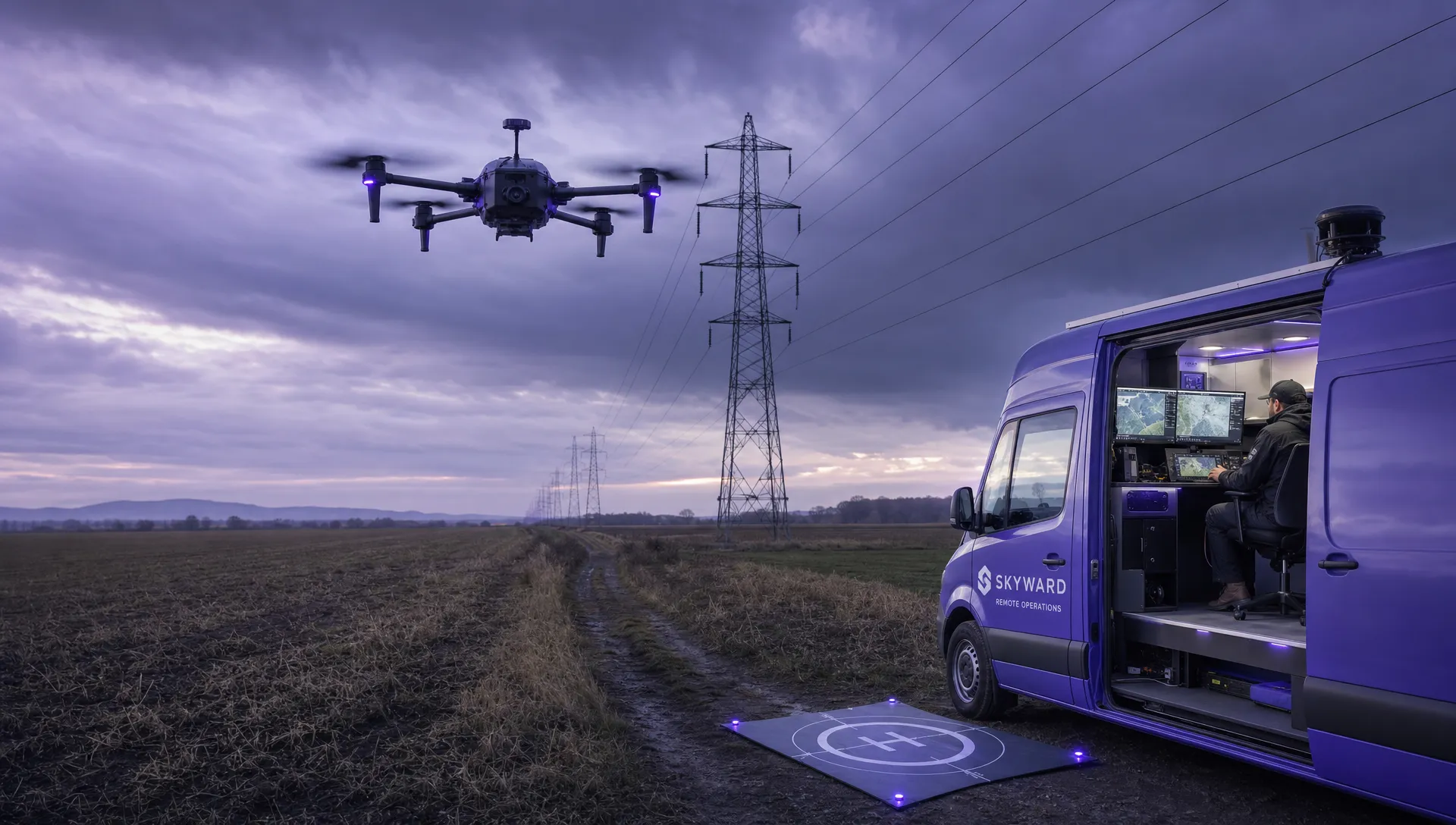
A BVLOS flight typically begins with a launch phase that may still be conducted within visual line of sight. This allows the crew to confirm aircraft behaviour, link quality, telemetry, weather and initial navigation before the aircraft proceeds along the BVLOS route.
Once en route, the pilot or mission commander monitors the flight through control station data. This may include position, altitude, speed, battery state, C2 link quality, system health, airspace alerts and mission progress. If the operation includes a payload, the team may also monitor inspection images, thermal data, mapping coverage or live video.
The crew is not simply watching a dot on a map. They are comparing the actual operation against the planned safety envelope. Is the aircraft on route? Is the weather still within limits? Is the link stable? Has any airspace activity changed? Is there a reason to pause, reroute, return or land?
When something abnormal occurs, pre-agreed procedures take over. A lost-link event might trigger a holding pattern, return-to-home route, climb or descent, or controlled landing at a nominated site. A nearby aircraft alert might trigger a tactical manoeuvre or route hold. A battery issue might move the operation to an alternate recovery point.
How BVLOS keeps clear of other airspace users
Airspace separation is one of the central challenges in beyond visual line of sight drone operations. The drone is not operating in isolation. It may share the environment with helicopters, light aircraft, gliders, military traffic, emergency aircraft and other drones.
BVLOS operations usually manage this through a mix of strategic and tactical measures. Strategic measures are decided before launch. They include choosing quieter airspace, limiting operating heights, avoiding aerodromes, scheduling flights at lower-risk times, using defined corridors and coordinating with relevant stakeholders.
Tactical measures happen during the mission. They may include traffic monitoring, DAA alerts, instructions from a flight information service where applicable, crew decisions, automated avoidance logic or contingency manoeuvres.
In more advanced environments, UAS Traffic Management and U-space concepts can support digital coordination between drones, operators and airspace services. EUROCONTROL’s overview of the U-space concept is a useful reference for understanding how Europe has approached scalable drone traffic services.
For operators, the practical takeaway is simple: BVLOS airspace safety is not just a sensor problem. It is a planning, coordination, technology and procedure problem.
Regulatory approvals and the safety case
Regulators want to know that the operator understands the risks and has reduced them to an acceptable level. For BVLOS, the safety case is often the most important document set.
In the UK, BVLOS activity will normally sit outside the simplest drone operating rules. Depending on the aircraft, environment, automation level and risk, an operator may need a suitable Operational Authorisation, a trial arrangement, access to specific airspace, or another valid approval route. Complex operations over people, dense urban areas or critical infrastructure may face a higher evidential burden.
A good BVLOS safety case usually answers questions like these:
| Safety case question | Why it matters |
|---|---|
| What exactly is the aircraft doing and where? | Defines the operational envelope and limits |
| What could go wrong? | Identifies air risk, ground risk, technical faults and human factors |
| How will the operator prevent it? | Shows mitigations, equipment, training and procedures |
| How will the crew detect abnormal conditions? | Proves monitoring, alerts and decision triggers are adequate |
| What happens if prevention fails? | Documents contingency, emergency and recovery actions |
| How will records be kept? | Supports accountability, auditability and continuous improvement |
This is where smaller commercial operators sometimes underestimate the workload. The approval is not just about owning the right drone. It is about proving that the organisation can repeatedly plan, conduct and learn from BVLOS flights.
Where BVLOS creates the most value
BVLOS is particularly strong where the task is long, repetitive, hazardous or time-sensitive.
For utility companies, BVLOS can support inspection of power lines, pipelines, rail corridors, reservoirs and remote assets. The benefit is not only distance. It is the ability to standardise repeatable inspection routes and gather consistent data across large networks.
For survey companies, BVLOS can make large-area mapping and corridor surveys more practical, especially in rural or hard-to-access environments. The operating case must still address ground and air risk, but the commercial logic is often clear when the alternative involves multiple take-off points, access permissions and site teams.
For emergency services, BVLOS can extend situational awareness during floods, wildfires, missing person searches or major incidents. These missions can be high value, but they also require strong coordination because emergency airspace may include helicopters, police aircraft or other response assets.
For drone service providers, BVLOS capability can become a differentiator, but only if it is backed by credible governance. Clients in utilities, infrastructure and public safety will expect evidence of planning discipline, maintenance control, crew competence and safety reporting.
Making BVLOS repeatable, not just possible
A one-off BVLOS trial is very different from a repeatable operational capability. Once an organisation moves beyond demonstrations, admin quality becomes part of safety quality.
Operators need reliable ways to manage clients, sites, aircraft, batteries, pilots, observers, checklists, risk assessments, airspace reviews, flight logs and reports. Spreadsheets and shared folders can work for early trials, but they become harder to control as the number of aircraft, crews and missions grows.
Dronedesk is designed for drone operations management, and its drone operations management features include client management, fleet management, team management, airspace intelligence, proximity intelligence, flight planning, flight logging, data reporting, configurable checklists and risk assessments. It does not replace regulatory approval, DAA technology or operator competence, but it can help keep the operational record structured and consistent.
If your BVLOS roadmap involves more aircraft, more pilots or more sites, it is also worth reviewing how you manage fleet processes. Dronedesk’s drone fleet management guide covers the wider systems operators need as they scale beyond informal admin.
Practical readiness checklist for BVLOS operators
Before investing heavily in BVLOS hardware or applications, operators should test their organisational readiness. The aircraft may be the visible part of the project, but the regulator, client and safety team will look at the whole system.
Key questions include:
- Can you clearly define the mission type, route, altitude, environment and operating limits?
- Do you have documented procedures for planning, briefing, launching, monitoring, contingency handling and recovery?
- Can you demonstrate maintenance status, pilot competence and aircraft configuration control?
- Have you assessed both air risk and ground risk using a recognised method?
- Do you have a reliable way to store flight plans, checklists, risk assessments, logs and post-flight reviews?
- Can your crew explain when they would continue, pause, reroute, return or terminate the flight?
If the answer to any of these is unclear, the next step is usually not a bigger aircraft. It is a stronger operating system.
Frequently Asked Questions
Do BVLOS drone operations require special approval in the UK? In most cases, yes. BVLOS generally sits outside routine Open category flying and will usually require an appropriate CAA authorisation, permission, trial framework or other valid approval route. Operators should always check current CAA guidance before planning.
Is BVLOS the same as autonomous drone flight? No. BVLOS means the aircraft is beyond the pilot’s direct visual line of sight. The flight may be manually supervised, automated, semi-automated or autonomous in parts, but BVLOS describes the visibility condition, not the level of autonomy.
What equipment is needed for BVLOS? Requirements depend on the risk of the operation, but common elements include a suitable aircraft, reliable C2 links, navigation systems, flight termination or contingency logic, airspace awareness tools, detect-and-avoid measures and a ground control setup.
Can visual observers make a flight BVLOS? Visual observers can extend the area that is visually monitored, which is often called EVLOS. True BVLOS usually means the operation cannot rely on continuous human visual observation of the aircraft along the full route.
Why is flight logging important for BVLOS? Logs create the evidence trail for what was planned, what happened, what changed and what was learned. For BVLOS, this supports compliance, maintenance decisions, safety reviews and future authorisation work.
Build a stronger foundation for BVLOS operations
BVLOS capability depends on more than aircraft range. It requires disciplined planning, risk assessment, airspace awareness, checklists, flight records and continuous improvement.
If your team is preparing for more complex drone operations, Dronedesk can help you organise the operational management side in one web platform, from planning and risk assessments to checklists, fleet records and flight logging. Start with better operational structure, then build your BVLOS capability on evidence you can trust.
 FAA 107 License vs Part 107 Certificate: What’s the Difference? →
 Drone Airport Rules: A Field Checklist for Site Assessments →
 FAA Part 107 Record-Keeping Rules for Commercial Teams →
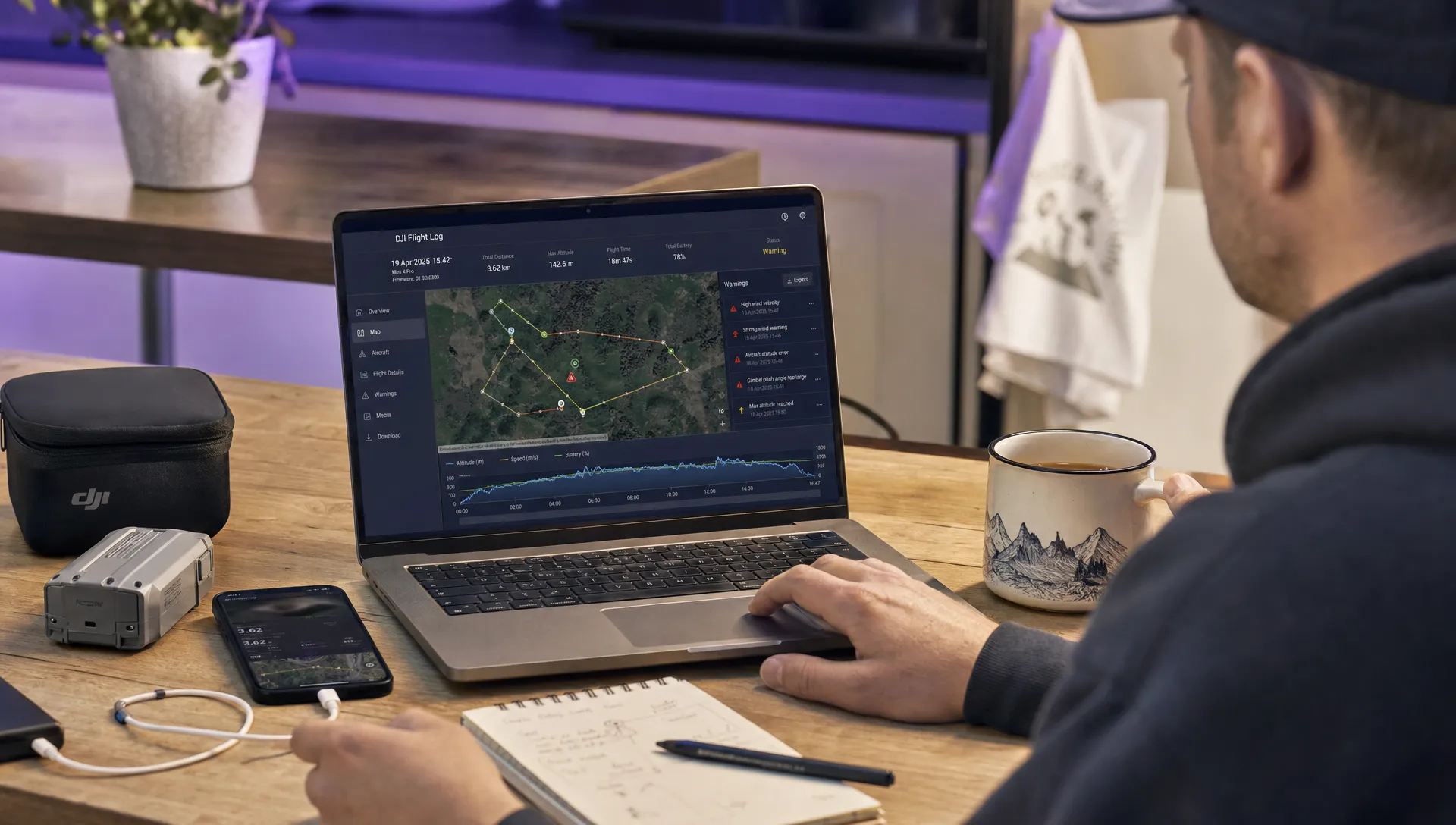 How to Review a DJI Flight Log After an Unexpected Event →
 Drone Laws Around the World: A Pre-Flight Research Framework →
 How to Compare Drone Survey Services for Complex Sites →
 How to Start a Drone Mapping Business With a Clear Workflow →
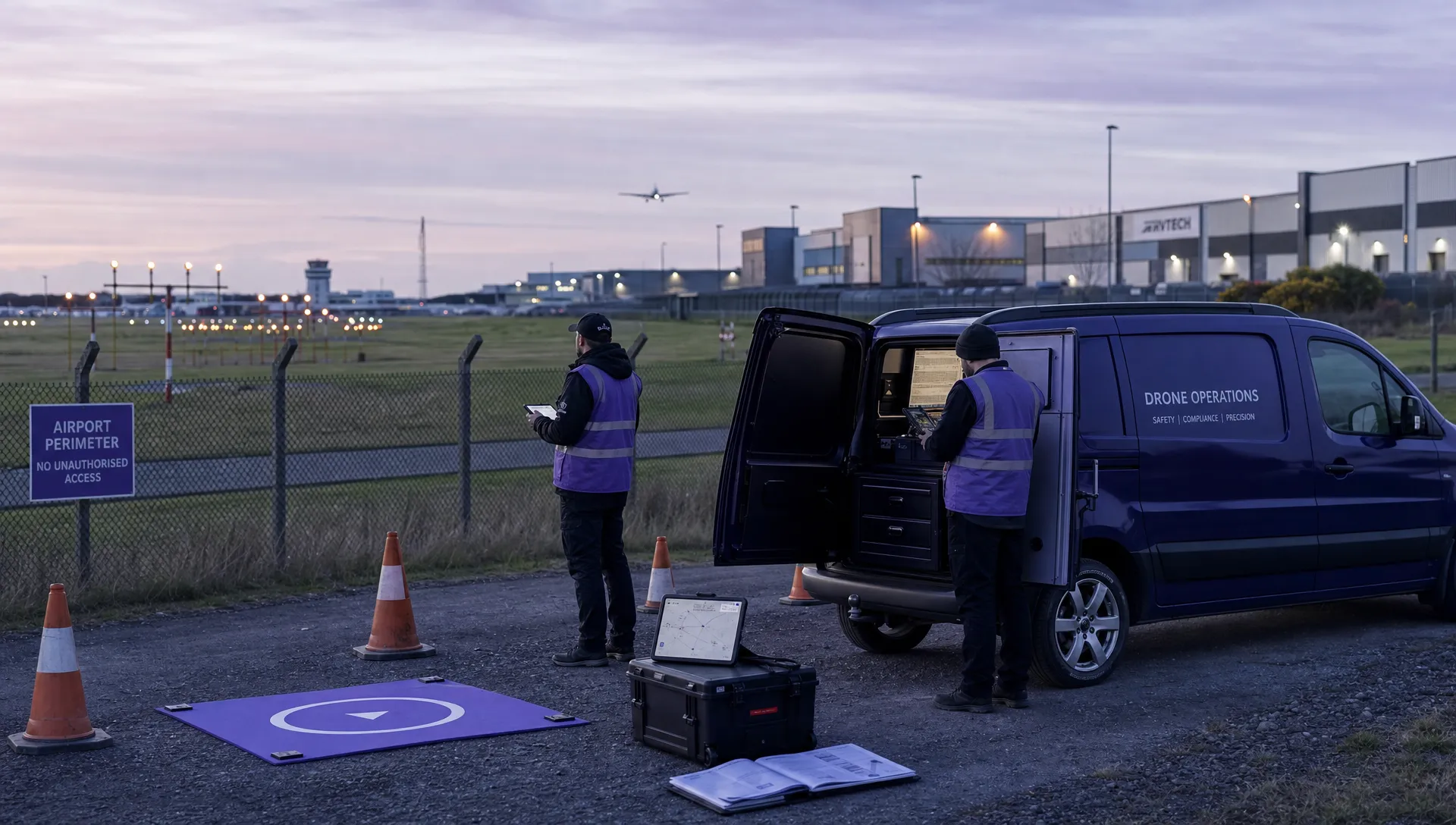 Class C Airspace Drone Rules for Commercial Flights →
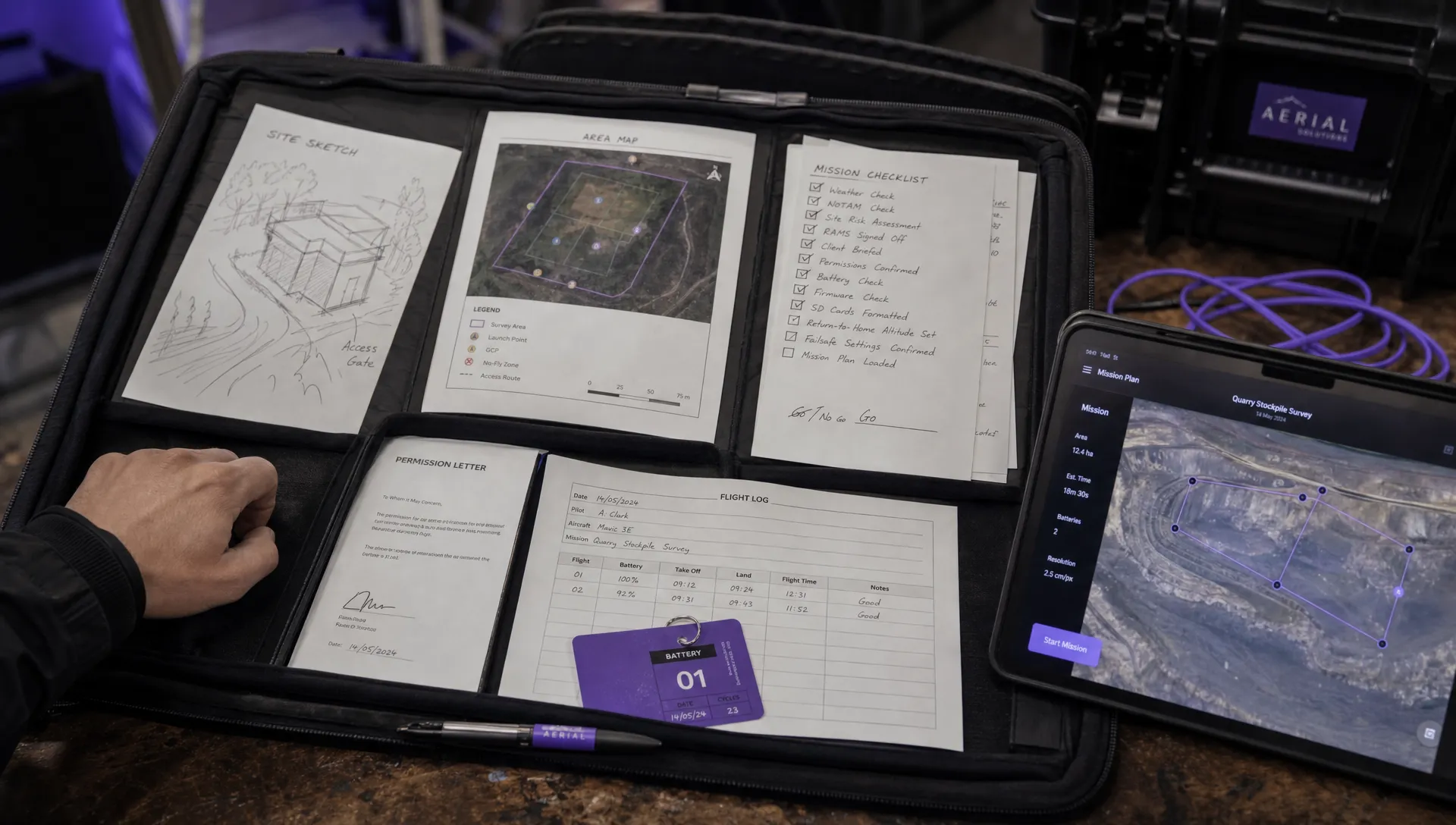 How to Create a Drone Job Pack for Every Mission →
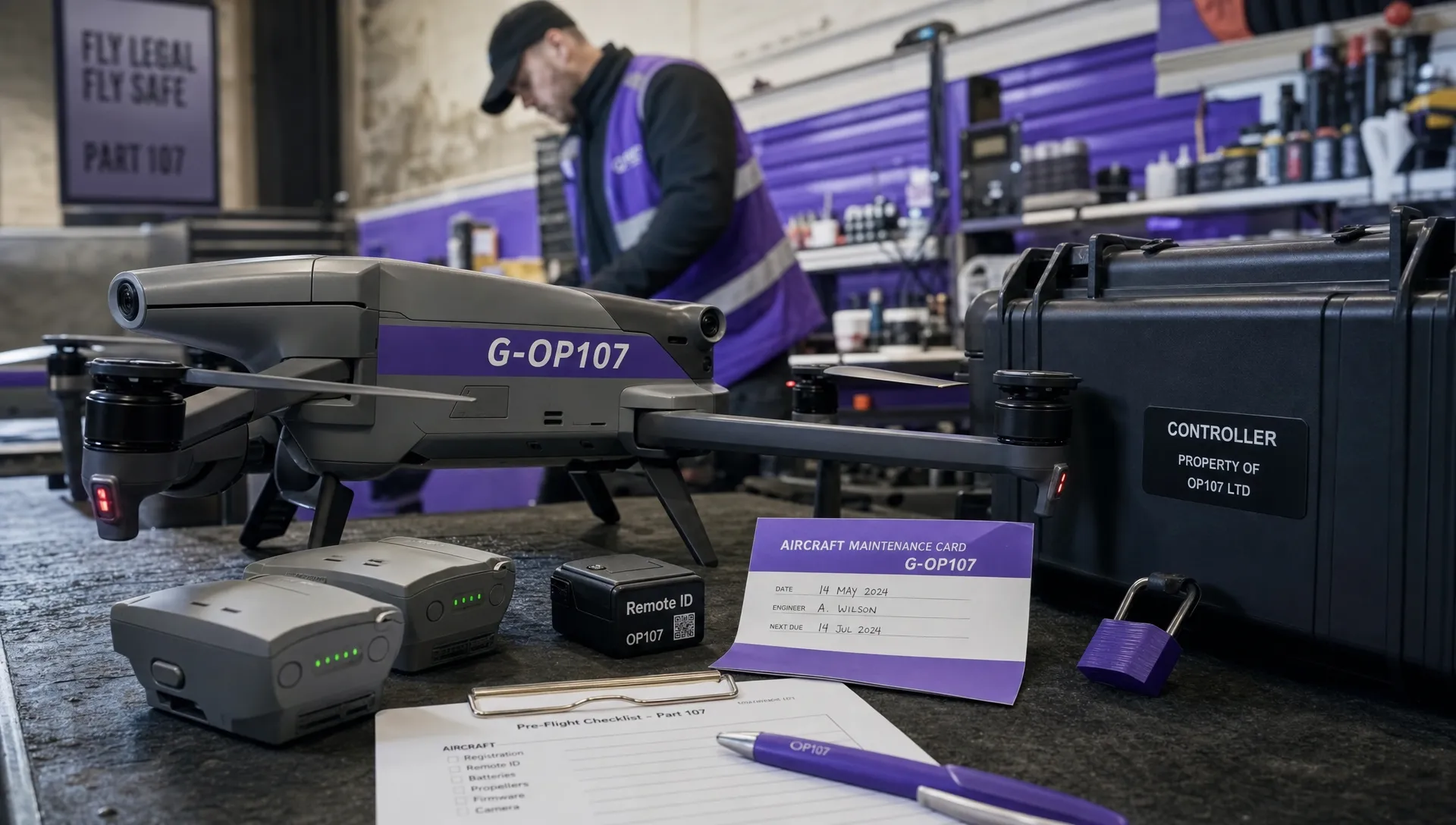 FAA Small UAS Rule: Key Requirements for Operators →