
International Drone Laws: A Planning Guide for Global Teams
International drone operations can open up major opportunities for inspection, surveying, mapping, emergency response and infrastructure monitoring. They can also expose teams to a compliance problem that is easy to underestimate: drone rules change the moment you cross a border, and sometimes the moment you cross a regional boundary inside the same country.
For global teams, understanding international drone laws is not about memorising every national rule. It is about building a repeatable planning system that helps you identify the right authority, prove pilot and operator competence, secure permissions, document risk, and keep every stakeholder aligned before equipment leaves the office.
This guide is written for commercial and public sector drone teams that need to plan work across multiple jurisdictions. It is not legal advice, and you should always verify requirements with the relevant aviation authority or qualified local counsel. Instead, use it as a practical framework for reducing surprises, delays and avoidable compliance risk.
Why international drone laws are hard to manage
Drone regulation is still relatively young compared with crewed aviation. International bodies such as the International Civil Aviation Organization provide guidance and help promote consistency, but each state sets and enforces its own rules for unmanned aircraft operations.
That means two countries can use similar concepts while applying them differently. A flight that is routine in one jurisdiction may require a special authorisation in another. A pilot certificate accepted by one regulator may not automatically be recognised by a neighbouring country. A mapping project over farmland may be treated very differently from an inspection near railways, energy assets, ports, borders or urban crowds.
The complexity usually comes from several overlapping layers:
- Aviation safety rules, including pilot competence, aircraft registration and operational permissions.
- Airspace controls, including controlled airspace, restricted zones, NOTAMs and temporary flight restrictions.
- Security rules, especially around critical infrastructure, defence sites, borders and major events.
- Privacy and data protection laws, particularly for imagery of people, property and sensitive sites.
- Import, customs, radio spectrum and equipment rules, which can affect the ability to bring drones, batteries and communication systems into a country.
- Insurance, contractual and client requirements, which may go beyond the legal minimum.
For survey companies, utility operators and emergency services, the cost of getting this wrong is not limited to a cancelled flight. It can mean delayed access to infrastructure, reputational damage, enforcement action, invalid insurance, equipment seizure or loss of client confidence.
The core legal layers every global drone team should check
A good international planning process starts with a country file. This is a structured set of checks and evidence for the jurisdiction where you intend to operate. The exact format can vary, but the same core questions come up again and again.
| Compliance layer | Key planning question | Evidence to collect |
|---|---|---|
| Aviation authority | Which regulator controls drone operations in this country or region? | Official regulator guidance, application links, contact records |
| Operator status | Must the organisation register locally or appoint a local representative? | Operator registration, local partner agreement, company documentation |
| Remote pilot competence | Are existing pilot certificates recognised, or is local training required? | Pilot certificates, training records, licence validation, ID documents |
| Aircraft requirements | Must the drone be registered, labelled, class marked, insured or technically approved? | Aircraft registration, serial numbers, maintenance records, insurance certificates |
| Operational category | Is the mission allowed under standard rules, or does it require permission? | Category assessment, waiver, operational authorisation, SORA or equivalent assessment |
| Airspace approval | Is the flight in controlled, restricted, military, urban or sensitive airspace? | Airspace approval, NOTAM review, local coordination records |
| Ground permissions | Who controls the take-off area, landing area and overflown land? | Landowner consent, site access permits, client approvals |
| Privacy and data | Can the team capture, store, transfer and process the imagery required? | Data protection assessment, client data instructions, retention policy |
| Equipment import | Can drones, batteries, payloads and radios enter the country legally? | Customs documents, carnet, import permit, airline battery approval |
| Emergency procedures | Who must be contacted if there is an incident, flyaway or data breach? | Emergency contacts, incident reporting procedure, escalation plan |
This table is deliberately broad. The aim is to prevent teams from treating aviation approval as the only compliance hurdle. In many international projects, the blocker is not the remote pilot certificate. It is a missing local security clearance, an import restriction, a data handling issue, or an assumption that a home country permission can simply travel with the crew.
Regional snapshots: what to expect before you plan
You should never rely on regional summaries as your final authority. However, understanding the broad regulatory model in major markets helps you ask better questions early in the planning process.
United Kingdom
In the UK, the Civil Aviation Authority regulates drone operations. Commercial work is generally planned around the nature and risk of the operation rather than whether money changes hands. Teams must consider requirements such as operator registration, pilot competence, operational authorisation where relevant, airspace permissions and the Drone and Model Aircraft Code.
For global teams coming into the UK, common planning issues include operations near congested areas, airports, infrastructure, protected sites and temporary restrictions. Insurance and land access also need early attention.
European Union and EASA member states
The European Union Aviation Safety Agency framework uses the Open, Specific and Certified categories. This creates a more harmonised structure across EASA member states, but it does not remove the need to check national details.
Each country still has its own aviation authority, geographical zones, language requirements, administrative processes and local restrictions. A cross-border team working in several EU countries should not assume that one operational approval covers every site without conditions.
United States
In the US, the Federal Aviation Administration regulates civil drone operations. Many commercial operations fall under Part 107, with additional approvals or waivers required for activities outside standard operating limits. Airspace authorisation, temporary flight restrictions and local site permissions are frequent planning considerations.
Global teams should also pay attention to state, local, tribal and territorial rules where they affect take-off, landing, privacy, public safety or operations on specific property.
Canada
Transport Canada separates many drone operations into basic and advanced categories, with additional requirements for more complex missions. Factors such as distance from people, airspace type, aircraft weight and pilot certification can affect what is allowed.
For visiting teams, the key question is whether foreign pilot qualifications and organisational processes are sufficient, or whether additional Canadian permissions are needed.
Australia
Australia's Civil Aviation Safety Authority regulates remotely piloted aircraft activities. The rules distinguish between recreational use, excluded category operations and more complex commercial operations that may require certification, licensing or approvals.
Long distance projects in Australia can also involve remote sites, communications constraints, environmental conditions, indigenous land access, mining sites or infrastructure owners with strict safety management requirements.
Other international markets
In parts of the Middle East, Asia, Africa and Latin America, approval pathways can be highly specific to the mission, location, client and equipment. Some countries require security approvals, local sponsorship, military coordination, import permits or pre-approval of image capture.
The safest approach is to involve a local aviation specialist or partner before committing to dates, pricing or deliverables. This is especially important for critical infrastructure, emergency response, energy, telecoms, ports, border zones and urban filming.
Build a country file before you bid, not after you win
International compliance should start during qualification and bid planning, not after the contract is signed. If you wait until mobilisation, you may discover that the permit lead time is longer than the project window or that the required aircraft cannot be imported in time.
A country file does not need to be complicated. It should give your operations, commercial and project teams a shared view of what is possible, what is uncertain and what must be resolved before deployment.
Start with the mission profile. Define the purpose of the work, the aircraft, payload, location type, flight altitude, distance from people, operating area, crew structure, data outputs and whether the work involves BVLOS, night operations, autonomous flight, flights near infrastructure or flights in controlled airspace.
Then identify the accountable legal entity. Some jurisdictions may require the operator to be registered locally. Others may allow foreign operators but require advance permission. If you are subcontracting to a local drone company, be clear about who is the operator, who owns the risk assessment, who controls the aircraft, and who reports incidents.
Next, test pilot competence. Gather certificates, logbook evidence, medical or ID documents if required, and proof of recent experience on the aircraft type. Do not assume that a pilot who is highly qualified at home can legally operate abroad without validation.
Finally, document your uncertainty. A simple red, amber and green system can help stakeholders understand whether a project is ready to schedule. Green means requirements are confirmed and evidence is held. Amber means an application, local answer or client approval is pending. Red means there is a known blocker that affects cost, scope or feasibility.

Risk assessment has to travel, but it must not stay generic
Many experienced operators have strong standard operating procedures in their home market. That is valuable, but it is not enough for international work. A risk assessment that travels well is structured and repeatable, yet flexible enough to reflect the local environment.
For example, a transmission line inspection in one country may involve rural terrain, low population density and familiar land access. The same type of asset in another country may cross military zones, protected habitats, informal settlements, border areas or regions with limited emergency services. The aircraft and payload may be identical, but the risk picture is not.
A robust overseas risk assessment should consider local hazards such as:
- Airspace restrictions, temporary restrictions and nearby aerodromes.
- Ground risk, including people, roads, railways, waterways and public access.
- Communications coverage, command and control resilience, and mobile network reliability.
- Weather patterns, terrain, dust, humidity, heat, icing or maritime exposure.
- Security, including theft risk, public concern, police response and sensitive sites.
- Local emergency contacts, incident reporting duties and language barriers.
- Crew fatigue, travel disruption, unfamiliar driving conditions and remote accommodation.
If your team needs a deeper framework, Dronedesk has a practical guide on how to build a drone flight risk assessment that works. For international teams, the principle is simple: keep the structure consistent, but make the evidence local.
A practical workflow for global drone teams
The best international drone programmes use a repeatable workflow. This reduces reliance on individual memory and makes it easier to scale across countries, clients and operating teams.
Create a central regulatory register
Maintain a register of countries where you operate or intend to operate. For each country, record the regulator, official guidance links, operator registration requirements, pilot requirements, permission pathways, typical lead times, insurance notes, local contacts and any known restrictions.
This register should not be treated as static. Drone laws, airspace processes and security restrictions change, so each entry needs an owner and a review date.
Put permit gates into the project plan
Do not treat permissions as background admin. Build them into the schedule as formal gates. A flight should not progress from planning to mobilisation until the right evidence is in place.
Common gates include regulatory feasibility confirmed, operator status confirmed, pilot competence accepted, aircraft documents complete, airspace approval submitted, land access secured, risk assessment approved, client data requirements agreed and emergency procedures briefed.
Standardise your evidence pack
International teams are often asked for the same types of documents in different formats. A standard evidence pack speeds up responses and reduces errors.
Typical contents include company details, insurance certificate, operations manual extract, pilot certificates, aircraft registration, maintenance records, risk assessment, method statement, emergency response plan, data protection statement and previous project references where appropriate.
Brief the whole crew, not just the pilot
International compliance is not only a pilot responsibility. Visual observers, payload operators, project managers, local fixers, drivers, security escorts and client representatives all influence safety and compliance.
A pre-deployment briefing should cover the legal boundaries of the operation, no-fly triggers, public interaction, police or authority engagement, data handling, emergency actions and the chain of command.
Capture the flight record and lessons learned
After the mission, record what happened. Log flights, incidents, deviations, weather issues, stakeholder interactions and lessons for the next country file. The point is not just to prove that the flight happened. It is to improve the next operation.
Sector-specific planning considerations
Different industries face different international compliance pressures. The same aircraft may be used across survey, utility and emergency services work, but the operational context changes significantly.
Survey and mapping companies
Survey teams often focus on accuracy, ground control, repeatability and deliverable quality. Internationally, they also need to check whether geospatial data capture is restricted, whether high resolution imagery can be exported, and whether flights over private land require additional consent.
Large mapping areas may trigger different rules because of distance, altitude, visual line of sight, road crossings or proximity to settlements. Data protection becomes more important when imagery includes identifiable people, vehicles or property.
If mapping software is part of your wider workflow, it is worth separating aircraft compliance from processing and deliverable requirements. Dronedesk has a separate comparison guide for drone mapping software if you need to evaluate processing tools alongside operational planning.
Utility and infrastructure operators
Utility companies often operate near assets that regulators, governments and clients consider sensitive. Power lines, substations, pipelines, telecoms towers, water assets and transport corridors can all introduce additional approvals and security controls.
International utility work may also involve multiple landowners, outage windows, escorted access, contractor safety rules and emergency restoration priorities. For larger programmes, consistency matters as much as individual flight planning. A centralised approach to fleet, team, site and flight records can reduce confusion when many crews are working across different regions.
Dronedesk's utility company case study shows how a major infrastructure operator approached streamlining drone flight planning for utility inspections, which is particularly relevant for teams managing repeatable work at scale.
Emergency services and public safety teams
Emergency services may operate under special legal frameworks, but those frameworks are not universal. A public safety drone team deployed internationally for disaster response, wildfire support, search and rescue or humanitarian work should confirm its authority to operate before arrival whenever possible.
Planning should include coordination with the incident command structure, aviation authorities, police, military, humanitarian agencies and local government. Privacy, media sensitivity and data sharing can be just as important as airspace approval, especially when flights involve casualties, displaced people or damaged homes.
How drone operations software can support international compliance
International operations create a documentation problem. You need to manage clients, crews, aircraft, permissions, risk assessments, checklists, logs and reporting across different places and regulatory expectations. Spreadsheets and shared folders can work for a small number of flights, but they become harder to control as teams, countries and clients multiply.
This is where an operations management platform can help. Dronedesk is an all-in-one web platform for drone operators, with features including client management, fleet management, team management, airspace intelligence, proximity intelligence, flight planning, flight logging, data reporting, configurable checklists and risk assessments. You can review the full capability set on the Dronedesk features page.
For global teams, the value is not that software replaces legal judgement. It does not. The value is that structured workflows make it easier to plan consistently, keep evidence together, assign responsibilities and maintain records that can be reviewed by managers, clients or authorities.
When comparing tools for international operations, look for capabilities that support the way compliance actually works:
- A clear way to manage aircraft, pilots, teams and clients.
- Flight planning that helps teams review airspace and nearby constraints.
- Configurable checklists for country-specific requirements.
- Risk assessment workflows that can be adapted to different mission types.
- Flight logging and reporting to preserve operational evidence.
The aim is to create a reliable operating rhythm. Every flight should move through a known sequence of checks, approvals, briefs, logs and reviews, even when the local rules change.
Common mistakes that delay international drone work
Most compliance failures are not caused by reckless flying. They are caused by assumptions. A team that is safe and professional at home can still run into trouble abroad if it uses the wrong planning model.
One common mistake is assuming that commercial drone rules are based only on aircraft weight. Weight matters in many jurisdictions, but it is rarely the only factor. Location, proximity to people, airspace, altitude, autonomy, night operations and data capture may all affect the permission pathway.
Another mistake is assuming that client approval equals legal approval. A utility, construction firm or public agency may control the site, but it may not control the airspace or the legal right to operate a drone there.
Teams also underestimate lead times. Some permissions can be obtained quickly, while others require weeks or months, especially where security agencies or multiple authorities are involved. This matters when bidding for time-sensitive work.
Finally, many organisations fail to preserve evidence. If a regulator, client or insurer asks why a flight was considered safe and legal, the answer should not depend on a project manager searching through old emails. It should be documented in the job record.
Pre-deployment checklist for international drone operations
Before committing crew and equipment to an overseas project, run a final readiness check. This should be completed early enough to change the plan if needed.
- Confirm the official aviation authority and current drone rules for the operating location.
- Confirm whether the operator must register locally or work through a local partner.
- Verify pilot competence, certificate recognition and any local validation requirements.
- Confirm aircraft registration, labelling, insurance, maintenance and payload documentation.
- Check whether the mission requires an operational authorisation, waiver, permit or security approval.
- Review controlled airspace, restricted zones, temporary restrictions and nearby aerodromes.
- Secure landowner, site owner and client permissions for take-off, landing and access.
- Confirm privacy, data handling, image export and client confidentiality requirements.
- Check customs, battery transport, radio equipment and import requirements before travel.
- Brief the crew on emergency procedures, local contacts, no-fly triggers and incident reporting.
If any item is unclear, treat it as a planning risk rather than an admin detail. The earlier you identify uncertainty, the more options you have.
Frequently Asked Questions
Do international drone laws follow one global standard? No. International guidance exists, but each country sets its own drone rules. Some regions, such as EASA member states, have harmonised frameworks, but local authority processes and geographical restrictions still matter.
Can a drone pilot use their home country certificate abroad? Sometimes, but not automatically. Some regulators may recognise certain qualifications, while others require local registration, validation, training or a separate authorisation. Always check with the relevant national aviation authority.
What is the biggest compliance risk for global drone teams? The biggest risk is usually assumption. Teams often assume that a familiar aircraft, experienced pilot or client approval is enough. International work needs documented checks for aviation, airspace, security, privacy, insurance and import requirements.
How early should we start planning an overseas drone operation? Start before bidding or accepting the project timeline. Some approvals are quick, but others can take weeks or longer, especially near critical infrastructure, controlled airspace, borders or sensitive government sites.
Can drone operations software make international flights legal? No software can replace regulator approval or legal advice. However, operations software can help teams organise flight planning, risk assessments, checklists, fleet records, team details, flight logs and reporting in a consistent way.
Turn international compliance into a repeatable process
International drone laws will keep evolving, and global teams need more than a one-off permit search. They need a repeatable operating system for checking rules, managing evidence, briefing crews and learning from every deployment.
Dronedesk helps drone operators bring key operational tasks into one platform, from flight planning and risk assessments to fleet, team, client, checklist, logging and reporting workflows. If your organisation is moving from local projects to multi-region operations, explore how Dronedesk can support a more consistent approach to drone operations management.
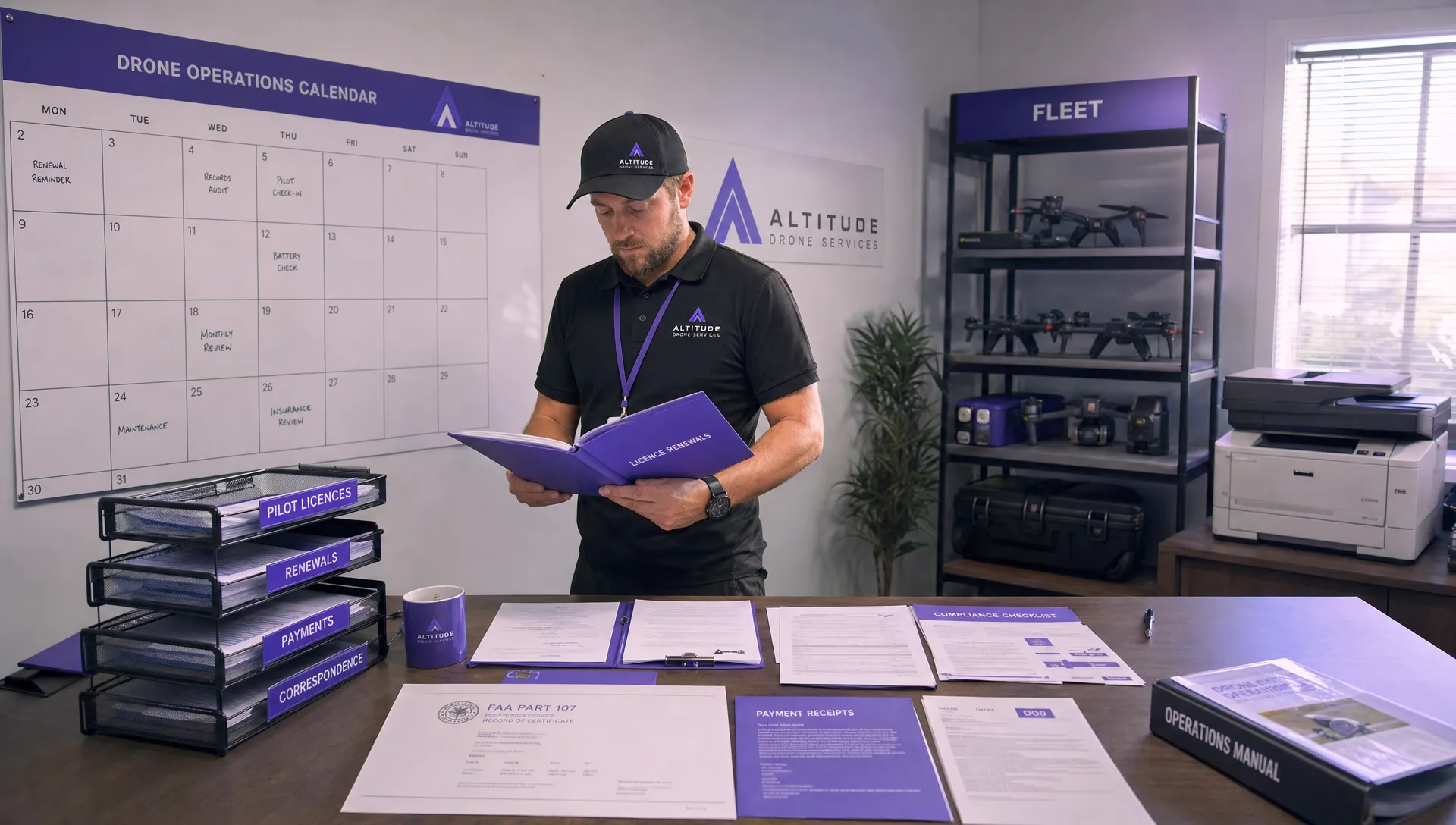 FAA Drone License Costs Beyond the Knowledge Test →
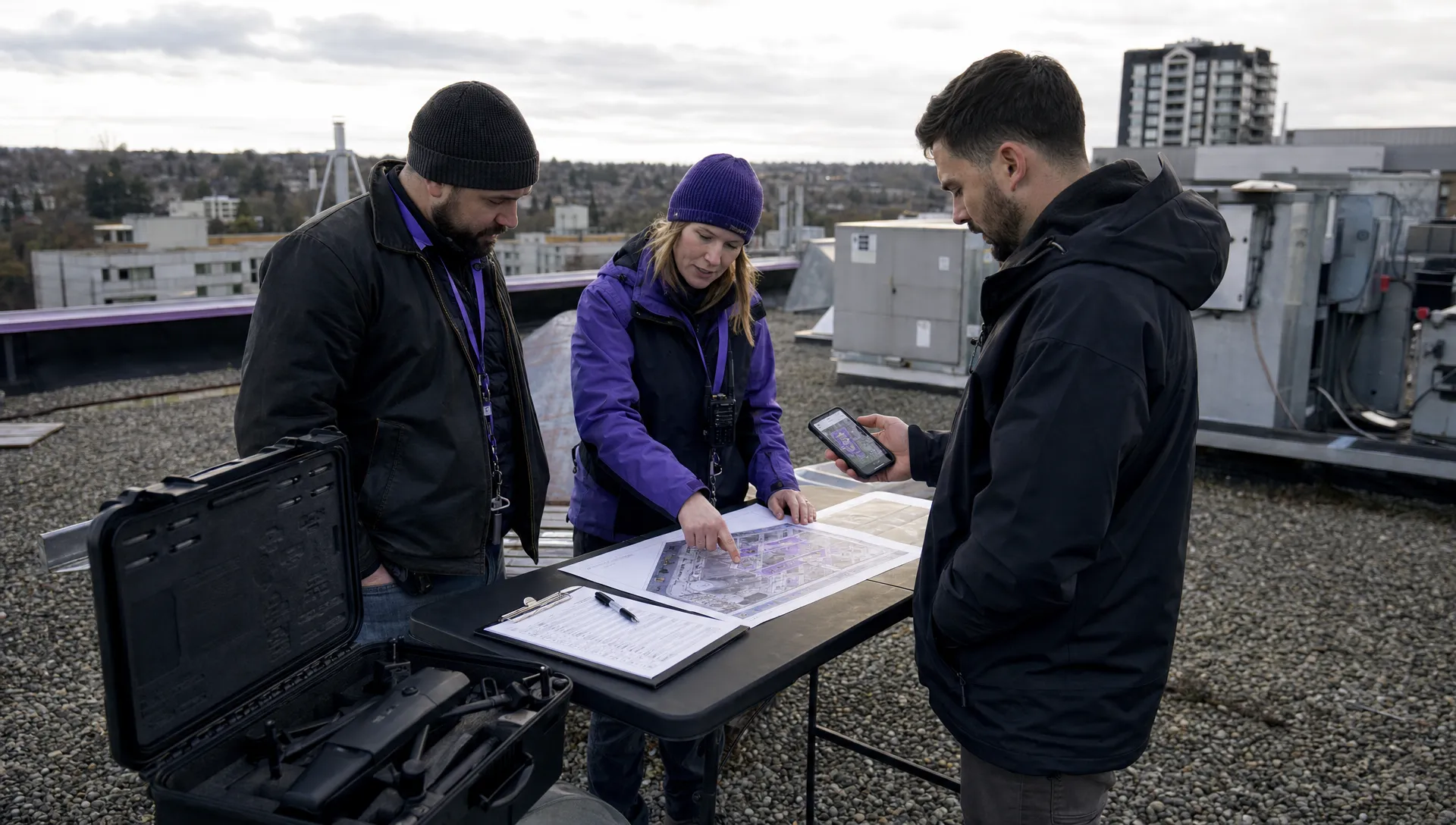 Drone Part 107 Operations: When a Waiver May Be Needed →
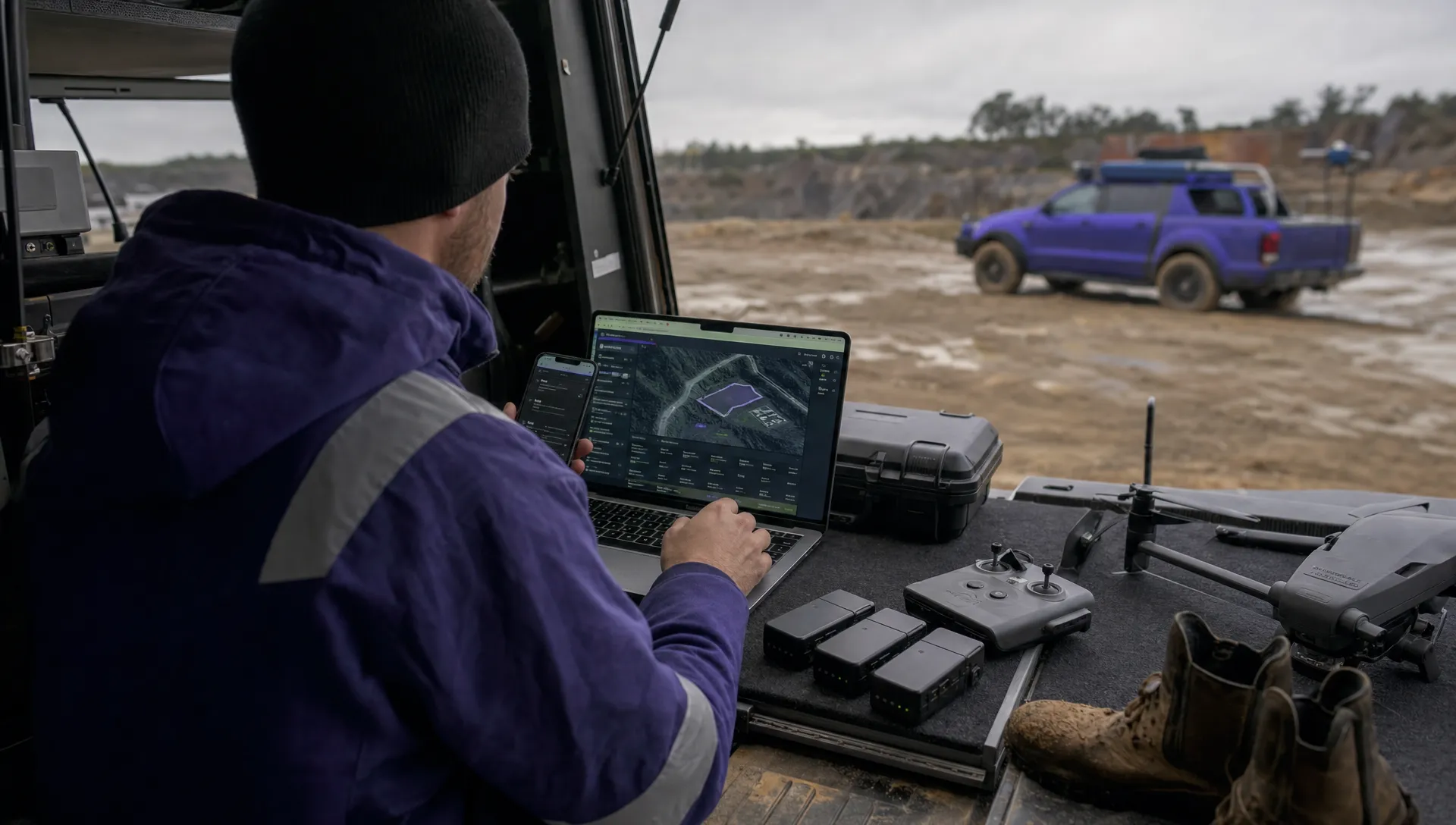 Drone Operating Rules for Managing Contractors and Employees →
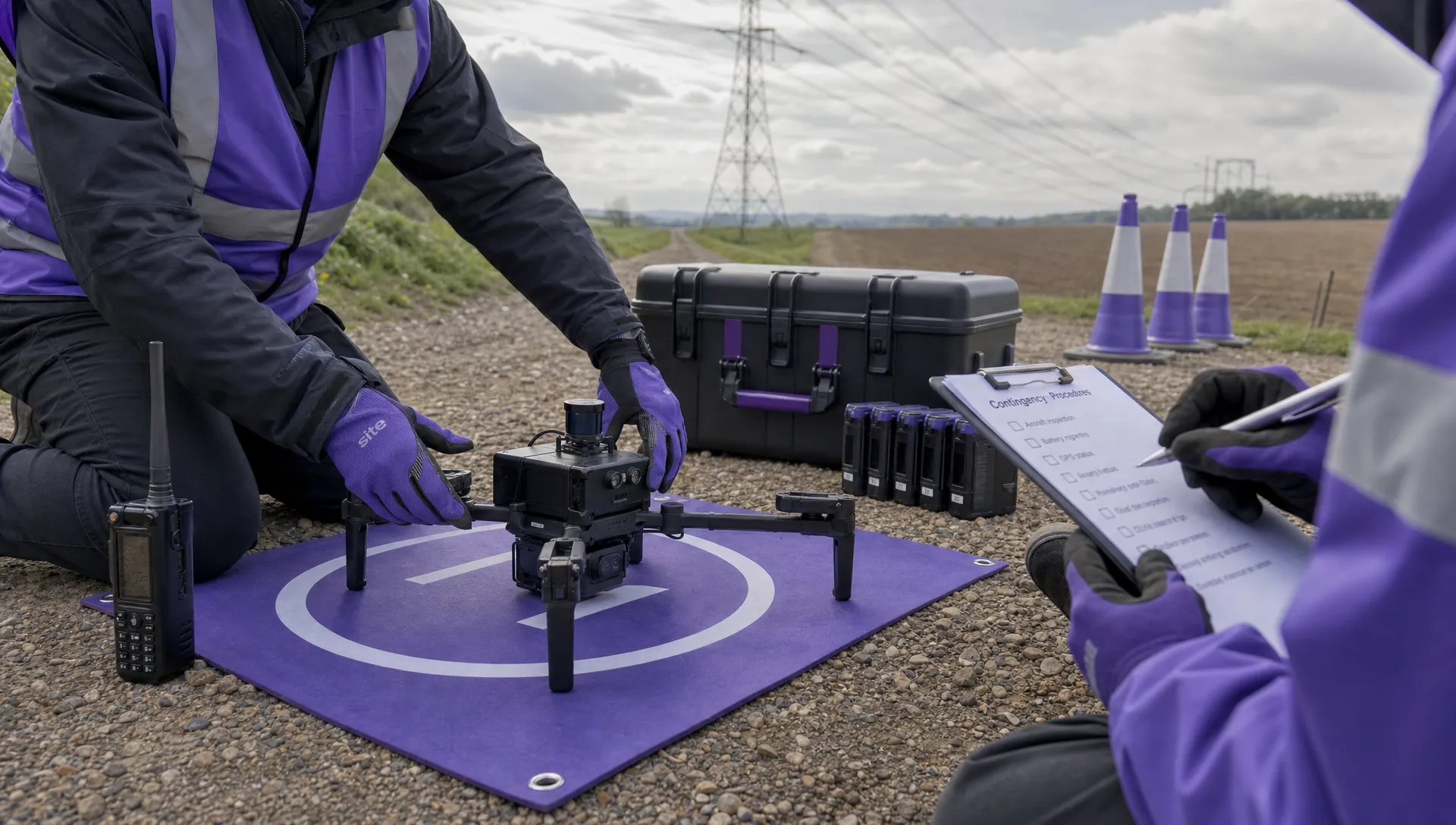 BVLOS Drone Requirements for Building a Safety Case →
 Drone Pilot Test Mistakes That Cost Candidates Marks →
 FAA 107 License vs Part 107 Certificate: What’s the Difference? →
 Drone Airport Rules: A Field Checklist for Site Assessments →
 FAA Part 107 Record-Keeping Rules for Commercial Teams →
 How to Review a DJI Flight Log After an Unexpected Event →
 Drone Laws Around the World: A Pre-Flight Research Framework →