
EU Drone Rules for Sub-250g Aircraft Explained
Sub-250g drones have become a favourite tool for operators who need quick, low-risk aerial data in built-up or access-constrained environments. They are small enough to be practical for rooftop inspections, media capture, rapid site checks and some emergency service support tasks, but they are not exempt from aviation law.
In simple terms, EU drone regulations under 250g are more permissive than the rules for heavier aircraft, especially in the Open category. However, you may still need operator registration, you must still respect airspace and geographical zones, and you cannot fly over crowds or beyond visual line of sight just because the aircraft is light.
This guide explains how the EU rules apply to sub-250g aircraft in 2026, with a practical focus for professional drone operators, survey companies, utilities and emergency service teams. If you operate in the UK, remember that the UK is outside the EU/EASA system, so check the UK Civil Aviation Authority rules separately before applying any EU guidance.
The short version: what sub-250g usually means in the EU
The EU framework is risk-based. Weight matters, but it is only one part of the picture. The main legal sources are Commission Implementing Regulation (EU) 2019/947, which sets operational rules, and Commission Delegated Regulation (EU) 2019/945, which sets product requirements for class-marked drones.
For most sub-250g aircraft, the relevant operating area is the Open category, subcategory A1. This is the least restrictive Open subcategory, but it still has clear limits.
| Question | General answer for sub-250g aircraft in EU Open category |
|---|---|
| Can it operate in A1? | Usually yes, if it is C0 class-marked, privately built under 250 g, or a legacy aircraft under 250 g including payload. |
| Is operational authorisation required? | Not if the flight stays within Open category limits and outside restricted geographical zones. |
| Can it fly over people? | It may fly over individual uninvolved people in A1, but you should avoid doing so where possible and must never fly over assemblies of people. |
| Is a pilot exam required? | Generally no formal EU remote pilot competency certificate is required for C0 or qualifying sub-250g A1 operations, but the pilot must understand the user manual and applicable rules. |
| Is operator registration required? | Yes if the drone has a camera or other sensor able to capture personal data, unless it is classed as a toy under the relevant EU toy rules. |
| Can it be used commercially? | Yes, provided the operation remains within the rules. EU Open category rules do not create a separate flying category for commercial use. |
| Does Remote ID apply? | C0 drones are not generally required to have Direct Remote Identification, but local requirements and geographical zone conditions must still be checked. |
The EASA Open category guidance is a useful reference point, but your national aviation authority still matters. Member States define many local UAS geographical zones, and those zones can change what is permitted on a specific site.
What counts as a sub-250g aircraft?
In day-to-day operations, “sub-250g” means the aircraft is below 250 g in the configuration you intend to fly. This includes anything attached to it, such as propeller guards, lights, trackers, filters or payloads.
That point matters. A drone sold as “249 g” may no longer qualify if an accessory pushes it over the threshold. For professional operators, this is more than a technicality. If your operational method depends on A1 sub-250g privileges, your pre-flight process should confirm that the aircraft configuration still qualifies.
There are three common types of aircraft to think about:
| Aircraft type | How it fits into the EU rules |
|---|---|
| C0 class-marked drone | Designed for the lowest Open category risk class, with a maximum take-off mass below 250 g. |
| Legacy drone under 250 g | A drone without a class label that may continue operating in A1 if it remains under 250 g including payload. |
| Privately built drone under 250 g | Can operate in A1 if it remains under 250 g and meets the relevant speed and operating limitations. |
A C0 class label is not the same thing as a standard CE mark. The C0 marking is the drone class identification label used under the EU drone product rules. If you are buying aircraft for a team, it is worth checking this before purchase, especially if you need a standardised compliance process across several pilots.
Open category A1: the core operating limits
Sub-250g aircraft are attractive because they can usually operate in A1. For many commercial jobs, that can make simple visual inspections, progress photography or rapid situational awareness easier to plan than with heavier aircraft.
However, A1 is not “fly anywhere”. The main Open category limits still apply.
You must keep the aircraft within visual line of sight, unless a specific exception applies. You must not fly higher than 120 m from the closest point of the earth’s surface, subject to the limited obstacle-related provisions in the regulation. You must not carry dangerous goods or drop material. You must not fly over assemblies of people. You must also avoid interfering with emergency response operations.
The over-people rule is often misunderstood. In A1, a qualifying sub-250g aircraft may fly over individual uninvolved people, but that should not become a routine operating method. For a professional operation, the safer approach is to plan routes that avoid uninvolved people wherever reasonably practicable, reduce exposure time if unexpected people enter the area, and land or reposition if the situation becomes unsuitable.
An “assembly of people” is not just a large event. The key idea is that people are so densely packed that they cannot easily move away. Concert crowds, packed markets, parades, stadium queues and dense public gatherings are clear examples. A sub-250g drone does not make those flights acceptable in the Open category.
Operator registration: the rule most pilots miss
The biggest misconception is that drones under 250 g never need registration. In the EU, registration is not only about weight.
If the drone has a camera or another sensor capable of capturing personal data, the UAS operator normally needs to register, unless the drone is legally considered a toy under the applicable EU toy safety rules. Most professional camera drones are not toys, so registration is usually required even when the aircraft weighs less than 250 g.
It is also important to distinguish between the UAS operator and the remote pilot.
| Role | Meaning | Professional example |
|---|---|---|
| UAS operator | The person or organisation responsible for the drone operation. | A survey company, utility provider, local authority or emergency service unit. |
| Remote pilot | The person manually flying or monitoring the aircraft. | The employee, contractor or team member controlling the drone on site. |
The operator registers in the Member State where they reside or have their principal place of business. Non-EU operators normally register in the first EASA Member State where they intend to operate. Once registered, the operator number should be displayed on the drone as required by the applicable rules and national authority guidance.
For organisations, this is a governance issue. If several pilots use several small drones, you need to know which aircraft are operating under which operator registration, who flew them, where they flew, and under what authorisation or Open category basis.
Pilot competence: no exam does not mean no training
For C0 and qualifying sub-250g A1 operations, the EU rules generally do not require the A1/A3 online competency certificate. The pilot must still be familiar with the manufacturer’s instructions and operate safely within the regulation.
For professional teams, “no exam required” should not be treated as “no training needed”. A pilot using a 249 g aircraft for a utility inspection or emergency service support task still needs to understand airspace, human factors, privacy, battery management, loss-link procedures, site control and contingency planning.
A good internal standard can be stricter than the legal minimum. Many organisations choose to train all pilots to a common baseline, even if some aircraft could legally be flown without a formal certificate. This makes procedures easier to audit and helps avoid a two-tier safety culture where small drones are treated casually.
Geographical zones still apply
Airspace restrictions do not disappear below 250 g. Airports, heliports, prisons, military sites, sensitive government locations, protected areas, critical infrastructure and temporary emergency zones may all be covered by national UAS geographical zones.
These zones are set at national level, so there is no single EU-wide map that replaces local checks. The conditions can vary significantly between Member States and even between neighbouring sites. A sub-250g aircraft might be lawful in one city park, restricted near another, and subject to prior permission close to an airport or protected facility.
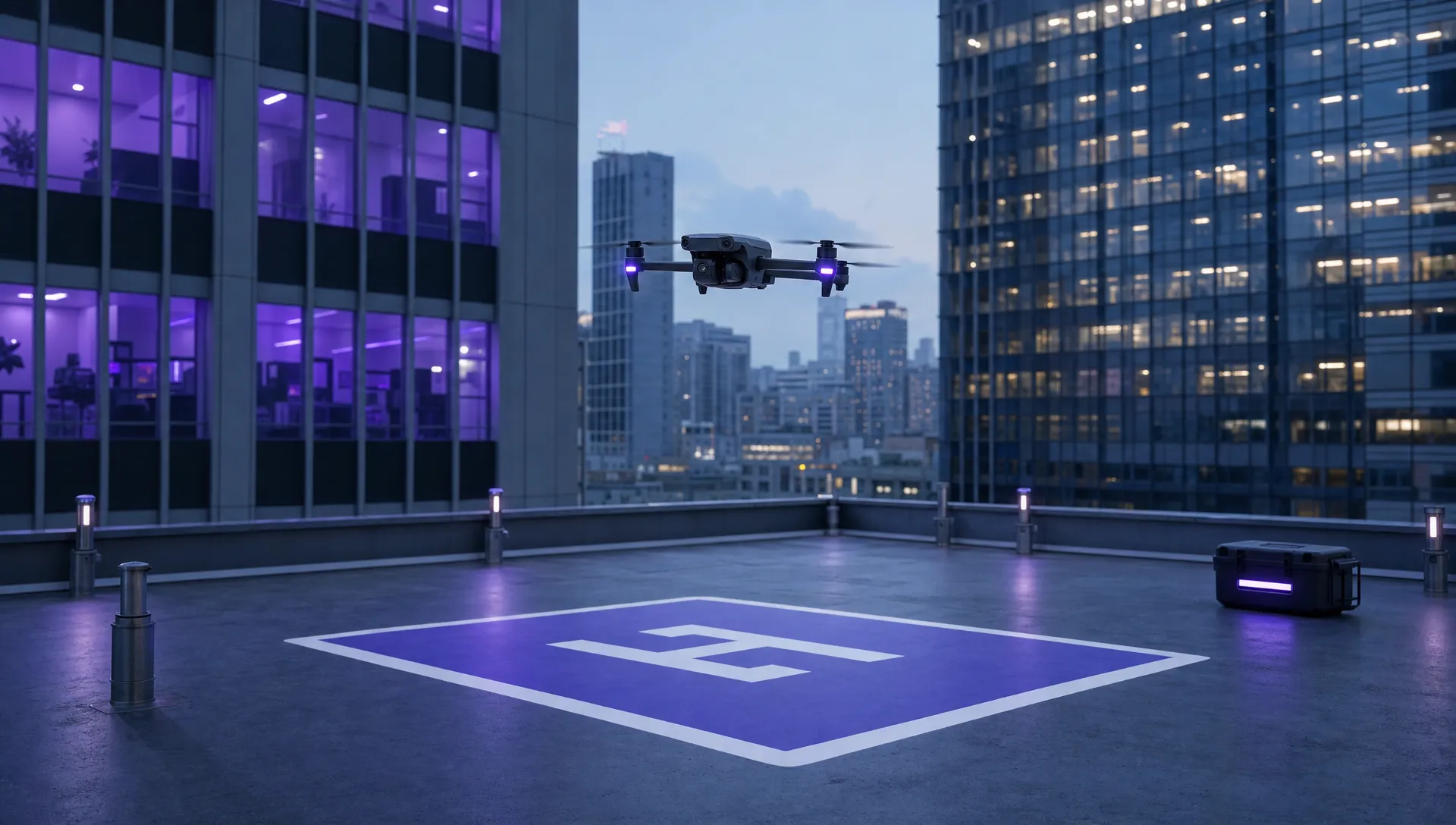
For utilities and emergency services, this is especially important. Infrastructure corridors, substations, ports, railways, roads and response scenes often sit close to controlled or restricted environments. The aircraft may be low risk, but the location may not be.
A dedicated operations workflow helps here. Dronedesk lists airspace intelligence, proximity intelligence, flight planning, configurable checklists, risk assessments and flight logging among its drone operations management features, alongside client, fleet, team and reporting tools. For teams managing repeatable operations, keeping these checks attached to each job is often more defensible than relying on memory or disconnected spreadsheets.
Commercial use: lighter rules, not lighter responsibilities
Under EU drone rules, commercial and recreational operators use the same operating categories. A paid roof inspection with a 249 g aircraft can still be an Open A1 flight if it meets all Open category requirements. You do not move into a different aviation category just because money changes hands.
That said, professional work carries extra responsibilities outside the basic flight category. These may include insurance, client permissions, landowner access, data protection, site induction rules, road or pedestrian management, and contractual evidence that the flight was planned and flown responsibly.
Privacy deserves particular attention. If your drone captures identifiable people, vehicle registrations, private property details or sensitive site information, data protection law may apply. For business use, you should think about what you capture, why you capture it, how long you keep it, who can access it, and how you respond if a member of the public asks about the flight.
For survey companies and utilities, the practical question is not just “Can we legally fly?” It is also “Can we prove that we planned, briefed, flew and recorded the job properly?” Flight logs, site notes, checklists and risk assessments become part of that evidence trail.
If you are formalising your process, this guide to building a drone flight risk assessment that works gives a useful structure for turning regulatory requirements into a practical operating habit.
Typical sub-250g scenarios and what to watch
Sub-250g aircraft can be very effective when the task matches the aircraft’s limits. They are less suitable when the job demands endurance, payload capacity, wind tolerance, heavy sensors or complex airspace access.
| Scenario | Likely Open A1 fit? | Key watch-outs |
|---|---|---|
| Urban roof photography for a survey | Often yes | Avoid unnecessary overflight of people, check local zones, manage take-off area and privacy. |
| Progress photos on a construction site | Often yes | Confirm site permission, brief workers, avoid cranes and maintain VLOS. |
| Utility asset inspection near roads | Sometimes | Traffic, people, critical infrastructure restrictions and VLOS constraints may increase risk. |
| Emergency service situational awareness | Sometimes | Coordinate with incident command and do not interfere with crewed aviation or response activity. |
| Mapping a large corridor beyond VLOS | No, not in Open category | BVLOS normally requires Specific category authorisation or another permitted framework. |
| Flying over a festival or dense crowd | No | Assemblies of people are not permitted in Open category A1. |
For organisations with mixed aircraft, the sub-250g drone should be managed as part of the wider fleet, not as an informal exception. The aircraft may be small, but it still needs maintenance status, batteries, pilot assignment, logs and operational history. If your team is scaling beyond a handful of aircraft, the drone fleet management guide explains the systems and controls that become important as operations grow.
When a sub-250g flight may leave the Open category
A lightweight aircraft can still be used in a higher-risk operation. When that happens, the operation, not just the drone, determines the category.
You may need Specific category authorisation, a declaration under an applicable scenario, or a separate permission if the operation involves BVLOS, flying over assemblies of people, exceeding Open category height limits, operating in a restricted geographical zone without meeting its conditions, carrying dangerous goods, dropping material, or conducting a mission where the ground or air risk cannot be kept within Open category limits.
This is particularly relevant for public sector and utility work. A small drone used for rapid inspection of a storm-damaged site may be fine in Open A1 if flown visually, away from crowds and outside restricted zones. The same aircraft used for a long linear inspection beyond visual line of sight is a very different regulatory proposition.
A practical compliance checklist for sub-250g flights
Before treating a flight as a simple A1 operation, confirm the essentials. A short checklist can prevent most mistakes.
- Confirm the aircraft is under 250 g in the exact configuration being flown.
- Check whether the aircraft is C0 class-marked, legacy under 250 g, or privately built.
- Confirm whether operator registration is required, especially if the drone has a camera.
- Check the national UAS geographical zones for the site.
- Plan to maintain VLOS throughout the flight.
- Keep below the 120 m Open category height limit, unless a lawful exception applies.
- Avoid overflight of uninvolved people and never overfly assemblies of people.
- Confirm insurance, client permission, land access and privacy requirements.
- Record the flight, pilot, aircraft, batteries, site checks and any incidents or anomalies.
For a hobby flight, some of these checks may be quick. For a professional job, they should be part of a repeatable operating process that your organisation can evidence later.
Frequently Asked Questions
Do I need to register a sub-250g drone in the EU? Usually yes if it has a camera or another sensor capable of capturing personal data, unless it is legally classed as a toy. Registration is for the UAS operator, not simply the individual aircraft.
Can I fly a sub-250g drone over people in the EU? In Open category A1, qualifying sub-250g aircraft may fly over individual uninvolved people, but you should avoid it where possible and minimise exposure. You must not fly over assemblies of people.
Do EU drone regulations under 250g require a pilot exam? Generally, C0 and qualifying sub-250g A1 operations do not require the A1/A3 online competency certificate. The remote pilot must still know the instructions, understand the rules and fly safely.
Can I use a sub-250g drone for commercial work? Yes, if the flight remains within the applicable Open category rules and any national or local requirements. Commercial operators should also manage insurance, privacy, permissions, risk assessments and records.
Is Remote ID required for sub-250g drones in the EU? C0 drones are not generally required to have Direct Remote Identification. However, local geographical zones or future national requirements may impose extra conditions, so check the relevant authority before flight.
Can I fly a sub-250g drone at night in the EU? Night flying can be possible in the Open category if the aircraft has the required green flashing light, remains within VLOS and complies with national and local restrictions. Adding a light must not push the aircraft outside its qualifying weight or approved configuration.
Make sub-250g compliance easier to prove
Sub-250g aircraft can simplify some EU drone operations, but they do not remove the need for good planning, records and judgement. For professional teams, the real advantage comes when small-drone flexibility is matched with consistent checks, logs and accountable workflows.
Dronedesk helps drone operators manage operations in one place, including flight planning, airspace and proximity intelligence, risk assessments, configurable checklists, flight logging, fleet management, team management, client management and reporting. If your organisation uses sub-250g aircraft alongside larger drones, a structured platform can help keep every job organised and easier to evidence.
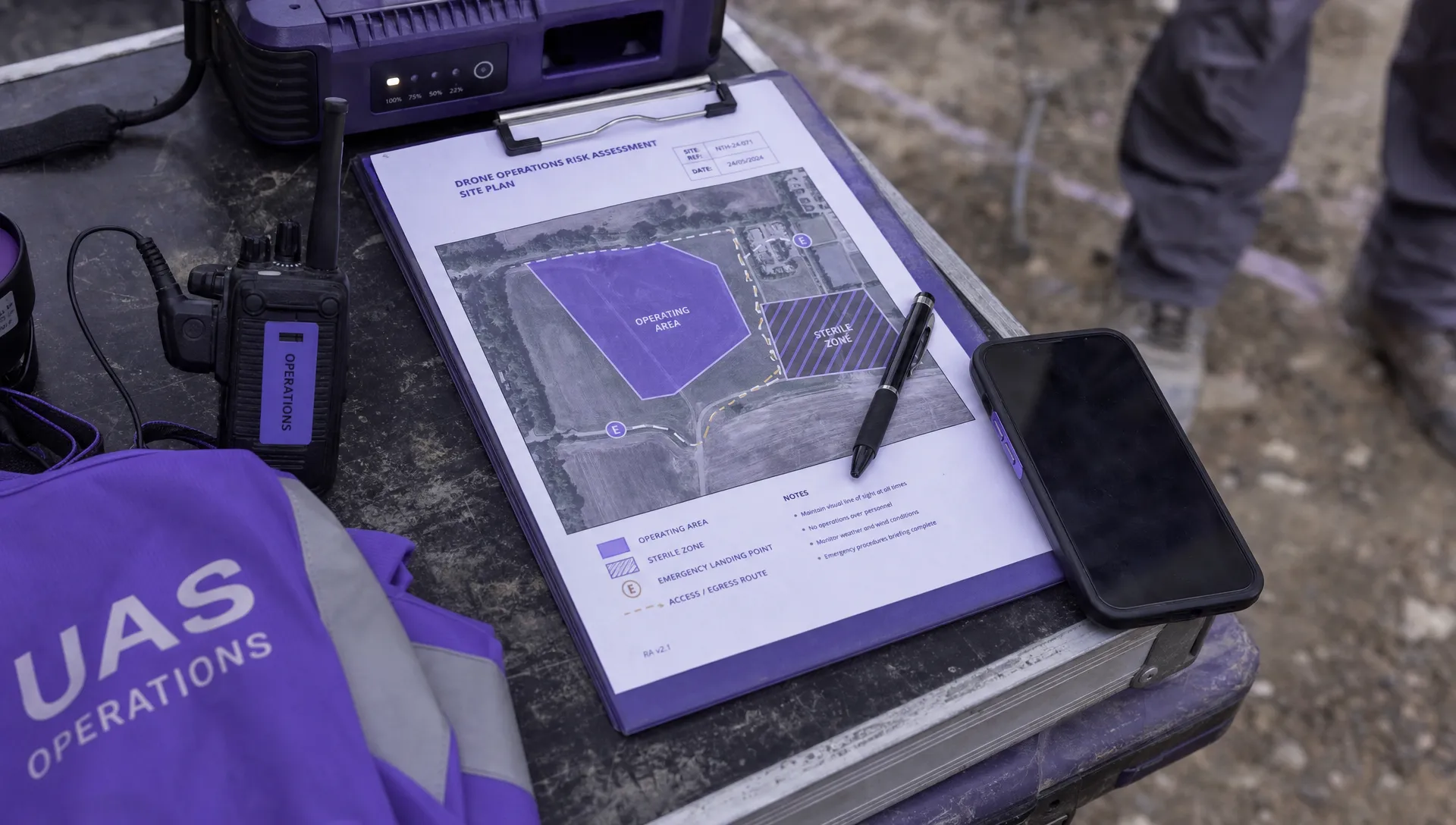 Drone Risk Assessment Controls That Work in the Field →
 FAA Drone License Costs Beyond the Knowledge Test →
 Drone Part 107 Operations: When a Waiver May Be Needed →
 Drone Operating Rules for Managing Contractors and Employees →
 BVLOS Drone Requirements for Building a Safety Case →
 Drone Pilot Test Mistakes That Cost Candidates Marks →
 FAA 107 License vs Part 107 Certificate: What’s the Difference? →
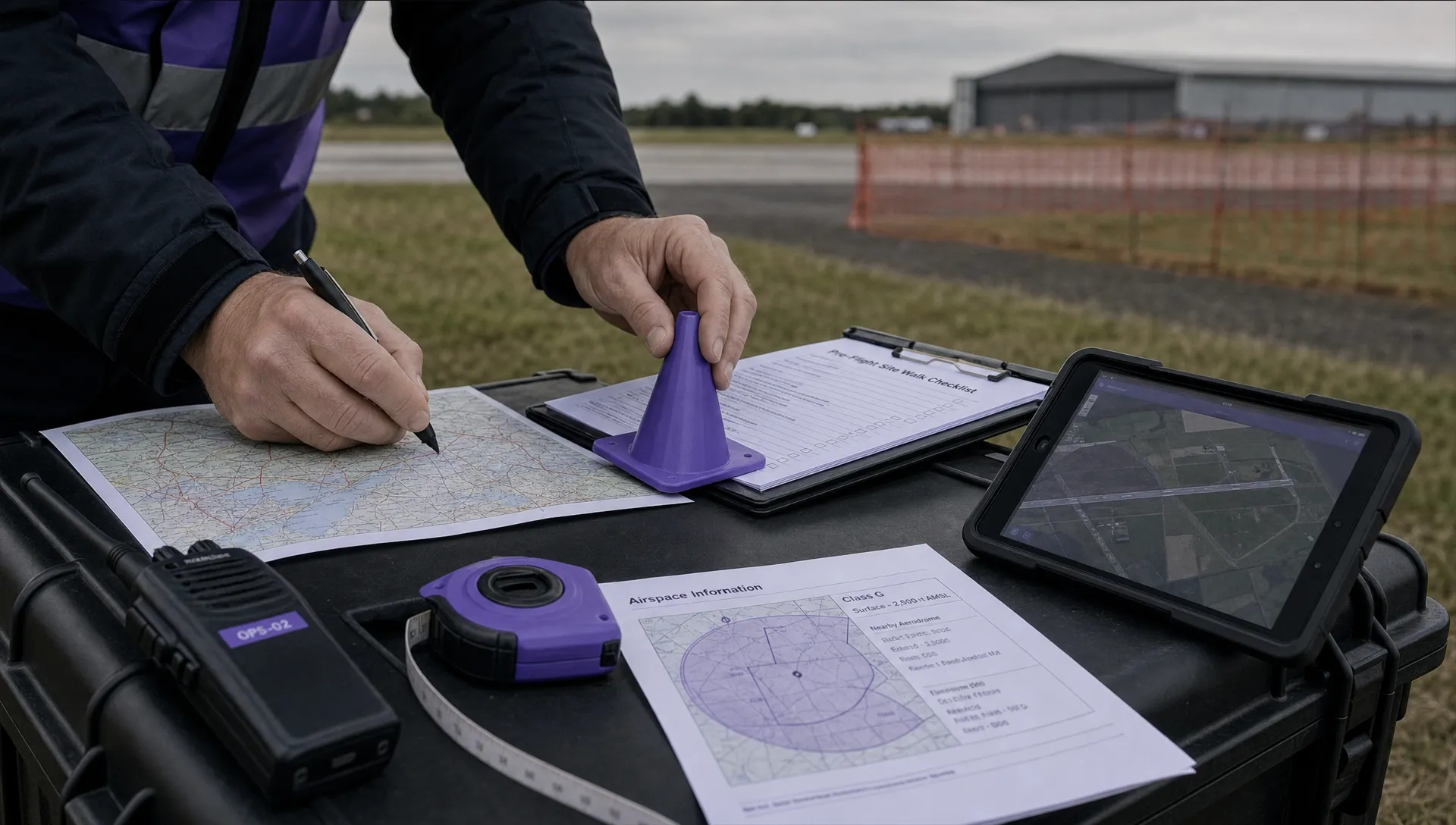 Drone Airport Rules: A Field Checklist for Site Assessments →
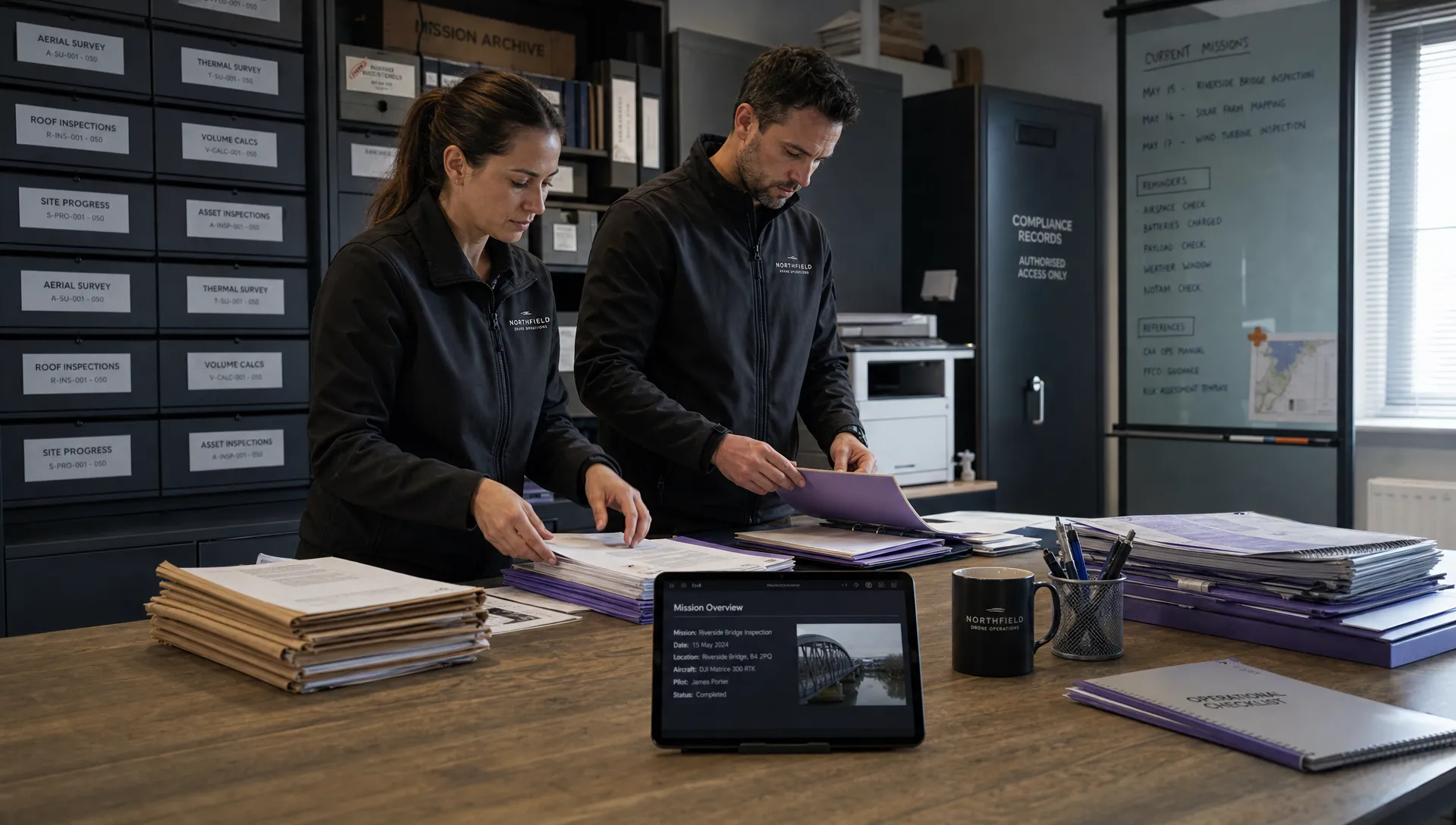 FAA Part 107 Record-Keeping Rules for Commercial Teams →
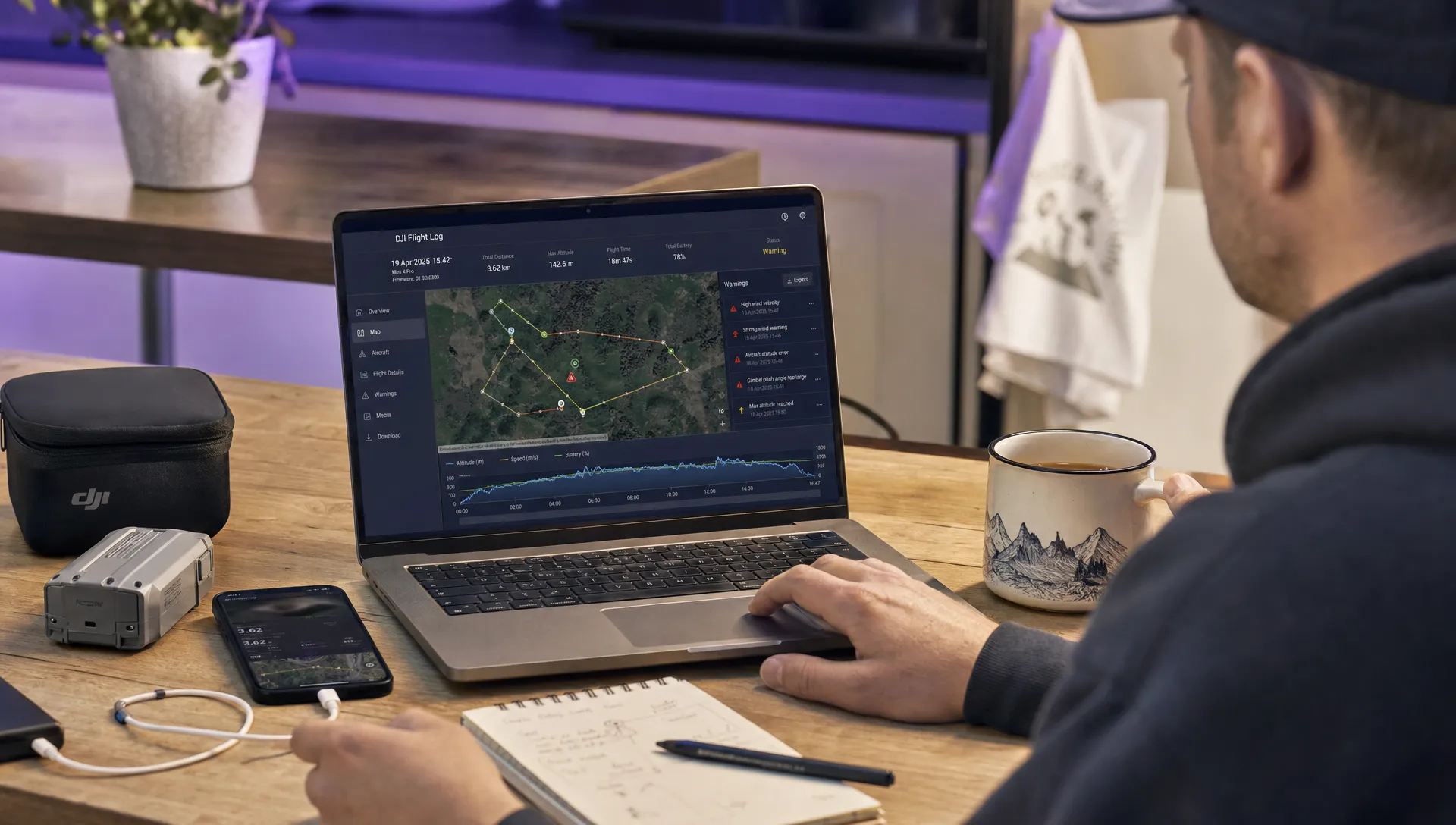 How to Review a DJI Flight Log After an Unexpected Event →