
FAA Regulations for Unmanned Aircraft Explained
FAA rules can feel scattered because they touch pilot certification, aircraft registration, Remote ID, airspace, flight limits, waivers and record keeping. For a commercial operator, survey team, utility company or public safety unit, the important question is not simply “Can I fly?” It is “Which rule applies to this specific mission, and what evidence do I need to prove I planned it properly?”
This guide explains the main FAA regulations for unmanned aircraft in practical terms. It focuses on the United States regulatory framework and uses “drone”, “unmanned aircraft”, “small unmanned aircraft” and “UAS” in the way most operators encounter them day to day. It is not legal advice, and you should always check the latest FAA material and the wording of the relevant regulation before operating.
What the FAA means by unmanned aircraft
The FAA generally uses “unmanned aircraft system” to describe not just the aircraft, but also the associated control station, command links and components required for safe operation. A drone used for a roof inspection, emergency scene assessment or corridor survey is still an aircraft in the FAA’s eyes, even if it weighs only a few pounds.
The FAA’s central resource for this area is its unmanned aircraft systems guidance. The core operating rule for most small commercial drone work is 14 CFR Part 107, which covers small unmanned aircraft weighing less than 55 lb, including payload, when operated for civil purposes.
That said, Part 107 is not the only pathway. Your mission type, aircraft weight, business model and operating environment determine which FAA rules apply.
The main FAA operating categories
Before planning any mission, classify the flight. This is the step that prevents many compliance problems later.
| Operating category | Typical use | Main FAA route |
|---|---|---|
| Recreational flying | Personal hobby flights with no business purpose | Exception for limited recreational operations under 49 U.S.C. 44809 |
| Commercial or non-recreational small UAS | Mapping, inspection, photography, internal utility work, training, research | Part 107 |
| Public aircraft operations | Eligible government operations, including some law enforcement, fire, emergency management and public agency missions | Public aircraft Certificate of Waiver or Authorization, often called a COA, or Part 107 |
| Advanced or specialised operations | Routine BVLOS, heavy-lift aircraft over 55 lb, some delivery networks, agricultural spraying, certified aircraft operations | Waivers, exemptions, certificates or additional FAA rules depending on the case |
A flight does not become recreational just because no money changes hands. If the purpose supports a business, public agency, utility, survey project or organisation, assume it is non-recreational unless you have a clear basis for another classification.
Pilot requirements under FAA drone rules
For Part 107 operations, the person responsible for the flight is the Remote Pilot in Command. That person must hold a Remote Pilot Certificate with a small UAS rating, or be directly supervising someone who is manipulating the controls. The Remote Pilot in Command is responsible for ensuring the aircraft is safe, the operation complies with the rules and the flight can be completed without undue risk.
To obtain the certificate, most new pilots pass the FAA aeronautical knowledge test at an approved testing centre. Certified crewed aircraft pilots may have an alternative training route if they meet FAA requirements. Recurrent training is also required to keep operating privileges current.
Recreational flyers have a different route. They must pass The Recreational UAS Safety Test, known as TRUST, and follow the statutory conditions for recreational operations. Those conditions include flying strictly for recreational purposes, maintaining visual line of sight, following an FAA-recognised community-based organisation’s safety guidelines and obtaining authorisation before flying in controlled airspace.
For emergency services, the choice between Part 107 and a public aircraft COA should be made deliberately. Many agencies use both, depending on the mission, staffing and urgency. Public safety teams should also understand the FAA’s emergency authorisation processes for time-critical incidents, rather than trying to improvise during a live response.
Registration and Remote ID
Most drones must be registered with the FAA before flight. The practical rule is simple: if the aircraft is flown under Part 107, register it. If it is flown recreationally and weighs more than 0.55 lb, register it. Registration is handled through the FAA’s DroneZone, and the registration number must be marked on the aircraft.
Remote ID is now a core part of FAA drone compliance. In general, drones that require registration must also comply with Remote ID unless a specific exception applies. Remote ID allows a drone to broadcast identification and location information while in flight, similar in purpose to a digital licence plate.
The FAA’s Remote ID guidance explains the main compliance paths:
- Standard Remote ID drone: The aircraft has built-in Remote ID capability.
- Remote ID broadcast module: A module is attached to a drone that does not have built-in Remote ID.
- FAA-recognised identification area: The drone is flown within a FRIA, which is mainly relevant to certain recreational and educational sites.
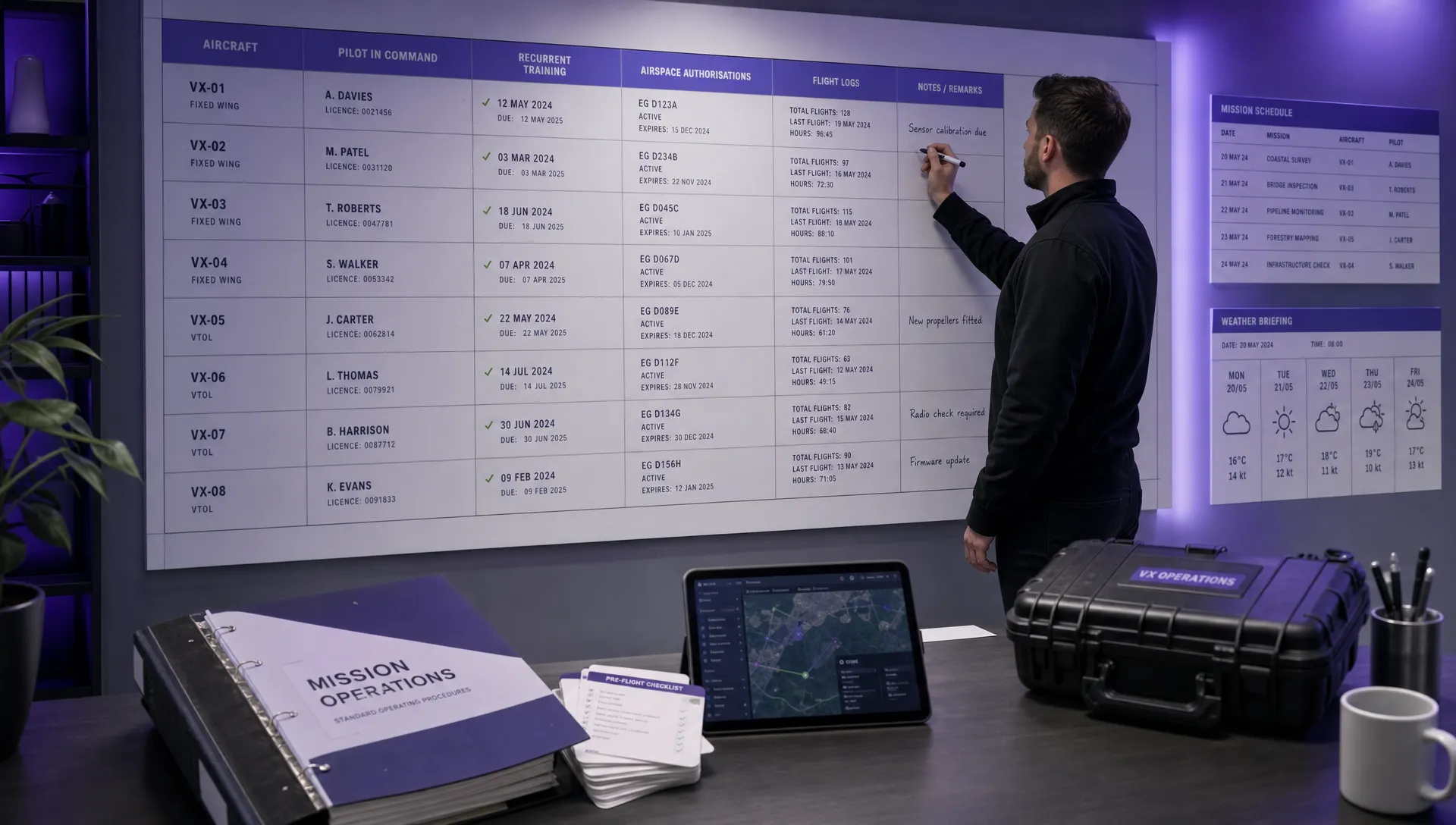
For operators managing multiple aircraft, Remote ID turns fleet records into a compliance issue. Registration numbers, serial numbers, firmware status, maintenance notes and module assignments should be easy to retrieve. If your operation is growing beyond a few aircraft, a structured approach to drone fleet management helps prevent small record errors from becoming operational delays.
Core Part 107 operating rules
Part 107 is designed to allow routine small UAS operations without requiring the same certification framework as crewed aviation. It is flexible, but it still sets clear limits.
| Part 107 requirement | Practical meaning for operators |
|---|---|
| Aircraft weight below 55 lb | The drone and payload together must stay below the small UAS limit unless another approval route applies. |
| Visual line of sight | The Remote Pilot in Command or visual observer must be able to see the aircraft unaided, apart from corrective lenses. |
| Maximum altitude | Generally 400 ft above ground level, or within 400 ft of a structure under the specific Part 107 structure rule. |
| Maximum groundspeed | 100 mph, or 87 knots. |
| Weather minimums | At least 3 statute miles visibility from the control station, with required cloud clearance. |
| Night operations | Allowed if the pilot has completed the required FAA training or testing and the drone has compliant anti-collision lighting. |
| Operations over people | Allowed only if the operation fits the relevant FAA category or another approval applies. |
| Operations over moving vehicles | Restricted unless the operation meets Part 107 conditions or has separate approval. |
| Controlled airspace | Requires FAA authorisation before flight. |
| Careless or reckless operations | Always prohibited. |
Two rules deserve special attention for commercial operators.
First, visual line of sight is still the default boundary for most Part 107 work. If a utility inspection or linear infrastructure survey requires the aircraft to fly beyond the crew’s ability to see it, that is a BVLOS operation and needs a different compliance route.
Second, operations over people and moving vehicles are more nuanced than many operators realise. The FAA created categories for operations over people, but eligibility depends on aircraft characteristics, injury risk, exposed rotating parts, Remote ID status and other conditions. A lightweight drone is not automatically cleared to fly over a crowd, an active roadway or an incident scene.
Airspace authorisations, TFRs and local constraints
Airspace is often where a technically legal aircraft and a qualified pilot still end up grounded. Part 107 operators need FAA authorisation before flying in controlled airspace, including many areas around airports. In many locations, this is handled through LAANC, the Low Altitude Authorization and Notification Capability. Where LAANC is not available or the mission does not fit automated approval, operators may need to apply through FAA DroneZone.
Airspace checks should not stop at airport grids. Operators also need to consider temporary flight restrictions, restricted areas, prohibited areas, national security restrictions, stadium restrictions and emergency airspace restrictions such as those around wildfires. The FAA’s B4UFLY resources are a useful starting point, but professional operators should have a repeatable airspace review process, not a last-minute app check.
State and local rules can also matter. The FAA controls the national airspace, but local authorities may regulate take-off and landing sites, park access, privacy, trespass, law enforcement procedures or critical infrastructure access. For survey and utility teams, landowner permissions and site access controls can be just as important as the airspace authorisation.
Waivers, BVLOS and missions that exceed standard Part 107
If your operation cannot be conducted within the standard Part 107 rules, you may need a waiver, exemption, certificate or another FAA approval. Common waiver topics include BVLOS, certain altitude requirements, some operations over people, and operations from moving vehicles when the standard rule does not fit.
A successful waiver application is not just a request for permission. It is a safety case. The FAA wants to understand the hazard, the mitigations, the crew roles, the aircraft capability, communication procedures, contingency planning and how the operator will maintain an equivalent level of safety.
BVLOS is the major example. Routine beyond visual line of sight flight is essential for scalable utility inspection, rail corridor mapping, pipeline patrol, large-area surveying and some emergency response missions. However, under standard Part 107, visual line of sight remains the baseline. As of 2026, the FAA has been working towards a broader Part 108 framework for routine BVLOS operations, but operators should treat current published FAA rules and their own authorisations as controlling until any final rule is in effect. For a plain-English primer on the operational concept, see Dronedesk’s guide to what a BVLOS drone is and why it matters.
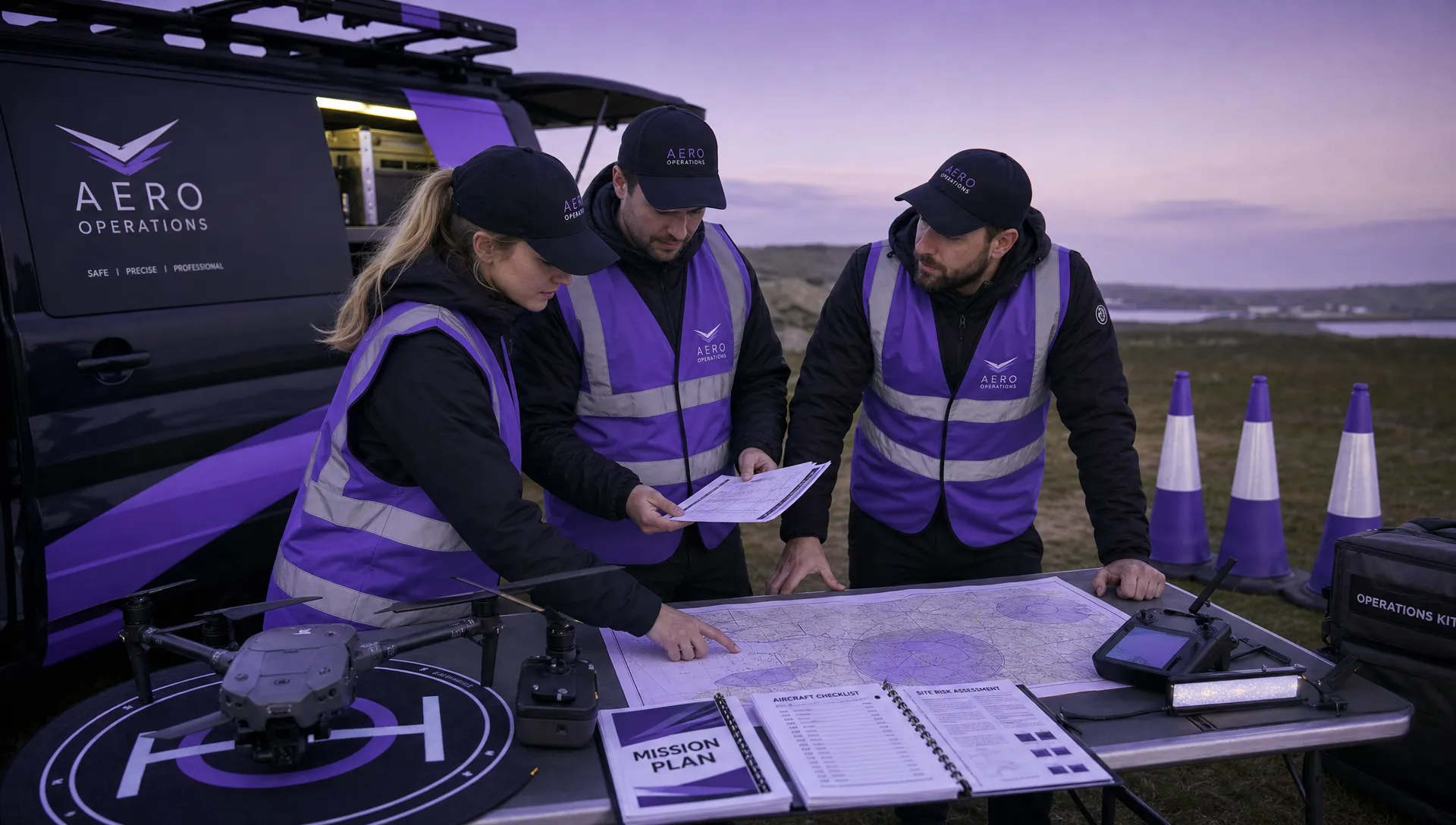
When Part 107 is not enough
Part 107 covers a large share of professional drone work, but it does not cover everything.
Aircraft over 55 lb are outside the small UAS rule and usually require a different FAA approval route, such as an exemption or certification pathway. This matters for heavy-lift utility work, large agricultural platforms and some specialised sensor payloads.
Agricultural spraying can trigger additional FAA requirements, including agricultural aircraft operator certification under Part 137. Operators using drones to dispense chemicals should also consider state pesticide rules, environmental requirements and product label restrictions.
Regular drone delivery networks may require approvals beyond standard Part 107, especially where operations involve complex routes, carriage for hire, BVLOS, flights over people or broader air carrier considerations. Some operators have pursued Part 135 air carrier certification for package delivery operations.
Public safety agencies should not assume every emergency flight is automatically exempt from FAA requirements. Police, fire, search and rescue, emergency management and disaster response teams need a clear operating framework in advance. That may include Part 107 pilots, a public aircraft COA, standard operating procedures and a process for urgent FAA authorisations where eligible.
Documentation that supports FAA compliance
Part 107 does not require every operator to maintain airline-style manuals, but professional drone operations should be able to show how compliance decisions were made. This is especially true for work near people, roads, airports, critical infrastructure or emergency scenes.
A solid compliance record usually includes:
- Pilot certificates and recurrent training status.
- Aircraft registration and Remote ID details.
- Maintenance, firmware and inspection records.
- Airspace authorisations and waiver documents.
- Mission plans, site notes and crew briefings.
- Risk assessments and mitigation decisions.
- Checklists used before, during and after flight.
- Flight logs, incidents, abnormal events and corrective actions.
Accident reporting is also part of the compliance picture. Under Part 107, certain serious injuries and qualifying property damage must be reported to the FAA within the required timeframe. Operators should define internally who decides whether an event is reportable, where evidence is stored and how corrective actions are tracked.
Risk assessment is where regulation becomes operational judgement. The rule may say an operation is allowed, but the site may still make it unwise. People may enter the area, a road may be closer than expected, a helicopter route may cross the site or a utility asset may introduce electromagnetic interference. Dronedesk has a separate guide on building a drone flight risk assessment that works if you want a deeper process-focused approach.
A practical FAA compliance workflow
For most commercial and public sector operators, compliance works best when it is embedded into the flight planning workflow rather than treated as a separate paperwork exercise.
- Classify the mission: Decide whether the flight is recreational, Part 107, public aircraft, or something requiring another FAA approval route.
- Confirm pilot eligibility: Check Remote Pilot Certificate status, recurrent training, crew roles and any visual observer requirements.
- Verify the aircraft: Confirm registration, Remote ID compliance, maintenance status, battery condition, payload configuration and operating limitations.
- Review the operating area: Check controlled airspace, LAANC availability, TFRs, nearby airports, heliports, critical infrastructure, terrain and local access rules.
- Assess ground and air risk: Consider people, roads, vehicles, livestock, emergency activity, other aircraft, weather and lost-link contingencies.
- Secure approvals: Obtain airspace authorisations, waivers, client permissions, landowner access and any agency approvals before the mission.
- Brief, fly and log: Brief the crew, use checklists, monitor changing conditions, record the flight and capture any lessons learned.
This workflow is useful whether you fly one aircraft for local inspections or coordinate a multi-team operation across several regions. The difference at scale is that manual tracking becomes harder. Dronedesk’s features page lists capabilities including client management, fleet management, team management, airspace intelligence, proximity intelligence, flight planning, flight logging, data reporting, configurable checklists and risk assessments. Used well, those kinds of operational records can help teams keep FAA compliance visible from planning through post-flight review.
Frequently Asked Questions
What is the main FAA rule for commercial drone operations? Most routine commercial small drone operations in the United States are conducted under 14 CFR Part 107. It applies to small unmanned aircraft under 55 lb used for non-recreational purposes, subject to pilot, airspace and operating requirements.
Do all drones need to be registered with the FAA? Drones flown under Part 107 generally need to be registered. Recreational drones over 0.55 lb also need registration. Very small recreational drones at or below 0.55 lb may be exempt from registration if flown only for recreation, but operators should check the current FAA rules.
Is Remote ID required for unmanned aircraft? In general, drones that require FAA registration must comply with Remote ID unless a specific exception applies. Compliance may be through a Standard Remote ID drone, a broadcast module or operation within an FAA-recognised identification area.
Can a Part 107 pilot fly at night? Yes, Part 107 night operations are allowed when the pilot has completed the required FAA training or testing and the drone has compliant anti-collision lighting visible for the required distance.
Can drones fly beyond visual line of sight under FAA rules? Standard Part 107 requires visual line of sight. BVLOS operations usually require a waiver, public aircraft COA, exemption, certification or another FAA-approved route. Operators should not treat BVLOS as routine unless their specific approval allows it.
Do emergency services have different FAA rules? Public safety agencies may operate under Part 107 or under a public aircraft COA if eligible. Some urgent operations may qualify for expedited FAA authorisations, but agencies should set up procedures before an incident occurs.
Bring FAA compliance into your daily drone workflow
FAA regulations for unmanned aircraft are easier to manage when every mission follows the same disciplined process: classify the flight, check the pilot and aircraft, review the airspace, assess the risk, secure approvals, brief the crew and log the outcome.
If you want to move that process out of spreadsheets and scattered documents, Dronedesk gives drone operators a single operations management platform for planning, records, checklists, risk assessments, fleet details and flight logs. That matters because compliance is not just about knowing the rule. It is about proving that the right decisions were made before the aircraft took off.
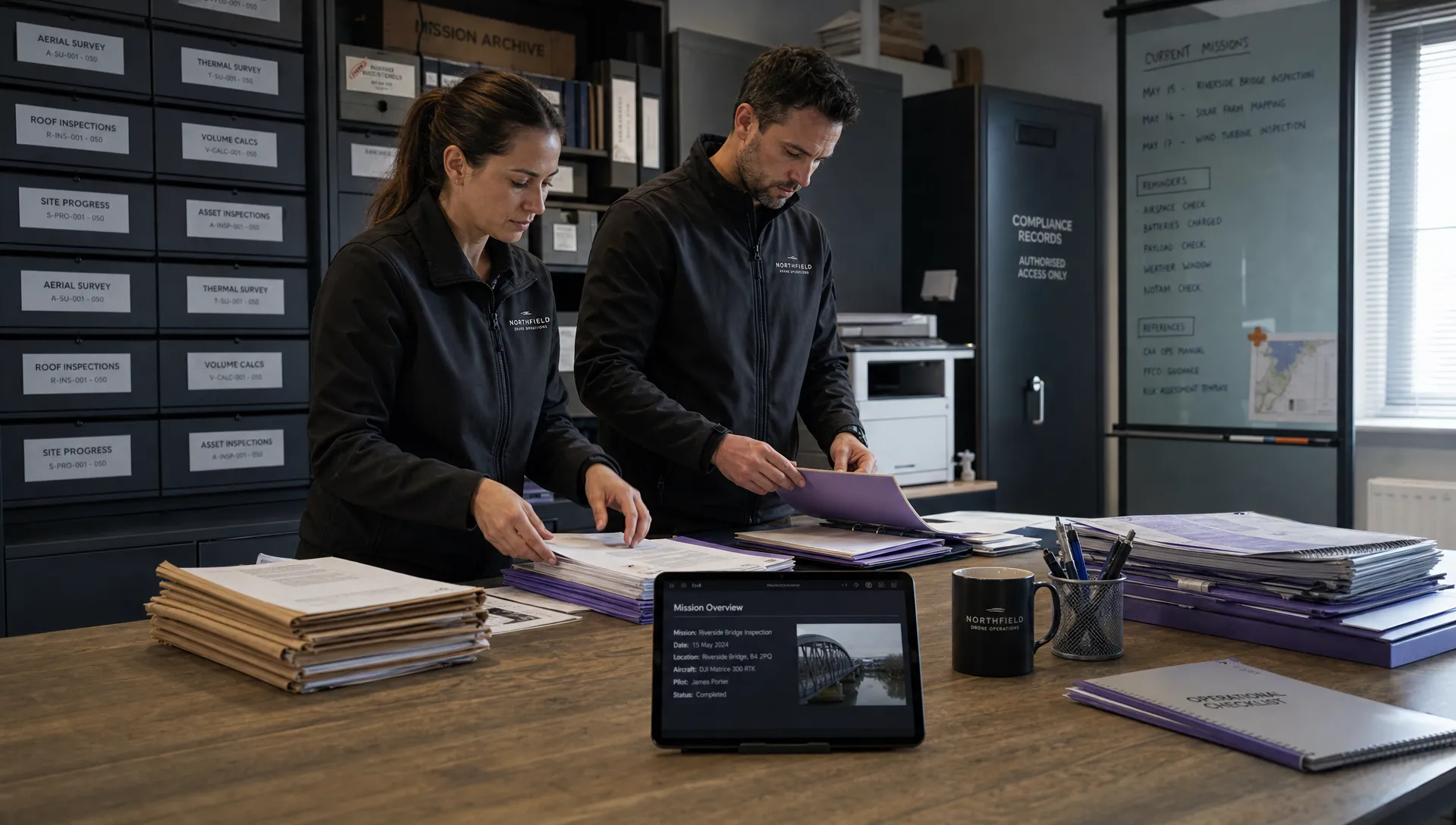 FAA Part 107 Record-Keeping Rules for Commercial Teams →
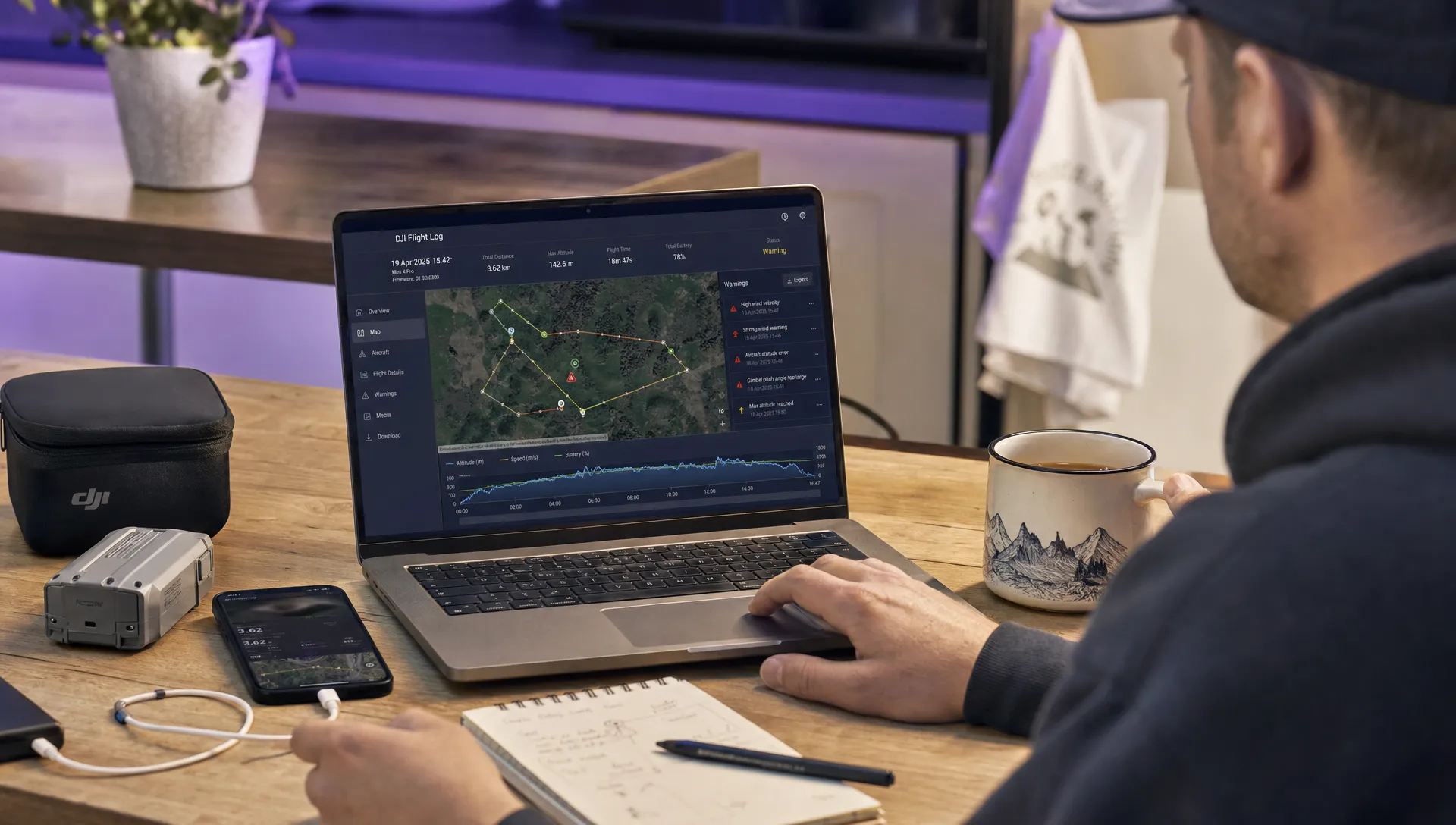 How to Review a DJI Flight Log After an Unexpected Event →
 Drone Laws Around the World: A Pre-Flight Research Framework →
 How to Compare Drone Survey Services for Complex Sites →
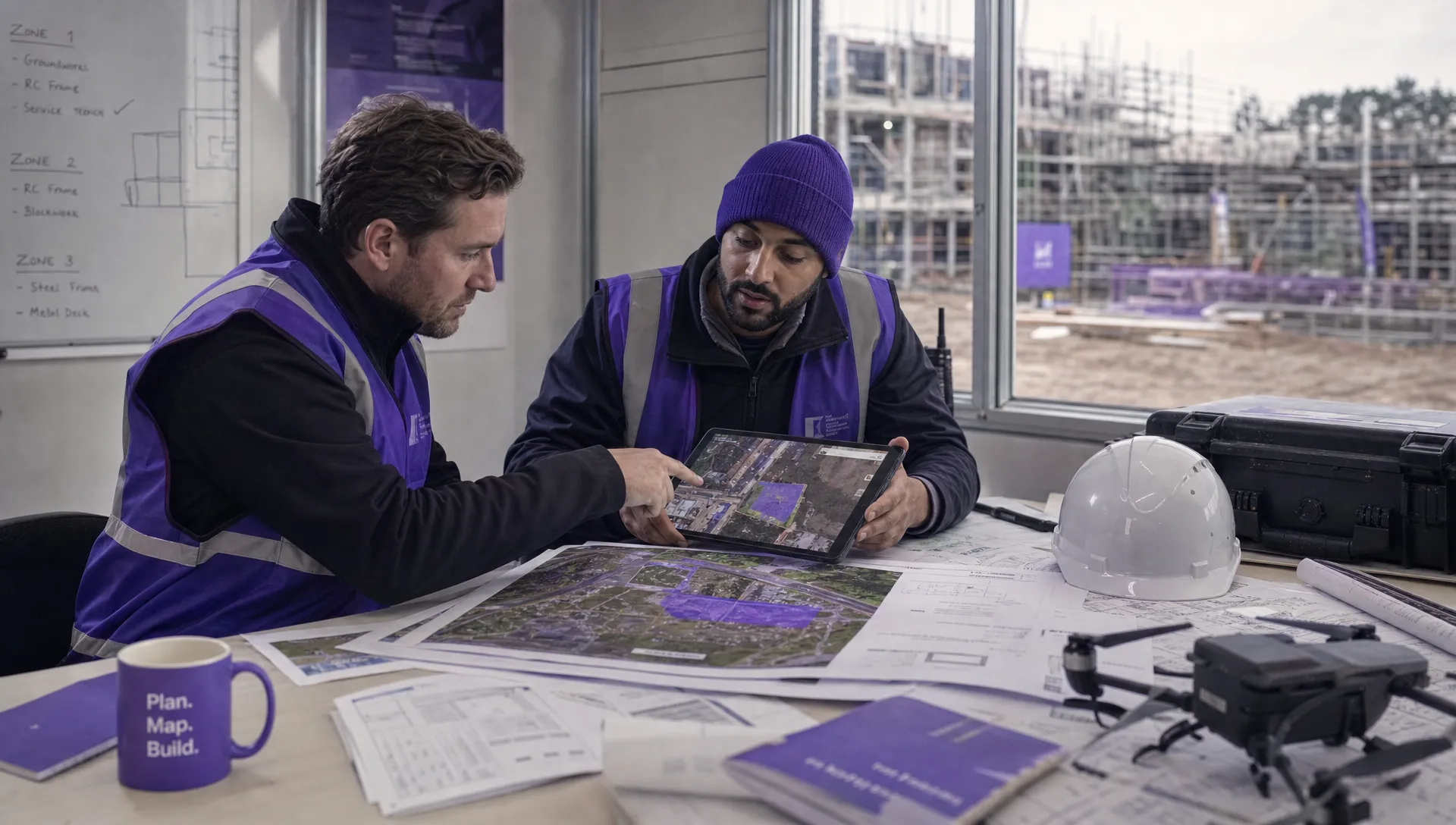 How to Start a Drone Mapping Business With a Clear Workflow →
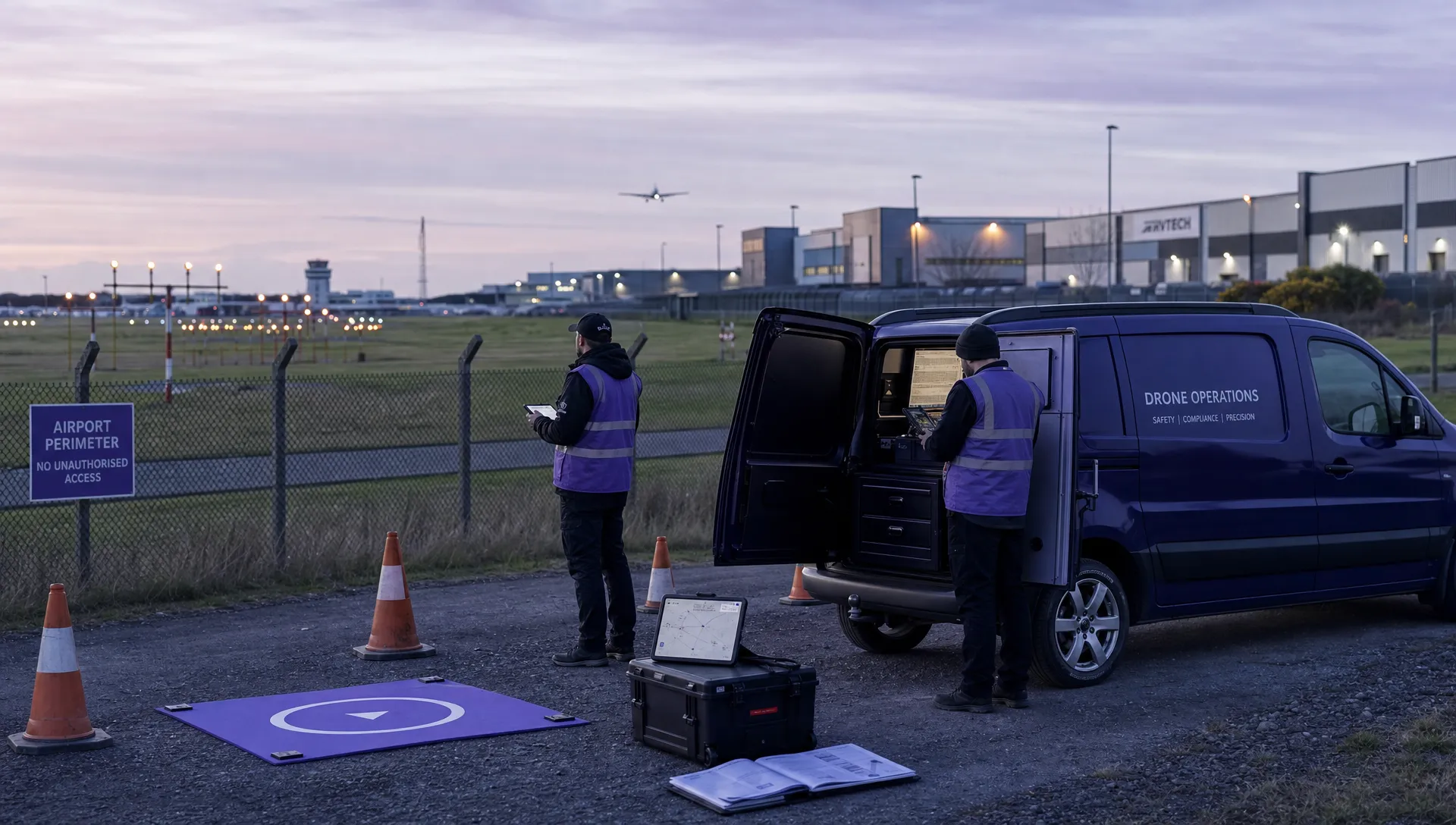 Class C Airspace Drone Rules for Commercial Flights →
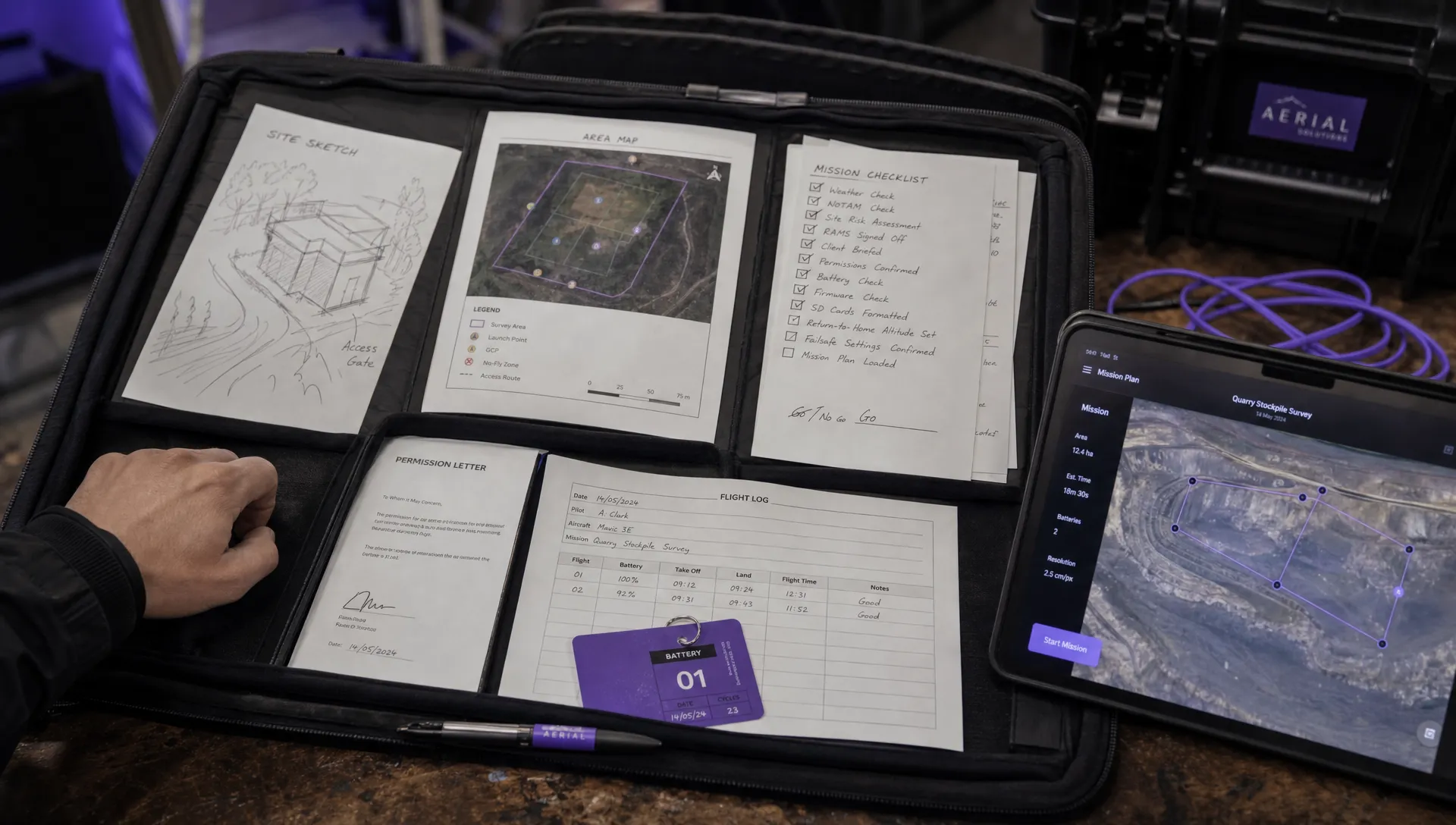 How to Create a Drone Job Pack for Every Mission →
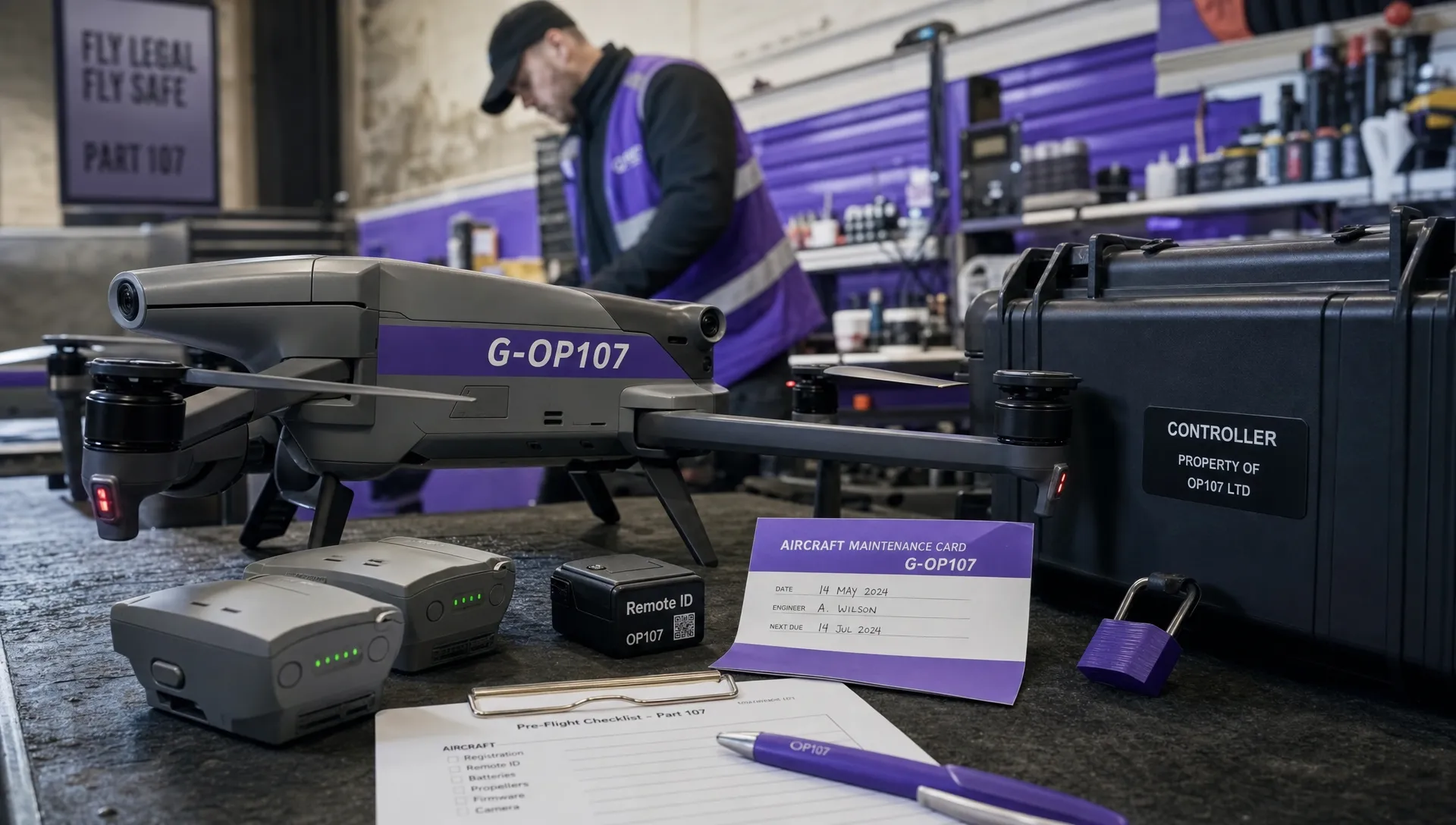 FAA Small UAS Rule: Key Requirements for Operators →
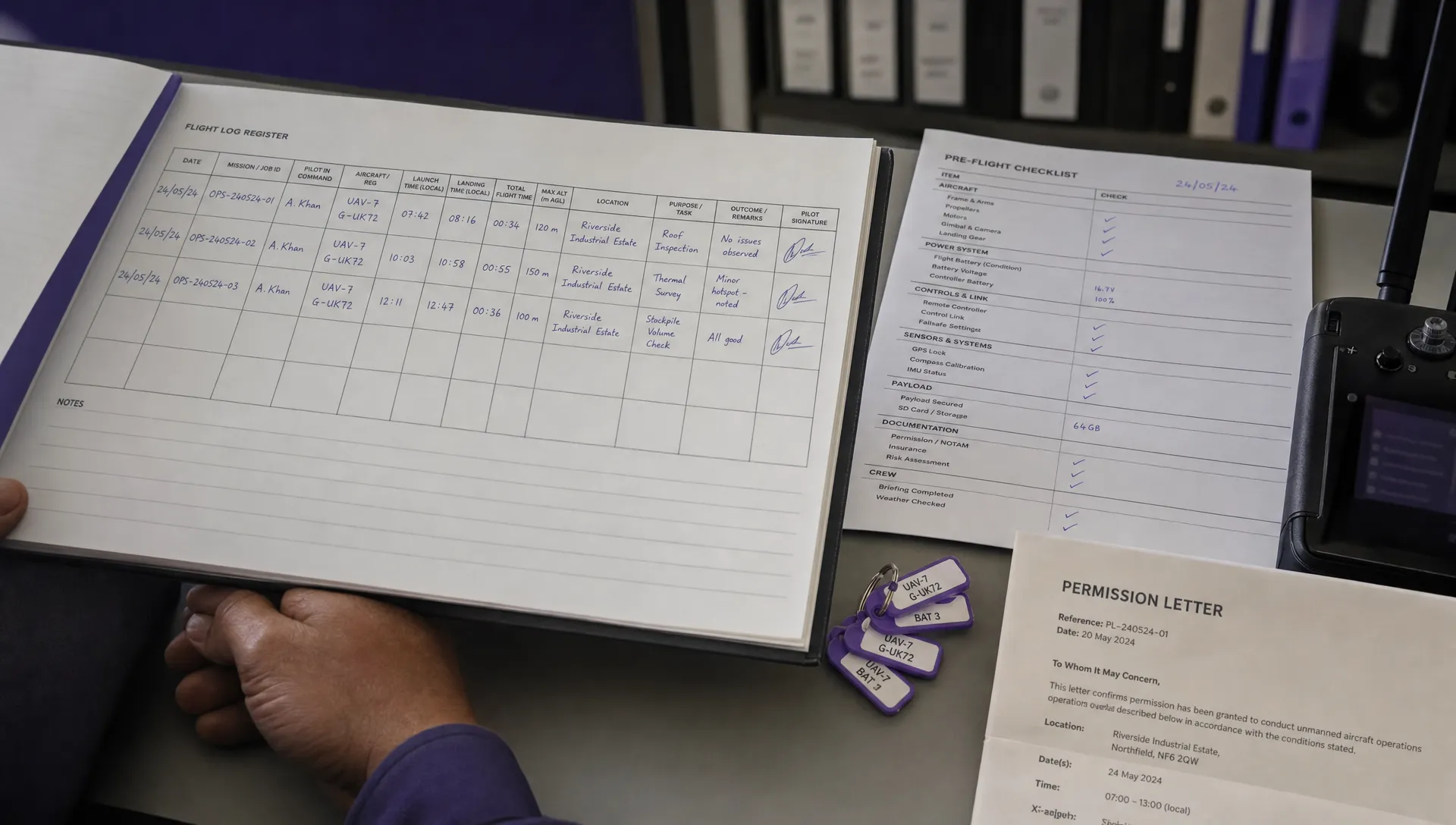 How to Build a Drone Pilot Flight Log That Is Audit Ready →
 FAA Drone Licence Requirements for Commercial Pilots →