
Part 107 Test Tips to Pass With Confidence
Passing the Part 107 test is not about being a gifted test-taker. It is about understanding how the FAA thinks about risk, airspace, weather and decision-making. If you study those areas in the right order, the exam becomes much less intimidating.
For UK-based readers, Part 107 is the FAA route for operating small unmanned aircraft commercially in the United States. It does not replace CAA requirements in the UK, but it matters if you plan to work in the US, support US clients, join a multinational drone programme or understand how American remote pilot standards are assessed.
This guide focuses on practical Part 107 test tips that help you pass with confidence, not just scrape through on memorised answers.
Know what the Part 107 test is really assessing
The FAA Part 107 aeronautical knowledge test is designed to check whether you can make safe decisions as a remote pilot in command. The standard initial test contains 60 multiple-choice questions, allows 2 hours and requires a minimum passing score of 70%. Always confirm current requirements through the FAA before booking, as rules and testing procedures can change.
A useful starting point is the FAA’s official guidance on how to become a certificated drone pilot. You should also use the FAA’s Airman Certification Standards as your blueprint because it shows the knowledge areas the test is built around.
The key mindset shift is this: the exam is not only asking, “Do you remember this rule?” It is often asking, “Can you apply this rule to a real flight scenario?” That is especially important for drone operators working in surveying, utilities, emergency services, inspection, agriculture or public safety, where the wrong decision can affect people, property and airspace users.
Prioritise the topics that appear in real operating decisions
Some Part 107 topics are straightforward memorisation, but many require interpretation. You do not need to become a crewed-aircraft pilot, but you do need enough aviation knowledge to avoid creating hazards.
| Study area | Why it matters | Smart study approach |
|---|---|---|
| FAA regulations | These define what you can and cannot do as remote pilot in command | Learn rules through flight scenarios, not isolated flashcards |
| Airspace and authorisations | Many commercial missions happen near controlled airspace, airports or heliports | Practise identifying Class B, C, D, E and G airspace on sectional charts |
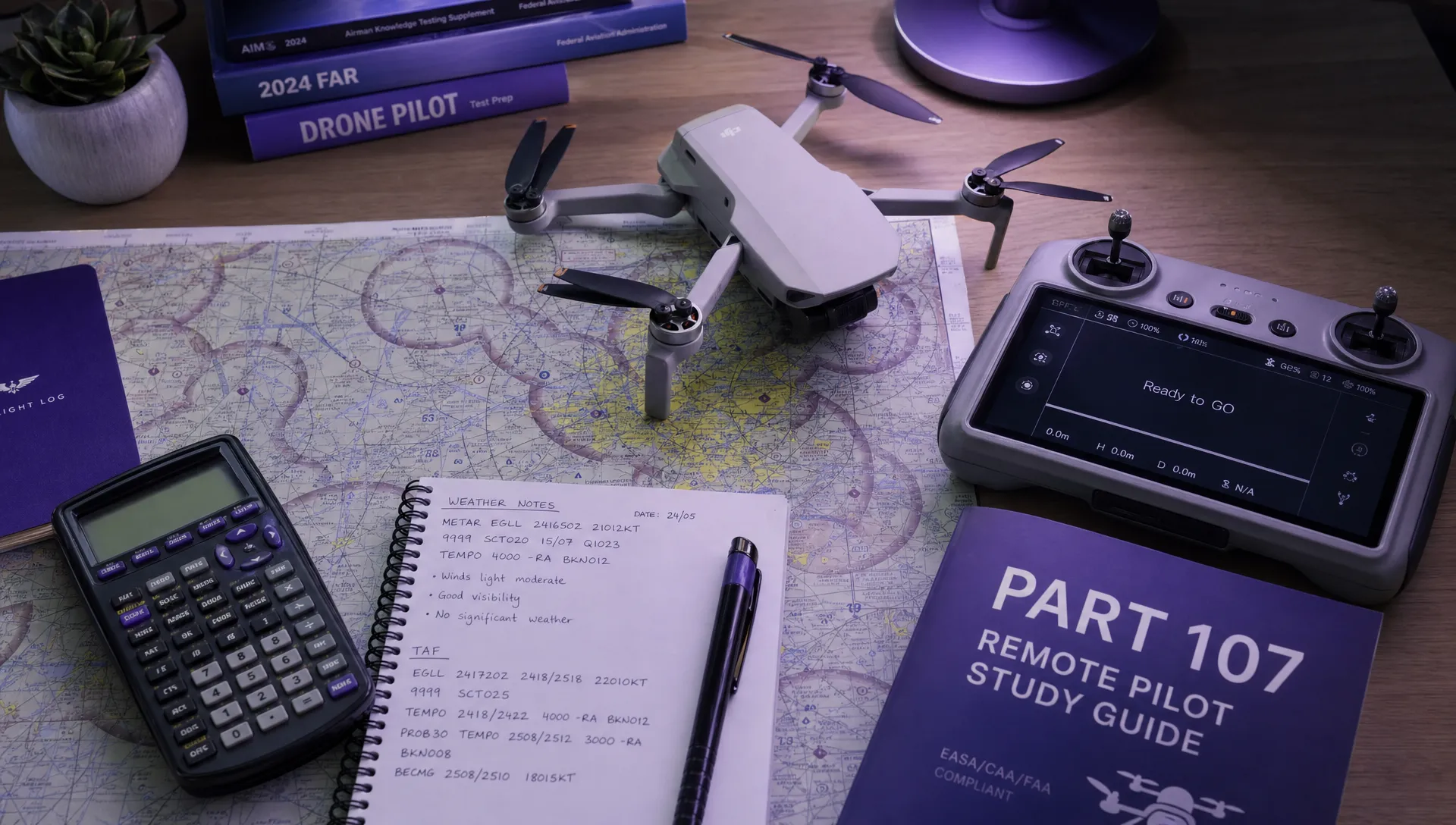
| Sectional charts | The test often checks whether you can extract meaning from chart symbols | Use the FAA testing supplement and read charts until they feel familiar |
| Weather | Weather affects visibility, performance, control and go/no-go decisions | Focus on METARs, TAFs, fronts, fog, wind and density altitude |
| Loading and performance | Weight, temperature and altitude can affect aircraft behaviour | Understand the principle, even if your drone has automated systems |
| Crew resource management | Commercial missions often involve observers, clients and ground teams | Study communication, task sharing and error management |
| Emergency procedures | The FAA wants to know that you can respond calmly to abnormal situations | Think through lost link, flyaways, low battery, people entering the area and aircraft conflict |
If you already operate drones professionally, do not skip the basics. Many experienced operators fail practice tests because they rely on field intuition while underestimating FAA terminology.
Start with regulations, then build outward
Many candidates open a Part 107 course and jump straight into sectional charts because they look technical. That is understandable, but it is usually better to start with regulations. The rules define the frame for everything else.
Make sure you understand the responsibilities of the remote pilot in command, including preflight checks, operating limitations, visual line of sight, daylight or night requirements, operations over people, waivers, accident reporting and Remote ID. Do not simply memorise numbers. Ask what each rule is trying to prevent.
For example, altitude limits are not arbitrary. They reduce conflict with crewed aircraft and create a predictable operating envelope. Visual line of sight is not just about seeing the drone. It supports orientation, traffic awareness and timely response to hazards.
Once the regulations make sense, airspace, weather and risk questions become easier because you can connect them back to the same safety logic.
Make sectional charts less intimidating
Sectional charts are one of the biggest confidence blockers for Part 107 candidates. They look crowded at first, but the exam only expects you to interpret the information relevant to a small UAS operation.
Start by learning the meaning of controlled airspace boundaries and altitude labels. Then add airport symbols, obstacles, special use airspace, latitude and longitude, frequencies and chart legends. Do not try to memorise an entire chart. Instead, practise answering questions such as:
- Is this location in controlled airspace?
- What class of airspace applies at the surface?
- Is authorisation required before operating here?
- Are there nearby obstacles, airports or special restrictions?
- What is the maximum elevation figure in this quadrangle?
The more you treat a chart as a map for decision-making, the easier it becomes. If you are preparing for commercial work such as utility inspection or emergency response, this habit is especially valuable because you may be planning around substations, roads, hospitals, temporary restrictions or other sensitive areas.
Study weather as a go/no-go skill
Weather questions can feel abstract if you have only flown small drones in calm conditions. The test may ask about METARs, TAFs, fronts, cloud formation, fog, wind shear, atmospheric stability and density altitude. The goal is not to turn you into a meteorologist. The goal is to check whether you can recognise conditions that could compromise a flight.
A practical way to study weather is to connect each concept to an operational decision. Fog and low cloud affect visibility. Gusting wind affects control margins and battery use. High density altitude reduces aircraft performance. Thunderstorms bring turbulence, downdrafts and rapidly changing conditions. Temperature can affect battery performance and pilot comfort.
When a practice question asks about weather, do not rush to pick the familiar-looking answer. Ask what risk is increasing, then choose the option that best supports a conservative remote pilot decision.
Use practice tests properly
Practice exams are useful, but they can also create false confidence. If you repeat the same mock test until you remember the answers, you may score well without understanding the underlying topic.
A better approach is to treat each wrong answer as a diagnostic. Record the topic, the reason you missed it and the rule or concept behind the correct answer. If you guessed correctly, mark that too. A guessed correct answer is still a knowledge gap.
Use a simple review table as you study:
| Practice result | What it means | What to do next |
|---|---|---|
| Correct and confident | You understand the concept | Review lightly before the exam |
| Correct but guessed | You may not be able to repeat the result | Re-study the topic and do similar questions |
| Incorrect due to wording | You rushed or misread the scenario | Practise slower question analysis |
| Incorrect due to knowledge gap | You need more instruction or repetition | Return to the FAA source material or course lesson |
| Incorrect due to chart interpretation | You need more chart practice | Work through the legend and similar examples |
This review method is slower than blasting through hundreds of questions, but it produces far better exam readiness.
Build a realistic study schedule
You do not need to study all day, but you do need consistency. For most candidates, a focused 2 to 3 week plan is more effective than a last-minute cram. If you already have aviation experience, you may need less time. If you are new to airspace and charts, give yourself longer.
| Study phase | Focus | Goal |
|---|---|---|
| Days 1 to 3 | Regulations and remote pilot responsibilities | Understand the operating framework of Part 107 |
| Days 4 to 7 | Airspace and sectional charts | Become comfortable identifying airspace and restrictions |
| Days 8 to 10 | Weather, performance and loading | Link conditions to safe go/no-go decisions |
| Days 11 to 13 | Operations, emergencies and crew resource management | Think like a remote pilot in command |
| Final days | Full practice tests and weak-area review | Improve accuracy without memorising answer patterns |
Keep study sessions short enough to stay sharp. Forty-five minutes of focused chart practice is usually better than three distracted hours with a video course running in the background.
Learn the FAA language
One of the simplest Part 107 test tips is to become fluent in FAA wording. The test often uses formal aviation terms that may not match everyday drone industry language. For example, you may say “drone pilot” in conversation, but the exam will use “remote pilot in command”. You may think in terms of “permission”, while the test may refer to “authorisation” or “waiver”.
Pay attention to words such as must, may, should, prohibited, except, unless and required. These words can completely change the meaning of a question.
When you practise, read the question stem twice before looking at the answers. Identify exactly what is being asked. Is it asking for the safest action, the regulatory requirement, the meaning of a symbol or the operational effect of a condition? Once you know the task, irrelevant answer choices are easier to reject.
Do not ignore the less glamorous topics
Most candidates expect airspace and weather to be difficult, so they study those areas. The weaker scores often come from topics that seem less exciting, such as maintenance, preflight inspections, physiological factors, crew communication and emergency procedures.
These areas matter because Part 107 is not only about where you can fly. It is about whether you can manage an operation safely from planning to landing. For professional drone teams, that includes documentation, briefings, equipment readiness, battery status, site control and contingency planning.
This is also where exam knowledge starts to become operational discipline. A good remote pilot does not just pass the test and then rely on memory. They use repeatable workflows, checklists and risk assessments to reduce mistakes in the field. If you are developing those processes, Dronedesk has a useful guide on building a drone flight risk assessment that works.
Use scenario thinking for every major rule
The Part 107 test is easier when you can picture the flight. Instead of memorising a rule in isolation, create a mini scenario around it.
Take controlled airspace. A weak study method is to memorise that some airspace requires authorisation. A stronger method is to imagine a roof inspection near an airport, check the sectional chart, identify the class of airspace, consider LAANC or FAA authorisation, assess nearby obstacles and decide whether the mission can proceed.
The same approach works for night operations, operations near people, emergency response, lost link procedures and weather decisions. Scenario thinking turns rules into operational judgement, which is exactly what the FAA wants to see.
For survey companies and utility operators, this approach mirrors real planning. A corridor inspection, mapping project or emergency deployment may involve multiple take-off points, changing ground hazards, landowner access, temporary restrictions and crew coordination. The test is only the beginning, but the thinking pattern is directly relevant.
Exam-day tips to stay calm and accurate
By the time you sit the exam, your goal is not to learn new material. Your goal is to protect the knowledge you already have from stress, fatigue and careless mistakes.
Arrive early, bring the required identification and know the test centre rules before you travel. During the exam, answer the questions you know first, mark difficult ones for review and avoid spending too long on a single chart question. If a question feels confusing, remove obviously wrong answers before choosing between the remaining options.
Watch for absolutes. Words such as always and never can be traps unless the regulation truly supports them. Also watch for questions that ask for the best answer, not merely a technically possible answer.
If maths or chart questions slow you down, do not panic. You have enough time, but you need to manage it. Keep moving, then return to anything that requires careful calculation or chart interpretation.
What to do after you pass
Passing the Part 107 test is a milestone, but it is not the end of professional readiness. You will still need to complete the FAA application process, meet applicable eligibility requirements and maintain currency under FAA rules. You should also keep studying as regulations evolve, especially around Remote ID, waivers, operations over people and advanced operations.
More importantly, start converting exam knowledge into repeatable operating procedures. That means standardising preflight planning, checklists, risk assessment, flight logging and team communication. According to the Dronedesk features page, Dronedesk supports areas such as client management, fleet management, team management, airspace intelligence, proximity intelligence, flight planning, flight logging, data reporting, configurable checklists and risk assessments.
For professional operators, those workflows matter because the real world is messier than an exam question. A client may change the scope. Weather may deteriorate. A bystander may enter the operating area. A battery may behave unexpectedly. Good planning systems help you apply the same safety principles consistently.
Common Part 107 test mistakes to avoid
Many candidates fail not because the test is impossible, but because their preparation is uneven. Avoid these common traps:
| Mistake | Why it hurts your score | Better approach |
|---|---|---|
| Memorising practice questions only | The real test may phrase the same concept differently | Learn the rule or principle behind each answer |
| Skipping sectional charts | Chart questions can be time-consuming and high-pressure | Practise with the legend and testing supplement regularly |
| Treating weather as theory | Weather questions often test operational judgement | Link each weather concept to flight risk |
| Ignoring regulations updates | Old courses or notes may not reflect current rules | Check FAA sources before your final review |
| Rushing through wording | Small words can change the legal meaning | Read each question carefully before viewing answers |
| Studying without review notes | Weak areas remain hidden | Track wrong answers by topic and revisit them |
The most confident candidates are not necessarily the ones who study the longest. They are the ones who study deliberately, correct weak areas and practise applying rules to realistic flight scenarios.
Frequently Asked Questions
How hard is the Part 107 test? The Part 107 test is manageable if you study the FAA knowledge areas properly. Most difficulty comes from unfamiliar aviation concepts such as airspace, sectional charts and weather, rather than from the number of questions.
What score do you need to pass the Part 107 test? The standard passing score is 70%. The initial aeronautical knowledge test has 60 multiple-choice questions and a 2-hour time limit, but you should always verify current FAA requirements before booking.
How long should I study for the Part 107 test? Many candidates prepare in 2 to 3 weeks with consistent study. If you are new to aviation charts, airspace or weather, allow more time so you can build understanding instead of relying on memorisation.
Are Part 107 practice tests enough to pass? Practice tests help, but they should not be your only study method. Use them to identify weak areas, then return to FAA source material, chart practice and scenario-based learning.
Does Part 107 apply in the UK? Part 107 is an FAA rule for small unmanned aircraft operations in the United States. UK operators must follow CAA requirements for UK operations, but Part 107 may be relevant if you work in the US or support US-based projects.
Pass the test, then build professional habits
The best Part 107 test tips all point in the same direction: understand the why behind the rules, practise the topics that drive real flight decisions and use mock exams to diagnose weak areas. If you can read the question carefully, interpret charts calmly and connect weather or airspace to safe decision-making, you can walk into the test with confidence.
Once you are qualified, keep the same mindset in your daily operations. Structured planning, checklists, risk assessments and flight records turn exam knowledge into safer, more consistent drone work. If you are ready to organise those workflows in one place, explore how Dronedesk supports drone operations management.
 How to Start a Drone Mapping Business With a Clear Workflow →
 Class C Airspace Drone Rules for Commercial Flights →
 How to Create a Drone Job Pack for Every Mission →
 FAA Small UAS Rule: Key Requirements for Operators →
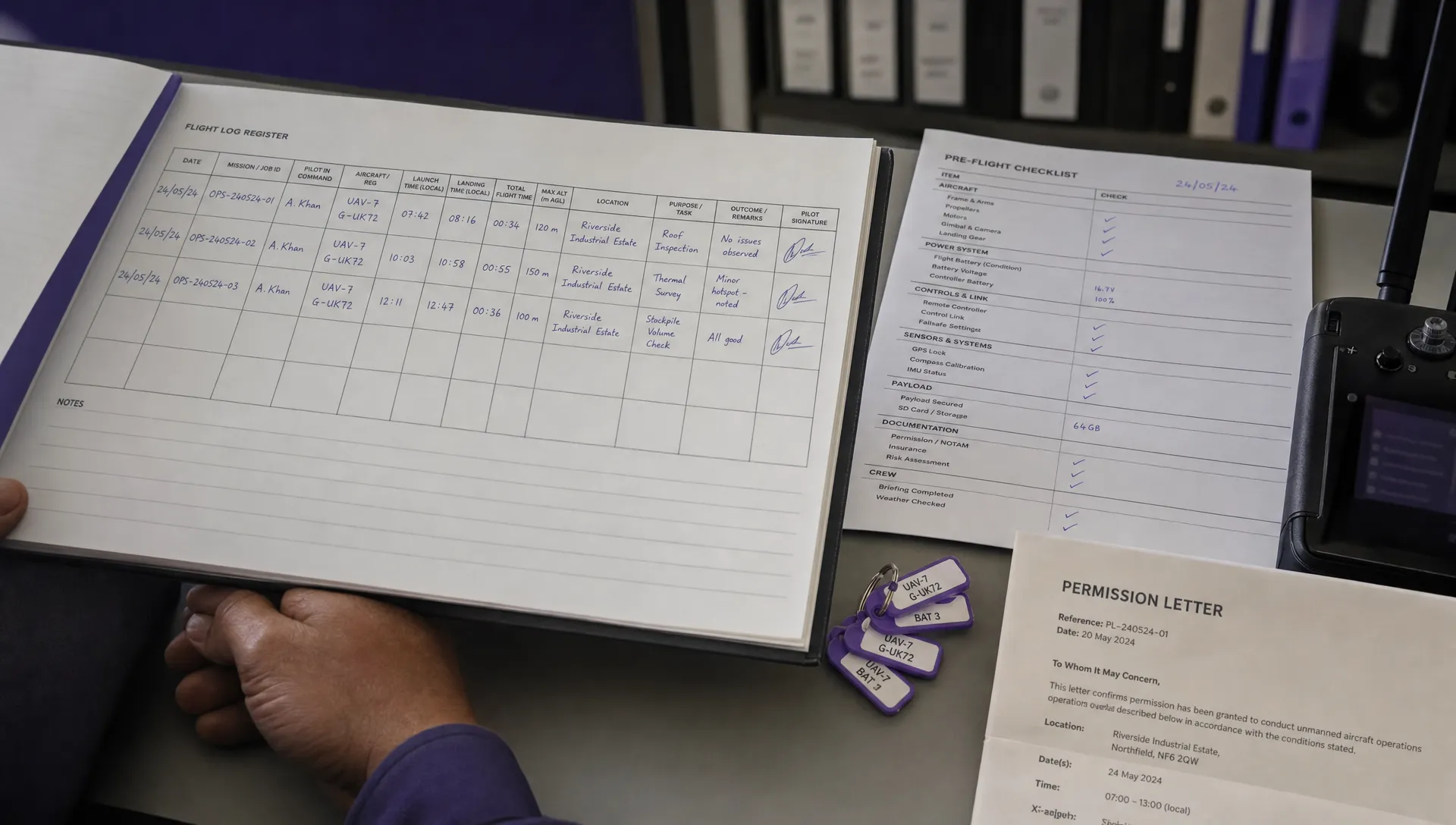 How to Build a Drone Pilot Flight Log That Is Audit Ready →
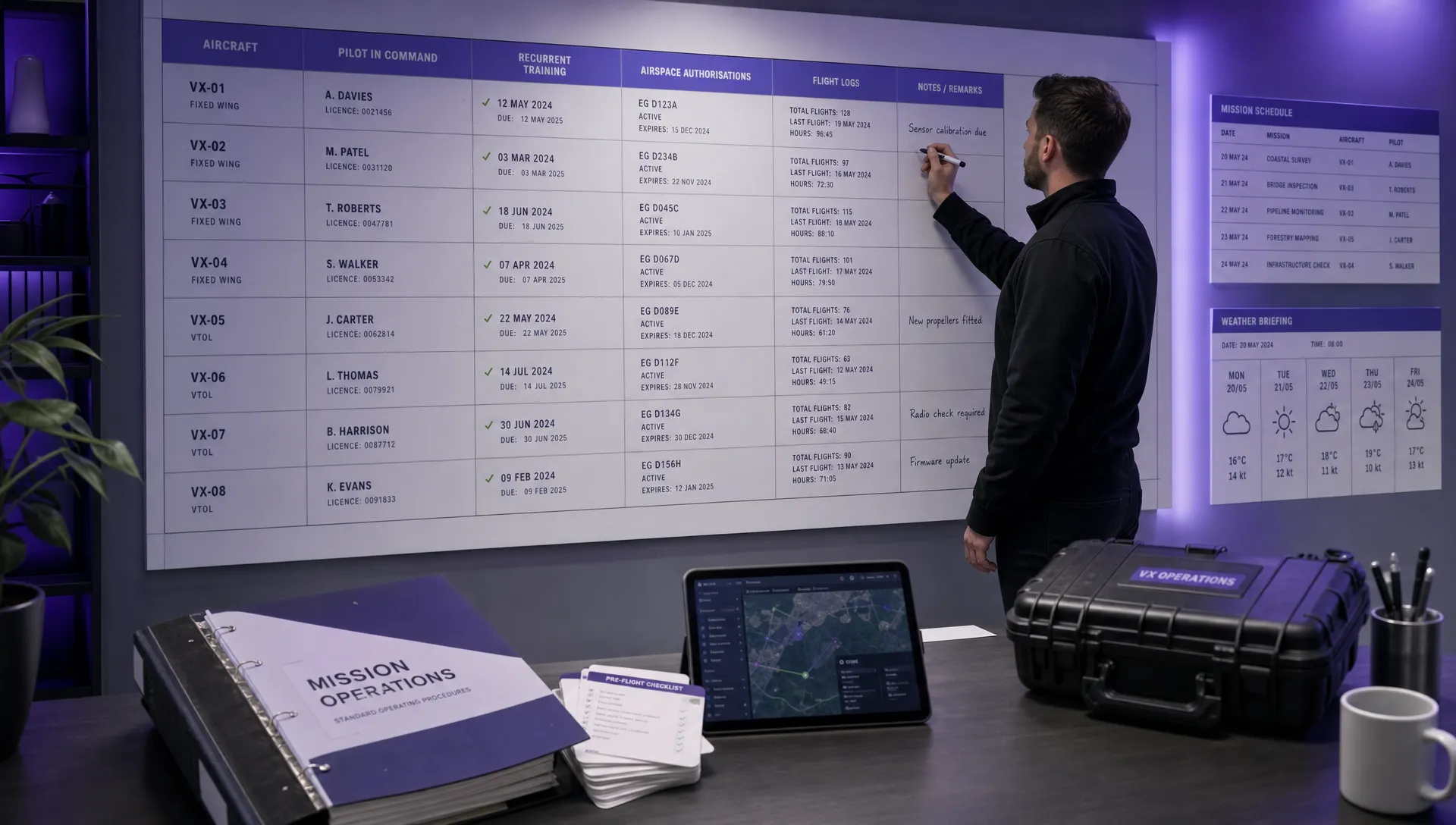 FAA Drone Licence Requirements for Commercial Pilots →
 FAA BVLOS Waivers Granted: What Successful Cases Show →
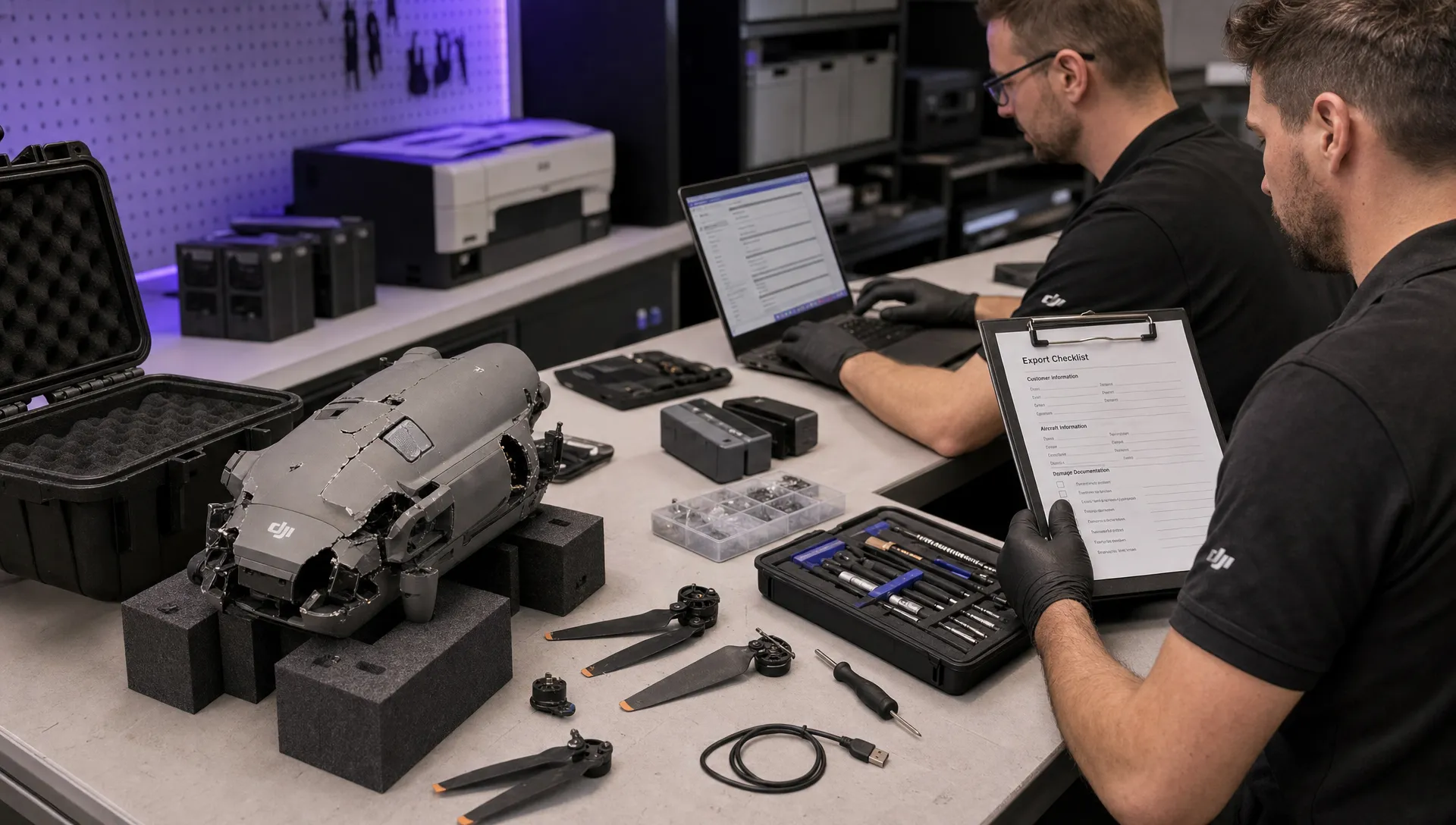 How to Export DJI Flight Logs for Incident Reviews →
 Drone Safety and Legal Duties for Business Operations →
 EASA Drone Regulations: Open, Specific and Certified Categories →