
BVLOS Requirements Explained for Commercial Operators
BVLOS can unlock the kind of drone work that visual line of sight operations struggle to scale: long linear surveys, utility inspections, wide-area mapping, emergency response overwatch and remote infrastructure monitoring. It also raises the bar for evidence, procedures and technical assurance.
For commercial operators, BVLOS requirements are not a single form or a box-ticking exercise. They are the set of regulatory, operational and technical conditions you must satisfy to prove that your aircraft can fly safely when the remote pilot cannot maintain direct visual contact with it.
The exact route depends on your regulator, aircraft, airspace, location and mission profile. But the principles are remarkably consistent: define the operation, identify the air and ground risks, show how you will maintain separation, prove the aircraft and command link are reliable, train the crew and keep auditable records.
What BVLOS means in operational terms
BVLOS stands for beyond visual line of sight. In a VLOS operation, the remote pilot can see the unmanned aircraft unaided, apart from normal corrective lenses, and can monitor its position, orientation and surrounding airspace well enough to avoid collisions. If the pilot cannot do that continuously, the flight is BVLOS.
That distinction matters because ordinary visual lookout is no longer the primary safety barrier. Once the aircraft is beyond sight, the operator needs other ways to achieve the same safety outcomes: avoiding crewed aircraft, staying within the approved area, protecting people and property on the ground, and responding to abnormal events without improvisation.
The UK Civil Aviation Authority explains drone flying categories around operational risk. Most routine low-risk flights sit in the Open category, while higher-risk operations sit in the Specific category and need a stronger safety case. BVLOS is normally treated as a Specific category operation in the UK, unless it falls into an even higher-risk regime.
In waiver-based systems, such as the United States, the language may be different but the principle is similar: you need formal permission to operate outside the standard VLOS limitations. If you want that angle in more detail, Dronedesk has a separate guide explaining how a BVLOS waiver works.
BVLOS requirements at a glance
The table below summarises the core areas a commercial operator should expect to address before applying for BVLOS approval.
| Requirement area | What it means in practice | Typical evidence |
|---|---|---|
| Regulatory authorisation | Permission from the relevant aviation authority for the defined BVLOS operation | Operational Authorisation, waiver, exemption, declaration or equivalent approval |
| Concept of operations | A clear description of what you will fly, where, why and how | ConOps, route maps, altitudes, launch and recovery plans, mission profiles |
| Airspace risk controls | Measures to avoid conflict with crewed aircraft and other airspace users | Airspace assessment, deconfliction plan, ATC coordination, NOTAMs, observers, detect-and-avoid evidence |
| Ground risk controls | Measures to protect people, property, roads and critical infrastructure | Population assessment, emergency landing areas, route selection, containment, parachute or termination logic where appropriate |
| Command and control link | Reliable control and telemetry between pilot and aircraft | Link budget, coverage data, latency testing, redundancy, lost-link procedures |
| Aircraft reliability | Confidence that the aircraft, payload and software are suitable for the mission | Maintenance programme, configuration control, test flights, failure analysis, battery records |
| Crew competence | People trained for BVLOS-specific roles, not just standard piloting | Training records, role descriptions, currency logs, emergency drills |
| Operating procedures | Repeatable normal, abnormal and emergency processes | Operations manual, checklists, communication protocols, escalation plans |
| Records and reporting | An audit trail showing safe planning, execution and review | Flight logs, risk assessments, maintenance logs, occurrence reports, post-flight reviews |
| Insurance and legal permissions | Cover and permissions that match the operation | Insurance schedule, landowner permissions, data protection assessment where relevant |
This is a starting point, not a substitute for regulator guidance. BVLOS approvals are granted for specific operations, so the evidence for a rural pipeline inspection will look different from the evidence for a city-centre emergency services deployment.
The main BVLOS requirements commercial operators must prove
Regulatory authorisation and operating category
In the UK, commercial BVLOS operations normally require permission from the CAA under the Specific category. The CAA Operational Authorisation guidance sets out the route for operators whose flights cannot be conducted under the Open category.
For some operators, a published risk assessment or predefined framework may simplify the route if the operation matches its limits. For more complex missions, the operator should expect to submit a bespoke safety case. In CAA terminology, this may involve an operations manual, risk assessment and supporting technical evidence. The CAA’s CAP 722 guidance remains an important reference point for unmanned aircraft operations in UK airspace.
Outside the UK, the labels change. In the EU, most commercial BVLOS missions are assessed in the Specific category under the EASA drone framework. In the US, operators have historically used FAA Part 107 waivers, exemptions or other approvals for BVLOS operations. If your business works across borders, treat each country as a separate authorisation problem.
A precise concept of operations
A strong BVLOS application starts with a precise concept of operations, often shortened to ConOps. This is the operational story of the mission. It should explain the aircraft, payload, route, altitude, operating area, launch and recovery arrangements, people involved, communications, weather limits and operational purpose.
The ConOps should be specific enough that a regulator can understand the real risk. A statement such as weekly infrastructure inspection is too vague. A better version would describe the corridor width, length, terrain, airspace classification, road crossings, nearby settlements, adjacent aerodromes, emergency landing options, expected flight duration and how the crew will monitor the aircraft.
This is also where you show why BVLOS is necessary. For example, a utility operator may need to inspect a long powerline corridor without repeatedly relocating the launch team. A survey company may need to map remote terrain at scale. Emergency services may need overwatch in hazardous or inaccessible areas. The justification does not remove the risk, but it helps frame a proportionate safety case.
Airspace risk controls
Airspace risk is one of the biggest differences between VLOS and BVLOS. When the pilot cannot see the aircraft, the operator must explain how the flight will avoid other airspace users.
That assessment should consider controlled and uncontrolled airspace, aerodromes, helicopter routes, military activity, gliding sites, parachuting, temporary restrictions, low-level aviation and emergency aircraft. The answer is rarely one mitigation. It is usually a layered system combining strategic planning, tactical monitoring and emergency action.
Strategic controls might include choosing low-risk routes, operating in atypical airspace, coordinating with air traffic services, using segregated or restricted airspace, issuing NOTAMs where appropriate, or scheduling flights at lower-conflict times. Tactical controls might include trained observers, electronic conspicuity, ground-based surveillance, detect-and-avoid systems or pre-agreed communication procedures.
A key point for commercial operators is that detect-and-avoid is an outcome, not always a single piece of equipment. Some operations may rely on technical DAA systems. Others may use airspace segregation, observers or procedural deconfliction. The operator must prove that the chosen combination is adequate for the mission risk.
Ground risk and third-party protection
Ground risk focuses on what happens if the aircraft fails, leaves the route or descends unexpectedly. The more people, vehicles, buildings or critical infrastructure beneath the flight path, the higher the evidence burden.
A rural land survey may have low ground risk if it avoids roads, public footpaths and occupied property. A utility corridor can be more complicated because it may cross villages, rail lines, substations, public roads and industrial sites. Emergency services operations can be even more dynamic because crowds, road closures, helicopters and incident hazards can change quickly.
Mitigations might include route design, minimum separation distances, operational buffers, emergency landing sites, geo-containment, flight termination systems, parachutes, lower-risk aircraft, weather limits and procedures for pausing or terminating the mission. The important part is traceability: each mitigation should address a specific hazard rather than being added as a generic safety feature.
Command-and-control reliability
A BVLOS aircraft depends on a reliable command-and-control link, often called C2. The operator must understand how the link performs across the full route, not only near the launch point.
For radio links, this may involve range testing, antenna placement, terrain modelling, interference assessment and margin calculations. For cellular or hybrid links, the operator should consider coverage variability, network congestion, latency, handover behaviour and failure modes. If the operation relies on cloud services or remote connectivity, the safety case should explain what happens if that service becomes unavailable.
Lost-link behaviour is especially important. The aircraft should have predictable, tested responses for link degradation and link loss. Those responses might include holding, returning, landing at a predefined location or following a contingency route. The right answer depends on the airspace and ground risk, but the procedure must be documented, trained and verified.
Aircraft reliability and configuration control
BVLOS places more reliance on the aircraft and its onboard systems. Regulators will expect proportionate evidence that the platform is suitable for the operation.
That does not always mean full type certification, particularly in the Specific category, but it does mean disciplined technical control. Operators should be able to show maintenance schedules, defect records, component life tracking, battery management, firmware versions, payload integration checks and test flight evidence. Any modification that could affect performance, endurance, navigation, communications or failsafe behaviour should be controlled.
Configuration control becomes more important as fleets grow. If two aircraft look identical but run different firmware, carry different payloads or use different failsafe settings, the risk profile may not be the same. Commercial BVLOS operations need a way to know exactly which aircraft flew, in what configuration, under which authorisation and with what post-flight outcome.
Crew competence and human factors
BVLOS is not just a pilot skill issue. It is a crew coordination issue. A typical commercial operation may involve a remote pilot, mission commander, payload operator, airspace monitor, ground crew, observers, maintenance lead and operations manager.
Each role should have defined responsibilities. Who has authority to stop the flight? Who monitors airspace alerts? Who speaks to ATC or emergency services? Who handles a lost-link event? Who decides whether weather remains within limits? These questions should be answered before the aircraft launches.
Baseline drone qualifications may support an application, but BVLOS competence normally needs mission-specific training. Operators should maintain records of training, practical assessment, simulator sessions if used, emergency drills and recent experience. Human factors such as fatigue, workload, handovers and communication discipline should be treated as operational risks, not admin details.
Emergency procedures and occurrence reporting
A BVLOS safety case must show what the crew will do when the operation stops being normal. Common scenarios include lost C2 link, GNSS degradation, unexpected crewed aircraft, weather deterioration, battery issue, geofence breach, payload malfunction, forced landing, public intrusion into a ground risk area and emergency service aircraft entering the vicinity.
Procedures should be short enough to use under pressure and detailed enough to remove guesswork. Operators should rehearse them, record lessons learned and update the operations manual when the process changes.
Occurrence reporting is also part of operational maturity. Near misses, technical failures and procedural deviations should feed back into training, maintenance and risk assessment. A regulator is more likely to trust an operator that can show a functioning safety management loop than one that claims nothing ever goes wrong.
UK CAA application evidence: what to prepare before you apply
A common mistake is to think of BVLOS approval as an application form. In practice, the form is only the wrapper around your evidence. Before approaching the regulator, a commercial operator should be able to explain and document the following.
| Evidence item | What good looks like |
|---|---|
| ConOps | Clear mission description, defined operating area, aircraft, crew, altitude, routes, timings and limitations |
| Operations manual | Procedures that match the actual operation, including normal, abnormal and emergency workflows |
| Risk assessment | Hazards, mitigations and residual risk linked directly to the ConOps |
| Airspace assessment | Relevant airspace users, conflict points, deconfliction measures and communication routes |
| Technical dossier | Aircraft specification, C2 performance, navigation, failsafes, maintenance and configuration control |
| Training evidence | Role-specific training records, competence checks and emergency procedure drills |
| Stakeholder coordination | Landowner, ATC, aerodrome, local authority, client or emergency service coordination where needed |
| Record keeping | Flight logs, maintenance logs, risk assessments, checklists, incidents and post-flight reviews |
Because the risk assessment is where many weak applications unravel, it is worth using a consistent methodology from the start. Dronedesk’s guide to building a drone flight risk assessment that works is a useful companion for operators formalising their safety process.
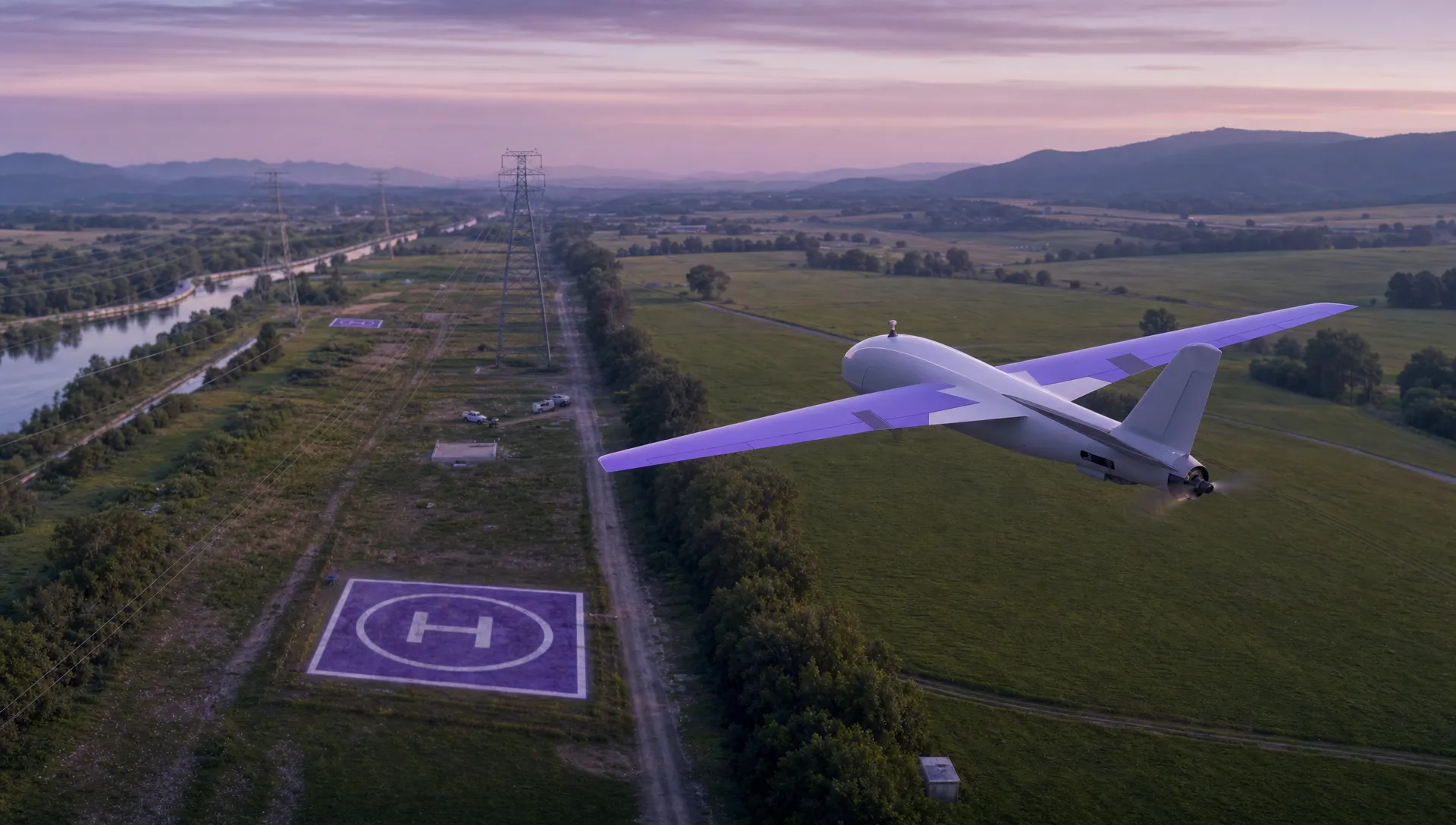
How BVLOS requirements vary by commercial mission
The regulatory principles are consistent, but the emphasis changes by use case. A survey company, utility operator and emergency service may all fly BVLOS, yet each faces a different risk profile.
| Operator type | BVLOS opportunity | Requirement areas that usually need extra attention |
|---|---|---|
| Survey companies | Large-area mapping, remote terrain surveys, environmental monitoring | Ground control, route containment, data link coverage, landing options, client site permissions |
| Utility companies | Powerline, pipeline, rail, telecoms and renewable asset inspection | Linear route risk, road and rail crossings, critical infrastructure coordination, low-level aviation, emergency landing planning |
| Emergency services | Incident overwatch, search and rescue, flood response, hazardous area assessment | Dynamic airspace, helicopter coordination, command structure, public safety, rapid risk reassessment |
| Infrastructure inspection teams | Bridges, ports, highways, industrial sites and construction corridors | Congested areas, moving vehicles, site access control, stakeholder communications, payload and obstacle risk |
| Logistics and delivery operators | Repeated route operations between known points | Reliability data, route standardisation, ground risk over people and property, detect-and-avoid maturity, contingency landing sites |
For lower-risk rural missions, a regulator may focus on containment, airspace deconfliction and lost-link behaviour. For operations near people or infrastructure, ground risk and emergency planning become more prominent. For repeated route operations, reliability data, maintenance records and change control can become central to the authorisation.
What commercial operators often underestimate
BVLOS readiness is usually delayed by evidence gaps rather than by a single missing technology. The most common issues are practical and avoidable.
- Treating BVLOS as longer-range VLOS instead of a different operational model.
- Using generic risk assessments that do not match the route, airspace or aircraft.
- Assuming ADS-B or a map overlay alone provides a complete detect-and-avoid solution.
- Underestimating C2 coverage problems caused by terrain, vegetation, buildings or network variability.
- Failing to define who makes safety decisions during abnormal events.
- Keeping aircraft, battery, maintenance and flight records in separate spreadsheets that are difficult to audit.
The last point becomes more serious as an operator scales. A one-off trial can sometimes be managed manually, but a commercial BVLOS programme needs repeatability. The same standard of planning, checklist discipline, maintenance evidence and post-flight review must be available across pilots, sites, aircraft and clients.
Building a BVLOS-ready operations system
A regulator will not approve BVLOS because an operator uses a particular software tool. Approval depends on the quality of the operation and the strength of the safety case. However, a structured operations system can make it easier to keep the right evidence in the right place.
For BVLOS preparation, operators should look for a way to manage the full operational chain: client requirements, aircraft and battery status, crew competence, airspace review, site hazards, risk assessment, checklists, approvals, flight logs and reporting. The goal is to make compliance repeatable rather than dependent on memory or scattered documents.
This is particularly important for survey, utility and emergency services teams where the operating environment changes from job to job. A route that was acceptable last month may be affected by new temporary restrictions, seasonal air activity, construction, public events or changes in site access. BVLOS planning should be treated as a live safety process, not a document created once and reused indefinitely.
Practical BVLOS readiness checklist
Before investing heavily in aircraft, sensors or application drafting, commercial operators should test their readiness against these questions.
| Readiness question | Why it matters |
|---|---|
| Can you describe the operation in enough detail for a regulator to understand the real risk? | Vague ConOps documents lead to vague mitigations and weak applications |
| Have you mapped the airspace users along the full route, not just at the launch point? | BVLOS risk changes as the aircraft moves through different environments |
| Can you prove the command link works across the route under realistic conditions? | C2 reliability is central to safe control and contingency execution |
| Do you know what the aircraft will do after each critical failure? | Failsafe logic must be predictable, safe and tested |
| Have you identified emergency landing or termination areas? | Ground risk mitigation depends on knowing where the aircraft can safely go |
| Are crew roles and decision authority documented? | BVLOS operations fail quickly if everyone assumes someone else is in charge |
| Can you produce aircraft, battery, maintenance and flight records on request? | Auditable records support compliance, learning and regulator confidence |
| Does your insurance explicitly cover the proposed operation? | Commercial cover must match the actual risk and authorisation |
| Have you rehearsed abnormal and emergency procedures? | Procedures are only credible if the crew can execute them under pressure |
If the answer to several of these questions is no, the operation may not be ready for a BVLOS application yet. That does not mean the project should stop. It means the next step is to close evidence gaps before asking the regulator to assess the case.
Frequently Asked Questions
What is the main legal requirement for BVLOS in the UK? Most commercial BVLOS operations in the UK require CAA authorisation in the Specific category. The operator must submit evidence showing that the operation can be conducted safely, including risk assessment, procedures, aircraft information and crew competence.
Do BVLOS operations always need detect-and-avoid technology? Not always in the form of an onboard sensor, but they do need a credible way to avoid other airspace users. Depending on the operation, this may involve technical DAA, segregated airspace, procedural deconfliction, observers, surveillance or a combination of mitigations.
Is EVLOS the same as BVLOS? EVLOS, or extended visual line of sight, uses trained observers to extend the area over which the aircraft can be monitored. It may reduce some risks, but it still needs careful authorisation, communications, observer positioning and procedures. It should not be treated as an informal shortcut.
Can emergency services fly BVLOS without normal approvals? Emergency services may have specific procedures, exemptions or urgent operational routes depending on jurisdiction and circumstance, but public interest does not remove the need to manage aviation risk. Pre-planned authorisations, airspace coordination and rehearsed procedures are essential.
How long does BVLOS approval take? There is no universal timeframe. It depends on the regulator, complexity of the mission, quality of the evidence, aircraft maturity, airspace risk and whether the application fits an existing framework. Incomplete ConOps documents and weak risk assessments are common causes of delay.
Can a commercial operator fly BVLOS over people? It may be possible in some circumstances, but the requirements become much more demanding. Operations over people, congested areas or critical infrastructure increase ground risk and may require stronger aircraft assurance, containment, emergency procedures and regulator scrutiny.
Make BVLOS preparation easier to manage
BVLOS is an evidence exercise as much as a flying exercise. The operators that make progress are usually the ones that can show consistent planning, disciplined procedures, reliable records and a clear link between each hazard and each mitigation.
If your team is preparing for more complex commercial drone operations, Dronedesk brings core operational admin into one platform. The published Dronedesk features include client management, fleet management, team management, airspace intelligence, proximity intelligence, flight planning, flight logging, data reporting, configurable checklists and risk assessments.
Those capabilities do not replace regulator approval, and they do not remove the need for a strong safety case. They can, however, help operators keep the planning, records and operational evidence behind BVLOS readiness organised as the programme grows.
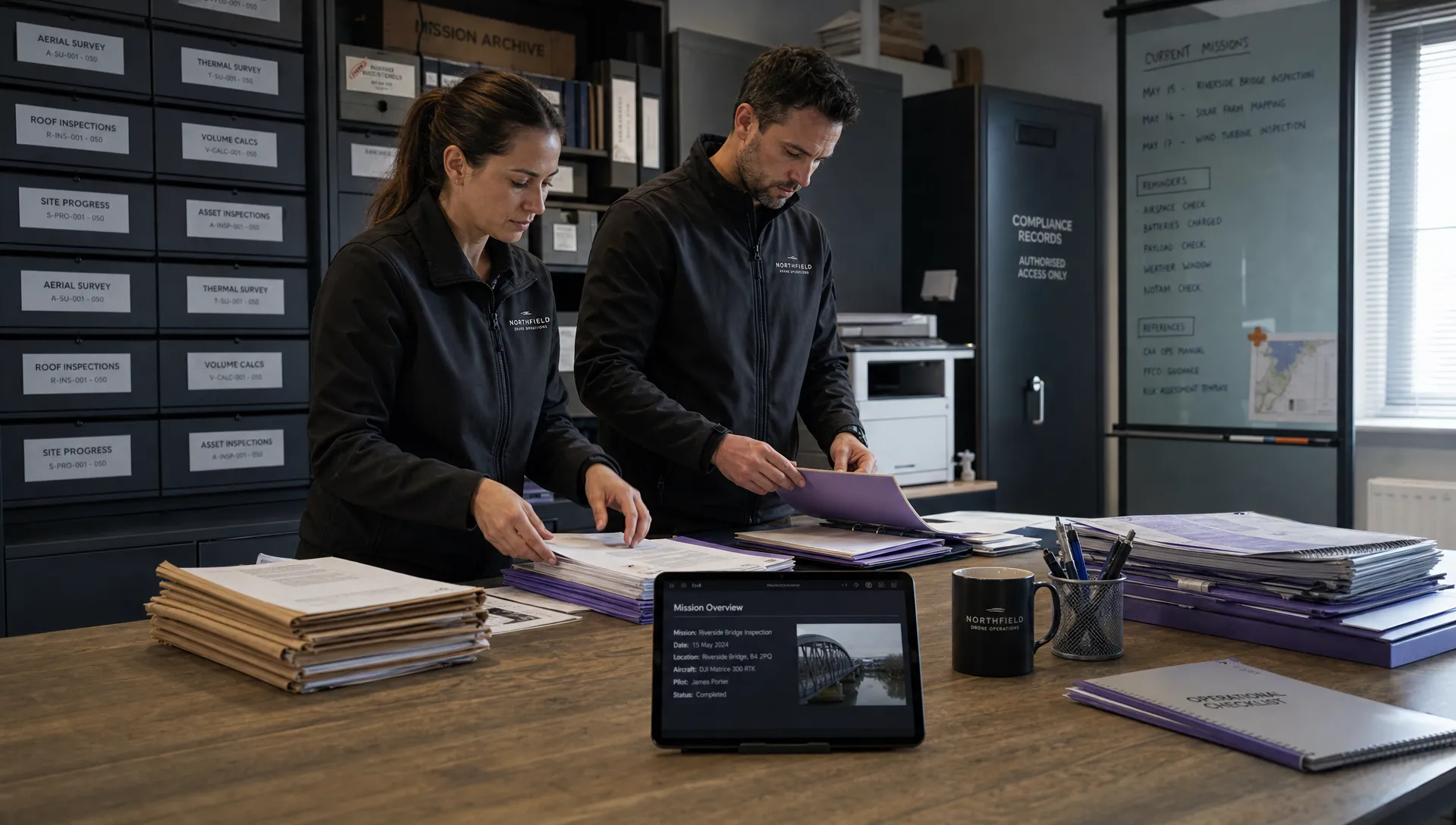 FAA Part 107 Record-Keeping Rules for Commercial Teams →
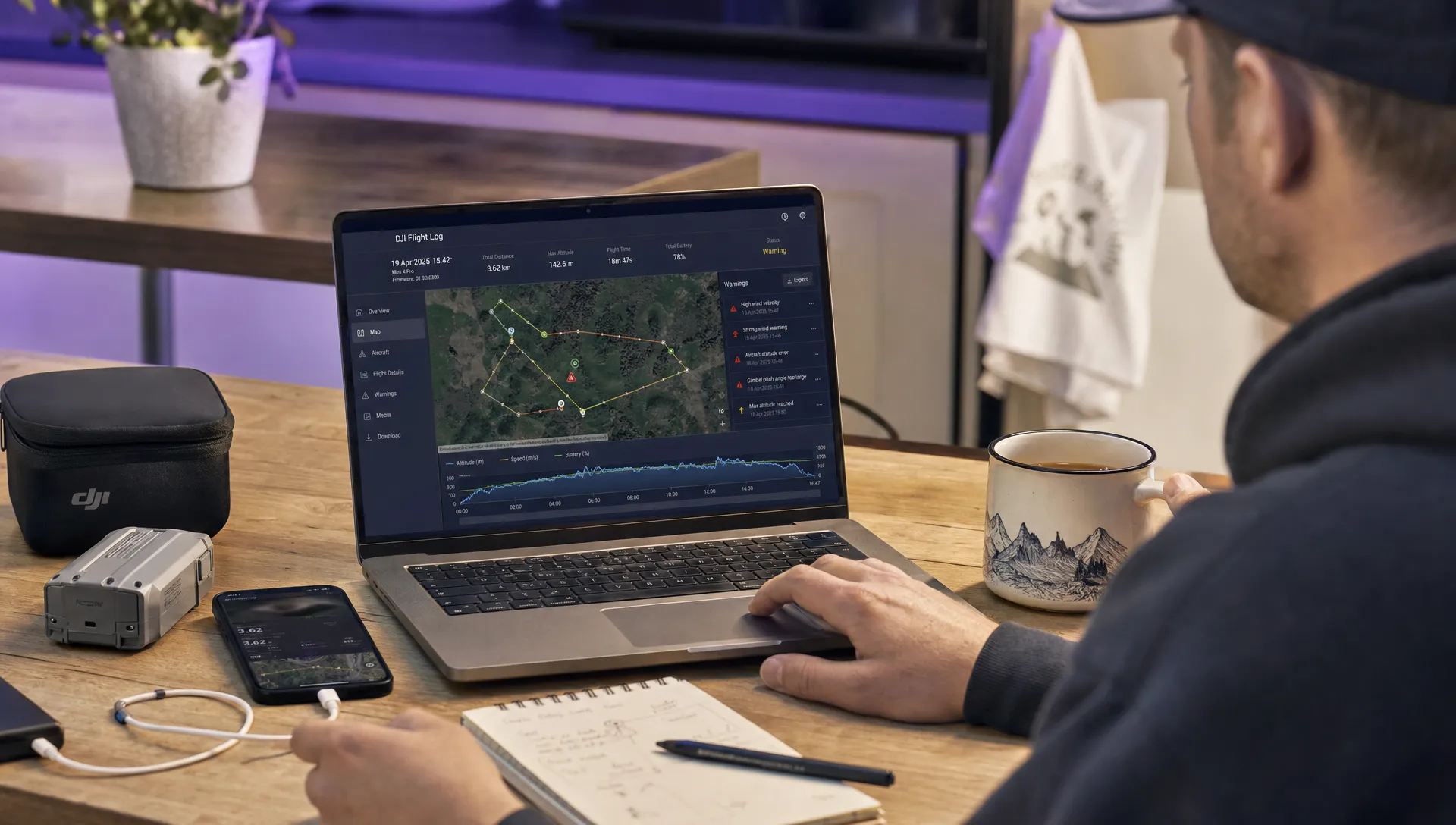 How to Review a DJI Flight Log After an Unexpected Event →
 Drone Laws Around the World: A Pre-Flight Research Framework →
 How to Compare Drone Survey Services for Complex Sites →
 How to Start a Drone Mapping Business With a Clear Workflow →
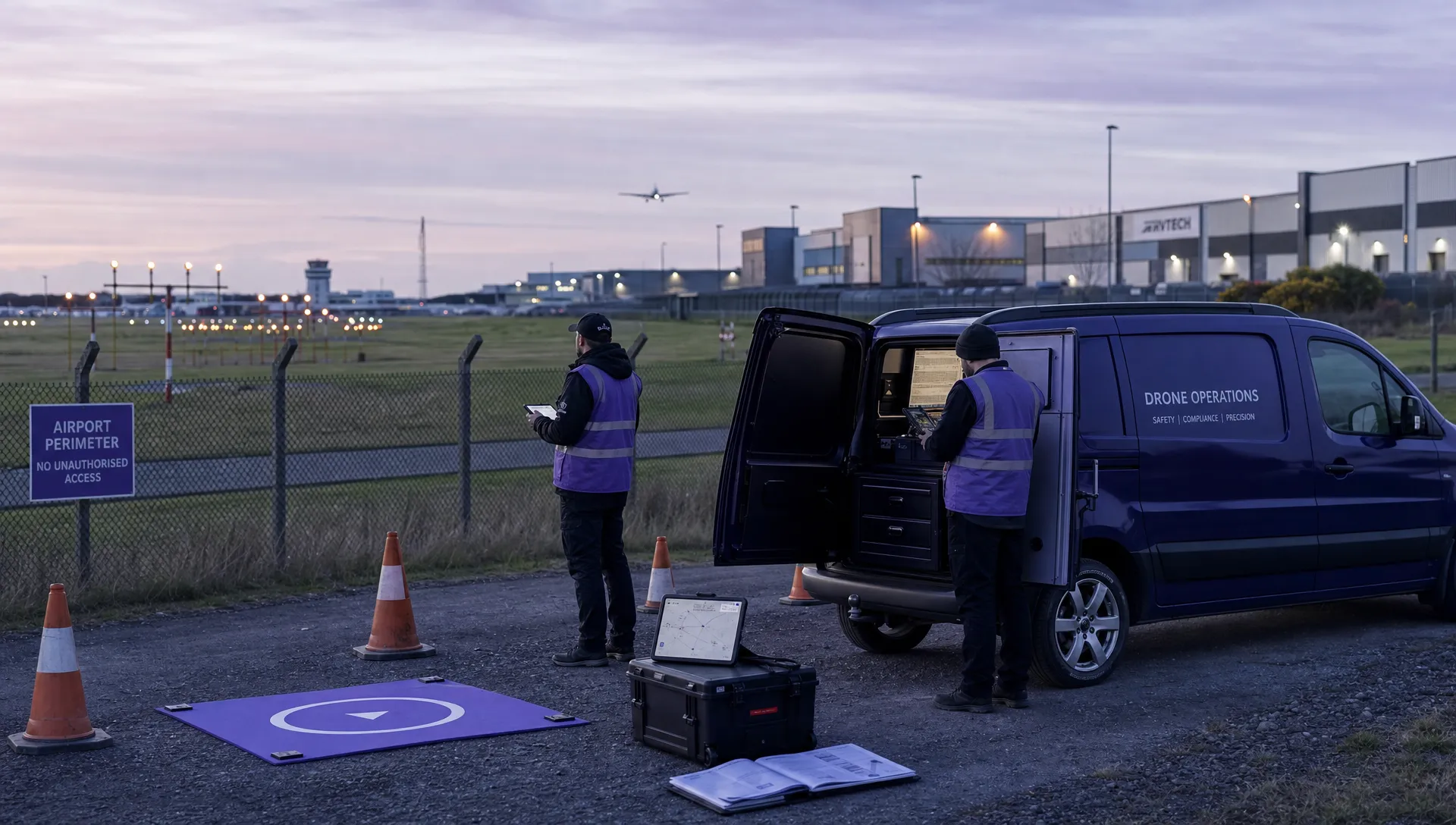 Class C Airspace Drone Rules for Commercial Flights →
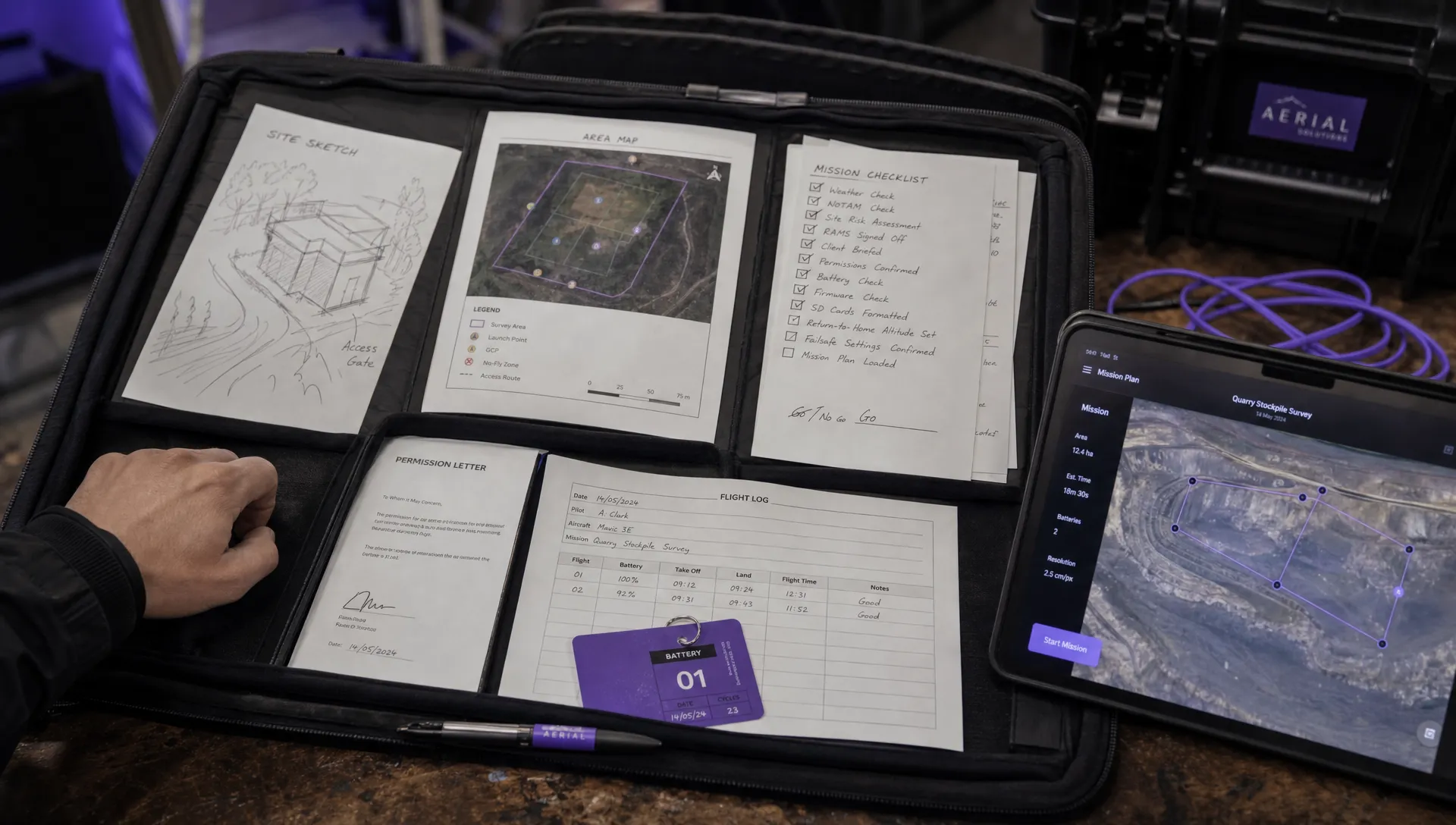 How to Create a Drone Job Pack for Every Mission →
 FAA Small UAS Rule: Key Requirements for Operators →
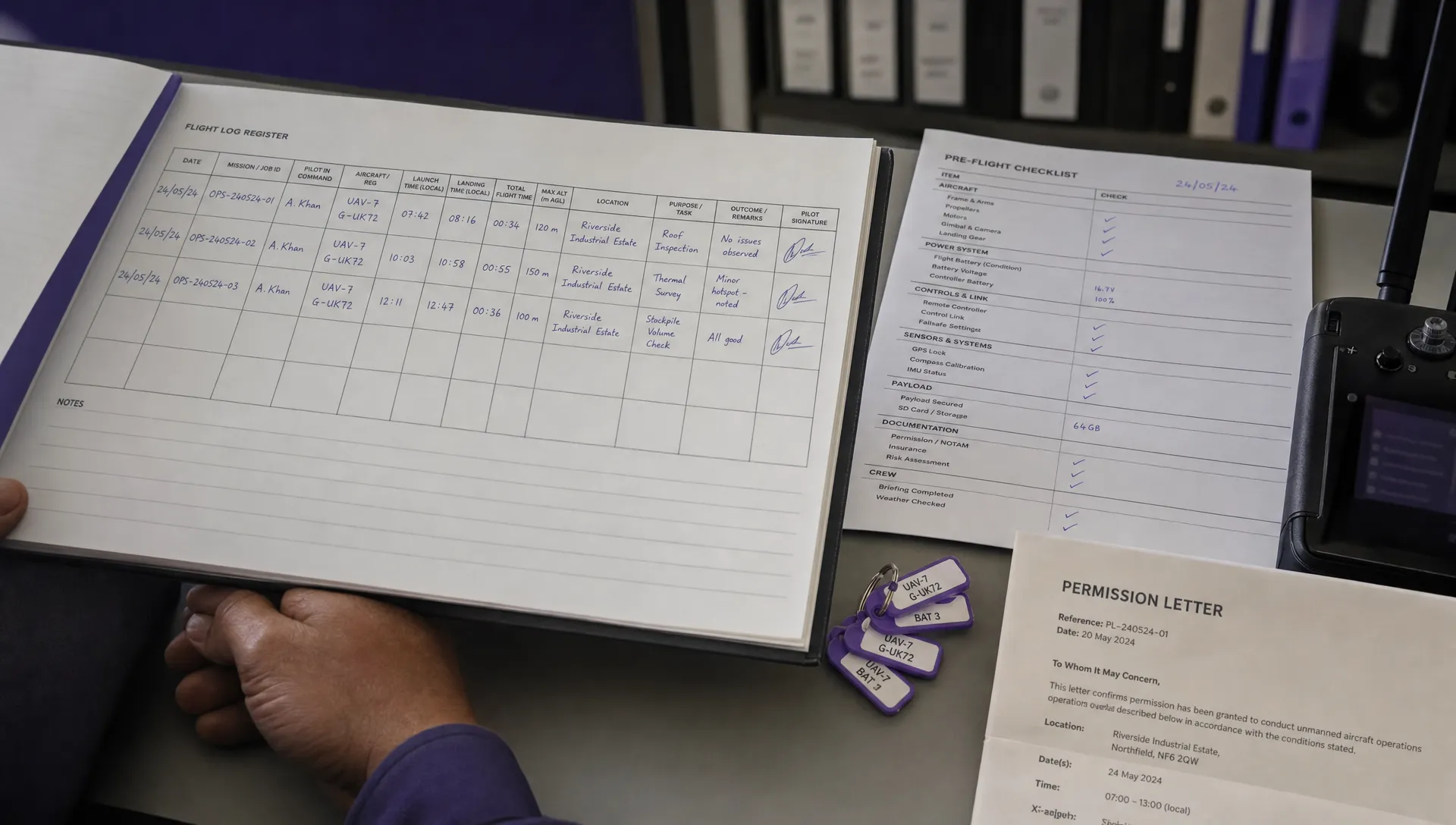 How to Build a Drone Pilot Flight Log That Is Audit Ready →
 FAA Drone Licence Requirements for Commercial Pilots →