
How to Reduce Operational Costs in Your Drone Business
To really get a grip on operational costs in your drone business, you've got to audit everything. I mean everything—from software subscriptions you forgot you had to unbilled travel time. This deep dive creates a financial map that's your first, most crucial step to slashing those phantom costs and actually boosting your profit margins.
Pinpointing Where Your Money Really Goes

Before you can start making smart cuts, you need a crystal-clear picture of your spending. This goes way beyond just glancing at your monthly bank statement. A proper financial audit for a drone op means categorizing every single expense to see the true cost of doing business.
So many operators track the big, obvious stuff like hardware and insurance but completely miss the little cash leaks that quietly eat away at profits. The goal here is to shift from a vague idea of your finances to a precise, data-backed understanding of where every pound and penny goes. If you're looking for broader strategies, there are some easy ways to reduce your operational costs that are well worth a read.
Breaking Down Your Total Mission Cost
To figure out where to save, you have to know your cost per mission. Think of this number as your financial North Star; it tells you which jobs are actually making you money and which are secretly draining your bank account. Don't just count the flight time, either. A real calculation includes:
- Pre-Flight Admin: All that time spent on client emails, flight planning, risk assessments, and checking airspace.
- Travel and Logistics: Fuel, vehicle wear-and-tear, and—critically—the unbilled time you spend driving to and from the site.
- Equipment Depreciation: A small fraction of your drone, battery, and sensor costs should be allocated to every single flight.
- Post-Flight Processing: The hours you sink into processing data, editing video, generating reports, and getting it all to the client.
Once you add all that up, you might discover that a seemingly profitable two-hour flight actually took another five hours of unpaid work, completely flipping its profitability on its head. This level of detail is what shows you exactly where the problems are. You can get more into the weeds on this by checking out our guide on financial reporting best practices, which offers deeper insights.
A classic mistake, especially for solo operators, is not valuing your own admin time. If you spend three hours on planning and invoicing for a one-hour flight, your actual operational cost for that job has just quadrupled. Tracking this "soft" time is absolutely vital for accurate pricing and staying in the black.
Identifying Phantom Costs and Inefficiencies
Once you’ve mapped out all your expenses in detail, patterns will start to jump out at you. You might find you're paying for multiple software subscriptions that do pretty much the same thing. Or maybe you'll notice that those last-minute dashes to the shop for forgotten SD cards are adding up to hundreds of pounds in fuel costs every year.
These are the "phantom costs" that bleed your business dry without you even noticing. By tracking everything with this level of detail, you establish a baseline. This baseline is the solid ground you need to stand on before implementing the cost-saving strategies we’ll cover next, allowing you to measure their true impact on your bottom line.
Reclaim Your Time with Smart Automation
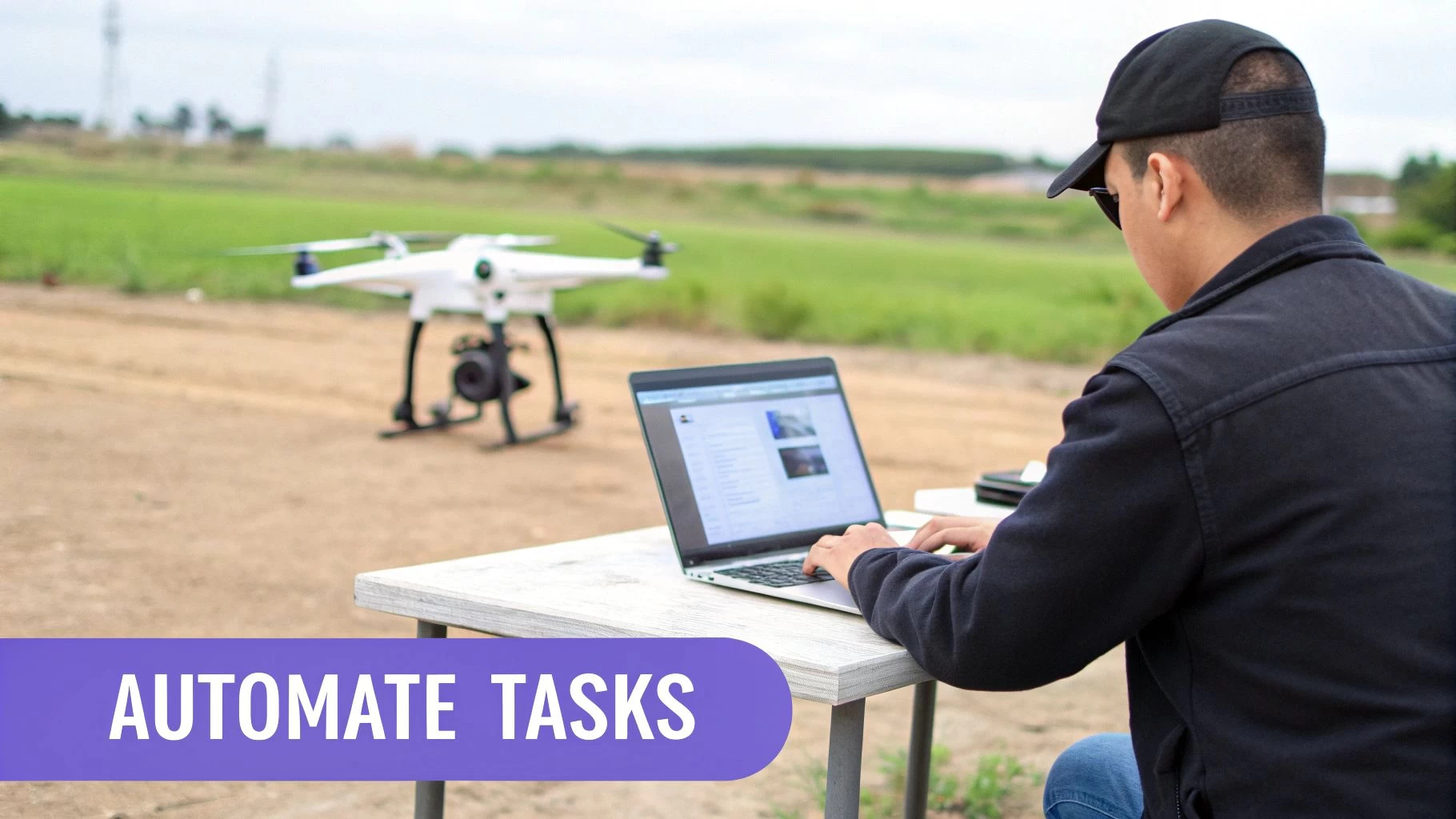
Repetitive admin is the unseen anchor dragging down a drone business. Every minute you spend manually creating flight logs, chasing clients for scheduling, or generating invoices is a minute you're not flying missions or winning new work. That's pure non-billable time, and it eats directly into your profit margins.
The answer isn't working longer hours—it's about working smarter. Automating these recurring tasks is one of the most powerful tools for anyone asking how to reduce operational costs. This isn't about giant, complicated systems, but rather practical steps that even a solo operator can implement to reclaim their most valuable asset: time.
Where to Start with Automation
So, what's ripe for automation? Look for the tasks that are repetitive, rule-based, and frankly, a bit of a grind. Pinpoint the daily bottlenecks in your workflow that don't need your creative brainpower to solve.
Good starting points usually include:
- Client Communications: Automatically send out booking confirmations, pre-flight reminders, and even follow-up emails asking for a review. Set it and forget it.
- Compliance Paperwork: Let software instantly generate your risk assessments and flight logs. This ensures you're meeting regulatory standards without the soul-crushing hours of manual data entry.
- Financial Admin: Set up your system to automatically create and send an invoice the moment a job is marked complete. You can even automate reminders for those overdue payments.
These small changes add up fast, often freeing up dozens of hours every single month. For a deeper look, check out our guide on making drone teams more efficient with automation.
The Real-World Impact of Automated Workflows
Getting serious about automation is one of the most effective strategies for cutting operational costs. Industry analysis shows that businesses implementing digital workflow platforms see an average labor cost reduction of 30-40% for those mind-numbing repetitive tasks.
The table below gives you a clear picture of just how much time—and money—you can save by automating some of the most common administrative chores in a drone business.
Time and Cost Savings From Automation
| Task | Manual Process (Avg. Time/Job) | Automated Process (Avg. Time/Job) | Potential Savings |
|---|---|---|---|
| Client Scheduling & Comms | 20 minutes | 2 minutes | 18 minutes/job |
| Risk Assessment & Method Statement | 45 minutes | 5 minutes | 40 minutes/job |
| Flight Log Entry | 15 minutes | 1 minute | 14 minutes/job |
| Invoicing & Follow-up | 15 minutes | 1 minute | 14 minutes/job |
As you can see, the cumulative savings are massive. Shaving over an hour of admin time per job means you can take on more projects without burning out or hiring extra help.
Imagine this: you've just wrapped up a complex survey mission. Instead of heading back to the office to spend the evening wrestling with spreadsheets, a client report, and an invoice, the system handles it all. The flight log is auto-generated, a report template is pre-filled, and the invoice is already in the client's inbox. That’s the power of a truly integrated, automated system.
For a growing drone business, this means you can complete more jobs without adding an admin person to the payroll. A platform like Dronedesk effectively becomes your digital operations manager. It handles the tedious-but-essential tasks that keep your business compliant and running smoothly.
By automating these processes, you're not just slashing your admin overhead. You're also minimizing the risk of human error in critical areas like compliance docs and invoicing, which protects your bottom line from costly mistakes. This shift lets you pour your energy into the high-value activities that actually grow your business: flying more and building stronger client relationships.
Get a Handle on Your Inventory and Logistics
For any drone business, your “supply chain” isn’t some massive manufacturing concept. It’s the real, tangible stuff: spare propellers, batteries, filters, and even the fuel and time you burn getting to a job site. Let these small things slide, and you'll find your profits bleeding out from project delays, last-minute parts orders, and wasted travel. Poor logistics is a silent killer of your bottom line.
Nailing this part of your business is one of the most effective ways to figure out how to reduce operational costs. It’s all about making smarter, data-driven decisions about the gear that keeps you flying. The aim is simple: have exactly what you need, when you need it, without tying up a ton of cash in equipment that’s just sitting on a shelf.
Build a Lean Inventory System
So many operators get caught in one of two traps. They either hoard way too much gear “just in case,” or they run too lean and have to scramble when a critical component fails. A smart, just-in-time inventory system is the answer. Stop guessing and start tracking.
Pay attention to your own usage patterns. Do you find yourself replacing a certain type of propeller every 50 flight hours? That's gold. Now you can build a purchasing schedule based on real-world data, not just a fear of running out. This simple shift stops your cash from being locked up in a box of parts you might not need for months.
A lean system boils down to a few key habits:
- Track Everything: Log every time a part is replaced. This builds an accurate history you can rely on.
- Know Your Suppliers: How long does it take to get new parts from your main vendors? Factor that lead time into your reorder schedule.
- Set Minimums: Use your management software to set up alerts. When critical items like batteries or propellers hit a predetermined low, you get a notification to reorder.
This move from reactive to proactive buying is a complete game-changer. I once worked with a business that had nearly $5,000 tied up in spare parts for a drone they only flew a couple of times a month. By digging into their actual usage, they slashed that stock to under $1,000, freeing up a huge chunk of cash they could pour back into marketing.
Let Your Flight Data Predict Maintenance Needs
Your flight logs are more than just a compliance chore; they’re a crystal ball for your maintenance needs. If you notice a specific battery model consistently losing performance after 150 cycles, you can schedule its replacement before it fails on a mission. That foresight prevents costly downtime and, more importantly, a potential safety incident.
This proactive mindset is exactly what the big players in supply chain management are doing. Recent data shows that companies using analytics and real-time data have cut their logistics costs by 15%, shrunk inventory levels by 35%, and boosted service efficiency by a massive 65%. You can learn more about these modern supply chain strategies on procurementtactics.com. By applying the same principles to your drone operations, you can see similar gains on your own scale.
Ultimately, getting your inventory and logistics in order turns your physical assets from a passive expense into a predictable, efficient part of your operation. It’s a crucial step toward building a more resilient and profitable drone business.
Adopt a Proactive Drone Maintenance Program
Let's be honest: waiting for your gear to break isn't a strategy, it's a gamble. For any drone operator, an unexpected equipment failure kicks off a domino effect of bad news. We're talking cancelled jobs, furious clients, and emergency repair bills that can torch an entire week's profit in an instant.
Switching from a reactive to a proactive maintenance mindset is one of the most powerful moves you can make to cut your long-term operational costs. It’s about taking control.
A proactive approach means you dictate the maintenance schedule, not your equipment. It’s about stopping those tiny, cheap-to-fix issues before they spiral into catastrophic, mission-ending failures. This simple shift in thinking protects your assets, seriously boosts flight safety, and helps you build a rock-solid reputation for reliability—all of which feed directly back into your profitability.
Shift from Reaction to Prevention
The whole idea is to catch problems while they’re small. Think about it: a loose propeller screw you spot during a pre-flight check costs absolutely nothing to tighten. That exact same screw coming loose mid-flight? That could cost you the entire drone and whatever expensive payload it's carrying, not to mention the massive liability issues.
Getting a program in place doesn't need to be a huge, complicated ordeal. You can start with the basics right now:
- Rigorous Checklists: Create simple but mandatory pre-flight and post-flight checklists. These are your first line of defense and will catch the most common wear-and-tear problems.
- Automated Tracking: Use a platform like Dronedesk to automatically log flight hours for every drone, battery, and major component. This data is gold because it lets you schedule service based on actual use, not just a wild guess.
- Scheduled Service: Set calendar reminders for routine service. Your drone’s motors, sensors, and firmware need regular attention, just like your car needs its oil changed.
It’s simple, really. You wouldn't drive your car until the engine seized before checking the oil. Applying that same logic to your drone fleet turns maintenance from a nasty surprise expense into a predictable, manageable part of your business.
Use Data to Predict and Save
Your flight data is a goldmine just waiting to be tapped for maintenance insights. For example, by automatically tracking battery charge cycles, you can see exactly when a battery’s performance is starting to fade. This gives you the chance to replace it before it fails and ruins a job, turning a potential disaster into a simple, routine equipment swap.
This data-driven approach is a massive cost-saver. A study on operational efficiency found that businesses that implement this kind of proactive monitoring can slash maintenance costs by up to 60% compared to those stuck in the reactive, "fix-it-when-it-breaks" cycle. You stop paying for expensive rush repairs and overnight shipping for parts and start planning purchases and scheduling downtime on your own terms.
Ultimately, a solid maintenance program isn't just another expense—it's an investment in your operational stability. It minimizes surprises, squeezes every last drop of life out of your valuable gear, and makes sure you're always ready to fly safely and profitably. That kind of reliability is a key differentiator that clients will absolutely notice and value.
Consolidate Costs with an All-in-One Platform
Take a look at your monthly software subscriptions. Are you paying for a flight planner, a separate CRM, another tool for flight logging, and maybe even a fourth for sending invoices? This "software sprawl" is an easy trap to fall into, and it quietly drains your budget while creating massive operational headaches.
Switching to a single, integrated platform isn't just about tidying up your bookmarks bar; it's a direct and powerful way to slash your operational costs.
The problem runs deeper than just the monthly bills piling up. The hidden costs of using disconnected systems are often far more damaging to your bottom line. Every time you have to manually copy a client's address from your CRM into your flight plan, you're not just wasting time—you're opening the door to a costly typo. When flight logs don't automatically sync with your maintenance records, you're creating serious compliance gaps.
The True Cost of Juggling Different Apps
Think about the real-world friction. You’ve just wrapped up a job. Now you have to open three different apps: one to log the flight details, another to create an invoice from a template, and a third to update the project status for the client. This constant, manual data entry is tedious, sure, but it's also a breeding ground for errors that can lead to delayed payments or compliance trouble down the road.
These scattered workflows are a huge source of hidden operational costs. In fact, businesses that move from multiple separate software tools to one centralised solution often see cost reductions of up to 60%. The savings come from eliminating redundant subscriptions, but the real win is the immediate and substantial gain in operational efficiency.
This infographic shows just how much you can save with a proactive approach (like using integrated software) versus a reactive one.
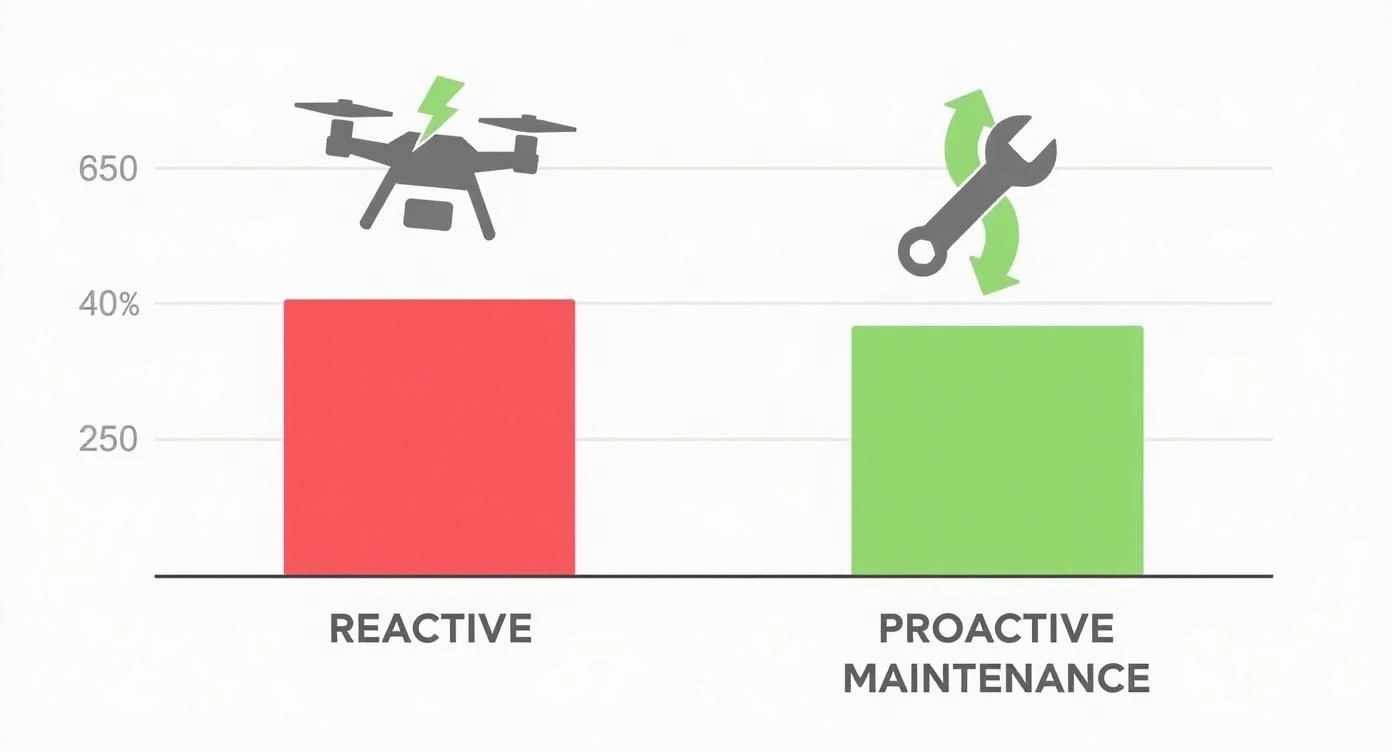
It’s clear that being organised and proactive, whether in maintenance or software management, directly translates to lower expenses.
Let’s look at a typical breakdown of software costs for a small drone operation.
Software Cost Analysis: Disparate vs. Integrated
Many operators patch together a workflow using several different tools. While each subscription might seem small on its own, they add up quickly.
| Function | Separate Tool (Avg. Monthly Cost) | Integrated Platform Feature (Cost Included) | Monthly Savings |
|---|---|---|---|
| Job Management/CRM | £25 | Included | £25 |
| Flight Planning | £15 | Included | £15 |
| Risk Assessments | £10 | Included | £10 |
| Flight & Maintenance Logging | £10 | Included | £10 |
| Invoicing Software | £20 | Included | £20 |
| Total | £80 | £0 | £80 |
This simple analysis shows a potential saving of £80 per month—nearly £1,000 a year—just by consolidating into a single platform that does it all.
Streamline Your Entire Drone Workflow
An all-in-one platform like Dronedesk brings every part of your operation under one roof. Your client details, job plans, risk assessments, flight logs, and invoices all live in the same system, creating a single source of truth for your business.
When your business data is integrated, the entire workflow becomes seamless. A job marked complete can automatically trigger an invoice, log the flight hours against the drone's maintenance schedule, and update the client's project history—all without you lifting a finger.
This consolidation does more than just save you a few subscription fees. It gives you a real-time, accurate view of your business's health. You can instantly see project profitability, track asset usage, and manage team workloads from a single dashboard.
By eliminating software clutter and manual work, you reclaim hours every week, cut down on errors, and start making smarter, data-driven decisions that reduce costs across the board. You can find a full breakdown of the time savings right here: how all-in-one drone management platforms save you an hour on every job.
Common Questions on Drone Business Costs
Even with the best strategies in place, it’s only natural to have a few lingering questions about trimming the fat from your operational budget. Let's dig into some of the most common ones I hear from other drone operators and get you some straight answers.
What’s the Single Biggest Hidden Operational Cost for Most Drone Businesses?
Hands down, the biggest hidden cost is unbilled administrative time. It's the silent profit-killer that sneaks up on you, one tiny, non-billable task at a time.
Think about it. The time you spend digging through client emails, manually creating flight logs, cobbling together risk assessments, or hopping between five different websites to check airspace and weather—it all adds up. Each task might feel small in the moment, but they compound into hours of unpaid work every single week. Automating and centralizing these essential but mind-numbing tasks is the fastest way to reclaim that lost time, directly boosting your bottom line without flying a single extra mission.
How Soon Can I Expect a Return on Investment from Automation Software?
The return on investment (ROI) from a good management platform can be shockingly fast. Yes, there's a subscription cost, but the savings kick in the second you start using it. You'll immediately notice you're spending less time on all that tedious admin.
A tangible ROI often shows up within just 1-3 months. This isn't just about the value of your time saved; it's also about cutting down on errors that lead to costly rework and freeing you up to take on more client projects with the same resources.
Let's put some numbers on it. If a platform saves you five hours a week and you value your time at £50/hour, that’s a £1,000 monthly saving right there—which will almost certainly dwarf the cost of the subscription.
Can I Reduce Operational Costs Without Sacrificing Safety and Compliance?
Absolutely. In fact, the most effective ways to cut costs actually strengthen your safety and compliance standards. This is a critical point that a lot of operators overlook.
Streamlining your business isn't about cutting corners; it's about building smarter, repeatable, and more reliable processes. It's a win-win, where efficiency and safety reinforce each other.
- Digital Checklists: These make it almost impossible to miss a critical pre-flight safety step, drastically reducing the risk of human error.
- Automated Maintenance Logs: This system stops you from accidentally flying with worn-out gear—a massive safety benefit.
- Integrated Risk Assessments: Having a standardized process protects you from hefty fines and potential legal headaches down the road.
At the end of the day, getting organized with the right tools is the key. It helps you build a more robust, compliant, and profitable business by eliminating waste while minimizing risk.
Ready to stop wasting time on admin and start focusing on what you do best? Dronedesk pulls your entire workflow into one powerful platform, saving you time and money on every single job. Start your free trial today and see the difference.
 FAA Drone Licence Requirements for Commercial Pilots →
 FAA BVLOS Waivers Granted: What Successful Cases Show →
 How to Export DJI Flight Logs for Incident Reviews →
 Drone Safety and Legal Duties for Business Operations →
 EASA Drone Regulations: Open, Specific and Certified Categories →
 What the BVLOS ARC Report Means for UAS Operators →
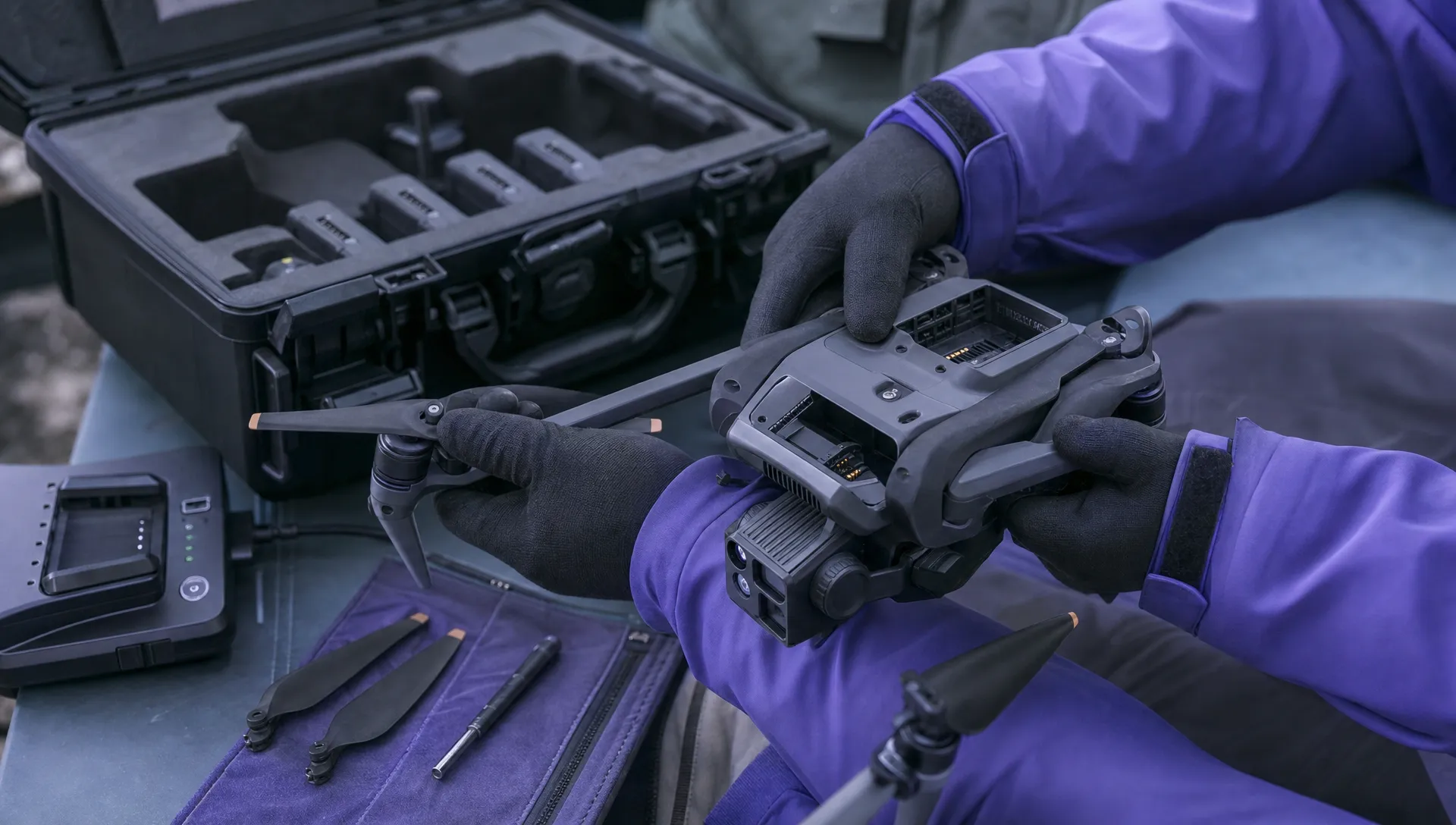 Free Drone Pre-Flight Checklist for Commercial Missions →
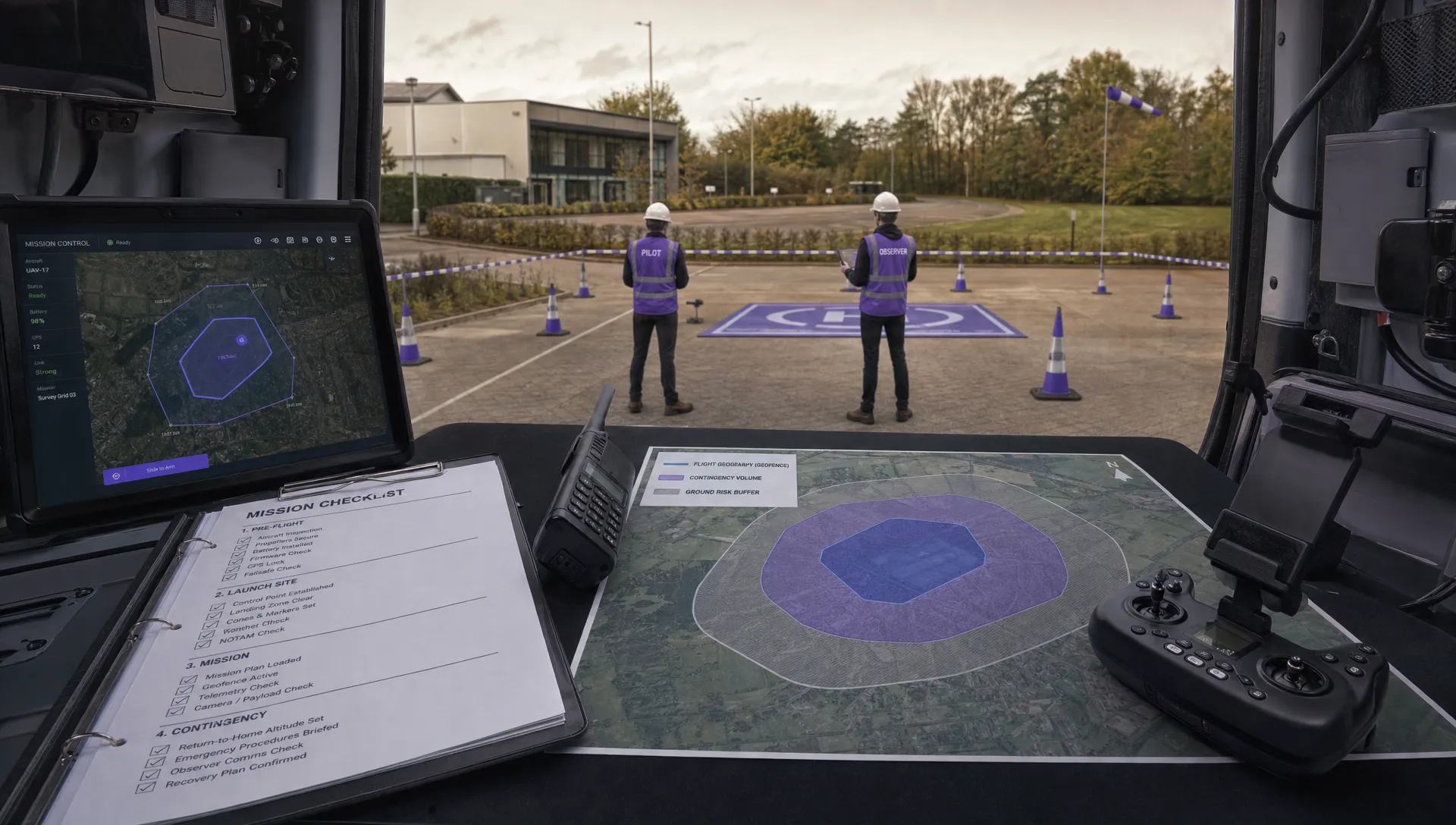 Contingency Volume and Flight Risk Buffer Explained →
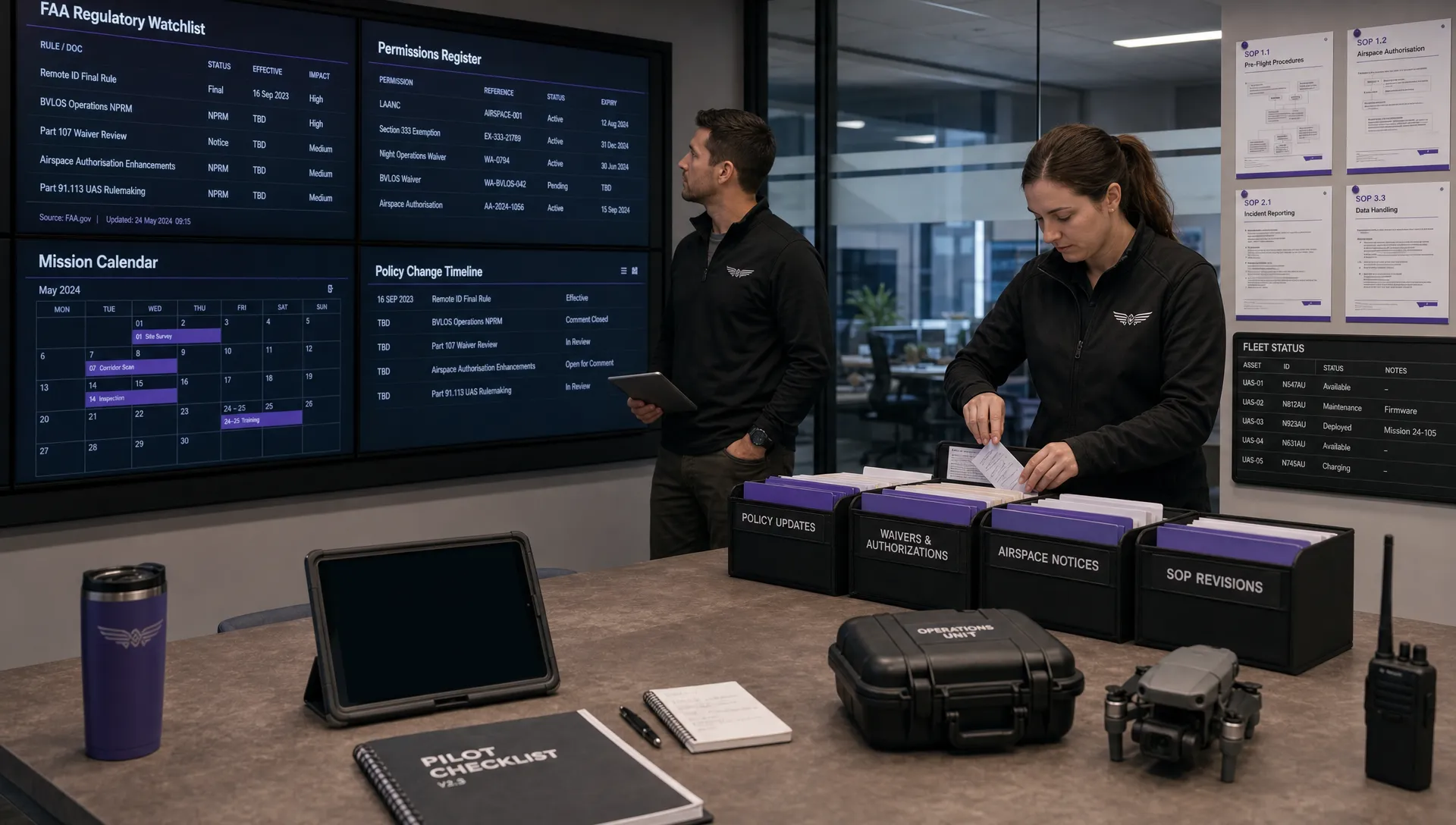 FAA Policy Changes That Commercial Drone Teams Should Track →
 Drone Night Flying Rules and Pre-Flight Checks →