
FAA Remote ID Rule Explained for Commercial Pilots
For commercial drone pilots, the FAA Remote ID rule is not a future requirement or a manufacturer-only issue. It is a daily operational compliance item that affects which aircraft you can deploy, what you must check before take-off, and how you document jobs for clients, insurers and regulators.
Remote ID is often described as a digital licence plate for drones. In practice, it is a local broadcast of identification and location information from the drone, or from an attached broadcast module, so that the FAA, law enforcement and others nearby can understand what is flying and where the operator is located.
If you fly under Part 107, manage a survey fleet, inspect utility assets, or operate drones for public safety work in the United States, this guide explains what the FAA Remote ID rule means in plain English and how to build it into your commercial operating procedures.
What is the FAA Remote ID rule?
The FAA Remote ID rule sits in 14 CFR Part 89. It requires most drones that must be registered with the FAA to broadcast Remote ID information while in flight.
According to the FAA Remote ID guidance, Remote ID helps the FAA, law enforcement and other authorised parties locate the control station when a drone appears to be flying in an unsafe manner or where it should not be.
The rule does not create a new flight approval system. It does not replace Part 107, LAANC, airspace authorisations, waivers, NOTAM checks, client permissions or site-specific risk assessments. It is an identification and accountability layer that sits alongside those existing obligations.
The important distinction for commercial pilots is this: a drone can be registered, insured and airworthy, but still not legally deployable on a Part 107 job if it does not meet Remote ID requirements.
Remote ID compliance dates: where things stand in 2026
The FAA introduced Remote ID in stages. Manufacturers had earlier production obligations, then operators had to make sure their aircraft complied before flying.
The original operator compliance date was 16 September 2023. The FAA then announced a discretionary enforcement extension because some pilots were struggling to access compliant equipment. That enforcement discretion ended on 16 March 2024, as explained in the FAA notice on the Remote ID enforcement extension.
As of July 2026, commercial operators should treat Remote ID as a live, enforceable requirement.
| Milestone | What it means for commercial pilots |
|---|---|
| 16 September 2022 | Manufacturers were expected to produce drones that met Remote ID requirements, unless an exception applied. |
| 16 September 2023 | Operators were originally required to comply before flying drones that need FAA registration. |
| 16 March 2024 | FAA discretionary enforcement period ended. Remote ID compliance became a practical must-have for routine operations. |
| 2026 onwards | Remote ID should be built into fleet procurement, pre-flight checks, maintenance records and subcontractor controls. |
If your team has older aircraft, spare aircraft, specialist payload aircraft, or drones that are only used occasionally, do not assume they are compliant because the primary fleet is. Each aircraft and each broadcast module needs to be checked.
Who must comply with the FAA Remote ID rule?
The rule applies to drones that are required to be registered with the FAA. For commercial pilots, that usually means drones flown under Part 107, including small drones that might be under 250 g if they are used for commercial work.
A simple rule of thumb is useful: if you are flying a drone for compensation or business purposes under Part 107 and the aircraft must be registered, Remote ID should be part of your compliance process.
This matters for more than traditional drone service providers. It also affects:
- Survey companies flying mapping, photogrammetry and LiDAR missions.
- Utility companies inspecting powerlines, substations, pipelines and telecoms assets.
- Emergency services using drones for search, fireground awareness or incident assessment.
- Construction, insurance and environmental teams that rely on third-party remote pilots.
- UK and international operators that send teams to the United States for client work.
There are limited ways to operate without broadcasting Remote ID, most notably inside an FAA-Recognized Identification Area, known as a FRIA. However, FRIAs are fixed locations and are usually not where commercial inspection, survey or response work happens. For most commercial pilots, the practical route is to fly a Standard Remote ID drone or use an approved Remote ID broadcast module.
Emergency services and government agencies should be especially careful. Some missions may be flown under different authorities, such as a public aircraft operation or certificate of authorisation, but that does not automatically remove Remote ID considerations. Your agency should confirm the applicable authority, aircraft registration status and any mission-specific FAA permissions before relying on an exemption.
The three recognised ways to comply
The FAA recognises three main routes for Remote ID operations. For commercial pilots, the first two are the most relevant.
| Compliance route | How it works | Commercial suitability |
|---|---|---|
| Standard Remote ID drone | The drone has built-in Remote ID capability and broadcasts the required message elements. | Best fit for routine commercial operations and new fleet purchases. |
| Remote ID broadcast module | A separate approved module is attached to the drone and broadcasts Remote ID information. | Useful for older aircraft, specialist drones, or transitional fleet management. |
| FAA-Recognized Identification Area | A drone without Remote ID can fly within a designated FRIA, usually linked to a community-based organisation or educational institution. | Limited value for client work because the operation must take place at the FRIA. |
Before buying, renting or deploying a drone, check whether the specific model or module appears on the FAA’s Declaration of Compliance list. A marketing claim that a drone is Remote ID ready is not enough. For compliance purposes, you need to know that the FAA has accepted the relevant Declaration of Compliance and that the Remote ID serial information is correctly associated with your registration.
What information does Remote ID broadcast?
Remote ID broadcasts information locally, usually through Wi-Fi or Bluetooth-style radio signals. It is not an internet tracking system and it does not require the drone to connect to a mobile network.
The exact broadcast elements depend on whether you are flying a Standard Remote ID drone or using a broadcast module.
| Message element | Standard Remote ID drone | Remote ID broadcast module |
|---|---|---|
| Identification | Unique aircraft identifier, such as a serial number or FAA-accepted session ID if available. | Broadcast module serial number. |
| Drone position | Drone latitude, longitude, altitude and velocity. | Drone latitude, longitude, altitude and velocity. |
| Operator-related position | Control station location and elevation. | Take-off location and elevation. |
| Time and status | Time mark and emergency status. | Time mark and emergency status. |
Members of the public nearby may be able to receive Remote ID broadcasts using compatible devices or apps. They should not be able to access the FAA registration database or see your personal registration details from the broadcast alone. However, the location of the drone and, in many cases, the operator or take-off point may be visible locally.
That visibility has operational consequences. If you are inspecting critical infrastructure, attending an emergency incident, or flying from a sensitive client site, you should plan where the remote pilot and visual observers will stand, how the team will manage public enquiries, and whether additional site security or client communication is needed.
How to make a commercial drone Remote ID compliant
For most Part 107 pilots, Remote ID compliance is a combination of equipment, registration, procedure and recordkeeping.
Start by confirming the aircraft’s Remote ID capability. For a Standard Remote ID drone, check the manufacturer’s documentation, update the firmware if required, and verify the serial number against the FAA-accepted Declaration of Compliance. Some aircraft only became compliant after firmware updates, so the aircraft model name alone is not always enough.
Next, make sure the Remote ID serial number is correctly entered in FAA DroneZone. If you are using a broadcast module, the module’s serial number must be associated with the relevant registration record. If you move a module between aircraft, your process must make it clear which module is assigned to which aircraft for each operation.
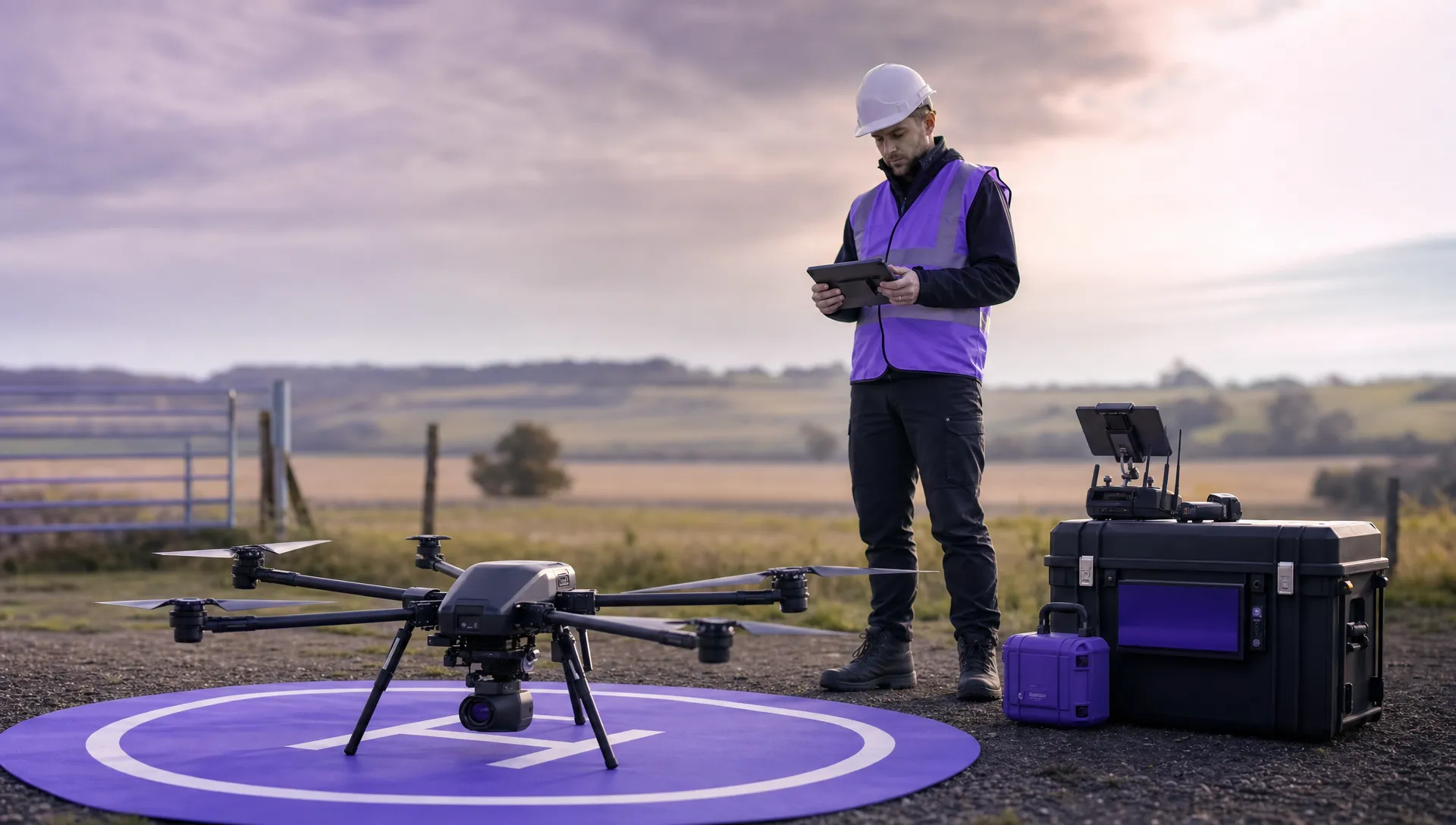
Your pre-flight process should then confirm that Remote ID is functioning before launch. For many Standard Remote ID drones, the aircraft or controller will provide status information. For broadcast modules, the pilot should confirm that the module is attached, powered, configured and broadcasting as expected before take-off.
If Remote ID fails before launch, do not treat it as a minor defect unless you have a valid exception for that operation. If it fails in flight, the safest interpretation is to land as soon as practicable, while maintaining overall flight safety.
How Remote ID changes commercial flight planning
Remote ID is not just a checkbox in the aircraft settings. It changes the way commercial pilots should think about planning, risk and client communication.
For survey and mapping teams, Remote ID can affect launch point selection. The best launch point for data capture might not be the best point for public visibility, site security or safe crew positioning. If a broadcast module reports the take-off point rather than the live control station, the launch location becomes even more important from a privacy and security perspective.
For utility inspections, Remote ID should be considered alongside critical infrastructure procedures. A pilot flying near substations, powerlines or telecoms sites may attract attention from passers-by who can see that a drone is operating nearby. That is not a reason to avoid Remote ID. It is a reason to brief the client, carry proof of authority, and make sure the crew can explain the operation calmly and professionally.
For emergency services, Remote ID can support transparency and deconfliction, but the incident environment may be crowded, dynamic and sensitive. Teams should decide in advance who handles public questions, how the drone unit coordinates with incident command, and how Remote ID fits with temporary flight restrictions, COAs or other mission-specific permissions.
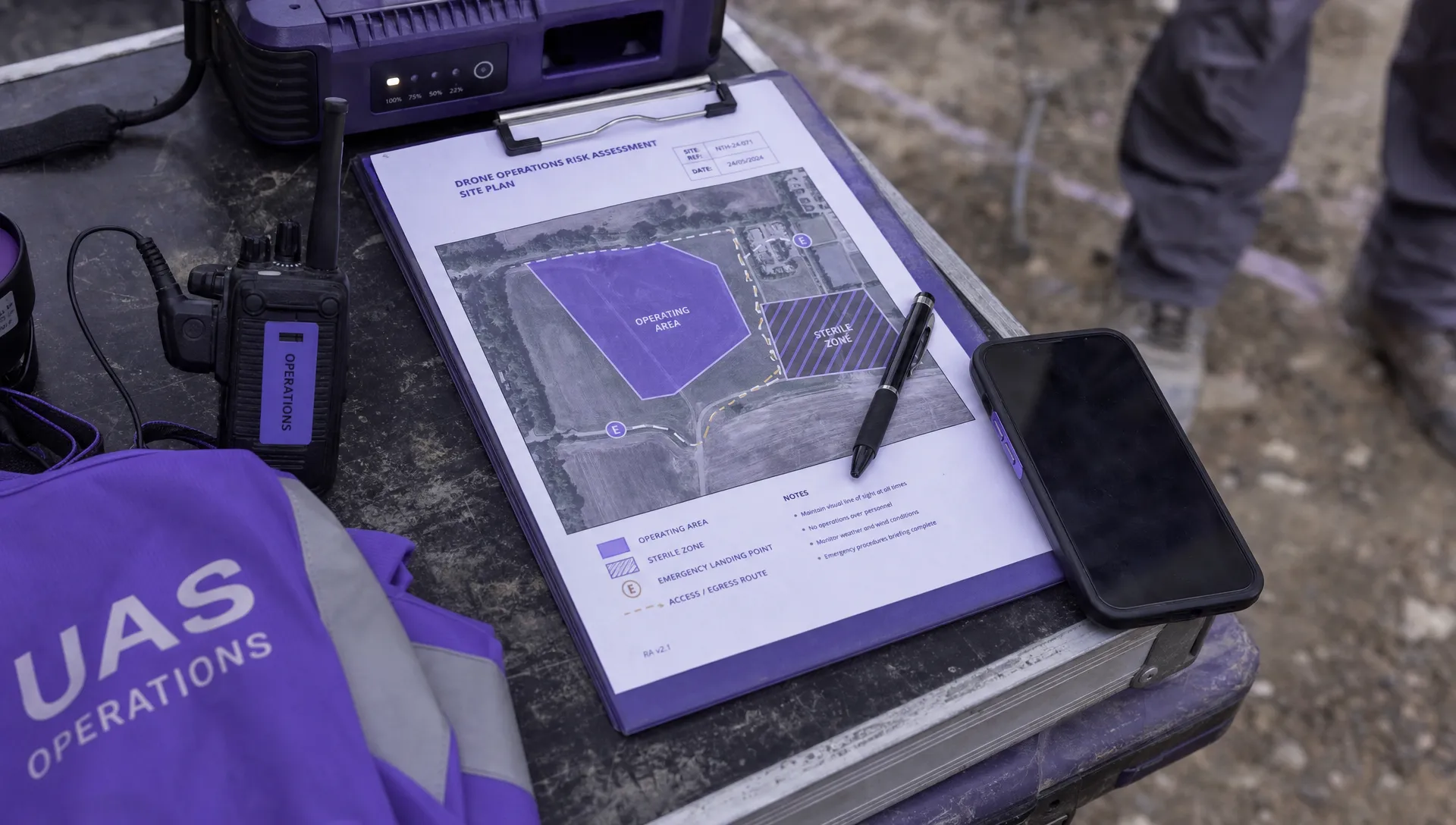
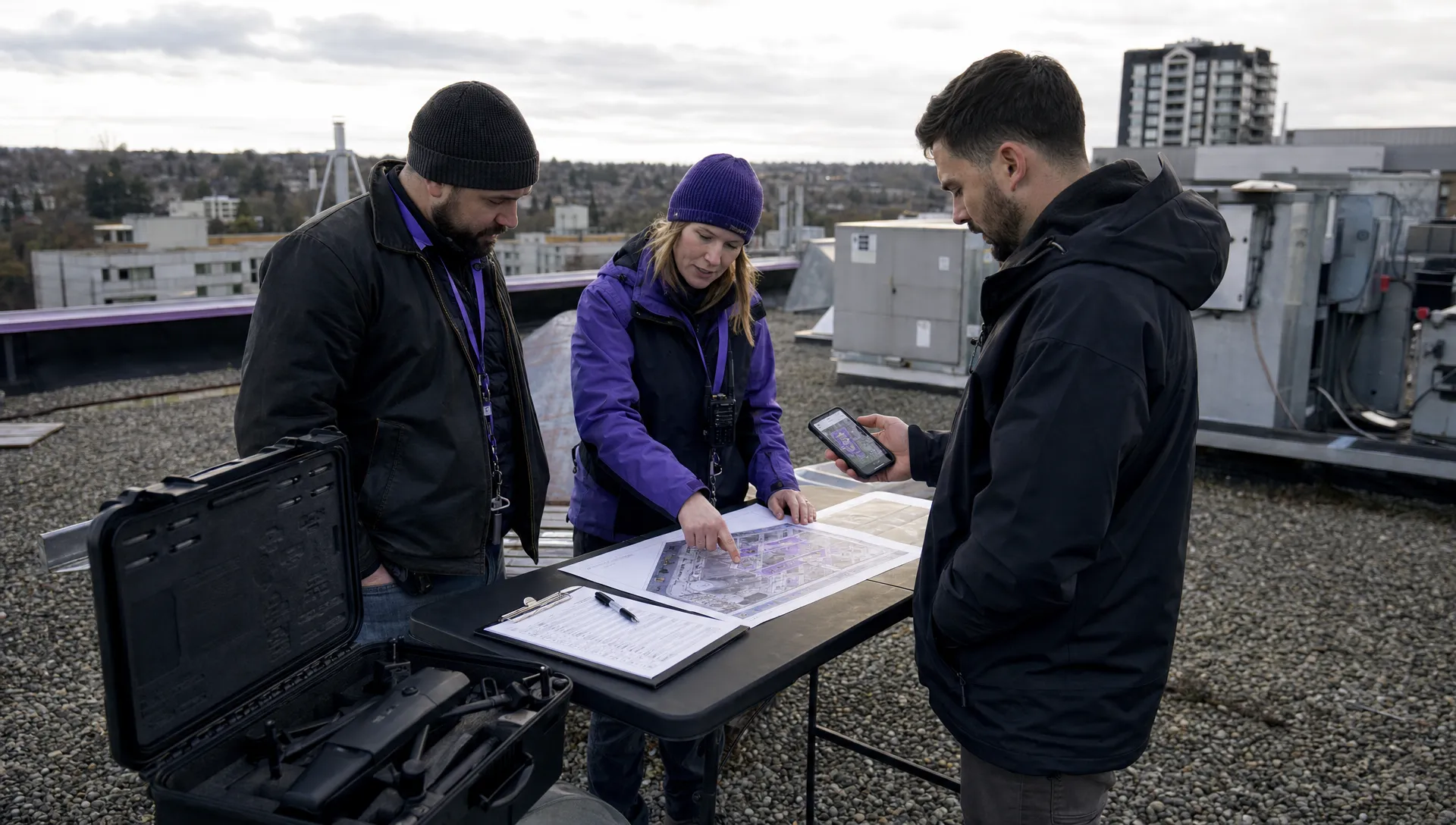
Remote ID should also appear in your risk assessment process. It is not a substitute for assessing airspace, ground hazards, people, property, weather or emergency procedures, but it can introduce new considerations around crew location, public interaction and equipment failure. If you are reviewing your process, Dronedesk has a practical guide on how to build a drone flight risk assessment that works.
Fleet management implications for commercial operators
A single pilot with one new drone can usually handle Remote ID with a simple checklist. A commercial organisation with multiple aircraft, pilots, payloads and clients needs a more controlled system.
Your fleet records should show which aircraft have Standard Remote ID, which aircraft rely on modules, and which drones are not deployable for normal Part 107 work. Records should also capture Remote ID serial numbers, firmware status, module assignments, maintenance events, and any known limitations.
This becomes especially important when drones are shared between teams. A broadcast module left in the wrong vehicle can ground a job. A firmware rollback can affect compliance. A subcontractor may arrive with an aircraft that is registered but not Remote ID compliant. None of these are issues you want to discover at the client site.
A clear fleet process should answer these questions before every job:
- Is the assigned drone Remote ID compliant for this operation?
- Is the Remote ID serial number recorded and associated with the correct FAA registration?
- Is the firmware or module configuration current?
- Has the pre-flight checklist confirmed Remote ID status?
- Is the pilot trained to respond if Remote ID fails or a member of the public asks about it?
For growing operations, spreadsheets often become fragile because they rely on manual updates and informal knowledge. If you are scaling beyond a small number of aircraft, this is where structured drone operations management becomes valuable. The Dronedesk guide to drone fleet management explains how fleet records, maintenance, pilot assignments and operational oversight fit together.
Remote ID and documentation: what to keep on file
The FAA Remote ID rule does not require you to create a large new paperwork pack for every flight, but commercial operators should still maintain evidence that they planned and flew responsibly.
At a minimum, your organisation should be able to demonstrate that the aircraft or module used for the job was compliant, registered correctly and checked before take-off. That evidence may be useful for internal audits, client assurance, insurance questions, incident reviews or regulator enquiries.
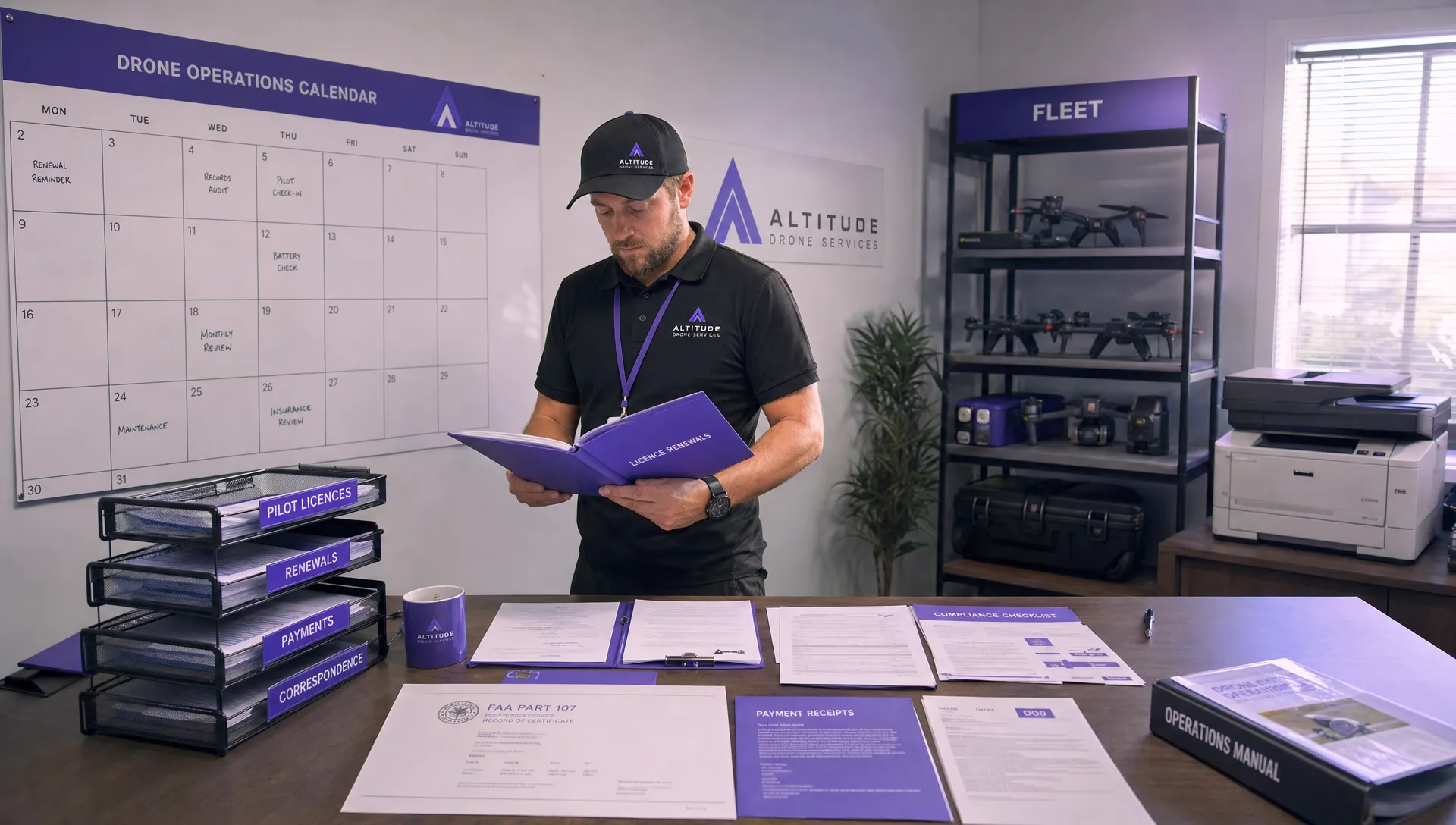
Useful records include the aircraft registration, Remote ID serial number, Declaration of Compliance reference, firmware version where relevant, module assignment record, pre-flight checklist, flight log, pilot details and any incident notes. For client-facing work, it can also help to keep a short explanation of Remote ID in your operating procedures so project managers and site contacts understand why the drone may be broadcasting locally.
Dronedesk is built for drone operations management and, according to the Dronedesk features page, includes fleet management, team management, airspace intelligence, proximity intelligence, flight planning, flight logging, data reporting, configurable checklists and risk assessments. Those capabilities are directly relevant when you want Remote ID to be part of a consistent operational workflow rather than a last-minute pilot memory test.
Common Remote ID mistakes commercial pilots should avoid
One common mistake is assuming that a drone is compliant because the model is modern. Always check the exact aircraft, firmware and Declaration of Compliance status.
Another is forgetting that Part 107 changes the registration position for very small drones. A sub-250g drone used recreationally may be treated differently from the same drone used for paid roof inspections, marketing footage or site progress documentation.
Operators also get caught out when they treat a broadcast module as a generic accessory. If your process depends on modules, you need a disciplined way to assign, charge, configure and document them.
A further mistake is confusing Remote ID with airspace authorisation. A Remote ID compliant drone still needs the usual checks for controlled airspace, restricted areas, temporary flight restrictions, local permissions and site hazards.
Finally, do not overlook subcontractors. If another pilot is flying under your project, your client may still expect you to have checked their compliance. Build Remote ID requirements into supplier onboarding, job briefs and evidence requests.
Quick Remote ID compliance checklist for Part 107 pilots
Use this as a practical sense-check before commercial work:
- Confirm the drone is required to be registered and identify the applicable operating authority.
- Check whether the drone has Standard Remote ID or needs a broadcast module.
- Verify the aircraft or module on the FAA Declaration of Compliance list.
- Add the correct Remote ID serial number in FAA DroneZone.
- Update firmware and module configuration before the job, not at the launch site.
- Add Remote ID status to the pre-flight checklist.
- Record the aircraft, pilot, Remote ID method and flight log after the operation.
- Brief the crew on public questions, control station visibility and failure procedures.
A checklist cannot replace judgement, but it does reduce avoidable omissions. For commercial pilots, that is the real value of treating Remote ID as part of operations management rather than just a technical setting.
Frequently Asked Questions
Does the FAA Remote ID rule apply to all commercial drones? In most Part 107 situations, yes. Remote ID applies to drones that must be registered with the FAA, and commercial Part 107 operations generally require registration. If you believe an exception applies, confirm it against FAA rules or qualified legal advice before flying.
Do sub-250g drones need Remote ID for commercial work? Usually, yes, if they are flown under Part 107 and must be registered. The common under-250g registration exception is often misunderstood because it is mainly associated with recreational flying, not commercial operations.
Can I fly without Remote ID inside a FRIA? A drone without Remote ID can operate inside an FAA-Recognized Identification Area if the operation meets the FRIA conditions. For most commercial jobs, this is not practical because the client site is unlikely to be inside a FRIA.
Is Remote ID the same as LAANC? No. Remote ID broadcasts identification and location information. LAANC is used to request near real-time authorisation for eligible drone operations in controlled airspace. You may need both, depending on the operation.
What happens if Remote ID fails during a flight? If Remote ID fails in flight, the prudent approach is to land as soon as practicable while maintaining safety. If it fails before launch and no exception applies, the operation should not proceed until the issue is resolved.
Can the public see my personal details through Remote ID? Remote ID broadcasts technical identification and location information, not your personal registration record. However, people nearby may be able to see the drone location and either the control station or take-off location, depending on the Remote ID method.
Make Remote ID part of a professional operating system
The FAA Remote ID rule is easiest to manage when it is built into your normal commercial workflow: fleet records, pilot assignments, flight planning, risk assessments, checklists and logs.
For a one-off flight, that might feel like extra admin. For a serious drone operation, it is part of proving that your team is safe, organised and compliant.
Dronedesk helps drone teams centralise the operational building blocks that support that standard, including planning, fleet oversight, checklists, risk assessments and flight logging. If Remote ID is still being managed in scattered notes or pilot memory, now is the right time to make it a controlled part of your drone operations process.
 Drone Risk Assessment Controls That Work in the Field →
 FAA Drone License Costs Beyond the Knowledge Test →
 Drone Part 107 Operations: When a Waiver May Be Needed →
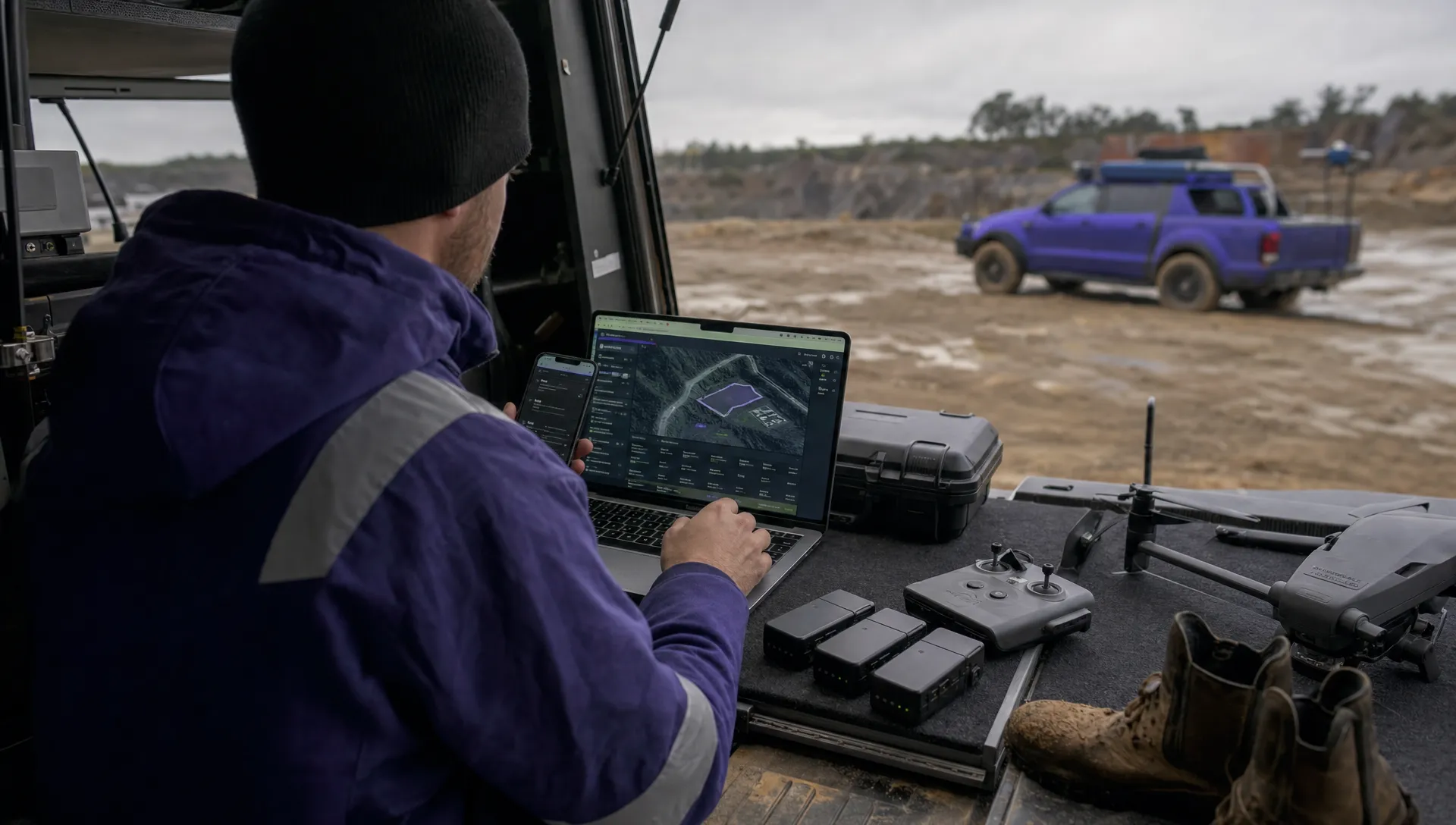 Drone Operating Rules for Managing Contractors and Employees →
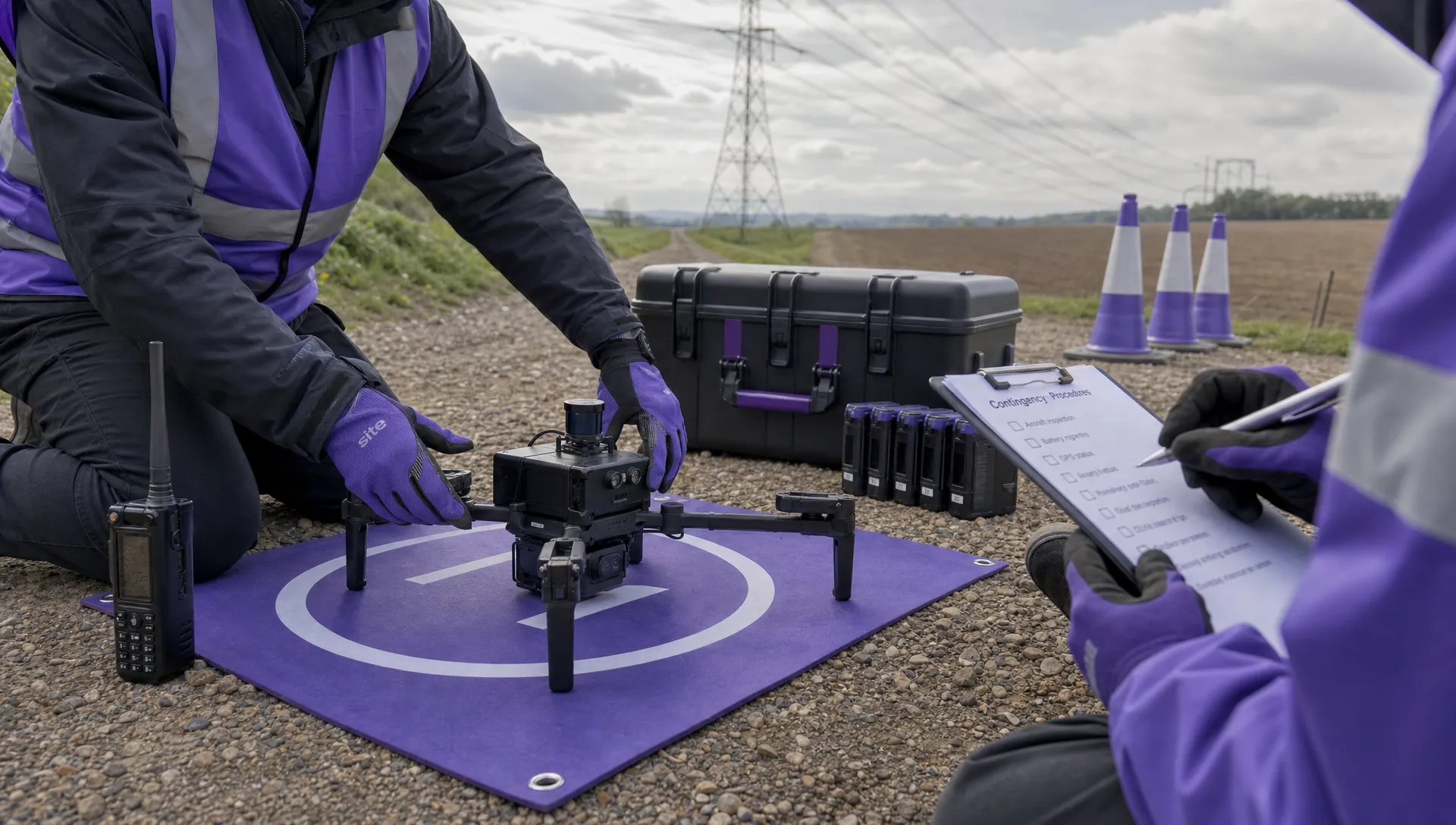 BVLOS Drone Requirements for Building a Safety Case →
 Drone Pilot Test Mistakes That Cost Candidates Marks →
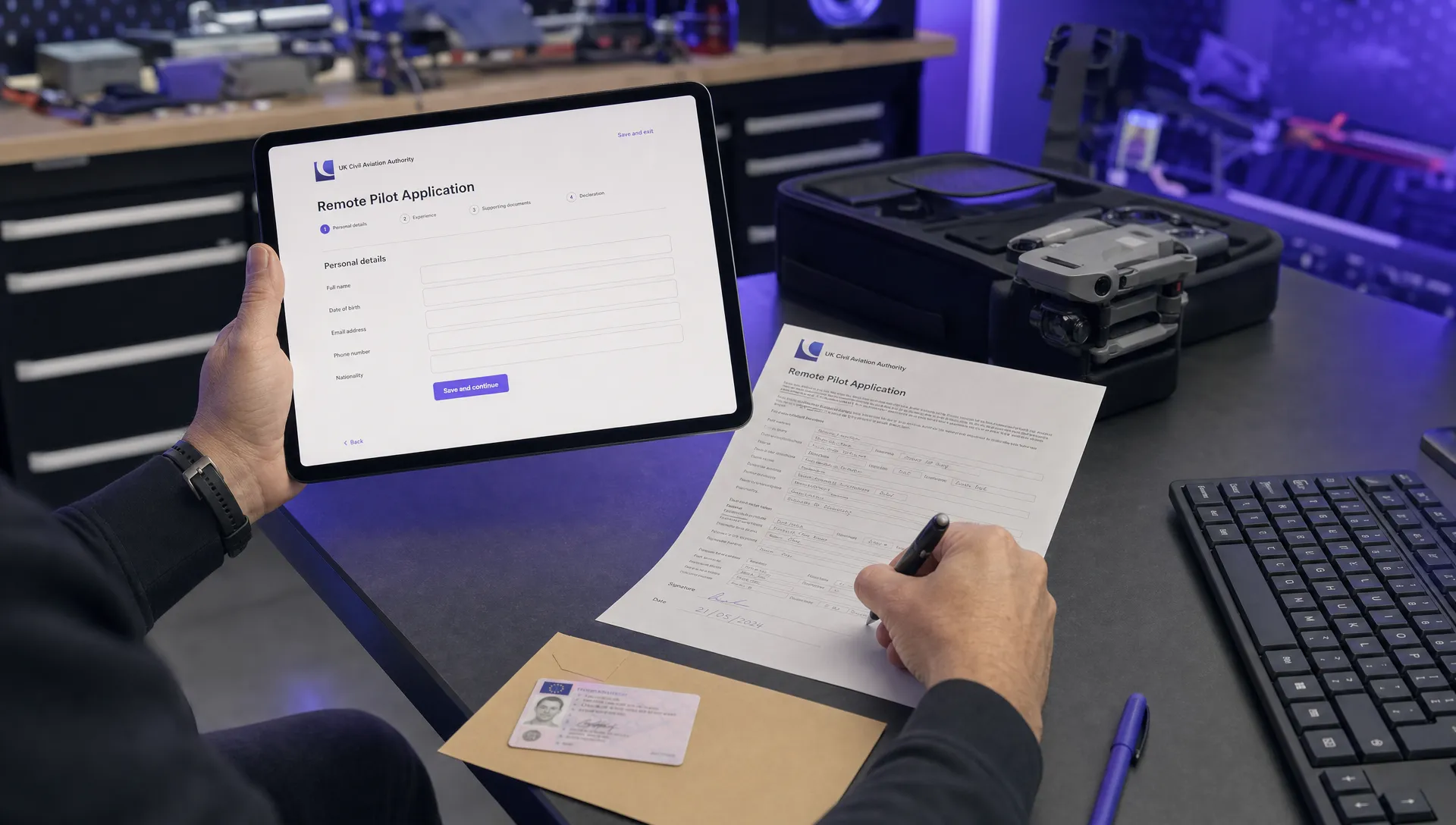 FAA 107 License vs Part 107 Certificate: What’s the Difference? →
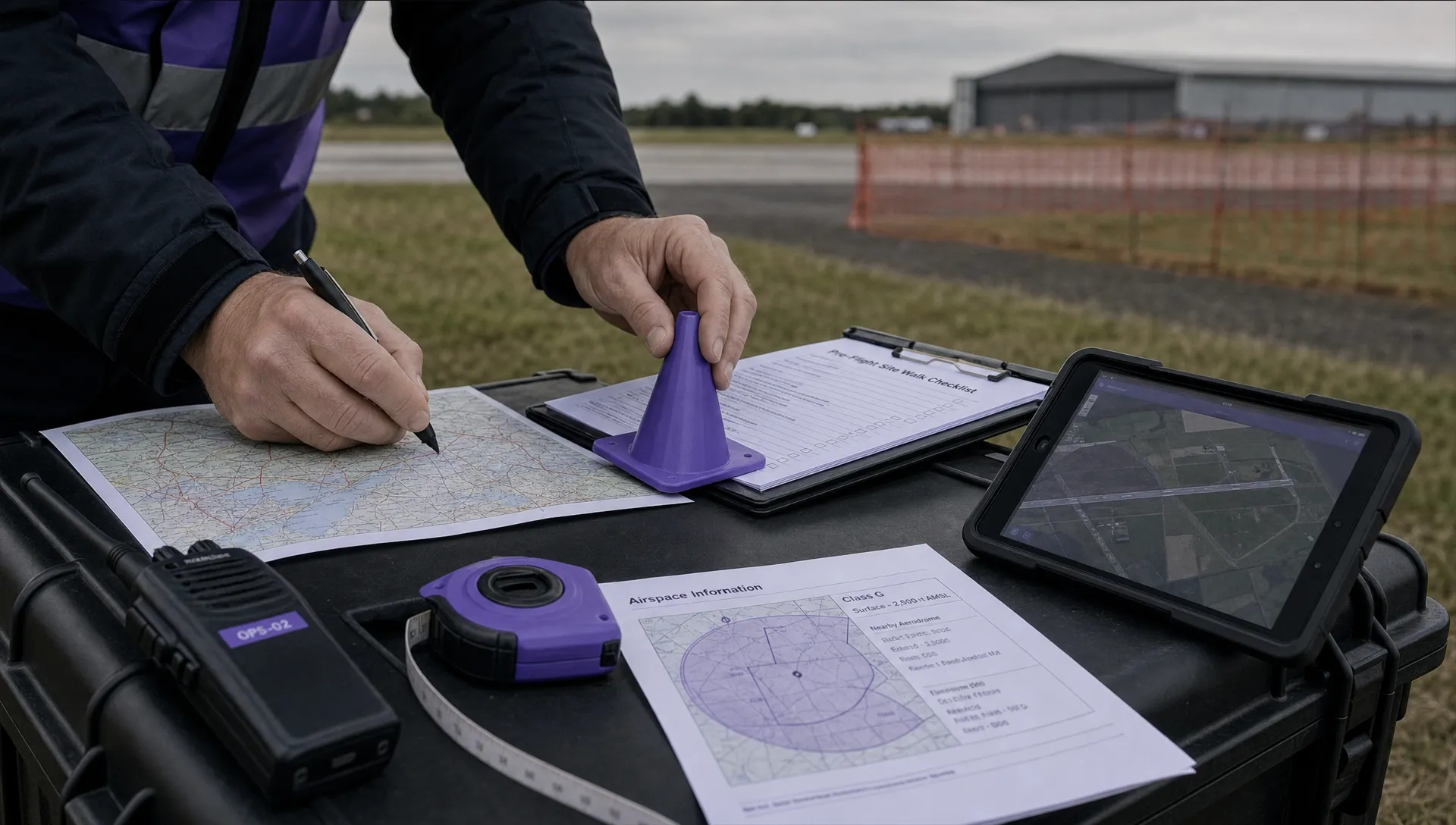 Drone Airport Rules: A Field Checklist for Site Assessments →
 FAA Part 107 Record-Keeping Rules for Commercial Teams →
 How to Review a DJI Flight Log After an Unexpected Event →