
FAA 107 License vs Part 107 Certificate: What’s the Difference?
If you searched for “faa 107 license”, you are asking a common and sensible question: what document do you need before flying drones commercially in the United States? The short answer is that the FAA does not technically issue a licence by that name. The official credential is a Remote Pilot Certificate with a small UAS rating, and it is the pilot qualification used for most non-recreational small drone operations under Part 107.
The distinction matters because Part 107 is more than a plastic card or a line on a pilot profile. It is a regulatory framework covering who can act as remote pilot in command, how small unmanned aircraft can be operated, when authorisations or waivers are needed and what limits apply to routine commercial missions. For drone operators, survey companies, utilities and emergency services, getting the wording right helps keep client proposals, internal training and compliance documents clear.
The FAA 107 license question: short answer
In everyday conversation, people often use “107 licence”, “commercial drone licence” and “Part 107 certificate” to mean the same thing. In formal FAA language, only one of those is close to correct: the Remote Pilot Certificate with a small UAS rating.
The FAA’s Part 107 guidance explains that Part 107 applies to many small unmanned aircraft operations in the United States. The rule is contained in 14 CFR Part 107, which sets out operating rules, certification requirements and waiver provisions.
| Term people use | What it usually means | Is it official FAA wording? |
|---|---|---|
| 107 licence or commercial drone licence | The pilot credential needed for many paid drone operations | Informal shorthand |
| Part 107 certificate | The FAA remote pilot credential issued under Part 107 | Common shorthand, but not the full formal name |
| Remote Pilot Certificate with a small UAS rating | The actual pilot certificate | Yes |
| Part 107 | The FAA rule for many small UAS operations | Yes |
For a client, the informal phrase may be understandable. For applications, audits, insurance documentation and standard operating procedures, use the official certificate name.
What the FAA actually issues
The FAA issues a remote pilot certificate, not a traditional aircraft pilot licence and not a company operating licence. That certificate belongs to an individual pilot who has met the FAA’s eligibility and testing requirements.
Using FAA 107 license wording in a marketing conversation is usually harmless, but your records should be more precise. The person responsible for the flight should be identified as the remote pilot in command, and their certificate status should be verifiable. That matters when a utility inspection, mapping project or emergency response task is being reviewed after the event.
The FAA’s published process for becoming a drone pilot includes being at least 16 years old, being able to read, speak, write and understand English, being in a physical and mental condition to safely operate a small UAS and passing the required aeronautical knowledge test, unless an alternative route applies for some existing Part 61 certificate holders. Applicants also go through TSA security vetting before a certificate is issued.
The certificate itself does not work like a short-term permit that expires every year. However, a pilot must keep recurrent training current to exercise Part 107 privileges. FAA guidance should always be checked before relying on training status for a live job.
Why “license” became the popular wording
The confusion is understandable. In many industries, people call any permission to do regulated work a licence. Clients may ask whether a drone pilot is “licensed”, procurement teams may add that word to tender documents and search engines reflect the language people use rather than the exact regulatory term.
That said, there is a useful practical split. “Certificate” points to the pilot’s qualification. “Part 107” points to the operating rule. A certificated pilot can still fly in a way that breaches Part 107 if they ignore airspace authorisation, visibility, altitude or operating-over-people requirements. Equally, a company can have certificated pilots but weak operational controls if jobs are not planned, risk assessed, logged and reviewed properly.
For business operations, the certificate is the entry point. The compliance system around the flight is what keeps the operation defensible.
What Part 107 covers beyond the card
An FAA 107 license search can give the impression that once the pilot has a certificate, the regulatory work is finished. In reality, Part 107 also controls how many routine small UAS missions are carried out.
Under Part 107, the small unmanned aircraft must generally weigh less than 55 pounds including everything on board or attached. Operations are subject to limits including visual line of sight requirements, airspace authorisation for controlled airspace, altitude restrictions, right of way rules and conditions for flights over people or moving vehicles. Some operations may be allowed only if they meet specific rule categories or if the FAA grants a waiver.
This distinction is especially important for organisations planning repeated work. A survey company flying the same quarry monthly, a utility team inspecting substations and a public safety unit supporting incident command all need more than a pilot certificate. They need a repeatable workflow that checks the intended location, airspace, nearby hazards, crew roles, aircraft suitability and mission limits.
That is why good Part 107 compliance is operational, not just administrative. The certificate answers “who is qualified?” The plan answers “can this flight be conducted safely and legally today?”
Why the wording matters for operators, clients and insurers
Terminology can affect expectations. If a proposal says a pilot has a “commercial drone licence”, a knowledgeable client may still understand what you mean. But if the same phrase appears in an incident report, insurance discussion or internal audit, loose wording can create avoidable ambiguity.
A clearer approach is to state that the pilot holds an FAA Remote Pilot Certificate with a small UAS rating and that the operation is planned under Part 107, unless another FAA authority applies. That phrasing separates the individual pilot credential from the regulatory basis of the mission.
| Situation | Better wording | Why it helps |
|---|---|---|
| Client proposal | FAA Remote Pilot Certificate with small UAS rating | Shows the individual pilot is certificated |
| Operations manual | Conducted under 14 CFR Part 107 | Identifies the rule set for the mission |
| Airspace planning note | FAA airspace authorisation required if applicable | Avoids implying the certificate alone grants airspace access |
| Waiver request | Operation requires FAA waiver or other authorisation | Shows that non-standard missions need separate approval |
For larger teams, this clarity also helps with training. New pilots learn that passing the test is not the end of compliance. Project managers learn not to assume that every drone task is automatically covered because someone on the team has a certificate.
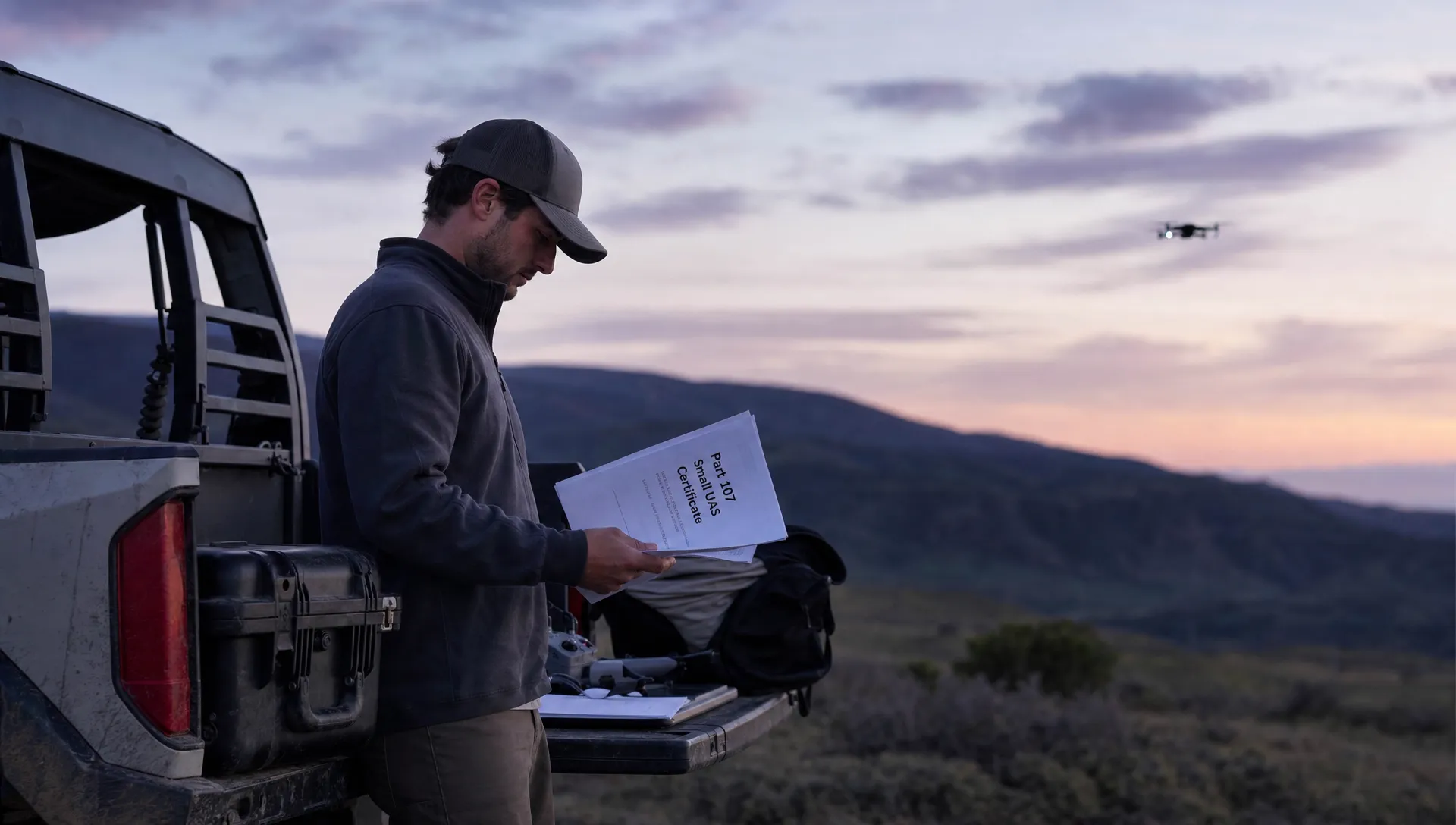
Who needs a Part 107 certificate?
For most businesses, the FAA 107 license question arises when a flight is not purely recreational. If the drone operation supports a business, public agency function, inspection, survey, media project, real estate job, infrastructure task or other non-hobby purpose, Part 107 is often the relevant route.
That does not mean every organisation uses Part 107 for every mission. Public safety and government operators may have additional routes available, including public aircraft operations under FAA authorisation. The FAA provides separate information for public safety and government UAS operators, and agencies should verify which pathway applies to their own missions.
For private-sector operators, the practical rule is simple: if the flight creates business value, do not treat it as recreational. A roof inspection for a paying client, orthomosaic capture for a survey deliverable, line inspection for a utility or imagery gathered for a construction progress report should be planned as a regulated operation with a properly certificated remote pilot in command.
Recreational flyers have their own requirements, including FAA registration and recreational safety rules, but those are not a substitute for Part 107 when the purpose of the flight is commercial or organisational.
How to get the credential without confusing the terms
If your team came here after searching for an FAA 107 license, the action plan is to apply for the FAA remote pilot certificate. The high-level process is straightforward, although the details should always be checked against FAA guidance before booking or submitting anything.
Most new applicants create an FAA Tracking Number through IACRA, schedule the Unmanned Aircraft General, Small (UAG) knowledge test through an FAA-approved testing provider, pass the test, complete the IACRA application and wait for TSA security vetting. Once approved, the pilot receives a temporary certificate before the permanent certificate follows.
Existing Part 61 certificate holders who meet FAA conditions may have a different training route, so mixed aviation teams should not assume everyone follows the same path. If you want the application process in more detail, Dronedesk has a dedicated step-by-step FAA Part 107 licence application guide.
Once certificated, pilots must maintain recurrent training currency. Treat that as part of your operations management, not as a personal admin task left to memory. For companies with several pilots, a missed recurrent training date can affect staffing, scheduling and contract delivery.
What the certificate does not authorise on its own
An FAA 107 license, even when people use that informal phrase, should not be treated as blanket permission to fly anywhere, at any time, in any way. The certificate confirms that a person is qualified to exercise Part 107 privileges. The proposed flight still has to fit the rules.
Common areas that need extra attention include controlled airspace, operations beyond visual line of sight, some night or over-people scenarios, flights near sensitive sites and operations that involve higher ground or air risk. Some missions may be possible only through FAA airspace authorisation, LAANC where available, a Part 107 waiver or another recognised approval route.
This is where operational discipline becomes visible. A solid risk assessment should consider the location, people, property, obstacles, airspace, weather, crew competence and emergency actions. If your team is improving that process, this Dronedesk article on building a drone flight risk assessment that works is a useful companion to the certification discussion.
Do not rely on search snippets, forum answers or outdated training notes for waiver-sensitive decisions. Check the FAA’s current pages and the actual regulation before committing to the flight.
Managing compliance after certification
The FAA 107 license discussion often ends with the test, but professional operators know the certificate is only one part of a safe operating system. Real jobs involve client requirements, aircraft selection, crew scheduling, site checks, checklists, authorisations, risk assessments, flight logs and reporting.
Dronedesk is built for that wider operational workload. Its published features include client management, fleet management, team management, airspace intelligence, proximity intelligence, flight planning, configurable checklists, risk assessments, flight logging and data reporting. You can explore those capabilities on the Dronedesk features page.
For operators using DJI aircraft, post-flight records can also support review and quality assurance. Dronedesk provides a DJI flight log analysis tool for inspecting DJI log data, which can be useful when you need a clearer picture of what happened during a mission.
The goal is not paperwork for its own sake. It is to make every job easier to explain, repeat and defend, especially when clients or internal stakeholders ask how the flight was planned and controlled.
Frequently Asked Questions
Is FAA 107 license an official FAA term? No. It is a common search phrase and informal industry wording, but the FAA credential is officially a Remote Pilot Certificate with a small UAS rating.
Is a Part 107 certificate the same as a remote pilot certificate? In common use, yes. People often say “Part 107 certificate” to mean the FAA remote pilot certificate issued for small UAS operations. The full formal name is more precise.
Do I need a Part 107 certificate for paid drone work? In most cases, yes. If the flight is not purely recreational and is conducted for business or organisational purposes, Part 107 is commonly the applicable FAA framework. Always check current FAA rules for your specific operation.
Does the certificate let me fly in controlled airspace? Not by itself. Part 107 pilots need FAA airspace authorisation before flying in controlled airspace, often through LAANC where it is available.
Does a Part 107 certificate expire? The certificate does not expire in the same way as a short-term permit, but pilots must keep recurrent training current to exercise Part 107 privileges.
Turn the certificate into a workable operations process
Getting the certificate is an important milestone, but compliant drone operations depend on what happens before and after each flight. Your team still needs consistent planning, airspace checks, risk assessments, checklists, logging and reporting.
Dronedesk helps drone operators manage those day-to-day processes in one platform, so the admin around commercial drone work is easier to organise and easier to evidence when it matters.
 FAA 107 License vs Part 107 Certificate: What’s the Difference? →
 FAA Part 107 Record-Keeping Rules for Commercial Teams →
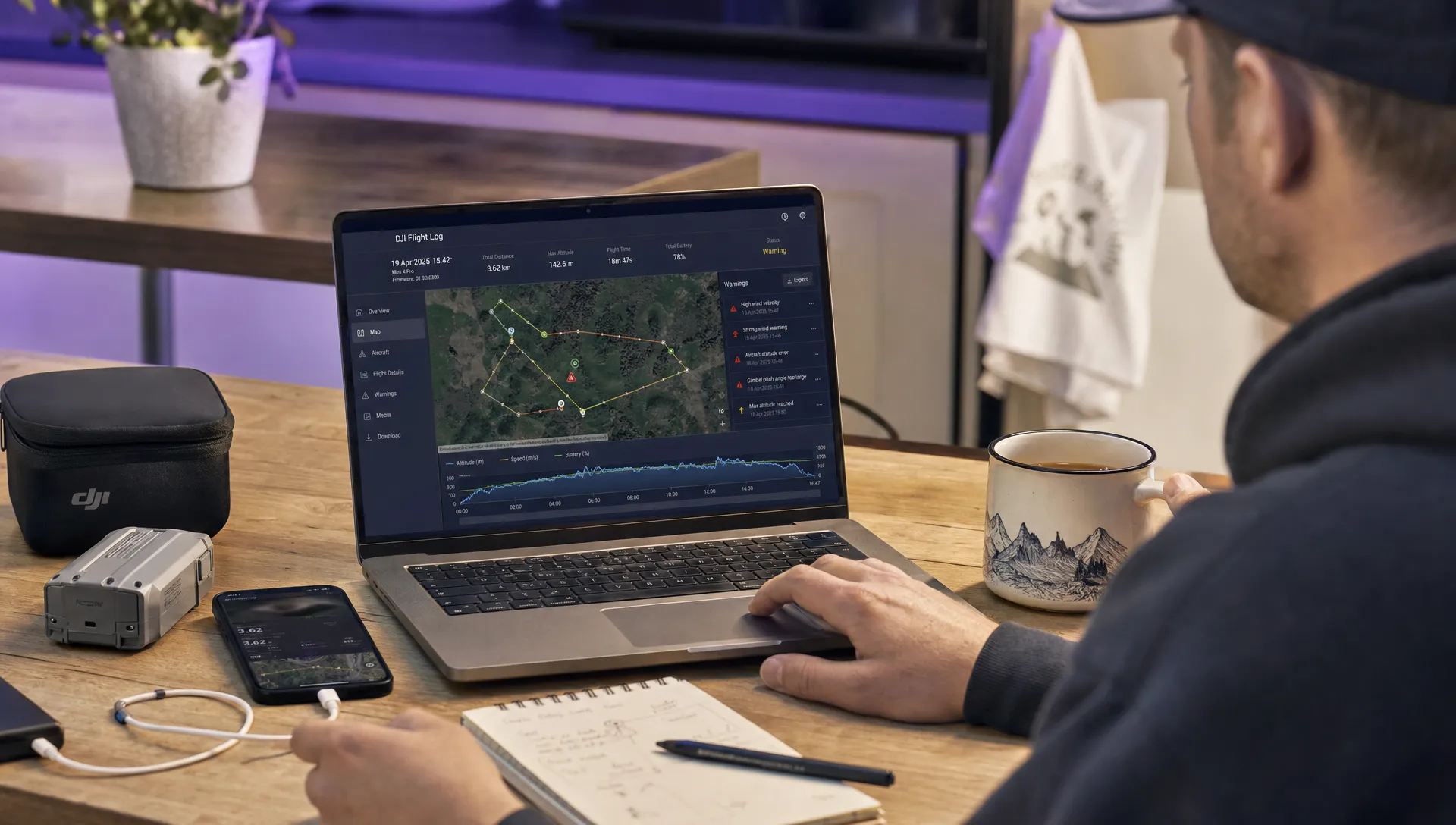 How to Review a DJI Flight Log After an Unexpected Event →
 Drone Laws Around the World: A Pre-Flight Research Framework →
 How to Compare Drone Survey Services for Complex Sites →
 How to Start a Drone Mapping Business With a Clear Workflow →
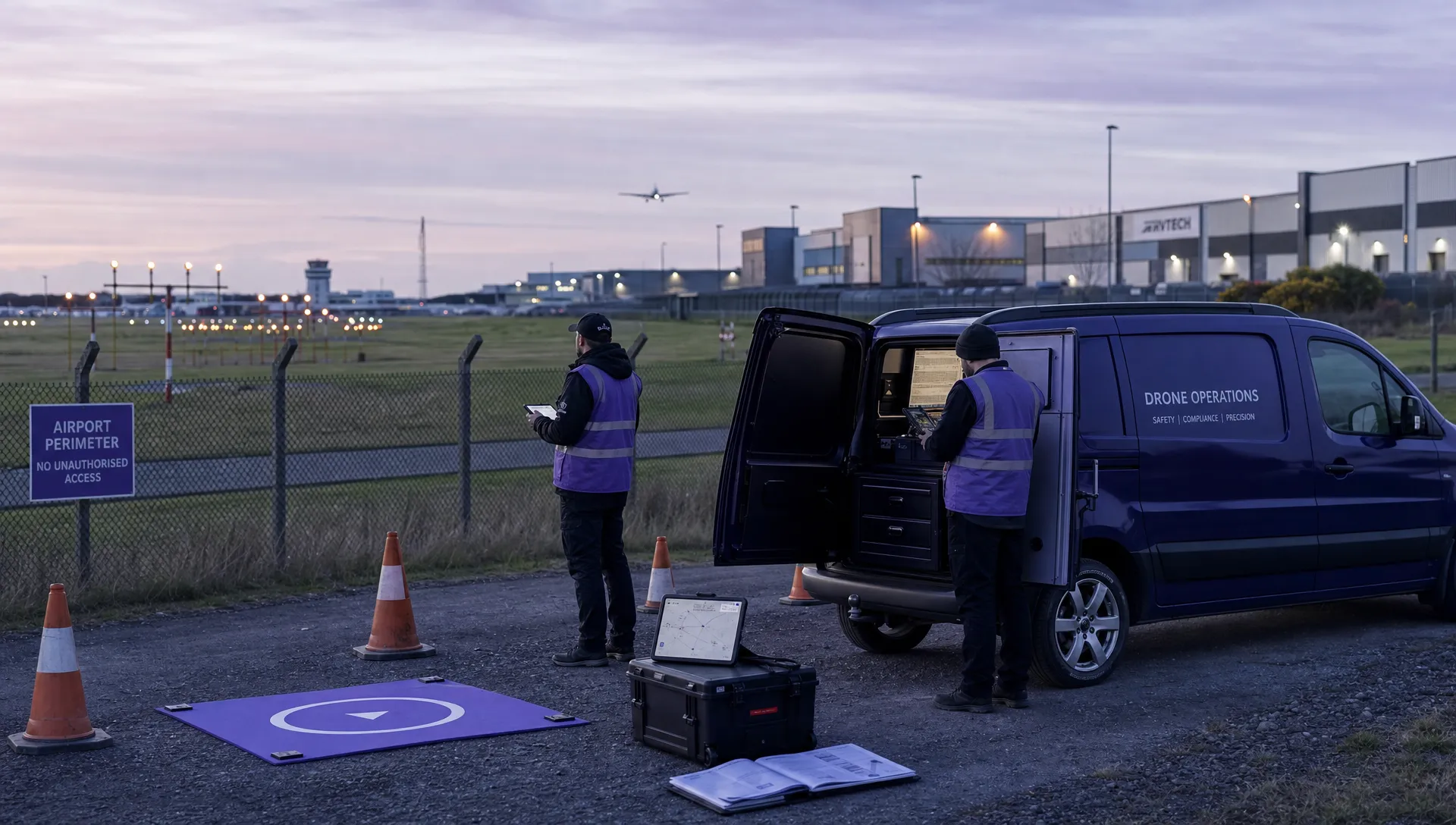 Class C Airspace Drone Rules for Commercial Flights →
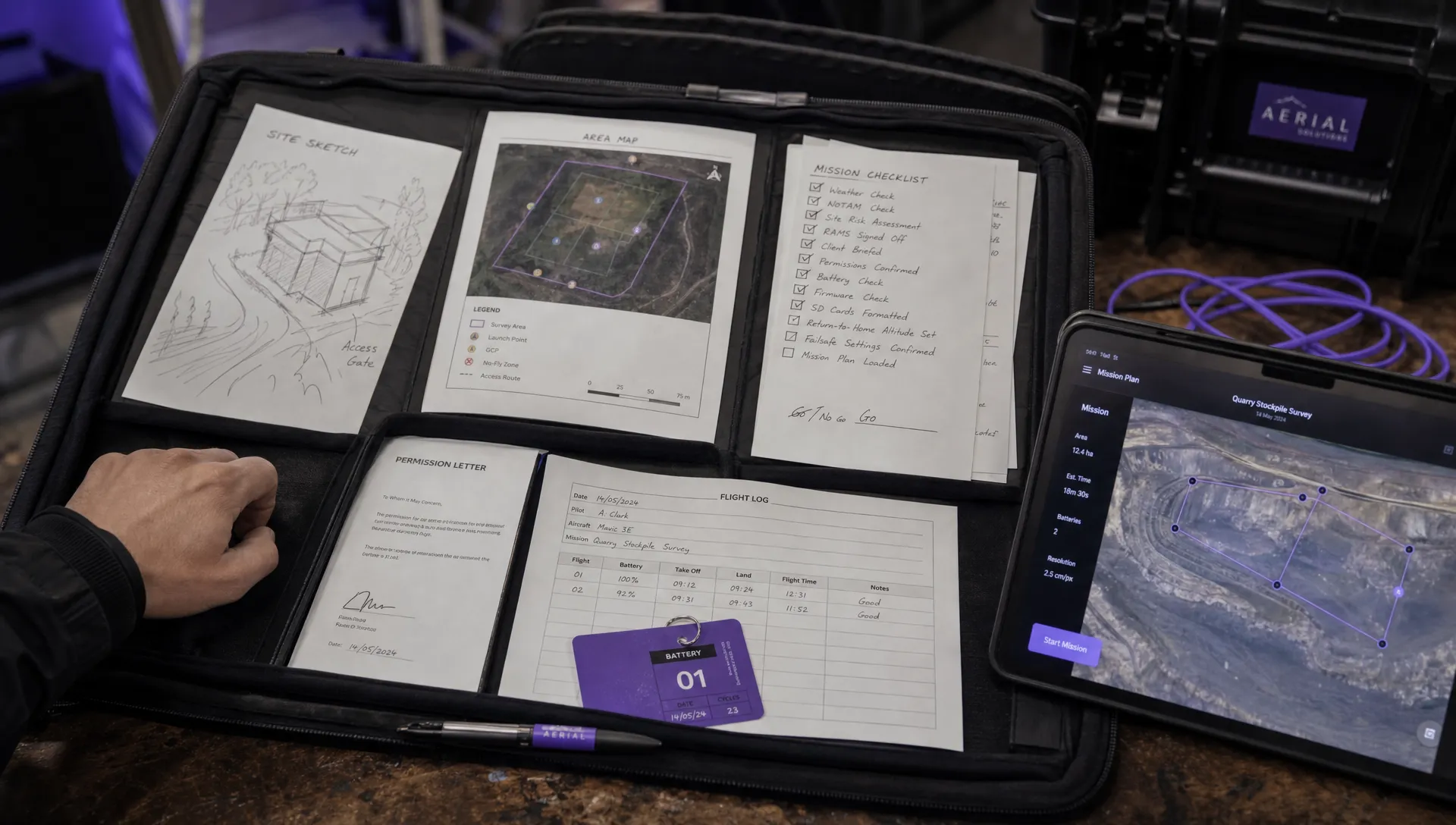 How to Create a Drone Job Pack for Every Mission →
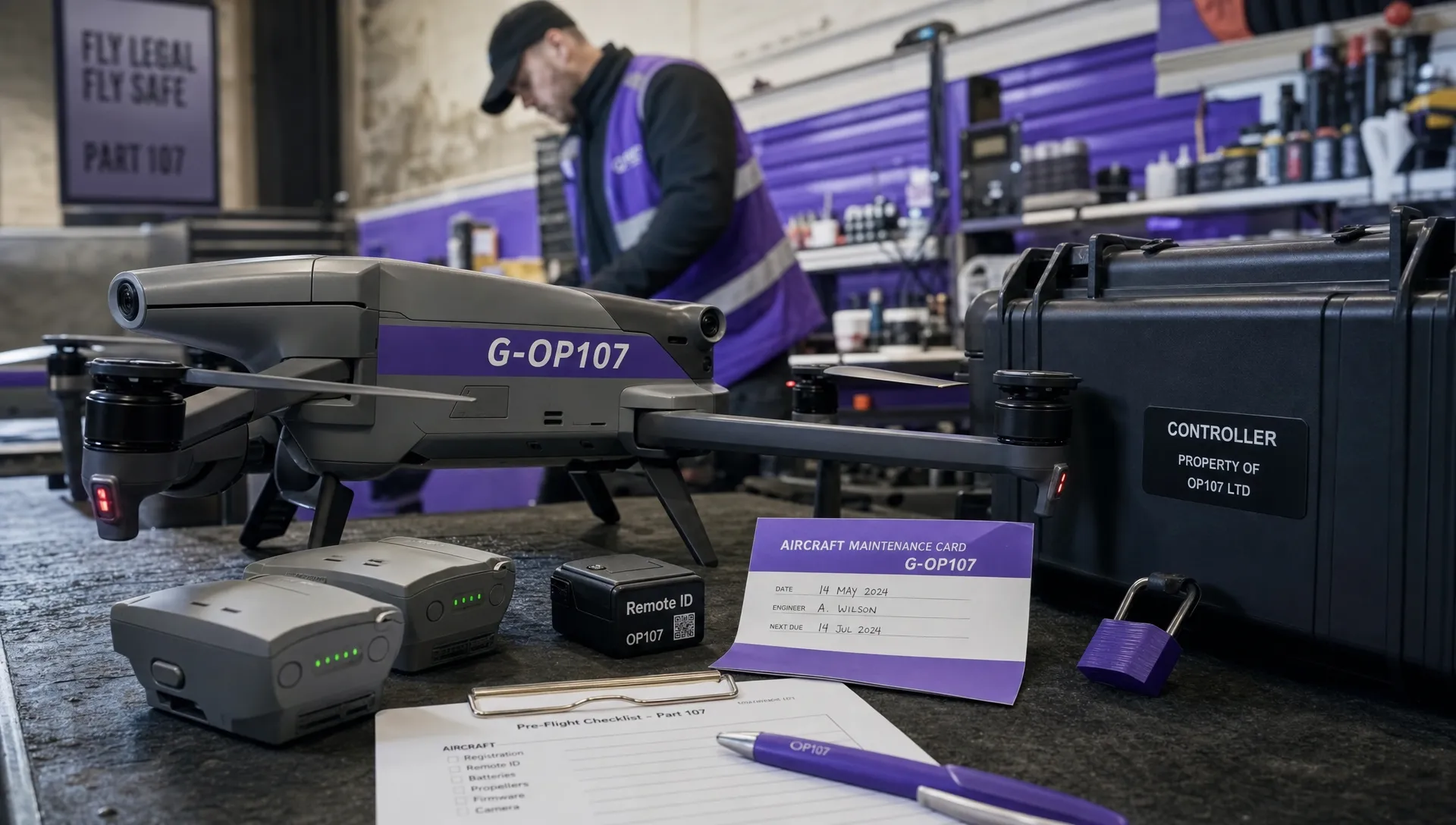 FAA Small UAS Rule: Key Requirements for Operators →
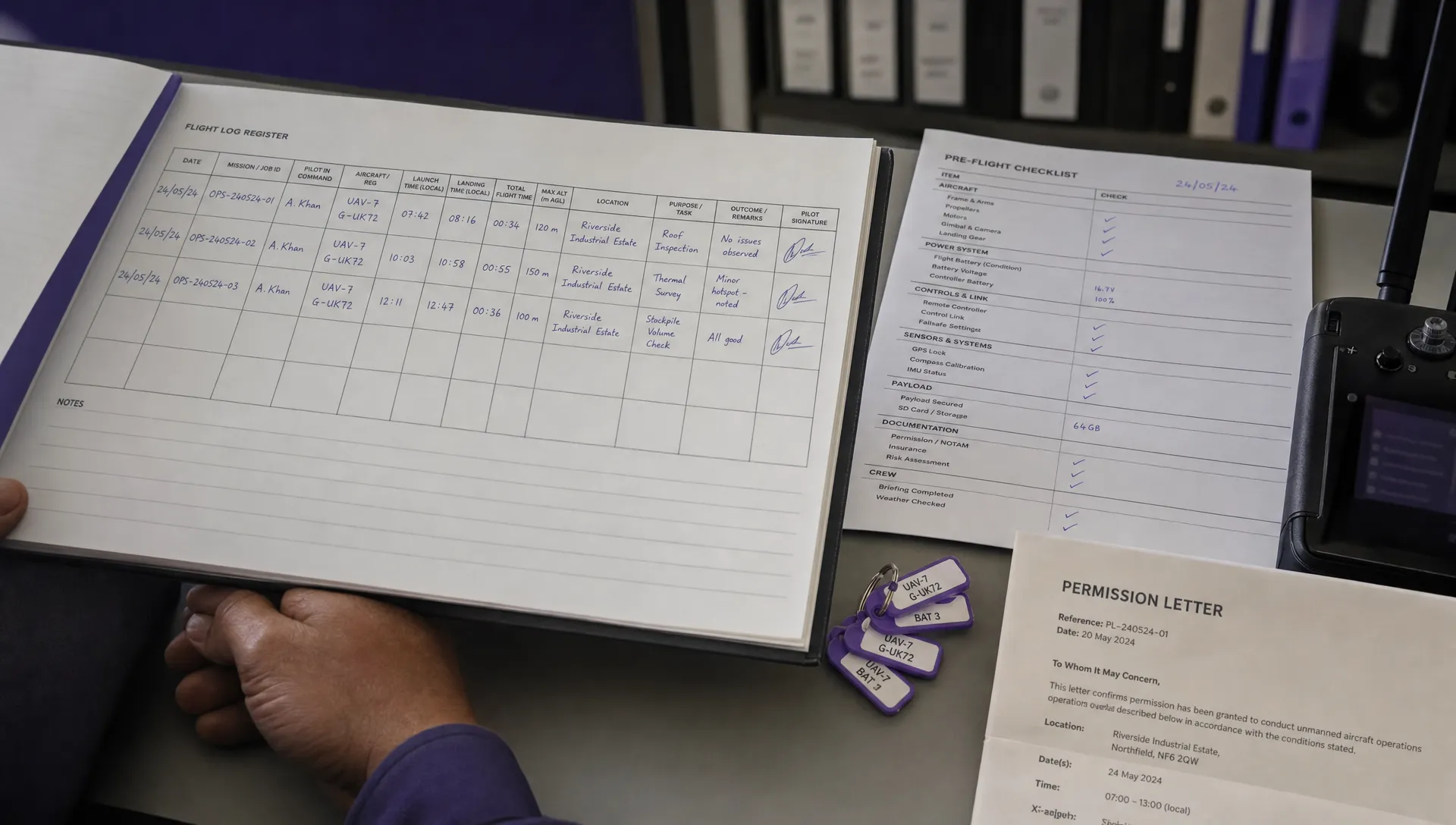 How to Build a Drone Pilot Flight Log That Is Audit Ready →