
Drone Operating Rules for Managing Contractors and Employees
Managing a mixed workforce is one of the easiest places for aviation discipline to drift. Your drone operating rules need to make the same standard apply whether the person flying is a PAYE employee, an agency pilot, a specialist subcontractor or a partner organisation brought in for a single project.
For survey firms, utilities, emergency services and larger commercial operators, the risk is rarely that nobody knows the law. The real risk is inconsistent interpretation: one pilot accepts a marginal weather window, another stores evidence in a personal folder, a contractor assumes the client handled landowner permission and the operations manager only finds out when the job is already complete.
The aim is not to bury skilled pilots under paperwork. It is to define who is accountable, what evidence is required and how decisions are made before a drone leaves its case.
Why drone operating rules must cover employees and contractors
Employees are usually easier to train, supervise and audit because they sit inside your management system every day. Contractors may bring excellent specialist capability, but they also bring their own habits, templates and assumptions. That difference matters because a client, regulator or insurer will still expect your organisation to show that the operation was controlled.
A good set of drone operating rules treats employment status as secondary to operational role. If someone plans, approves, flies, observes, maintains or handles data from a drone mission, they need to understand the same minimum process.
| Management area | Employee risk | Contractor risk | Control you need |
|---|---|---|---|
| Competence | Training goes stale or is not role-specific | Qualifications are supplied once then not refreshed | Competence checks before assignment and periodic review |
| Planning | Internal shortcuts become normal | External templates do not match your approval process | Standard planning workflow and named approver |
| Flight records | Logs are incomplete during busy periods | Evidence sits outside your systems | Required records before job closure |
| Site control | Familiar sites lead to complacency | Contractor relies too heavily on the client brief | Site-specific risk assessment and stop-work authority |
| Data handling | Imagery is stored in the wrong place | Files are shared through unmanaged tools | Clear data, privacy and client confidentiality rules |
Start with the regulatory baseline
Before you write internal rules, separate legal duties from company preferences. Legal duties are the minimum. Internal procedures explain how your organisation proves those duties were met on real jobs.
For UK operations, the Civil Aviation Authority drone guidance is the official starting point for categories of operation, registration, flyer responsibilities and permissions. In the EU, EASA explains the Open, Specific and Certified categories, with requirements based on operational risk. In the United States, FAA Part 107 covers small UAS commercial rules, including remote pilot certification, operating limitations, waivers and aircraft registration.
Good drone operating rules should name the official source your team must check for the jurisdiction being flown. They should also state that a client request, internal deadline or contractor method cannot override current aviation regulation, airspace requirements, local restrictions or the limits of an authorisation.
For more complex operations, risk methodology also matters. JARUS publishes SORA material through its official publications page, and the UK CAA provides its UK SORA regulatory library material.htm). If your organisation operates in the Specific category, near critical assets or beyond standard limitations, your contractor management process should reflect the authorisation and risk assessment route that applies.
Define accountable roles before assigning work
A mixed team needs clarity on roles rather than job titles. One person can hold more than one role, but the role still needs to be named before the mission starts.
Your drone operating rules should define who can accept the job, approve the plan, act as remote pilot or remote pilot in command, support the flight as observer, release aircraft from maintenance, approve deviations and close the record after completion. For emergency services or utilities, you may also need a site liaison, incident commander or asset owner representative in the workflow.
| Role | Typical decision authority | Evidence to retain |
|---|---|---|
| Operations manager | Assigns resources and confirms job can enter planning | Job brief, pilot assignment and approval notes |
| Remote pilot or pilot in command | Makes real-time flight safety decisions | Flight log, dynamic risk notes and incident reports |
| Observer or support crew | Supports airspace, ground risk and situational awareness | Briefing record and crew allocation |
| Fleet or maintenance lead | Confirms aircraft, batteries and payloads are serviceable | Maintenance status and defect history |
| Contractor lead | Confirms contractor personnel follow your process | Onboarding evidence and contractor declarations |
The key principle is simple: a contractor may provide the pilot, but your organisation still needs a defensible way to show that the right person was authorised to do the right task under the right conditions.
Build contractor onboarding that checks more than certificates
Contractor onboarding often fails because it stops at paperwork. Certificates, insurance and registrations are essential, but they do not prove that a pilot can work inside your operational system.
A better onboarding process checks competence, communication and fit with the type of work. A roof inspection in a quiet industrial estate, a transmission line inspection and a public safety deployment all place different demands on decision making. Ask for evidence that matches the work you are assigning, not just generic proof that the contractor can fly.
At a minimum, onboarding should confirm pilot competence, aircraft suitability, insurance, operating permissions where relevant, maintenance arrangements, privacy and data handling expectations, incident reporting obligations and the contractor's agreement to your stop-work process.
Put drone operating rules into the statement of work
Contract terms should not repeat your whole operations manual, but they should point to the parts that matter. Include requirements for pre-flight approval, airspace checks, site risk assessment, weather limits, crew briefings, flight logs, defect reporting, occurrence reporting and data delivery.
The statement of work should also say whether subcontracting is allowed. If a contractor can send a different pilot, your approval process must still apply to that individual before the job starts.
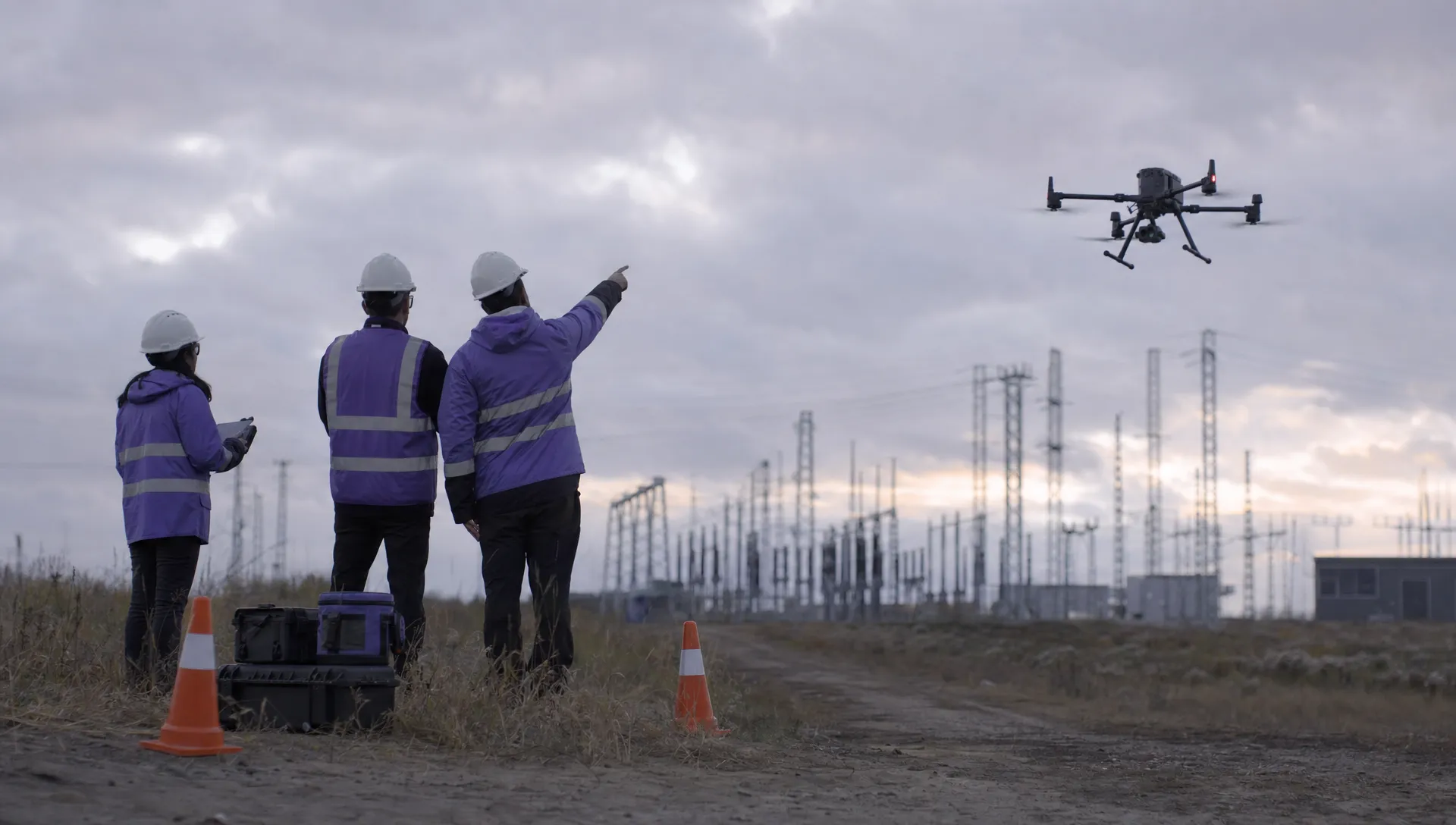
Standardise planning, risk assessment and approval
Consistent planning is where mixed teams become manageable. If employees use one approach and contractors use another, comparison becomes difficult and audit evidence becomes patchy.
The best approach is to make the planning process role-based and evidence-based. Everyone should answer the same core questions: what is the purpose of the flight, which airspace and ground risks exist, what proximity hazards are nearby, which permissions are needed, what weather limits apply, which aircraft and payload are suitable, what emergency actions are available and who has authority to stop the job.
For high risk or unusual work, drone operating rules should require escalation rather than leaving the decision to the pilot alone. Escalation does not mean mistrust. It protects the pilot from being pressured into accepting a mission that needs extra review.
If you are refining this part of your process, Dronedesk has a practical guide on building a drone flight risk assessment that works. In day-to-day operations, the Dronedesk features relevant to this workflow include flight planning, airspace intelligence, proximity intelligence, configurable checklists, risk assessments, team management, fleet management, flight logging and data reporting.
Control live operations without slowing pilots down
Once a flight starts, the pilot must be able to make safety decisions without waiting for office approval. That does not conflict with central control. It means your rules need to distinguish between planned authority and dynamic authority.
Planned authority covers the approved scope: location, aircraft, crew, task, method, permissions and known limits. Dynamic authority covers what the remote pilot does on site when conditions change. If the wind increases, people enter the operating area, GNSS reliability drops or a client asks for an extra angle outside the plan, the pilot needs clear authority to pause, modify or stop.
This is where contractor management becomes most visible. A contractor who feels commercially pressured may try to satisfy the client on site, even when the safer answer is to stand down. Your drone operating rules should state that safety decisions made within defined stop-work criteria will be supported by the organisation.
For emergency services, the wording should also reflect command structure. The drone pilot supports the incident, but aviation safety decisions still need a protected line of authority. The incident commander can set priorities; the pilot must retain the ability to refuse or modify a flight that is unsafe or outside permission.
Keep records that prove control, not just activity
A flight log that says a drone flew for 22 minutes is useful, but it does not prove the operation was properly managed. For employees and contractors, your record set should connect the job request, client brief, aircraft, crew, permissions, risk assessment, checklist, flight log, defects, incidents and delivered data.
If your drone operating rules require these records before a job is closed, you avoid the common problem of chasing contractors weeks later for missing evidence. The same standard should apply internally. Busy employees can leave gaps too, especially when several short flights are completed in a single day.
For DJI aircraft, post-flight review can also help when a pilot reports an anomaly, hard landing, battery concern or unusual aircraft behaviour. Dronedesk provides a DJI flight log analysis tool that can support that kind of technical review.
Record keeping should also include competence and fleet evidence. A contractor's insurance renewal, an employee's refresher training, a battery retirement decision and an aircraft defect should not sit in separate inboxes with no link to the jobs they affect.
Review performance and update the rules
Rules only work if you review how people actually use them. Treat employees and contractors consistently by reviewing completed jobs, near misses, client feedback, missing records, aborted flights and repeated planning issues.
The goal is not to punish every mistake. A mature review process separates human error, weak process design and deliberate non-compliance. If three pilots misunderstand the same checklist question, rewrite the checklist. If one contractor repeatedly ignores approval conditions, remove them from the approved list until the issue is resolved.
A quarterly review is a practical rhythm for most commercial teams. Higher tempo operations, emergency deployments and critical infrastructure work may need more frequent review because risk changes quickly and evidence volumes are higher.
When you update drone operating rules, version control matters. Employees and contractors need to know which version applies, when it changed and whether they must acknowledge the update before taking new work.
A practical checklist for mixed drone teams
Use this as a management checklist, not a replacement for jurisdiction-specific regulation or professional legal advice.
- Define operational roles before each job is assigned.
- Verify employee and contractor competence for the actual task.
- Confirm insurance, registrations, authorisations and aircraft suitability.
- Use one planning, risk assessment and approval process for everyone.
- Make stop-work authority explicit and commercially protected.
- Require complete flight, maintenance, incident and data records before job closure.
- Set rules for subcontracting, client changes and out-of-scope requests.
- Audit a sample of jobs and feed lessons back into training.
- Review official regulatory sources before operations in a new country or category.
For organisations scaling beyond a handful of pilots, this is also a governance issue. A broader drone operations management approach helps connect people, assets and process so that contractor control is not treated as a separate admin burden.
Frequently asked questions
Do contractors need to follow our operations manual? If they are flying under your organisation's work scope, they should follow the procedures you specify for that operation. They may also have their own manual or procedures, but any conflict should be resolved before the job starts.
Who is responsible if a contractor breaks the rules? Responsibility depends on the jurisdiction, contract and facts of the operation. In practice, regulators, insurers and clients may all ask what your organisation did to select, brief, approve and supervise the contractor, so keep evidence of those controls.
Should employees and contractors use the same flight planning templates? Yes, unless there is a clear reason not to. Standard templates make review, approval, audit and incident investigation much easier across a mixed team.
How often should drone operating rules be reviewed? Review them whenever regulations, authorisations, aircraft, payloads, operating environments or client requirements change. A scheduled review at least annually is sensible, with more frequent review for high risk or fast-growing operations.
Can a remote pilot stop a flight even if the client wants it completed? Your procedures should give the remote pilot clear authority to stop, delay or modify a flight when safety, compliance or permission limits require it. That authority should apply to contractors as well as employees.
Bring your workforce under one operational standard
Employees and contractors can work safely together when the rules are clear, current and easy to evidence. The strongest systems do not rely on trust alone. They make competence, approvals, risk decisions, flight records and review visible across the whole operation.
Dronedesk is built for drone operators who need to manage clients, teams, fleets, planning, checklists, risk assessments, flight logs and reporting in one place. If your mixed workforce has outgrown spreadsheets, shared folders and email chains, explore how Dronedesk supports drone operations management and build a process your pilots, contractors and clients can rely on.
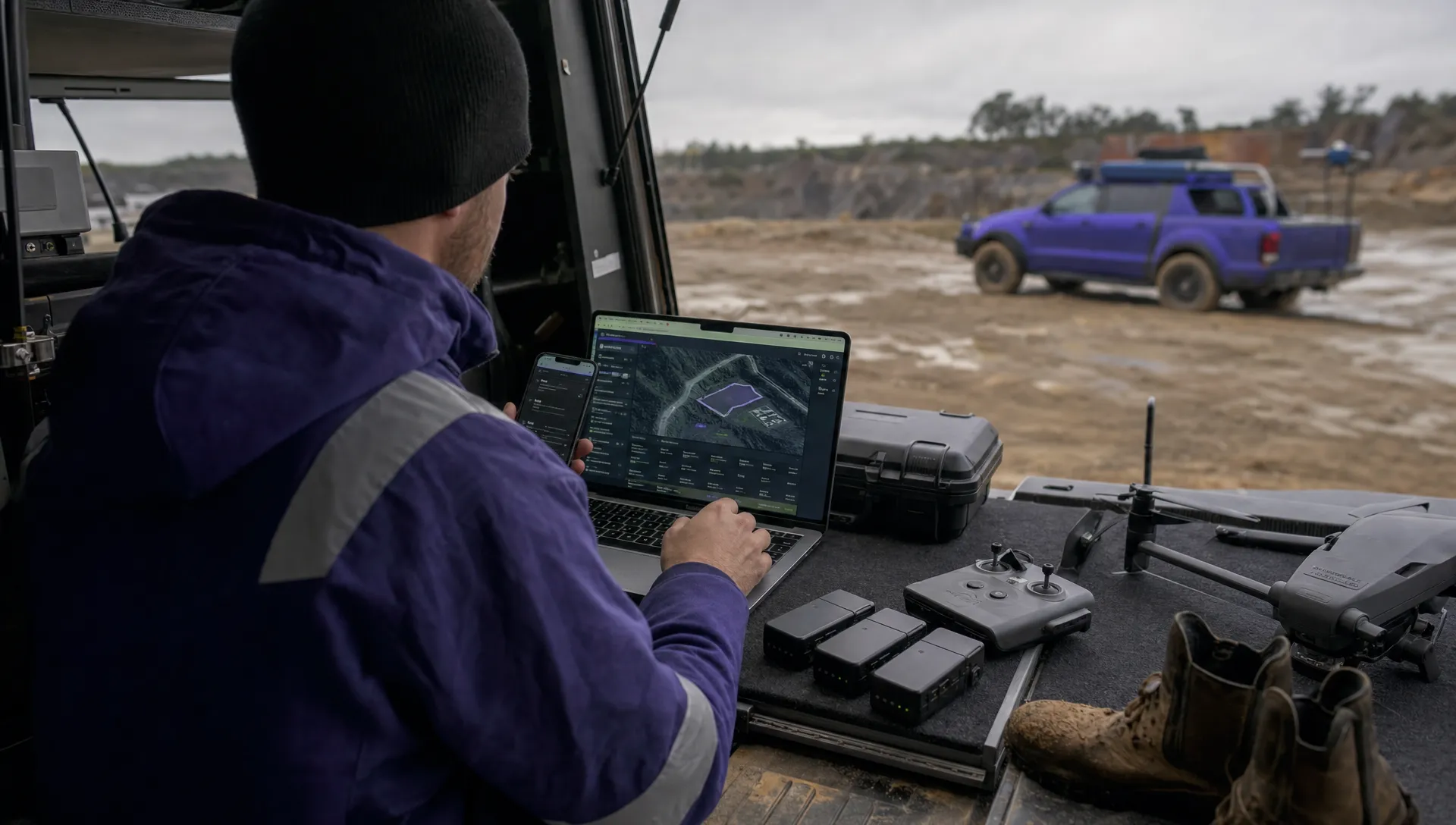 Drone Operating Rules for Managing Contractors and Employees →
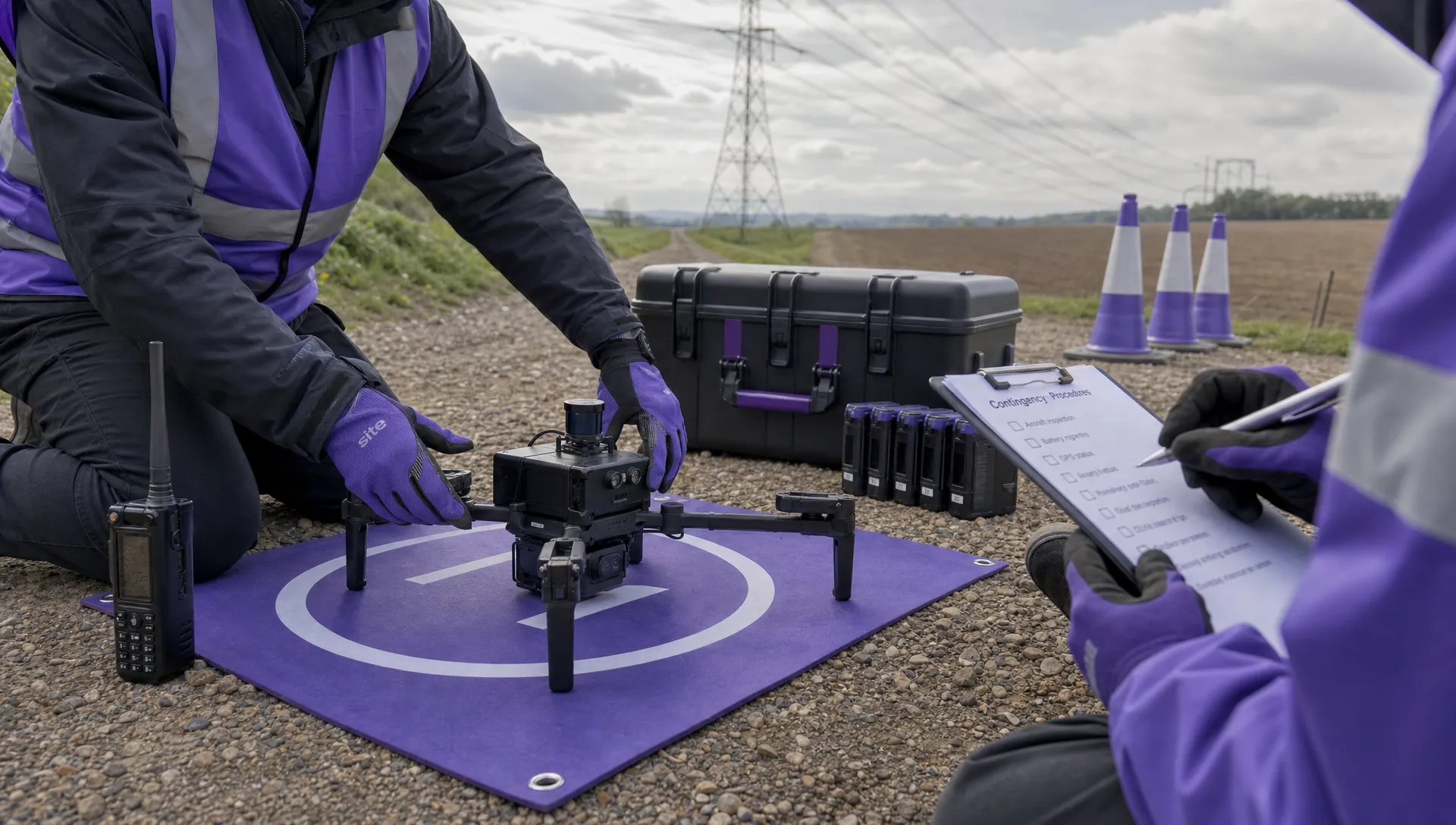 BVLOS Drone Requirements for Building a Safety Case →
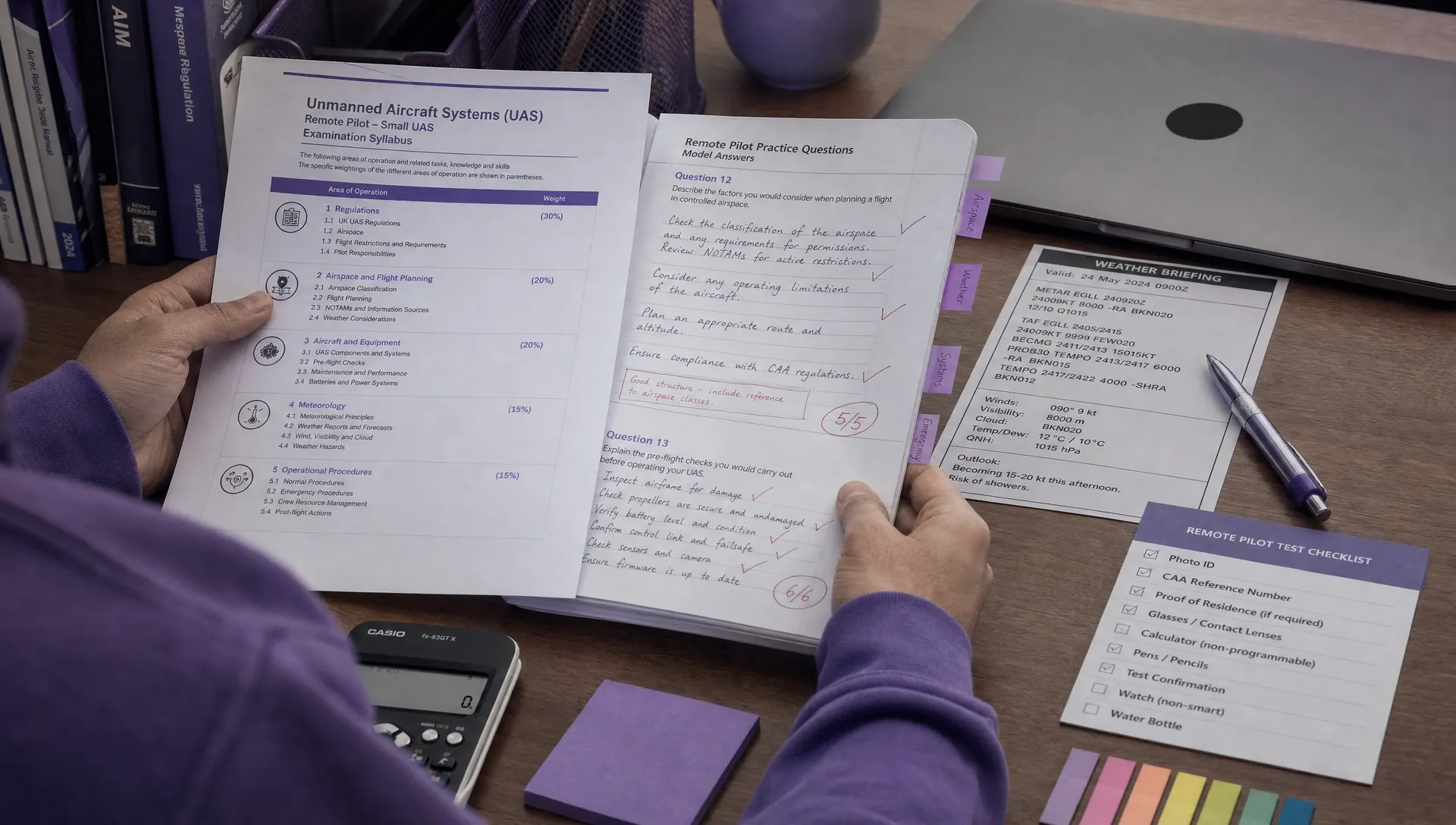 Drone Pilot Test Mistakes That Cost Candidates Marks →
 FAA 107 License vs Part 107 Certificate: What’s the Difference? →
 Drone Airport Rules: A Field Checklist for Site Assessments →
 FAA Part 107 Record-Keeping Rules for Commercial Teams →
 How to Review a DJI Flight Log After an Unexpected Event →
 Drone Laws Around the World: A Pre-Flight Research Framework →
 How to Compare Drone Survey Services for Complex Sites →
 How to Start a Drone Mapping Business With a Clear Workflow →