
BVLOS Drone Requirements for Building a Safety Case
BVLOS drone requirements are not just a list of documents to attach to an application. For a regulator, client or accountable manager, they are the evidence that your operation can fly beyond visual line of sight without relying on luck, informal judgement or assumptions about low risk.
This guide is written for drone operators, survey companies, utilities and emergency services that need to build a credible safety case. It is not legal advice and regulations change, so always verify your submission against the current official guidance for the state where the operation will take place.
What a BVLOS safety case must prove
A safety case explains why a proposed operation is acceptably safe in its real operating environment. It should connect the aircraft, crew, procedures, airspace, geography, communications, emergency actions and organisational controls into one coherent argument.
At their simplest, BVLOS drone requirements ask an operator to prove four things: the operation is clearly defined, the risks are understood, the mitigations are effective and the organisation can repeat the operation consistently. A beautiful document with weak evidence will not carry much weight. A concise document backed by logs, test data, training records and operating discipline will.
Start with the operational intent
Before discussing technology, define the operation. A utility corridor inspection, a police search over rural land and a coastal mapping sortie may all be BVLOS, but their hazards are different. Your safety case should state the aircraft, route or operating area, altitude, duration, payload, communications method, crew positions, population exposure, nearby aerodromes and expected traffic environment.
This is also where you define the boundaries of the approval you are seeking. A narrow, repeatable use case is usually easier to justify than a broad permission for many aircraft, sites and mission profiles.
Show the safety argument, not just the controls
A common mistake is to list mitigations without explaining which risk each mitigation reduces. Regulators need to see the logic. If you use strategic deconfliction, what air risk does it address? If you use observers, what part of the route can they actually see? If you rely on a command and control link, what happens when it degrades?
| Safety case question | Evidence that can support it |
|---|---|
| What exactly will be flown? | Operational intent, maps, route files, aircraft configuration and payload details |
| Who or what could be harmed? | Ground risk analysis, airspace assessment, population density and third-party exposure |
| How will conflict be prevented? | Airspace intelligence, detect and avoid method, observers where relevant and procedural separation |
| What happens if a control fails? | Contingency procedures, lost link actions, containment strategy and emergency response plan |
| Can the operator repeat this safely? | Training records, checklists, maintenance records, flight logs and internal audit evidence |
For this reason, BVLOS drone requirements should be treated as evidence headings rather than paperwork headings. Each claim in the safety case needs a source, a test result, an operating procedure or a record that proves the organisation can do what it says.
BVLOS drone requirements in the UK, EU and US
The detail changes by jurisdiction, but the pattern is similar: routine visual line of sight operations sit under simpler rules, while BVLOS usually requires a higher level of authorisation and a documented risk assessment. Always check the official source before submitting, because rulemaking and acceptable means of compliance can move faster than internal templates.
United Kingdom
In the UK, the Civil Aviation Authority drone guidance is the starting point. BVLOS operations normally fall outside the Open category because the remote pilot cannot maintain unaided visual line of sight, so operators generally need an Operational Authorisation in the Specific category or another CAA-recognised approval route.
For risk assessment, the CAA publishes UK SORA as an acceptable means of compliance for Article 11. The UK SORA AMC.htm) sets out how operators should consider ground risk, air risk, containment and operational safety objectives. UK BVLOS drone requirements therefore need more than a concept of operations. They need a traceable risk process and evidence that mitigations are suitable for the specific operating area.
European Union and EASA member states
EASA’s overview of European drone regulations explains the Open, Specific and Certified categories. BVLOS usually sits in the Specific category unless the operation is high enough risk to require Certified category treatment. Operators may use a standard scenario or predefined risk assessment where applicable, but more complex operations normally require an operational risk assessment.
The important point is that an EASA approval is not simply about the drone model. It is about the whole operation, including where it is flown, how it avoids other airspace users, how ground risk is reduced and how the operator maintains control.
United States
In the US, the FAA’s Part 107 small UAS rules include a visual line of sight requirement unless the FAA grants a waiver or the operator flies under another valid approval. A Part 107 BVLOS waiver request must show how the operation can be conducted safely despite the remote pilot not seeing the aircraft unaided.
If you are preparing a US application, Dronedesk’s guide to how a BVLOS waiver works and who needs one is a useful companion, but the FAA page should remain the source of truth for current regulatory requirements.
Risk assessment is the spine of the safety case
A BVLOS safety case can only be as strong as its risk assessment. The assessment should not be a generic template copied from a previous visual line of sight operation. It needs to reflect the route, airspace, aircraft, crew, operating volume, weather limits and emergency arrangements for the proposed BVLOS mission.
Within SORA-based applications, BVLOS drone requirements usually centre on operational intent, ground risk class, air risk class, strategic and tactical mitigations, containment and operational safety objectives. JARUS publishes SORA material, including SORA 2.5 resources, on its official publications page. National authorities may adapt or supplement that material, so operators should not assume that JARUS text alone is enough for submission.
Ground risk evidence
Ground risk is about people and property beneath or near the operation. Evidence may include population density, land use, road and railway crossings, overflight of uninvolved people, ground buffers, emergency landing options and coordination with landowners or local authorities.
For utilities and survey companies, corridors can be deceptively complex. A route that is mostly rural may still cross villages, public footpaths, car parks or industrial estates. Your safety case should show how those segments are identified and managed, not simply averaged into the wider route.
Air risk evidence
Air risk is about conflict with other aircraft. Your evidence may include controlled or uncontrolled airspace classification, nearby aerodromes, heliports, military activity, glider sites, parachute zones, low-level aviation routes and temporary restrictions.
A practical method is to build a layered airspace picture during planning, then record which sources were checked and what decisions followed. If you need a broader structure for this process, Dronedesk’s article on building a drone flight risk assessment that works covers the risk assessment mindset in more detail.
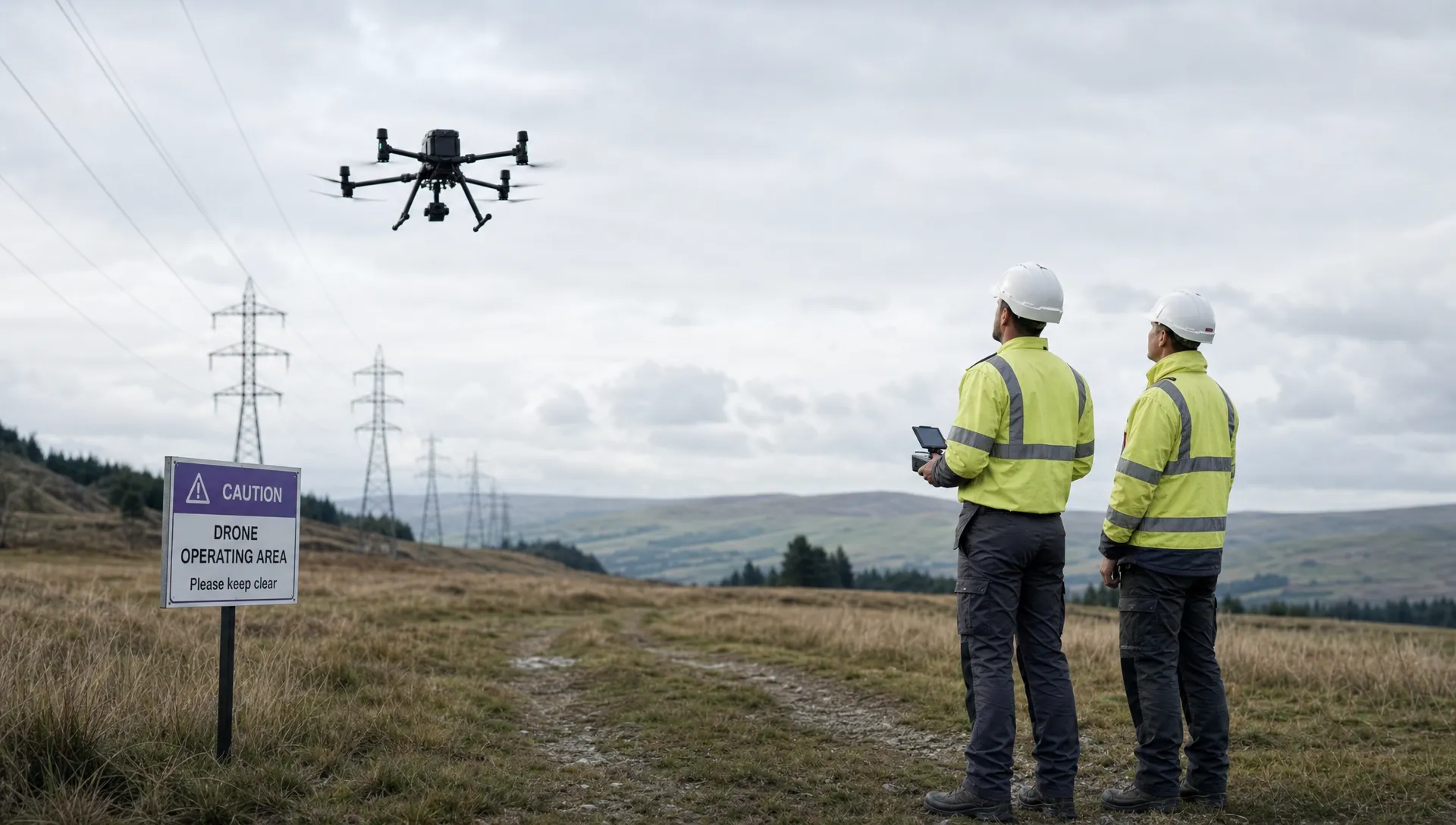
Evidence regulators expect to see
The strongest safety cases are built from operational evidence, not assumptions. If you say your team can manage lost link events, include training records and exercises. If you say the aircraft performs reliably on long corridor missions, include flight logs, maintenance history and defect management. If you say your procedures are repeatable, include checklists and audit records.
For inspection and emergency service operators, BVLOS drone requirements often become harder at scale because one successful trial does not prove that dozens of crews can repeat the operation safely. Evidence should show organisational control, not just pilot skill.
Flight logs and performance analysis
Flight logs help prove how the aircraft actually behaved. They can support claims about battery margins, return-to-home behaviour, navigation accuracy, link quality, pilot interventions and abnormal events. They also help identify whether operational procedures are being followed or quietly worked around.
If DJI aircraft are part of your fleet, Dronedesk provides a DJI flight log analysis tool that can help with reviewing flight data. However the tool is used, the safety case should explain how log findings feed back into maintenance, training, procedures and risk controls.
Procedures, competence and accountability
BVLOS is not only a technology problem. The safety case should define roles such as remote pilot, mission commander, observer, payload operator, airspace coordinator and incident lead where those roles apply. It should also define competency requirements, currency rules, handover methods, communications protocols and escalation routes.
For emergency services, this matters because incidents evolve quickly. A missing person search, fireground overwatch or flood response may involve police, fire, ambulance, coastguard, air ambulance, local authority teams and manned aircraft. Procedures need to survive that pressure.
Technical controls that need operational proof
Detect and avoid, command and control, geo-awareness, containment and remote identification may all appear in a BVLOS safety case, depending on the jurisdiction and risk profile. The mistake is to treat these as product names rather than safety functions.
Technical BVLOS drone requirements should be written in operational terms. State what the control must achieve, under which conditions, how it is monitored, what failure mode is assumed and what the crew does if it stops working.
Command and control link
The command and control link is central to BVLOS assurance. A safety case should explain expected coverage, link redundancy where applicable, lost link triggers, automated behaviours, pilot alerts and recovery actions. If the operating area has poor cellular coverage, high terrain, electromagnetic interference or long linear infrastructure, address those facts directly.
Testing should match the environment. A link that works over a flat test field may not behave the same way in a valley, near industrial plant or along a coastal route.
Containment and emergency management
Containment answers a simple question: how do you keep the aircraft from leaving the safe operating area? Evidence may include geofencing, flight termination, route design, buffer zones, altitude limits, return routes, emergency landing sites and adjacent area analysis.
Your emergency plan should also say who is notified, when the flight is stopped, how ground teams are protected and how evidence is preserved after an incident or serious near miss.
Building a practical safety case workflow
Treat BVLOS drone requirements as a workflow that starts long before the application is written. The best safety cases usually come from operators that already collect clean operational data during normal missions, then use that data to support a carefully bounded BVLOS proposal.
A practical workflow starts with a limited concept of operations, then builds a risk assessment, identifies evidence gaps, runs controlled trials, reviews logs, updates procedures and prepares the submission. After approval, the same workflow should continue through monitoring, audits, incident review and change management.
Where Dronedesk fits
Dronedesk is designed as an all-in-one web platform for drone operations management. Its published features include client management, fleet management, team management, airspace intelligence, proximity intelligence, flight planning, flight logging, data reporting, configurable checklists and risk assessments.
Those features do not replace regulator judgement and they do not guarantee an approval. They can, however, help operators keep the evidence base organised: who planned the flight, which aircraft was used, which checklist was completed, what risks were assessed, what was logged and what needs follow-up.
For survey companies and utilities, that traceability becomes especially valuable when the same route is inspected repeatedly or when several crews work across a national programme. For emergency services, it supports accountable decisions during fast-moving operations where later review may be essential.
Common gaps that weaken BVLOS applications
Many rejected or delayed applications fail because the safety case is too general. The operator may have strong pilots and good equipment, but the document does not prove that the specific operation is controlled. Avoid submitting broad statements such as the aircraft has obstacle avoidance or the crew will monitor airspace unless you explain the performance limits and operating procedure behind them.
Another weak point is change management. BVLOS drone requirements should state what happens if the route changes, the aircraft firmware is updated, a new pilot joins, a client requests a different altitude or a temporary airspace restriction appears. If those changes are material, the operator needs a process to reassess risk before flying.
Finally, do not hide uncertainty. If a mitigation has not been tested in representative conditions, say so and explain the test plan. Regulators are more likely to trust an operator that understands its evidence gaps than one that presents confidence without proof.
Frequently asked questions
What are the baseline BVLOS drone requirements for a safety case? A baseline safety case normally needs a clear operational intent, jurisdiction-specific approval route, risk assessment, airspace and ground risk evidence, technical controls, crew competence, emergency procedures, maintenance records, flight logs and a process for monitoring changes after approval.
Can I fly BVLOS under normal Open category rules in the UK or EU? Generally no. Open category operations are built around visual line of sight and other limits. BVLOS normally requires Specific category authorisation or another recognised approval route. Always verify against the current CAA or EASA-linked national authority guidance before planning a flight.
Does every BVLOS operation need SORA? Not always in the same form. Some jurisdictions use SORA directly, some adapt it and some allow predefined risk assessments or standard scenarios for certain operations. Complex BVLOS operations usually need a structured risk assessment that covers the same core issues, even if the local paperwork differs.
What flight log evidence should I keep for BVLOS? Keep logs that show route flown, altitude, battery performance, GNSS status, command and control link behaviour, warnings, failsafe events, pilot inputs and post-flight defects. The safety case should also show how log review leads to corrective action.
Are detect and avoid systems mandatory for all BVLOS flights? It depends on the air risk, operating area and regulator. Some operations may rely on strategic deconfliction, observers, restricted airspace or procedural controls, while others need tactical detect and avoid capability. The safety case must justify why the chosen approach is suitable.
Build the evidence before you ask for expansion
BVLOS approvals are earned through evidence. Start with a narrow use case, verify the current rules, collect high-quality operational records and make every mitigation traceable to a real hazard.
If your organisation is preparing for more complex operations, Dronedesk can help bring planning, risk assessments, checklists, flight logs, fleet information and reporting into a single operational workflow. That gives your safety case a stronger foundation before it reaches the regulator’s desk.
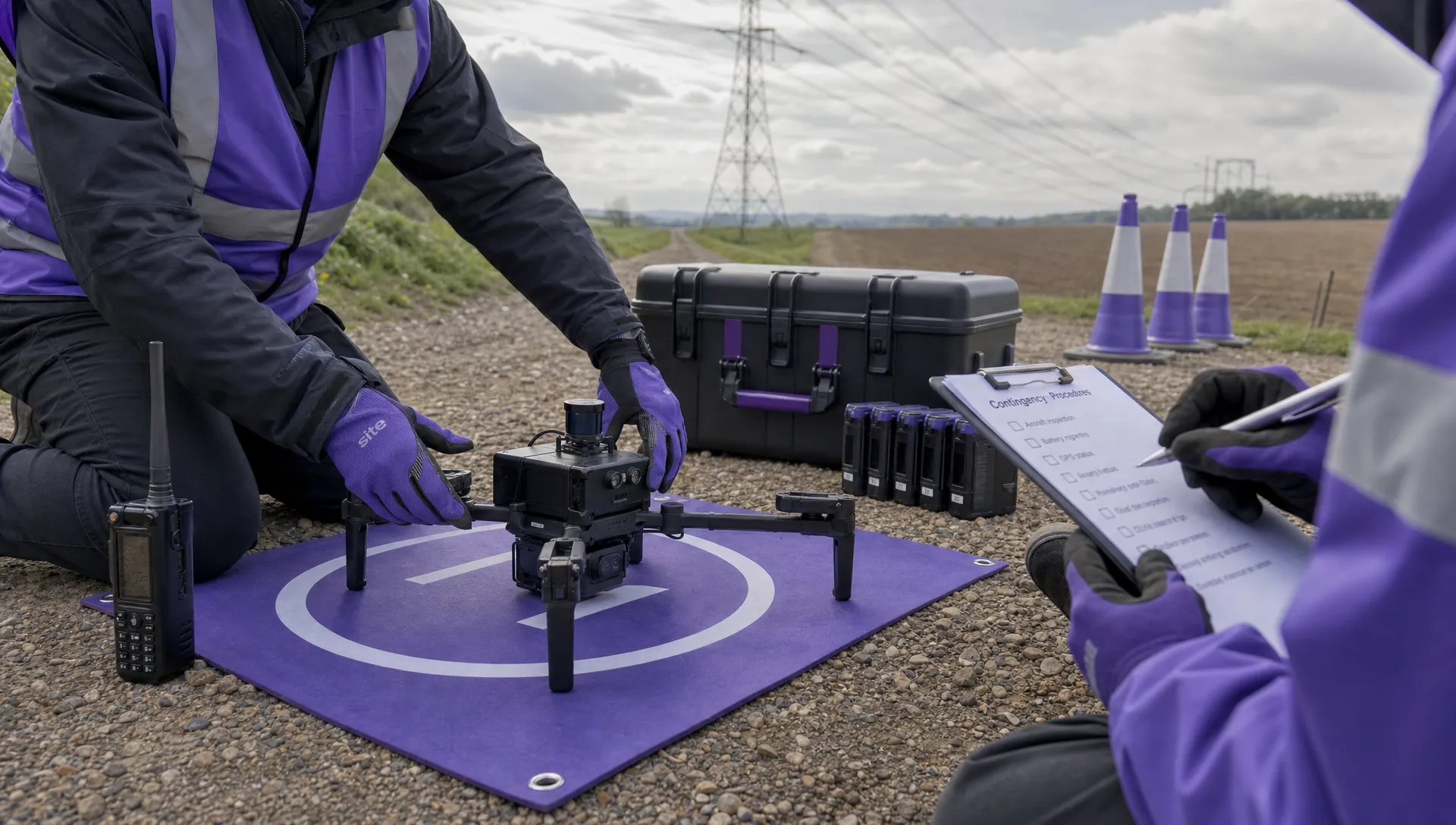 BVLOS Drone Requirements for Building a Safety Case →
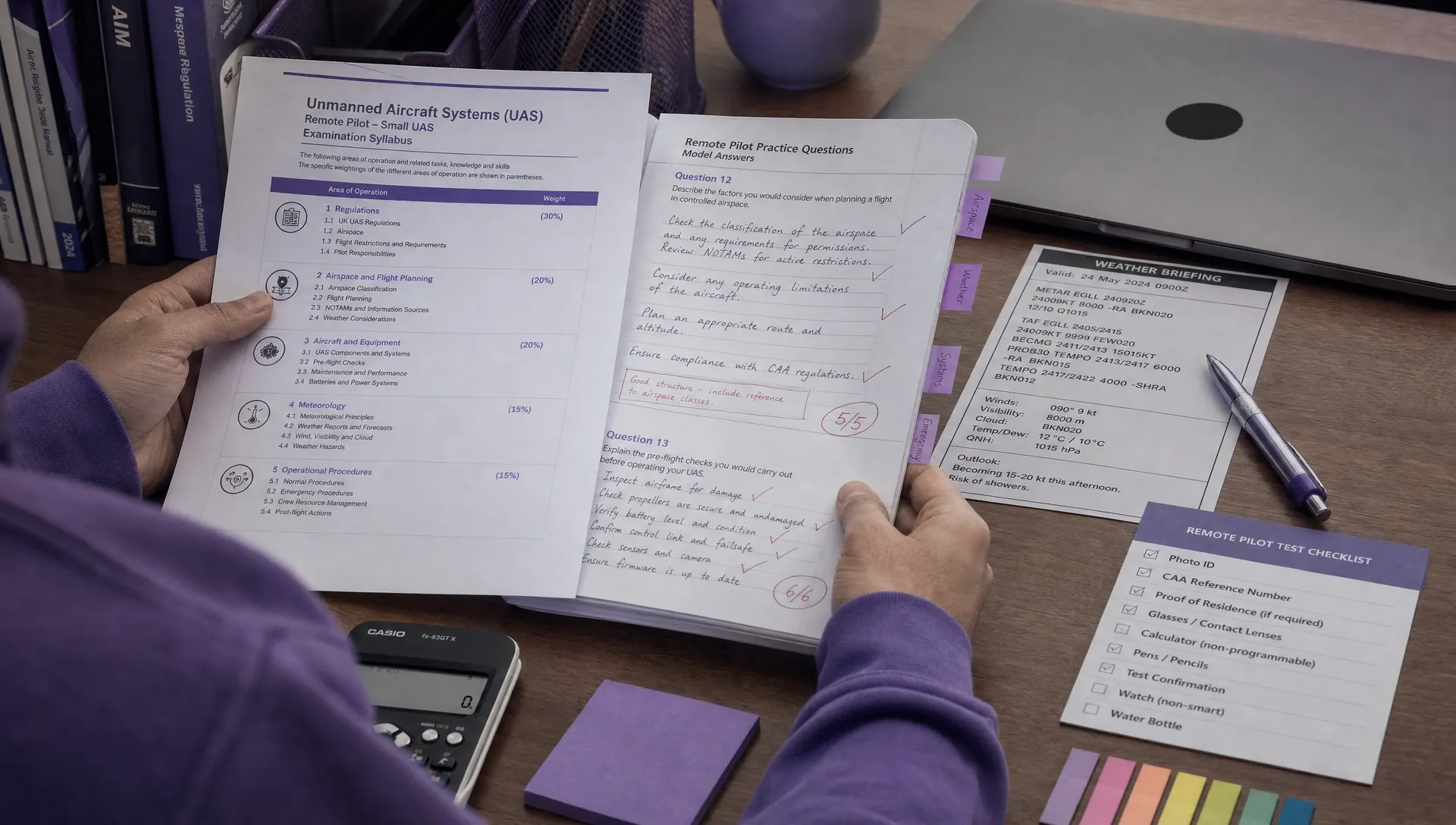 Drone Pilot Test Mistakes That Cost Candidates Marks →
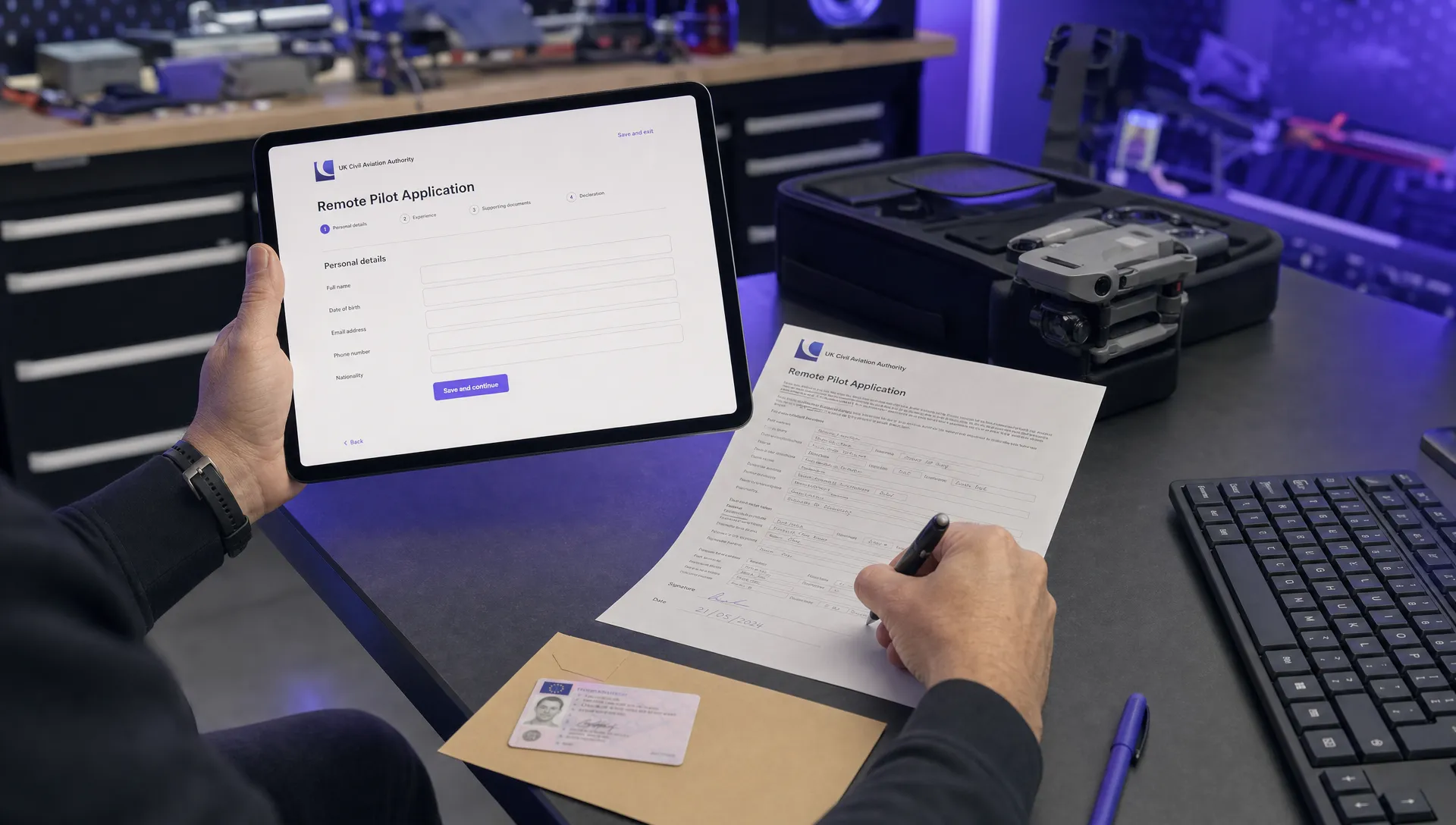 FAA 107 License vs Part 107 Certificate: What’s the Difference? →
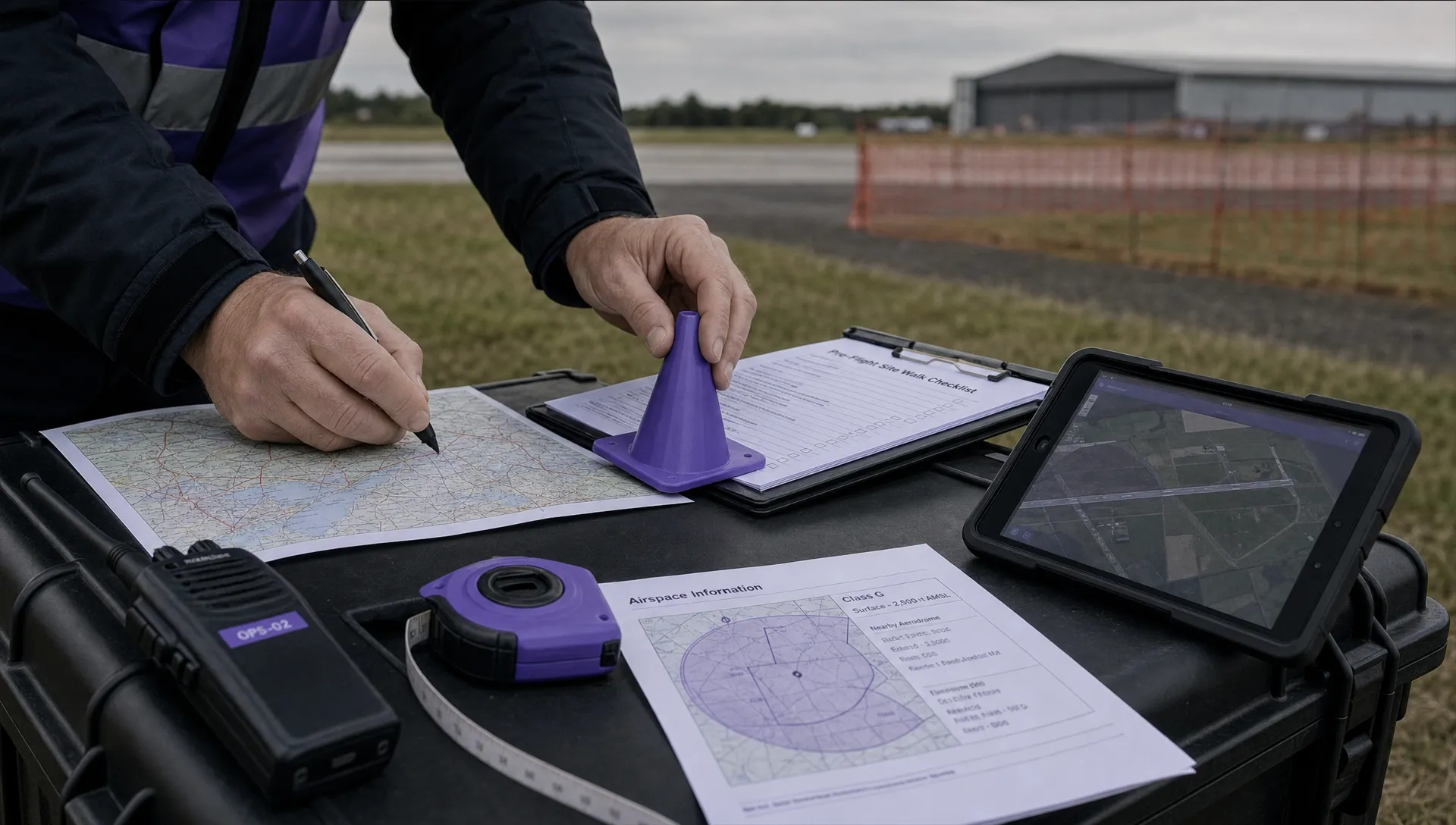 Drone Airport Rules: A Field Checklist for Site Assessments →
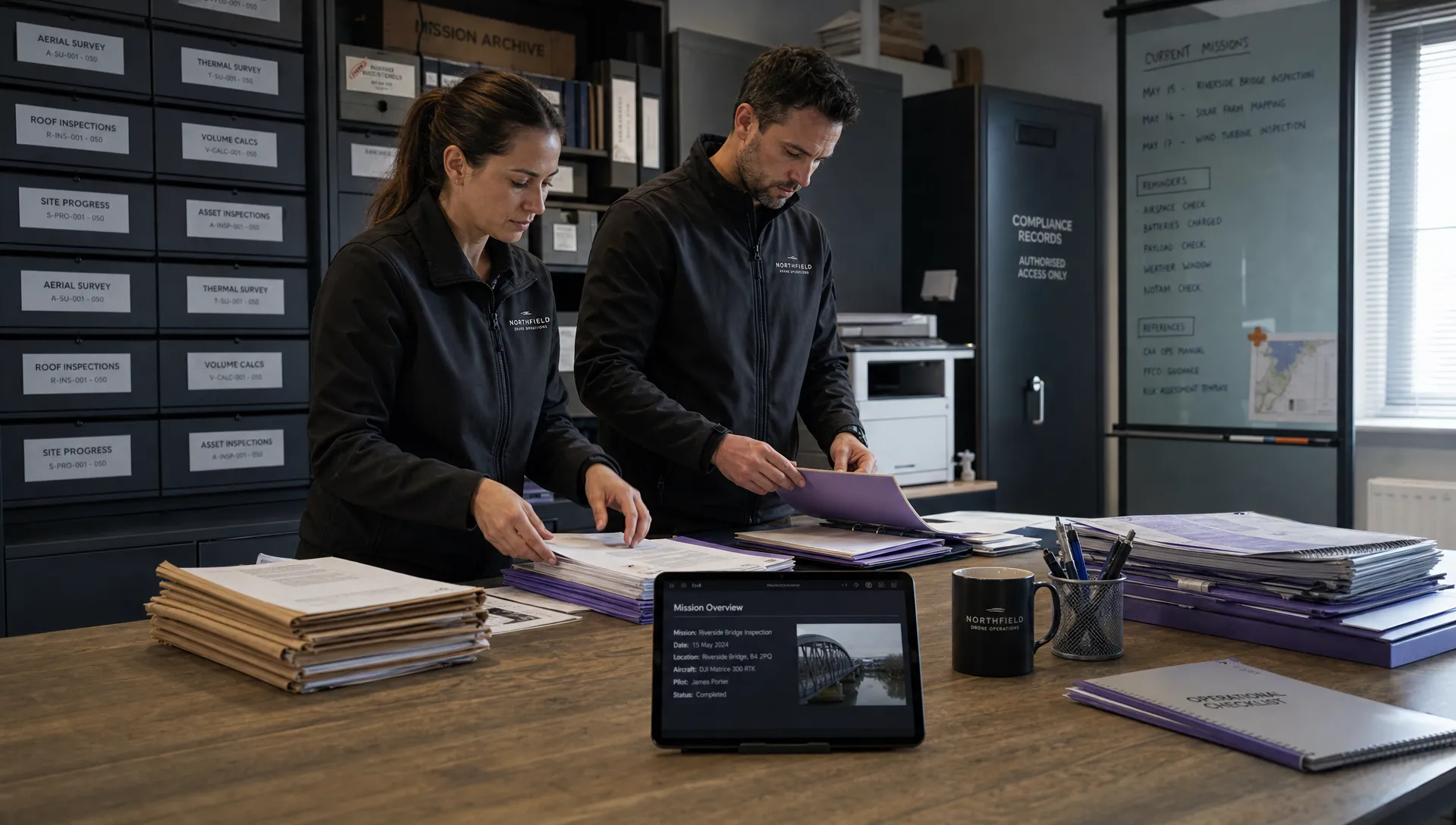 FAA Part 107 Record-Keeping Rules for Commercial Teams →
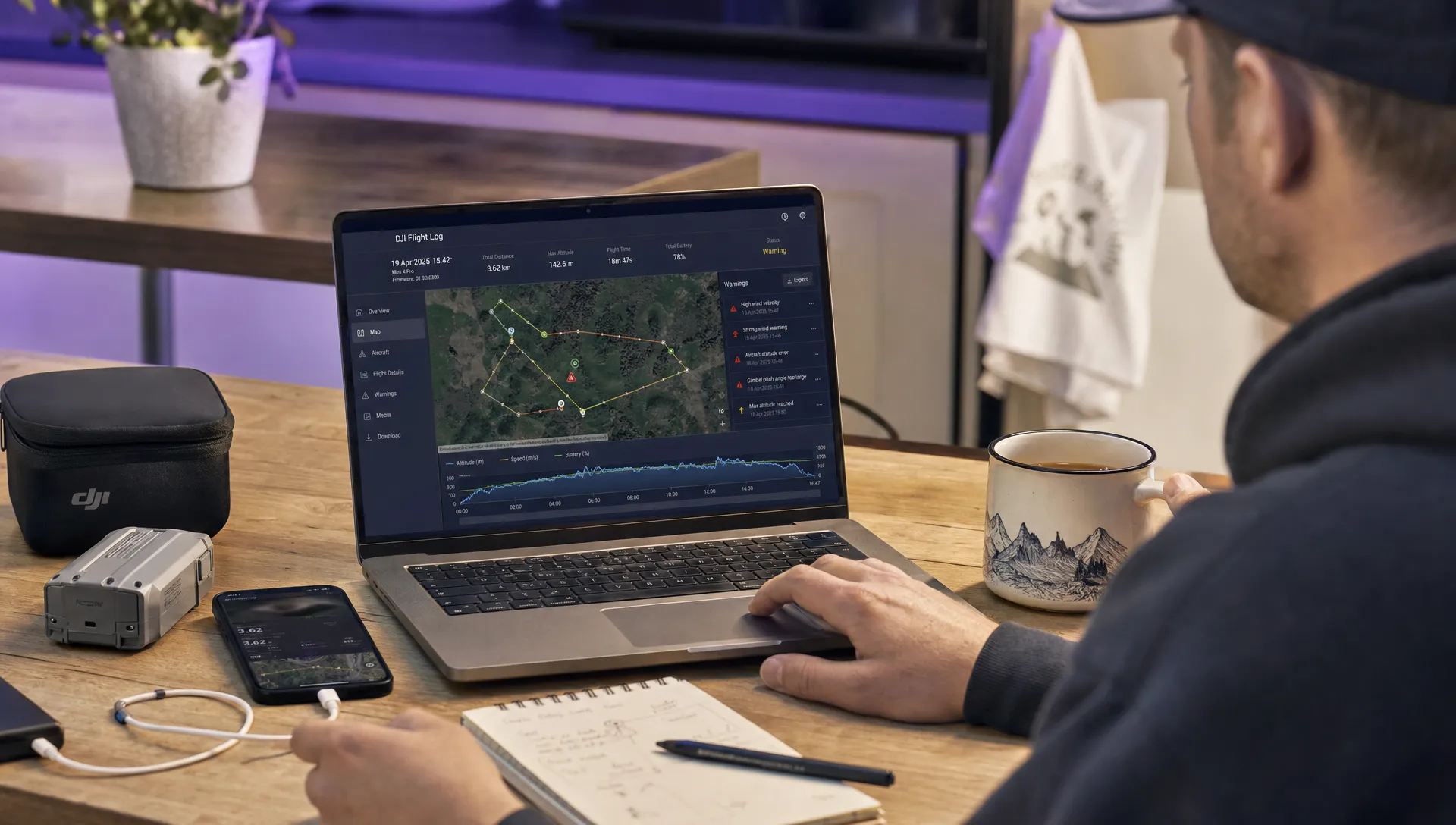 How to Review a DJI Flight Log After an Unexpected Event →
 Drone Laws Around the World: A Pre-Flight Research Framework →
 How to Compare Drone Survey Services for Complex Sites →
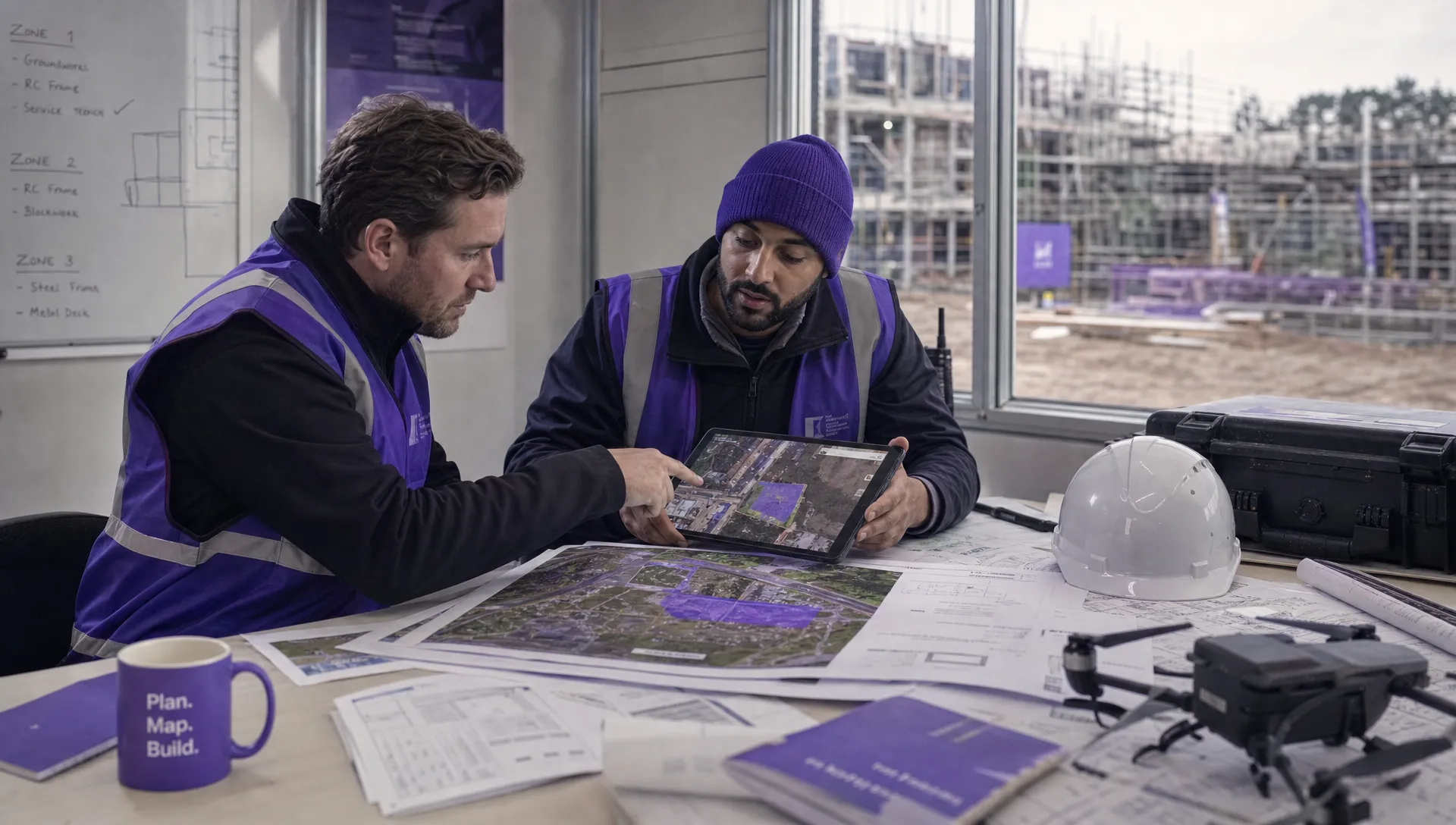 How to Start a Drone Mapping Business With a Clear Workflow →
 Class C Airspace Drone Rules for Commercial Flights →