
Drone Part 107 Operations: When a Waiver May Be Needed
Most US commercial drone work fits comfortably inside FAA Part 107, but drone part 107 operations that step outside one of the standard operating limits may need extra permission before take-off. The difficult part is not spotting that a mission is unusual; it is working out whether you need a Part 107 waiver, an airspace authorisation, a different exemption or simply a better plan.
This guide is written for commercial operators, survey teams, utilities and public safety organisations that already understand the basics of flying under Part 107. It does not replace FAA guidance or legal advice. Before acting on any regulatory point, check the FAA’s official Part 107 page and the current text of 14 CFR Part 107 on eCFR.
Drone part 107 waiver basics: what a waiver actually does
A Part 107 waiver is written FAA permission to deviate from a specific rule in Part 107, provided you can show the operation can still be conducted safely. It is not a general approval for risky flying, not a shortcut around pilot certification and not a substitute for aircraft registration or Remote ID obligations where those apply.
The FAA can only waive certain rules. The current list is in 14 CFR § 107.205, so the first question is always: which exact section prevents this mission? If the restriction is not waivable under Part 107, a waiver application is unlikely to be the right route.
A practical drone part 107 compliance habit is to identify the blocking rule during the scoping stage, before you quote the job, assign crew or promise a delivery date. For example, a roof inspection in uncontrolled airspace may need no extra FAA approval, but a linear utility inspection beyond visual line of sight is a very different regulatory problem.
Waiver, authorisation or exemption: do not mix them up
Operators often use the word waiver for any FAA approval, but the distinction matters. Applying for the wrong type of permission can delay a project even when the underlying operation is perfectly achievable.
| Permission type | What it is for | Common example | Key point |
|---|---|---|---|
| Part 107 waiver | Permission to deviate from a waivable Part 107 operating rule | BVLOS, multiple drones by one pilot or certain operating limit deviations | You must explain how you will maintain an equivalent level of safety |
| Airspace authorisation | Permission to fly in controlled airspace where Part 107 requires FAA authorisation | Flight in Class B, C, D or surface Class E airspace near an airport | LAANC may be available for eligible requests |
| Exemption or other FAA process | Operations outside the normal scope of Part 107 | Aircraft over 55 lb, some advanced carriage operations or aircraft certification issues | A Part 107 waiver may not solve the problem |
| Public aircraft route | A route sometimes used by qualifying government entities | Emergency services or public agencies operating under a COA | The agency must confirm the correct legal basis for the operation |
For airport work, many missions need an airspace authorisation rather than a waiver. If that is your main concern, it is worth planning around local airspace early and reviewing practical guidance on airport drone rules and flight planning.
Common situations where a waiver may be needed
The scenarios below are the ones that most often turn an ordinary Part 107 job into a waiver discussion. They are not an exhaustive legal checklist, but they will help you spot waiver risk before it becomes a project blocker.
Beyond visual line of sight
Visual line of sight is one of the most important boundaries in Part 107. The remote pilot in command, and any visual observer used to support the operation, must be able to see the unmanned aircraft well enough to know its location, attitude, altitude and direction of flight, unless an approved waiver or other authority says otherwise.
In drone part 107 terms, BVLOS is not just a long-distance problem. Buildings, terrain, vegetation, night background lighting and industrial structures can all break effective visual line of sight. Utility corridor inspections, railway surveys, pipeline patrols and emergency overwatch can therefore become BVLOS operations sooner than teams expect.
A BVLOS waiver application usually needs a strong explanation of detect and avoid methods, communications, crew roles, lost link procedures, airspace risk and ground risk. If this is your use case, Dronedesk has a separate guide on how a BVLOS waiver works and who needs one.
Operations over people, vehicles or assemblies
Part 107 includes specific rules for operations over people and moving vehicles. Some operations are allowed if the aircraft and mission meet the applicable category requirements, but you should not assume that any small drone can legally fly over a crowd, road or active worksite.
For example, a survey over a closed construction site may be manageable if all exposed people are participating in the operation or protected by site controls. A city-centre media flight over uninvolved pedestrians, moving traffic or an open-air assembly raises a different level of regulatory scrutiny.
A waiver may be needed where the operation does not fit the available categories or operating conditions. The safety case should address the aircraft, the environment, overflight duration, route design, crowd control, emergency landing options and how nonparticipants will be protected.
Multiple drones operated by one pilot
Part 107 generally assumes one remote pilot in command is directly responsible for one small unmanned aircraft at a time. If a mission plan involves one pilot operating multiple aircraft, such as coordinated mapping, drone swarm work or repeated automated flights from multiple launch points, a waiver may be required.
For drone part 107 operators, this is not only a control interface question. The FAA will want to understand workload, command and control, deconfliction between aircraft, failure modes and how the pilot can intervene if one aircraft behaves unexpectedly.
Operating from a moving vehicle or vessel
Some drone work is easier from a moving platform, especially along roads, coastlines, rivers, railways and large infrastructure corridors. Part 107 has specific restrictions around operating from moving vehicles or aircraft, with different considerations for land vehicles, waterborne vehicles and aircraft.
Do not treat a van, boat or emergency response vehicle as just another launch point. If the operation depends on the pilot moving while controlling the drone, check the exact wording of § 107.25 and the FAA’s current waiver policy. The rules also interact with whether the area is sparsely populated and whether property is being carried for compensation or hire.
Altitude, speed, visibility and cloud clearance limits
Part 107 sets operating limits for small UAS, including speed, altitude, minimum visibility and distance from clouds. Many routine survey and inspection flights sit well inside these limits. Waiver questions arise when the job needs to exceed them.
A tower or structure inspection can often be planned within the Part 107 altitude rule because the rule includes a structure-related allowance. A wider-area mapping mission above the normal altitude limit, a low-visibility emergency response flight or an operation closer to clouds needs much more care.
For drone part 107 planning, avoid framing this as a convenience issue. The FAA will be looking for a safety reason and a credible mitigation plan, not just a claim that the mission would be faster at a higher altitude.
Night operations that fall outside the standard rule
Standard Part 107 night operations are now allowed if the remote pilot has met the FAA’s night training or testing requirements and the drone has anti-collision lighting visible for at least 3 statute miles, subject to the rule’s conditions. That means many night jobs no longer need the old-style night waiver.
A waiver may still become relevant if the mission needs to deviate from the night operation requirements. Examples could include unusual lighting constraints, specialist public safety needs or circumstances where the aircraft cannot meet the standard anti-collision lighting condition. Treat these as exception cases and check the current FAA rule before planning.
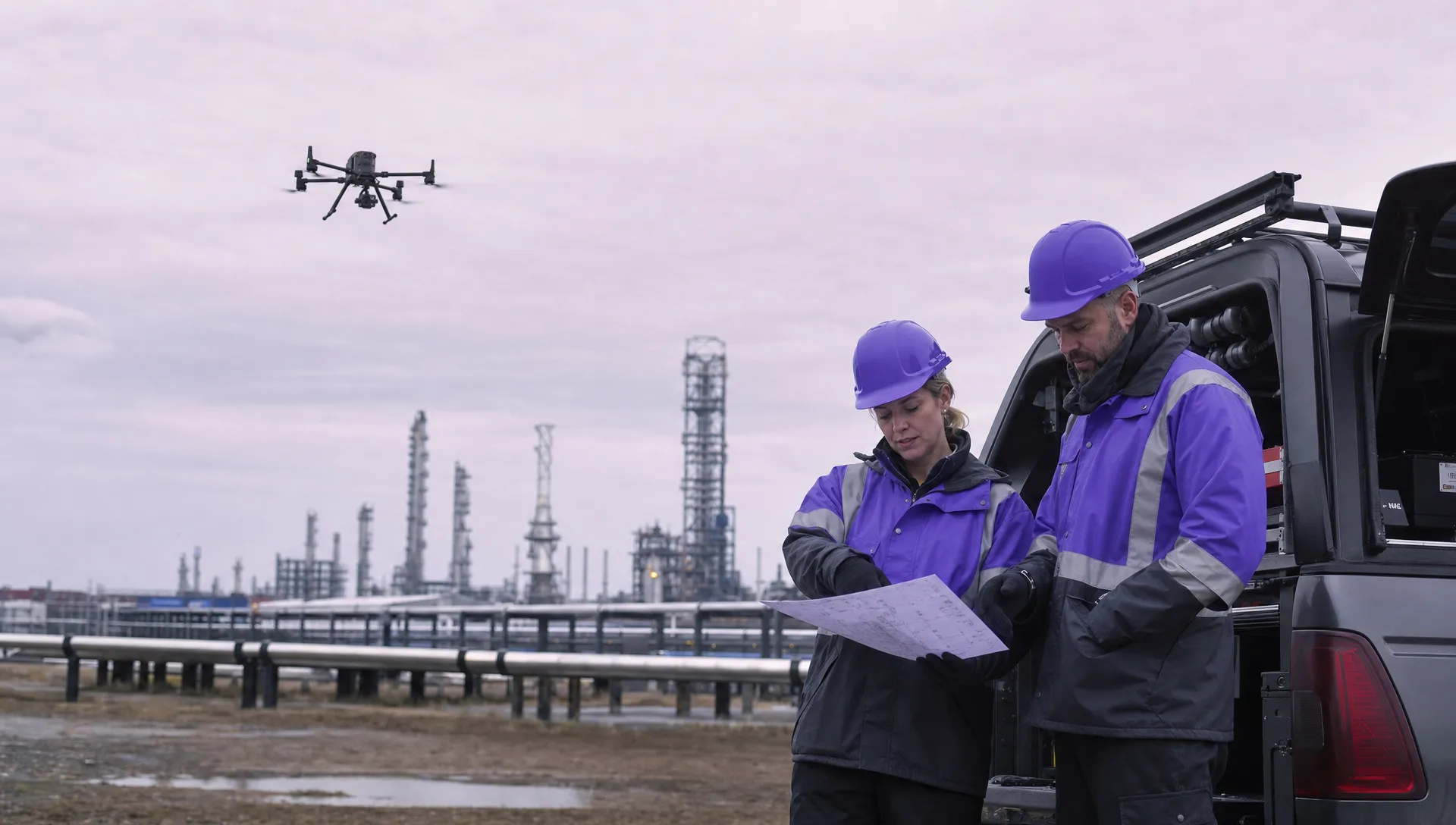
A simple pre-flight decision framework
The earlier you ask the right questions, the less likely you are to discover a waiver issue after the client has already scheduled site access. This framework is useful during quoting, job acceptance and internal go or no-go reviews.
| Mission question | If the answer is yes | Likely next step |
|---|---|---|
| Will the aircraft remain within effective visual line of sight? | No | Assess BVLOS waiver need |
| Is the site in controlled airspace? | Yes | Check LAANC or FAA airspace authorisation options |
| Will the aircraft fly over uninvolved people or moving vehicles? | Yes | Check operations over people and moving vehicle rules, then assess waiver need |
| Will one pilot control more than one aircraft at the same time? | Yes | Assess multiple UAS waiver need |
| Will the aircraft exceed Part 107 altitude, speed, visibility or cloud clearance limits? | Yes | Assess operating limitation waiver need |
| Is the aircraft over 55 lb or outside the scope of Part 107? | Yes | Consider exemption or another FAA process, not just a waiver |
This kind of screening also helps with client conversations. Instead of saying the job is complicated, you can explain which rule is driving the timeline and what evidence will be needed to support a safe operation.
What the FAA expects in a strong waiver application
In a drone part 107 waiver application, the core task is to prove that your alternative procedures reduce risk to an acceptable level. A strong application is specific, operational and evidence-based. A weak one relies on broad statements such as our pilots are experienced or we will be careful.
The FAA will generally need enough detail to understand the concept of operations, location, aircraft, crew roles, operating volume, airspace environment, ground risk, communications, contingency procedures and emergency response plan. For BVLOS or complex operations, the detect and avoid strategy is often central.
Your risk assessment should connect hazards to mitigations rather than sit as a generic form. For example, if the hazard is loss of command and control near a road, the mitigation might include geofencing, return-to-home configuration, minimum lateral distance, observer positioning, traffic management and a defined termination procedure. Dronedesk’s guide to building a drone flight risk assessment that works is a useful reference for structuring that thinking.
Evidence can also include training records, maintenance logs, standard operating procedures, previous flight logs and manufacturer documentation. For DJI operations, the Dronedesk DJI flight log analysis tool can help review flight data when you need to understand how aircraft and pilots performed on previous missions.
How operations management supports waiver readiness
A waiver is easier to manage when your normal operation already produces clean records. If every job has a consistent plan, risk assessment, checklist, crew assignment and flight log, you are not building a safety case from scratch each time a mission becomes more complex.
Dronedesk’s published features include client management, fleet management, team management, airspace intelligence, proximity intelligence, flight planning, flight logging, data reporting, configurable checklists and risk assessments. Used properly, those records can help operators keep the operational evidence for waiver-sensitive missions in one place, although they do not replace FAA approval or professional regulatory advice.
For survey companies and utilities, this matters because similar missions repeat across different sites. For emergency services, it matters because the time available to validate a plan can be short. A consistent operating system helps the team see what is standard, what is exceptional and what needs escalation before the aircraft is launched.
Common waiver mistakes to avoid
The most common drone part 107 waiver mistake is applying for a waiver when the operation actually needs an airspace authorisation, an exemption or a change to the mission plan. Start with the rule, not the form.
Other common mistakes include vague operating areas, incomplete crew descriptions, missing contingency procedures, unsupported technology claims and risk assessments that do not match the real site. If your application says visual observers will monitor the route, show where they will be positioned, how they will communicate and what they are expected to do if the aircraft approaches the edge of the operating area.
Timing is another issue. Waivers for complex operations can require back-and-forth with the FAA, and clients may not understand why approval cannot be arranged at short notice. Build regulatory lead time into proposals for BVLOS, operations over people, multiple UAS missions and unusual operating limitations.
Frequently Asked Questions
Is a drone part 107 waiver the same as an airspace authorisation? No. A waiver lets you deviate from a specific waivable Part 107 operating rule. An airspace authorisation gives permission to operate in certain controlled airspace. Some missions may need both, but many airport-area jobs only need airspace authorisation.
Do night operations still need a Part 107 waiver? Usually not if the remote pilot has completed the FAA’s required night training or testing and the aircraft meets the anti-collision lighting requirement. A waiver may be needed if the mission needs to deviate from those conditions.
When does BVLOS require a waiver? If the remote pilot in command or visual observer cannot maintain effective unaided visual contact with the aircraft, the operation is likely beyond visual line of sight. Under Part 107, BVLOS generally requires a waiver or another applicable FAA authority.
Can a waiver cover repeated missions? It can, depending on the terms the FAA approves. Some waivers are written for defined operating areas, procedures and conditions. If your mission changes, you must check whether the existing approval still applies.
Can emergency services fly under Part 107? Many public safety teams use Part 107 for certain missions, but qualifying government entities may also use other FAA routes such as a public aircraft certificate of authorisation. The correct route depends on the agency, mission and legal basis for the operation.
Make waiver-sensitive missions easier to manage
Part 107 waivers are not just paperwork. They are safety cases that depend on clear planning, defined procedures and reliable records. If your organisation regularly handles complex drone jobs, build waiver screening into your planning workflow rather than treating it as a last-minute compliance task.
Dronedesk helps operators manage the everyday building blocks behind safer, more organised drone operations, including planning, risk assessments, checklists, team and fleet records, logs and reporting. Explore the platform’s drone operations management features if you want a cleaner way to prepare, document and manage Part 107 work.
 Drone Part 107 Operations: When a Waiver May Be Needed →
 Drone Operating Rules for Managing Contractors and Employees →
 BVLOS Drone Requirements for Building a Safety Case →
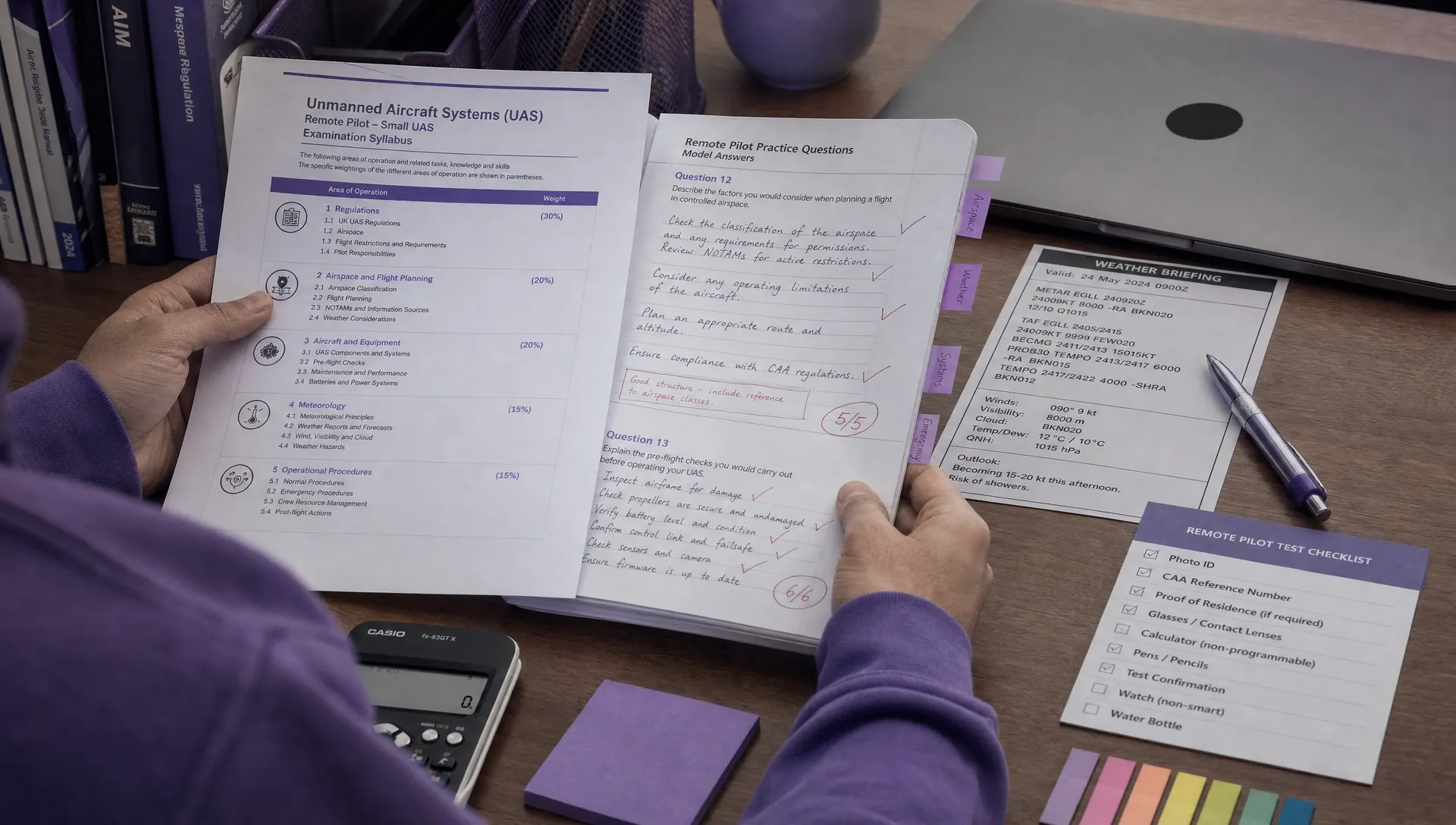 Drone Pilot Test Mistakes That Cost Candidates Marks →
 FAA 107 License vs Part 107 Certificate: What’s the Difference? →
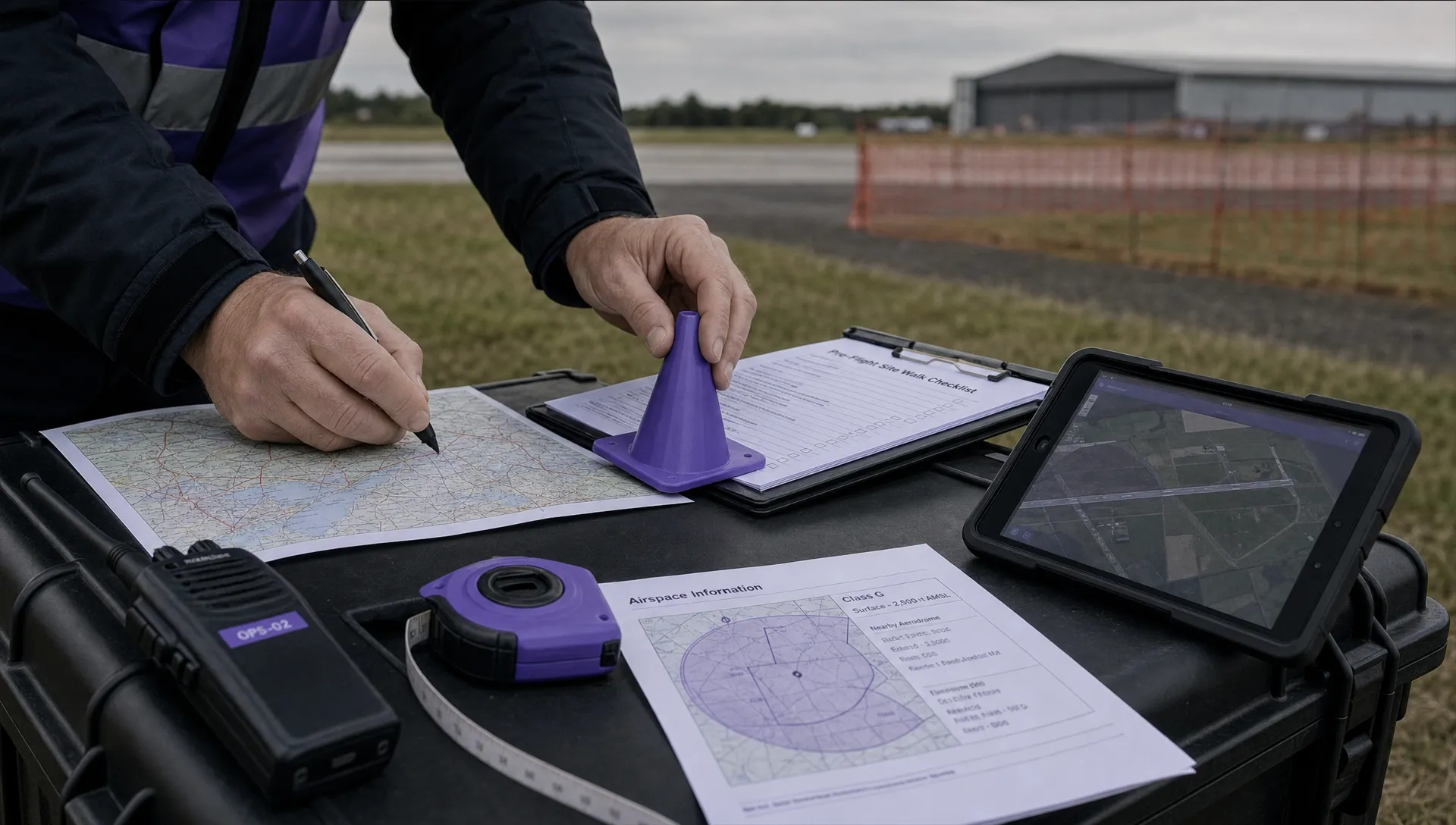 Drone Airport Rules: A Field Checklist for Site Assessments →
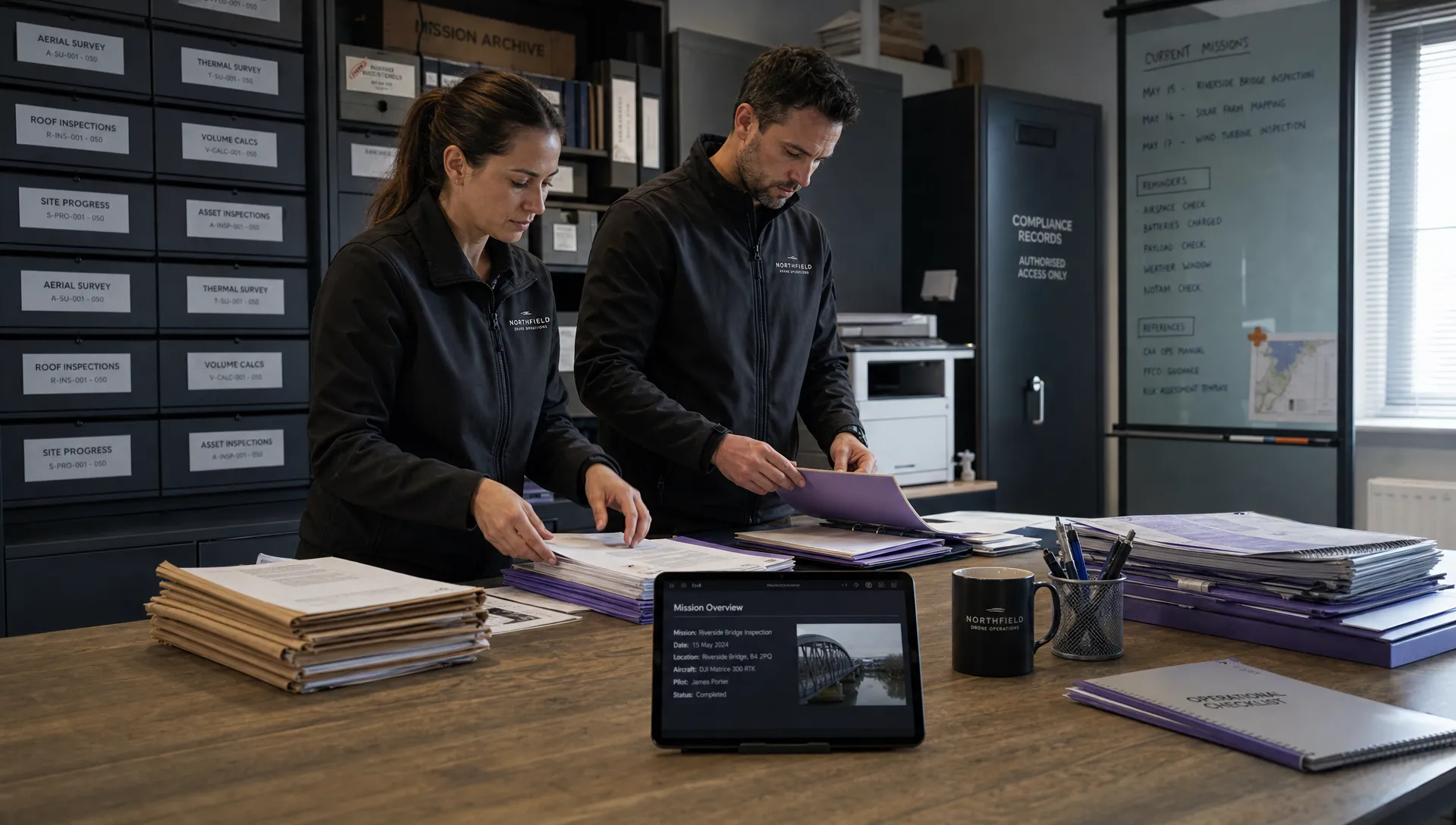 FAA Part 107 Record-Keeping Rules for Commercial Teams →
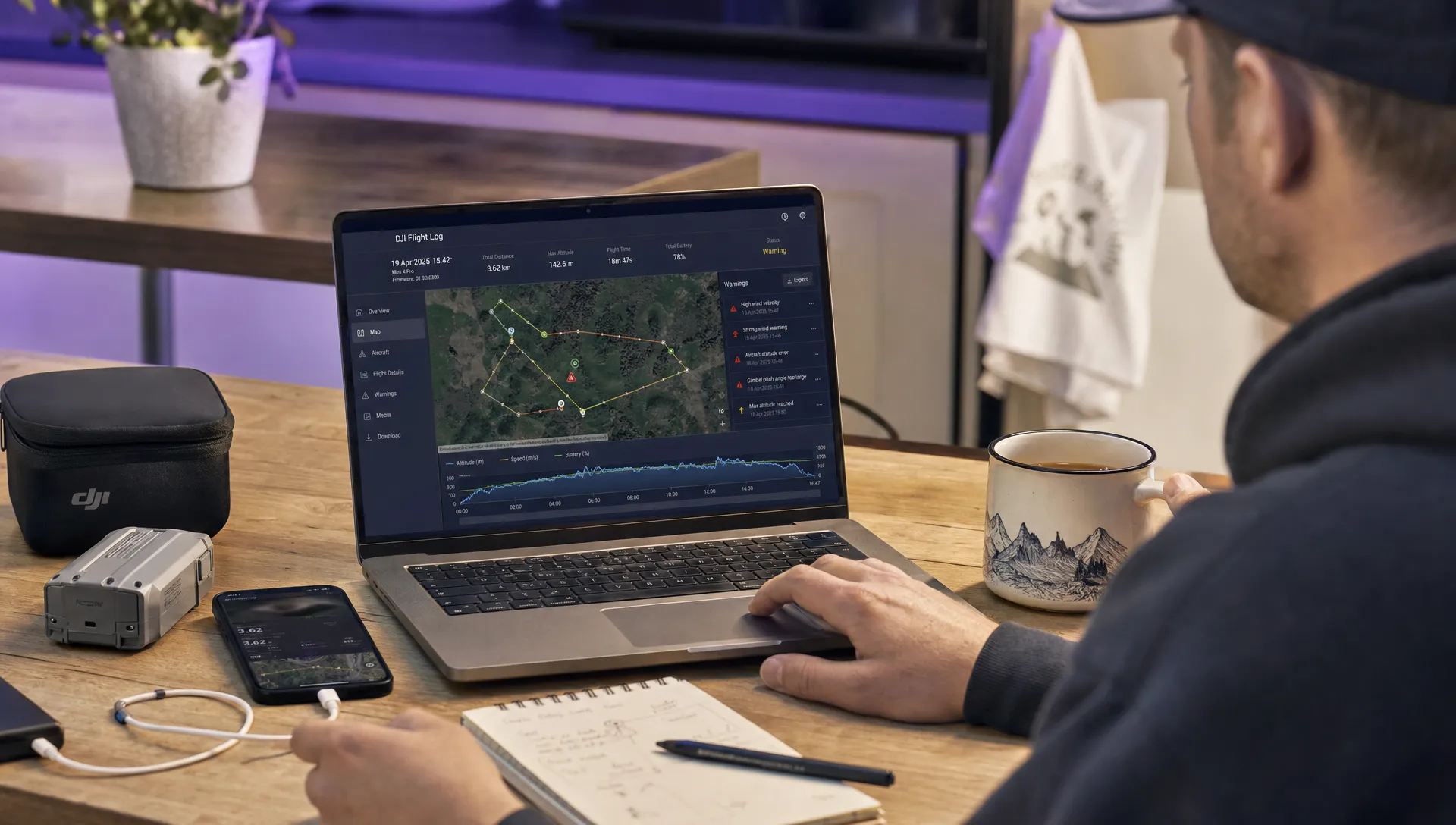 How to Review a DJI Flight Log After an Unexpected Event →
 Drone Laws Around the World: A Pre-Flight Research Framework →
 How to Compare Drone Survey Services for Complex Sites →