
FAA Drone License Costs Beyond the Knowledge Test
For many operators, the phrase faa drone license sounds like a single fee: pay for the Part 107 knowledge test, pass it and start working. In reality, the knowledge test is only the most visible cost. The wider budget includes preparation, aircraft registration, insurance, compliant equipment, recordkeeping, airspace planning and the admin systems that keep commercial operations defensible when clients or regulators ask for evidence.
What the FAA drone license actually covers
In the United States, what people commonly call an FAA drone license is officially a Remote Pilot Certificate issued under 14 CFR Part 107. The FAA’s Part 107 overview explains that commercial small UAS pilots generally need to pass the aeronautical knowledge test, complete the application process and meet the operating rules for small unmanned aircraft.
That certificate proves you have met the FAA’s pilot qualification requirements. It does not, by itself, make every flight legal, insured or commercially ready. You still need to check airspace, comply with operating limitations, maintain your aircraft, manage client expectations and keep records that show how each job was planned and flown.
The FAA drone license also is not a substitute for a business licence, state or local permission, site access approval, insurance cover or a client method statement. For survey companies, utilities and emergency services, the certificate is one part of a wider operational compliance system.
If you are still working through the application sequence, Dronedesk has a separate step-by-step FAA Part 107 licence application guide. This article focuses on the costs that sit around that process.
Direct FAA drone license costs: test, application and currency
The headline fee is the initial aeronautical knowledge test, which is booked through an FAA-approved testing provider. Many operators budget around the commonly published test fee, but you should always confirm the current price at the point of booking because provider fees can change.
There is no separate FAA charge simply to apply for the Remote Pilot Certificate through IACRA after passing the test. That does not make the process cost-free, because you still have study time, travel to a testing centre and the operational work needed to become job-ready.
| Cost item | Is it a direct FAA certificate fee? | Typical budgeting note |
|---|---|---|
| Initial aeronautical knowledge test | Yes, paid via the testing provider | Confirm the live fee when booking your test |
| IACRA certificate application | No separate FAA application fee | Budget admin time and identity verification steps |
| Recurrent online training | No FAA course fee | Required for currency, budget time rather than cash |
| Part 107 aircraft registration | FAA registration fee applies | The FAA lists small UAS registration at $5 per aircraft for three years |
| Airspace authorisation requests | Usually no FAA fee | Budget planning time and possible software or service costs |
When you compare FAA drone license costs, separate the certificate process from the cost of operating legally. The FAA’s DroneZone is where operators register aircraft and manage certain FAA drone services, including Part 107 registrations.
Recurrent training and the cost of staying current
Part 107 pilots must maintain currency. The FAA moved recurrent training online, so the direct course cost is not usually the issue. The real cost is operational time: someone has to complete the training, update internal records and make sure the business does not assign a non-current pilot to a client job.
For a solo operator, that might be a short admin task every 24 calendar months. For a team, it becomes a scheduling and compliance-tracking process. Missing it can cost more than the training itself if it delays work or creates a documentation gap during a client audit.
Costs that catch new commercial operators out
A realistic FAA drone license budget also includes expenses that do not appear on the testing centre receipt. These vary widely by operation type, but they are often the difference between being certified and being commercially viable.
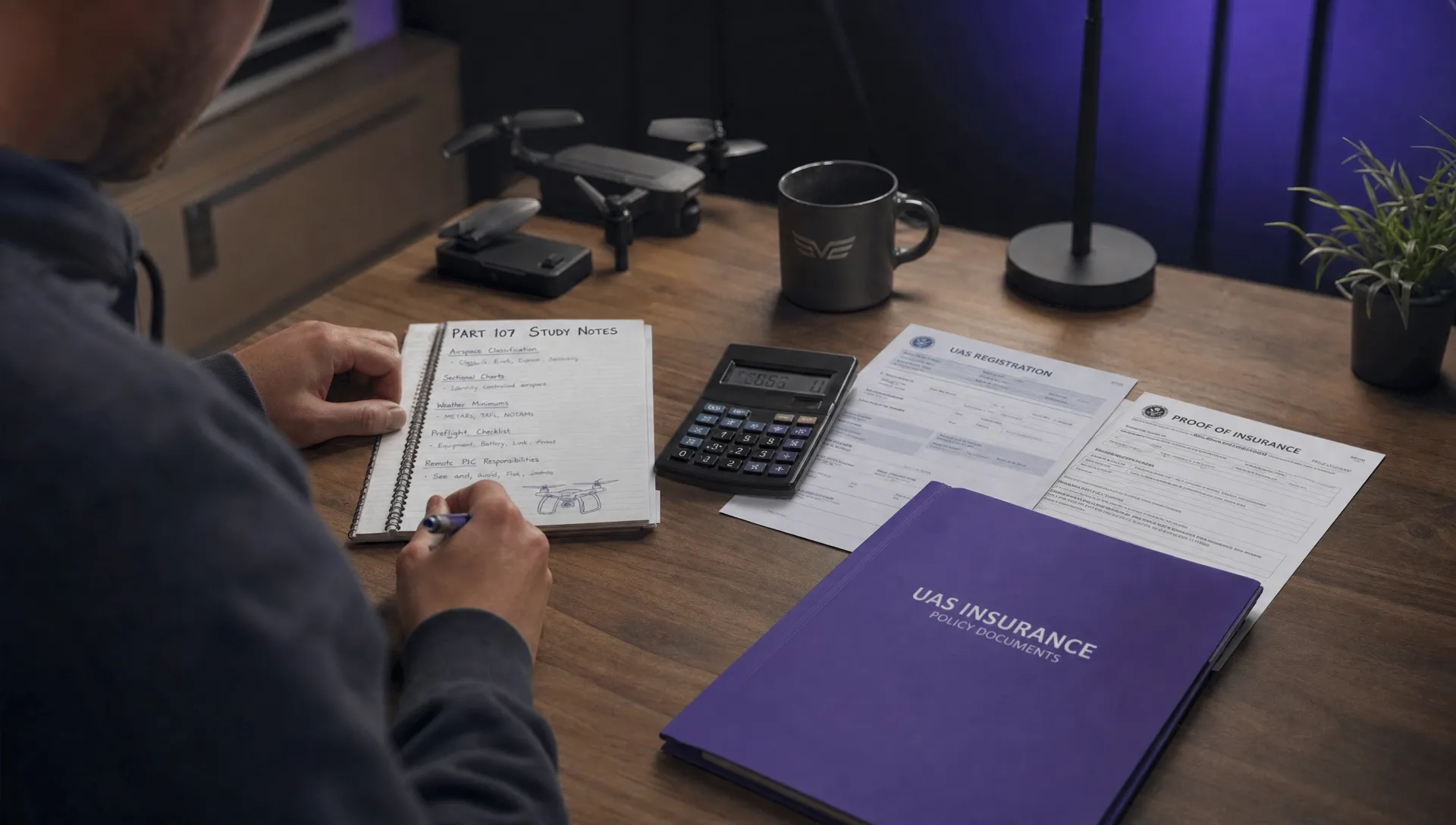
Training is the first variable. Some candidates pass using FAA materials and low-cost practice exams, while others invest in structured prep courses, instructor support or internal training days. A survey firm sending several staff through Part 107 may spend more in payroll time than in course fees.
Insurance is another major consideration. Part 107 does not require a universal minimum insurance policy for every commercial drone flight, but many clients, public agencies, landowners and prime contractors will require proof of cover before allowing work to start. Premiums depend on aircraft, payloads, operating locations, claims history, limits of indemnity and the type of work being performed.
Equipment compliance can also add cost. The FAA’s Remote ID rules mean operators need aircraft that broadcast Remote ID or an approved broadcast module where required. If you are buying older aircraft, adding modules to a fleet or replacing non-compliant drones, that cost belongs in the same planning conversation as the certificate.
Operational costs after your FAA drone license is approved
Once your FAA drone license is active, the spending shifts from certification to repeatable operations. That is where many professional operators underestimate the workload. A single roof inspection might need an airspace check, site survey, client brief, risk assessment, pre-flight checklist, aircraft maintenance check, battery records, flight log and post-flight evidence pack.
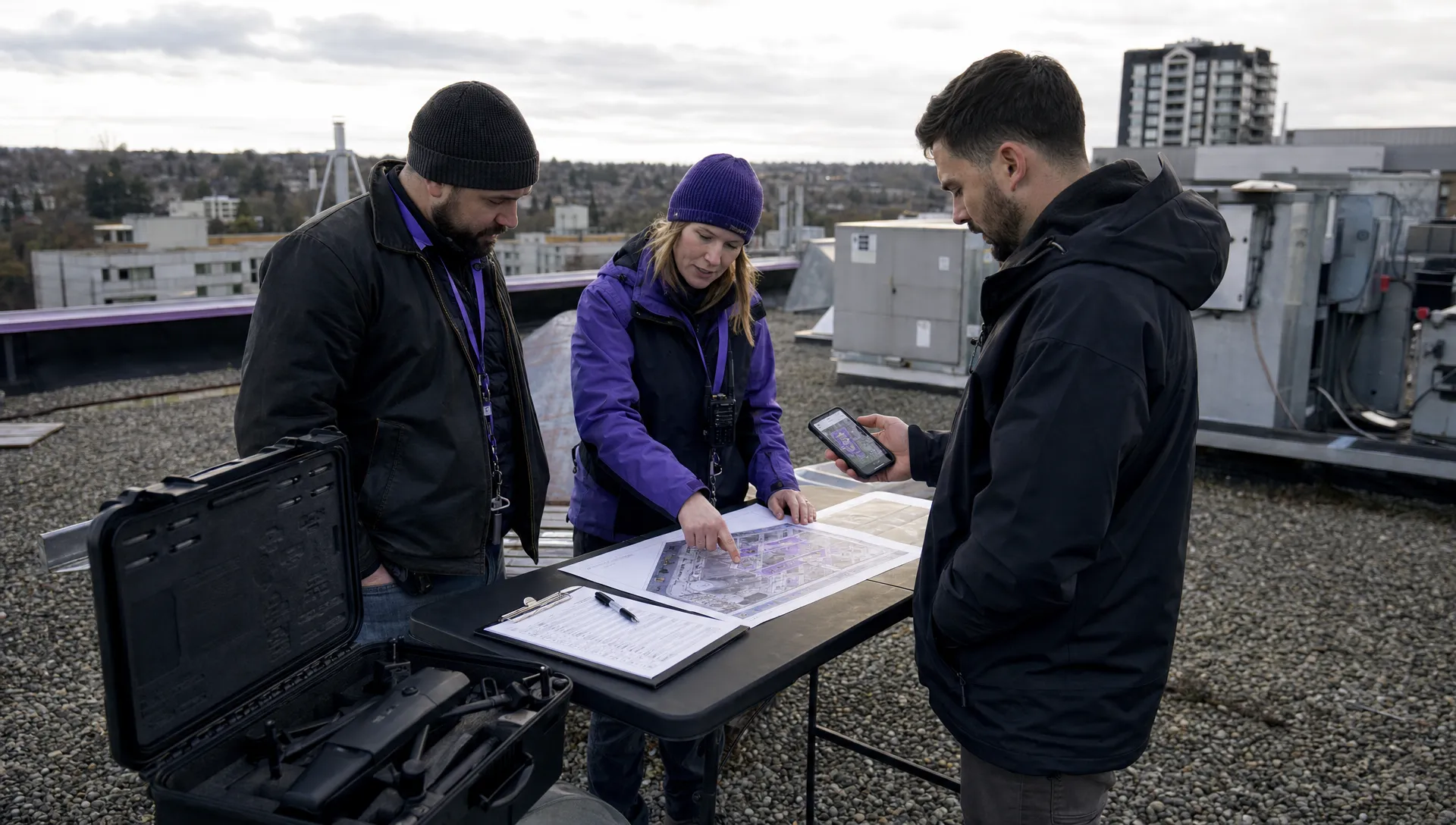
Airspace planning is a practical example. Flying in controlled airspace under Part 107 may require authorisation through LAANC or the FAA DroneZone, depending on the location and request type. The FAA’s LAANC information explains how approved providers can support near real-time access for eligible controlled airspace operations. For a deeper planning angle, Dronedesk’s guide to airport drone rules and avoiding flight planning surprises is a useful companion.
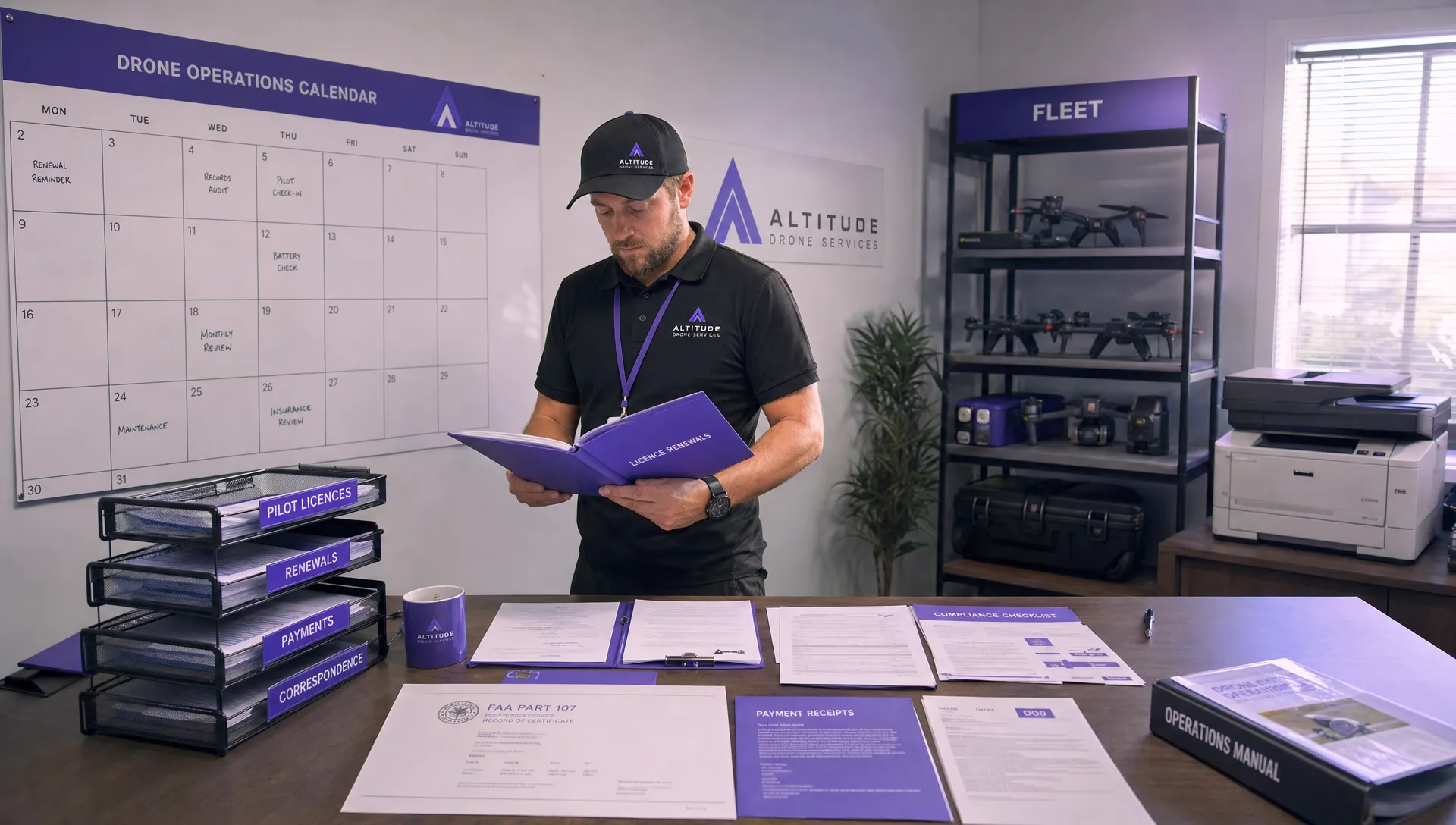
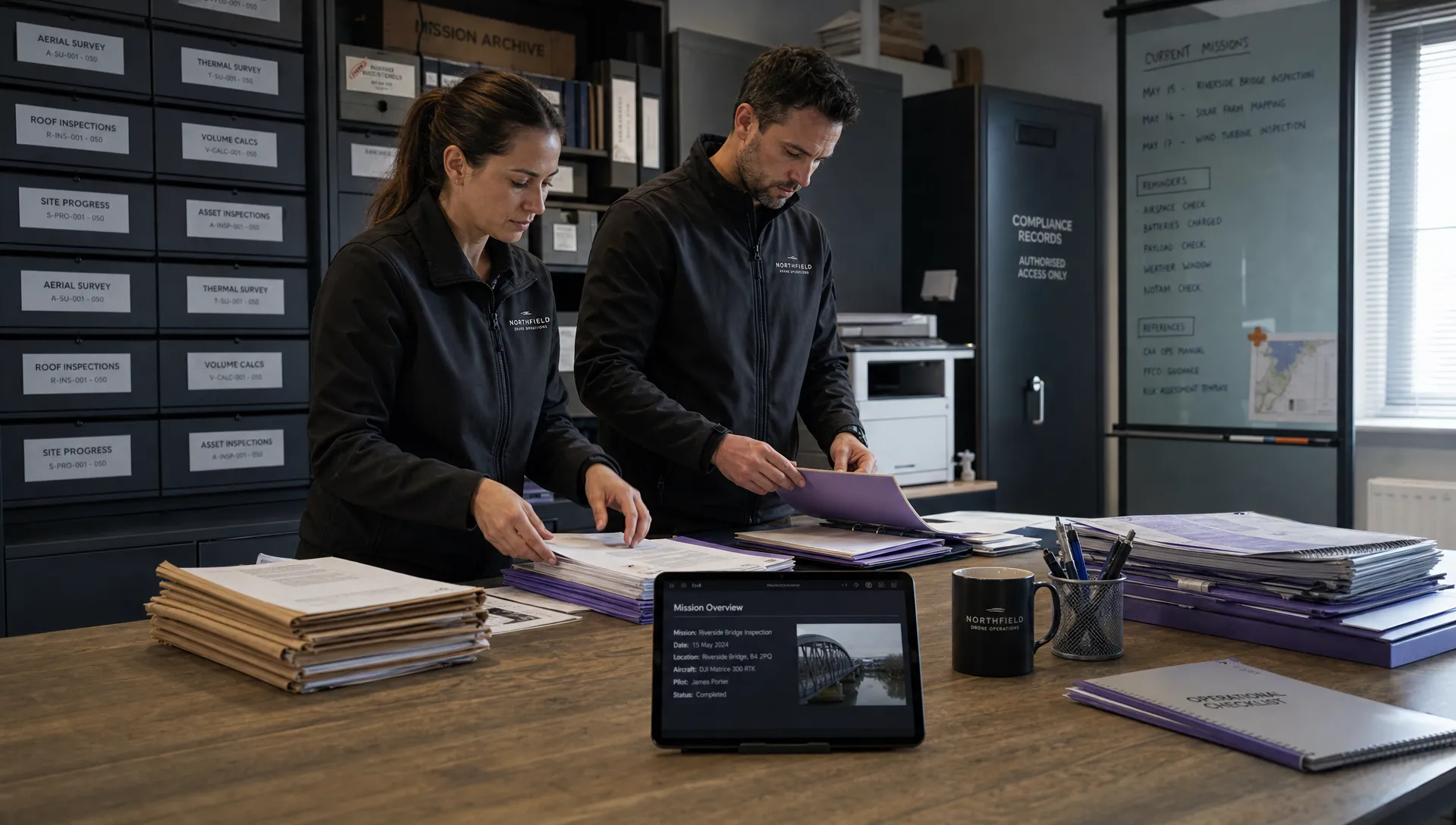
Recordkeeping is another hidden cost. Part 107 requires remote pilots to present certain documents when requested by the FAA, National Transportation Safety Board, Transportation Security Administration or law enforcement, and operators need a reliable way to show that aircraft, pilots and flights were managed properly. Even where a specific document is not mandated for every flight, good records protect the operator when clients, insurers or internal safety teams ask what happened.
This is where operational software becomes part of the budget rather than a nice extra. Dronedesk’s drone operations management features include client management, fleet management, team management, airspace intelligence, proximity intelligence, flight planning, configurable checklists, risk assessments, flight logging and data reporting in one web platform. For growing teams, centralising those tasks can reduce reliance on scattered spreadsheets and inboxes.
Sample first-year budget scenarios
The FAA drone license can be inexpensive for a solo pilot who already owns compliant equipment, studies independently and flies low-risk jobs in uncontrolled airspace. It becomes a broader investment when the operation needs multiple pilots, specialist payloads, client-grade insurance and documented procedures.
Use the table below as a planning framework, not as a quote. Your actual costs will depend on location, aircraft, insurer, training route and the type of work you sell.
| Scenario | Certificate-related costs | Operational costs to include | Budget risk |
|---|---|---|---|
| Solo real estate or marketing pilot | Test fee, study materials, aircraft registration | Insurance, Remote ID compliance, basic flight planning and records | Underpricing jobs because admin time is ignored |
| Survey company adding drones | Multiple tests, staff study time, registrations for each aircraft | Payloads, maintenance, insurance, procedures, data handling and project documentation | Treating pilot certification as the whole programme |
| Utility or infrastructure inspection team | Several pilots, recurrent tracking, internal training | Site permissions, risk assessments, fleet records, airspace planning and reporting | Inconsistent records across pilots and regions |
| Emergency services unit | Pilot certification, recurrent training records, aircraft registration | Standard operating procedures, multi-agency coordination, equipment readiness and training exercises | Operational readiness costs not being funded year-round |
The key is to price the whole capability, not just the exam. If your commercial rate only recovers the testing fee and drone purchase, it will not cover the time spent planning, documenting and reviewing safe flights.
How to control costs without weakening compliance
The best cost control is not cutting corners. It is designing a process that prevents duplicated work, missed renewals and last-minute job delays. Start by mapping every step from enquiry to completed flight record, then decide which steps can be standardised.
For many operators, the largest savings come from using templates for recurring job types. A construction progress flight, a roof inspection and a utility corridor survey each have common risk factors, airspace checks and reporting needs. Standard templates reduce rework, but they still need enough flexibility for site-specific hazards.
Keep pilot currency, aircraft registration and maintenance status visible before work is scheduled. A cheap job becomes expensive if the team discovers on the morning of the flight that a pilot is not current, an aircraft registration has lapsed or the intended location sits inside controlled airspace requiring authorisation.
Finally, treat administrative time as a billable cost of professional drone work. The FAA drone license may get you through the regulatory front door, but your pricing should reflect the full burden of delivering a safe, insured and well-documented operation.
Frequently Asked Questions
How much does an FAA drone license cost in total? The direct total starts with the aeronautical knowledge test fee and aircraft registration, but the real total depends on study route, insurance, equipment, Remote ID compliance, software and business administration. Check current FAA and testing provider fees before booking.
Is the Part 107 certificate itself free after the test? There is no separate FAA application fee through IACRA after you pass the knowledge test, but you still need to account for study time, travel, aircraft registration and the cost of setting up compliant operations.
Do I need to pay to renew my FAA drone license? Part 107 pilot currency is maintained through FAA recurrent training rather than retaking the initial knowledge test. The FAA online recurrent training does not usually create a direct course fee, but it does require time and internal recordkeeping.
Is drone insurance required by the FAA under Part 107? Part 107 does not impose one universal insurance requirement for every commercial drone operation. However, clients, landowners, public agencies and contractors often require insurance before work can begin, so it should be part of your commercial budget.
What is the biggest hidden cost after passing Part 107? For professional teams, the biggest hidden cost is often administration: planning, approvals, checklists, risk assessments, flight logs, maintenance records and evidence packs. These tasks are essential for repeatable, defensible operations.
Build the full cost into your operation
Passing the test is a milestone, not the whole budget. If you are planning commercial drone work, price the certificate, aircraft, insurance, compliance process and ongoing admin together from the start.
Dronedesk helps operators bring flight planning, risk assessments, checklists, fleet records, team records and flight logging into a single workflow. If your FAA drone license is the start of a professional operation rather than a one-off certificate, building that workflow early can save a lot of friction later.
 FAA Drone License Costs Beyond the Knowledge Test →
 Drone Part 107 Operations: When a Waiver May Be Needed →
 Drone Operating Rules for Managing Contractors and Employees →
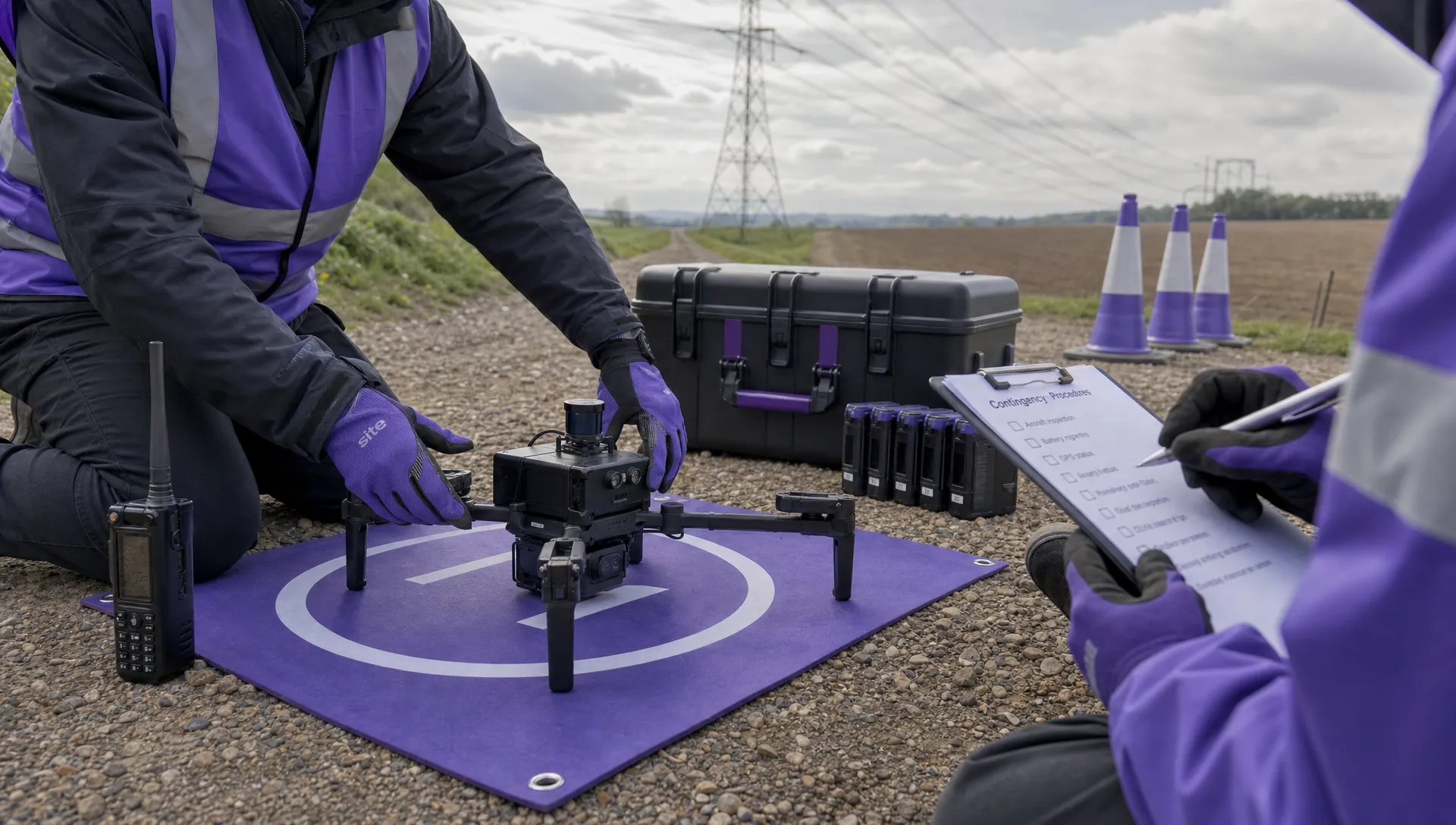 BVLOS Drone Requirements for Building a Safety Case →
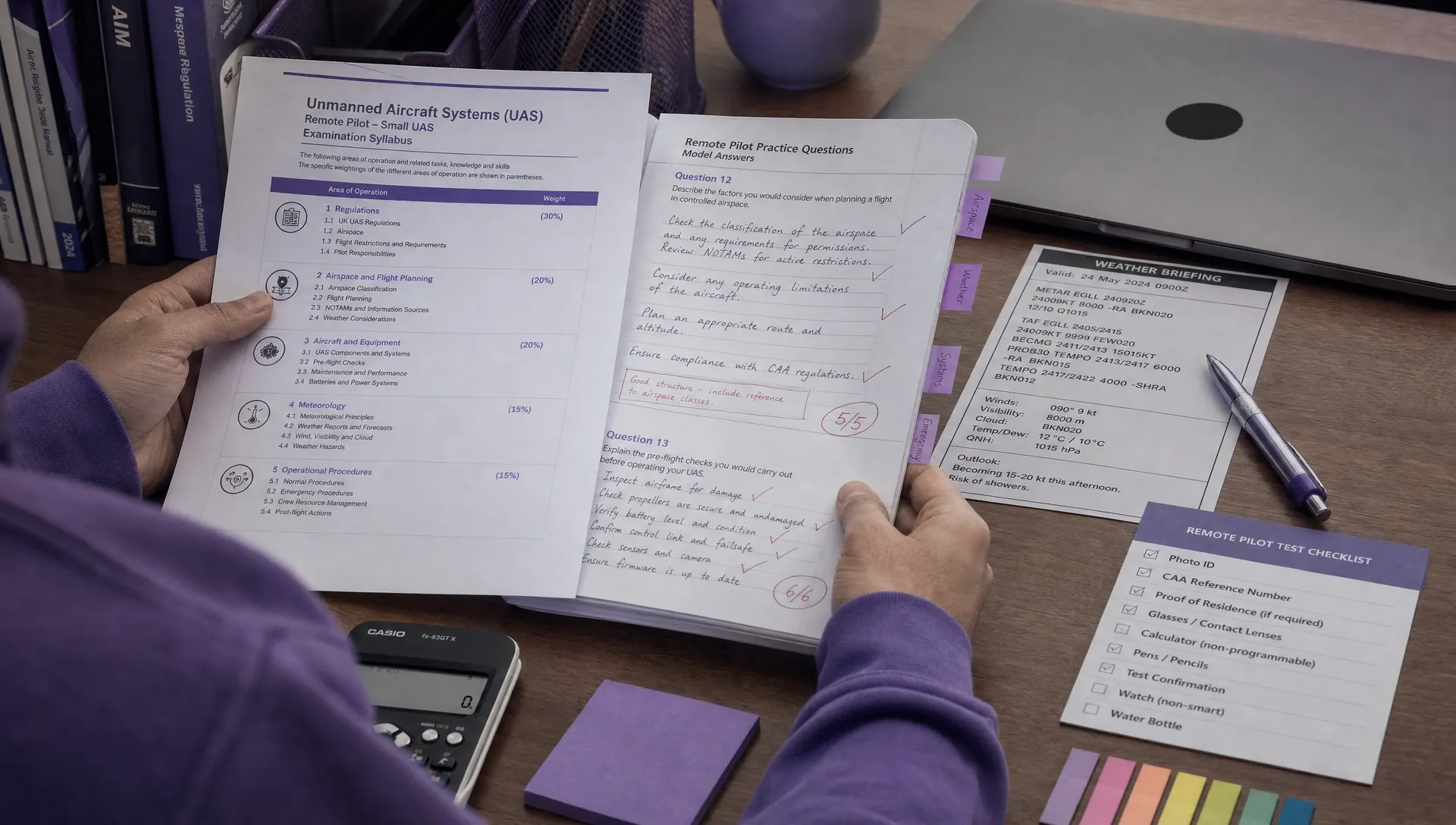 Drone Pilot Test Mistakes That Cost Candidates Marks →
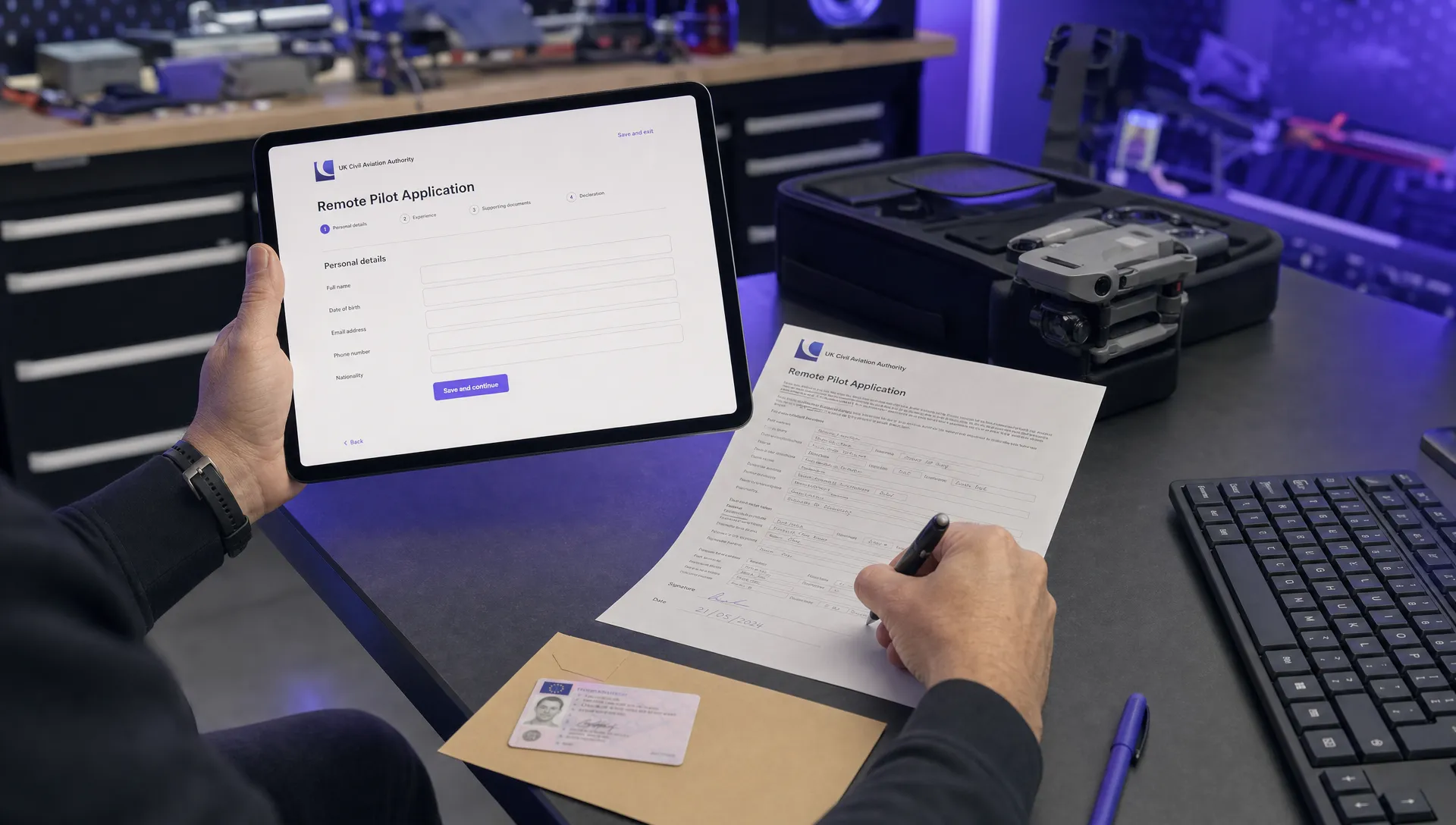 FAA 107 License vs Part 107 Certificate: What’s the Difference? →
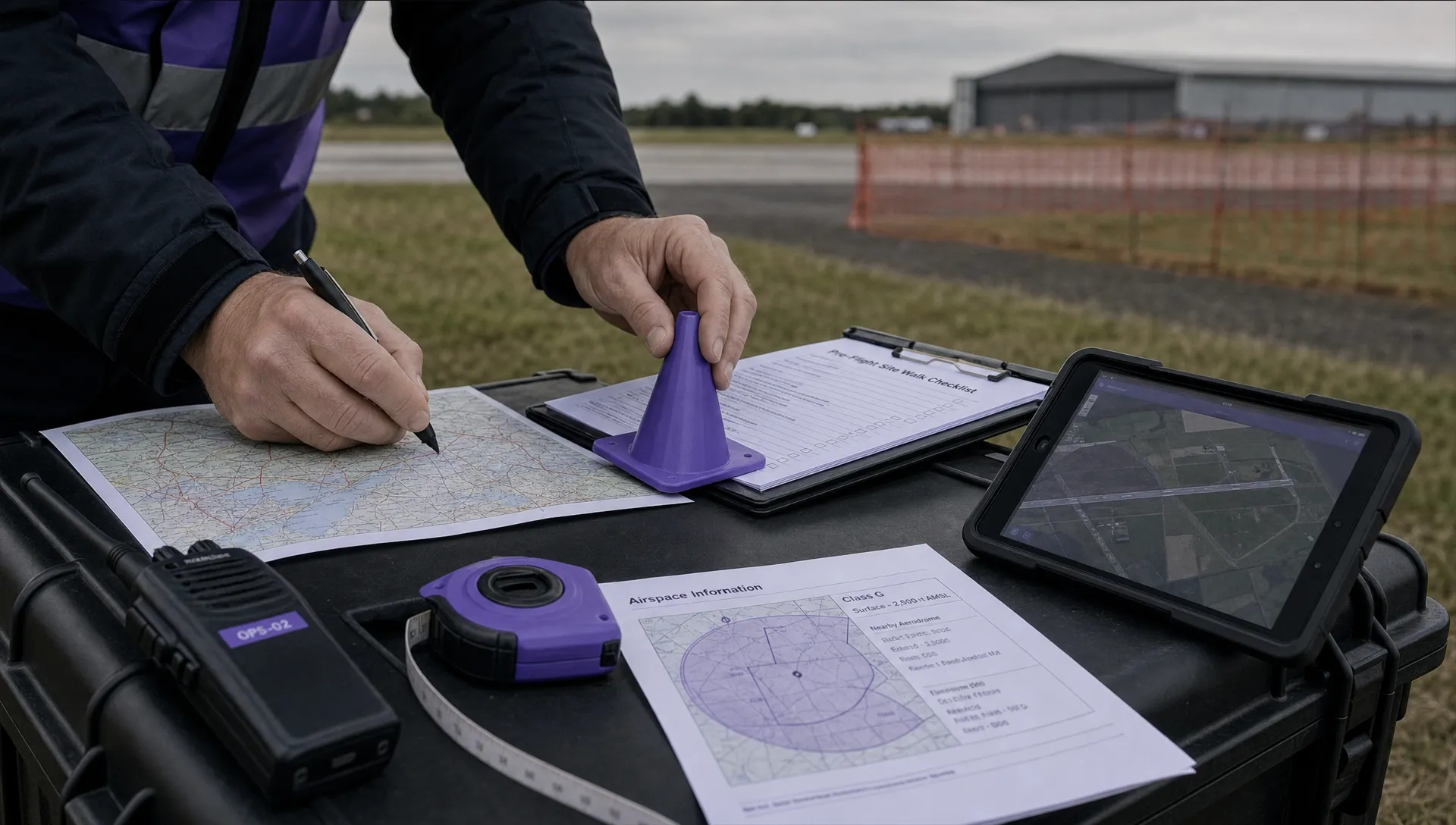 Drone Airport Rules: A Field Checklist for Site Assessments →
 FAA Part 107 Record-Keeping Rules for Commercial Teams →
 How to Review a DJI Flight Log After an Unexpected Event →
 Drone Laws Around the World: A Pre-Flight Research Framework →