
FAA Part 107 Licence: Your Step-by-Step Application Guide
Applying for an FAA Part 107 licence is one of the clearest routes into professional drone work in the United States. It is the credential most commercial drone pilots need before they can fly small unmanned aircraft for paid jobs, internal business operations, inspections, surveys, mapping, media work or public safety support.
Strictly speaking, the FAA does not issue a licence under Part 107. It issues a Remote Pilot Certificate with a small UAS rating. Many applicants still search for an FAA Part 107 license, so this guide uses the common phrase but follows the FAA terminology where accuracy matters.
Below is a practical, step-by-step application guide for individual pilots and organisations that need a repeatable process for getting team members certified, compliant and operational.
Who needs an FAA Part 107 licence?
You normally need a Remote Pilot Certificate under Part 107 if you fly a drone for any non-recreational purpose in US airspace. That includes work for a client, work for your employer, unpaid business activity, aerial data collection, roof inspections, utility inspections, construction progress monitoring, emergency response support or survey work.
Recreational flyers follow a different route under the FAA recreational exception and must complete The Recreational UAS Safety Test. Once a flight supports a business, public agency or professional task, Part 107 is usually the relevant framework.
For emergency services and government bodies, there can also be a public aircraft operations route using a Certificate of Waiver or Authorisation. Many agencies still use Part 107 for routine missions because it is relatively straightforward, scalable across individual pilots and familiar to insurers, clients and partner agencies.
The FAA sets out the official process in its Remote Pilot Certificate guidance. Use that page as your final source for any procedural changes, especially fees, testing arrangements and system links.
FAA Part 107 application process at a glance
| Stage | Where it happens | What you get |
|---|---|---|
| Confirm eligibility | FAA Part 107 rules | Confidence that you can apply |
| Create an FAA tracking number | IACRA | Your FTN, used throughout testing and certification |
| Schedule the knowledge test | PSI FAA exams portal | A booking for the Unmanned Aircraft General, Small test |
| Pass the test | FAA-approved testing centre | An Airman Knowledge Test Report |
| Apply for the certificate | IACRA, using FAA Form 8710-13 | A submitted Remote Pilot Certificate application |
| Complete security vetting | TSA and FAA background process | Approval to receive a temporary certificate |
| Register aircraft | FAA DroneZone | Drone registration for Part 107 operations |
| Maintain currency | FAASafety.gov | Recurrent training every 24 calendar months |
Before you apply: eligibility and documents
To qualify for a Remote Pilot Certificate with a small UAS rating, you must be at least 16 years old, be able to read, speak, write and understand English, be in a physical and mental condition that allows safe drone operation and pass the FAA initial aeronautical knowledge test.
The certificate belongs to the individual pilot, not the company. A survey company, utility provider or fire department can standardise training internally, but each person acting as remote pilot in command needs their own valid certificate or must operate under the direct supervision rules that apply to the mission.
Before starting the application, make sure your legal name matches your government-issued photo ID. You will use that identity in IACRA, when booking the exam and when attending the testing centre. Name mismatches are one of the simplest ways to create delays.
You should also decide which email address to use for FAA systems. For organisations, it is tempting to use a shared operations inbox, but individual pilots generally benefit from using an address they can access reliably for the full life of their certificate.
Step 1: Create your IACRA account and get an FTN
The first formal step is creating an account in IACRA, the FAA system used for airman certification applications. During registration, you will receive an FAA Tracking Number, usually called an FTN.
You need an FTN before scheduling the Part 107 knowledge test. The FTN connects your test result with your later certificate application, so do not skip this step or create duplicate accounts unless instructed by the FAA.
When registering, choose the applicant role. You do not need to hold another FAA airman certificate to apply through the standard Part 107 route.
Step 2: Schedule the FAA Part 107 knowledge test
After receiving your FTN, create or access your account on the PSI FAA exams portal. Search for the Unmanned Aircraft General, Small exam. This is commonly referred to as the Part 107 knowledge test or UAG exam.
You will choose an FAA-approved testing centre, date and time. PSI displays the current test fee when you book, so check the portal rather than relying on older articles or forum posts.
The standard initial test has 60 multiple-choice questions, lasts two hours and requires a 70 percent passing score. There is no practical flight test for the basic Remote Pilot Certificate, but the exam is aviation-focused and should not be treated as a simple drone hobby quiz.
Step 3: Study the right topics
The Part 107 exam tests whether you can make safe aeronautical decisions, understand the operating rules and recognise when a flight is outside the standard Part 107 envelope.
| Study area | Why it matters for professional operators |
|---|---|
| Part 107 operating rules | Defines what you can and cannot do without additional authorisation |
| Airspace and airport operations | Helps you identify controlled airspace, restrictions and authorisation needs |
| Sectional charts | Essential for understanding airspace classes, obstacles, airports and special use airspace |
| Weather theory and reports | Supports go or no-go decisions before field work |
| Loading and performance | Helps you assess aircraft limitations, battery performance and environmental effects |
| Crew resource management | Relevant for multi-person survey, inspection and emergency services missions |
| Radio communication | Useful around airports and when coordinating with aviation stakeholders |
| Emergency procedures | Helps you plan for lost link, flyaway, battery faults and people entering the operating area |
| Night operations | Required knowledge if your missions may take place after dark |
| Maintenance and preflight inspection | Supports safe, repeatable operations across a fleet |
Use current FAA materials and the latest testing supplement. Older study guides can still be useful, but check that they reflect current rules on night operations, Remote ID and operations over people.
Step 4: Take the knowledge test
Arrive early at the testing centre with acceptable identification. The testing centre will explain what materials are provided and what personal items are not allowed. Do not assume you can bring your own notes, phone or electronic flight planning tools into the exam room.
If you pass, you will receive an Airman Knowledge Test Report. Keep it safe. Your test result may also take up to a short period to appear in IACRA, so do not panic if you cannot complete the next step immediately.
If you fail, you can retake the test after the FAA waiting period. Use the subject matter codes on your test report to focus your revision rather than starting again from scratch.
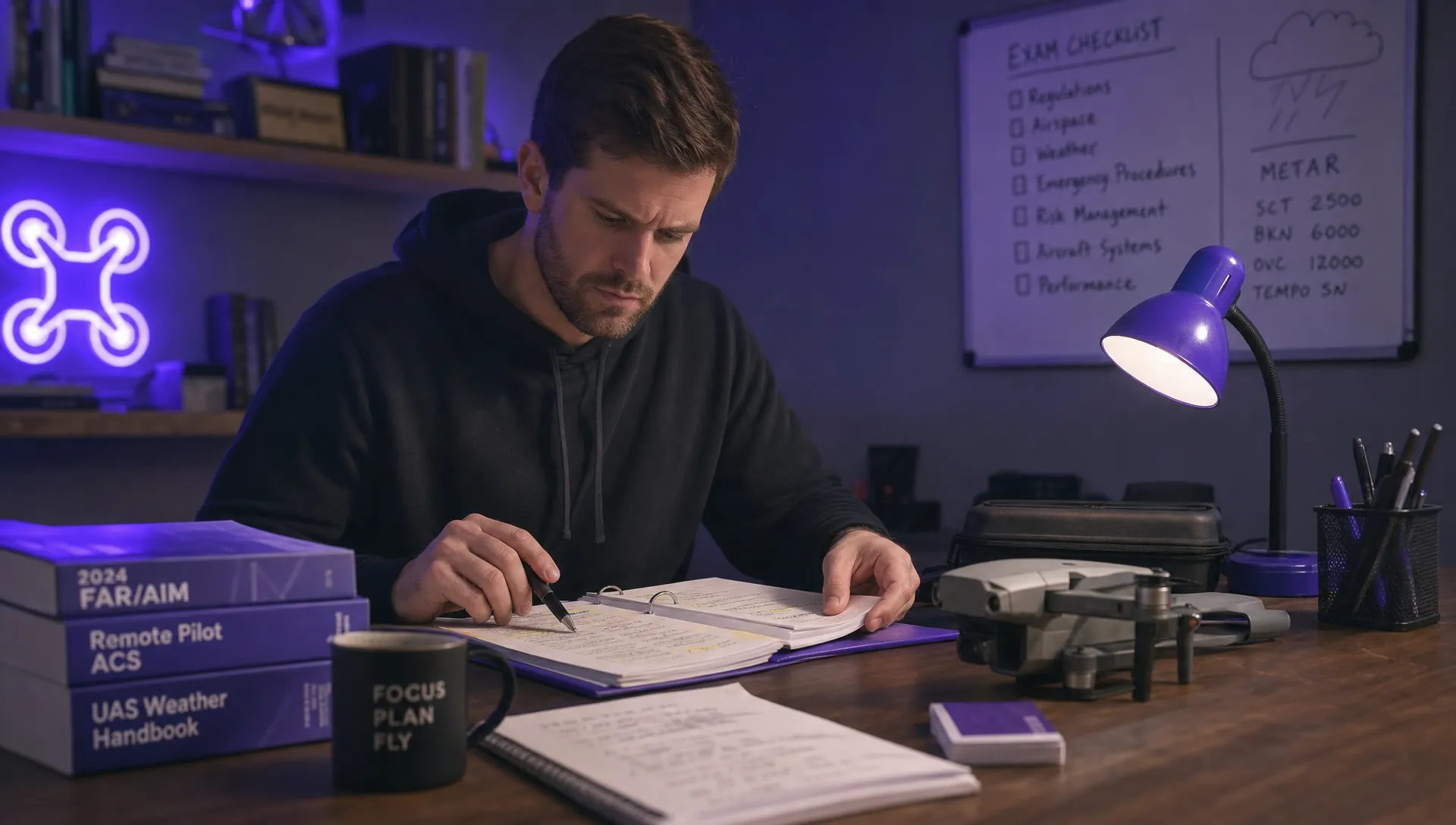
Step 5: Complete FAA Form 8710-13 in IACRA
Once your passing test result is available, return to IACRA and start the application for a Remote Pilot Certificate with a small UAS rating. The application is submitted using FAA Form 8710-13 inside IACRA.
Check your personal details carefully before submitting. Errors in your name, address or certificate selection can slow down approval. After you electronically sign the application, it moves into the FAA and TSA review process.
For most first-time Part 107 applicants who are not already certificated manned-aircraft pilots, there is no in-person practical test. Existing Part 61 pilots have a different route if they meet the flight review and online training requirements, so they should follow the FAA path specific to their status.
Step 6: Wait for TSA security vetting and download your temporary certificate
After submission, the Transportation Security Administration completes security vetting. If approved, your temporary Remote Pilot Certificate becomes available in IACRA. You can use the temporary certificate while waiting for the permanent card, provided you also comply with all operating rules and any relevant airspace authorisations.
Do not treat passing the test alone as permission to fly commercially. You need the certificate, even if it is the temporary version, before acting as remote pilot in command under Part 107.
Step 7: Register your drone for Part 107 operations
Part 107 aircraft must be registered with the FAA through DroneZone. Registration is separate from pilot certification. If your organisation owns several aircraft, make sure each aircraft used for Part 107 work is registered correctly and marked as required.
Most drones that require FAA registration must also comply with Remote ID rules. For professional teams, this is a fleet management issue as much as a pilot issue. Keep aircraft serial numbers, Remote ID details, registration expiry dates, maintenance notes and assigned pilots in a system your team can actually maintain.
If your operation is growing beyond a few aircraft, Dronedesk has a dedicated drone fleet management guide that explains how teams can move from ad hoc spreadsheets to more structured operational control.
Step 8: Understand what Part 107 allows and where you still need authorisation
A Part 107 certificate is powerful, but it is not blanket permission to fly anywhere, at any height or for any mission profile. The operating rules are set out in 14 CFR Part 107, and professional operators should know which missions need extra approval.
| Operational issue | Standard Part 107 position | What to check before flight |
|---|---|---|
| Aircraft weight | Less than 55 pounds including payload | Aircraft, battery and payload combined weight |
| Altitude | Usually up to 400 feet above ground level, with structure-related exceptions | Local airspace, obstacles and mission requirement |
| Visual line of sight | The remote pilot or visual observer must be able to see the aircraft unaided, except for corrective lenses | Terrain, distance, lighting and observer placement |
| Controlled airspace | Requires FAA authorisation | LAANC availability or DroneZone authorisation |
| Night flight | Allowed when training and anti-collision lighting requirements are met | Lighting, visibility and crew procedures |
| Operations over people | Allowed only when the aircraft and operation meet the relevant category requirements | Aircraft eligibility, propeller protection, Remote ID and site control |
| Moving vehicles | Subject to specific restrictions and category rules | Route, traffic control and whether the operation is sustained |
| BVLOS | Not allowed under standard Part 107 | Waiver or other FAA approval pathway |
For advanced missions, the certificate is only the start. If your organisation plans to fly beyond visual line of sight, at scale or in environments that fall outside standard Part 107, review how a BVLOS waiver works and who needs one before building client promises around that capability.
Step 9: Build Part 107 into your operating procedures
Clients rarely care only that a pilot passed the exam. They want evidence that the mission will be planned, risk assessed, documented and delivered safely. That matters even more for survey companies working near construction sites, utilities operating around critical infrastructure and emergency services flying under pressure.
At a minimum, your operating process should cover mission planning, airspace checks, landowner or site permissions, crew roles, preflight checks, risk assessment, weather review, battery management, emergency procedures, flight logging and post-flight reporting.
A strong risk assessment should be specific to the location, aircraft, people, hazards and task. If your current process is a copied template that rarely changes, use Dronedesk's guide to building a drone flight risk assessment that works to tighten it before your next commercial job.
This is also where operations software can reduce friction without replacing pilot judgement. Dronedesk is an all-in-one web platform for drone operators, with client management, fleet management, team management, airspace intelligence, proximity intelligence, flight planning, flight logging, data reporting, configurable checklists and risk assessments. You can review the current capabilities on the Dronedesk features page and decide how they fit your Part 107 workflow.
Common FAA Part 107 application mistakes
Most delays are avoidable. The application process is not complicated, but it is easy to lose time through small administrative errors or by misunderstanding what the certificate does.
- Creating multiple IACRA accounts instead of using one FTN consistently.
- Booking the wrong FAA exam instead of the Unmanned Aircraft General, Small test.
- Assuming a passed knowledge test is the same as holding a temporary certificate.
- Forgetting to register each drone used for Part 107 operations.
- Flying in controlled airspace without LAANC or DroneZone authorisation.
- Letting recurrent training lapse after 24 calendar months.
- Treating Part 107 as permission for BVLOS, sustained flight over moving traffic or unrestricted operations over people.
- Keeping flight logs, maintenance notes and risk assessments in scattered files that are hard to retrieve when needed.
The last point matters for professional credibility. When a client, insurer, regulator or internal safety manager asks for evidence, a well-organised operational record is far easier to defend than a folder of inconsistent PDFs and messages.
Frequently Asked Questions
Is FAA Part 107 a licence or a certificate? The official FAA term is Remote Pilot Certificate with a small UAS rating. Many people call it an FAA Part 107 licence or license, but certificate is the correct regulatory term.
How long does it take to get an FAA Part 107 licence? The timeline depends on study time, test centre availability and TSA vetting. Some applicants complete the process quickly, but organisations should allow extra time for scheduling, internal training and aircraft registration.
How much does the Part 107 test cost? The testing fee is shown when you book through the PSI FAA exams portal. Check the current fee there because prices can change.
Can I fly commercially as soon as I pass the Part 107 test? No. Passing the knowledge test is required, but you must submit the IACRA application and receive your temporary or permanent Remote Pilot Certificate before acting as remote pilot in command under Part 107.
Do I need recurrent training? Yes. To keep exercising Part 107 privileges, remote pilots must complete recurrent training within the required 24 calendar month cycle. The FAA provides recurrent training through FAASafety.gov.
Does Part 107 allow BVLOS operations? Standard Part 107 requires visual line of sight. BVLOS operations need a waiver or another FAA-approved pathway.
Do emergency services need Part 107? Many public safety teams use Part 107 for routine drone operations, but agencies may also have public aircraft options such as a COA. The right route depends on the agency, mission type and operating environment.
Make Part 107 compliance easier to manage
Getting the certificate is only the first step. The ongoing work is planning safe flights, checking airspace, assigning crew, managing aircraft records, completing risk assessments, logging flights and producing evidence when someone asks for it.
Dronedesk helps drone operators manage those day-to-day operational tasks in one place, from flight planning and logging to checklists, risk assessments, fleet records and team management. If your Part 107 operation is moving from occasional flights to repeatable professional work, structured admin is not a luxury. It is part of flying well.
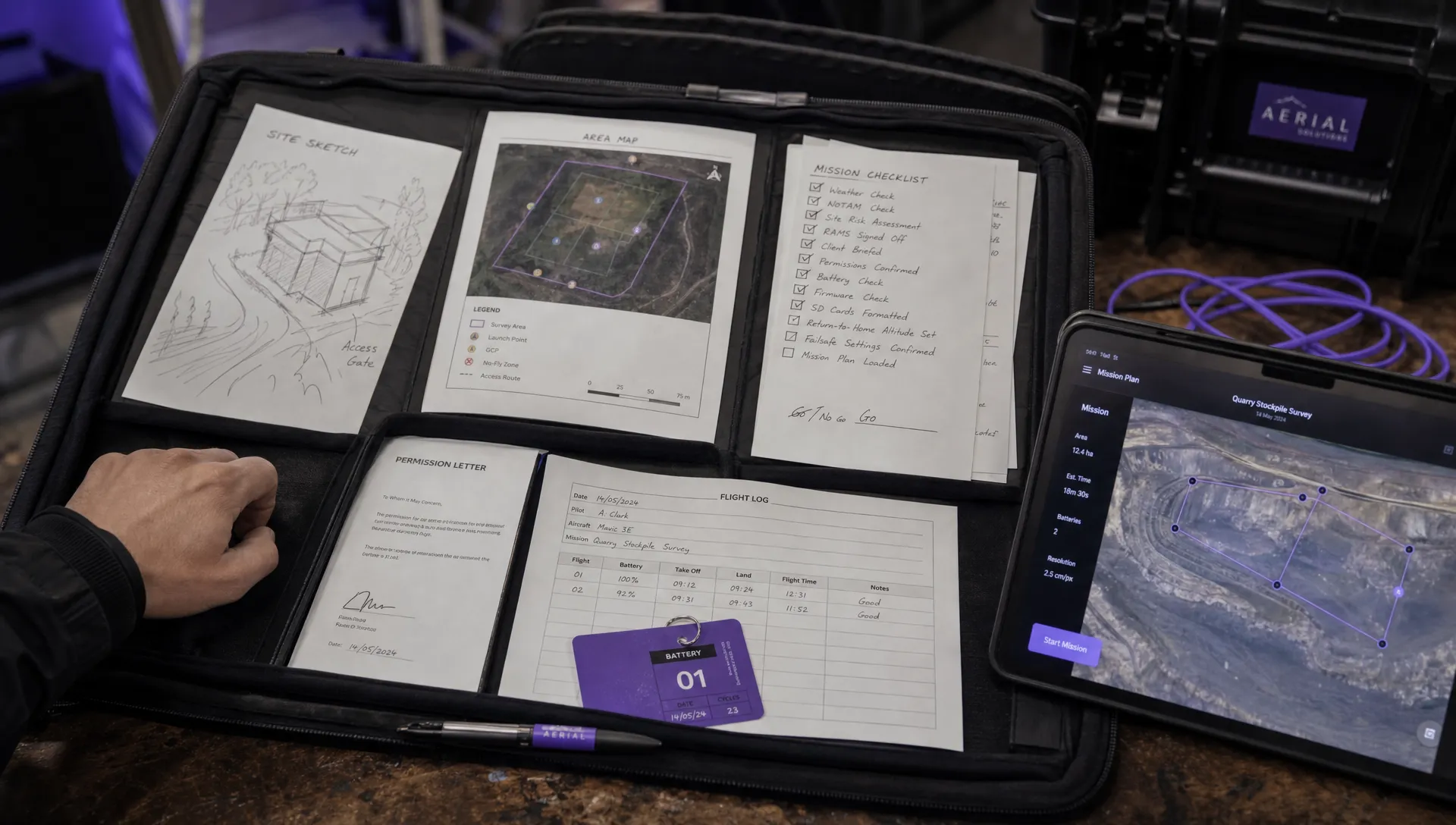 How to Create a Drone Job Pack for Every Mission →
 FAA Small UAS Rule: Key Requirements for Operators →
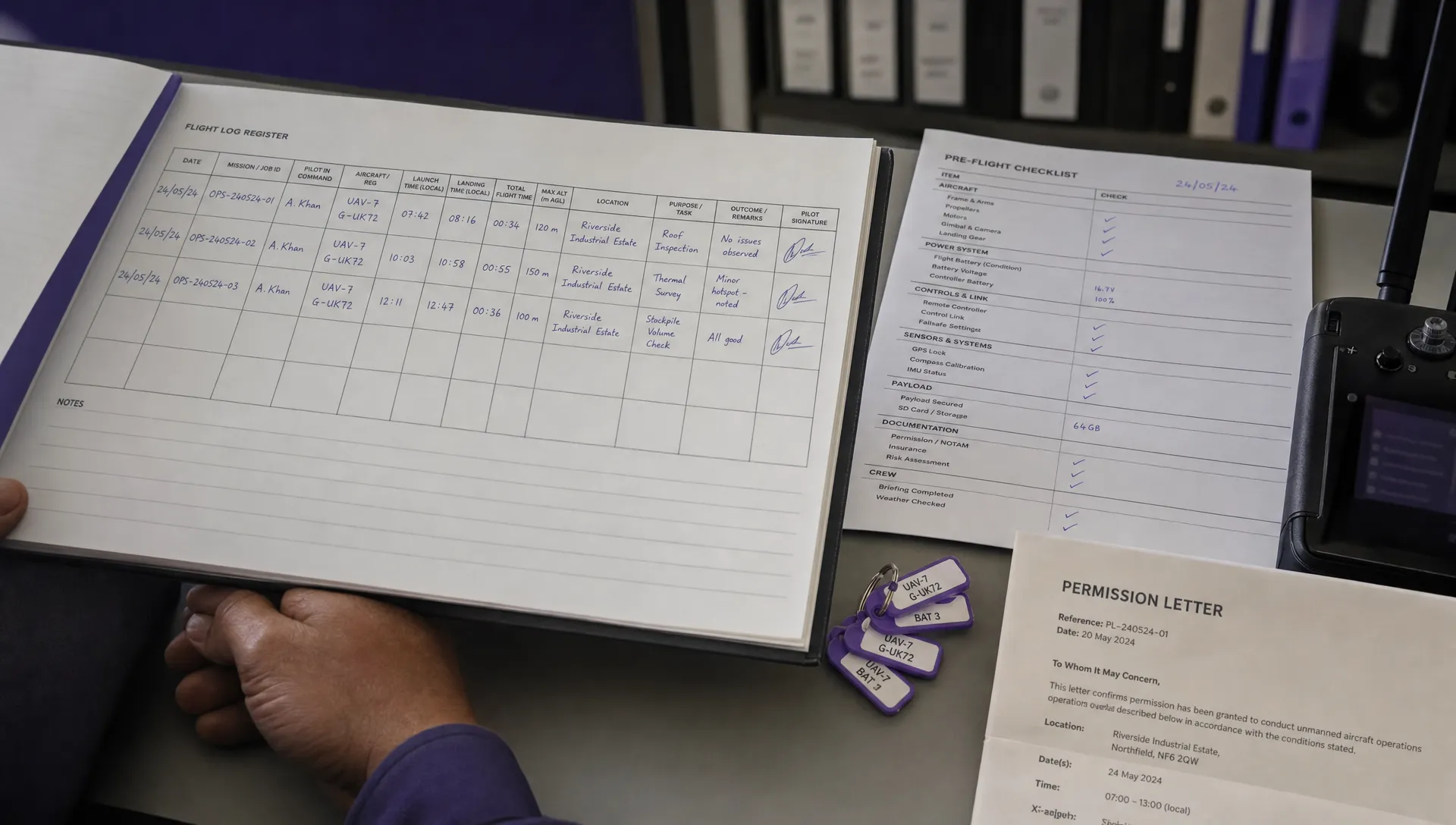 How to Build a Drone Pilot Flight Log That Is Audit Ready →
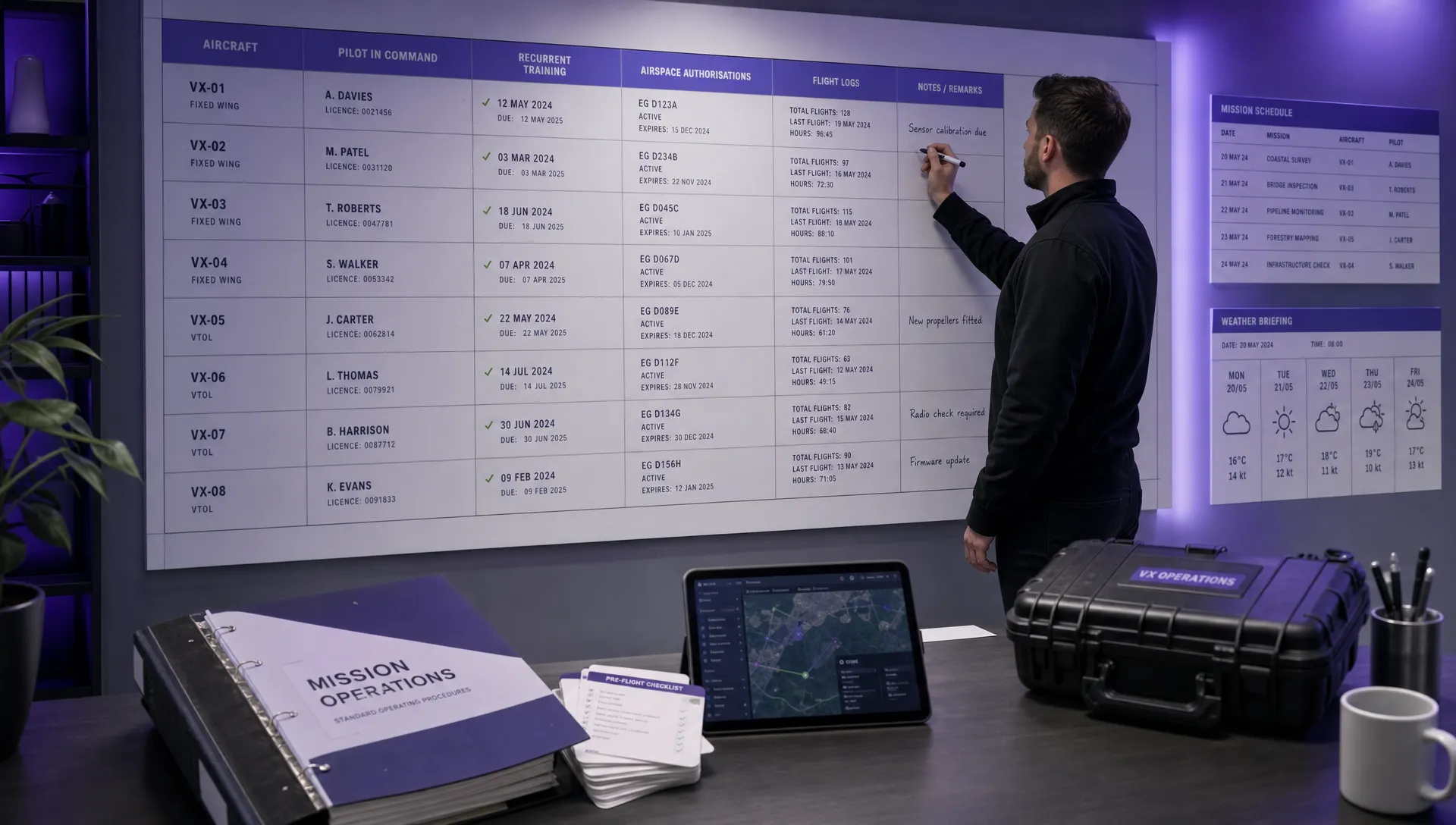 FAA Drone Licence Requirements for Commercial Pilots →
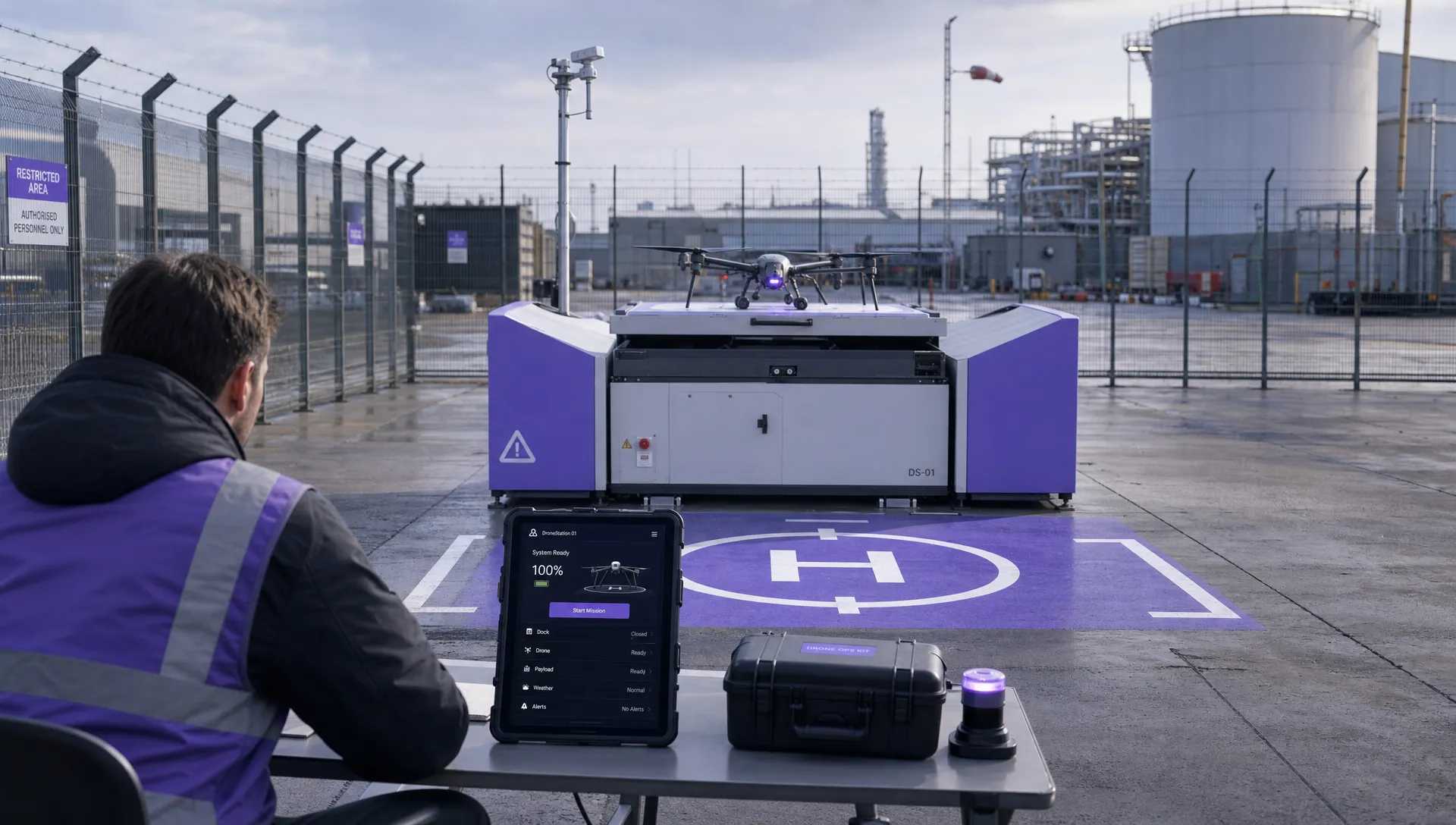 FAA BVLOS Waivers Granted: What Successful Cases Show →
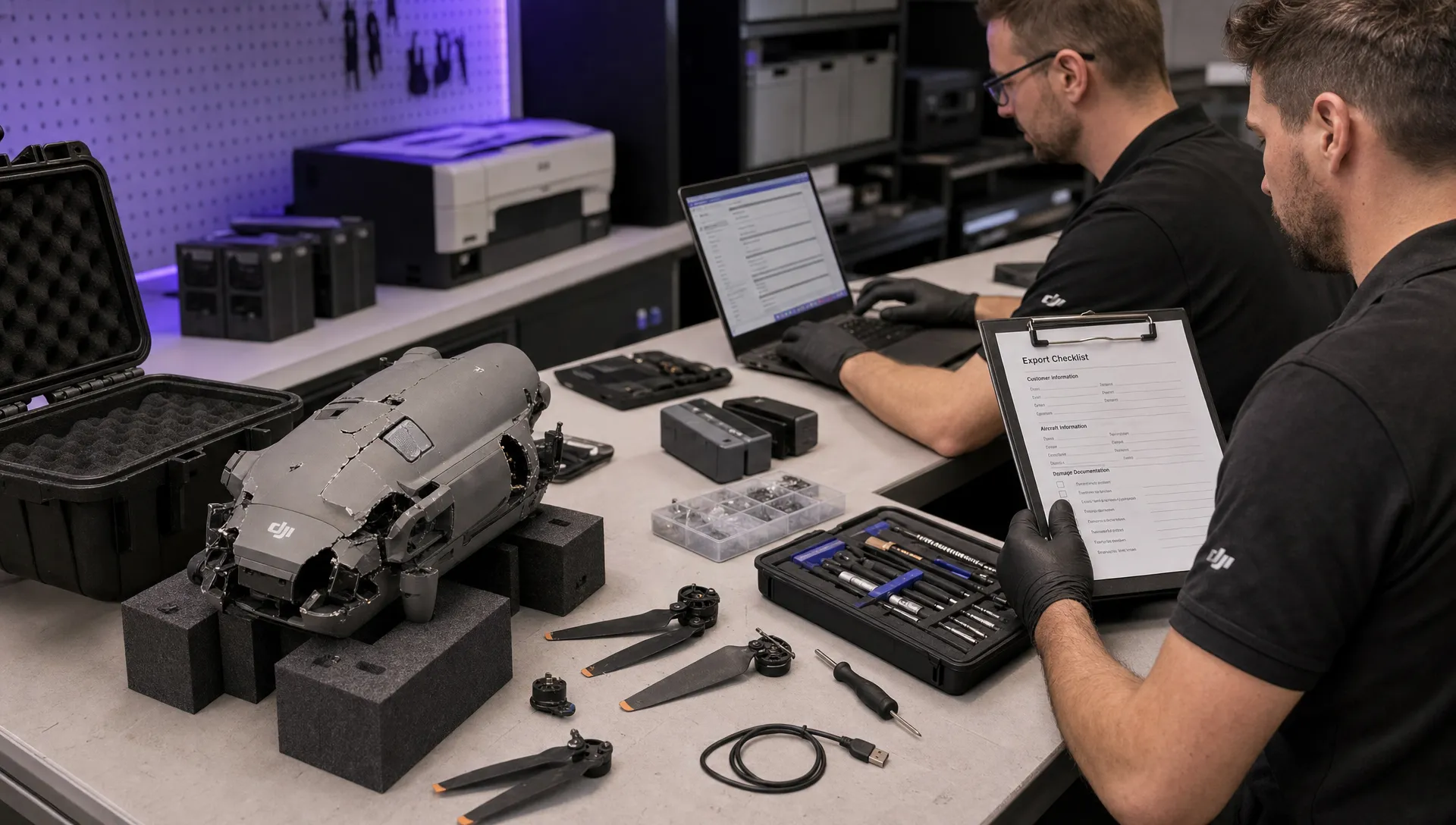 How to Export DJI Flight Logs for Incident Reviews →
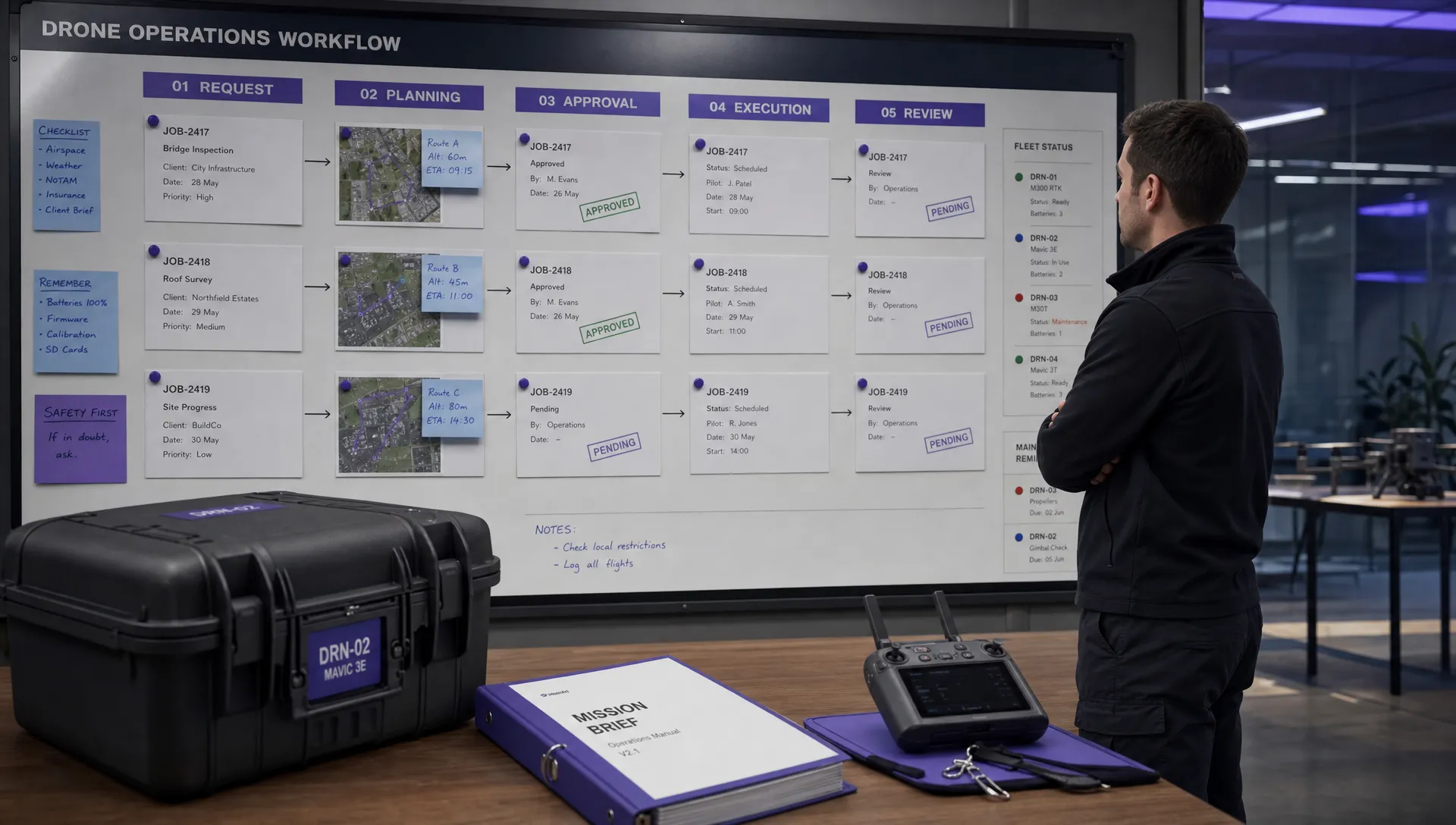 Drone Safety and Legal Duties for Business Operations →
 EASA Drone Regulations: Open, Specific and Certified Categories →
 What the BVLOS ARC Report Means for UAS Operators →
 Free Drone Pre-Flight Checklist for Commercial Missions →