
Drone VLOS Rules Explained for Commercial Teams
For commercial drone teams, visual line of sight sounds straightforward: keep the aircraft where the pilot can see it. In practice, it is one of the most important operational controls you will manage, especially on surveys, inspections, emergency response tasks and utility work where terrain, structures, screens and mission pressure all compete for attention.
Drone VLOS rules are not just a legal box to tick. They define whether the remote pilot can detect conflict, understand where the drone is in relation to people and obstacles, and intervene before a situation becomes unsafe. If your team treats VLOS as a planning constraint rather than a last-minute judgement call, you reduce the risk of aborted flights, regulatory breaches and weak audit trails.
This guide focuses on UK commercial operations, with notes for teams working across other jurisdictions. It is not legal advice, and you should always check the latest requirements from your aviation authority, your operational authorisation and your operations manual before flying.
What VLOS means in UK drone operations
In the UK, the Civil Aviation Authority expects drone pilots to keep the aircraft in direct, unaided visual contact unless they are operating under an approval that allows something else. The UK CAA Drone and Model Aircraft Code explains the core principle clearly: you must be able to see your drone and the surrounding airspace well enough to fly safely.
“Unaided” is the key word. Normal eyesight and prescription glasses or contact lenses are fine. Binoculars, a tablet screen, a controller display, a live camera feed or a thermal image do not replace visual line of sight. Those tools can support the task, but they do not, on their own, satisfy VLOS.
For commercial teams, a useful practical test is to ask whether the remote pilot can do three things at all times:
- See the drone directly, without relying on the camera feed or telemetry.
- Understand where it is in relation to aircraft, people, vehicles, structures and terrain.
- Take prompt action to avoid a conflict or recover from an abnormal situation.
If the pilot can only see a tiny dot but cannot judge its position, movement or nearby hazards, the operation is probably pushing beyond a safe VLOS envelope. The rule is about safety performance, not simply whether the aircraft is technically visible.
Commercial work does not create a separate VLOS category
A common misconception is that paid drone work automatically sits under a completely different set of visual line of sight rules. In the UK, the current regulatory framework is risk based. Whether a flight is commercial, public sector or recreational is less important than where and how it is flown.
Some commercial work can be carried out in the Open category if it meets the relevant requirements, including aircraft class, pilot competency, distance from uninvolved people, airspace restrictions, maximum height and VLOS. Many commercial jobs, however, fall into the Specific category because they involve higher-risk environments, controlled sites, congested areas, emergency scenes, industrial assets or requirements beyond the Open category.
The important point is this: your operational authorisation, client requirements, insurance conditions and internal procedures may be stricter than the baseline regulation. If your authorisation or operations manual sets a maximum distance, observer procedure, weather limit or crew requirement, your team must follow that stricter standard.
VLOS is not just a distance number
Commercial teams often ask, “How far can we fly under VLOS?” The safest answer is: only as far as the remote pilot can maintain effective unaided visual contact in the actual conditions of the flight.
Some UK permissions, standard scenarios or internal operating procedures may refer to defined distances for VLOS operations. You should follow any stated limit that applies to your operation. But a number on a page is not a guarantee. A drone may be easy to see at several hundred metres against a clear sky and difficult to see at a much shorter distance against trees, buildings, water glare or low sun.
| Factor | Why it changes the VLOS envelope |
|---|---|
| Aircraft size and colour | A larger or high-contrast drone is usually easier to track than a small grey aircraft against a mixed background. |
| Weather and visibility | Haze, rain, mist and low cloud can reduce the pilot’s ability to see both the drone and other airspace users. |
| Background | Trees, buildings, cliffs, pylons and dark water can make the drone disappear even when it is nearby. |
| Lighting | Low sun, glare, twilight and night operations all require extra controls and conservative limits. |
| Task loading | A pilot concentrating on mapping software, camera framing or client instructions may lose situational awareness. |
| Terrain and structures | Hills, embankments, towers, cranes and buildings can block line of sight suddenly. |
| Speed and direction | Faster flights and cross-track movements leave less time to identify conflicts and respond. |
For a commercial operation, the VLOS envelope should be defined during planning, briefed before take-off and reassessed during flight. If the conditions change, the envelope changes with them.
VLOS, observer-assisted VLOS, EVLOS, BVLOS and FPV
The terminology can be confusing, especially for teams that combine automated mapping, inspection payloads and live video feeds. These terms are not interchangeable.
| Term | What it means in practice | Key commercial planning point |
|---|---|---|
| VLOS | The remote pilot maintains direct unaided visual contact with the drone. | This is the baseline for most routine operations. |
| Observer-assisted VLOS | A visual observer helps monitor the drone or surrounding airspace. | The observer supports safety, but does not automatically create permission to fly beyond the pilot’s authorised limits. |
| FPV | The pilot flies using a first-person camera view, often through a screen or goggles. | A camera view is not unaided VLOS. Check the applicable rules and observer requirements before using FPV. |
| EVLOS | Extended visual line of sight, usually involving observers and specific procedures. | This normally requires appropriate authorisation and documented communications. |
| BVLOS | Beyond visual line of sight, where the remote pilot cannot maintain continuous unaided visual contact. | This requires a much more advanced approval basis, risk assessment and detect-and-avoid strategy. |
The EASA open category guidance and the UK CAA guidance both reinforce the same broad concept: VLOS is a direct visual safety control. In the United States, 14 CFR Part 107 also includes visual line of sight requirements unless a waiver or other approval applies. If your organisation operates internationally, do not assume that one country’s VLOS procedure transfers neatly to another.
Common VLOS pressure points for commercial teams
Automated mapping missions
Photogrammetry and mapping flights can create a false sense of security because the aircraft follows a planned grid. The danger is that the pilot spends too much time monitoring the tablet and too little time scanning the aircraft and airspace.
A better approach is to design smaller survey blocks, position the take-off point so the entire grid remains visible, assign a visual observer where appropriate and set clear pause or return-to-home triggers. The automation may fly the line, but the pilot still owns the visual line of sight responsibility.
Infrastructure inspections
Structures create some of the hardest VLOS decisions. A wind turbine tower, bridge, pylon, building corner or flare stack can block the drone from view for only a second, but that second still matters. If the aircraft passes behind a structure and the pilot no longer has direct visual contact, the operation has moved outside normal VLOS.
Plan the inspection from positions that preserve sight lines. Use multiple set-up points if necessary. Build in standoff distances, avoid flying behind the asset and brief a simple instruction: if sight is lost, stop the task and recover safely under the pre-planned procedure.
Utility corridors and linear assets
Powerlines, pipelines, rail corridors and road networks tempt teams to “just keep going” along the asset. That is where VLOS discipline is essential. A linear task is usually better managed as a sequence of VLOS cells, with the crew repositioning between sections.
If your concept depends on observers, handovers or extended range, confirm whether you are still operating under VLOS or whether you need EVLOS or BVLOS approval. Do not let the shape of the asset define the legal and safe limits of the flight.
Emergency services and time-critical missions
Emergency response can add urgency, noise, crowd movement, vehicles, helicopters and rapidly changing priorities. These pressures make VLOS planning more important, not less. Incident command should know who is flying, who is observing, what the drone’s operating area is and what action stops the flight immediately.
Where emergency services have specific exemptions, authorisations or operating procedures, crews should apply those procedures exactly. For mixed-agency operations, brief airspace deconfliction and visual responsibilities before launch whenever the situation allows.
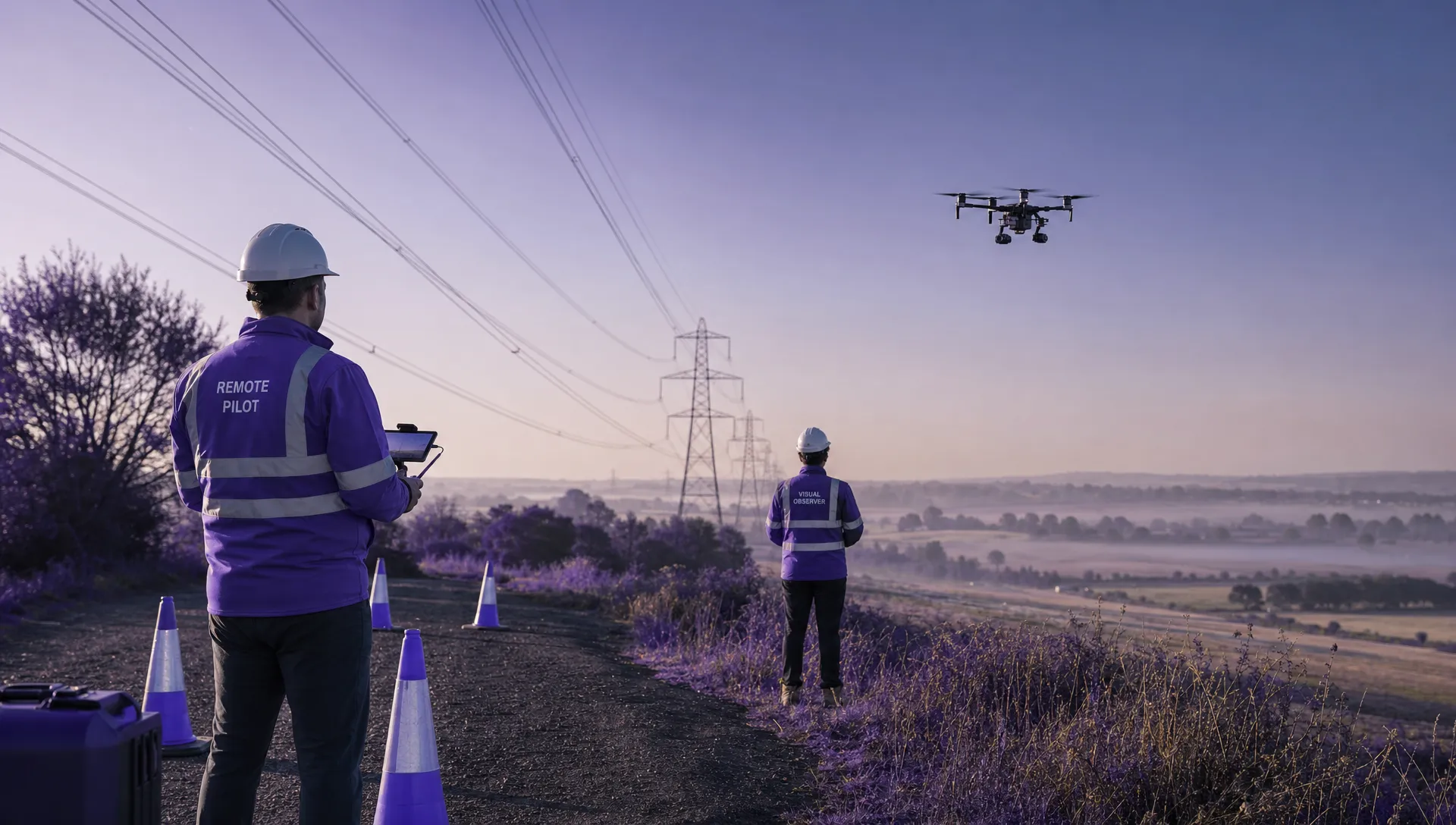
How to plan a compliant VLOS operation
Good VLOS compliance starts before the aircraft is powered on. It should be visible in the job plan, the risk assessment, the crew briefing and the flight log.
- Define the VLOS envelope: Decide the maximum practical operating area for the actual drone, site, lighting, background and crew. Do not rely only on theoretical range.
- Choose take-off and pilot positions carefully: The best launch point is often the one that gives the safest sight line, not the one closest to the client’s requested start point.
- Set weather and lighting limits: Include visibility, cloud base, wind, precipitation, glare, twilight and night lighting considerations.
- Assign crew roles: State who is remote pilot, who is visual observer, who liaises with the client and who can call a stop.
- Brief lost-sight actions: The crew should know exactly what happens if the pilot loses sight, if the observer loses sight or if a manned aircraft is detected.
- Document the risk controls: Capture site hazards, operating boundaries, emergency procedures, airspace checks and proximity risks.
- Review after flight: Log deviations, near misses, client pressure, visibility issues and any adjustments needed for repeat work.
For the risk assessment element, it is worth using a structure that is specific enough to guide decisions in the field. Dronedesk has a practical guide on building a drone flight risk assessment that works, which is especially relevant where VLOS is affected by people, assets, terrain or changing conditions.
For teams managing multiple jobs, aircraft and pilots, VLOS controls are easier to apply consistently when planning and evidence are kept in the same workflow. Dronedesk’s published feature set includes client management, fleet management, team management, airspace intelligence, proximity intelligence, flight planning, flight logging, data reporting, configurable checklists and risk assessments. You can review those capabilities on the Dronedesk drone operations management features page.
A practical VLOS checklist for team briefings
Use this as a starting point and adapt it to your authorisation, aircraft, operating manual and client environment.
| Phase | VLOS control | Evidence to keep |
|---|---|---|
| Job acceptance | Confirm whether the task can be completed under VLOS or needs EVLOS, BVLOS or a different permission. | Initial operating concept and category decision. |
| Site planning | Identify terrain, structures, public access, airspace, take-off points and sight-line limitations. | Site plan, airspace check and risk assessment. |
| Crew briefing | Assign pilot, observer and client liaison roles, plus clear stop-work authority. | Briefing record or checklist completion. |
| Pre-flight | Reassess visibility, lighting, weather and background contrast. | Weather record and go/no-go decision. |
| In-flight | Maintain direct visual contact, scan for other aircraft and avoid task fixation on screens. | Flight log and notes on any changes. |
| Lost sight | Execute the pre-briefed action immediately. Do not continue the task while trying to reacquire casually. | Incident or deviation note if relevant. |
| Post-flight | Record lessons for future missions at similar sites. | Flight report, maintenance notes and team feedback. |
Mistakes that put VLOS compliance at risk
Most VLOS problems are predictable. They happen when a team treats the rule as obvious and therefore does not brief it properly.
Common mistakes include:
- Treating telemetry or a map icon as a substitute for seeing the drone.
- Flying an automated route that passes behind trees, buildings or terrain.
- Assigning a visual observer without defining what they must watch and how they communicate.
- Continuing a flight after glare, rain or low light has reduced visual contact.
- Assuming a clear day allows the same VLOS distance for every aircraft and background.
- Forgetting that an operational authorisation or client method statement may be stricter than the general rule.
The fix is not complicated, but it does require discipline. Plan shorter legs, use better pilot positions, reposition more often, pause when workload increases and empower any crew member to call a stop if visual contact becomes doubtful.
Why VLOS evidence matters to clients and auditors
Commercial drone teams are often judged not only by the data they deliver, but by the quality of their operating records. If there is an incident, complaint, insurance query or client audit, you may need to show that the flight was planned and executed within safe limits.
Strong records help demonstrate that the team considered VLOS before take-off, rather than improvising in the field. Useful evidence can include the flight plan, airspace review, site risk assessment, crew briefing, weather assessment, observer assignment, flight log and post-flight notes.
This is particularly important for survey companies and utility operators working across repeat sites. If one location consistently causes VLOS issues because of terrain, access constraints or asset geometry, that should inform the next method statement and operating concept.
Frequently Asked Questions
What are the basic drone VLOS rules in the UK? The remote pilot must keep the drone in direct, unaided visual contact and be able to monitor its position relative to airspace users, people, obstacles and terrain. You must also follow the wider rules that apply to your aircraft, operating category, location and authorisation.
Is there a fixed maximum distance for VLOS? Not as a universal answer for every operation. Some permissions, standard scenarios or internal procedures may set defined limits, and you must follow them. In practice, your safe VLOS distance depends on aircraft size, visibility, lighting, background, terrain and pilot workload.
Can a visual observer extend my VLOS range? A visual observer can help monitor the drone and surrounding airspace, but using observers to extend operating range may move the operation into EVLOS or another approval basis. Check your authorisation and procedures before designing a mission around observer handovers.
Can I fly VLOS using only the camera feed? No. A camera feed, map display or telemetry readout does not replace direct unaided visual contact for a normal VLOS operation. These tools can support the mission, but the pilot must still meet the visual line of sight requirement.
Do VLOS rules apply to automated drone flights? Yes. Automation does not remove the remote pilot’s responsibility. If the drone is flying a mapping grid, inspection route or waypoint mission, it still needs to remain within the applicable VLOS limits unless you have an approval that permits otherwise.
What should I do if I lose sight of the drone? Follow the lost-sight procedure briefed before take-off. That may involve stopping, climbing or descending if safe and authorised, returning to home, moving to a safer position or landing. The key is not to continue the task while hoping visual contact improves.
Make VLOS easier to manage across your operation
VLOS compliance becomes much easier when it is built into the way your team plans, briefs, flies and records every job. For commercial operators, the goal is not just to keep the drone visible. It is to prove that every flight was planned around safe sight lines, clear responsibilities and realistic operating limits.
If your team is moving beyond spreadsheets, shared folders and manual job packs, Dronedesk brings core drone operations management tasks into a single web platform, including planning, checklists, risk assessments, logging and reporting. That gives commercial teams a cleaner way to manage VLOS controls alongside the rest of the evidence needed for safe, compliant drone operations.
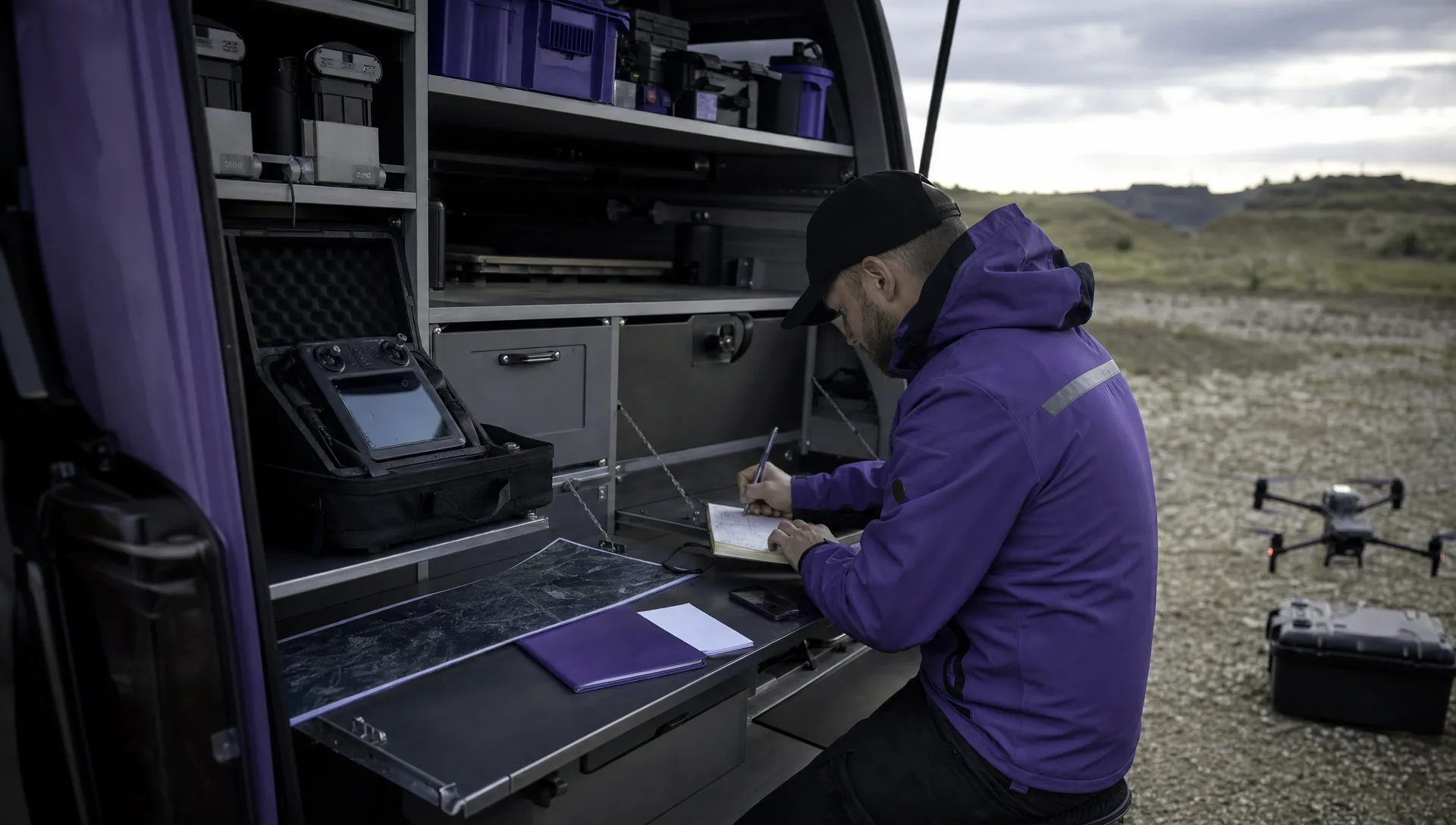 How to Evaluate a Free Drone Logbook Before Using It →
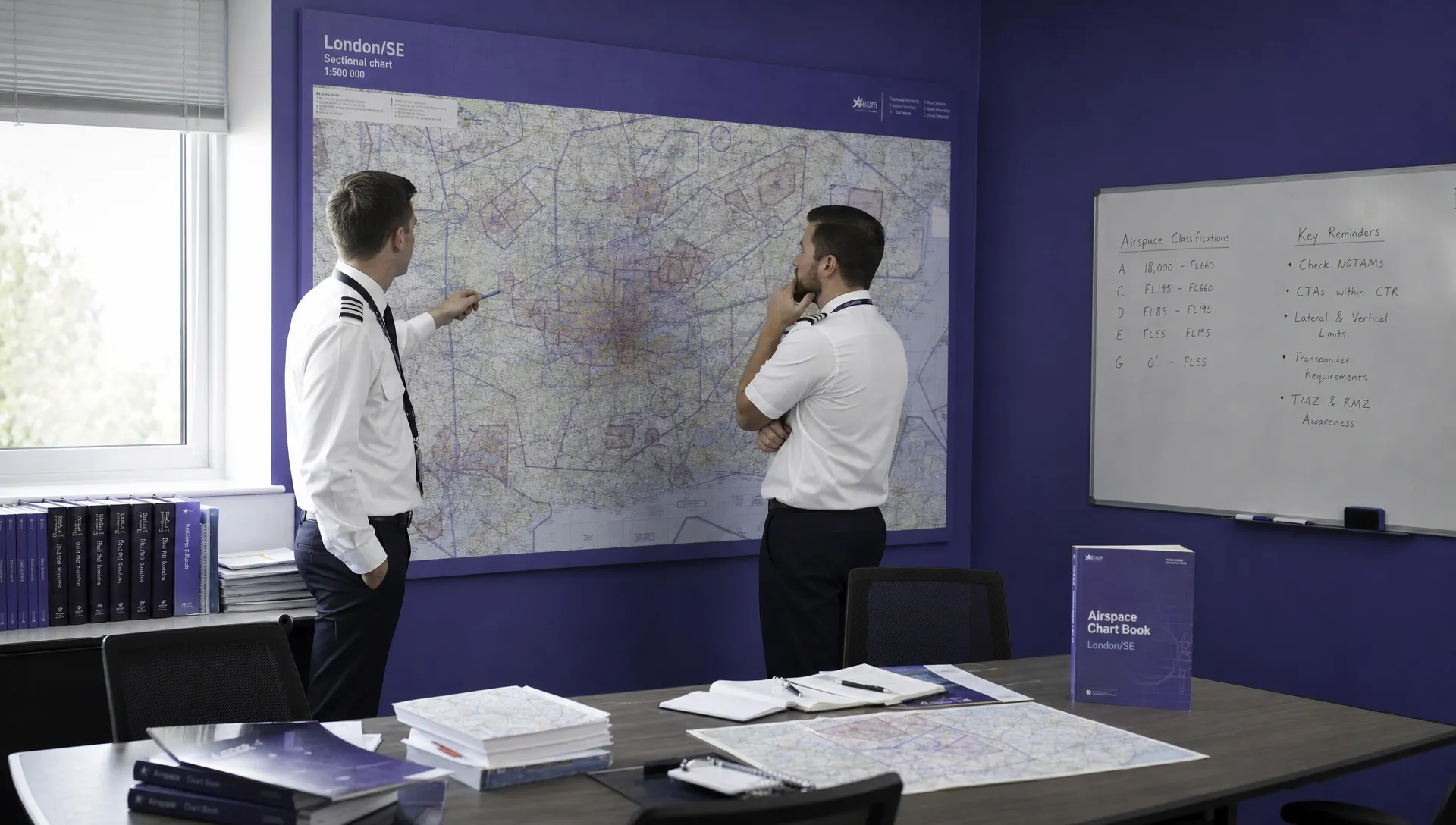 FAA Part 107 Test: How to Master Airspace Questions →
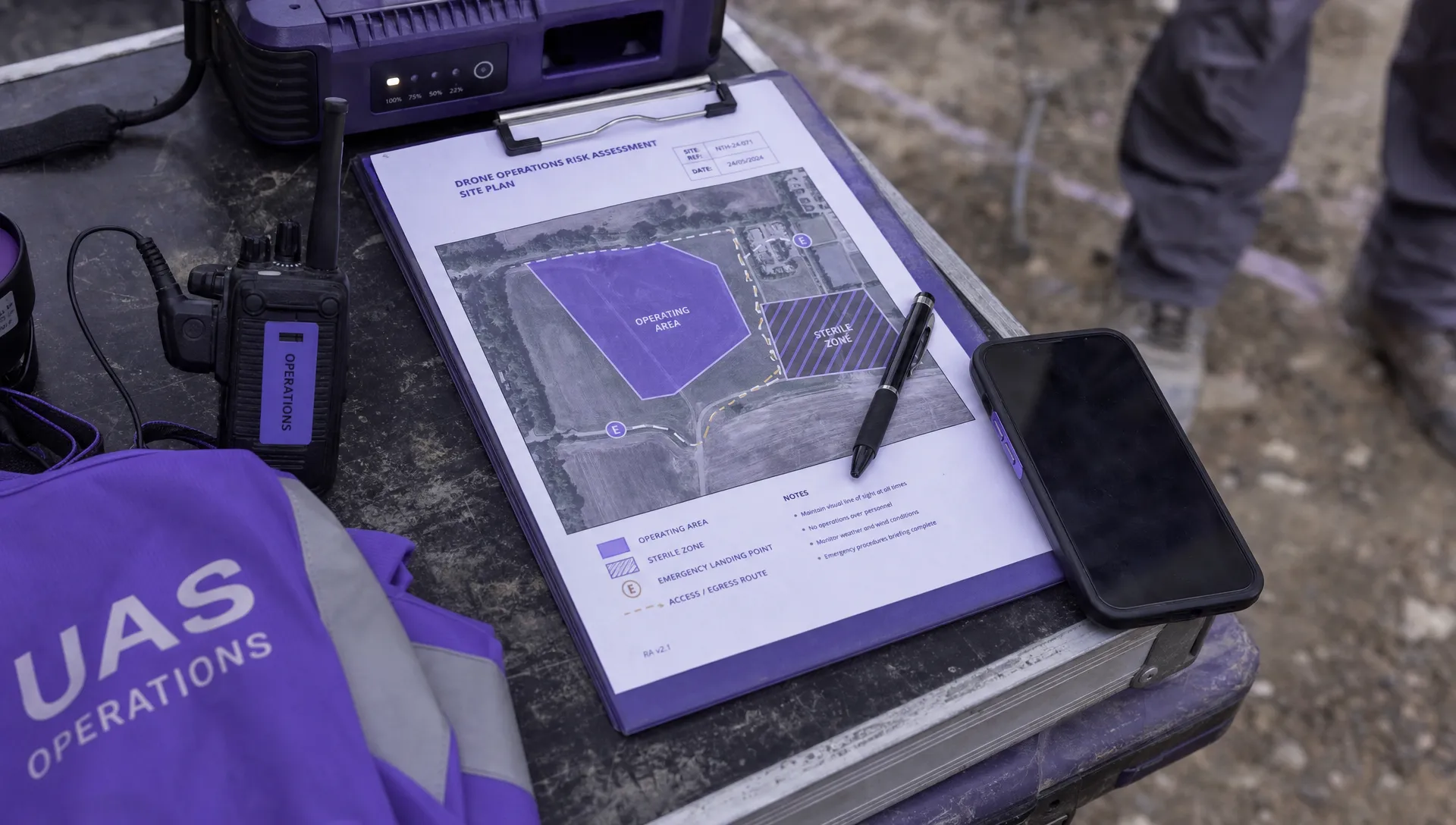 Drone Risk Assessment Controls That Work in the Field →
 FAA Drone License Costs Beyond the Knowledge Test →
 Drone Part 107 Operations: When a Waiver May Be Needed →
 Drone Operating Rules for Managing Contractors and Employees →
 BVLOS Drone Requirements for Building a Safety Case →
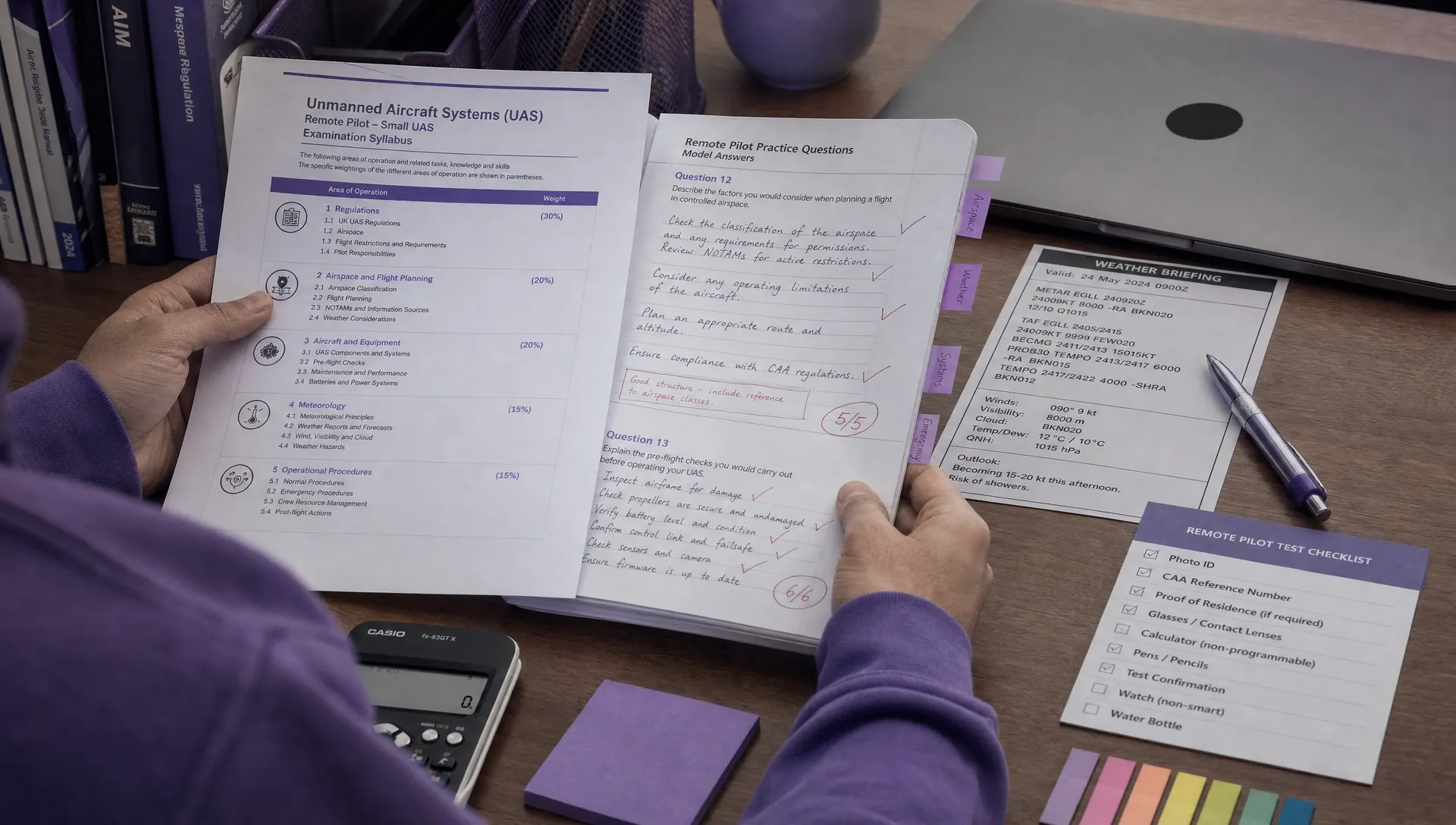 Drone Pilot Test Mistakes That Cost Candidates Marks →
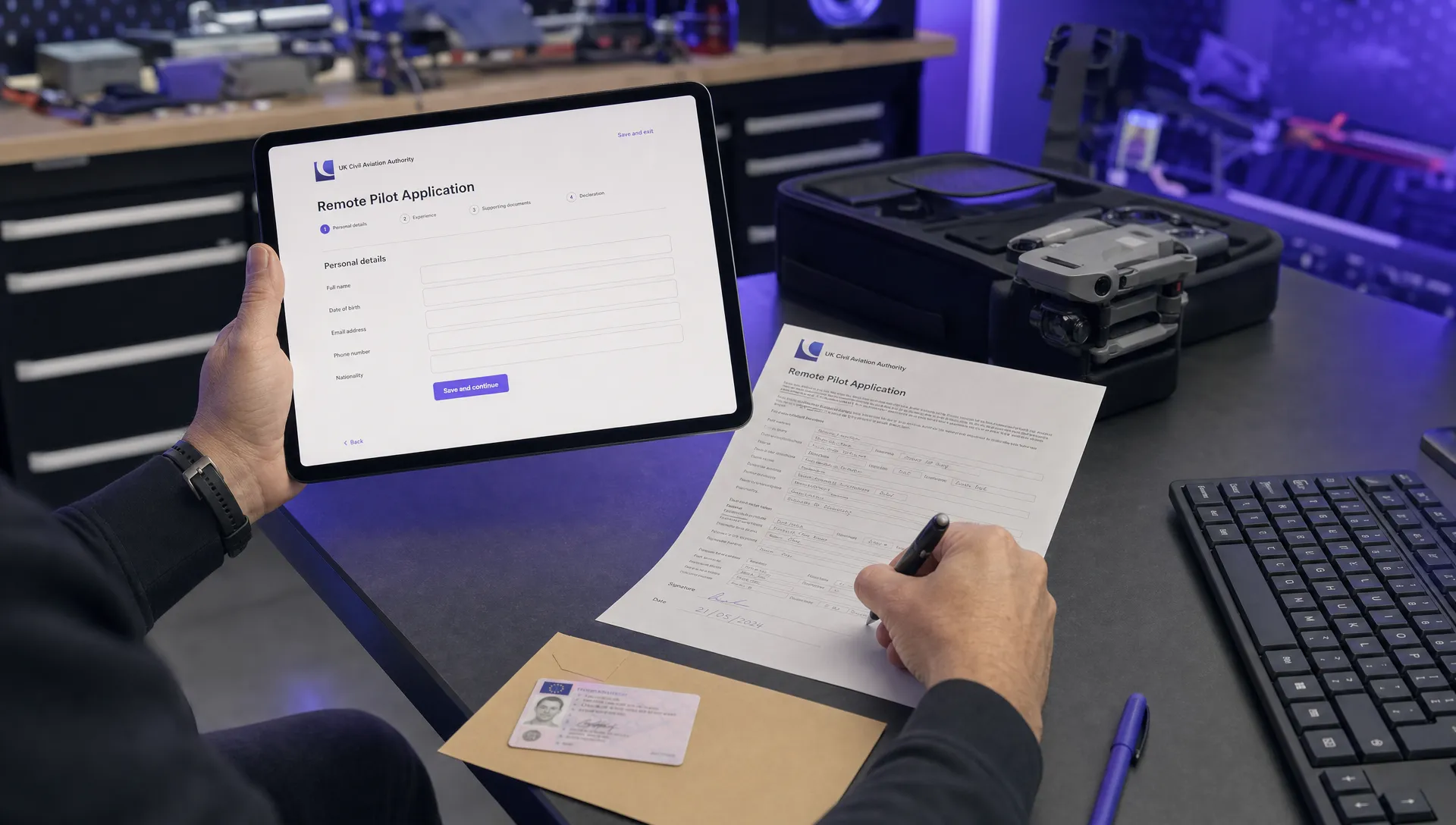 FAA 107 License vs Part 107 Certificate: What’s the Difference? →
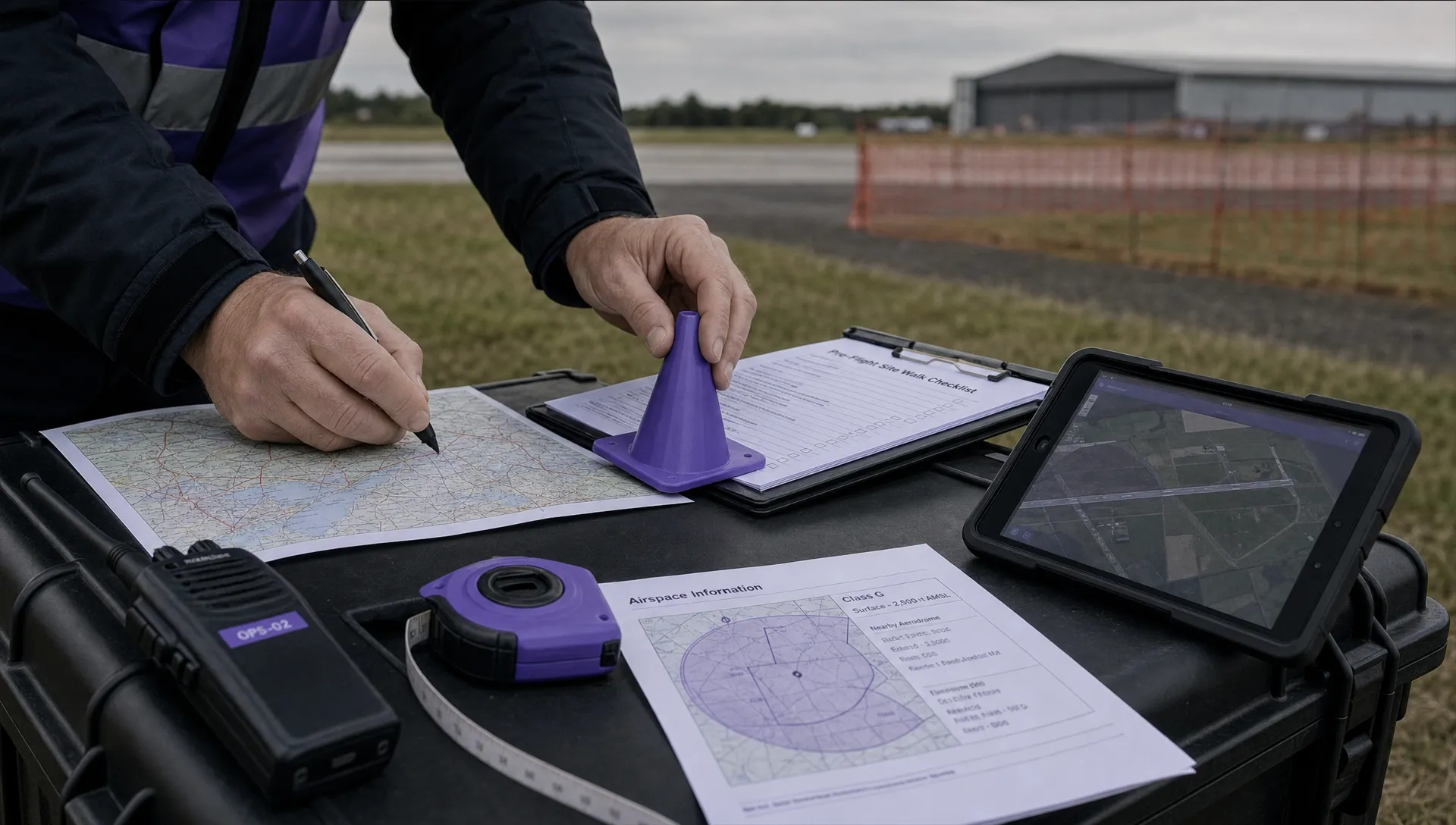 Drone Airport Rules: A Field Checklist for Site Assessments →