
Drone Registration Law Explained for Commercial Pilots
For commercial pilots, drone registration law is not just an admin hurdle. It is the legal foundation that identifies who is responsible for the aircraft, who is competent to fly it, and whether a job can be carried out under the rules that apply to that flight.
In the UK, the key point is this: there is no separate “commercial drone registration” category for most operators. Commercial and recreational pilots use the same core registration framework, but commercial work usually brings higher expectations around planning, insurance, record keeping, client assurance and operational control.
This guide explains how UK drone registration law works for commercial pilots, what must be registered, what is often misunderstood, and how to build a practical compliance workflow for survey, utilities, public safety and inspection operations.
This article is general guidance, not legal advice. Always check the latest Civil Aviation Authority guidance before operating, especially if your work is complex, close to people, near infrastructure, or outside standard Open category limits.
What drone registration law actually covers
Drone registration law answers two basic questions: who is responsible for the drone, and who is allowed to fly it.
In the UK, the Civil Aviation Authority (CAA) runs the official drone and model aircraft registration service. The two most important registration concepts are the Operator ID and the Flyer ID. They sound similar, but they are not interchangeable.
| Requirement | What it means | Typical commercial relevance |
|---|---|---|
| Operator ID | Identifies the person or organisation responsible for the drone | Usually held by the business, public body, or sole trader responsible for the aircraft |
| Flyer ID | Shows that the individual pilot has passed the required basic flying test | Needed by pilots flying drones where the Flyer ID requirement applies |
| Operational Authorisation | CAA permission for certain higher-risk operations in the Specific category | Needed when the job cannot be flown within Open category limits |
| Insurance | Commercial operators normally need appropriate aviation insurance | Important for legal compliance, contracts and client assurance |
The CAA registration service is the authoritative place to register, renew and check current requirements. The CAA’s Drone and Model Aircraft Code is also essential reading because registration does not remove the need to comply with airspace, height, distance and safety rules.
UK drone registration law for commercial pilots
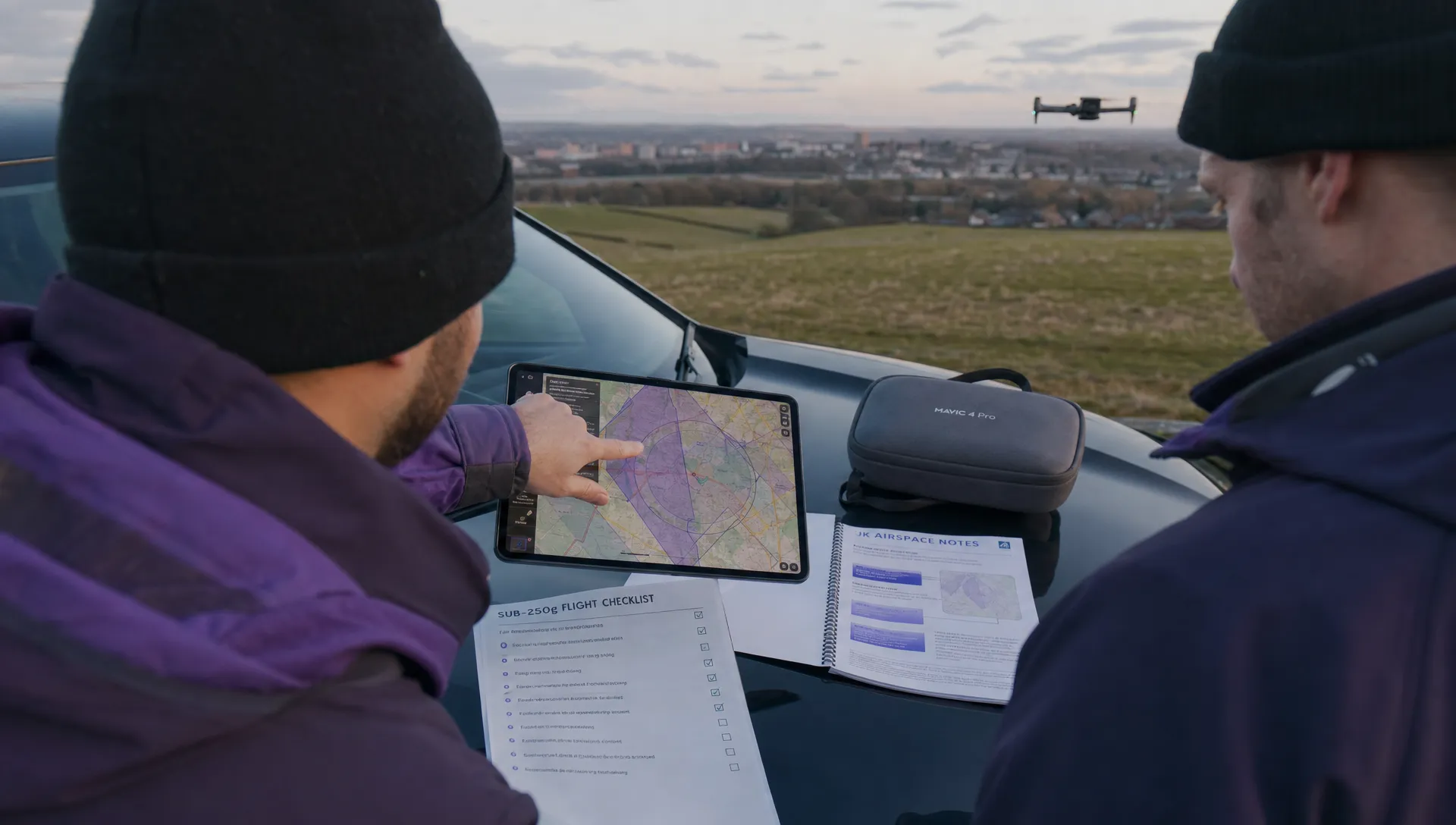
Most commercial drone operators in the UK will need an Operator ID. This applies where the drone weighs 250g or more, and also where a drone under 250g has a camera or other sensor able to capture personal data, unless it qualifies as a toy.
For commercial work, that means the small-drone exemption is narrower than many pilots assume. A sub-250g aircraft used for roof surveys, estate imagery, media work or inspection will usually have a camera, so the operator is likely to need an Operator ID.
A Flyer ID is linked to the individual pilot, not the company. It is generally required when flying drones of 250g or more. The test is designed to confirm that the pilot understands the basic legal and safety rules. Even where a Flyer ID is not strictly required for a very light aircraft, many commercial organisations still treat it as a sensible baseline for internal governance.
Operator ID versus Flyer ID
The Operator ID belongs to whoever is responsible for the drone. For a limited company, local authority, police unit, utility company or survey business, that will often be the organisation. For a sole trader, it may be the individual business owner.
The Flyer ID belongs to the person at the controls. If a company has five pilots flying the same aircraft, the organisation may use one Operator ID for the aircraft, but each pilot who needs a Flyer ID must hold their own.
This distinction matters when you label drones, onboard subcontractors, lend aircraft between departments, or use a mixed fleet. A pilot’s personal Flyer ID does not make them the legal operator of every aircraft they fly.
Displaying and renewing your Operator ID
The Operator ID must be displayed on the drone in line with CAA rules. In practice, operators should make sure the label is durable, legible and placed where it can be checked without dismantling the aircraft.
The Operator ID is not a one-off task. It must be renewed periodically, and the renewal cycle is different from the Flyer ID cycle. As a commercial operator, you should treat renewal dates as compliance-critical, especially if you manage multiple aircraft, pilots or locations.
A missed renewal might look like a small admin error, but it can create problems during audits, client pre-qualification, incident review, or insurer checks.
Registration is not the same as permission to do the job
One of the most common misunderstandings in drone registration law is assuming that once the aircraft is registered, the job is automatically legal. It is not.
Registration identifies the operator and, where relevant, confirms basic pilot knowledge. It does not by itself give permission to fly near uninvolved people, operate in restricted airspace, fly beyond visual line of sight, exceed height limits, or conduct higher-risk work.
In the UK, drone operations generally fall into three broad regulatory categories:
| Category | What it covers | Commercial pilot takeaway |
|---|---|---|
| Open | Lower-risk flights within defined limits | Many commercial jobs can be flown here if all limits are met |
| Specific | Operations that present greater risk or fall outside Open limits | Usually requires a CAA Operational Authorisation or other accepted route |
| Certified | Highest-risk operations, closer to crewed aviation standards | Rare for most routine commercial drone work |
For example, a straightforward land survey in a rural area may be possible in the Open category if all conditions are met. A complex inspection near people, critical infrastructure or controlled airspace may need additional planning, permissions or authorisation.
This is where pre-flight risk assessment becomes central. If you are unsure whether a task sits comfortably within the Open category, build a structured assessment before committing to the job. Dronedesk’s guide on building a drone flight risk assessment that works is a useful companion to the registration process because it focuses on turning legal requirements into practical operational decisions.
What commercial operators should keep on record
Registration compliance is easier to prove when your records are organised before anyone asks for them. For a single pilot, this may be simple. For a survey company, utility team or emergency services unit, it can quickly become difficult if records are spread across inboxes, spreadsheets and paper forms.
A commercial drone operator should be able to show which aircraft were active, who flew them, what registration and competency documents applied, what planning took place, and what happened during the flight.
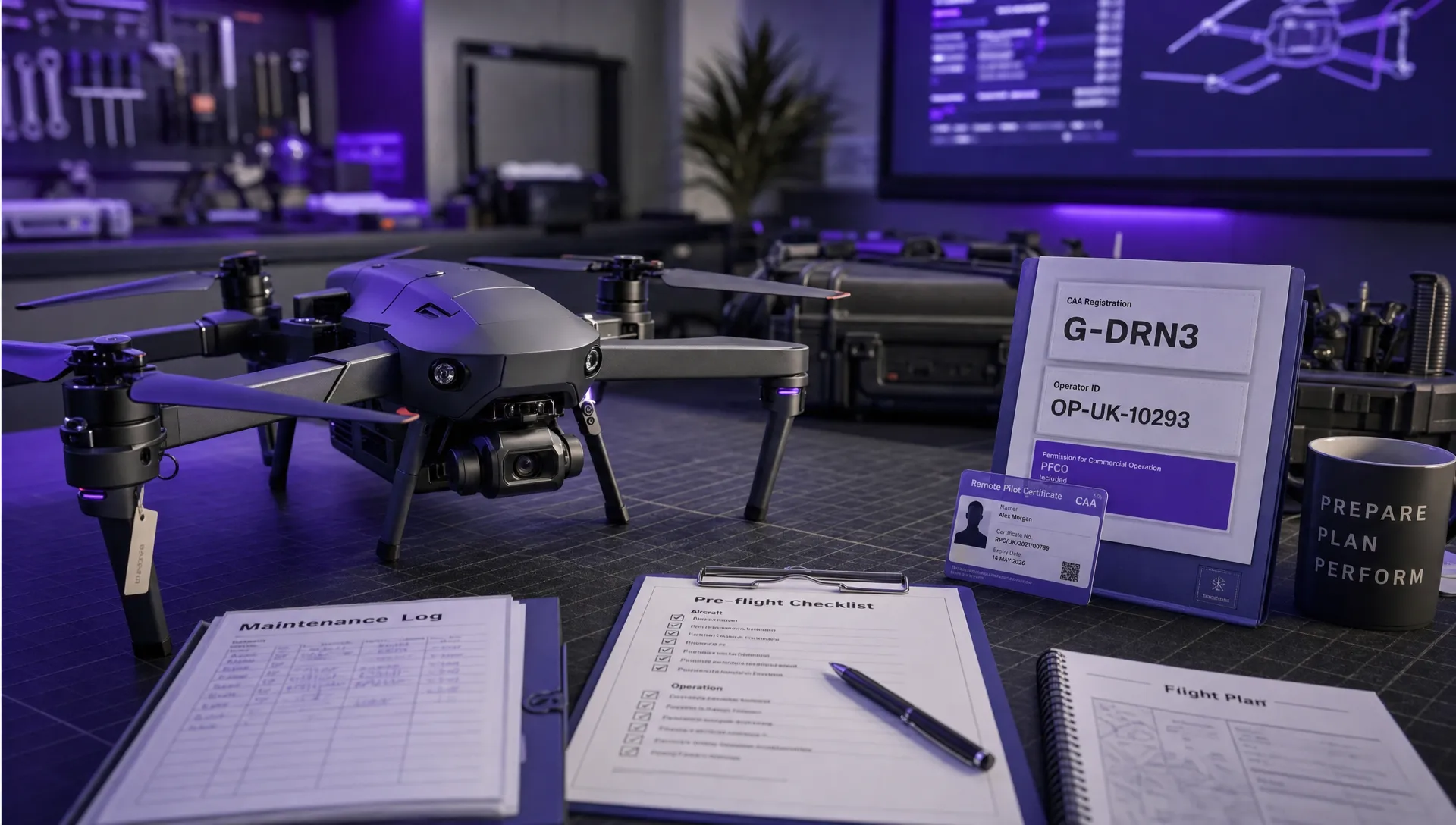
| Record type | Why it matters | Good practice |
|---|---|---|
| Operator ID | Shows who is responsible for the aircraft | Track renewal dates and ensure the correct ID is displayed on each drone |
| Flyer IDs | Shows individual pilot competency where required | Keep a current register for employed pilots and contractors |
| Aircraft inventory | Links each drone to its serial number, status and operator | Update records when drones are bought, sold, retired or repaired |
| Insurance documents | Supports commercial and contractual compliance | Store policy details and renewal reminders centrally |
| Operational Authorisations | Proves permission for Specific category work | Keep current versions accessible to pilots and managers |
| Flight plans and logs | Demonstrates how jobs were planned and completed | Record location, airspace checks, crew, weather, timings and outcomes |
| Risk assessments | Shows that hazards were considered before flight | Use consistent templates and update them for site-specific risks |
For growing operations, fleet control becomes part of registration compliance. If you are managing several aircraft across teams, the aircraft register should connect to maintenance status, pilot allocation, flight logs and authorisations. The Dronedesk drone fleet management guide goes deeper into how operators can structure that process as their fleet expands.
How drone registration law affects different commercial teams
The legal framework is the same, but the operational impact varies by sector.
A solo commercial pilot may only need to keep track of one Operator ID, one Flyer ID, one aircraft and a small number of authorisations. The risk is usually forgetting renewal dates, failing to label a replacement drone, or assuming a client site is safe because a similar job was completed elsewhere.
A survey company may have multiple pilots, aircraft types, payloads and repeat client sites. Here, the challenge is consistency. Every job needs the right pilot, the right aircraft, the right permissions and the right site-specific assessment.
A utility company may operate near substations, lines, pipelines, reservoirs, roads or other sensitive infrastructure. Registration is only the starting point. Airspace checks, proximity risks, landowner permissions, emergency procedures and stakeholder coordination often carry equal weight.
Emergency services teams face a different problem: speed. They may need to deploy quickly, but they still need governance. Registration, pilot competency, aircraft readiness and flight logging must be clear enough to withstand internal review, public scrutiny and inter-agency working.
Working across borders: UK, EU and US differences
Commercial pilots who travel for work should never assume that UK registration follows them abroad. Drone registration law is jurisdiction-specific. Your UK Operator ID may be important for UK operations, but it does not automatically satisfy EU or US requirements.
| Region | Registration principle | Commercial note |
|---|---|---|
| UK | Register through the CAA where Operator ID and Flyer ID rules apply | Commercial work can be Open or Specific category depending on risk and limits |
| EU | Register as a UAS operator with the relevant national aviation authority where required under EASA rules | Competency, category and remote identification requirements may differ from the UK |
| US | Register drones with the FAA for operations under Part 107 requirements | Part 107 certification, Remote ID and airspace approvals may also apply |
The European Union Aviation Safety Agency publishes EU-level drone guidance, while the FAA drone registration page is the starting point for US registration. Local implementation can still vary, so check the rules for the country where the aircraft will actually fly.
This is especially important for media teams, infrastructure inspection firms and emergency response specialists who may be asked to operate at short notice outside their home jurisdiction.
Common registration mistakes that create compliance risk
Some registration problems are obvious, such as not registering at all. Others are more subtle and often appear when an operation grows.
| Mistake | Why it causes problems | How to avoid it |
|---|---|---|
| Using a pilot’s personal Operator ID for company drones | Responsibility becomes unclear if the pilot leaves or the aircraft is used by others | Decide who the operator is and register accordingly |
| Letting Operator IDs expire | Flights may be non-compliant even if pilots are trained | Track renewal dates as operational deadlines |
| Labelling aircraft incorrectly | The displayed ID may not match the responsible operator | Check labels during fleet audits and after repairs |
| Confusing Flyer ID with operational permission | A basic test does not authorise higher-risk work | Assess each job against Open, Specific or Certified category rules |
| Forgetting subcontractor checks | Contractor competency and documentation may be assumed rather than verified | Collect and verify documents before assigning work |
| Not updating fleet records | Sold, damaged or replaced drones may remain on old records | Review the fleet register regularly |
These mistakes are rarely caused by a lack of professionalism. More often, they happen because the admin process has not kept pace with the operation.
A practical pre-job registration compliance workflow
A simple workflow helps pilots and operations managers catch issues before they become legal, safety or client problems.
- Confirm the operator: Identify the person or organisation legally responsible for the aircraft being used.
- Check the aircraft record: Confirm the drone’s serial number, Operator ID label, maintenance status and insurance position.
- Verify the pilot: Check that the pilot has the required Flyer ID, training, internal approvals and role-specific competence.
- Classify the operation: Decide whether the job can be completed in the Open category or needs Specific category authorisation.
- Complete planning and risk assessment: Check airspace, site hazards, proximity risks, weather, emergency procedures and client requirements.
- Log the flight: Record what happened, who flew, what aircraft was used, and any incidents, defects or changes.
This workflow is deliberately simple. The aim is not to create paperwork for its own sake. The aim is to make compliance repeatable, especially when commercial pressure, bad weather, client deadlines or urgent deployments make shortcuts tempting.
Where Dronedesk fits into registration-led compliance
Dronedesk is built for drone operations management and flight planning. Its features include client management, fleet management, team management, airspace intelligence, proximity intelligence, flight planning, flight logging, data reporting, configurable checklists and risk assessments, as outlined on the Dronedesk features page.
For commercial pilots, that matters because registration is only one part of a compliant operation. You also need to connect people, aircraft, jobs, risks, permissions and records. A central operations platform can help make those links clearer, particularly for teams managing multiple pilots, repeat sites or complex client requirements.
The goal is straightforward: when a job is planned, the operator should be able to see whether the right aircraft, pilot, registration evidence, risk controls and records are in place before the drone leaves the ground.
Frequently Asked Questions
Do commercial drones need special registration in the UK? Not usually. UK registration rules are based mainly on the aircraft, operator and pilot requirements, not simply whether the flight is commercial. However, commercial work may require insurance, stronger record keeping and, in some cases, CAA Operational Authorisation.
Is an Operator ID the same as a Flyer ID? No. The Operator ID identifies the person or organisation responsible for the drone. The Flyer ID belongs to the individual pilot and shows they have passed the relevant basic test where required.
Does a sub-250g commercial drone need to be registered? Often, yes. If the drone has a camera or sensor capable of capturing personal data and is not a toy, the operator is likely to need an Operator ID, even if the drone is under 250g.
Can I fly commercially in the Open category? Yes, commercial flights can be carried out in the Open category if the operation stays within all Open category limits. If the job exceeds those limits, you may need to operate in the Specific category with appropriate authorisation.
How often should I check registration documents? Check them before each job as part of your planning workflow, and run scheduled audits for renewals, aircraft labels, pilot documents and insurance. Operator ID and Flyer ID validity periods differ, so do not rely on memory.
Do emergency services have different drone registration rules? Emergency services still need strong governance around registration, competency, aircraft readiness and flight logging. Specific permissions, exemptions or operating procedures may apply depending on the organisation and mission, so internal policy and current CAA guidance should be followed.
Keep registration connected to the rest of your operation
Drone registration law is the starting point, not the whole compliance picture. For commercial pilots, the real test is whether registration, pilot competence, aircraft status, permissions, risk assessments and flight records all line up for the job in front of you.
If you manage drone operations for surveys, utilities, emergency services or commercial inspection work, Dronedesk gives you a structured place to manage the operational details around each flight. Explore Dronedesk to see how it supports safer, better organised drone operations from planning through to logging.
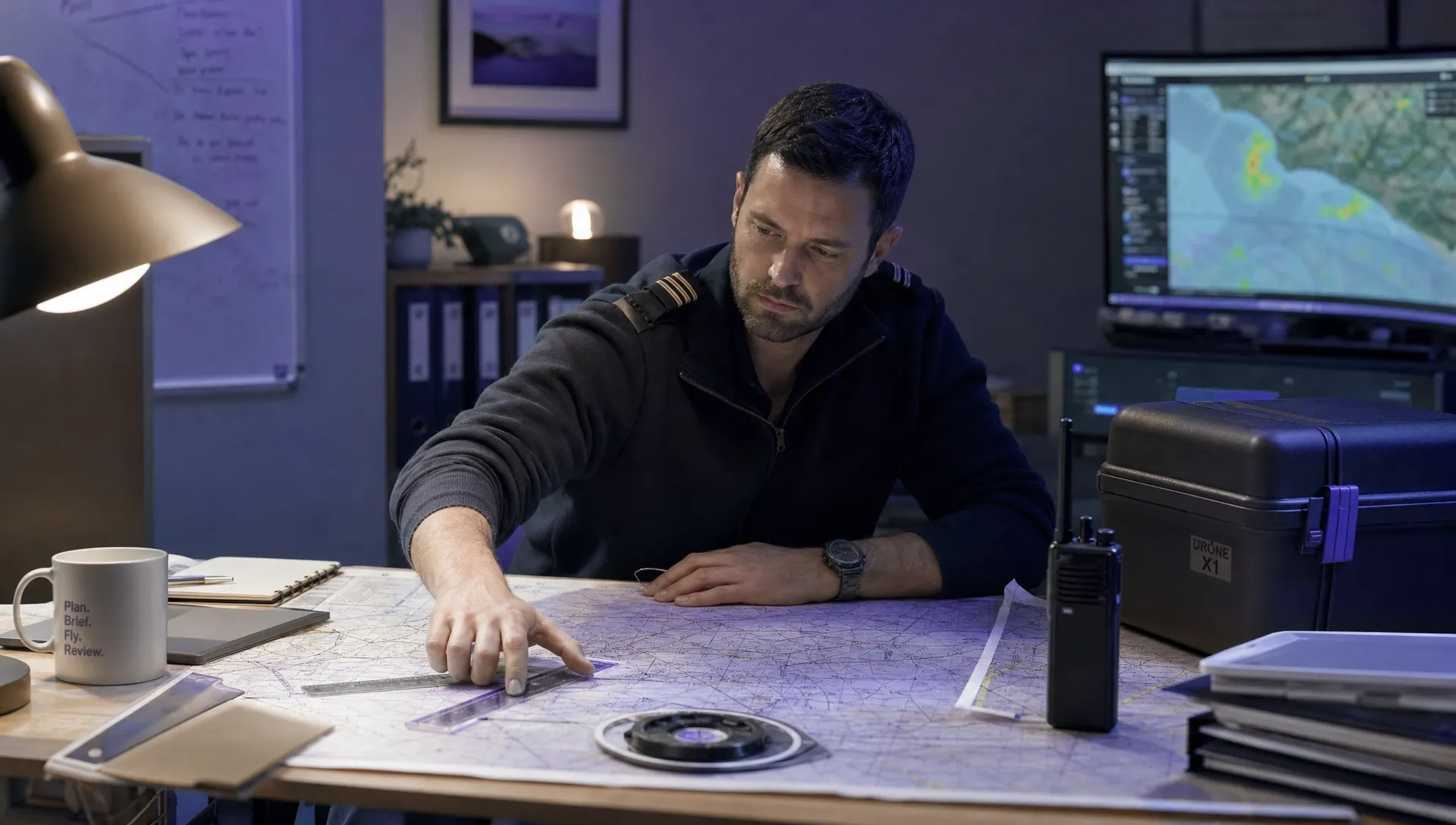 How to Prepare for the Drone Licence Test →
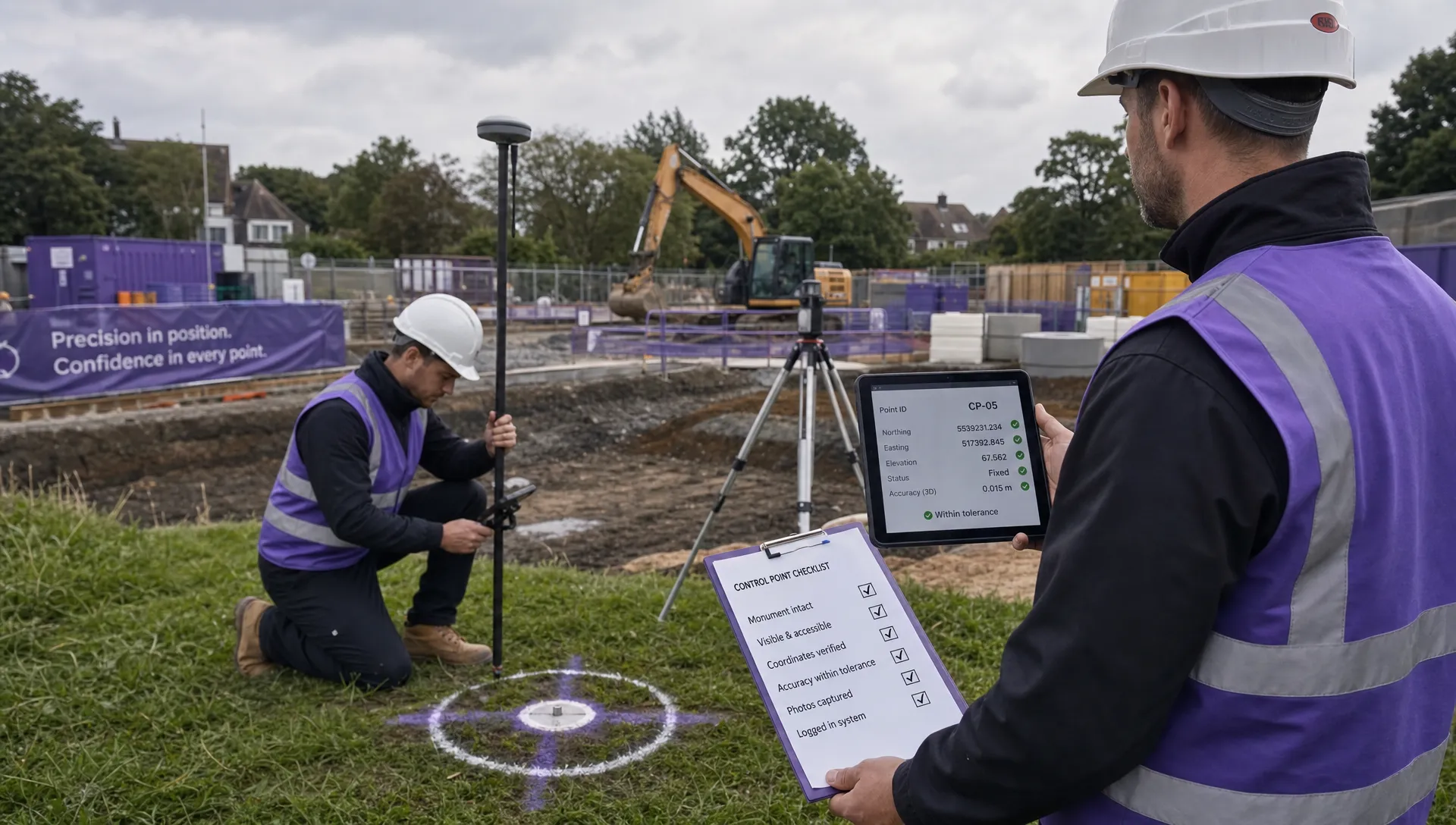 How to Choose a Drone Mapping Service for Your Project →
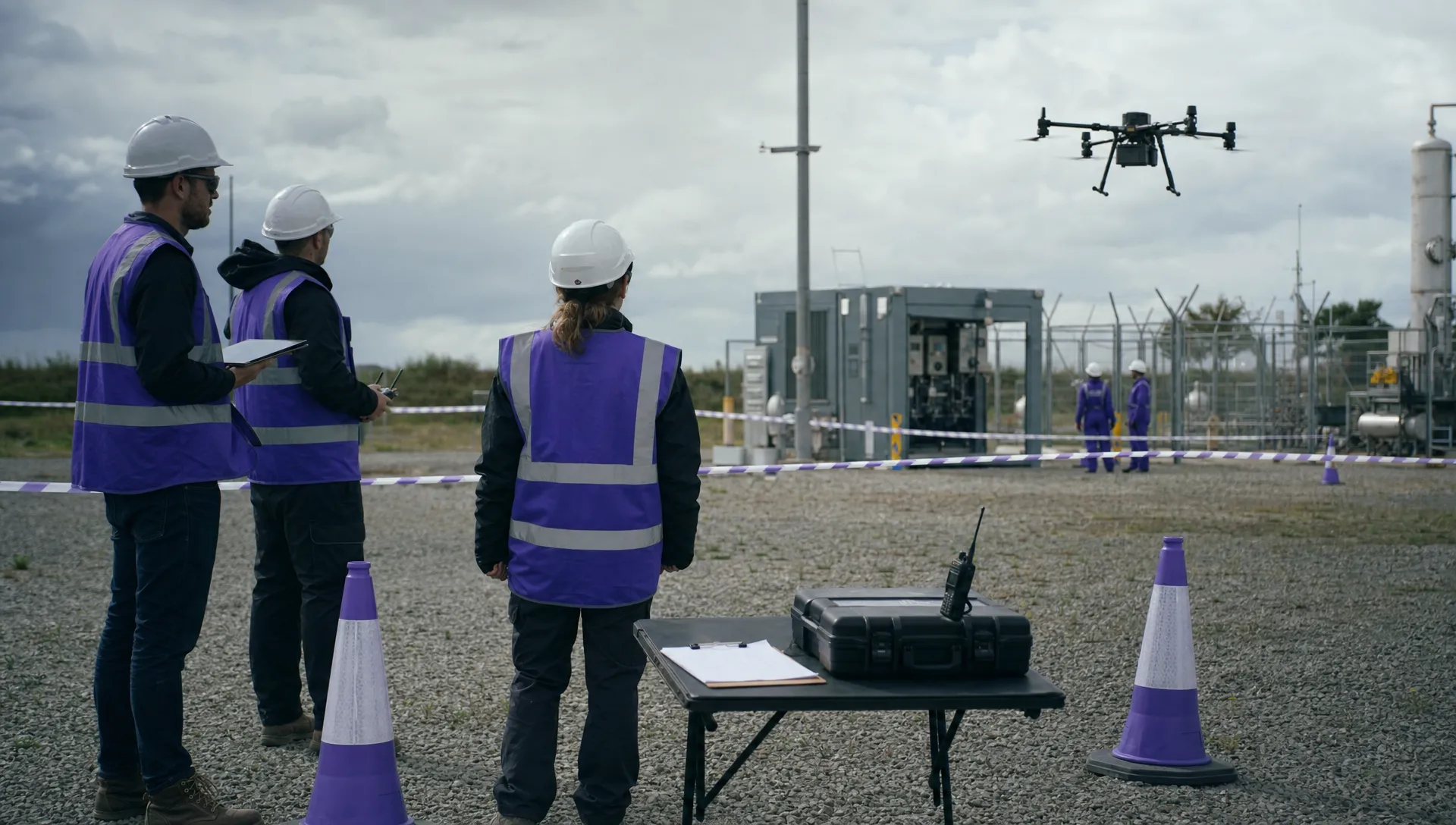 Drone Safety Rules That Every Commercial Team Needs →
 Airport Drone Rules: How to Plan Flights Without Surprises →
 FAA Part 107 Licence: Your Step-by-Step Application Guide →
 How to View DJI Flight Logs Online Safely →
 What Part 107 Covers Beyond the Pilot Certificate →
 How to Download and Read a DJI Flight Log →
 Drone Videography Planning Tips for Professional Crews →
 EU Drone Rules for Sub-250g Aircraft Explained →