
Drone Legal Requirements for Commercial Operations
Commercial drone work is not just a flying task. It is an aviation, safety, privacy and evidence-management task wrapped around a client brief. The most common mistake is assuming that being paid automatically changes the legal category of the flight. In the UK, the rules are risk-based, not simply commercial versus recreational.
That distinction matters. A simple roof survey may fit within the Open category if it stays within the rules. A utility inspection near infrastructure, a congested area, an aerodrome flight restriction zone or a beyond visual line of sight operation may require extra permissions, a more formal operating approval and stronger documentation.
This guide is written for UK-based commercial drone operators, survey firms, utility teams and emergency service drone units. It is not legal advice, but it gives you a practical framework for understanding the main drone legal requirements before a commercial operation.
The core drone legal requirements at a glance
Before you price, plan or launch a commercial job, you need to know which legal duties apply. The exact answer depends on the aircraft, airspace, people nearby, location, payload, data captured and operating method.
| Requirement | When it usually applies | Evidence to keep |
|---|---|---|
| CAA registration | Most drones used commercially, especially those with cameras or weighing 250g or more | Operator ID, Flyer ID where required, aircraft labelling |
| Pilot competency | Any pilot operating under rules or permissions that require competency evidence | Flyer ID, A2 CofC, GVC, internal training records, currency checks |
| Operational Authorisation | Operations that cannot be safely or legally completed in the Open category | CAA authorisation, operations manual, risk assessment, pilot records |
| Insurance | Commercial operations | Policy schedule, scope of cover, aircraft and pilot details |
| Airspace permissions | Flights in flight restriction zones, restricted airspace or controlled environments where permission is needed | Written approvals, airspace checks, NOTAM review, site permissions |
| Risk assessment | Every professional job, especially operations near people, roads, property or infrastructure | Site survey, task risk assessment, emergency procedures, crew briefing |
| Privacy and data protection | Operations capturing identifiable people, vehicles, homes, workplaces or sensitive sites | DPIA where appropriate, privacy notices, retention rules, secure storage |
| Operational records | Repeatable, auditable commercial work | Flight logs, maintenance logs, battery records, defects, incidents, client brief |
The table is deliberately broad because commercial drone compliance is not a single document. It is a chain of decisions that should be clear before take-off and provable after landing.
Commercial use does not automatically mean you need a special licence
Clients often ask whether you have a commercial drone licence. In UK regulatory language, that question is usually imprecise. The UK Civil Aviation Authority no longer treats commercial drone flying as a separate category by default. Instead, the operation normally falls into one of three categories: Open, Specific or Certified.
The UK CAA explains the current drone categories as a risk-based system. For most professional operators, the practical distinction is between Open and Specific.
Open category operations are lower-risk flights that stay within strict limits. These usually include visual line of sight flying, a maximum height of 120 metres above the surface, no flight over assemblies of people, and separation from uninvolved people according to the aircraft and subcategory rules. If your commercial job fits safely and legally inside those limits, CAA Operational Authorisation may not be required solely because the job is paid.
Specific category operations are higher-risk flights or flights that fall outside the Open category. Common triggers include flying closer to uninvolved people than Open category rules allow, using heavier aircraft in more complex environments, operating beyond visual line of sight, or carrying out more demanding work around infrastructure, congested areas or controlled sites. These operations generally require an Operational Authorisation from the CAA unless a relevant exemption or standard permission applies.
Certified category operations are the highest-risk operations, such as those closer to traditional aviation certification standards. This is uncommon for ordinary survey, inspection and media work, but it becomes relevant for larger, more complex or safety-critical drone systems.
One more point: if you still see references to PfCO, treat them as legacy language. The Permission for Commercial Operations was replaced by the Operational Authorisation framework.
Registration and pilot competency
Most commercial drones have cameras, sensors or payloads and are not toys, so CAA registration is usually part of the legal baseline. The CAA's Drone and Model Aircraft Code sets out when Operator IDs and Flyer IDs are required.
The Operator ID belongs to the person or organisation responsible for the drone. In a company environment, this should be controlled like any other compliance asset. The Operator ID must be displayed on the aircraft where required, and the organisation should know which drones are registered, where they are deployed and who is allowed to use them.
The Flyer ID belongs to the person flying the drone. Pilots flying drones of 250g or more normally need a Flyer ID, and more demanding work may require further competency evidence. For example, an A2 CofC can support certain Open category operations, while a GVC is commonly associated with operators applying for or maintaining a Specific category Operational Authorisation.
For commercial teams, the legal question is not just whether a pilot once passed a test. You should be able to show that the pilot is current, briefed, competent for that aircraft and familiar with the operating procedures for the job. This is especially important for utility inspections, emergency services and survey companies where pilots may work across different sites, sensors and aircraft types.
Operational Authorisation and the operations manual
If your work needs a CAA Operational Authorisation, the authorisation is only one part of the compliance picture. You also need to operate within its conditions. That usually means following an operations manual, maintaining pilot competency records, completing risk assessments, logging flights and reporting incidents where required.
A common trap is treating the authorisation as a blanket permission to fly anywhere. It is not. It does not override aerodrome flight restriction zones, landowner requirements, privacy law, local restrictions, emergency airspace restrictions or the conditions written into your own authorisation.
For commercial drone operators, the operations manual should be a living document, not a PDF that only appears during renewal. It should match the way the business actually works: who accepts jobs, who checks airspace, who approves pilots, how aircraft are maintained, how batteries are managed, what happens after an incident and how data is controlled.
Insurance for commercial drone operations
Insurance is one of the clearest differences between casual flying and professional work. The CAA's drone insurance guidance explains that commercial drone operations need appropriate insurance, and UK Regulation (EU) No 785/2004 is the key aviation insurance framework to understand.
Do not leave insurance checks until the day before deployment. Your policy should match the way you actually operate. Check whether it covers the aircraft, payloads, pilots, geographic area, type of work, public liability, subcontractors and any specialist environment such as construction sites, utilities, highways or emergency response.
Clients may also impose contractual insurance requirements that go beyond the legal minimum. A utility company, local authority or principal contractor may ask for specific public liability limits, evidence of aviation cover, method statements and proof that named pilots and aircraft are covered.
Airspace, site permissions and local restrictions
Legal flight planning starts with the airspace, but it does not end there. Checking a drone map is not the same as having permission.
You may need permission or further checks for:
- Aerodrome flight restriction zones and protected aerodromes
- Controlled airspace, restricted areas, danger areas and temporary restrictions
- NOTAMs, emergency restrictions and temporary reserved airspace
- Prisons, military sites, major events, stadiums and sensitive infrastructure
- Landowner consent for take-off, landing and access
- Local authority byelaws, park rules, heritage sites and nature conservation restrictions
For survey companies, the most overlooked permission is often take-off and landing access. You may be able to overfly land in some circumstances, but you still need a lawful place to stand, launch, recover and manage the crew. For utilities, permissions may involve land agents, site owners, asset operators, rail authorities, highways teams or control rooms. For emergency services, coordination with incident command and crewed aviation is often more important than the drone flight itself.
Airspace checks should be recorded, not just viewed. If something is challenged later, you need to show what information was checked, when it was checked and who made the go or no-go decision.
Risk assessment is a legal and operational safeguard
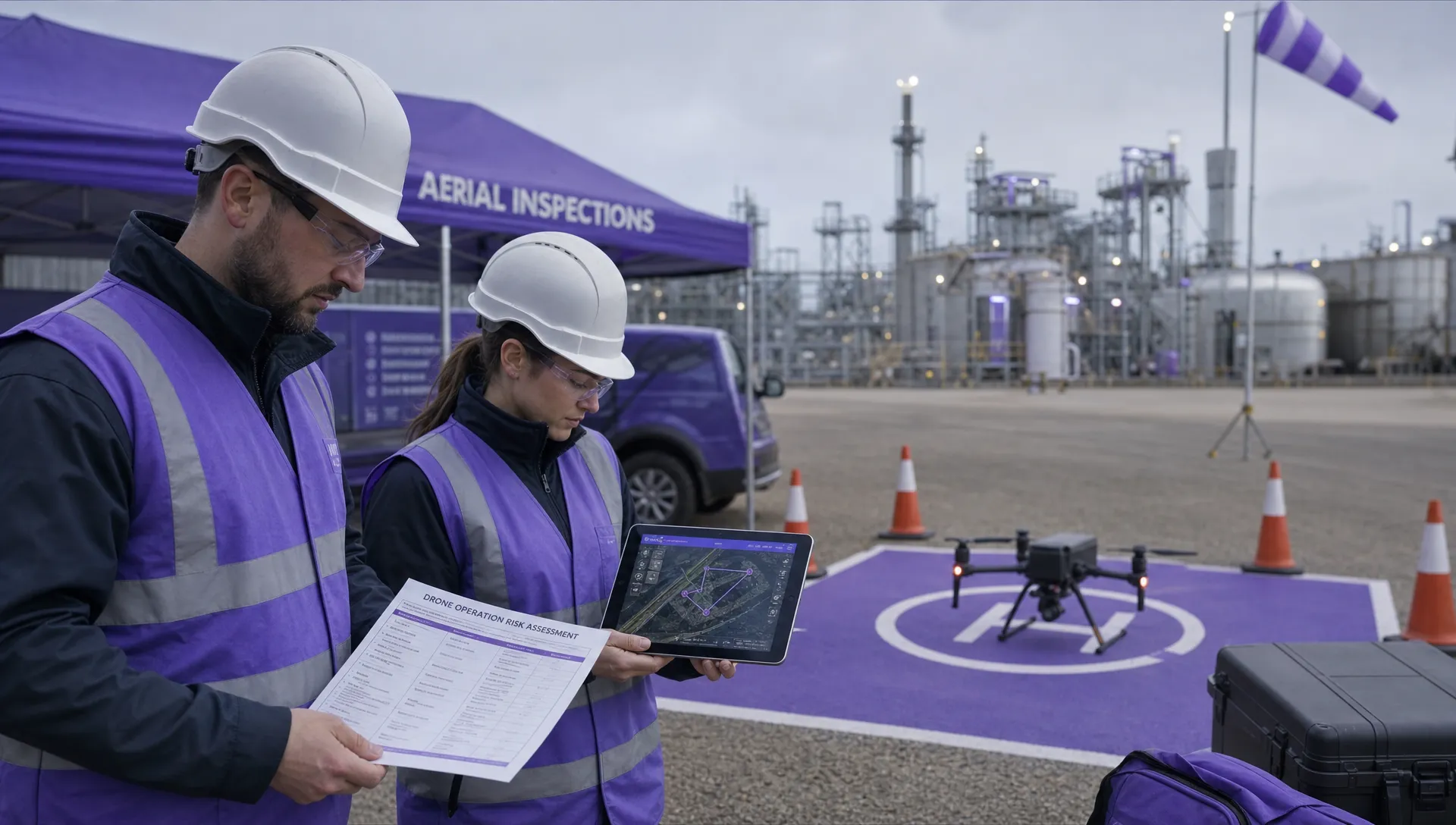
A professional risk assessment is not paperwork for its own sake. It is the bridge between the legal rules and the reality of the site. The CAA expects drone operations to be conducted safely, and employers also have duties under health and safety law. The HSE risk assessment guidance is a useful reminder that risk assessment should be practical, proportionate and focused on real hazards.
A commercial drone risk assessment should consider the aircraft, crew, site, airspace, weather, people, property, emergency actions and data implications. It should also be specific to the task. A roof survey above a closed industrial unit is not the same as a thermal inspection near a live substation or a rapid deployment at an incident scene.
At minimum, your planning should cover the mission objective, aircraft suitability, take-off and landing area, emergency recovery options, separation from uninvolved people, roads and railways, weather limits, GNSS or compass interference, crew communications, lost link actions, flyaway response and abort criteria.
If you want a deeper process, Dronedesk has a dedicated guide on how to build a drone flight risk assessment that works, which is especially useful for turning risk reviews into a repeatable operational habit.
Privacy, UK GDPR and data handling
Commercial drone legal requirements are not limited to aviation rules. If your drone captures identifiable people, vehicles, homes, workplaces or sensitive locations, privacy and data protection law may apply.
The ICO guidance on video surveillance including drones is the key UK reference point. It encourages organisations to think about whether the data collection is necessary, proportionate and transparent.
For many commercial jobs, privacy compliance starts before the aircraft is powered on. Can you angle the camera to avoid neighbouring properties? Can you restrict capture to the asset being inspected? Do you need signage or a client notification plan? Who will store the imagery, for how long, and under what access controls? If you capture members of the public, employees or private homes, can you justify the capture and explain it if challenged?
A Data Protection Impact Assessment is not required for every drone flight, but it is worth considering when surveillance is systematic, large-scale, sensitive or likely to affect people who do not expect to be recorded. Emergency services and utility operators should be particularly careful because they may capture vulnerable people, incidents, critical infrastructure or security-sensitive information.
Record keeping and audit readiness
Good records make commercial drone operations defensible. Poor records leave you relying on memory after a client complaint, insurance claim, regulator query or internal investigation.
Your records should make it possible to reconstruct the decision-making process. That means keeping the client brief, aircraft selection, pilot assignment, airspace check, site permission, risk assessment, weather check, flight log, battery use, maintenance status, defects, incidents and delivered data records in a consistent format.
For larger operators, fleet control becomes a legal and operational risk in its own right. Aircraft maintenance, battery health, firmware status, payload compatibility and pilot allocation all affect whether a job is safe and compliant. If spreadsheets are starting to break down, this drone fleet management guide explains how growing operators can think about aircraft, pilots and operational oversight more systematically.
This is where dedicated operations software can help. According to the Dronedesk features page, the platform includes client management, fleet management, team management, airspace intelligence, proximity intelligence, flight planning, flight logging, data reporting, configurable checklists and risk assessments. For operators managing repeat jobs, multiple pilots or regulated clients, keeping those records together is often the difference between ad hoc admin and a credible compliance trail.
Sector-specific legal considerations
Different commercial sectors face different compliance pressure. The aviation rules may be the starting point, but the operational environment changes the legal risk.
| Sector | Extra compliance focus |
|---|---|
| Survey companies | Land access, client authority, neighbouring properties, privacy notices, accurate deliverables, data retention and subcontractor control |
| Utility companies | Critical infrastructure security, landowner coordination, electromagnetic hazards, site inductions, asset owner procedures and emergency response plans |
| Emergency services | Incident command, airspace deconfliction, crewed aircraft coordination, evidential data handling, public privacy and rapid risk assessment |
| Construction and inspection teams | Principal contractor requirements, site rules, RAMS, public interface, lifting operations nearby and worker exclusion zones |
The lesson is simple: do not plan in isolation. The drone operator, client, landowner and site controller may all have different legal responsibilities. A compliant operation brings those responsibilities together before the aircraft is on site.
Pre-flight legal compliance checklist
Use this checklist before accepting or launching a commercial drone task:
- Confirm whether the operation fits the Open category or needs Specific category approval
- Check that the operator registration, aircraft labelling and pilot IDs are valid
- Verify pilot competency for the aircraft, task, location and operating category
- Confirm insurance cover for the operation, client and environment
- Complete and save airspace checks, including FRZs, NOTAMs and temporary restrictions
- Obtain take-off, landing, site access and stakeholder permissions where required
- Complete a site-specific risk assessment and crew briefing
- Check privacy impacts, data capture limits, storage and retention requirements
- Confirm aircraft maintenance, battery condition and payload suitability
- Log the flight, any defects, incidents, client deliverables and post-flight actions
The checklist should not be treated as a substitute for CAA guidance or your operations manual. It is a practical backstop to make sure the legal essentials are not missed under time pressure.
Frequently Asked Questions
Do I need a drone licence for commercial work in the UK? Not always in the way many clients mean. UK drone rules are risk-based. If the job fits within the Open category, you may not need CAA Operational Authorisation solely because you are being paid. You still need to meet registration, competency, insurance, airspace, privacy and safety requirements.
What is the difference between an Operator ID and a Flyer ID? The Operator ID identifies the person or organisation responsible for the drone. The Flyer ID identifies the person flying it and is normally required for pilots flying drones of 250g or more. Many commercial operations need both, depending on aircraft and use.
When does a commercial drone operator need Operational Authorisation? You usually need Operational Authorisation when the flight cannot be carried out within the Open category rules. Examples can include higher-risk work near people, beyond visual line of sight operations, heavier aircraft in complex environments or operations that require a Specific category safety case.
Is drone insurance legally required for commercial operations? Yes, commercial drone operations need appropriate insurance. You should check the CAA guidance and ensure your policy covers the aircraft, pilots, payloads, location, type of work and client requirements.
Can I fly over private land without landowner permission? Overflight and land access are different issues. Even where overflight may be lawful, you still need a lawful place to take off, land and operate. Landowner permission, local byelaws, privacy law and nuisance issues can still affect the job.
Do privacy rules apply to roof surveys and utility inspections? They can. If your drone captures identifiable people, homes, vehicles, workplaces or sensitive sites, UK GDPR and data protection duties may apply. Plan camera angles, notifications, retention and access controls before flying.
Turn legal requirements into a repeatable workflow
Commercial drone compliance is easiest when it is built into the way jobs are planned, flown and logged. If your team is juggling client details, aircraft records, risk assessments, airspace checks, pilot assignments and flight logs across separate files, it becomes harder to prove that every legal step was completed.
Dronedesk is designed to bring drone operations management into one place, from planning and checklists to risk assessments and flight logging. For commercial operators, survey teams, utility companies and emergency services, that structure can make compliance more consistent and easier to evidence when it matters most.
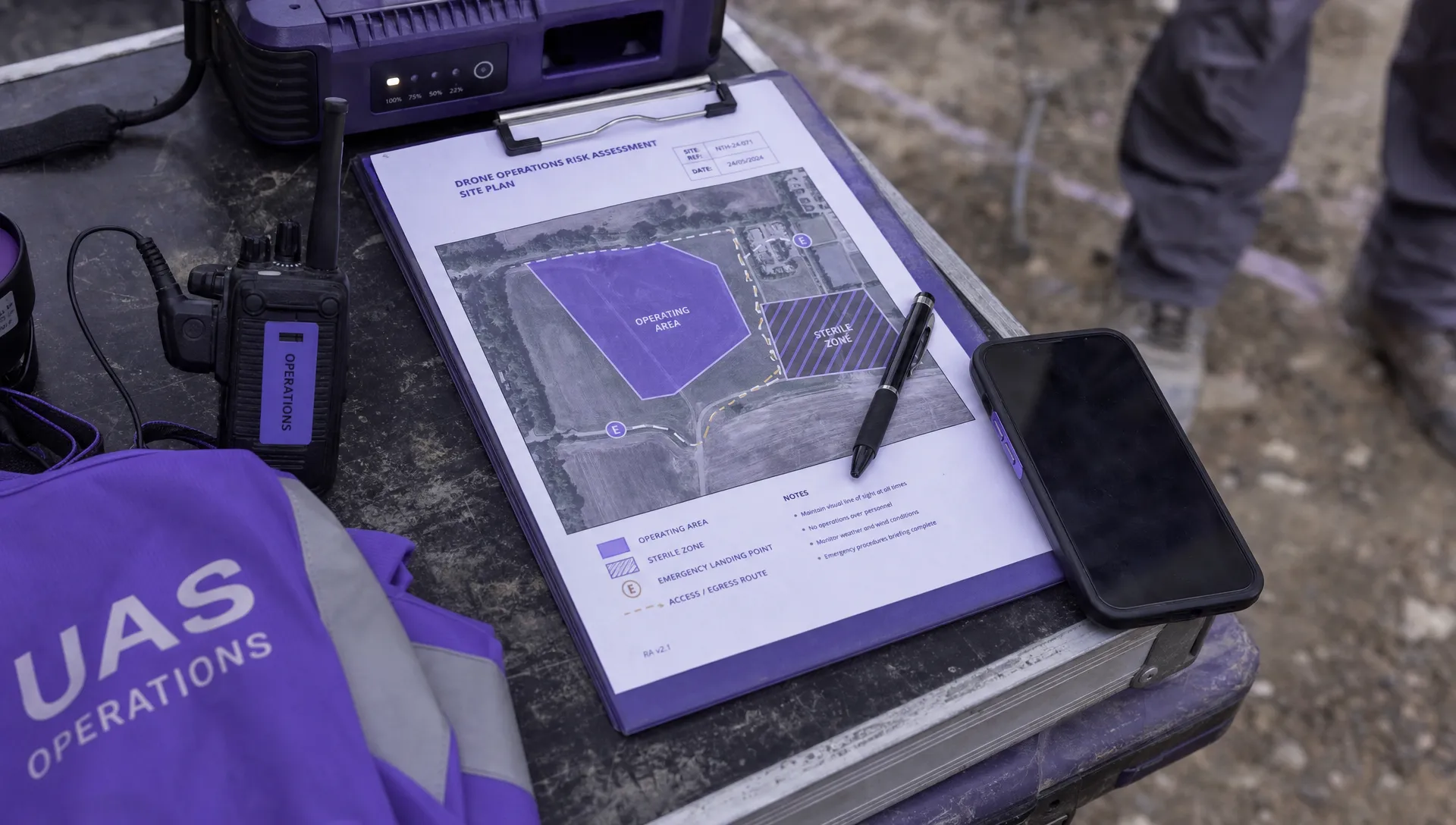 Drone Risk Assessment Controls That Work in the Field →
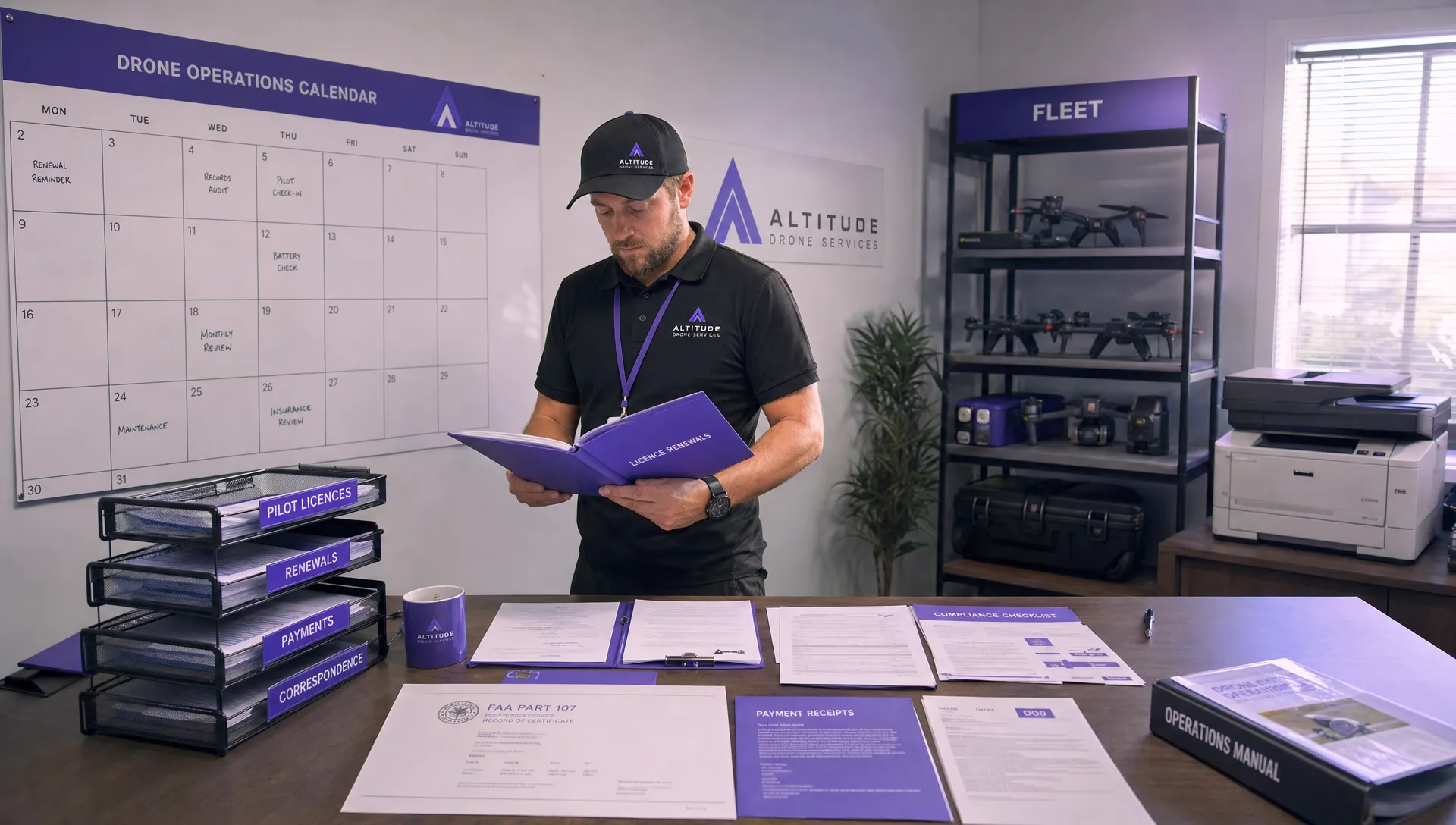 FAA Drone License Costs Beyond the Knowledge Test →
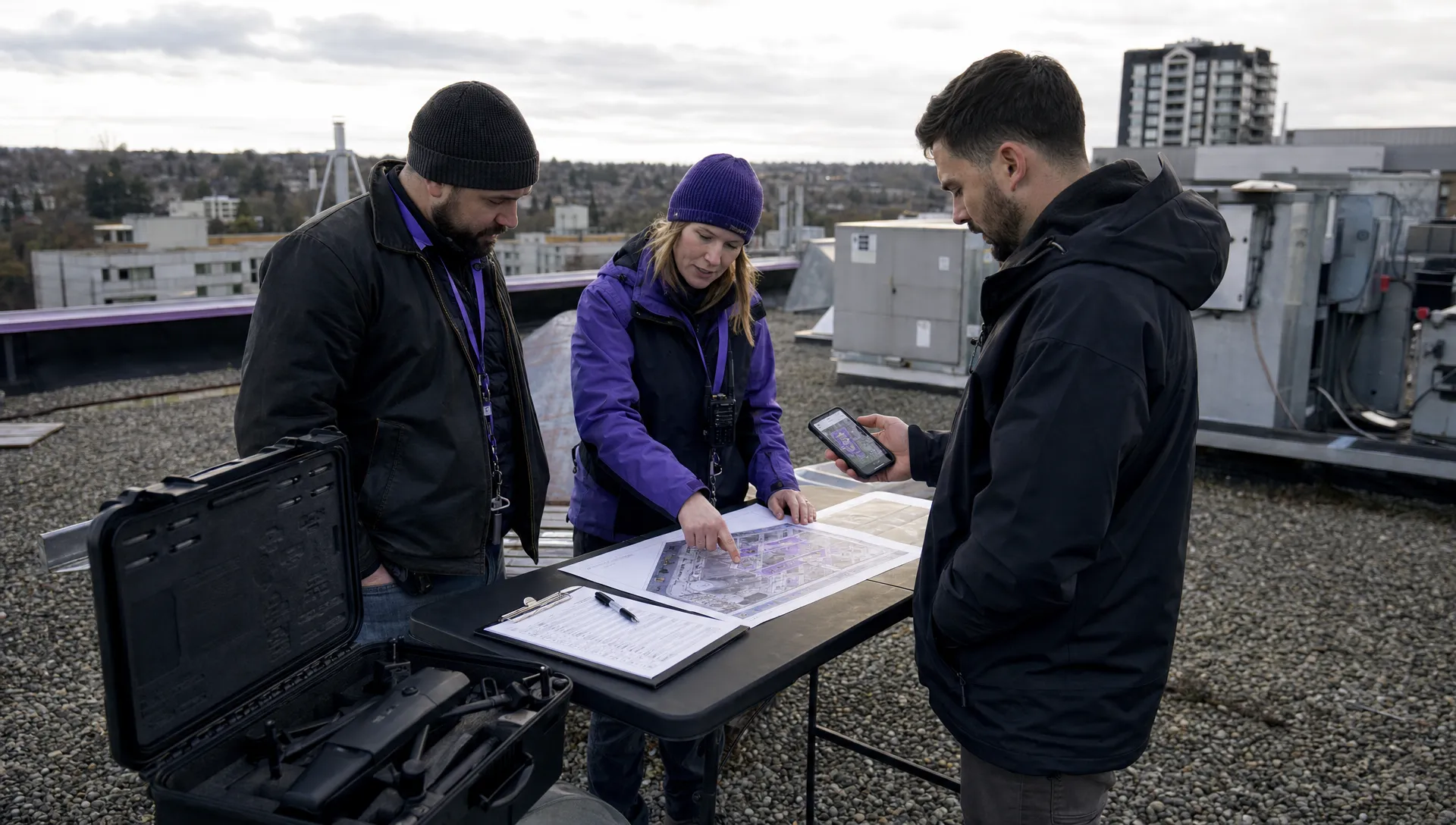 Drone Part 107 Operations: When a Waiver May Be Needed →
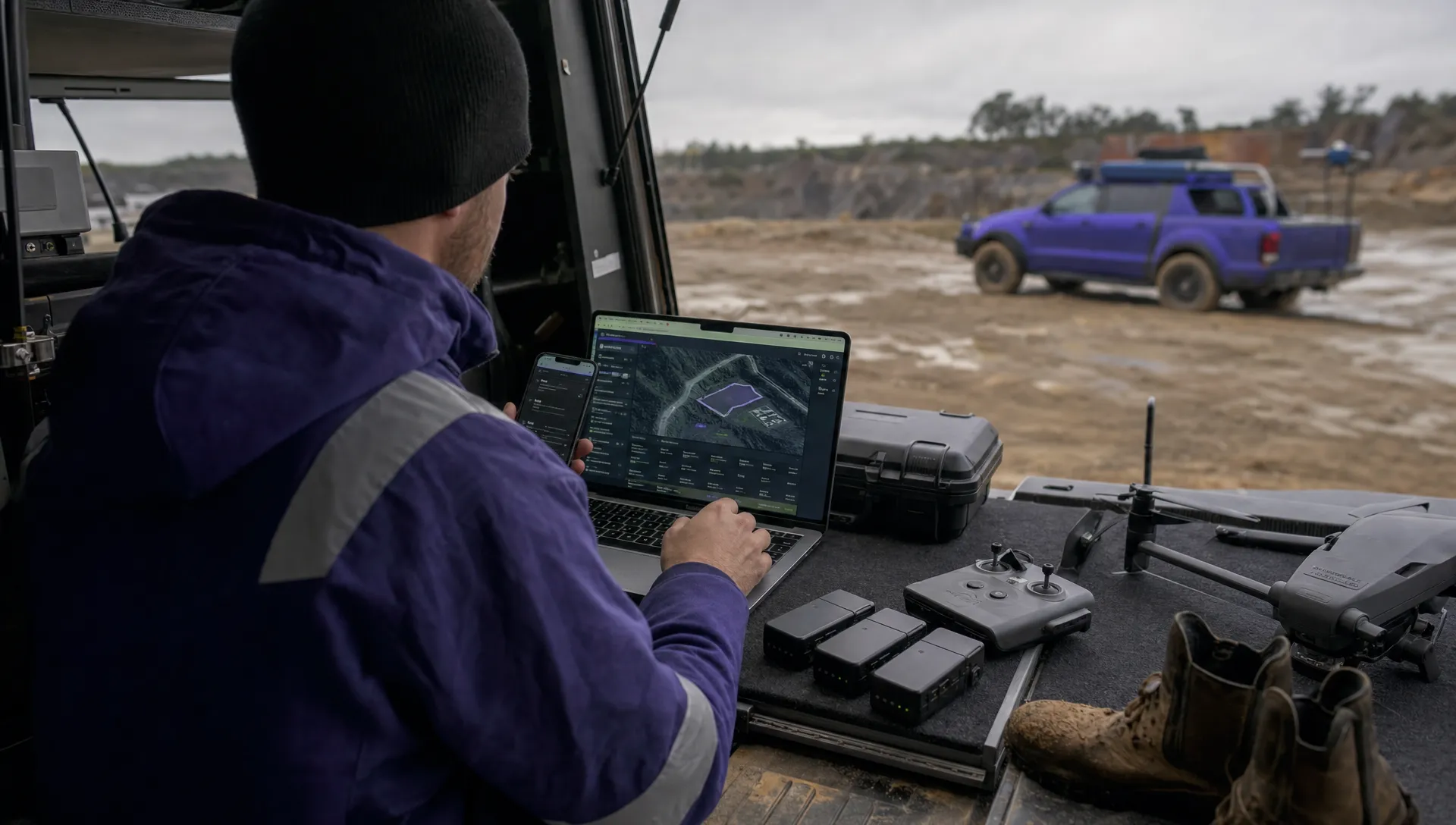 Drone Operating Rules for Managing Contractors and Employees →
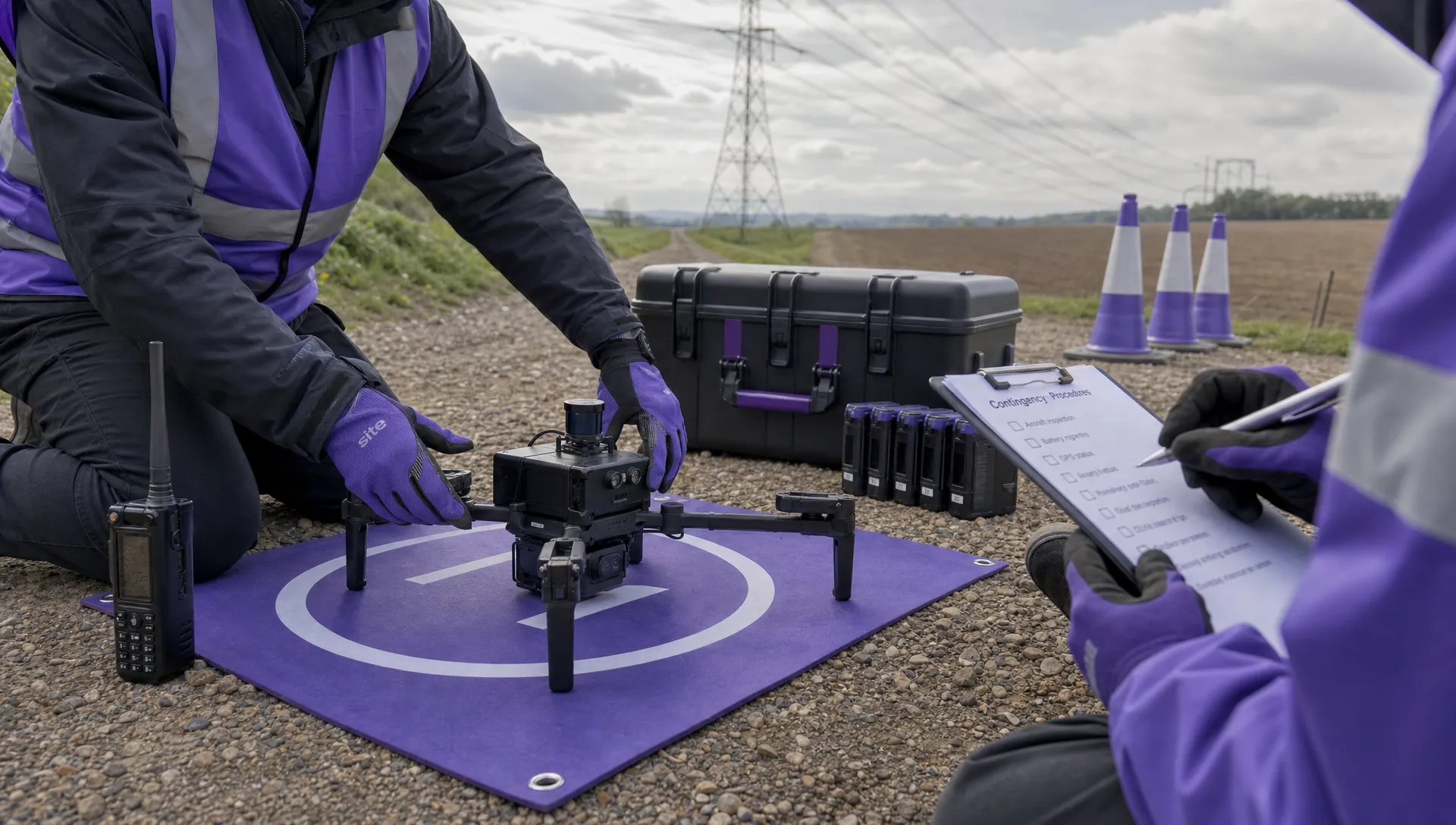 BVLOS Drone Requirements for Building a Safety Case →
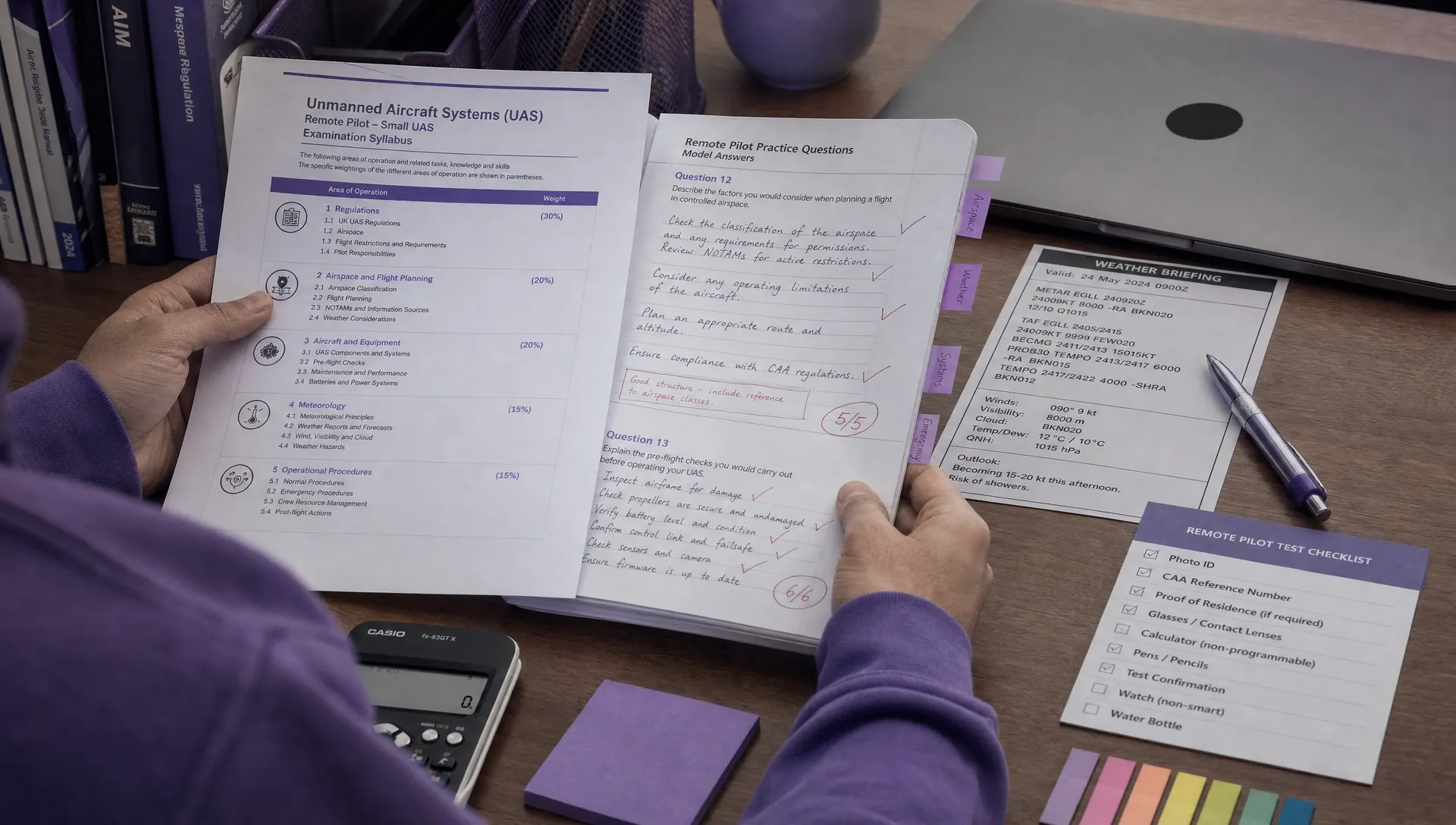 Drone Pilot Test Mistakes That Cost Candidates Marks →
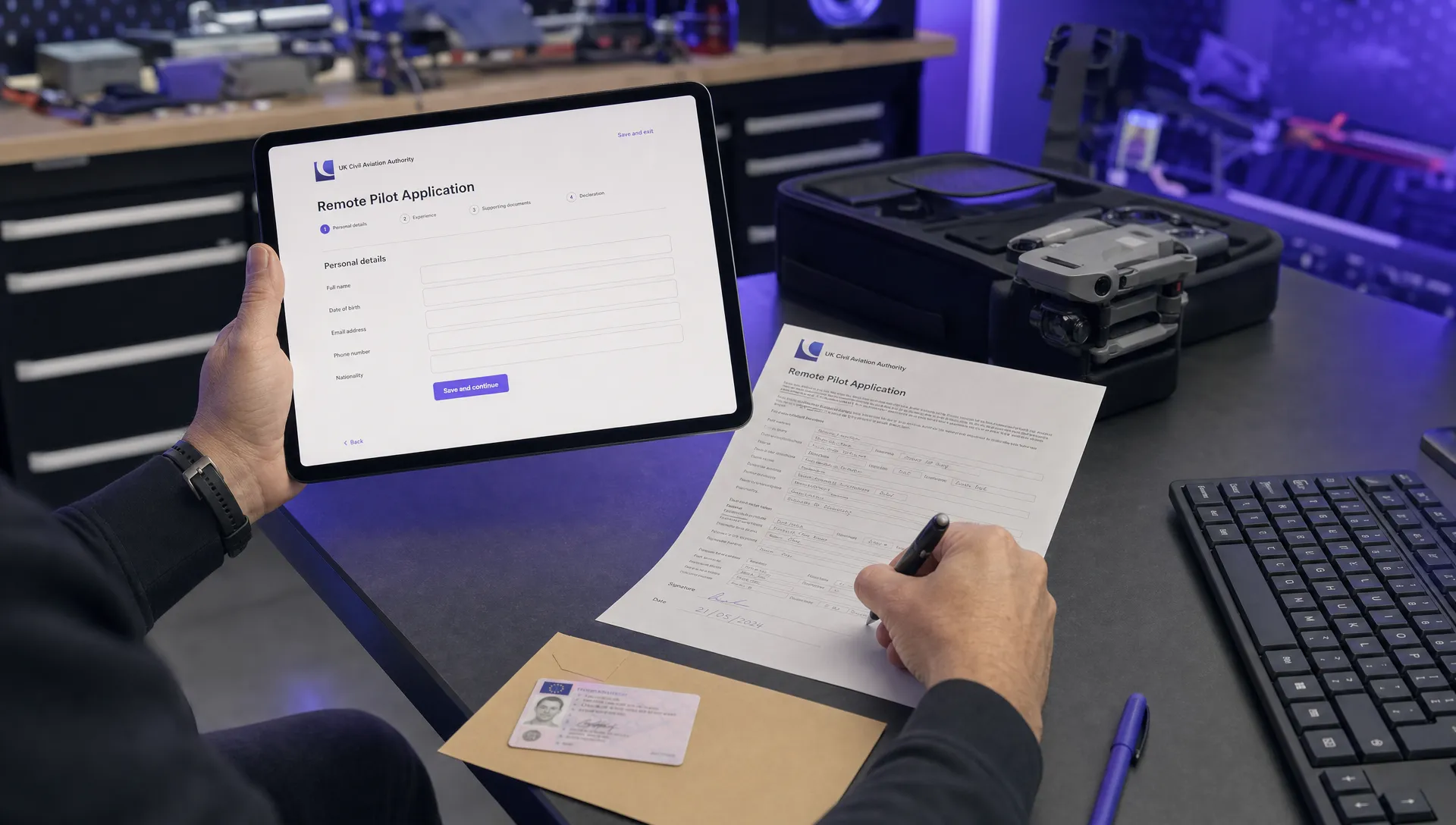 FAA 107 License vs Part 107 Certificate: What’s the Difference? →
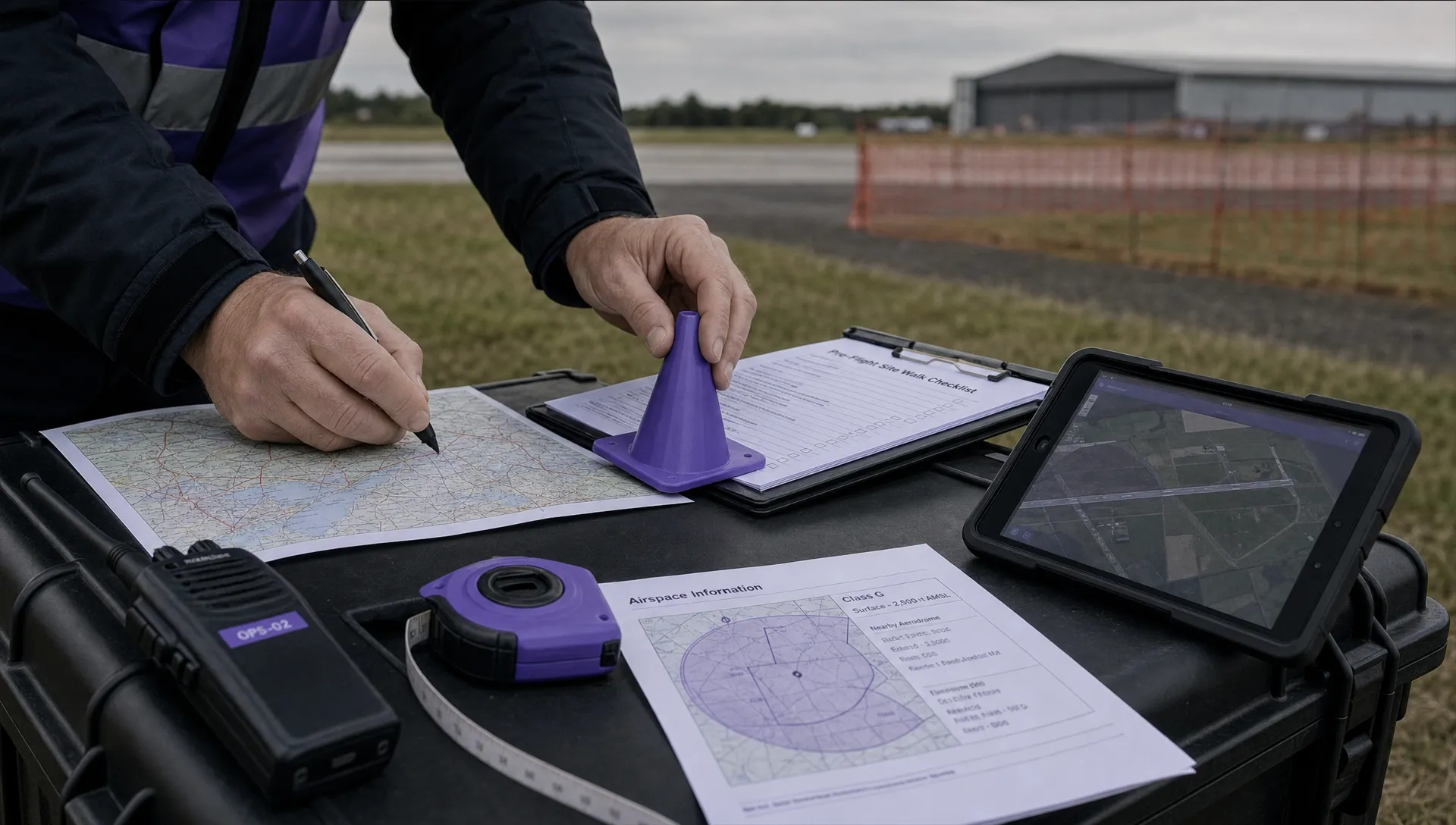 Drone Airport Rules: A Field Checklist for Site Assessments →
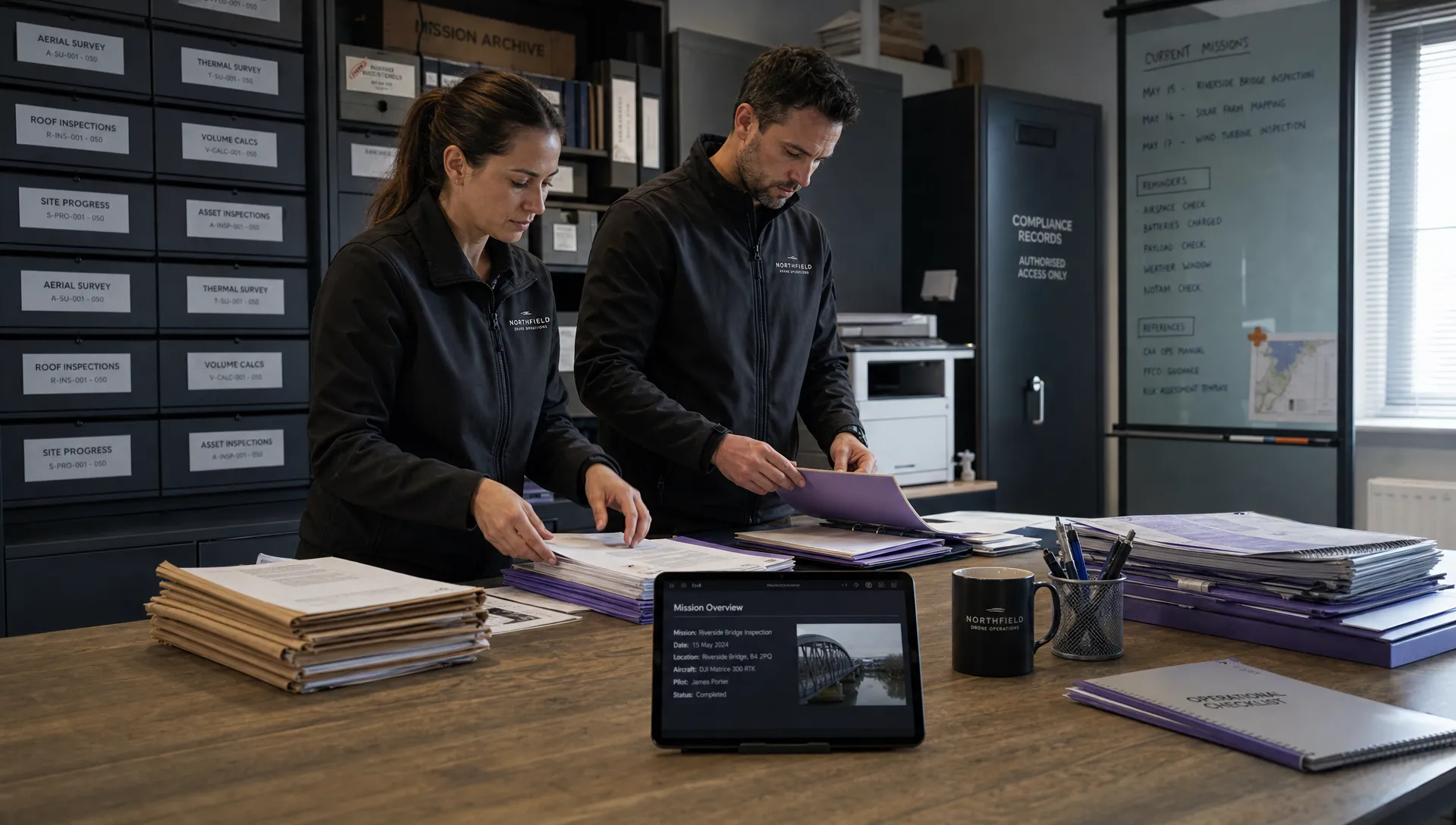 FAA Part 107 Record-Keeping Rules for Commercial Teams →
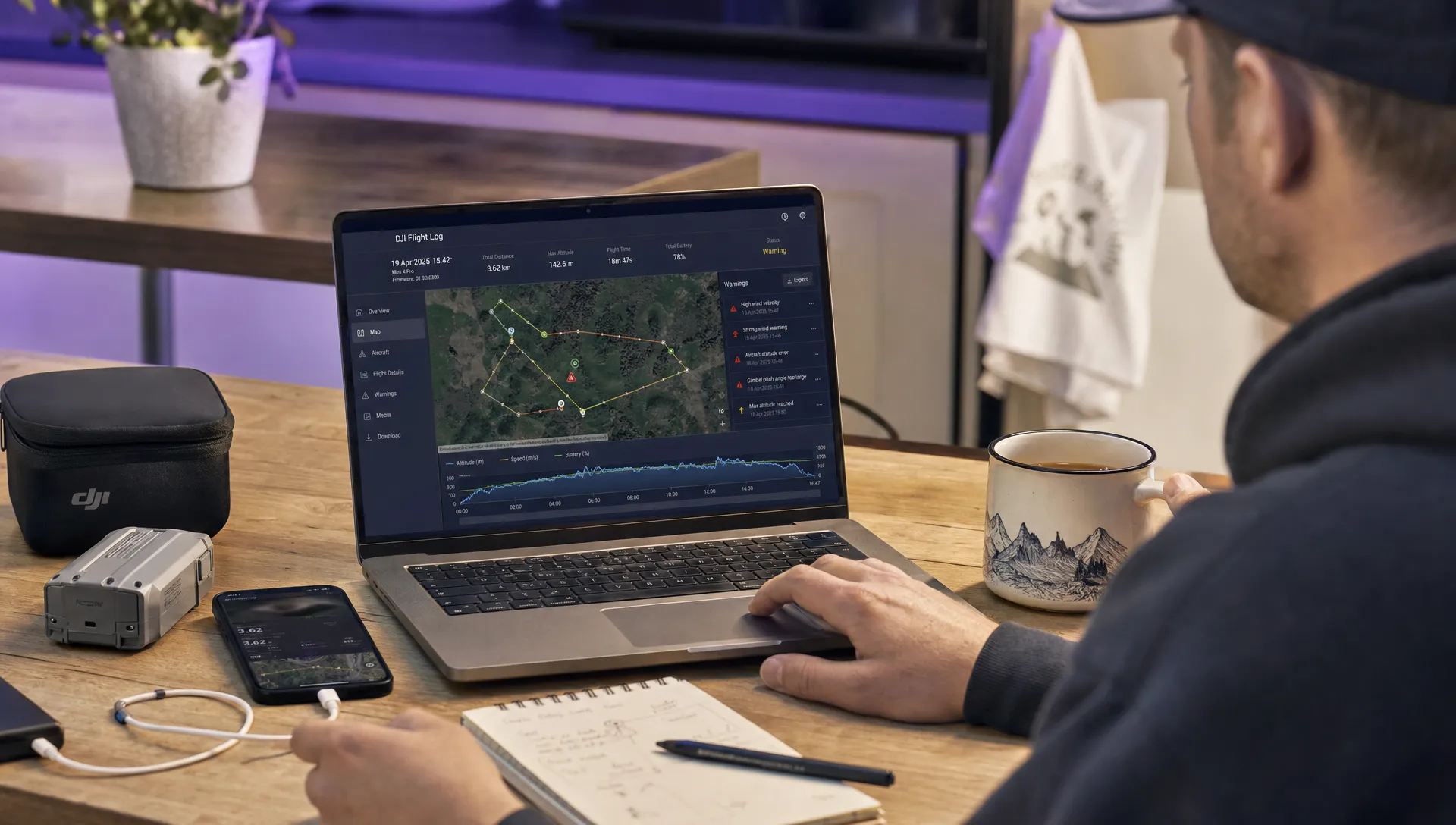 How to Review a DJI Flight Log After an Unexpected Event →