
FAA Unmanned Aircraft Regulations Made Simple
FAA rules can look intimidating because they are spread across different pages, acronyms and operating scenarios. In practice, most drone teams can simplify them by asking three questions: why are we flying, where are we flying and does the mission go beyond the standard small-drone envelope?
This guide explains the core FAA unmanned aircraft regulations in plain English for drone operators, survey firms, utilities and emergency services planning work in the United States. It is not legal advice, but it will help you understand the compliance building blocks you need before you fly.
The simple version: which FAA rule applies?
The FAA does not regulate every drone flight in exactly the same way. The rules depend on the purpose of the flight, the aircraft, the airspace and the level of risk.
For many professional operators, the main rule set is 14 CFR Part 107, commonly called the Small UAS Rule. Part 107 covers many commercial and non-recreational small drone operations using aircraft weighing less than 55 lb, including payload, at take-off.
| Type of operation | Main FAA route | What it means in practice |
|---|---|---|
| Recreational flying only | Exception for Limited Recreational Operations, 49 U.S.C. 44809 | Fly strictly for recreation, follow recognised safety guidance, pass TRUST, register if required and stay within airspace limits. |
| Most commercial small-drone work | Part 107 | Remote pilot certification, aircraft registration, operational limits, airspace authorisation where required and compliance with Remote ID. |
| Public safety or government operations | Part 107 or public aircraft COA | Agencies may operate under Part 107 or obtain a Certificate of Waiver or Authorization, depending on mission needs. |
| BVLOS, complex delivery or advanced operations | Waiver, exemption, certification or other FAA approval | Standard Part 107 usually is not enough for routine beyond visual line of sight or higher-risk operations. |
| Aircraft over 55 lb | Exemption, certification or specific FAA approval | Heavier UAS generally fall outside routine Part 107 and need additional FAA authorisation. |
The key takeaway is simple: if your drone operation is connected to work, clients, inspections, data collection, emergency response, surveying or any business purpose, you should assume Part 107 applies unless a different FAA approval route is being used.
Part 107 basics most professional operators need
Part 107 is the operational baseline for many U.S. commercial drone flights. The FAA’s Part 107 guidance is the best starting point, but the practical requirements fall into a few categories.
Remote pilot requirements
Every Part 107 operation must have a remote pilot in command. That person is responsible for the safety and legality of the flight, even when other crew members, visual observers or payload specialists are involved.
A remote pilot generally needs to be at least 16 years old, able to read, speak, write and understand English, and hold a Remote Pilot Certificate with a small UAS rating. Initial certification normally involves passing the FAA aeronautical knowledge test. To keep privileges current, remote pilots must complete recurrent training within the required FAA interval.
The remote pilot must also make appropriate documents available to the FAA on request, including their certificate, identification and aircraft registration evidence.
Aircraft requirements
Under Part 107, drones must be registered with the FAA before operation. This includes drones below 0.55 lb if they are being used under Part 107, because the recreational weight exemption is not the same as commercial use.
The aircraft must be in a condition for safe operation. Part 107 puts responsibility on the remote pilot in command to conduct a pre-flight assessment and discontinue the flight if the aircraft is not safe.
Remote ID is also a major requirement. The FAA’s Remote ID rules apply to drones that must be registered, unless the operation fits a recognised exception, such as flying within an FAA-recognised identification area. In simple terms, most registered drones used for professional work need either built-in Standard Remote ID capability or an approved broadcast module.
Core operating limits
Part 107 sets the normal operating envelope. Some limits can be waived by the FAA, but you should not assume a waiver will be granted automatically.
| Rule area | Standard Part 107 position |
|---|---|
| Maximum altitude | 400 ft above ground level, or within 400 ft of a structure and not more than 400 ft above that structure’s uppermost limit. |
| Visual line of sight | The remote pilot or visual observer must be able to see the drone unaided, except for corrective lenses. |
| Speed | Maximum groundspeed of 100 mph, or 87 knots. |
| Weather visibility | Minimum flight visibility of 3 statute miles from the control station. |
| Cloud clearance | At least 500 ft below clouds and 2,000 ft horizontally from clouds. |
| Manned aircraft | The drone must yield right of way to all other aircraft. |
| Hazardous materials | Carriage of hazardous materials is not allowed under routine Part 107. |
| Careless or reckless operations | Always prohibited. |
Night operations are now allowed under Part 107 when the remote pilot has completed the required updated training and the drone has appropriate anti-collision lighting visible for at least 3 statute miles, subject to FAA requirements.
Registration, Remote ID and airspace authorisation
Three compliance items cause a lot of confusion: registration, Remote ID and airspace authorisation. They are related, but they are not the same thing.
Registration identifies the aircraft in the FAA system. Remote ID broadcasts identification and location information during flight, where required. Airspace authorisation gives permission to operate in controlled airspace when that permission is needed.
If you are flying in Class G uncontrolled airspace, you generally do not need FAA airspace authorisation, although all other applicable rules still apply. If you are flying in controlled airspace, such as around many airports in Class B, C, D or surface-level Class E airspace, you need authorisation before the flight.
The FAA’s LAANC system is the standard route for near-real-time authorisations in many controlled-airspace locations. If LAANC is not available for your location or requested altitude, you may need to apply through FAA DroneZone instead.
Airspace compliance is more than checking the class of airspace. Operators should also look for temporary flight restrictions, special security instructions, stadium restrictions, national security UAS flight restrictions, local site hazards and nearby crewed aviation activity. For utilities, emergency services and survey teams, the highest-risk missions are often the ones that look routine on paper but sit close to roads, railways, heliports, hospitals, industrial sites or public gatherings.
Operations that may need extra FAA approval
Some missions sit outside routine Part 107, or only fit Part 107 if you meet very specific conditions. These are the areas where operators should slow down and verify the exact rule, waiver or approval route before accepting the job.
Beyond visual line of sight
Beyond visual line of sight, usually shortened to BVLOS, is one of the most important growth areas for utilities, linear infrastructure inspection, emergency response and large-area surveying. However, routine Part 107 requires visual line of sight unless the operator has an FAA waiver or another applicable approval.
BVLOS is not simply a paperwork issue. The FAA will want to understand how you manage detect-and-avoid, communications, lost-link scenarios, airspace risk, ground risk, crew responsibilities and contingency procedures.
Operations over people and moving vehicles
Part 107 includes specific categories for operations over people, and additional rules for operations over moving vehicles. The details depend on aircraft weight, injury risk, exposed rotating parts, Remote ID status, whether the operation is sustained over an open-air assembly, and whether the people or vehicles are part of a closed or restricted-access site.
This is a common trap for roof inspections, media work, emergency response and utility work near roads. A flight that is legal over an empty worksite may become non-compliant if it transitions over uninvolved people or moving traffic.
Multiple drones, moving vehicles and unusual mission profiles
Routine Part 107 is built around a remote pilot managing one small unmanned aircraft at a time within visual line of sight. If your concept involves one pilot controlling multiple drones, operating from a moving vehicle, flying heavy aircraft, carrying unusual payloads or operating in a dense urban environment, treat it as a higher-complexity operation and confirm the approval pathway.
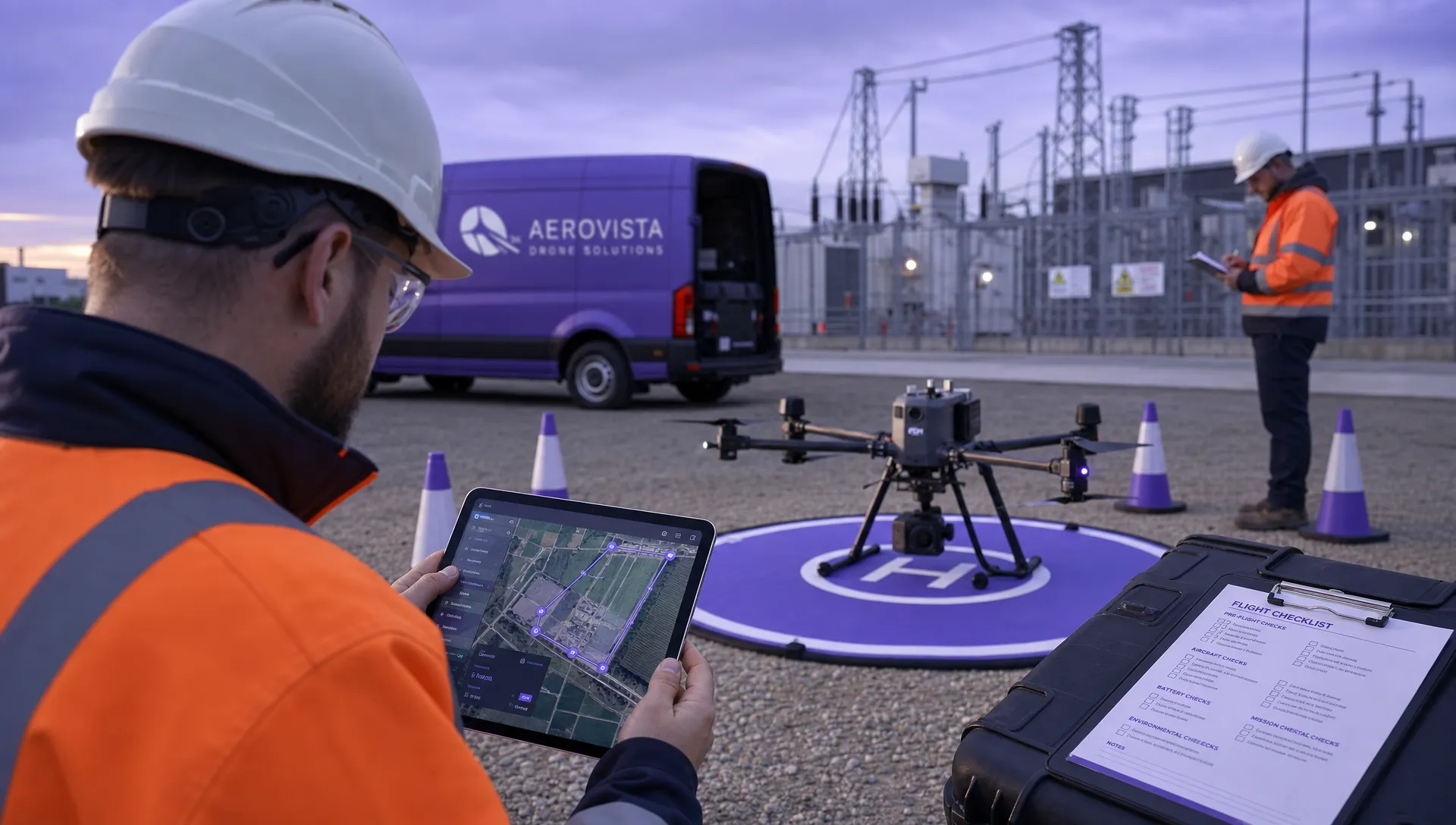
A practical FAA compliance workflow
The easiest way to make FAA unmanned aircraft regulations manageable is to turn them into a repeatable workflow. That matters especially for teams that operate at scale, where missed checks can creep in through handovers, repeat jobs or last-minute changes.
Start by classifying the mission. Confirm whether it is recreational, Part 107, public aircraft, COA-based, waiver-based or another approval route. Then identify the aircraft, payload, Remote ID method and crew roles. Once the operating basis is clear, review the site, airspace and mission profile together rather than as separate tick-boxes.
A simple pre-flight compliance workflow might include:
- Confirm the operating authority, such as Part 107, COA, waiver or exemption.
- Check pilot currency, aircraft registration and Remote ID readiness.
- Review controlled airspace, LAANC availability, TFRs and local flight restrictions.
- Assess ground risk, nearby roads, uninvolved people, structures, obstacles and emergency landing options.
- Check weather, visibility, cloud clearance, wind limits and battery performance implications.
- Document the risk assessment, crew briefing, checklist completion and post-flight log.
For more detail on the risk side of that workflow, Dronedesk has a guide to building a drone flight risk assessment that works, which is particularly useful for operators moving beyond informal pre-flight checks.
For larger teams, the challenge is not knowing that these steps exist. It is making sure they happen consistently. Dronedesk brings together operational functions such as client management, fleet management, team management, airspace intelligence, proximity intelligence, flight planning, flight logging, data reporting, configurable checklists and risk assessments, as shown on the Dronedesk features page. That kind of structure can help operators keep planning evidence and operational records in one place without relying entirely on spreadsheets or scattered documents.
If your operation is growing beyond a few aircraft, it is also worth reviewing how you manage aircraft, batteries, maintenance status and documentation across the business. The Dronedesk drone fleet management guide explains when informal tracking starts to break down and what to consider when selecting a more robust system.
What records should a drone operator keep?
Part 107 does not require every operator to maintain a full flight log in the same way as crewed aviation, but professional operators should still keep strong records. Clients, insurers, internal safety managers and FAA waiver conditions may all expect evidence that flights were properly planned and executed.
Useful records include pilot certificates and recurrent training evidence, aircraft registration details, Remote ID serial numbers, LAANC approvals, waivers, COAs, site surveys, risk assessments, checklists, maintenance notes, battery records, flight logs, crew briefings and incident reports.
Accident reporting is especially important. Under Part 107, certain accidents must be reported to the FAA within 10 calendar days, including operations involving serious injury, loss of consciousness or qualifying property damage. Operators should understand the current FAA threshold and reporting process before an incident occurs, not after.
Good records also protect continuity. If a utility inspection is repeated monthly, or an emergency services team needs to justify a deployment after the event, a clear operational record is far more useful than relying on memory.
Common mistakes to avoid
Many FAA compliance issues come from assumptions rather than deliberate rule-breaking. The most common is assuming that a flight is recreational because no one is directly paying for it. If the purpose supports a business, organisation, public agency or work activity, it may still be non-recreational.
Another common mistake is treating airspace authorisation as the whole compliance process. LAANC approval does not remove the need to comply with Part 107 operating rules, Remote ID, weather limits, right-of-way requirements or restrictions on operations over people.
Remote ID is also easy to overlook when teams use mixed fleets. A drone that was compliant for one type of flight may not be compliant for a different operating basis. The same applies to sub-250 g aircraft, which may still need registration and Remote ID when used under Part 107.
Finally, do not wait until a complex job is booked before thinking about waivers. BVLOS, operations over people, flights around sensitive sites and unusual aircraft configurations can require significant lead time, detailed safety cases and documented procedures.
Frequently Asked Questions
Do FAA unmanned aircraft regulations apply to drones under 250 g? Yes, depending on how the drone is used. A very light drone flown strictly for recreation may be exempt from registration, but a drone used under Part 107 generally must be registered, even if it weighs less than 0.55 lb. If it must be registered, Remote ID requirements may also apply unless an exception fits.
Is a Part 107 certificate enough for commercial drone work? It is the core requirement for many small commercial drone operations, but it is not always enough. You still need aircraft registration, Remote ID compliance, airspace authorisation where required and adherence to operating limits. Some missions need waivers, exemptions or other FAA approvals.
Do I need LAANC approval for every drone flight? No. LAANC is used for authorisation in participating controlled airspace. In uncontrolled Class G airspace, FAA airspace authorisation is generally not required, but you still need to check for other restrictions and comply with all applicable operating rules.
Can emergency services operate under Part 107? Yes, many public safety agencies use Part 107 for certain missions. Agencies may also use a public aircraft Certificate of Waiver or Authorization when that route better fits their operational needs. The right choice depends on the agency, mission type and required flexibility.
Can I fly BVLOS under standard Part 107? Not usually. Standard Part 107 requires visual line of sight. BVLOS operations typically need a waiver or another FAA approval route, supported by procedures for air risk, ground risk, communications, detect-and-avoid and contingencies.
How often do FAA drone rules change? The FAA updates guidance, approvals and rulemaking over time, particularly around Remote ID, BVLOS, advanced air mobility and higher-complexity operations. Operators should verify current FAA sources before flying, especially when planning a new mission type.
Make FAA compliance easier to manage
FAA compliance is much simpler when it becomes part of your normal operating workflow rather than a last-minute scramble. For professional teams, that means connecting the dots between pilots, aircraft, airspace checks, risk assessments, checklists, flight logs and reporting.
Dronedesk is built for drone operations management and flight planning, with tools covering client, fleet and team management, airspace and proximity intelligence, flight planning, configurable checklists, risk assessments, flight logging and data reporting. If you want a more organised way to plan and evidence your drone operations, it gives your team a single place to manage the admin around safe, compliant flying.
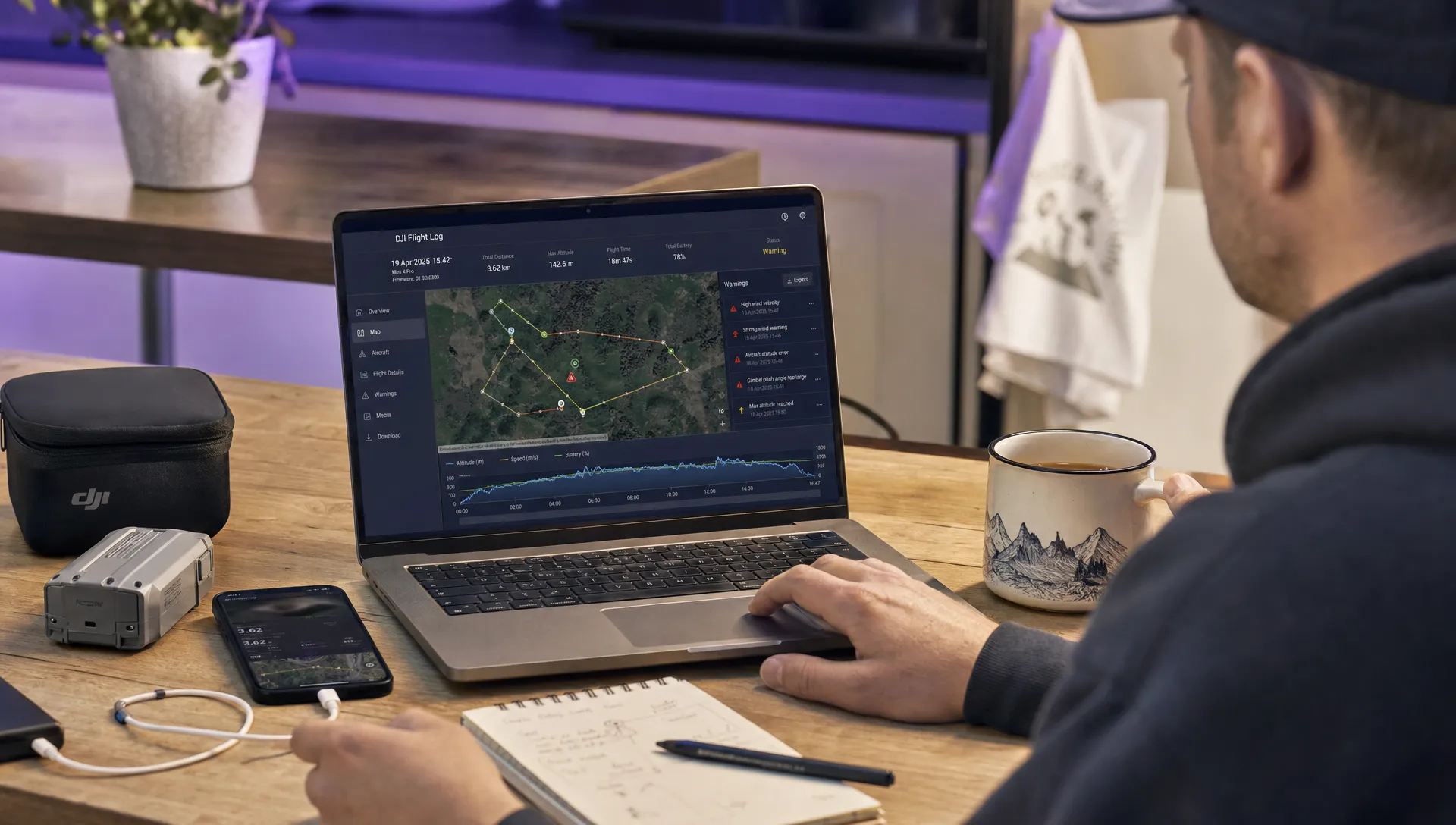 How to Review a DJI Flight Log After an Unexpected Event →
 Drone Laws Around the World: A Pre-Flight Research Framework →
 How to Compare Drone Survey Services for Complex Sites →
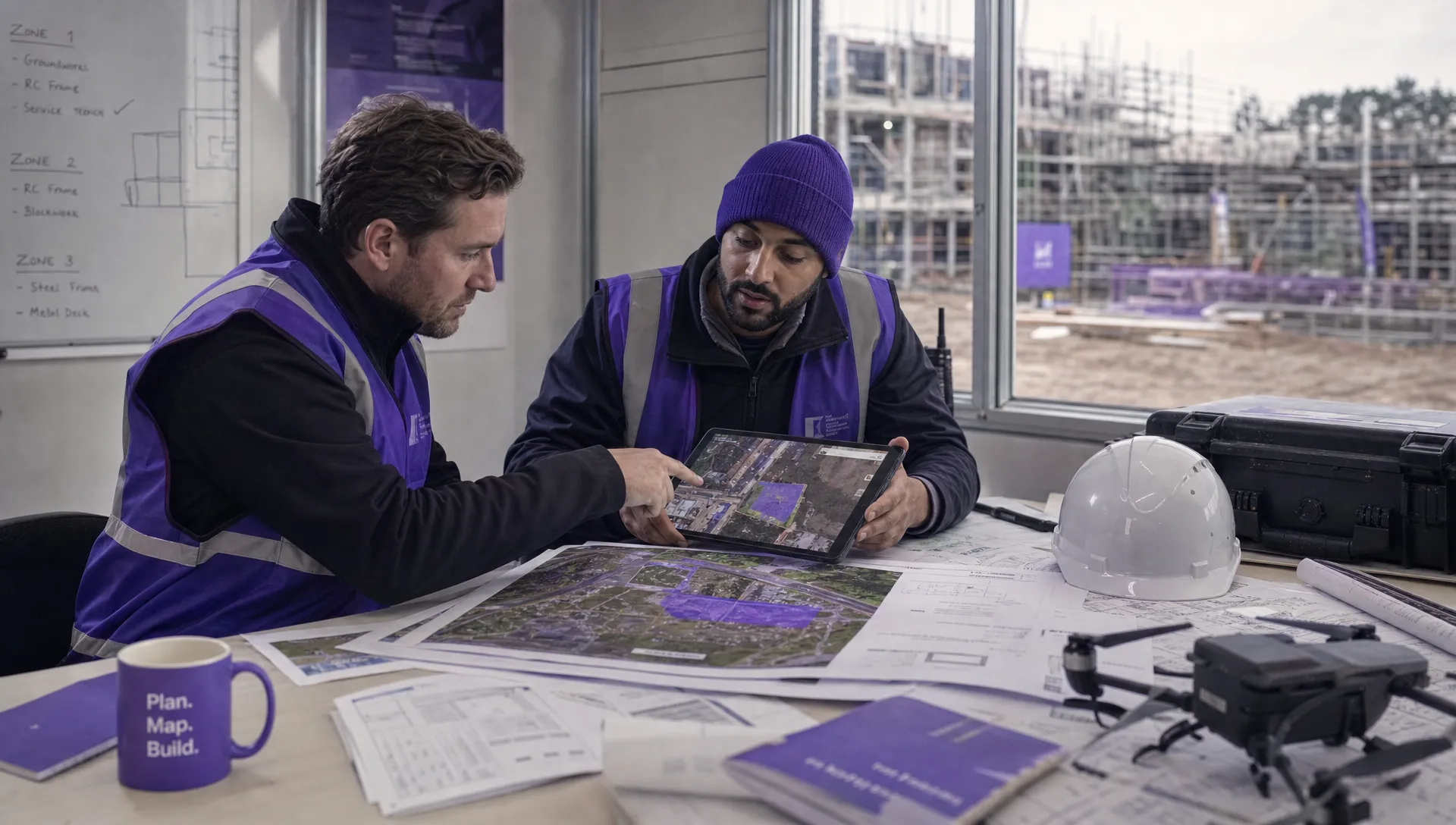 How to Start a Drone Mapping Business With a Clear Workflow →
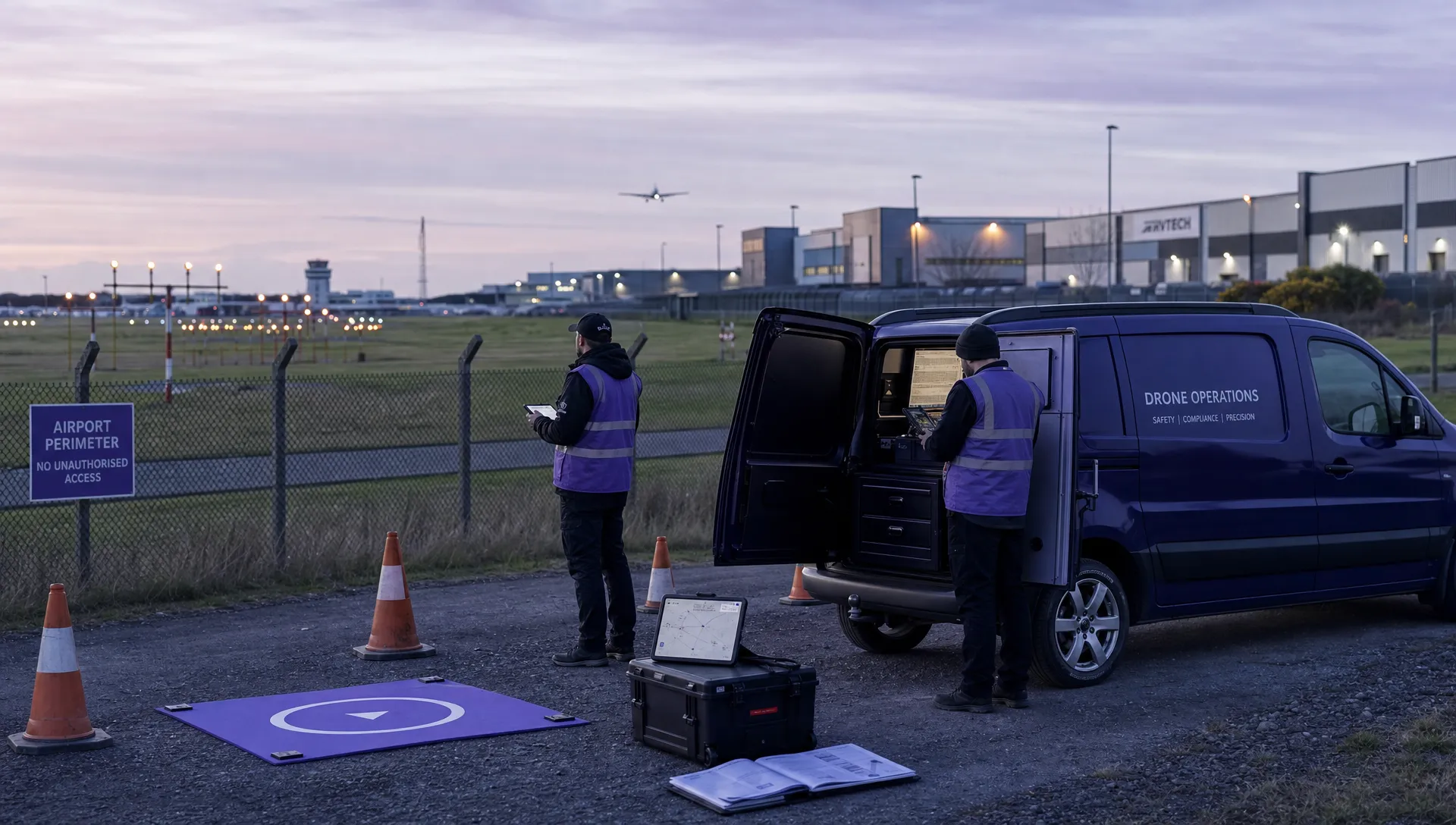 Class C Airspace Drone Rules for Commercial Flights →
 How to Create a Drone Job Pack for Every Mission →
 FAA Small UAS Rule: Key Requirements for Operators →
 How to Build a Drone Pilot Flight Log That Is Audit Ready →
 FAA Drone Licence Requirements for Commercial Pilots →
 FAA BVLOS Waivers Granted: What Successful Cases Show →