
Drone as a Service: Is DaaS Right for Your Business?
Drone as a Service (DaaS) can be a smart way to access aerial data, inspections, mapping or emergency response support without building a full drone programme from scratch. But it is not automatically the cheapest, safest or most scalable route for every organisation.
For survey companies, utilities, emergency services and established drone operators, the real question is not simply whether drones are useful. It is whether the work should be outsourced, managed in-house, or delivered through a hybrid model.
This guide breaks down what Drone as a Service means in practice, where it creates value, where it introduces risk, and how to decide whether DaaS is right for your business.
What does Drone as a Service actually mean?
Drone as a Service is a model where an organisation buys drone capability as a service rather than owning and operating the whole capability itself. Instead of purchasing aircraft, training pilots, maintaining compliance records, building flight planning processes and managing data workflows, the customer contracts a provider to deliver a defined outcome.
That outcome might be a roof condition report, a solar farm inspection, a stockpile volume calculation, a thermal survey, a public safety overwatch task or recurring infrastructure monitoring.
A mature DaaS offering usually includes more than a pilot turning up with a drone. It may cover:
- Flight planning, site checks and airspace review
- Aircraft, payloads, batteries and supporting equipment
- Qualified remote pilots and observers where needed
- Risk assessments, safety controls and operational documentation
- Data capture, processing, analysis and reporting
- Flight logs, maintenance records and audit evidence
The key distinction is ownership of the operating burden. With DaaS, the provider normally carries much of the burden of mobilisation, aviation compliance, equipment selection and operational delivery. The customer pays for the result.
Common Drone as a Service models
Not every DaaS arrangement looks the same. Some are simple one-off projects, while others are long-term managed service contracts. Choosing the right structure matters because it affects cost, availability, control and data quality.
| DaaS model | How it works | Best suited to | Watch out for |
|---|---|---|---|
| Project-based service | You commission a defined flight or survey package | One-off inspections, mapping, marketing footage, incident documentation | Availability, mobilisation fees and inconsistent data standards |
| Subscription or retainer | You pay for a set level of recurring drone support | Utilities, estates, construction portfolios, environmental monitoring | Underuse if demand is lower than expected |
| Managed drone programme | A provider runs most or all of your drone operations | Organisations that need capability but lack internal aviation expertise | Lower day-to-day control and potential dependency on one supplier |
| Hybrid model | Internal staff handle some work while specialists cover complex jobs | Businesses with regular demand and occasional specialist requirements | Requires clear processes and shared documentation standards |
The hybrid model is increasingly attractive because it avoids an all-or-nothing decision. A utility company, for example, might run routine asset inspections internally while using a specialist DaaS provider for beyond visual line of sight planning, complex thermal analysis or surge capacity after severe weather.
Why businesses consider DaaS
The business case for DaaS is strongest when drone work is valuable but the internal operating burden is hard to justify. Buying drones is the easy part. Building a safe, compliant and repeatable operation is harder.
A company that wants drone capability must think about aircraft selection, payloads, insurance, pilot competency, operational authorisations, maintenance, battery management, site risk assessments, airspace checks, data processing, privacy obligations and record keeping. For occasional work, that can be disproportionate.
DaaS can help organisations move faster because the provider should already have trained people, appropriate equipment and established procedures. It can also reduce capital expenditure, since the customer is paying for a service rather than investing upfront in aircraft, sensors, software and training.
For some organisations, the biggest value is access to specialist capability. A standard visual inspection is one thing. A high-accuracy photogrammetry survey, thermal inspection of electrical assets or evidence-grade public safety operation may require more advanced sensors, workflows and quality assurance.
When DaaS is a strong fit
Drone as a Service is usually worth serious consideration when demand is intermittent, specialist, geographically dispersed or time-sensitive. It can also be helpful when the organisation wants to prove the value of drone operations before investing in its own fleet.
DaaS is often a good fit if:
- You need drone data only a few times per month or quarter
- You require specialist sensors, such as thermal, LiDAR or high-resolution mapping cameras
- Your work is spread across multiple regions and local crews would reduce travel time
- You need to trial drone workflows before building an internal business case
- Your internal team lacks aviation compliance experience
- You need surge capacity during incidents, outages, inspections or seasonal peaks
For survey companies, DaaS can extend capability without immediately hiring more pilots or buying more aircraft. For utilities, it can support inspection backlogs and remote asset monitoring. For emergency services, it can provide additional capability for planned events, training exercises or specific specialist tasks, although operational control and response times need careful thought.
Drone operators can also use the DaaS model as a commercial strategy. Rather than selling isolated flights, operators can package repeatable outcomes, such as monthly site progress reports or quarterly asset inspections. That shifts the conversation from flight hours to business value.
When DaaS may not be the right answer
DaaS is not always the best route. If drone work is frequent, operationally sensitive or tightly integrated into daily workflows, an in-house or hybrid model may be more effective.
High utilisation is the most obvious trigger. If your organisation needs drone flights every day, the economics can shift towards internal capability. You may also want direct control where drone data is mission-critical, time-sensitive or commercially sensitive.
Data governance is another factor. Drone imagery can capture people, private property, critical infrastructure or commercially sensitive sites. The UK Information Commissioner's Office provides guidance on video surveillance and data protection that may be relevant where drone operations capture identifiable individuals or personal data. Outsourcing does not remove the need to understand how data is collected, stored, shared and deleted.
| Decision factor | DaaS may suit you | In-house may suit you | Hybrid may suit you |
|---|---|---|---|
| Flight frequency | Occasional or seasonal | Daily or very frequent | Regular work with peaks |
| Specialist equipment | Needed occasionally | Needed constantly | Needed for selected projects |
| Control requirements | Outcome matters more than method | Operational control is essential | Control is needed for core tasks |
| Compliance capacity | Limited internal aviation knowledge | Dedicated internal drone team | Internal team with external support |
| Data sensitivity | Manageable through contract terms | Highly sensitive or restricted | Sensitive core work kept internal |
| Scalability | Need rapid access to crews | Scaling can be planned internally | Need flexible extra capacity |
If you are leaning towards an internal or hybrid route, it is worth understanding what mature fleet administration involves. Dronedesk's drone fleet management guide explains the operational building blocks that become important as soon as you move beyond a small number of pilots, aircraft and ad hoc jobs.
Compliance, risk and accountability
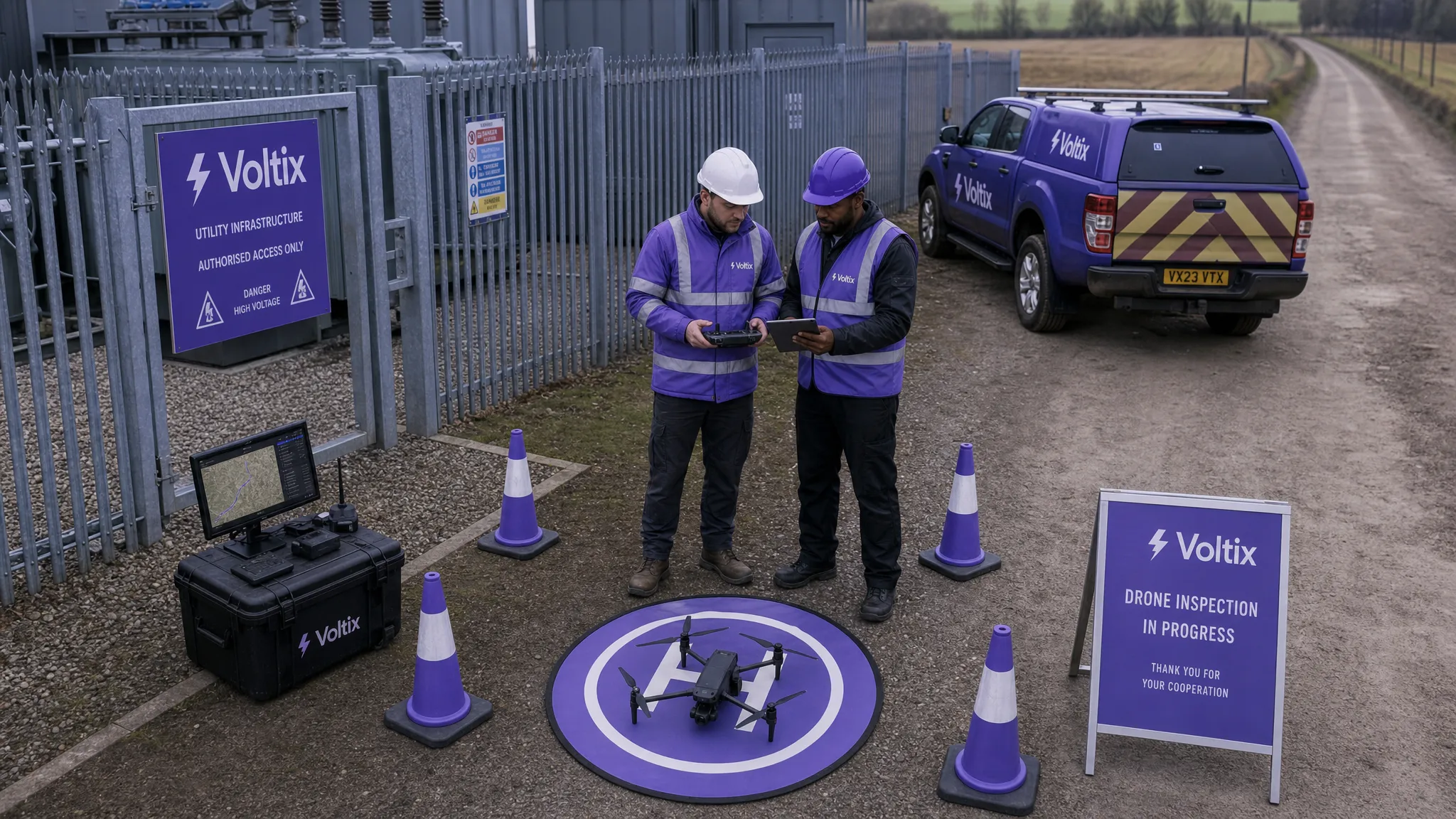
One of the biggest misconceptions about Drone as a Service is that outsourcing the flight means outsourcing all responsibility. In practice, the provider should manage the aviation operation, but the customer still has responsibilities as the commissioning organisation, site owner, data controller or duty holder.
In the UK, drone operations must follow Civil Aviation Authority rules. The CAA's drone guidance explains key requirements for flying safely and legally, including operator responsibilities, registration and operational categories. If a task involves higher-risk operations, controlled airspace, congested areas, critical infrastructure or complex site hazards, the planning burden increases.
Before appointing a DaaS provider, confirm who is responsible for airspace checks, landowner permissions, site inductions, public safety controls, insurance, emergency procedures and post-flight records. Do not rely on vague assurances. Ask for evidence of procedures and agree what documentation you will receive after each job.
Risk assessment quality is particularly important. A template that is never adapted to the site is not enough. Each task should consider location, people, property, weather, airspace, obstacles, electromagnetic interference, emergency landing options and the specific purpose of the flight. If you are building or reviewing your own process, Dronedesk has a practical guide on creating a drone flight risk assessment that works.
What to ask a Drone as a Service provider
A good provider should welcome detailed questions. If they cannot explain their planning, safety and data processes clearly, that is a warning sign.
Use the following areas as a procurement checklist before signing a contract or service agreement.
| Area | Questions to ask | Why it matters |
|---|---|---|
| Operational competence | Who will fly, what qualifications do they hold and what similar work have they delivered? | Relevant experience reduces operational and data quality risk |
| Compliance | What permissions, insurance, procedures and records will be in place for this task? | You need evidence that the operation is lawful and auditable |
| Safety management | How are site risks assessed, briefed and controlled on the day? | Safe delivery depends on task-specific planning, not generic paperwork |
| Data deliverables | What files, reports, accuracy levels and metadata will be provided? | Clear deliverables prevent disputes and make outputs easier to use |
| Data protection | Where will data be stored, who can access it and when will it be deleted? | Drone data can create privacy, security and contractual obligations |
| Service continuity | What happens if weather, airspace restrictions or equipment failure prevent flying? | You need realistic contingency plans and rescheduling terms |
The strongest DaaS partnerships are built on clarity. The provider should understand your operational objective, not just the flight request. A utility inspection, for example, is not simply a drone flight near an asset. It may require specific viewing angles, thermal settings, defect classification, safe access planning and outputs that integrate with asset management systems.
Cost and ROI: how to think beyond the day rate
Many buyers compare DaaS options by day rate, but that can be misleading. A cheaper provider that delivers poor data, weak documentation or repeat site visits may cost more in the long run.
A better approach is to compare total value. Consider the cost of mobilisation, travel, permissions, flight time, data processing, reporting, rework, internal staff time and the value of faster decisions. For inspections, also consider avoided scaffolding, reduced shutdown time or fewer manual access requirements, but only where those savings are realistic for the specific use case.
For in-house operations, the cost picture is different. You need to account for aircraft, sensors, spares, software, training, insurance, maintenance, pilot time, administration and management oversight. In-house capability can be cost-effective at higher utilisation, but only if the team maintains safe and consistent processes.
This is why ROI should be measured per outcome, not per flight. The real question is whether the drone service gives you better, faster or safer information than the alternative method.
How Dronedesk fits into a DaaS strategy
Dronedesk is not positioned here as a flight-services provider. It is a drone operations management platform for organisations and operators that need to manage drone work properly.
That matters because DaaS success depends on operational discipline. Whether you are a drone operator selling services, a survey company building a hybrid model, a utility managing multiple inspection teams or an emergency service developing internal capability, the administrative backbone must be reliable.
According to the Dronedesk features page, the platform brings together client management, fleet management, team management, airspace intelligence, proximity intelligence, flight planning, flight logging, data reporting, configurable checklists and risk assessments. Those are the kinds of processes that support repeatable drone operations, especially when work scales beyond a handful of simple flights.
If you want to see how different organisations use the platform in practice, the Dronedesk case studies show examples across operational contexts, including public safety and specialist teams.
For DaaS providers, a structured operations platform can help standardise how jobs are planned, documented and logged. For customers building an in-house or hybrid programme, it can provide a clearer way to manage pilots, aircraft, checks, risks and records in one place.
Final verdict: is DaaS right for your business?
Drone as a Service is right for your business if you need drone capability but do not yet have the volume, skills or appetite to manage the full operating model internally. It is also a strong option when specialist sensors, rapid mobilisation or regional coverage matter more than owning the equipment.
An in-house drone programme is more likely to make sense when drone work is frequent, strategically important and closely tied to your day-to-day operations. In that case, the investment in people, procedures and management systems can pay off over time.
A hybrid model is often the most practical answer. Keep routine, repeatable and sensitive work under your own control, then bring in DaaS providers for specialist tasks, overflow demand or geographic reach.
The best decision is not based on whether drones are impressive. It is based on operational fit, compliance confidence, data quality and total value.
Frequently Asked Questions
What is Drone as a Service? Drone as a Service is a model where an organisation pays a provider to deliver drone-based outcomes, such as inspections, mapping or monitoring, rather than owning and managing the full drone operation itself.
Is DaaS cheaper than buying a drone? It can be cheaper for occasional or specialist work because you avoid upfront aircraft, sensor, training and administration costs. For frequent daily operations, an in-house or hybrid model may become more cost-effective.
Who is responsible for compliance in a DaaS arrangement? The provider should be responsible for conducting the drone operation lawfully and safely, but the customer may still have responsibilities related to site access, safety coordination, data protection and procurement due diligence.
What industries use Drone as a Service? DaaS is used across surveying, construction, utilities, telecoms, emergency services, environmental monitoring, insurance, agriculture and facilities management. The best use cases involve clear data requirements and repeatable workflows.
What should be included in a DaaS contract? A contract should define the scope of work, operational responsibilities, insurance, safety documentation, data deliverables, accuracy requirements, privacy terms, cancellation rules, weather contingencies and record handover.
Can Dronedesk help with a DaaS model? Dronedesk can support organisations and drone operators that need to manage the planning, risk assessment, logging, fleet, team and reporting side of drone operations. It is particularly relevant where DaaS, in-house or hybrid operations need consistent administration.
Bring structure to your drone operating model
Whether you choose DaaS, in-house operations or a hybrid approach, the quality of your processes will shape the quality of your results. Safe, compliant and repeatable drone work depends on clear planning, risk management, flight records and operational oversight.
If you manage drone operations or provide drone services to clients, explore how Dronedesk can help you organise the operational side of your programme from planning through to logging and reporting.
 FAA Small UAS Rule: Key Requirements for Operators →
 How to Build a Drone Pilot Flight Log That Is Audit Ready →
 FAA Drone Licence Requirements for Commercial Pilots →
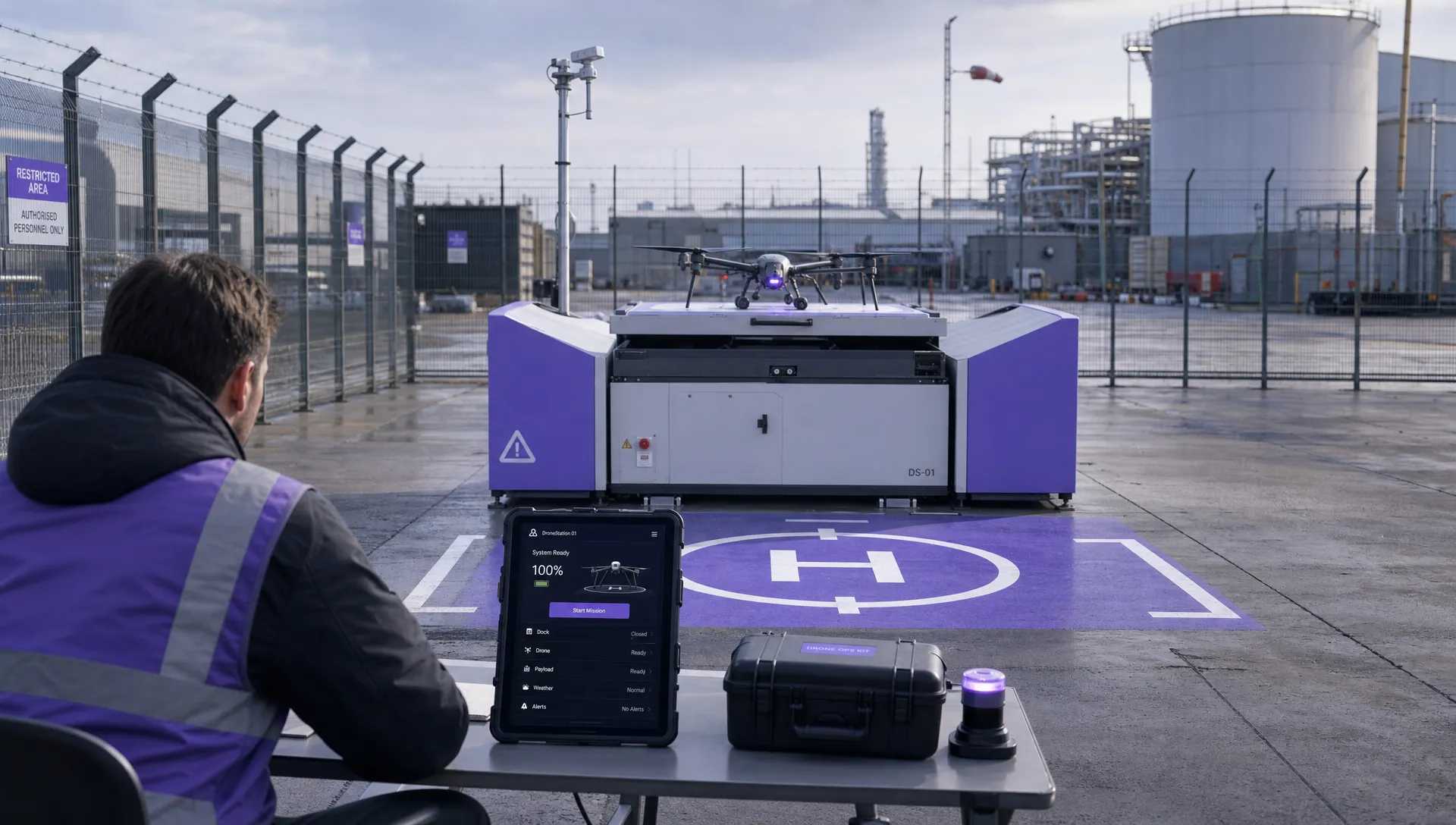 FAA BVLOS Waivers Granted: What Successful Cases Show →
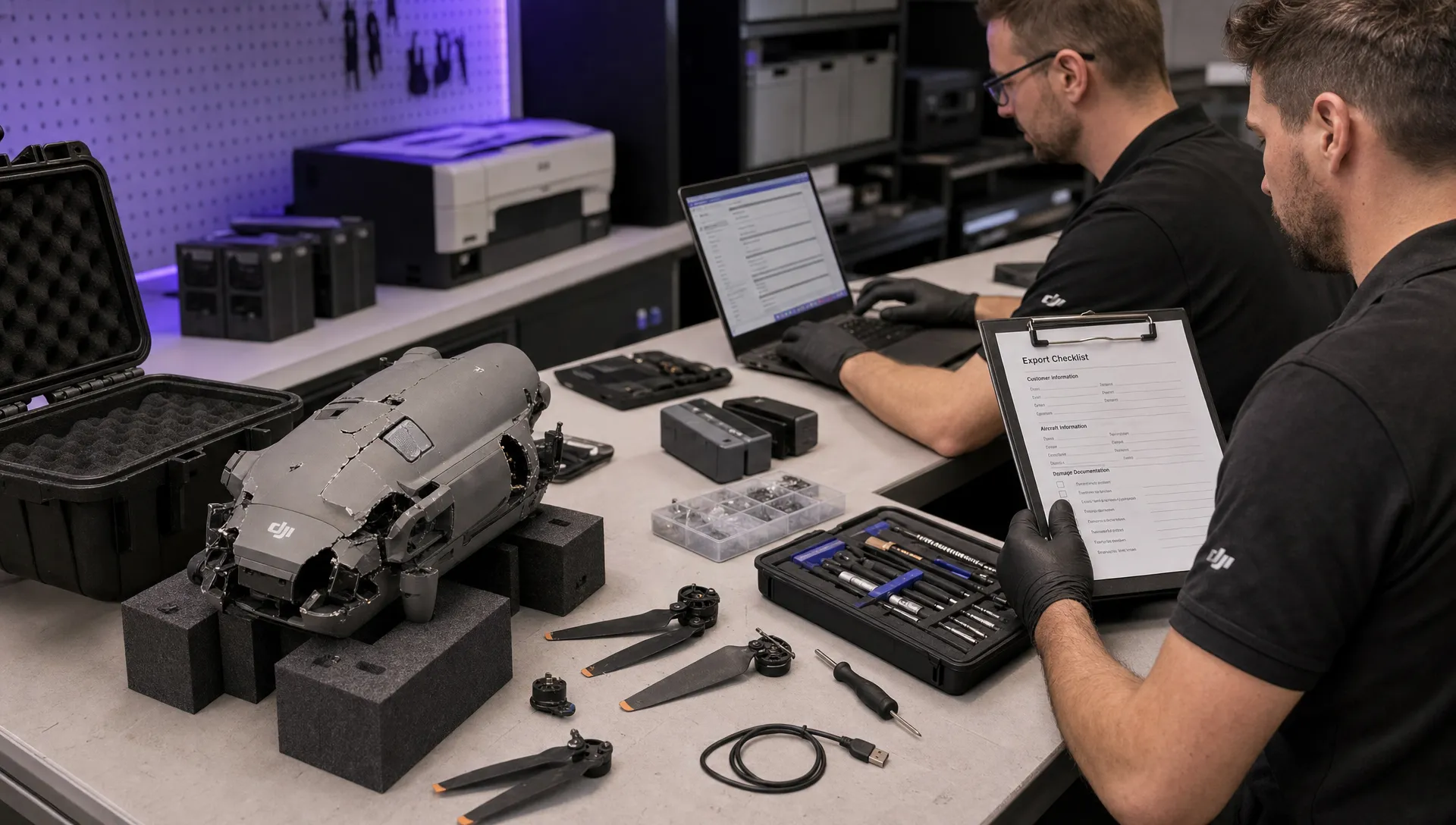 How to Export DJI Flight Logs for Incident Reviews →
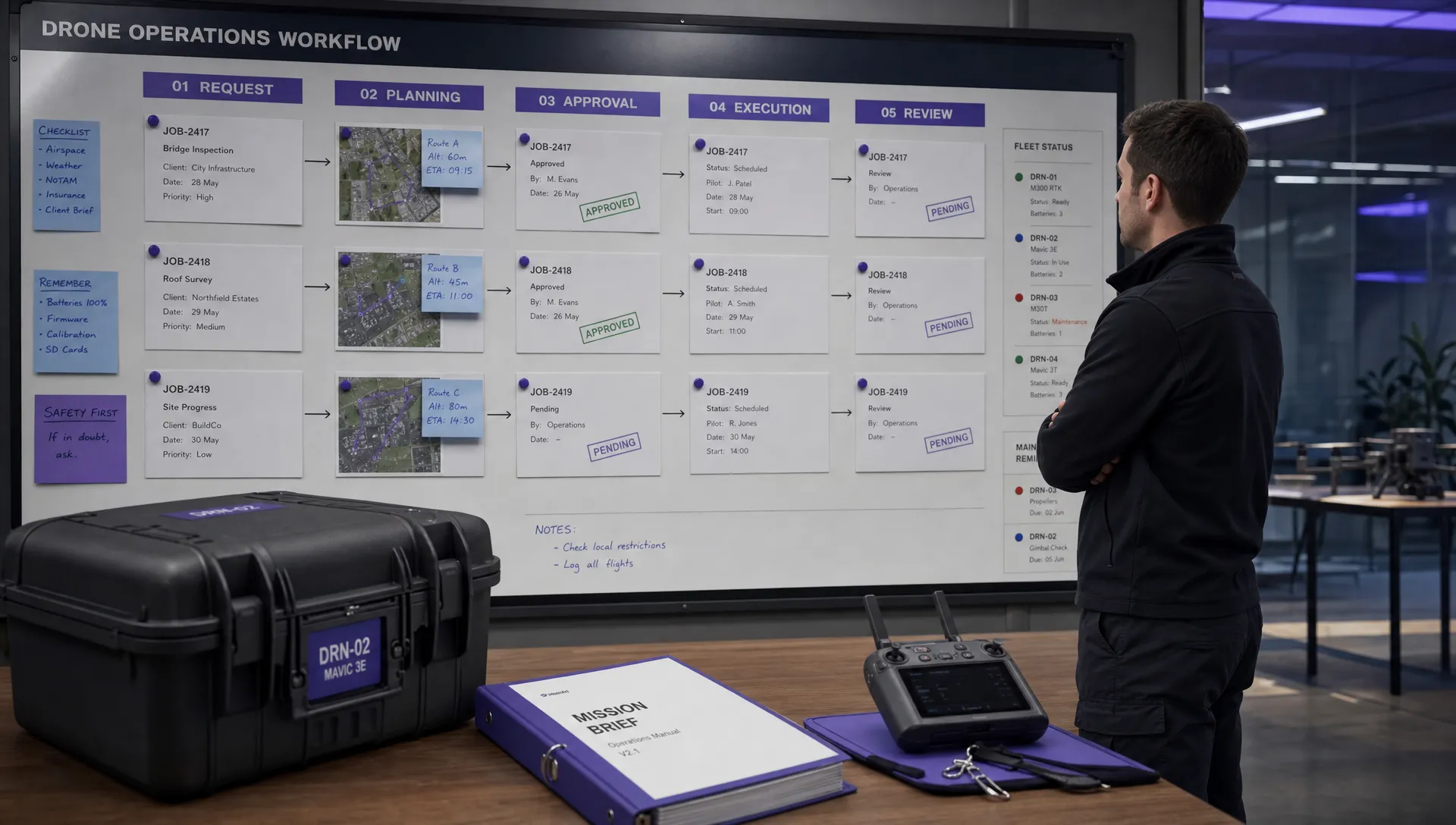 Drone Safety and Legal Duties for Business Operations →
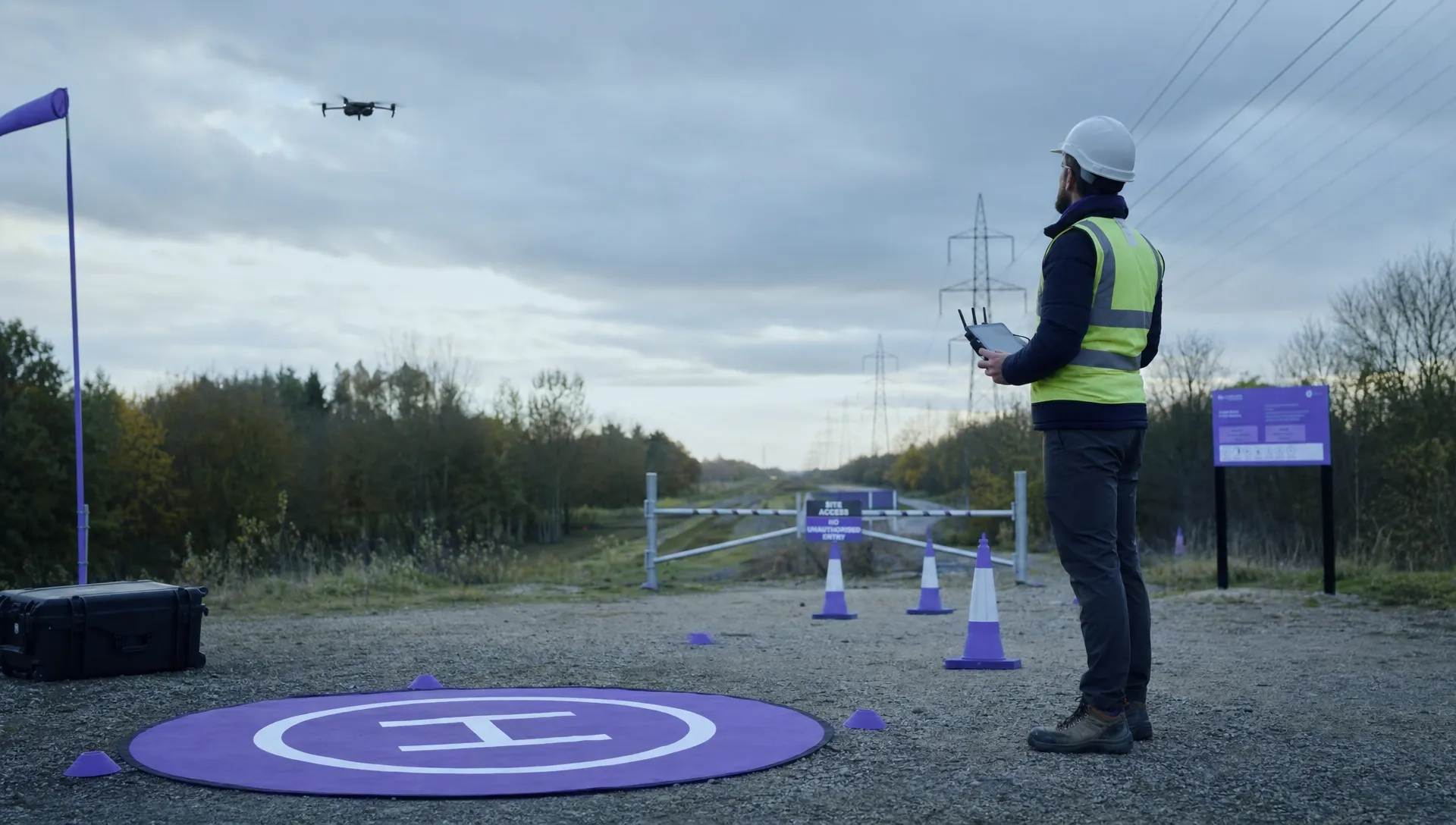 EASA Drone Regulations: Open, Specific and Certified Categories →
 What the BVLOS ARC Report Means for UAS Operators →
 Free Drone Pre-Flight Checklist for Commercial Missions →
 Contingency Volume and Flight Risk Buffer Explained →