
Current Drone Laws: What Changed in 2026?
For most UK operators, 2026 is not the year drone law suddenly became unrecognisable. The fundamentals remain familiar: register where required, keep the aircraft within visual line of sight unless authorised, stay within altitude limits, check airspace, avoid uninvolved people where the rules require it, and document the decisions that make the flight safe and legal.
What has changed is the compliance environment around those rules. Regulators are increasingly focused on auditable risk management, clearer operational authorisations, remote identification, class-marked aircraft in some jurisdictions, and stronger evidence that operators can plan, brief, fly and log missions consistently.
If you are searching for current drone laws in 2026, the most useful question is not “What is the one new rule?” It is “Which legal changes affect the way we plan and evidence our operations?” That matters especially for survey companies, utilities, emergency services and any organisation running repeatable drone work at scale.
This guide focuses primarily on the UK, with important notes for operators who also fly in EASA member states or the United States.
The short version: what changed in 2026?
The headline is simple: basic UK drone rules remain stable, but professional operators should review their permissions, risk assessment approach and aircraft compliance assumptions.
| Area | 2026 position | What operators should do now |
|---|---|---|
| UK Open category | The core rules around registration, altitude, VLOS, separation and airspace checks still apply | Re-check that each routine mission genuinely fits Open category limits |
| UK Specific category | Risk assessment quality and operational authorisation evidence are under closer scrutiny | Review your Operational Authorisation, operating procedures and risk assessment method before renewal or expansion |
| UK SORA | The CAA has been moving UK Specific category assessment towards the UK SORA framework | Check current CAA guidance before submitting new or amended authorisation applications |
| EASA operations | National standard scenario declarations have largely given way to the EU standard scenario and authorisation framework | Do not assume a permission that worked in 2025 remains valid across Europe |
| Remote ID | In the US it is already an active compliance requirement; in Europe it is embedded in class-marked aircraft rules | Check whether the aircraft and operation require broadcast identification in the country of flight |
| Evidence and records | Regulators and enterprise clients increasingly expect robust planning, checks, logs and maintenance records | Keep flight plans, checklists, risk assessments, pilot competence records and logs in a retrievable format |
What has not changed: the UK drone law foundations
The UK continues to structure most drone operations around three categories: Open, Specific and Certified. The UK Civil Aviation Authority remains the primary source for current UK drone rules, and the Drone and Model Aircraft Code is still the starting point for day-to-day legal requirements.
The Open category is for lower-risk flying. It is where many straightforward visual line of sight operations sit, provided the aircraft, location and distances from people meet the rules. The Specific category applies when the operation goes beyond Open category limits, such as more complex commercial work, higher-risk environments, reduced separation from people, or operations needing formal authorisation. The Certified category is for the highest-risk operations, which are still uncommon for most commercial survey, inspection and emergency service drone teams.
In practice, the UK basics remain:
- Keep below 120 metres, or 400 feet, above the surface unless you have permission to do otherwise.
- Keep the drone within visual line of sight unless authorised for BVLOS or another approved operating model.
- Register for the correct Operator ID and Flyer ID requirements.
- Check controlled airspace, flight restriction zones, temporary restrictions and local site constraints before take-off.
- Avoid flying over assemblies of people and maintain required separation from uninvolved people.
- Obtain landowner, client, site and airspace permissions where relevant.
- Keep records that demonstrate the flight was properly planned, risk assessed, briefed and completed.
For commercial teams, the important point is that “we flew safely” is rarely enough on its own. In 2026, you also need to be able to show how you knew the flight was safe, legal and proportionate.
The biggest UK development: risk assessment is becoming more structured
For UK operators in the Specific category, the most important trend is the CAA’s move towards a more standardised risk assessment approach through UK SORA, the UK Specific Operations Risk Assessment.
SORA, originally developed through JARUS, is designed to make operational risk assessment more consistent. It considers the ground risk, air risk, operational mitigations, containment, technical requirements and the level of assurance needed for the type of operation being proposed. For organisations used to preparing an Operating Safety Case or maintaining a traditional Operational Authorisation, this is not just a paperwork change. It affects how missions are described, how mitigations are justified and how evidence is presented.
This matters for:
- Utility inspections near roads, railways, industrial sites or long linear assets.
- Survey work close to construction sites, residential areas or infrastructure.
- Emergency service drone programmes operating in dynamic environments.
- Any operator seeking more advanced permissions, including reduced separation or BVLOS-related activity.
The safest approach in 2026 is to check the latest CAA guidance before submitting a new application, amending an existing permission or renewing an authorisation. Operators should also avoid leaving evidence gathering until renewal time. Risk assessment, maintenance, pilot competence, emergency procedures and flight logs should be built into the way each mission is run.
If your team is revisiting its safety workflow, this guide on building a drone flight risk assessment that works is a useful companion to the regulatory requirements.
Registration and operator responsibilities in 2026
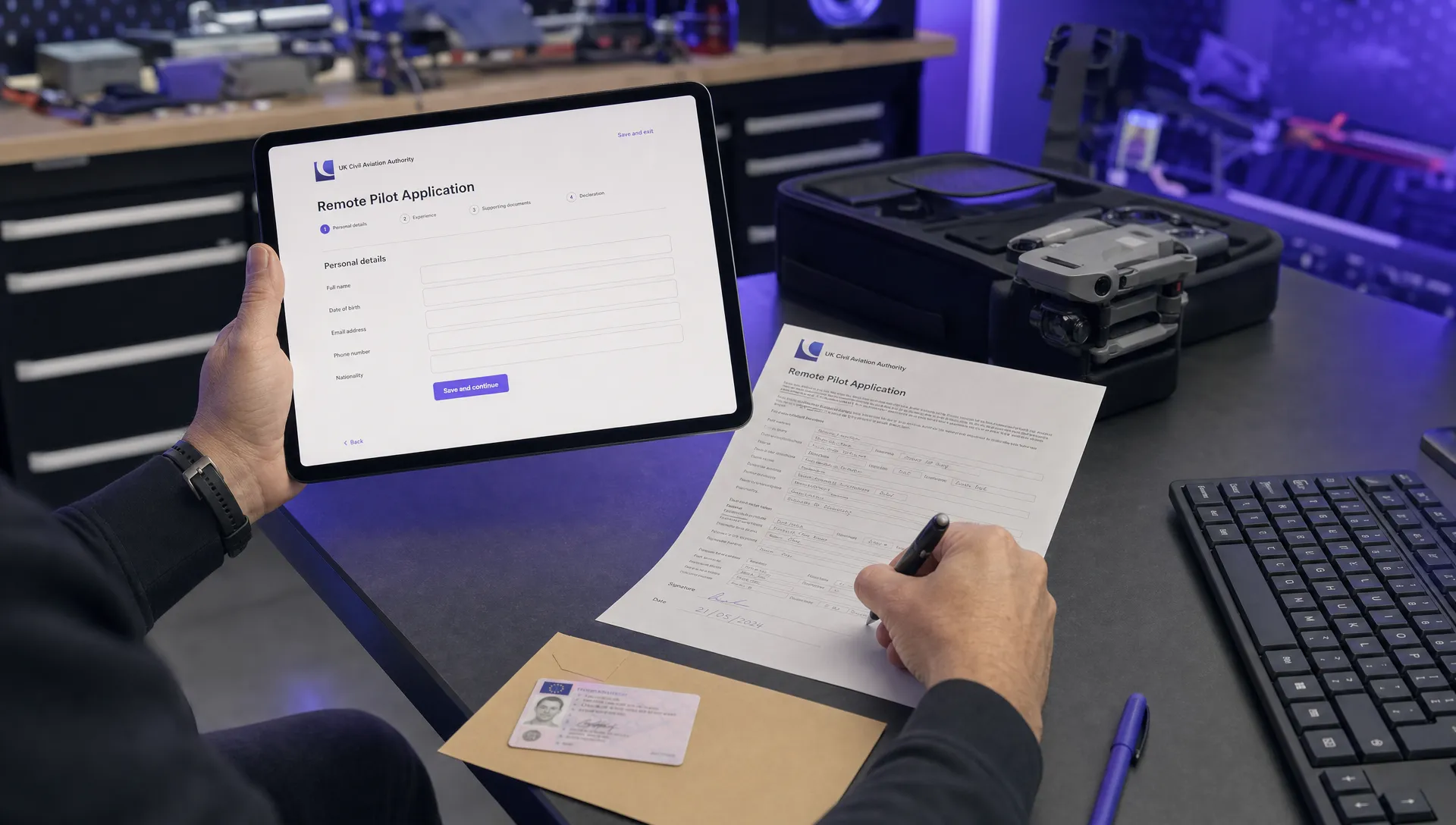
Registration is one area where many compliance issues still begin. The law distinguishes between the operator, who is responsible for the drone and how it is used, and the flyer, who controls it. In small owner-operator businesses, these may be the same person. In survey firms, utilities and emergency services, they are often different people or teams.
Most professional operations will need an Operator ID. The Flyer ID requirement depends on the aircraft and circumstances, but commercial organisations should treat pilot competence records as a core operational control, not a one-off admin task.
A practical 2026 compliance check should confirm:
| Compliance item | Why it matters |
|---|---|
| Operator ID | Shows who is legally responsible for the aircraft |
| Flyer competence | Demonstrates the pilot understands legal and safe operation |
| Aircraft assignment | Links each aircraft to the correct operator and maintenance records |
| Insurance | Supports legal and client requirements for commercial work |
| Permission basis | Confirms whether the flight is Open category, Specific category or another approved model |
| Flight records | Provides evidence if challenged by a regulator, client, police force or insurer |
The registration rules themselves may look simple, but the operational challenge grows with scale. A single pilot can often remember what is current. A team with ten pilots, multiple aircraft, subcontractors and repeat client sites needs a system.
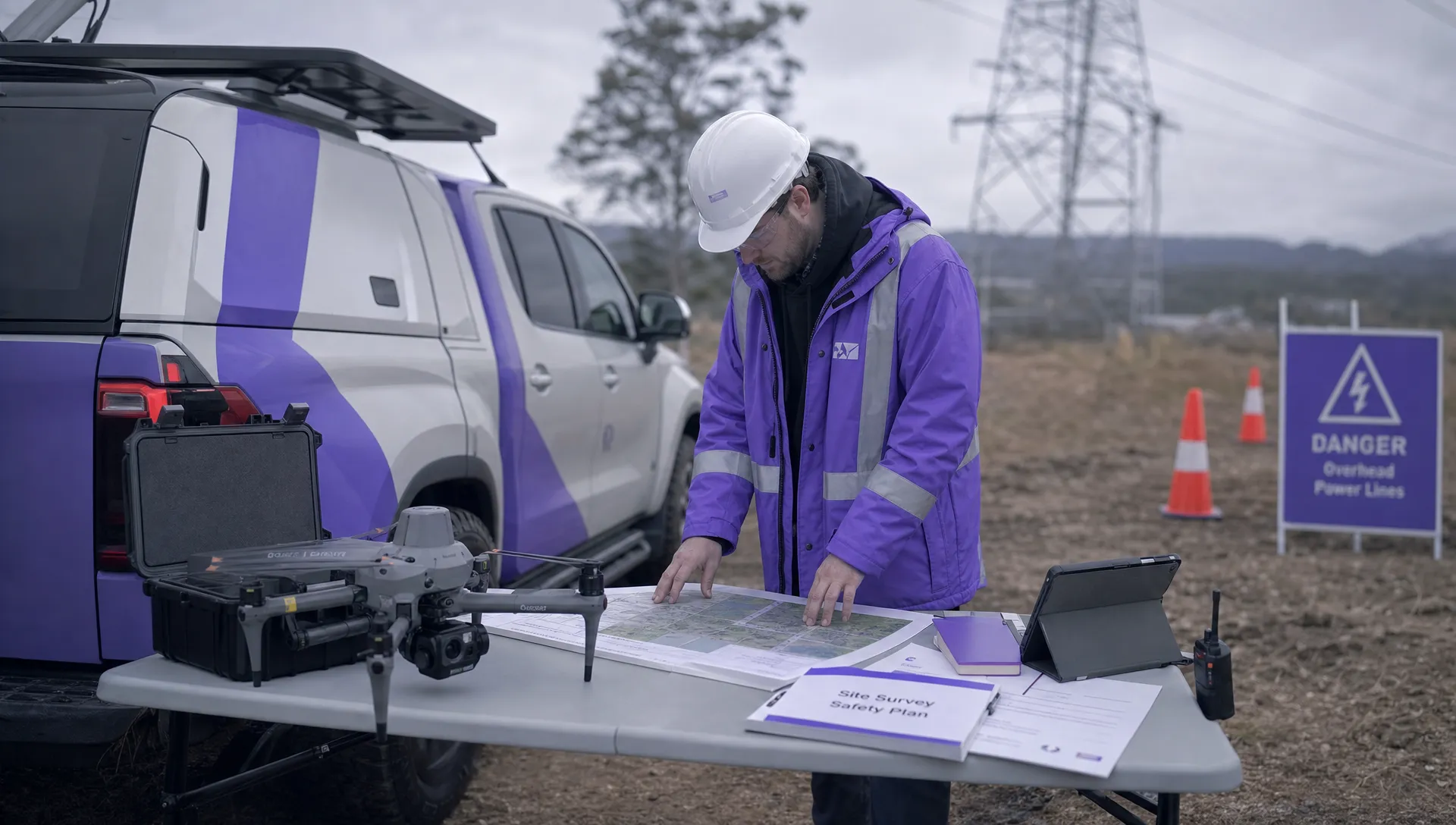
Class-marked drones: check the jurisdiction before assuming the rules
Aircraft class marking continues to be one of the most misunderstood areas of current drone laws.
In EASA member states, drone class marks such as C0, C1, C2, C3, C5 and C6 are central to how many Open category and standard scenario operations work. A class-marked aircraft can determine where you can fly, what training is needed, whether direct remote identification is required and which standard scenarios are available.
The UK has not always treated EU class marking in the same way as EASA states. That means UK operators should be cautious when buying aircraft or planning cross-border work. A drone that fits a particular EASA subcategory or standard scenario may not automatically give the same operational privileges in the UK, and vice versa.
For 2026 procurement, the lesson is straightforward: buy for the regulations you actually fly under. If your organisation works in the UK only, check the current CAA position before assuming a class mark changes your operating limits. If you operate in Ireland, France, Germany, the Netherlands or other EASA states, check the EASA framework and the national aviation authority requirements for the country of operation.
EASA in 2026: national standard scenario permissions are no longer a safe assumption
For operators working in Europe, one of the most important 2026 changes is the continued shift away from national standard scenario arrangements towards the harmonised EASA system.
Under the EASA framework, the Open category remains split into A1, A2 and A3, with aircraft class marks playing a central role. The Specific category can be accessed through operational authorisations, predefined risk assessments, Light UAS Operator Certificates, or EU standard scenario declarations where the operation and aircraft fit the requirements.
The key practical issue for 2026 is that older national standard scenario declarations have reached the end of their transition in many EASA contexts. Operators who relied on a national permission in 2025 should not assume it remains valid for 2026 work. They should confirm whether they now need an EU standard scenario declaration, a Specific category operational authorisation, or another nationally accepted route.
The EASA drone rules information hub is the best starting point for cross-border European operations, but always verify the local aviation authority position before deployment.
For UK companies taking on EU projects, this can affect tendering and mobilisation. A mapping contract in Spain or a utility inspection in Belgium may require different pilot competence, aircraft class, remote ID capability, insurance evidence and operational declarations than a comparable UK job.
United States in 2026: Remote ID is now business as usual
For teams with US operations, the major Remote ID transition is no longer new, but it is now a normal compliance expectation. The FAA’s Remote ID requirements apply to most drones that require registration, with limited exceptions.
Remote ID allows a drone in flight to broadcast identification and location information. For Part 107 commercial operators, this means aircraft compliance needs to be checked before deployment, particularly when using older drones, borrowed aircraft, specialist payload platforms or aircraft modified for inspection and public safety work.
The practical point for 2026 is that Remote ID should be built into fleet management. It is not just a pilot checklist item. Your organisation should know which aircraft are Remote ID compliant, whether they rely on built-in capability or an approved module, and whether any operation is taking place in an FAA-recognised identification area or under a specific exemption.
Privacy, data protection and public confidence matter more than ever
Drone laws are not limited to aviation rules. Survey companies, utilities and emergency services often capture imagery of land, vehicles, buildings, people, infrastructure and sensitive sites. In the UK, privacy and data protection obligations can arise under UK GDPR and related guidance from the Information Commissioner’s Office.
This is particularly relevant when flights take place near homes, schools, healthcare facilities, critical infrastructure or emergency incidents. Even where the aviation side is lawful, poor communication or careless data handling can create complaints, reputational damage and contractual risk.
Good practice in 2026 includes explaining the purpose of the flight where appropriate, minimising unnecessary image capture, controlling access to data, setting retention periods and documenting how sensitive imagery is handled. For emergency services, this also supports public trust and evidential integrity.
What this means for survey companies
For survey businesses, the main 2026 challenge is matching each job to the right permission basis. Many mapping, roof survey and site progress flights can still be planned within Open category rules if the aircraft, site and separation distances allow it. But urban work, complex construction sites, rail corridors and constrained industrial environments often require more careful analysis.
The commercial risk is underquoting compliance. If a job requires additional permissions, stakeholder coordination, road management, rail access controls or a Specific category authorisation, those costs and lead times need to be visible before the contract is signed.
A strong workflow will connect the client brief, site survey, airspace review, risk assessment, checklists, pilot allocation, aircraft status and post-flight log. That makes it easier to prove that the operation was planned professionally, not improvised on arrival.
What this means for utilities and infrastructure operators
Utilities face a different challenge: repeatability at scale. A single substation inspection may be straightforward. A programme covering hundreds of pylons, pipelines, reservoirs, telecoms masts or renewable energy assets is a compliance management problem.
The legal questions often include land access, airspace, public separation, road proximity, critical infrastructure sensitivity, emergency procedures, maintenance records, pilot fatigue and data governance. BVLOS or extended-range inspection programmes add a further layer of authorisation and safety case complexity.
For infrastructure teams, 2026 compliance should be treated as part of operational resilience. Standard operating procedures, consistent risk assessments, fleet maintenance evidence and centralised logs reduce the chance that safety depends on individual memory or scattered spreadsheets.
If your fleet is growing beyond a few aircraft, Dronedesk’s drone fleet management guide explains what to consider when moving from ad hoc records to structured fleet oversight.
What this means for emergency services
Emergency services need speed, but speed must be supported by governance. Police, fire, ambulance, search and rescue, and local resilience teams often operate in complex environments with crowds, restricted areas, sensitive data and multi-agency coordination.
The law does not disappear because a mission is urgent. Instead, drone programmes need pre-approved procedures, trained pilots, clear command structures, documented risk controls and reliable logs. That is what allows teams to respond quickly without making compliance decisions from scratch at the scene.
The strongest emergency service drone programmes tend to prepare standard deployment models in advance, including who can authorise a flight, how airspace is checked, how cordons are handled, how imagery is controlled, and how the flight is recorded afterwards. For a practical example of governance in a public safety environment, see this Dronedesk law enforcement drone operations case study.
A 2026 compliance checklist for professional drone operators
You do not need to rebuild your drone programme every time regulations evolve. But you should run a structured review at least annually, and again whenever your operation changes significantly.
Use this checklist as a starting point:
- Confirm which category each common mission type falls under: Open, Specific or Certified.
- Review your Operational Authorisation, exemptions, declarations or permissions for expiry dates and scope limits.
- Check whether your risk assessment method aligns with current CAA or relevant national authority guidance.
- Verify Operator IDs, Flyer IDs, pilot competence, medical or internal training requirements where applicable.
- Audit your aircraft fleet for registration, maintenance status, firmware, Remote ID capability where required, and payload configuration.
- Review insurance against the actual type of work being performed.
- Update checklists for batteries, weather, NOTAMs, airspace, site permissions, emergency procedures and data handling.
- Make sure logs, risk assessments, client records, maintenance records and pilot records are stored in a way that can be retrieved quickly.
This is also where software can reduce operational friction. According to the Dronedesk features page, Dronedesk brings together client management, fleet management, team management, airspace intelligence, proximity intelligence, flight planning, flight logging, data reporting, configurable checklists and risk assessments in one platform. For operators managing compliance across multiple jobs, pilots and aircraft, having those records connected is often the difference between a process that works and one that only looks good on paper.
Common mistakes to avoid in 2026
The most common compliance failures are rarely dramatic. They usually come from assumptions.
One assumption is that a flight is “just Open category” because the drone is small. Weight matters, but so do location, airspace, proximity to people, site control and the nature of the task. Another assumption is that a client’s permission to access land automatically solves aviation, privacy or airspace requirements. It does not.
Cross-border work creates another trap. UK, EASA and FAA rules share concepts, but they are not interchangeable. A pilot qualification, aircraft class, Remote ID setup or operational authorisation may not travel with you in the way you expect.
Finally, many teams still treat flight logs as an afterthought. In 2026, logs are part of your legal and commercial evidence. They support maintenance decisions, incident reviews, insurance queries, client reporting and authorisation renewals.
Frequently Asked Questions
Did UK drone laws completely change in 2026? No. The basic UK framework remains built around Open, Specific and Certified categories. The bigger 2026 shift is towards more structured risk assessment, better evidence and careful checking of authorisations, especially for Specific category operations.
Do I still need an Operator ID in 2026? Most professional drone operations will require an Operator ID, and pilots may also need a Flyer ID depending on the aircraft and operation. Always check the current CAA registration requirements before flying.
Can I fly above 400 feet in the UK in 2026? Not under normal Open category rules. The standard limit is 120 metres, or 400 feet, above the surface unless you have the appropriate permission or authorisation.
Are EU drone class marks valid in the UK? Do not assume that an EU class mark gives the same privileges in the UK as it does in an EASA member state. Check the current CAA position before relying on class marking for operational decisions.
What is the most important compliance action for commercial operators in 2026? Review whether each mission type is being flown under the correct legal basis, then make sure your risk assessments, checklists, pilot records, maintenance evidence and flight logs can prove it.
Final thought: 2026 is about proving good operations
The direction of travel is clear. Drone regulation is becoming less about isolated rule memorisation and more about operational accountability. Professional operators need to know the law, but they also need systems that show how the law was applied on every job.
For survey companies, utilities and emergency services, that means turning compliance into a repeatable workflow: plan the mission, check the airspace, assess the risks, brief the team, fly within the permission, log the result and keep the evidence.
Dronedesk is built for that kind of end-to-end drone operations management. If your current process is spread across spreadsheets, email threads and disconnected documents, explore how Dronedesk can help you manage planning, checklists, risk assessments, logs, teams and aircraft in one place.
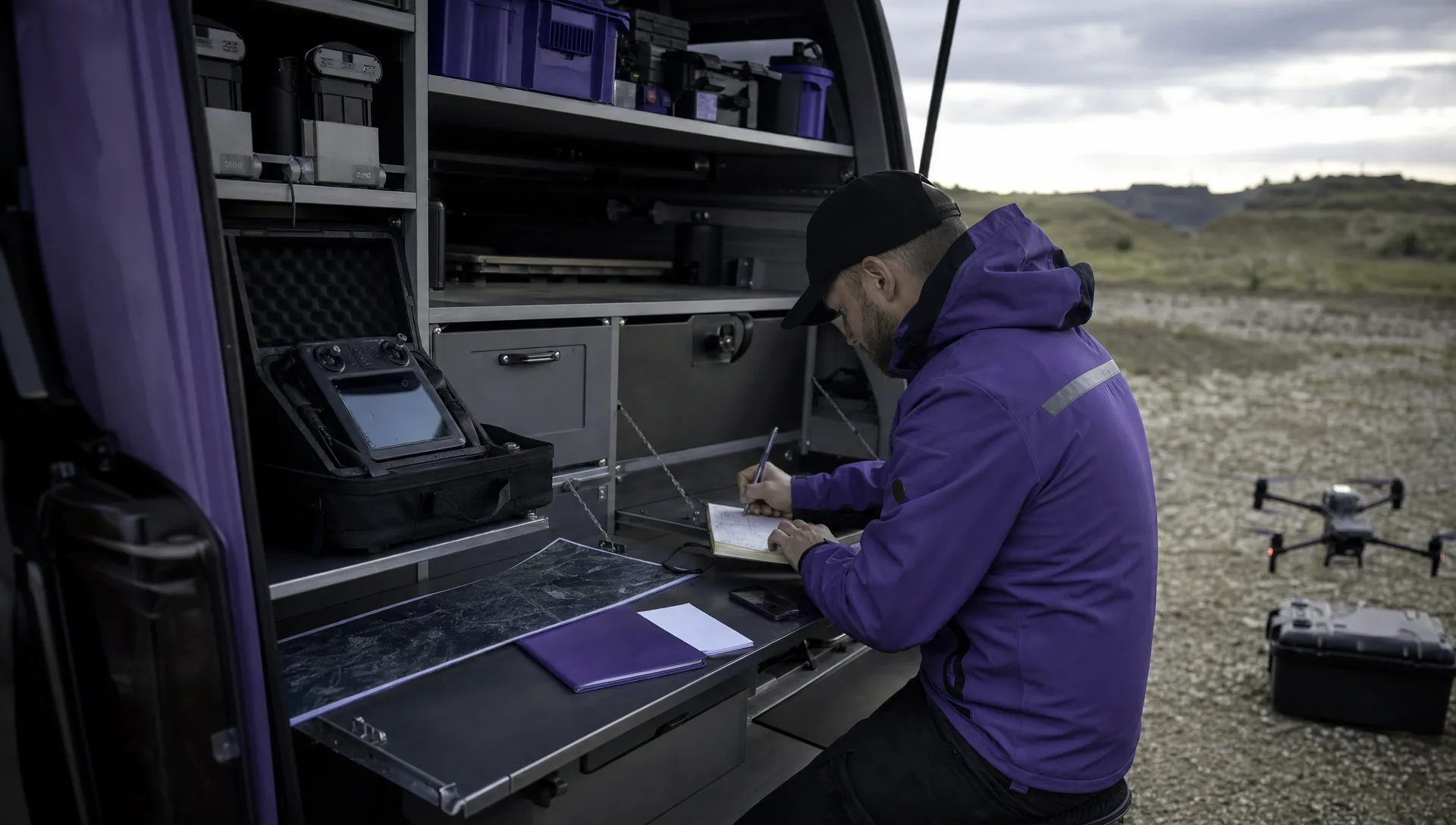 How to Evaluate a Free Drone Logbook Before Using It →
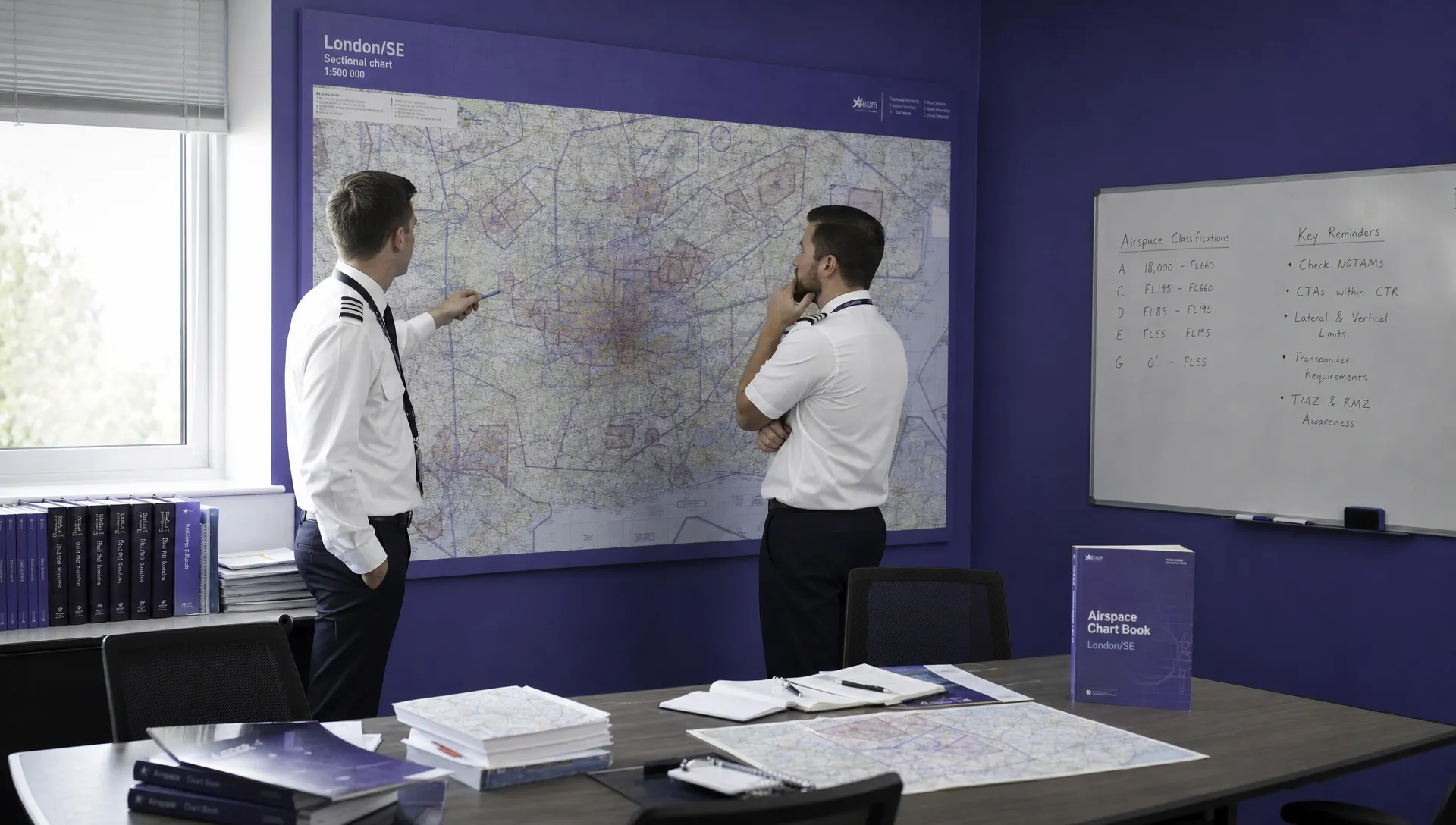 FAA Part 107 Test: How to Master Airspace Questions →
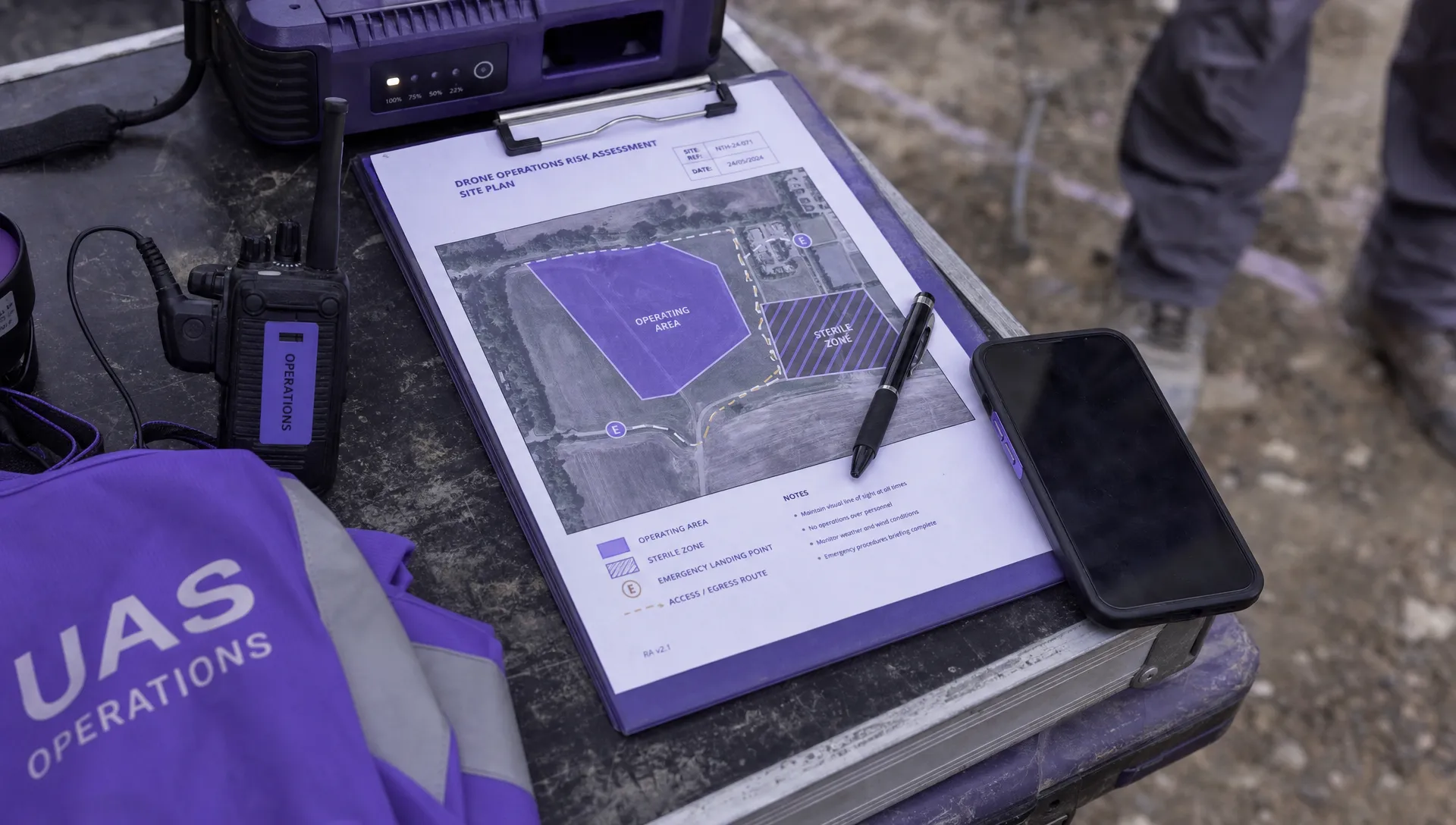 Drone Risk Assessment Controls That Work in the Field →
 FAA Drone License Costs Beyond the Knowledge Test →
 Drone Part 107 Operations: When a Waiver May Be Needed →
 Drone Operating Rules for Managing Contractors and Employees →
 BVLOS Drone Requirements for Building a Safety Case →
 Drone Pilot Test Mistakes That Cost Candidates Marks →
 FAA 107 License vs Part 107 Certificate: What’s the Difference? →
 Drone Airport Rules: A Field Checklist for Site Assessments →